Francis
Bacon News

2000-2005
Hunt for ‘missing’ works of Francis Bacon
The
discovery of more paintings hidden in the artist’s cluttered studio has prompted
a legal puzzle
CAL McCRYSTAL | THE INDEPENDENT ON SUNDAY | SUNDAY, MARCH 12, 2000
THE DEATH of Francis Bacon, arguably Britain’s most distinguished 20th-century
artist, is proving as controversial as his life. As art experts struggle to sort
out and catalogue the cluttered contents of his London studio, lawyers are
investigating the whereabouts of Bacon paintings claimed by his estate and
willed in their entirety to John Edwards, Bacon’s loyal friend for the 16 years
preceding the artist’s death in 1992.
The first effort has involved a team of archaeologists and conservators
painstakingly excavating the jumble of the small, spartan South Kensington flat
where Bacon lived and worked. The contents, along with the paint-streaked
internal walls, have been shipped off to the artist’s native Dublin where they
have been meticulously reassembled for exhibition in November at the Hugh Lane
Municipal Gallery of Modern Art - a donation from Mr Edwards. (Some of this
material can be seen exclusively in our Culture section.)
But the legal spur to discovery is equally intriguing. It concerns the London
gallery which had handled the artistic management of the painter for virtually
his whole career — an association which the High Court terminated more than a
year ago. Mr Justice David Edmund Neuberger ruled that all the executors of
Bacon’s multi-million-pound estate should be removed and replaced by Brian
Clarke, the well- known British architectural artist who was a friend of Bacon
and of John Edwards.
Since then the effort to ensure that Mr Edwards, now 50 and living in south-east
Asia, receives his inheritance has become a legal wrangle of immeasurable
proportions, involving the gallery which represented Bacon for most of his
working life: Marlborough Fine Art in London, and a Marlborough company in
Lichtenstein. Marlborough also has galleries in New York, Spain, Zurich and
Tokyo. One of the deposed executors was Valerie Beston, also a director of MFA.
Just as the jumbled contents of Bacon’s studio were colourfully spattered with
daubs of paint, so the conflict and the background to it are liberally spangled
with the names of celebrities, some of them deceased. Among them are Sir Paul
McCartney, his late wife Linda and her brother, the New York arts lawyer John
Eastman. (His clients have included Willem de Kooning, Josef Albers and Robert
Motherwell.) Mr Clarke is a friend of Sir Paul’s. Mr Eastman is Mr Clarke’s
American lawyer. Mr Clarke has asked Mr Eastman to take up the case.
Within the canvas, too, are the American abstract expressionist Mark Rothko who
died in puzzling circumstances almost exactly 30 years ago; the 11th Duke of
Beaufort, currently chairman of Marlborough; and some of the biggest names in
the international art scene, including the former Marlborough boss — an
unsavoury Viennese dealer who changed his name from Franz Kurt Levai to Francis
Kenneth Lloyd and who died in 1998 with his reputation in shreds. The Queen
herself is not left out of what is a confused and disturbing, picture.
Even the prestigious The Art Newspaper has difficulty interpreting it.
Brian Clarke told that journal: "I knew Francis since the late 1970s — we were
friends — but my long-term and great friendship has been with John Edwards. At
John’s request I have been given his power of attorney for a considerable time
and then I agreed to help out with the estate."
As the estate’s personal representative, appointed by the High Court, Mr Clarke
has the necessary authority to administer and tie up the estate, and see that Mr
Edwards — a chronic dyslexic who lived with Bacon but was not his lover — gets
what is due to him. "I was assuming that it was a simple matter of resolving a
number of outstanding issues and then the estate would be wound up," said Mr
Clarke, "but before very much time had passed it was clear that it was a much
more complicated affair than I had first realised." He found that the estate "is
more extensive in terms of its holdings of paintings than has generally been
assumed.
"Even though everybody thought that they had been through the studio with a
fine-tooth comb, we found a number of paintings dating from the 1950s,"
continued Mr Clarke. "Since Francis died, I had been in his studio probably a
hundred times, but I missed them, and John Edwards missed them. It was such
chaos in there and one was very frightened of moving too much for fear of
disturbing things."
It was then that an approach was made to the Hugh Lane Municipal Gallery of
Modern Art in Dublin’s Parnell Square. With Mr Clarke’s approval, Mr Edwards
donated the entire studio and contents to Bacon’s native Dublin. "[The Hugh Lane
gallery] came to disassemble it archaeologically," Mr Clarke said. "But when
they dismantled this extraordinary thing, we found these paintings. It also
turned out that there were one or two works in other places - paintings that the
Marlborough Gallery never saw that came out of that studio that we didn’t know
existed; John Edwards didn’t know they were there. It is undeniable that the
body of work that is in the estate constitutes the greatest collection of Bacons
in the world, and it contains some unequivocal masterpieces."
By the time the Dublin studio is open to the public in November, more may have
surfaced from the second effort at finding the complete oeuvre. That
investigation will almost certainly examine the role of Frank Lloyd who ran
Marlborough Fine Art and its international network of galleries since the end of
the Second World War. The son of Austrian antique dealers, he fled the Nazis and
went to Paris, and thence to England where he and a fellow Austrian refugee
opened the Marlborough Gallery in London. By 1950, Lloyd had gained (as he put
it himself) "some class, some atmosphere" by appointing as a director David
Somerset, later to become Duke of Beaufort.
Royalty and gossip columnists attended Lloyd by the score. The Queen came to one
of his gallery benefit nights. Venture capital poured into Marlborough from rich
jet-setters, among them Fiat’s Gianni Agnelli, shipping magnates Ragnan Moltzau
(Norway) and Onassis and Goulandris (Greece), the Brazilian publisher Assis
Chateaubriand and the Rothschilds.
Lloyd told his salesmen: "If it sells, it’s art." He later declared: "I collect
money, not art." He offered artists advances, staggered payouts and shielded
them from the tiresome facts of business. He signed up such giants as Mark
Rothko, Henry Moore, Barbara Hepworth, Oskar Kokoschka, Ben Nicholson, Graham
Sutherland and, of course, Francis Bacon.
The Rothko affair was to inflict enormous damage on Marlborough’s reputation. A
1974 book, The Legacy of Mark Rothko, about the American artist’s suicide four
years earlier and the epic legal battle over his effects describes what
occurred. According to a New York court petition by a daughter, Kate Rothko, her
father’s executors gave Marlborough "virtually absolute control of the market"
for Rothko’s paintings and "drastically limited the supply of money available"
to the estate, "prevented" Rothko’s children, committed themselves to paying
"unconscionably excessive" commissions, and "compounded the fraud" upon the
estate. Further, the court petition said, the executors and Marlborough
"wilfully and deliberately concealed from all other persons interested in the
estate" the details of these agreements.
During the litigation, Rothko paintings were ferried out of the jurisdiction to
Canada, despite a court injunction forbidding Marlborough from squirrelling them
away. It took a private detective to track them down and force their return.
In 1975, with the Rothko case still unresolved, a Francis Bacon exhibit opened
in Manhattan’s Metropolitan Museum. Lloyd and his wife were there to share
Bacon’s limelight and approbation. A few months later, the judge handed down a
decision in favour of Kate Rothko. He removed the three executors and cancelled
the estate’s contracts with Marlborough, ordered the return of 658 unsold
paintings and assessed damages and fines which included a $3.3m (pounds 2.1m)
fine against Frank Lloyd and Marlborough for violating a court restraining order
by shipping 57 paintings out of the country. This was later increased to $3.8m
after a recount showed five more paintings had been in the illegal shipment.
The Rothko story, wrote its author Lee Seldes, was "one of legal legerdemain,
camouflages and cover-ups, destruction of incriminating evidence ... the
laundering of records, funds, and paintings. It ruined lives and reputations,
wrecked long-term friendships."
The Bacon story remains — like his legacy — to be seen. According to John
Eastman, the principal lawyer for the estate, "the defining question for the
estate is: what is there beyond what we already have?"
Biteback
RICHARD BROOKS | ART | CULTURE | THE SUNDAY TIMES | MARCH 19, 2000
Francis Bacon must be laughing in his grave. The great artist, who died in 1992,
has left a mischievous legacy. And not just the huge number of drawings and
paraphernalia in his London studio, which are still being sorted through before
being handed over, towards the end of the year, to the Hugh Lane Gallery in the
artist’s native Dublin.
There’s also a far more intriguing collection to go on show in the Irish capital
from March 30: about 100 drawings and preparatory sketches that Bacon may or may
not have done. I say “may or may not” as his London neighbour, Barry Joule, who
was given them just before the artist’s death, has long been saying that they
are the real McCoy. Yet most art scholars and certainly Bacon’s estate are not
convinced.
The exhibition at the Irish Museum of Modern Art was to be called Drawings by
Bacon. But his estate spat blood. The compromise is The Barry Joule Archive:
Works on Paper Attributed to Francis Bacon, which is probably the most tedious
title ever devised for an art show. The Bacon expert David Sylvester calls the
drawings, many done on top of photos and newspapers, “crummy” and “almost
certainly not Bacons”. Yet it was Sylvester who suggested to the estate that the
exhibition go ahead, provided the phrase “attributed to Francis Bacon” was used.
In fact, Sylvester now welcomes the idea of displaying the work in Dublin. “At
least we’ll have a chance to look at them and work out if they’re Bacons.” The
exhibition might come to London’s Barbican art gallery later this year. But if
they aren’t Bacons, who did them? One theory gaining ground is that they were
done by a friend of Bacon’s. And that the great artist himself was in on the
wheeze. A sort of memento-mori joke.
•
Another Bacon gem has been discovered in New York by the BBC. An extraordinary
TV chat, recorded but never aired, between the artist and William Burroughs.
Fascinating, even if it is just two old queens bitching about the world and his
wife. I just hope BBC2 decides to air this discovery.
Last week the channel announced a new series called The Conversation — a chance,
as the BBC puts it, to eavesdrop on head-to-head discussions between two
well-known figures in the arts. Anything would be better than the now dropped
Face to Face series. Likely Conversation chats will be between Sir Richard Eyre
and Arthur Miller, and Ben Elton with Lord Lloyd-Webber. Elton’s political hero?
No, but they are collaborating on a musical about football. But the first of the
series on April 23 will be between the lugubrious Mike Leigh and the, er,
lugubrious Will Self. Maybe Prozac could sponsor it.
Gallery sued for millions over ‘undervalued’ Bacon paintings
By Mick Brown and Caroline Davies
MICK BROWN & CAROLINE DAVIES | FRONT PAGE | THE DAILY TELEGRAPH |
WEDNESDAY, MARCH 22, 2000
THE estate of Francis Bacon, the most celebrated British painter
of the 20th century, is suing his former gallery, claiming that it wrongfully
exploited him over the course of a relationship that lasted more than 30 years.
In a claim issued yesterday that could involve millions of pounds, Marlborough
Fine Art (London) Ltd is alleged to have exercised total control over all
Bacon’s artistic and private affairs. The gallery is accused of benefiting from
the re-sale of many of Bacon’s works, having bought them from him at an
undervaluation. Bacon died in 1992, aged 82. He left his £11 million estate to
John Edwards, now 50, an illiterate east-Londoner who was his constant companion
for the last 18 years of his life.
In 1989, he had become the world’s most expensive living artist when his
triptych May-June 1973 sold at Sotheby’s New York for £3.53 million. The
legal action follows a three-year inquiry by lawyers, accountants and
investigators appointed on behalf of Bacon’s estate.
The case is certain to shake the international art world. The estate claims that
Marlborough, one of Britain’s most prestigious galleries, and its worldwide
representative Marlborough International Fine Art (MIFA) based in Liechtenstein,
should be presumed to Have exercised “undue influence” over the artist, who died
from a heart attack in Spain. Neither Marlborough nor MIFA has produced a “full
and true” account of their dealings with Bacon’s works, claims the estate.
It has identified 33 works, known to have been painted between 1972 and 1981,
and which could be worth up to £30 million, which allegedly do not feature in
any accounts supplied so far by Marlborough London or MIFA.
Other paintings, it alleges, were undervalued by Marlborough when they were
bought from Bacon, then resold via MIFA for profits that ’substantially
exceeded’ the prices which MIFA purportedly paid Marlborough.
The estate’s claim lists payments to Bacon which purport to demonstrate that in
May 1984 Bacon was paid only 26 per cent of the $230,000 insurance value which
one of his paintings — Statues and Figures In The Street 1983 — was given
by MIFA three months earlier.
The case has strong parallets with that of the estate of the American abstract
impressionist Mark Rothko, which inflicted enormous damage on Marlborough’s
reputation in the Seventies. The claims, which were lodged yesterday with the
High Court in London on behalf of Prof Brian Clarke, who was appointed the sole
executor of Bacon’s estate by court order in December 1998, were served on
Marlborough UK’s solicitors yesterday.
Central to the allegations is the claim that Bacon was a financial naive when,
in 1958, he signed an agreement allegedly without independent legal advice
giving Marlborough, “sole and exclusive” rights over his work. Marlborough’s
agency, it is alleged, obtained until his death.
The estate claims tbat such prices as were paid to Bacon would not have been
agreed if the agreement had been “reasonably negotiated” and wants it declared
void.
Lawyers for Marlborough Fine Art (London) Ltd and MIFA said the claims made by
the Bacon estate were without foundation and they would be fighting the case.
The Bacon estate: Pages 4 & 5
The Bacon estate
How one gallery kept Britain’s most celebrated artist under close control
The
painter
The artist was a quintessential Bohemian with a cavalier approach to his
finances and life
Reports
by Mick Brown and Caroline Davies
MICK BROWN & CAROLINE DAVIES | THE DAILY TELEGRAPH | WEDNESDAY, MARCH
22, 2000
FRANCIS BACON once described his life as being lived "between the gutter and the
Ritz". The quintessential Bohemian, he took a cavalier approach to money,
carrying a wad of cash in his pocket, likened by a friend to a "bog roll", from
which he would peel off notes to spend on gambling, meals at Wheeler’s fish
restaurant, drinks at the Colony Room club, or just give to friends.
"Francis was an extremely generous man, and he hadn’t a greedy bone in his
body," says Prof Brian Clarke. He lived in almost monastic simplicity, in a
house in Reece Mews, South Kensington. Visitors were obliged to hammer on the
door for admittance, and cling to a rope banister while climbing the stairs. His
living quarters consisted of a kitchen and a cramped bed-sitting room, lit by
four bare lightbulbs, furnished with a bed, two battered couches and a small
library comprising Goethe, Proust and Heine.
Its fastidious neatness was in stark contrast to his studio in an adjacent room,
which was famously chaotic — the walls and doors smeared with paint, the floor
submerged beneath a detritus of discarded brushes, rags, newspapers and
photographs. The only painting he would tolerate in the studio was a small
portrait of John Edwards propped up on an easel. Bacon had very little interest
in material possessions. "Francis came from a generation of painters which never
expected to make a living from their art," says Prof Clarke. "He always told me
that the biggest surprise of his life was that he didn’t have to take a second
job to earn a living."
Bacon’s association with Marlborough began in 1958 and was to continue until his
death of a heart attack in Spain in 1992. At the time of signing with
Marlborough, Bacon was a well recognised artist, but his earnings were modest.
Proceeds from sales of his work totalled just £1,725 between April 1956 and
October 1958. In October 1958 Bacon signed a 10-year agreement with the gallery
and it is this arrangement, which the estate now claims Marlborough continued to
apply after the written contract had terminated, right up until Bacon’s death,
that is now being placed under the legal microscope as Bacon’s estate challenges
its very basis. The 1958 agreement gave Marlborough sole and exclusive rights to
sell and authorise the sale of Bacon’s work, and any reproductions of his work.
He was immediately advanced £2,500 by way of a loan, which was to be repayable
within three months by way of paintings.
A formula was devised which stipulated that the value of the paintings used for
that repayment would be calculated on a sliding scale according to size. A
painting measuring 24-20 ins would be valued at £165, a painting measuring
78-65ins would be valued at £420.
In addition, Marlborough was granted the right to purchase from Bacon in each
year paintings to the value of £3,500 using the same price calculations. The
agreement, it is claimed, contained no provision for an increase in the amount
payable by Marlborough for Bacon’s paintings. Today a Bacon triptych sells for
£5 million to £7.5 million. The estate claims that it was understood that as
part of the 1958 agreement Marlborough would at all times get the best possible
price for Bacon and render an accurate record of all works sold. The gallery
further undertook not to put themselves in a position where their duties
conflicted with their own interests.
Bacon, claims his estate, reposed trust and confidence in Marlborough. It claims
he had very little interest in his financial affairs beyond worrying about debt
and tax matters. Being financially naive, the estate claims, and allegedly
having taken no independent legal advice before signing the 1958 agreement,
Bacon did not secure the best possible terms for himself.
At that time Marlborough was under the control of Frank Lloyd, a Viennese dealer
who had fled to Britain from France in 1940 to escape the Nazis, changing his
name from Franz Kurt Levai, and founded the gallery immediately after the war.
But the person on whom Bacon was to become most dependent was Valerie Beston,
— Miss B as he called her — who until two years ago was a director of
Marlborough in London. Miss Beston organised much of his life. Her job was to
get Bacon’s paintings off his easel and out of his studio. He was easily
dissatisfied with his work, and would often destroy it. Dave, the Marlborough
driver, would be dispatched to pick up the finished paintings. They would then
be taken to Miss Beston, who logged them in a painting record book. Each
painting was also photographed by Prudence Cummings Associates Ltd, fine art
photographer, to make a photographic record.
The paintings were then shipped, via Rogers, Marlborough’s shipping agents, to
Marlborough International Fine Art Establishment (MIFA) in Vaduz, Liechtenstein,
whose function, the estate claims, was to "acquire and dispose" of works of art
within the Marlborough group. In addition, Miss Beston managed his domestic
bills, his Harrods bills and his property matters. Bacon used Marlborough’s
solicitors, Theodore Goddard, and an accountant, Thornton Brown, was appointed
to look after his tax returns. Theodore Goddard, it is alleged, was instructed
by Marlborough not to do anything without first consulting them. The estate
imputes no impropriety to these professional advisers. Miss Beston was a
signatory on one of Bacon’s bank accounts, it is claimed.
By the time the first 10 years of Bacon’s agreement were up his affairs had
passed into the hands of a new company, Marlborough UK, with Gilbert Lloyd
(Frank’s son), and David Somerset, later the Duke of Beaufort, as directors. The
Duke is the present chairman of the London company. Frank Lloyd was no longer
named as a director, but Marlborough UK, the estate claims, was essentially the
same company conducting the same business. However, his estate claims that Bacon
did not sign a new agreement; the original sole and exclusive agency/management
deal, first set up in 1958, simply rolled on, continuing as before right up to
his death.
When Bacon died in 1992 his will was simple. He left everything to John Edwards.
The two had met at the Colony Room Club in 1974. At the time, Mr Edwards was
working for his two brothers who ran pubs in the East End of London. He would
later recall that Bacon invited him to lunch at Wheeler’s. "But I don’t like
fish, so he bought me some caviar."
Their relationship is described as "filial" by Prof Clarke. "John was looked
after and protected by Francis, and he returned the compliment." Mr Edwards
later would say: "I think he probably regarded me as a son. All he said was that
he was very fond of me. He left the money to me because I think I was the only
person who was nice to him." The estate consisted of a variety of assets,
properties, cash and a number of paintings, and was valued at £11,370,244
(gross) £10,923,900 (net). Miss Beston, the financier Gilbert de Botton and
Bacon’s doctor Paul Brass were executors.
But by 1995 Mr Edwards, who now divides his time between his Georgian farmhouse
in Suffolk and a home in Thailand, was still not entirely sure what his
inheritance gift was. He shared his concerns with Prof Clarke, an architectural
artist, who had first met Bacon through Robert Fraser, Prof Clarke’s art dealer.
Clarke with Edward’s power of attorney, set about examining Bacon’s legacy. He
says he became even more concerned when on contacting Marlborough in London the
estate was informed by them that they had not dealt with Bacon’s work at all and
that all his work was sold through Marlborough Liechtenstein, a separate
company.
An investigation began, which has now led Prof Clarke to London’s High Court.
"Edwards had enough money coming from the estate. But he had not seen his
inheritance. Nobody had sent him a collection of transparencies and said: ’This
is what you own’," says Prof Clarke. It was some years after Bacon’s death, says
Prof Clarke, before Mr Edwards was even given access to the warehouse in Putney
where Bacon’s paintings — Mr Edward’s inheritance — had been taken from his
studio to be stored by Marlborough. "In my opinion it was kept in the most
appalling circumstances," says Prof Clarke.
Prof Clarke then introduced Edwards to his own New York-based lawyer, John
Eastman, brother of the late Linda McCartney. Alarm bells rang immediately for
Mr Eastman because of Marlborough’s involvement in the Rothko case. In that
case, the executors of Rothko’s estate, who had close ties with Marlborough,
were said to have sold his paintings to Marlborough’s New York gallery at
"bargain prices", which were then resold through companies in Liechtenstein
under the control of the gallery’s director Frank Lloyd for six to 10 times
their original price.
The case led to the ousting of the executors, heavy fines against Marlborough
and Lloyd and the termination of the gallery’s membership of the Art Dealers
Association of America.
As lawyers began the task of tracing Edwards’ inheritance, "certain anomalies"
were discovered, which led them to the High Court in December 1998. There, Mr
Justice Neuberger ruled that Miss Beston and Dr Brass be removed as trustees of
Bacon’s estate. According to Prof Clarke, Dr Brass had behaved "impeccably" but
was simply overwhelmed by the size and complexity of the task. Gilbert de Botton
had never taken up his commission up as executor. Prof Clarke was appointed sole
executor, and saw his task as unravelling the complicated legal and financial
web that enmeshed Bacon’s legacy.
In a separate action, the High Court severed all Marlborough’s associations with
the estate. One of Prof Clarke’s first duties as executor was to move
representation of Bacon’s work from Marlborough to the Tony Shafrazi Gallery in
New York and Faggionato Fine Arts in London. Analysing the original 1958 agency
agreement, whether the written contract or otherwise, the estate now claims that
it was void or voidable. Bacon was not, they allege, offered the opportunity to
take independent advice. The agreement made no provision for an increase in the
price payable by Marlborough for the amount of pictures they were able to select
each year, nor did it stipulate a limit on the commission that Marlborough could
charge for selling a painting. Marlborough have claimed a price was decided on
merit.
The estate also claims it has been unable to see the painting record book, in
which Miss Beston supposedly entered details of all the works taken from Bacon’s
studio. It has also been unable to view the photographs taken by Prudence
Cummings. Together, the book and photographs would constitute the most complete
record of the paintings Marlborough received.
Marlborough Fine Art (London) Ltd said: "As far as the photographs taken by
Prudence Cummings are concerned, Marlborough has not refused to supply the
material, and they have asked for a reason why they should make it available for
inspection. The material is owned by Marlborough." Marlborough said, pertaining
to the record book: "All documentation which is in Marlborough’s possession will
be disclosed in the course of the action."
For its part, Marlborough in London allege that in 1971 Bacon himself instigated
an independent agreement with Marlborough in Vaduz (MIFA) that the pictures he
painted would be sold to them to minimise his income tax bill. MIFA claim there
was an "arm’s length" agreement with Bacon, meaning that there was no
relationship between the parties that would compromise the transaction, and that
the prices were mutually agreed. The estate, however, claims that Frank Lloyd
was Marlborough and that he was the "dominant force and directing mind" of
Marlborough’s entities both in London and in Liechtenstein. Lloyd admitted as
much himself as a witness in the Rothko case.
Unravelling Bacon’s complicated bank agreements is also proving difficult. The
estate alleges that Bacon was paid in four ways: either by cash; by a cheque
sent to him by Rogers the shippers; or directly into his Rothschild’s bank
account, or into a trust account — an Eschyl Stiftung established in his name by
Marlborough in Liechtenstein, outside the jurisdiction of the Inland Revenue.
The estate says it has disclosed all its findings to the Inland Revenue and
agreed to pay tax on whatever they are liable for. But the existence of this
trust account, it is claimed, would have put Bacon in a compromising position
while he was alive.
It is claimed that Bacon entertained thoughts of leaving Marlborough in the
course of his career. In the 1980s he had discussions with the Pace Gallery in
New York about representing his work, but did not, in the end, make the move.
Lawyers from Marlborough Liechtenstein said the claims were "without
foundation". Roger Hunter, a litigation partner at the law firm Allen & Overy,
who advise Marlborough in Liechtenstein, said: "Our client’s position with
regard to the claims in the draft are that they are without any foundation, and
they will be disputed."
Marlborough Fine Art (London) Ltd said they had already "clearly and
unequivocally" rejected claims that they had exercised total control over
Bacon’s affairs, that they had undervalued his work for financial gain, or had
exercised "undue influence" over him, or failed to produce a "full and true"
accounting of their dealings with his work. They also rejected the claim that
their 1958 agreement with Bacon placed him at a "manifest disadvantage". They
would contest those claims "robustly".

Perfectionist: Francis Bacon could be ruthless and was known to have destroyed
paintings with which he was dissatisfied
The
paintings
Estate
hunts for up to 100 priceless works
for which
no formal written record was kept
MICK BROWN & CAROLINE DAVIES | THE DAILY TELEGRAPH | WEDNESDAY, MARCH
22, 2000
THE 33 paintings that Francis Bacon’s estate claims are so far unaccounted for
could be worth more than £30 million in today’s market. But the estate also
claims that there may be other, unknown paintings of which it claims it has been
given no records.
It is difficult, the estate admits, to quantify the unknown works. However, it
claims that Bacon’s friend, John Edwards, was responsible for preparing the
paintings for collection by Marlborough’s driver, named Dave. There is a
photograph of Bacon in 1987 showing him with several canvases ready for
collection.
Marlborough, the estate says, claims to have collected just two paintings in
that same period. It is estimated that there could be as many as 100 that
allegedly have not been accounted for. Mr Edwards has said that on average Bacon
let 12 to 15 large paintings out of his studio in a year and in some years 25.
Of the 33 identified by the estate and which it claims remain unaccounted for,
Marlborough has offered various explanations. Some were gifts, the gallery says,
while others were bought by Marlborough Liechtenstein under an independent
agreement Bacon had with Marlborough International Fine Art (MIFA).
The estate points to two particular examples of what it claims to be
under-valuing. It claims to have figures showing that Bacon only received 28 per
cent of the fair market value for his Study from the Human Body 1983. The
painting was given up from his studio and shipped to Marlborough Liechtenstein
in Vaduz. Bacon was allegedly paid $70,823.25 by Marlborough Liechtenstein in
April 1983. The estate claims that it was sold in December 1983 by Marlborough
Liechtenstein via a French gallery to the DeMenil Foundation in Texas for
$250,000, and valued for insurance in January 1984 for the same amount.
For his painting Statues and Figures in the Street 1983, Bacon is alleged to
have been paid $66,371 in May 1984. But, claims the estate, before Marlborough
Liechtenstein even purchased the painting it had it valued at $250,000. So,
claims the estate, Bacon received 26 per cent of the fair market value.
As an example of the alleged conflict between the accountings supplied by
Marlborough London and Marlborough Liechtenstein, the estate has examined the
sale of six Bacon paintings which Marlborough London claims were sold in January
1992. According to a copy invoice produced by Valerie Beston, they realised
£1.6million, which was paid into Bacon’s estate. Yet Marlborough Liechtenstein
claimed to have bought those pictures over five years for £4,224,460.
Robert Hunter, litigation partner at MIFA’s solicitors, Allen & Overy, said:
"The claimant provided MIFA with two schedules of supposedly unaccounted-for
works of art. Over a month ago, MIFA volunteered information as to what had
happened to these allegedly unaccounted-for works. MIFA was not obliged to
provide the information. MIFA has been chasing the claimants’ solicitors for
their comments ever since."
The claims
Court action seeks to find out how many works
one of
Britain’s greatest painters produced
MICK BROWN & CAROLINE DAVIES | THE DAILY TELEGRAPH | WEDNESDAY 22 MARCH 2000
ALTHOUGH Francis Bacon was the most commercially successful British artist of
the 20th century, earning about £14 million from his paintings, his estate now
claims the agreement he signed in 1958 was of "manifest disadvantage" to him,
and of "substantial benefit" to the gallery.
Eight years after his death, claims the estate, it still has not received a
"full accounting" of Bacon’s transactions with the Marlborough. "The estate is
claiming that there are several grounds to justify the presumption that Bacon
was subject to undue influence while the 1958 arrangement remained in place,"
said Brian Clarke, an architectural artist and friend of Bacon. Marlborough
denies all the allegations.
Bacon became the world’s most expensive living artist in 1989 when his triptych
May-June 1973 sold at Sotheby’s in New York for £3.53 million. He left estate
valued at £11,370,244 (gross), £10,923,900 (net), to his friend John Edwards.
The estate seeks a wide range of remedies, including a full account of all
profits made by Marlborough and Marlborough International Fine Art from Bacon’s
work from 1958 onwards and full payment of the amounts found to be due. It is
also seeking damages for breach of contract and for breach of fiduciary duties.
The journey to the High Court began in 1995 — three years after Bacon’s
death — when Mr Edwards approached Mr Clarke for advice because he was perplexed
at the length of time it was taking to sort out the estate’s affairs. In 1998 Mr
Justice Neuberger, sitting at the High Court, severed all ties between
Marlborough and Bacon’s estate.
He also removed a Marlborough director, Valerie Beston, as a trustee of the
estate after lawyers acting for Edwards claimed to have discovered "certain
anomalies" in Marlborough’s accounting. Dr Paul Brass, Bacon’s doctor, was also
removed. The third trustee, Gilbert de Botton, a financier and a one-time
director of Marlborough in Zurich, never took up his commission. The court
ordered Clarke to become the sole executor. At the time Marlborough asserted it
had "never knowingly retained or withheld any work that belonged to the estate".
Since then, Mr Clarke, who is also a friend of Mr Edwards, has been trying to
untangle the complex financial and legal dealings of the estate. In his action
he claims that Marlborough ran both Bacon’s professional and private life. It
took the paintings off his easel as he finished them, then shipped them to Vaduz
in Liechtenstein, allegedly neither giving nor offering him receipts. Because of
Bacon’s indifference to his business affairs he had no idea how many paintings
he had completed, or how much he received for each one, nor what he was paid in
relation to the true market value, the estate claims.
It also claims that Marlborough in London, whose current chairman is the Duke of
Beaufort, organised Bacon’s bank accounts. It alleges that Valerie Beston, a
director of the gallery in London until two years ago, organised Bacon’s affairs
and that he became increasingly dependent on her in later life as his health
failed. She dealt with his mail, organised his laundry and paid his telephone,
electricity and Harrods bills. It is alleged that at least one of his bank
accounts was operated through her signature.
The claim says Bacon trusted and had confidence in Marlborough, which at the
time he signed his agreement was headed by Frank Lloyd, the art dealer whose
most famous aphorism was, "I don’t collect pictures, I collect money".
Marlborough’s relationship with Bacon was such, according to the claim, that the
gallery had the artist "wholly in its hands" in relation to both his artistic
and private affairs. Marlborough instructed its own solicitor to look after the
painter’s legal and property matters, including the making of wills, and
appointed an accountant to complete his tax returns. The estate emphasises in
its claim that no impropriety is imputed to the solicitor and accountant.
The action will bring under close scrutiny the role played by Marlborough in
London which, it is claimed, enjoyed a managerial role with Bacon. It will also
examine the part played by MIFA whose role, claim the estate, was to "acquire
and dispose" of works of art within the Marlborough group. Marlborough in London
claims that Bacon had his own arrangement with MIFA, an "arm’s length"
arrangement, with proceeds from those sales being paid into a Liechtenstein
trust account.
Mr Clarke said that although Mr Edwards had received money from the estate since
Bacon’s death, he still had not been given a detailed accounting of his
inheritance — no book of paintings or records of his work. "This case is not
about money," said Mr Clarke. "We want to know precisely what Bacon’s legacy
was. This is necessary because without it we cannot put together the essential
volumes that would comprise a catalogue raisonne. There probably isn’t a single
great artist’s estate in the whole world that doesn’t have a complete
photographic record of that artist’s work. We have been given nothing by
Marlborough."
Mr Edwards said: "Francis left everything to me. I will not let him down".
Gallery Accused of Cheating Prominent Artist
CAROL VOGEL | THE NEW YORK TIMES | WEDNESDAY 22 MARCH 2000
The international art gallery that was at the center of one of the art world’s
most spectacular scandals — the plundering of the estate of Mark Rothko — was
accused in court papers in London yesterday of cheating a second prominent
artist, the British figurative painter Francis Bacon, and systematically
defrauding him and his heir.
In papers submitted to the High Court, an English court that can be overturned
by the Law Lords, lawyers for the estate of the artist who died in 1992 after a
turbulent life, charged that the gallery, Marlborough International Fine Art,
consistently undervalued many of Bacon’s paintings, which it bought outright
from him and quickly resold for substantially higher prices, and could not
account for the whereabouts of many other paintings.
The lawyers estimated the losses at tens of millions of dollars but said a total
could not be established because Marlborough quickly moved documents out of
Britain and seized photographs of the disputed paintings when it became clear
that a court case was at hand.
Georgianna Gibbs, a spokeswoman for the Marlborough London gallery, said that
Bacon’s relationship with Marlborough was not a passive one and that the artist
was aware of the gallery’s activities and transactions on his behalf. She also
said the gallery has provided access to all the records the estate’s lawyers
have asked for. ''But any other documentation relevant to the claim will be
disclosed during the course of the court action,'' Ms. Gibbs said. She said the
documents that were moved out of Britain were papers that were returned to the
gallery’s Liechtenstein branch. Robert Hunter, a lawyer for Marlborough
International, said he could not comment directly on the allegations because of
the litigation.
The papers paint a complex picture of how the suit alleges the gallery took
control of the most minute aspects of Bacon’s financial and personal life — to
the point of paying his laundry bills and handing him spending money — and then
used this grip to deprive him of the true value of his work. According to the
lawsuit, the Marlborough connection continued after his death, when a director
of Marlborough’s London gallery was named an executor of his estate and ran it
to the detriment of Bacon’s sole heir, John Edwards, an illiterate and reclusive
cockney who now lives in Thailand and with whom, friends say, he had a filial
relationship.
Bacon’s paintings of distorted, anguished figures fetched as much as $6 million
at auction and made him one of Britain’s most celebrated postwar artists. His
own life was as openly tortured as his art. ''You can’t be more horrific than
life itself,'' the artist was fond of saying.
He cultivated a bad boy reputation, speaking freely about his abuse of alcohol,
his homosexuality, his penchant for gambling and his kinship with gangsters.
Born in Ireland, he lived most of his life in a rundown mews house in South
Kensington, London, with bare light bulbs, a tub in the kitchen, and paintings
and photographs strewn everywhere.
Unlike some artists who change galleries periodically throughout their careers,
Bacon put all his faith in Marlborough, which represented him from 1958 until
his death of a heart attack eight years ago at 82. For much of this time
Marlborough reigned over the contemporary art scene as one of the leading
international galleries with branches in New York, London, Geneva, Madrid and
Vaduz, Liechtenstein.
But the Rothko scandal shook it from its pedestal. In 1983, Frank Lloyd,
Marlborough’s founder, was convicted of evidence tampering and sentenced to
community service in connection with the 11-year case in which Marlborough and
the executors of the Rothko estate were found to have engaged in a conflict of
interest in selling and consigning Rothko’s work. Mr. Lloyd, who died two years
ago, the gallery and two executors were fined $9.2 million.
Many of the charges made by the lawyers for Bacon’s estate involved activities
that they said took place during the same time period as many of the Rothko
transactions. Indeed, Mr. Lloyd, as well as his son Gilbert, a director of
Marlborough, were named in the suit filed yesterday. Two other directors of
Marlborough were also cited, the Duke of Beaufort and Gilbert de Botton.
Bacon’s will, which he wrote a year before his death, was a three-page document
drawn up by Theodore Goddard, a London law firm which represented Marlborough.
In it he left his estate to Mr. Edwards. Bacon appointed three executors:
Valerie F. Beston, a director of Marlborough Fine Art, London; Paul Brass, his
doctor, and Mr. de Botton, chairman of Global Asset Management. Mr. de Botton
declined to take up his role as an executor.
The papers contend that Marlborough bought paintings outright from Bacon for
well below fair market value and sold them for several times as much within
months. A 1958 agreement filed with the court shows that Marlborough estimated
the value of Bacon’s paintings based on size — $462 for a painting 24 by 20
inches and $1,176 for one 78 by 65 inches. John Eastman, the lawyer for the
estate, said an artist of Bacon’s stature would get far more: about 70 percent
of the price the gallery anticipated getting from a buyer.
According to documents, the gallery valued one painting, ''Statue and Figures in
the Street,'' from 1983, at $250,000 in January 1984. Four months later it paid
Bacon $66,371, about 26 percent of that amount, the documents show. In one case,
the papers said, two sets of books were kept on the sale of six paintings at the
time of the artist’s death in 1992, for $2.5 million. One set kept in the
gallery’s Liechtenstein office indicated that the money Marlborough used to pay
the estate for the paintings came from Bacon’s own Swiss bank account.
Ms. Gibbs said she could not comment on any of the valuations and referred all
such questions to Mr. Hunter. In many other cases, Mr. Eastman said, the gallery
has not provided records of its purchases. Marlborough furnished Mr. Eastman
with records covering some transactions over a 20-year period, but he said many
of these were incomplete or lacked documentation.
Ms. Gibbs said that Mr. Eastman had been given access to all the records but
that it is difficult to determine exactly what is in the estate. ''Marlborough
has accounted for everything they were aware of,'' she said.
''Who knows if it’s all been found and there won’t be more,'' she said.
Underlying the charges is the close relationship between Bacon and Marlborough.
Ms. Beston was his link to the gallery before becoming executor, which Mr.
Edward’s lawyers say was a conflict of interest. Ms. Beston, who stepped down as
executor with Mr. Brass, was not sued. Attempts to reach Ms. Beston were
unsuccessful.
Records show that Ms. Beston had the power to sign checks on Bacon’s primary
checking account and to give him money when he needed it. Brian Clarke, an
artist who is now executor of the estate, said that it was Ms. Beston’s job to
keep Bacon away from distractions and that she kept a brown envelope in the
gallery for spending money for him, which he would often use to gamble.
Ms. Gibbs said Ms. Beston’s relationship with Bacon was a close one. ''It was
Bacon who appointed Ms. Beston as one of his executors,'' she said.
In a statement submitted to the court, his accountant, Hugh Thornton Brown, said
Bacon signed his tax returns before the figures had been filled in. Mr. Brown
became Bacon’s accountant at the suggestion of Theodore Goddard, which also
represented Marlborough. He said Mr. Brown, who prepared Bacon’s taxes for 19
years, never met the artist, relying on Ms. Beston’s information.
Gallery ‘cheated
Bacon out of tens of millions’
FIACHRA GIBBONS | ARTS CORRESPONDENCE | THE GUARDIAN | THURSDAY 23 MARCH
2000
The controversial London gallery accused of "plundering" the estate of Mark
Rothko is now alleged to have cheated Francis Bacon, its most celebrated client
and arguably the greatest British artist of the century, out of tens of millions
of pounds.
Marlborough International Fine Art is alleged by the Bacon estate to have
grossly undervalued many of the paintings the bohemian and shambolic artist was
obliged to sell to them before reselling them for several times the price they
paid the artist himself.
The impending court battle is set to be the most sensational in the art world
since the same gallery, its founder Frank Lloyd, and two of Rothko’s executors
were fined $9.2m 17 years ago in New York when they were found to have had a
conflict of interest in selling and loaning the artist’s work before and after
he killed himself. Lloyd, who died two years ago, was also convicted of
tampering with evidence.
Bacon, whose personal life was as dark and tortured as his canvasses, cared
little for money and left his £10m fortune to a friend, John Edwards, an
illiterate cockney who now lives in Thailand.
A writ served on the gallery on Tuesday claimed it exercised "undue influence"
over the artist right up until his death eight years ago and exploited his
naivety to defraud him. It claims the gallery controlled almost all aspects of
Bacon’s life, giving him spending money to live on and even picking up his
laundry bill.
The Bacon estate, which went to court a year ago to sever all ties with the
gallery, claims Marlborough has yet to present a "full account" of their
dealings in Bacon’s paintings, and is also suing over 33 works worth £30m which
they allege are missing from the record. It also alleges that the £1.8m used to
pay the estate for six paintings at the time of the artist’s death came from
Bacon’s own Swiss bank account.
But the crux of the dispute is a 10-year agreement Bacon signed with the gallery
in 1958 — when he was doing some of his greatest work — which required him to
sell a substantial portion of his work to them. The price of paintings was
determined by their size rather than their quality (£165 for one measuring 24 x
20 inches and £420 for larger canvasses), an arrangement which the estate claims
showed Bacon could not have got independent advice.
John Eastman, the American lawyer for the Bacon estate, and a brother of the
late Linda McCartney, said an artist of Bacon’s stature should have been given
70% of the gallery price, substantially more than Bacon is alleged to have
received.
According to documents lodged with the high court, the gallery valued one
painting, Statue and Figures in the Street, at $250,000 in January 1984. Four
months later it paid Bacon $66,371 for it.
But Georgianna Gibbs, a spokeswoman for Marlborough, insisted there were "no
parallels with the Rothko case" and denied any wrong doing. "We will be
vigorously contesting the case in court."
She said Bacon was well aware of the gallery’s transactions on his behalf. "They
had a relationship that worked. There were aspects of his life that Francis
Bacon wanted the gallery to look after, and others he wanted control over.
She also said the gallery had provided access to all the records that lawyers
for Bacon’s estate have requested. "We have given them almost everything they
have asked for and in fact volunteered most of it. Any other documentation
relevant to the claim will be disclosed during the course of the court action,"
she said.
She said the documents that the estate claimed were moved out of Britain were
papers that were returned to Liechtenstein, where Marlborough International is
registered. Robert Hunter, a lawyer for Marlborough International, said he could
not comment.
Relations between the estate and gallery deteriorated rapidly after the
reclusive Edwards, 50 — whose relationship with the flamboyantly gay painter was
said to be "more father and son" than sexual — took a renewed interest in his
inheritance three years ago.
He made an architectural artist, Brian Clarke, the sole executor of the estate,
and responsibility for the artist’s work was moved from Marlborough to the Tony
Shafrazi Gallery in New York and its partners, Faggionato Fine Arts in London,
after Mr Edwards detected what was then claimed were "certain anomalies" in the
way the account was being handled. Mr Shafrazi, now the doyen of the American
dealers, first came to prominence after he vandalised Picasso’s Guernica.
In another perceived snub to the London art establishment, Bacon’s famously
grotty Kensington studio in Kensington, west London, and all its contents were
given to the Hugh Lane Gallery in his native Dublin where it is now being
reconstructed.
Such is the confusion over what Bacon actually did in his later years that the
title of another exhibition of paintings and sketches now on show at the Irish
Museum of Modern Art had to be altered to make it clear that they were merely
"attributed" to him.
Marlborough sued over Bacon estate
Artist allegedly exploited and heir denied his inheritance
BY ANNA SOMERS COCKS | THE ART NEWSPAPER | THURSDAY 23 MARCH 2000
LONDON. The executor of the Francis Bacon estate, Brian Clarke, brought a suit
in the High Court in London against Bacon’s dealers, Marlborough Fine Art
(London), alleging that they had failed to provide a full account of their
dealings with the artist and had not accounted for thirty-three works completed
between 1972 and 1981, worth a possible £30 million, which would form part of
the inheritance of Bacon’s sole heir, John Edwards.
Mr Clarke, who was made executor at the request of John Edwards in 1998 when a
High Court judgment severed all links between Marlborough and the estate, claims
that the gallery exploited the artist over the more that thirty years that it
represented him, paying him in one instance just 28% of the end price for “Study
from the Human Body” (1983), bought by the De Menil Foundation in Houston,
Texas, for $250,000.
The estate is claiming also retrospectively for when the artist was alive and
is asking for a full account of all profits made by Marlborough (London) and
Marlborough International Fine Art based in Vaduz, Lichtenstein, and full
payment of any amounts found to be due.
John Edwards estimates that Bacon let out an average of twelve to fifteen
paintings from his studio a year, which would be removed by Marlborough and at
once photographed. Marlborough has not made these photographs available to the
estate, which is why it alleges that the gallery has concealed works.
This case arouses memories of the estate of Mark Rothko, also handled by
Marlborough, in which the gallery was found to have bought works at far below
their market value from the executors and resold them through companies in
Lichtenstein for six to ten times the amount. A legal comment will be published
on this website shortly.
Bacon’s estate sues gallery
SNAPSHOTS | NEWS | THE SCOTSMAN | THURSDAY, 23 MARCH 2000
ONE of the world’s leading art galleries is
being sued for allegedly exploiting one of Britain's greatest 20th century
artists. The estate of Francis Bacon, who died in 1992, is suing Marlborough
Fine Art in London over its control of the artist and his work in a relationship
that lasted more than 30 years.
The claims, lodged at the High Court in London
on behalf of Bacon’s executor, Professor Brian Clarke, state the company and its
worldwide representative, Marlborough International Fine Art, with which the
artist signed an agreement in 1958, had exercised an “undue influence” over
Bacon. The estate also claims the gallery has benefited from the re-sale of
Bacon’s works, having bought them from him for an undervalued price. A hearing
has yet to be scheduled.
Marlborough, which handles 24 living artists
in Britain, including Scottish painters Steven Campbell and Stephen ncluding S
Conroy, said the Bacon estate’s claims were “without foundation” and that the
company would contest them.
When Francis met Pablo
IMMA’s New Galleries exhibition space at the Royal Hospital,
Kilmainham starts life auspiciously with an exhibition of works
by two 20th-century greats. Aidan Dunne reports.
AIDEN DUNNE | NEWS | THE IRISH TIMES | SATURDAY, MARCH 25, 2000
Barry Joule, a friend and neighbour of Francis Bacon, recounts how, after a
visit to the Musée Picasso in Paris, the painter admitted that Picasso was the
one artist he always felt in competition with, the one he felt he had to
struggle to match. The greatest possible honour, he said, would be for his work
to be placed beside Picasso’s. He’d surely be pleased that he and Picasso, side
by side, are the first residents of IMMA’s New Galleries in the comprehensively
revamped Deputy Master’s House at Kilmainham.
The house, which dates from 1763, served as lodgings for the surgeons at the
Royal Hospital. As with the main building, the restoration, by Shay Cleary
Architects, succeeds in striking a balance between preserving the integrity of
the original and accommodating its new function. Besides the suite of gallery
spaces inside, the development incorporates a new entrance court, tactfully
sited to the east of the house, over a new basement gallery space. The £2.2
million costs were made up by EU Structural Funds, and Exchequer funding from
the Department of Arts, Heritage, Gaeltacht and the Islands.
The Deputy Master’s House certainly starts its new life auspiciously with two
major exhibitions, Picasso: Working on Paper, and The Barry Joule
Archive: Works on Paper attributed to Francis Bacon, both of which are open
to the public from Thursday next. If Bacon would be delighted at the company
he’s in, it’s not so clear that he’d be pleased at the work that represents him.
The word “attributed” in the exhibition’s title sounds appropriately cautionary.
Though it was certainly in Bacon’s possession, and he passed it on to Joule for
safekeeping, there has been some debate about the precise authorship of at least
some of the material in the archive, and it seems pretty clear that it is not
altogether or exclusively by Bacon’s hand.
There are no such niggles about the Picasso. Not only was he extraordinarily
prolific, he was also a compulsive hoarder who kept absolutely everything. When
his friend Sabartes chided him for preserving trivia, he rounded on him: “Why
should I throw away that which was good enough to happen to me?” While Bacon
preferred the world to think that his paintings arrived fully formed, without
any ancillary or preparatory material, Picasso always saw his as embedded in a
nutritive humus of myriad sources. He prized every doodle and happily made work
from bits and pieces of scrap, and even drew on napkins in restaurants. The
world was his canvas.
One of the reasons he is one of the most exciting artists of the 20th century is
because he had a frenetically active mind. Every doodle, every scrap
encapsulates an idea. He is forever, as Anne Baldassari of the Musée Picasso
puts it, "trying everything out in his effort always to outdo himself". And he
is an opportunist, capitalising on chance connections, jumping on verbal or
visual puns. He never takes a day off.
An exhibition based on an artist’s use of newspaper may sound fairly peripheral,
but there are good reasons why that is not so in Picasso’s case. One is that the
introduction of newspaper collage was one of the key moments in the development
of Cubism. Picasso adapted Braque’s device of collaging wood-textured wallpaper
onto paintings and drawings by using fragments of newsprint. In his collage
drawings — papiers collés — around 1912, he began to incorporate
fragments of newspaper. They are not decorative embellishments. The humble still
life with newspaper deconstructs conventional modes of representation, and also
recreates a way of experiencing the world: one eye on your cup of coffee and the
cafe, the other scanning the latest news story on the Balkan War.
Then there is Picasso’s penetrating eye for detail. In the exhibition catalogue,
Baldassari’s meticulously close reading of the various phases of his use of
newsprint unearths countless references, puns and asides built into the
juxtaposition of images and texts. The photographer Brassai relates how, in
1939, the French military censors confiscated one of his photographs of Picasso
because the painter was using a newspaper featuring stories on the Pope’s
appeasement of the Nazis as a palette. They felt, probably rightly, that Picasso
was expressing his contempt. Baldassari develops the idea of the newspaper as
metaphor in relation to Picasso’s work. In conversation with the poet Andre
Verdet he commented on his insatiable curiosity and of the way he ceaselessly
absorbed information: “I might start a newspaper,” he concluded. Like many
children he had in fact produced his own handwritten newspaper as a youngster.
Throughout his career Picasso used newspapers as palettes and as impromptu
supports for drawings or sketches, as surfaces for doodling and as material for
collage, and the show incorporates everything from marginalia to substantial
works. Baldassari comes up with a corker of a climactic image. In 1963, the
artist “printed a series of drawings straight onto the plate of an issue of Le
Patriote”. In the midst of a compendium of images, a profile self-portrait is
threaded elegantly among the columns down the centre of the page. Picasso
literally becomes part of the newspaper.
Both he and Bacon were brilliant self-mythologisers. A significant part of the
Bacon myth, actively promulgated by Bacon himself, has it that he worked
spontaneously with oil paint on canvas, without the benefit of preparatory
studies, with just a few habitual props to hand: tattered photographs by John
Deakin, a battered medical textbook on diseases of the mouth, a volume of Edward
Muybridge’s photographs of the human figure in motion, and so on.
Such material overlaps substantially with what is on view at IMMA, but the
latter also suggests that he scoured a wider range of sources for potential
subjects for paintings than he led everyone to believe, and that he worked
harder at shaping and refining images from those sources. The archive contains
huge volumes of photographs related to cricket and football, for example, many
of them over-worked quite substantially.
Photographs of cricketers are scraped, perhaps with steel wool or a comparable
abrasive substance, so that their bodies are reduced to a kind of ghostly,
ectoplasmic blur supported by the paraphernalia of the game.
At the start of a long and illuminating essay on the Barry Joule Archive, art
historian David Mellor accurately describes the works as “ . . . cryptic. Their
content is grotesque, poetic and violent; their form crude.” He might have added
“clumsy” and “maladroit”. Some of them look like murky, inept parodies of the
more familiar Bacon. And the vast majority of the material looks as if it was
never intended to be seen.
Sometimes it seems that whoever did them was just casually messing around,
sometimes more pointedly looking for an image, actively trying to frame it,
shape it, pin it down. Mellor ingeniously weaves the material into a radically
expanded conception of Bacon’s habitual concerns, concentrating on his interest
in Africa and the twilight of empire, on the “masculinised violence” and
“theatre of homosexual desire” in sports like boxing, football and even cricket,
on his forensic fascination with the skin and bodily fluids, on the notion of
carnivalesque in celebratory transgression of body taboos, and of course on some
masochistic fantasies.
Whatever its eventual status, it makes for fascinating if sometimes rather
grisly viewing: there are a lot of medical textbook plates of disease and other
very dark imagery indeed. Its very oddness and scrappiness argues in favour of
its authenticity. After all, if you wanted to simulate a Bacon, you wouldn’t try
to create something that goes against the grain of all the received wisdom
relating to his work, and that is what the archive does. It is usually art
historians who imprison artists in an autograph style. The artists themselves
don’t spend much time worrying whether what they do is stylistically authentic.
It is, though, slightly disturbing that with relatively few exceptions, the
nature of what we see in IMMA doesn’t quite fit with comparable material
recovered directly from the painter’s studio after his death, now in the
possession of the Hugh Lane Gallery. There is a different feeling to it. The
relationship of the Hugh Lane material to the paintings seems more focused and
precise, more in tune with that incisive clarity that Bacon brought to
everything. It could well be that this disparity is down to chronology, that the
Joule Archive simply contains older material, but there may be some lively
debate still to come on the issue.
Francis Bacon’s Modernism
ANDREW BRIGHTON | ART | CRITICAL QUARTERLY | VOLUME 42,
NUMBER 1 | APRIL 2000
In the summer of 1950 the American art critic Sam Hunter visited Francis Bacon’s
studio. In the seeming chaos, Hunter found newspaper clippings, magazine
illustrations and reproductions torn from books. He assembled and photographed
them. They included photographs of Himmler and Goebbels, street fighting in
Petrograd in 1917, a hippopotamus from Stalking Big Game with a Camera in
Equatorial Africa, stills from A History of British Films 1896—1906 and
a reproduction of Grünewald’s Christ Carrying the Cross. All these images
were sources for Bacon’s paintings. There was one image never used in his
paintings; it was a photograph of Charles Baudelaire by Nadar.
1
Francis Bacon had his first one-person exhibition in 1949. Lawrence Gowing
described its impact on painters.
It was an outrage. A disloyalty to the existential principle, a mimic
capitulation to tradition, a profane pietism, like inverted intellectual
snobbery, a surrender also to tonal painting, which earnestly progressive
painters have never forgiven. It was everything unpardonable. The paradoxical
appearance at once of pastiche and of iconoclasm was indeed one of Bacon’s most
original strokes.
Artists are the most virulent critics of art that transgresses current aesthetic
mores. As Leo Steinberg pointed out in his essay ‘Contemporary Art and the
Plight of its Public’, they have more invested in how things are or should be in
art than anyone else. The investment is in both the assumptions that prompt
their work and in the particular knowledge and skills deployed in its
production. In other words, to ask why one artist offended others requires a
reply that shows contesting convictions and cultural capital. In Sam Hunter’s
photograph we see sources for Bacon’s knowledge and skills; in the photograph of
the author of Les Fleurs du Mal and Intimate Journals we glimpse a
source of his conviction.
The painterly intelligence and courage of Francis Bacon’s paintings of the late
forties and up to the mid 1950s lie in Bacon’s use of his own ineptitude and his
limited painterly virtuosity. He recognises the affective power of the pictorial
transgressions in his stumbling facture of conventional form and space. He
exploits the seductive plasticity of silver grey to black, that sense of form
made by laying lighter tones onto dark. This is intelligent because of the
acuity of his attention to what he is doing. It is courageous because the whole
enterprise is entirely reliant on his ability to find something in the paintings
that saved them from looking like the work of an under-trained painter working
from photographs. That was what he was. Francis Bacon was rare amongst artists
with major reputations. He did not attend art school. The many paintings he
destroyed were the paintings that gave him away.
2
Michael Polanyi argues in Personal Knowledge: Towards a Post-Critical
Philosophy that skill is the deployment of tacit knowledge. It is by
imitation and repetition that skill is acquired. It is not grasped, as, for
instance, is mathematics, by learning the principles for practice. Riding a bike
or swimming are instances of tacit knowledge. If I say I know how to ride a
bike, it does not mean I can tell you the physics of bike riding. I can show you
how to ride a bike but it would be very difficult to tell you how. The activity
of painting deploys the accumulation of skills that comes from imitation and
practice. How a painter acquires and develops their skills is obviously a
fundamental determinant of their work.
Up to the latter half of the nineteenth century, training for painters would
begin with drawing classical statuary. By this method the fundamental gestalt,
the way of structuring how one constituted an image, was indebted to and
embedded in classical models of posture, gesture, expression and anatomy.
Increasingly by the end of the nineteenth century art students were taken
straight to nature and the life room to draw from the nude model. Copying was a
denial of progress and truth. Ruskin’s Christian realism haunted the English art
school pedagogy right through to the 1960s. Art as the grasping of God’s order
in nature was re-jargonated as 'the structure of form'. There was a moral
rectitude; a notion of honesty, in delineating appearance with accuracy.
Bacon learnt to draw and paint from photography, not just from photographic
images of people and things but from photographic reproductions of paintings.
Sam Hunter’s photograph gives us the tip of an iceberg. Bacon’s pictorial
sources traversed mediums and traditions. From medical textbooks on diseases of
the mouth and positions in radiography to Michelangelo drawings, from Degas
pastels and paintings to Muybridge photographs of bodies in movement to
Rembrandt’s paintings, reproductions of Velazquez’s, and photographs he
commissioned of lovers and friends. His knowledge of his most single important
source in twentieth-century art, Picasso’s biomorphic work in the late 1920s and
early 1930s, must have been heavily dependent on reproductions.
For the traditionalist figurative painter of Bacon’s generation, light and dark
and the movement of brush marks are there to articulate the linear location of
form, to give a sense of a volume in a space established by line. They paint as
if photography had never happened. Photographs are mere mechanical indexes of
light and dark upon a surface and lack, if I remember my art school’s teachers
well, structural understanding. Bacon’s portraits of the early fifties take this
superficiality to an extreme; they are like direct imprints of the head upon the
canvas, something like the Turin Shroud.
Bacon escaped a way of painting that had its roots in delineation of the inert
human body. He worked by synthesis of images, memory and observation rather than
the linear analysis of appearance. In this sense Bacon’s methods were closer to
the academic model than to the realist pedagogy of twentieth-century art
schools. But his gestalt, his way of structuring images, was embedded in
lens-derived images. The most important feature, because it runs right through
his work, is that it is built upon the depiction of bodies in motion. There are
many gestures, postures, facial expressions, and bodily movements in Bacon’s
work that are rare or unknown in the work of other painters, even those who use
photography. It is as if the draughtsmanship of the conventionally trained
painter carries within it a search for the immobile body and the limited
vocabulary of positions and expressions that a model can hold for extended
periods of time.
Bacon was to develop as primarily a tonal painter up to the mid 1950s. He
painted directly onto raw brown canvas. Since the Impressionists, most artists
have painted onto smooth white primed canvas. It maximises the vivacity of hue
but can deprive dark tones of depth. The brown of the canvas supplied Bacon with
a mid-toned ground. Up to the Impressionists, most painters worked on canvases
primed in a mid-tone. It gave the key tone against which dark and light tones
were disposed. Bacon painted, in other words, in this respect as if
Impressionism had never happened.
3
Bacon was then a pictorial reactionary. Recognition of this was not limited to
London progressive artists in the late 1940s reported by Lawrence Gowing.
Clement Greenberg was the most influential critic of Bacon’s generation; they
were born in the same year, 1909. Greenberg’s formal analysis was derived from
the technical tradition of Matisse brought to America by the painter and teacher
Hans Hoffman. In Greenberg’s argument the common characteristic of the most
compelling modern art is that it addresses the aesthetic sensations particular
to its physical medium. Modernist painting expels all that is merely habitually
expected of art. In Greenberg’s terms, Bacon was not a Modernist. Bacon, he
observed, was attempting to make art in a redundant grand manner. In a 1968
interview Greenberg said:
I go for his things at the same time that I see through and around them. It’s as
though I can watch him putting his pictures together . . . I behold the
cheapest, coarsest, least felt application of paint matter I can visualize,
along with the most transparent, up-to-date devices . . . Bacon is the one
example in our time of inspired safe taste — taste that’s inspired in the way in
which it searches out the most up-to-date of your 'rehearsed responses.' Some
day, if I live long enough, I’ll look back on Bacon’s art as a precious
curiosity of our period.
While Greenberg does not argue aesthetic progress, he does argue the progress of
aesthetics. Science-like, modern criticism has refuted the ground of past
aesthetic judgements even though the judgements of what was of value were often
right. But there is a historically contingent imperative to authentic modern
art. Modernist sensibility arises out of the character of modern thought, out of
its ever stricter and narrower requirement for 'the empirical and the positive'.
The unity of the picture plane, that is the unity of optical presentation of the
painting’s material reality, as a flat surface was the essential characteristic
of Modernist Painting. It acts within a scepticism towards metaphysics, towards
all claims to factuality, authority or meaning not based upon reason or
evidence.
Greenberg’s Modernism is a historicist account of modern art’s development. The
pictorial devices recognised in his teleology connote hope in modernity: the
Impressionists’ dissolving of weight and abolition of tonal modelling, the
declared materiality and shallow pictorial space of Synthetic Cubism and the
visual purity and non-figured paintings of Mondrian. These painters painted onto
white primed canvas. Bacon painted into his mid-toned canvases to evoke weight,
darkness, depth and the human form.
Bacon’s paintings were informed by and articulate a different kind of Modernism.
His sources of conviction were more indebted to Modernist literature than art.
'The ontological view governing the image of man in the work of leading
Modernist writers', wrote Georg Lukacs in his book The Meaning of
Contemporary Realism, is that 'man is by nature solitary, asocial, unable to
enter into relationships with other human beings'. Lukacs’s book includes
discussion of Franz Kafka, James Joyce, Marcel Proust and Samuel Beckett and
makes reference to T. S. Eliot; all authors whom Bacon read, Eliot being of
particular importance. The majority of Bacon’s paintings depict single figures
often in the fractured perspective of a linear space frame. The figures are
isolated painterly incidents within flat planes. When there are more figures in
the same canvas, they are not integrated into the same pictorial space, they are
separate energised islands. There are exceptions — the most frequent are figures
merged in the act of buggery. In energetic coupling, they do make an incident of
shared space. For Bacon, the ahistorical body in extremis is the
essential brutal fact left by the death of metaphysics. His idea of the
'empirical and the positive' was untouched by the overviews of progressive
historicism.
4
The artists’ reaction to the 1949 exhibition reported by Gowing was not
universal. Wyndham Lewis, 'that lonely old volcano of the Right' as George
Orwell called him, was eking out his income by writing art reviews for the Listener.
The totality of his work constitutes the single most important and serious
confrontation with modernity by any British artist in the first half of the
century. The same claim can be made for Bacon’s work in the second half.
Lewis wrote:
Of the younger artists none actually paints as beautifully as Francis Bacon. I
have seen paintings of his that remind me of Velasquez and like that master he
is fond of blacks. Liquid whitish accents are delicately dropped upon the sable
ground, like blobs of mucus — or else there is the cold white glitter of an
eyeball, or of an eye distended with despairing insult behind a shouting mouth,
distended also to hurl insults. Otherwise it is a baleful regard from the mask
of a decaying clubman or business executive — so decayed that usually part of
the head is rotting away into space. But black is his pictorial element.
Lewis in an earlier article had described Bacon’s paintings in taking a swipe at
Sir Alfred Munnings and the Royal Academy. He concluded, 'there are, after all,
more things in heaven and earth than shiny horses or juicy satins. There are
the fleurs du mal for instance.'
References
Lawrence Gowing, 'Francis Bacon', National Museum of Modern Art, Francis
Bacon: Paintings 1945—1982 (Tokyo, 1983), 21.
Leo SteinberG, Contemporary Art and the Plight of Its Public, Other Criteria:
Confrontations with Twentieth-Century Art (London, Oxford, New York, 1972).
Clement Greenberg, '1968: Interview Conducted by Edward Lucie-Smith', in Clement
Greenberg, The Collected Essays and Criticism, volume 4, Modernism with a
Vengeance, 1957—1969, ed. John O’Brian (Chicago and London, 1993), 278.
Georg Lukacs, 'The Ideology of Modernism', The Meaning of Contemporary
Realism, trans. J. and N. Mander (London, 1963), 20.
Wyndham Lewis, 'Round the Galleries: Francis Bacon', Wyndham Lewis on Art:
Collected Writings 1913—1956, ed. Walter Michel and C. J. Fox (London,
1969), 393±4.
Different strokes
The coupling of works by Francis Bacon and Pablo Picasso, his inspiration,
opens parallel inquiries into their art, writes Medb Ruane
MEDB RUANE | THE SUNDAY TIMES | SUNDAY, APRIL 02, 2000
Pablo Picasso spent the summer of 1927 at Cannes, in the south of
France. Not for the first time, he was involved in a delicate domestic
situation. In January that year, he had met 17-year-old Marie-Therese Walther
outside Galeries Lafayette, the Paris department store. In June, the 46-year-old
artist became her lover.
The same summer, an 18-year-old youth was polishing his sentimental
education with a trip to Paris. Francis Bacon experienced an epiphany when he
saw Picasso’s drawings at the Paul Rosenberg Gallery. "They made a great
impression on me," he later reported. "I thought afterwards, well, perhaps I
could draw as well."
What Bacon recalled in particular were the extraordinary paintings and
pen-and-ink drawings he thought he saw there. Huge bathers with monumental sex
organs waded through mythic waters or frolicked on beaches with palpably carnal
intent. The works were celebrations of paint, and life. Their power fed Bacon’s
awkward soul.
In fact, Picasso’s bathers had not appeared in the show. While Bacon was
visiting the exhibition, Picasso was busy painting them, working out his passion
for Marie-Therese and simultaneously denying it to his wife, Olga. Bacon’s
memory was faulty, but his impressions were correct: this was a turning point in
the careers of both men. For the rest of his life, Picasso’s exuberant,
fantastical artistry would stalk Bacon’s every creative step.
The coupling of these two provocative visions at the new galleries of the
Irish Museum of Modern Art in Dublin is prescient. Set in the deputy master’s
house of this former old soldiers’ hospital, the galleries open a doorway into
20th-century art practice that IMMA’s main residence could not previously
accommodate. The rooms are domestic in scale, fostering the sense of a personal
space where you can look and think without the pressure to move along. What you
see are two separate shows, with works on paper, especially newspaper, by
Picasso in the ground-floor rooms, while works on paper attributed to Bacon hang
upstairs. The difference between the exhibits is that between a tango and a
military two-step, with Picasso’s paper works more interesting by a mile. That
may not be Bacon’s fault.
Picasso could not be still. He never stopped working, even when he was
eating or sleeping or making love to one of his many mistresses. Beloved as soon
as he was born at Malaga in 1881, he was drawing and painting by the age of
seven, encouraged by his mother, Maria Picasso y Lopez, and his artist father,
José Ruiz Blasco. Love came as easy as art did. Picasso enthralled women and men
almost before he could walk. He was a veritable prodigy: by 16, he was working
on a commission in Madrid and convinced of his capacity for greatness. Picasso,
Bacon figured, was closer than any other contemporary artist to "the core of
what feeling is about".
Bacon was different. His parents didn’t particularly like him, and his
social class made him queasy. Born at Baggot Street, Dublin, in 1909, he grew up
in a dysfunctional family that occupied various big houses in Kildare. Given the
rebellious times, the family often felt under siege. Eddie, his father, was a
stiff-upper-lipped former army officer fazed by the presence of a sensitive,
asthmatic son. He was cruel and brutal, leaving Francis with a taste for
sadomasochism that led him into perilous situations.
Bacon worked hard at his art but didn’t want people to know. Ahead of his
time, like Picasso, in understanding the value of spin, he created a public
persona who slept all day, caroused all night, and then dashed off paintings. He
boasted that he was untutored, wanting to foster a sense of himself as a painter
without academic aims. The truth was different. His carefully crafted works drew
on first-hand observation of great artists, from Poussin to Picasso, and his
philosophy on art was culled from literature and myth-Shakespeare and Joyce
enthralled him.
IMMA’s exposition of the two opens parallel inquiries into their work. It is
not strange to show the two together: Picasso was Bacon’s benchmark of what a
great artist could be. With the forthcoming opening of his studio material at
the Hugh Lane Municipal Gallery of Modern Art in Dublin, Bacon is about to head
the race to be the British Picasso.
The
visual incongruity of the two lies in the widely differing standards applied to
their material, however. The Picasso works show the Spaniard at his most frantic
and eclectic. Some of it is playfully bold: scribbles and doodles on what look
like immediately available surfaces have that draw-a-moustache-on-a-hero
quality.
That throwaway aspect makes the Picassos seem accidental, as if he used the
material when nothing else was at hand. But the ground from which it springs is
the same passionate interest in the world that inspired his Guernica, as well as
his earlier Cubist collages using newsprint. The frantic pace of global
communications is anticipated in the layering of drawings upon stories, of
visual puns on verbal comment. Like the work of great news reporters, the
Picassos here stand as first drafts for the history that came next.
The second-rate value of the material attributed to Bacon is all the more
apparent in that context. Bacon was ruthless about destroying his
less-than-great work and sources. Some scraps of this putative material — which
comes from an archive named not after Bacon but after the man who collected it —
are probably genuine remnants, but as a whole the material looks and feels
bogus.
There’s a graduate student quality about it that offers evidence of so many
concerns ploughed by so many artists that you can’t but wonder about its
veracity.
Many of the themes appear in Bacon’s official body of work — the sense of
damage, the fascination with decay, the homoerotic appeal of sporting heroes.
You could find the same concerns in many other artists’ notebooks. Perhaps their
very ordinariness contributes to the myth of St Francis being fostered by
various dealers and interests, taking up where Bacon left off. But here they
look like false relics. Perhaps the most damning feature is that they are not
very interesting to view.
Picasso: Working on Paper and The Barry Joule Archive — Works on Paper
Attributed to Francis Bacon, IMMA, Dublin, until July and August (01-6129900)
Rare picture by Bacon for sale
BY MARTINA
DEVLIN | NEWS | IRISH INDEPENDENT | TUESDAY, APRIL 4, 2000
A RARE early painting by the pioneering artist Francis Bacon went on sale
yesterday, with the £780,000 price tag making it the most valuable work shown in
a commercial Irish gallery.
Interior of a Room was
painted in 1933 at a time when the perfectionist painter destroyed much of his
work. He gave it to his cousin as a gift and it has been seen infrequently in
public.
Bacon’s work is almost as sought after as that of the leading Irish artist Jack
Yeats: at auction in December a record £2.3m was paid for Yeats’ The Wild
Ones but a Francis Bacon painting also fetched £1.8.
Interior of a Room is
regarded as significant because it features lines suggesting the outline of a
cage, a motif which permeated much of Bacon’s work. The sale coincides with a
major exhibition of Bacon’s work alongside his contemporary, Picasso, currently
running at the Irish Museum of Modern Art in Dublin.
Donal McNeela, managing director of the Oisin Gallery in Dublin, said his
gallery acquired the work following the death of Bacon’s Diana Watson.
“This Bacon piece is probably only one of maybe half a dozen paintings from the
1920s and 1930s because few have survived — Bacon seems to have seen his early
work as mimicking others, it wasn’t original enough for him.” he said. Bacon,
who was born in 1902 and died in Madrid in 1992, was largely self-taught but was
inspired by Picasso.
Artworks on paper
More Bacon
DUBLIN | MOREOVER | THE ECONOMIST | APRIL 8TH — 14TH
2000
FRANCIS BACON'S oil paintings—huge canvases of suffering human figures against
bare, sterile backdrops—are renowned. Less well known is the work he did on
paper. most of which he concealed during-his lifetime. An exhibition of hundreds
of so-far-unseen paper Bacons, which has just opened in Dublin, will change all
that and. in the process. force a reassessment of all of Bacon’s oeuvre, “The
Barry Joule Archive Works on Paper Attributed to Francis Bacon” was curated by
Professor David Alan Mellor and will be shown at the Irish Museum of Modem Art
until August 27th. It reveals Bacon in several new ways: as the painter of
searingly intimate images in an old album. as, ,someone who scored into and
painted over magazine photographs on a formidable scale, and who smeared
graceful and delicate ink images of the human figure over the pages of books.
The works here were given by Bacon to his trusted friend and neighbour. Barry
Joule. who helped the artist out as an oddjob man. chauffeur and sometime
destroyer of paintings Bacon did not wish to be seen. Mr-Joule tells of how. one
cold Easter Sunday in 1992. Bacon gave him a bundle of over 700 works of paper,
with the ambiguous words. You know what to do with them. These instructions
could not be clarified as Bacon died unexpectedly a few days later at the age
of-82. Mr-Joule showed examples of the works to Professor Mellor and to David
Sylvester, a leading authority on Bacon’s works and the author of two books
which will be published later this year (“Looking back at Francis Bacon”, due
out in May and, a month later, “Francis Bacon in Dublin”, both published by
Thames and Hudson). Both men were enthusiastic about what they saw. However, Mr
Sylvester later withdrew his support. issuing a statement saying, “I am among
those who cannot see Bacon’s hand on these pages.” The Tate Gallery in London
similarly declined to exhibit the works, although in 1997/98 it spent 350.000
$570.000 to buy 40 sketches taken directly from the artist’s studio.
The Bacon estate only allowed the current exhibition in Dublin to use the words
attributed to Francis Bacon and it is setting up a panel of critics and museum
curators to judge the authenticity (or otherwise) of Mr Joule’s archive. Its
findings will not be known until after the exhibition closes. Most critical
opinion now seems to accept that the works are genuine-with certain provisos. As
Professor Mellor points out. Bacon occasionally worked with other artists and
some of the pictures from the album are undoubtedly collaborative efforts with
lovers or friends and, in a few weaker cases. seem to have been made by other
hands entirely. Bacon bundled this large cache to Mr Joule. probably to hide
them from prying critical eyes. Bacon’s secretiveness may have been the result
of a myth, that Bacon himself generated, that he was a purely spontaneous maker
of masterly oils on canvas who never needed to follow the tedious route of
having to make exploratory sketches.
As one might expect, the x album, named after giant marks on its covers. is full
of images that are raw. harrowing and murky. The appalling poignancy of this
document is intensified by the strong possibility that what appears to be a
late-Victorian photographic album stripped of its original images was in fact
the Bacon family album belonging to his beloved childhood nanny—who stayed with
Bacon until her-death in 1951, even vetting his adult male lovers. The oil
sketches here (probably dating from the late 1950s) of crouching Madonnas,
melancholic masturbating males overlooked by stern spectators, and portraits
juxtaposed with disturbing photographs of facial cancers. suggest that the
album’s transfigured purpose was an attempt by Bacon to come to terms with his
early traumas on the Irish family stud farm when. for example. his father.
shocked by young Francis’s homosexuality, had him horse-whipped by the very
stableboys who were his son’s lovers.
Many of the homo-eroticised photographs on show, including boxers carapaced in
glowing pinks and rugby players whose body parts are linked in a network of
geometric lines. with one fellow’s anus at vanishing point. relate to the
physical themes and compositions of his oil paintings. The way photos have been
scored. incised and crumpled shows how much he revelled in accidents in the
otherwise ruthlessly ordered world of his art.
The record price achieved for an oil by Bacon is £3.4m, and although this paper
archive would be enormously valuable, Mr Joule has offered to give most of it to
the Hugh Lane Gallery in Dublin if, in the end, it is-judged to be authentic.
There, ironically, a Bacon painting retrospective curated by Mr Sylvester will
open on-June 1st. In November, the gallery will also become home to a meticulous
reconstruction of Bacon’s London studio. from its paint-splattered walls down to
its floor layered with thousands of magazine photographs and some of his own
drawings—itself forming a bizarre and amazingly anarchic archive from which
Bacon, its creator, was always able to retrieve a desired image at will.
Graham Mason
FIACHRA GIBBONS | ARTS CORRESPONDENT | THE GUARDIAN | SATURDAY 6 MAY 2000
‘Lost’ Bacon to be sold at auction
FIACHRA GIBBONS | ARTS CORRESPONDENT | THE GUARDIAN | SATURDAY 6 MAY 2000
One of Francis Bacon’s earliest and best ‘scream’ pictures, which was lost for
nearly 40 years, could fetch £1.8m when it goes under the hammer next month.
Study for Portrait (Man Screaming) disappeared in 1962 after being bought by one
of Europe’s most secretive collectors. The only evidence of its existence was a
black and white photograph in one of the artist’s old catalogues.
The mysterious connoisseur, whom Christie’s would only describe yesterday as a
"very, very private" person, has now put the painting up for sale. Brett Gorvy,
a Bacon specialist at Christie’s, said that Bacon experts had presumed the
painting, inspired like many of Bacon’s works by photographs of Himmler and
other fascist leaders bellowing at their supporters, had been lost or destroyed.
“A
dealer in Geneva sold it. Only a very small number of people knew who bought it
and certainly none of the Bacon community knew anything of its whereabouts,”
he said.
“It’s
an amazingly dramatic, intense and tormented picture, showing an authority
figure descending into quite bestial rage.
“He
painted it in 1952, which makes it very early and rare, at a time when he was
alternating between doing pictures of these hole-like mouths and the earliest of
his screaming popes.”
Mr Gorvy said that the work was seminal in the development of that series,
Bacon’s most famous, based around Velasquez’s Portrait of Pope Innocent X.
Bacon became obsessed with a book on diseases of the mouth in his twenties and
his fixation intensified after seeing the famous close-up shot of the screaming
nurse in Sergei Eisenstein’s 1925 film, Battleship Potemkin.
Dublin-born Bacon, who died of a heart attack in 1992, was the most influential
British artist of the last century. His reputation has been further enhanced by
a series of huge retrospectives in America over the past year.
Man Screaming will be sold at Christie’s in London on June 28.
‘Lost’ masterpiece by Bacon to fetch £1.8m
ART SALES
|
THE DAILY TELEGRAPH | SATURDAY 6 MAY 2000
A LOST masterpiece by Francis Bacon, the British artist, which for years was
only known to collectors from a black and white photograph in a book, is
expected to sell for up to £1.8 million in London next month.
Study for Portrait (Man Screaming), which was painted by Bacon in 1952,
disappeared a decade later when a collector bought it for just £3,000. For
almost 40 years, the only evidence of its existence has been the photograph in
the definitive catalogue of Bacon’s work. The picture, which depicts a tormented
man screaming into the face of the viewer, is to be sold at Christie’s in London
on June 28.
The picture is expected to fetch between £1.4 million and £1.8 million. Brett
Gorvy, director of Christie’s 20th century art department yesterday, said:
“This
is a tremendously exciting work last seen by the public some 40 years ago. It is
one of the most powerful examples from an important series of portrait heads
that Bacon painted in the early Fifties.
”

Study for a Portrait (Man Screaming) 1952
Francis Bacon
My
brushes with Bacon
Art critic David Sylvester was friends with Francis Bacon for 40 years.
During that time, he recorded many of their conversations.
Here, he introduces a selection of the artist’s previously unpublished
thoughts
— about
sex, about God, and about cricket...
DAVID SYLVESTER | LIFE & STYLE | THE OBSERVER MAGAZINE
| SUNDAY MAY 21 2000
I’m not sure whether I was Francis Bacon’s concierge or his butler, but
intrusive strangers certainly believed that I had the entrée to his domain. I
used to get calls from famous photographers saying that they were great fans of
my writing and could they take my picture. I knew what was coming if I didn’t
speedily decline. 'Would it by any chance be possible to photograph you in
Francis Bacon’s studio and then perhaps do the two of you together if he happens
to be there at the time?' The comedy of being importuned in this way was a nice
bonus for having done a book called Interviews with Francis Bacon, which had
been widely translated.
My relationship with Bacon began in 1942, when I was 17 and had just become
interested in painting. One of the books I absorbed was Herbert Read’s Art Now,
a veritable bible first published in 1933. It reproduced a Crucifixion, painted
that year by a young artist with the name of the great Elizabethan writer, and
this painting therefore stayed in my mind, although the artist had disappeared
from view. But at the end of the war, new works by him started to appear in
galleries. They were sensationally disturbing and widely considered worthy of
the Chamber of Horrors.
It was in 1949 that I realised he was not only an arresting image-maker but very
much a painter, and I started saying so in print. I also met him by chance and
was soon seeing a good deal of him. In 1951, I was asked to give a talk about
his art for the BBC’s Third Programme , my first substantial radio talk. I
described him as the most important living painter, by which I didn’t mean he
was the greatest, but the most relevant to the age. I was told afterwards that
Harman Grisewood, head of the Third Programme, swore that it would be a long
time before I did another talk for them.
Bacon and I became quite close friends. We drank and dined together, went dog
racing together and shared off-course bets on horses. I also sat for him a few
times, helped him to write a short piece in praise of an older artist, Matthew
Smith, and acted as his agent in selling works to dealers behind his accredited
dealer’s back when he urgently needed cash. I idolised him as a man — this
never stopped — and
until 1956, I loved his work unreservedly. But I thought it then took a wrong
turn and I became rather alienated from his current production. I was also put
off by the way he jeered at the work of abstract painters such as Jackson
Pollock: my own pantheon had plenty of room for them both.
So between 1957 and 1962 I stopped writing about him; nor did we see much of
each other. In 1962 he had a retrospective at the Tate, and as art critic of
the New Statesman, I had to review it at length. I wrote with admiration but
reservations and dismissed the work of the past few years, but concluded that he
had returned to form in his latest piece, a big Crucifixion triptych.
Shortly after, the BBC radio Talks producer, Leonie Cohn, who had commissioned
that 1951 talk and had lately got me to do interviews with several American
Abstract Expressionists and also with Stanley Kubrick, asked me to interview
Bacon. I said I wasn’t sure whether Bacon would agree, as he didn’t readily give
interviews and may not have liked my review of his show. But he did agree, and
the result was brilliant, producing passages endlessly quoted since, such as:
'What is fascinating now is that it’s going to be much more difficult for the
artist, because he must deepen the game to be any good at all.'
Four years later I was asked by Michael Gill to interview Bacon in a BBC TV film
he was making. This time we were quite aggressive at moments. I asked tougher
questions than last time and he accused me of liking abstract art because I was
a slave to fashion. But we were now seeing a lot of each other again and we were
both saying that it would be interesting to do more interviews, especially if we
could talk as we did among friends, without having to think of a lay audience.
So we did some private recordings at my flat and then we decided to publish a
book of interviews. This happened in 1975, and Graham Greene wrote that it was
'an exciting document which can rank with the journals of Delacroix and the
letters of Gauguin'.
We went on recording interviews, some for ourselves, some for TV, one for an
audio company. We published an enlarged edition of the book in 1980 and a
further enlarged one in 1987. Meanwhile, they got translated into about 10
languages; I don’t know whether any of the translators managed to create an
equivalent for the amazing vividness and rhythmic power of Bacon’s talk. The
reason we went on doing interviews for about 25 years was that Bacon loved
getting involved in theoretical talk about art. This is a rare thing in English
artists, who tend to poke fun at a custom so French. And it’s a key aspect of
Bacon’s personality which is not sufficiently emphasised in most accounts of the
man.
His love of talking about art made the recordings easy. The hard part was the
editing. Interviews with artists, even when they have Bacon’s turn of phrase,
tend to sprawl and repeat themselves; I wanted the printed version to be
economical in exposition and coherent in structure. I therefore did most of the
editing in collaboration with Shena Mackay, whose work as a fiction writer
suggested that she was the ideal person to help to achieve that.
Now, if one is aiming for structural coherence, a lot of the best things said
are not going to fit in anywhere; so they get left, so to speak, on the
cutting-room floor. I was always aware how much was being lost in this way and
had it in mind to return to the transcripts, retrieve some of the best rejected
bits and publish them torn from their context as fragments of talk. The ones
that follow are The Observer’s selection from my selection.
Bacon on Bacon
Francis Bacon
I love watching the idiocy of other people, and of myself. And they can watch my
idiocy.
David
Sylvester
People you know and people you don’t know, passing people?
FB Yes.
I love passing people. I love going to towns and places where I know nobody at
all but very quickly talk to them. It’s so easy to talk to them.
DS You
can’t really imagine living outside of town, can you?
FB I
can’t imagine lying on the seashore, for instance, for hours, like people can
do, with the dumb satisfaction that the sun is shining on them. That I couldn’t
do at all.
DS And
what about, say, moving to the country to work?
FB That
would be impossible for me.
DS Why’s
that?
FB Because
I like crowds. I mean, I’d rather be in a station than in the country. [1975]
DS Do
you at all enjoy the kind of star quality which you have always had when moving
among people?
FB That’s
a thing that you are not conscious of yourself at all. I have no idea of what
impression I make on other people.
DS You
have not been conscious that, when you come into a bar, you immediately become
the centre of attention? That is something I have seen happen ever since I have
known you, which means before you became famous as a painter, so it wasn’t
influenced by that.
FB Perhaps
I was drunk and garrulous, had a lot to say. I think it can only be for that
reason. I certainly am not conscious of those things. This is not false modesty;
I am just not conscious of it. [1984]
DS Did
you go to the theatre when you were younger?
FB I
drifted from bar to bar.
DS And
when did you start gambling seriously?
FB Well,
I have always been brought up with it, because when we were very young, we used
to be sent to the local post office to put on bets. So, as I was brought up in
that sort of atmosphere in Ireland of everybody gambling, I suppose that that
influenced me. I don’t know. Perhaps I would have been a gambler in any case.
[1984]
DS It’s
often said about you by hostile critics that your work reflects a feeling of
disgust about human beings and of self-disgust.
FB Well,
I may have, I may very often be very discontented and loathe myself but I’m not
trying to bring that out. In any way whatsoever. Nor have I a disgust with life.
Life is all we have. I mean, here we are for a moment. [1984]
Bacon on religion
FB Of
course one knows how very potent some of the images of Christianity have been
and how they must have played very deeply on one’s sensibility. And after all,
one believes in the ethics of Christianity, or a great number of them, without
actually believing in the practice of the Church.
DS You
believe in the ethics of Christianity?
FB Well,
I think that they are a carry-over of Greek ethics really, and I think that so
far a better code of ethics for the Western world hasn’t yet been found, though
of course the religious side of it is something I can’t accept.
DS But
then at the heart of Christianity is the idea of salvation and of a life after
this life in which one gets punishment or reward for what one has done here.
FB I
think you can accept the ethics without believing that the good you do will be
rewarded or the evil you do will be punished. [1966]
Bacon on work
FB The
only thing that really keeps me going on is that I want to work — but work, I
may say, for no reason. I just work; it still excites me to work. You see,
unless you have religious feelings or something of that kind, how can you not
think that life is totally futile — and becomes more so with age, because it
hasn’t got the pleasures of youth? Probably the only thing, although I know it
has no meaning, is that I like working. I like the possibilities of invention
and the possibilities of something happening. Not because I think they’ve got
any value, but because they excite me. [1979]
FB I
know that teaching is one of the methods by which many artists survive, but how
can you teach? In a period when there is no tradition, there is nothing to
teach. You can teach your own attitude. The only thing that I can understand for
art schools would be for them to have a few extremely intelligent people whom
the people who are striving to be artists of some kind can come and discuss
their problems with... But many people have to teach because they can’t make the
money out of their work. In my own case, even when I could earn no money, I
never taught. Except that once a friend went to the West Indies and he asked me
to take his job for three months at the Royal College of Art, which I did. It’s
true to say that I did it very badly. I didn’t often go there; there was nothing
I could teach them whatsoever.
DS And
what effect did that have upon your own work? Did you feel it was just using
energy which you needed for your own work, or...?
FB Not
especially, because it was only for three months. Otherwise I would never have
done it. I’d rather go out and just do a job working. After all, I can cook, I
can clean floors, I can earn my money that way. It would use physical energy,
which would be so much more interesting than mental energy. Because I’ve got
plenty of mental energy, because I never stop thinking, myself. After all, I
think about painting. Not that I think thinking finally helps, and yet it does.
[1975]
Bacon on books
DS What
are you mostly reading nowadays?
FB Well,
you know, I read generally the same thing over and over again. I very often read
translations of Aeschylus; I read Proust; I read anything that comes to my hand.
Or any rubbish as well.
DS What
rubbish do you read?
FB Well,
most things are rubbish. So I can’t tell you exactly what rubbish. There are
piles of rubbish and very little stuff that is any good.
DS Do
you read Shakespeare a lot?
FB I
read a certain amount, yes. I’ll tell you what I really read: things which bring
up images for me. And I find that this happens very much with the translations
of Aeschylus, and with Eliot. For some reason I read them, and when I read them
another time, a different image comes up. I mean, I don’t say that these images
are really to do with the poems of Eliot or even with the plays of Shakespeare,
but they open up the valves of sensation for me and so images drop in like that
from reading those things. It could happen just as easily from reading any of
the trash. So it doesn’t really make much difference. Except that I’m less bored
by those than I am by the trash.
DS In
the same way that you can be influenced by a news photograph or you can be
influenced by Velázquez?
FB Exactly.
Exactly. Exactly. [1984]
Bacon on Michelangelo
FB Do
you think Michelangelo was an erotic artist or not?
DS Very.
But almost embarrassingly. I find the Slaves almost embarrassing in the longing
they conveyed for these boys.
FB He
was, after the Greeks, the great male voluptuary, wasn’t he? He made the male
body really voluptuous.
DS But
with the Greeks, you feel that the artist has had these boys, and with
Michelangelo, that he’d just longed for them. And that’s one reason why I find
there’s a morbid quality in Michelangelo which doesn’t stop him from being the
greatest artist of our civilisation.
FB I
think that Michelangelo, from what one knows about all of his history, had a
deeply morbid side to him. But it’s more voluptuous than the Greeks. Because I
think in those Slaves the longing is more poignant than anything you find in
Greek art. [1973]
Bacon on cricket
DS
As
to working from documentary photographs, one interesting case of this was your
recent use of a photograph of David Gower batting: you translated the pads to
the legs of a headless male nude.
FB
Well, I have often seen cricket, and cricket is such an important game in this
country, I am very conscious of it. When I did this image I suddenly said:
'Well, I don’t know why, but I think that it’s going to strengthen it very much
and make it look very much more real if it has cricket pads on it.' I can’t tell
you why.
DS
The
painting is in Paris, and some French people I know, while very much admiring
it, have been extremely puzzled by what the figure had on its legs. Some of them
thought they might be bits of Etruscan armour.
FB Don’t
the French have games in which they use pads? They’re deformed cricket pads, in
any case.
DS
I
take it that your attitude to bringing in the cricket pads was rather like the
attitude you took about 20 years ago when you brought that armband with a
swastika into a Crucifixion triptych. When I asked you whether the presence of
the swastika had a meaning for you and also whether you were concerned that
people might take it to have a meaning, you said the swastika was there simply
because the armband had been in the photograph you’d used and you’d put it in
without thinking about how it might be interpreted. Did you have the same
attitude to bringing in the cricket pads?
FB It
wasn’t quite the same. You see, with those enormous crowds that have so often
been filmed and photographed at the Nuremberg rallies, I had seen all these
people, and they all had armbands on with the swastikas on them, and I wanted
that in this image: it was stupid to put in the swastika, but there it is. I
didn’t think about it, I didn’t think that people would interpret it all the
different ways they have. But with the cricket pads, I didn’t put them in
because I am particularly interested in cricket; I did so because it made the
image more real. [1982]
A life in chaos
For six years after Francis Bacon’s death,
his London studio remained untouched. It appeared to be a total mess but, in
fact, it provides unique insight into the work and private world of the artist.
Now the studio
has been dismantled and rebuilt, scrap by scrap, in a Dublin gallery.
Mick Brown reports
MICK BROWN | FEATURES
|
THE DAILY TELEGRAPH MAGAZINE | SATURDAY, MAY 27, 2000
In April 1992, Francis Bacon, the greatest British painter of the 20th century,
walked out of his home and studio at 7 Reece Mews, South Kensington, for the
last time. Against the advise of his doctor, Bacon was travelling to Spain, for
an assignation with a lover. It was there, in Madrid, that he was to die a few
days later, at the age of 82, from a heart attack.
More than a studio, the small, cramped quarters at Reece Mews had, for the
previous 31 years, been the epicentre of Francis Bacon’s life.
He lived in almost monastic simplicity. His small sitting room on the first
floor, accessed by a narrow set of stairs with a rope for a banister, contained
only a bed, a table and a battered sofa and was lit by four bare lightbulbs. Its
fastidious neatness was in stark contrast to the studio, in an adjacent room.
There, Bacon had assembled around him the impediments of his life and work, a
detritus of papers, books, photographs, rags, paintpots, scraps of material,
some of it piled in boxes, most scattered haphazardly about the room, a
mind-boggling tide of clutter which covered every available surface, spread
ankle-deep across the floor and lapped against the walls, threatening at any
moment, it seemed, to drown the artist himself.
For six years after Bacon’s death, this extraordinary spectacle remained
undisturbed, save for a fine partina of dust gathering on its surfaces.
Then in 1998, a team of archaeologists and conservators moved in and set to
work. In a remarkable feat of conservation and reconstruction the entire studio
and its contents were removed and transported to Dublin — Bacon’s birthplace —
where it is now being reassembled as a permanent exhibit at the Hugh Lane
Municipal Gallery of Modern Art.
Walls, doors, light-fittings, radiators, shelves, cabinets, the mosquito netting
that Bacon used as curtains and every one of the 12,000 items which littered the
studio, down to the very last scrap of tissue paper, have been removed from
Reece Mews, annotated, photographed and committed to a comprehensive computer
database.
What was superficially a mess has, in fact, turned out to be a treasure trove,
offering an unparallel insight into the painter’s life and work. Bacon became
the world’s most expensive living artist in 1989 when his triptych May-June 1973
sold at Sotheby’s New York for £3.53 million. When Bacon died three years later
he left an estate valued at 311 million gross. His will was simple. He left
everything to John Edwards, an East Ender 40 years his junior, whom he had first
met at the Colony Club in 1974. The relationship was filial. Edwards would
accompany Bacon on his excursions to the drinking and gambling clubs of Soho,
and would often join him at Reece Mews for breakfast and then work through the
day, helping him prepare his paintings for collection.
At the time of Bacon’s death, Edwards — a retiring individual who divides his
time between houses in Suffolk and Thailand — announced his intention to give
the studio to the nation. But matters were complicated by a dispute over Bacon’s
estate. When Bacon died three people were named as executors of his estate:
Valerie Beston, a director of the Marlborough Gallery, who handled Bacon’s
paintings since 1958, the financer Gilbert de Botton and Bacon’s doctor, Paul
Brass. But after five years Edwards was still unsure about the exact nature of
his inheritance. He gave the artist Brian Clarke, a friend of Bacon’s,
power-of-attorney to investigate, and in 1998 a High Court judgment appointed
Clarke as sole executor of the estate. Earlier this year, the estate filed a
legal action against Marlborough branches in London and Liechtenstein, alleging
that Bacon had been wrongfully exploited in his relationship with the company.
Disposing of the studio has been Clarke’s responsibility. An early idea was to
maintain it in Reece Mews as a museum ‘outpost’, but this was quickly discarded
as impractical. Not only would access, up the twisting staircase, have proved
perilous, but the studio, says Clarke, was a tinderbox. Visiting one evening he
found that a lighted firework had been pushed through the letterbox, apparently
by vandals, setting fire to the mail piled up on the floor. Museums in Japan,
America and France made overtures to buy the studio, but Edwards felt strongly
that it should remain closer to home. The most logical home seemed to be
Britain’s national gallery of modern art, the Tate. The Tate owns 13 of Bacon’s
paintings and staged two retrospectives of his work during his lifetime
(although the artist is said to have always felt rancorous that the gallery
never gave him his own room). John Eastman, the New York lawyer representing
John Edwards telephoned Sir Nicholas Serota, the director of the Tate, to advise
him that Edwards was thinking of offering the studio as a gift to the nation,
for showing as a reconstruction at the Tate Modern, Bankside.
Astonishingly, however, Serota prevaricated, expressing caution about how the
Tate’s trustees would feel about giving over permanent space at the Bankside to
such an exhibit. Considering, in Eastman’s phrase, that the bloom had gone off
the rose with the Tate, the estate instead offered the studio to the Hugh Lane
gallery. According to the minutes of a meeting between Sir Nicholas and Tate
Trustees, the first Serota heard of the decission to give the studio to Hugh
Lane was when he was telephoned by a newspaper to confirm the story, the day
before publication. A spokesman for the Tate Gallery now says that while there
were informal discussions about the studio, the Tate were never formerly offered
it, so we never formerly considered it.
In fact, Sir Nicholas had visited the studio not long after Bacon’s death, but
it seems he had not realised the extent and importance of its contents. Among
the items in the studio, for example, are some 70 drawings by Bacon which have
never been seen before, but which Serota maintains he was unaware of. In 1997
the Tate acquired a separate set of 43 Bacon drawings from a private collection,
for a rumoured £500.000. Brain Clarke says the decision to offer the studio to
the Hugh Lane gallery was a poetic idea. And it seemed appropriate, Francis was
born in Dublin and he had a great affection for the city, although he said at
one time that he would never go back there while he was still alive because
there would be too much fuss.
‘We thought that was a sort of green light to send him there once he was dead.
There’ll still be a lot of fuss: but he won’t have to deal with it.’
Founded in 1908, the Hugh Lane can lay claim to have been the first public
gallery devoted to modern art in the world It’s core collection includes works
by such painters as Monet, Bonnard, Manet and Roualt. Fittingly, it hosted the
first — and last — show of Bacon’s work in Ireland in 1965. (In a detail that
Bacon might have enjoyed, that exhibition was opened by Father Donal O’Sulivan,
a Jesuit priest and the head of the Irish Arts Council, who, more notoriously,
enjoyed a long-standing affair with Graham Greene’s mistress, Catherine Walston).
It has cost some £2.5 million to transplant the studio and its contents from
London to Dublin, finaced by the Dublin corporationm the Irish Millennium
Committee and private donations.
Bacon is not the first artist to have had his work place preserved for
posterity. The studios of Constantin Brancusi and Eduardo Paolozzi have been
recreated in Paris and Edinburgh respectively, with collections of the artists’
furniture and materials. But neither has been reproduced with anything like the
forensic attention to detail of the Bacon studio.
The studio will open to the public in November. As a prelude to that, the
gallery is staging what amounts to a feat of Bacon. A major retrospective of his
work, Francis Bacon in Dublin, including paintings from the estate which have
never before been exhibited in a public gallery, opens next week, curated by the
critic, David Sylvester — the world’s leading authority on the artist. And this
will be followed by an exhibition of photographs by Perry Ogden taken before the
studio was dismantled.
Barbara Dawson, the director of the Hugh Lane gallery, believes that Bacon’s
Irish upbringing was critical in shaping his sensibility as ‘an outsider’.
The son of a British Army major who had retired to train horses and hunt, Bacon
grew up in County Kildare. His constitution — he was a chronic asthmatic — and
his unusual enthusiasms were the despair of his father. He was eventually
banished from his family home at the age of 16 after a string of sexual liaisons
with the stable boys, and being discovered dressing in his mother’s
underclothes.
‘He was an asthmatic surrounded by horses and dogs’, says Dawson, ‘a homosexual
in a family with a strict Victorian mentality; and that family itself was the
enemy during the war of Irish Independence. Francis was the outside in every
way.’
Bacon came late to painting and had no formal training. He spent his teenage
years drifting around Europe. He worked as ‘a gentleman’s gentleman’ and
designed fashionable furniture and rugs before being inspired to take up
painting after seeing an exhibition of Picasso’s work in Paris.
By the time he took occupancy of the studio in Reece Mews in 1961, his stature
as a painter was already assured. He would later recall that the moment I saw
this place, I knew I could work here. Bacon relished the apparent chaos in which
he worked: indeed, suggested that chaos was the only environment in which he could work.
‘The mess here around us is rather like my mind,’ he told the visiting French
art critic Michel Archimbaud. ‘It may be a good image of what goes on inside me,
that’s what it’s like, my life is like that.’ On one occasion he bought another
studio in neighbouring Roland Gardens, which he fitted up at great expense with
curtains and carpets, then promptly gave away to a friend, complaining that he
felt ‘absolutely castrated’ in the place.
‘I believe that 7 Reece Mews was in itself a conscious work of art,’ says Brian
Clarke, who visited the studio frequently during Bacon’s lifetime. ‘Francis
consciously and painstakingly left it as it was for all those years; he added to
the object, but very rarely took away from it. And he was proud of it. He didn’t
want it disturbed; and he didn’t want people in there except on his terms.’
Barbara Dawson says that walking into the studio for the first time in 1997, she
was reminded of ‘a latter-day Egyptian tomb. The environment was excellent. The
studio was above a garage so the air circulated. It wasn’t damp or smelly. It
was completely undisturbed, as if it had been frozen in time.’
Standing on the easel was the self-portrait which Bacon had been working on the
day before he left the studio for the last time. A drawer, its surface thick
with congealed paint, was pulled open, as if the artist had been rummaging in it
only a moment earlier, perhaps studying the photographs of Giacommetti and John
Edwards which were visible inside.
A row of slashed canvases were racked against one wall, awaiting removal. There
was a dressing-gown thrown on a wicker chair, a pair of Chelsea boots, an old
sock. Scattered among the detritus on the floor were books on the painter
Velazquez and on Scottish dance; a scrap of corduroy that Bacon used to create
texture on paint; Winsor and Newton, and Delux paintpots cluttered the shelves,
along with a bristling nest of dirty paintbrushes, stuck in tin cans which once
contained Libby’s orange juice and Bachelors beans (Bacon, it seemed, never
washed his brushes.)
Yet what was immediately apparent, says Dawson, was that there was a pattern in
this chaos, and that in their groupings and proximity to each other the
artefacts provided a unique series of ‘maps’ of Bacon’s thinking and working
processes. ‘My feeling was that the studio should be approached as an
archaeological dig, even though it was only 30 years old,’ says Dawson.
‘You couldn’t just go in and take out all the books, for example, and list them.
It wasn’t just the fact that the books were there; it was how close they were to
the canvas, what relation they had to his work. He was working on a
self-portrait at the time of his death (which will be on display at the Hugh
Lane) and there was a book on diseases of the mouth near the easel, and a
magazine article about how George Michael would only be photographed from the
left side. You could see there was a kind of arc which described his thought
processes.
‘We can even tell where he stood to paint, because when he pulled back his brush
to execute a stroke it was heavily laden with paint and would leave flickmarks
on the wall and ceiling behind him.’
Working under the gallery’s consultant conservator, Mary McGrath, a team of 15
archaeologists and conservators from the Courtauld Institute spent 10 days in
the studio, methodically excavating, photographing and recording its contents.
Every single item was numbered, with a record of its precise location, its
relation to other objects, its north-south orientation, its height from the
floor: so if F14 was the surface of the table, F14.1 was the book on top on iy:
F14.2 a photograph directly beneath that: F14.3 a scrap of paper with a lunch
date, and so on.
‘What we can do is say precisely where something was, and put it back in exactly
the same place, says McGrath. It’s how they work in archaeological digs — with
the difference that they don’t have to replace everything. That’s going to be
the challenge.’
Each item was carefully wrapped and boxed for removal. Even the paint-smeared
walls and doors, which Bacon used as a mixing palette, have been removed.
McGrath’s final act as she left the empty studio was to sweep up all the dust,
which is now in a bag labelled ‘Bacon dust’. ‘I’ve said that the last thing I’ll
do as I back out of the reconstruction is scatter it all over everything. We
don’t want it too pristine.’
What is most compelling about the contents of the studio is what they tell us
about Bacon the man. The collection of sketches and drawings, clearly never
intended for public display, seem tentative, almost furtive in style. ‘You can
see his artistic vulnerability in the drawings,’ says Dawson. ‘They’re very much
private thought processes on paper.’
Perhaps the most remarkable items are the photographs and illustrations which
Bacon used as his source material.
Hostile to the idea of painting from life, Bacon used photographs for reference
and inspiration, a template for gestures and expressions — ‘triggers of ideas’,
as he put it.
Among the hundreds of images found in the studio are the photographs which he
commissioned from John Deakin of his friends and subjects — Lucian Freud,
Henrietta Moraes and Isabel Rawsthorne — providing a vivid evocation of the
bohemian milieu in which Bacon moved. There are studies of wrestlers, again
commissioned by Bacon, in the style of the 19th-century anatomical photographer
Eadweard Muybridge; a trove of Muybridge’s own photographs torn from books and
scattered liberally around; images of Nazi rallies and of the assassination of
John Kennedy; film stills and pictures of pop and movie stars such as Elvis
Presley, Catherine Deneuve and Buster Keaton.
The contents are often macabre, disturbing: a book of gruesome mortuary
photographs shows victims of gunshot and killing wounds: there are books on
forensic pathology, on diseases of the mouth. Defending the unremittingly bleak
vision of his paintings man as meat, devoid of spirit Bacon describes himself as
‘a realist.’
‘You can’t be more horrific than life itself,’ he once remarked. ‘What horror
could I make to compete with the horror that is going on every single day?’
As much as the images he surrounded himself with served as source material for
his paintings, and as a reflection of his obsession with violence and decay,
they also served an aesthetic purpose. The shocking pinks and reds of the
bruises and lacerations shown in the badly printed colour plates would be
reproduced in Bacon’s own canvases. It was s if violence produced its own
singular and distinctive palette of colours.
Bacon would use this material in a rough and ready fashion, folding photographs
or blocking out areas in felt-tip pen, to isolate a facial expression or a
particular detail of musculature. He treated books with similarly scant
reverence, scribbling notes on frontpapers and in margins.
Brian Clarke remembers Bacon visiting him at his Kensington studio one day,
reaching for a copy of an expensive artbook on Goya, and simply tearing out a
page that had caught his attention. ‘It was a black and white etching —
interesting, because it was Goya, but just an image. But Francis had seen
something in it he could use.
‘But the extraordinary thing is that when these images have been handled by him,
they have a thumb-mark here, a creased corner there, a smudge of paint; on the
face of it, its the same image, but dirtier — and yet in some kind of mysterious
way they have been transformed. They are turned from being mundane, banal
objects of one sort into objects that trigger all kinds of images that one could
only link with Bacon. These were remarkably consistent — images of the isolated
and the desolate; of man at his most vulnerable and his most evil.
‘There is no artifice there,’ adds Clarke. ‘These objects formed the armature on
which Bacon engineered his entire artistic life: and as an archive of material
it was clearly as important as one of his paintings.’
The reconstructed studio will be sealed in a climate-controlled environment, to
protect the material again degeneration. Visitors will view it not through plate
glass, but through a series of peep-holes, drilled in the walls.
‘There is a bit of the voyeur about it,’ says Barbara Dawson, ‘but then Francis
was a bit of a voyeur.’
In an adjacent room, computer terminals will enable visitors to view a virtual
map of the studio and its contents, and t access a database of the found
materials, cross-referenced to build a complete picture of Bacon’s life and
work. Some of the more important items, particularly those buried from immediate
view, will be removed for separate exhibition and replaced by facsimiles, to
maintain the shape and appearance of the original layout. But Mary McGrath
insists it will not be the artistic equivalent of the famous Irish king Brian
Boru’s authentic battle-axe, which according to legend had five new heads and
four new handles. The studio is an art installation in itself, but it is also a
major document on the working methods of the artist, and it contains a hue
amount of source material about Bacon. Preserving that, and making it available
for further study, must take precedence over the installation.
An yet, extraordinary as this exercise in archaeology and archivism may be, it
begs one question. It is, in fact, telling us more than we need to know about
Bacon’s life and work? In explaining the processes behind his art so thoroughly,
are we not also demystifying it?
Mary McGrath thinks not. ‘Francis Bacon was a very clever man. And his art
reflected only as much about himself as he wanted to show. In many ways, he was
a very private individual.
‘What’s interesting to me is how his mind worked and how he assimilated all that
information, and created the art that he created; and I don’t think that mystery
will ever be solved by anything we’re doing. The nuts and bolts of somebody’s
life is not the secret of their art. It doesn’t explain their genius. It never
could.’ For Brian Clarke, an intimate knowledge of the studio and its contents
raises more questions than it answers.
‘I am still completely and totally bemused by Francis. His genius was mercurial
and impossible to pin down. Being an artist is an attempt to access some kind of
truth. And usually the most difficult part of that journey is overcoming the
lies you tell yourself, either consciously or unconsciously.
‘I felt that in Francis’s studio I was in a room that had been occupied by a man
who confronted truth in the most bare-faced way. This was a man who was not
ashamed of himself in any way.’
Francis Bacon in Dublin is at the Hugh Lane Municipal Gallery of Modern Art,
Dublin, from June 1 to August 31. The reconstructed studio of Francis Bacon is
scheduled to open towards the end of November
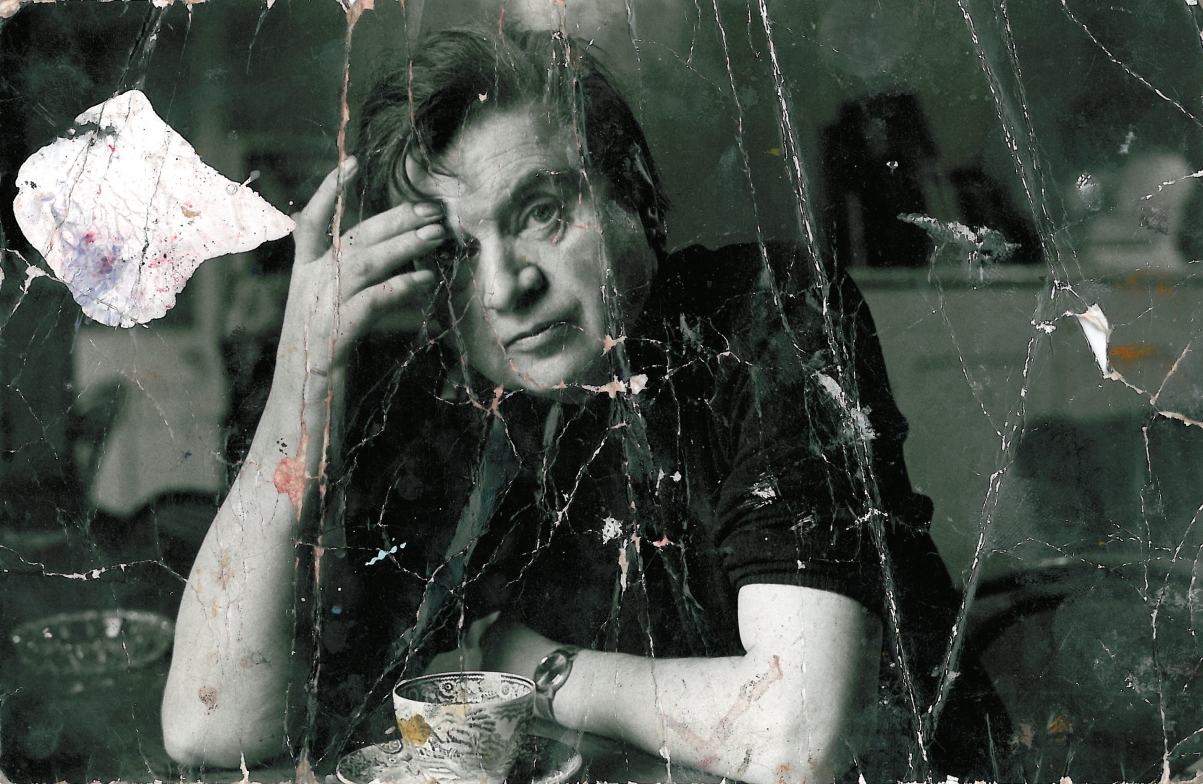
Photograph of Francis Bacon, by Henri
Cartier-Bresson, found amid the clutter of the artist’s studio
Bringing
home the Bacon
AIDAN DUNNE
|
NEWS | THE IRISH TIMES | SATURDAY, MAY 27 2000
Suddenly it seems as if Dublin has become Francis Bacon city. His observation
that he would like to return to the city of his birth, but could probably only
do so after he was dead, has been borne out. First there was the event that set
the bandwagon in motion: the sensational donation of the artist’s studio, by his
sole heir John Edwards, to the Hugh Lane Municipal Gallery. There was talk of a
treasure trove of Bacon material fossilised in the layers of stuff that had
accumulated like geological strata in his Reece Mews studio. A team of
archivists was enlisted to disentangle and document an estimated 10,000 separate
items. Hints were dropped about the possibility of other Bacon gifts following
the studio.
Then IMMA joined in, with its current exhibition of works on paper from the
archive of Barry Joule, Bacon’s neighbour, long-time friend, helper and
archivist. The Oisin Gallery, meanwhile, bought and put on display an early
Bacon canvas — a relative rarity since he destroyed most of his early work.
And now, next week, from June 1st, the Hugh Lane celebrates its coup in winning
the studio with a major retrospective exhibition of Bacon paintings that will
run throughout the summer.
Francis Bacon in Dublin, curated by the quintessential Bacon expert, David
Sylvester, offers an unmissable opportunity to assess the work of the man
generally described as the most important British artist since Turner.
When he died, a little over eight years ago in Spain, his body was cremated
without ceremony or mourners, as he had requested. By the time of his death, he
had reached an unassailable plateau of renown. Detractors could carp about
self-parody and Grand Guignol as much as they liked: his status as one of the
20th-century’s great artists was, and for the moment remains, secure
The core of his artistic achievement lies in his treatment of the human figure.
There is something undeniably compelling about his visualisations of the human
body as a kinetic blur of flesh and meat, and of heads as jumbled, contorted
masses, often coiled around the black orifice of a mouth that frames a scream.
It is customary, and indeed reasonable, to view the extremity of his imagery as
reflecting a century of horrors. For his part, he said he painted crucifixions
not as religious subjects but as examples of human behaviour. John Berger
remarked disapprovingly on his tendency to épater les bourgeois, protesting that
we were looking at his paintings rather than at the sites of real atrocity.
While he had a taste for the macabre, Bacon consistently maintained he was not
trying to depict horror. What he was after was something different, something
encapsulated in his often quoted phrase, "the brutality of fact", or his
frequently expressed wish to bypass the eyes of his viewers and communicate
directly with the nervous system. Certainly, an undercurrent of violence runs
through his work and sometimes takes centre-stage, from the urgent, sexual
wrestling of Two Figures (1953) to recurrent images of wounded flesh, blood
soaking through bandages and discarded syringes, or the grisly pile of
blood-soaked clothing in the central panel of the Triptych inspired by T.S.
Eliot’s Sweeney Agonistes (1967).
FOR the most part, the violence is inwardly directed, self-contained, a
condition of the flesh. Fascination and loathing mingle in his views of bodies,
whether alone; collapsed in racked, incoherent heaps; or fixed in strained,
muscular poses; or in pairs, fiercely grappling in fumbling, messy, carnivorous
sexual encounters. Ejaculatory spurts of pigment splashed across the canvas
became a stylistic trope.
He trawled an eclectic range of sources for imagery: medical textbooks on
diseases of the mouth and radiography, a still from Eisenstein’s Battleship
Potemkin, a postcard reproduction of Velasquez’s portrait of Pope Innocent X
(which inspired one of his most celebrated series of paintings), photographs of
apes and other animals, Muybridge’s sequential studies of The Human Figure in
Motion, newspaper and magazine cuttings, photographs of friends snapped by John
Deakin, a crucifixion by Cimabue, which he provocatively described as being like
a worm crawling down the cross. Many of these images attained an iconic status
relating specifically to the use he made of them.
He exploited not just photographic imagery but the pictorial syntax of
photography in bravura demonstrations of painting’s capacity to appropriate its
codes. There was, and still is in some quarters, a widespread assumption that
there is no point in painting the human subject now that we have myriad forms of
photography at our disposal, but Bacon was one of the figurative painters who
proved that there is a level of realism beyond the photographic, while being in
no way anti-photography.
On the contrary, he was fascinated by the way photography offered new ways of
looking — the way, for example, radiography revealed the skeletal armature. A
disembodied spine becomes mysteriously visible in one painting in 1975, but more
often he offers gross, fairly visceral anatomical intrusions. In contrast to the
livid, fleshy intensity of the figures, though, the backgrounds in his paintings
are flat and cursory. They are overtly theatrical spaces furnished with a few
minimal domestic props (he rarely ventured out-of-doors in his pictures),
including the trademark bare, dangling light bulb and light switch, a mattress
on a metal-framed bed, some items of modernist furniture, perhaps ones he had
designed himself in the 1930s, and a toilet bowl or basin.
Broadly speaking, whereas in most Western representational painting the spaces
between things serve to integrate figures and ground, in Bacon’s work the
background spaces systematically isolate the figures. They are as exposed as
actors on-stage — a condition often emphasised by the superimpositions of a
cage-like grid — and subjected to an intrusive, forensic scrutiny.
Despite the apparent bleakness of his painterly vision, backed up by his firm,
uncompromising rejection of notions of deity, afterlife and transcendent
purpose, Bacon was not usually a gloomy person. Friends, ex-friends and enemies
all attest that he was one of those individuals possessed of a crackling,
electric energy, that he was an energising presence. It was instantly noticeable
that the atmosphere came to life when he wandered into one of his habitual Soho
haunts, chiefly the French Pub, Wheelers seafood restaurant or Muriel Belcher’s
Colony Room, and not only, as Bruce Bernard remarked, because "nearly everyone
likes being bought champagne and lunch". The bar staff at the French Pub liked
him "for reasons only loosely connected with commerce", and "the real pleasure
of these occasions was the spectacle of care being banished with such elan".
There is a plausible view, though, that his spectacular generosity was also a
peculiarly effective way of controlling people, and on occasion he could turn,
especially on friends.
Those places in Soho, with visits to gambling clubs, formed Bacon’s daily
routine from about 12.30 p.m. Prior to that he painted, from early in the
morning, usually with a hangover, which, he said, gave him the necessary clarity
of mind. Even into his 70s, he was a dapper figure, with a liking for leather
jackets and tight trousers. He hated growing old and, for as long as he could,
behaved as if he was young. He bemoaned the fact that, though he could still
attract younger men through the sheer force of his personality, once they heard
his age, he never saw them again.
Physically and mentally resilient, he sustained a life of perpetual excess and
recurrent personal tragedy. His romantic life was, with a few notable
exceptions, a sequence of disasters, including his involvement with Peter Lacy,
a self-destructive alcoholic. There are echoes of the tragedy of Joe Orton and
Kenneth Halliwell in his ill-starred relationship with George Dyer, though in
the end Dyer didn’t kill Bacon, just himself, taking a fatal overdose and dying
wretchedly, on the toilet, in a hotel in Paris on the eve of the opening of
Bacon’s retrospective there. Bacon never really got over that. The suicide is
graphically depicted in Triptych May-June 1973, two years after the event. With
uncanny symmetry, the telegram telling him of Peter Lacy’s death had arrived on
the opening day of his first retrospective at the Tate.
Without question, Bacon’s sexuality informs his work, though for a long time
this was politely ignored with references to universality and the human
condition. The paintings attest that he was an intensely sexual person. The
story goes that he was banished from the family home, aged 16, when his father,
an ex-army officer who trained horses on the Curragh, discovered him wearing his
mother’s underclothes. He maintained a fondness for wearing women’s underwear,
and was particularly fond of fishnet stockings.
He confessed that he was sexually attracted to his volatile, domineering father.
It is therefore tempting to see, in his penchant for bruising sexual encounters,
a ritualised re-enactment of that attraction, together with the requisite
punishment for acting on it, but that is probably a gross over-simplification.
He had few qualms about following his sexual impulses wherever they led him.
In the mid-1950s, when he was spending much of each year in Tangier, then home
to Paul Bowles, William Burroughs and Alan Ginsberg, the British Consul-General,
Bryce Nairn, became alarmed that the artist was repeatedly being mugged in the
early hours of the morning. He asked the chief of police if he could do
anything, and he promised to look into it. A few weeks later he called on Nairn
and reported that, alas, there was nothing to be done: Monsieur liked being
beaten up.
There is, though, quite another side to his personal relationships. Much of his
social life, including his long, exceptionally harmonious friendship with John
Edwards, whom he more or less adopted, seems related to an orphan’s instinct to
form surrogate families around himself. On one occasion when someone asked him
what he would be if he hadn’t become an artist he replied: "A mother". And late
in life, against the odds and his own expectations, he found a new admirer, a
prosperous, handsome Spaniard less than half his age, with whom he embarked on a
fulfilling relationship.
The critic Peter Fuller typified those who were ultimately repelled at the
apparent nihilism of his work, its determined lack of affirmation. The paradox
was that Bacon, a conventionally gifted painter, took on some of the most
spiritually charged subjects of western art, but in what has been described as a
mood of "negative certainty". Fuller, who felt that it was the artist’s duty in
a secular age to cling to and promulgate even the illusory comfort of belief,
could not in the end accept such bleak directness. Yet there is something so
honest and unassuming about Bacon’s work, which is always local and direct, that
it amounts to a kind of affirmation
in itself.
Francis Bacon in Dublin is at the Hugh Lane Municipal Gallery from June 1st to
August 31st. The Francis Bacon Studio is expected to open to the public towards
the end of the year. Some material from the studio will be on view during the
exhibition.
Francis Bacon was born in a Baggot Street nursing home on October 28th, 1909.
His parents were English: Anthony Bacon, an ex-British army officer and horse
trainer, and Christina Firth, whose family was in the steel business. Francis
left the family home in Co Kildare in 1926, after a row with his father. With a
small allowance from his mother, he lived first in London, then Berlin and
Paris.
An exhibition of Picasso’s drawings prompted him to paint. In London he designed
modernist furniture and carpets and also painted, exhibiting his work in various
group shows throughout the 1930s. He destroyed most of his early work. Forced
out of the Civil Defence because of his severe asthma during the second World
War, in 1944 he painted Three Figures at the Base of a Crucifixion, a startling
triptych which established his reputation and caused an extraordinary outcry.
After visiting South Africa in 1950 to see his mother and sisters, he met Peter
Lacy, an ex-fighter pilot, and embarked on a long, difficult relationship with
him, spending much of each year in Tangier. In London he became a fixture in
Soho, where he was at the centre of a close-knit social scene.
He began a 20-year friendship with Lucian Freud, which eventually cooled. His
work won gradual acceptance and acclaim throughout the 1950s, including an
invitation to exhibit in the British Pavilion at the Venice Biennale in 1954.
From 1960, he showed with the Marlborough Gallery, and the following year moved
into Reece Mews, his base for the rest of his life. His small, paint-spattered
studio there became a symbol of his approach to life and art.
In 1962, the Tate Gallery held its first retrospective of his work. The
following year, he began an intense, fraught relationship with George Dyer, who
inspired some of his best figurative painting, and who died two nights before
the opening of a major Bacon show at the Grand Palais in Paris in 1971. He first
met John Edwards in 1974 and they remained friends for the rest of Bacon’s life.
Despite his advancing age, he kept up a hectic pace, working, drinking and
gambling, and was honoured with numerous exhibitions at home and abroad. When he
died, of a heart attack in Madrid in 1992, he left everything to John Edwards.
The dark obsessions of a tortured genius
As a major exhibition of Francis Bacon’s work opens in Dublin,
Barry Egan looks at the turbulent life of one of the most abused
and famous artists of the century.
BARRY EGAN | EXHIBITIONS | SUNDAY INDEPENDENT | SUNDAY, MAY 28, 2000
“MY
MOTHER promised me never to grow old,'” Francis Bacon used to say,” and now I
now what she means.''
In many senses, Francis kept his promise to mother Winifred. He never grew old.
He died in Madrid in 1992 aged 82 with his last lover, a Spanish banker. He
painted and lived by sensation. He painted the screaming, open mouths of the
Popes based on Velazquez’s portrait of Innocent X because he found their white
teeth arousing. When Eastender George Dyer, the burglar, broke into Francis
Bacon's house one night in 1964, he got more than he bargained for. “Take all
your clothes off,'” Francis ordered. “And get into bed with me. Then you can
have all you want.'” They were to remain lovers for almost a decade.
In an interview not long before his death, Bacon reflected finally that he
“hated the thought of it all coming to an end”. Then he paused and shouted at
the top of his old voice: “Shall we have some champagne!” When
The Observer rang his house in Christmas 1991 to ask if Francis Bacon had
passed away, the great undead artist answered the phone. “I’m sorry I’m not able
to help on this occasion,” he told the paper’s eager obituarist.
Born at 63 Baggot Street, Dublin, in a private nursing home in 1909, Francis was
a delicate child suffering from asthma and other recurrent ailments. None of
this endeared him The Weakling to his tyrannical father, Captain Eddy, a
moralising bully, known and feared for his extreme rages throughout the horsey
establishment in Co Kildare.
A retired army officer who came to Ireland to train horses, and lived behind
trenches and sandbags before Ireland’s independence from Britain, his
self-righteous wrath knew no bounds. He had his young son horsewhipped regularly
by the grooms (they later took turns sexually abusing Francis in the stables).
When he found his effeminate son trying on his mother Winifred’s underwear, the
failed racehorse trainer disgustedly turned the 16-year-old out of the house.
Francis left Ireland for London in 1925.
“I
can’t say I was what’s called moral when I was young,” Bacon said, describing
his early time in London. “Morality is a luxury that has come on me with age. I
think I did whatever I could to get by. I’d always stolen money from my father
whenever I could. And when I got to London I'd often take a room and not pay the
rent.
“Although
my parents had always told me that I was ugly, I found that some people were
attracted to me and thought that I was pretty at that age. So I decided to do
everything to get people to take a fancy to me and I didn’t very much care what
happened after that.”
He had mixed feelings towards his father. “I disliked him, but I was sexually
attracted to him. It was only later, through the grooms and the people in the
stables I had affairs with, I realised that it was a sexual attraction towards
my father.”
Bacon revealed little in public about his sexuality. One of the few obituary
notices to have direct quotations from the artist on the subject was Lord Gowrie’s
enlightening obit in The Guardian.
“He
told me that he [Bacon] had come to the view that homosexuality was an
affliction, that it had turned him, at one point in his life, into a crook. The
crookishness, not the sex, was a source of shame and if he talked at all, it was
his nature to tell everything. We both liked Proust and agreed that the
beginning of Cities of the Plain said all that needed to be said about being
homosexual.”
In Remembrance of Things Past: Cities of the
Plain Proust describes a casual sexual meeting between M de Charlus
(“whose ideal is manly precisely because [his] temperament is feminine’”,) and
Jupien, a tailor. The “crook” reference in Lord Gowrie’s obituary was Bacon
remembering the lengths carnal and otherwise
—
he went to pay his rent in London, Berlin and Paris, after his father had cast
this fragile teenager alone into the world. “I remember once, when I was broke,
I got myself picked up by a man in Dover Street,” Bacon recalled before he died.
“He
was Greek but he'd been living in London for a long time, and he was obviously a
rich man. Well, after we had been in his bedroom, he went out into the bathroom.
And I started going through his pockets. He must have been watching me in the
mirror, because suddenly he came out and said: ‘What are you doing, Francis?’ I
said: ‘You know what I’m doing.’ Then he said: ‘You don’t have to do that. Just
ask.’
“And
he took me down to a bank and drew out one hundred pounds, which was a very
large sum then, and gave it to me. It was a marvellous way to behave, and I've
never forgotten it.” Indeed Bacon maintained, famously, that his life
“has
been divided between the gutter and the Ritz. I have lived on a diet of oysters
and despair”.
His legendary love affairs were frequently stormy, sometimes violent, but never
dull. One lover, an alcoholic ex-RAF pilot who played the piano in Dean’s Bar,
Tangier, Peter Lacey died on the opening day of Bacon’s 1962 Tate Gallery show.
He drank himself to death. Bacon attended the premiere and publicly at least
acted as though nothing untoward had happened.
Ten years later, Lacey’s successor, George Dyer, also met an untimely death. He
committed suicide on the day of Bacon’s larger and even more important
retrospective which opened at the Grand Palais in Paris in 1972, his body found
crumpled over a toilet bowl.
Dyer’s death seem to reaffirm Bacon’s disillusionment with human existence. “You
concentrate on something which was an obsession, and what you would put into
your obsession with the physical act you put into your work. Because one of the
most terrible things about so-called love, certainly for the artist, I think, is
the destruction.'”
His asthma having preventing him from entering the army at the outbreak of the
Second World War, Bacon joined the ambulance rescue squad instead. It is not
beyond the realms of reason that the mangled horrors Bacon saw added a darker
colour to the already black canvas of his soul.
Neither does it take a degree in Freudian psychoanalysis to conclude that the
dark angst behind Bacon’s genius was fuelled by the abuse he suffered at the
hands of his father’s
grooms. It’s
in his work for those with the eyes and the will to see it. The hidden turmoil,
the rampant sexuality, the decay, the pain.
In an interview in 1991 with art critic Richard Cork shortly before his death,
Bacon was revealing about his sexuality and the homophobic reception of his work
in Britain: “Oh, they don’t like my work here at all. Maybe it’s the savagery
they find in it, or maybe it’s the homosexuality which I suppose is in my work.
I don’t go about shouting that I’m gay, but Aids has made it all much worse.
People are very, very odd about it.'”
The homophobic boot was well and truly slammed home into Bacon’s face when
Margaret Thatcher described him as “that dreadful man who paints horrible
pictures”. (The Iron Lady wouldn’t have liked him anyway, but she would have
liked Bacon, an enemy of cant, even less when he turned down a knighthood in
1977.) This was mild compared to the late Peter Fuller’s assessment of Bacon’s
subjects as queer people vomited up from the underworld: “Lonely figures still
throwing up in lavatory bowls beneath naked light bulbs, [who] occasionally ...
hunch together on couches for some barbarous act of congress, or be sprawled
disgorging their abdomens”.
Bacon believed that man’s existence was “a game without reason”. His was a
fatalistic view: “We live, we die, and that is all.” He heaped ridicule on the
idea of the Tate giving a whole gallery to his past painting. In a cutting
reference to Henry Moore, he noted that he found “the profound vanity of these
old men who try to immortalise themselves through foundations very boring”.
* Francis Bacon in Dublin, the first major exhibition of Bacon’s paintings held
in Ireland since 1965, will be given its official opening at the Hugh Lane
Municipal Gallery of Modern Art in Dublin on Wednesday.
Life works
Critic ANTHONY CRONIN looks back on the art and attitudes to life and
death of his friend Francis Bacon before a keynote exhibition in Dublin
ANTHONY CRONIN | THE SUNDAY TIMES | SUNDAY, MAY 28, 2000
The Irishness of other people is always a subject of great interest to the
Irish. It is not always of equivalent interest to the people themselves.
Francis Bacon displayed little interest in whatever degree of Irishness he
may have had, and he was certainly not overly conscious of it. Indeed, so
oblivious was he of such a strain in himself that he might even use a phrase
such as "you Irish" when something one said or did amused him.
When, after he died, I read an obituary in which Paul Johnson claimed his
painting reflected "an Irish fear of death", I remembered such an occasion. He
had unexpectedly arrived at my flat in Battersea one afternoon with the Indian
poet Dom Moraes. Possibly because Dom had just been reporting on the Chinese
invasion of Tibet and had said he had seen people die, the conversation turned
to death in general.
Bacon chose to regard what he saw as my reluctance to let go of some sort of
belief in the afterlife as particularly Irish, and he was greatly amused by it.
His own attitude, as expressed over the gin at the kitchen table that far-off
afternoon, was succinct and simple: "When you’re dead, you’re dead."
Which does not mean Johnson was not, in some sense, right, though it is
worth remarking that Bacon is one of those painters who, rightly or wrongly,
tempt critics into seeing their work as always being "about" something large and
important, whether that be "the human condition", loneliness, sex,
existentialism, death or despair.
Most of his titles for paintings are quite exact and humble. I distinctly
remember the paintings now famous as "the Popes" or "the Cardinals" being
originally called simply "Six Studies after Velazquez". And this is what they
are, variations on the theme of Velazquez’s portrait of Pope Innocent X, a
painting that would lend itself to just as much discourse about the human
condition, or the weakness and terror of the rich and powerful, as Bacon’s works
do - though it does not perhaps reveal the terror or expose the weakness of the
supposedly great as much as Titian’s portrait of Pope Paul III with his nephews,
or even Raphael’s unshaven Leo X with cardinals de’ Medici and de’ Rossi.
But the modernist Bacon was, incidentally, the last to deny the greatness of
certain old masters, though he always spoke of them in painterly terms. Neither
was he one of those painters who affect to believe that their art cannot be
talked about and that other people (and writers particularly) cannot understand
it.
He came into the French pub in Dean Street one forenoon, fresh from a
morning’s work and, as usual, entirely free of hangover, and told me he had just
that morning "discovered the secret" of painting. A cautious Irishman, ready at
all stages for temporising smalltalk, I was astonished at the directness and
sincerity with which this information was imparted, but at this distance of time
I cannot, alas, say in so many words what the secret was, only that it had
something to do with Frans Hals and his way of painting lace.
Whether his painting was unconsciously or on some other level influenced by
anything that may be called "an Irish fear of death", he, of course, made no
secret of the fact that he was born in Ireland (at 63 Lower Baggot Street,
Dublin, where there is a commemorative plaque) and that, apart from an interval
in London during the first world war when his father worked for the War Office,
he was brought up here, not leaving until he was about 16.
Perhaps the most revealing story I remember him telling about his early
childhood in Ireland concerned a maid or nanny — I had the impression of a sort
of Irish mother’s help — who was left in charge of him for long periods when his
parents were absent from the house. She had a soldier boyfriend who came
visiting at these times and, of course, the couple wanted to be alone.
But Francis was a jealous and endlessly demanding little boy who would
constantly interrupt their lovemaking on one pretext or another. As a result,
she took to locking him in a cupboard at the top of the stairs when her
boyfriend arrived. Confined in the darkness of this cupboard, Francis would
scream — perhaps for several hours at a time — but, as he was out of earshot of
the happy courting couple, in vain.
He claimed he owed a great deal to that cupboard, and when I quoted WH
Auden’s recipe for the upbringing of poets — "As much neurosis as the child can
bear" — he was intrigued and delighted. It might be over-solemn and stretching
interpretation a bit to derive particular works from these experiences, but his
paintings are frequently about people confined, trapped one could say, in some
strange box or limited space, some of them evidently screaming.
Although there is a temptation to see these and other Bacon works as
narrative, to invest them with a circumstance, a story and even a moral, what
makes them unforgettable are the pictorial terms in which the predicaments of
his people are conveyed. Our response is governed by the curved brushstrokes
that create those curious concavities in the faces of his subjects and by the
inexplicable effect of the almost dry brush dragging paint across an unsized
canvas.
In the years in which I had some acquaintance with him, the late 1950s and
early 1960s, he gave the impression that he had come to terms with life and was
determined to enjoy it. Despite his determination and ability to enjoy himself,
however, there is no doubt that his work takes a bleak and, to use the
fashionable phrase, "disturbing" view of the human condition.
More than almost any other significant artist of the 20th century, he lived
in his time, and his time was post-war. His work of those years is contemporary
with Samuel Beckett’s, with the atom bomb and with the knowledge of the
holocaust, a time when illusions were stripped away and reality was confronted
as perhaps never before (or since?).
Francis told the American photographer Peter Beard: "I haven’t any morals to
preach. I just work as closely to my nerves as I can." A gambler and, in his
youth, a man frequently dependent on rich homosexuals, he had lived on his wits
and, doubtless, his nerves for long periods. He continued to do this as a
painter, pushing each work as far as it would go, and destroying it if it did
not succeed.
In a way I find entirely admirable, he was a gambler through and through,
always prepared to cut his losses. He had a gambler’s readiness for the worst,
and, it is hardly necessary to say, a gambler’s zest for it too.
Bringing home the Bacon
FRANCIS BACON: The Dublin-born artist,
who died
in 1992, once said ‘all painting is an
accident’
ANNA CAREY |
ARTS PROFILE | THE ESSENTIALS | THE SUNDAY TRIBUNE | 28 MAY, 2000
WHILE to some it my look like a messy room full of mucky canvases and drying-out
tubes of paint, the arrival of Francis Bacon’s
studio (or rather its contents) from 7, Reece Mews in South Kensington to the
Hugh Lane Gallery is undoubtedly the biggest artistic event to happen in Dublin
for a long time. While the studio itself will not be open to the public until
November, to celebrate the acquisition of the studio the gallery are organising
a programme of Bacon-related exhibitions.
Bacon,
who died in 1992, is never really regarded as an Irish artist, although he was
born in Dublin, at 63 Lower Baggot Street in 1906, to English parents. His
father, Anthony Edward Mortimer Bacon, known as Eddy, had retired from the
British Army and was keen to become a horse trainer. Despite the fact that Bacon
lived in Ireland until he was 16, he never seemed to show much interest in his
own
“Irishness”.
His friend, the writer Anthony Cronin said that Bacon sometimes used terms like
“you
Irish”,
obviously not including himself. However, he was brought up here, bar short
spells living in England during the First World War.
His
family were middle class (his mother, Winifred Firth, was the grand-daughter of
L L Firth, the inventor of stainless steel) and they lived in Cannycourt, near
the Curragh in Kildare. After the First World War they moved to Laois and then
back to Kildare, where they settled at Straffan Lodge, where Francis spent his
teenage years.
He was kicked out of home when his father discovered his active homosexuality as
well as his habit of wearing his mother’s
underwear. He went off to London, but his family tracked him down and he was
sent to live with an uncle in Berlin (this being the mid-1920s, Berlin possibly
wasn’t
the best place to send a young man accused of being a
“moral
degenerate”).
There he became seriously interested in the visual arts, and a trip to Paris the
following year gave him the opportunity to see a Picasso exhibition, which was a
great early influence.
Despite having had no formal training, he began his life as an artist. It wasn’t
easy at first; his first one-man show, in 1934, was not a success. He was an
artistic outsider, and was rejected for the International Surrealist Exhibition
in 1936 for not being
“surreal”
enough. But after the Second World War (in which he had served with the Civil
Defence unit until forced to stop because of his asthma), his art really took
off. Just 20 years later the Guggenheim in New York was holding retrospective
exhibitions of his work, and by the 70s his paintings were touring around the
world.
The Dublin exhibition
won’t
be easy viewing; Bacon’s
paintings simply aren’t.
The art historian Robert Hughes wrote that Bacon was the
“only
one other painter [besides Willem De Kooning who] was able to incarnate such
anxieties in the human body”.
The figures in his paintings are distorted, reduced to bestial figures, like the
screaming toothy mouths of his groundbreaking
“Three
Studies for Figures at the Base of a Crucifixion”
(1944). His figures always seem to be screaming; they frequently lack eyes and
noses, but they seldom lack mouths.
Anthony Cronin remembers Bacon telling him about a maid or a nanny his family
employed when they lived in Ireland who used to lock the infant Francis in a
cupboard when her boyfriend came around.
“Confined
in the darkness of the cupboard,”
Cronin writes in the catalogue accompanying in the current exhibition,
“Francis
would scream
—
perhaps for several hours at a time
—
but, since he was out of the earshot of the happy courting couple, completely in
vain. He claimed he owed a great deal to that cupboard.”
Bacon
was open in talking about his art, and the many interviews he conducted with
David Sylvester (which were published in 1987), who is the curator of the
forthcoming Bacon exhibition, give an invaluable insight into the way he worked.
Perhaps as a result of his lack of formal training, he felt comfortable enough
to say
“all
painting is an accident”.
He declared that his paintings rarely turned out the way he had initially
invisaged, and that the end result was often formed simply by the texture of the
paint. But, he added,
“there
is a possibility that you get though this accidental thing something much more
profound than what you really wanted”.
He always preferred to work from photographs rather than from live models,
unless he was painting people he didn’t
know very well. He said that friends posing
“inhibit
me ... because if I like them I don’t
want to practice before them the injury that I do to them in my work... people
believe that the distortions of them are an injury to them.”
While on canvas Bacon comes across as a monster; in real life he was well liked.
A stalwart of the slightly sleazy but hugely influential Soho art scene in
post-war London, he was a volatile character but ad many friends. His friend and
model Henrietta Morase wrote that
“when
he appeared, the air brightened, groups of people were animated, electricity
hummed and buzzed and bottles of champagne appeared”. His homosexuality was well
known, and his eight-year relationship with a London small-time crook called
George Dyer was the subject of the 1998 film Love is the Devil, in
which Bacon was played by Derek Jacobi.
In 1974 he met John Edwards and they were together until the end of
Bacon’s
life. Bacon made him his sole heir, and it is thanks to Edwards that Dublin has
received the gift of the studio. Bacon was always open about letting the world
into his mind; now we’ll
get to go into his studio as well.
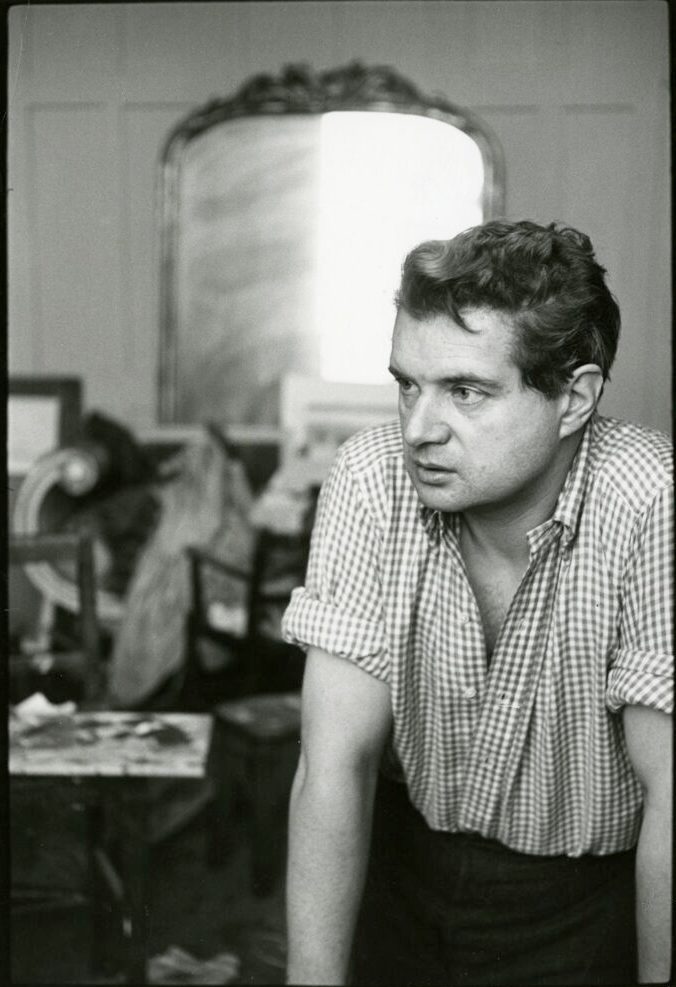
Francis Bacon Screaming expert
Dublin gallery finally
brings home the Bacon
DUBLINER’S DIARY WITH
GALEN ENGLISH
GALEN ENGLISH
|
DUBLUNER’S DIARY
| EVENING HERALD | WEDNESDAY, MAY 31, 2000
FRANCIS Bacon is back
in town for the first time in over 30 years but this time exhibitors at the Hugh
Lane Gallery have jetted in his works from across the globe.
A collection of
paintings by the late artist who grew up in Dublin and is regarded as one of the
greatest Irish painters of all time hasn’t
been shown in the city since 1965.
Gallery workers have
borrowed a massive 46 paintings from private collections across the globe just
for the show which runs from June 1 to August 31.
“This is the biggest and best coming together of his
works we have ever had in Ireland and I think people will find the exhibition
extremely powerful,” revealed exhibition head, Christina Kennedy.
Bacon figure on show in Dublin
NEWS | BATLEY NEWS | THURSDAY, JUNE
1, 2000
A PAINTING by controversial artist Francis
Bacon which was acquired by Batley Borough Council almost 50 years ago has been
shipped to Dublin to take its place in an exhibition which opens today.
Huddersfield Art Gallery has loaned Figure
Study II (1945-46), now part of the Kirklees Collection, to the Francis Bacon in
Dublin exhibition at the Hugh Lane Municipal Gallery of Modern Art. The
exhibition is being billed as the most comprehensive retrospective of the
artist’s work in either Britain or Ire land since his death in 1992.
In 1952 the work, valued at £3m, was acquired
by Batley Borough Council and displayed at Batley Art Gallery
—
then based at Bagshaw Museum
—
but later transferred to Huddersfield.
It features a human torso, sheltered by an
umbrella and draped by an overcoat, leaning over a potted plant. The figure’s
mouth is wide open in anguish and the background is blood coloured.
The exhibition, which will be shown only in
Dublin, traces the development of Bacon’s artistic career and runs until the end
of August.
City Lights
CITY LIGHTS | METRO | EVENING HERALD | THURSDAY, 1 JUNE, 2000
Francis
Bacon in Dublin Hugh Lane Municipal gallery of Modern Art, Parnell Square North.
This is the first major exhibition of Bacon’s works in Ireland since 1965, and
the most comprehensive collection of the artist’s work since his death in 1992.
The exhibition is comprised of pieces from private and public collections.
It
features a selection of fascinating items from Bacon’s studio which was donated
in it’s entirity to the Hugh Lane Gallery, and some works dating from the 1950s
on loan from the Francis Bacon Estate.
Tryptiches, crucifictions, portraits and studies of the human body dating from
the 30s to the late 80s reveal the development of Bacon’s idiosyncratic artistic
powers.
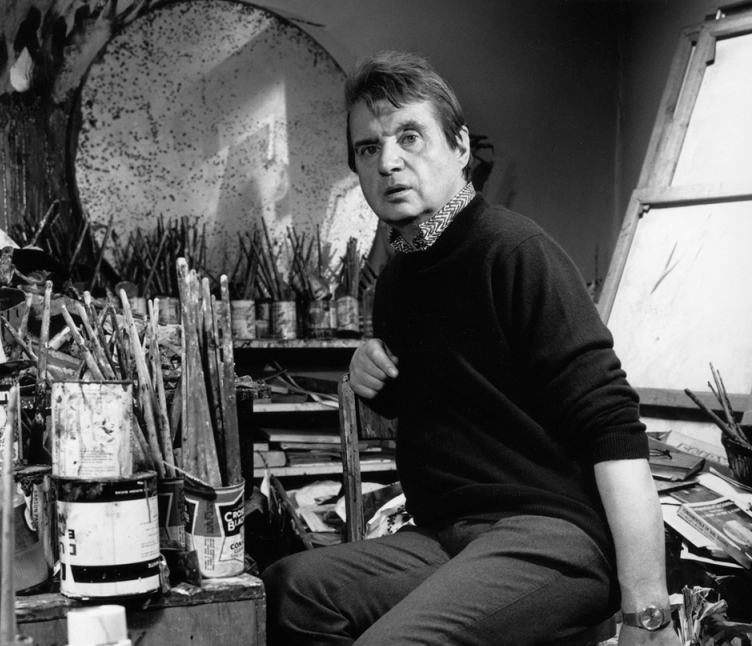
SMOKY BACON: Hugh Lane Gallery
Bringing home the Bacon
ART: Bruce
Arnold on two books to accompany the Francis Bacon exhibition
which opened
at the Hugh Lane Gallery in Dublin this week
BRUCE
ARNOLD | BOOKS | THE IRISH INDEPENDENT | SATURDAY, 3 JUNE, 2000
I met Francis Bacon only once, in the mews where he worked, and where for a time
my publishers had offices. He thought he knew me, and started a conversation
immediately, his voice soft, almost silky. He was physically quite small, and in
his manner androgynous.
As David Sylvester says, in his perceptive new book, Looking Back at Francis
Bacon, Thames and Hudson: "The two sexes met in Francis Bacon, more than in
any other human being I have encountered. At moments he was one of the most
feminine of men, at others, the most masculine: he could switch suddenly and
unpredictably. That duality did more than anything perhaps to make to make his
presence so famously seductive and compelling, and to make him so peculiarly
wise and realistic in his observation of life." It is also responsible for the
sensuality in his art, for a great deal of its tension and violence.
More pertinently, from the point of view of his early life it shaped his
relationship with is father, who despised him for his effeminacy. His father was
a retired army captain, whose own father held the same rank, and whose
grandfather was a general. This army background was coupled with some success in
racehorse breeding, and Bacon found the company of the grooms more to his taste,
including, as he grew up, his sexual taste, than he did the family environment.
A mixture of tension, fear, happiness, isolation, a considerable affection for
his maternal grandmother, to whom he escaped from time to time from his parents
— she lived in County Laois — created in him an ambivalence about his so-called
'Irishness'.
When I first had indirect dealings with him, in 1968, it was because I had
included him in my book, A Concise History of Irish Art. My publisher sought
permission for the use of an illustration, and was told in no uncertain terms by
Bacon that he had no wish whatever to be associated with Ireland in a book on
Irish art.
In a sense he was right. There was less advantage in the label then. But I take
a certain wry pleasure in seeing the handsome the Francis Bacon in Dublin., a
collection of essays and catalogue which is to accompany the exhibition which
opened at the Hugh Lane Gallery this week. Bothe the show, and the acquisition
of Bacon’s studio — which is to be reconstructed din the same gallery —
represent a sensible and just homecoming, even if the artist himself,
essentially a Londoner, might have had reservations.
David Sylveter’s book is fascinating. He knew the artist for 40 years. He
interviewed him many times. He was duped by him. Bacon kept secret the whole
resource in drawings behind the paintings, representing himself as working
directly onto the canvas, when in fact he prepared from photographs and
drawings. He also declared himself as uninterested in the normal compositional
structure of his work. In a telling quotation, Bacon asserted: "I don’t think
the layout of pictures is to me really that important. I mean, you can use the
same layout for the whole of your life. It’s the way they are painted that
matters."
This point is central to one’s understanding of the painter. Within the paint
the glorious sense of life and movement is created, the tussle of existence —
often the tussle of an individual form, or of two figures embracing or
confronting in some way — float onto the canvas without seeming to be
positioned. This is a strength with Bacon, giving a disembodied force and focus,
where in other artists it might cause the work to fall apart. Bacon forces your
visual attention towards the figure while at the same time challenging your
intellectual assessment of why it all holds together.
Sylvester deals with much more, of course, than this hidden self who concealed,
as Miro did, the origins of work. But the book is not a 'Life': it describes
and analyses the major works, from 1933 to the early 1990s., it contains a good
deal of Bacon himself, through interviews, but biography is confined to a short
addendum.
Bacon had a poor opinion of people’s understanding of painting, and no patience
at all with the habitual endeavour to 'see' meaning instead of seeing the
aesthetics of the paint itself. How wonderfully right he was.
In Francis Bacon in Dublin, Louis le Brocquy, who contributes one of the essays,
sums this up in a different ay when he writes about the physicality of Bacon’s
work, the intensely dramatic nature of his painting, like the painting of Goya,
Delacroix, even Turner. Bacon transcends realism, but not appearance, and not
the factual reality. This remains absolutely central, and is the reason Bacon
eschewed abstraction in art. Grey Gowrie and Anthony Cronin contribute
interesting essays on the artist in the same volume.
Francis Bacon in Dublin: How the wheel comes full circle! I look forward to the
show next week in some trepidation. He is not a painter to be 'enjoyed' in the
conventional sense. His canvases overwhelm. No book can present in any adequate
way the aggressive nature of his vision, the scale of his work, the sheer power
of the paint, the visceral sense of human life which is combined with a perverse
but very real humanity. Nevertheless, both these books are produced to a high
standard, the illustrations representing an excellent aide memoire to the real
experience. Do not, however, miss the exhibition itself.
Bruce Arnold writes on politics and the arts for the Irish Independent
Bacon and Egos
CATHERINE FOLEY | THE IRISH TIMES | SATURDAY, JUNE 3, 2000
Liffey quays heralding the arrival of the
Francis Bacon exhibition at the Hugh Lane Gallery, which hosted an opening party
on Wednesday evening for a modest 1,000 guest.
Dublin City Manager,
John Fitzgerald, who hails from Galbally, Co Limerick, is bursting with
proprietorial pride. The show, which runs until the end of August, is remarkable
enough but there is also the reconstruction of Bacon’s studio to look forward
to, which should be finished by November.
Barbara Dawson, the
gallery director, appears as usual in a vivid streak of colour. The "cadmium
orange" Indian-style dress is, she explains, inspired by Francis Bacon who often
used this colour in his work. She reminds us that the artist, who died eight
years ago, was born in Dublin in 1909. "He always had an ambivalent relationship
with his place of birth," says Mary Freehill, Lord Mayor of Dublin.
Charlotte McDonnell
(12) who is here from Ballsbridge with her parents, Aiden and Anne McDonnell, is
also honouring the great artist by wearing shocking pink Buffalo shoes. Pat
Murphy, chairman of the Arts Council, is a long-time Bacon fan. "I’ve always
admired him," he says. "Even though some of his imagery is tough stuff, his
expression is very strong, original and very beautiful.
Denis O’Brien,
chairman of ESAT and sponsor of the exhibition, chats to its curator David
Sylvester, who is acknowledged as a world-wide authority on the artist. Bringing
a hint of Mediterranean sun to the evening is the Le Brocquy family — Louis,
Anne Madden and their son Pierre.
Margaret and Desmond
Downes are here also, preparing to leave in time to catch the opening of a new
play The Last Days of God by Colin O’Connor at Theatre Space@Henry
Place. It is co-produced by their son Alexander with Conor McPherson and costume
design is by their daughter Lucy.
Returning to life
CIARA FERGUSON | ART | THE GUIDE | SUNDAY INDEPENDENT | DUBLIN |
SUNDAY, 4 JUNE, 2000
PERSONALLY I hate the work of Francis Bacon.
It depresses my very soul because it reminds me of the base potential
grotesqueness of man as animal when what I need is to be reminded of man's
humanity and capacity to overcome. Dark, dour distorted figures define Bacon’s
work, the human figure stripped of self-respect where hope gives way to
self-destruction.
There is no beauty
here, nothing elevating, nor indeed mundane, but only fear screaming from the
canvas in a picture of degradation, despair and decay.
“I
think that man now realises he is an accident, that he is a completely futile
being, that he has to play out the game without reason . . .” said
the man born in Dublin in 1909. The ability to provoke is a mighty sword and one
that Bacon had in excess. His paintings are the manifestation of a view formed
by an abusive, brutal childhood and a decadent, desperate adulthood.
Disillusion rather
than hope drove Francis Bacon. I suspect if he didn’t possess such painterly
genius to pluck the horror from his soul he would have died long before the age
of 82. Whether you despise or are captivated by his work it will never leave you
indifferent.
Francis Bacon in
Dublin is
one of the most important exhibitions of modern art to come to Dublin in recent
times. Organised by the Hugh Lane Gallery to celebrate the donation by John
Edwards of the entire contents of the artist’s studio (opening in November), and
curated by David Sylvester, it is the most comprehensive retrospective of
Bacon’s work in either Britain or Ireland since his death in 1992.
Featuring 44 major
works from leading public and private collections, it also includes seven works
from the 1950s on loan from the Francis Bacon Estate. One of the strongest and
most powerful works from the Pope series entitled Study after Velazquez is also
shown.
The exhibition
traces the development of Bacon’s artistic career from early works such as
Crucifixion, painted in 1933, to his Portrait
of John Edwards
(1988). There are eight triptychs, including
Triptych May-June
(1973) and Second Version of Triptych (1988). Two other monumental works in this
format are Triptych Inspired by TS Eliot’s poem ‘Sweeney
Agonistes’ (1967)
and
Triptych: Studies
from the Human Body
(1970).
“I
don’t think of a picture as the same as life,” he
said, “but
I think in a curious way the pictures I like reflect life and return me to life
more violently . . .”
Bacon stripped to bare bones
Marianne Hartigan marvels
at the fascinating works of Francis Bacon
at
the Hugh Lane Gallery
MARIANNE HARTIGAN | VISUAL ART | THE SUNDAY TRIBUNE | SUNDAY 4 JUNE 2000
I AMBLED into the Hugh Lane Municipal Gallery subconsciously expecting to see
its familiar paintings on the walls — I knew I was attending the preview but my
mind was on other things — and was startled into complete consciousness by the
presence of Francis Bacon’s dark, arresting portraits. From the walls o the
sculpture hall gaze disturbing, distorted figures. It is such a strange
phenomenon to see works that you know well in reproduction in reality It’s a bit
like meeting a screen star or celebrity in the flesh.
The works, like the celebs, are often smaller or larger than you had imagined —
how many people have been amazed by the small size of the 'Mona Lisa' for
instance? But, in most cases the star quality shines through. Often the viewer
is impressed by the physical presence of the art work, by its texture, by the
colour, and subtle nuances that are lost in reproduction.
One of the most obvious features in this instance is Bacon’s background colour
which, in reality is such a strong feature of his works, but which seem to be
lost in photographic representations. These are forceful works which you really
need to engage to fully appreciate. Francis Bacon (1909-1992) has been
proclaimed as the most important British painter since William Turner. He
achieved acclaim through reinstating the importance of figurative painting with
a shocking and very personal vision. "Life is violent," Bacon said at one stage
and certainly many critics and certainly many critics feel it is reflected in
his works
However, it seems the sense of violence and distortion that pervades so much of
his work, while no doubt compounded by by months spent in 1930s Berlin — which
he described as emotionally violent — plus the atrocities of war; and the
tension and dangers associated with outlawed homosexuality, had its origins in
his childhood in Ireland.
He was brought up in a lively, extended, British family, with a rather Victorian
father; an ex-army major, who Francis didn’t really get on with — Francis
loathed many of the things dear to his father such as dogs and horses and was a
gentle, shy child. The Bacons, who had strong associations not only with the
British army but also the RIC, lived here through traumatic times, as part of
Anglo-Irish society.
The children enjoyed a fairly free childhood untroubled by formal education, but
at certain stages throughout the 1916 Rising and the subsequent Civil War and
War of Independence, they lived in semi-fortified conditions. Speaking of the
troubled times he lived through, he later said: "All that leaves some
impression. You can’t separate life from suffering and despair." But there was
positive influence from these early years too.
Biographer John Russell wrote: "Anyone who knows a few of the facts can trace
the effect of Bacon’s childhood and boyhood on the impulsive, open-handed and
noctambular way of life which he led for many years afterwards. The generosity,
the love of gambling, the acceptance of other’s frailties and the ability to be
at home in all societies: these are part of an Anglo-Irish inheritance. Berlin
and Paris gave him the notion of a big city as an erotic gymnasium in which
springboard, trampoline, and a variety of cognate boosters were available for
the paid-up member. But there is also in Bacon’s make-up a paradoxical austerity
which he traces directly to his father. It is this austerity, this power of
saying 'No' in a voice to which no one will demur, that makes his work possible.
"Events experienced in childhood, good as well bed, sowed the seeds for his
particular vision and shaped his future career: So it is fitting that such a
major exhibition of his paintings opens in his birthplace — it’s intriguing to
see such a powerful array of Francis Bacon’s work.
Strangely, having a number of works together softens the stark images to some
extent, making them less repelling, more compelling Bacon’s works are not easy
to like, but are curiously fascinating. They draw you in or make you step back,
people are either interested in them or loathe, but they leave very few people
unmoved.
He first created a stir almost 60 years ago when the first exhibition of his
'Three Studies for Figures at the Base of a Crucifixion' was greeted with
uproar, and he still stirs the soul of many viewers today. While his work was
first described as a portrait of "freaks" and "monsters" by the press, Bacon’s
career slowly took off and went from strength to strength. Eerie figures that
scream of raw emotion and isolation occur again and again throughout his career.
His bleak fantasies include cages and stark barren rooms, writhing men, dogs,
popes, often based on old Master paintings worked up from fragments of newspaper
photos or illustrations but always severely altered and reinterpreted by his
highly-individual imagination.
In his portraits and head series he seems to try to get right through to the
core of the nervous system and these works continued to provide extreme
reactions throughout his life. At first glance his surreal, distorted figures,
are both attractive and repulsive; his portraits at once alienating and
insightful, his works, like the man himself, made up of complex paradoxes. These
are pictures dealing with the brutality of day-to-day life. It is an
unromanticised view relayed with intense passion and tightly-controlled energy.
And yet occasionally there is a strange beauty. Look at the poignant, sensitive,
portrait of 'Lisa', for example — unusual also in that it was painted from life
— and those dynamic, vividly coloured, expressive landscapes that have echoes of
Chaim Soutine and Van Gogh...
Here, in the Hugh Lane exhibition, the curaor, Bacon expert David Sylvester, has
drawn together examples of Bacon’s key works from both public and private
collections. These trace the development of Bacon’s artistic career from early
works such as 'Crucifixion' painted in 1933, eight years after he left Ireland
at the age of 16, to his portrait of John Edwards in 1988. The show also
includes important triptychs, as well as recently-found works from his renowned
Pope series 'Study after Velazquez' some of which have never been publicly
exhibited before.
The works are purposely viewed in natural light with the alteration from murky
twilight to revealing brightness and vice-versa, intended by the curator to
reveal the full spectrum of depth in these paintings.
Alongside his major paintings is a fraction of the work that makes up the
fascinating ordered chaos that is his studio. This studio will be on display
later in the year but the handwritten notes and sketches on view give you some
inkling of the workings of the mind behind the pictures.
Interestingly, while the unsuspecting visitor might be stopped short by his
disturbing works, Bacon saw himself as a realist. "I never think of my work
except in terms of images and I have never thought of it as violent," he later
recalled. "I know that in my own work the best things are the things that just
happened... "
Francis Bacon In Dublin is at the Hugh Lane Municipal Gallery and runs until 31
August, 2000. Admission is £5, concessions £2.50. Gallery closed Monday.
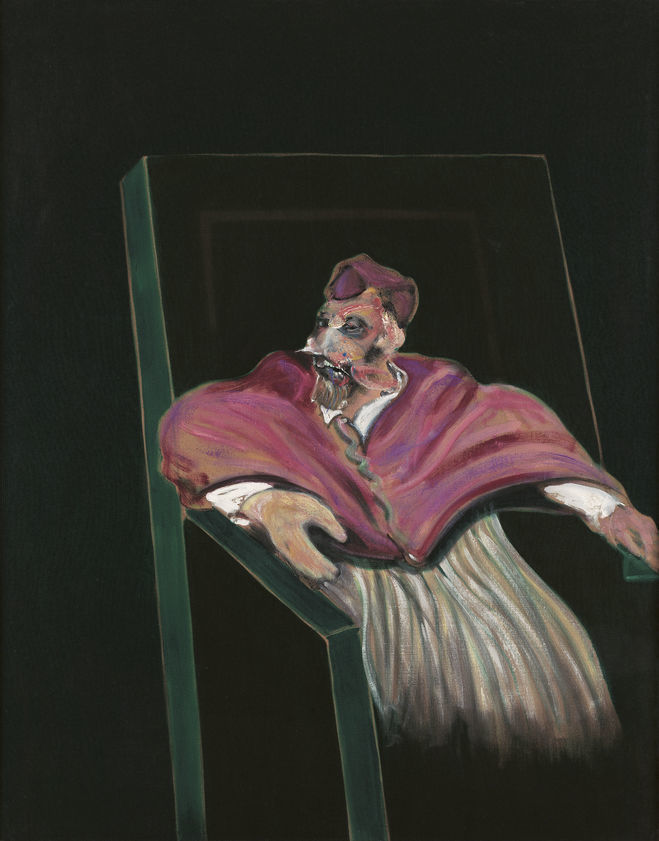
Study for a Pope III 1961
Francis Bacon
Digging the dirt.
What lay behind the brutal visions of Francis Bacon?
Lynn Barber ventures into the twilight world of a father-fixated
homosexual sado-masochist
BY LYNN BARBER | CULTURE | NEW STATESMAN | MONDAY 12 JUNE 2000
Are we ready to look back at Francis Bacon? It is only eight years since he
died, and most of the posthumous attention has focused on his Soho social life
rather than his work. In any case, artists’ reputations after their deaths often
seem to go through a curious period of suspension, like those cartoon characters
who go on running horizontally off the edge of a cliff until eventually they
plummet. British artists usually do plummet — Henry
Moore, Barbara Hepworth and Graham Sutherland are currently out of sight beneath
the waves, although perhaps they will bob up again.
Francis Bacon is still pedalling in mid-air, not yet assigned to oblivion or
apotheosis. He is an awkward case, because his work is easy to admire, but
difficult to like. His power to shock has already lasted much longer than that
of the “Sensation” shockers — 30
years against three — but
shock alone is never enough to ensure survival. And the question remains: do his
paintings really describe the human condition or merely the sado-masochistic gay
condition? There was a line from Aeschylus he loved — “The
reek of human blood smiles out at me”. Perhaps these blokes on beds doing nasty
things are just blokes on beds getting their jollies; perhaps the screams are
screams of pleasure. It doesn’t make him a less brilliant painter, but it makes
him a less universal one.
David Sylvester is well equipped to look back at Francis Bacon because he and
Bacon go back half a century. Sylvester first noticed Bacon’s name when, as a
schoolboy, he saw his 1933 Crucifixion reproduced in Herbert Read’s Art
Now, But Bacon then completely disappeared until after the war, when he
emerged with Three Studies for Figures at the Base of a Crucifixion. Sylvester
started writing about him in 1948, and got to know him in 1950. Thereafter they
were friends, and Sylvester served variously as Bacon’s gatekeeper, critic,
promoter, curator, illicit dealer and occasional model (although Sylvester was
upset to notice that, when he sat for Bacon in 1953, the painter kept consulting
a photograph of a rhinoceros — he
said it was helpful for depicting the texture of the skin).
But Sylvester’s most valuable role was as Bacon’s Boswell. From 1962 to 1986, he
recorded the great series of radio, television and print interviews that, in
their final book form (Interviews with Francis Bacon, 1987), provide one
of the richest, most fascinating insights into an artist’s mind ever published.
The present book is, by comparison, mere jots and titles, recycled catalogue
notes and fragments of conversation that were omitted from the published Interviews. A
typical fragment goes as follows:
“FB: I was thinking about your bedroom — that just to have Holland blinds would
be better aesthetically, but that curtains make sex more comforting
DS: Well, I’m sure curtains go very well with sex because they’re there so often
in pictures of sexual scenes. You yourself used to have curtains in your
earliest pictures of having sex, but now the backgrounds are starker and the sex
seems just as good
FB: Yes, but in the more recent pictures it’s pure sex. You know, I don’t really
like the billing and cooing of sex; I just like the sex itself. Do you think
that’s a homosexual thing?
DS: No. I think it can go right across the board.”
If you like this sort of thing, there is a lot of it in Looking Back at Francis
Bacon. It often strikes me that art books operate with different rules to normal
books. There is absolutely no guarantee that a "new" art book contains any new
text or even new thought; authors are allowed to recycle and plagiarise
themselves, provided they have a new packaging. Looking Back is not as bad as
some, but I would estimate that less than a quarter of the text is new, and what
is new is often nugatory, as above. However, Sylvester’s writing is always
charming, even on its second or third outing, and the cover price is justified
by the excellent illustrations, including 12 triptych fold-outs.
I was hoping, however, that this book would elucidate the mystery of the
unknown, uncatalogued Bacons that have emerged since his death in 1992. It
absolutely doesn’t. Sylvester seems to accept them as genuine and includes a few
in the illustrations, but offers no opinion on their quality and no explanation
of their provenance. This is naughty — particularly when one of them is
captioned "David Sylvester walking, c1954". Including the picture is tantamount
to authenticating it, but Sylvester’s only comment is that he knew nothing about
it until several years after Bacon’s death. Why not? In 1954, they were seeing
each other frequently — surely Bacon would have shown it to him, or at least
mentioned it? And Sylvester must have some opinion on whether the figure
resembles him, or how it could have been mislaid all these years. He hints
ominously that "there is reason to believe that a number of other unknown
canvases are going to emerge".
What makes him believe this? We ought to know; he ought to tell us.
Sylvester would be perfectly equipped to write the definitive biography of
Bacon, but unfortunately he shows no signs of doing so. Nevertheless, the
biographical note at the end of this book, with its very full and chatty
footnotes, provides some fascinating glimpses. Daniel Farson was good on the
gilded gutter life — the drinking, the gambling, the rent boys, the whole Soho galere — but
Sylvester knew Bacon better at home, and knew a better man. He records Bacon’s
kindness to his old nanny, Jessie Lightfoot, who lived with him until her death
in 1951, and to a friend of Nanny Lightfoot’s whom he continued to visit once a
week until her death many years later. Bacon remarked in 1987 that "I’ve only
taken on morality because I’ve had the money to do so", but Sylvester says
firmly that "this was not true". Sylvester is observant and astute about Bacon’s
psychology. He notes that Bacon’s lavish generosity was a "means of control", a
way of avoiding obligation and dominating any social transaction, but he also
suggests that it derived from a cynicism rooted in low self-esteem: "He believed
he had to buy his way through life . . . He could be quite confused if people
were utterly kind, asking for nothing in return. He expected them to behave
badly and was rather relieved, it often seemed, when they did."
Nor is Sylvester afraid to risk Pseuds’ Corner by delving into Freudian depths.
He suggests that Bacon’s Popes — Il Papa — were inspired by his father, of whom
he said in the Interviews: "I disliked him, but I was sexually attracted to him
when I was young. When I first sensed it, I hardly knew it was sexual. It was
only later, through the grooms and the people in the stables I had affairs with,
that I realised that it was a sexual thing towards my father." He also notes
that two of the screaming faces that haunted Bacon — the nurse from The
Battleship Potemkin and the mother from Nicolas Poussin’s Massacre of the
Innocents — are "induced by the same situation: the threat of infanticide
by soldiery"; and he goes on to remind us that "Bacon was the son of an army
captain, who was himself the son of a captain and the grandson of a general. He
grew up in fear of his father, who despised him as a weakling. He had a lifelong
devotion to his nanny . . . [who] was around when he was painting those cries."
So this makes the screaming Popes — what? A conflation of his father attacking
him as a child and his nanny defending him? It seems far-fetched. But then, can
you think of a near-fetched explanation for screaming Popes? I feel that
Sylvester has earned the right to be trusted for his intuition, even, or perhaps
especially, when it seems completely off the wall. But as for a final judgement
. . . we are still waiting.
Looking back at Francis Bacon, David Sylvester, Thames & Hudson, 272pp,
£29.95
No easy answers
LOOKING BACK AT FRANCIS BACON
by David Sylvester
Thames &
Hudson, £29.95, pp. 272
MARTIN
GAYFORD | THE SPECTATOR | SATURDAY, 17 JUNE, 2000
Should the critic be the friend of the artist, or not? The contrary argument is
that by being close to the producer of art the commentator loses a necessary
distance. I once heard David Sylvester give the case in favour. Every critic,
and, even more, every art historian, he said, should be obliged to talk to
artists, if only to discover how artists don’t think (and it is indisputable
that a great deal of art history would not be written if its authors paid more
attention to how artists think). No one has talked longer and more productively
to artists than David Sylvester. Some years ago he published a wonderful book
about Giacometti, one of those to whom he was closest. But while Francis Bacon,
to whom he was closest of all, was alive he felt he should not write about him.
Instead, acting, as he puts it, as ‘a sort of henchman to the artist’,
Sylvester assembled the Interviews with Francis Bacon, a classic of
contemporary art literature.
After Bacon died in 1992, Sylvester felt free to write about him. Here is the
result — partly previously published essays from exhibition catalogues, partly
new material, with a bonus in the form of snippets clipped from the Interviews
during the process of editing. It is an extended rumination on Bacon which
throws a great deal of light, not only on what made the painter so good, but
also on what makes Sylvester so good, Sylvester is an immensely stimulating
Writer on art, partly for the same reasons that he is such a penetrating
interviewer. For one, he is extremely tenacious. The first section of this book
finds him pursuing the artist, now beyond the grave, about a typically key but
enigmatic point: why was Bacon so insistent that his paintings should be seen
behind glass, a state, with its distracting reflections, that most artists and
viewers dislike? Did he like the confusing, distancing reflections? Bacon was
evasive, but Sylvester infers he must have. Also Sylvester eschews the easy
answer. The easy answers of others are effortlessly, benignly dismissed. For
example, the besuited men of Bacon’s earlier work, mouths open in a feral gape,
have been seen as authority figures or businessmen, gibbering and screaming from
the tensions of mid-20th-century life.
In fact, Bacon’s friends and lovers, who are often here depicted, simply tended
to wear suits. The painter was, among other things, a kind of realist, aiming to
‘trap’ the image, and ‘return’ it more ‘violently on his nervous system’. The
man who appears open-mouthed with terror, laughter or ecstasy in the magnificent
'Three Studies of the Human Head' (1953) is not Existential Man, but Peter Lacy,
Bacon’s lover and, according to the artist, ‘very neurotic and almost
hysterical’.
But obviously not all Bacon’s work can be classed as any kind of realism. Much
of it consists of fantastic images which, he claimed, ‘dropped into’ his head
like slides. So what sort of painter is he? The question, Sylvester notes, ‘of
how far [Bacon’s art] is “saying” something, of how far it has “meaning” ,
remains extremely tangled’. Bacon claimed that he himself had no idea of the
significance of certain images. On the other hand, he believed that ’the
greatest art always returns you to the vulnerability of the human condition’.
Sylvester does not try to disentangle this paradox, which is a strength not a
weakness for both him and Bacon (art, in an Alice-like fashion, tends to thrive
on being two incompatible things at the same time). He is clear on the good and
bad points of the art itself — no lack of critical distance there — making no
bones, for example, about the fact that Bacon ‘lost his way’ in the late
Fifties, and that his best periods were the years from 1945 to 1950 and the
early-to-mid-Seventies (I agree, though I feel more sure about the former).
But Sylvester provides no pat solutions. He respects the mysteries of his
subject. In the introduction to About Modern Art he referred to ‘the way I can’t
help writing about art, which is not unlike St Teresa of Avila’s reports on her
intercourse with the deity’. It is his ability to combine those reports with
close, even pernickety attention to the facts which makes his writing so
rewarding.
A critic saves his Bacon
David Sylvester sees his friend, Francis Bacon, as a painter who
ranks alongside the old masters, Tim Hilton isn’t so sure
TIM HILTON | BOOKS | THE INDEPENDENT ON SUNDAY | SUNDAY 18 JUNE 2000
David Sylvester began writing and broadcasting about his friend Francis Bacon as
long ago as 1948, so his new book is at the end of a long series and is, among
other things, a significant part of the history of radio. There were no fewer
than 18 recorded interviews between the two men. Of course, we are now given
matter that we have heard and read before. None the less, this is surely the
best of the critic’s studies of the artist.
It’s personal, retrospective and gloomy, combining art criticism with biography.
The use of conversation is interesting, though the chats were far too grave, at
least when Bacon and Sylvester were on the air. There’s a simple reason for the
over-pompous tone. Sylvester has always believed that he was privileged to have
the friendship of a man who, because he was a genius, uttered profound truths. A
difference in age may have affected Sylvester’s respectful attitude. The painter
was born in 1909, the critic in 1924. So Bacon was the senior figure by a decade
and a half and must have been an influence on Sylvester’s understanding of the
world.
Though not of the same generation, they did have past experience in common. Both
had known Hitler’s war and grew up in the art world when Picasso was in full
production. They had smelt the smoke and seen the lurid light of the bombing,
and then learnt of European atrocities. Subsequently, in peacetime London,
magazine reproduction showed them new things by the master painter of the
century, a European whose terror and tenderness came along with incomparable
technical gifts.
As Sylvester says, Picasso was Bacon’s first master. He cannot say that, by
comparison, Bacon was uninventive, nor that he was a wretched draughtsman who
was maladroit with a paintbrush. Picasso gave Bacon a hint or two rather than
lessons. Then the Anglo-Irish painter fashioned his terribilità
from numerous personal troubles. Bacon’s truly telling paintings, belonging to
the late 1940s and early 1950s, are in a profound sense post-war works. They are
given eloquence, but are also deformed and stunted, by the destruction of life
and culture in the years before they were painted.
This helps to explain Bacon’s desire, even compulsion, to distance himself from
his subjects. From the first, he insisted that his paintings should be glazed.
The glass kept a barrier between the work and its spectator. Even though a model
was posing in the studio Bacon would prefer to look at a photograph rather than
the person he was painting. He was more inspired by reproductions of art than by
art itself. Many of his images were taken from magazines, film stills or
pornographic photos.
And then he tried to paint like an old master. I have mixed feelings before the
paintings because of Bacon’s ambition to be grandiloquent. This coincided with
agonies of failure and dissatisfaction he could scarcely control. Sylvester has
excellent comments about the way that Bacon destroyed successful as well as
botched canvases. He has a first-rate visual memory and describes paintings he
once saw and which then disappeared, either because Bacon burnt them, or because
they were spirited into the criminal world that their creator so liked, or
because they were covertly sold (with Sylvester’s assistance) to pay gambling
debts.
Big debts went with big prices for the pictures. Bacon had elevated views about
his art and his position within world painting culture. His slurred egotism has
been inherited by Sylvester’s commentary. In this book, without much
explanation, Bacon is compared with Picasso, Matisse, Titian, Velázquez and
Michelangelo as though he naturally belonged in their company. He did not. This
fact is apparent to nearly everyone who studies the history of art, or who looks
at paintings side by side. It is less easy to say anything definite about
Bacon’s intellect. When he writes about his friend’s painting, Sylvester invokes
the old masters. When he describes the painter’s knowledge of books there is a
similar litany of greatness. Aeschylus is mentioned, often, and Shakespeare,
Racine and TS Eliot. I don’t query — what would be the point? — whether Bacon
studied the work of such writers, or dipped into them, or remembered a
quotation. But I believe that Bacon’s mind did not rise to their level.
Sylvester avoids the often-told tales of life in Soho. One doubts whether a good
book about Soho can ever be written, for bohemians are never intellectuals,
though intellectuals sometimes have bohemian characteristics. Nobody from
Bacon’s Soho world, though they were often nice, or rather loveable people, ever
engaged with the life of the mind. Once you stepped over the threshold of Muriel
Belcher’s Colony Club you could feel your intelligence draining from you by the
second. The place smelled of death and its habitues seemed to be at a permanent
wake.
Sylvester has been to some drinking clubs in his time but is genuinely an
intellectual, with a more interesting mind than Bacon’s. Thus his book is
frustrating. We are more curious about its author than its subject. The effect
of reading Sylvester on Bacon is to make one long for Sylvester’s autobiography.
We can’t have a biography. No one would dare to set about the task. Sylvester
likes to keep secrets and lacks small talk. His silences are as intimidating as
Harold Pinter’s, whose background and press-day tastes he partly shares, and his
confidences are as suggestive as a poet’s. Which poet? I don’t know, but it
wouldn’t be an English one.
Bacon and Sylvester have been very foreign Londoners. Bacon thought, until his
death, that Paris was the centre of world art. The post-war Sylvester could have
become a French writer, if Paris had provided the right outlets. But he found a
home for his voice in London. Sylvester’s expression, to this day, is based on
the culture of the early Encounter (whose first, best years in the
1950s coincided with Bacon’s rise to fame) and the BBC’s Third Programme. A
20-minute talk in a concert interval was a space in which no intellectual or
artist could justify or explain an opinion. There wasn’t time. But the tone was
always high and the listener was beguiled by the speaker’s voice, the vocal
suggestion of personality.
The book as a whole has the flavour of the Third Programme, which is to its
advantage. Most of the old intellectuals of the Third Programme have now
departed to more elevated airwaves. Sylvester’s mind is as lively as ever it
was, and his writing perhaps more eloquent. I guess that the thought of Bacon’s
early paintings gives him a vital link to his young manhood.
However, those "early" paintings after 1947 were done when Bacon was in his
thirties. He had been robbed of the pleasure of being a young artist by the war,
and also by some of his characteristics. Bacon dealt in rough-trade at a time
when homosexuality was illegal. He was an alcoholic and a helpless gambler.
These traits are evident in his prematurely aged painting, with its slovenly
love of danger and risk-taking. Sylvester is good about sexual and personal
matters. He hazarded that Bacon’s series of screaming Popes were really
portraits of Bacon’s father. The artist didn’t say yes to this conjecture, but
neither did he say no.
Bacon disliked his father but was sexually attracted to him. It’s certain that
some of the agonies of his personal life are represented in Bacon’s art. We know
some of the often squalid details. In Paris, the petty thief who was Bacon’s
lover dies while sitting on the lavatory. In London a wicked woman, once
beautiful, expertly squeezes a syringe to get more heroin into her veins. Other
things are obscure. Little is known of Bacon’s gambling addiction. His
activities in Africa have never been explained or chronicled.
Since he is a good art historian, Sylvester always returns us to Bacon’s
paintings. In his book are photographs of paintings that haven’t previously been
reproduced. He says that "lost" or unknown paintings keep turning up. Indeed
they do. A rent boy steals a painting from Bacon when the artist is drunk. He
gets scared the first time he tries to sell the picture and gives it to another
boy to "look after". Then the second boy’s mother finds, say, a rolled- up
screaming Pope under her son’s bed and gets into a panic, for she twigs what it
is. Quite a long book could be written about Bacon and crime. I was surprised to
learn that he didn’t like Genet. Sylvester should have told Bacon to persevere
with this wonderful writer.
Looking Back at Francis Bacon is about crime, both the petty and the
metaphysical varieties. On the petty side, Sylvester is anxious about lost
paintings. We can’t understand Bacon without a full catalogue. On the
metaphysical side, Sylvester states that Bacon was an "old-fashioned militant
atheist."
What does he mean by "old-fashioned" in this context? Bacon was not a rational
humanitarian in the line of Wells or Huxley. I thought that he believed in the
existence of God, and that God is a criminal. Does not this view accord with the
spirit of his paintings?
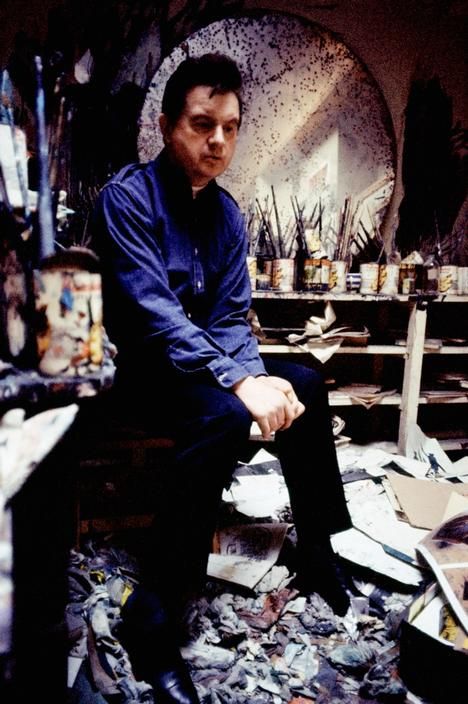
Francis
Bacon is his studio in 1967
Picasso and Bacon in Dublin: working on paper
Two exhibitions at the Irish Museum of Modern Art, Dublin, Ireland,
showing until July 9, 2000, and Aug 27, 2000, respectively.
YVONNE SCOTT | DISSECTING ROOM | THE LANCET | VOLUME 355 | JUNE
24, 2000
The New
Galleries of the Irish Museum of Modern Art (IMMA) in Dublin were opened in
March, with an inaugural showing of: Picasso: working on paper, curated by Anne
Baldassari of the Musée Picasso, which brings together a collection of work
which has not been exhibited together before; and The Barry Joule archive: works
on paper attributed to Francis Bacon, the first showing anywhere of this
collection of archival material given by Bacon to his friend Barry Joule shortly
before the artist’s death. The galleries are located in the newly refurbished
Deputy Master’s House. This building was originally designed to provide lodgings
for the surgeons of the adjacent Royal Hospital Kilmainham, one of the finest
17th-century structures in Ireland.
The twinning of exhibitions of works on paper by such celebrated 20th-century
artists inevitably invites comparison, particularly given Bacon’s alleged
admission to feeling challenged by Picasso’s work. Declan McGonagle, director of
IMMA, points out that this was intentional. The type of comparison that the
exhibitions are designed to promote involves the exploration of the relative
uses of the printed media in the works of each artist, contrasting the processes
and seeking the connections, as a means of negotiating meaning in the work. This
exercise is in keeping with IMMA’s approach to the presentation of cultural
objects, seeing itself as a forum for debate rather than a temple for the
adulation of art icons. It also reflects IMMA’s interest in the process of
creation as much as in the final object.
So what do the two exhibitions have in common? Both are collections of works on
paper, but this covers a multitude of possibilities from working notes to
doodles, from preparatory sketches to completed images—and all of these are
represented in the new galleries. Both artists explored the use of media
photographs as a support for overdrawing and as part of photomontage imagery
—though, as David Mellor’s essay in the Bacon catalogue points out, this was not
an uncommon practice among artists by mid-century and was not, therefore,
confined to these two artists.
The Picasso exhibition concentrates on the artist’s versatile use of newspaper
as medium and material for expressing his ideas, a long-term interest reflected
in the 70-year span of the exhibition (1893–1963). As a child, Picasso created
his own home-made periodical, Azul y Blanco, and went on, in later years, to
produce illustrations for publications such as Le Patriote and La Marsellaise in
the late 1950s and early 1960s. He used newsprint variously as a ground on which
to draw and paint, as a source of subject matter, and also as a material for his
papiers collés—the collages and cut-outs, such as Glass, bottle of wine, pack of
tobacco, newspaper (1914), which were such an important element in the
development of Cubism. Picasso made use of newsprint both for its appearance and
for its content, and similarly used media imagery as a point of departure in
various explorations, both serious and humorous, and for a range of themes,
especially for his favourite subjects of still life and the human figure.
Newsprint was of particular interest to Picasso because it encompassed both the
commonplace trivia of everday life in its advertisements and minor features, as
well as disseminating information and propaganda on historically crucial events.
In common with his practice of using of “found” materials, discarded objects
which he recycled to make permanent pieces of sculpture, he used disposable
newspapers and ironically transformed them, through his intervention, into
valued cultural objects to be preserved.
The Picasso selection is discerningly chosen by Baldassari from a vast quantity
of such work held in public and private archives and collections. The artist
squirrelled away virtually every scrap of material on which he made a mark, from
subversive caricature additions to photographs in newspapers and fashion
magazines, to completed works that involved the complex use of text and images
from the mass media.
Unlike Picasso, who was in the habit of making extensive preparatory sketches to
work through ideas, Bacon—or so he asserted—preferred to work directly with the
canvas, prompted by familiar photographs or texts. Thus the process of his art
was much more hermetic, and the evolution of ideas therefore denied easy
scrutiny. The material in the Joule archive expands, and possibly challenges to
some extent, this perception containing as it does an extensive hoard of around
700 items. While Bacon’s authorship is in question, the fact that this material
was in his possession and was important enough to pass on to a friend for
safekeeping, suggests it may be worth exploring in relation to his work. The
Joule archive comprises the Working documents—a range of around 650 workedover
media images that have been grouped under thematic headings—and the X Album, a
photograph album once in the possession of his nanny, whose pages have been
stripped of their original photographs and adorned with collages, drawings, and
small paintings. The selection from the Joule archive is shown apparently with
the intention of highlighting Bacon’s awareness of and involvement with popular
culture and mass media. However, one does not have a sense of a cosmopolitan
artist with an interest in public affairs, but rather of an individual who
turned images of public and international events, news items, and of celebrity
figures into opportunities for private and subversive forays into “all that is
taboo, forbidden and sacred”.
Of the two bodies of material in the Joule archive, the X Album imagery comes
across as the more purposeful, seeming to predict the forms evident in his
finished paintings. However, its concerns are deeply personal and reflect
internal fantasies involving the grotesque and the morbid. For example, some
images are based on medical textbook illustrations of disease-induced facial
malformations; Bacon was apparently fascinated by such imagery. The voyeuristic
and introverted nature of the imagery is developed by the presence of framing
devices and the inclusion of marginal figures with indeterminate forms and
blurred features. Some such figures, for example that in X44Recto, are engaged
in solitary sexual activities and are themselves subjected to the
(simultaneously shaming and exciting) gaze of a witness. Similarly, Picasso
explored the grotesque but, in the examples in this exhibition, as a tool for
criticism. In Women at work, for example, his pencil additions to photographs
that exalt forced work in Nazi Germany from a 1941 issue of the collaborationist
newspaper Paris-Soir, transform the female workers into disfigured monsters—a
comment on the distorted reality underlying Nazi propaganda. The divergence in
the application of common features by these artists is indicated by their
styles; Bacon’s enigmatic, shadowy forms contrast with the bold, decisive lines
of much of the work by Picasso.
Interestingly, a Double portrait (X66Recto) of Picasso from the Joule archive is
included in the show, and it is in keeping with Bacon’s recurrent theme of sight
and voyeurism. In this portrait, Bacon has included a photograph of his subject,
but gouged out the eye, reflecting his interest in eye deformities and
blindness. Given his personal struggle to equal Picasso, several reasons for
this image suggest themselves: was this an acknowledgement of Picasso’s inner
vision, or did Bacon feel obliged to inhibit his “competitor’s” insight? Did he
fear that Picasso could “see through” him, or was there some other, more complex
and subtle reason?
If the two exhibitions were designed to induce visitors to conclusions about
areas of connection or contest between the two artists, they are provided with
little assistance. The catalogues each focus on the artists’ works separately,
and the choices of works have been made independently without apparent reference
to each other. Perhaps this is for the best as it avoids the danger of forcing
arguments or leading opinions through selective editing of the material on show.
However, given the very different nature of the material in each exhibition,
they cannot be considered equivalents in the extent to which they represent each
artist. While the Picasso exhibition is fairly complete in its representative
range of works involving newspaper, the Bacon collection is much less
conclusive. Until provenance is established, the Joule archive is unreliable
though potentially invaluable in revealing aspects of Bacon’s processes and
concerns. In the meantime, it serves to whet the appetite for the forthcoming
major show of his paintings at the Hugh Lane Municipal Gallery in Dublin which
opens this month and prefigures the opening of his reconstructed studio, later
in the year.
Yvonne Scott
Department of the History of Art, Trinity College Dublin, Dublin, Ireland
Sacred monster, national treasure
The
Guardian Profile: David Sylvester
He is the most influential
critic of the past 50 years and a champion of modern art.
But he hates his own
writing, would rather set up exhibitions and wishes the public
would stay away from
galleries.
NICHOLAS WROE | BOOKS | THE GUARDIAN | SATURDAY 1 JULY 2000
David Sylvester’s influence on the post-war British art world is unparalleled,
as art critic, installer and curator of exhibitions, and as an administrator. He
wrote his first article about drawing for Tribune in 1942 when he was only 18.
Now aged 75 — think Orson Welles for both his profile and effortless projection
of rumbling gravitas — he has just published the definitive account of his
friend Francis Bacon’s career and staged an exhibition of his work in Dublin.
In the intervening years his role as confidant, adviser, interpreter and arbiter
of taste has made Sylvester’s contribution to shaping the artistic landscape
unique. Because of his efforts the Tate has in its collection whole swathes of
work that it could not possibly afford to buy today. It was he who almost
singlehandedly alerted a hostile British artistic establishment to the
importance of post-war American artists. He has sat for Alberto Giacometti and
Francis Bacon and worked for Henry Moore. If anyone prepared the ground for the
explosion of interest in contemporary art over the last decade it was David
Sylvester.
"David is the only sacred monster that has ever existed in the English art
world," says the artist Howard Hodgkin. "He has that kind of grandeur." Tate
director Nicholas Serota first met him in the early 70s and says they have
remained close. "He was a powerful influence in making me think internationally
and has been enormously encouraging in terms of trying to acquire work for the
collection. He is an incredible treasure for Britain."
The usually tight-lipped collector and gallery owner Charles Saatchi makes an
exception for Sylvester and throws the dictionary at him. "David Sylvester is
charming, crotchety, effusive, enigmatic, opinionated, receptive, vivacious,
languid, sharp, romantic, perceptive and cuddly. He is the finest installer of
art exhibitions in the land and his writing is so delicious he should be doing
cook books."
With the recent opening of Tate Modern - categorised as Britain at last making
its peace with modern art — this should be Sylvester’s moment. For long periods
his has been a lonely voice speaking up for the merits of modern and
contemporary art. Now is his vindication. But far from celebrating the
acceptance of contemporary art into the mainstream of British cultural life,
Sylvester finds himself made gloomy by the prospect. "One really doesn’t want to
be in a gallery with more than a few people. This is the great problem with art.
A big audience is no good for it."
His friends speak of an Eeyore-like temperament, edging towards melancholy.
Added to this, in recent years his health has not been good. He had a heart
attack in the early 90s and was diagnosed with cancer of the colon in 1998, for
which he has recently undergone surgery. He also has diabetes.
"At these huge exhibitions, like the Monet in London, or the Vermeer in the
Hague, they are so packed there is no pleasure in going to them." But what about
the benefits of being exposed to great art? "The whole education argument is
crap." Encouraging a new generation of art lovers? "I hate museums cluttered up
with children. I was turned onto art by a simple black and white reproduction
and that was enough," he continues. "I am all in favour of taking films and
reproductions of art into schools and of decent television programmes. But one
doesn’t necessarily have to sit in front of masterpieces."
Fellow art critic Richard Dorment says this is typical of Sylvester. "David
would have loved to celebrate unambiguously the opening of the Tate but he says
what he thinks needs to be said. He is in nobody’s pocket and the fact that he
doesn’t like the new Tate gallery is an example because he deeply likes and
admires its director Nicholas Serota." Serota acknowledges that he doesn’t pull
his punches. "But friends like that you always need. He is always refreshing to
talk to. He constantly questions what artists are doing and his own judgment."
Sylvester’s stance is that the most effective way for a society to consume its
fine art is not through better access to galleries but through diffusion via the
applied arts. "I don’t think it matters a fuck whether people go and look at
Mondrian or not, because they live among furniture and wallpaper and cars and
everything else that has been influenced by an earlier moment in the fine arts.
Even if fine art has a tiny audience of rich people, ultimately it affects the
whole of society, and that is where it really validates itself socially."
Television commercials are a prime example. "They are unbelievably brilliant and
exciting and they come out of avant garde film making. You just do not need
millions of people going to museums. You already have many more millions living
in environments created by the followers of the artists in the museums. That is
the role of art in society."
Sylvester was born in 1924 in Hackney. His parents owned an antique shop in
Chancery Lane and another shop selling silver. He and his younger sister were
mostly brought up by nannies, although during the 1930s the family struggled
financially and "the maid’s room suddenly became the lodger’s". He recalls his
father as a rather conventional man, while his mother was a more hedonistic
figure who went to the ballet and the theatre and was a ballroom dancer of
professional standard. "She liked her fun and would go off to Paris for a few
days whenever she felt like it."
The family had originated in Russia and Poland, and when David was a child "like
many Jewish families" in London they left the east end for north west London.
His father was a prominent Zionist — Sylvester himself now has an increasingly
rabbinical appearance and demeanour — although he preferred spending his time
with gentiles. Near the end of their lives Sylvester’s mother said to him that
"your father’s tragedy was that he was an anti-Semite".
The art dealer Leslie Waddington compares Sylvester to Isaiah Berlin: "he has
one of those wonderful Jewish renaissance minds. It is a rarity in English
life." Sylvester says he was "dragged along " by his parents’ Judaism but did
not engage with it. In his early 20s he was on the verge of converting to
Catholicism but pulled back at the last moment. "It still seems a very civilised
thing to be," he says. "I admit I have broken two or three noses in my time but
I don’t really believe in revenge. The idea of turning the other cheek as given
in the Sermon on the Mount still seems a notion of extraordinary beauty."
His first school was Vernon House prep in Brondesbury, London. At 13 he went on
to University College School in Hampstead whose alumni include four-minute miler
Roger Bannister, former Tate director Alan Bowness, and Paul Dacre, editor of
the Daily Mail . "Vernon House was where I received all my education," he says.
"UCS was just masturbation." At 15 he was asked to leave, before he had taken
his school certificate. He spent a year buying and selling gold and silver to
jewellers. "I made more money than I ever have since."
Coming from a family that dictated if he wasn’t top of the class it was a
disgrace, he cultivated his ambitions elsewhere. First he wanted to be a
cricketer. When he realised he wouldn’t be good enough he turned to jazz. "I
wanted to be a composer and arranger. I listened to records in school, starting
in 1934. I missed Duke Ellington at the London Palladium but did see Coleman
Hawkins at the Phoenix Theatre." His introduction to art came at 17 when he saw
a black and white reproduction of Matisse’s La Danse. Jazz was put to one side
as he painted 10 hours a day for a year before he realised, "I was no good at
it".
Then, at 18, he submitted on spec an article on drawing to Tribune. It was
published and soon after they asked him to review a French painting on loan to
the National Gallery. He began to write regularly for the magazine under the
mentorship of the literary editor George Orwell, although the editor, Aneurin
Bevan, found his style too "heavy with Latinisms".
He had now embarked on a writing career, but it was war-time and the services
called. He failed a medical for the army and became a teacher instead. "It was
absolutely 'Decline and Fall'. I didn’t even have the school certificate but
they were desperate for masters. I loved teaching. I knew the mistakes made by
people who taught me so I tried to be more understanding."
He started writing a book about the psychology of art and after the war nearly
reactivated his academic career when he won a scholarship to Trinity College
Cambridge to read moral sciences — philosophy and psychology. He chose the
college because Wittgenstein was still teaching there, but before Sylvester even
started he knew it was another career that was beyond him, and he didn’t take up
his place. He did think he could write about art, however. Over the next half
century he produced a stream of art journalism and broadcasting, wrote about
sport and films, and produced key books on Henry Moore, Francis Bacon, René
Magritte and Giacometti. He is the only non-artist to be awarded the Golden Lion
at the Venice Biennale but still admits to a lack of confidence about writing.
His friend Grey Gowrie, the former arts minister, says he can spend hours on the
phone agonising over a single word or phrase. "If I didn’t know better I would
think I had a heavy breather," says Gowrie. "There can be what seems like 20
minute silence before he declares, 'it’s David'. You assume he is going to
announce imminent bankruptcy or news of a death, but it’s usually a prelude to a
fascinating discussion."
Sylvester has had two abortive sessions of analysis and says he has "wept on the
couch at things that have been done to my writing by American editors. They have
totally destroyed the rhythm of the prose and changed the meaning." Precise
meaning is everything in a critical approach that is based on a scrupulous,
obsessive attention to the work at hand. The art historian Frances Spalding has
noted his, "dogged examination of his own sensations in front of art. Though he
is often acute on the relationship between a work and the period in which it was
made, he is less interested in history than physical presence; it is the impact
a painting or sculpture makes on us that he tries to catch — how it affects the
head, heart and guts."
Sylvester says his "fate was sealed" after watching Arsenal versus West Bromwich
Albion in 1935. Arsenal won 4-1 and he went home and wrote a report on it.
"That’s been my life; seeing aesthetic experiences, other people doing the work,
and then completing the experience by writing about it. The way I write is a bit
like St Teresa of Avila writing about being fucked by God. I do try to describe
the actual experience of looking at the work. "
A piece written about an installation by the American minimalist sculptor
Richard Serra at the Tate in 1992 typifies this approach. The work consisted of
two large steel blocks and Sylvester describes his experience as he approaches
the work. He first thinks that the blocks are the same height and then, as he
gets closer, he realises that this is an illusion. But how many other critics
would then point out that what he had described only applied to people between
five foot six and six feet tall? This is not mere pedantry but part of an
intriguing observation about the subjectivity of our response to art. Serra says
Sylvester has the ability to ask questions that other people don’t.
Sylvester has maintained close links with artists ever since he visited Paris in
1948, where he met Daniel-Henry Kahnweiler, Picasso’s dealer. Kahnweiler secured
him an introduction to Giacometti whose work was then, "the one thing that
seemed to matter". Sylvester became close to Giacometti and started writing
about him. It is a sign of his assiduousness/prevarication that a book did not
actually appear until 1994.
He briefly toyed with the idea of becoming a dealer himself because he so much
admired Kahnweiler, but abandoned it when he realised that when a dealer sells
something to a customer for a profit, "he genuinely feels he has done the
customer a favour. I, on the other hand, felt as if I was somehow taking
advantage of the buyer. But I suppose my primary emotion about every thing is
guilt." He says he really would have liked to work for a rich person with a
small private museum where he could do all the buying and installing. "I love
using my eye to choose things and to install things. And I think it would have
been rather good for anyone who asked me to do it as well."
In 1950 he met his wife-to-be, Pamela Briddon, a schoolteacher who was then a
student at London University. They had three daughters, Catherine, who has two
children and who Sylvester describes as, "a very good potter"; Naomi, who works
as a publicist for a publisher; and Xanthe, who has one child and is a freelance
sub-editor who worked for many years for Time Out. Pamela enjoyed art but was
not as keen on contemporary work as her husband. They lived in a flat in Putney
where Sylvester was a keen gardener, cultivating roses particularly. The three
girls had to share a bedroom and Pamela, increasingly fed up with the lack of
space, would take the children off on month-long camping holidays to Spain. When
Sylvester bought a larger house in Wandsworth he kept the flat as his office.
The marriage gradually came to an end over a period of years, with minimal
trauma, say his children, as he spent more and more time at the flat and less in
the new house. They eventually divorced in the early 80s.
He also has a daughter from a relationship with the novelist Shena Mackay,
conducted while she was married to someone else. Cecily Brown was born in 1969
and now lives in New York where she is an acclaimed artist.
Sylvester says he is "neurotically preoccupied" with his daughters and is proud
that he has good relationships with them. He had first met Mackay when she
worked in his parents’ shop. Cecily didn’t know he was her father until she was
22. She used to see a lot of him but when they started going to art galleries
together and she called him her best friend he began to feel uncomfortable. "I
went to an analyst with Shena to discuss how to tell the family. We didn’t want
it to be too much of a shock to her sisters or to my daughters. I do most things
wrong in my life but with regard to the timing of telling Cecily I think I did
quite well."
From the mid 80s until late 90s his partner was the art historian Sarah
Whitfield. He is still close to Whitfield and says he was virtually a
step-father to her daughters Saskia and Sophie. "But now I’m just a lonely old
bachelor," he says. "Sarah says it suits me."
His career as installer of exhibitions came about because of his relationship
with Henry Moore, about whom he had written a couple of articles for the
Burlington magazine. Moore asked to meet him and Sylvester became his secretary,
but says, "it didn’t work too well because while there was a pile of letters to
be answered we would get involved in some aesthetic discussion". In 1951 the
Tate staged a Moore exhibition which he was invited to curate. He had visited
Wakefield with Moore, who had shared some ideas as to how sculpture should be
shown. "Choosing and installing that exhibition excited me more than anything
and it remains to this day the thing I like doing best." Sylvester’s reputation
as an installer extends beyond painting and sculpture. He has also been
acclaimed for exhibiting Islamic carpets. "I don’t feel I have a talent for
writing, but when installing I feel at home in the way that someone who drives
racing cars feels at home behind the wheel."
His approach hasn’t changed much over 50 years. He likes to provide lots of
space around works and acknowledges a tendency towards symmetry. It was once
pointed out to him that at two separate sculpture shows he had, unconsciously,
used exactly the same configuration. "This was my natural rhythm. I don’t like
my prose style but I do like my installations. If you’re writing you see your
own personality crystallised on paper and it is a horrible sight. But with an
installation there is somebody else’s great work and you don’t look at the
installation but at the work itself. But that work is combined with your
rhythms."
He made his name as a writer in the 1950s and says one of his prime motivations
was to counter the influence of John Berger, who was then setting the art
critical agenda in the New Statesman.
"He was a brilliant writer, a compelling personality and a great force. I always
envied his writing but I felt he was wrong," says Sylvester. Berger says now
that they were "very fierce opponents", but while Sylvester didn’t have an
artist’s eye, "he did have a collector’s eye, and was one of the first people to
realise what was new about very many artists and to explain it".
Sylvester objected to what he saw as Berger’s promotion of a popular but
"retrogressive" movement by some painters and sculptors as "back to the figure".
In a satirical article Sylvester postulated a "Kitchen Sink School" of painters,
noting that "the graveyard of artistic reputations is littered with the ruins of
expressionistic painters whose youthful outpourings once took the world by
storm." The label was almost instantly co-opted to describe the groundbreaking
drama and fiction of the period. Speaking up for modern art then was hazardous.
Sylvester faced editorial pressure but says what sustained him was the force of
his own physical experiences with art. "It was as if people were attacking
fucking but you knew you enjoyed fucking. It was as simple as that. I got the
most tremendous physical excitement from looking at modern art."
His habitual self-criticism and insistence on treating work on its merits as he
sees it has meant he has never become boxed into critical positions. It was only
in the 1980s that he changed his mind and decided that Picasso was a greater
artist than Matisse. Howard Hodgkin once recalls him writing about a sculptor in
the early 60s. "David said he was 'probably a very great artist'. A little while
later he wrote about his next exhibition saying 'I thought he was the greatest
English sculptor under 35 with red hair, but I was wrong'. The man’s career
never recovered. It might be completely apocryphal but it’s still true somehow."
Alongside Sylvester’s distaste for what he sees as recent populist developments
in art he retains a faith in strong centralised institutions. "The BBC was a
very enlightened patron of modern art. My talks with American artists in the 60s
are invaluable documents. The interviews with Francis Bacon came from the BBC.
We even did an interview with Giacometti in French. The treatment of art on
television is now at a much lower intellectual level than it was in the 1950s."
He dismisses anti-elitist arguments and complains that delegating power to the
Arts Council regions has weakened arts administration. "There is an elite. But
it is not rooted in class or wealth or privilege. At any one time there are only
five or six people who can really spend public money well, be they right, left
or centre."
Sylvester’s politics were formed in the aftermath of the second world war. "I
was to the left of the Labour Party but that changed after Czechoslovakia in
1948 [when the communists took control]. I didn’t even wait for Hungary in ’56.
I saw that you can’t get into bed with the communists without getting clap." He
has since voted Labour, Liberal and Conservative, and briefly even had high
hopes for the SDP. He says he is probably still a Gaitskellite because he
maintains a belief in nationalisation, but Grey Gowrie sees him as a singular
sort of floating voter.
"At the last election he said, 'I’m in an absolute rage. They’ve redrawn the
boundaries and I don’t want to vote Tory but I suppose I’m going to have to vote
for Al Clark.' I said to him that it was a human right not to vote for Al Clark
but David said, 'the problem is he is such a fucking good writer.' He might not
have done it in the end but he did make me laugh."
Sylvester admits to voting Conservative in the 60s, when he lived in Putney,
just to stop a man who would have been arts minister in a Labour government. But
his politics and artistic leanings had been exploited some years earlier when he
had been invited on a State Department-sponsored trip to America in 1960. In an
odd sideshow to the cold war the CIA was covertly sponsoring the cultural
magazine Encounter and promoting abstract expressionism as an example of western
freedom. Sylvester is untroubled that he might have been used. "Jolly good for
them. But no-one ever told me what to write or say."
His introduction to the American art scene coincided with his arrival in Paris.
After going to a jazz club to see Charlie Mingus he was introduced to Willem de
Kooning, Franz Kline and Philip Guston. He later made contact with Robert
Rauschenberg and Jasper Johns. He says that, broadly speaking, over the last 40
years his primary interest has been contemporary American art.
He is currently editing his interviews with artists over this period. He has at
the same time managed to produce, with Sarah Whitfield, the definitive
five-volume catalogue raisonné of Magritte, not an artist you would normally
associate him with. It was a monumental project and while he says he does love
the work, "the fact remains that I spent years of my life, like Swann, on
someone who was not my type".
Someone who very much was his type was Francis Bacon. Sylvester first wrote
about Bacon in the late 1940s and they soon became friends. Sylvester was his
self-appointed Boswell and undertook a series of landmark interviews in the 50s
and 60s. The show currently on in Dublin is the fifth he has staged of Bacon’s
work. His new book about Bacon is dedicated to the composer Harrison Birtwistle
who says that Sylvester’s conversations with Bacon are among the most
interesting things written on creativity. Birtwistle has dedicated a piece of
music to Sylvester and says he is having a, "sort of intellectual love affair
with David. Dedicating a piece to him was a way of describing our friendship."
Sylvester has asked Birtwistle to read the cricket poem "At Lords" by Francis
Thompson at his funeral.
Although he never staged a Bacon show during the artist’s lifetime, every show
since has taught Sylvester something new about the artist. The biggest
revelation has been in Dublin. "I think the pictures look like 18th-century
portraits in English country houses. And that is very true to Bacon’s
background. He had a typical upper-class background and grew up in Irish country
houses. In Dublin, in these neo-classical rooms, the pictures look wonderful,
they look like their true selves. Seeing them there it as if he has come home."
In his 1996 collection of critical essays, About Modern Art, Sylvester regretted
the exclusion of artists born after 1945 on the same basis that he regrets,
"becoming useless at tennis". But this is no slight to the BritArt generation.
He says there are, "some seriously talented artists. I think Damien Hirst is
pretty hot. Rachel Whiteread is a very good artist. Jenny Saville [who is
painting him for the National Portrait Gallery] is very good, as is Douglas
Gordon."
But whatever their strengths, Sylvester is adamant that encouraging queues of
people to see their work is not the way forward. "Of course it is nice to see
artists making some money," he explains. "So many of the artists from my
generation struggled. But I think there is a price to be paid for it. I’m a bit
ashamed of being the subject of a piece like this. It’s a symptom of a bad state
of affairs. You are only coming to see me because art is so popular but I wish
there was less interest. Perhaps the answer is for art to become unfashionable
and un-loved again."
• Francis Bacon in Dublin is at the Hugh Lane Municipal Gallery of Modern Art,
Dublin, until August 31
Looking Back At Francis Bacon is published by Thames & Hudson at £29.95
Artist Bacon ‘had
a Swiss account
to dodge income tax’
By HUGH DAVIES | THE DAILY TELEGRAPH | TUESDAY,
04 JULY, 2000
FRANCIS BACON, arguably Britain’s most distinguished 20th century artist,
allegedly kept a Swiss bank account to shelter large chunks of his income from
tax.
The claim surfaced when
details of payments made to Bacon by his gallery, Marlborough Fine Art, were
sent to the English lawyers of his estate, according to an article to be
published in the magazine Vanity
Fair. The estate is in the throes of a
legal battle with the gallery, claiming that it wrongfully exploited him over
more than 30 years.
Bacon died in 1992,
aged 82, leaving his £11 million estate to his closest friend, John Edwards, 50,
an illiterate east Londoner and his constant companion for the last 18 years of
his life. The estate claims that Marlborough, one of Britain’s most prestigious
galleries with its worldwide representative Marlborough International Fine Art
based in Liechtenstein, should be presumed to have exercised “undue influence”
over the artist, who died from a heart attack in Spain.
It identified 33 works,
known to have been painted between 1972 and 1981, worth as much as £30 million,
that allegedly do not feature in the gallery’s accounts. Michael Shnayerson, the
author, said that the gallery’s “partial payments” to the Geneva bank were legal
for its Liechtenstein branch. It was also above board for Bacon to establish the
account.
But failing to declare
the payments to the Inland Revenue as taxable income broke the law.
The magazine suggests
that a reason why Bacon never left Marlborough was that he feared no other
gallery would agree to the arrangement. An old friend of the painter high in the
art world is quoted as saying: “He was perhaps less happy than he seemed.” Did
he feel trapped? “Yes, that’s the nub of it.” The art critic Brian Sewell said
that Bacon once told him that he would rather be in the hands of Marlborough
than in those of "an incompetent honest man.
“What
he said is that he preferred a third of a million pounds rather than half a
million pounds. And what he said is that the prices were constantly being pushed
up by Marlborough in a way that they would never be pushed up by anyone else.
However little he got in broad percentage terms, it was still more than he’d got
if he went with anyone else.”
Mr Sewell dismissed the idea that Bacon was
naive and being taken for a ride: “Francis was no fool.”
The Vanity
Fair article, to be published in Friday’s
edition, quoted sources which appear to be close to the gallery, as saying that
Bacon was hardly naive about what Marlborough was making from his work, or how
his finances were handled. According to the magazine, in 1992 Bacon “got himself
mixed up” and had all of his money from paintings — “the full £4.2 million" —
sent to Switzerland, then, realising he needed to show some income in the UK, he
asked for a portion to be sent back.
He allegedly had his
Swiss banker return £1.6 million to Marlborough. The sum was then forwarded to
his British account. A Marlborough source claimed that as for the missing
paintings, they had all been identified. In most cases Bacon gave them away or
sold them himself. Liz Beatty, a representative of the estate, said last night
that she would have no immediate comment on the claims.
Leading
artist ‘was tax dodger’
RONAN McGREEVY | NEWS | THE LONDON EVENING STANDARD | TUESDAY,
4 JULY, 2000
Francis Bacon, one of
the foremost British artists of the 20th century, was a tax dodger, it has been
alleged. Vanity
Fair
magazine is to publish
details that Bacon, who died in 1992 aged 82, is alleged to have avoided paying
tax in Britain by failing to declare payments made by his dealers Marlborough
Fine Art to a Swiss bank account.
The payments, made through the gallery’s worldwide representative Marlborough
International Fine Art, based in Liechtenstein, were legal but Bacon’s
failure to inform the Inland Revenue was not, according to the article to be
published in this month’s
edition of the US magazine.
Bacon’s tax affairs have come to light because of a legal wrangle between his
estate and the gallery. Bacon’s estate is alleging that the gallery exercised
“undue influence” over the artist in a 30-year association.
The estate identified
30 works of arts for which it claimed Bacon received no payment. The gallery
claims that all the paintings have been accounted for because Bacon either sold
them privately or gave them away.
Bacon left his entire £11 million to his companion John Edwards, an East End
publican. Evening Standard
art critic Brian
Sewell says that Bacon's relationship with the Marlborough gallery was a
constant compromise and that he preferred to be in their hands than those of an
“incompetent
honest man”.
He added: “What he said is that he preferred a third of a million pounds rather
than half a million pounds. And what he said is that the prices were constantly
being pushed up by Marlborough in a way that they would never be pushed up by
anyone else. However little he got in broad percentage terms, it was still more
than he got if he went with anyone else.”
Vanity Fair
alleges that just before his death, Bacon put £4.2million from the sale of his
paintings into a Swiss bank account, but asked for £1.6million of it back when
he realised he would have to pay tax on his earnings.
FRANCIS BACON, TAX DODGER?
UK NEWS | ARTNET NEWS | THURSDAY, JULY, 6 2000
Francis Bacon failed to declare millions in earnings that he kept in a Swiss
bank account, an article in this month's issue of Vanity Fair alleges.
The magazine reports that the British painter deposited at least £4.2 million in
payments from the Liechtenstein branch of Marlborough Fine Art into the secret
account, but then had the bank return £1.6 million when he realized he would
have to show some income in the U.K.
The payments made by Marlborough were legal, but Bacon’s failure to declare them
was not.
The shady doings have come to light due to the ongoing legal struggle in which
the artist’s estate accuses the gallery of systematically defrauding the late
painter and of being unable to account for the whereabouts of 33 works worth as
much as £30 million. Marlborough claims that Bacon sold or gave away the missing
works himself.
Swastika plus cricket pad equals art
David Sylvester takes a measured look at the legacy of
a
great artist
in Looking Back at Francis Bacon
RICHARD SHONE | BOOKS | CULTURE | THE OBSERVER | SUNDAY,
JULY 9, 2000
GREAT DISSERVICE is done to the work of Francis Bacon in the current display at
Tate Modern, a claustrophobic hang of paintings in a corridor-like room. At Tate
Britain he pops up in a large gallery devoted to portraiture, in a selection
notorious for its eccentricity. His opulent and relatively relaxed Seated
Man, with shiny shoes à la John Singer Sargent, is matched to a
wall text mentioning his
‘violent’
portraits. This is the popular view, that Bacon is invariably horrific.
Admittedly, some paintings do suggest that he could be sent down for GBH. But
his pervasive characteristic is one of perfumed catastrophe, past or impending,
of menace rather than horror.
One of the strengths of David Sylvester’s new book is the way he cools Bacon
down through formal analysis of the works. He is excellent on canvas-size, paint
quality, the placing of the images, the geometry of the settings, the relation
of the three parts of a triptych, that ecclesiastical format whose life Bacon
extended into the twentieth century.
On the imagery itself, Sylvester is investigative rather than interpretative. In
his discussion of Bacon’s images
—
the tasselled window blind, a swastika armband, the minatory umbrellas
—
Sylvester walks like a cat along a crowded mantelpiece, taking notice of
everything but disturbing nothing. He opens up the subject
—
why a hypodermic syringe or why cricket pads on naked legs
—
gives us what he knows and leaves us in command of the facts of Bacon’s
fetishistic regalia.
As the author of the celebrated Conversations with Francis Bacon and
the selecter of many exhibitions, Sylvester is Bacon’s representative on this
earth, a Boswell to his talk, a cicerone to his paintings. But he is no
unquestioning hagiographer. Looking back on the painter’s career, he finds two
periods of great achievement. There are the postwar years to about 1953, and the
Seventies which saw the grand triptychs memorialising Bacon’s lover George Dyer.
I think Sylvester undervalues the work of the Eighties, but does justice to a
handful of landscapes and the 1985-86 self-portrait triptych that was a
revelation in the Paris exhibition at the Pompidou Centre in 1996.
New in this book are several early paintings that have only come to light since
Bacon’s death, and which take their place among the volume’s generously
illustrated pages with their double-sided pull-out colour plates. Some of
Sylvester’s earlier writings have been revised and there are some previously
unpublished fragments of taped conversations full of the old authentic flavour
of Bacon’s decisive talk (‘I
never saw one of Picasso’s [works] that ever looked erotic’). If the book isn’t
the full exploration we might have hoped for, it provides a distilled
introduction to a painter who, fatal as an influence, narrow in range and on
occasion absurd, is one of the two or three modern British artists likely to
last beyond these shores.
Looking Back at Francis Bacon by David Sylvester Thames & Hudson, £29.99, pp272
On Francis Bacon
By RICHARD FEIGEN | MISCELLANY | CHICAGO READER |
TUESDAY, JULY, 13 2000
The 1959 Francis Bacon exhibition was popular with Chicago artists like George
Cohen, Leon Golub, Seymour Rosofsky, and Cosmo Campoli, though not particularly
with the collectors. Bacon’s work had been exhibited only once before in the
United States, in a small exhibition at Durlacher Brothers in New York in 1953.
I had never met Bacon, but on trips to London I accumulated 14 of his best
works, dating from 1948 to 1956. I told Bacon’s dealer, Erica Brausen of the
Hanover Gallery in London, about the exhibition. She phoned me and said that
Bacon wanted to attend the opening. I thought that was a great idea.
A bit later, however, I was told that Bacon was eagerly anticipating his Chicago
visit, that I was expected to line up some young boys for him, and that I should
be a bit wary lest he use a little knife he carried around to slash any earlier
painting he felt like disowning.
Whether any of this was true or not, I panicked. There were already three Bacons
in Chicago, including one of his masterpieces, Figure With Meat, 1954, in
the Art Institute, and I didn’t want any of them slashed. As for the young boys,
I had not, nor have I still, reached that level of sophistication.
As the weeks passed before the opening, I was getting less and less sleep. In
the end I managed, how diplomatically I was never sure, to have Brausen
discourage Bacon from coming. The Bacon exhibition was a magnificent Grand
Guignol of trapped, choking, screaming men and beasts.
The artists returned again and again to see it. But of the 14 paintings, and
despite the fact that they were priced from $900 to $1,300, only one was sold, Study
for Portrait VI, 1953, for $1,300.
In the face of death
JOHN A. WALKER
David Sylvester
LOOKING BACK AT FRANCIS BACON
272pp Thames
and Hudson £29 TLS £27 0500019940
JOHN A. WALKER | ARTS | THE TIMES LITERARY SUPPLEMENT | N0 5077 | JULY
21 2000
Francis Bacon died in 1992, but the Bacon industry continues unabated His
canonization even involves the preservation of a shrine
—
his London studio
—
relocated in Dublin Bacon, together with David Hockney, provides a steady source
of income for Thames and Hudson. The two artists have much in common sexual
orientation, figurative paintings many of which are autobiographical in subject
media fame, market success and popularity. It is sad that editors employed by
art publishers are unwilling to take more risks. There are other notable British
artists of the 1950s still awaiting their first monograph.
David Sylvester has promoted Bacon for decades, and recorded eighteen interviews
with him; he has also curated exhibitions of the painter’s work. In the 1950s,
Sylvester even acted as Bacon’s agent, taking 20 per cent of sales. There are,
for critics, obvious benefits to be derived from close friendships with artists
but there are also disadvantages' they may overrate rate the work or be unduly
swayed by the artists’ views Sylvester writes eloquently about Bacon’s
paintings, and his intimate knowledge of his subject generates acute
descriptions of technique and iconography, as well as insights into influences
and sources. (Much of Bacon’s work was the result of chance, memory, reading,
and the use of existing images
—
photographs, film stills, and illustrations of old masters
—
rather than the direct recording of external appearances. He also borrowed from
other artists such, as Soutine.) But an appropriate critical cal distance is
missing.
An approach that acknowledges context would have been helpful In 1957, for
example, Bacon painted a series based on the work of Van Gogh. Why at that
particular moment? The reasons were surely: a Van Gogh show toured Britain in
1955-6, and Kirk Douglas played Vincent in the 1956 film, Lust for Life.
Paradoxically, Bacon stressed the Expressionist rather than the realist
aspect of Van Gogh, even though, in one of the fragments of interviews quoted by
Sylvester he denied that he was an Expressionist himself. He was in fact such an
individualist that to associate him with a particular art movement or style has
always been difficult for art historians Sylvester once described Bacon as a
“symbolic
realist”;
here, he employs the term
“figurative
sublime”.
Looking Back at Francis Bacon is divided into four parts a review of
Bacon’s oeuvre reflections on particular aspects of his art including a
comparison with Giacometti; previously unpublished statements by Bacon taken
from old interviews; a summary of the life.
The review of Bacon’s oeuvre is densely factual. In the section on reflections,
Sylvester discusses questions of meaning and interpretation. During his
lifetime, the artist preferred to remain an enigma, but psychological
speculation has increased with the appearance of a number of posthumous
biographies Sylvester believes that the famous
“screaming
popes”
they could be thought to be shouting or gasping for breath (Bacon was asthmatic)
—
were inspired by his fear of, and sexual attraction to, his authoritarian
father, but also that the threatening pope
“father
figure”
incorporates a threatened mother or nanny figure. Sylvester also believes that,
in Bacon’s paintings, open mouths can signify shouts of joy or orgasmic delight
as well as cries of agony. The images are frequently ambiguous. Although a
figurative painter, Bacon avoided naturalism and disliked liked pictures that
were too illustrative or contained a message.
But Sylvester insists on the particularity of meanings in the works, and seems
to dislike the generalizations that have been made by so many commentators
—
that is, those who treat Bacon’s art as statements about alienation,
existentialist angst and our species’ blood-lust. He does not mention John
Berger’s article, written in 1972, in which Berger compared Bacon to Walt
Disney, describing the painter as
“a
conformist”
for whom there was no hope of human improvement or social progress because
“the
worst has already happened”.
Bacon often stressed the bestial
—
the worst
—
aspects of humanity; for him, Christ’s Crucifixion was an act of torture and
execution rather than an event of resurrection and salvation. And in his
illuminating comparison with Giacometti, Sylvester does acknowledge that the two
artists shared
“a
certain mental atmosphere
—
the atmosphere of postwar Europe, full of menace, guilt, disquiet, doubt, a
sense of nearness to death.”
The artist’s political views reflected his cynicism and pragmatism Bacon was
homosexual, but disliked the term
“Gay”
and took no part in the Gay Liberation movement of the 1970s. According to
Sylvester Bacon regarded homosexuality sexuality as
“an
affliction”.
He was generous to friends, taxi drivers and waiters but unsympathetic to the
idea that they might prefer decent wages to private acts of charity. Sylvester
reports that Bacon had no respect for the idealism of the Left and for purely
selfish reasons, voted Conservative.
Bacon focused on the private realm on supposedly unchangeable (and
irremediable) human nature. Much of his work was claustrophobic and violent:
ectoplasmic flesh, distorted bodies trapped inside rooms, slaughterhouses and
cages; Sylvester prefers to call the cages
“space
frames”
—
formal devices used by the painter to
“concentrate
the image down”.
This may be true, but he seems curiously unwilling to address the more obvious
connotations of confinement in the boxes railings and shuttering effects which
Bacon so often employed to veil his portraits and figures.
Like the makers of horror films, Bacon used beauty and the pleasure of his
medium to make viewers complicit in the pleasure of pain One of his biographers
—
Michael Peppiatt
—
maintains that much of Bacon’s art was
“a
projection of sado-masochistic practices”.
The depiction of human cruelty
—
Bacon was obsessed with sensation and shock long before Damien Hirst
—
certainly raises questions of an ethical order, and some observers may feel that
many of his representations of people are so bleak they have no redemptive value
except as warnings Sylvester, in contrast, stresses the merit of a life devoted
to art despite the godlessness of the universe, and contends:
“The
paintings are a huge affirmation that human vulnerability is countered by human
vitality. They are shouts of defiance in the face of death.”
Francis Bacon’s Tangled Web
Eight years after his death, Francis Bacon, perhaps England’s most acclaimed
painter since Turner, is at the center of a major scandal.
John Edwards, a former pub manager who is the painter’s heir, has sued Bacon’s
longtime dealer, Marlborough Fine Art.
Examining charges that the gallery cheated both the artist and Edwards, its
chicanery shielded by a token Liechtenstein branch,
Michael Shnayerson finds that all the parties in this scandal may have had
hidden motives, including Bacon himself.
BY MICHAEL SHNAYERSON | VANITY FAIR | AUGUST 2000
Francis Bacon has come to stay in an old stone building in Dublin.
The widely declared “greatest British painter since Turner,” once condemned by
Margaret Thatcher as “that awful artist who paints those horrible pictures,”
died in April 1992. But his spirit is here, in the Hugh Lane Municipal Gallery
of Modern Art, to which his humble London studio has been brought, bit by
carefully recorded bit. A team of eight archaeologists disassembled the site,
noting the placement of every crumpled photograph and paint-smudged book in a
three-dimensional grid. Now four curators are logging each of the studio’s
roughly 10,000 items into a computer database. This is a first: no artist’s
studio has ever been enshrined in quite this way before.
The visual links are fascinating, if inscrutable. A torn-out magazine photograph
of monkeys with open mouths may have helped inspire Bacon’s “screaming pope”
series. An old radiography text has drawings encompassed by frames and set off
with arrows—both signature icons of many Bacon paintings. A large cutout picture
of the head of one of Bacon’s lovers, George Dyer, appears to have served as a
stencil for portraits of the “rough trade” thug. In November, Bacon’s studio
will emerge from the boxes and folders, complete with walls and door, as a
permanent installation, like one of those dioramas at the American Museum of
Natural History in Manhattan. It will be re-created just the way it was: dirty
and messy.
These, as it happens, are also apt words to describe the lawsuit filed by
Bacon’s estate against the artist’s longtime dealer, Marlborough Fine Art.
The lawsuit’s charges suggest the sort of art-world scandal not seen since ...
well, since the last time Marlborough was accused of such chicanery, by the
estate of painter Mark Rothko, in 1971. Indeed, the superficial similarities
between the two cases, and the fact that Marlborough stands accused of cheating
Bacon during the same period it grossly underpaid Rothko’s estate and was fined
by a New York Surrogate Court judge more than $9 million for doing so, suggest
to many observers in the art world a likelihood of guilt on the gallery’s
part—though such guilt would be no less shocking for that.
To some, the Bacon case seems, if anything, more egregious, because the painter
appeared so trusting of the gallery during his more than three decades of
representation by it, and because the younger male friend who inherited Bacon’s
estate—estimated to be worth between $50 and $100 million—is a shy, uneducated
Cockney whose work experience, before meeting the painter, consisted of helping
his older brothers run a string of pubs in London’s East End. But the picture
that has emerged in the press—of big bad Marlborough hornswoggling the hapless
illiterate—may be almost as distorted as one of Bacon’s portraits, given the
gallery’s own, surprisingly persuasive, version of events. Imagine, instead, a
real-life version of the board game Clue, in which a crime may have been
committed in the drawing room and every character in the house has a motive.
Including the deceased.
From outside, 7 Reece Mews appears just as it did when Bacon worked there. It’s
hard to locate, which is one of its charms: you take a tiny street off London’s
Old Brompton Road, then look for the arrow that points to a cobblestoned court
of brick-walled former stables. Though plain, the mews is a lovely sanctuary in
South Kensington. Inside No. 7, obviously, nothing remains as it was. Now that
the archaeological excavation is done, a work crew is sheetrocking the walls,
finishing the transformation of Bacon’s studio into a sleek apartment where
Bacon’s heir, 50-year-old John Edwards, will stay when he comes to London from
his large country farmhouse in Suffolk, or from his home in Thailand.
By the time Bacon moved to this address in 1961, his critical reputation was
established, though he remained, at age 51, a painter of modest means. That was
fine by him: all his life he had a disregard for money that verged, literally,
on the criminal. As a young man he moved from one small apartment to another,
often without paying the rent due. As his paintings started selling, he loved
having a wad of bills in his pocket to blow on gambling in private dens, or
champagne at the Colony Room, a seedy Soho bar where he held court almost every
day (the gleefully profane manager there, Muriel Belcher, had been shrewd
enough, when she first saw how charismatic he was, to pay him £10 a week just to
show up), or oysters at Wheeler’s fish restaurant, where he invariably picked up
the check for a group that often included painters Lucian Freud and Frank
Auerbach. After he bid his artist friends good night, he liked to spend money on
young men who indulged his desire to be beaten, whipped, and sodomized—a
lifelong acting out, it was sometimes said, of the physical abuse he’d received
from his quick-tempered fool of a father, a military man who bred horses in
Ireland.
Otherwise, Bacon spent little money on himself, and the studio reflected that. A
steep wooden staircase with a rope banister led up to a bare kitchen and tiny
bed-sitting-room with lightbulbs dangling from the ceiling. The adjacent studio
was as chaotic as the apartment was stark. Its door was a palette of paint
smears—as close, Bacon liked to joke, as he ever got to abstract art. Within lay
piles of what appeared to be garbage: torn newspaper and magazine pictures,
creased photographs of the friends he liked to paint, and hundreds of unwashed,
discarded paintbrushes in buttered-beans and orange-juice cans. On his easel
would be the next of his startling yet strangely beautiful portraits, the
features of his subject stretched to the grotesque and rendered all the more
striking by the streaks and gobs of excess paint that Bacon flung onto the
canvas with inspired daring.
Three years before his move to Reece Mews, Bacon had left his first dealer, a
mannishly dressed lesbian named Erica Brausen, to sign with London’s hottest
gallery for contemporary artists, Marlborough Fine Art. It was a move made less
to burnish his career than to settle a £5,000 gambling debt that Bacon felt
Brausen would be unable to pay off for him. In return for his signing a 10-year
contract, Marlborough advanced him the money against current and future
paintings, with the price of each to be determined by its size. A painting
measuring 20 inches by 24 inches was valued at £165 ($462), while one of 65
inches by 78 inches was valued at £420 ($ 1,176); these were two sizes that
Bacon favored. According to the contract, the painter would try to supply the
gallery with £3,500 ($9,800) worth of pictures each year, and would be
represented exclusively by Marlborough, which would also handle all his
finances—acting, in effect, as his manager.
Four decades later, Bacon’s estate would start asking pointed questions about
that arrangement. Why, its complaint asks, was an artist so cavalier about money
allowed to sign a binding contract without independent legal representation? Why
was the pay scale for an artist of Bacon’s stature based on measurement, and why
did it not include a provision for paying Bacon a higher percentage of the
retail price of his paintings if their market value increased over that 10-year
period? Why, though Marlborough was required by the agreement to give Bacon an
accounting of the paintings sold, did it appear never to do so? And why, the
estate began to wonder, were Bacon’s paintings not sold in London, but through
Marlborough’s notorious Liechtenstein branch, Marlborough AG?
At the outset, Bacon had no cause to complain. New York dealer Richard Feigen
had staged a show of Bacon paintings in Chicago. “I was getting $1,300 for the
most expensive paintings,” Feigen recalls ruefully. “The others were priced
between $900 and $ 1,200.” No one was necessarily buying them. The Marlborough
deal gave Bacon his market price for 8 or 10 paintings a year—guaranteed. It
also put him in the hands of Frank Lloyd, the most brilliant English art
marketer of the postwar period.
Lloyd, born Franz Kurt Levai near Vienna in 1911, had started Marlborough after
World War II with a fellow Austrian refugee, Harry Fischer, naming it for the
Duke of Marlborough to lend it an air of grandeur. The “old uncles,” as Bacon
would come to call them, chose to deal in top-tier modern art, much of it
acquired discreetly from highborn British families brought low by the war. For
entrée, they relied on a junior partner, David Somerset, the future 11th Duke of
Beaufort.
By the time he signed Bacon, Lloyd had fashioned Marlborough into a powerhouse
that had virtually cornered the market on undervalued European painters of the
early 20th century—such as Klimt and Schiele—while cosseting and promoting
contemporary artists as no other gallery did. As efficient as an investment
bank, Marlborough gave artists advances, staggered payments, and handled all
their finances for them. Henry Moore, Barbara Hepworth, Oskar Kokoschka, Ben
Nicholson, Graham Sutherland, and Lucian Freud—all were excited and proud to be
Marlborough artists. Many gave their art to the gallery on consignment,
receiving nothing until a painting was sold. But Bacon wanted ready cash, so the
gallery bought his paintings outright.
Lloyd’s shrewdest stratagem was to establish the branch in Liechtenstein. It was
little more than a mail drop, but Lloyd and Fischer bought and sold much of the
art they handled through Marlborough AG; that way, both they and their clients
could exploit loopholes in English tax laws. “The legal avoidance of taxes was
an integral part of the growth of Marlborough,” explains one longtime London
dealer. “Lloyd’s real purpose in operating the gallery,” says another, “was to
move currency around. It was much more efficient, he found, to move currency
around by paintings than any other way—and they made money on the paintings,
too!”
Why did other galleries not follow Marlborough’s lead? The first dealer laughs.
“Laziness . . . and social responsibility. I think one should pay taxes.” By the
mid-1970s, Bacon’s paintings were sold exclusively through Marlborough AG.
The paintings would be picked up in groups every few months by a Marlborough
factotum named Valerie Beston, who soon came to play as large a role in Bacon’s
life as he played in hers. Not only did “Miss B,” as Bacon fondly called her,
log the new paintings into a record book and arrange for their sale by
Marlborough AG, she also handled his mail, paid his bills, even dealt with his
laundry. “Valerie was very, very attached to him—a kind of love,” says Michael
Peppiatt, whose 1996 biography of Bacon, Anatomy of an Enigma, is, to date, the
definitive one. “It was a major thing in her life, it was her raison d’être. It
was like a shrine to Bacon in her office—photos and mementos.” For legal
matters, Miss B steered Bacon to Marlborough’s solicitors. According to the
estate, the solicitors, in turn, recommended the accountant Bacon used to
prepare his tax returns.
At some point, Bacon established a Swiss bank account—almost certainly with help
from Marlborough AG, though how much remains unclear. Into this account the
gallery began to make partial payments for paintings it bought from the artist.
For the Liechtenstein branch, this was a legal maneuver. For Bacon, as an
English resident, establishing the account broke no law, either. But failing to
declare Marlborough’s payments to the English Inland Revenue as taxable income
did.
Midway through his 10-year agreement, Bacon chose to exercise an escape clause.
Yet he stayed on as a Marlborough artist without a contract for the rest of his
life. To those who side with the gallery in the Bacon case, this is the point
that undercuts the estate’s legal action. Bacon, they argue, was pleased with
how he was treated by Marlborough; if he hadn’t been, he would have left.
Anyway, they say, he should have been pleased. In addition to paying him up
front for his work, Marlborough was organizing major shows for him and meting
out paintings in a carefully controlled way at steadily rising prices to
establish him as a major artist.
“He did mention to me,” says one old friend, “when that contract was up, ‘I just
can’t be bothered to go anywhere else. I can’t be bothered. I’ll stay with
them.’”
“Francis once said to me, ‘I’d rather be in the hands of a competent crook than
in the hands of an incompetent honest man,’” recalls art critic Brian Sewell of
the Evening Standard. “What he said, and this shows the shrewdness of Francis,
is that he preferred a third of a million pounds rather than half of half a
million pounds. And what he said is that the prices were constantly being pushed
up by Marlborough in a way that they would never be pushed up by anyone else.
And so however little he got in broad percentage terms, it was still more than
he’d have got if he went with anyone else.”
“He implied they’d been so good for him and put him where he was that he was
grateful for that, and didn’t want to change,” says art historian Sam Hunter,
recalling a conversation with Bacon about Marlborough. “And he was very loyal by
character.”
There is, however, another interpretation for why Bacon never left Marlborough.
Perhaps he feared that no other gallery would funnel money into a Swiss account
as Marlborough did, enabling him to shelter a sizable chunk of his income from
English taxes. Perhaps, too, the account put the painter in a vulnerable
position. “He was perhaps less happy than he seemed,” suggests one old friend of
Bacon’s who occupies a high enough position in the art world to be a sort of
Deep Throat for the Bacon saga. Is that to say Bacon did feel trapped? “Yes,
that’s the nub of it,” says this source, “but I can’t say any more.”
Lending credence to this theory are mentions, in a 1978 book, The Legacy of
Mark Rothko, by Lee Seldes, of Swiss accounts established by Marlborough for
another of its artists at roughly the same time. Like Bacon, Rothko had a Swiss
account for partial payments from the gallery, in his case to avoid U.S. taxes.
Seldes suggests he may have been haunted by the gallery’s knowledge of his
illegal act. “Those who know about such things in the art world say that
Marlborough often offered collectors as well as artists kickbacks deposited in
numbered Swiss bank accounts,” Seldes writes. “If so, these arrangements might
have made severing one’s ties with Marlborough . . . quite difficult.”
The Rothko case is mentioned only in passing in the Bacon complaint, but it
hardly needs to be stressed, so striking are the parallels it depicts. To some
in the art world, the only mystery is why Marlborough hasn’t already settled out
of court with the Bacon estate: perhaps, goes the reasoning, Frank Lloyd pulled
the same tricks with Bacon that he did with Rothko’s estate.
Those tricks, as prosecutors proved in 1975, included influencing the estate’s
executors with blatant perks, to nudge them into selling some 100 of Rothko’s
paintings to the gallery for a low lump sum of $1.8 million, then reselling them
for windfall profits. When a U.S. judge called a halt to the sales, Marlborough
ignored him, making numerous sales covertly. When the judge returned a $9.2
million penalty against it, the gallery tried to smuggle a trove of Rothko
paintings out of U.S. jurisdiction, first shipping them from New York to a
Canadian warehouse, then trying a dead-of-night maneuver to fly them to
Liechtenstein. But prosecutors, alerted by an anonymous tip, foiled the plan.
Lloyd, charming and evasive throughout the Rothko trial, became a fugitive from
U.S. justice. Humiliated into resigning his chairmanship in London, he lived his
last years in the Bahamas with a new young wife and family, until his death in
1998 at the age of 86. Starting in 1983, day-to-day management of the gallery
fell to the two children from his first marriage, Gilbert and Barbara, and a
nephew, Pierre Levai. The Duke of Beaufort remained, apparently unruffled by
Lloyd’s various crimes. Most Marlborough artists, including Bacon, remained,
too, and the gallery, scandalized but solvent, soldiered on.
Whatever his feelings about the Rothko trial, Bacon was almost certainly less
interested in it at the time than he was in a handsome 23-year-old pub manager
from the East End, who confronted him rather belligerently one day in 1974 in
the Colony Room. More than once, the young man explained, his older brother, who
managed a pub called the Swan, had been tipped off that Bacon was coming, and
stocked champagne for the occasion. But Bacon hadn’t showed, and now the brother
was stuck with the stuff, because no one in the East End drank it. “I said to
him, ‘Why don’t you turn up when you are supposed to turn up for this fucking
champagne?’” John Edwards related later to a British journalist. “He found that
very amusing, and he took a shine to me. He invited me to have lunch at
Wheeler’s, but it’s a fish restaurant and I don’t like fish, so he bought me
some caviar.”
Edwards became Bacon’s closest pal, though apparently not a lover-rather, a
surrogate son. Unlike George Dyer, the petty criminal who was with Bacon for
eight years and committed suicide in 1971, and a previous lover of Bacon’s named
Peter Lacy, who played piano in bars, Edwards was neither self-destructive nor a
drunk. He had shrewd judgment, which Bacon came to rely on, especially in
weeding out some of the hangers-on in the
painter’s entourage. Bacon’s friends had no choice but to accept Edwards, though
some did so reluctantly. “He’s a nice guy,” says one close family friend of
Bacon’s. “Up to a point.”
With Marlborough’s guidance, Bacon became world-famous over the next decade and,
in 1989, the most expensive living artist when one of his triptychs sold at
Sotheby’s for over $6 million. Yet he kept Reece Mews as his home and studio.
People would see him at the South Kensington subway station—but only after 9:30
A.M., when Bacon could travel at the reduced senior-citizen rate. With friends,
however, he was an easy touch, often pulling a mass of crumpled bills from his
pocket and handing them over. Peppiatt recalls a late night when Bacon invited
him to go gambling. “But I have no money,” protested Peppiatt, who was a student
at the time. Bacon pulled cash from various cans around the studio and spotted
him £50. At the private gambling den, Bacon quickly lost his own stake, while
Peppiatt, to his own astonishment, won. When Bacon asked for a loan, Peppiatt,
naturally, obliged. Bacon proceeded to lose that money, too. The next day, over
lunch, Bacon insisted on repaying the money he’d “borrowed.”
As he grew closer to Bacon, Edwards adopted a more extravagant lifestyle,
installing himself with friends and family in a Suffolk cottage called the
Croft, which Bacon owned. According to Andrew Sinclair, whose book Francis
Bacon: His Life and Violent Times appeared in 1993, the Edwards clan then
acquired a nearby Georgian mansion with converted stables, and Dale’s Farm, a
house with outbuildings. For transportation, they had a Rolls-Royce and a
Bentley, one with the license plate BOY 1.
“One banker, who went to dinner with the Edwards brothers, found himself seated
with eight men and two women at the table,” Sinclair reported in The Sunday
Times soon after Bacon’s death. “Four of the men boasted of their prison
sentences for burglary and demanding money with menaces; but the food and the
wine were excellent. The rooms of the house were superbly decorated, but the
banker was told that the old furniture and the pictures were changed every three
months. The constant factor was the numerous paintings by Francis Bacon, which
were even hung in the lavatories.”
Bacon, who often mused on the finality of death and remained an atheist all his
life, appeared calm, almost cheerful, as he asked his family doctor and longtime
friend Paul Brass to be one of the three executors of his will. “Don’t worry,”
Bacon told him. “It’s such a simple will, it’ll all be over in a few weeks.
Everything will go to John.”
Seemingly unconcerned about possible conflicts of interest, Bacon appointed as
his other two executors Gilbert de Botton, a wealthy financier who had once been
a director of the Marlborough gallery and who still served as Bacon’s financial
adviser, and his own adored Valerie Beston. Death came quickly, of a heart
attack in April 1992 while he was on a trip to Madrid to try to rekindle a
romance with a much younger lover. On his easel back in Reece Mews, Bacon left
an unfinished self-portrait.
Though probate took some years to establish, Edwards was given money by the
executors, whenever he needed it, from his initial inheritance of cash, real
estate, and a handful of paintings, valued in sum at $18 million. But the
gallery held on to a dozen or so Bacon paintings—the bulk of the estate—taken by
Valerie Beston from the painter’s studio soon after his death. “They kept
telling him the market was flat; it was a bad time to sell,” says one source.
And when Edwards asked Marlborough for a complete list of Bacon’s paintings sold
over the years, and for how much, he thought the gallery’s answers seemed
insufficient.
Unfortunately, the estate’s executors could be of no help. Gilbert de Botton
resigned upon Bacon’s death, citing other obligations. Edwards believed that
Valerie Beston could hardly be counted on for impartial counsel about
Marlborough. And Dr. Paul Brass, though well-meaning, could get nothing more out
of Marlborough than Edwards had: Beston told him that she was very busy, but was
supplying Edwards with all the information he needed. Beston thought that
everything was proceeding properly, and that her relations with Edwards were, as
she reportedly put it, “very good.” But Edwards’s frustration was growing,
especially since Marlborough, as a stipulation of Bacon’s will, was empowered to
handle the paintings owned by the estate. “John was overwhelmed by having to
carry on the Francis Bacon mantle, and wasn’t happy with how Marlborough was
doing it, because they were running the show completely,” a person close to the
situation recalls. Early on, this person says, Edwards had been contacted by an
artist friend named Brian Clarke, volunteering to help with the estate. Now
Edwards took him up on the offer, giving him power of attorney and asking him to
scout around. “That,” says another close observer, “is when the niggles began.”
When Marlborough at last opened its warehouse, about a dozen full-size
paintings, not all of them finished, lay within. Among them was a stunning
crucifixion triptych done a year before Bacon died, in magenta and mauve. The
Inland Revenue hired an expert from Christie’s to appraise the works, and after
much back-and-forth a settlement was worked out: the government would take the
triptych in lieu of transfer taxes for the whole estate. But Edwards, wary of
the process and fond of the triptych, said no.
Not long after, at an old framer’s shop that Bacon had favored years ago, about
20 rolled-up canvases were found. These were mostly finished paintings,
including two “screaming popes” from Bacon’s golden days in the 1950s, but some
had been declared “abandoned” by the artist in his catalogue raisonné.
Nevertheless, they were said to be signed on the front and back—an indication
that Bacon approved them at the time. Now the estate was worth considerably
more, perhaps five times more. A new settlement was agreed upon by the Inland
Revenue and Bacon’s executors, but again, Edwards refused to accept it.
Then, four years into the process of settling the estate, the bombshell was
revealed that Bacon had had a Swiss account, containing millions of dollars.
Moreover, Valerie Beston had been a co-signatory on it, but apparently had
failed to mention it to Edwards or anyone else involved with the estate in all
this time.
Why? One Bacon friend observes that Beston had started as a secretary, as well
as a nanny for Frank Lloyd’s children, and worked her way up to be a director of
the gallery with an elegant home on Harley Street in London filled with art.
Later, to the press, Brian Clarke exculpated Dr. Paul Brass from any wrongdoing,
but pointedly failed to mention Beston. Yet a close associate of Beston’s
recalls the day when Miss B showed her a check for £1,000 from Bacon, intended
as a gift. Beston had never cashed it. “I didn’t want my relationship with
Francis to be tainted by that,” she told the associate.
“She wanted to protect Bacon,” says another source close to the situation. “She
lived to protect him.” Also, says another source, “she was old, and . . . had
definitely gotten confused.” So conceivably Beston had somehow forgotten about
the account. In any event, says the participant, “after the Swiss account turned
up, Valerie Beston was exposed. So she had to leave.”
The estate moved to have Beston removed as an executor, and in December 1998 an
English judge complied. Dr. Brass was also removed, much to his relief: the new
money had meant new taxes to be paid to the Inland Revenue, but Edwards, now a
resident of Thailand, had been able to acquire the whole Swiss account without
having to pay any English taxes on it; theoretically, Brass was warned, he, as
an executor, might have been obligated to pay them. Beston moved to France to
tend a dying sister. Soon after, her lawyers reported that she was no longer
mentally competent to answer queries about the account or anything else. (She
is, in fact, not named in the estate’s complaint.) Since no executors remained,
Edwards was allowed to name Brian Clarke to the post.
Also at the hearing, Marlborough was severed from the estate. As a result,
Clarke and Edwards were able to choose new dealers to handle the Bacon paintings
now owned by the estate: Gerard Faggionato in London, and Tony Shafrazi in New
York.
Those appointments sent up red flags on both sides of the Atlantic. Faggionato
was relatively unknown; Shafrazi was all too well known, as the dealer who made
his name by spray-painting the words “Kill Lies All” on Picasso’s Guernica at
the Museum of Modern Art in New York, and who later represented Jean-Michel
Basquiat and Keith Haring, among other hot 80s artists. Neither Faggionato nor
Shafrazi was remotely in Marlborough’s league, but both were old pals of Clarke
and Edwards’s.
Both, as it happens, have exhibited the stained-glass art of Brian Clarke.
By now the estate had a high-powered art-world lawyer in John Eastman, 60, of
New York. Eastman, who is the brother of Linda McCartney, had represented many
artists—one of his largest clients is the estate of Willem de Kooning—and on at
least one occasion he had gone up against Marlborough, successfully representing
the estate of the sculptor Naum Gabo in the early 80s. When Clarke described how
Bacon’s paintings had been handled by Marlborough AG, Eastman perked up,
remembering the role that the Liechtenstein branch had played in the Rothko
case.
At Clarke’s urging, Eastman undertook to determine if Marlborough was hiding
anything from the estate, and if Bacon had been underpaid systematically over
the years. But every time he requested information from Marlborough, he felt the
gallery failed to make a full disclosure. By last spring he was fed up, one
observer says, and so was the estate.
The estate’s complaint, lodged in England, seems to make an impressive case.
Much of it portrays Bacon as a naïf about money, easily duped by the gallery. At
the start, the suit alleges, Marlborough let him sign the 10-year contract
without independent representation. It paid him a pittance on the measurement
scale when he should have earned much more. By way of example, the estate lists
more than 40 paintings and studies Bacon created in 1965 and 1966, for which he
was paid a total of £41,678 ($116,698) when their “fair market value,” based on
sales at the time, was £101,226 ($283,432). Instead of granting Bacon full
market value for his work, the complaint declares, the gallery paid him less
than 50 percent of that, and appears never to have told Bacon what his paintings
fetched when sold through Marlborough AG.
Moreover, says the estate, the gallery was acting not just as Bacon’s dealer but
as his manager. As such, it had a “punctilio of honor,” as the legal phrase has
it, to get Bacon the highest possible price for his paintings, and to give him
the highest possible share of those sales. Yet in many cases, the estate says,
Bacon received as little as 26 percent of the sale price of a painting. As one
estate lawyer observes, the Rothko case established a definition of prima facie
fraud on the gallery’s part for paying an artist 25 percent of a painting’s
retail price.
The most shocking documents in the suit concern six paintings bought from Bacon
by Marlborough AG in the last years of his life. Soon after Bacon’s death, his
accountant received a receipt from Valerie Beston showing that Marlborough had
deposited £1.6 million ($2,832,000) for the paintings into Bacon’s U.K. bank
account in January 1992. But the complaint produced another document from
Marlborough AG purporting to show that the Liechtenstein branch had paid Bacon
£4.2 million ($7,434,000) for those same paintings. Worse yet, the estate
claims, the £1.6 million was taken from Bacon’s own Swiss account. Not only was
Bacon cheated out of half of what he was owed, the complaint suggests, he was
paid with his own money!
When Eastman examined the list of Bacon paintings sold over the years,
eventually surrendered by the gallery, 27 known paintings failed to appear on
it. Some of those are visible in photographs taken of Bacon in his studio, yet
Marlborough had no record of them. In an average year, John Edwards recalled,
Valerie Beston picked up between 10 and 25 paintings. Marlborough’s list,
however, showed only two or three paintings in some of those years. Was it
possible that Bacon, lost in his creative world, had never been paid for those
paintings at all?
Lawyers for the estate demanded the formal record book that Valerie Beston had
kept of Bacon purchases, but Marlborough U.K. failed to produce it—then
allegedly sent it out of jurisdiction to Marlborough AG. They asked for
photographs, books, and documents removed by Beston from Bacon’s studio
immediately after his death, but were given nothing. Instead, they learned that
seven boxes of documents pertaining to Bacon’s estate had been spirited off to
Marlborough AG. The attorneys went to the agency which had taken photographs of
all of Bacon’s paintings, and ordered a full set of copies, only to learn that
the copies and negatives were, according to the lawsuit, “collected in person
shortly thereafter by Gilbert Lloyd.”
As the charges were filed, they were reported both in the London papers and on
the front page of The New York Times, without any point-by-point response from
Marlborough, whose English lawyers forbade Gilbert Lloyd or anyone else to make
any comment other than that the charges would be “robustly” contested.
Since then, Marlborough’s side of the story has come clearer, pieced together
from a number of sources.
It’s surprisingly credible.
In the first place, says a Marlborough source, Bacon was represented by two
different law firms at the time he signed his 10-year agreement with
Marlborough. One was Marlborough’s own solicitor, but the other was hired to
help him thwart a possible lawsuit from the Hanover Gallery, which he’d left so
abruptly. Marlborough became his dealer but not, says one close observer, his
manager: “All Marlborough did was allow Valerie Beston to become Bacon’s
secretary because Bacon was so disorganized.”
In any case, the amount paid per painting was fair based on the painter’s market
value at that time, say sources, as was the method of paying by measurement.
(Picasso, observes one art critic, was paid by a comparable measurement scale by
his Paris dealer for years.) When Bacon terminated his agreement with
Marlborough after five years, he set his own escalating prices, understanding
that the gallery would try to double them or better, to cover its overhead and
earn a profit. By 1990, according to a Marlborough source, he was charging the
gallery as much as $1.8 million per artwork.
f Marlborough had handled Bacon’s work on a consignment basis, it would have
sent him regular financial statements—and paid him a higher percentage when a
painting was sold than it did by buying his paintings outright. But Bacon, says
someone close to the case, “knew very well what his paintings fetched on the
open market.” The estate’s claim that Bacon received as little as 26 percent of
his paintings’ retail price is based, says a Marlborough source, on the sale of
a 1983 painting entitled Statue & Figures in a Street. This was a deal,
though, in which Bacon also received a painting in exchange, says a gallery
insider. Usually, says the same source, he received much more—enough so that
over time, says a close observer quoting Gilbert Lloyd, the gallery netted only
about one-third of its sales prices for Bacon paintings after all its expenses
for promoting him.
At first, says the source, the sums paid to Bacon seemed paltry, because the
estate knew only about Bacon’s U.K. account. Then the estate learned that
Bacon’s work had been sold through Liechtenstein. Marlborough AG invited the
estate’s lawyers to come inspect its books, but the lawyers canceled two
appointments to do so at the last minute. When a full accounting was
subsequently sent to the estate’s lawyers in New York, it was initially returned
unopened—because the lawyers realized it would show payments made to Bacon’s
Swiss account, which would obligate them to notify the Inland Revenue. “The
gallery actually said, ‘You might not want this information,’” says one estate
lawyer. Finally, they sent the accounting to the estate’s English lawyers, who
did open it—revealing the Swiss account.
In any event, say sources, Bacon was hardly naïve about what Marlborough was
making from his artwork, or how his finances were being handled. “There are all
kinds of public statements, whether in interviews in the press or television,
where Bacon complained about his taxes and talked with a great deal of
sophistication,” says one observer. “This guy was no bucolic bumpkin.”
Art critic Brian Sewell agrees. “Francis was no fool. And this idea that he was
naïve and being taken for a ride is absolutely idiotic.” Adds another old friend
of Bacon’s, “You must never forget about Francis that he earned his money early
on by being a croupier at illegal roulette parties. He was very good; and he had
to be able to count.”
The shocking charge about the invoice of 1992 becomes an embarrassment to the
estate if the gallery’s side of this particular story is true. “Bacon got
himself a bit mixed up,” one source says. “He had all of the money—the full £4.2
million— sent to his Swiss account. Then he realized he needed to show some
income in the U.K. for those paintings. So he asked for a portion of it to be
sent back.” To do that without implicating himself, he had his Swiss banker send
£1.6 million back to Marlborough, which then forwarded the £1.6 million to
Bacon’s U.K. account.
As for the missing paintings, says a Marlborough source, they have all been
identified. In most cases, Bacon gave them away himself—or sold them, which he
was allowed to do after his initial agreement was terminated. (“It’s well
known,” says biographer Michael Peppiatt, “that Bacon gave paintings to various
friends.”) Marlborough, which thus had no record of them, and claims it had no
obligation to bother about them, tracked them down anyway. A list provided to
the estate—and to Vanity Fair—appears to show all those missing
paintings, along with the full prices paid for them, detailing payments made
both to Bacon’s U.K. and Swiss accounts. (A lawyer for the estate pronounces the
information “not satisfactory.”)
The estate also believes that Marlborough paid Bacon little or nothing for some
3,700 lithographs made of his work over the years. Yet if a list shown to Vanity
Fair is accurate, Bacon was indeed paid, on a consistent and proper basis, for
the lithographs.
Intimations of a cover-up, on this or any other aspect of the gallery’s dealings
with Bacon, says a Marlborough source, are simply groundless. Any documents and
photos Beston may have taken from the studio were in the boxes that a lawyer
sent to Liechtenstein by mistake, this source explains. Half turned out to
contain information pertaining to Bacon, and were handed over to the estate. As
for the telltale record book, only a copy of it was sent to Liechtenstein, this
source says; the original resides in London. But a copy of it has been made
available to the claimants. And Gilbert Lloyd’s personal trip to snatch back
photos of Bacon’s paintings, says a source close to the gallery, never happened.
(A spokesman for Marlborough confirms this.) Lloyd did have a lawyer advise the
photographer who took the pictures that the pictures belonged to Marlborough,
and warned him that he’d be dragged into a messy lawsuit if he cooperated with
the estate.
Sources close to Marlborough acknowledge that the Rothko case hangs heavily over
the Bacon lawsuit, even 25 years later, and puts the gallery on the defensive.
But “the gallery has learned its lesson,” one insider says, “I can tell you
that.” And so it may have, to judge by two of America’s best-known artists.
“I’ve been very happy with them,” Red Grooms says of Marlborough, which he had
the nerve to join in 1974, in the heat of the Rothko trial. “The accounting’s
very good, very straight, they’re very good at collecting money—which isn’t easy
to do, actually—and I get paid. And that’s been consistent.” Larry Rivers, a
Marlborough artist for 30 years, concurs. “They’ve always been honest with me,”
he says. “Like any two people who stay together a long time we’ve had our
disagreements, but it was never about anything where I felt I was being
shortchanged. They were always perfect with me.”
All of which leads one to wonder: in a game where every character has his
motives, what are Clarke’s and Edwards’s?
“They’re a bunch of cowboys,” says Brian Sewell. “The man who inherited the
estate knows nothing about pictures, knows nothing about the market. The
executor of the estate, Brian Clarke, is an absolutely lowly artist who has a
private war with Marlborough because he thinks he’s marvelous and Marlborough
wouldn’t take him on.” Their motives, say two other close observers, are simple.
“Money, money, money.”
Clarke in particular does seem to draw his share of disparaging judgments. One
prominent American dealer calls him a “ferret.” “Had you ever heard of Brian
Clarke or his art,” says one dealer, “before he got the Bacon estate?”
One of Clarke’s supporters, English art critic Edward Lucie-Smith, suggests that
at core Clarke, like Edwards, is driven by class resentment. “Brian is a tough
North Country boy,” says Smith, “and he’s not going to let the Duke [of
Beaufort] off the hook.”
Clarke is, in fact, the child of a miner and a cotton-mill worker. “My childhood
memories,” he told one British journalist, “are of deprivation, of hardship,
damp, mice and cockroaches.” But he scoffs at Smith’s comment. “There’s a
certain ill grace in suggesting that a [properly structured] lawsuit is
class-motivated,” he says. “It’s too silly for words.”
In the mid-70s, Clarke dove into the London art scene through a chance meeting
with Robert Fraser, the glamorous bad-boy dealer who stood at the center of it
all. Fraser was famous by then as the handsome, Eton-educated founder of
London’s most exciting gallery, the Robert Fraser Gallery, though his fondness
for drugs and his utter recklessness with money doomed the venture from the
start. In Groovy Bob, a recently published oral biography of Fraser by
Harriet Vyner, Clarke recalls favoring clergyman’s clothing at the time. The day
he met Fraser, he recalled, “I had on a clerical collar and a leather jacket and
tight jeans, and Robert tried to pick me up in the toilets.”
The two became close enough for observers to feel that Clarke was Fraser’s
boyfriend, but Clarke denies this. “I would be proud to say I was, but it
wouldn’t be true.” In Groovy Bob, he says the relationship was more
complex than that. “That night Robert and I left with two boys from the club,”
Clarke recounts about an evening at a sleazy Soho club called the Toucan, “and
that established a pattern of behavior that was to characterize a particular
part of our friendship for the next decade.”
Through Fraser, Clarke met all the characters in the Bacon-estate saga: Edwards,
Shafrazi, and Faggionato. Also Paul McCartney, who hired Clarke to design the
sets for his 1993 “New World Tour,” and Linda McCartney, who would introduce him
to her brother, John Eastman.
In the process, Clarke became what he calls an “architectural” artist, working
in stained glass, and began to win large commissions to design abstract
creations for corporate clients which ranged from a country club in Japan to an
energy company in Kassel, Germany. Before long he became rather wealthy, living
in a spacious private house in Kensington called Peel Cottage.
Clarke says he’s taken on his executor duties without fee. “I don’t need any
help from the estate,” he says, “and I don’t particularly want it.” But an
executor is entitled to charge for expenses, and Clarke is said to travel
frequently with Edwards, sparing no expense: for a gallery show of Bacon’s work
in Paris, according to a dealer, the two reportedly stayed at the Ritz, with
Edwards in a particularly impressive suite. “I know a person who was in it who
had never seen a suite this large at the Ritz,” says one person in the
Edwards-Clarke circle. “I do travel by first class,” says Clarke. “I’ve done so
since 1980. And yes, I’ve stayed in hotel suites for 20 years, too—and expect to
continue to do so.”
Nor is an executor forbidden by law to receive gifts—of art, say—for his good
work. One visitor to Clarke’s home observed a large Bacon painting on the wall.
“That belongs to John [Edwards],” Clarke explained. Still, if Edwards sees
fit—and perhaps if the legal action is successful—Clarke could be rewarded with
art on which, by law, he would owe no taxes unless he sold it or died within
seven years of receiving it. Meanwhile, as one close observer notes, the owner
of such a gift could borrow money against it.
Clarke waves off the very suggestion, and says that in fact the case has become
a huge obstacle and headache. For starters, he says, “I have an over-20-year
relationship with both Shafrazi and Faggionato. I’ve never found them to be
anything other than impeccable. And because both were known to Edwards through
Fraser, I suggested he speak to them.”
This case, Clarke says emphatically, is not about money. “John Edwards is
wealthy enough not to have to worry about financial matters for the rest of his
life. So am I. This is about the truth. And it’s about Francis Bacon’s legacy.”
So far, Clarke says, the gallery has “given accounts created retrospectively.
They have not answered our questions, they’ve stonewalled us, they’ve moved
documentation out of the jurisdiction of English courts. We had to get the
courts to order it back.
“When a will is discharged,” Clarke adds, “there are always delays of one sort
or another. But in a simple will, a delay of five years is not acceptable.
Especially when after that five-year period there was not the slightest hint
it would be resolved. We’ve worked very diligently to avoid bringing this case
to court. All we wanted was for Marlborough to tell us the truth. If they want
the truth as well, they have nothing to fear.”
One way to assess Clarke and Edwards is by how they’ve handled Bacon’s art to
date. Several shows of the estate’s holdings—the paintings at Reece Mews when
Bacon died, and those found since his death—have been held in Paris, London, and
New York. The consensus seems to be that many of the recent works are
unfinished, and that most of the rest appear in an early catalogue raisonné as
“abandoned” paintings—listed that way by Bacon so that if they surfaced they
would not be sold or judged as part of his oeuvre. One London dealer recalls
taking on several “abandoned” Bacons in the 1960s, and incurring the painter’s
wrath. “I was on the wrong foot with Bacon after that.” An art-world source who
attended a Shafrazi show found the paintings “pretty indifferent . . . I think
Bacon had every idea that these paintings should have been edited out.”
To one rival dealer, the recent shows suggest an intriguing motive for the
estate’s insistence on acquiring a complete list from Marlborough of all of
Bacon’s paintings. Clarke has acknowledged wanting to create an updated
catalogue raisonné. When that’s done, the matter of which Bacon paintings are or
are not “abandoned” can be revisited. The legal, logical arbiter of that will be
the estate. If “abandoned” paintings are redefined as part of Bacon’s body of
work, their value will rise. Clarke concedes that that would probably make them
easier to sell, “but the intellectual value is so exciting that the last thing
we want to do is part with any of these pictures.”
Another realm of Bacon’s work in which the estate has made decisions is that of
the drawings—genuine or not—which have surfaced since his death, challenging the
painter’s oft-stated claim that he went straight to the canvas.
The first lot surfaced courtesy of a South Kensington neighbor of Bacon’s named
Barry Joule, who became a friend and helper to the painter after meeting him by
chance in 1978. Often, Joule says, Bacon asked him to destroy portraits that
failed to meet his standards; Joule would comply by cutting out the faces with a
Stanley knife. It was Joule, too, who introduced Bacon to a young Spanish banker
in 1988 who became the painter’s last lover. When the banker broke up with Bacon
in 1990, the painter was devastated, says Joule, and poured his sorrow into all
his last paintings. The hope of reviving that romance was what propelled Bacon
to take his ill-fated trip to Madrid in April 1992, even after a collapse and
hospitalization, three months before, for a faulty heart valve.
Joule says that when he drove Bacon to the airport that last time, the painter
asked him to deal with a cardboard box and a folder that together contained
hundreds of drawings, as well as magazine and newspaper images drawn or painted
over, and an early self-portrait on canvas. Joule claims his instruction was
somewhat cryptic—“You know what to do with it”—but Joule interpreted it to mean
he should safeguard the work.
In his art-filled London apartment, the 45-year-old self-described Canadian
ex-hippie, his long blond hair cut Sir Galahad style, recalls the furor that
greeted his unveiling of the drawings in 1996. “Here was a man who said all his
life he never drew—and the people who’d written about him, and particularly
[Bacon critic and interviewer] David Sylvester, had followed that line, hook,
line, and sinker.” They were embarrassed, Joule feels, because they hadn’t
pushed him hard enough in their questions about whether he drew.
The estate responded first with silence, then with lawyers’ letters demanding
the trove be returned. In a number of coffee-shop meetings, Joule managed to
persuade Clarke that he was, at least, a real friend of Bacon’s. And his avowal
that he would give nearly all the drawings to a museum helped assuage Clarke’s
suspicions. But a meeting at the Tate Gallery to judge whether the drawings were
real ended in keen frustration. Sylvester, who had declared in a lecture upon
first hearing of the drawings that they were legitimate, now said that he could
not “see Bacon’s hand in them.” Another critic theorized that while much of the
material must have come from Bacon’s studio, someone else might have
“overpainted” the magazine pictures. Despite enthusiasm for them from more than
one of his curators, Nicholas Serota, the Tate’s director, was persuaded to
reject the collection.
Bacon biographer Michael Peppiatt, who sat in on the meeting, agrees with
Sylvester about the Joule drawings. “They didn’t smell right,” he says. “From
everything I knew about Bacon over 30 years, he didn’t need to practice like
that, repetitively, before doing a picture. The whole point of the picture was
that as far as possible it should be spontaneous. And the idea that he should
have kept that huge amount of work, which he didn’t want people to see, then
preserved it and given it to Joule—it’s unlikely.”
Yet within months of that meeting, the Tate announced its acquisition of a
collection of other Bacon drawings from two old friends of the painter, Paul
Danquah and Peter Pollock. The collection is essentially a notebook containing
42 works on paper, yet the Tate bought it for £360,000 ($637,200). Ironically,
the collection came through Marlborough, supported by Sylvester and, tacitly at
least, by the estate, which appears to need Sylvester as much as he needs it.
More curious still is the estate’s decision to give Bacon’s studio to the Hugh
Lane Municipal Gallery in Dublin. In September 1997, John Eastman asked Serota
if he would be interested in acquiring the studio as a gift to the Tate if it
could be reconstructed as a permanent installation. Serota expressed some
interest, but warned that he couldn’t predict how the Tate’s trustees would feel
about dedicating a permanent space to it; the museum was having trouble enough
finding space for its Bacon paintings. Eastman suggested that Serota view the
studio by getting keys from Valerie Beston. But when Serota called her, on more
than one occasion, Beston said the keys were with Edwards; she chose not to
mention that the estate had begun to disassociate itself from Marlborough, or
that she and Edwards were no longer working together.
Rather than approach Serota another time, Clarke and Edwards gave the studio to
the Hugh Lane, reasoning that Bacon had been born in Ireland and spent his early
years there. To Serota, who heard of the gift only when a newspaper reporter
called to ask for his reaction to it, the estate’s behavior was baffling and
unfortunate. The Tate clearly lost out on a plum, but to many in the Bacon
circle the estate lost, too, because the Tate would have seemed the right place
for the studio of a painter who had done nearly all his best-known work in
London.
Now that most of the items are logged in on the Hugh Lane gallery’s computerized
catalogue, a Bacon fan can amuse himself by typing in the names of Bacon cronies
to see how many references to each appear in the studio’s contents. Photographer
Peter Beard, a close friend since the mid-1960s, has 254 references. (Bacon,
says Michael Peppiatt, gave him a triptych of Beard, just one of the many
examples of paintings given by the artist to friends and not sold through
Marlborough.) John Edwards has 143, and Lucian Freud 94. But, for Brian Clarke,
there are only four references. Along with the photographs and papers, the
collection includes 58 slashed canvases—each with a gaping hole where the face
once was—and one unfinished self-portrait, the painting found on Bacon’s easel
after his death.
A short ride away is the Irish Museum of Modern Art, which looks like a castle
with elaborate formal gardens, where an outbuilding is currently given over to
the Barry Joule collection, warily subtitled “Works on Paper Attributed to
Francis Bacon.” Many of the items are news photographs—boxers, Nazis, cricket
players—painted over with hurried brushstrokes. But enough of them do jibe so
closely with the studio drawings as to seem of a piece with them. If the estate
declares them so, the Tate will look foolish for buying its smaller collection
of drawings instead of taking the Joule material for free; so will the
panjandrums of the Bacon circle for judging them unpersuasive. But if it calls
them fake, it needs some proof, and so far, it appears to have none.
Handing Bacon’s estate is, as it turns out, fraught with tough decisions—none
harder than whether or not to push ahead with the lawsuit against Marlborough.
The gallery’s strong response will surely give the estate’s lawyers pause. So
must a recent verdict in another case against the gallery, brought by the estate
of German Dadaist Kurt Schwitters, who died in 1948. In the Schwitters case,
Marlborough’s Liechtenstein branch was accused of withholding information about
its stewardship of roughly 700 works by Schwitters from the legal guardian for
the painter’s stroke-debilitated son. The son, like Rothko and Bacon, had a
Swiss bank account. But when the guardian tried to access it, Marlborough moved
it to Liechtenstein. The guardian, in turn, terminated Marlborough’s contract
with the estate and sued for the return of the artworks. Eventually, Marlborough
did surrender the art—but countersued for breach of contract. A lower court in
Norway found in the estate’s favor, declaring Marlborough’s conduct
“reprehensible.” But a higher court reversed the ruling last March, chastising
the gallery for not coughing up information earlier to the estate, but finding
that the gallery’s actions did not breach its contract, and awarding it $1.2
million plus court costs.
So Marlborough is powerful, and in the Bacon case it may also be right. If it
is, however, that hardly makes it a paragon of virtue. As in the Schwitters
case, the gallery is accused of almost extraordinary hubris, failing to
communicate with Bacon’s rightful heir, much less giving him a full accounting
in a timely fashion. If so, the gallery has brought the suit upon itself.
(Marlborough’s lawyers say that the gallery cooperated with the estate’s
executors from when the first requests for information were made in 1997, and
that charges of hubris are completely unfounded.)
Then, too, even if Bacon was eagerly avoiding English taxes, Marlborough has
played the tax game on a grand scale for far too long. “It’s a much bigger
question than the Bacon affair,” says one longtime London dealer. “It’s about
people using foreign currency to buy art.” And using the art, in turn, to
launder their money. “If you take $10,000 into the U.S., you have to declare
it,” the dealer explains, “but if you consign a $2 million painting through
Liechtenstein, you don’t have to declare it.” The gallery wins, not just by
selling its paintings, but by moving art from country to country for tax
advantages. “Look at the annual gallery reports,” the dealer says. “You will
never see Marlborough appearing in the highest profit or turnover columns,”
despite the gallery’s prominence in the London art world. “There’s a pattern,”
says the dealer, “of disguising information.” (“Absolutely false,” says one
Marlborough lawyer. “It’s just that in London people don’t want to pay the 17.5
percent [value-added tax]. So anyone who wants a Bacon will go find it in New
York or Switzerland.”)
Which side, in the case of The Estate of Francis Bacon v. Marlborough Fine
Art, is more egregious? One titled English collector seems to sum up the growing
consensus. “I don’t think for a moment the Marlborough [directors] are
saints—they’re rough and tough—but there are very few artists’ families who
don’t feel put out,” he snorts. And in this case, John Edwards has little reason
to be. “He’s a wanker,” says the old lord. “He’s bloody lucky to get what he
got.”
Sensation, awe and
unease
JOHN McEWEN | BACON IN DUBLIN | ART | THE DAILY TELEGRAPH
| SUNDAY 6 AUGUST, 2000
It is lucky that Francis Bacon’s South Kensington studio, where he worked for
the last 30 years of his life, did not end up in the Tate, because it would have
looked like just another example of installation art. Instead it has been
shipped piecemeal for preservation as a shrine to be opened next year in a
refurbished annexe to the Hugh Lane Gallery in Dublin, the city of his birth. A
survey of his career selected by the supreme authority David Sylvester, Bacon in
Dublin Bacon in Dublin at the Hugh Lane Gallery (until August 31), acts as an
important prelude to this event.
Bacon lived in Ireland almost exclusively until he was 17, his father having
moved there to train horses; so it is the country of his formative years. A
friend, Doreen Molony, recalled how he was fascinated with butchers’ shops and
how "to this day" (1977) she saw "evidence in his paintings of hanging
carcasses". And there was a maid who used to lock him in a cupboard when her
boyfriend came to visit, a trauma to which he said he was deeply indebted—the
source perhaps of his obsession with contortion and restriction.
Moreover, although not Irish, he behaved a if he were. There was nothing he
enjoyed more than a good "craic over a jar", and his whole attitude to life was
based on gambling: "I was brought up in that sort of atmosphere in Ireland of
everybody gambling, I suppose that influenced me. I don’t know. Perhaps I would
have been a gambler in any case."
His passion for roulette and painting mirrored this attitude, each governed for
him by chance and instinct. Certainly the Irish are delighted to adopt him as
one of their own. Posters advertise the show with the alternating slogans: "It
will create awe." "It will create a sensation." And for the cabbies it is "Good
for Franny" and a case of "brining home the Bacon".
This is Sylvester’s fifth major Bacon exhibition since the artist’s death, each
deliberately revealing a different aspect of the work. In the course of curating
the Dublin show, he came increasingly to agree with what the painter Rodrigo
Moynihan used to say in the early 1950s—that Bacon’s pictures had a curious
affinity with 18th-century English portraiture by the likes of Reynolds and
Gainsborough—another legacy of the painter’s Irish childhood perhaps, since
these are the sort of pictures he would have seen in the Georgian country houses
in which he grew up. It is a view at odds with the popular conception of Bacon
as a painter of horror and squalor; and his own disappointed conviction that
people did not like, or really appreciate, his pictures.
In the elegant Georgian setting of the Hugh Lane it is the portraits that have
pride of place—grand and painterly as they are in the manner of the 18th-century
full-length; and seemingly made-to-measure for the walls of the
ground-floor enfilade, stripped of the permanent collection in his honour.
In this context it should be recognised that Bacon had an 18th-century as well
as an Irish side to his character: the gambling, the dandy’s disdain for
convention, the rational attitude to religion: "when you’re dead, you’re dead".
He would surely have got on like a house on fire with Sheridan or Charles James
Fox or Gainsborough, although he did not suffer from clients as he never painted
commissions—in that sense he is very much not an 18th-century portraitist.
At the Hayward Sylvester confined the selection to figure paintings, releasing
them from the narrow confines the artist preferred and placing them in wide-open
spaces—a monumental test they triumphantly withstood, confirming his greatness
as a colourist and the ultimate achievement of the triptychs.
But for Dublin, where two side galleries afford the chance to show smaller
works, he survey the full range, in subject as well as date—from the
small Crucifixion 1933, the most important early painting, to the large, barely
outlined figurative self-portrait which was on the artist’s easel when he died.
It was typical of Bacon’s dismissal of half measures that he painted small or
large but hardly ever in the intermediary size preferred by dealers and
collectors.
The most sensational aspect of the show is the inclusion of seven paintings from
the artist’s estate, six of which have never been exhibited before. Most are
unfinished works dating from 1949 to 1952.
Bacon was such a meticulous painter, whatever the scale, that to see an
unfinished work is lightly shocking—especially when glazed and in a gilded
frame. But artfully integrated in the first room their complementary size and
sombre palette ensure a suitably impressive opening.
Some are sketchier than others but Bacon never destroyed them, as he always did
anything he considered sub-standard, and Study after Velasquez was "unfinished",
and accordingly never shown during his lifetime, only because it was intended as
part of a triptych. It is from the famous "screaming pope" series and, in
Sylvester’s opinion, possibly the most powerful. Bacon, to his regret, thought
it had been destroyed, whereas it is now revealed to have been merely "lost" in
storage.
Bacon’s evolution as an artist might be described as from the general to the
specific: from grey to colour, from "untitled" subjects to often named
portraits, frequently self-portraits for want, as he said, of a sitter. It is
also a story of growing mastery and grandeur by a sublime tragedian. As obsessed
with technique as Gainsborough, Bacon’s methods became less crude as his
reliance on solemn geometry and the impact of colour grew, and his delight in
the game of chance and nuance deepened.
Two cabinets at the entrance connect the show with the studio by containing some
of the source material stored on the database. One discovery is a photograph of
the French statesman Poincare, copied for the face of Study for a Pope III; and
there is ample evidence of the inspiration derived from illustrations in medical
books—X-rays and the circles for enlarged details; faces ravaged by disease.
On a lighter note, in every sense, there is a photograph of his much-loved
nanny, Jessie Lightfoot. It proves that the choice of the pseudonym Lightfoot
when he worked briefly as a butler was not quit as inspired an example of his
wit as one had thought. Never mind—it is still a perfect name for a butler.
Allied with the catalogue and Sylvester’s newly published Looking back at
Francis Bacon (Thames & Hudson) with its revised over-view, previously
unpublished scraps of taped conversation and corrective biographical note, this
latest show marks the apogee of a unique and momentous association.
Bringing home the Bacon
We Irish are proprietarial about our big names, yet, though he was born
in Dublin and and reared in Kildare,
we’ve never been too quick to claim the painter Francis Bacon as 'one of
our own'.
Indeed, whether it was because of his overt homosexuality, the violence
of his imagery or the fact that he didn’t
profess any particular interest in his native country, we ignored him.
The major exhibition of his work currently
on show in the Hugh Lane Gallery goes some way to readdressing this
snub.
Peter Murphy asks
a quartet of culture vultures to give their verdict.
PETER MURPHY | LIVING | SUNDAY INDEPENDENT | SUNDAY, AUGUST 20,
2000
FRANCIS Bacon had a thing
about mouths. I fact, early in his career he became fascinated by the
colours an the tone of the various ulcers, sores and boils he found
detailed in a medical textbook on diseases of the mouth. Judging by the
amount of disembodied orifices in the painter’s work, you can imagine he
understood the high rates of suicide among the dental profession. Not
only was he fascinated by what came out of their moist,
bacteria-infected caves, but what accumulated in them. This was Bacon
all over; an almost supernatural revulsion rooted in the commonplace and
the mundane.
Most of us have been
conditioned to regard art – particularly
the modern variety – as
impenetrable, somewhere between ancient Sanskrit and quantum physics.
Fact is, it’s done with mirrors, and all the academic chin-rubbing can
be reduced to a single test:
Can you see yourself in it?
Much of Francis Bacon’s work passes this test, not just figuratively but
literally. The Francis Bacon in Dublin exhibition at the Hugh Lane
Gallery is effectively a room full of mirrors. Looking at the images
through glass coverings, you see your own reflection superimposed over
tortured Cardinals, vomiting suicides, gaping mouths, premonitions of
war criminals in cages. This glass is unnerving, suggesting figures
trapped under ice. It simultaneously obscures the the work, yet
enriches it.
Perhaps Bacon is having a
laugh as he confronts us not just with the anxieties of his own
imagination, but with our own faces. But if so, the joke is also on him,
for the painter’s heart is a lonely hunter. He rises every morning,
scrutinises the work, and is forced to accept its own judgement on him,
good, bad or indifferent.
The Dublin exhibition has
been called the most important art event to be held in the capital on 30
years. Organised to celebrate the acquisition of the entire contents of
the artist’s London studio, it will conclude its three-month run at the
Hugh Lane Gallery on August 31. The reconstructed London studio will
open its doors to the public in November.
Since the beginning of
June, the Dublin exhibition has attracted up to 500 visitors a day,
including luminaries such as Seamus Heaney, members of U2 and Paul
Durcan (the later is a long-time devotee, having celebrated Bacon in his
poetry). It’s a far cry from the small-scale travelling exhibition
staged here some 35 years ago, attended by what Durcan called "the
McDaid’s dwellers".
Bacon occupies a singular
place in the art firmament. Evidence of his importance can be gauged by
the extent to which his images have colonised pre-and post-millennial
pop culture from art houses to advertising agencies. Indeed, the design
for Hannibal Lecter’s cell in Silence of the Lambs was famously inspired
by the painter’s work.
The recurring themes in
his paintings might be sunned up by a phrase once used to describe the
writings of Last Exit to Brooklyn writer Herbert Selby Jr: "A scream
looking for a mouth." Bacon’s work reverberates with this primal scream,
a sound which has echoed down from Edvard Munch’s masterpiece in Wes
Craven’s film trilogy. But while Bacon might have far more to do with
psychological horror than representational art, the Dublin-born painter
always denied that his images of disfigured bodies had
– like those depicted by Picasso and Dali – anything
to do with war, especially the Irish Civil War. Nevertheless, surveying
his work at the Hugh Lane, you can almost hear Colonel Kurtz invoking
"the horror" in Conrad’s Heart of Darkness.
"As Bacon himself would put
it, it strikes off the nervous system first before it registers in the
brain," says Christina Kennedy, head of exhibitions at the gallery.
"Whether they like it or hate it, they have an image; it really is
indelibly printed in the mind’s eye."
But are people genuinely
shocked by the work?
"In some quarters there may
be a certain amount of resistance towards coming in because of the
notion of being disturbed," she admits. "People are very silent; there’s
an awe, a hush, a kind of uncanny silence over the room at times."
Certainly, with Bacon’s
work in residence, the Hugh Lane Gallery often often seems like a
macabre funhouse where all conceptions and perceptions about art and
life are turned on their heads. In paintings such as Fragment of a
Crucifixion or Study For the Head of a Screaming Pope, ugliness and
beauty are interchangeable, the sensual is violent, the grotesque funny,
blood is a sign of life rather than death, and the silence is deafening
Bacon takes the ’t’ out of paint – you
can almost feel heat from the canvas, the radioactivity of suffering.
The painter’s life was a
similar flux of opposites. Homosexual in a time of intolerance, he
betrayed little angst about his sexual preferences, although his work
was populated by images of warped bodies, screaming heads and figures in
boxes and cages. He caroused with a vengeance through 1920s Berlin and
post-war Soho, yet usually got up at dawn to do a full day’s work, raw
with a hangover. He was lauded as the greatest British painter since
Turner, and was the highest-paid artist of his time yet he lived in a
bedsit.
Bacon was born at 63 Lr
Baggot Street, Dublin, of English parentage, in October 1909, and his
childhood years were spent at Cannycourt, Co Kildare. His Irishness was
never recognised as an overt factor in his work, yet the Provence
grasses painted in his studies of Van Gogh owed more than a little to
the plains of the Curragh.
He left home at 16,
travelling from London to Berlin to Paris, where he was influenced by
the work of Picasso and also Pouissin’s Massacre of the Innocence. He
first won recognition as a painter with Crucifixion in 1933, and
by y the mid-1940s was established as a major force in post-war art.
Over the next four decades, his work was exhibited in London, Paris, New
York, Washington, Los Angeles and Moscow. Francis Bacon in Dublin is the
most comprehensive exhibition of his wok in London or Dublin since his
death in 1992.
A good time then, to
convene a symposium of representatives from the arts and media to
celebrate the work: clothes designer Michael Mortell, singer Gavin
Friday, broadcaster Carrie Crowley and artist Eimear O’Connor. All four
participants had seen has seen the exhibition before and they all found
it quite difficult to chose a favourite; tastes vary, of course,
according to light, mood, or any number of combinations of variables.
They all agreed, however, that it’s almost impossible to witness Bacon’s
work and not be moved.
THE DESIGNER
Mchael Mortell
Driven by an almost
evangelical desire to draw attention to this Dublin exhibition,
specifically his favourite work, Three Studies For Figures at the
Base of a Crucifixion, Michael Mortell was in many ways the chief
motivator behind the gathering that day. So what is t about Bacon that
stimulates his imagination?" I suppose it’s the madness of it," he
explains, and yet this incredibly beautiful colouring, really deep
burgundy. I know that painting isn’t about the colour, but these images
for me were kind of primeval, human-animal, and I just thought the
screaming mouths set against this incredibly beautiful colour was
phenomenal. For me, this is the Beckett of paint, I mean, I’m not sure
if I get it completely, I’m Joe Public, I’m not some kink of big whizz
on painting. But I just find something incredibly powerful about it. The
thing about modern art, Jackson Pollock or Mark Rothko, you kind of want
to avoid being a victim of the hype. But this is like Picasso coming to
town, for me, it’s the finest exhibition I’ve seen maybe in my
lifetime."
Like all famous artists,
Bacon still exists at the centre of a cult of personality constructed
from not only the work, but also a host of biographies and even a film,
Love is the Devil, starring Derek Jacobi. On this level Michael admits
that he is as intrigued by the man himself as much as the images.
"At the time he was
alive, he was phenomenally successful, and yet he really worked in the
dark side of the world," he points out. "Picasso had his villas all over
France, Salvador Dali stayed in New York, but Bacon was living in The
Colony which was the dingiest little dinking hole on the planet. He
lived in this tiny bedsit and that’s all he wanted to do. I really think
he lived for painting. And he was a very sophisticated man on other
levels he was aware of the more luxurious side of life, he liked his
champagne, but the paintings are that type of very dark, sado-masochistic
life turned into oil and canvas. It was almost like the Kray twins of
art – that really dark side
of living in London.
"I met him once in London,"
Mortell continues. "Just an encounter on the street about two or three
years before he died. I was peering at a display in a jewellery shop in
Knightsbridge, and there was another face right beside me, and I drew
back and we both looked at each other, and it was Bacon. I just mumbled
some praise, just to say it quickly and not blow it. But it was quite
extraordinary, like bumping into Rembrandt or something."
THE PAINTER
Eimear O’Connor
EIMEAR O’Connor subverts the
notion of art as the preserve of head-cases and hedonists. An artist,
mother, sister of Joe and Sinéad,
and vice-chair of the Artists’ Association of Ireland, she has little
time for the school of thought that casts the painter as a sacred
monster.
"I think that’s kind of
fashionable – and I think
it’s a pity because it gives artists a bad name," she declares. "Having
said that, though, I do think there is an inequality in the sexes, and
perhaps male painters in general have more mental and emotional space to
develop that selfishness if they want to. They’re not necessarily the
child-minders, whereas even with the best-known women painters at the
moment, there are still these domestic things that have to be done; it’s
definitely harder I don’t think it’s unfair, but being a painter myself
I think it’s a fact."
Did her work change when she became
a mother?
"I didn’t really start to work
properly until I became a mother," she admits. "In fact, my sense of
being a mum is very much what drives me. So while I’m telling you it’s
out there, it doesn’t actually bother me. For me, panting a picture is
giving birth. We’re back to the essence of living."
It’s worth noting that Bacon’s
affinity with, and love for, the female as well was the male form
distanced him from the misogyny common amongst his American
contemporaries in the world of 1950s arts and letters. But although his
work is nowhere near as confrontational as that of photographer Robert
Maplethorpe, for example, Eimear does feel that certain sections of
society were dismayed by Bacon’s homosexuality.
"We are a very homophobic society,"
she maintains. "That would definitely be one reason why people may not
come to the show. But second is the whole notion of a gallery space and
how people might perceive a gallery space. The whole issue, then, of art
education in something that’s sadly wanting in this country: how can you
expect children who have no visual education to walk into any exhibition
space and appreciate it?"
When pushed, Eimear selects this
triptych inspired by TS Eliot’s Sweeney Agonistes as her favourite
example of Bacon’s work.
"In this picture, he uses boxes and
windows, and it makes you wonder if he’s actually having a bit of a
laugh. Who’s looking at who? I have that feeling that I’m looking at
animals in a wildlife park, and they’re looking back at me, ’Yeah?’ The
paintings seem to ask questions all the time. What’s in that chest of
drawers? Why are you on the phone? How many people are there lying on
the table?
"I think he was a great
experimenter and a very brilliant artist and obviously a very lateral
thinker, but I’m not sure his paintings were about agony. I actually
think Francis Bacon had a great sense of humour."
THE SINGER
Gavin Friday
David Bowie, Bono, Tim Waits, Frank
Sinatra ... more than composers and musicians, singers have long had an
affinity with with visual artists. So it is with Gavin Friday: as far
back as his teenage years in the Lypton village enclave that fostered
the fledgling Virgin Prunes and U2, he was a key player in Ireland’s
only real art-rock scene.
Indeed, gigs overseen by Jim
Sheridan in the Project Art Centre were the closest thing to an Irish
version of Warhol’s Factory environment. or the arts-lab climate which
bred British acts such as Brian Eno, David Bowie and Roxy Music.
"When I ended with Virgin
Prunes, I painted for nearly three years, basically licking my wounds,"
he recalls. "I went painting with Guggi for a while, and in that period
I painted with Bono too. It was when Bono was writing The Joshua Tree
and doing a lot of photography. He never showed his paintings – I
think he did them basically of his wife and she has them. But it was the
only thing I was good at in school – it
was the only thing I got an Honour in, I did crap in my Leaving. But
when we were on our tours in our made days of the Eighties, if we had a
day off, we’d go to the Museum of Modern Art, the Tate, it was the first
time I saw the galleries of the world.
"It was almost like myself and
Guggi didn’t go to uni or art school – we
were in the Virgin Prunes, reading William Burroughs and Camus for the
first time, trying to find movies like Un Chien Andalou by Buñuel and
Dali. So all of that became a cross-reference for us."
The painting Gavin wants to talk
about is Triptych, May-June 1973, painted by Bacon a couple of years
after the death of his partner, George Dyer, who filled himself with
drink and pills and expired while sitting on a lavatory in a Paris
hotel. Bacon saw this work as an act of exorcism of his loss and guilt.
"Triptych ’73 is probably the work
I find the most powerful, even though I stood beside one of a Pope for
your photograph,2 the singer explains. "I was just trying to hang out
with the Pope, seeing as it’s what pop stars do nowadays ...
"I saw the film Love us the Devil
two or three years ago, and the death of George Dyer was re-enacted, all
done in this really slo-mo odd photography; the director used the
paintings as the muse. And when I first waked in and saw it in the High
Lane, I just went 'Wow'! It made so much more sense to me. It’s like the
things we don’t talk about, you know? It’s all the inside fears, the
paranoia, the angst, the things we never see in people, or are not
shown."
Bacon may have bypassed the
repression of 1950s Ireland, but Gavin and friends ended up pushing open
the sartorial envelope in Finglas two decades later, inspired by such
dandy decadence as Bowie and Marc Bolan, dressed to be killed. Surely
this was risky business for any north-side teenager?"
Yeah, but you don’t think of it
like that when you’re 16 or 17," the singer contends. "You just do it.
Bacon, on the other hand, was an international playboy. He lived in a
hovel, but he could check in to the poshest hotel, eat the dinners,
drink the best champagne. He left when he was 16, he hung out in Berlin
in the Twenties, these were very liberal places. So I don’t think that
affected him. I think he was very liberated; he wasn’t closeted. I think
the Irish hone in on that a bit too much. I don’t think he lived a
crucified gay man thing – he
didn’t hang out in Ireland. He wasn’t Padraig Pearse!"
THE BROADCASTER
Carrie Crowley
TO those who only know
singer-turned-broadcaster Carrie Crowley as a two dimensional TV image,
her lusty appreciation of Bacon’s depictions of muscle, sinew and flesh
might come in for something of a surprise. Almost at a loss to isolate
one particular piece of work, she eventually singles out a final
unfinished self-portrait.
"Look at his lips there," she
enthuses. "He just had a beautiful sensual mouth. He’s almost like a
more grotesque version of Nureyev, but he has a beauty that’s appealing,
even to a woman. I love his bodies! I think his muscle-tone stuff is
brilliant. And I love this one behind us here (Study of the Human Body),
which is just a section of the human body. I think there’s great
movement in his limbs they’re very strong – and
virile – body shapes. When
two become one in any of his paintings, they really do become one; it’s
very rare that you can actually make out two precise shapes – you see
movement in it, you see the fusion rather than the separate entities.
Still, not everyone would
recognise sensuality in what is often regarded as grotesque.
"I think you go to an exhibition
and you must be open to what’s on display," she responds. "I mean, I
don’t see anything guilty about this one, and it’s a male torso from the
waist down. Even f you look at the one with the hypodermic in the arm
that kind of pins her to the table (Lying Figure) it’s almost more
sexual than aggressive. It’s probably not a pretty image, but I think
they’re very physical paintings, and very energising.
"I think maybe because there is
a dark side in all of us which we don’t necessarily investigate as much
as we want, when you come to something like this it allows you to
explore the dark as well as the light. I like the one of George Dyer; it
just Shows the disintegration of that man, and it’s so graphic I can
feel the toilet bowl beneath him."
Can she relate such tragic
scenarios to anything she has experienced in her own life?
"Not necessarily, but I do see
human grief and human despair and human darkness in them all," she
concludes. "Maybe it just shows the dark in a different way. And it’s
not necessarily that that’s what I want from his work. There’s almost an
energy that comes from it that is quite joyful in a bizarre way."
The Artist in Crisis: From Bacon to Beuys
DAVID HOPKINS | AFTER MODERN ART 1945–2000
| OXFORD HISTORY OF ART | 14 SEPTEMBER 2000
The image of the artist bequeathed to the postwar avant-gardes was a
fundamentally heroic one. Whether Picasso’s mercurial shifts of style,
Duchamp’s cerebral dandyism, or Mondrian’s universalizing abstract
vision were taken as benchmarks, the modernist artist was broadly
understood to possess a superior sensibility. This model largely
persisted after 1945. Photographs of Jackson Pollock by Hans Namuth
depict him as haunted and brooding, a prototypical non-conformist. But
societal changes slowly modulated the sense of the artist’s special
status. The cultural value attaching to the concept of 'uniqueness', for
instance, was insidiously eroded by commodity production and the rise of
reproductive technologies. How did artists register such changes? This
chapter aims to provide some answers. Bound up with artists’ sense of
self was their sense of what it is to be human. The previous chapters
have largely concentrated on how American avant-gardists navigated
between the competing aesthetic positions of Greenberg and Duchamp. In
the process overtly 'human' themes, alongside politics, often dropped
out of their art. In general, it tended to be artists in European
countries who reinvented humanist iconographies.
Humanism and individualism: British and French figuration in the 1950s
In Britain at mid-century the work of the sculptors Barbara Hepworth and
Henry Moore had secured the country an international art profile it had
lacked since the nineteenth century. Moore’s figurative sculptures in
particular managed to combine a universalizing rhetoric with a
deep-rooted English inwardness and insularity. The best of his work,
exemplified by the Working Model for Reclining Figure of 1951
[32], looked outward to the lessons of previous European avant-gardes
and their 'primitivist' models, although the formal risks of late
Constructivist sculpture, or Picasso’s barbaric bodily distortions, were
softened by a classically derived vision of bodily equilibrium. By
contrast it looked inward to the reassertion of 'timeless' national
values—particularly those supposedly embodied in the English
countryside—required by a country both victorious and depleted after the
war. In tune with much 'Neo-Romantic' imagery in British culture of this
period, Moore evoked the archetypes of an island-bound race: rocks
eroded by the tides, crustaceans emerging inquisitively from their
shells. But if he spoke metaphorically of resilience and native caution,
he was capable, at his worst, of blandness. The outdoor King and
Queen sculpture at Glenkiln in Scotland is perhaps a case in point.
Moore became the 'acceptable face of modernism' for the postwar British
establishment whilst his commercial success was consolidated in New York
with a retrospective at the Museum of Modern Art in 1946. His public
sculptures—large, chunky semi-abstractions, cast in bronze, raised on
plinths—ironically connoted 'tradition' located in front of
Bauhaus-style buildings. However, his liberalism and sense of public
duty, which probably compromised the quality of later productions, might
be seen as reflective of the egalitarian ethos of the Labour government
of the immediate postwar years. On the basis of the Beveridge Report of
1942, this administration laid the foundations for the Welfare State
with the National Health Service as its centrepiece. The Arts Council of
Great Britain was formed in 1946. Moore’s civic humanism, his
capitulation, as a modernist, to the cultural liberalism of centralized
state socialism, can be contrasted starkly with the intense
introspection of the painter Francis Bacon. In 1946 Bacon’s Three
Studies for Figures at the Base of a Crucifixion received its public
debut at the Lefevre Gallery, London. Depicting three Picassoesque
hybrids united, in John Russell’s words, by a 'mindless voracity ... a
ravening undifferentiated capacity for hatred',1 it
represented the antithesis to Moore’s magnanimity.
Unlike Moore, Bacon extracted a violent, anti-humanist message from
Surrealism, mainly by turning, like certain Informel painters in
France, to the example of one of its dissident figures, Georges
Bataille. In texts published in the journal Documents, copies of
which Bacon later owned, Bataille had established a sense of the human
as not so much elevated above, but rather co-existent with, the bestial.
'On great occasions,' he wrote, 'human life is concentrated bestially in
the mouth ... the stricken individual ... frantically lifts up his head,
so that the mouth comes to be placed ... in the extension of the
vertebral column, that is to say the position it normally occupies in
the animal constitution.'2 As
Dawn Ades has shown, Bacon’s recurring images of the wide-open mouth in
paintings from 1948 to 1955, deriving also from Eisenstein’s film Battleship
Potemkin and Poussin, encapsulate this viewpoint.3 However,
this quotation equally illuminates Bacon’s remarkable animal depictions,
which tend, ironically, to receive less attention than those of humans
[33]. Preferring photographs to actual models—often from the late
nineteenth-century photographer Muybridge—Bacon followed Futurist or
Duchampian precedents in incorporating motion into these images.
Photographic traces of spasmodic animal movement were translated into
flicks or flurries of paint.
Paradoxically, though, Bacon was a traditionalist, painting with the
bravura of Velasquez or Rembrandt in an age increasingly attuned to
media imagery. In interviews he elaborated on the brinksmanship required
to 'trap' images, often via photographic mediation, at the point where
they encoded the very pulse of nervous energy. This desire, as he said,
to 'return the onlooker to life more violently'4 should
be distinguished from his occasional use of explicitly violent
subject-matter, reflective of post-Holocaust human pessimism. In later
paintings such as Study for a Portrait of Lucian Freud (Sideways) (1971),
intensities of paintwork, articulating or cancelling the figures they
represent, are located in large swathes of Matisse-like colour or raw
canvas, crossed by elegant linear arcs, which read as schematized
interiors. Sparse props, often incongruously streamlined furnishings,
accompany Bacon’s figures. He had been a successful designer of
modernist tubular steel chairs and rugs in the 1930s. However different
his intentions to Moore’s, his figures are frequently offset against the
Utopian uniformities of high modernist abstraction and design. On this
level at least there maybe a residual humanism.
As a painter of the isolated figure, Bacon also evinced a fiercely
individualist artistic position. In this he was similar to the younger
Lucian Freud, who, eschewing Bacon’s reliance on photographs or memory,
opted for an unremitting painterly interrogation of the live model. His
hyper-realist style, partly reliant on the Neue Sachlichkeit (new
objectivity) of German art in the 19205, can be seen in his 1951 Interior
in Paddington [34]. His razor-sharp, hallucinatory realism was
inherently at odds with left-wing injunctions towards forms of socially
committed realism; such a position in any case seemed untenable to many,
and Albert Camus’s The Rebel, translated into English in 1953,
helped foster anti-bourgeois convictions in artists, in the absence of
political faith in Communism. By 1959 the critic John Berger, who had
previously supported socially oriented art, acknowledged that an
individualistic revelation of the real constituted in itself ideological
opposition towards the status quo. 5 Like
the Expressionist oriented painters Frank Auerbach and Leon Kossoff, who
emerged in London in the late 19505, Freud became increasingly immersed
in the pragmatics of a perceptual and emotional struggle with the motif.
An underlying respect for hard-won observational skills and a basic
suspicion towards the modernist cult of innovation went hand in hand
with disdain for the public 'message'.
The individualist ethics of the 'School of London' were rooted in the
reception of existentialist principles from France. These were mainly
transmitted to artists through the work of Alberto Giacometti, a
Swiss-born sculptor who had been a Surrealist up until the mid-i93os and
then converted, dramatically, to working from life. Giacometti’s
mythical status was founded on legends of his driven persona as much as
his anxiety-laden work. Whereas Moore’s sculpture essentially derived
from carving, Giacometti was a modeller who obsessively kneaded and
whittled his spindly clay figures until they distilled complex or
contradictory spatial apprehensions. His influential interpreter from
1941 onwards, Jean-Paul Sartre, described this process: 'he knows that
space is a cancer on being, and eats everything; to sculpt, for him, is
to take the fat off space'6 Implicitly
questioning the reassuring givens of perspective, Giacometti repeatedly
attempted to express the fragile contingency of his perceptual relations
to his models, describing, for instance, how a model in his studio 'grew
and simultaneously receded to a tremendous distance'.7 The
immobility of the figure in a drawing of 1955, in which lines bind the
joints of the body like wire [35], indicates that Giacometti’s thinking
was also inflected by Maurice Merleau-Ponty’s Phenomenology of
Perception (1945). Writing much later, the psychoanalyst Jacques
Lacan might almost be registering the frozen, hieratic look on this
figure’s face when, glossing Merleau-Ponty, he describes 'the dependence
of the visible on that which places us under the eye of the seer ...
this seeing to which I am subjected.'8
The period 1948-53 saw Giacometti establishing himself with dealers in
both Paris and New York, and his British reputation, largely an outcome
of the critic David Sylvester’s advocacy, was consolidated with an Arts
Council exhibition in 1955. In that year another French sculptor,
Germaine Richier, achieved considerable critical impact in London with
an exhibition at the Hanover Gallery. The 'masculine' qualities of her
bronzes—their unabashed dialogue with Rodin’s fullscale figures, their
rugged, scarred surfaces and violent deformations— troubled critics, in
Britain as in France, not least because of set assumptions about the
imagery expected of women artists [36].
However,
the work Richier produced in the late 19405 and early 19505 possibly had
a greater formal impact on others than that of Giacometti. The latter’s
angst could be appropriated, but hardly his style. By contrast,
Richier’s morbid allegory, and the anti-humanist implications of her
animal and insect imagery, had some take-up in the spiky, skeletal forms
of British sculptors such as Lynn Chadwick, Reg Butler, and Eduardo
Paolozzi. Exhibiting collectively at the Venice Biennale of 1952, they
were said to manifest a 'Geometry of Fear' by the veteran critic Herbert
Read. This was an evocative coinage. Britain acquired nuclear weapons in
that year, following the example of the Russians in 1949.
Whether European figuration of the 19505 saw man as embodying the
principles of existential choice, popularly available in Sartre’s
pamphlet 'Existentialism and Humanism' (1946), or of bestial
irrationality, as in the Bataillean concerns of Bacon, this period saw
the demise of a related notion—the artist as tragic genius. Certainly,
isolated or eccentric figures abounded. In many ways the frenetic late
drawings of the former Surrealist Antonin Artaud, produced just after
the war had ended and comparable to works by Fautrier or Wols discussed
in Chapter i, had set the tone for this apotheosis of the artiste maudit.
Hospitalized at the psychiatric asylum at Rodez in France during 1943-6,
Artaud identified himself with Van Gogh, producing self-images
manifesting a fierce desire to burst the bounds of identity. Asserting
the rights of the body over the mind, Artaud wrote: 'the human face is
temporarily, / and I say temporarily, / all that is left of the demand,
/ of the revolutionary demand of a body that is not yet and was never in
keeping with this face'.9 Frantic,
he gouged out the eyes of one self-image, in the attempt to reach his
internal 'other'.10 A
slightly later self-image, its surface bruised and blotched from
reworkings, exudes a hard-won dignity [37].
Artaud’s drawings, linked as they were to his writings, have only
recently gained recognition. However, by the end of the 19505, when MOM
A in New York surveyed the figuration of the period in its 'New Images
of Man' exhibition, intense subjectivism was beginning to look dated.
Peter Selz, in the exhibition catalogue, asserted that 'the act of
showing forth these effigies takes the place of political and moral
philosophy'.11 Forgetful
of the fact that Abstract Expressionism’s glory and failure had rested
on these terms, and seemingly insensitive to the difficult moral
decisions that had recently informed European individualism, he made
figuration look complicit with America’s neutralized political status
quo. A few years later, in France, one of the doyens of post-Structuralist
philosophy, Michel Foucault, was to claim that the humanist notion of
man, on which Selz’s claims had ultimately rested, was merely an outcome
of bourgeois liberal ideology. 'Man', Foucault claimed, 'is an invention
of recent date. And one perhaps nearing its end.'12 The
notion of a deep-rooted artistic subjectivity was similarly in crisis.
Notes
. John
Russell, Francis Bacon, London, 1979, p. 10.
2. Georges
Bataille, 'La Bouche' (The Mouth), Documents, Paris, no. 5,1930,
pp. 299-300.
3. Dawn
Ades, 'Web of Images', in Francis Bacon (ex. cat.), Tate Gallery,
London, 1985, pp. 13-15.
4. David
Sylvester, Interviews with Francis Bacon, London, 1980, reprinted
1985, p. 17.
5. John
Berger, 'Staying Socialist', New Statesman and Nation, 31 October
1959.
6. Jean-Paul
Sartre, 'The Search for the Absolute', in Alberto Giacometti:
Sculptures, Paintings, Drawings, Pierre Matisse Gallery, New York,
1948.
7. Jean
Genet,' L’atelier d’Alberto Giacometti', Derriere Le Miroir, ]une
1957, P.7.
8. Jacques
Lacan, The Four Fundamental Concepts of Psycho-analysis, London,
1977, pp. 72-3.
9. Antonin
Artaud, 'Le Visage Humain' (manuscript version), as quoted by Agnes de
la Beaumelle in M. Rowell (ad.), Antonin Artaud: Works on Paper,
MOMA, New York, 1996, p. 90
10. See
Rowell, Antonin Artaud, p. 13.
11. Peter
Selz, New Images of Man (ex. cat.), MOMA, New York, 1959, p. 12.
12. Michel
Foucault, Les Mots etles Chases (Paris, 1966), trans, as The
Order of Things, London, 1989, p. 387.
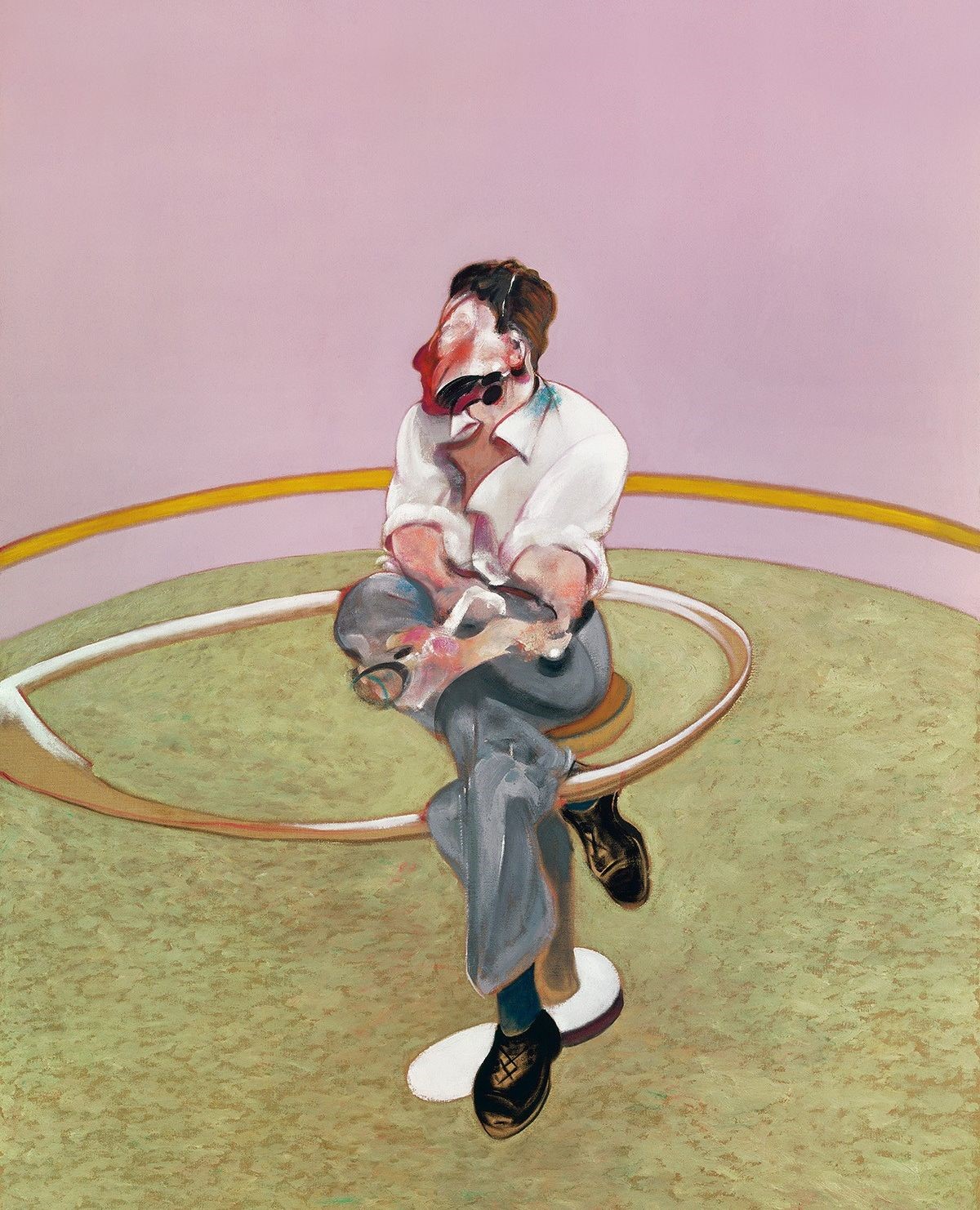
Study
for a Portrait of Lucian Freud (Sideways) (1971)
Francis Bacon
A furnace fuelled by drink and despair
Fifties Soho was a far darker place than its popular image suggests,
says Nigel Richardson
NIGEL RICHARDSON | BOOKS | THE DAILY TELEGRAPH | SATURDAY,
SEPTEMBER 16, 2000
“IF I described a Soho type of person, it would be someone who enjoyed
drink and food and conversation and laughter, who would never cash a
cheque at a bank but always with a friend or pub or shop, who’d probably
cry quite a lot and enjoy it, and would miss the train back home if a
party was going on.” So said the photojournalist and Soho habitué Daniel
Farson in a 1991 radio interview.
It makes Soho sound raffish and enviably bohemian, and that is the
picture of Soho that has persisted in the public mind. But Farson’s
Identikit Soho person says more about his self-image than it does about
the real place. The true Soho was a darker, crueller place. Thanks
principally to Farson, its story has remained largely untold.
Farson appointed himself the chronicler and mouthpiece of Soho in its
pomp, the 1950s. It was in this decade that the confluence of people and
ideas in this square mile of central London reached the ripeness of a
golden age, producing such memorable figures as the painters Francis
Bacon and Lucian Freud, the columnist and professional drunk Jeffrey
Bernard and the artist’s model and muse Henrietta Moraes.
Farson, who died in 1997, appropriated such people and painted a
relentlessly picaresque picture of their lives, turning Soho into a
lucrative cottage industry with a flood of books, articles and
interviews. But Farson told only part of the story. “He was interested
in success and publicity and so on,” says Oliver Bernard, the elder
brother of Jeffrey. “He ignored most of the people that I cared for in
Soho, which did irritate me, really, considerably.”
Farson played down the pain and self-destructiveness that was all
around. You could erect a memorial tablet in the French Pub to the
victims of Fifties Soho. Some of the names engraved there you might
recognise, such as the brilliant painter Johnny Minton, who committed
suicide in 1957, or the Edwardian beauty Nina Hamnett, a gifted artist
who had modelled for Modigliani and Gaudier-Brzeska and ended up an
incontinent wreck on a Soho barstool. Some, such as Josh Avery, the
subject of my semi-fictionalised book Dog Days in Soho,
were sidekicks and hangers-on who fed the Soho furnace.
Norman Bowler, the actor who starred in the Seventies television series Softly
Softly, knew all about the darker side — he had been a
close friend of Minton and was briefly married to Moraes. Farson’s
version of Soho left a good deal out, Norman said. “It was a very
painful place to be. You know, people weren’t getting drunk and abusing
each other out of fun. It was pain.”
Perhaps Farson played down the dark side of Soho because he couldn’t
face his own pain. “Dan had a sort of despair, I think,” George Melly
recalled. “It didn’t kill him for a long time, but the fact is that at a
certain point in the evening he turned from being the very charming man
he was into a werewolf.”
It’s a metaphor for Soho itself. Shade, as well as light, has been the
essence of the place. For too long Farson’s determinedly bibulous,
wink-wink version has held sway. It’s time we acknowledged the deeper
recesses
Survivor: Francis Bacon
Get out
Looking back at Francis Bacon by
David Sylvester
Thames and Hudson, 272 pp, £29.95, June 2000, ISBN 0 500 01994 0
JULIAN BELL | LONDON REVIEW OF BOOKS | VOLUME 22 NUMBER 20 | THURSDAY,
19 OCTOBER, 2000
Somewhere in London, two heads would be nodding together: one tall like
the boulder topping a cairn, the other broadened like a Hallowe’en
pumpkin. Two lordly sensibilities, the heterosexual critic and the
homosexual artist, had converged to discuss painting and the human
condition. The thought that David Sylvester and Francis Bacon were
caught up in this dialogue seemed at once daunting and salutary to some
of us then learning to paint in the same town. Their Interviews – first
published in 1975 – conveyed such unassailable aplomb. ‘All art has now
become completely a game by which man distracts himself.’ I had no real
idea what version of history had brought Bacon to that ‘now’. In fact, I
probably understood his responses to Sylvester no better than a dog
follows human conversation. It was simply the authoritative urgency that
counted: distraction or not, painting stood in some crucial relation to
humanity, and somehow it must be pursued.
The Interviews expanded through two further editions, and seemed
gradually to settle into place as part of the broad landscape of British
art institutions. Yet it’s still difficult, eight years after his death,
to find a level way of looking at the phenomenon of Francis Bacon. By
the time he died, one way of talking about him had seemingly been
exhausted. In his new book, Sylvester records the artist Brian Clarke’s
suggestion that Bacon’s ‘paintings … begin in words, not in pictures. He
was really a poet.’ If so, it’s fitting that his canvases brought out
the poet in so many others. Abidingly Eurocentric, he was vastly
gratified to have captured the imagination of literary Paris: Michel
Leiris, Philippe Sollers, Gilles Deleuze and Milan Kundera all produced
high-flown testimonies to the stature of his work as a comment on the
human predicament. Nearer home, the existential fervour surrounding the
paintings was kept up by Lawrence Gowing – ‘The imagination that does
not recognise its own dilemma in Bacon’s images simply does not know the
score’ – and, indeed, by Sylvester himself: he ruefully owns up to a
‘gnomic and incantatory’ text of 1957 containing phrases like ‘somebody
seen in a fleeting moment in a world without clocks’.
Now, when Bacon’s legacy is being ground down to prose, the apocalyptics
have come to seem a little quaint. A year after his death, Daniel Farson
wrote an affable, elbow-nudging Gilded Gutter Life of Francis Bacon;
Michael Peppiatt followed with the more measured speculations of Francis
Bacon: Anatomy of an Enigma (1996); and last year the Tate staged a
small exhibition of his recently uncovered, painfully bathetic sketches
on paper. Sylvester, who worked on that and other, loftier recent shows,
has now worked over his file of Bacon material with the hope not only of
setting the record straight but of pushing the discussion
forward. Looking back at Francis Bacon devotes quite a few paragraphs to
the minutiae of dating and to disentangling rumours, but its aims don’t
rest there: it wants to save Bacon for poetry. It upholds the right to
speak of the ‘resounding solemnity’ of the art, as of ‘the unaffected,
easy-going grandeur’ of the artist.
The book has been organised in a kind of spiral, closing in on Bacon’s
memory. It starts with an extended critical account of the work, asking
one to recognise the brutal boldness of the ‘first great period’, which
lasts for nine years from his effective arrival on the London art scene
with Three Studies for Figures at the Base of a Crucifixion,
painted in 1944 when he was 35; then the confused directions of an
intermediary phase lasting from 1953 to 1962. These are resolved by the
mode of systematic distortion he uses for portrait heads and figures
through the 1960s. The series of triptychs commemorating the death of
Bacon’s lover George Dyer in 1971 is identified as a second plateau of
high achievement – not that Sylvester doesn’t find things to admire in
the increasingly muted manner of the painter’s old age.
Following this survey, Sylvester broods on the entire achievement from
various angles – for instance, how to pair up Bacon with Giacometti,
Sylvester’s other longstanding critical cause – before releasing further
snippets of taped conversation. Finally, an attempt at a concise,
straightforward, DNB-style record of the life provides, in its appended
notes, Sylvester’s most unbuttoned testimonial to his friend of forty
years. ‘A good cook’, but when it came to wine, he would drink the lees
in the Lafite; ‘he overtipped dreadfully’; we also learn that Bacon,
needing ready cash in the 1950s, sold behind his dealer’s back – ‘most
of these sales were negotiated by myself, acting as Bacon’s agent for a
commission of 20 per cent.’ And about the painter’s ‘unstinting
generosity … “I’ve only taken on morality,” he said to me in 1987,
“because I’ve had the money to do so.” This’ – and Sylvester
demonstrates the point – ‘was not true.’
In fact, his spiral seems to home in on a strikingly unchanging subject
of enquiry. From that late start onwards, Bacon is a creature of habit.
Standard format canvases every time; always with instructions to the
framers for glazing; as far as possible, the same studio, the same
friends with whom to drink champagne in the same Colony Room; the same
unwithering face with which to confront the same unending futility of
life and fascination of art. Perhaps this monotony – call it ‘certainty
of purpose’ – is what makes Bacon so compelling to Sylvester, a critic
who plumps instinctively for artists who display a rooted, emphatic
conviction.
Sylvester’s criticism is distinguished partly by its own ‘unaffected,
easy-going grandeur’ of delivery; partly by the way an almost physical
passion for metaphors of physicality is fine-tuned by an acute
sensitivity to nuance and context. His judgments can be sweeping – ‘the
20th century likes its art to be jokey’ – but they never usher in the
kind of prophetic cultural agenda we have learned to expect from
large-scale art critics, because they are offered as contingent
responses to a subtly shifting art world. Works of art cannot be neatly
detached from the individuals who make them, nor yet from the locations
in which they are displayed; products, people and places interact in
unpredictable ways. There are some eloquent passages here about the way
different hanging spaces have elicited fresh qualities from Bacon’s
paintings, reflecting Sylvester’s fascination with the temporary
interventions that curating can make in this flux. He prefers,
nonetheless, to find points of fixity around which to operate – hence
his tenacious hold on this highly consistent oeuvre.
His curating of it on paper is highly enjoyable, and sealed with insider
authority; it will be a primary document of Baconology. If there’s a
danger in knowing a body of work from the inside for so long, however,
it is that you lose track of outside correlatives. The Study from the
Human Body of 1949, for example, shines out to Sylvester as a crucial
canvas. The painting, Bacon’s earliest known nude, shows the back of a
man stepping into the darkness between what look like two shower
curtains:
It is wonderfully tender and mysterious in its rendering of the space
between the legs and in its modelling of the underside of the right
thigh. Its use of grisaille is breathtaking. None of Bacon’s paintings
puts the question more teasingly as to whether he is primarily a
painterly painter or an image-maker. Does this work take us by the
throat chiefly because of its lyrical beauty or because of the elegiac
poignancy of its sense of farewell?
Looking on without the same commitments, what I see is a figure outline
which Bacon has mechanically summarised on the usual unprimed canvas and
has then blocked in with spasmodic strokes of a very stiff, faintly
crimson-tinted white, determined that the figure should somehow be
fleshly but desperately uncertain as to how its volume and structure
could be represented, or indeed whether they should be attempted. The
brush doing this bodged infill, nervously observing the outline of that
right thigh and buttock, has left a clean edge that half-prompts you to
read the area as a flat plane, thus stymying the effort to render its
recession. The brushloads of grey reaching to fill the fork below the
groin are equally timorous. The whole canvas is infected by an
indecision as to whether the use of separated vertical downstrokes –
what Bacon called ‘shuttering’ – constitutes a thoroughgoing
methodology, or is simply a scrawny shorthand for shower curtains.
Poignancy and lyricism don’t get a look in; what takes me by the throat
is embarrassment.
I really don’t want Bacon to be this inept; but similar fumbling occurs,
often even more glaringly, in the majority of his surviving early
canvases, until in the early 1960s radical distortion offers a way of
bypassing his uncertainties. Bacon himself readily confessed to his
incompetences, as Sylvester acknowledges: but was he complacent about
them? Alone among those invited to present Artist’s Eye selections of
the National Gallery’s holdings, he insisted that his own work was
unworthy to sit beside the likes of Velázquez and Degas. He was ready to
talk about those masters and the endless stimulation that their painting
offered to his own, but he didn’t seem to equate attachment with
co-achievement. At times, I wonder if Sylvester does.
His own ‘teasing question’ about image-making and painterliness touches
on the issue: Bacon’s prowess as a poetic inventor – starting with the
matchlessly ferocious mutants of his 1944 debut – has long prompted
people to will old-masterly greatness on his paintwork. But maybe this
mislocates an artistic act which, in the context of postwar figuration,
was in fact rather ahead of its time. Unlike Giacometti or Freud, with
their arduous reinventions of the practice of drawing from life, Bacon
painted his repertory of screams and flurried buggerings with a
peremptory wilfulness that seems close to Pop Art: I want it now.
(‘Presented directly to the nervous system’; ‘the sensation of life
without the boredom of its conveyance’; ‘the grin without the Cheshire
cat’; his self-descriptions are unbeatable.) Sylvester notes how his
reliance on photos left him disoriented when confronted with living
models in the 1950s – a disengagement from traditional skills that would
become institutionalised in the era of Warhol. The mastery of fresh
skills that recharges Bacon’s art from the early 1960s – his use of
contorted human forms as containers for squirming flesh paint,
themselves held down within designer-tidy interiors – could possibly
have been inspired by the way the young Kitaj composed on the canvas
with ripped, projected images; at any rate, his working ethos seems to
come into clearer focus from this time onwards. Simply give me a good
strong layout, give me the materials, and I’ll give you the way life
really is; Bacon’s thumpingly unsubtle descendants in this perspective
(and for that matter in Sylvester’s approbation) are Gilbert & George
and Damien Hirst.
An alternative, more ancestral perspective on the nature of Bacon’s
skills might be to call him a northern painter. A painter, that is, of a
humanity born clothed; in this case, of a race that presents itself in
suits and ties. It’s not exactly that Bacon, as in his own disclaimer,
couldn’t draw. No one has had a more forceful structural knowledge of
heads, and of the tooth-ringed hollow that runs through them; hence the
power of his screams and his metamorphosed portraits. It’s simply that
few figurative artists have got through a career with such a radically
unstructured notion of what lies beneath the collar. Occasionally, he
takes a butcher’s cleaver to his quasi-acephalic nudes and discovers a
backbone. But for the most part, his instinct tells him that when you
unbutton the tweed and serge encasing the mid-century British male,
there lies revealed a rippling, amorphous flood of blubber.
Unaided by anatomy, Bacon thrashes about through much of his career to
find formulas to convey this judder of flesh. Short, circling swoops of
the brush, topped with little blurts from the paint-tube, prove the most
productive device: he gets very exquisite when he finesses them with
dusted and printed pigments in the later work. He whips paint into
fleshliness with this incessant urgency because the operation promises
to deliver a kind of transubstantiating miracle. It offers him direct
access to ‘life’ – to the essence of things, as that gets defined by a
God-disdaining vitalist. This, in other words, is an art whose
procedures are dictated by belief. The texture of that belief is
reflected in Bacon’s comments apropos a Titian painting to a BBC
interviewer (as recorded by Peppiatt): ‘We don’t only live our life, as
it were, in the material and physical sense; we live it through our
whole nervous system, which is, of course, also only a physical thing,
but it’s a whole kind of process of human images which have been passed
down – and yet nobody knows how to go on using them.’ That slippage from
a reassertion of materialist orthodoxy to a lament over broken tradition
is crucial to the tight circle of Bacon’s artistic rationale, which
revolves round a yawning void. The point has become too banal to detain
Sylvester by this stage, but sometimes the obvious has to be restated:
the premise behind Bacon’s anti-monuments is God’s failure to continue
existing. This is the occasion for his thoroughgoing ‘solemnity’. It’s
not only the quality that makes his triptychs and studies for
crucifixions so memorable, vital and horrid: it’s also what dates them.
His declamatory anomie now seems to document a certain mid-20th-century
crisis mentality whose reference points have since been dissolved,
rather in the way that El Greco offers an imaginatively exciting but
spiritually distant insight into a peculiar brand of Counter-Reformation
piety.
Sylvester brings out what was lovable in his great friend. This doesn’t
diminish Bacon; but it was the more intimidating figure of
the Interviews who seemed to bear challenging messages for the art of
painting. Looking back, looking harder, they all seem to resolve into
one permanent announcement: end of game, grab your takings, get out.
The Beckett of Paint
BY
LAUREN BYRNE |
IRISH AMERICA
|
DECEMBER 2000 – JANUARY
2001
“I live, you might say, in
gilded squalor,” Dublin-born painter Francis Bacon once remarked,
explaining his attachment to 7 Reece Mews, the spartan
twelve-by-eight-foot London flat that was both his home and studio for
the last 30 years of his life.
For Bacon, the
drab, confining space, accessed by a ship’s ladder, was more than just a
place to hang his hat. With its paint-spattered walls, broken furniture
and tables laden with rusting buckets of brushes adrift among a sea of
trampled photographs and books, it was as much a work of an as his
portraits.
“After all,” the artist who died in 1992 at the age of 83 said,
“existence in a way is so banal, you may as well try and make a kind of
grandeur of it rather than be nursed to oblivion.”
The studio and its contents, all 8,000 pieces of it, will become a
permanent exhibition at Dublin’s Hugh Lane Municipal Gallery by May
2001. “It was an incredible coup for us,” Barbara Dawson, director of
the Hugh Lane, says, smiling across a table piled with catalogues
of Francis Bacon in Dublin.
The exhibition, which took place earlier this year, was curated by
Bacon’s friend David Sylvester, and acted as a warm-up to the arrival of
the studio. It was touted as the most important exhibition to come to
the city in decades.
Bacon, who has been called the Beckett of paint, depicted the drama of
human existence in his work. The often violent images of truncated
bodies against a background of jeweled blue and marbled reds, lend
themselves to numerous interpretations and emotions. No longer shocking
– the reaction Bacon most wanted to elicit with his work – their majesty
and painterly brilliance are more apparent than ever in their Dublin
setting.
In Dawson’s office, the impression is more Matisse. Her pleated dress,
the color of pomegranates, complements the sunflower yellow walls, as a
compliant Irish sun streams steadily through the huge windows of what
was once Charlemont House. Built in 1762 on such generous proportions
that it earned for that part of Rutland, now Parnell Square, the title
of Palace Row, the building, home to the Hugh Lane Gallery since 1933,
is still the most remarkable feature of the north side of Dublin, which
has remained resolutely unchic despite the advances of the technological
tiger.
With the success of the Bacon
exhibition and the acquisition of the studio, the gallery, funded by
Dublin Corporation, is losing its backwater image and has gained points
over its rival, the new Irish Museum of Modern Art at Kilmainham Royal
Hospital.
The work of dismantling 7 Reece
Mews began in 1998 with a pioneering team of 15 archaeologists and
conservators headed by Mary McGrath, a consultant art conservator for
the gallery. Approaching the project as an archeological dig, they
prepared detailed graphs of the studio and its contents, then covered
the walls with a sealer before carefully cutting them out and dropping
them into the garage below. The next task, undertaken by Dr. Margarita
Cappock and a team of three art historians, was to catalogue all 8,000
items in the studio. Among the voluminous clutter were the familiar
sources used by Bacon, the books on mouth diseases and radiology, John
Deakin’s photographs of Bacon’s friends and the subjects of his
portraits.
But much that is new also
surfaced. “We’ve discovered one very important painting that was thought
to have been destroyed,” Dr. Cappock said, the four walls of her office
pigeonholed with the contents of the studio. “And some overpainted
images, showing how Bacon worked out his ideas on the actual source for
his work. This is going to give an entirely different perspective.”
Like a giant three-dimensional
jigsaw puzzle, the studio and its mayhem will next be reassembled by
Cappock and Ryan in one of the gallery’s rooms, only the more fragile
items being kept out.
All this hoopla could be taking
place across the water at the Tare Gallery in London. John Edwards,
Bacon’s heir and the man he looked upon as his son, first offered the
studio to the Tate. The gallery dithered – and not for the first time.
“Three Studies for Figures at the Base of a Crucifixion.” painted in
1944, established Bacon’s importance on the international art scene. But
in 1952, when Eric Hall, the artist’s former lover and mentor, offered a
painting to the gallery they had to be browbeaten into accepting it.
“It was an accident of chance –
they just dropped the ball,” Dawson says, sidestepping the invitation to
gloat, and echoing one of Bacon’s creeds in art and in life, his
devotion to chance. It was also chance that put her in touch with John
Edwards. “A friend of mine in London introduced me to Brian Clarke who
is now executor of the estate, and he introduced me to Edwards.”
“The studio had been offered to
the Tare Gallery, but there hadn’t been much communication,” she
delicately puts it, adding, “So they thought it would be better if it
was brought to Dublin.”
(Last year the High Court in
London removed the existing executors of the Bacon estate and named
Brian Clarke as sole executor. As things stand, it may be a matter of
some relief that the studio has found a home, since the estate is now
engaged in legal action against Marlborough Fine Art, the gallery that
represented Bacon for over 30 years, claiming they bilked him out of
millions.)
“There’s nothing more depressing
than the dusty saddle in the hall,” Bacon said, summing up a childhood
spent in a series of big houses in and around the Curragh in Kildare
where his father was an unsuccessful horse trainer. While he lived for a
large part of his childhood in Ireland, no one, least of all Bacon, ever
claimed him as an Irish artist. Undeniably though, his childhood
experiences in combination with a powerful imagination shaped the artist
he became.
Born at 63 Baggot Street, Dublin,
in 1909, to Eddy Bacon, a querulous ex-British Army captain and his
young stainless steel heiress, Francis was one of five children,
spottily educated, who spent their time being shunted between England
and Ireland by their restless parents. In Ireland they settled first in
Cannycourt House near Kilcullen, where Bacon’s lifelong chronic
asthmatic condition, worsened by his proximity to horses and hounds,
first became apparent.
When guerrilla warfare broke out in
Ireland in 1919 the family were under constant threat of attack. By now
they were living at Farmleigh House, the former home of Bacon’s maternal
grandmother whose third husband was the chief of police, a connection
that further endangered the family’s safety. The Bacon household,
however, survived the War of Independence intact perhaps because, as
Bacon’s sister Ianthe believed, their head groomsman who was in the IRA
was very fond of the Bacon children.
Still, the atmosphere of tension
that pervaded his childhood, the constant fear of annihilation and the
notion of being among people who considered him the enemy, shaped
Bacon’s view of the world and his sense of being an outsider. His
isolation was compounded by his burgeoning homosexuality and his
father’s antagonism. According to Bacon, his father frequently had him
horsewhipped by the groomsmen in hopes of making his son more manly.
Caught in the act of trying on his
mother’s underwear, Bacon was banished at age 16 from the household and
fled to London. Contrary to accounts by Bacon, Who was fond of injecting
his life story with the same high tension he produced in his painting,
he did, in fact, return to Ireland from time to time to see his family,
but with the advent of de Valera’s government in 1931, the Bacon family
left Ireland for good and there was nothing for him to return to.
“I have nothing in common with the Irish except perhaps a desperate
cheerfulness,” Bacon said at the end of his life. Maybe there’s more to
it than that. Of the exhibition he curated at the Hugh Lane Gallery,
David Sylvester had this to say: “In Dublin, in these neo-classical
rooms, the pictures look wonderful, they look like their true selves.
Seeing them here it’s as if he has come home.”
New
Thoughts on Bacon
Looking Back at Francis Bacon
DAVID SYLVESTER
Francis Bacon in Dublin
WITH
CONTRIBUTIONS BY GREY GOWRIE, LOUIS LE BROCQUY,
ANTHONY CRONIN,
PAUL DURCAN AND DAVID SYLVESTER
ANDREW LAMBETH
| THE ART BOOK
|
VOLUME 8
|
ISSUE 1
|
1
JANUARY 2001
Bacon is back
in the news, in part because the Bacon estate has accused the artist’s
erstwhile dealers, Marlborough Fine Art, of cheating. Marlborough has
been replaced by Tony Shafrazi in America and Faggionato Fine Arts in
Britain, and the stained-glass artist, Brian Clarke, has been appointed
executor of the estate. Valerie Beston, Marlborough director as well as
Bacon’s friend and trusted confidante, is no longer an executor. There
has been much discussion of Bacon’s Swiss bank account and his desire
not to pay tax on monies secreted therein. The situation is evidently
highly complex, but it seems quite possible
—
as has been suggested
—
that everyone involved had hidden motives, including Bacon himself. All
this financial wrangling will not alter how we see Bacon’s work in the
slightest. That will only be affected by new art historical evidence,
temporal perspective or changing fashions in taste. For example, our
knowledge of Bacon will inevitably be deepened by the cache of
‘lost’
paintings which has now come to light.
Since Bacon died in 1992, various discoveries have modified our view of
him. Many drawings have surfaced by this artist who professed not to
draw, and a number of rolled-up early canvases, previously thought
destroyed, and certainly abandoned, have reemerged. The authenticity of
some of the drawings is disputed, but not of the paintings. As yet,
there is no Bacon catalogue raisonné
to lay down the law, but whoever compiles it will have the thankless
task of negotiating a minefield. In the meantime, two new publications
help to document some of the most recent discoveries and thoughts about
Bacon.
David Sylvester is our leading Bacon expert (closely followed by Michael
Peppiatt, whose brilliant portrait of Bacon, Anatomy of an Enigma,
has done much to illuminate the artist’s life and art), and anything by
him is worth reading both for enjoyment and for stimulation. In fact,
this book contains writing of a very high order. For a long time,
Sylvester’s fame rested on his interviews with Bacon, first published in
1975. From 1967, for more than 25 years, Sylvester was primarily
occupied with researching and writing about René
Magritte. His public profile in this period of intense research was
correspondingly low. It is only since his Magritte monograph was
published in 1992, and the five volumes of the catalogue raisonneé
(1992-6), that Sylvester has re-emerged as one of the leading critics of
our time, and a writer of deep wit and perception. Appropriately, in
1993 he was the first art critic to receive the coveted Golden Lion at
the Venice Biennale.
As the chief interviewer of Bacon, Sylvester recorded the authorised
version (no drawings were mentioned, for instance), and ever since
friends and enemies alike have been asking whether Bacon made it all up,
or whether Sylvester did. There is a ‘Tablets of the Law’ quality to the
official sayings of Francis Bacon which suggests that they were
carefully constructed for effect, rather than dashed off spontaneously,
but this does not make them any the less readable. Of course, in the
editing process, much was cut from the original interview transcripts,
and Sylvester has never pretended to publish every word the great man
uttered to him. One of the treats of this new book is that it includes
20 pages of Bacon’s previously uncollected obiter dicta. These out-takes
are as fascinating as ever — as much for the tone of voice, which
Sylvester’s editing catches brilliantly, as for what is said.
Looking Back at Francis Bacon takes its title from the fact that
Sylvester refused to write anything ‘for the printed page’ on Bacon’s
work for 30 years. From 1962 until 1992 he maintains that as the master
interviewer he couldn’t trust his judgment as an independent critic;
would that such self-denial were more prevalent or more possible in the
art world. But is Sylvester less prejudiced now? Even eight years later
his grief at Bacon’s passing may still cloud the issue. (I heard he once
said that he could not bear to live if Bacon died.) How is impartiality
ever achieved? (Come to that, is it to be welcomed?) Be that as it may,
the essays collected in the present volume are virtually all recent
(with the exception of a short passage in the ‘Reflections’ portion,
which dates back to 1957), and although most have appeared elsewhere as
catalogue texts or journalism, all of them have been revised for
re-publication here.
The book is divided into sections: ‘Review’ which gives a useful
chronological account of the work; ‘Reflections’, which includes
broader-based musings such as ‘Bacon and poetry’, and ‘Bacon and
Giacometti’; ‘Fragments of Talk’ from the recorded interviews; and a
‘Biographical Note’ full of revealing asides. There is also a brief
bibliography, a list of illustrations and an index. Sylvester writes
with great authority, but without condescension. Much of the exposition
of influence and context will be at least in part familiar to many
readers, but Sylvester tells the Bacon story with economy and precision.
It is always fascinating to think again about how the early Bacon traits
of ambiguity, obscurity and painterliness developed. Or to ponder
exactly how much of W B Stanford’s Aeschylus in his Style: A Study in
Language and Personality Bacon actually read.
Again we are given Bacon’s reasons for glazing his pictures, and
reminded that he would never be brought to admit that it was largely
because he liked the reflections in the glass. Sylvester makes an
interesting
connection between Bacon’s Figure in a Landscape of 1945 and Sickert’s
The Miner, which Bacon could have seen when it was shown at the
Lefevre Gallery in 1944. On the other hand, it occurs to me that areas
of Painting, 1946 and its overall palette, wouldn’t have looked out of
place 10 years later in some of John Bratby’s kitchen sink pictures.
That particular Bacon, by the way, is now too fragile to be moved from
its home in MOMA, New York, because of the pastel used in its facture.
It was only later that Bacon discovered that pastel adhered much better
to the reverse of the canvas, and this he soon made a habit of using.
One of the most awesome aspects of Bacon’s attitude to painting is the
role he encouraged chance to play in the survival of his canvases.
Study after Velazquez of 1950, which Bacon himself thought destroyed
and rather lamented, has recently emerged from an artists’ supplier in
Chelsea where it had remained rolled up after being taken off its
stretchers (these would have been used again). Obviously this kind of
discovery is a godsend to Bacon lovers (how many more pictures will come
out of the woodwork?), who had previously had to live with the thought
that Bacon had destroyed some of his best work. But more worrying is the
corollary: how good actually are the ones which survived?
‘A
high proportion of those that did were undistinguished pieces,’ writes
Sylvester.
‘For
high ambition wrecked near-masterpieces generally leaving no
photographic trace
—
while practical needs preserved and consecrated unsatisfying works.’
Even Francis Bacon had to live, and the living, as we know, was
decidedly high. But at what cost to his final assessment?
Then there’s the problem of
‘finish’
(I told you the catalogue raisonné
writer’s job would be a nightmare). Bacon exhibited many works which
Sylvester describes as less finished’ than several of the works which
he
‘abandoned’.
Can then the
‘abandoned’
works be re-categorised?; and if they are, what about their market
value? (What about it if they’re not?, and will these paintings ever be
released for sale?) The ramifications are endless.
When it comes to art history, Sylvester is on somewhat safer ground.
Scrambled sources are unravelled and we are offered scrupulous
description in the furtherance of theory. We have Picasso’s
‘brutality
of fact’, Matisse’s serenity, and Soutine’s influential paint-handling:
all are shown to be relevant. It seems that Bacon looked at Degas’
Beach Scene (National Gallery, London) when painting the Triptych
of 1974 (revised 1977). Caravaggio’s Narcissus emerges rather
surprisingly as the model for the right-hand panel of Triptych —
Studies of the Human Body (1970). Bacon only really liked a small
proportion of an artist’s work — those things which would be useful to
him. Apparently, even most Picasso and most Rembrandt bored him. In the
same way, though he knew all of Eliot (much of it by heart), Bacon was
generally a reader of fragments.
The following is vintage Syl[1]vester, and typical of the compressed
perceptions and open delights of this book:
Nineteen fifty-three was the last year, it seems to me, of Bacon’s first
great period, initiated eight or nine years before. In 1954 the blue
became darker, more velvety, more nocturnal; the handling, coarser and
less vibrant; the model’s energy, more projected, less internal. With
the Quasimodo-like Self-portrait of early 1956 as a swansong,
Bacon was coming to the end of his involvement in a tonal language of
smudged forms and limited colour with soft[1]focused bodies in the
foreground and soft furnishings in the background, a language that has
more in common with Goya or Manet than with anything from Cezanne on.
The other key period, according to Sylvester, spans 1970 to 1976 and
accounts for all the best triptychs, most of them of George Dyer.
Sylvester considers that the triptychs are Bacon’s best claim to fame,
and in adopting this judgment confirms Bacon’s own opinion.
The section or chapter entitled ‘Reflections’ is a series of apercues,
more or less brilliant and certainly very quotable. Contradictions, as
one would hope, abound. (Firmly established within the framework of
Bacon’s singular artistic consistency; only two of his canvases, for
instance, were not upright in format.) Bacon, that ‘old-fashioned
militant atheist’, had, according to Sylvester, ‘something of Picasso’s
genius for transforming his autobiography into images with a mythic
allure and weight’. Yet Sylvester can also write, as if with surprise:
‘This extremely sophisticated, intellectually acute man, with a deep
realism about life, regarded himself as a seer’; and `Bacon was almost
the only important artist of his generation anywhere who behaved as if
Paris were still the centre of the art world.’
From ‘Fragments of Talk’ we have Bacon on photography: ‘I only use
photographs as I would use a dictionary in a foreign language’; but
revealingly he was also prepared to admit ‘there could be an
overemphasis on the photograph in my work.’ Bacon was always
experimenting with new phrases: ‘Right up to the end of his life’,
Sylvester recalls, ‘I would get a telephone call at 8 in the morning
trying out some formulation of a thought.’ Particularly felicitous is
Bacon on what he considers to be Picasso’s unconvincing depictions of
the sex act: ‘they always look like toys that you could pull along the
floor’. The whole process of these interviews is intriguing. I’d like to
know more about the mechanics of the sessions — where and when
they took place, how they evolved, and how the transcripts were edited.
I’d like to know about Shena Mackay’s role in this, Sylvester’s
assistant at the time and now a novelist of considerable distinction. He
says that together they were ‘reconstructing them radically to give them
shape’.
Perhaps unsurprisingly, given their superficial similarities to his own
work, Bacon disliked Goya’s black paintings. He said in 1982: ‘I think
that the art of our century is most potent when it is nearest to,
without going over into, caricature — when it is touching on the rawness
which caricature gives.’ He felt that Goya went over that edge, unlike,
say, Rembrandt or Velazquez. This perhaps links up with definitions of
the kind of painter that Bacon himself was. As part of his lyrical
description of the grisaille Study for the Human Body (1949)
Sylvester writes: ‘None of Bacon’s paintings puts the question more
teasingly as to whether he is primarily a painterly painter or an
image-maker.’ Although it should be possible to be both, perhaps their
fusion in Goya was precisely what Bacon disdained.
Although there is a certain amount of repetition among the sections,
there are good things to be found throughout the book. Sylvester, as one
would expect from an internationally acclaimed hanger, is excellent on
hanging work in different spaces. The biographical section consists of a
running text with 15 parallel notes on such themes as Bacon’s
overtipping, Robert Buhler selling off ‘abandoned’ paintings when he
took over Bacon’s studio, and alcohol as a moral imperative. The book is
well larded with fold-outs, of which I’m not normally a fan, but which
do seem to be indispensable to Francis Bacon (a bit like the grand
gilded frames he favoured). Billed as ‘the most complete word on Bacon
yet’, Sylvester’s impressive tome is the distillation of a lifetime’s
thought on Francis Bacon. It would make any library proud.
The other Bacon news to be reported in the papers is the gift of his
studio to the Hugh Lane Municipal Gallery of Modern Art in Dublin, where
it is scheduled to be on permanent display from November 2000. Why
didn’t it go to the Tate in London? Apparently the Tate hesitated and
all was lost. But the gift honours Dublin, the city where Bacon was,
after all, born — at 63 Lower Baggot Street. It is a magnificent
bequest, comprising some 10,000 items (including books, paintpots, a
number of those drawings he’s supposed not to have done, and a vast
quantity of dust), and the actual fabric of Bacon’s studio at 7 Reece
Mews, London SW7. The whole thing has been dismantled in London and
reassembled in Dublin in the most extraordinary manner, and according to
the most stringent archaeological procedures. Barbara Dawson, director
of the Hugh Lane gallery, describes the process:
You couldn’t just go in and take out all the books, for example, and
list them. It wasn’t just the fact that the books were there; it was how
close they were to the canvas, what relation they had to his work. He
was working on a self[1]portrait at the time of his death, and there was
a book on diseases of the mouth near the easel, and a magazine article
about how George Michael would only be photographed from the left side.
You could see there was a kind of arc which described his thought
processes. We can even tell where he stood to paint, because when he
pulled back his brush to execute a stroke it was heavily laden with
paint and would leave flickmarks on the wall and ceiling behind him
Undoubtedly, this important addition to Bacon studies will attract not
only scholars and the general public, but also Bacon exhibitions to
Ireland. ‘Francis Bacon in Dublin’, staged at the Hugh Lane Gallery (1
June±31 August 2000) to celebrate owning the studio, was the first
exhibition in that city of Bacon’s work for four decades, but such
events will not now be so rare. Curated by David Sylvester, it was a
small but ideally focused show of 45 works, ranging from 1933 to 1988.
The publication to accompany the exhibition is a very handsome
paperback, printed on beautiful cream paper and excellently designed by
Peter Campbell. Five writers contribute short texts to it of pleasing
variety.
‘Documents of Stress’ is a very good general introduction by Grey
Gowrie, dealing with the wider issues of Bacon’s oeuvre. I particularly
liked Gowrie’s Courbet links. He writes: ‘He [Bacon] was finding out oil
paint’s correspondence with the density of the observed world: the
Courbet road to nature’; and: ‘Bacon painted beds, platforms, chairs and
sofas with the attention that Courbet gave to rocks. The effect is a
suffocating enclosure: the landscape of hell done as hell’s hotel
bedroom: the non-world of Sartre’s Huis Clos and Beckett’s
Endgame.’ This essay is followed by Louis le Brocquy’s piece, ‘The
Mystery of Fact’, in which this distinguished Irish painter gives Bacon
his imprimatur as it were. Next is ‘An Irish Fear of Death?’ by Anthony
Cronin, chronicler of the bohemian Soho of the late 1950s and early 60s.
Among other stories, he records that Bacon as a child was locked in a
cupboard so that his nursemaid could be with her lover. He screamed
unheard for hours.
The poet Paul Durcan contributes an intensely personal memoir and the
poem Putney Garage, which contains the immortal description of
Bacon boarding the top deck of a bus in Piccadilly —‘aged eighty
years, [he] swung up the staircase like a gibbon/In the Dublin zoo.’
There is no essay by Sylvester, but the catalogue notes by him are
typically useful and concise. Six paintings on show were never before
exhibited in a public gallery, some of the works which had lain
forgotten in storage. Among these is Untitled (Landscape after
van Gogh) of 1957, a strange, luminous, compel[1]ling painting,
perhaps unfinished. With an expert selection of the familiar and the
unfamiliar, the exhibition looks from the catalogue to have been
altogether exemplary.
There’s a certain amount of material common to these two publications,
extending to shared phrases in the Sylvester writings, but who expects
an art historian to be a novelist, searching for a fresh phrase to avoid
repetition, if the most exact one has already been found? There is also
a noticeable emphasis in both publications on Bacon’s close friend John
Edwards being the sole heir of the estate. It almost makes you wonder if
this has been disputed in some way. Nevertheless, it is Edwards’
generosity that has resulted in Bacon’s studio ending up in Dublin, and
he is rightly praised for such a splendid gift. What better way to
conclude than to quote Paul Durcan’s fine memoir of Bacon: ‘He became
and remained my hero by whom I have measured all my contemporaries and
found, therefore, nearly all of them wanting. He was everything a poet
should be: always ahead with regard to problems of technique and always
ascetically compelling himself to stay attuned to the awful mystery of
everyday human existence. There was not one iota of phoniness in him
and, often as not, the wisdom of the ancients spewed from his nostrils
like cigarette smoke. Not since Oscar Wilde has London been graced with
a pair of eyes and a tongue like Francis Bacon’s.’
Andrew Lambirth, curator, writer and critic

Wrestling
with Francis Bacon
SIMON OFIELD-KERR
|
OXFORD ART JOURNAL |
VOLUME 24 |
ISSUE 1
|
1 JANUARY 2001
Since Three Studies for Figures at the Base of a Crucifixion was
first put on exhibition at the Lefebvre Gallery in London during 1945,
Francis Bacon has received his fair share of attention, and a critical,
biographical, and theoretical consensus now orders nearly all
understandings of him and his paintings. Francis Bacon, with the help of
friends and admirers, built and managed to maintain an interpretive
frame around his work that promises to survive long after the death of
the artist. Through this frame Francis Bacon’s paintings are repeatedly
understood as something to do with the deformation, dissolution,
disintegration, and deconstruction of the post-war world.'
This interpretive frame has remained largely intact in that small body
of work located between the disciplines of Art History and Gay Studies
that considers Francis Bacon’s figure and figurations. Francis Bacon’s
paintings are often identified as symbols, perhaps symptoms, of a time
prior to the 1970s when homosexuality had not yet become a social,
political, or public form. The irresolutions and dissolutions of Francis
Bacon’s paintings are repeatedly set up as precursors for the clarity
and candour of subsequent 'gay artists', particularly David Hockney. And
if we take a look at Francis Bacon’s paintings in the early 1950s,
perhaps Two Figures (Fig. 1) or Two Figures in the Grass, they do
indeed look like adequate illustrations of a time when anxiety over the
sexual order and disorder of the modem world, and the visibility of
'homosexuality', received a great deal of press attention.2
For many critics and historians the paintings of Francis Bacon and David
Hockney function as illustrations in a developmental narrative that runs
from post-war repression to gay liberation and beyond, a social and
political narrative that mirrors the personal 'coming-out' story. In
these 'coming-out' stories the figure and figurations of David Hockney
are valued as the representatives of assured gay subjectivity and
subject matter. More recently it has also proved possible to use the
protocols of contemporary 'Queer Theory' to value the irregularities and
'transgressions' of Francis Bacon over the clear delineations and
'domesticity' of David Hockney.3 However,
this change of direction and revision of values changes little. The act
of interpretation in both approaches is based upon judging and valuing
the degree to which the figure or figurations are able to comply with
well-established theoretical, political, and personal protocols.4 Now,
I certainly have no interest in questioning the importance or efficacy
of these protocols. Indeed, I believe I am more invested in them than I
know. And it is for this reason that I am seeking in this article to
adopt an approach to historical research that is not orchestrated
according to disciplinary procedures that may not have been available,
or had popular currency, during the period under investigate.
In this article Francis Bacon’s 1953 painting Two Figures will be
used as a site from which to begin a consideration of connections
between visual culture and some of the practices and pleasures that in
the early 1950s were being popularly identified as 'homosexual'. Rather
than deploying the protocols of Gay Studies or Queer Theory, my approach
is informed by the social and sexual practices and pleasures that took
place between men at this time. practices and pleasures that can be
described as 'cruising'. In this article 'cruising' is a mode of
attention that organizes my approach towards, or circulation around, Two
Figures. I want to propose 'cruising' as an alternative- albeit an
implicated alternative — to
the disciplinary procedures of identifying homosexual (or gay, or queer)
subjects and subject matter. The importance of 'cruising' for this
project is that it provides a way of engaging with Francis Bacon’s
painting that mirrors the encounters that took place between many men in
and around 1950s London. These men may have engaged in particular acts
with one another, but may not have been able to identify them, or
themselves, as homosexual. Evidence from court records in the 1950s
suggests that many men at this time did not have access to the medical
or other official languages that could be used to make their everyday
practices make sense.5
In short, I have attempted to work my way around a research archive in
the same way that some men may have worked their way around some and
textual environments in the 1950s: picking up clues, piecing together
information, and comprehending sexual practices without the, sometimes
overwhelming, support of official forms of knowledge. My archival
cruising brings together a range of texts and contexts to create an
environment in which Two Figures may produce a particular kind of sense.
Whilst these texts and contexts may have been the materials from which
Francis Bacon produced Two Figures, I am rather more interested
in suggesting that in 1953 viewers could have made the painting make
sense from somewhere within this environment. As a form of practical and
theoretical engagement cruising is at times circuitous. The shifts of
focus and attention can be a little disconcerting, and induce a degree
of anxiety, not the least of which is the possibility of losing sight of
the subject or object of interest. In this article Two Figures does
at times seem to disappear from view. However, this is the necessary
precondition for the painting’s reappearance and the possibility of
catching sight of it in another location or from another position. David
Sylvester’s book Interviews with Francis Bacon is well
established as the place from which to begin any serious engagement with
this artist and his work. In these interviews, Francis Bacon makes it
clear that one of the sources for his painting Two Figures was a
series of sequential photographs that Eadweard Muybridge took of two men
wrestling (Fig. 2).6 During
an interview with Sylvester in 1974 Bacon mentioned that in some of his
paintings it was difficult for him to distinguish the influence of
Eadweard Muybridge from that of Michelangelo Buonarroti:
Actually, Michelangelo and Muybridge are mixed up in my mind together,
and so I perhaps could learn about positions from Muybridge and learn
about the ampleness, the grandeur of form from Michelangelo, and it
would be very difficult for me to disentangle the influence of Muybridge
and the influence of Michelangelo. But, of course, as most of my figures
are taken from the male nude, I am sure that I have been influenced by
the fact that Michelangelo made the most voluptuous male nudes in the
plastic artists.7
John Russell has suggested that Two Figures may also have
something to do with Gustave Courbet’s Le Sommeil and a replica
of a Greek third-century bronze called The Wrestlers that can be
found in the Uffizi in Florence, but which Bacon apparently never saw.8 Each
of these resources and suggested sources retains and sustains Bacon’s
painting within the established canons and traditional narratives of art
history and criticism. They also offer the possibility of connections
and relationships with popular images, practices, and forms of pleasure.
Whilst it is well-known that Bacon was committed to a number of artists
and art works he believed were great, he also consumed the visual
products of the everyday. The residue of this consumption could be found
both on the walls and floor of the studio where he worked and on the
surface of his paintings. In 1974 Bacon also said this to Sylvester:
But I don’t only look at Muybridge photographs of the figure. I look all
the time at photographs in magazines of footballers, and boxers and all
that kind of thing — especially boxers.9
And then when asked if the figures that he painted had anything to do
with the 'appearance of specific people', he said:
Well, it’s a complicated thing. I very often think of people’s bodies
that I’ve known, I think of the contours of those bodies that have
particularly affected me, but then they’re grafted very often onto
Muybridge’s bodies. I manipulate the Muybridge bodies into the form of
the bodies I have known.10
So, according to Francis Bacon the figures in his paintings have
something to do with the sequential photographs of Eadweard Muybridge,
the work of Michelangelo Buonarroti, photographs found in magazines, and
bodies of men he knew. This bringing together of sources and resources
suggests that Two Figures can be viewed as a complex site where a
number of popular and esteemed, old and new forms coincide.
Certainly the early years of the 1950s were marked by coincidences of
this kind. The end of post-war austerity, the birth of a 'new
Elizabethan age', and the developing cultural influence of the USA all
provided ample opportunity for conflicts between old and new forms of
practice and pleasure.11 1952
and 1953 were years when perceived or contrived differences between old
and new forms of 'homosexuality' became a propellant of public anxiety,
largely generated by a series of scandals that were promoted by the
popular press.12 The
meeting between the past and present within the frame of Two Figures suggests
that it could be approached through the changing representations of what
was only just becoming identified by national newspapers as
'homosexuality'.
Just a quick comparison of Two Figures and the Muybridge
photographs of two men wrestling is enough to notice a number of
differences; not only the different settings, and Bacon’s inclusion of a
bed, but differences in the form of the male figures. These differences
suggest that this painting is the product of both new and
well-established ways of representing the erotic male figure. The
photographic figures are smooth, in focus, perhaps a little bleached but
clearly defined, whereas the painted figures are blurred, smeared, and
smudged, comprised of different textures and are in places indistinct.
The figures in the photographs are clearly wrestling but it is a little
difficult to discern what the painted figures are about. However, the
interior setting, the bed, the swift, perhaps passionate, application of
paint, the merging of the men, and the suggestion of an erection almost
at the centre of the painting seems to resolve any possible ambiguity.13 For
the purposes of this article, I want us to notice that the painted
'wrestlers' are also noticeably thicker, more solid, more compact,
rounder, perhaps fleshier, and also that they have short, dark,
slicked-back hair.
We know that the differences between the photographs and the painting
could have been determined by the conjoined influence of Michelangelo,
images from popular magazines and Bacon’s recollection of bodies he knew
or had known. These combined influences evoke a very particular
geography of practices, pleasures, and personas from which the painting
may have been produced, and within which it played a part. This
environment can be used to diffuse and rearrange the links between the
painting, the Muybridge photographs, popular images from magazines, and
the work of Michelangelo. It is important to note that I am not trying
to remove Francis Bacon and his paintings from the narratives and
conventions of art history and criticism but seeking to modify these
knowledges by attaching them to popular texts and practices current in
the 1950s.
Like David Sylvester’s Interviews, John Lehmann’s 1976
autobiographical fiction In the Purely Pagan Sense has become
something of a convention in writings about Francis Bacon. In his
biography Francis Bacon: Anatomy of an Enigma, Michael Peppiatt
uses a quotation from John Lehmann’s book to attach Francis Bacon’s
paintings to his cruising of London’s streets during the blackout:
I met several other guardsmen during that strange period when the
bombing had not yet started and the blackout heightened the sense of
adventure as one slipped into pub after pub. My sexual hunger was avid
as it was with so many others at a time when death seemed to tease us
with forebodings of liquidation in terrors still undeclared. One curious
manifestation of this was the public urinals. As never before, and with
the advantage of the blackout, a number of these, scattered all over
London, became notorious for homosexual activities. Heaving bodies
filled them, and it was often quite impossible for anyone who genuinely
wanted to relieve himself to get in. In the darkness, exposed cocks were
gripped by unknown hands, and hard erections thrust into others. Deep
inside, trousers were forcibly — or rather tender-forcibly — loosened
and the impatient erections plunged into unknown bodies, or invisible
waiting lips.14
Peppiatt uses this quotation to represent Francis Bacon as an artist
committed to extreme sensations, in life and in paint. However,
Lehmann’s fictionalized autobiography can also be used to enter a
geography in which two of the initial co-ordinates are 'class' and
'German Modernism', which are subsumed after the Second World War by
sites of male encounter that could be found in and between Soho and the
East End of London. In this physical, social, sexual, and textual
geography Bacon found his regular pleasure, and his painting makes a
very particular kind of sense when it is encountered here.
In the Purely Pagan Sense is about Jack Marlowe’s social but
mostly sexual encounters with young working-class men in Vienna, Berlin,
and London. To map the changing associations between visual culture and
the economy of some men’s sexual practices and pleasures it is useful to
return to the 1930s and leave Britain in the company of Jack Marlowe and
those other young men who looked to Germany for political, aesthetic and
sexual excitement. In the 1920s and 1930s, Vienna, Hamburg, and Berlin
in particular granted some men license to experience the city as they
knew it was meant to be: modern, alien, and exciting. For John Lehmann,
W.H. Auden, Christopher Ishwerwood, Stephen Spender, and others, their
departure from Britain and arrival in Germany in the 1930s enabled them
to experience and write about the pleasures of unfamiliar cities and the
excitements of encounters with young and foreign working-class men. For
Lehmann and Spender the excitements of foreign cities and sexual
encounters with young men of different nationalities and different
classes were fused with one another. The 'alien' environments of Vienna
and Berlin enabled and encouraged erotic fantasies and realities that
were largely determined by class and nationality. These fantasies were
complexly invested in the realities of economic and social disparity,
and had a history and currency made available through the work of John
Addington Symonds, Edward Carpenter, Oscar Wilde, and others.15 This
powerful complex surrounded and invested the figures of young,
working-class, and foreign men with a particular kind of appeal.
In his published journals, diaries, and fictions, Spender firmly fuses
modernity and the forms of German Modernism with relationships between
young men.16 In The
Temple he writes about a young man looking at the modem photographs
of a young German photographer (Fig. 3):
One in particular struck Paul. It was a bather standing naked at the
reed-fringed edge of a lake. The picture was taken slightly from below
so that the torso, rising above the thighs, receded, and the whole body
was seen, layer on layer of hips and rib cage and shoulders, up to the
towering head, with dark hair helmeted against a dark sky. V. shaped
shadows of willow leaves fell like showers of arrows on San Sebastien,
on the youth’s sunlit breast and thighs.17
The fictional encounter in The Temple is based on the meeting
between Spender and the photographer Herbert List. In his autobiography World
Within World, published in 1951, Spender describes List’s studio:
The room was L-shaped, so that one part of it could not be seen from the
other. At each end were beds which were mattresses, and bare modernist
tables and chairs made of tubes of steel and bent plywood. The main part
of the room formed a large space which had been cleared for dancing. The
room was lit by lamps of tubular and rectangular ground glass.18
In 1928 Bacon spent two months in Berlin before moving on to Paris.19 And
interestingly, the description of List’s studio could, with very few
changes, be applied to Bacon’s own studio in the 1930s (Fig. 4).20 Whilst
it is obviously risky to make too much of a short sojourn in a foreign
city, it is just possible that the conjoining of sexual and aesthetic
pleasures that some young men found in Weimar Germany were influential.
Perhaps Bacon, like Spender, started to associate certain and uncertain
acts between men with the pictorial forms, spatial arrangements, and
designs of German Modernism. We do know that when he returned to London
Bacon became a furniture and interior designer very much in debt to the
Bauhaus. We also know that being modern and interested in design had
something of an affinity with being interested in men during the
1930s.21 Certainly for Spender the visual and spatial languages of
Modernism were intimately associated with sexual pleasures between men,
and he explicitly attaches Joachim’s modern photographs to the modern
design of his studio to a way of life, a 'design for living' in fact,
that he found in Germany at the beginning of the 1930s:
The photographs were like an enormous efforescence of Joachim’s taste
for 'living', a great stream of magnificent young people, mostly young
men, lying on the sand, standing with their heads enshadowed and pressed
back as though leaning against the sun, rising from bulrushes and
grasses, swimming in seas and rivers, laughing from verandas, embracing
one another ... About the appearance of them all and about the very
technique of the photography, there was the same glaze and gleam of the
'modem' as in the room itself and the people in it: something making
them seem released and uninhibited yet anonymous, as they asserted
themselves by the mere force of their undistinguishable instincts.22
However, rather than make too much of the two months that Bacon spent in
Berlin, I would like to propose a few possible connections between the
forms of German Modernism, Herbert List’s photographs, and Francis
Bacon’s paintings.
Herbert List’s photographs, and Stephen Spender’s descriptions of them,
evoke both the naturist and physical culture movements that became so
popular in Germany after the First World War, and are clearly related to
the physique and body-building photographs published in numerous books
and magazines around this time (Fig. 5).23 In
these photographs, classical forms are combined with an anthropometric
interest in the modern male body. The work of Muybridge, amongst many
others, provided protocols for physique and body-building photographs
that repeatedly focused on the surfaces of male bodies placed in studios
or simple scenic locations. Herbert List’s commitment to the bodies of
young men, combined with his explicit classical references, but most
importantly his formal, simple and modern arrangements of pictorial
space (Fig. 3) could bring together physical culture photographs and
Bacon’s Two Figures. It has been suggested that the spatial
arrangements of Bacon’s paintings owe something to his time as a
Bauhaus-inspired designer, and so the formal similarities between his
studio in the 1930s and his paintings, List’s studio and his
photographs, seems enough to suggest a shared interest in the sexual and
aesthetic formalities of German Modernism.24
However, it is certainly possible that this trip to Germany is a
diversion and the connection between the visual vocabularies of physical
culture photographs and Two Figures is much more direct. It is
not too important, as each of these possibilities suggest associations
between the pleasures of modernity, photography, modem visual
vocabularies, and sexual encounters between men of different ages,
nationalities, and from different classes.
For Paul in The Temple, the affinity between paying to take the
photograph of a young and foreign working-class man and paying him for
sex, invested modern photographs with an erotic intensity. This affinity
between the visual vocabularies of modern photography and forms of
sexual practice and pleasure available within the modern metropolis can
be used to make sense of Two Figures as a visual product attached
to pleasures and practices that were largely determined by class.
Bacon’s painting is perhaps part of a very long history of fantasies and
realities between men of different classes and nationalities that were
certainly, but not simply, invested in social inequity and romantic
socialism.
It really would be pretty difficult to overestimate the importance of
class difference in the disposition of sexual encounters between men
during the first fifty years of this century. Jack Marlowe travelled to
Germany with well-established protocols that precluded sexual encounters
with men of his own class:
I was obsessed by the desire to make love with boys of an entirely
different class and background — that
was the polarity that excited me, so much at that time and for many
years to come.25
And whilst he may have felt more at liberty to practise these protocols
in a foreign city, he also returned home to exercise them in the
physical and social geographies of London. John Lehmann’s fictional
autobiography, and many other texts produced before and after the Second
World War,26 make
it clear that one of the most neglected erotic figures of this time is
the male servant or employee, whose eroticism depends on the social
differences and economic disparities between classes.
For example, on his return from Germany in 1932 it was possible for the
by no means wealthy Stephen Spender to consider advertising for a paid
companion and secretary:27
I did not want to live alone and I did not consider marrying. I was in
the mood when people advertise for a companion in the newspapers. I used
to enquire of my friends of their friends in case they knew anyone
suitable. So when by chance I met a young man who was unemployed, called
Jimmy Younger, I asked him to live in my flat and work for me.28
According to Spender in 1951, it was the difference of class between him
and Jimmy Younger that provided the element of 'mystery' that
corresponded to a 'difference of sex'. In World Within World Stephen
Spender proposes that it was not Jimmy’s masculinity that attracted him
but that he was in love 'with his background, his soldiering, his
working class home'.
Spender’s attraction is, at least in part, formed from a complex of
literary texts and political philosophies that explicitly combined, or
implicitly enabled, the joining of political and erotic commitments to
working-class men, and charged class difference with a potent intensity.29 It
is possible to consider Bacon’s painting from within this very
particular social, sexual, and textual tradition that by the beginning
of the twentieth century was able to imbue any image of two men
wrestling with a powerful erotic charge. For some readers of Walt
Whitman, Edward Carpenter, and John Addington Symonds it was easy to mix
Ancient Greek wrestling with forms of socialist and sexual politics that
found pleasure in male comradeship and glamour in the figures of
working-class men.30
Whilst for men like Stephen Spender, their socialism was an intimate
part of their sexual practice, for others the attractions of
working-class men were not determined by their social and political
welfare. According to all of his biographers, Francis Bacon was
committed to the myths and realities surrounding the attractions of
working-class men, but not the least interested in any forms of
socialist politics. Throughout this century classified advertisements,
in newspapers and magazines, like the one Spender considered placing,
have been important sites of male encounter, and according to Michael
Peppiatt, Bacon knew and used the columns in The Times to
advertise himself for both money and excitement as a 'gentleman’s
companion'.31 This
history of classified advertisements establishes the importance of class
for the fantasies and practicalities of relationships between men.
Bacon’s involvement as an almost aristocratic Irishman on both sides of
these exchanges offers the potential for understanding the articulation
of these exchanges as complex and perhaps mutable, and indeed mutual,
within a framework of real social and economic disparity. It is
important to have in mind that the advertisements for male secretaries,
valets, employees, and companions that appeared in The Times and New
Statesman during this period could have been as innocent as they
appeared, or were perhaps requests for sexual pleasures, practices, and
partners.32
Our approach toward, or circulation around, Two Figures can be continued
by meeting up with the character Dr Anthony Page, a psychoanalyst who
turns amateur detective, from Rodney Garland’s novel The Heart in
Exile, published in the same year as Francis Bacon’s painting was
first exhibited. In this novel, Dr Page works as an amateur detective to
solve the mystery of a former lover’s recent suicide. The solution to
the mystery hinges upon the identity of a young working-class man whose
photograph Dr Page finds pressed behind a framed photograph of his one
time lover’s fiance. However, it is not the young man in the photograph
that we need to consider, but Terry, the young male nurse employed by Dr
Page as a receptionist and housekeeper. It serves our purpose to imagine
that Dr Page placed an advert for a receptionist/housekeeper in a
suitable publication, and that it caught Terry’s eye.
Terry is an important figure who can stand beside Two Figures;
conjoining past and present, his attractions for Dr Page are somewhere
between those of a working-class male servant, and a homosexual subject
and partner. Terry swims and lifts weights three nights a week: He was
about five foot eight but his bones were large and constant exercise had
brought out a nice, harmonious muscle development on his body. I had a
suspicion that sooner or later the over-exercised muscles might attract
fatty tissue. I dare say in ten or twenty years time he might look
bloated, but, at least when I saw his naked forearms, his impressive
biceps and deltoids, I was conscious of his potent attraction.33
Terry is the embodiment of the importing of modern masculine forms and
comportments from America into Britain during and after the Second World
War. One route for this influence was the availability in Britain of
American health, fitness, muscle, and physique magazines, and the
publication in British magazines of photographs from specialist American
studios. These magazines influenced both the presentation and pleasures
of some men. According to Dr Page:
A considerable proportion of young homosexuals regularly went to
gymnasia and swimming pools, not only to look at, or to try and
establish contact with, attractive young men, but also to improve their
own physique, and thereby their chances of success.34
Whilst gymnasiums and swimming pools are described in The Heart in
Exile as part of a 'new post-war trend', they have been important
sites of male encounter and sexual production since the nineteenth
century. Terry is not simply modern, an example of a 'new post-war
trend', but a figure invested within well-established archetypes of
working-class glamour, reformulated by the changes of the post-war
period. And it is this, and perhaps his slicked-back but 'rebellious'
hair, that makes him so important when placed alongside Two Figures.
Due to changing social and economic relationships, by the mid-1950s the
attractions of male servants no longer made quite the same sense as they
had earlier in the century. At this time sexual acts between men of
different classes became attached to social anxieties about the order
and disorder of the post-war world. In an attempt to counter this
anxiety a well-established romantic and moral understanding of
relationships between men of different classes was instituted by social
reformers as an inaugural, though not long-standing, part of the process
of creating an ethical and responsible homosexual subject, a subject
able to sustain the arguments for homosexual law reform.35 However,
in The Heart in Exile Rodney Garland does not, or perhaps in 1953
feels no need to as yet, mitigate Dr Page’s interest in Terry in quite
this way. Dr Page is very aware of the connections between Terry’s
'physical attractiveness' and his class:
I confess that the attraction was much stronger when I saw him doing the
sort of work I would never have dreamed of asking him to do. When my
charwomen left, he insisted on scrubbing the kitchen floor, kneeling on
the rubber mat, bending over the mop in his singlet. One saw the
servant’s humility in the attitude. But one also saw the broad
shoulders, the arched back with the freckled skin under the rebellious
hair, and he would look up as I entered and give me a beautiful smile of
his brown dog eyes and white teeth.36
Terry is a figure where the past and the present coincide, not just a
young and attractive working-class man but not yet a homosexual subject
or partner; and so a model for making sense of Two Figures. I
have already mentioned that gyms and athletic clubs have been important
sites of encounter since the nineteenth century.37 And
that in the 1950s these sites and the men who used them were being
reformed, at least in part, by the availability of American health,
fitness, muscle, and physique magazines. It seems possible to surmise
that the gym where Terry worked on his body was located somewhere in the
East End of London. Just the kind of East End gym, in fact, where George
Dyer, Francis Bacon’s lover in the 1960s, may have been found during
these years.
Bacon did not meet George Dyer until eleven years after he painted Two
Figures, but that does not preclude him from becoming part of the
context for making sense of the painting. An archetype that almost
perfectly fitted Dyer existed in Bacon’s painting well before they met.
I think it is possible to propose that the influences that helped to
form parts of Two Figures, Terry’s and Dyer’s body and hairstyles
were the same. Both George Dyer and Terry may have taken an interest in,
or at least a look at, some of the same British and American health,
fitness, muscle, and physique magazines that Bacon was looking at, or
walking on, when he painted Two Figures. On the pages of these
magazines, past and present forms of working-class masculinity coincide,
and many of the threads that have run through this article meet. It is
also here that Bacon’s commitment to circuits of sexual pleasure in what
he once called the 'sexual gymnasium of the city' makes a very
particular kind of literal sense.38 If Two
Figures is viewed from the pages of some British and American
health, fitness, muscle, and physique magazines the influences that
Bacon discussed with
Sylvester in 1974 are no longer involved only in the narratives and
conventions of art history and criticism, but become involved in a
popular and banal visual economy. By the early 1950s the visual language
that Muybridge utilized in his sequential photographs was an established
element in the conventions of muscle and physique photography. And the
figure and figurations of Michelangelo Buonarroti played an important
part in forming the poses and rationales of muscle and physique
photographs and magazines. In his autobiography, Quentin Crisp writes
about his appreciation of Michelangelo, his favourite artist.
Michelangelo worked from within. He described not the delights of
touching or seeing a man but the excitement of being man. Every stroke
he made spoke of the pleasures of exerting, restraining and putting to
the utmost use the divine gravity-resisting machine.39
As in Bacon’s interview with Sylvester, Quentin Crisp’s appreciation of
Michelangelo sustains him as a serious artist. However, Crisp’s ambition
for his own practice as an artist’s model locates the figure and
figurations of Michelangelo in and around the popular and banal forms of
visual representation that could be found on and between the covers of
muscle and physique magazines in the 1950s. Like many male models, Crisp
'was determined to be as Sistine as hell'.40
In the muscle and physique magazines of the 1950s the figure and
figurations of Michelangelo were an integral part of their social,
sexual, and aesthetic texture. Men who viewed these magazines were able
to understand their social, sexual, and aesthetic interest in themselves
and other men through a mediated connection to the texts and contexts of
the Italian Renaissance and Ancient Greece. In Britain throughout the
1950s John S. Barrington, working under the pseudonym of John Paington,
published a number of books and magazines that established an
association between fine art and physique photography.41 In
the July 1957 edition of his male art magazine MAN-ifique, Paington
published the following editorial:
Finally, we have 'elected' a spiritual Editorial Board comprising
Leonardo da Vinci, Michelangelo, Praxiteles, Polykleitos, Blake,
Flandrin, Fuseli, Gamelin and Rodin: ONLY WHAT WOULD HAVE BEEN GOOD
ENOUGH FOR THOSE MASTERS IS NOW GOOD ENOUGH FOR US AND OUR READERS!42
Whilst the direct influence of American physique magazines on the public
and private work of many artists is well known, very little attention
has been given to British publications. These magazines were important
environments where male figures made sense in the 1950s, but they were
also, like East End gyms, important sites of male encounter. The British
magazine Vigour, subtitled 'The Vitality Magazine', was first
published in 1946 and initially consisted of articles on health, fitness
and training, muscle and physique competition results, profiles of
competition participants, and a few British rather than American muscle
and physique photographs. The photographs published in Vigour were
usually of men who belonged to gymnasiums or weight-training clubs that
were often located in working-class districts, often London’s East End.
That these photographs were captioned with the name of the individual,
their club, and its location may have been an integral part of their
appeal for men committed to the myths and realities that surrounded and
saturated the figures of working-class men:
An unusual pose by Ron Saunders, a member of the Bethnal Green
Weightlifting Club, of light, but shapely build, Ron gains a Highly
Commended Diploma in Britain’s Perfect Man Contest.43
During Vigour’s first year of publication photographs of men who
belonged to British gyms and clubs appeared alongside photographs from
American photographic studios that specialized in muscle and physique
photography, and the third issue of Vigour was published with a
physique photograph on its cover.
By the publication of the seventh magazine in July 1946 the pre-paid
advertisements column at the back of the magazine was being used by men
to make contact with other men who had similar interests:
Reader, keen on Boxing and Wrestling, would like to hear from others
similarly interested — Write: Box No 1003, Vigour Press, Ltd.44
During the first year of publication Vigour moved from looking
like a general fitness magazine to increasingly concentrating on
physique competition results and photographs. Alongside the results of
physique posing competitions were articles providing advice for
participants. Each month Vigour held its own physique
competition, and the winning entry was published alongside a detailed
critique of both the photograph and pose. On the pages of Vigour physical
fitness and fine art were combined:
Reader with Athletic Figure. Would consider posing for
Artist-Sculpturer. Box 1360.45
By 1947 the focus of the magazine was moving towards physique
photography and a number of advertisements began to appear for
photographic studios located in Britain and America that specialized in
physique poses. In July 1947 the following pre-paid advertisement was
published:
Young Ex Sailor, shortly departing to Singapore, would like to hear from
same. Interests: General PT, posing and sunbathing — write to Box
1981.46 By the end of 1947 the pre-paid advertisements column had become
established as a place where men could meet, and the number of personal
advertisements increased steadily from issue to issue. Like the
advertisements published in the classified columns of The Times or
the New Statesman, the advertisements in Vigour were
ambiguous, and the very real possibility that they mean just what they
say should be kept in place. This reading coexists with the possibility
that they are advertisements for sexual encounters. Perhaps like Two
Figures, Vigour is not a magazine for men interested in men
that requires decoding to understand what it is about, but a text that
should remain somewhat irresolute
Towards the end of 1947 the number of pre-paid adverts that included
interests beyond the focus of the magazine began to increase, and in
July 1948 the following collection of pre-paids advertisements were
published:
Male Reader would like to pose for amateur photographer or artists.
Reader keen on weight-lifting, posing, sunbathing, seeks companion for
camping holiday in South France, August.
Youth (20). Student desires employment during summer holidays. Anything
considered.
Overseas Reader would like to correspond with male readers outside Great
Britain. Interests: Weights, Naturism, Physique Photography.
Correspondence in English or French.
Amateur photographer wishes to contact posing enthusiasts in Aldershot
and Guildford area.
Pose photographs of well-developed youths aged 15-20 years required
Wanted. Good pose photographs of youths and young men.
Gentleman offers holiday accommodation, Devonshire. Swimming, Naturism,
Sunbathing, Theatres, Cinemas. Coloured guests welcomed.
Young Man, 29, starting physique course, anxious to contact other
Londoners similar age, keen on posing, art, disciplined training. Please
send photograph and physique details. Reply Guaranteed.
A few pose photographs for sale 1/6d. each. Parcels of assorted American
magazines, 10/- including postage.
WANTED PHYSIQUE PHOTOS. For anyone sending a clear physique photograph
of himself and his exact height and weight (both taken stripped) will,
in exchange, compute and mail the required body measurements for
theoretically perfect proportions for the given weight and height.
Chesty Young Man would like to meet another specialising in chest
development living near London or Harrow.47
From around the middle of 1949 the appearance of personal pre-paid
advertisements becomes somewhat irregular, but they continue to appear.
Finally, this advertisement for a wrestling partner appeared in Vigour’s
pre-paid advertisements column in the same year that Francis Bacon
painted Two Figures 1953:
Wrestling practice wanted by inexperienced ten-stone near York, Reply
R.G. c/o Vigour Magazine, Please State Fee.
Taken together this selection of advertisements from the pages of Vigour between
1946 and 1953 provides a compelling context for making sense of Two
Figures, which places the painting within a tradition of popular
representations of men 'wrestling' (Fig. 6). Representations that may or
may not be sexual acts, and may or may not be art. On the pages of this
magazine references to Ancient Greece are combined with modem graphic
design, references to Michelangelo, naturism and physical culture, the
physical development and attractions of working-class men, weightlifting
clubs and gyms in the East End of London, and adverts requesting
wrestling partners. It is possible simply to attach a narrative to Two
Figures in which the couple 'wrestling' on the bed contact one
another through a pre-paid advertisement published in Vigour. A
story of this kind would bring together the mediated influence of
established presentations of the male figure with one of the twentieth
century’s important sites of male encounter. A viewer of Two Figures who
brought knowledge of the advertisements in Vigour, and other
magazines, to the first exhibition at the Hanover Gallery in 1953 could
write this kind of story and make this kind of sense of the painting.
And perhaps, but not necessarily, because of Francis Bacon’s commitment
to photographs in magazines, the pages of Vigour may have littered the
floor of his studio and become part of the production of his painting.
That is enough, but there is another magazine that can suggest a very
particular context for Two Figures. As I have already mentioned,
John Russell has suggested that Francis Bacon’s painting may have
something to do with The Wrestlers, a replica of a Greek third-century
bronze that can be found in the Uffizi in Florence. Russell adds that
Bacon apparently never saw this sculpture. Photographs of classical and
famous sculptures often appeared in physique magazines, including the
Discobolus and Auguste Rodin’s The Thinker, and a photograph of The
Wrestlers was published a number of times on the pages of Mat
magazine towards the end of the 1940s and at the beginning of the 1950s.
The photograph first appeared in the second issue of the magazine
alongside this text:
You are not expected to know the two protagonists. A model of two
ancient Greek wrestlers. A sculpture in the Uffizi, Florence.48 Issue
number five of Mat had a photograph of The Wrestlers on
its cover and the 'Two Unknown Greek Protagonists' appear again in issue
number two of volume three. Of course it is just possible that Bacon
came across The Wrestlers on the pages of Mat, pages where the past and
the present were conjoined.
The visual rhetorics of wrestling photographs published in Mat are
very different from the conventional visual languages of physique
photography. Physique photographs are static, using classical and
statuesque forms and positions formulated for competitions, and are
mostly set within studio locations to enable lighting that can emphasize
muscle definition. The wrestling photographs in Mat are often
action shots, blurred, grey, and granular in texture (Fig. 7). The form
of the wrestlers in these photographs is also quite different to the
figures of physique enthusiasts or weight lifters: heavier, broader, and
with less muscle definition.
The articulation of Francis Bacon’s figures in Two Figures and
other paintings comes closer to the photographs of wrestlers that can be
found on the pages of Mat than the physique photographs in Vigour.
Mat was initially devoted to wrestling but at the end of the
1940s started to include an increasing number of physique photographs.
By the beginning of the 1950s Mat was publishing a high
proportion of physique photographs and profiling physique photographers
like 'Vince of Manchester Street', 'Britain’s Greatest Physique
Photographer'. For a number of issues at the beginning of the 1950s Mat
became a general interest men’s magazine and included a section on films
and film gossip. The cover design moved away from classical poses and
the use of Ancient Greek references, and towards self-consciously modem
design and typography. At the same time articles on sexual health and
'Can the Habit of Masturbation be Cured?'49 The
shift of focus in Mat, and its change in content and design, was an
attempt to compete alongside a number of new magazines, British and
American imports, like Adonis, Body Beautiful, and Male Classics, which
at the beginning of the 1950s focused on the male figure and were aimed
at the burgeoning youth market.
Viewed from the pages of Vigour, Mat, and a number of other magazines, Two
Figures looks to have been produced at a moment of gradual
transition; a moment when the comportments of masculinity and the sites
of representa- tion, interpretation, and encounter had just begun to
become identified with a recognizable community of men with shared
social, sexual, commercial, and aesthetic interests. At this moment
well-established forms of representation were reformulated, and Bacon’s
painting seems to make a very particular kind of sense around the
beginning of this process of modernization through its re- working of
established conventions in a modern form. Perhaps the most important
comparison between Francis Bacon’s painting and the photographs in Vigour or Mat is
the combination of classical references within modern forms (Fig. 8).
Photographs on and between the covers of these magazines combined
classical iconography with modern photographic techniques alongside
modern typography and graphic design. In the early 1950s this
combination was the established formula for representing males forms,
figures, and physiques.
However, soon after Francis Bacon painted Two Figures this
conjoining of the past and the present on the pages of physique
magazines changed quite considerably. It changed so much in fact that if
the painting was viewed from the pages of some British and American
magazines published a few years later it may not have looked quite so
daring or potentially scandalous, not quite so modern, and perhaps just
a little out of date. However, that is not quite the point. It would
still have made sense as part of social and sexual economy that was made
up of connections between different kinds of written and visual texts,
and everyday experience, through which many men cruised and created
their everyday pleasure.
Notes
1.This
understanding of Francis Bacon’s paintings is prevalent in writings
about his work and life published since the 1950s. For a sustained
example that combines this understanding with the protocols of Post-structuralist
theory see E. Van Alphen, Francis Bacon and the Loss of Self (Reaktion
Books: London, 1992).
2. For
detailed discussion of the sexual scandals of the early 1950s see
Stephen Jeffrey-Poulter, Peers, Queers & Commons: The Struggle for
Gay Law Reformfrom 1950 to the Present (Routledge: London and New
York, 1991) and Patrick Higgins, The Heterosexual Dictatorship: Male
Homosexuality in Post-War Britain (Fourth Estate: London, 1996). The
major British scandals of the early 1950s were Sir John Gielgud’s arrest
in a public lavatory and subsequent conviction for importuning in 1953,
and the trial of Lord Montague of Beaulieu, Peter Wildeblood, and
Michael Pitt-Rivers, and their conviction in 1954 for sexual offences
with two servicemen.
3.
For example, Kenneth E. Silver, 'Master Bedrooms, Master Narratives:
Home, Homosexuality and Post-War Art', in Christopher Reed (ed.), Not
at Home: The Suppression of Domesticity in Modern Art & Architecture (Thames
and Hudson: London, 1996), pp. 206-21.
4.
The predominant theoretical, political, and personal protocols I am
referring to are those related to 1970s Gay Liberation and 1980s and 90s
Queer Activism.
5.
See Patrick Higgins, The Heterosexual Dictatorship.
6.
It is well-documented that Muybridge’s photographs of the human body in
motion became an influential resource for visual artists from their
first publication in America in the 1880s. For further information on
the work of Eadweard Muybridge see Emmanuel Cooper, Fully Exposed:
The Male Nude in Photography (Routledge: London and New York, 1990).
For the connections between Eadweard Muybridge and Francis Bacon see
John Russell, Francis Bacon (Thames and Hudson: London, 1993);
and Kenneth Silver, 'Master Bedrooms', pp. 209- 21.
7. David
Sylvester, Brutality of Fact: Interviews with Francis Bacon (Thames
and Hudson: London, 1987), p. 114.
8.
Russell, Francis Bacon, p. 96.
9.
Sylvester, Brutality of Fact, p. 116.
10.
Sylvester, Brutality of Fact, p. 116.
11.
The coronation of Elizabeth II took place on 2 June 1953 amid much press
speculation concerning the dawn of a 'new Elizabethan age'. It is
perhaps the case that a general increase in prosperity, the end of
rationing, and the lowest crime figures in London since the war, all
added to a feeling of optimism, promoted in the popular press.
12.
Sexual scandals, concerning practices that were for the first time
identified as 'homosexual' on the pages of newspapers, were detailed in
both the local and national press; both are discussed in Patrick
Higgins, The Heterosexual Dictatorship.
13.
Kenneth Silver, 'Master Bedrooms' p. 208. 'Once in the bedroom, physical
exertion becomes sex; camaraderie, or rivalry is made passionate; and
spectatorship, which is at least offered the excuse of scientific
observation in Muybridge, comes much closer to voyeurism.'
14.
John Lehmann, In the Purely Pagan Sense (GMP: London, 1985), p.
128. Michael Peppiatt, Francis Bacon: Anatomy of an Enigma (Weidenfeld
and Nicolson: London, 1996), pp. 79-80. Andrew Sinclair, Francis
Bacon: His life and Violent Times (Sinclair-Stevenson: London,
1993), p. 90.
15.
Since the end of the nineteenth century the writings of Addington-Symonds,
Carpenter, and Wilde in their different fields, amongst the writings of
many other including Walt Whitman, provided the opportunity to exercise,
but more importantly, to develop, an erotic and emotional commitment to
the forms, comportments, and characters of working-class men.
16.
For a detailed consideration of the associations between homosexuality
and modernity see Henning Bech, Where Men Meet (Polity Press:
Cambridge, 1997).
17.
Stephen Spender, The Temple (Faber and Faber: London, 1989), p.
69.
18.
Stephen Spender, World Within World (Hamish Hamilton: London,
1951), p. 109.
19.
For an account of Francis Bacon’s time in Germany see Peppiatt, Francis
Bacon.
20.
The photographs of Francis Bacon’s studio were published in The
Studio in 1930.
31.
Peppiatt, Francis Bacon, p. 55.
32.
For a brief account of prosecutions brought against men for advertising
in the classified adverts column of Picture Show in 1952 see Patrick
Higgins, The Heterosexual Dictatorship, pp. 188-9.
33.
Rodney Garland, The Heart in Exile (W.H. Allen: London, 1953), p.
179.
34.
Garland, The Heart in Exile, p. 136.
43. Vigour,
May 1946.
44. Vigour,
July 1946.
45. Vigour,
October 1946.
46. Vigour,
July 1947.
47. Vigour,
July 1948.

Fig.
1. Francis Bacon: Two Figures, 1953, oil on canvas, 152 x 116.8 cm.
Private collection.
Portrait of Bacon’s lover set to fetch £4m
CATHERINE MILNER
IN LONDON
| NEWS
|
IRISH INDEPENDENT
|
MONDAY 8 JANUARY 2001
THREE portraits by Dublin-born artist Francis Bacon of his homosexual
lover have surfaced on the London art market nearly nine years after the
artists death.
The portraits, which are expected to fetch
The portraits, which are expected to fetch a record price
at Christie’s auctioneers next month, are of John Edwards, who was
Bacon’s companion for the last 18 years of his life.
The portraits of the subject seated on a stool are thought to be Bacon’s
own favourites and once hung in his studio.
They were sold during his lifetime to an “unnamed European collector”
who is now selling them for an estimated £4 million. “They are works
that Bacon himself identified of being museum quality,” said
Jussi Pylkkanen, head of the 20th-century art department at Christie’s,
which is selling the paintings on February 8.
“Rather
than creating a single portrait, he wanted to capture every single
element in terms of colour, form and texture. It is exciting to see
something of this importance on the market at a time when Bacon’s true
worth is officially being recognised by international collectors.”
The grotesque smears and distortion of the features that distinguished
Bacon’s work in the 1970s appear to be less obvious in his portraits of
John Edwards, which were painted in 1984 and in which the features are
sharply delineated. In two of the panels the features are clearly
recognisable beneath the smudges of Bacon’s paint.
“His later paintings were not quite so enraged and butchered, but these
pictures may have been particularly harmonious because they are of his
lover,”
Mr Pylkkanen said.
Mr Edwards met Bacon in 1974. He was from London’s East End and was
considerably younger than the artist.
Will the
real Mr Bacon please stand up?
A second exhibition of Barry Joule’s collection, left to him by Francis
Bacon his former
neighbour,
is still a matter of dispute with the Bacon Estate
ELIZABETH
MOODY-STUART |
EXHIBITIONS |
THE ART NEWSPAPER |
THURSDAY 1
FEBRUARY 2001
The controversial Joule Archive of works from Francis Bacon’s studio is
to go on show in London at the Barbican Art Gallery, from 8 February.
As in Dublin, where much of the material has already been shown, the
exhibition title will use the expression “attributed” to Bacon (The
Art Newspaper, No. 97, November 1999, pp. 1 and 4). This formulation
had been agreed with the Bacon Estate, which had expressed serious
doubts about the authenticity of the Joule collection. “Bacon’s Eye,
featuring works on paper attributed to Francis Bacon from the Joule
Archive” will comprise 300 items, part of the 1,000 pieces which were
given by Bacon to Mr Joule just days before the artist’s death in 1992.
For the Barbican show, the Tate Gallery is lending six of its own Bacon
works on paper, to be shown alongside the Joule Archive. This will be
important in allowing scholars to make direct comparisons between the
Joule material and works which are universally accepted as authentic. Mr
Joule believes that the Tate loans indicate that the gallery is now more
receptive to the idea that his works are by Bacon. After all, the Tate
would have been unlikely to have lent to an exhibition of material which
it considered to comprise misattributed items. Last month a Tate
spokesman said that the gallery was unable to comment to the press about
works which are not in its own collection.
Mr Joule suggested to The Art Newspaper that he might eventually
donate most of his Bacon archive to the Tate. He pointed out that it
would be a suitable home: “Francis was a London painter and he did all
his major work there. The Tate is the only place to which he donated
paintings and it has the largest collection.” The Tate also has a group
of 42 Bacon works on paper which were bought in 1997, for £360,000.
Initially Mr Joule had intended to donate most of his collection to the
Hugh Lane Municipal Gallery of Modern Art in Dublin, but discussions
broke down over the question of how it might be authenticated.
John Hoole, director of the Barbican, says in his catalogue introduction
that he has “no doubt that the vast majority of the work must be by
Bacon”, and he points to its acceptance by Professor David Mellor.
Barbican curator Mark Sladen divides the material into two groups: “The
so-called Working Documents certainly came from the studio. My view is
that the vast majority of the overdrawing is by Bacon, although there
could have been a few items worked by others. Regarding the pages of the
X-album, there is a little evidence that someone else might have been
involved in a few of the sheets. But again I am confident that the vast
majority is by Bacon.”
Most other Bacon specialists have taken a similar position, although the
key expert, David Sylvester, has been much more suspicious and has said
he does not see Bacon’s hand in the overdrawing of the Joule material.
The Bacon Estate had told The Art Newspaper in late 1999 that an
expertise panel would be established to advise on the Joule Archive, but
this has not been set up and last month a spokesperson admitted that it
had been had been delayed: “These things take a long time, it can be
years. An examination of the Joule Archive has not been a top priority,
and the law case against the Marlborough Gallery has taken a lot of our
time.”
The Bacon Estate is now involved in a legal battle with the Marlborough
Gallery, which was Bacon’s dealer until his death. The Estate is suing
on the grounds that the gallery did not make the proper payments to the
artist and that not all the pictures were properly accounted for. The
fact that the payments were channelled through the gallery’s
Liechtenstein subsidiary has added to the complications, although this
was a mechanism which would have reduced Bacon’s UK tax burden. Last
month the Estate confirmed that the case is being actively pursued, and
may well come to court next year. A Marlborough spokesman said that the
Estate’s charges would be “robustly rejected”.
Meanwhile an exhibition on Bacon’s paintings has just opened at the
Gemeentemuseum in The Hague (until 13 May). This major show is based on
loans from the Tate, the Hugh Lane and the Bacon Estate, and includes
two works never displayed and assumed lost “Marching figures” (1950) and
“The end of the line (1953) owned by the Estate. On 8 February
Christie’s will be offering a 1984 Bacon triptych of studies for a
portrait of John Edwards, estimated at £3-4 million.
“Bacon’s Eye”, Barbican Gallery, Silk Street, London EC2Y Tel: +44 (0)20
7638 4141, (8 February-16 April)
Not for sale
DAVID SYLVESTER | LETTERS
TO THE EDITOR | THE
SUNDAY TELEGRAPH | FEBRUARY
4, 2001
In his article on Francis Bacon, Andrew Graham-Dixon referred to a
“series of now classic interviews” with Bacon “conducted by the critic
and dealer David Sylvester” (Magazine,
January 28). I was appalled to see myself falsely described as a dealer.
Art dealing can be an honourable profession; nevertheless, for obvious
reasons, it is not easily compatible with being an honourable critic.
David
Sylvester
London W11
Disputed Bacon art works go on
display
Huge
exhibition of previously unknown paintings and photographs opens but
doubt
surrounds their authenticity
MAEV KENNEDY | ART
& HERITAGE CORRESPONDENT | THE
GUARDIAN | THURSDAY
8 FEBRUARY 2001
A huge exhibition of works attributed to the late Francis Bacon opens
today at the Barbican Gallery in London despite fears of a last minute
injunction from the artist’s estate.
Before yesterday’s preview, representatives of the estate, which
jealously defends the copyright and reputation of the artist, visited
the exhibition of works whose ownership and authenticity have been
bitterly contested.
The estate’s lawyers, Payne Hicks Beach, said last night they had no
comment to make. The archive has been the subject of a simmering row
since Mr Bacon, regarded as one of the major painters of the 20th
century, died in 1992. Both the Institute of Contemporary Arts and the
then Tate Gallery considered exhibiting the archive, but backed off in
the face of the unresolved dispute.
Although the Barbican exhibition is peppered with the word "attributed",
Tate Modern has given it some credibility by lending Bacon sketches,
dating from the 1950s and 1960s, which it bought two years ago.
A spokeswoman for Tate Modern said: "We have lent six works on paper,
totally authentic and not in any way disputed, which allow an
interesting comparison to be made. Beyond that we cannot comment on the
exhibition." John Hoole, director of the Barbican Gallery, said he has
"no doubt that the vast majority of the works must be by Bacon".
When Mr Bacon died of a heart attack, aged 82, the sole heir of his
estimated £11m estate was John Edwards, an East End barman who was his
companion for many years. The inheritance included the contents of his
chaotic studio, which has now been reconstructed in a gallery in Dublin,
the artist’s birthplace.
But boxes of papers were allegedly given, just four days before his
death, to Barry Joule, a Canadian who was his neighbour in London and
later a friend. Mr Joule said yesterday that when Mr Bacon gave him the
papers, he said: "You know what to do with it", and that this was
familiar code for a gift. Part of the Bacon mythology is that his genius
poured straight on to the canvas, without any preparatory work.
The hundreds of sheets of paper in the archive include hoarded
photographs, clippings, pages torn from magazines and books, the medical
text book illustrations which fascinated him and scribbled sketches. The
photographs include images which recur in his finished work, including
the screaming nurse from the Eisenstein film Battleship Potemkin.
Album X is an old photograph album given him by his nanny, from which
the photos were torn and replaced with heavily worked collages and
overdrawn photographs. The authenticity of the archive has been
questioned by David Sylvester, a leading expert on Bacon. He concedes
that the sheets of paper must have come from Bacon’s studio, but doubts
that the overpainting and sketches are in the artist’s hand.
Mr Joule has been accused by other sources of betraying his friend’s
intentions. It has been suggested both that he tampered with the papers
and that if he was indeed given them by Bacon, the intention was that
they should be destroyed. Mr Joule said that he has frequently felt
crushed by the bitterness of the row. "I think that there’s an element
of jealousy. I’m not an artist or a scholar – I’m
a carpenter, so why the hell should I have this stuff?" he said.
"Then there’s the gay thing. They claim him as their own and I happen to
be a straight man.
"But there’s no doubt in my mind, he gave them to me to keep, and I kept
them. If he’d come back and asked for them back, I’d have given them
back. But he didn’t come back. He died and I had to decide what to do
with them." He added: "I have highs and lows. Exhibitions are a high, so
this is a good day."
£3m for Bacon ‘trio’
ARTS | NEWS | YORKSHIRE
POST | FRIDAY
FEBRUARY 9 2001
A series of three paintings by Francis
Bacon of his lover last night sold at auction for more than £3 million.
But the triptych. Three Studies for
a Portrait of John Edwards, failed to fetch a predicted
record price for one of his works.
Experts had thought the paintings
could beat the previous high of £4.4 million. Instead they went for £3m
to a private collector. The portraits, painted in 1984, were sold at
Christie’s in London by a private collector.
Christie’s director Jussi Pylkkanen
said: “It is a piece that Bacon himself identified as being of museum
quality.
Rather
than creating a single portrait, he wanted to capture every single
element in terms of colour, form and texture, and it is very exciting to
see something of this importance on the market at a time when Bacon’s
true worth is being recognised by international collectors.”
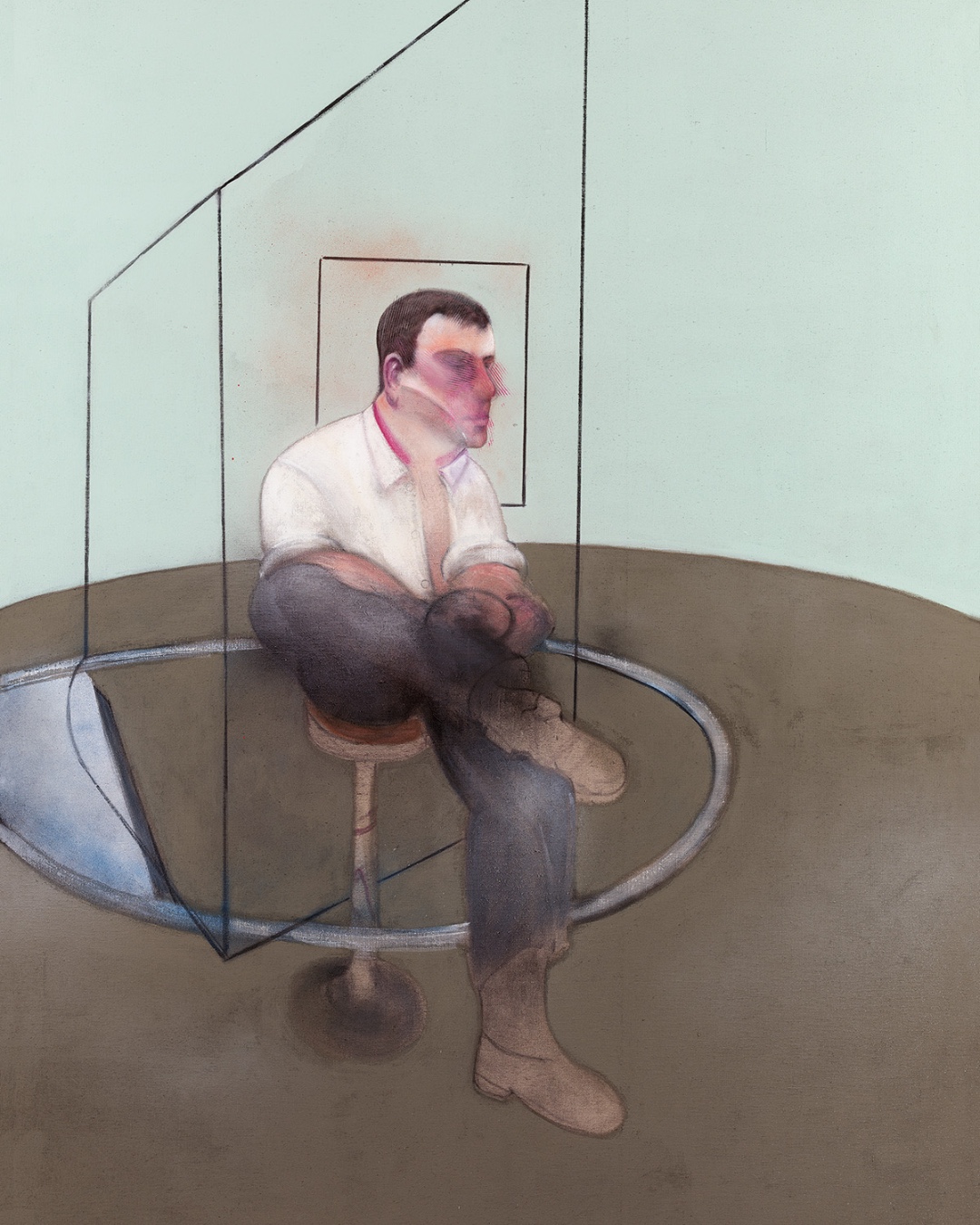
Museum quality: One of the panels of the triptych Three Studies for
a Portrait of John Edwards by Francis Bacon,
which was auctioned at Christie’s in London last night.
Record sale hopes for Bacon
paintings
ART
SALES | LONDON NEWS
|
SHROPSHIRE STAR |
THURSDAY, FEBRUARY 8, 2001
A series of three paintings by Francis
Bacon of his lover could reach a record price for the artist’s work when
it is auctioned today. The triptych, Three Studies for a Portrait of
John Edwards, is expected to sell for between £3 million and £4 million
at Christie’s in London. But a spokeswoman for the auction house said it
could break the previous record of £4.4 million for one of his
paintings. She said: “We know there’s a lot of interest in it. I think
it might break the record because it is a first class image.”
Painting by Bacon sells for £3m
ART
SALES | NEWS
|
THE IRISH TIMES |
FRIDAY 9 FEBRUARY 2001
A painting by Francis Bacon was sold for £3,083,750 sterling to a
private collector at an auction last night in Christie's in London.
The oil canvas, a triptych entitled Three Studies for a
Portrait of John Edwards, was expected to fetch between £3
million and £4 million sterling.
“All we know at the moment is that it is a private collector,” a
spokeswoman for Christie's said.
Painted in 1984, the three-panelled work shows Mr Edwards, who was a
companion to Bacon until the artist's death in 1992, seated on a stool
in an empty studio space. It is considered a rare and important portrait
of the artist's last companion.
Speaking about his triptychs, Bacon once said: “In the series, one
picture reflects on the other continuously, and sometimes they are
better in series than they are separately ... one thing against the
other seems to be able to say the thing more.”
This three-panelled portrait was chosen by Bacon to be the final work of
his second Tate retrospective exhibition.
Bacon’s triple portrait of
lover sold for £3m
ALAN CRAWFORD |
NEWS
|
THE SCOTSMAN | FRIDAY,
9 FEBRUARY 2001
A SERIES of three portraits by Francis Bacon of his lover, John Edwards,
fetched more than £3 million at Christie’s in London last night.
The 1984 triptych by the man regarded as Britain’s finest post-war
artist was bought by a private collector for £3,083,750.
The picture was sold by a private European collector who bought it via
Bacon’s dealers, Marlborough Fine Art, of London. The sale fell short of
the world record for a Bacon, around £4.4 million, for his 1966 portrait
of an earlier lover, George Dyer.
The auction came on the same day as a huge exhibition of Bacon’s works
opened at the Barbican Gallery in London despite the threat of an
injunction from the late artist’s estate in a bitter dispute over the
authenticity of some of the works on show. However, there were no
worries over the authenticity of the Edwards portrait.
The painting is seen by experts as one of Bacon’s best works. Christie’s
director and specialist Jussi Pylkkanen said: “It is a piece which Bacon
himself identified as of museum quality. Rather than creating a single
portrait, he wanted to capture every element in terms of colour, form
and texture. It is very exciting to see something of this importance on
the market at a time when Bacon’s true worth is officially being
recognised by international collectors.”
Edwards met Bacon in 1974 and was his companion until the artist’s death
in 1992. Edwards was, like George Dyer, an East End boy much younger
than the artist. But from the outset his relationship with Bacon
differed fundamentally from the earlier traumantic romance which ended
with Dyer’s suicide in 1971. Edwards stood up to Bacon and was not
destroyed by his love in a way that both Dyer and his predecessor, Peter
Lacy, had been.
Bacon triptych goes for £3m at auction
WILL BENNETT | ART
SALES CORRESPONDENT | THE
DAILY TELEGRAPH | FRIDAY
9 FEBRUARY 2001
A
SERIES of three paintings by Francis Bacon of his long-time companion
John Edwards sold for more than £3 million at Christie’s in London last
night.
The
triptych, Three Studies for a Portrait of John Edwards, was bought by an
anonymous collector at a sale of post-war art. Jussi Pylkkanen,
Christie’s international director, said: "It is a piece that Bacon
himself identified as being of museum quality."
Bacon met Edwards, who was a barman, in 1974 and their relationship
lasted until the artist’s death in 1992. The triptych shows Edwards
seated on a stool in an empty studio space.
Any way that you slice it
VISUAL ART Are
the papers and sketches now on display
at the Barbican the work of Francis Bacon?
John Russell Taylor sifts
the evidence
JOHN RUSSELL TAYLOR | ARTS
| THE
TIMES | TUESDAY
FEBRUARY 13 2001
Since there are so many unquestioned works of Francis Bacon around, you
might wonder why a major public gallery in London should be showing a
collection of material which is only “attributed” to Bacon. But that is
exactly the case with Bacon’s Eye, the new show at the Barbican Art
Gallery. And, of course, thereby hangs a tale.
Barry Joule knew Bacon from 1978 until his death in 1992, being for
years his handyman, driver and friend. Shortly before his death, Bacon
gave. Joule a large bundle of papers which proved to contain a whole
sketchbook and masses of documents—mostly pictures torn from newspapers
and magazines, pages from books, all of them with pencil lines or
smudges of colour on them. The subject matter was such as Bacon would
surely have had reason to save: athletes in positions of exertion and
possibly sexual involvement; scenes connected with violent episodes of
modern history, such as assassinations; glamour pictures more or less
defaced; animals showing fear, desire or aggression ; Old Master
reproductions.
Among them are images which clearly relate to known works of Bacon, such
as the close-up from Battleship Potemkin of the woman with the smashed
pince-nez and a colour reproduction of Velazquez’s portrait of the Pope
(with a sort of cage drawn over it). Also, the most random marks on them
are clearly from the same paint-stained hand that used the John Deakin
photographs retrieved from Bacon’s wastebin after his death and shown in
the re cent Deakin retrospective.
So why only “attributed”? Well, for one thing, Bacon always maintained
that he never made drawings but worked directly on canvas. But we know
this to be untrue: this exhibition is prefaced with a group of these
nonexistent preparatory drawings which have ended up in the Tate,
authenticity quite unchallenged. They also look similar to the works on
paper from the so-called X Album in the Joule archive, which still, it
seems, remain under a cloud, though the album is an old photo album
which undoubtedly belonged to Bacon’s nanny, recycled as a sketchbook
The stumbling-block is Bacon’s estate which, while not apparently
accusing the material concerned of being faked, refuses to authenticate
it as the law would require if it were to be offered for sale as Bacon’s
work. So visitors must make up their own minds. The circumstantial
evidence is both pro and con. Nobody ever saw Bacon working on the album
sketches or manipulating the found images. But then, nobody saw him
working on his unquestioned canvases either. Since he never had an
assistant, who else could have done it? And if it were connected with
anyone else, why would he have saved it and given it to someone who was
sure to preserve it?
But the most convincing argument is the work itself. Bacon’s colours —
especially his purples and pinks — are distinctive, and even more so is
his vision. It is not a pleasant world that his mind occupies, but he
has the gift of all great art to transform pornography into an
expression of universal truths. Not that much in the archive would
qualify as pornography, though some of the work would not look out of
place on a lavatory wall.
Even more important is the light the archive throws on Bacon, the artist
and the man, if we do accept it as authentic. It shows us in several
instances where his distinctive imagery came from and how he fused
different sources or used imagery such as Muybridge’s stop-motion
photographs to convey something very different and much more complex
than anything Muybridge had in mind.
There are also things in the archive which have no real parallel in his
official work. Particularly the overt violence done to some of the
documents from the Sixties, which is not present in the meticulously
controlled finished paintings. At this period images constantly recur,
such as the magazine photograph of two soldiers, possibly German, maybe
in Paris, one of whom holds a gun while the cither seems to kiss him on
the cheek. Except that the place where the tips would make contact is
gouged, out as though in a fury. We may have guessed before at the
violent forces barely contained in Bacon’s horrifyingly exquisite
paintings, but only now is the full evidence laid before us.
Bacon’s Eye at the Barbican Art Gallery, Barbican Centre, Silk
Street, EC2 (020-7638 8891) until April 16
Bacon’s cottage industry
The director of the Barbican Art Gallery has been brave
enough to step into a snake pit with his latest exhibition.
BRIAN SEWELL |
NEWS |
THE EVENING STANDARD |
FRIDAY 16 FEBRUARY 2001
It is of pictures torn
from newspapers and magazines, collaged photographs and reproductions of
old masters, scratched, folded, stained and scribbled on with paint,
selected from almost a thousand of such fragments, together with pages
from an album of what, at first glance, could be taken as preliminary
sketches, all of which come from the studio of Francis Bacon.
There has been, and still is, some argument as to what part these
have played in Bacon’s work and as to whether the painted adjustments
superimposed on them are by Bacon himself. When they first appeared in
1996, four years after the painter’s death, David Sylvester, eminent art
critic and Bacon’s close friend — Boswell
to his Johnson, indeed — was
inclined to accept the interventions and disturbances as Bacon’s and
published a small number of them in public lectures at the Tate Gallery,
but seems since to have changed his mind. I too, concurrently, published
a few of them in ES Magazine (15 November
1996), and have not since changed my mind, but the album, which I had
not seen before, to which the Barbican exhibition gives such prominence,
causes me grave misgiving.
Bacon promoted several myths about himself and his work, of which the
most relevant in this context is that he did not draw, had no facility
for drawing, made no particular preparation for any work and that his
ideal method of painting a picture “would really be just to pick up a
handful of paint and throw it at the canvas and hope that the portrait
was there” — it
is interesting that he said portrait rather
than image or subject.
The myth was sustained
without question until after his death, and then drawings began to
emerge. Angus Stewart was first into the field with a small exhibition
at Olympia in February 1996 and his revelations could not be denied, for
he had discussed drawing with Bacon himself (whose definition of drawing
was as narrow as Clinton’s definition of sex) and, knowing the painter’s
family well, had secured drawings of impeccable provenance. It was this
exhibition that drew from obscurity the collection that is now at the
Barbican, the property of Barry Joule, Bacon’s near neighbour in South
Kensington and for many years his cup-of-sugar and errand-running
friend, given him by the old and ailing artist a few days before his
fatal heart attack.
Dealers in Bacon’s pictures have been pretty sniffy about what we
must now call the Joule Archive and Bacon’s executors apparently think
that it should be part of the artist’s estate; unpleasant rumours have
been circulated from unknown sources, among them that the archive is a
hoax or fake, and that the whole of it is by some feeble imitator
working in Bacon’s studio.
These are unacceptable hypotheses. To have produced so much, another
presence in the studio would have been noticed by Bacon’s courtiers
and sycophants, and to have forged the archive posthumously required
access to English and French magazine and newspaper material from the
later 1940s into the early 1960s — virtually
impossible.
We have so fixed an idea
of Bacon as an immaculate painter whose canvases offer little evidence
of revision and much of the well-practised sweep, the brush loaded with
just the right quantity of paint of just the right consistency, that we
have great difficulty accommodating the idea of an early stage of
fumbling incompetence.
When the Tate bought 40
sketches from old friends of Bacon and exhibited them in 1999, it was
immediately evident that, apart from two sheets that are revisions of
printed illustrations, these are infinitely more accomplished than any
in the Joule Archive, assured in line, deft in the application of oil
paint, immediate in execution, and so distilled in idea that they are
evidently a long way into the working process and have become
presentation drawings rather than preliminary sketches, small paintings
on paper, finished as far as they will go, and as habitual in touch and
cypher as the cartoons of Fougasse. The two exceptions, however, prove
the point that the amended scraps in the Joule Archive must be taken
seriously as by Bacon.
There is further supporting evidence: an American art historian, Sam
Hunter (a serious and diligent sort of bloke) saw, in 1950, a collection
of material such as this in Bacon’s studio, then in Cromwell Place; and
in 1998, Bacon’s old
and very long-term friend, Denis Wirth-Miller, recalled that in Bacon’s
studio he had seen suitcases packed with scraps and photographs that
formed a core archive of iconography — he
must also have seen their contents. At
this point I must make it clear that the Barbican curators’ selection
from the archive does as much to cast doubt on Bacon’s authorship as to
reinforce it.
Too much of the material is too slight to be of relevance in any
argument, the painted stains the business of brush-cleaning and drying
rather than of intelligent revision, the choice dictated by the power of
the printed image rather than any perceptible purpose in Bacon’s intervention,
and thus misleading; of this, the clear-est example is the face of the
nurse from Eisenstein’s film Battleship Potemkin,
the slight touches of colour irrelevant to form or structure or emotion,
making no sense other than as casual stains, though the section torn
away below her nose has the same deliberately damaging effect as the
wanton splashes — sloshes,
indeed — of
white paint with which the mature Bacon occasionally disrupted,
pointlessly, his formal, finished, images.
The half dozen of us who have leafed through every single scrap must
be influenced in our conclusion by the better things that are not on
view at the Barbican. These
represent the first glimmerings of ideas, some of which were developed,
more still-born, some perhaps standing in their own right as the
ephemera of Surrealism. In the best, the underlying image is
intelligently revised, by a variety of means, to alter its literal
meaning and lift it from the flatness of illustration into the dimension
of painting; in others, his intervention is no more than the effect of
creases on a filched image folded to fit into his pocket — as
with Joe Orton, no book was safe from him. The ineptitude of so much of
it, the inaccurate fury of the scratchings and the hesitant uncertainty
of the brush, make the Tate’s sketches seem wonderfully resolved, but we
look in vain for something of their quality in the dis-bound sheets from
the album in the Joule Archive.
In the Barbican catalogue this album is given (without certainty) a
date in the early 1960s, and in the exhibition it has undue prominence;
it is largely the product of a faltering hand entirely without skill and
of a tentative mind’s eye, the level of accomplishment unconvinced and
unconvincing, ugly in incompetence, the predilection for the erect penis
the tiresome nonsense of the obsessed adolescent.
The album’s stiff
cover I believe to have been removed by Bacon (ripped off, more likely)
and used for two heads boldly sketched in oil. Of these, one is clearly
connected with the finished painting of 1955, Study for a
Portrait II, based on the life mask of William Blake, and
with the kindred study of a mask pinned to the wall of Bacon's studio,
documented by a photo-graph taken by Douglas Glass in 1957.
The second head is an early stage in the development of Bacon’s interest
in reaching an abstract image of emotion by reinventing, through
distortion, a given face without entirely abandoning its recognisable
features — something
that he was well able to do by 1959.
The pages of the album are a different matter. The quality of the
paper is poor and the edges brittle; many corners had broken away before
the pages were painted, other peripheral losses have occurred since; no
serious artist would have committed his work to so fragile a support.
Some of the images are so feebly conceived and executed that, though
they may have an iconographic link with Bacon’s work, they cannot be by
him. The application of paint is in the stiff short strokes of a rigid
wrist and hand entirely without a painter's flexibility, the brush far
too dry for a painter with Bacon’s early relish for fat paint.
Some pages, were they isolated from the context of the album, could
never have been attributed to Bacon; others, very close indeed
to Bacon’s imagery,
prove that these pages are not by him. One is a feeble variant of the
crouching figure with an umbrella that we know as Figure
Study II, another virtually a copy of Study
for a Portrait of Van Gogh II; the hints of drawing in
both are identical, the handling of paint in both identical, too, with
even the palette shared - though this is very different in the finished
pictures, of which the first was painted in 1945-6, the second in 1957.
It is impossible that preparatory sketches for pictures painted more
than a decade apart, and so dissimilar in every respect, should be so
much the same; these wretched drawings are copies by a worthless hand.
Was Bacon indulging some adolescent rent-boy who, having performed
his duty with whip and cigarette stubs, then uttered such whimsy as:
“I’ve always wanted to be an artist — can
I have a go?” Did Bacon toss him the wreckage of the album and a book of
reproductions of his own work and say: “Copy those.” The only thing to
be said for these contemptible sheets is that, no matter which of his
mates and rent-boys did them, Bacon could not resist a helpful
intervention now and then and to the heads his touch of paint
occasionally gives a power and purpose wholly lacking in the figures.
Why did Bacon keep the Joule Archive, carrying it from studio to
studio for the decade between leaving Cromwell Place in 1951 and
settling in Reece Mews in 1961, where it must have lain unused for 30
years, playing no part in his creative processes, the suitcases a
Pandora’s Box ready to deny his myth of immaculate conception, ready to
reveal proof of trial and error and the early roots of his imagination?
Was it nostalgia? Was it the vice common in old women of never throwing
anything away? Or was it always his intention to let the truth be known,
but not yet, not yet, to make fools of the fawning experts on whom his
fame so much depended, for whom he early became a cottage industry?
Barbican Gallery until
16 April. Admission £5. Opening times Monday, Tuesday, Thursday, Friday,
Saturday 10-6pm, Wednesday 10-8pm, Sunday/Bank Holidays 12-6pm.
All you own work,
Bacon?
The pictures in a new exhibition come from the studio of Francis Bacon.
But, asks Richard Dorment, are they all by him?
BY
RICHARD DORMENT |
NEWS |
THE DAILY TELEGRAPH
|
THURSDAY 22 FEBRUARY 2001
THE Barbican Gallery’s exhibition of the Barry Joule archive of works
on paper attributed to Francis
Bacon consists of more than 900 items, including 68 original works on
paper and what the gallery calls "working documents" — images from
newspapers, books and magazines that have been worked over in ink and
crayon.
Bacon claimed that he never made preparatory studies for his paintings,
but worked directly on the canvas, relying on chance and visceral
instinct to arrive at those strange, compelling images of screaming
heads, disintegrating bodies and animalistic copulation. We know, from a
collection of sketches that came to light after the artist’s death, that
this is not an entirely accurate description of the way in which he
worked. Nevertheless, if authentic, the Joule cache both enhances our
knowledge of Bacon’s sources of inspiration and transforms our
understanding of his creative process. But, if a large number of the
works are deemed to be doubtful, then the uncritical exhibition of this
material will muddy our comprehension of Bacon’s achievement. What is at
stake is Bacon’s artistic identity. For, until you first determine what
is and what is not by an artist’s own hand, you cannot say anything else
meaningful about him.
The provenance of this material is not in question. No one doubts that
everything on view came from Bacon’s studio, or that Bacon handed it
over to his friend, handyman and chauffeur Barry Joule just before his
death in April 1992. What is at issue is whether the original drawings,
and the graphic work on top of the photographs and newsprint, are by
Bacon himself.
Several respected figures in the art world have accepted that everything
on view is authentic. The problem is that a number of equally
distinguished voices, including that of Bacon’s friend and interpreter
David Sylvester, are unhappy with the attribution of the archive to the
artist.
It must be said at once that the Barbican never quite claims that the
works are indisputably by Bacon. Virtually every work is labelled
"attributed to Francis Bacon", and a somewhat muddled catalogue essay
doesn’t quite rule out the involvement of other hands in the creation of
the original drawings. What is more, admitting that the collection "has
yet to be officially recognised as the work of the artist", the Barbican
has quite properly borrowed from the Tate Gallery a selection of the
working drawings that surprised even experts on Bacon’s work when they
were discovered and whose authenticity is not in doubt. This enables us
to study the verified material alongside the controversial work in the
Joule archive.
Most of the undisputed material in the Tate consists of magazine and
newspaper images over which Bacon has drawn. In every one, we have the
sense that Bacon looked long and hard at each image, then brought his
own idiosyncratic visual intelligence to bear on it. We become familiar
not only with the calligraphy of Bacon’s draughtsmanship, but also begin
to understand how his mind worked, what interested him about each image,
and how he interacted with it. In one newspaper photograph, showing the
boxer Jack Dempsey standing in the ring, for example, Bacon draws a
spindly, cartoon-like "opponent" in black ink.
The dark knots of the drawn torso against the boxer’s white flesh
animate an otherwise static image. The way Bacon in his imagination
"enters" the photograph serves to illustrate the powerful element of
fantasy — and even eroticism — that he brought to the act of looking. In
another sheet, he draws a "frame" around the image of a fallen boxer
with four swift lines, then adds a second, smaller frame within the
first to locate the figure in deep receding space.
In undisputed works like these, you sense that Bacon possessed tunnel
vision: his eyes zoomed in on the area of an image that intrigued him,
isolating it from everything around it. He uses his pen or crayon
unhesitatingly, as though thinking with them, instinctively working out
how a figure moves or stands in the way it does, cropping it to see
whether it would make a picture in its own right. It’s not so much the
aesthetic quality of the Tate material that is significant, but that you
feel Bacon’s searching intelligence at work in every line he draws.
Turning from the Tate’s holdings to the so-called X Album of drawings
and collages — one part of the Joule collection on show, which has been
unbound for display — the difference is startling. In these drawings,
the figures are without shape, direction or volume, there is little
sense of recessional depth, no reason for many of the lines. What is
more, the collages and drawings feel precious, self consciously
"aesthetic".
These works are certainly not preparatory studies. My impression is that
they were created by someone who already knew the famous painted images,
but who didn’t understand the anatomical or spatial complexities of the
originals. Try though I might to sense Bacon’s hand in a drawing of two
nude figures lying against a green field, or of a prelate in a
transparent box, or of a screaming pope, they feel flabby, flat, weak.
My strong instinct is that these works are not by Bacon.
Now turn to the hundreds of photographs, magazine, and newspaper images
also lent by Joule for this show. Again, no one doubts that these items
were in Bacon’s studio where they were probably stepped upon, spattered
with paint or used to test pigment and wipe brushes: the question is,
how much of the graphic work on them is by Bacon himself? For me, the
answer is that, in a number of cases at least, Bacon did work over these
images.
A few examples will have to do. Bacon doctors a black and white
photograph of a corner of Picasso’s apartment in the rue des Grands
Augustins in a way that would have amused Picasso himself. In the photo,
there’s a Picasso portrait hanging on a wall and a pair of slippers on
the floor. Outlining the rectangular portrait in black ink, Bacon turns
it into a "head" connected by a wiry torso to the slippers, or "feet" on
the floor.
Compare the knotty line in this torso to the figure in the Tate’s
re-worked photograph of Jack Dempsey, and it is instantly clear that we
are dealing with the same hand. What’s more, the element of wit and
invention suggests that this is the same mind as well.
Compare the knotty line in this torso to the figure in the Tate’s
re-worked photograph of Jack Dempsey, and it is instantly clear that we
are dealing with the same hand. What’s more, the element of wit and
invention suggests that this is the same mind as well.
Sheet from 'The X Album': assume nothing and decide the authenticity of
these works for yourself.
Or, to take another example, Bacon uses purple crayon to draw over a
reproduction of a Degas painting showing a nude sponging herself in the
bath. Bacon reinforces the long line of the subject’s back, as though
trying to understand her anatomy, then frames the figure, as though by
isolating it he can see it more clearly. The way the pressure on the
crayon varies from heavy to very light gives the line something of the
same kind of energy we see in the Tate’s material. Often in photos of
athletes he does the same thing — separates individual figures,
emphasises the "line" in their movements, reinforces the areas of their
bodies that interest him, whether it be a punching arm, an open mouth,
or a crotch.
In many cases, however, someone has scribbled over the image or enhanced
a photograph in a way that feels purely cosmetic. I suppose these could
be by Bacon, but much more work needs to be done before we can say this
for sure. So there are two questions here. The first is who is
responsible for the X Album?
The short catalogue essay seems to hint that it might have some
connection with Bacon’s lover in the Fifties, Peter Lacy, and goodness
knows that Bacon moved in a world where any number of people might have
tried their hand at imitating his work.
The second question is whether the Joule material other than the X Album
is authentic. Some of it certainly is, but doubts still linger over much
of it. A photo of Bacon and Joule exhibited in this show which has been
extensively worked over in ink by photographer Peter Beard proves that
those in Bacon’s circle did alter images in precisely the way they are
enhanced in the archive.
The only way to reach a conclusion about all this is through
old-fashioned connoisseurship. Each image has to be looked at
individually by a panel of experts on Bacon’s work, who must compare it
with undisputed drawings.
Bacon should be treated as though he were a Michelangelo or Raphael.
What worries me about the way this material has been presented at the
Barbican is that doubts such as those I’ve just raised have been
minimised. Though briefly referred to in the catalogue and wall labels,
nowhere are we given a sustained argument against the authenticity of
this material.
This could have been stronger exhibition had it been called "Francis
Bacon, true or false?" and used as a platform to air these issues and
perhaps make some progress in resolving them. As it is, the exhibition
is in its own way fascinating, but you should go to it armed with the
shield of scepticism. Look at everything, assume nothing, decide for
yourself.
'Bacon’s Eye—Works on Paper attributed to Francis Bacon from the Barry
Joule Archive' until April 16.
Bacon estate bans reproductions of images in Barbican exhibition
Tate lends Bacon works on paper for comparison with disputed works but
comparative photos of Tate works are not allowed
MARTIN BAILEY
| NEWS
|
THE ART NEWSPAPER
|
THURSDAY 1 MARCH 2001
The Francis Bacon Estate has banned the Barbican Gallery from
reproducing a Tate Gallery painting which is closely related to a work
in the Joule Archive. On 8 February, the opening day of the show, the
Estate’s solicitors prohibited the use of any images for which it held
copyright. Later that day the exhibition panels with reproductions were
therefore removed by Barbican staff, to be replaced with others with
white boxes where the paintings had been shown, along with the text:
“Permission to reproduce denied by the Estate of Francis Bacon.” This
prohibition represented the latest move in the Estate’s attempt to
question the authenticity of the material now being shown in the
Barbican’s exhibition, “Bacon’s Eye: Featuring works on paper attributed
to Francis Bacon from the Barry Joule Archive” (see The Art newspaper,
No. 111, February 2001, p. 32).
Lawyers for the Bacon Estate explained to the legal representatives of
the Barbican: “We understand that the reproductions are next to some of
the work that is being exhibited and an attempt is made to ally the
exhibit with the original work, thereby seeking to give authenticity to
the exhibit... The executor is not willing for the reproductions to be
exhibited... Our client has no wish to become embroiled in litigation if
this can be avoided, and would you please inform us as to your client’s
unequivocal position without further delay.”
Brian Clarke, executor of the Bacon Estate, denies that he has been
involved in censorship. He told The Art Newspaper: “the inclusion of
reproductions of Bacon paintings would render authenticity to a body of
work which is clearly controversial and disputed.” He says that the
Barbican had only tried to reproduce the paintings and then replace them
with white boxes because of “sensation and ticket sales.” Although
unwilling to comment on the authenticity of the Joule Archive, Mr Clarke
accepts that “the base material is from the Bacon studio, but who made
the marks on them is a matter for scholarly judgement... I will not have
that process interfered with by this kind of exhibition and by
irrational comparison between original and authentic works.”
Among the prohibited images is the Tate’s “Study for Portrait II (after
the Life Mask of William Blake)” of 1955, which is closely related to an
oil sketch in the X Album, in the Joule Archive. Although the Tate
painting had been purchased in 1979, this did not include copyright,
which was retained by the artist.
Whatever the Tate may have felt about the Estate’s ban, it was powerless
to allow its own painting to be reproduced in what is a scholarly
exhibition which gives visitors an opportunity to make their own
judgements on the Joule Archive. The Tate had already lent six original
works on paper by Bacon, which are exhibited with the Joule Archive as
comparative material. Copyright of these Tate works on paper is also
held by the Estate, so although the originals can be shown, the Barbican
would now be prohibited from reproducing them on wall panels or showing
them in the catalogue or gallery guide.
A cost-cutting restructuring at the Barbican Art Galleries has led to
the axing of the position of the director, and John Hoole, who has held
the post for 19 years, will be leaving in June. The visual arts will
come under an integrated arts department under Graham Sheffield, and
senior exhibitions organiser Carol Brown will then run the galleries.
.
Artist and hero are divided by Bacon’s last tapes
By Dalya Alberge
Arts Correspondent
DALYA ALBERGE
| ARTS CORRESPONDENT
|
NEWS
|
THE TIMES
|
SATURDAY MARCH 3 2001
DAMIEN HIRST has been damned from the grave by his artistic idol and
role model, Francis Bacon, in frank tape recordings which have been made
public for the first time. The tapes, which Bacon recorded five weeks
before his death in 1992, reveal a disdain for Hirst’s most famous
works, some of which have fetched up to £1 million: his shark in a tank
of formaldehyde, his cabinets filled with medicine bottles and his
multicoloured polka-dot paintings.
“I didn’t think those cabinets full of medicines worked,” Bacon said,
two days after seeing Hirst’s efforts at the Saatchi Gallery. “I didn’t
think the whale [the shark] worked. I didn’t think the dots worked.”
Bacon’s views were pre - serve d in six hours of interviews with Barry
Joule, a friend of the artist. Mr Joule, a Canadian who lives in London,
recorded the tapes over several months and has kept their existence a
secret until now. He said that Bacon knew he intended to publish their
contents at some stage. “He certainly trusted me,” he said.
“These are his final tapes.”
Bacon’s attack will come as a blow to Hirst, who won the Turner Prize in
1995 for Mother and Child Divided — half a cow and half a calf
in separate tanks of formaldehyde. He is used to being revered by the
art world. Collectors such as Charles Saatchi have paid £1 million for a
single piece from his studio.
Bacon’s fascination for the macabre inspired Hirst. In 1996, when asked
which artists had had an effect on him, Hirst replied: “Some are
obvious, I suppose. Like Bacon, like Soutine, Gericault, Dennis Potter.
Anybody who dealt with the gruesome.”
Bacon appreciated one of Hirst’s works — his rotting cow’s head being
eaten by bluebottles. In the tapes Bacon describes it as a symbol of
life and death” that was “rather brilliantly done ... absolutely
fascinating”. Mr Joule said that the praise was unusual. “In my 14 years
of knowing die old master, that is the only living artist and the only
contemporary art piece he gave full, exuberant praise for. He was
generally dismissive about every living artist."
Bacon was unimpressed by Rachel Whiteread, the sculptor, whose
inside-out casting of a house won her the Turner Prize in 1993, Mr Joule
said. Nor did he approve of Richard Long, who specialises in arranging
rocks and stones across gallery floors. “I don’t think those things come
off,” Bacon said on the tapes.
Bacon, whose paintings express the isolation, brutality and pain of
human existence, is best-known for images such as his screaming popes in
which Velazquez’s Portrait of Pope Innocent X was converted
into a nightmarish depiction of hysterical terror. His dismissal of some
of Britain’s leading artists came just as the contemporary art world was
recovering from an attack in 1999 by Sir Anthony Caro, Britain’s
foremost living sculptor. He criticised artists who relied on shock and
lambasted the generation that included Hirst’s pickled animals and
Tracey Emin’s tent with the names of everyone with whom she had slept.
Michael Daley, the artist and illustrator, said yesterday that Bacon’s
view of Hirst was all the more damning because it came from an artist
whose own subject matter had been so shocking.
"For all the violence in Bacon’s own imagery, he was an artist speaking
in the language of Velazquez and Manet — not someone who was dragging
popes’ heads away and shoving them in tanks.” Mr Joule, who met Bacon in
1978, forming a friendship that would last for 14 years, has been
battling against the artist’s estate over the attribution of an
extensive collection of sketches and photographs covered with
scribblings which he said that Bacon gave to him days before his death.
The collection, Bacon’s Eye, is on display at the Barbican Art
Gallery in London until April 16. Its curators had to remove photographs
of Bacon’s paintings after the artist’s estate threatened legal action.
At a debate today, featuring Andrew Brighton, curator of specialist
programmes at the Tate Modern and the author of a book on Bacon, and
Mark Sladen, curator of the Barbican show, Mr Joule will play a few
minutes of the tapes. The rest he is saving for a book, Francis’s
Eye, to be published later this year.
Leading article, page 25
UPSTART ART
More
red paint in the bloodbath of bitchery
COMMENT
|
THE TIMES
|
SATURDAY MARCH 3 2001
Poor Damien Hirst. He might have thought himself safe from attacks from
his hero Francis Bacon but the old genius has been up to his old tricks
and managed to criticise the young upstart from beyond the grave. In
tapes recorded a few weeks before Bacon’s death, he is heard being
sniffy about Hirst’s medicine cabinets, iffy about his formaldehyde
shark, and failing to see the point of polka-dots. Whiteread’s
inside-outside house fares no better and Richard Long’s scattered stones
are dismissed with a wave of octogenarian hand. The art world’s Young
Turks could be forgiven for holing up in their studios screaming like
hysterical popes.
Bacon’s line in inter-generational carping may make cunning use of
technology but is part of an established tradition of mutual disrespect
between those out to make a name for themselves in the art world and
those with reputations to protect. Pre-Raphaelites were ridiculed by
everyone and one can often see why. Ruskin described Whistler’s firework
scene, Nocturne in Black and Gold, as “flinging a pot of paint
in the public’s face”. Whistler sued for libel. The French artistic
establishment lined up to knock the Impressionists.
The 20th century descended into a bloodbath of bitchery as each new mob
of bright young things was usurped by the next batch and the greatest
insult that could be thrown at a work of art was that it was so last
movement.
In The Anxiety of Influence the American critic Harold Bloom
explained this phenomenon as it applies to the literary world in terms
of compulsive oedipal wrangling. Thus Milton finds his voice by
disparaging Spenser, the Romantics by lambasting Milton. Eliot made a
career alternately dismissing and filching things from his elders and a
bit of professional sniping certainly did not do any harm to the likes
of Jonson, Pope, or Woolf.
One of the most poignant of these outbursts was directed at the Bard
himself by Robert Greene, lover of courtesans and purveyor of romances.
The attack appears in Greenes, Groats-worth of witte, bought with a
million of Repentance, a title that suggests why it is
Shakespeare rather than Greene who is the literary icon. The playwright
is an upstart Crow with a Tyger’s hart bombasting out blank verse at the
expense of his predecessors. It is for his slight alone that Greene is
remembered; a fate, we feel that is more likely to befall Hirst than
Bacon.
Jock McFadyen on Francis Bacon’s Two Figures (1953)
interview by Martin Gayford
JOCK McFAYDEN
|
ARTISTS ON ART
|
THE DAILY
TELEGRAPH |
SATURDAY, APRIL 21, 2001
Here, even in these unshockable times, is a slightly shocking image: two
naked men coupling on a bed, their faces a feral, grimacing blur. It is
one of the most startling ever produced by Francis Bacon —who created
quite a few—though, characteristically, it bears the deadpan title
Two Figures (1953). Yet it is not the sensational aspect of the
subject matter that strikes the contemporary painter Jock McFadyen.
“It has always interested me,” he explains, “that he was called Bacon —
another word for meat. For me, the cleverness of his greatest work is in
being able to make the paint into flesh. Metaphor is too weak a word for
what he did. His paintings look as if they might squeal or yelp, as if
they might actually bleed if you cut them with a scalpel.”
In other words, McFadyen sees Bacon as a variety of realist — which is
in fact how Bacon often presented himself. *‘I’ve always hoped,” Bacon
once told the critic David Sylvester, “to put over things as directly
and rawly as I possibly can.” Although, he acknowledged: “If you say
something very directly to someone, they’re sometimes offended, although
it is a fact. People tend to be offended by facts, or what used to be
called the truth.”
The living quality of Bacon’s painted flesh, McFadyen suggests,
“distances him from Picasso — his most obvious influence — and also from
British contemporaries such as Graham Sutherland. It connects him to the
tradition of Rembrandt, Velázquez and Goya. I feel that he updated that
tradition to the 1950s, the era of my childhood.” (McFadyen was born in
1950.)
“Painting the flesh to look mortal in that tradition is achieved with
glazing. That is, semi-transparent veils of paint are built up enabling
the structure of light and shade beneath to glimmer through. Those
highlights and dark areas create the effect of volume while the ‘top
coat’ is palpably fragile and is almost analogous to skin over bone.
“But one of the limitations with glazing is that, if it is used it is
nearly impossible to be expressive in that particular way which animates
the figure. Because glazing demands that the picture should be mapped
out in advance. So Rembrandt’s portrait sitters appear as still as
Victorian photographs (which needed long exposures). So in Caravaggio’s
wonderful pictures that were on show in The Genius of Rome exhibition,
the figures express emotions, and gesture — but they are not painted in
a gestural way. Indeed they look strangely frozen, even actorish.”
Bacon, McFadyen argues, found a way of squaring this circle. “Bacon’s
great technical achievement was to be able to realise the benefits of
glazing — the impression of mortality that it gives — while retaining
the animation and spontaneity to which he was addicted. In other words,
he could make the figure feel real and make it move. This was done by
dry dragging of the flesh tones over a dark ground — a sort of dry
glazing.”
Bacon’s source for the picture was one of the photographs of naked
wrestlers taken by the 19th-century, American Eadweard Muybridge to
study the human figure in motion. But be added a smudged effect
suggestive of violent movement, and — according to Sylvester — the faces
are recognisable as those of Bacon himself and Peter Lacy, his lover at
the time.
Bacon frequently used, but transformed, photographic sources in this
way. It was one of the things that first attracted McFadyen to his work.
“Bacon did portraits, but people did not sit for him, he used
photographs — I still do. He observed the figure but distorted it, in a
way that served further to enhance the initial observation. All this was
important for me as a young artist trying for a fast, unencumbered
realism.”
In the opinion of McFadyen and a number of other observers. Bacon was at
his peak as an artist in the late 1940s and early ’50s. Two Figures
is among the finest products of that period. It is a painting,
David Sylvester has written, “that recalls the Venetians in its
sumptuousness and voluptuousness, and in its juxtaposition of skin and
white sheets.”
And Bacon was a master, McFadyen points out, not only of flesh painting,
but of that kind of contrast. “He was able to paint detail as well as
distance, middle distance and foreground. Few painterly expressionists
can describe materials such as ceramics, vegetation, flesh, hair or
metal vividly. Bacon does so effortlessly.” And here, McFadyen suggests,
Bacon’s practice of framing his work behind glass was a help, keeping
broad strokes and detail “in the same key".
To McFadyen the fascination of Two Figures is in part a matter of
oil-painting technique. But the technical procedure is linked to a
profound dimension in Bacon’s work. Bacon, he feels, was an artist “who
obsessively wanted to tell us about carnality, and, therefore, about the
human predicament”.
Jock McFadyen’s recent paintings of urban landscapes are on view at
Agnew’s, Old Bond St, London W1 (020 7290 9254) until Friday, and a
monograph — Jock McFadyen: A Book About a Painter — is newly published
by Lund Humphries, price £29.95
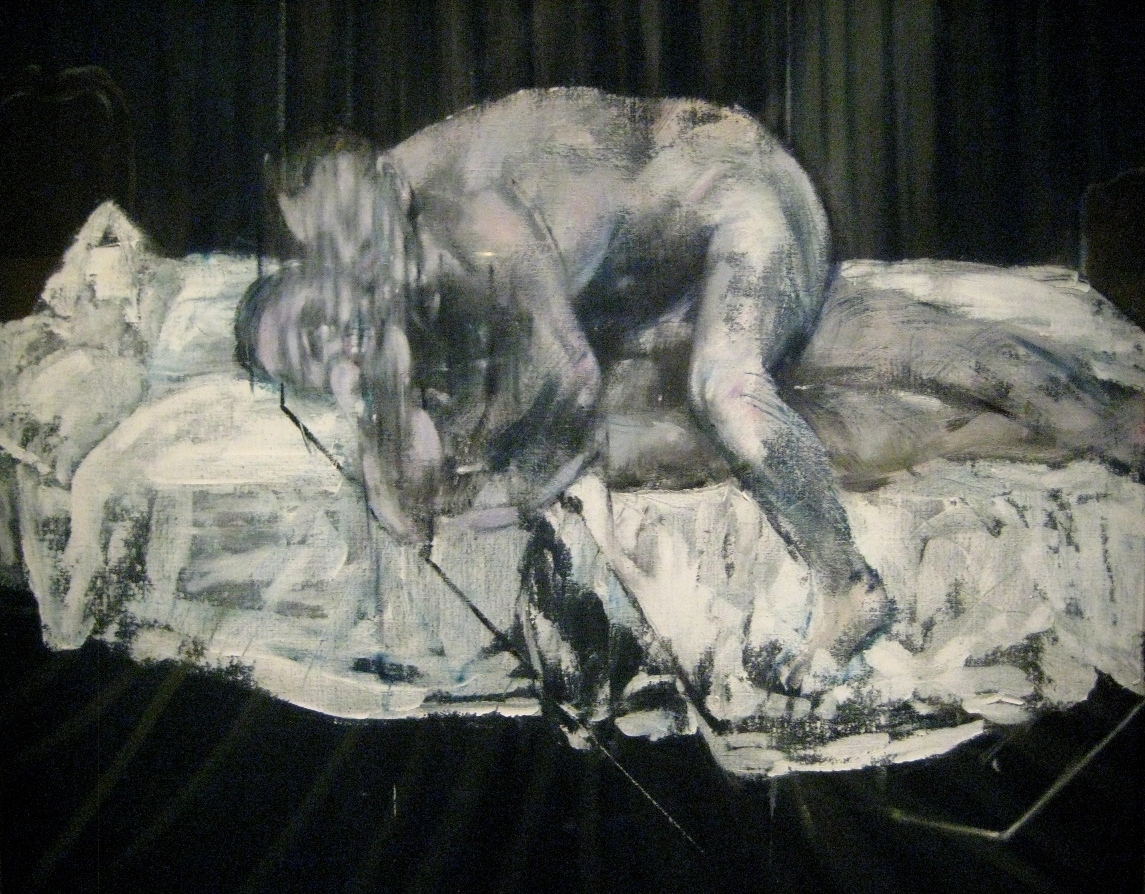
‘Bacon’s
great technical achievement was to realise the benefits of glaring, the
Impression of mortality that it gives’
Gallery in £100m action
SNAPSHOTS
|
NEWS |
THE SCOTSMAN |
THURSDAY,
26 APRIL, 2001
THE
estate of the artist Francis Bacon launched a legal multi-million-pound
action against his former gallery at the High Court yesterday.
From
1958 until his death from a heart attack in 1992, aged 82, Bacon was
exclusively represented by the Marlborough gallery. In a complex claim
which could involve about £100 million, the estate is suing the gallery,
which is based in Liechtenstein.
The
estate is seeking a “proper accounting from Marlborough, so as to be
able to establish that there was a fair balance struck between the
interests of the gallery and Bacon”.
Among the estate’s allegations is that because of “breaches of duty and
undue influence”, the gallery holds its profits for Bacon’s estate and
should not have been retaining up to some 70 per cent of the value of
his paintings.
Mayfair gallery sued in £100m battle over the
life and legacy
of Francis Bacon
BY STEVE BOGGAN |
THE INDEPENDENT | THURSDAY,
26 APRIL, 2001
A £100m court battle over works by the painter
Francis Bacon was launched yesterday in what seems likely to become
one of the most bitter art wrangles in decades.
Trustees of Bacon’s estate are suing his former gallery, Marlborough
Fine Art (London) Ltd, alleging it took too much commission from the
artist, produced prints without paying him and has not accounted for
up to 33 of his paintings. The gallery, which denies the
allegations, is seeking this week to have the estate’s claims struck
out at the High Court in London. If it fails, a full-blown and
probably highly-scandalous trial will begin in earnest early next
year.
Yesterday, Geoffrey Vos QC, counsel for the estate’s executor
Professor Brian Clarke, a friend of the artist, told Mr Justice
Patten: "This is a unique case. There is nothing normal or
run-of-the-mill about it. The relationship at the root of this
litigation, which one suspects will never be found again, is a
relationship between Britain’s greatest 20th-century artist and his
dealer."
Mr Vos said that from 1958 until his death at 82 from a heart attack
in Spain in 1992, Bacon was represented by the Marlborough gallery
and its international arm, Marlborough International Fine Art (MIFA),
which is based in Liechtenstein.
But the estate alleges that instead of taking a "fair" rate of
commission of about 30 per, Marlborough took up to 70 per cent.
Further, it claims that the London-based gallery issued between 150
and 180 offset lithographic prints of the artist’s work, valued at
£25m to £30m, in 48 series. Yet it alleges Bacon was paid for only
one series — a flat fee of $40,000.
The estate has questioned the role of one of Marlborough’s
directors, Valerie Beston, who was also Bacon’s assistant and an
executor of his estate, something the trustees argue was a conflict
of interest. There is no suggestion that Ms Beston benefited
improperly from the arrangement.
Mr Vos added: "What is beyond doubt is that Valerie Beston, a
director of Marlborough UK, organised much if not all of Francis
Bacon’s professional and personal life.
"One of her principal roles on behalf of Marlborough UK was the
removal of the paintings that he completed to its own gallery as
soon as the paint was dry — in Marlborough’s own words 'in Bacon’s
best interests’."
The beneficiary of Bacon’s estate is Londoner John Edwards, 51, a
former pub landlord whom the artist befriended "like a son",
according to one of his friends, during the last 18 years of his
life.
The trustees complain they have been unable to examine lists of the
artist’s work or details of his correspondence or diaries, even
though it is the duty of his estate’s executor to do so. Bacon
signed over "sole and exclusive" rights to his work to the gallery
in 1958.
"The trustees have not been able to get a full account of Bacon’s
works from the gallery and don’t have evidence that some of them
were paid for," said a source close to the estate. "Marlborough has
failed to supply them with an account for some of the paintings
thought to have been painted by him.
"But what is also annoying is that we can’t get access to the
correspondence, diaries and so on, that Bacon produced because the
gallery holds them. They have everything from fan mail to hate mail.
"If nothing else, we hope to have these released for public
consumption so we are no longer in the ludicrous position of
scholars not being able to study Britain’s greatest 20th-century
painter."
During the 1970s and 1980s Bacon, who was born in Dublin to English
parents, was the world’s most valuable living painter. In 1989, his
triptych, May-June 1973, sold at Sotheby’s in New York for
£3.53m. He is widely acknowledged as being one of the greatest
painters — if not the pre-eminent British painter — of the last
century. Some experts put him in the same league as Picasso and
Magritte.
His stark, often nightmarish use of body imagery won him a stream of
admirers but also, as with his Three Studies for Figures at the Base
of the Crucifixion in 1945, caused revulsion among others.
His work, dark and impenetrable, was nevertheless much sought after
in his own lifetime, guaranteeing him high-profile exhibitions at
the Tate in London, the Metropolitan in New York, the Smithsonian in
Washington, as well as shows in Paris, Berlin and Moscow. A lover of
wine and gambling, the sculptors Alberto Giacometti and Henry Moore
and the painter Graham Sutherland were among his friends.
His stature, therefore, has made the alleged failure to account for
some of his works harder to bear. The Bacon source said: "We believe
we have identified 33 paintings by Bacon between 1972 and 1981 which
do not feature in the Marlborough or MIFA accounts. You could be
looking at £5m for each of them.
"The figure of £100m was raised during an interlocutory hearing in
the case. In truth, until we know what’s out there, we don’t know
how much could be at stake."
A spokeswoman for the gallery, owned by the Duke of Beaufort and the
family of the late connoisseur Frank Lloyd, said: "We totally reject
the allegations. Our relationship with Francis Bacon was completely
proper and we will be vigorously contesting the claims."
It is understood the gallery will argue that Bacon negotiated the
price of the paintings he sold to Marlborough before it sold them
on. Insiders reject the suggestion that Bacon was naive when it came
to money matters, but was simply not concerned about the balance of
his bank account.
One of his friends said: "He needed money for fine wines and
gambling and to exercise his generosity. Other than that, it meant
nothing to him."
During the case, it will be pointed out that Bacon approached
Marlborough, not the other way around, and that he stuck with the
gallery despite approaches by others. His initial contract was for
10 years. He exercised an escape clause half way through but stayed
with the gallery. Why would he do that if he was unhappy?
Part of the reason might have been because of Ms Beston herself.
Depending on which side you believe, she was either a Marlborough
employee who exercised too much control, or a devoted fan and friend
who gave years of service helping Bacon with everything from his tax
affairs to his laundry. It is understood she is now ill and unlikely
to give evidence.
The gallery is expected to claim that Bacon knew they could double
the price of his works but that he set the initial prices. By the
time he died, he was understood to be charging more than £1m for
some works.
The questions the court must answer
are: Were those prices enough, and did Bacon care?
Dealer ‘snatched
Bacon paintings away’
Court
hearing on claim that could run to £100m highlights artist’s unique
relationship with 'minder'
BY JOHN
EZARD
|
UK NEWS |
THE GUARDIAN |
THURSDAY,
26 APRIL, 2001
An art dealer acted as
the painter Francis Bacon’s “keeper
or minder”,
removing his paintings to her gallery “as
soon as the paint was dry”,
a high court judge was told yesterday.
This was said to be one of the
principal roles of Valerie Beston, who organised the artist’s life for more
than 30 years.
The allegations were made by
Geoffrey Vos QC, who called Bacon Britain’s greatest 20th century artist. He
was acting for Bacon’s estate in a claim which could run as high as £100m.
The estate is suing Marlborough Fine Art (London) and the
Liechtenstein-based Marlborough International Fine Art Establishment for
breach of duty and undue influence over Bacon.
Mr Vos was speaking at a
preliminary procedural hearing of a complex case which is expected to bring
the dead painter’s often desperate life back into the limelight when it is
fully argued in January.
Mr Vos told Mr Justice
Patten: “The
relationship which is at the root of this litigation, which one suspects
will never be found again, is a relationship between Britain’s greatest 20th
century artist and his dealer. This is a unique case. There is nothing
normal or run of the mill about it.”
The Marlborough gallery
exclusively represented Bacon from 1958 – shortly before he became
celebrated and was sometimes getting only a few hundred pounds for a canvas
– until he died in 1992 as the world’s highest-priced living artist.
Marlborough are contesting the
claims of the estate, of which Brian Clarke was appointed executor in 1998.
It is urging the judge to strike out the case this week.
The estate accuses the gallery
of retaining up to 70% of the sale value of Bacon’s paintings. It says a
fair share of the proceeds would have been about a third. It alleges
Marlborough has not yet demonstrated that it has paid for all the paintings
it received. The estate is demanding a full accounting of the gallery’s role
to show that a fair balance was struck between its interests and those of
Bacon. It also alleges that Marlborough have failed to account for the
proceeds of a sale of 47 series of Bacon lithographs.
Mr Vos told the court
Ms Beston could be described “as
the defendants would have it, as Bacon’s assistant”,
or “as
one might say, his keeper or minder.”
“But
what is beyond doubt is that Valerie Beston, a director of Marlborough UK at
all times material to the case, organised much if not all of Francis Bacon’s
professional and personal life.
“One
of her principal roles on behalf of Marlborough UK was the removal of the
paintings that he completed to its own gallery as soon as the paint was dry.”
Outside court, the
estate said in a statement: “It
is right that the truth about the UK’s pre-eminent artist and the treatment
of his work be established and not buried.”
Bacon left his £10m fortune to
his longstanding friend John Edwards, 51, an illiterate east Londoner who
now lives in Thailand.
The case continues.
Bacon’s estate ‘is
trying it on’
BY HELEN
RUMBELOW |
NEWS |
THE TIMES
|
FRIDAY APRIL 27 2001
FRANCIS BACON’S heirs were
accused of “trying
it on” yesterday
by claiming that his former art dealers swindled him out of up to £100
million.
Marlborough Fine Art, which
represented the artist for nearly 40 years, told the High Court that the
arguments from the executors of Bacon’s estate were muddled. From 1958 until
his death in Spain in 1992, aged 82, Bacon was represented by the
Marlborough gallery and its international wing, Marlborough International
Fine Art (MIFA).
He bequeathed his estate to
John Edwards, an illiterate East End pub manager, who has now brought the
case, alleging that Marlborough took advantage of Bacon’s financial naivety.
On Wednesday his counsel asked for “proper
accounting from Marlborough so as to be able to establish that there was a
fair balance struck between the interests of the gallery and Bacon”.
One of the estate’s
allegations was that Marlborough had not yet demonstrated that it had paid
for all the paintings it received from Bacon. The estate is concerned about
the role of Valerie Beston, a former director of Marlborough, one of whose
jobs, it alleges, was to “remove
the paintings that he had completed to its own gallery as soon as the paint
was dry”.
Michael Lyndon-Stanford, QC
for MIFA, said: “We
say this action is a try-on.”
Marlborough said it
enjoyed a “frank,
close and mutually beneficial” relationship
with Bacon. It rejected the claim that it had exercised undue influence and
said there was “no
exclusivity arrangement and Bacon was free to sell or make gifts of his work
elsewhere”.
Correction
The Duke of Beaufort is the Chairman of Marlborough London, and not,
as stated in a report yesterday, the owner.
Bacon estate ‘trying
it on’, court is told
PAUL PEACHEY
|
CRIME
|
HOME
NEWS
|
THE
INDEPENDENT |
FRIDAY 27 APRIL 2001
A multimillion-pound legal
action brought by the estate of Francis Bacon against his former gallery was
a “try
on” and “ill-founded”,
a High Court judge was told yesterday.
The case brought by Bacon’s
estate was described as “muddled
and confusing” by
counsel for the gallery when it sought to have the claim, potentially £100m,
thrown out.
Bacon, one of Britain’s
greatest 20th-century artists, was represented by the international
Marlborough gallery from 1958 until his death in Spain in 1992, aged 82.
Professor Brian Clarke, the
executor of Bacon’s estate, launched a unique claim against the gallery and
Marlborough International Fine Art (Mifa), based in Liechtenstein, alleging
breach of fiduciary duty and “undue
influence”.
The estate says it wants
proper accounts to establish that there was a fair balance struck between
the interests of the gallery and Bacon.
In a statement, Marlborough
said it enjoyed a “frank,
close and mutually beneficial” relationship
with the artist.
On the second day of
preliminary hearings in London, Michael Lyndon-Stanford QC, for Mifa, said: “We
say this action is a try on. What the claimant wants to do is achieve a
living action and he doesn’t care how he does it.”
The estate claims that
instead of taking fair commission of one third, Marlborough kept up to 70
per cent of the paintings’ value and had not demonstrated it paid for all
the Bacon paintings it received.
RICHARD SHONE ON THE FRANCIS BACON STUDIO
MESS IS MORE
BY
RICHARD SHONE
|
NEWS
|
ARTFORUM
|
VOLUME
39
|
NUMBER
9
|
MAY
2001
There are immaculate studios and there are messy studios. There are private
ones that are no-go areas for housekeeper and dealer alike. And there are
those that show signs not just of working but of living—an easy chair,
bookshelves, even a put-up bed. Francis Bacon’s last studio was notoriously
messy and pretty private, entered only by close friends and the occasional
photographer.
It was exclusively for work—a small, skylit, fairly cheerless space within
his almost pretentiously modest flat up a steep flight of stairs in South
Kensington. Its simplicity stood in marked contrast to earlier studios. In
the 1930s, for example, when Bacon was both painter and modernist interior
designer, his workspace was all neo-Bauhaus, fitted out with glass, steel,
and abstract rugs.
Later he lived and worked in the palatial but bomb-damaged studio occupied
in the nineteenth century by John Everett Millais. It was in 1961 that Bacon
took 7 Reece Mews—bed-sitting-room, studio, and kitchen-cum-bathroom—remaining
there until his death in 1992. Although he could have afforded a substantial
London property, that was not his style; nor did he gather good or
interesting furniture or works of art around him. People often commented,
“Francis has no taste,” and of course, Walter Sickert was right when he said
that “taste is the death of the painter.”
But, as with so much else in his life, Bacon took tastelessness to an
extreme: Photographs of his bedroom record possessions of
unadulterated-utility. Upon scrutiny, some details of this visual
desert—certain clothes, a Marlboro pack—suggest the presence of John
Edwards, Bacon’s friend and sole beneficiary.
Inheriting the property, Edwards was obviously in a tight spot. He wanted to
use the flat without being responsible for destroying the studio’s unique
look. After lengthy negotiations and the removal of Bacon’s, estate from his
longtime gallery, Marlborough Fine Art, the studio—its walls, floor, and
contents (over 7,000 items)—was given over in whole to the Hugh Lane
Municipal Gallery of Modern Art, in Dublin, the city of Bacon’s birth.
Reconstructed there to scale, and with a flotilla of attendant displays
designed by architect David Chipperfield, the studio opens to the public May
24.
A lecture by David Sylvester and publication of the picture book
7 Reece Mews: Franics Bacon’s Studio (Thames & Hudson)
will mark the occasion. With its paint-smeared walls and piles of rubbish,
its interesting photos and books, and its slashed canvases, the studio will
be a ghoulish showpiece, but it remains to be seen whether the public
availability of its contents will be useful in authenticating the master’s
disputed pieces, particularly a group of works on paper “attributed to
Bacon,” recently on view in Dublin and London.
Richard Shone is associate editor of the Burlington Magazine
Should it Stay or
Should it Go . . .
The relocation of Francis Bacon’s studio from London to the Hugh Lane
Gallery in
Dublin has divided the critics.
Peter FitzGerald says
that it is a valuable resource for Ireland, while
William
Feaver
argues that the significance of Bacon’s studio died with the artist
PETER
FITZGERALD & WILLIAM FEAVER |
VIEWS
|
ART REVIEW |
MAY, 2001
First, the more general question: why preserve the Francis Bacon studio at
all? Some of the most important reasons are close to the best ones for not
doing so. On the positive side, when we see the studio, we see at one remove
the process of making works of art. It is a sort of externalization of inner
conflicts all mixed up with the practicalities of testing out paint colours,
sorting through source material, slicing up failed canvases – standard
studio stuff. It’s a demystification: the paintings become process and not
just finished works.
Problem is, it’s also a mythification and mystification: so much attention
devoted to one person and you’re in genius territory, with all the
concomitant notions of superhuman talent. There’s probably no more harmful
nor widespread belief about “great art” than that it is the product of
genius.
So a strong reason for preserving the studio proves a double-edged
sword. There are many more pros and cons. Would Bacon have wanted it? Even
if he were opposed, it might still have been worth doing. But it would be
unwise to skim over the apparent appropriation of Bacon by the Irish, as in
the oft-repeated headline “Bringing Home the Bacon”. Irish by birth, but
scarcely by identification, Bacon would not seem very fertile ground for
repossession, were it not for a conjunction of factors.
In Ireland at the moment there is a sense of the end of history: the
Good Friday Agreement separated us from our partisan past at a time when
many old certainties were collapsing. We find ourselves with unaccustomed
wealth and a feeling the sun never sets on the Irish diaspora, however
tenuous the links. It’s become a time to bring things home, metaphorically
and literally: mull them over, see if we can make head or tail of them.
Bacon’s studio is a prime example. Schadenfreude makes it
sweeter for some – word has it that it was swiped from under the nose of the
Tate. But the studio is also part of a remarkable upsurge in the visual arts
in Ireland. Although funding is still tight, because of infrastructural
changes the major institutions are much more assertive and competitive. If
it’s there, they may grab it.
That’s the wider context – what of the practical level? The studio has
peepholes through the walls – tubes with wide-angle lenses at the end. It
will be voyeuristic in the extreme, resonating in a disturbing fashion with
the once-taboo nature of Bacon’s sexuality. Were he there in the studio,
what would he be doing, with whom? And will it be like approaching a
mausoleum, a sacred relic, or like approaching just another art
installation, a work of art in itself?
So there are worries connected with the studio’s coming to Dublin, but also
challenges. It’s an important experiment. It will be a new phenomenon, a new
way of viewing art and artists in Ireland, but also an expression of the new
ways in which we are coming to view ourselves and others. Bacon’s studio is
coming to Dublin because of his fame. But the really interesting aspect, and
the best reason for the move, is the way it will function within society and
within the visual arts in Ireland at a crucial time. It will be high culture
and Disney and hype and archaeological feat and sincere fascination. It
promises to shift awareness about art, and our ways of dealing with art.
It’s a leap in the dark, but it’s worth the risk .
Peter FitzGerald is editor of “Circa”, Ireland’s leading art magazine
Creatively spotlit, Van Gogh steps back from the easel: another masterpiece
completed in record time. The dimple on the chin that Kirk Douglas brought
to the role complements the dimples pitting the center of each sunflower.
Thirty-five years on, in another studio, with a lower budget this time and
slightly less sweaty with artistic urge, Francis Bacon ponders a moment,
then advances on the easel and, using a dustbin lid as a template, inscribes
a near-perfect circle. Another self-portrait has begun.
Derek Jacobi, immersed in the exercise of camping it up while sploshing it
down in Love is the Devil, had art director Christina Moore and set-dresser
Phillipa Hart to thank for furnishing him with so convincing a replica of 7
Reece Mews. It was all there: circular mirror, paint rags, bottles and
brushes, wastepaper, books, the naked light bulb.
In Love is the Devil,
as in Lust for Life, the
studio set serves as a mindset. Here is the stuff that gets genius going;
here, if you look carefully, you may spot the very things that made it into
the paintings. Here, therefore, you may gain a unique insight into the
workings of art.
Romanticism overlaid with sentimentality is indiscriminate, and
superstition amplified by publicity machines is voracious. Forget the art,
visit the location. I dare say those responsible for relocating the first
floor of 7 Reece Mews, London SW7 to Parnell Square North, Dublin 1, where
the Hugh Lane Gallery stands, have been at pains to get the chaos right.
Walls have been dirtied, painterly dabs transferred, VAT69 cardboard box
correctly placed between orange box and Chelsea boot on a heap of kitchen
rolls and fetid documentation. The director of the Hugh Lane argues that the
studio contents are an archive. She describes the gift as a “cornerstone of
the Gallery’s collection.”
If so, it’s a structural liability. No accessible archive in the
normal sense, all you can do is gawp at it, compare it to the photographs of
the original state he left it in nearly nine years ago and wonder at the
contrast between the mess he made and the conspicuously tidy shop
window-style triptychs he produced there in his later years. You will note
reproductions of triptychs stuck up for reference, books on boxing and
Velazquez, brushes stuffed in a Maxwell House jar and a Leach pottery mug:
cultural references crowned by the paint squished like a flattened wreath
around the circular mirror.
Picasso filled one house after another with stuff that he had made
or simply not thrown away. When he died the executors and the taxmen went
through it all, disentangling art from memorabilia from refuse. The Musée
Picasso has no studio reconstruction. A chair caked in paint, yes, but this
is presented as a sort of sculpture, a fetish almost. In Paris, several
artists’ studios – among them Rodin’s and Gustave Moreau’s – have been
preserved. But these, unlike 7 Reece Mews, were always intended as
showrooms, as were those of Lord Leighton in London, and Duke Fildos, and
indeed every successful portrait painter.
When Giacometti died they stripped the plaster off the walls of his
studio in the Rue Hippolyte-Maindron in order to preserve the sketches
scratched on them. Yet Brassaï’s photographs of them in situ had more to
them somehow. Equally Brancusi’s own photographs of his studio are more
informative and atmospheric than the sanitized reconstruction stuck next
door to the Centre Pompidou.
A studio in use is a den of practicalities. Most have comfy
armchair, radio, postcards pinned up, stashes of failures or potential
failures. The tubes and tubs of paint, bags of plaster, blowtorches, wipes
and solvents are there for a purpose. Once that purpose has died away the
materials are redundant. That leaves romanticism, spliced with voyeurism, as
the motive for preserving the studio.
The export of his studio to Ireland, the country he loathed and left at 16,
is an affront to Bacon’s memory. Particularly as he was a keen one for
bonfires of anything that he feared might be classified as “archive”. Bacon
knew, as every artist does, that only the work counts, so only the works
themselves need remain.
William
Feaver is an art critic
Francis Bacon’s studio opens at the Hugh
Lane Gallery, Dublin (00 353 1 874 1903) on 24 May.
7 Reece Mews: Francis Bacon’s Studio is published by Thames & Hudson on 23
May, priced £14.95.
To order your copy for £12.95 (incl UK
p&p), call Lisa Thompson on 020 7246 3370
A quick one at Muriel’s
Geoffrey Wheatcroft remembers 1970s Soho and the
bohemians who drank at the Colony Room
GEOFFREY
WHEATCROFT |
MEMOIR | TIMES
2 |
THE TIMES |
TUESDAY MAY 1 2001
In Keith Waterhouse’s sprightly new novel Soho, a bright-eyed
north-country boy plunges into that extraordinary square mile of London.
In the course of his picaresque adventures, he visits a drinking club
presided over by “Mabel”,
who “models
herself on the legendary Muriel Belcher of the Colony Room Club”.
The name is like an electric charge for those of us who remember the
Colony, or “Muriel’s”,
of 30 years ago. I didn’t know it in its first heyday in the 1950s, but
spent all too much of the 1970s in that small room in Dean Street where
several generations of bohemian London misspent their youth and grew old
gracelessly.
For all its pubs and restaurants, tarts and tailors, memories of Hazlitt
and Marx, what gave Soho its flavour in those days were the drinking
clubs. They existed partly in response to a change in the licensing laws
during the Great War. For the next 70 years, pubs shut at 3pm to reopen
at 5.30pm, and the beleaguered drinking classes sought places of refuge.
As Waterhouse writes longingly, there used to be more than 400 of these
clubs in Soho, each with its own flavour. Gerry’s was for resting
actors, the Kismet (aka “the
Iron Lung”)
had a shady bar where criminals and CID, men met on equal terms.
And the Colony Room was both nothing in particular and everything,
writers and painters, faded aristocrats and rough trade, male and
female, queer and normal (as we then said), flotsam and jetsam.
Nobody knew for sure where Muriel came from — Birmingham Jewish, I
believe — but the end of the war had found her running the Music Box, a
club for the better type of gay Guards officer. She then progressed to
the Colony in Dean Street, where, in its first years, she employed as a
greeter a penniless young painter called Francis Bacon, who never really
left.
Remembering the friends who gathered there once, I think of a haunting
passage: “It
is an old timetable now disintegrating at its folds, and headed ‘This
schedule in effect July 5,1922’.
But I can still read the grey names, and they will give you a better
impression than any generalities of those who accepted Gatsby’s
hospitality.”
The timetable for those who drank at Muriel’s, July 1972, might begin
with Jeff and Bruce Bernard, Dan Farson (intermittently readmitted after
some outrage), Henrietta Moraes and Bob Carrier, to whose country house
in Suffolk we went on club outings. There were one or two plain crooks,
and there were exiles from Debrett’s. Muriel was keen on her upper-class
members, some of them survivors of the Music Box, like an ancient
military man to whom Muriel would point with the words: “She
was a very gallant little lady on the Somme.”
Sometimes the Labour MP Tom Driberg (later and even more improbably Lord
Bradwell) would come in with a leather-jacketed youth he would vaguely
introduce as “one
of my constituents” and
who would amuse himself while Tom talked to us. Journalist habitués
included, perhaps surprisingly, both Paul Johnson and the late Peter
Jenkins of The Guardian, who said one afternoon, with real
emotion, that it would be a terrible day if places like Muriel’s were no
more.
To make the mixture more incongruous still, on the other side of the
room was a group of amazingly famous painters. Muriel’s has a genuine
footnote in artistic history as the watering hole of the School of
London: Bacon, Lucian Freud, Frank Auerbach and Michael Andrews (who
painted the best of all pictures of Muriel).
Part of the Francis Bacon biopic Love is the Devil takes
place in the Colony, with Muriel played by Tilda Swinton, who doesn’t
sound like her but has a curious look of her. “It
was a place where we came to dissolve our inhibitions,” Bacon
said with some understatement, and presiding over the dissolution was
Muriel, a gallant little lady herself, belligerent, foul-mouthed , and
often very funny with it, if you got the point of her. She was less
witty than droll.
Apart from the ceaseless raillery and demands for more champagne to be
bought (“Come
on Lottie, where’s your handbag?”), she
loved sending members up, or putting them down. When a friend who had
led a chequered life before getting married went in proudly to announce
the arrival of his first-born, Muriel congratulated him with the words: “It
’s amazing what a pouf can do when she tries.”
Another friend of mine, a solitary old queen, was doing his weekend
shopping in the. — inevitably now defunct — butchers Bifulco. As he
asked for half a pound of bacon, three sausages and a Iamb cutlet, he
heard Muriel’s voice behind him: “Giving
another of your slap-up dinner parties, eh?” Not
everyone did get the point of her. I think of
two other much-missed friends, Shiva Naipaul and Auberon Waugh.
Although I occasionally took Bron Waugh there after the Private
Eye lunch 25 years ago, he didn’t like the place, where he
had one odd encounter. Bacon was there with R. D. Laing, the eccentric
or contrarian psychiatrist, both of them completely plastered. A short
awkward conversation began, and ended when Bacon said to Waugh: “Your
father didn’t like me. He thought I was common.” And
when Shiva — a man with a horror of being trapped somewhere he couldn’t
escape from — came to the Colony for a quick one, he shuddered after a
few minutes and said: “Can
we leave? I find this place infinitely depressing.” But
I loved the Colony, and Muriel too. Although I have used the past tense,
the club survives.
Muriel died more than 20 years ago, but the club was taken over by her
sidekick Ian, and now by Michael, frequented by a much younger
generation of London artists.
Once or twice a year I look in, trying not to think how many of those I
knew there once who are now gone; trying to remember the club as it was
then, a naughty deed in a good world.
Soho, by Keith Waterhouse, is published by Sceptre, £16.99.

Muriel
Belcher of the Colony Room Club.
Bacon estate launches
£100m civil suit against Marlborough
ATG
REPORTER | NEWS | ANTIQUES
TRADE GAZETTE | THE
ART MARKET WEEKLY | TUESDAY
8 MAY 2001
UK: Preliminary proceedings have begun at the High
Court in a £100m claim by the estate of Francis Bacon against Marlborough
Fine Art (London) and Lichtenstein-registered Marlborough International Fine
Art. The estate claims the galleries were in breach of fiduciary duty and
exerted “undue influence” in their dealings with the artist.
The estate accuses Marlborough
Fine Art, who were Bacon’s dealers from 1958 until his death in 1992 aged
82, of taking an unfair commission rate of up to 70 per cent on the artist’s
paintings, of issuing 47 series of lithographic prints valued at £25-30m,
for which the artist received a flat fee of $40,000, and of not
satisfactorily demonstrating payment for up to 33 paintings by Bacon. The
estate questions the role of Valerie Beston, a Marlborough director who,
according to Geoffrey Vos QC, acting for the claimants, could be described
as Bacon’s “keeper or minder” and was responsible for “the removal of the
paintings that he completed to its own gallery as soon as the paint was
dry”.
Michael Lyndon-Stanford QC,
representing Marlborough, who were seeking to have the case thrown out, told
Mr Justice Patten: “This action is a try-on. What the claimant wants to do
is achieve a living action and he doesn’t care how he does it.” In an
official statement, Marlborough Fine Art described their relationship with
Francis Bacon as “frank, close and mutually beneficial”.
If the judge allows the case to
proceed, it will provide a highly revealing insight into what Vos described
as the “relationship between Britain’s greatest 20th century artist and his
dealer”.
The claim,
scheduled to be heard in January, is estimated to run as high as £100m. The
beneficiary of the estate is John Edwards, 51, a former pub landlord whom
Bacon befriended “like a son” during the last 18 years of his life and to
whom he left £10m. Mr Edwards now lives in Thailand.
Face
of the Day
NEWS |
TELEVISION | THE
HERALD |
SCOTLAND |
WEDNESDAY, 9 MAY, 2001
SAY
WHAT you like about Francis Bacon, but he took a good photo. There was
something about that face, those hamster cheeks, that seemingly ever-present
air of almost malevolent lugubriousness about him that always appealed to
the lenses of Bill Brandt and John Deakin.
It
was Deakin who took one of the defining images of Bacon, the artist standing
half-naked between two slabs of beef. It's an appropriate image given
Bacon’s belief that we are all merely animals, hunks of meat and bone and
nothing more, all flesh and no spirit. In the circumstances the serendipity
of that surname is just too perfect.
Bacon
was, of course, simply the most significant post-war British artist.
Significant enough for the Hugh Lane Municipal Gallery of Modern Art in
Dublin to remove 7 Reece Mews, Bacon’s London studio, and then reconstruct
it in Ireland in all its mess and paint-spattered clutter.
Bacon’s life was just as untidy. Born in Dublin in 1909, of English parents,
he was thrown out of his own home at the age of 16, it is said, when his
father caught him trying on his mother's underwear. He washed up in Soho
where he scratched a living as a manservant, petty thief, and rent boy,
before departing for Berlin because, he later told an interviewer,
“it’s
the capital of vice”.
He
had already tried his hand at furniture design before he turned to painting
in his twenties. He had no formal training and little initial success until
the unveiling of his Three Studies for Figures at the Base of a
Crucifixion in 1944, a pure horror show grimly perfect for a world then
at war.
Shock
and disgust remained the principal emotions animating his work. He had a
penchant for painfully distorted figures in claustrophobically enclosed
spaces and his name became a byword for screaming popes.
During the fifties and sixties Bacon’s star was on the rise. Naturally
gregarious, he spent much of his time drinking in Soho, a regular at the
Colony Room where time was passed in booze and bitchiness.
He
knew everyone and was as happy in the company of common criminals as of
society hostesses. The frequent cuts and bruises that scarred his face,
explained away as the result of a slip in the bathroom, may well have been
indications of his masochistic tendencies.
In
1964 Bacon met George Dyer, a small-time, East End crook. The emotionally
fragile Dyer soon became his model and lover but their relationship was to
be an inevitably messy one. Bacon kept Dyer in drinking money and listened
to his suicide threats.
When
Bacon tried to distance himself, Dyer planted cannabis in the artist's
studio and tipped off the police. Bacon was acquitted and the couple drifted
back together again only for Dyer to finally carry out the threatened
suicide in 1971.
It
occurred in their hotel room in Paris, on the eve of a huge retrospective of
Bacon’s work opened by the French president, Georges Pompidou. Bacon himself
lived on to be the grand old man of British painting. He died in 1992.
Francis Bacon is the subject of Post Mortem on C4 at 4.40am. Set your video/

Record £6 for Bacon,
Erotic Star of £37m Art Sale
SUSAN MOORE |
INTERNATIONAL NEWS | THE
EVENING STANDARD |
LONDON |
WEDNESDAY 9 MAY, 2001
FRANCIS BACON’S erotically charged and tortured triptych, Studies
of the Human Body, doubled expectations to establish a new world auction
record for the artist when it was sold for almost £6 million at Sotheby’s
New York.
It proved the star of the auction house’s highly successful
offering of Part 1 of the Seeger collection last night, a sale which
realised 37 million – almost
double its enticingly conservative pre-sale estimate – and
saw only three works fail to find new owners.
Until recently, the almost two-metre wide Bacon lined the bedroom of
London-based American collector Stanley J Seeger. Before that it had graced
the hall of Sutton Place, the Tudor House in Surrey that Mr. Seeger acquired
in 1980 from another art-loving American, J Paul Getty.
The highly ambiguous work, painted in 1977 by Bacon, reveals the artist’s
response to both Michelangelo, the creator of what he described as "the most
voluptuous nudes in the plastic arts" and to the obsessive early photography
of Edward Muybridge.
He looked at Muybridge’s sequence of images of naked wrestlers grappling for
the upper hand and transformed them into two lovers locked in violent sexual
congress, the face of one reduced to a bestial, howling grimace.
To unnerve us still further, he sets all four figures against
a flat block of joyous orange. It is up to the viewer to consider what to
make of that, and of the relationship, if any, between the flanking youths
on their surgical slabs and the demonic lovers.
Bacon’s ‘Michelangelo’ triptych fetches a record £6m
BY
WILL BENNETT IN NEW YORK |
WORLD NEWS | THE
DAILY TELEGRAPH | THURSDAY,
10 MAY, 2001
ART belonging to a reclusive multi-millionaire living in London has been
sold for more than £37 million in New York with a triptych by the
British artist Francis Bacon fetching a record £6 million.
The collection of 20th century art built up by Stanley Seeger attracted
vigorous, sometimes frantic, bidding from dealers and collectors at
Sotheby’s on Tuesday evening.
Mr Seeger, who began collecting in the 1950s, is the American-born heir to a
family fortune made mostly from petroleum and timber. He used to own Sutton
Place, near Guildford, Surrey, one of Britain’s finest Tudor mansions but
now lives in the West End of London.
He became even richer after Tuesday’s auction in New York at which 59 of the
63 lots sold, many for far more than he paid for them. An anonymous
telephone bidder paid £6 million for Bacon’s Studies of the Human Body, a
three panel oil painting which the artist said had been influenced by
Michelangelo.
The price for the painting, which Mr Seeger bought for an undisclosed sum
from a dealer more than 20 years ago, far exceeded the previous record of
£4.6 million for one of Bacon’s works set only last year.
Four other record prices for artists were set as the collection sold for far
more than the pre-sale estimate of £20 million to £28 million. An American
art dealer paid £3.9 million for Nocturne, a work on paper by the Spanish
painter Joan Miro, which had been expected to fetch up to £2.5 million,
while Max Beckmann’s painting of the Greek mythological heroes Perseus and
Hercules sold for £2.7 million, more than four times its pre-sale estimate.
Bacon triptych sets sale record
Anonymous bidder pays $8.6m in New York auction of works of modern artists
MAEV KENNEDY | UK NEWS | THE
GUARDIAN | THURSDAY
10 MAY 2001
A record price for the work of Francis Bacon has been set at a Sotheby’s
sale in New York, where a vast 1979 triptych sold for $8.6m (£6m), way above
the estimate. Studies of the Human Body (above), a typically grim Bacon view of life and
love, was the star of an extraordinary collection of contemporary art built
up by Stanley J Seeger, a millionaire American collector.
It had been
estimated at $4m-$6m but reached the $8.6m in a phone bid from an anonymous
buyer. The previous record for a Bacon was $6.6m, paid three years ago for
another triptych.
There was frantic bidding at the sale on Tuesday night for
another Bacon, the 1980 Study for a Self-portrait, a painting on paper. It
was finally sold for $1.8m (£1.23m) — four
times the estimate.
Several other record prices were reached on the first night of the two day
sale, including those for works by Max Beckmann and Hans Hofmann, and for
works on paper by Beckmann and Joan Miro. The pictures already sold have
realised $54m, against an estimate for the entire sale of $39.9m.
The collection was regarded as one of the most important still in private
hands. Charles Moffett, chairman of Sotheby’s worldwide modern art
department, said Seeger had bought his art out of love, and the market had
responded to the quality and excitement of the works he had collected.
Some of the paintings, including the Bacon triptych, had once hung at Sutton
Place, a Tudor mansion in Surrey which has been owned, but scarcely
occupied, by a procession of art loving American millionaires, including
John Paul Getty.
The sale has been a coup for Sotheby’s in New York, after a bruising week
that saw a US government indictment against its owner and former chairman,
Alfred Taubman, and the former chairman of Christie’s, Anthony Tennant, for
alleged colluding in price fixing.
Records are expected to be broken again today, when an iconic 20th century
painting by Beckmann, Self-portrait with Horn — made in 1938 when the Jewish
artist was on the Nazis’ banned list of “degenerate artists” — is on offer.
It is being sold by the estate of his friend and patron, Stephan Lackner.
Sotheby’s has described it as “certainly the most important German painting
to come up for auction in living memory”, and it is estimated at up to £7m.
Record price for Bacon gives art market a fillip
BY
ANTONY THORNCROFT
|
NATIONAL NEWS | FINANCIAL
TIMES |
THURSDAY MAY 10 2001
The art market received a surprise boost on Tuesday night when a triptych
painted in 1977 by Francis Bacon, “Study
of a Human Body”,
sold for a record $8.58m (£5.9m) at Sotheby’s
in New York.
The price comfortably topped the pre-sale high estimate, and the previous
record for a Bacon, the $6.3m paid for another triptych in 1989 at the
height of the last art market boom.
Inspired by Michelangelo and the early photographer Eadweard Muybridge, the
large work, almost two metres across, had hung in the London bedroom of the
American businessman, Stanley J. Seeger.
It had previously been in Sutton
Place, the former home of J. Paul Getty, which Seeger bought in 1980.
The 62 works of art from his collection brought in $54m (£37.7m), well above
the pre-sale high estimate of $39.9m. Only three were unsold.
A record price
for a painting by Max Beckmann of $3.85m was also achieved, while the $5.6m
that secured “Nocturne” by
Jean Miro was a record for a work on paper by the Spanish artist.
The Sotheby’s
auction will have reassured a market that was unsettled when Phillips’ biggest-ever
sale of modern art on Monday night under-performed expectations, even though
it totalled $124m, the highest total in the auction room’s
200-year history.
Phillips’ main pictures had already been offered privately on the market and
carried high estimates, while Seeger’s
collection of modern art was regarded as one of the most distinguished
amassed in recent years. It had been given low reserves to attract bidders
in what is still a nervous market place.
Seeger’s eye proved a good investment: a Picasso painting of his mistress
Dora Maar, which cost him $1.4m in 1996, sold for $2.9m, while a tiny
Matisse made $885,750, three times the price Seeger paid for it in 1993.
THE BORN AGAIN
DUBLINER
The
artist Francis Bacon was born in Dublin, but took good care not to return.
He would
have found it a laugh, his old friends reckon, that his studio should
be
lovingly moved, lock, stock and diabolical mess, to a gallery there.
By Sally
Vincent
SALLY
VINCENT |
LIFE & STYLE | THE
GUARDIAN | SATURDAY,
12 MAY, 2001
Chaos is where it all
began; the natural order of things, neither good nor bad, just immutable.
Philosophers banged on about it before things got written down, trying to
get their heads round the enormity of the great, primeval mess, determined
not to come over all feeble and judgmental, and so limit their chances of
coming up with something wonderful to say about life and associated matters.
Order — the convenience of orderliness is the imposition of squeamishness
upon reality, practised by the sort of control freaks whose imaginative
shortfall leads towards dreary stuff like certainty and guilt. You haven’t
got to like chaos, was the idea, but you have to try to respect it, give it
its due.
I don’t suppose Francis Bacon was especially enamoured of chaos, he simply
knew he had to have it in order to function. It was, he used to say, what he
tapped into for his imagery. He wasn’t squeamish and since it is
acknowledged that he was the greatest British painter of the 20th century,
it follows that the British are either not particularly squeamish when they
look at what Margaret Thatcher described as "those dreadful paintings", or
they recognise raw, violent, foolhardy nature when they see it and choose to
stand round applauding as though it might be the lightning conductor that
keeps them safe from God’s chaotic wrath.
Anyone visiting the sky-lit studio at 7 Reece Mews, South Kensington, where
Bacon worked for the last 30 years of his life and from whence sprang all
those crucified monsters and screaming Popes, might be forgiven for
wondering if the original Big Bang hadn’t happened right there behind the
closed door.
It was, he’d say, a bit of a dump, but then he was used to it. To anybody
else, it was knee-high detritus caused by a cosmic explosion, and presided
over by a man who’d rather die than relinquish a crumb of it.
In what has to be the most bizarre enterprise in the history of art, this
incredible pile of rubbish has been solemnly transported across the Irish
Sea and reassembled in Dublin’s Hugh Lane Gallery, where it will be entombed
in glass like a Bacon portrait and offered to the art-loving public as a
kind of peep-show. They’ve been at it for the past few years or so, a team
of respectable archaeologists and conservators, scrupulously annotating and
boxing up Bacon’s working environment: old newspapers, dried-up pots of
paint, photographs, booze cartons, empty bottles of L’Oréal hair
tint (Naples black), pudding basins, broken spectacles, slashed canvases,
horse whips, old socks, the fly-blown mirror, a table with a drawer
containing a snap of Giacometti and a tablespoon, bits of corduroy trouser,
the plaster off the walls, the staircase, the old greasy rope that served as
its banister.
The last thing a nice lady called Mary did at the London end was to sweep up
the dust and mouse dirt from the floor and place them reverently in a
plastic bag with a Stick-It label on the side, upon which she had written
"Bacon dust". When the transference is over and the Lord Mayor is on his way
to the Grand Opening, she plans to shake it out over the reconstruction in a
final flourish of authenticity, for the use of posterity. So far as the more
partisan members of the Republic are concerned, Mr Bacon will have come home
to roost. "It is," said someone in authority and a soft Dublin accent, "a
legendary space."
I don’t know what Francis Bacon would have made of all this. He was always
rather reticent about the geography of his birth. He’d say things were "a
bit Irish" if they were quaint or fanciful or up a gum tree of some kind.
But he was certainly born in a Dublin nursing home and lived with his family
at 63 Lower Baggot Street until he was 16 and his father caught him trying
on his mother’s knickers and booted him out. So the story goes. And he
almost certainly never returned.
In fact, the very idea of visiting Ireland exacerbated his asthma. He’d
clutch his collar and make noises like seagulls wheeling about in a
snowstorm if anyone suggested it. But a short pilgrimage in a taxi to number
63 seemed appropriate. What with the traffic and the wind and bluster, we
couldn’t hang about, but it’s a large and elegant Georgian pile with a
current market value, according to the taxi driver, of well over two
million. It also has a spanking new blue plaque gracing its facade. The
driver craned out of his window and managed to read the name. Francis Bacon.
"Who was that?" he said. "What did she do?" Which would have amused Bacon no
end, for he and his friends found ceaseless amusement in the game of gender
transference.
Needless to say, this is where the dreadful happened. You tend not to grow
up to be a creative genius unless a) you’ve been marked for life by
something unspeakable befalling you before the age of seven, and b) you not
only speak about it but embrace it as part of your make-up. It seems that
when Mr and Mrs Bacon went out for an evening, the young lady who baby-sat
had her soldier boyfriend over for rumpy-pumpy on the sofa. In order not to
be interrupted by obstreperous four-year-olds, she always took the
precaution of locking Francis up in the cupboard at the top of the stairs
and leaving him to scream his lungs out in the dark until her coitus was
achieved.
The
pragmatic way he told this "anecdote" somehow implies that the whole thing
was reasonable to him in retrospect, if not some kind of privilege. He had
been a spectacularly demanding child, a bloody nuisance, in fact. Of course
she locked him up. Of course he screamed his head off. But the important
thing was that he had experienced the pit and that the depth of the reality
of the violence was something he treasured. Like someone who turns round in
the middle of his worst nightmare and discovers the monster behind him is
only his own shadow, he knew where fear really comes from. Knowing this, the
Irish Troubles seething through his adolescence were mere banalities.
He was never, he used to say without chagrin, close to either of his
parents. Or, when feeling particularly perky with a glass of Bollinger in
his hand, he’d say that his father was just a "silly old cunt". He couldn’t
cope with an effete, asthmatic son who clearly had no intention of being
furtive about his homosexuality or his artistic proclivities. Of course the
silly old cunt tried to make a man of the wretched boy by laying about him
with a horsewhip, but the child was father to the man and he stepped up his
pain threshold with a true masochist’s relish, rather than relinquish or
repress any part of his nature.
There are several versions of the Irish exodus. One is that his father
nominated a trusted friend to take Francis to Europe and make a man of him
there. The other is Bacon’s own account: he was sent away with a small
income from his mother at the age of 16, and taken to Berlin by a man who
picked him up in a bar. It would be more hilarious to think the paradise he
found there was innocently instigated by his homophobic father, but more
likely that he fell into five-star decadence and the whole Christopher
Isherwood ambience of prewar Berlin because his luck was in.
There, apart from learning the aesthetics of gourmandising, which stayed
with him forever, he spent a lot of time designing Bauhaus-inspired
furniture and rugs with geometric patterns on them – and still more time
thereafter re-collecting them and destroying them. He wasn’t yet ready to be
defined by his work. He hardly ever was.
Francis Bacon spoke to me once. Come to think of it, it was nearly as
exciting as when Samuel Beckett smiled at me in the bar next door to the
Royal Court in Chelsea, but not as nice. I was in the French House pub in
Dean Street awaiting the arrival of some Soho visionary – Jeffrey Bernard,
most probably – just standing there by myself, incandescent with youth, when
I became aware that the beady eyes of a small man in a leather bomber jacket
were boring into me. It gave me quite a frisson because I knew who he was
and I was never averse to the odd contact with the famous.
"I suppose," he said, "you think you’re very beautiful." The way he
pronounced "you" – yieeeew – the sour sneer of it, put me on the flinch and
in the time it took him to draw breath I knew he wasn’t about to ask me to
pose for him. "Well," he said, "you’re not." And slouched off. Had I had the
wit, I’d have called Jealous Sod after him.
"The young have a better time of it," he used to say. "People are much nicer
to you when you’re young." And famously he’d mix light and dark tan boot
polish on the back of his hand and scrub it through his greying hair with a
shoe brush. He wasn’t averse to a bit of peach foundation, either, or a dab
of lippy, and there was never any secret about cleaning his teeth with
scouring powder. I remember the first time I saw him laugh across a crowded
Colony Room. His face transformed like Queen Victoria’s when he smiled, only
his teeth were better than hers. His teeth were splendid.
It always amazed me, after that first mean encounter, how relaxed and merry
he seemed in the company of his friends and how much affection flowed
between them, for they were a surly bunch left to their own devices. Daniel
Farson, John Deakin, Muriel Belcher, you wouldn’t want to be trapped in a
lift with any of them. Sometimes, when the champagne (his treat, invariably)
was flowing, you’d hear their shrieks of merriment bouncing off the walls of
Wheeler’s and wonder what you’d done to be excluded from their mutual
festivity, and what the hell it could be that was so funny. The only clue I
ever eavesdropped was seeing Francis Bacon pat his lips with a fine damask
napkin and remark that what he’d like now was a good tying up. It was years
before I realised what he was talking about. It’s hard to fathom, even now,
what it must have been like to grow up homosexual when homosexual activity
was a criminal offence, but small wonder the homosexual brethren – or
sorority – of Soho exuded this bitter, outraged and outrageous flamboyance.
It wasn’t that they were proud of themselves; I mean, I doubt any one of
them longed to stick a feather up his bum and go on a Gay Pride parade. They
had nothing to be ashamed of and, by the same token, nothing to be proud of,
either. So far as Francis Bacon was concerned, his homosexuality protected
him from the distractions, responsibilities and controlled domestic life of
a heterosexual man. It went with his chosen territory, like voting Tory
because he felt socialism was too idealistic to tangle with, too much a
drain on his thought processes. I once heard him greet Bobby Hunt, the
painter-turned-designer, in Old Compton Street. "Hallo," he cried, stepping
neatly through the traffic, "come and have lunch with me. How are all those
women and children of yours?" You could hear it spelled out between the
lines: Dear old Bobby, such early promise, heterosexed into the commercial
world. Heigh ho.
Much of the apocrypha that circles in Bacon’s name is centred on
bog-standard heterosexual man’s misconception that he is somehow potential
prey to the predatory queer. Kingsley Amis used to tell a thumping good
story about meeting Francis Bacon with Daniel Farson in a restaurant in
Cardiff, which culminated in poor young Kingsley legging it desperately up a
length of dried-out dockland to escape the priapic attentions of Francis
Bacon. He wrote about it in his memoirs. How Farson had absented himself
after an afternoon’s lavish lunching and Bacon had whipped out a set of
porny pictures of young men in states of undress doing rude things to each
other. Farson, we are meant to infer, was literally pimping for his friend.
Tut, tut.
Yet with benefit of hindsight, there is something absurdly mendacious about
this story. Young married men were simply not Bacon’s type. Nor were
middle-class, educated, literary, clever men. All his life he practised a
sort of serial monogamy with what used to be called rough trade: young,
swarthy, dangerous-looking blokes who kept themselves fit and were
uneducated, semi-literate and queer as coots. Plus, if the "porn" he left
behind is anything to go by, Bacon liked those 50s magazines devoted to
portraits of body-builders and advertisements for exercise regimes
guaranteed to turn seven-stone weaklings into Tarzans so as to stop bullies
kicking sand in their face.
In short, Bacon was too modest, too self-mocking and too expert a gambler
to chance his arm on such long odds. As a young man teaching himself to
paint through the simple expedient of looking at paintings, he never
believed that one day he might be successful enough to give up the day job.
It seemed perfectly reasonable to him that he must find employment in order
to buy time to paint. To this effect, he worked for years as a gentleman’s
gentleman, doing a little light valeting, running the odd bath and cooking
dainty dinners, at which he was famously adept. Thereafter he worked as a
sort of tout/master of ceremonies at Muriel Belcher’s Colony Club, which
began its life as a hang-out for homosexuals seeking refuge from entrapment
officers in public lavatories. In this endeavour he was assisted by his old
nanny from Dublin days, the oldest hat-check girl in the history of
nightlife. For any further funding, he would trot along to the Gargoyle club
and the roulette tables. If he was ever short of money, he must have kept it
strictly to himself, because to this day Soho habitués old
enough to have been there marvel at the way "Eggs" splashed it around.
When it became apparent that he no longer needed a day job, he couldn’t
believe his luck. The late and deeply lamented Bruce Bernard could
occasionally be prevailed upon to describe a moment from those heady days of
Bacon’s celebrity. They’d been gently debauching themselves around Soho from
bar to restaurant to club and back again for what seemed like a week, having
a splendid time, culminating in Bacon tripping up on a kerb, falling in the
gutter and finding himself unequal to the task of getting up again. As he
lay there, a police constable approached and viewed the scene in a rather
censorious fashion; at which point Bacon announced: "I’m a very Famous
Pynter." Talking with old acquaintances in old stamping grounds, I noticed
how often they found difficulty in giving an account of what Bacon was like
for them; how self-deprecating, how ironic, how camp he could be with the
odd inflection or accent. His words didn’t say it. You had to have been
there.
Bobby Hunt remembers the day he thought he had solved the mystery of Bacon’s
style. Sitting on a tube train watching his reflection in the window as the
stations moved past. That was it! The transience, the time lapse, the still
yet moving image. He took his discovery to Bacon, who smiled benignly and
ordered a bottle of champagne.
He was neither pleased nor irritated by critical attention. When one
well-meaning interpretative wizard wrote that the violent and distressing
images he had lately unleashed upon the world were Bacon’s "condemnation of
man’s inhumanity to man", he replied tartly, "Well he would say that,
wouldn’t he?" And, "Nothing was further from my mind." Later, following
still more unleashings of violence and distress, the Daily Telegraph’s
arbiter of taste wrote that Bacon had now gone beyond the realms of despair
and entered the arena of all that is "vicious" and "evil". Farson telephoned
Bacon at home to give him the news, taking care to accentuate the vicious
and evil bits. Bacon listened attentively, then said in his most offhand yet
gracious way, "Oh really? I thought they were rather nice."
Like a lot of serious painters, Bacon found it tiresome to discuss his work,
on the grounds that if he talked about it he wouldn’t have to fucking well
paint it, would he? Yet he was entirely candid about the obsessions and
preoccupations that fuelled his tireless attempts to come to terms with what
he described as "the vulnerability of the human form". From childhood he had
been fascinated by butcher’s shops. The dead meat, the colour of blood. He
wanted to make a painting of flesh and blood as thrilling as a Monet sunset.
Mouths obsessed him.
And diseases of the mouth. And mutilated corpses. And young men in
underpants. In a series of conversations taped by David Sylvester, a
lifelong friend and the one art critic he had any time for, Bacon confided
some of his less arcane motivating forces. Sylvester concedes that in
transcription the tapes lack reality, miss the expression behind the tone of
voice. It would be too easy to read a kind of atheistic nihilism into his
sentiments, because he says the universe is an accident and humanity is an
accident and you can stuff immortality. "We are meat," he says. When he dies
you can put him in a bin liner and chuck him on the cart. But you would miss
the yearning. Talking one day about Bacon’s passion for roulette, Sylvester
asked him if he thought it was true that what inveterate gamblers like
himself truly wanted was to lose. Bacon replied that, no, he wanted to win.
Winning is the big buzz. It was the same, he said, as painting. You’re
waiting for the right image. All his life he’d been trying to "distort the
human figure into reality".
That’s what it’s all about. Waiting for the big win. There was one time,
though, when Bacon was prepared to expose himself verbally. He was to meet
Giacometti, who, along with Velázquez,
Picasso, Monet and Degas, had the power to impress him. He looked forward
mightily to the encounter – a little too mightily in the event. Having
primed himself for the great moment with an excessive intake of alcohol, he
was frankly quite drunk when they sat down together. Undeterred, he held
forth wildly on his deeply held views of the existential nature of the
universe, making absolutely no sense whatsoever. And all the while he was
fiddling with the table-top, lifting it inch by inch until the whole lot,
plates, knives, forks, glasses, food, bottles, napkins, went cascading to
the floor. There was an awful crash followed by a terrible silence. Then
Giacometti burst into laughter. The chaos was eloquence enough. Point made.
Point taken.

The chaos of art
When Francis Bacon died
his studio was strewn with
debris. From that mess came his most famous works
THE ARTS
|
FEATURES | SCOTLAND
ON SUNDAY | SUNDAY,
12 MAY, 2001
For
more than 30 years, Francis Bacon rented 7 Reece Mews, a South Kensington
stable that had been converted into a series of rooms above an empty garage.
Living in what amounted to a spartan bedsit, Bacon produced some of the most
important paintings of the 20th century. “The place had an atmosphere that
made me know I could work here,” he told his friend, art critic David
Sylvester “There are certain places where you can work and certain places
where you know you can’t. Despite the east west light and the low ceilings,
the studio was ideal. Bacon had the low ceiling taken oft and petitioned the
council for permission to install a skylight. He never hung curtains or put
down carpeting. When it got cold, he left the gas oven door open to generate
heat. And every day he worked religiously from early morning until
mid-afternoon.
After Bacon’s death in 1992, photographer Perry Ogden spent days
photographing the studio, but it remained untouched until 1998, when the
artist’s sole heir, John Edwards, donated it to Dublin’s Hugh Lane Gallery,
Bacon’s
chaos proved irresistible to gallery director Barbara Dawson, who told the
Independent:
“It was such a mess. And the whole attraction of it was the mess. I knew
that some sort of pattern of working methods would emerge. When he stood in
front of that easel, all the material he used most frequently, diseases of
the mouth and bullfights and so on, was in a radius of about three feet
around him.”
A
team of archivists, archaeologists and surveyors painstakingly catalogued
the studio’s con-tents, excavating tiny square-foot segments. As one section
was boxed and labelled, they’d go down another layer, and another, until
there emerged a remarkable record of the artist’s life and work
The reconstructed studio in Dublin will be part of a gallery
designed by David Chipperfield that consists of an audio visual room, an
exhibition gallery, and a Micro gallery, where a computerised database
allows visitors to see highlights of the more than 7,000-item archive that
includes 80 works on paper and more than 1,500 photographs by John Deakin,
Peter Beard, Henri Cartier-Bresson, stills from the 1925 Soviet black and
white film,
Battleship Potemkin,
instructive notes to himself, Muybridge’s photographic sequences of bodies
in motion and letters to his former lover, George Dyer
“The
studio was a giddy jumble of hall-finished canvases, books, rags, drawings,
twisted paint tubes, encrusted brushes and broken furniture with bate bulbs
dangling from the ceiling and smears of paint on the doors and walls.”
Warren Hoge, New York
Times, London bureau.
“When
we talk about clutter we should remember that anything that stops something
happening is making something else possible. If you lose something you might
find something else in the process of looking for it. Indeed, this may be
the only way you can find something else.” Adam Phillips, former child
psychotherapist.
“My
photographs are very damaged by people walking over them and crumpling them
and everything else, and this does add other implications to an image of
Rembrandt’s, for instance, which are not Rembrandt’s.”
Francis Bacon to David Sylvester.
“Another
thing about the chaos is that I can use the dust. I used dust in doing those
paintings of the sand dunes that I saw in Brittany. I took dust and a cloth
and put it onto the wet paint and after it was dried I set it as one sets a
pastel. And that early painting in the Tate Gallery of Eric Hall in which
his suit looks immaculate is painted with dust. Actually there is no paint
at all on the suit apart from a very thin grey wash on which I put dust from
the floor. Dust seems to be eternal seems to be the one thing that lasts for
ever.” Francis Bacon to David Sylvester
7 Reece Mews: Francis Bacon’s Studio (photographs by
Perry Ogden, foreword by John Edward is published by Thames & Hudson
(E14.95) Hugh Lane Municipal Gallery of Modern Art, Dublin: Francis Bacon
studio opens on May 24 on permanent display), Perry Ogden’s photographs are
on show May 24-October 28
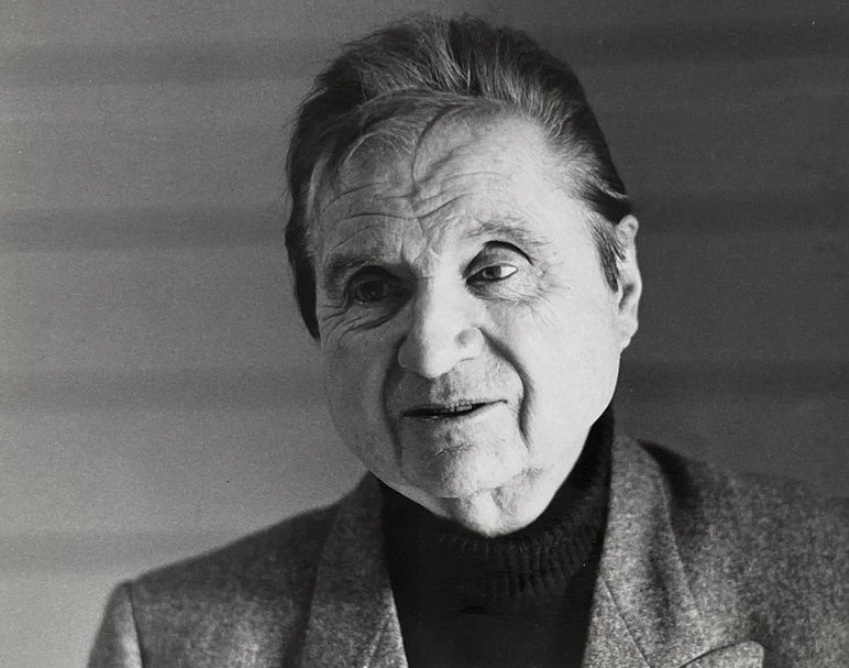
“I
feel at home here because chaos suggests images to me. I just love living in
chaos... I like to live among
the memories and the
damage...... I once bought a beautiful studio with the most perfect light.
and did it
up so well with carpets and
curtains and everything that I absolutely couldn’t work in it. I was
absolutely
castrated in the place. I
hadn’t got the chaos.”
Francis Bacon
Go-ahead for £100m case over Bacon’s painting
Bernard Purcell
London Editor
BERNARD
PURCELL |
NEWS
| IRISH
INDEPENDENT |
WEDNESDAY, 16
MAY, 2001
A HIGH COURT judge in London yesterday gave the go-ahead to a £100m legal
action by the estate of the late Dublin-born artist Francis Bacon against
his former gallery.
The judge cleared the way for Bacon’s setae — the
artist died aged 82 in 1992 — to
sue Marlborough Fine Art (London) Ltd and Marlborough International Fine Art
(Mifa), based in Liechtenstein.
Bacon’s executor Professor Brian Clarke is suing the gallery on behalf of
the artist’s estate.
He argues the gallery exerted undue influence on him to retain profits
rightly due to the estate, kept 70pc of the value of Bacon’s paintings when
a fairer figure would have been closer to 30pc, and has not furnished proof
that it paid the artist for all of his paintings.
The gallery denies the action and at one point called it “a
try-one”,
but the High Court in London ruled yesterday there was at least a case to
answer.
A three-panelled painting by Bacon of his lover, barman John Edwards,
painted in 1984, sold at auction in London in February for just over £3m but
failed to reach a predicted world record price. Last November the artist’s
‘Portrait of George Dyer Talking’ sold in New York for £4.4m.
The action, expected to last at least three months, will go ahead next
January and with his works fetching such prices, the estimated amount at
stake around £100m.
From 1958 until his death from a heart attack in Spain in 1992, Bacon was
represented by the Marlborough Gallery.
Bacon art payments case can go to trial, judge rules
BY STEVE
BOGGAN |
HOME
NEWS |
THE
INDEPENDENT |
WEDNESDAY 16
MAY 2001
A LEGAL contest between the estate of Francis Bacon and his
former gallery, involving up to £100m in claims, should go ahead, probably
next year, a High Court judge ruled yesterday. Mr Justice Patten refused an
application by Marlborough Fine Art (London) Ltd and Marlborough
International Fine Art to have the case, brought by Bacon’s trustees, thrown
out before a full hearing.
Marlborough insists the estate’s allegations of breach of fiduciary duty
and “undue
influence” are
unfounded. But the estate, headed by the executor, Bacon’s friend, Professor
Brian Clarke, claims the painter was underpaid for works, some of which, it
alleges, remain unaccounted for. From 1958 until his death from a heart
attack in Spain in 1992, aged 82, Bacon was represented by the Marlborough
gallery.
The estate says it is seeking “proper
accounting from Marlborough, so as to be able to establish that there was a
fair balance struck between the interests of the gallery and Bacon”.
In a statement, Marlborough has said it enjoyed a “frank,
close and mutually beneficial” relationship
with the artist for 34 years after Bacon approached the gallery with the
request to represent him.
The full trial is expected to last 12 weeks and may begin next January. Mr
Justice Patten said he was satisfied on the material presented to him that “there
is at least an arguable case” that
a fiduciary relationship existed between Bacon and the gallery from 1964.
The
question of whether such a relationship existed would depend on a detailed
examination at trial of Bacon’s relationship and dealings with Marlborough
both before and after that date. “It
is, I think, beyond dispute that Bacon was one of the greatest artists of
the 20th century but both he and his paintings were controversial in their
time and public recognition of his worth was not immediate,” the
judge said.
Bacon estate action
against ex-agents goes on
MAEV KENNEDY |
UK NEWS | THE
GUARDIAN |
WEDNESDAY 16
MAY 2001
Years of legal argument over the tangled affairs of Francis Bacon lie ahead
after a judge refused to block a legal action by the artist’s estate against
his former agents.
The life of the man acknowledged as one of the greatest artists of the 20th
century, which was ended by a heart attack in 1992, was notoriously chaotic,
and his afterlife is proving to be just as bumpy.
The stakes are enormous. The assets in dispute could be worth up to £100m.
In his life time Bacon was one of a handful of British painters whose works
broke the £1m price tag.
Since his death his reputation and prices have continued to soar. Last week
in New York a world record was set at Sotheby’s, where just under £6m was
paid for a triptych.
His estate is suing the galleries that promoted his work for 34 years,
Marlborough Fine Art (London) Ltd and Marlborough International Fine Art,
which is based in Liechtenstein, alleging "undue influence" over the
painter. As a result of yesterday’s judgment, after three weeks of legal
argument by Marlborough trying to have the case thrown out, the main action
will go ahead. It is expected to take months, and will probably not begin
before January.
Marlborough said it would "vigorously" defend the case. It described its
relations with Bacon as "frank, close and mutually beneficial"
The high court was told that a representative of Marlborough acted almost as
a minder, removing paintings from Bacon’s studio – which was sometimes knee
deep in rubbish, newspaper articles, old photographs and scraps of magazines
–"as soon as the paint was dry".
When he died at 82, he was worth an estimated £10m, and left his fortune to
his much younger friend, John Edwards, a former east London barman who now
lives in Thailand.
The main legal action was instigated by the estate’s executor, Brian Clarke.
It is demanding a full statement of the galleries’ dealing with the artist,
claiming that they retained up to 70% of the sale value of his paintings
when a third would have been fair, and that Marlborough has not demonstrated
that it paid for all the paintings received.
Marlborough strenuously denies the allegations. Yesterday Mr Justice Patten
said he was satisfied there was "at least an arguable case". The trial would
have to examine in detail Bacon’s relationship and dealings with
Marlborough. While one of the greatest 20th century artists "both he and his
paintings were controversial in their time and public recognition of his
worth was not immediate".
The main legal action was instigated by the estate’s executor, Brian Clarke.
It is demanding a full statement of the galleries’ dealing with the artist,
claiming that they retained up to 70% of the sale value of his paintings
when a third would have been fair, and that Marlborough has not demonstrated
that it paid for all the paintings received.
Marlborough strenuously denies the allegations. Yesterday Mr Justice Patten
said he was satisfied there was "at least an arguable case". The trial would
have to examine in detail Bacon’s relationship and dealings with
Marlborough. While one of the greatest 20th century artists "both he and his
paintings were controversial in their time and public recognition of his
worth was not immediate".
Bacon Suit to Proceed
By CAROL
VOGEL |
INSIDE ART | THE
NEW YORK TIMES | FRIDAY 18
MAY 2001
The High Court of Justice, Chancery Division in London ruled this week that the
legal battle between the estate of the painter Francis Bacon and his former
dealer, Marlborough Fine Art of London and its international arm based in
Lichtenstein, could proceed. A trial is expected to begin in January and last
about 12 weeks.
Marlborough represented Bacon from 1958 until his death in 1992. Now Bacon’s
friend and executor, Brian Clarke, contends that the painter was underpaid for
works, some of which he and his lawyers say the gallery has still not accounted
foraring both sides, the judge denied the gallery’s request, saying he believed
there was at least an arguable case.
The suit also contends that Marlborough cheated Bacon out of more than $150
million by consistently undervaluing his paintings, which it bought from him and
quickly resold for substantially higher prices. Court papers say the gallery
controlled the most minute aspects of Bacon’s financial and personal life and
used this influence to deprive him of the true value of his work
In late April the two sides met in court in London to argue their case.
Marlborough denied the estate’s charges and asked the court to dismiss the case.
But after hearing both sides, the judge denied the gallery’s request, saying he
believed there was at least an arguable case.
Marlborough, run by the Duke of Beaufort and Gilbert Lloyd, son of the gallery’s
founder, said the accusations against the gallery were ’’without foundation".
In his ruling the judge said it was now up to a court to decide what kind of
relationship existed between the artist and his gallery and whether it was
abused.
A
not-so-Exhibition
JOHN
MINIHAN |
BRUSH STROKES |
IRISH INDEPENDENT WEEKEND | SATURDAY,
19 MAY, 2001
Photographer John
Minihan, now living in County Cork, was a trusted friend of Francis Bacon and
photographed him on many occasions, in many situations. As Bacon’s reconstructed
London studio goes on view at the Hugh Lane Gallery in Dublin, Minihan recalls
his encounters with the mercurial artist and the important part photography
played in his work
I REMEMBER trying to
navigate a rope hand rail and narrow steps up to the two small rooms in Reece
Mews where Bacon slept and worked; ahead was the artist’s makeshift
kitchen/bathroom. On that particular summer morning in 1982 Francis was in a
good mood. I had just returned from one of my frequent trips to Athy, a place
familiar to him because his father trained horses in Co. Kildare. Born of
English parents in a Dublin nursing home. in 1909. Bacon was Irish by birth, if
not by blood. and perhaps this is where his obsession for images of the
crucifixion, and his prolific studies of an almost Munch-like screaming Pope
came from.
He and I first met in
1971 outside the Marlborough Street Magistrates Court in London where Bacon had
just been found not guilty of possessing cannabis following a police raid on his
home. Bacon told the court he did not smoke, because of his asthma. After that
first meeting. I would often come across him in Soho haunts like the Colony Room
and The French.
A recurring image of
that time was the photographer Bill Brandt's famous 1963 portrait of the artist
on Primrose Hill, but Bacon told me some years later that he hated the picture.
Still, Bacon was fond of photographs as a source of inspiration in his work.
Living close to the Victoria and Albert Museum in South Kensington, he would
visit and look at the photographic collections, especially the photographs of
Eadweard Muybridge, born Edward Muggeridge (1830-1904).
One of the great
revolutionary figures in the history of photography, Muybridge is famous for his
emotive images of wrestlers, and horses in motion. He was an important influence
on Bacon’s work. The cameraman holding a camera and a foto-booth are just two of
the photography related images that figure prominently in the paintings. Indeed,
a foto-booth in south Kensington underground station provided him with the
instant photographs that he used in self portraits.
TRUE ORIGINAL, WITH A
UNIQUE LANGUAGE
WITH the help of
photography. Bacon who had no art school training, evolved a language of his
own. He was a true original. Many of his friends were photographers who provided
him with images which he used in his paintings. Most important among these was
John Deakin, another Soho habitue who knew Bacon in the early 50’s. An
exhibition of his work went on show at the Victoria and Albert Museum in 1985
and Bacon,in an introduction to the catalogue, described Deakin’s portraits as
the best since Nadar and Julia Margaret Cameron. Deakin’s reverence for Bacon
shows in all the photographs he took of the painter. The National Portrait
Gallery. London. mounted a huge Deakin show in 1996, confirming his overdue
recognition.
The recreation of
Francis Bacon’s studio as a permanent fixture at The Hugh Lane Gallery, Dublin
is a great coup but what is also important is that Bacon’s life has been
chronicled through photographs from the time he left Ireland in 1925. He was
photographed by some of the most distinguished photographers in the world,
including Henri Cartier Bresson, Richard Avedon, Cecil Beaton, Bill Brandt, John
Deakin, Daniel Farson and Irving Penn. My own particular favourite is the
picture by the American photographer, Arnold Newman of Bacon on the stairs of
his Mews home with a naked light bulb hanging above his head. Many friends of
Bacon took photographs too, like Bruce Bernard who with his brothers Jeff and
Oliver became a subject for Deakin’s camera in Soho in 1956.
The fact that
photography has a mass appeal was perhaps proven for the first time in 1989,
when the Royal Academy in London staged an exhibition to celebrate the 150th
anniversary of its invention by Louis Daguerre. The show was the most successful
held at the Royal Academy and George Bernard Shaw, himself an avid photographer,
asserted: “ifyou cannot see at a glance that the old game is up. that the camera
has hopelessly beaten the pencil and paint brush as an instrument of artistic
representation, then you will never make a true critic. you are only, like most
critics a picture fancier.”
Among the many
painters who experimented with photography were Delacroix, Gauguin, and Cezanne.
Painters like David Hockney are passionate commentators about the importance of
photography. Since Bacon’s death in 1992, at the age of 82. there has been much
controversy. Three biographies are in print. A movie about the artist's Bohemian
life called Love is the Devil was greeted to great acclaim. Derek Jacobi played
Bacon and the likeness was frighteningly real. Litigation is ongoing between the
painter’s heir. John Edwards, and Marlborough Fine Art who were dealers for
Bacon up to the time of his death.
Barry Joule, Bacon’s
neighbour in South Kensington, and for many years his handyman, was given
drawings by Bacon that formed the basis of the Joule Archive, exhibited earlier
this year at the Barbican Centre. Unpleasant allegations circulated that the
Barry Joule Archive is a fake, or at best a hoax. Whatever else might be said of
Francis Bacon, he was never corrupted by success.
Money and fame allowed
him to spend lavishly on champagne for his friends and indulge his love for
casinos. An exhibition of Francis Bacon was always a major event. I remember
having coffee with him one morning in 1977 at Brooks restaurant, just around the
corner from his Mews home. He was thrilled about his forthcoming show in Paris
at the Claude Bernard Gallery, on the narrow Rue des Beaux Arts. famed as the
street where Oscar Wilde died. He asked me to take photographs of himself at the
show.
For all the adulation
that was heaped upon Bacon and his enormous wealth, he could be seen catching a
bus, or travelling the London underground. I saw him many times emerging from
Marks and Spencers in Kensington High Street, alone in the crowd with his
plastic bag of weekly shopping and we would engage in polite conversation.
In 1991, I had an
exhibition at the Guinness Hop Store, of Bacon, Beckett and William Burroughs. I
asked Francis if he would consent to pose for a new portrait, but he politely
declined saying, “It is just an accident that I was born in Ireland.” The
Francis Bacon studio reconstructed at the Hugh Lane Gallery will be open to the
public on May 23.
In conjunction, a
book, 7 Reece Mews Francis Bacon’s Studio, pictures by Perry Ogden, is published
by Thames and Hudson, £17.95.

Bacon pictured by John Minihan: Outside the
Tate Gallery, London, 1985
A precious collection of debris
Patrick
Skene Catling
7 REECE MEWS: FRANCIS BACON’S STUDIO
Photographs by Perry Ogden
Foreword by John Edwards
Thames & Hudson, £14.95, pp. 120
PATRICK
SKENE CATLING |
BOOK REVIEW |
THE
SPECTATOR | SATURDAY,
19 MAY, 2001
John Edwards, Francis Bacon’s
heir, donated Bacon’s
South Kensington studio, the whole room and all its contents, to the Hugh Lane
Municipal Gallery of Modern Art in Dublin, his birthplace, thus submitting the
compost of the artist’s memorabilia to archaeologists, curators, art critics,
psychoanalysts and, from 23 May, the public.
The laborious 1998 dismantling, shipment and exact reassembly of
the detritus of 30 years of what Bacon called his ‘exhilarated
despair’ will
give his admirers and detractors clues to the creative processes of a gambling,
alcoholic, homosexual, atheistic genius. In the intimately enlightened opinion
of Edwards, companion to Bacon for the last 20 of his 82 years, the act of
transferring this complex of chaotic artistic fecundity to Dublin, a wonderful
coals-to Newcastle operation, 'would have made him roar with laughter, his own
special laugh, full of warmth and joy’.
Though Bacon would rarely have been able — or have cared — to
pass a breathalyser test, he was passionately serious about working at his easel
in the morning, no matter what he had been doing until late the night before. He
was a man of prodigious stamina, recuperative power, prolificity, and eventual
wealth. He told David Sylvester, the foremost authority on Bacon, ‘I
really like highly disciplined painting, although I don’t
use highly disciplined methods of constructing it.’ He
depended on receiving images from his subconscious by fortuitous accidents. His
paintings sometimes evolved as he painted them, as if having lives of their own
He depicted people as meat, flayed, twisted and corrupted, as
though portraying mortality might exorcise his fear of loss. He dreaded
abandonment and impermanence: long relationships ended in death. He was
gregarious but valued contemplative solitude. He said he was an optimist, but
regularly exposed himself to the risks of roulette, rough trade and drunken
oblivion. In Tangiers, according to the late Daniel Farson, a long-time,
on-and-off friend of Bacon’s,
the British consul general impressed on the local chief of police that
‘Francis
was a very distinguished painter and kept getting mugged. A few days later, the
chief of police returned, patently embarrassed: ‘Pardon,
mais le peintre adore ça!’
Dreading the end of life, Bacon seemed to be in a hurry
to get it over, while at the same time relying on attentive doctors to prolong
it. He deplored the term gay: he said he was queer. He enjoyed his circumstances
of ‘gilded
squalor’.
I knew him only at times of post-meridian frivolity in
Soho, presiding with intellectual fervour and flamboyant charm over long lunches
and consequent sessions in the Colony Room club, the beloved, bilegreen vortex
known as Muriel’s.
Muriel Belcher greatly encouraged him. Those festivities were the early stages
of his daily routine transmogrification from Jekyll to Hyde. ‘Champagne
for our real friends!’ was
his favourite toast, ‘and
real pain for our sham friends!’
As he ordered bottle after bottle, he was closely surrounded by friends
of both kinds. He was an insistent host, generous to a fault, usually tolerant
of hangers-on, but ruthlessly critical of other artists, especially
abstractionists.
Before the studio was transported to Dublin, Perry Ogden spent several days
photographing every part of 7 Reece Mews as it was when Bacon lived there — the
orderly bedsitting room, the kitchen/bathroom (he was a good cook and carefully
ablutionary), and the steep wooden stairs down to the studio, which looked as if
his id had run amok in it.
Bacon was an autodidact all his life. Ogden’s
close-ups of bookshelves
reveal the wide range of his reading, such as
biographies of Wilde, Yeats ,
Joyce, Freud, Ezra Pound, Rothschild and Seurat
and at least three of Velázquez.
(He said he thought Velazquez’s portrait of Pope Innocent X was ‘one
of the greatest paintings in the world and I’ve
had a crush on it’.)
Among
the numerous other books were The Romantic Agony by Mario Praz,
Spender’s Journals, Greek Made Easy, The Complete Scarsdale
Medical Diet — and Larousse
Gastronomique. On a shelf near his bed, there were snapshots of lovers and a
plaster-cast mask of William Blake.
At first glance, the studio looks like the devastation caused by
an explosion in a rubbish tip. However, the gallery’s
team of archaeologists catalogued over 7,000 items, including 80 ‘works
on paper’,
1,500 photographs and many slashed canvases. According to Barbara Dawson,
the director of the gallery, there is now ‘a
definitive archive a database of information which will be crucial in critical
analysis of Francis Bacon’s
work’.
A ‘Micro
Gallery’ will
give visitors access to ‘highlights
of this archive.’
In the
meantime, Ogden’s elegant
photographs provide an opportunity to scrutinise a lot of significant Baconian
debris — a page from Eadweard Muybridge’s The
Human Figure in Motion (his nude male wrestlers became Bacon’s amorous
meat on an unmade bed), glimpses of Michelangelo, Rodin and the late George Dyer
in his underwear, and pages from a book on forensic pathology, displaying skin
diseases, hundreds of discarded brushes and paintpots, and empty cartons that
once held bottles of Vat 69 and vintage Krug.
Bacon found day-dreaming in chaos richly productive. John Russell, in
his excellent biography of Bacon, considers Anton Ehrenzweig’s notion of
‘unconscious scanning’ and Edward de Bono’s ‘lateral
thinking’ as explications of Bacon’s artistic creativity. Russell later quotes
Bacon on his mysterious procedure: ‘I think of myself as a kind of pulverising
machine into which everything I look at and feel is fed.’
Ogden’s and Edwards’ book is a fascinating survey of the sorts of
material that Bacon pulverised. The fascination easily quells any reluctance to
pry into a dead man’s
privacy. And, after all, with his real friends Francis Bacon found everything in
his tortured existence absolutely hilarious.
Bacon’s studio reassembled in Dublin
NEWS |
ARTS
& CULTURE |
LIFESTYLE
|
THE IRISH EXAMINER |
TUESDAY,
22 MAY, 2001
The chaotic London studio of arguably the greatest British-based artist or Irish
artist of the 20th century has been painstakingly reconstructed in a Dublin art
gallery — even
down to the dust. Dublin-born Francis Bacon, who lived and worked in a studio in
the South Kensington area of London for the last 30 years of his life, said he
loved living in chaos as it suggested images to him.
The studio’s contents, donated to the gallery by Bacon’s long-time companion and
heir, have been catalogued and transferred to the city’s Hugh Lane Gallery by a
team of archaeologists.
Among more than 7,000 items are drawings, cans of paint, brushes and
photographs. The reconstructed studio also features the original walls, floor,
ceiling, shelves and a wooden staircase, with the dust in the studio swept up
and sprinkled over the reassembled clutter in Dublin.
Barbara Dawson, the gallery’s director, said this afternoon: “The acquisition of
Francis Bacon’s studio was a great coup.” An exhibition of unfinished paintings
will accompany the opening of the studio.
An historic studio with a real flavour
of Bacon
Today
the studio of Irish-born artist Francis Bacon is formerly unveiled. It is an
achievement
to be
proud of, says BRUCE ARNOLD
BRUCE ARNOLD | FEATURES
|
IRISH INDEPENDENT |
TUESDAY,
MAY 22, 2001
The reconstructed studio of the painter Francis Bacon at the Hugh Lane Gallery
in Parnell Square is a sensational achievement.
Done with loving care, impeccable scholarship and attention to detail that is
breathtaking, it nevertheless retains an absolute faithfulness to the life of
the artist.
It breathes the substance of Bacon’s working environment. From dusty curled
newspapers on the floor to the brown wood of the roof, splashed with drops of
his paint, the spirit of the artist’s life and the meaning of his work, is
explored and preserved in terms that are totally unique.
The experiment itself, of recreating an artist’s studio, is of course not
unique. The cool environment of Brancusi’s working conditions have been
recreated in the Pompidou Centre in Paris, and the even cooler white studio in
which Mondrian worked is to be seen in the Museum of Modern Art in New York.
And they too are impressive achievements, presenting us with an important and
often overlooked aspect of the creative process. But these exercises are much
less authentic than what has been done with Francis Bacon.
In the case of his studio, the whole thing has been dismantled and
reconstructed. None of it is recreated. All is original. We see the actual floor
and roof timbers, and the dimensions are exact. Something like 7000 items,
consisting of books, photographs, press cuttings, tubes of paint, pots, brushes,
palette knives, turpentine, linseed oil, have been inspected, checked,
documented and preserved in an exercise of modern archaeology unprecedented in
its exactitude and dedication to a single idea.
And the results are astonishing.
Bacon tried to paint outside his studio. He did so in Tangiers and elsewhere.
But it did not work. The light was wrong, and the atmosphere was too volatile.
Every significant work in his life as a painter was made in his studio, and the
major bulk of his lifetime’s activity was concentrated in 7 Reece Mews. It had a
skylight and two windows facing north. There was a staircase up to it, since it
was on the first floor and this staircase is installed, as it was in London, as
an approach point to the studio.
The reconstruction has bizarre elements. Bacon drank champagne to relieve the
pressures of life. He must have heard Madame Bollinger making the remark that
she drank it when she was happy, when she was happy, when she was sad, when she
was tired and when she was invigorated, when she was hungry as well as thirsty
and when she was not.
Francis Bacon’s numerous discarded Krug and Tattinger boxes — not
Bolllinger for him — are
in the studio and are a mark of creative profligacy. Also there, are his
dressing gown and other items of clothing, photographs of friends and an
extraordinary library indicating the breadth of his interest and his
imagination.
The working mind, what it read, what it studied in terms of visual triggers to
his creativity, are laid out virtually as he left them. And it is a momentous
achievement.
Reece Mews, where Francis Bacon had his studio, ran into Kendrick Mews, where I
had a publisher in the 1980s. I met Bacon there one morning. He assumed, I
think, that all men who recognised him were coming to see him, and I
disappointed him by telling him how much I admired his painting but that I was
on my way to see someone else.
I also told him that I had tried to include him in my book on Irish art.
He pulled a face. He had objected himself to the description, Irish artist,
which is now firmly attached to his work and his life. All that has changed.
In the murky circumstances of a major art conflict in the courts, between the
Francis Bacon estate and the Marlborough Gallery over alleged dishonesty towards
Francis Bacon in the sale of his paintings, the role of Dublin shines out like a
beacon of good taste and intellectual discretion and judgement of a high order.
The work has been carried out by a team of archaeologists, brining different
skills to the understanding of how Francis Bacon constructed in his mind the
often tortured images of figurative subject matter.
The power and energy of his painting will be demonstrated also in a gallery
adjacent to the studio, where eight finished works from the 1950s will hang with
later unfinished work from the collection. Francis Bacon’s sole heir, John
Edwards, first met the artist in 1976.
Bacon invited him to the Mews and told him: “People
think I live grandly you know, but in fact I live in a dump.” This
proved correct. Edwards used cockney slang to describe the kip at Reece Mews: “You
ain’t arf lampin’ it, Francis,” were
his thoughts on arrival, lamping being cockney slang for living like a tramp.
Bacon loved the studio and was never happier than when working there.
When John Edwards became his friend, he asked to tidy it up and then destroyed
huge quantities of stuff. He found bundles of banknotes that had been hidden,
some of them for so long that the notes were out of date.
Bacon worked best in the morning, and rose early, coming to a creative climax
around noon, after possibly six hours of painting. He would stick with this
programme even after a night’s drinking. He had a bedsit attached to the studio,
all the accommodation modest and spartan.
John Edwards is delighted to have given to Dublin the whole studio, from floor
to the raw wood of the rafters, and will be here this week to celebrate the
event. Sadly, David Sylvester, the world authority on the artist, is too unwell
to deliver his lecture in the Gate Theatre at 1pm tomorrow, when it will be
presented electronically.
Francis Bacon’s
studio materializes in Dublin
An exact reconstruction of the artist Francis Bacon’s London studio
was unveiled today at Dublin’s Hugh Lane Gallery.
BY EOIN BURKE-KENNEDY |
NEWS
|
CULTURE
|
THE IRISH TIMES |
TUESDAY,
MAY 22, 2001
The exhibit is the fruit of three years’ work and is described as the most
detailed and technically advanced archive of any artist’s studio in the world.
The studio was donated to the gallery by Bacon’s heir Mr John Edwards and cost
some £3 million to relocate: this is not bad value when you consider a museum
offered $3 million just for the studio door.
The studio on show has over 7,000 items including 80 works on paper, more than
1,500 photographs as well as books and some dramatically slashed canvases.
The newly designed gallery space housing the studio was the work of prominent
British architect David Chipperfield. As well as the studio itself it also has
an audio-visual room, an exhibition gallery and a “micro gallery” (or electronic
tour).
The project involved cataloguing and removing the entire contents of the studio.
It took a team of 10 archaeologists and conservators over three years. The
original walls, floor, ceiling and shelves – as well as the famous wooden
staircase – can be experienced.
The studio’s original address, 7 Reece Mews, south Kensington, was Bacon’s home
and working space for the last 30 years of his life. The Dublin-born artist
produced some of his most famous work in the studio.
The Gallery’s director Ms Barbara Dawson said: “The acquisition of Francis
Bacon’s studio was a great coup and its retrieval and documentation has
confirmed our suspicions – we have the definitive archive on Francis Bacon.”
“The Gallery’s innovative approach to retrieving and documenting the contents
has resulted in the database of information which will be crucial in the
critical analysis of Francis Bacon’s work.”
Dublin’s Lord Mayor Mr Maurice Ahern who officially opened the studio said:
“This remarkable cultural donation is the most important received by the gallery
since it was established by Sir Hugh Lane in 1908.”
Bacon was born in 63 Lower Baggot Street on October 28th in 1909 and is
considered by many the most famous “English artist” of the 20th century.
Studio mess recreated for £1.6m
By Audrey Magee
Ireland Correspondent
AUDREY MAGEE |
NEWS |
THE TIMES
| WEDNESDAY
MAY 23 2001
THE chaos of Francis Bacon's London studio has been recreated in a Dublin
gallery where it goes on public view today. More than 7,000 items hoarded and
dumped in piles by the wildly Bohemian artist were removed from 7 Reece Mews,
South Kensington, by 12 archaeologists and returned to their exact positions in
a replica room built by the Hugh Lane Gallery.
It was a move that took two years and cost £1.6 million. The paint-splattered
walls, floor, ceiling, staircase and shelves were shipped to Ireland after a
decision by John Edwards, Bacon's lover and heir, to donate the studio to
Dublin, where the artist was born in 1909.
Then followed the interior — 2,000 pots of paint, 570 books, 1,300 loose pages,
running shoes, vinyl records, rotting curtains and Marks & Spencer corduroy
trousers which Bacon had cut up and used to pattern his paintings. As they
picked through the debris of his working life, workers uncovered 70 new drawings
and 100 slashed canvasses, including Study for Man with Microphones from
1946.
The drawings, canvases and 1,500 valuable pictures by Cartier-Bresson and other
photographers have been removed and will be put on display by the gallery during
different exhibitions. Everything else is in the studio, exactly as Bacon left
it at his death in 1992.
Margarita Cappock, who co-ordinated the move, described it as a monumental task.
Every item was logged on a specially designed computer program and 10,000
digital images were taken to ensure that each item was returned to its correct
place. “At times it was a nightmare, but I think it has been done as
authentically as possible,” she said.
The gallery has built a box around the studio, with two glass-walled viewing
sites as well as spyholes in which the material is magnified.
A computer database allows visitors access to highlights of the archive, with
music provided by one of the records found in the studio: Peter Lacy, a one-time
lover of Bacon, playing the piano in a bar in Tangier, Morocco.
A portrait of the artist as a man inspired by clutter and chaos
Francis Bacon’s reconstructed studio at the Hugh Lane Gallery could give more
than one
teenager an idea or two about tidiness, writes Frank McNally
FRANK MCNALLY |
CULTURE |
NEWS | THE
IRISH TIMES | WEDNESDAY,
MAY 23, 2001
The new exhibition at Dublin’s Hugh Lane Gallery should carry a parental
discretion warning.
Younger children can probably view it safely enough. But impressionable
teenagers could be seriously damaged by the sight of Francis Bacon’s
reconstructed London studio, and particularly its subliminal message that you do
not have to tidy your room to be a success.
The studio is a mess, to put it mildly. Its 4 x 8 metre space contains more
clutter than a crack team of first-year university students could ever dream of
creating. This ranges from some 2,000 samples of painting material; slashed
canvasses; old newspapers and articles of clothing to such artistic accessories
as a cardboard box, formerly the home of a crate of VAT 69 Scotch whisky.
One of the few artist’s conveniences not found amid the chaos is a palette. But
then, Bacon didn’t need one. When mixing paint, he preferred to use the walls,
both sides of the studio door, and anything else that was handy. It doesn’t say
so in the gallery programme, but one has to presume he wasn’t renting.
The exhibition opens to the public today, three years after the dramatic news
that the studio’s contents had been donated to Dublin by the artist’s partner
and heir, John Edwards.
The intervening period has seen the completion of an epic task, beginning with
the making of a 360-degree photographic record of the flat in Reece Mews,
London, and the cataloguing of its more than 7,000 items, and ending with the
meticulous recreation of the whole mess in a specially designed space in the
Parnell Square gallery.
Even the original dust was preserved, removed in bags and sprinkled back on the
exhibits before the room was resealed.
Gallery visitors can view the interior through the glassed-off door and two
windows. To complete the voyeur experience, the steep stairway to the
first-floor flat has also been recreated, sunk in the floor, under glass. The
project cost £1.5 million, a burden shared by Dublin Corporation, the Department
of the Arts, the Millennium Commission, and the Ireland Funds.
Mr Edwards joined Lord Mayor Maurice Ahern and others to admire the finished
work on Monday. But, notoriously shy, he confined himself to saying he thought
Bacon would have “enjoyed this”. Born in Dublin in 1909, the painter left
Ireland in 1925 and never returned, later joking, with prescience, that he could
only go back after his death.
Nine years after the last-mentioned event, the artist’s archive, complemented by
a collection of paintings on long-term loan, is considered the most important
addition to the Hugh Lane since its establishment in 1908. Admission to the
gallery is free, but there will be a charge for the exhibition: £6 for adults,
£3 concessions and under 12s free.
Last night, Mr Edwards was presented with a Lord Mayor’s award in recognition of
his generosity to the city. On Saturday, RTÉ’s Network 2 screens a documentary
on Bacon, which includes an account of the studio’s relocation.
Francis Bacon studio opens in Dublin
The studio of Irish artist Francis Bacon, which has been shipped
from London to Dublin, opens today.
NEWS | ARTS
& CULTURE |
THE IRISH EXAMINER | WEDNESDAY,
23 MAY, 2001
AY,
23 MAY,
2001
The studio of Irish artist Francis Bacon, which has been shipped from London to
Dublin, opens today.
The walls, floorboards, ceiling, staircase and entire contents have been
successfully reconstructed at
the Hugh Lane Gallery on Parnell Square.
The exhibition depicts Bacon’s working environment at 7 Reece Mews in London’s
South Kensington.
Francis Bacon and the Nude
DAVID SYLVESTER |
LECTURE |
GATE THEATRE | DUBLIN
| 23
MAY 2001
One of the people Bacon used to drink with during his frequent visits to
Tangier, in the late 1950’s, was Allen Ginsberg, The American beat poet. One
day, Ginsberg asked Bacon whether he’d do a portrait of him and his boyfriend
having sex. It seems likely that the request was inspired by one, or both, of
two paintings, which Bacon had made in 1953 and 54. Ginsberg had probably seen
neither in the original, but the one of Figures In The Grass, was
reproduced in a literary magazine in 1957, and the one with figures on a bed,
could possibly have been known to him from a photograph. Or, he might simply
have heard about the paintings, which had been fairly invisible, because of
their subject matter, but had become legendary, for the same reason. In any
case, he must have made the request in a way which suggested that he was
thinking that Bacon would be doing the painting from life, given that Bacon
answered: “Well, this is going to be awkward Allen, how long can you hold it?”
At the same time, it seems fairly certain that that question was put in a jest,
for Bacon, though he painted many nudes, singly or coupled, never ever made a
painting of a nude from life. And even the drawings of nude figures, which he
made as sketches for paintings, do not include a single work, which looks as if
it could have been done from life.
Bacon, indeed, didn’t produce a lot of paintings or drawings of any kind from
life. Though in the 1950’s, he did do from life, a certain number of heads, and
half length and full length clothed figures, but not one nude figure. He may
well have been the only famous western artist who made a speciality of the nude
but never worked from a model, even for a drawing. As to clothed figures, while
he didn’t totally exclude working from the model, he was very reluctant to do
so. He did a few portraits in the model between 1951 and 1957, but that was it.
In an interview he recorded in 1966, he gave a reason for this: “Even in the
case of friends who have come and pose I’ve had photographs taken for portraits,
because I very much prefer working from the photographs than from them. It’s
true to say I couldn’t attempt to do a portrait from photographs of somebody I
didn’t know, but if I both knew them, and had photographs of them, I find it
easier to work then actually having their presence in the room. I think that if
I have the presence of the image there, I am not able to drift so freely as I am
able to, through the photographic image.”
The attraction for him of the photographic image was very clearly demonstrated
in his earlier stick stamp portrait with an identifiable sitter, Portrait of
Lucian Freud, 1951. Bacon had asked Freud to come to his studio to pose.
Freud arrived, on time, to find that Bacon had almost finished the portrait.
He’d painted it from a photograph. And not even from a photograph of Freud, he’d
done it from a photograph of Franz Kafka, while still making it look much less
like Kafka than Freud. Rather then work from the model, he evidently preferred
to work from memory plus a photograph which was not even of the portrait’s
ostensible subject. When I asked Bacon what happened, if someone he’d already
painted from memory, perhaps several times, came and sat for him, he said: “They
inhibit me. They inhibit me because, if I like them, I don’t want to practice
before them the injury that I do to them in my work. I would rather practice the
injury in private by which I think I can record the fact of them more clearly.”
I asked him in what sense he thought of it as an injury, and he answered:
“Because people believe, simple people at least, that the distortions of them
are an injury to them, no matter how much they feel for or how much they like
you.”
I do have a suspicion that Bacon was making some of this up. It’s all together
understandable that he preferred to be alone while painting. We know that quite
a number of the artists, who forbitualy worked from the model, have positively
enjoyed having a model there whether for social reasons, and / or sexual
reasons, and / or because they got satisfaction, conscious or unconscious, from
having another human being sit still for them for a long time. But Bacon could
well have been made someone who felt happier without such distractions. That
would be in line with the fact that he was rare among artists, in never allowing
himself to be filmed while he was at work. So there’s no problem in accepting
his stated preference for being alone. My doubts arise from what he said about
inducing a feeling of injury in the sitter, especially as he added that, “simple
people at least”, were likely to have that sort of feeling. If that was his
fear, he could have avoided getting the more simple people among his subjects,
such as George Dyer to sit for him, and using only people like Lisa and Robert
Sainsbury as live models. I think he had a different reason for working form a
photographic image rather than a person. I think the reason, or the main reason,
was that it is easier to make a flat image that is based on observation of an
existing flat image, then it is to make a flat image that is based on
observation of something in the round, since the latter requires the translation
of a three dimensional phenomenon into a two dimension phenomenon. In other
words, I suggest, that Bacon based so much of his work on existing flat images
because these have already done some of his work for him.
In a monograph I published last year, I introduced as an argument, in favour of
this view, the way in which Bacon executed The Five Heads After The Life Mask
Of William Blake, which he made in 1955 to 6 that is, during the period when
he was sometimes painting from a model. I pointed out that he’d painted them
from memory of the mask, and from photographs of the mask, rather than from a
cast of the mask. And I inferred that his difficulties in working from a living
model were not so much that the model was alive, as that it was in the round.
Unfortunately this point was irrelevant, because I’d forgotten that in 1955
Bacon didn’t yet own the cast of the mask which he had in his possession in
later years. So the strongest argument in favour of the view that Bacon worked
from the flat images because it was easier, would be the fact that he was a self
taught artist who’d never had the customary art school experience of painting or
drawing from a model, or from a classical cast, or indeed from still life. Now,
the flat images from which Bacon worked were exceedingly varied. He loved to
describe himself as a “pulverising machine”, for influences. Sometimes the
sources were reproductions of works by great artists, such as Michelangelo and
Velázquez. But most of the time they were photographs, whether photographic
prints or photographs reproduced in books, or magazines or newspapers.
From the late 1940’s on, the photographs he used most of all, certainly when
painting the nude, were the sequential photographs of Eadweard Muybridge, which
were first reproduced in books of his such as The Human Figure in Motion. Indeed,
it was one of these photographs, one from a sequence showing a pair of
wrestlers, that provided the basis for Bacon’s first painting of a couple having
sex, and less directly for several further paintings of that subject. As he
himself said: “These have very often been taken from the Muybridge wrestlers,
some of which appear, unless you look at them under a microscope, to be in some
form of sexual embrace. Actually, I’ve often used the wrestlers in painting
single figures, because I find that the two figures together have a thickness
that gives overtones to which the photographs of single figures don’t have. But
I don’t only look at Muybridge photographs of the figure, I look all the time at
photographs in magazines of footballers and boxers, and all that kind of thing,
especially boxers.”
Bacon’s first painting of coupled figures is an especially good example of the
fluency with which he could combine images borrowed from other people’s art, or
craft, with images from his personal life, for the image is clearly
autobiographical. The face of the figure underneath could well be Bacon’s, and
the face of the figure on top, is certainly that of Peter Lacy, his lover at the
time. The painting is also the key case in the saga of Bacon’s dealings with
censorship. At the time Bacon painted the picture, he was extremely short of
cash. He had an oral contract with Erica Brausen at the Hanover Gallery of Bond
Street by which he received modest advances for pictures not yet delivered. But
Bacon did not live like someone whose income was modest. And the advances were
very quickly spent on champagne and oysters for his friends and hangers on.
There was no immediate game, therefore, in delivering a picture to Erica
Brausen, when it had already been paid for. He therefore resorted, starting in
1952, to selling some of his productions elsewhere, behind Erica’s back. The
person he used as an agent for these dishonourable transactions, was someone who
Erica had always treated with kindness and generosity, myself. I would aim to
sell a large painting like this, to one of the London dealers, for £150 in cash.
The dealer could expect to get 300 for it, but could afford to take less.
Francis gave me a commission of 20%, to be deducted from my selling price. A
generous commission, given that I had no expenses to pay out, with Francis even
covering the transport of works to my flat.
Around 10 o’clock one morning in October 1953, three large new paintings
arrived. One of them was a pretty ordinary picture of a seated man, the second
was a picture, which had an unusual subject: two half length male nudes at a
window, embracing, but was undistinguished in execution. The third, was this
breathtaking piece, which immediately struck me, as the most old masterish
picture Bacon had ever painted. A work in which the contrast between the flesh
colours of the monumental figures, and the whiteness of the sheets, made me
think of the Venetians. I at once got on the telephone to make appointments with
two dealers arranging with Patrick Phillips at the Leicester Galleries to come
at noon, and with Freddy Mayor of the Mayor Gallery to come at two. Phillips
arrived, looked at the three canvases, and without delay or discussion, handed
me £150 for the picture of the seated men. The negotiations with Mayor were more
complicated. He said that he loved the picture of the nudes, but would certainly
not be able to show it in his gallery and that he would therefore not be able to
sell it at the normal retail price. It was undoubtedly true that at that time he
could not have been able to show it, but I tried to make the point that the
subject might attract a premium price from certain collectors. However, after
lengthy discussion, Mayor said that he would give me £200 for the two pictures:
£140 for the Nudes at a Window, £60 for the Nudes on the Bed. I
knew that Bacon desperately wanted some cash, and so I said to Mayor that he was
driving an awfully hard bargain but that I’d accept his offer on one condition,
that if Bacon could raise the money in seven days, he could buy back the picture
for £100, which would give him a return on a £60 investment, of more then 3000%
per annum. He accepted the proposal. Though Mayor was someone I liked
enormously, I felt outraged at the thought that he could buy such a masterpiece
for such a pittance, I felt determined that the picture must somehow, stay in
the family, as it were. I knew that Francis wouldn’t in fact be able to raise
the money, and I knew that there was no hope whatever of my being able to buy
the picture myself. So my thoughts turned to our mutual friend Lucian Freud, as
fanatical an admirer of Bacon as I was. At the Colony Room that evening I told
Lucian, that if he could produce £100 within seven days, he could be the owner
of supremely great Bacon. After 5 days he told me he had raised the money. I
telephoned Mayor the following morning and told him the following lie: Bacon had
had a good gambling win and wanted to redeem the picture so that he could make a
present of it to Lucian Freud. Mayor was extremely disappointed saying that he’d
just found a customer for the picture. I said, and meant it, that I was terribly
sorry. That evening Lucian handed me an envelope containing £25 notes, which I
knew had been given him by his wife Lady Caroline Blackwood. Lucian’s subsequent
behaviour showed how much he deserved the picture. There were to be several
times over the years, when financial pressures forced him to pawn it for
increasingly large sums, but he never failed to find the money to redeem it.
Unfortunately, over the last 20 years, he’s always declined to lend it to museum
retrospectives of Bacon’s work, even when Bacon wrote entreating him to do so.
So the picture had found a good home, but it was unexhibitable and
unreproduceable.
The one painted a few months later with the figures in the grass was exhibited
within a year, and reproduced within three, years because the subject was
represented less unambiguously. Even so, Erica Brausen complained to Bacon, that
his treating such a subject was grossly self indulgent. Bacon loved to quote
her, with a heavy imitation of her heavy German accent “Vy do you have to paint
these filthy pictures that it’s impossible to sell.” All the same, he seems to
have paid attention, because he didn’t paint the subject again until 1967, by
which time the 1953 picture had long been exhibited and reproduced by a national
museum.
The first exhibition in which it appeared was Bacon’s retrospective at the Tate
in 1962. The catalogue entitled it Two Figures, and had a note that it
was based on a photograph by Muybridge of two wrestlers. The exhibition included
a copy of the photograph in the hope of lending respectability to the painting.
It seemed to me that, ironically, the photograph of the wrestlers, looked more
pornographic then the painting of the buggers. It was of course, because the
painting was raised to a higher level by the beauty and nobility of its facture.
From the time Bacon took up the subject again in 1967, it invariably appeared in
triptychs, usually in the centre panel, sometimes in one of the outer panels,
and, on one occasion, in the centre and an outer panel. The first of these
appearances was in the right hand panel of the work entitled “Triptych Inspired
by T.S. Eliot’s Poem Sweeney Agonistes.” Here the scene also includes a standing
figure looking towards the couple and talking on the telephone. The image of
coupling here, and in all the subsequent versions of the subject, does not seem
to have had a specific existing image as a model. These later versions all seem
developed from the two versions painted in 1953 and 54. Though it’s very
probable that Bacon went on looking at the whole sequence of the Muybridge
photographs of wrestlers. And it’s certain that he consciously feared off his on
earlier works. A number of colour reproductions of his paintings were pinned up
on his kitchen wall, and they weren’t there as decoration. The later version
didn’t need a specific new source, because they were more abstract, more
formalised, then the initial version. Take for example these two centre panels
of Triptychs of 1970.
The following year, George Dyer, Bacon’s lover since 1964, died from a massive
overdose of drink and sleeping pills. Over the next few years, Bacon’s paintings
were often a quite conscious effort to exorcise the pain and guilt of that
death. The first treatment of a coupling that followed it was in a triptych of
1972, in which the image appeared in both the left hand panel and the centre
panel. The next was in the centre panel of a triptych painted later in 1972.
Here, there is less coalescence between the figures, and their formalisation is
bolder and decidedly more extreme then it had ever been before. In the centre
panel of a triptych painted in 1979, the treatment is something of a cross
between the version on that black ground and those preceding it.
And the version in the centre panel of Bacon’s final triptych, painted in 1991,
is again on a black ground, and is a development of the previous version on a
black ground, a more short hand treatment. The reason why the versions of the
subject from 1967 on didn’t need particular models to refresh them was,
obviously, that Bacon’s continuing reiteration of the theme allowed him to
develop each new version from its predecessors. All of them reflect a certain
stylistic influence which is very recurrent, almost a constant in Bacon’s
treatment of the male nude, that of Michelangelo. It is not so much an influence
of particular works, as that of Michelangelo’s whole vision. And according to
Bacon, if there was a particular aspect of Michelangelo’s art that influenced
him, it was not so much the sculptures, or the paintings, but the drawings.
Bacon was extremely clear about the way in which Michelangelo affected his work:
“Michelangelo and Muybridge are mixed up in my mind together, and so I perhaps
could learn about positions from Muybridge, and learn about the ampleness that
grandeur a form from Michelangelo, and it would be very difficult for me to
disentangle the influence of Muybridge, and the influence of Michelangelo. But
of course, as most of my figures are taken form the male nude, I’m sure that
I’ve been influenced by the fact that Michelangelo made the most voluptuous male
nudes in the plastic arts.” In addition to the pervasive influence, we do
occasionally find an obvious borrowing from a particular sculpture. For instance
in the 1979 triptych the central panel we considered earlier, the outer panels
are clearly based on two of the reclining figures in the Medici chapel. The left
hand panel is an echo of the back view of Night; the right hand panel is an echo
of the back view of Day. And there are sometimes echoes among Bacon’s nudes of
figures from other old masters. In Two Man Working in a Field of 1971,
the figures look as if they might have been derived from the Two Men Drawing
Up Nets, in the Raphael cartoon for the miraculous draft of fishes, and it
is certain that Bacon used to walk around the corner from his studio to the V&A
to look at the cartoons. The figure in the right hand panel, of a 1970 triptych
of nudes, looks as if it could have easily have been based on the clothed figure
of Caravaggio’s Narcissus. This is pure supposition; there is no
documentary evidence to support it. On the other hand, there are borrowings from
Ingres that are avowed, such as the right hand panel of a 1982 diptych, which
is, entitled Study of the Human Body from a Drawing by Ingres.
But occasional borrowings like these are a much less significant aspect of
Bacon’s relationship to the art of the past, than are stylistic influences. When
Bacon selected his contribution to the Artist’s Eye, the series of
exhibitions at the National Gallery London, in which certain artists made a
choice of pictures from the Gallery’s collection, he included Michelangelo’s Entombment.
A token choice, because the collection didn’t contain anything more relevant to
Bacon’s particular indebtedness to the Master. It was the right hand piece in a
group he hung of three paintings of the nude. The left hand piece was the Rokeby
Venus by Velazquez, Bacon’s greatest hero in the handling of paint, even though
he didn’t attempt to actually imitate his handling. Between the Michelangelo and
the Velázquez, Bacon hung a late pastel by Degas, After the Bath, Woman
Drying Herself. It was as if Bacon was using this hang to demonstrate that
Degas was a cross between Velázquez and Michelangelo, and this led me to wonder
whether Degas wasn’t the past painter to whom Bacon was most closely related. He
shares with Degas a combination of a feeling of evanescence and the presence of
a fibrous atmosphere inherited from Velázquez, with a definition of precisely
articulated solid forms inherited from Michelangelo. There are two particular
debts to late Degas in the very first painting of a nude that Bacon completed.
This image of a man passing through a curtain realised in 1949. Compare the
treatment of the spine here, and in the Degas Bacon chose for the National
Gallery exhibition. He said of it: “You will find at the very top of the spine,
that the spine almost comes out of the skin altogether, and this gives it, such
a grip, and a twist, that you’re more conscious of the vulnerability of the rest
of the body then if you had drawn the spine naturally up to the neck. He breaks
it, so that this thing seems to protrude from the flesh.” The other debt to late
Degas is in the treatment of the curtain, which derives from a device Degas
constantly used in pastels. “Don’t forget,” said Bacon, “that in his pastels he
always striates the form with these lines which are drawn through the image, and
at a certain sense both intensify and diversify its reality. I always think that
the interesting thing about Degas is the way he made lines through the body. You
could say that he shuttered the body in a way, shuttered the image, and then he
put in enormous amount of colour through these lines.” On another occasion,
Bacon said, that “the result of using shuttering is that the sensation doesn’t
come straight out at you but slides slowly and gently through the gaps.”
In talking about Bacon’s first painting of a naked couple, I pointed out how it
conflated figures from his own life, with figures from art or photography. The
same sort of conflation seems to have occurred in this, Bacon’s earliest extant
painting of a nude. The figure’s right arm appears to be truncated at the elbow.
At the time the picture was painted, Bacon was a frequent visitor to his cousin
Pamela Firth, and her husband, the legendary soldier, Vladimir Peniakoff, DSO
MC. His cousin was convinced that the figure in this painting was inspired by
Peniakoff, who had lost his left hand in battle. Even while maintaining that
Bacon’s closest affinity to any past painter was to late Degas, in terms of
direct stylistic influence, he was not more influential on Bacon than two
artists working in the same place, at about the same time, as Degas: Paris at
the turn of the 20th century; that is to say the young Picasso and Matisse.
Compare this Bacon of 1974. showing himself asleep on a hospital bed, with this
Picasso of 1907. I’m not saying that the sleeping figure is made up from bits
and pieces of the five demoiselles of Avignon, I’m not even saying that Bacon
was constantly thinking about this icon. I think the Picassos he thought about
most were works of the mid 20’s to the mid 30’s. But, I do think, that Les
Demoiselles d’Avignon, and other Picassos of the next two or three years,
established a vocabulary of forms that provided a basis for Bacon. Nevertheless,
the actual forms in Bacon’s nudes, hardly ever seem indebted to particular
Picassos, as they do exceptionally in this female nude from a triptych of 1970
which seems to derive from this Picasso of 1934. Bacon’s heads constantly seem
indebted to Picasso, not so his figures, the figures are indebted much more to
Matisse. Bacon always tended to belittle Matisse by comparison with Picasso, his
famous phrase, “The brutality of fact,” emerged when he was holding forth on
Picasso’s superiority to Matisse. “Matisse never had the, what can one say, the
brutality of fact, which Picasso had. I don’t think he ever had the invention of
Picasso, and I think he turns fact into lyricism, he doesn’t have Picasso’s
brutality of fact.” But see how he virtually copied the left hand figure in
Matisse’s Bathers with a Turtle of 1908. First, rather roughly, in this
painting from 1956 to 7, and this one from 1959, and then more precisely, in
this left hand panel of the great triptych of 1964.
The influence of Matisse at this period seems to have begun with the second
painting of a nude that Bacon completed. The figure here is a very obvious case
of an example of indebtedness to Michelangelo, but the composition as a whole,
seems to me, to be indebted to Matisse. To the picture by him which Bacon
preferred above all others the Bathers by a River of 1909 16. Consider
those long black upright rectangles, compare the figure with the one with an arm
raised on the far left of the Matisse. Compare the position of the shadowy head
behind with the third figure from the left in the Matisse. Compare even the
tubular rail with Matisse’s serpents. And the influence of Matisse’s nudes
persisted. Compare this most decisive of Matisse’s nudes, the Blue Nude of
1907, with Bacon’s Female Nude of 1966. Apart from precise similarities
in the actual contours, compare the use of dark shading against the pink skin.
But we can also see in this Bacon a resemblance to a later work by Matisse, in
this Matisse nude of 1926, as in the Bacon, the figure is reclining, with an arm
supporting her head against a background of upholstered furniture, here a bed,
there an arm chair. See how Bacon, has followed Matisse’s strategy for
negotiating the passage from the curved planes of the nude body, to the flat,
single colour of the floor with the help of vertically striped upholstery.
All the sources we’ve so far traced or postulated for Bacon’s nudes, have been
works of art and photographs of life, which like the works of art, were in
existence, and which he happened to find. But Bacon also used photographs, which
he didn’t find, but actually commissioned. Commissioned in order to paint from
them certain people he would have painted from life, had it been his practice to
paint from life. He commissioned them in the early 1960’s from an outstanding
photographer who happened to be one of his drinking companions in Soho: John
Deakin. Most of the models were photographed purely for the purpose of painting
portraits, for example, Isabelle Rawsthorne, Muriel Belcher, Lucian Freud. But
Henrietta Moraes, and George Dyer, were also photographed for the purpose of
painting nudes. The dilapidated state of this particular print of one of the
photographs of Dyer suggests that Bacon used it a great deal. It would be
reasonable to suppose that he resorted to the photographs less often once he’d
painted the sitter many times. But he seems to have remained very dependent on
them. Whereas the photographs of Henrietta show her naked, those of Dyer show
him in white underpants. Presumably, Dyer didn’t take them off, because he felt
shy in Deakin’s presence; shy, or vulnerable. And paintings for which Bacon used
one, or another, of those photographs of Dyer such as this right hand panel from
a triptych painted as late as 1972, retain the underpants. Presumably this is
because Bacon found it easier to copy the simple form of the white clothing,
than to put in from memory the complex forms of the genitals. Here is the left
hand panel of the same triptych, whose central panel shows one of the couplings
we’ve already considered. It has the same underwear.
Oddly enough, it needs to be affirmed that both images are of the same person.
It needs to be affirmed, because it’s been suggested in publications issued by
both the Tate Gallery, and the Centre Pompidou, that the person on the left is
Dyer, but the person on the right is Bacon. A young female writer at Pompidou
was categorical about it, comically so, she says: “Only the person on the left
is Dyer, the one on the right looks more like Bacon” Writers on the Tate staff
have been more tentative. Clearly, the nonsense arose, from an assumption, that
if the coupled figures in the middle were Bacon and Dyer, Bacon would of thought
it only fair to portray each of them in the flanking panels and that Bacon
always did what he thought fair. That if it was indeed his own face, that he was
trying to paint in the right hand panel, this meant that he was sticking one
person’s face on another person’s body and underwear this seems fairly
inconceivable. What is conceivable, is that Bacon was not a master at achieving
a superficial likeness.
The nudes based on photographs of Henrietta are among Bacon’s most remarkable
achievements. These two date from 1963 and 1969. If Bacon’s output were divided
according to subject matter, and then judged, it is probable that the group of
works with the highest percentage of successes would be the female nudes painted
from photographs; always the Deakin photographs of Henrietta. Bacon painted
naked women with as much conviction and passion, as he painted naked men. This
poses the question of how much he was in the habit of seeing women naked. He’d
never gone to life classes, and unlike certain famously homosexual artist, he
wasn’t a closet bisexual. It is manifested the case, that here again, he was
closely dependant on the Deakin photographs, in as much as the repertoire of
poses rarely goes beyond those covered there. There is also a series of nudes,
for which no prototype in art or photography has been traced. A series
characterised by a pose: the figures lie vertically on their backs, and upside
down, with their left leg stretched out, and their right leg bent at the knee.
These two are the earliest and latest of the four oil paintings in the series.
On your left Lying Figure 1959 on your right Reclining Woman 1961.
The others are entitled Lying Figure and Reclining Figure. The
series also includes two undated gouaches, obviously done as sketches for
paintings, and more fully realised then most of Bacon’s sketches, perhaps
because here, for once, he actually referred to the sketches while doing the
oils. While we know from the title of the oil on your right that this is a
female figure, and while some of the other figures have more or less visible
penises, all the figures are alike in build as they are in pose. And it seems
probable, that Bacon intended them to be, or at least, was conscious that in
effect they were, androgynous, given that that quality appears in other somewhat
later paintings.
We were looking earlier at Bacon’s first representation in a triptych of a
couple having sex: this is in the right hand panel of the Sweeney Agonistes triptych
of 1967. The left hand panel of that triptych, shows two figures lying on their
backs as if exhausted, and these figures, in sharp contrast to those hard at
it in the other panel are decidedly androgynous. And in the triptych Studies
from the Human Body the central figure is androgynous, and the two outside
ones are clearly female, and the one on the right, also has a face that clearly
resembles Bacon’s. It therefore seems to me, to be quite possible, that a number
of these androgynous or female figures, painted between the late 1950’s and the
early 1970’s, are self portraits. Certainly that suggestion is confirmed, rather
than contradicted, by looking at photographs of Bacon. The colouring of his
flesh and hair, the build, all plump and soft.
Francis Bacon studio recreated
in Dublin
By DAVID SHARROCK
| IRELAND
CORRESPONDENT | THE
DAILY TELEGRAPH | WEDNESDAY
23 MAY, 2001
DUSTY newspapers attest to
the authenticity of the studio of the late Francis Bacon, which was opened
yesterday in Dublin after it was dismantled and shipped from London.
The artist was born in
Dublin but did not regard himself as Irish. He spent all of his most creative
years at his studio in south Kensington. The arrival of the entire contents of
his studio, all painstakingly catalogued before being moved, has created an air
of bemusement in Dublin’s artistic community which has shown as much interest in
Bacon as he did in Ireland.
An art critic said: "If
you went into an Irish bookshop and asked for something on Bacon they would
point you to the Elizabethan history section." After Bacon’s death the studio’s
contents were given by his companion and sole heir, John Edwards, to the Hugh
Lane Gallery in Dublin’s Parnell Square.
More than 7,000 items,
including books, floor and roof timbers, tubes of paint, a dressing gown and
discarded boxes of champagne, feature in the recreation of the artist’s habitat.
Even the dust which had accumulated at No 7 Reece Mews studio was swept up and
scattered over the Dublin display.
Barbara Dawson, the Hugh
Lane Gallery director, said: "The acquisition of Francis Bacon’s studio was a
great coup. The gallery’s innovative approach to retrieving and documenting the
contents has resulted in a database of information which will be crucial in
critical analysis of Bacon’s work."
An exhibition of
unfinished paintings will accompany the studio. Mr Edwards described the studio
as a dump. When he tidied it up he found bundles of banknotes that had been
hidden, some of which were so old they were out of date.
Bacon’s beloved muddle
recreated
BY LOUISE JURY | BOOKS | REVIEW | THE
INDEPENDENT | WEDNESDAY,
23 MAY, 2001
THE PAPERS, books, photographs,
brushes, paint and scrap material used by Francis Bacon go on display today
after being moved piece by piece to rebuild his London studio in the artist’s
native Ireland.
The Hugh Lane Gallery in
Dublin has reconstructed the walls, floor and ceiling of Bacon’s workspace
and added more than 7,000 items discovered there when he died in 1992.
Conservationists and
archaeologists photographed and logged every section of the studio at 7
Reece Mews in South Kensington before it was moved. They found more than
7,000 items including 80 works on paper and roughly 1,500 photographs, with
some by Henri Cartier-Bresson and John Deakin, as well as books and slashed
canvases.
The studio was donated by
Bacon’s long-term companion John Edwards and was moved with funding from
bodies including the Dublin Corporation and the Department of Arts in
Ireland.
Mr Edwards said Bacon “loved
it in that little room”,
which was so messy that they would discover wads of banknotes that Bacon had
lost between the canvases. He added that he believed Bacon would have roared
with laughter that it was now all in Dublin.
Moving Francis
Bacon’s studio
THE BEST OF IRISH TV | WICKLOW PEOPLE | THURSDAY, MAY 24, 2001
THE Irish-born artist Francis Bacon, who
in 1992, died bequeathed an exceptional gift to Dublin via his heir John
Edwards. The studio in which he lived in 7 Reece Mews in South Kensington,
London was to be transferred in its entirety to the Hugh Lane Gallery in Dublin.
This is a documentary on the artist — one of the greatest European painters of
the twentieth century and the story of the amazing undertaking of transporting
his studio, as it stood at his death, from London to his birthplace of Dublin.
The documentary includes interviews with
some of Bacon’s personal friends, including wildlife photographer Peter Beard;
renowned painters such as Louis le Brocquy, Anne Madden and Damien Hirst;
photographer John Minihan; poet and author Anthony Cronin; former British Arts
Minister Lord Gowrie and the Director of the Hugh Lane Gallery, Barbara Dawson.
His international reputation grew during
the 1950s with his Expressionist style and his penchant for gloomy subject
matter. By the time of his death, he was regarded as one of the foremost
painters of his generation and indeed of the century.
Perry Ogden, who was given permission to
photograph the studio at 7 Reece Mews before it was dismantled, is also
featured. His book, with a foreword by Bacon heir John Edwards, was launched as
part of the opening of the reconstructed studio at the Hugh Lane Gallery on
Wednesday last (23rd). There are also interviews with Brian Clarke, the artist
and sole executor of the Estate of Francis Bacon, renowned art critic Richard
Cork and the world’s leading authority on Bacon, art historian David Sylvester.
The conservation experts led by Project
Manager Margarita Cappock of the Hugh Lane Gallery, explain the details of their
extraordinary task and the impact that the incredible archive they have now
completed will have on the Irish and international art world.
Bacon was born in Baggot Street in Dublin
in 1909 and lived in Kildare where his father trained race-horses, until the
out-break of the First World War, when the family moved to London. Until the age
of 16, Bacon’s life was then divided between the two countries.
He left home at the age of 16 and spent time in Berlin and Paris (where he says,
he decided to paint after viewing an exhibition of Picasso’s work) before
settling in London. He found the studio at 7 Reece Mews in 1961 and it was to
become his home and legendary workplace for the next 30 years. While initially
poor and with no formal art training, he created a sensation in 1945 with his Three
Studies for Figures at the Base of a Crucifixion.
The documentary will be followed at
11.50pm by the 1998 John Maybury film Love
is The Devil. Subtitled Study
for a Portrait of Francis Bacon,
the film is a highly account stylised of the abrasive painter's affair with
reformed thief George Dyer. The film stars Derek Jacobi as Bacon.
7 Reece Mews Saturday May 26 Network 2
8.30-9.30pm
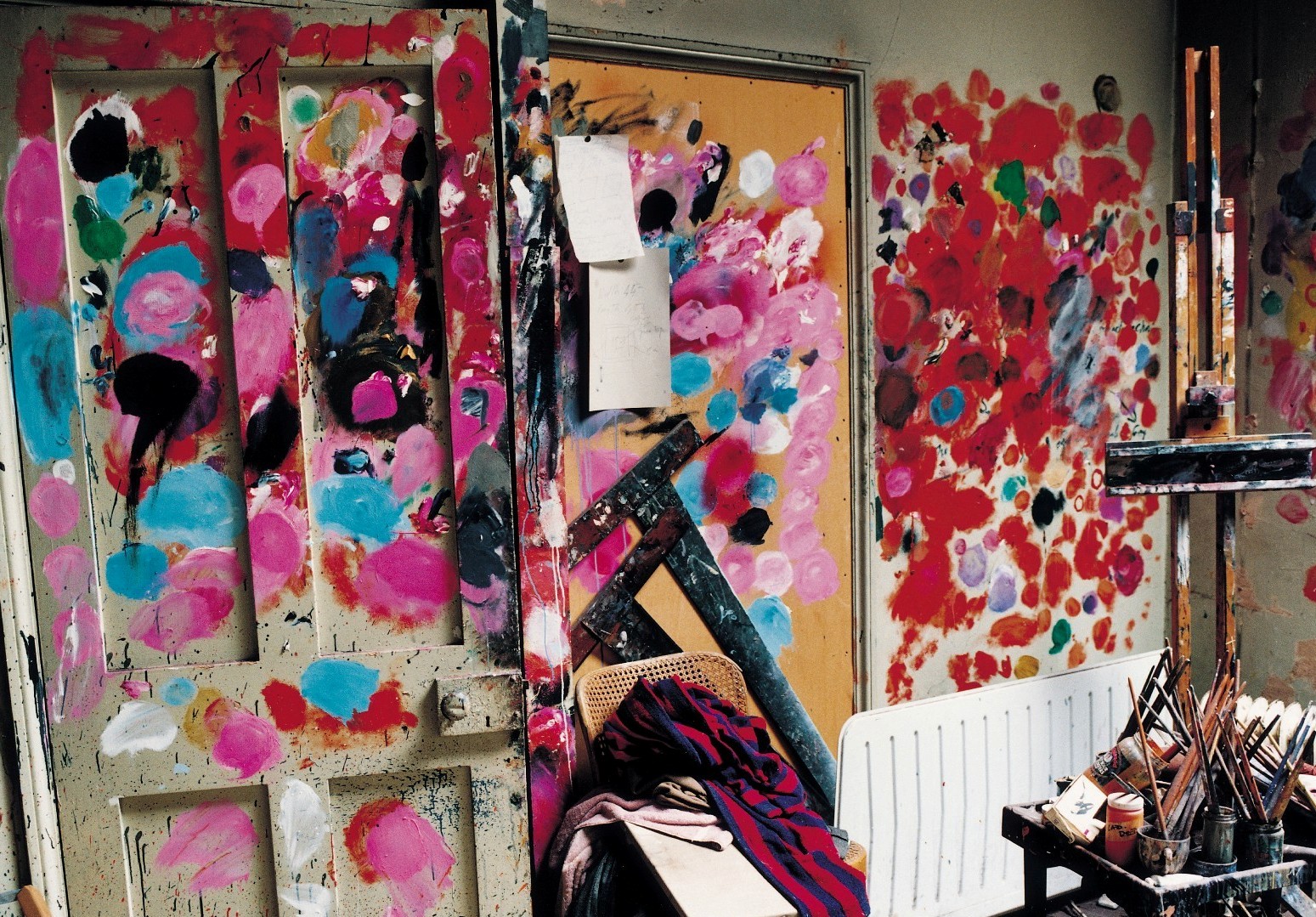
One of Perry Ogden’s photographs of Bacon’s studio.
360º of Francis Bacon
CRISTIN
LEACH | RTE IRELAND | THURSDAY, MAY 24, 2001
There is something
compellingly voyeuristic about standing in a glass case smaller than a telephone
box just one step inside the door of the studio in which one of the greatest
artists of the twentieth century worked. The fact that you have queued for more
than ten minutes to reach this unique vantage point does not relieve the guilt
of spending two minutes trying to absorb the chaos before tearing yourself away
– behind you the queue has grown so long that people will now wait more than
twenty minutes for a glimpse at the source of genius.
The opening of Francis
Bacon’s reconstructed London studio at the Hugh Lane Gallery on Wednesday 23 May
was an opening like no other. An estimated 1,300 people turned up, each
determined to actually see the studio, the work and the other items on display.
The excitement was palpable, with an almost religious feel to the queuing and
silent gazing at what already seems like a shrine.
Just outside the viewing
booth your feet hover over a glass panel in the floor. Down there, preserved
forever, are the steep, bare wooden stairs that led up to the studio. There’s
the rope he used to pull himself up and the light switch marked by his dirty
fingerprints. You imagine descending to open the door at the bottom and finding
yourself in London outside the real 7 Reese Mews.
Much has been written
about the 1998 donation of the studio to the Hugh Lane Gallery by John Edwards,
Bacon’s sole heir. More has been written about the mammoth operation of
transporting it, along with its contents, from London to Ireland. Even the dust
from the room was collected and re-scattered over the carefully replaced
objects. Standing in the glass viewing booth, you see crates and boxes from
bottles of alcohol, a dressing gown, photographs, scraps of paper, shopping
bags, books, catalogues, paintbrushes and most of all paint. These items fill
every corner of the 4x8 metre room. The paint is everywhere, in tins and tubes,
on small canvases and on the walls and door – no artist’s pallet was found in
the studio. There is an illogical feeling that even the air, sealed behind the
glass, could be the very air he breathed – so complete is the illusion.
Walking around the outside
of the studio you come to two peep-holes with wide angle lenses that allow you
to focus on the paint blobs on the far wall and give a view of brushes in pots
on a table. Around another corner you stand looking through the windows of the
studio. From here the eye is led to the large, round mirror at the end of the
room, but not before you are distracted by old shoes, a soft guitar cover, a
'Bally' shoe bag and the cardboard box packaging from an electric food mixer –
Magimix 2000.
Francis Bacon once said,
"I cannot work in places that are too tidy." He compared this incredibly
cluttered room, where he worked from 1961 until his death in 1992, to the inside
of his mind. Those who like to examine abstract modern art and proclaim, "my
two-year-old could do that", may now change their tune to boast about the
artistic state of their teenagers' bedrooms – but it has to be said, it would
take some 14-year-old to make a mess like this.
The reconstructed studio
features the original door, walls, floors, ceiling and shelves. Every item found
in the gallery – there were more than 7,000 – has been catalogued on a specially
designed database before being replaced. It is this unique information bank that
will allow for further study of the artist and how he worked. The accompanying
Micro Gallery features touch-screen audiovisual displays with highlights of the
database as well as information on the artist, his life and his work. After
listening for a while, you feel compelled to return to the studio to gaze again
on the jumble, the paint, the books and the brushes. It’s uplifting and
intriguing.
Beyond the studio and the
Micro Gallery, the Exhibition Gallery boasts a collection of unfinished
paintings on display to accompany the launch. The door at the end leads you back
around to the front of the Hugh Lane. As the queues continue to form, stretching
back almost to the thronged gallery’s entrance, it is clear that this curiosity
will become our capital’s cultural must-see, maybe even surpassing the Book of
Kells. Congratulations Hugh Lane Gallery - Ireland has got its own Mona Lisa.
The Hugh Lane Gallery is open
Tuesday – Thursday
9.30 – 6.00, Friday and Saturday 9.30 – 5.00, Sunday 11.00 – 5.00,
closed Monday.
Admission to the Francis
Bacon Studio £6; £3 concession, £2 for 12-18 year olds and under 12s free.
Bacon’s leavings elevated to a
work of art
Francis Bacon’s studio went on display this week at the Hugh Lane Gallery of
Modern Art.
Rosita Boland went along to
have a look and was not impressed
ROSITA BOLAND | THE
SATURDAY PROFILE | THE
IRISH TIMES | SATURDAY,
MAY 26, 2001
Once upon a
time, there was a famous artist called Francis Bacon. He was born in Dublin, but
went to live in London when still a young lad. When he grew up, he painted lots
and lots of strong and difficult paintings in which people looked tortured, and
the world they were set in looked very weird. Galleries bought them and put them
on show. Francis Bacon got nice and rich.
For almost 30 years, he went to work in the same studio in a place called No 7
Reece Mews, South Kensington. Studios are those messy places where artists work.
Then Francis Bacon died and his paintings became even more famous and more
expensive, because that is what happens.
But now, if you happen to be in Dublin, you can go and visit the studio for
yourself at a place called the Hugh Lane Gallery where they hope they will live
happily ever after because they get £6 every time a big person buys a ticket to
see the Bacon Pig Sty! And if you liked this story, there is another very good
one called The Emperor’s New Clothes.
This week the Hugh Lane Gallery finally opened the doors on its much-hyped
reconstruction of Francis Bacon’s studio. Bacon died in 1992, leaving his estate
to his long-time companion, John Edwards. In 1998 Edwards donated the structure
and contents of the studio to the Hugh Lane.
Some £1.5 million has been spent on the intervening reconstruction project. Ten
people catalogued, conserved and moved the studio to Dublin. More figures: the
studio contained some 7,000 items, including 570 books and 1,500 photographs.
About the only thing that wasn’t counted were the particles of dust, although
they, too, were logged, bagged and re-scattered once the reconstruction was in
place.
There is no doubt that the procedure was painstaking, and that the Hugh Lane
sees the studio’s acquisition as a major coup for the gallery. A large space has
been designated permanently for the Bacon Studio, and an accompanying contextual
video and display. But what real purpose does this reconstruction serve?
The fact that Bacon was a fine painter is not in question, but his studio itself
is not a work of art, and reconstructing it in a special room in a gallery, at
vast expense, does not transform it into one.
Much has been made of the fact that Bacon’s studio was cluttered and untidy. Two
short words that come to mind fairly sharpish are "so" and "what". Artists’
studios, by their nature as creative workspaces, are usually cluttered and
untidy, as anyone who has ever been in one will know.
Besides, untidiness is subjective: it all depends on what one considers ordered.
A place may look a mess to an outsider, but to the person who works in it,
everything has its precise place.
The reconstructed studio raises several questions. Was it worth it? Who
benefits? Is it, indeed, the important contribution to Irish cultural life which
Sile de Valera is on record as saying it is? And where does one draw the line on
any future acquisitions? What makes the dust and mess of one artist’s studio
more interesting that anyone else’s?
The Hugh Lane gives prominent credit to John Edwards, who generously donated the
studio and its contents. Generous the donation may have been, but the gift has
not been passed on to the visitor. It costs a whacking £6 for an adult punter to
view it.
This money will not be going back to the various State bodies which funded the
reconstruction. The director of the gallery, Barbara Dawson, confirmed this week
to The Irish Times that the entrance fees will go towards funding some splendid
international exhibition every two years or so. Therefore, the Hugh Lane gets
any future glory and the public foots the bill for it, by paying to see
something which the gallery got as a gift.
In February a Bacon painting sold for over £3 million at auction. The fact that
his studio in now installed in a municipal art gallery can only raise his
profile, and his prices, still further.
Putting a £6 admission fee on the Bacon Studio in a city where we are immensely
fortunate in having free admission to galleries and museums is a bold and risky
move. It seems unlikely there will be many repeat visits by locals. It couldn’t
be in stronger contrast with another donation made in the last decade to the
Irish art world.
When the Jesuits in Leeson Street discovered, to their amazement, that they had
been hosting a Caravaggio for decades that had been given to them as a gift,
they responded by donating it to the National Gallery of Ireland.
It was both a true and a truly admirable gesture of philanthropy, since The
Taking of Christ would have fetched millions at auction. They explained their
action by saying simply that the painting had come as a gift to them and what
was freely received should be freely given.
Philanthropy and entrance fees aside, the bigger issue by far is the
questionable merit of the reconstruction itself, even if it had free admission.
Although it has a strong and well-respected collection, the Hugh Lane is a
physically small gallery.
Giving over a large chunk of its space permanently to the Bacon Studio gives the
exhibit a weight and significance that seem to be totally out of proportion with
what’s on show.
Bacon never intended his studio to go on view, which immediately introduces an
element of voyeurism to the project.
There is, of course, the argument that the public is served by an insight into
the process of artistic creation. But what purpose does the reconstruction serve
which has not already been addressed by Perry Ogden’s meticulous and excellent
photographs of the interior before it was dismantled in London, and which are
also on view at the Hugh Lane?
At the very least, the Bacon Studio raises serious questions about what
constitutes art. Hype alone will not create something out of nothing, as the
emperor in the fairy tale discovered when he was caught in the buff.
Slicing the Bacon
thickly
JOHN BOLAND | TV
REVIEW |
IRISH INDEPENDENT | 26
MAY 2001
Ten minutes into an advance tape of 7 Reece Mews, which is being screened on
Network 2 tonight, I began to fear the worst. The title of the programme
derives its name from the little South Kensington house in which Dublin-born
artist Francis Bacon lived and worked for 30 years, and you will doubtless know
(it’s been in all the newspapers) that the studio has now been meticulously
reassembled in the Hugh Lane Gallery of Modern Art in Parnell Square.
But that’s possibly all you know. It’s certainly all I knew. Oh, I’ve seen
reproductions of Bacon paintings and been struck by his ferociously twisted
human figures, but I had little knowledge of the man beyond that he was a
hard-drinking homosexual who was born in Dublin and has come to be regarded as
one of the key figures in the art of the latter half of the 20th century.
And for the first 10 minutes or so of this documentary I learned nothing more,
though I kept being told how important 7 Reece Mews was as a sociological and,
indeed, artistic artefact. Bacon’s executor, Brian Clarke, solemnly announced
that it was "one of the most extraordinary archives of the 20th century" and
then went on to say that in it "the human condition is expressed in all its
terror, in all its isolation, in all its loneliness, and somehow at the same
time in all its joy."
And he was followed by photographer Peter Beard, who likened the studio to "a
fully-developed womb of swamp-like chaos and horror".
We were in Pseud’s Corner territory here, and the inclination was to lunge for
the 'Off' button, especially when the room being so described simply looked like
a chaotic version of those bedsits in which many of us have spent our younger
years or one of those bedsits after a long and boozy party, anyway.
Why were we being asked to adopt an attitude of reverence towards one man’s
messy working quarters? Up to this point, we weren’t given any good reason, and
this was a flaw in the film, which should have begun by convincing us of Bacon’s
importance as an artist so that we could then give his studio our proper
attention and respect. In other words, give us the essential facts first so that
we can decide what weight to put on subsidiary matters.
But if, structurally, the film got it arseways, it finally came up with the
goods, as it really couldn’t fail to do, given that Bacon’s life was so
interesting. So, too, were his ways of working and his sources of inspiration
irrefutable proof of the old adage that while talents borrow, geniuses steal.
Bacon stole wholesale from everything and everyone: from photographs of rotting
animals and screaming monkeys, from Edward Muybridge’s pioneering images of the
human body, from Eisenstein’s Battleship Potemkin and Bunuel’s
Un Chien Andalou,
from Velasquez’s Pope Gregory you name it, Bacon lifted it and put it onto
canvas.
In doing so, of course, he made it entirely his own, just as, for example, Bob
Dylan did when he used Dominick Behan’s The Patriot Game for With God on Our
Side and The Homes of Donegal for I Pity the Poor Immigrant.
The film was fascinating on this crucial aspect of Bacon’s art and you gradually
began to acknowledge the cultural importance of his studio where, amid all the
seeming chaos, was the visible source of so much of his art including the dish
rag with which he smeared the paint on the canvas in order to gain his
ambiguous, unsettling effects.
Finally, the film made you want to rush along to the Hugh Lane and see the
studio for yourself. So, despite its flaws, it achieved its intended effect.
IN
THE PICTURE
ANDREW
GRAHAM-DIXON
PORTRAIT OF FRANCIS BACON
(1952) BY LUCIAN FREUD
ANDREW GRAHAM-DIXON | IN
THE PICTURE | THE
SUNDAY TELEGRAPH MAGAZINE | MAY
27, 2001
Today is the unlucky thirteenth
anniversary of the theft, by a person or persons unknown, of Lucian Freud’s
matchless portrait of his friend and fellow artist Francis Bacon. Until its
recovery Freud will only allow the work to be reproduced in monochrome, as it is
on this page. His friend and biographer, William Feaver, compares the embargo to
a period of mourning. “Reproducing the painting in black and white emphasises
the fact that all that can be seen of it, for now, is the ghost of a picture”.
The theft took place in more
than slightly puzzling circumstances, as The Sunday Telegraph reported at
the time:
“A well-known painting by
Lucian Freud, Portrait of Francis Bacon, has been stolen from the National
Gallery in West Berlin. Electronic security, now considered routine in
protecting works of art, was not in use. The portrait, owned by the Tate
Gallery, was part of a retrospective exhibition that was seen at the Hayward
Gallery and is touring Europe. It is not known precisely when it was taken. One
member of the public told police she noticed an empty space on the wall at
midday on Friday, but it was three hours before the alarm was raised… Police are
working on the assumption that the culprit was an art lover rather than a
professional. A spokesman speculated that the thief acted on a ‘spontaneous’
impulse, adding – in an apparent contradiction – that it would have required
‘considerable skill’ to have removed the picture from its wire frame.”
Freud did the portrait in 1952,
when he was thirty years old and Bacon was forty three. He greatly liked and
admired his sitter and he seems to have intended the painting as a kind of
tribute. Depicted in full face and shown disconcertingly close up, Bacon has
been given the aspect of a truculent seer. His eyes, which seem almost
impossibly large, gaze down and away at something unseen. The impression is of a
man looking within, at the shapes created by his own imagination. A lick of his
combed-back hair has fallen out of place, giving him an air of teddy-boy
raffishness. His lip has begun to curl, as if he might be on the point of
sneering. He emanates, in equal measure, sensitivity and disgust.
The picture is (or was) small,
only a little bigger than its reproduction here. It was painted on copper, an
unusual support for an artist to have chosen in the early 1950s, when expansive
gestures on large canvases were more the order of the day. Copper, as Freud
doubtless knew, had been one of the favoured supports of Northern Renaissance
painters. Viewed in a Flemish light, his portrait of Bacon vividly reincarnates
the tradition of the Van Eycks, of Hans Memling and Rogier van der Weyden
(whose Deposition, in the Prado, Freud considers to be one of the world’s
greatest paintings). There are other precedents too for Freud’s hypnotising
evenness of attention to his subject. The picture reminds me of the early
scientific illustrations commissioned by curious patrons and scholars such as
Cassiano dal Pozzo in the seventeenth century – breathtakingly vivid and precise
depictions of so-called “wonders of nature” such as the largest broccoli plant
ever grown, or the most oddly shaped pumpkin. As Freud studied Bacon’s mumpish,
pear-shaped face, noting every crease and wrinkle, marking down every nuance of
contour, perhaps it too seemed like a sort of wonder of nature. How could a
single human being contain so much life, and intensity? Bacon’s imposing face
fills the frame, as if to amplify the question
Depicting the sitter full face,
front on, is very unusual in portraiture. The convention is traditionally
associated with depictions of deities. Phidias is said to have used it in his
lost Olympian Jupiter; Hubert and Jan Van Eyck adopted it for the figure of
Christ the Priest at the centre of the Ghent Altarpiece. In oriental art, Buddha
is generally portrayed full face. Bacon by Freud comes across as a kind of surly
Buddha, a disconcerting god of untranquillity.
It is not surprising that Bacon
should have seemed so deeply impressive to his younger friend and admirer in the
early 1950s. While Freud was just beginning to find his way as a painter, Bacon
was in full flow and creating what were, with hindsight, the finest pictures of
his life. While Freud was becoming increasingly dissatisfied with the tightness
and smallness of his own work, Bacon was painting with enviable fluidity, on the
scale of the great religious and mythological painters of the past. While Freud
felt confined within the limitations of portraiture and still life, Bacon’s
screaming popes, deformed children and crouching nudes seemed to encapsulate the
bitter and disillusioned mood of those post-war times. Peering into Bacon’s
face, Freud might almost have been looking for clues, for the hint of a way in
which he, too, might make his own work more expansive and profound – might
“deepen the game”, to use Bacon’s phrase.
As the two artists grew older,
they also grew apart. Bacon did not like the artists whom he befriended to do
well in their own right, feeling – as insecure people often do – that the
success of others somehow diminished the nature of his own achievements. For his
part, Freud increasingly lost respect for Bacon’s work, regarding his later
pictures as little more than a pale imitation of his best work. All ties between
the two were formally severed after Freud refused to lend one of Bacon’s early
pictures, which he owned, to the latter’s second retrospective exhibition at the
Tate Gallery in 1985. Freud’s reasons for doing so were not simply malicious. He
had lent the picture often before, and the Tate exhibition was to contain many
works which he thought had little merit. After that, the two artists barely
spoke to one another again, although after Bacon’s death in 1992 Freud did
remember him generously to several obituarists. So as well as being “the ghost
of a picture” the little black-and white image printed on this page contains,
within it, the ghost of a friendship.
A glimpse into the origin of Bacon’s work
Far from being a ‘pig-sty’, the reconstructed studio displays
order amid chaos
MARLENE LANG
|
PROPERTY
|
ANTIQUES
|
THE
SUNDAY TRIBUNE
|
SUNDAY 27 MAY 2001
THE
transportation of Francis Bacon's No 7, Reece Mews, Kensington studio across the
sea and its final entombment in glass at the Hugh Lane Gallery, must be one of
the more bizarre enterprises in the history of modern art.
The
gallery say the de-construction was done with the utmost sensitivity and carried
out like an archaeological excavation.
Archaeologists, architects and conservators were on site in both London and
Dublin to supervise the relocation of Bacon’s working environment lock, stock
and mouse dust. Even the plaster from the walls was removed using a fresco like
technique, and repositioned with all its dollops of paint and pigment build-up
intact.
Everything is positioned as it was-the flexible easel facing the light, the
large round mirror on a shelf against the far wall, which reflected the work in
progress on the canvas, the naked light bulbs, plug-in radiators, the posters,
scrunched up photographs, rags, old paint brushes, multiple tins, empty crates
of ‘krug’ and other detruis.
Contrary to the triumphant reports of the studio being a veritable pig-sty, it
is in fact, strangely the opposite—everything
has a purpose. There is a definite order, a method in the chaos. You can see
split areas, research material in one place, brushes and paint in another, the
easel with the light behind it, the shoes and the chair which appeared in his
paintings.
Photographs have been plagiarised for ideas and are strategically placed. There
are yellow memo notes stuck to the wall and a square leans against it. The
studio debris gives clues to his method of painting. The bits of corduroy were
used to press against the canvas to get a lined effect, and the dish rags were
for smudging so as to make forms ambiguous.
The
books thrown on the floor provided information for his own works. A medical
book, Positions in Radiography, inspired his diptych panels. Velazquez’s
1650 Portrait of Pope Innocent X, famously
inspired Bacon’s Screaming Popes. The meticulous photographing of the
studio by Perry Ogden before its entire contents were shipped to Dublin, was
invaluable in helping with its re-creation at the gallery Ogden shot the rooms
from every possible angle and recorded everything including paint flecks and the
rick-ety staircase leading to the studio.
He
catalogued and numbered more than 7,000 objects, and compiled them on a
database. Ogden's photographs have been collected in book form and many of them
are now on view at the Hugh Lane Gallery until 28 October.
A
plaque in the gallery tells us that
‘the
complete database is the first computerised archive of the entire contents of an
artist’s
studio... including 570 books and catalogues, 1,500 photographs, 100 slashed
canvasses, 1,700 leaves from books, 2,000 artists materials and 70 drawings.’
All of
this is just a matter of good house-keeping and conservation. And perhaps
everyone, whether they have valuable antiques or are just keeping a record for
insurance purposes, should at least take pictures of their home interiors and
contents to build up a database.
The
critics, like so many Erving Goffman-style fanatics, have been banging on about
chaos and social order and Bacon’s
melodramatic presentation of himself to
the
world, when really what the man did was just please himself. So what if he had
his bath in his kitchen? Few of us have the courage to live as we really wish.
There
are always the neighbours and the gossips to think about. But Bacon had nothing
to prove. He didn’t have to define himself by shiny floors, sparkling brasses or
dusted tables. He didn’t even own a house-the studio was rented for 30 years.
And he certainly didn’t become one of the greatest European painters of the
later half of the 20th century by worrying about such things.
His
workplace and its contents have been chucked into a large glass cage and are on
view permanently, since last Wednesday at the Hugh Lane Gallery, Dublin.
BRINGING HOME THE BACON
Francis Bacon’s studio, 7 Reece Mews, which
was transported from
London to Dublin is a must-see for art-lovers
MARIANNE HARTIGAN
|
VISUAL ART
|
ARTLIFE
|
THE
SUNDAY TRIBUNE
|
SUNDAY 27 MAY 2001
I AM not generally wild about things that you
can merely look at from a distance and not have direct access to
—
things which have to be interpreted for you by
some piece of multi-media technology
—
but Francis Bacon’s studio, 7 Reece Mews, is
such an amazing, piled high, heap of seemingly miscellaneous material that you
simply could not rope it off and let people walk through it. Instead the viewer
gazes at it through the ‘windows’.
The renowned painter’s studio was donated to
the Hugh Lane Municipal Gallery by Bacon’s heir John Edwards and after
painstaking dismantling (which involved archaeologists dissembling each layer
and noting what each piece was and exactly where it lay) it was transported to
Dublin where, after a length of time spent documenting and researching, it was
reassembled exactly as it was. Some of the more fragile items, such as original
drawings etc which would not be visible when it was reconstructed were removed
and archived. The studio and its contents is a wonderful addition to the city’s
cultural heritage.
On first sight it looks like a glorious mess
amidst a riot of colour the door and much of the walls are covered in brilliant
splodges of paint. There are vast numbers of brushes stuffed into jam jars, a
table heavily laden and piled precariously with spent and discarded squeezed
tubes of paint, half-finished jars of favourite colours crammed on a bookshelf,
clothes ripped into rags and steeped in colours lie around, a bespeckled mirror,
crumpled newspapers and torn leaves from books, abandoned shoes, books, papers,
and a clutch of individual champagne boxes lying idly in one corner are just
some of the 7,000 items.
Time is suspended in this place of frenetic
creativity. It is as if the artist just stepped out the door To those who are
neat by nature thismay be a disturbing picture. They may itch to get in there
and sort it out, tidy it up. But there are others who will look at this and
think quietly to themselves that’s not too far removed from my own
office/studio... For some people a certain amount of chaos may be not only the
result of but actually conducive to creativity. In any case Francis Bacon was
happy amid such an apparently haphazard studio: “I feel at home here in this
chaos because chaos suggests images to me. And in any case I just love living in
chaos.”
But as Shakespeare wrote there may be method
in this madness. What appears initially as unadulterated mess, on second glance
appears to be have an underlying order. The champagne boxes are discarded in one
particular area, there are quite neat stacks of canvases in another, much used
books in readily accessible piles, heaters uncluttered so that they can dispense
their warmth, paint brushes ready for use sitting in jars of turpentine. It is
more that there are accumulated multiple layers of artist's materials, brushes,
paints, refer-ence books etc, rather than a matter of simply untidiness.
It seems that new paint tubes and cans or
bottles of turpentine were added as nec-essary to the pile of empty ones without
the originals being thrown out. The several pairs of Marks & Spencer corduroys
cut into pieces were used for a particular effect on the canvas. And that what
seems like mad colours spattered against the wall is in fact just an
unconventional palette for mixing and trying out colours before applying them to
the canvas. For anyone interested in Bacon and his work. this is a fascinating
display. (The only disappointment and it is a very minor one is that you miss
the authentic turpentine smell which is so much a sensory aspect of most artists’
studios. Certainly a studio with that amount of brush jars with white spirit or
turps in them would have a strong and distinctive, if not almost overwhelming,
scent which is impossible to evoke in this sealed-off studio.) The hi-tech
information-at-the-touch-of-a-finger computers on the adjacent walls can tell
you about his life and art as well as reveal the contents of his studio, almost
item by item.
There was a theory in the past that Bacon
didn't draw or do preparatory works but painted directly on to the can-vas.
There is an ongoing dispute over theBarry Joules archives which are said by some
to be works by Bacon, (drawings, sketches, pen and pencil workings on top of
photos and newspaper cuttings, and so forth), and the argument is as to whether
these are authentic Bacon works or not. Since some of the material in Bacon’s
studio falls into similar categories this question of authenticity is likely to
be re-opened. Over 70 drawings were found and a number were executed on pages
torn from books, magazines, as well as loose-leaflined paper. Many were in a
fragile condition. There were also over 100 slashed canvases, over 1,500
photographs, and nearly 600 books. The material revealed is fascinating for
anyone interested in what inspired this artist, where his ideas came from, how
he approached a painting and how his work evolved.
Most intriguing to me was the much thumbed and
paint splattered book on the supernatural, the Phenomena of Materialisation, and
how its illustrations of ectoplasm spewing forth from people’s mouths, or
clinging to their bodies, was echoed in some of Bacon’s important works.
Pictorial compositions from this book too were reflected in certain paint-ings.
It had always been suggested that he was not a believer in God or an after life
but this aspect of his portraits clearly hints at an interest in a spiritual
dimension of some kind.
Born in Ireland, where he lived until he was
16, Bacon spent most of his life in Lon-don where he became a celebrated
inter-national artist. 7 Reece Mews was his work space for 30 years and for his
last few years he lived there too. As well as the actual studio visitors can see
Melvyn Bragg’s interview with Bacon and (upstairs) Perry Ogden’s marvellous
photos of the studio as well as Bacon’s kitchen and bedroom - which incidentally
show how ordered Bacon was in other aspects of his house. On show too are a
number of key paintings and unfinished works.
For anyone interested in Bacon and his very
individual work, this is an essential show-and it’s a fantastic resource for the
Hugh Lane Municipal Gallery to have.
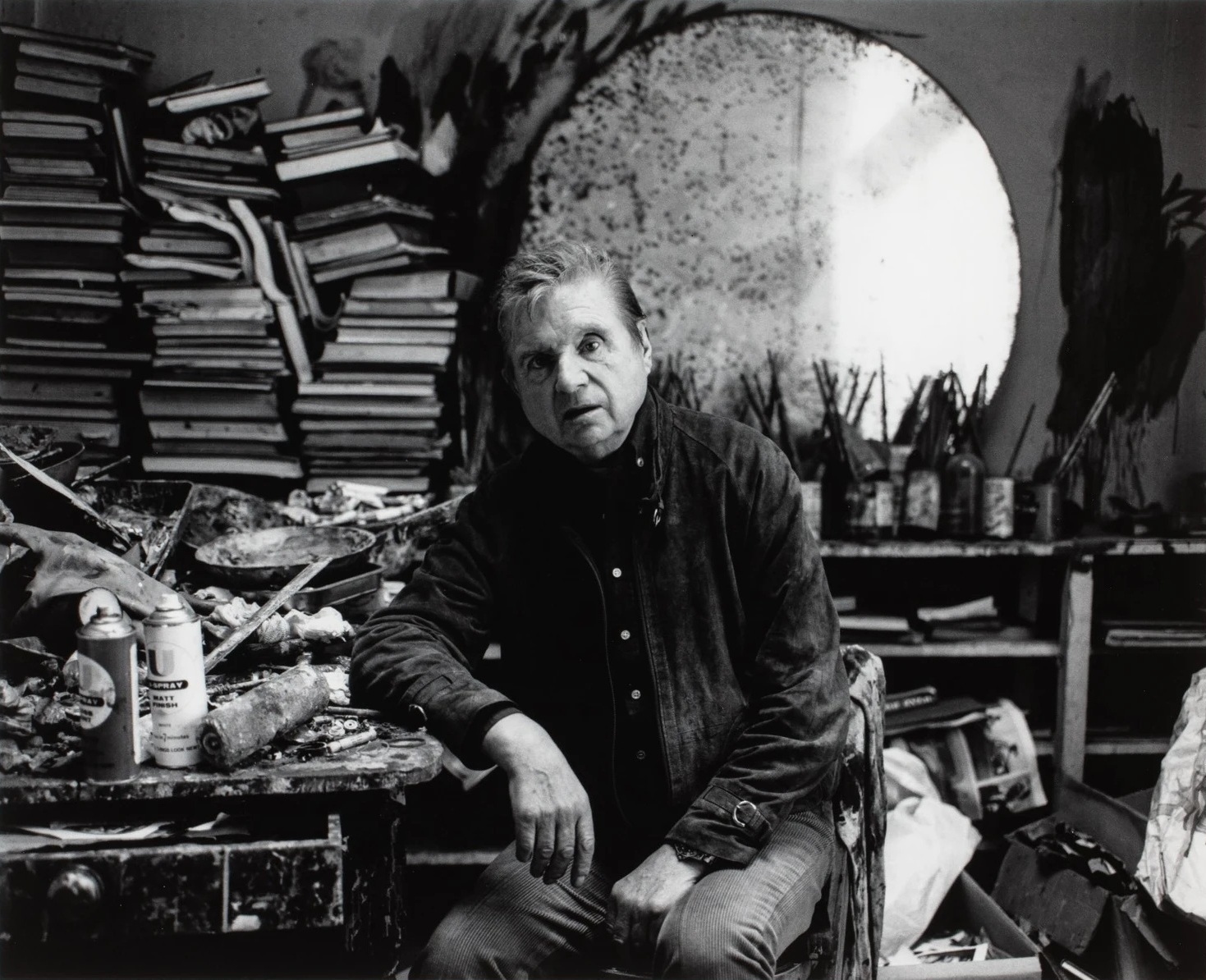
7 Reece Mews: the renowned painter’s studio was donated to the Hugh Lane
Municipal Gallery by Bacon’s heir John Edwards and after pain-staking
dismantling
Take a peep — it’s
a voyeur’s dream
CHARLES DARWENT
| CULTURE
|
THE
INDEPENDENT ON SUNDAY
|
SUNDAY,
MAY 27, 2001
To say that Francis Bacon is missing from his newly-reconstructed studio in
Dublin sounds dim, even by the demanding standards of British journalism.
The Master of the Screaming Pope died in 1992, after all: his attendance at
the studio’s official opening last Tuesday would have been taking the
Baconian grand
guignol thing
a little far. Still, you can’t help feeling Bacon’s sulphurous presence in
the Hugh Lane Gallery’s new annexe, and wondering just where the old devil
has hidden himself.
Which is a measure of the project’s triumph. When the idea of disassembling
Bacon’s studio at 7 Reece Mews in South Kensington, shipping its 7,200
pieces of slashed canvas, torn paper and truncated corduroy trouser-leg
across to Dublin, and then re-assembling the lot with archaeological
accuracy, was first mooted in the late 1990s, reactions in Britain ranged
from mild annoyance to white fury. David Sylvester, Bacon’s ailing
hagiographer and friend, pointed out that the artist had always hated
Ireland. (The son of a horsey ex-army officer, Bacon skipped to England at
17 having been caught being buggered by a groom, and never went back.) The
Tate Gallery — which,
it is said, was offered the studio by Bacon’s last boyfriend, John Edwards,
and lost it for being too blase — was
predictably tight-lipped about the project.
Of deeper worry, though, was the sense that preserving Reece Mews as a
shrineful of Bacon relics went against the artist’s habit of ruthless
self-editing. Bacon proudly maintained that he had destroyed his best
pictures, evidence of which was provided by the dozens of slashed and
overpainted canvases found in his studio when he died. (A similar shadow was
cast by Barry Joule, the one-time handyman accused by devout Baconians of
removing incunabula from St Francis’ studio against his wishes.) Bacon’s
mystique rests in part on the belief that his genius sprang from his brush
fully-formed, without the need for bourgeois interventions like drawings.
Being able to see the hundreds of worked-over photographs and magazine pages
that had littered the floor of his Reece Mews studio might dim the public’s
awe.
Speaking as a member of that public, it doesn’t. Bacon’s studio was more
than a coincidental space in which to paint. As Margarita Cappock, manager
of the project, notes, pretty well the only thing not unearthed at Reece
Mews in the course of its removal was a palette. Instead, Bacon used his
studio’s walls and doors to experiment with texture and colour, mixing his
paints on them and scuffing away at the results with odd bits of paper and
trouser-leg. (Remember those stripes in Untitled (Crouching Nude on Rail)?
Corduroy.) The studio — perhaps
uniquely in art — was
also an artwork, giving it a value that Brancusi’s sterile atelier, rebuilt
at the Pompidou Centre, does not have.
And 7 Reece Mews was more than that, too. The project’s architect, David
Chipperfield, has included a quotation from Bacon on the wall of the
free-standing bunker in which he has encased the artist’s studio: “The mess
around here [ie., at Reece Mews] is rather like my mind: it may be a good
image of what goes on inside me.” Far from denying the intrusion of ogling
Bacon’s sanctum, Chipperfield has made a fetish of it, exploiting a quality
in his design — voyeurism — which
Bacon, always open to such things, would doubtless have enjoyed.
Step into the glass box that provides your first view of the studio, and you
have the embarrassing sense of being somewhere you shouldn’t be. On the
opposite wall, two steel tendrils sprout like motifs from a Bacon
anthro-machine. These hold lenses giving specific views of painted wall and
door, emphasising the studio-as-palette idea but also stressing the
illicitness of what you’re doing: turning the installation into a What the
Painter Saw machine, visitors into voyeurs. (You half-expect Bacon’s
bloodshot eye to peer dolefully back at you.) Chipperfield plays his third
variation on the voyeurism theme on the final wall, his spiral walkway
allowing you to look down through the studio windows like an old-fashioned
Peeping Tom.
Circulation is important here. On the one hand, the fact that you approach
the studio in one of two ways — through
a room hung with unfinished canvases from Reece Mews or via another of
finished Bacons — means
that the new annexe integrates itself into the Hugh Lane Gallery’s William
Chambers core. (“Bacon thought of his portraits as being like
Gainsborough’s,” notes the gallery’s director, Barbara Dawson. “It’s not
inapt.”) At the same time, the bunkerish look of Chipperfield’s annexe tells
you this is a place where you have, at best, a dubious right to be. It’s a
dangerous feeling, and a useful one.
For the clever thing about Chipperfield’s design is that it celebrates
criticisms of the project rather than denying them. There’s no questioning
the extraordinariness of it all: the team of archaeologists that plotted the
position of every last ball of paper and fluff on Bacon’s floor; Cappock’s
computer database, which allows each of the objects to be pulled up,
interrogated and cross-referenced on screen; Perry Ogden’s photographic
archive which, inexplicably, recorded slight changes in the disposition of
these objects when the archaeologists came to do their stuff. (“Very
Francis,” sighs Dawson.)
But the question remains: would Francis have approved? “John [Edwards] says
he would have roared with laughter,” says Barbara Dawson, “and he was with
Bacon for the last 16 years of his life.” And when he’d finished laughing,
you feel that Bacon would have enjoyed the illicitness of it all, and the
spying.
Francis Bacon Studio: Hugh Lane Gallery, Dublin (00 353 1 874 1903); Perry
Ogden’s project photographs, to 28 October.
7 Reece Mews: Francis Bacon’s Studio is published by Thames &
Hudson, pounds 14.95
A precious collection of debris
PATRICK SKENE CATLING | THE
SPECTATOR | SUNDAY,
MAY 27, 2001
John Edwards, Francis Bacon’s heir, donated Bacon’s South Kensington
studio, the whole room and all its contents, to the Hugh Lane Municipal
Gallery of Modern Art in Dublin, his birthplace, thus submitting the
compost of the artist’s memorabilia to archaeologists, curators, art
critics, psychoanalysts and, from 23 May, the public.
The laborious 1998 dismantling, shipment and exact reassembly of the
detritus of 30 years of what Bacon called his ‘exhilarated despair’ will
give his admirers and detractors clues to the creative processes of a
gambling, alcoholic, homosexual, atheistic genius. In the intimately
enlightened opinion of Edwards, companion to Bacon for the last 20 of
his 82 years, the act of transferring this complex of chaotic artistic
fecundity to Dublin, a wonderful coals-to- Newcastle operation, ‘would
have made him roar with laughter, his own special laugh, full of warmth
and joy’.
Though Bacon would rarely have been able — or have cared — to pass a
breathalyser test, he was passionately serious about working at his
easel in the morning, no matter what he had been doing until late the
night before. He was a man of prodigious stamina, recuperative power,
prolificity, and eventual wealth. He told David Sylvester, the foremost
authority on Bacon, 'I really like highly disciplined painting, although
I don’t use highly disciplined methods of constructing it.’ He depended
on receiving images from his subconscious by fortuitous accidents. His
paintings sometimes evolved as he painted them, as if having lives of
their own.
He depicted people as meat, flayed, twisted and corrupted, as though
portraying mortality might exorcise his fear of loss. He dreaded
abandonment and impermanence: long relationships ended in death. He was
gregarious but valued contemplative solitude. He said he was an
optimist, but regularly exposed himself to the risks of roulette, rough
trade and drunken oblivion. In Tangiers, according to the late Daniel
Farson, a long-time, on-and-off friend of Bacon’s, the British consul
general impressed on the local chief of police that
Francis was a very distinguished painter and kept getting mugged. A few
days later, the chief of police returned, patently embarrassed: ‘Pardon,
mais le peintre adore ca!’ Dreading the end of life, Bacon seemed to be in a hurry to get it over,
while at the same time relying on attentive doctors to prolong it. He
deplored the term gay; he said he was queer. He enjoyed his
circumstances of ‘gilded squalor’.
I knew him only at times of post-meridian frivolity in Soho, presiding
with intellectual fervour and flamboyant charm over long lunches and
consequent sessions in the Colony Room club, the beloved, bilegreen
vortex known as Muriel’s. Muriel Belcher greatly encouraged him. Those
festivities were the early stages of his daily routine
transmogrification from Jekyll to Hyde. ‘Champagne for our real
friends!’ was his favourite toast, ‘and real pain for our sham
friends!’ As he ordered bottle after bottle, he was closely surrounded
by friends of both kinds. He was an insistent host, generous to a fault,
usually tolerant of hangers-on, but ruthlessly critical of other
artists, especially abstractionists.
Before the studio was transported to Dublin, Perry Ogden spent several
days photographing every part of 7 Reece Mews as it was when Bacon lived
there — the orderly bedsitting room, the kitchen/bathroom (he was a good
cook and carefully ablutionary), and the steep wooden stairs down to the
studio, which looked as if his id had run amok in it.
Bacon was an autodidact all his life. Ogden’s close-ups of bookshelves
reveal the wide range of his reading, such as biographies of Wilde,
Yeats, Joyce, Freud, Ezra Pound, Rothschild and Seurat and at least
three of Velazquez. (He said he thought Velazquez’s portrait of Pope
Innocent X was ‘one of the greatest paintings in the world and I’ve had
a crush on it’ .) Among the numerous other books were The Romantic
Agony by Mario Praz, Spender’s Journals, Greek Made Easy, The
Complete Scarsdale Medical Diet — and Larousse Gastronomique.
On a shelf near his bed, there were snapshots of lovers and a
plaster-cast mask of William Blake.
At first glance, the studio looks like the devastation caused by an
explosion in a rubbish tip. However, the gallery’s team of
archaeologists catalogued over 7,000 items, including 80 ‘works on
paper’, 1,500 photographs and many slashed canvases. According to
Barbara Dawson, the director of the gallery, there is now 'a definitive
archive ... a database of information which will be crucial in critical
analysis of Francis Bacon’s work’ . A ‘Micro Gallery’ will give visitors
access to ‘highlights of this archive.’
In the meantime, Ogden’s elegant photographs provide an opportunity to
scrutinise a lot of significant Baconian debris a page from Eadweard
Muybridge’s The Human Figure in Motion (his nude male wrestlers
became Bacon’s amorous meat on an unmade bed), glimpses of Michelangelo,
Rodin and the late George Dyer in his underwear, and pages from a book
on forensic pathology, displaying skin diseases, hundreds of discarded
brushes and paint - pots, and empty cartons that once held bottles of
Vat 69 and vintage Krug.
Bacon found day-dreaming in chaos richly productive. John Russell, in
his excellent biography of Bacon, considers Anton Ehrenzweig’s notion
of ‘unconscious scanning’ and Edward de Bono’s 'lateral thinking’ as
explications of Bacon’s artistic creativity. Russell later quotes Bacon
on his mysterious procedure: ‘I think of myself as a kind of pulverising
machine into which everything I look at and feel is fed.’
Ogden’s and Edwards’ book is a fascinating survey of the sorts of
material that Bacon pulverised. The fascination easily quells any
reluctance to pry into a dead man’s privacy. And, after all, with his
real friends Francis Bacon found everything in his tortured existence
absolutely hilarious.
7 REECE MEWS: FRANCIS BACON’S STUDIO Photographs by Perry Ogden,
Foreword by John Edwards Thames & Hudson, L14.95, pp. 120, ISBN
0500510342
On the artificiality
of life
Francis Bacon seen
through the eyes of Bataille and Deleuze
Henk Oosterling
“Beginnings”
Symposium, International Association for Philosophy & Literature, Atlanta
University, GA, 28 May 2001
I present you an update of my research on Deleuze. I just outline two questions:
one on new meta-physics as the horizon of an ontology of the in between and one
on the relation between art and life.
“The temptation to see analogies between Bacon’s life and work is something that
the artist himself has encouraged while at the same time demonstrating its
futility. If his painting is, as he declares, a lasting record of his life, it
is not a direct reflection – rather an irregular echo, a reworking of lived
experience.”
In the opening sentence of Christophe Domino’s book Francis Bacon. Taking
Reality by Surprise, art and life do not reflect but echo. Georges Bataille
gives a more dramatic characterisation of his ‘reworking of lived experience’.
The relation between his life and his writing at the beginning of Sur Nietzsche,
written during wartime, is characterised as follows: "What obliges me to write,
as I see it, is the fear of going mad."29 Writing
to counter madness. According to Foucault’s History of Madness madness is the
absolute limit of a work of art. Gilles Deleuze was writing on nomadism, but
hardly ever moved or travelled. But if the horizon of his critical diagnoses is
a philosophy of immanence – let’s say: as a Nietzschean inspired Bergsonian
transformation of Kants transcendentalism with a touch of Humean empiricism –
related to lines of flight, then both his life project and his violent suicidal
jump are articulated pointedly in his posthumous publicised text: “L’immanence:
une vie …”
Bacon, Bataille and Deleuze. What did they share? They all had problems with
breathing: Bacon had asthma, Bataille a pneuma thorax and Deleuze a lung
disease. The fear that results from breathlessness at least engenders a sharp
physical awareness of bodily presence in the world. This could throw some light
on the specific materialism they developed. Bataille calls this tension
‘eroticism’, Bacon ‘nervoussystem’ and Deleuze ‘sensation’. But I agree physical
reductionism doesn’t answer these questions.
Does an experienced artificiality/artifactuality of life correspond to an
aesthetic experience? A preliminary remark. In a broader context these questions
point towards the problematic relations between politics and aesthetics. In
modern times these tensions have been explored and articulated in a twofold
sense: on a cultural political level as a Gesamtkunstwerk, on an individual
artistic level – using a notion Foucault introduced in his last writings – as an
‘aesthetic of existence’. In a 19th century configuration: Wagner and Wilde (or
Baudelaire). In a 20th century configuration: Bauhaus and Beuys. As for the
Gesamtkunstwerk, Bazon Brock suggests a differentiation between the
philosophical Gesamtkunstwerk (Schelling, Hegel), the artistic Gesamtkunstwerk
(Wagner, Bauhaus, maybe nowadays Peter Greenaway) and the political
Gesamtkunstwerk (totalitarianism). As Benjamin concludes his famous essay on The
Work of Art in the Age of Technical Reproduction, in the political
Gesamtkunstwerk either politics gets aestheticised (fascism) or art is
politicised (Stalinism).
Although in futurism and surrealism – Marinetti, Breton – the demarcation line
between art and politics is very thin, 20th century avant-garde art keeps its
distance to politics. At most, it presents itself as a specific form of cultural
politics or as a micropolitical aesthetic of existence – Schwitters, Dali,
Bunuel. It is obvious that avant-garde art is a balance act on a rope, double
binded between life and art: as the rope dancer in Nietzsche’s Also sprach
Zarathustra, the artist continuously is threatened by falling into the abyss
that both connects and separates art and life.
Materialism: the sensible and violence
A lived experience of a work of art – both on the production-aesthetic level of
the artist and the reception-aesthetic level of the public – engenders an
awareness of the artificiality of life. From a philosophical point of view this
transition presupposes an ambiguous materialism that does justice to what
Deleuze calls the sensible and according to Bataille and Bacon is centred round
notions that are covered by every front-page of whatever newspaper: violence and
the flesh, in a less frivolous terminology: mortality, with its existential
counterpoint: immanence.
Why are Bataille and Bacon so obsessed with violence? Is it a traumatized
relation with their fathers or their failing to come to terms with a
crucifictional Catholicism? Of course this psychological reductionism is as
inadequate as the above mentioned physical reductionism. "I think that the
violence of my life’, Francis Bacon says to David Sylvester, “the violence in
which I have lived, differs from the violence of the painting”. “If you talk
about the violence of the paint, it has nothing to do with the violence of war.
It is connected with an attempt to recreate the violence of reality." Artistic
violence is ambiguously recreative. Bacon does not paint representations of
violent situations; he produces a violent imagery by "the suggestion of the
painting itself, which can only be conveyed by the paint."
In Les larmes d’Eros (1961) Georges Bataille selected paintings that give the
reader a glimpse of violence beyond representation as the unintended goal of
human behaviour. To Bataille mankind imposes limits (prohibitions, concepts,
identities) in order to experience what Derrida in his analysis of a text of
Benjamin on violence qualified as ‘originary violence’: the abyssal aporetical
foundation of the Law. On an anthropological level this ambiguous reality of
prohibitions, according to Bataille, is only revealed in its transgressions.
Communicating this violence in sacrificing the most valuable – life – brings "a
subject at its boiling point". Understanding this experience does not call for
unambiguous concepts, but for series of phantasms with the parodic function of
access and passage.
The Bataillean phantasms are supposed to have a comparable impact on its readers
as Bacon’s images must have on their spectators. Bataille’s early work offers a
range of mythological parodies. He sketches the transition from animal to human
being in a variety of different, often strikingly inventive heterologies.
Epistemologically this 'mythological anthropology' surrenders knowledge to
non-savoir without destroying the truth. Figure and parody are conceived as
strategies to reactivate a suppressed dimension of the human condition as
experience, because what we read or see has no identifiable existence outside
the painting or text. Nevertheless it becomes ‘real’ in its material effects.
Nowadays we call this ‘virtual’. Like painting, philosophical writing literally
figures out what reality is in exploring the borders between figuration and
non-figuration. In creating concepts, it produces reality.
Bataille inflicts violence on truth by parodying the achievements of science. He
does not establish truth; he subverts it by producing an ambiguous experience of
fascination and repulsion in order to shock – or choke – his readers. In Le
plaisir du texte Roland Barthes formulates this as follows: "it creates a
situation of loss, which creates a sense of unease (...) causing the historical,
cultural, psychological foundations of the reader, the coherence of his
predilections, values and recollections to founder, and throwing his relation to
language into crisis."33
Bataille’s choices for the images in Les larmes d’Eros is motivated by the same
fascination Bacon had: exploring the boundaries of representation. Both are not
fans of abstract paintings or formal art. They at most favour Picasso’s imagery.
One painting by Bacon is included in Bataille’s last book: two men on the bed,
reworking one of Muybridge’s images. The caption says: “Francis Bacon, a young
English painter who is one of the most important of his generation, is
distinguished by unusual paintings which express an idiosyncratic lack of
polish."16 Apparently
Bacon’s imagery rings a bell to Bataille.
Did Bataille influence Bacon’s work? Bacon lived in surrealist Paris in the
thirties, where Bataille and Michel Leiris, Bataille’s bosom friend and Bacon’s
later intimate friend, initiated Documents that Bacon has read. But there are
only sporadic and vague references to Bataille in the literature on Bacon – "the
photographs and texts in Documents might have been a source" and "It might be
possible to refer Bacon’s human/animal to Bataille’s discussion of this theme" –
there is no hard evidence, Dawn Ades writes.
The sublime and the flesh
So let us leave the aesthetic-production level behind and concentrate on the
reception-aesthetics. How do Bataille’s parodic and Bacon’s visual figurations
affect us? From a reception-aesthetic perspective Bataille’s perverted
materialist translation of the Kantian sublime – his ‘bas materialisme’ – is the
dynamic affect of horror: the viewer’s reaction oscillates between repulsion and
attraction. Kant’s all encompassing power of reason – the subject’s garantee for
autonomy – is broken. Bataille qualifies this ‘experience interieure’ as “what
is usually called a 'mystical experience': no 'interiority' as cogito, but an
experience in which inner and outer are connected by affective dynamics. This
‘inner experience’ is foremost a sublime experience of lost coherence and
comprehension. Bataille characterized this loss in negative theological terms,
though his fascination with Zen Buddhist’s notion as ‘satori’ and the ‘void’ in
Sur Nietzsche bare witness to a more affirmative approaches.
Given the nature of their medium, both Bataille and Bacon seem to embark on the
same enterprise: laying bare the violence that is inherent to the human
condition. But even if Bataille’s La Somme athéologique and Bacon’s Studies at
the Base of a Crucifixion conjure within a wider critical perspective, they do
not realize this violence in the same way. The irreducible autonomy of on the
one side Bacon’s visual imagery as ‘cruci-fiction’ and on the other – to use a
Lyotardian notion – the ‘fiction-theory’ of Bataille cannot be neglected. While
we are desperately searching for meaning, lacking representation and narration,
the disturbing radiance of these images directly affects our deeper instincts.
By He positing images on the border of representation rather than beyond, Bacon
wants his paintings to penetrate our 'perceptive capacity': the nervous system.
His imagery literally gets on the spectator’s nerves. Unlike the surrealist Dalí
or the abstract painter Mondriaan, Bacon dissolves everyday reality by evoking
one of its invisible aspects as an ambivalent sensation. Bacon’s Pope is
screaming in his gaping, empty chasm. As in Bataille’s textuality the medium –
the style of painting and the use of material – becomes violent. Bacon’s figures
are isolated in frames, hidden behind veils. Their faces are erased, scratched
and rubbed. The screaming mouth is transformed into the spasms of the deformed
body, that begin to merge with the material surface.
Obviously it is the mouth, not the eyes, that 'communicates' this violence.
Being fascinated by the cry of Poussin Massacre of the Innocent and Mussolini’s
big mouth, Bacon always wanted to paint a mouth as "Monet painted a sunset". "It
is no longer a specific organ, but the hole through which the body fully escapes
and through which the flesh (chair) descends". The gaping mouth displays the
interior both literally and metaphorically as flesh: "If you scream", Bacon
says, "you are always the prey of invisible and incomprehensible forces which
obstruct every spectacle and which even exceed the pain and the suffering". In
more Bataillean terms, in pain and pleasure, i.e. in eroticism, the body loses
its coherence and is experienced as a field of intensities: as 'flesh'. As a
limit concept it functions as a receding horizon for the body as organism.
According to Michel Leiris: "Through the mediation of the figures, the spectator
who approaches them without fixed ideas gains direct access to a reality of
flesh and blood which is not very different from the suffocating experience
provided by the physical act of love-making in everyday life."
Around 1930 Georges Bataille writes a short text entitled The mouth in Document:
“The mouth (...) is the most vital part, that is, the one which is the most
terrifying to animals of the same kind. Human beings, however, are not
constructed as simply as animals. (…) It is the eyes or the forehead which play
the signifying role of the animal’s jaws.(…) However, the violent significance
of the mouth has been retained in a latent state. (...) And at major moments
human life is concentrated once again in the mouth as in an animal: teeth gnash
in rage, and fear and dreadful pain turn the mouth into an instrument of
agonizing screams. Then it is easy to see that an individual in distress raises
its head, strains its neck like a madman, so that the mouth is aligned as
closely as possible with the spinal column, i.e. in a position which it normally
assumes in the animal state. (...)."
Bacon’s figures and Bataille’s parodies are not so much concerned with
the distinction between human and animal, as with the feverish state in which
human beings become animal, with the process in which identity is momentarily
dissolved into non-identifiable intensities. "The person who suffers”, Gilles
Deleuze remarks in Francis Bacon. Logique de la sensation , “is an animal, an
animal that suffers is a person. It is the reality of becoming an animal.
Bacon’s work is constituted by an indiscernible and undecidable zone between man
and animal”(20/40).
The body, becoming flesh, turns inside out. The organs loose their instrumental
function. To Deleuze Bacon’s ‘flesh’ reflects in a painterly sense Artaud’s
‘body without organs’, the notion he, with Félix Guattari, introduced in the
first book of Capitalism and Schizophrenia. Anti-Oedipus (1972). This
violent experience no longer refers to an Outside or reaches Upwards, but it
uncovers an Inside that folds itself within itself.
Plane of immanence
And it is within this perspective of an Inside without subjectivity, of a
‘materialism of the incorporeal’ that Deleuze enters the stage. In Logique de la
sensation Deleuze applies Lyotard’s notion of the Figural form Discours, Figure
to characterise Bacon’s non-figurative painting and introduces ‘sensation’ as an
affective dynamics. Sensation is explicitly distinguished from the sensational.
To Deleuze the defigurised, hystericised Figures cannot be grasped within
aesthetics of the beautiful. But neither does a negative aesthetics of the
sublime suffice. Nevertheless the ‘irrational logic of sensation’ circles around
‘an indiscernable and indecidable zone’. So, while Bataille is still focusing on
borders and transgressions implicitly suggesting an Outside, Deleuze focuses on
a zone, a black hole in figurality that finally will be ‘identified’ as an
inbetween. As an inter this is framed and yet open. Sensation is a
non-quantifiable duration. Of course one cannot apply this logic as a method.
Sensation is a reception-aesthetic notion, captured in the reception of a work
of art. Looking at Bacon’s Figures one can almost touch it with one’s eyes. The
haptic space connects the eye with the hand, the optic with the tactile,
triggering vibrations and resonance between both. Logique de la sensation is
a subtle exploration of this haptic dynamics: it explores the rhythm between the
armature or structure, the Figure and the contour or outline(62),
determined by operations as isolation, deformation and dissipation: “The
ultimate, Deleuze states, is the connection between the rhythm with the
sensation”(31).
‘Between’ appears to be a crucial notion. I quote: “forms are articulated on the
INBETWEEN (entre-deux) of the two planes that they arouse (81);
the form no longer is essence but accident that introduces an INBETWEEN of the
two planes, where the fall takes place (87);
(Pope) the Figure falls INBETWEEN the two planes (88);
Bacons colourism (modulation) also implies THE INBETWEEN of the colour regimes”
(97).
a. affect and interval
Here the notion ‘plane’ is still a painterly category which has to do with
perspective lines. The notion ‘plan of immanence’ is not systematically
introduced in Logique de la sensation. Referring to Bergson Deleuze introduces
this notion in his books on Cinema. In accordance with his analysis of Bacon’s
paintings Deleuze characterizes cinema as “the image which itself moves in
itself. In this sense, therefor, it is neither figurative nor abstract”(156).
But instead of the mind making the movement as in painting, it is now moved by
pictorial images. With choreographic or dramatic images, movement is still
kinaesthetically incorporated by the receptive body, but with cinema the
movement has become automatic, “producing a shock to thought, communicating
vibrations to the cortex, touching the nervous and cerebral system directly”(156).
Deleuze’s materialism unfolds itself: “The infinite set of all images
constitutes a plane of immanence. The image exists in itself, on this plane. The
in itself of image is matter: not something hidden behind the image, but on the
contrary the absolute identity of the image and movement”(58/9).
The plane of immanence is not distinct from the representations of the plane.
This, Deleuze concludes, is machinism: “The material universe, the plane of
immanence, is the machine assemblage (agencement machinique) of
movement-images”(59).
I prefer a notion introduced by Kodwo Eshun: imageneering. Descending into
imagematter, these intervals are found on every level. According to Bergson the
universe is a meta-cinema, a bundle of chains of actions and reactions, but “at
any point whatever of the plane an interval appears – a gap BETWEEN the action
and the reaction”(61).
Though we don’t mind the gap, it nevertheless constitutes us experiencing
movement. Technologically spoken: 24 frames a second. Referring to Bergson’s
Matter and Memory Deleuze goes as far as to state that “the brain is nothing but
this – an interval, a gap BETWEEN an action and a reaction. The brain is
certainly not a Cartesian centre of images from which one could begin, but
itself constitutes one special image among others. It constitutes a centre of
indetermination in the acentred universe of images”(62/3).
The movement-image consists of perception-image, action-image and affectionimage
that are realised as montage or INTERassemblage. A film can be overdetermined by
one of the images, but the others always play their part. But whatever image
Deleuze refers to, each of them is constituted by an INBETWEEN (entre-deux or
interval). Bataille and Bacon remerge when Deleuze focuses on thé crucial aspect
of the image: affection. This, however, in a non-sublimistic sense: “The shock
would be confused, in bad cinema, with the figurative violence of the
represented instead of achieving that other violence of a movement-image
developing its vibrations in a moving sequence which embeds itself within us”(157).
Bunuels eye-cut in Un chien Andalou is still sublime on a content-level, but for
Deleuze shock as avant-garde sublimity is a mediamatic effect: it can be
recognized in the way movement-images are cut. In the French inter-bellum cinema
of Gance Deleuze recognises the mathematical sublime, while in Fritz Lang’s
cinema the dynamical sublime persists.
Not shock, but affection and sensation are the key words: “Affection is what
occupies the interval, what occupies it without filling it in or filling it up.
It surges in the centre of indetermination, that is to say in the subject,
between a perception which is troubling in certain respects and a hesitant
action. It is a coincidence of subject and object, or the way in which the
subject perceives itself, or rather experiences itself or feels itself ‘from the
inside’”.(65)
b. immaterial Whole: Open and Outside
The interval, Deleuze stresses time and again, is the affect. In the affect
different planes of immanence are connected. The inter or the inbetween has a
‘metaphysical’ complement (although I prefer to qualify it, with a Derridean
terrminology: ‘is supplementary’): a Whole, as Deleuze, characterizes it rather
plainly. Outside and Inside are understood as a functions of a dynamics of the
Whole: “the relationship with a whole which can only be thought in a higher
awareness, the relation with a thought which can only be shaped in the
subconscious’s unfolding of images, the sensory-motor relationship BETWEEN man
and world, nature and thought”(163).
In the pre-war cinema the whole was that in which the narrative and action-image
were anticipated, in the post-war cinema “what counts is on the contrary the
interstice between images, between two images: a spacing which means that each
image is plucked from the void and falls back into it”(179)
As for the relation between sound and image: “… the sound itself becomes the
object of a specific framing which imposes an interstice with the visual
framing”(180)
Intermediality is its rule: “It is the method of BETWEEN, ‘between two images’,
which does away with all cinema of the One. (…) The whole thus merges with what
Blanchot calls the force of ‘dispersal of the Outside’, or ‘the vertigo of
spacing’…”(180).
The Whole as a plane of immanence cannot be made explicit discursively. It is
sensed in the sensible. However, the movement-image stands in a different
relation the Whole than the time-image. In the first the Whole is open: it more
or less performates and perforates the interval. In the time-image cinema the
Whole is the Outside working from the Inside. Implicitely Deleuze refers to the
aporetical dynamics of the unthought within thought as one of the articulation
of the analytics of the finite Foucault developed in The Order of Things.
Foucault rephrases his conclusion of an essay on Blanchots writings, written in
the same period: Thinking of the Outside. In this essay Foucault circumscribes
what fiction is. We immediately recognises Deleuze’s Bacon statements: “Fictions
in Blanchot will be, more than images, the transformation, the
displacement/dislocation, the neutral intermediary, the in-between (INTERSTICE)
of the images. (…) The fictive is neither in the things nor in men, but in the
impossible verisimilitude of what is IN BETWEEN them: encounters, proximity of
the most distant, absolute dissimulation there where we are. Fiction does not
consist of making the invisible visible, but making visible how invisible the
invisibility of the visible is”(I.524).
This is not a dialectical turn but a supplementary differing.
Deleuze also refers to Blanchot in Cinema 2. Time-image: “What Blanchot
diagnoses everywhere in literature is particularly clear in cinema: on the one
hand the presence of an unthinkable in thought, which would be both his source
and barrier; on the other hand the presence to infinity of another thinker in
the thinker, who shatters every monologue of a thinking self”(168).
Still qualifying Eisenstein’s movement-image cinema as an attempt to make
visible what is invisible, in his chapter on ‘Thought and Cinema’ Deleuze
states, again referring to Blanchot, that “far from making thought visible, as
Eisenstein wanted, we are on the contrary directed to what does not let itself
be thought in thought, and equally to what does not let itself be seen in
vision”(168).
Deleuze’s later conceptualisation of ‘sensation’ makes use of the same
terminology. In What is Philosophy? sensation finally is circumscribed as
“compounds or blocs of percepts and affects” that transcends individual
perceptions and affections. In defining the percept Deleuze seem to fall back
behind Foucault and Lyotard: “to make perceptible the imperceptible forces that
populate the world, affect us, and make us become”(182)
Deleuze’s own materialism of the incorporeal must surpass this dialectic.
As with Lyotard the centre of Deleuze’s aesthetics is the aistheton, that which
is felt or perceived. Doing justice to the sensible a complex of forces emerges
that Deleuze in his book on Bacon already calls ‘spiritual’. This ‘spirituality’
returns in What is Philosophy? as a pseudo-metaphysical ontology: “Sensations,
percepts and affects”, Deleuze and Guattari conclude, “are beings whose validity
lies in themselves and exceeds any lived. “The work of art is a being of
sensation and nothing else: it exists in itself”(164)
“Sensation belongs to a different order (than the material) and posses an
existence in itself for as long as the material lasts”(193).
Although matter is the ultimate criterium, there is something that ‘transcends’
it in an ontological sense. And it is this ‘something’ that is called ‘a plane
of immanence’.
And arrived on this point, my research is confronted with two questions:
1.
How metaphysical is the notion of immanence?
2.
What does this all mean for the relation between artwork and life world?
1.
What is this plane of immanence, once it is compared with Blanchots notion of
the Outside? My problem with Deleuze’s references to Blanchot boils down to the
problems I have with one of Blanchot’s soulmates: Georges Bataille. It is the
negative theological connotation of the Outside, a connotation that can even be
recognized within the thoughts of the Bataillean inspired Jacques Derrida.
Bataille has rephrased this Outside in L’experience interieure on an
experiential level as a mystical experience – to my opinion a literairy move.
Derrida has turned it into a supplementary margin of the ‘ecriture’. But a more
intensive reading – for instance on the notion of ‘chora’ – would make my
argument for an negative theological aspect in Derrida more plausible. Does this
all imply that Deleuze has tranformed his materialism into a new metaphysics?
Can we also trace this as a crypto-negative theological aspect in Deleuze’s
philosophy?
The provisional answer is that it is, as long as we interpret immanence in
metaphysical terms. However, in the posthumously published text “L’immanence:
une vie...” Deleuze distinguishes his notion of immanence from the traditional
notion: it is not the opposite of transcendence. This conventional metaphysical
dichotomy is made possible by his understanding of a plane of immanence. When in
“l’immanence: une vie ...” Deleuze states that the ‘entre-temps’ forms the
invisible bond within a plane of immanence that constitutes individual lives, he
for the last time in HIS life stresses the importance of an ontology of the
relation, perhaps evena metaphysics of the inbetween: the being of sensation can
be explored as the becoming of an inter. In analogy with Deleuze tracing this
immanency within the history of western philosophy to the transcendental plane
that Kant invented – philosophy is about inventing concepts, not about
contemplation, reflection or communication in a Habermasian sense – I would
propose to coin this ontology of relation or becoming of the inter, having
Kant’s influence on Deleuze in mind – as inter-esse: a materialist translation
of Kant’s sensus communis. If this is situated against a contextualized
metaphysics, this can be understood as Lyotard coined it: an immaterial
materialism focused on the aistheton.
2.This
leads us to our second question: HOW DOES THIS ALL RELATE TO ART? The end of
WiPh science, art and philosophy are connected as follows: “The three thoughts
intersect and intertwine but without synthesis or identification. With its
concepts, philosophy brings forth events. Art erects monuments with its
sensations. Science constructs states of affairs with its functions. A rich
tissue of correspondences can be established between the planes. But the network
has its culminating points, where sensation itself becomes sensation of concept
of function, where the concept becomes concept of function or of sensation, and
where the function becomes function of sensation or concept. And none of these
elements can appear without the other being still to come, still indeterminate
or unknown. (...) Each created element on a plane calls on other heterogeneous
elements, which are still to be created on other planes: thought as
heterogenesis.” (Wiph. 198/199)
If, as D/G state in What is Philosophy art is composition – on an aesthetic and
a technical level – and every art thinks as philosophy does, but always
contextualised and in its own medium, and if this means that these modes of
thinking have their own reflectiveness, does this mean that there creative force
producers new modes of existence time and again? If so, this artificiality is
based on inter-esse.
Can we reformulate these questions in post-modern times, after post- and
transavantgarde, once, the aesthicization of public space, lifestylization and
the theatricalization of social performance have become a matter of fact? Does
this mean that Lifeworld finally has become a work of Art and every Artwork a
Life world, in the sense that life imitates art and art imitates life??
My provisional answer is that we have to trace the relation between art and life
on a different level. Wasn’t it Seneca that proclaimed: De mortibus nihil nisi
bene: as for the dead nothing but the good. This aesthetic of the beautiful,
based on realised mortality starts once we are dead: individual life with its
entre-temps is framed and forced into a Gesamtkunstwerk, at least on a
photographic or videomatic level. But while alive we are already framed.
However, this aestheticization – composing our lives – is working from within as
the radiance of a plane of immanence with its lines of flight: l’immanence: une
vie. We are dividuals before we are individuals. Becoming requires an aesthetic
as well as a micropolitics. The Whole of an individual life results from this
indescernable zone, that works from within, deterritorializing and
reterritorializing codification time and again. As inter-esse, this dividual
enterprise requires an aesthetic of the invisible, an aesthetic of the inter. It
is exactly on this point that art and life intertwine.
Bacon’s creative
chaos
Francis Bacon’s London studio has been dismantled
and painstakingly
recreated at a gallery in Dublin.
Martin Gayford applauds the mess
MARTIN GAYFORD | THE
DAILY TELEGRAPH | TUESDAY,
MAY 29, 2001
FRANCIS BACON was, one suspects, a man who relished violent contrasts. When out
on the town he thought nothing of spending huge amounts of money — on wine, on
food, at the gambling tables. But, when he returned home, it was to a tiny flat
in London — at 7 Reece Mews, Kensington — which contained cramped accommodation
and a narrow studio strewn with decades of detritus. It is the latter that has
recently been excavated with all the painstaking care of contemporary
archaeology, and reconstituted in the permanent collection at the Hugh Lane
Municipal Gallery of Modern Art, Dublin.
This may be the first time that the full rigour of archaeology has been applied
to the leavings of a contemporary life. Indeed, the scene, as Bacon left it and
as it has now been precisely recreated, does faintly resemble the confusion of
Tutankamun’s tomb, as first seen by Howard Carter and his team. Except that,
instead of gold, ebony, ivory and unguents, the litter in Bacon’s studio was
composed of torn photographs, books, discarded paintings, bits of corduroy
trouser used for giving texture to paint, old cans filled with brushes, and
empty boxes for champagne bottles (mainly Krug).
Nonetheless, these have been treated in much the same way as if they had been
the contents of an Iron Age tumulus. A table, for example, on which 500 separate
items had accreted, was sealed, transported to Dublin, and then carefully
examined. There is now a database tabulating all 7,500 items discovered in the
room. Computer terminals surrounding the reconstructed studio allow the visitor
to scan the contents by category. (I tried "music" and discovered that this art
did not mean much to Bacon, but that Edith Piaf and Frank Sinatra LPs had been
unearthed.)
Methodologically impeccable, but also ridiculous? Well, in a certain way, yes.
The whole procedure has a surreal, improbable quality that would probably have
greatly tickled Bacon. John Edwards, his heir and long-term companion, who
bequeathed the studio to Dublin, has written that this strange translocation of
all Bacon’s junk "would have made him roar with laughter". But I’m glad they did
it.
The studio itself is an extraordinarily evocative sight. With its bare dangling
light bulbs it is a little like a Bacon painting itself. On the walls are
mosaics of bright colour patches where he tried out his brushes — "My only
abstract paintings."
Bohemian discomfort was the rule in the tradition from which Bacon came —
Giacometti’s studio in Paris was even less comfortable. (A photograph of
Giacometti, one of the few living artists Bacon admired, can be seen spilling
out of an open draw, along with dozens of others.) And chaos was plainly
stimulating to Bacon — in fact, he found he could not work in smarter, more
orderly places.
This midden heap — where he worked for the last three decades of his life before
his death in 1992 — was the compost from which ideas grew. Its sheer confusion
allowed chance, which Bacon valued highly, to play its part. He could do what
Picasso recommended — and which was always wisest: not to search for ideas, but
to find them lying around at his feet in books and photographs.
The studio is a marvellous thing in itself — an accidental installation,
containing a thousand times more ingredients, and a thousand times more
interest, than Tracey Emin’s Bed. It also provides insights into Bacon’s mind
and art.
Around the studio itself are grouped a display of paintings on loan, and another
of unfinished paintings discovered in the studio. Upstairs there is an
exhibition of remarkable photographs of the original site by Perry Ogden
(available in a book from Thames & Hudson). Also, less desirably, there is a
continuous film of a Bacon interview from which the sound spills out.
On the whole, however, this has been very well done — much better, for example,
than the Brancusi studio in Paris, now housed in a bleak shed-like structure
outside the Pompidou Centre. This is a great coup for Dublin, and a fitting one
in that Bacon’s family was Anglo-Irish and he was born and brought up in
Ireland. But it is also a great loss for Tate Britain — where it would have been
an unbeatable focus for the Bacon collection.
7 Reece Mews: Francis Bacon’s Studio, by John Edwards and Perry Ogden (Thames &
Hudson).
How Francis Bacon’s
chaotic studio itself became a work of art
‘DUMP’ THAT
INSPIRED THE WORK OF A MAJOR PAINTER IS TO GO ON DISPLAY
SIMON EDGE |
FEATURES
|
THE
DAILY EXPRESS |
TUESDAY,
MAY 29, 2001
The painter Francis Bacon, widely hailed as
one of the finest artists of the last century, left a fortune worth £10million.
In public, he was never without a class of champagne and was known for his wild
gambling and extraordinary generosity to the circle of friends who seemed to
spend their lives propping up the bars of Soho’s notorious drinking dens.
But in private, Bacon, one of whose paintings
recently sold for a record £6million, lived anything but the millionaire
lifestyle. "People think I live grandly, you now, but in fact I live in a dump,"
he told John Edwards, the rough-spoken East-ender who was his closest friend for
the last 18 years of his life. As these pictures show, he wasn’t joking.
Taken from a new photographic portrait of the
studio published by Thames & Hudson, the pictures provide an astonishing record
of the South Kensington studio in London where the eccentric artist lived and
worked from 1961 until he died in 1992.
"It was fascinating for me because Bacon was
the first painter I became interested in when I was at school," says
photographer Perry Ogden, who took the pictures. "To finally walk into his
studio was a spine-tingling experience."
Bacon was acknowledged as a major British
artist from the mid-Forties, when the Tate began to acquire his trademark
portraits of tortured human figures.
Although he owned far more comfortable homes,
he always returned to 7 Reece Mews, South Kensington, saying he could not work
anywhere else.
The spartan accommodation consisted of a
sitting-room-cum-bedroom and a kitchen-cum-bathroom but it is the studio itself,
measuring just 26 by 13 feet, that is most striking. The room was piled high
with canvases, brushes, tins, photographs, books, turpentine bottles, empty
champagne boxes, old newspapers, paint encrusted towels and even wads of
obsolete bank notes won at casinos and stuffed inside old paintings for safe
keeping. The only thing missing was a palette. Bacon used the walls and door
instead.
"I feel at home here in this chaos because
chaos suggests images to me," Bacon said. "And in any case I just love living in
chaos." Now this "chaos" has been preserved for public view; shortly after these
photographs were taken, the studio was transported lock, stock and easel to a
gallery of modern art in Dublin, the city of Bacon’s birth.
This follows a bequest John Edwards, Bacon’s
sole heir. He agreed to let the Hugh Lane Municipal Gallery rebuild the studio
in Dublin. Thus began a remarkable relocation process in which Bacon’s
debris-strewn work space was treated, quite literally, like an archaeological
dig.
"It was an absolutely chaotic mess, and it
fascinated me. It was like the anteroom of an Egyptian tomb," says Barbra
Dawson, director of the gallery. "The personality of the artist pervaded the
place, and we could see what he used most, what he drew most heavily upon for
his sources and what imagery he liked. We bought in an archaeological team and
we located every item on a 3-D grid."
A staggering 7,500 items were retrieved, from
a half-finished portrait of Bacon’s former lover George Dyer, to bits of old
sock used to press paint into the correct texture. The inventory also included
1,500 photographs, many of which clearly inspired Bacon’s paintings.
In addition, there were some 70 drawings,
which solved a long running argument about whether or not Bacon painted straight
on to canvas without doing preliminary sketches, as he liked to claim. "These
drawings were obviously consulted while he was painting because there were
splatters of paint on them," says Dawson.
The studio — including
the door, walls, ceiling and narrow staircase that led up to it — has
now been recreated in the gallery, and all the contents have been put back in
their "correct" place. Visitors cannot enter into the room but they can examine
even the most deeply buried artefacts in a computerised micro gallery.
Shifting the studio to Dublin may be a surprising decision given that Bacon,
according to his late biographer Daniel Farson, "denied his 'Irishness'
vehemently. Born in 1909 to a British army officer who had moved to Ireland to
run a racing stable, the young Francis left Ireland at 16 when his father — who
he would later refer to as an "absolute bastard" — caught
him trying on his mother’s underwear and threw him out of the house.
Dawson says she is not attempting to reclaim
Bacon as an Irish painter but adds: "He certainly had a great fondness for the
Irish and his sensibilities were informed by living in Ireland."
For his part, John Edwards is convinced that Bacon would approve of the
relocation, "A little corner of South Kensington moved to Ireland, his
birthplace," he writes in the forward to the new book. "The thousands of papers,
books, photos, the rotted curtains, the moth-eaten bedspread, the brushes and
paints, the discarded canvases — all
in Dublin. I think it would have made him roar with laughter."
*7
Reece Mews: Francis Bacon’s
Studio, is published by Thames & Hudson, price £14.95; Perry Ogden’s
photographs will be on display at Faggionato Fine Arts, 49 Albemarle Street,
London W1 (020 7409 7979) in July.
Unseen paintings may provide evidence in Bacon court case
BY STEVE
BOGGAN | HOME
NEWS | THE
INDEPENDENT |
WEDNESDAY 30 MAY 2001
PREVIOUSLY UNSEEN paintings by Francis Bacon may be among a photographic archive
that a court has ordered his former gallery to reveal to his estate. Professor
Brian Clarke, Bacon’s executor, has been granted by the High Court, a move he
believes may provide evidence that the artist was habitually underpaid and that
a substantial number of his paintings are unaccounted for.
Professor Clarke, a friend of Bacon’s and a highly successful artist in his own
right, is suing Marlborough Fine Art and an associated company in Liechtenstein,
alleging they exercised “undue
influence” over
the painter. The estate claims Marlborough would take as much as 70 per cent of
the value of the paintings it sold for Bacon, instead of a “fairer” 30
per cent, and that it foiled to pay him for lithographs.
The gallery rejects the claims, which could total £100m, arguing that Bacon was
content with what it paid him and knew it would make a profit when it sold the
paintings on a sentiment underlined by the fact that he continued to deal
through it for 34 years.
A spokeswoman fbr the gallery said it had nothing to hide and had always been
prepared to disclose the archive; it was simply the manner of inspection that it
wanted to establish before allowing access.
Nevertheless, lawyers for the estate complained that Marlborough had refused
them access to full records of its dealings with the artist. The latest order in
the High Court means the gallery must give them further details of its dealings
with Bacon between 1958 and his death in 1992.
It must disclose every Bacon painting and lithograph that it or its directors
currently own or control and must hand over Bacon’s correspondence and an
archive of documents kept by Valerie Beston, a former Marlborough director who
took care of the artist’s affairs.
But it is the archive of photographs by Prudence Cummings, a fine art
photographer, and a record book of Bacon’s works kept by Miss Beston that have
excited most interest in Professor Clarke.
“From
an art historical point of view, the prospects of seeing detailed records of
Bacon’s life and perhaps previously unseen paintings are tremendous,” he
said. There might be, he said, completely legitimate reasons why Marlborough had
recorded paintings he, as executor, knew nothing about.
“There
were times when we believe Bacon may have changed his mind about a work and
destroyed it after it had been photographed. If that is the case, Marlborough
could have the only record of an unknown painting by one of the,20th century’s
greatest artists. That would be of immeasurable value to scholars of his work.”
Mr Clarke, visiting professor at the Bartlett Institute of Architecture,
University College London, met Bacon at the Colony Rooms in Soho in 1974 through
a friend, John Edwards. For the last 18 years of the artist’s life, Mr Edwards
enjoyed a close filial relationship with Bacon and became the sole beneficiary
of his estate.
But four years after Bacon died, Mr Edwards had still not been given details of
his legacy, so Professor Clarke drafted in John Eastman, the lawyer of his
friend Paul McCartney, and an accountant, Peter Hunt. As a result of examining
what records they could, Mr Edwards asked Professor Clarke to become executor
and they launched a legal action in December 1998.
“This
is not a role I sought or wished to be laid at my door,” said
Professor Clarke. “Circumstances
brought it to me and I have a moral and legal obligation to John Edwards, as my
friend, and Francis Bacon, as my late friend, to see it through.”
Although he believes Bacon was unfairly treated, Professor Clarke said the prime
motivation in bringing the action against Marlborough was not financial.
“Perhaps
the most important aim of the estate is to ensure that the entire output of
Francis Bacon is available for appreciation and study,” he
said “I
would like to see the production of a full catalogue raisonne of Francis Bacon’s
work to be put in the public domain. I would be perfectly happy to work with the
Marlborough gallery to produce a catalogue.”
Professor Clarke is also anxious to point out that John Edwards shares these
aims and is not involved in the litigation purely for monetary gain.
Any Bacon paintings recovered would be of enormous value; only two weeks ago, a
triptych fetched £6m
at auction. The full High Court hearing has been set for mid-February next year.
4.jpg)
One of three studies by Bacon of his friend John Edwards, worth up to £4m
Bacon estate v. Marlborough Gallery
to go to High Court in January
Litigation will expose operations of one of London’s
leading galleries and its Liechtenstein subsidiary
BY MARTIN BAILEY |
DISPUTES |
THE ART NEWSPAPER |
THURSDAY 31 MAY, 2001
LONDON. The legal case
being brought by the Francis Bacon Estate against the Marlborough gallery
will now go to trial at the High Court in London. In a judgment handed down
on 15 May, Mr Justice Patten dismissed Marlborough’s application to “strike
out” the action, saying it should proceed.
The case has already begun to reveal more about the finances and private
life of Bacon, described by the judge as “one of the greatest artists of the
twentieth century”. The litigation is also providing an unusual insight into
the operations of one of London’s leading galleries and its Liechtenstein
subsidiary. Although the extent of the Estate’s claim has not yet been
calculated, it could well amount to more than £100 million.
When Bacon died in 1992, at the age of 82, he left his estate to John
Edwards, a former East London barman who now lives in Thailand. The sole
executor is now Professor Brian Clarke, who over the past three years has
become increasingly concerned that the artist had not been properly paid by
his gallery.
The Estate eventually instigated legal
action against Marlborough Fine Art (London) Ltd and
Liechtenstein-registered Marlborough International Fine Art Establishment.
Last month’s week-long hearing was over two procedural issues. The Estate
sought to amend its Particulars of Claim, to remove the allegation that the
relationship between Bacon and his gallery was governed by some underlying
contract, and to describe it as “an arrangement of convenience”. At the same
time Marlborough asked the judge to strike out the action, arguing the case
was just a “try-on” by the Estate. Mr Justice Patten ruled to allow the
Estate’s amendments (subject to certain changes) and dismissed Marlborough’s
strike-out application, which means that the case will now proceed to trial.
The case, which will probably take at least three months, is likely to begin
in January.
Rags
to riches
Although much of the last
month’s hearing dealt with procedural issues, much more emerged about
Bacon’s dealings with his gallery. As summarised by Mr Justice Patten, the
artist was a “bohemian, lacking in business and financial experience and
without the benefit of any independent advice”. Initially his earnings were
modest, and from April 1956 to October 1958 he received £1,725 from
Marlborough for his works, or about £100 a month. In 1958, at the age of 49,
he entered into an agreement with the gallery, under which he was paid for
paintings according to their size, ranging from £165 for a 24 x 20 inch
canvas to £420 for one of 78 x 65 inches.
In 1963 Bacon tried to terminate the Marlborough deal and move to a Swiss
gallery, but the arrangement was extended by mutual agreement until the
following year, “purportedly to allow Bacon’s tax affairs and accounting
problems to be resolved.” However, the deal with the Swiss gallery never
went ahead and Bacon stayed with Marlborough. From 1964 until Bacon’s death
Marlborough continued to sell his works on an exclusive basis and provided
certain services. Among the issues in dispute is whether this relationship
gave rise to fiduciary duties for Marlborough to act in the artist’s best
interest.
Throughout this period, the day-to-day liaison with Bacon was handled by
Miss Valerie Beeston, then a Marlborough employee and director. The judge
explained that one of her principal tasks was to collect the paintings as
soon as the paint was dry: “Bacon lived in a small flat and studio in South
Kensington which had no real storage facilities. He could also be
destructive. To preserve his pictures they were removed from him when
complete, framed, photographed and then stored. Occasionally they were
returned to him at his request for alteration or even destruction.” Money
was paid in various ways. “Sometimes payment would be made to a Swiss bank
account maintained for Bacon in the name of a Liechtenstein Stiftung. On
other occasions the money would be remitted to Bacon’s account in England or
even paid to him in cash.”
Missing works
The thrust of the
Estate’s case is that Bacon was not paid properly for many of his pictures.
Among the examples cited is “Self-portrait 1974”, for which Bacon received
£6,000 from Marlborough Liechtenstein. Marlborough quickly sold the picture
on for $45,000. However, the gallery argues that it did not sell Bacon’s
works as his agent, but bought them as principal and was then free to sell
them at whatever price it could obtain.
Another example which was given to the court was “Study of a man and woman
walking 1988”, which was offered by Marlborough to Michael Leventis, a
friend of Bacon. Leventis was told that the painting would normally retail
for $1.7 million, but the gallery would give him a special deal and waive
its commission, so he could have it for $1 million. The painting was then
bought by Leventis, with Bacon receiving only $500,000. Leventis later sold
the picture for a profit, and this angered Bacon, who changed his will in
1989 so that his former friend was no longer one of his executors. In
altering his will, Bacon apparently complained that Leventis had sold a
painting which had had acquired at a “reasonable price”. Marlborough now
argues that this indicates Bacon was aware of the price paid by Leventis,
and therefore of the profit made by the gallery.
The Estate also says that Bacon received only £6,000 for a series of
lithographs which were subsequently sold for $40,000, and that Marlborough
failed to account for a further 47 series of lithographs. In an even more
serious claim, the Estate says it has identified over 30 paintings which it
says do not feature in accounts supplied to them by Marlborough. Bearing in
mind recent prices for his work, the Bacons not in the accounts could now be
worth in the order of £100 million.
Reactions
Following last month’s judgment, Marlborough’s spokesman said that “we are
pleased that many of the crucial facts relating to the case are starting to
emerge”. He confirmed that the gallery will defend each and every allegation
made in the claim. “We look forward to the opportunity at trial to address
all of the issues in a comprehensive presentation and examination of the
evidence: it clearly demonstrates that Bacon and Marlborough had a close,
frank and mutually beneficial relationship. As a result of their
association, Bacon came to be recognised as one of the most important and
intelligent artists in the world as well as accumulating substantial
personal wealth.” No comment was made about the judge’s refusal to strike
out the case.
Lawyers for the Estate appeared equally pleased with last month’s judgment.
“The Estate welcomes the ruling, which vindicates its decision to launch
this litigation. It looks forward to the opportunity of putting its full
case before the High Court in due course, when Marlborough will have to give
a proper account of its handling of Francis Bacon’s affairs.”
Bacon boom
In the very week that the High Court was considering the legal claim, a
Bacon painting sold for a record sum, a result which may well lead to
general rise in prices of his work. On 9 May the triptych Study of the human
body, 1979 went for $8.6 million at Sotheby’s in New York, considerably
above the $4-6 million estimate. At the same sale the artist’s 1980 “Study
for a self-portrait” fetched $1.8 million, four times the upper estimate.
Meanwhile Bacon has had the unusual honour of having his entire studio moved
to another country, as a museum exhibit. The Estate donated the contents of
his chaotic South Kensington studio to the Hugh Lane Gallery in Dublin,
which meticulously recorded 7,500 items uncovered in what was virtually an
archaeological dig. The finds included 98 slashed canvasses, 70 drawings,
photographs, books, magazines, paint tubes, as well as the cut-off ends of
several pairs of Marks and Spencer corduroy trousers which had been used by
the artist in order to pattern his paint. Also found on the studio wall was
a tiny drawing of a male figure on a chair, which appears to be further
evidence that Bacon was not telling the truth when he said that he never
made preliminary sketches for paintings. Noticeably absent from the studio
was a palette, since Bacon preferred to use the walls, door and small
canvasses. The reconstructed studio was opened at the Hugh Lane on 23 May.
Coming soon is yet another Bacon exhibition, this time at Sheffield’s new
Millennium Galleries (21 July-23 September), centred around works from the
Tate’s collection with other loans.
Missing
works
The thrust of the Estate’s case is that Bacon was not paid properly for many
of his pictures. Among the examples cited is “Self-portrait 1974”, for which
Bacon received £6,000 from Marlborough Liechtenstein. Marlborough quickly
sold the picture on for $45,000. However, the gallery argues that it did not
sell Bacon’s works as his agent, but bought them as principal and was then
free to sell them at whatever price it could obtain.
Another example which was given to the court was “Study of a man and woman
walking 1988”, which was offered by Marlborough to Michael Leventis, a
friend of Bacon. Leventis was told that the painting would normally retail
for $1.7 million, but the gallery would give him a special deal and waive
its commission, so he could have it for $1 million. The painting was then
bought by Leventis, with Bacon receiving only $500,000. Leventis later sold
the picture for a profit, and this angered Bacon, who changed his will in
1989 so that his former friend was no longer one of his executors. In
altering his will, Bacon apparently complained that Leventis had sold a
painting which had had acquired at a “reasonable price”. Marlborough now
argues that this indicates Bacon was aware of the price paid by Leventis,
and therefore of the profit made by the gallery.
The Estate also says that Bacon received only £6,000 for a series of
lithographs which were subsequently sold for $40,000, and that Marlborough
failed to account for a further 47 series of lithographs. In an even more
serious claim, the Estate says it has identified over 30 paintings which it
says do not feature in accounts supplied to them by Marlborough. Bearing in
mind recent prices for his work, the Bacons not in the accounts could now be
worth in the order of £100 million.
Reactions
Following last month’s judgment, Marlborough’s spokesman said that “we are
pleased that many of the crucial facts relating to the case are starting to
emerge”. He confirmed that the gallery will defend each and every allegation
made in the claim. “We look forward to the opportunity at trial to address
all of the issues in a comprehensive presentation and examination of the
evidence: it clearly demonstrates that Bacon and Marlborough had a close,
frank and mutually beneficial relationship. As a result of their
association, Bacon came to be recognised as one of the most important and
intelligent artists in the world as well as accumulating substantial
personal wealth.” No comment was made about the judge’s refusal to strike
out the case.
Lawyers for the Estate appeared equally pleased with last month’s judgment.
“The Estate welcomes the ruling, which vindicates its decision to launch
this litigation. It looks forward to the opportunity of putting its full
case before the High Court in due course, when Marlborough will have to give
a proper account of its handling of Francis Bacon’s affairs.”
Bacon boom
In the very week that the High Court was considering the legal claim, a
Bacon painting sold for a record sum, a result which may well lead to
general rise in prices of his work. On 9 May the triptych Study of the human
body, 1979 went for $8.6 million at Sotheby’s in New York, considerably
above the $4-6 million estimate. At the same sale the artist’s 1980 “Study
for a self-portrait” fetched $1.8 million, four times the upper estimate.
Meanwhile Bacon has had the unusual honour of having his entire studio moved
to another country, as a museum exhibit. The Estate donated the contents of
his chaotic South Kensington studio to the Hugh Lane Gallery in Dublin,
which meticulously recorded 7,500 items uncovered in what was virtually an
archaeological dig. The finds included 98 slashed canvasses, 70 drawings,
photographs, books, magazines, paint tubes, as well as the cut-off ends of
several pairs of Marks and Spencer corduroy trousers which had been used by
the artist in order to pattern his paint. Also found on the studio wall was
a tiny drawing of a male figure on a chair, which appears to be further
evidence that Bacon was not telling the truth when he said that he never
made preliminary sketches for paintings. Noticeably absent from the studio
was a palette, since Bacon preferred to use the walls, door and small
canvasses. The reconstructed studio was opened at the Hugh Lane on 23 May.
Coming soon is yet another Bacon exhibition, this time at Sheffield’s new
Millennium Galleries (21 July-23 September), centred around works from the
Tate’s collection with other loans.
7
Reece Mews
Screen
Test
BY BRIAN
LYNCH | HERALD
TV CRITIC
| METRO
REVIEW | EVENING
HERALD |
FRIDAY 1 JUNE 2001
7 Reece Mews (Network 2, Saturday) was an
excellent documentary about the great Kildare painter Francis Bacon — I
emphasise Kildare because that’s where he was brought up and, though he
later denied it, he was at heart an out and out Lilywhite.
Also, as anyone who ever looked at a Bacon painting should know, the Curragh
is always there in the background, flat and boring. It is well known that
there are in Kildare — perhaps
because of the flatness and the certainty that you can never get out of it — more
mad people than anywhere else in the country. By some accounts, including
his own, Bacon was involved in a life-long photo finish with insanity,
winning only by a short head.
He was at worst a thundering bitch, and at best as queer as a two-pound
note, dyed his hair with boot polish and liked to get beaten up by burglars — and
all because he was sexually attracted to his horse-trainer father. Odd
behaviour where you and I live, but rampant around Straffan?
In reality, of course, he was just like the rest of us, only a genius at the
painting. Which is why the Hugh Lane Gallery has now, with the help of
archaeologists, transported his entire studio from Kensington to Parnell
Square.
Somehow this is a funny thought, though not so amusing as being asked to pay
£6 to get a look at it through peepholes. Does this have anything to do with
art? Very little.
What, then, is it all about? Strange and even blasphemous as it may seem, it
reminds me of another commemoration of the dead now sweeping the country:
what the bones of St Therese of Lisieux are for Catholics the studio of
Francis Bacon is for the godless. The only difference is that St Therese is
only on a short tour of the country whereas the Bacon has been brought home
for all eternity.
I have me doubts.
Bringing home the
Bacon
TELEVISION BY DECLAN LYNCH
|
CELEBRITY |
IRISH INDEPENDENT
|
SUNDAY, 3 JUNE, 2001
I FELT like a stranger in a strange land watching Random Passage, that
sprawling Irish-Canadian story of love and survival on RTE 1. I found my
bearings for a while when someone sang Green Gravel, this being an early
Horslips release nearly 200 years after these terrible events.
However, it did
not make me admire Random Passage, it just reminded me of how good Horslips
were. I suppose the intriguing title sets up expectations that it does not
fulfil, as it seems to suggest a succession of casual encounters between
rampant homosexuals.
Indeed, by a weird
coincidence, there was a N2 special on the painter Francis Bacon last
Saturday night. It featured 7 Reece Mews, a documentary about the
transportation of his studio from London to Dublin, and Love Is the Devil, a
movie about the champagne-swilling genius.
An extremely gay
man, Bacon might have agreed that Random Passage was a neat enough title for
his own adventures in seamy Soho, while Love Is the Devil is just right for
a sprawling Irish-Canadian story of passion and survival.
At first I didn’t
like the sound of this idea to move Bacon’s chaotic studio back to Dublin.
Frankly, it sounded a bit artsy-fartsy. But looking at the documentary, the
studio was like an extension of the man, and you could understand his work
better by imbibing its ambiance, along with a flute of the finest champagne.
They are some
breed, these Anglo-Irish degenerates. Bacon was perhaps an exceptional case,
as he took some time off from drinking and screwing to be a genius. For the
majority, there is no let-up.
Sponsors bring home the Bacon
BY ADRIAN TAYLOR | SHEFFIELD
STAR & TELEGRAPH | THURSDAY,
14 JUNE, 2001
SHEFFIELD First for
Investment is to sponsor the city’s next blockbuster art exhibition.
The inward
investment agency says helping to stage a major showing of the works of Francis
Bacon at the Millennium Galleries, is an ideal way to promote Sheffield
nationally and across the globe.
Marketing manager
Denis Healy said: "Our mission is to attract world class enterprises to our
city, just as the Millennium Galleries attract the very best in art and culture.
"This is a massive
vote of confidence in a Sheffield that has well and truly turned the corner and
is moving forward on a tide of innovation and investment.
"We will be able to
use the exhibition as a lever to attract firms to the city to see what we have
to offer.
"We will stage an
event — a private viewing of the exhibition — and use that to make a serious
business pitch on behalf of the city.
"Cultural
industries are important for Sheffield.''
It is the first
time Sheffield First has sponsored an event. It is giving an undisclosed cash
sum to the galleries and has agreed to publicise it with a national mailshot of
companies and by printing a series of posters.
The exhibition is described as a major collection of paintings and authenticated
drawings by an artist who is internationally recognised as the most important
British artist of the 20th Century.
It comes to Sheffield as part of the Tate Partnership Scheme.
The exhibition takes place from July 21 to September 23. Admission to the
Galleries is free but admission to the rooms containing the Francis Bacon works
will be £4 for adults, £3 for concessions and £2 for children.
Obituaries
David Sylvester
David Sylvester Modem art’s most influential critic, who brought
Francis Bacon, Henry Moore and Giacometti to a wide audience
OBITUARIES | THE
DAILY TELEGRAPH | WEDNESDAY,
JUNE 20, 2001
DAVID SYLVESTER, who has died aged 76, was generally reckoned to be the greatest
critic of modern art writing in English.
A notable scholar and organiser of exhibitions, Sylvester was also the author of
the Magritte catalogue raisonne, which was to occupy him for more than a quarter
of a century, and of the standard monograph on Giacometti. He was a leading
authority on Francis Bacon and on Henry Moore.
Sylvester’s extraordinarily smooth voice and polished literary style belied a
waspish temperament. He could be as devastatingly critical about people as he
was shrewd in his judgments on art. This led him into memorable confrontations,
such as when Norman Rosenthal, the exhibitions secretary of the Royal Academy,
spat at him and then burst into tears following an altercation over the hanging
of the American Art in the 20th Century exhibition in 1993 – which
Sylvester had condemned as "scandalous".
A man who provoked violent dislikes in some whom he crossed, Sylvester was also
capable of inspiring great loyalty in those who worked alongside him. They
admired his dedication and utter perfectionism and respected his formidable eye.
A large bear-like man with a great presence, he could be a charming and witty
companion, and, despite his rather prickly nature, an inspiring teacher at the
Royal College of Art from 1960-70, the Slade (where he was Visiting Lecturer
from 1953-57), and Swarthmore College, Pennsylvania (1967-68).
A writer who could turn his hand to film reviewing or sports commentary,
Sylvester had the gift, rare among art critics, of being able to explain the
most difficult modern art in the most down-to-earth, comprehensible language.
One article which illustrated this vividly was Art of the Coke Culture which
first appeared in 1963 in the Sunday Times Colour Magazine and was
republished in his anthology of collected essays, About Modern Art (1996).
Rolls-Royces and Cadillacs, wine and Coca-Cola, were brilliantly contrasted to
highlight differences between contemporary European and American art, between
the pop art of Roy Lichtenstein and what Sylvester called the "folk" art of
Peter Blake.
Anthony David Bernard Sylvester was born on September 21 1924 into a family of
Russian-Jewish silver dealers. He was educated at University College School,
where a fellow pupil was Alan Bowness, later Director of the Tate Gallery.
Sylvester’s interest in art was awakened at the age of 17, by the discovery of a
black and white illustration of Matisse’s La Danse which gave him "an
awareness of the music of form" and showed him that art did not always have to
tell a story. Following this Damascene conversion, Sylvester tried his hand at
painting, but, discouraged by his efforts, turned instead to writing about it.
In a recent interview with The Daily Telegraph’s Martin Gayford,
Sylvester claimed that the critical impulse had come even earlier. "I went to
see a football match when I was 10 or 11, Arsenal v West Bromwich Albion at
Highbury," he recalled. "I came home and I wrote a report on it."
His first review appeared in November 1942 in Tribune. For three years he
enjoyed a charmed life as a regular reviewer for the literary pages edited by
John Atkins and, later, George Orwell, but he was to fall foul of the editor,
Aneurin Bevan. His swan-song – ironically,
in view of his later fame as an authority on the sculptor – was
a review of a picture book about Henry Moore which appeared in 1945.
When Sylvester telephoned to complain that he had been paid so poorly for the
article, he was told, tartly, that how much he earned depended upon how good the
article was. However, Moore clearly liked the article even if the magazine’s
editor did not, because Sylvester was invited to visit Moore’s studio in
Hertfordshire and later spent a few months as Moore’s part-time secretary.
The working relationship was terminated, according to Sylvester, "because we
spent too much time arguing about art" and his secretarial input would seem to
have been minimal, given that there is no surviving written evidence of his
tenure in the otherwise very extensive Henry Moore archives.
Having turned down a place at Cambridge to read Moral Sciences, Sylvester set
out for Paris in 1947, supporting himself through reviews and translation work
while frequenting the studios of Brancusi, Leger and, above all, Giacometti, for
whom he sat and who came to represent to the young critic "the saintly knight
without armour who had come to redeem art from facility and commercialism."
Another beacon of inspiration was the work of Paul Klee, whose major
retrospective in Paris Sylvester reviewed for Sartre’s existentialist monthly, Les
Temps Modernes. But, despite his admiration for Klee, Sylvester at this
period had little sympathy for abstract art which he regarded as "incomplete
art", or for the work of the American Abstract Expressionists whom he was later
to admire.
When he returned to figurative painting, it was in particular to the work of
Francis Bacon, with whom he was to conduct a series of memorable television
interviews culminating in his book Interviews with Francis Bacon (1975).
While embracing Bacon’s brutal realism, Sylvester was careful to dissociate
himself from what he regarded as the banality of artists such as John Bratby,
memorably branded as "The Kitchen Sink School", and from the ideas of the critic
John Berger, who championed their work but "was too much of a boy scout not to
find Bacon a monster of depravity".
In a lecture given at the Royal College of Art in 1951, Sylvester called upon
the students to embrace a new, more subjective type of realism, reflecting the
fact that "modern man occurs in the consciousness of each individual". It was
his own ability to put these sensations so vividly into words which made him
such a sensitive critic of Bacon’s work.
The return to England had brought a revival of his interest in Henry Moore,
culminating in the first of a series of major exhibitions on the sculptor
organised by Sylvester at the Tate Gallery in 1951.
Further exhibitions were to
follow in 1968, also at the Tate with Joanna Drew, and in 1978 at the Serpentine
Gallery, very shortly before Moore’s death. The Tate also played host to
important shows which Sylvester organised on Soutine (1963), Giacometti (1965)
and Magritte (1969).
The Magritte exhibition led to the most taxing undertaking of Sylvester’s career
when he was invited to write the catalogue raisonne of the artist, which was
published in 1992. It was a project which was to occupy him for a quarter of a
century and which he was later to regret, partly because it diverted him from
other areas of criticism, and partly because, despite his unrivalled knowledge
of Magritte, he was not wholeheartedly in sympathy with his subject.
"The fact is," he later wrote, "that I spent years of my life, like Swann, on
someone who was not my type." Despite this, he wrote about Magritte with great
insight, concluding one memorable essay with an inveterate analysis of art: "If
one looks at anything with the intention of trying to discover what it means,
one ends up no longer looking at the thing itself."
His involvement with Magritte made him also a natural choice to curate the 1978
Hayward Gallery exhibition Dada and Surrealism, but,
despite his interest in Magritte, he had little respect for that other pillar of
surrealism, Salvador Dali, comparing the experience of looking at his work to
attending a performance by Liberace — "one of the unhappy few squirming in the
midst of an audience revelling in this oily message".
Despite his lifelong admiration for Moore and Bacon, Sylvester was otherwise
rather out of sympathy with most 20th-century British art, which he saw as
bedevilled by vagueness and a tendency to compromise.
Sickert was one artist who attracted Sylvester’s most vitriolic criticisms, and
he also wrote a brilliantly acerbic essay on that genteel establishment painter
Sir William Coldstream, which contains passages reminiscent of Lytton Strachey.
"A list of the honorary positions he held reads like something out of Gilbert
and Sullivan," he wrote. "As some people are accident prone, so is he prone to
attract official handles." The article concludes: "Looking at what was painted
during the hours between committee meetings, one is at a loss to know whether,
had he painted more, the gain would be more than quantitative." Surprisingly,
Sylvester remained on good terms with the painter.
Sylvester was also an expert and avid collector of oriental art, particularly
Islamic carpets. This bore fruit in the exhibition The Eastern
Carpet in the Western World at the Hayward Gallery in 1983.
Other great enthusiasms were music – particularly
jazz – films
and cricket. He captained a team called The Eclectics and wrote cricketing
articles for The Observer, where fellow
contributors were A J Ayer and John Sparrow. His film criticism, which he
started to write first for the magazine Encounter, was
sufficiently distinguished to earn him the Golden Lion of Venice award in 1993.
Among his many official duties he was a trustee of the Henry Moore Foundation
and the Tate Gallery, an adviser to the Arts Council and a member of the
Commission d’Acquisitions at the Musee Nationale d’Art Moderne in Paris.
Perhaps the remark which best sums up his career was that which he himself made
in a brilliantly illuminating essay about Matisse, the painter who first kindled
his interest in modern painting. "He was a dandy amongst painters . . . one who
took infinite pains to get a casual look." Sylvester was also a dandy by this
definition, one who took infinite pains to get a casual look and his gift was to
make the most difficult art seem easy and accessible.
He was appointed CBE in 1983. Sylvester married, in 1950, Pamela Briddon; they
had three daughters. The marriage was dissolved. He also had a daughter with the
novelist Shena Mackay.

Sylvester explain the most difficult modern art in down-to-earth language
Obituary: David Sylvester

Supremely sensitive critic and
exhibition organiser who for half a
century was Britain’s most
persuasive interpreter of modern art
OBITUARY | THE
TIMES |
WEDNESDAY,
JUNE 20, 2001
A discriminating champion of new painting and sculpture in the decades after
1945, David Sylvester might be said to have occupied a position in postwar
Britain not unlike that of Roger Fry half a century or so before. He was, in his
prime, the country’s most influential critic of modern art.
He lacked Fry’s polemical zeal, however, and his relish for the bold schematic
view. But perhaps that reflected the two critics’ different situations. For
where Fry struggled to promote modern art in the face of a fierce conservative
hostility extending far beyond the confines of the art world, Sylvester found
himself defending it in a culture where the new had long since lost its power to
shock. His whole career testified to a stubborn, humane (and often forlorn)
insistence that great art and great criticism were ideals still worth pursuing.
Like Fry, Sylvester had a connoisseur’s eye — not just an ability to see, but a
remarkable willingness to look. It made him an acute and attentive critic. It
also made him a notable organiser of exhibitions, beyond doubt the supreme
curator of his day. Rigorous in selection, he took equal pains with the details
of presentation, mindful that art’s impact owes much to the ways in which it is
encountered. No one could hang an exhibition quite as he could.
Sylvester’s sympathies were deeper than they were broad (though actually much
broader than his published writings suggest). The art that engaged him engaged
him utterly. The five-volume catalogue raisonné of René Magritte of which he was
editor and co-author was a quarter of a century in the making. The book on
Giacometti that he published in 1994 was the fragmentary record of a critical
encounter begun more than forty years before. The hundred or so pages of his
published Interviews with Francis Bacon were distilled from a decade’s
worth of talk, and more than a thousand pages of transcripts.
His best work was done in close-up. He got in close to paintings and sculptures,
for the art he admired demanded active involvement from the viewer, rather than
passive contemplation. And he got in close to the artists he esteemed, winning
their confidence, sometimes over many years. But he could be firm in defending
his independence against the claims of friendship, always ready to quarrel, if
he had to, rather than compromise; and proximity brought him insights which a
more dispassionate critic could never hope to match.
Anthony David Bernard Sylvester was born in Hackney, to parents who owned an
antique shop in Chancery Lane and another shop selling silver. He grew up in
North London, attending a prep school in Brondesbury where he once claimed to
have received his only education, before going at 13 to University College
School. At least, that was where he was supposed to go, but afternoon double
bills in the cinemas of Kilburn High Road, or the latest jazz discs at
Selfridge’s and HMV, held more appeal than lessons, and after persistent
absenteeism he left school at 15 without matriculating. He spent a year selling
gold and silver to jewellers, then, six years later, was offered a place to read
moral sciences at Trinity College, Cambridge, on condition that he belatedly sat
the school-leaving examination. He duly sat it, and failed.
By then he was beginning to establish himself as an art critic. He had begun, in
fact, at the age of 17, when a black-and-white reproduction of Matisse’s La
Danse had inspired the jazz-loving teenager to see for the first time “the music
of form”. He took up painting and drawing, and for a year went at it almost
non-stop “eight or ten hours a day”.
He was aware, however, that as an artist he had “neither ability nor
originality”, and it was perhaps with some relief that he turned to writing
instead. His first review, of a drawing show at a London dealer’s in November
1942, was submitted to the Labour weekly Tribune. The piece was accepted,
and marked the beginning of a regular association, mostly under the patronage of
George Orwell as literary editor. The young critic found Orwell “infinitely
kind”, but failed to win the approval of Orwell’s boss, the paper’s editor
Aneurin Bevan, who apparently thought his style “heavy with Latinisms”.
Sylvester’s last piece for Tribune, published early in 1945, was a review of a
book on Henry Moore. On the strength of it, he was contacted by the artist.
Sylvester began to visit Moore’s studio in Hertfordshire, studying his work
closely, and for a time even serving as his part-time secretary (“this had to
stop because we spent too much time arguing about art”).
The relationship with Moore was based on a mutual respect and empathy strong
enough to withstand quite serious differences of opinion. It set the pattern for
Sylvester’s subsequent close and productive associations with artists such as
Bacon and Giacometti. It also gave him his first opportunity to curate and
catalogue a major exhibition — Moore’s retrospective at the Tate Gallery in
1951. He organised a second Moore retrospective there in 1968.
During and after the war, Sylvester had seized what opportunities there were to
see modern European art in London. In June 1947 he made his first trip to Paris,
and during the next three years he returned there many times. He visited the
studios of artists such as Brancusi, Hans Hartung, and Léger, regarding the time
thus spent as compensation for the university education he had missed.
An introduction to the Parisian art dealer Daniel-Henry Kahnweiler brought him
into contact with the circles around the influential Existentialist review Les
Temps Modernes, edited by Jean-Paul Sartre and Maurice Merleau- Ponty. Among
those he met in this way were the painter André Masson; the avant-garde
psycho-analyst Jacques Lacan; the anthropologist and compulsive autobiographer
Michel Leiris; Leiris’s well-connected gallerist wife, Louise; and Alberto
Giacometti.
At the time Sylvester regarded Giacometti as “the key figure in the current art
scene”. He saw him as “the saintly knight without armour who had come to redeem
art from facility and commercialism” — and as the artist most likely to give new
life to figurative art in an age in which abstraction had become the norm. He
not only befriended him but sat to him too.
In his search for a “figurative art that was new and grand”, Sylvester was at
pains to distance himself from what he saw as the retrogressive school of
naturalistic painting then being championed by the British critic John Berger,
one of the most assertive voices in 1950s art. Giacometti offered an alternative
to what Sylvester dismissed as Berger’s “kitchen sink” school of realism.
So, too, did Francis Bacon, an artist Sylvester had been writing about since
shortly after the war, but whom he had initially viewed with some suspicion as a
sort of neo-expressionist. The revelation of Bacon’s real quality came when
Sylvester at last managed to see past the dramas which his canvases had seemed
to depict: “Looking at (an) image of an ectoplasmic head with an open mouth and
an ear that seemed attached by a cord to the ceiling, I realised that it was a
painting, not a cry of pain.” He came to regard Bacon as “probably the greatest
man I’ve ever known, and certainly the grandest”.
Both Bacon and Giacometti answered Sylvester’s demand for a modern art that
reflected the way in which “modern man conceives of reality as the series of
sensations and ideas that occur in the consciousness of each individual”. Both
were able to “show that experiences are fleeting, that every experience
dissolves into the next”. They produced “images in which the observer
participates”.
Other figurative artists who engaged Sylvester’s attention at this time were
Stanley Spencer, whom he thought “a genius” and whose drawings he collected in a
retrospective for the Arts Council in 1954, and Frank Auerbach, whose debut
exhibition at the Beaux-Arts Gallery he hailed as “the most exciting and
impressive first one-man show by an English painter since Francis Bacon’s in
1949”.
But Sylvester’s interests were by no means confined to figurative art. At least
from January 1956, when an exhibition of Modern Art in the United States arrived
at the Tate from the Museum of Modern Art in New York, he was convinced of the
importance of the American Abstract Expressionists, whose merits he had
initially failed to see but who, he now thought, had “solved as a matter of
course one of the problems which most preoccupy painters everywhere today — the
problem of avoiding a gratuitous beauty or charm without at once producing its
opposite”. American art became an increasingly important focus of his writing.
Rothko and Jasper Johns were among the artists who became his friends.
Throughout the 1950s Sylvester’s art criticism appeared in a variety of journals
and magazines, and in 1953 he was appointed art adviser to the newly founded
Encounter. He did some exhibition reviewing for The Times, but failed in his
attempt to become the paper’s regular art critic (“a job with real standing in
those days”, as he waspishly remarked some years later).
He was also able to write about football and cricket for the Observer,
joining the likes of A. J. Ayer and John Sparrow on the startling roster of
occasional reporters maintained by the then sports editor Michael Davie. He
wrote film criticism for anyone who would print it, showing a predilection, he
later said, for science fiction, “trashy social comedies” and musicals.
In 1960 he succeeded his bête noir Berger as art critic of the New Statesman,
but he found weekly reviewing restrictive, and two years later he left. The
following year he found a more congenial home, when Mark Boxer invited him to
join the new Sunday Times Colour Magazine. Here, free of ungenerous deadlines
and wordcounts, he was able to write the more considered and substantial pieces
he wanted to produce.
Broadcasting, both on radio and television, was another significant outlet for
Sylvester in these years; as well as giving frequent talks, and making films
about Giacometti, Matisse and Magritte, he recorded interviews for the BBC with
many of the leading artists of the day. Teaching was important too: he once said
that his best thinking of the 1950s had gone not into books or articles but into
seminars at the Slade School and the Royal College of Art.
From the mid-1960s he published comparatively little criticism. This may have
been in part because he found himself out of sympathy with an art world in
which, increasingly, anything went. It would be wrong, however, to exaggerate
this: he may have written in a 1963 essay of his preference for “wine culture”
over “Coke culture”, but he was a tireless taster, and found his wine in some
unlikely new bottles: he wrote sympathetically and well about Andy Warhol, Roy
Lichtenstein, Claes Oldenburg, Richard Hamilton and, later, Gilbert and George.
He retained to the end of his life a discriminating interest in the latest art.
A more obvious reason for his infrequent appearances in print was that he was
doing other things. He was for many years a member of the Arts Council visual
arts panel, and became a powerful art world presence behind the scenes. From
1967 much of his energy was in any case absorbed by work on the Magritte
catalogue raisonné, which was finally published in five volumes between 1992 and
1996. Out of that labour came three retrospective Magritte exhibitions: at the
Tate in 1969; in Brussels and Paris a decade later; and in London, New York,
Houston and Chicago in 1992-93. Work on the catalogue confirmed Sylvester’s
belief that “Magritte was more of a painter, less purely an image-maker, than
his enemies and his friends supposed”. Nevertheless, at the end of it he
confessed to feeling “that I spent years of my life, like Swann, on someone who
was not my type”.
“I feel like a failure,” Sylvester told an interviewer in 1992. Such gloomy
diffidence might seem absurd in a man widely revered as the greatest art critic
of his day. But the volume of essays he collected under the title About Modern
Art in 1996 was full of wry admissions of misjudgment and regret: there were
dozens of artists he would have liked to write about but had not; he had been
too slow to appreciate Leon Kossoff, whom he came to think “one of the two or
three best painters in Europe”; the hopes he had placed in Giacometti had not
been entirely fulfilled; he had wasted years in a foolish attempt to establish
that Matisse and Bonnard were greater artists than Picasso, then changed his
mind. The fastidious determination to get it right, and the scrupulous
willingness to admit that he had got it wrong, were characteristic of a critic
who, in his subjects and in himself, prized integrity above all else.
David Sylvester and his wife Pamela Briddon had three daughters; they and
another daughter survive him.
David Sylvester, CBE, art critic and exhibition organiser, was born on September
21, 1924. He died on June 19, 2001, aged 76.

Sylvester the hanging ot Soutine exhibition at the Tate Gallery, 1964
Obituaries
David Sylvester, 76,
Art Critic Who Championed Modernism
By JOHN RUSSELL
| OBITUARIES
|
THE
NEW YORK TIMES |
WEDNESDAY, JUNE 20, 2001
David Sylvester, for many years an influential critic, exhibition organizer and
shaper of opinion in the international modern-art field, died on Monday in
London. He was 76 and lived in London.
The
cause was colon cancer, said a spokeswoman for the Tate Gallery. Mr.
Sylvester’s career was a lifelong romance with the idea of the modern in art,
music, literature and the movies. What he loved he shared unstintingly.
Anthony David Bernard Sylvester was born in London on Sept. 21, 1924, and
educated at the University College School in central London. When still very
young, he endeared himself to many artists, among them Henry Moore and Francis
Bacon, by the authenticity and the drive of his commitment to their work.
By
1948 he was giving broadcast talks for the BBC. In 1951 he curated exhibitions
of sculpture by Moore and drawings by Alberto Giacometti at the Tate Gallery.
Afterward, the long list of exhibitions he organized in London included the work
of Stanley Spencer (1954), René Magritte (1969), Robert Morris (1971), Henri
Laurens (1971), Joan Miró (bronzes, 1972), Willem de Kooning (1977), "Dada and
Surrealism Reviewed" (1977) and late Picasso (1988). In 1994-95 he was
co-curator of a large exhibition of de Kooning in London and in Washington.
In
1993 Mr. Sylvester organized an exhibition of works by Bacon, his close friend,
as Britain’s contribution to the Venice Biennale. For this he was awarded the
Biennale’s Golden Lion Award, which had never before been given to a critic.
Last year he organized a major Bacon exhibition for Paris, Munich and Dublin.
A
first visit to New York in 1960 at the invitation of the State Department
resulted in Mr. Sylvester’s lifelong commitments to several American artists. In
particular, Jasper Johns, de Kooning, Barnett Newman and Mark Rothko fired his
enthusiasm. On his return to London he supported the New York School in a series
of BBC radio programs that had a lasting impact.
In
later years he was a regular visitor to New York, where he was prized as a
critic, a friend and a memorable conversationalist. A master of the purposeful
pause, during which he sometimes seemed to have left the room, he was also able
to proclaim his opinions in a long series of perfectly formed sentences.
Much
in demand as an adviser, he was on the acquisitions committee of the Musée d’Art
Moderne in Paris from 1984 to 1996. In 1995 he was made a Commander in the Order
of Arts and Letters in France. He was also an Honorary Academician in the Royal
Academy in London.
Mr.
Sylvester was a trustee of the Tate Gallery from 1967 to 1969, and a trustee of
the Henry Moore Foundation from 1996 on. In 2000 he was awarded Britain’s
Hawthornden Prize for art criticism. His
marriage to Pamela Bidden ended in divorce. The couple had three daughters. He
later had another daughter, Cecily Brown, with the English novelist Shena
Mackay.
Among his many publications, the collected "Interviews with Francis Bacon" was
revised and enlarged more than once over the years. Last year he published
"Looking Back on Francis Bacon." Another lifelong enthusiasm culminated in his
"Looking at Giacometti" in 1994.
"About Modern Art" (1996, enlarged 1997) touched on many aspects of his trawl
through the second half of the last century. As was true of the Bacon and
Giacometti works, "About Modern Art" included elements of autobiography. They
gave immediacy to a form of critical writing that often shies away from it.
A
monumental five-volume catalogue raisonné of the work of Magritte (1992-97) was
a collegial effort by Mr. Sylvester and, among others, his friend Sarah
Whitfield.
In
his last months he was at work on a book of interviews with American artists,
including Johns, Robert Rauschenberg, de Kooning and Richard Serra.
David Sylvester
A brilliant art critic, his work deepened our understanding of
Matisse,
Picasso, Magritte, Giacometti, Henry Moore and Francis Bacon
LIZ JOBEY |
ARTS | NEWS |
THE GUARDIAN |
WEDNESDAY,
20 JUNE, 2001
David Sylvester, who has died aged 76, was one of the finest writers on art in
the second half of the 20th century. His clarity of expression and his adherence
to the discipline of looking, as a route to understanding the power of a work of
art, set him in a class apart. He wrote predominantly – whether in his
journalism, in catalogue essays or books – about modern art, from Cézanne and
Matisse up to mature artists of today. He was also a skilled maker of
exhibitions. He curated his first Henry Moore show in 1951, and contributed many
major shows to British and foreign museums and galleries.
His exhibition schedule was particularly frantic during the 1990s, after he
finished the catalogue raisonne of Rene Magritte, which had taken, "with
interruptions", 25 years. Though his writing was marked by its simplicity of
style (he cautioned editors that he used shorter words than most critics, so if
his pieces did not make the required column length, that did not mean he had not
supplied – or should not be paid – the agreed amount), it never came easily or
quickly. It was also marked by his analogies – accurate, but unexpected – drawn
as easily from sex or football as from art history and psychology.
In the 1950s and 1960s, when he was at his most prolific as a journalist,
Sylvester also wrote about football and cricket for The Observer,
ran a cricket team called the Eclectics, and reviewed films wherever he could,
introducing sci-fi films and musicals to the readers of Encounter.
His expertise in modern art was matched by a love of Islamic, Indian and
Oriental – as well as Egyptian and tribal – art, and he collected throughout his
adult life. He revolved this personal collection with obsessive frequency, and
unsuspecting visitors to his house might find themselves up a stepladder,
hanging on to a Picasso drawing or a 16th-century Chinese carpet, while he
fretfully solicited their views on this latest domestic rehang.
Sylvester had begun listening to jazz as a schoolboy in the 1930s, and still had
the buff’s ability to identify time, place and line-up of a session on CD
without recourse to the sleeve notes. He also owned an enviable collection of
art-house videos, which he reordered with Desert Island avidity;
David Thomson’s Biographical Dictionary Of Film was
his indispensable volume of choice. He was an inveterate compiler of lists.
Eliot was his favourite poet; L’Age D’Or and Ai
No Corrida vied for his favourite film; Manchester United was his
team; and Mike Brearley, one of his favourite cricketers, was among his closest
friends.
As for his favourite painter, the artists he championed changed over the years.
"I started being hostile to Picasso in print in 1948," he explains in his book
of essays, About Modern Art (1996). And not until 40
years later did he feel nearer to "accepting [Picasso’s] genius, rather than
resenting it". It was a tug of love that underpinned his development as a
critic, and only the thoroughness with which he tested his early champion,
Giacometti – in essays, collected in Looking At Giacometti (1994),
exhibitions (1951 and 1981), and on film (1967) – gives some measure of how
prolonged and painful such a shift could be.
The question of Picasso dominated Sylvester’s career as a writer. "It is not
even the question of Picasso versus Matisse," he wrote, "for even at those times
when Matisse seems the greater, Picasso himself is still the question, probably
because Matisse is a great artist in the same sort of way as many great artists
of the past, whereas Picasso is a kind of artist who could not have existed
before this century, since his art is a celebration of this century’s
introduction of a totally promiscuous eclecticism into the practice of art.
"Picasso is the issue, Picasso is the one to beat, Picasso is the fastest gun in
the west, the one every budding gunfighter has to beat to the draw in order to
prove himself . . . The young critic cuts his teeth on Picasso. He proves his
manhood by putting down Picasso, which is quite easy, because he is so flawed an
artist, is such a colossal figure that he has several parts that are clay,
probably including his feet, but not his balls."
Sylvester was born in London, the son of a Russian-Jewish antiques dealer, and
went to University College School, which he left at the age of 16. He enjoyed a
brief career as a dealer himself before turning to painting at 17, inspired by a
black and white reproduction of Matisse’s La Danse. Until then, he said, he
thought of art as "telling a story".
Matisse changed all that. It was not its narrative qualities that enthralled
him, but its abstract ones; he understood the rhythms and tensions in its series
of curves. By his own account, Sylvester was not a good painter, and decided he
might be better at writing about it than making it.
While still in his teens, he had an article about drawing accepted by Tribune.
He wrote another, after which the literary editor, George Orwell, gave him some
book reviews. There were few wartime art exhibitions to write about, but the
National gallery put on monthly shows, and some commercial galleries exhibited
British artists. In this way, Sylvester was introduced to the works of Henry
Moore, Stanley Spencer, Graham Sutherland and Matthew Smith, while he met a
younger generation of London artists, including Lucian Freud, Michael Andrews,
Frank Auerbach and Francis Bacon.
His stint with Tribune ended in 1945. As Sylvester remembered, its then editor,
Aneurin Bevan, found his style too "heavy with Latinisms". In any case, he was
soon redeployed: his last piece for the magazine, on Henry Moore, elicited an
invitation to the sculptor’s studio, and a job as Moore’s part-time secretary.
The chance to study an artist’s work in depth led to Sylvester’s first
exhibition installation, and, in 1968, his first book, on Moore.
In 1947, he turned down a place to read moral sciences at Trinity College,
Cambridge, and went to Paris, finding work editing and translating. In 1948,
after seeing the work of Paul Klee, he wrote a piece about him for a New York
magazine, Tiger’s Eye, which the critical review Les Temps Modernes then
wanted to publish in translation. Sylvester asked for time to rework it; it
finally appeared two years later.
The time-lag testified to the kind of deliberations of which those who knew him
subsequently would find nothing surprising. In conversation, he was a master of
the grand pause, the prolonged silence broken by heavy breathing, then a sudden
intake of breath that heralded the dramatic response. Lord Snowdon liked to tell
the story of how, driving with Sylvester to Brighton, Snowdon asked a question
at Reigate, and saw the domes of the Brighton pavilion appear before a voice
from the back seat answered deeply, "Yes".
It was through Picasso’s dealer, Daniel-Henry Kahnweiler, that Sylvester, then
24, met Giacometti. After that, he visited Giacometti’s studio regularly, and
began to write about his work. In 1960, he sat for Giacometti, and the resulting
painting finally graced the cover of his collected pieces 35 years later, to
critical praise.
Sylvester’s first glimpse of American abstract expressionism, in 1950, left him
unimpressed. He was, at this point, anti-American and pro-figurative, and more
interested in Bacon, whom he had identified as the most outstanding of
contemporary British artists. During the 1950s and 1960s, he became a personal
friend of Bacon’s, and, in 1975, when their collected conversations on art were
published, the book was recognised as one of the great additions to the study of
late 20th-century art. It made Sylvester’s reputation, and has been revised,
extended and republished in several editions.
Sylvester’s support for figurative (though not necessarily realist) painting
embroiled him in an early battle with the critic John Berger, conducted in
essays and reviews, particularly on the pages of Encounter. A byproduct of this
was a piece that coined a new title for a group of British and French
contemporary realist painters — the kitchen-sink school. Taken up by the media,
and applied wholesale to literature, theatre and film, it added a new genre to
the decade.
In 1960, Sylvester took over from Berger at the New Statesman. Two
years later, he resigned, having discovered that the column was too short for
his good ideas, and came around too frequently to avoid his bad ones. His career
as a broadcaster, however, blossomed. He took up a visiting lectureship at the
Royal College of Art in 1960 (he had been a visiting lecturer at the Slade from
1953-57), and, in the same year, the US state department invited him to spend
two months in America, during which he interviewed American artists for BBC
radio.
It took Sylvester most of the decade to make up his mind about contemporary
American art. He was warming to Pollock by the mid-1950s, and, after a touring
show at the Tate – and the US trip – had given him a more detailed chance to see
it at first-hand, he was finally converted. Then came Pop. He introduced it, in
a 1963 essay, Coke Culture, in The Sunday Times Magazine,
which he had joined as an art writer and adviser.
In the 1960s, his career took off in several directions at once. He was making a
series of films, Ten Modern Artists, for the BBC, curating at least one major
show a year, writing two books – Henry Moore (1968)
and Magritte (1969) — and taking on an escalating
number of public appointments. He liked being asked to sit on committees and
accept trusteeships — something he put down to being an outsider and a Jew.
Having accepted them, however, they did not always last. He resigned as a Tate
trustee after two years, and gave up the British Film Institute production board
after three. But he kept up his membership of the art panel of the Arts Council
for almost two decades, and, though not a very politicised bureaucrat, he did
bring about some fundamental changes. He got the rates for visiting curators
raised, and revised the way works were bought for the Arts Council collection —
to prevent people pushing their favourites through. Towards the end of his life,
he was a trustee of the Henry Moore Foundation, on the board of the Serpentine
gallery and, in 1997, became a governor of the South Bank Centre.
In 1950, Sylvester had married a student teacher, Pamela Briddon, with whom he
had three daughters, Catherine, Naomi and Xanthe. He later had a fourth
daughter, Cecily Brown, with Shena Mackay; all four daughters survive him. When
the marriage broke up, he moved back to their old flat in Wimbledon, south
London, and filled the two large rooms with pieces of art. Most visitors
complied with his rule that they remove their shoes at the door, though the
artist Joseph Beuys is supposed, famously, to have refused, and been sent
packing into the night. At the end of the 1980s, Sylvester moved to a townhouse
in Notting Hill, where, for more than a decade, his then partner, the art critic
and curator Sarah Whitfield, lived next door. It was there that he finished
editing his work on Magritte.
The commission had been offered by the art patrons Jean and Dominique de Menil
in 1967, initially as a four-year contract. What was originally intended to be
one book finished up as a five-volume catalogue raisonné, a critical biography
and a touring exhibition. In retrospect, Sylvester occasionally wondered if he
had made the right decision; he was given to periods of self-doubt, and
regretted giving up the opportunity to develop more films and interviews for
television.
As it was, Magritte took over his professional life. In 1982, he gave up what
had been his most prominent public position to date, his seat on the Arts
Council, and vowed to do nothing else until Magritte was finished. In 1983, he
was awarded a CBE for his public services to art.
In fact, his period of abstinence did not last long. The following year, he
accepted a place on the acquisitions board of the Musée Nationale d’Art Moderne
in Paris, and, in 1988, heralded his return with a show of Late Picasso at the
Centre Pompidou. His catalogue essay was a tribute from an old adversary who
recognised, in the works of the ageing Picasso, the loss not of artistic but of
sexual potency.
The culmination of the Magritte period came in 1992: the first volume of the
catalogue raisonné was published, and the exhibition opened at the Hayward
gallery, and travelled to New York, Houston and Chicago. After this, one volume
appeared every year until 1996. After 25 years with Magritte, Sylvester felt it
to have been too long: "I still love the work," he wrote, "but the fact remains
that I spent years of my life, like Swann, on someone who was not my type."
When the de Menils’ support came to an end, Sylvester worried that, both
economically and professionally, he might not be able to hold his own. He had
always been anxious about money. In the 1950s, he had thought he might be able
to finance his life by gambling, as Bacon and Freud did, but he had none of
their success. Considering his reputation, some people regarded his fears as
false modesty, but he was not immune to depression and insecurity. There was a
side to his nature that needed praise, and he was genuinely pleased when he
received it. But by this time people expected him to be grand.
The word "panjandrum" was often chosen to describe him, partly because of his
reputation, partly in reaction to his imposing physical presence. Although he
played on the grandeur when necessary, he could also undercut it. His injection
of a slangy word or phrase could refocus the reader’s engagement with a
difficult piece; when lecturing he could inspire a kind of dinner-table
intimacy. And his intimacy, and stamina, on the telephone was legendary among
his friends: his late- night conversations took in everything from share prices
to the impossibility of resolving the demands of love and morality.
As for returning to a freelance career, Sylvester was soon engulfed by
commitments, and, in the last five years of the century, travelled constantly,
particularly to the United States. He was writing prolifically — catalogue
essays and introductions, reviews, particularly for the London
Review of Books, and shorter pieces for the national press.
By now, many of his old friends were in positions of power. Nicholas Serota,
whom Sylvester had known since he was a young director at the Whitechapel
gallery, was now director of the Tate. Lord Gowrie, who deemed Sylvester his
"best friend among the generation immediately preceding my own", was head of the
Arts Council. Sir Ian Bancroft and Joanna Drew, for whom he had curated
exhibitions at the Hayward, were among his many close friends.
He had been a connoisseur of love affairs for most of his life, and he
encountered fem- ale friends with a gaze that could match his pauses of speech
in length. It was his very own mirada fuerta, the look
Picasso used to seduce and shock. In Sylvester’s case, it was described, with
fond exasperation, by a habitual recipient as "one of those long, sideways,
admiring, get-your-clothes-off kind of stares" that often heralded "a brief,
platonic love affair".
Of the artists within his field of expertise, Bacon was the first, and the one
he will be remembered for as both champion and major critic. In 1993, a year
after Bacon’s death, Sylvester curated a show of paintings at the Museo Correr,
for the Venice Biennale, and was awarded the Golden Lion, the first time it had
been given to a critic rather than an artist. Three years later, by which time
the French had made him an Officier de l’ordre des Arts et Lettres, he curated
another Bacon show at the Pompidou, which he said looked even better. And in the
spring of 1998, he made a relatively small selection of Bacon paintings, on the
theme of the human body, for the Hayward gallery, which showed how his
familiarity with the work could produce a subtle show that pleased critics and
the public alike.
Last year, he published his own study of Bacon, Looking Back At Francis Bacon,
and installed a show at the Hugh Lane municipal gallery, in Dublin, which
preceded the installation of the reconstructed interior of Bacon’s studio
dismantled from Reece Mews, South Kensington.
At the end of the 90s, Sylvester had become embroiled in the fuss over the
discovery of a clutch of badly executed oil sketches, allegedly disproving what
Bacon had told him — that he never did preliminary drawings. Though this
provided art historians with a new area of research, Sylvester made his own
definitive response last March, during a debate at the Barbican, when he
reminded the audience that, whether by Bacon or not, everybody accepted that the
drawings were bad, and therefore an intensive study of them was pointless; much
better to spend the time studying the paintings, which were, uncontroversially,
Bacon’s masterpieces.
By this time, Sylvester was ill. But though he complained about growing old,
mentally he never seemed it. His experience of life, combined with his
intellect, made him an unshockable, unjudgmental and, when the occasion demanded
it, candid, adviser and friend. He could be irritable and demanding. But he was
delicate, kind and never lost the appetites that made him appear more alive in
his senses than most people around him, and which made his writing about art as
visceral as it was analytic.
Sylvester will be remembered as one of the great 20th-century critics, on a
level with Michel Leiris, the one he probably admired most. During his lifetime,
the art world of 1950s Soho, of which he had been part, became mythologised,
almost an art-world soap opera. The art world itself became ever more deeply
involved with and dependent upon the media, in need of new sensations to keep it
in the public eye.
Sylvester was still a key personality in all this. He was consulted by Charles
Saatchi and Nick Serota; he was asked to write on contemporary work, as well as
his more characteristic areas of expertise. One of the things that most excited
him was the prospect of a long interview about film with the young Scottish
artist Douglas Gordon, which he realised shortly before his death.
He was part of the contemporary art world, and yet he was also set apart from
it. He understood the game of art, and his writing deepened our understanding of
it.
Anthony David Bernard Sylvester, art critic and curator, born September 21 1924;
died June 19 2001
Art world mourns a
magisterial critic
MAEV KENNEDY | THE
GUARDIAN | WEDNESDAY,
JUNE 20, 2001
The writer, critic and curator
David Sylvester, who died yesterday, was described last night as a magisterial
figure who helped create the reputation of many of the greatest British artists
of the 20th century.
He had been ill for some time — describing
his terminal cancer to The Guardian as "a great nuisance". He wrote for many journals and
newspapers, including, for many years, The Observer.
At the age of 76, although he
had been a friend and passionate advocate of the work of 20th century giants
including Henry Moore and Francis Bacon, he remained hungry for the work of
young contemporary artists. He recently contributed an assessment of the work of
sculptor Rachel Whiteread to the Tate journal.
The director of the National
Portrait Gallery, Charles Saumarez Smith, said he had chosen to have his
portrait made for the collection by Jenny Saville, best known for her paintings
of large nude women.
Sir Nicholas Serota, director
of the Tate — who
first met him when Sylvester was a feared critic, and he was the unknown but
promising young director of the Whitechapel Gallery in London — praised
not only Sylvester’s writing, but the exhibitions he curated, as among "the most
memorable of the last 40 years".
He was a trustee of the Henry
Moore Foundation until this year, and last night director Tim Llewellyn
expressed the "deep sadness" of the trustees, describing his assistance to the
foundation as invaluable.
Staff at the Barbican gallery,
where he spoke from the floor at a day seminar on the work of Francis Bacon four
months ago, described him as "a magisterial figure".
Charles Saumarez Smith, called
him "one of the great figures in art in the 20th century, as an art writer and
critic, and as an arranger of exhibitions to which he brought all his skill and
passion.
Freudian quest for Bacon
A poster campaign has been
launched to recover the stolen portrait
BY MARTIN BAILEY |
THE ART NEWSPAPER | 22
JUNE 2001
LONDON. Berlin is being plastered with “WANTED” posters
designed by Lucian Freud in an attempt to recover the Tate’s stolen portrait of
Francis Bacon, taken 13 years ago. A reward of up to DM 300,000 (£100,000) is
being offered and the hope is that massive international publicity may lead to
the recovery of the Freud painting, which was seized from a British Council
exhibition in the Neue Nationalgalerie.
Although a very private person, Freud is personally backing the campaign because
he wants this key work to be shown in his forthcoming retrospective. In his only
comment to the press, he posed a polite request: “Would the person who now has
possession kindly consider allowing me to show the painting in my exhibition at
the Tate next June?”
Freud’s poster has a very simple design. Below the “WANTED” word in red is a
black-and-white reproduction of the painting, since Freud does not want it
depicted in colour until it is recovered, as a sign of mourning. Below is the
main text in German: “For information leading to the recovery of this small
painting, a reward of up to DM300,000 is offered. Please telephone +49 30 3110
9940. Calls will be treated in absolute confidence.” Nowhere do the names of
Freud or Bacon appear on the poster.
The British Council’s publicity campaign was launched in Berlin on 22 June by
visual arts director Andrea Rose, Tate director Sir Nicholas Serota and
Peter-Klaus Schuster, director of the Berlin museums (Stiftung Preussischer
Kulturbesitz). Posters are being placed on 2,200 sites and on 30 large circular
kiosks in the German capital. The considerable cost of these sites and
underwriting the reward is being met by two private donors (we understand that
originally the scheme was to have been quietly funded by Gilbert de Botton, a
former Tate trustee and Bacon collector, but he died last August).
Freud’s portrait of his friend Bacon is a very small work (18 x 13 cm), not much
larger than a post card, and, unusually, it is on copper. It was painted in
1952, and was bought later that year by the Tate, making it a far-sighted
purchase. The portrait was one of the star exhibits in Freud’s first foreign
retrospective, organised by the British Council in 1987-88 and shown at the
Hirshhorn Museum in Washington, the Pompidou Centre in Paris and the Hayward
Gallery in London, with Berlin as the final venue.
The Freud was stolen on Friday 27 May 1988 from the Mies van der Rohe-designed
Neue Nationalgalerie in Potsdamer Strasse, in what was then West Berlin. It was
taken when the gallery was open to visitors. Security that day was virtually
non-existent, and we can reveal that between 11 in the morning and four in the
afternoon there was not a single guard on duty. This astonishing situation
suggests that either the crime was an inside job (with the thief receiving a
tip-off) or it was an opportunist theft by a casual visitor who realised that
the gallery had been left unguarded. The size of the Bacon portrait made this
work particularly vulnerable.
Security at the Neue Nationalgalerie was at that time contracted to an outside
firm and the gallery privately admitted liability to the British Council. The
theft was briefly reported in the international press, but the Berlin museum,
the Tate and the British Council made little effort to publicise the loss,
mainly because of the embarrassment of the German side. An immediate decision
was made to close the exhibition.
Appeal to thief to save our Bacon
BY DALYA ALBERGE |
NEWS |
THE TIMES | FRIDAY,
JUNE 22, 2001
THE British Council is pasting “WANTED” posters across Berlin today offering a
£100,000 reward for information leading to the return of a Lucian Freud painting
stolen from a city gallery in 1988.
The poster was designed by the artist who issued a plea to the thief yesterday
to return the treasured portrait of his artist friend, the late Francis Bacon.
The painting is worth about £5 million.
Freud, arguably Britain's foremost contemporary artist, said: “Would the person
who holds the painting kindly consider allowing me to show it in my exhibition
at the Tate next June?” His
campaign is being backed by the British Council and the Tate, which is planning
a major Freud retrospective next year to mark the artist’s 80th birthday.
The 1952 portrait of Bacon was stolen from the Neue Nationalgalerie in Berlin on
May 27, 1988; The exhibition was organised by the British Council. No one knows
how it was stolen, although its size — 5in by 7in — would have helped.
It is regarded as one of the early important works of Freud and would be a major
omission from an exhibition covering his career. A spokesman for the British
Council said: “The statute of limitations in Germany means that [the thief]
won’t go to prison.”
Bacon and Freud became friends in the 1940s, and Bacon painted a portrait of
Freud in 1951. Freud’s biographer, William Feaver, said that Bacon was
occasionally grumpy about sitting for the portrait.

The reward posters for the return of Freud’s painting.
Bringing home the Bacon
It’s not just a stolen portrait
that Lucian Freud wants back, says
Jonathan Jones. It’s his
much-missed friend
JONATHAN JONES |
ARTS | NEWS | THE
GUARDIAN | SATURDAY,
JUNE 23, 2001
When a great artist does a portrait of another, there is usually more at stake
than meets the eye. Friendship, rivalry, alliances of ideas and
sympathies — down the centuries, artists have expressed these things by
exchanging portraits. So when Francis Bacon, the supreme painter of scenes of
modern horror, and Lucian Freud, the heir to Courbet and Degas in his depiction
of the human body, sealed their friendship by painting each other’s portraits at
the beginning of the 1950s, it was a significant moment.
When Bacon painted Freud in 1951 — his first identified portrait — and Freud
returned the gift with a portrait of Bacon in 1952, they were expressing a deep
artistic bond as well as friendship. And this is why Freud’s attempt to retrieve
his portrait of Bacon, which was stolen in Berlin 13 years ago, in time for his
retrospective at Tate Britain next year, is such a revealing gesture by this
most private of men.
Freud and Bacon became friends in the 1940s; the older man, Bacon, was born in
Ireland in 1909, and Freud, the grandson of Sigmund, was born in Berlin in 1922.
Both made their lives in London, and their visions of London — Bacon’s
depraved wasteland, Freud’s bedsit nightmare — are some of the most troubled
images of the city, comparable to those of Conrad, Eliot and Pinter. Their
friendship appears to have been at one remove from the flam boyant, drunken
relationships Bacon had with his hangers-on in Soho; it was something else, a
matter of mutual respect. In the recently published book of photographs of
Bacon’s studio by Perry Ogden, photographs of Freud, torn at the edges but
capturing him in his handsome youth, can be seen among the objects Bacon always
kept with him.
The portrait of Bacon — a tiny work in oil on copper about the size of a large
postcard – is one of Freud’s earliest works to achieve the intimacy and
emotional frankness of his greatest portraits. It was bought by the Tate Gallery
in 1952. In 1988 the painting went on loan to the Neue Nationalgalerie in Berlin
as part of a retrospective of Freud’s work. It never came back. No trace has
ever been found and no one knows what happened. It wouldn’t have been difficult
for a thief to vanish into the Tiergarten with this tiny painting stashed in a
carrier bag or under a coat.
Now Freud has devised a wanted poster calling for the return of this stolen
painting of Bacon, to be pasted up all over Berlin in a desperate attempt to
bring back what was lost. But the poster is more than a practical attempt to
retrieve a painting, although of course we must hope it succeeds. It is also an
artistic gesture. Freud, the greatest living figurative painter, has never been
known as a conceptual artist. Yet this wanted poster is conceptual art. It
recalls a famous work by Marcel Duchamp, who in 1923 put his own face on a
police wanted notice. Freud painting Bacon, we expect that; but the master of
the portrait quoting Duchamp? More is going on here than police work.
This poster is as much an act of mourning as a public appeal. It is a lament for
a painting, a man, and a city. Wanted, reward 300,000 Deutschmarks (£100,000).
What is wanted here? Not only Bacon’s lost portrait, but the man himself,
Freud’s friend, his fellow artist, who died in 1992. Gone. There is no mistaking
the longing here. Indeed, seen in the black and white of the poster, the
painting has a startling likeness to an object Bacon kept close to him — a copy
of the death mask of William Blake. The cast of Blake’s face has its lids
lowered. That downturned face, the artist who no longer looks, is echoed in
Freud’s portrait of 1952. And on the poster of 2001 it becomes an allusion to
mortality, to the gaze that is no longer returned.
Freud’s poster also recalls, in addition to Duchamp, the series of paintings,
Most Wanted Men, created by Andy Warhol in 1963. Warhol took FBI photographs of
wanted bankrobbers and mafiosi and turned them into portraits, punning on the
meaning of the word "wanted". Andy Warhol himself wanted these men, confessed in
these paintings his own desire for them and admiration of their criminality and
outlaw status.
This poster deliberately looks like an old-style crime notice. Imagining it
pasted up in one of the S-Bahn stations in the former East Berlin, I think of
Fritz Lang’s film M, in which a child murderer is hounded through the streets of
this city. Yet the face in the picture is not that of the unknown criminal, but
the most celebrated British artist of the 20th century. It’s a nice joke. Under
the big red letters that spell out wanted is the outlaw Francis Bacon, in a
black-and-white photograph of the lost painting.
The poster’s design invites you to apply 19th-century notions of the criminal
face to this painting, to read Bacon’s face as that of a dangerous street
character, a man not to be trusted. But Bacon’s still youthful face — he was in
his early 40s when it was painted — seems vulnerably exposed. The monochrome
image has the cropped brutalism of a police mugshot. And yet this is a far more
introspective image than we normally get of Bacon the artist, who wore a tough
public mask. Looking at his pensive face, we sense a tenderness. His wavy,
unkempt hair and the uncontrolled, bursting structure of his face pushing
outwards towards the edges of the picture suggest a nature thrusting beyond the
conventional forms of life.
Yet the presentation of Bacon as outlaw reframes this portrait, and perhaps
makes it less reticent than it was in 1952. We see how it shares the humour,
love and clarity of Freud’s paintings of Leigh Bowery in the 1990s. Bacon, the
Soho bohemian, drinker and lover of petty criminals, is given, by this poster,
the same grand attention that Freud gave the outrageous Bowery. Here is Bacon
the monster, wanted in Berlin.
And this is where the poster truly becomes a work of conceptual art. The meaning
is not just in the work itself but in the entire campaign. This is a poster
campaign for a lawless artist in the historically ripe streets of Berlin, where
every corner you turn reveals a bullet-scarred wall or the site of a political
obscenity. And the Jewish artist who made it was born in Berlin in 1922, spent
his early years in a flat near the city’s central park, the Tiergarten (close to
where the Bacon portrait was stolen in 1988), and emigrated from Germany with
his parents in 1933. How can there not be a larger historical resonance to Freud
putting a wanted poster on display throughout the city he and his family were
forced to leave?
In Fritz Lang’s M, the outsider is hunted down. Freud’s poster campaign
inevitably evokes the past of a city where human plurality was repudiated, where
to be wanted by the authorities was to be categorised as inhuman. And yet what
his campaign is about is restitution, a return.
Freud’s mixing of grief for Bacon with a plea for the return of his portrait is
a confirmation of what anyone who looks at his portraits must feel. Freud’s
portraiture is consciously naive in its restatement of the portrait’s oldest,
most utopian purpose: the preservation of the dead.
Freud’s savage ecstasies of green and orange flesh, with their unconcealed
desire to put someone’s very being on canvas, are a struggle to hold back time,
or at least keep a souvenir of those time steals. Freud’s most distressing
portraits are those of his mother getting older and older – and finally,
shockingly, his drawing of her dead. But all his paintings have a compulsion not
just to capture someone’s appearance but their presence, to make something of
them live forever on canvas.
And in the ambiguity as to whether this is an appeal for Bacon’s portrait, or
for the return of Bacon himself – or, perhaps, for Freud’s lost childhood and
never-to-be adulthood in Germany – Freud makes it plain how much he invests in
painting. If Bacon’s portrait is restored, something of Bacon will be restored.
For Freud, a portrait is a living thing; the fact he will only allow his lost
work to be reproduced in black-and-white must be more than a technical
consideration. It suggests a mourning for the painting itself, and a perception
of the painting as dead, lost. A reproduction means nothing. It is in the paint
that life goes on.
For Freud, it’s as if a thief returning this painting would return a token of
the dead, and its resurfacing would be an image of a much larger redemption, a
token of all the missing people, the lost connections in a life.
Bacons on
the wall, vodka on the floor
Lynn Barber wishes that a muse had written her own story,
but this account will have to do
LYNN BARBER |
ARTS |
THE DAILY TELEGRAPH | SATURDAY,
JUNE 23, 2001
Even the dullest account — which Nancy Schoenberger’s is — cannot make Lady
Caroline Blackwood less than fascinating. Her third husband, Robert Lowell,
called her “a mermaid who dines upon the bones of her winded lovers”; her friend
Alice Thomas Ellis talked of her “brilliant darkness”. She was born with every
gift from heart-stopping beauty to a lavish trust fund, and managed to cast a
black glamour over everything she touched. Christopher Isherwood observed: “She
is only capable of thinking negatively. Confronted by a phenomenon, she asks
herself; what is wrong with it?” But there was something exhilarating about her
cussedness — she stood as an antidote to complacency and compromise. She was
born in 1931, the eldest daughter of the fourth Marquess of Dufferin and Ava,
who died when she was 13. Her mother Maureen was one of the “Golden Guinness
Girls”, dripping with millions from the Iveagh Trust. Caroline grew up at
Clandeboye, the Dufferin and Ava seat in County Down, which was the usual
Anglo-Irish Gorraenghast of leaking roofs, wonky plumbing, dotty servants,
sadistic nannies and general neglect. Caroline and her siblings almost starved
in childhood — Sheridan, the heir, developed rickets.
Their mother was seldom at home, preferring to live in Knightsbridge — in any
case, she had little or no relationship with her children. Her main interests
were, first, her appearance (she favoured miniskirts and tons of blue eyeshadow
well into old age), followed by practical jokes and bawdy stories. She continued
calling herself the Marchioness of Dufferin and Ava until her death in 1998,
despite two subsequent marriages.
Caroline was bright but poorly educated, beautiful but poorly groomed. Most
people described her as “dishevelled”;
Ian Fleming said she needed “a damned good scrub all over”. As a young woman she
was painfully shy and silent, though this was later cured by drink. She came out
in 1949 and caused almost immediate scandal by running off with Lucian Freud,
who was both Jewish and married. Evelyn Waugh reported to Nancy Mitford that
“poor Maureen’s daughter made a runaway match with a terrible Yid”. Her lavish
trust fund enabled them to buy a house in Soho and a priory in Dorset, and Freud
painted three wonderful portraits of her — Girl in Bed, Girl
with Starfish Necklace and Girl Reading.
But their marriage lasted only three years — she said afterwards that she
couldn't stand his gambling, his reckless driving, and the fact that he was
joined at the hip to Francis Bacon.
She decamped to Hollywood with the scriptwriter Ivan Moffat, to make a
halfhearted attempt at being an actress, but her inability to show enthusiasm
went down badly in California. So she moved to New York and tried modelling,
before falling for the Polish-Jewish composer, Israel Citkowitz, who was old
enough to be her father. They married in 1959 and she bought a sumptuous house
in Greenwich Village, installed her Bacons and Freuds and had three daughters in
quick succession. She was a fond mother but,also, by this stage, an alcoholic
who could never keep servants. Citkowitz increasingly did the domestic tasks,
and many visitors assumed he was the caretaker.
In 1970 she moved to England and fell in love with Robert Lowell, who was then
the visiting professor of poetry at All Souls, Oxford. He was still married to
Elizabeth Hardwick. The break-up was extremely painful and expensive — he lost
all his possessions apart from 15 books and his grandfather’s gold watch and was
driven to teach at the University of Essex, which he hated. But Blackwood gave
him a son, Sheridan, and a country home, Milgate in Kent, and he commemorated
their love in one of his best volumes of poetry, The Dolphin.
They eventually married in Santo Domingo in 1972, getting quickie divorces and
marrying the same day.
Lowell was a difficult husband because he not only drank but frequent attacks of
manic depression. In the manic phases, he would claim the King of Scotland, or
he would start eating detergent, or shoplifting hardware stores. At one point he
ringing Jacqueline Onassis so obsessively that she had to change her phone
number. His first wife had been al cope, but Caroline was increasingly upset and
terrified by his unpredictable behaviour, and would beg the mi hospitals not to
release him. He in was upset by her drunken tirades was probably leaving her to
return to Elizabeth Hardwick when he diet 1977 — he flew to New York, took a cab
from the airport to his ex-wife’s apartment, and was found dead there, clutching
Freud’s portrait Girl in Bed. Hardwick and Caroline
attended the funeral together.
Lowell marked the end of Blackwood's career as a muse, the start of her can as a
writer. She only published her first book at 42, but was prolific from then
producing nine books in two decades. The best are probably Great
Granny Webster (an autobiographical novel about her Irish
background) and The Last of the Duchess, about the
Duchess of Windsor. Blackwood spent her final years in Sag Harbor, Long Island,
whet she lived in her typical mix of grandeur and squalor — Freuds and Bacons on
the wall, empty vodka bottles on the floor. In 1995 she sued her mother and her
daughters for control of the Guinness trust fund. This was not as monstrous as
it sounds — the aim was to get some money for her son Sheridan, whom Maureen
planned to disinherit. She failed, and soon afterwards was diagnosed with
cancer. She died in February 1996.
It is a great pity that Blackwood never wrote a straight autobiography. Nancy
Schoenberger, an American academic, was originally approached to help her write
it, but Caroline died before they could meet. Schoenberger decided to go ahead
anyway and at first had some help from the family, but was eventually opposed by
them. The result is a plodding tome that relies far more on library sources than
interviews — Schoenberger fatally lacks any ear for gossip. Although she
acknowledges the help of “the best editor in New York, the legendary Nan Talese”
(and her use of the word “legendary” gives you an idea of her style) the book is
weirdly edited with endless repetitions. Nevertheless, this is so far the only
Life of Blackwood, so we had better be grateful — and pray that some livelier
biographer comes along soon.
Dangerous
Muse: a Life of Caroline Blackwood by Nancy Schoenberger 336pp,
Weidenf eld, £20 ® £17 (plus 99pp&p) 0870 1557222
Sylvester, the critic who kept moving and saw the light
A.A. GILL | NEWS REVIEW | THE SUNDAY TIMES | SUNDAY, 24 JUNE, 2001
Until last Tuesday, when he died, David Sylvester was the greatest living art
critic, and he had been for more than 40 years. This is remarkable because
critics are as vulnerable to fashion and fad as the artists they criticise.
I first met David in the 1960s. He came to our house. My parents, in that
embarrassing way of parents, had framed my first ever attempt at an oil
painting. A sarcophagal black bowl, with physics-defying fruit poking out of the
top. “You
bought a new picture ,” he
accused my father. “No
, it’s by my son.”
“How
old is he?”
“Nine
.”
David stood in a characteristic pose, hands in pockets, foursquare, a man
imitating a menhir, breathing like a resting steam thresher. And then after an
equally time-defying pause said: “Giacometti
couldn’t paint like that until he was 11.”
I should point out this wasn’t a particularly good example of his craft, but it
was of his great kindliness, made more special because he was also equally
capable of the opposite. And pathetically, 40 years on, it’s still my most
treasured compliment.
David was making a series of television programmes with my father, Michael Gill,
called Ten Modern Painters. They went on to make rare recorded conversations
with Francis Bacon. Ten half-hour lectures are a considerable amount of work,
and David took a room in Notting Hill to write.
My father would visit him in the afternoons and they’d argue.
One day, when David appeared to be particularly stuck, my father went to the
small kitchen to make coffee. He opened a drawer; it was crammed to the top with
condoms. Neither of them mentioned it. Then, after another half hour, he noticed
that a rug thrown casually over a sofa apparently hid a perfectly still
curled-up person. Neither of them mentioned that either.
They talked for another hour and my father left.
I’ve just repeated this story to a woman who was a life-long friend of David’s. “Are
you sure it wasn’t your mother?” she
inquired dryly. I remember another mother, the parent of an art school friend,
fretting in her kitchen one morning, claiming a list of things she had to do. “Boots,
butcher, baker, oh and M&S, I need some new knickers, I’m having tea with David.”
Seduction was quite as central a passion in Sylvester’s life as art. But then so
was jazz, cricket, film and football. Passions that could border on obsession.
Cressida Connolly was once asked by a glossy magazine to name her two sexiest
men. She chose David Beckham and David Sylvester. Sylvester was hugely
thrilled. “Which
of us,” he
asked, “is
beauty and which brains?”
His success, or at least appetite, for women was all the more astonishing
because of the way he looked. Massive of frame with a dark deadpan minotaur’s
head that on first meeting appeared terrifyingly furious. But his breathy voice
was deeply potent. My mother said that making David laugh was one of the great
joys; an achievement like making a baby giggle. He was properly, unashamedly,
intellectual; bushily high-brow about everything, because if it was worth
thinking about, it was worth seriously thinking about.
In an age where facile accessibility and Tate Modernish dumbing flat are the
vogue, David innately understood that there are no low-brow subjects, just
lowbrow approaches to subjects. The beauty and greatness of his criticism was
the simplicity with which he explained fundamentally complex ideas and confusing
emotions. The clarity and elegance of his writing were the result of
brain-searing concentration and a dedication to polished and precise
explanation. His style of hot intuitive intellect is vanishing, replaced by the
cool deconstructionists and the collators of ironic trivia.
Sylvester nurtured and enjoyed his feuds quite as much as his friendships. He
and John Berger, the communist critic, duelled with paper howitzers. They stood
for the two stands of post-war criticism. On the one hand a hard-edged
empirical, motivational dogma and on the other emotional reaction and spiritual
connection. The latter is far harder to convey without sliding into stream of
consciousness, bathos and inarticulate hand waving.
Sylvester managed it all bis life. He instinctively avoided the bane of the
critic, a fixed position. Indeed, he often started off disliking the art he came
to champion, most notably his resistance to Picasso as the abiding genius of the
20th century. His list of favourite artists (he was an inveterate list maker)
defied catalogues or isms and included Henry Moore, Francis Bacon, surrealism,
Paul Klee, pop art, American abstract expressionism, Islamic carpets and Jeff
Koons. Art was a journey. Its visions grew and receded. He was above everything
a critic of his time. A true modernist, never harking back to golden ages or
antique Elysiums.
He could write criticism about art, film or football without contradiction or
explanation. Almost the last time I saw David was in a restaurant. He’d been
very ill. I tapped him on the shoulder and said how nice it was to see him out.
In return I got that long silent stare that someone once said made you
understand what it must be like to be a difficult picture. The wheezing silence
stretched on and on and I thought Oh God, perhaps he doesn’t recognise me. I
reminded him. “I
know, of course I know,” he
replied irritably. “I
was just thinking how proud your father must be of you.” Now
in retrospect it has a mordant symmetry to the first time we met. I want to
finish with a thing he wrote. If you understand nothing of modem art, this has
within it everything you need to know. All galleries should have it written
above their door, critics tattooed on our foreheads. “If
one looks at anything with the intention of trying to discover what it means,
one ends up no longer looking at the thing itself.”
AA Gill
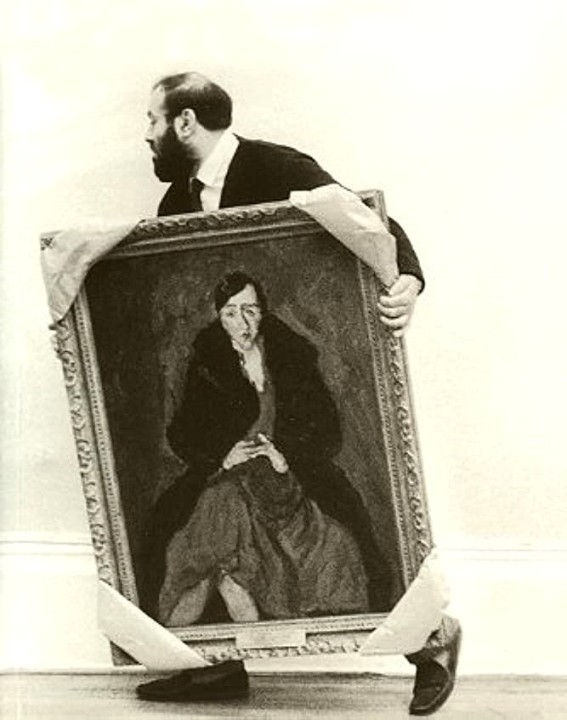
Serious thinker. Sylvester saw no subject as lowbrow
The Golden Lion of English Artwriting:
David Sylvester, 1924-2001
BY DAVID COHEN |
TRIBUTES | ARTCRITICAL | SUNDAY,
JULY 8, 2001
On closing day of the Tate Gallery’s Jackson Pollock retrospective in June 1999
attendance surged in the final hour. It was not just the usual crowd who leave
things to the last minute, on this occasion, but people there to witness a
particular event. At the published suggestion of an art critic, all the lights
were turned off so that Pollock’s raw duc canvases and swirls of enamel paint
could be viewed in nothing but God’s own daylight (which the Almighty is known
to ration in London). The critic was David Sylvester. In the pages of the elite,
highbrow London Review of Books, he pleaded for this aesthetic experiment in the
course of an at times self-critical examination of a changing sensibility
towards a body of work studied over a lifetime. That June afternoon Sylvester
literally changed the way people saw art. On June 19, 2001, after several years
heroic struggle with cancer, the “golden lion” of English artwriting died aged
76.
Whether writing, curating, advising or collecting, he was an arbiter of taste.
The role this complex personality created for himself within the British and
international artworlds was multifaceted, but what will come to be considered
his lasting contribution, in my opinion, is his criticism. Simply stated, he
described art as well as any writer in English since Ruskin.
Actually, let me qualify this, not to backtrack but to get in sharper focus the
particularity of his talent. It is not so much objects per se that he described
so well – though his “ekphrasis” (the putting into words of what is seen) was
crystalline – as the impact of the said objects. He was a man with an enormous
ego, yet his artwriting, while intensely empirical – personally experienced,
sensed, measured – was not encumbered by the confessional. Eschewing formalism
as a reductive system, he nonetheless “cut the crap” (as he himself might have
put it) by going for the mechanics of how art works. He could talk about quality
without being prissy. He dramatized the sense of his having intensely looked at
and experienced the art he was writing about.
He was in many senses an existentialist. Firstly, like the best of his
generation, he was profoundly influenced, intellectually and temperamentally, by
the Parisian philosophy and culture of the postwar period. He tempered an early
affection for voluptuously high flown French thought with a rough and tumble
English empiricism. After a precocious start as a reviewer for George Orwell at
the New Statesman while still a teenager, writing about sport and jazz as well
as art, he spent a formative period in Paris in the 1940s. He befriended
Giacometti, a repeated subject in his writing and exhibition making. Sylvester
in turn was the subject of a painting by Giacometti. He found his voice back in
London as a critic championing artists for whom personal authenticity and a
struggle to come to terms with reality were of utmost concern. Francis Bacon,
obviously, was one of these, but so too others who, later, would be classed
under the rubric “School of London” (a construct he had no truck with),
including Frank Auerbach and Michael Andrews. Later in life he would express
doubts and reservations about some of the School of London painters he has
previously written about so persuasively, although he also did belated justice
to two he had neglected, in print if not in personal encouragement or behind the
scenes manoeuvring, namely Euan Uglow and Leon Kossoff.
His taste expanded greatly, especially as he came to terms with abstract and pop
art and became increasingly interested in American art, but he brought similar
existentialist values to the appreciation of, say, an American minimal artist
like Robert Morris as he had once applied to English realists. And there is
another sense in which he was existentialist. He was far more concerned with
what great art tells us about occupying a body, facing death, being sexual,
engaging in relationships, feeling isolated, etc. than he was with, say,
epistemological concerns – what art is or isn’t, its relations with language,
etc. – which might more readily seem to apply to an artist like Morris. But the
great thing with Sylvester was that he wrote about these issues without
sentimentalizing art. Existentialism was no excuse for romanticism, in his case.
The search for truth and presence were values he managed to invest in his
writing. Looking at Giacometti is an extraordinarily crafted book. It is made up
of texts from across a career of heroic failures – failures, according to the
author’s standards, to capture its subject convincingly – texts which by his own
account were obsessively revised. In its “exhilerated despair” (a phrase of
Bacon’s from the legendary interviews with Sylvester) Sylvester’s prose and
project shadow Giacometti’s own working process and angst. The book, which could
have been called “Sylvester’s Doubt”, also represents a critic’s progress, from
an elegiac, full-blown, French-influenced literary approach in the opening text
from 1955, “Perpetuating the Transient”, to increasingly unphilosophically
encumbered writing that gets to the heart of the Giacometti experience.
His 1968 Henry Moore exhibition and catalogue built on twenty years thinking
about that artist that began with a period as Moore’s private secretary. It
exemplifies a phenomenological approach to sculpture. Just as the Giacometti
text has the kind of tentative determined realism of its subject, so the Moore
text at once generalizes and particularizes, again like its subject.
As I said earlier, he was a man with a big ego, and his personality filled a
Sydney Greenstreet-like frame. He often wore the fraught expression of someone
ill at ease within his own body. Physicality imbues his prose, for his analysis
invariably draws attention to the body, whether the maker’s or the perceiver’s.
His aesthetics were grounded firmly in the sensorium: prone to draw analogies,
his favourites were with sex and food. Even to hear him think about something on
the telephone was a visceral experience, with pregnant pauses, heavy breathing,
and Rabelaisian outbursts. He could swear prodigiously, and in public too, at
least in later years. (This didn’t stop him from being a connoisseur of
etiquette, which he could discuss in minute, analytic terms, as if a latter day
Baldassare Castiglione.) There was a marvelous panel at the Tate Gallery once,
moderated by Joanna Drew, in which Sylvester and another veteran British pundit
Bryan Robertson, reminisced. Sylvester peppered his sentences with the “f” word
so frequently that when at a certain point the dapper and gentle Robertson
himself felt moved to explete he used the word “bugger”. “If you’re going to
“fuck” I’ll “bugger”, he said in parentheses, to the delight of an audience
already high as a kite on the bombast of this pair.
Despite such egotism, Sylvester was a very good listener. His interview
technique should be studied by anyone concerned with the art of public dialogue.
Besides the immortal exchanges with Bacon, titled in its last collected version
as The Brutality of Fact, Sylvester conducted dialogues with countless giants of
postwar art, including De Kooning, Giacometti, Serra, Katz, and Johns.
You could say that he was a giant who liked other giants. But readymade giants.
Surprisingly absent from his bibliography is any evidence of the role of
discoverer. Look at the names of the art stars he wrote about – and he seemed
exclusively to concern himself, in print, with the successful – and rarely, when
cross referenced to the artists’ own résumés, does it turn out that Sylvester
was the first to write about them. Here was a man with a voracious appetite for
new art, a determination to shape public taste through writings and exhibitions,
an eagerness to advise important collectors, public or private, a desire to be
up to date, and clearly an eye on immortality. He exemplified Constable’s
assertion that a half taste is no taste at all. Criticality permeated everything
he thought about. And yet he didn’t scout for new talent. Fearless in the
unexpected analogy, willing to risk friendships for an aesthetic assertion, he
was timid in the elective process. A Ruskin, a Greenberg, a Peter Fuller can go
horribly wrong with their Kate Greenaways, their Larry Poonses, their Glyn
Williamses, but whether viewed as a lapse or a consistent cock-eye, their
passionate and personal and original avowals actually enhance their critical
status rather than detracting from it. Van Gogh said, “I wouldn’t have wanted to
miss that mistake”, and we can end up feeling this way about our favourite
critics when they startle us with questionable tastes.
The irony with Sylvester – and a biographer one day will usefully deal with this
– is that existentialism and a fondness for artists willing to pursue a lonely
path to authenticity did not breed in him a corresponding individualism. For all
that his writing has the feel of belligerent independence, he was drawn
inextricably to the establishment, the canon, and prevailing powers. That he was
heavily involved with big institutions such as the BBC where he was a prolific
and innovative arts broadcaster, or the Government-sponsored Arts Council, for
whom he curated numerous landmark exhibitions and served, for long terms, as
chairman of the visual arts panel, is of course only commendable, public
spirited, worthy. But at the same time, in a critic, slightly perturbing. Of
course, it is a tremendous honor to have been the only critic ever to receive a
“golden lion” of the Venice Bienalle, the artists’ “oscars”, but who awarded it
him if not the international artworld’s Council of Ten (the politburo, in other
words, of official taste)? Later, his inseperableness from big time collectors
like the de Menils and Charles Saatchi, not to mention his intimacy with dealers
like Anthony d’Offay in London (who married Sylvester’s secretary) and Larry
Gagosian in New York (who exhibits his daughter, the young painter Cecily Brown)
seemed to make him the most plutocratic arbiter of taste since Bernard Berenson.
It probably attests to my besottedness with the man, however, that I find
something psychologically compelling in Sylvester’s moth-like attraction to the
glow of money and power. It is right that critics should be more concerned with
the consumption of art than its creation, even if, usually, the critic himself
is the end user. Sylvester was a passionate collector of Oriental rugs (of which
he curated groundbreaking Arts Council exhibitions), antiquities, and so on,
which he would install with exquisite taste in his museum-like home. I would
venture that it was a desire to experience art decision making in its vested
human fullness, and not in a rarefied aesthetic vacuum, that attracted him to
the apex of artworld power.
But this is to moralize beyond hard evidence. We can await a Meryle Secrest-style
bio with bated breath. In the meantime, we must mourn a critic who persuaded the
best minds of his day to look harder at painting and sculpture, which is what
criticism is about.
Choice: Francis Bacon
Millennium Galleries, Sheffield, until Sep 23 (0114-278 2600)
AMBER COWAN |
NATIONWIDE | THE TIMES |
SATURDAY
JULY 21 2001
FRANCIS BACON was the man who put the pain into 20th-century painting, smearing
anguished faces and twisted torsos in fleshy pinks and blood reds. Since his
death in Madrid in 1992 the myth of Bacon as a dishevelled reprobate has
blossomed thanks to John Maybury’s biopic Love is the Devil and
various legal wranglings over the authenticity of some of his drawings. This
exhibition aims to frame the definitive Bacon with paintings drawn from the Tate
and myriad private collections.
Three Studies for Figures at the Base of a Crucifixion (1944)
was the work that first established Bacon’s public reputation; a burst of bloody
anger that seemed to come from the Holocaust revelations that were beginning to
emerge. In searing contrast to the Pop art of Richard Hamilton, the terrifying
figures led one critic to remark that Bacon’s work was a substitute for visiting
Belsen.
Bacon’s “human
cry of despair” gained
a more intimate perspective with Triptych — August 1972 (right
). A response to the suicide of his partner George Dyer in 1971, great swaths of
dissolving flesh form ectoplasmatic shapes. Second Version of
Triptych 1944 (1988), meanwhile, is from a time when Bacon was
being acclaimed as the greatest British artist since Turner. Alongside the huge
paintings are the Bacon drawings unearthed in 1998 and the subject of furious
debate ever since. Bacon always maintained that he was a terrible draughtsman
who splattered paint directly on to his canvases, but these preparatory drawings
reveal a painter more careful of his genius than the myth would suggest. Amber
Cowan
Francis Bacon
Millennium Galleries Sheffield
ROBERT CLARK |
REVIEW
|
ART
| THE GUARDIAN
|
MONDAY,
JULY 23, 2001
Sheffield’s new
Millennium Galleries do Francis Bacon proud. Here, just as the artist intended,
his cast of naked wrestlers, drunken contortionists and lop-headed harpies look
perfectly well-groomed and dandified in their miserable predicaments. Despite
the studied squalor of his studio, and the voyeuristic bent of popular opinion
to view the artist as a purely impulsive genius, Bacon’s existentialist angst
was in fact tempered by the immaculate good taste of a highly sophisticated
aesthete.
This selection from
the artist’s work looks its best set off against the gallery’s polished marble
floors, elegant scalloped ceilings and subtle, blind-filtered daylight. Bacon
was such an idiosyncratic painter that one can easily develop a tolerance to his
initially breathtaking images. Yet it is an undeniable fact that he created some
of the most memorable figurative pictures of the 20th century. And, in this
setting, the formal transgressions of his images are easily as evident as their
tendency towards expressionist sensationalism.
The flicks and slurs
of white pigment that obliquely distort his portraits might be based on cum-shot
porno stills, but they also serve to set off the delicate and vulnerable bloom
of the pinkness of his unfortunate subjects’ all too bruisable flesh. His Study
of a Dog is a giant of entrapped wildness, spinning endlessly on its roundabout
pedestal as miniature cars flash by in the distant background. The 1944
Crucifixion triptych, together with the Second Version remake of 1988, is
perhaps the only really serious and convincing image on a Christian theme
created in any medium over the past 100 years.
It’s true that Bacon
might not have finally achieved his ambition of equalling the transvestite
grandeur of Velasquez’s Pope Innocent X. His rabid dog might not approach the
poignant quicksand of loneliness into which Goya’s Black Period dog eternally
sinks. Yet give Bacon his due: what other painter of our times could we even
begin to compare to such epoch-defining names?
Until 23 September. Details: 0114
278 2600.
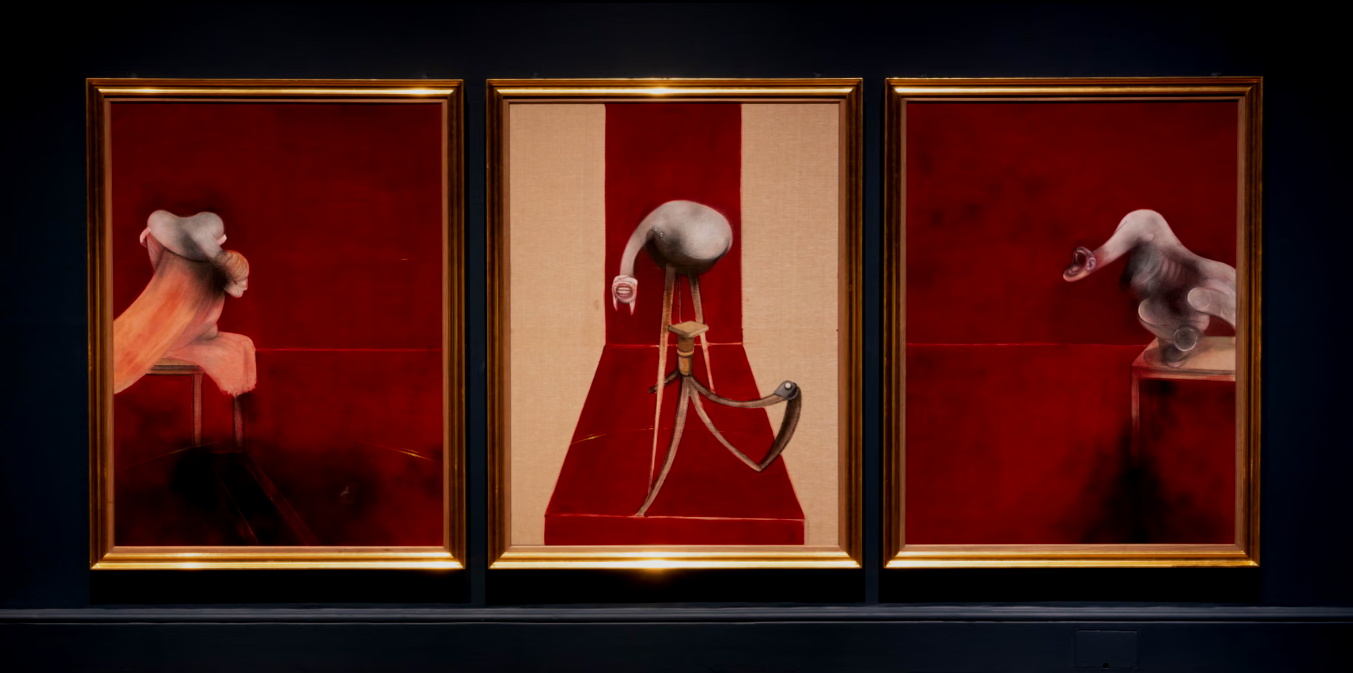
Posters beg Berliners to bring
back the Bacon
MAEV KENNEDY |
ARTS & HERITAGE CORRESPONDENT |
WORLD NEWS |
THE GUARDIAN |
FRIDAY, 22 JUNE, 2001
Berlin will wake up this morning to find the
streets plastered with posters for a wanted man: a tiny portrait of Francis
Bacon, painted by Lucian Freud 50 years ago, which has disappeared without trace
since it was stolen from an exhibition in 1988.
The posters were designed by Freud, who
yesterday sent a personal message to the thief: "Would the person who holds the
painting kindly consider allowing me to show it in my exhibition next June?"
There is a more tangible prize than a cleared
conscience: a reward of DM300,000 – almost
£100,000 – is
also being offered, no questions asked, for the safe return of the picture.
The British Council, which organised the
touring exhibition from which the painting was stolen, yesterday launched the
campaign to persuade the thief to return it in time for a major Freud.
retrospective next year at Tate Britain. The little picture was described
yesterday by William Feaver, the art critic who is curating next year’s show, as
"the greatest smallest portrait of the 20th century."
Andrea Rose, director of visual arts at the
council, said it was unique, "one national icon painted by another."
An anonymous donor – the
council was unable yesterday even to divulge his nationality – who
is a devotee of the work of both artists has put up the entire cost of the
project, including the reward money, the cost of printing 2,500 posters, and the
poster sites in Berlin.
Although the campaign is only being mounted
for one week in Berlin, the image of the wanted poster is certain to go global.
Since 1998 the reputation of both men has soared internationally, making them
among the most famous and admired artists in the world. Both long since broke
through the £1m price barrier breached by only a handful of contemporary British
artists.
Although the painting is priceless, and
irreplaceable since Bacon died in 1992, one expert guessed yesterday that its
value at auction is probably around £1.2m.
The theft was excruciatingly embarrassing for
the British Council, and for the Neue Nationalgalerie, Berlin, from which it was
stolen. Berlin was the last stop on a tour which had already included.
Washington, London and Paris. By chance a camera crew was in the gallery on May
27 1988, and at 11am the portrait was still on the wall.
By 3pm the gallery had telephoned the council:
the picture was gone. It had simply been unscrewed, and, not much larger than a
postcard, pocketed. The gallery had no alarms and no security cameras, and has
accepted full liability. Ms Rose, who was curator of the exhibition, said: "It
was, I think, the worst moment of my professional career."
Most major art thefts are now carried out for
ransom, to the gallery or the insurers, or so the picture can be used as
collateral for loans, often for drug deals. In either case news of the picture’s
fate tends to filter up from the criminal underworld. There was a hoax ransom
demand for the portrait within a few weeks, but nothing since.
In 1951, when the picture was made, Bacon and
Freud, then aged 42 and 31 respectively, were close friends, though the
relationship later cooled sharply. Bacon made a portrait of Freud, which was
based on a photograph of Kafka, and turned out looking far more like Kafka.
"That quite often happened with Bacon," William Feaver said.
But Freud worked on his portrait for months,
sitting knee-to-knee with Bacon, painting in oils with a fine brush on a copper
etching plate balanced on his knee.
Although Freud is best known for his pitiless
studies of nudes, the portrait is full of tenderness, in contrast to the raddled
figure Bacon became after a lifetime of alcohol and excess. It was bought
instantly from the studio by the Tate Gallery – for
an undisclosed sum, but believed to be less than £100 – to
the chagrin of Freud’s dealer, who hoped to include it for sale in an exhibition
a few months later.
The 1988 exhibition was crucially important
for Freud: it was his first major overseas show, and helped to transform him
into an international star. He is so attached to the painting that he refused to
allow a colour image to be reproduced today, because he believes the only
transparency does not do it justice.
Freud, with memories of a favourite book from
his childhood, Emil and the Detectives, where a town is covered with posters
overnight, originally asked for the wanted posters to be printed on the cheapest
possible paper, and flyposted, like those in cowboy movies.
Discretion has prevailed. The British Council
has rented legal sites, on buildings and on roadside kiosks. The printers could
not handle the cheap thin paper Freud wanted. In the end they have been printed
on heavy art paper, and with a limited edition of just 2,500, are certain to
become coveted collector’s items themselves.

Bacon with relish
It was the shock of the new that
helped bring Francis Bacon to notice.
How does his work look today?
Michael
Hickling reports on a new exhibition at the Millennium Galleries, Sheffield
MICHAEL HICKLING |
REVIEW
| YORKSHIRE POST |
WEDNESDAY
JULY 25 2001
FRANCIS BACON’S
distorted, often visceral, images of figures in anguish, made a particular stir
in immediate post-war Britain. They appeared to aim a determined kick in the
groin at what remained of traditional notions of painting and composition. These
days, outrage is part of the stock-in-trade for many ambitious artists (and
Bacon was certainly that), especially those who would like to see their work in
the Tate Gallery. So what do we make of Bacon now that controversy has moved on?
What Bacon’s successors deem to be art (unmade beds, human cadavers) surely
makes him rather tame.
The
splendid Millennium Galleries in Sheffield have now got the Tate’s Francis
Bacons until September. There are early and late works, loans from other
galleries and some drawings. The immediate impression is that they don’t look
like anything else – the Bacon take on the world seems to have remained uniquely
his own. They have presence which is not just because many of them measure two
by one-and-a-half metres. So why are they so imposing? Is it because Bacon’s
images touch a universal nerve, a recognition that modern life, if we admit it
to ourselves, is hellish? Not really, that must be a clichéd response, although
they do perhaps appeal to today’s impulse to excoriate ourselves. There are
enough gore and horror images on the television news any night of the week to
rub in the universality of suffering, should we have doubted it. If that was all
these canvases had to say they would have been monstrous – and they aren’t.
True,
there isn’t much joy in a Bacon picture, or none that’s readily evident. He
seems to deny himself what must be a basic impulse for most artists, which is to
celebrate what has pleased the eye. With Bacon, it’s an inner eye that’s busily
at work. But then look closely at a painting of a woman reclining on a sofa for
example or a man in a shower. These aren’t the hyper-real, fleshy bodies of his
friend, Lucian Freud, but there is a subdued sense of relish of the corporeal.
Bacon had personal obsessions. A number of his figures seem trapped in spaces
which seem airless, hermetically sealed. Apparently, Bacon used to tell a story
of how, as a child, he was regularly locked in a cupboard at the top of the
stairs when the babysitter came (she had other things to do on the sofa with her
soldier boyfriend that were not for the eyes of a four-year-old).
So is that
it, pictures easily explained in terms of childhood trauma? Taking that literal
path brings you to a set of therapeutic works by a mental patient striving to
express inner torment. But Bacon wasn’t a mental patient. He was robust. His
delight in the macabre sometimes seems to be a kind of playfulness. The work has
to be significant because of its aesthetic, painterly qualities, not because of
some message it may or may not have. What you can say for certain is that the
paintings reveal the preoccupations of a man who self-confessedly got off on
butcher’s shops, blood, medical literature illustrations and young men in
underpants. Bacon (who did not go to school) was also deeply interested in the
mouth and fascinated by Eadweard Muybridge’s photographs of the body in motion.
Often, his pictures seem to draw you in because they capture a moment of
stillness in a turning world. And the world continues to show its appreciation.
A 1979 triptych sold for £6m a couple of months ago, way above the expected
price.
He had
made his life in London, or to be specific, Soho, in the days when to
provincials like me that area seemed to offer an impossibly glamorous
combination of arty cosmopolitanism and tat. He inhabited the drinking milieu
defined by Jeffrey Bernard. It was also a time when homosexuality was a criminal
offence. Bacon was actually born in Ireland, in Dublin, in 1909. He didn’t care
to go back, claiming it brought on his asthma, and would no doubt smile at the
efforts the city is now making to claim him as their own.
Bacon’s
entire working environment and its detritus (even the dust has been
reverentially collected in plastic bags) has been taken out and lugged across
the Irish Sea to be deposited at Dublin’s Hugh Lane Gallery for pilgrims to gaze
on. I admire Bacon if only for the fact that, like LS Lowry, he had to do other
jobs in order to buy time to paint. For years he worked as a gentleman’s
gentleman. Margaret Thatcher once described his work as “those dreadful
paintings”, so he must have been doing something right. The setting here does
help. Some £15m has been spent on the Millennium Galleries and they do look
exceptionally good. The light, elegant interior of the Special Exhibition
Gallery where the Bacons are being shown is superb. It’s part of a scheme to
make art in national collections more accessible to people outside London.
Until September 23.
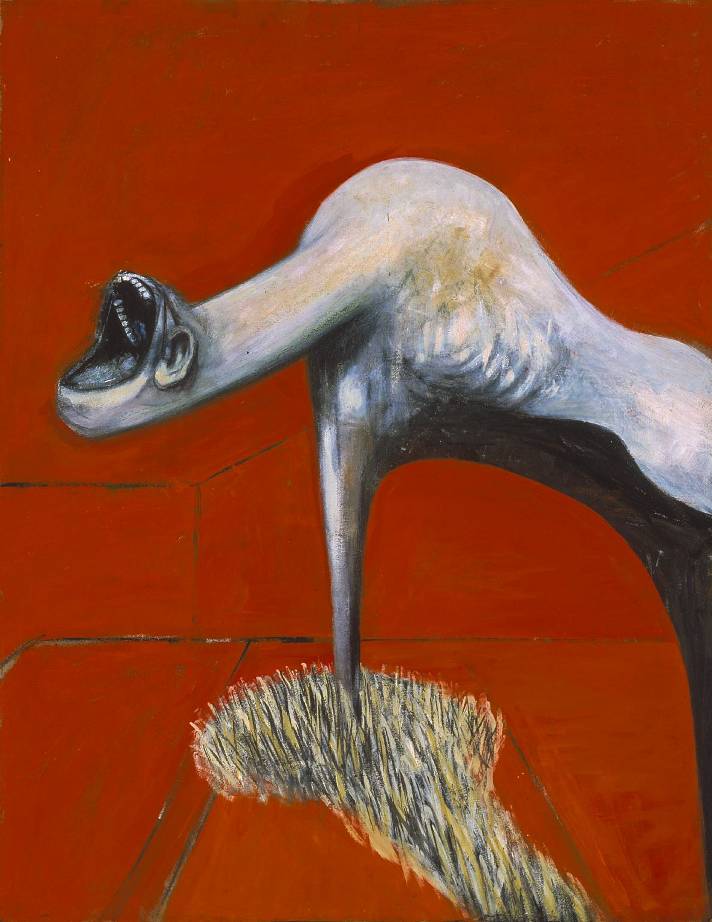
Above: From Crucifixion triptych 1944
A Dublin Diorama Reveals
A Very Untidy Francis Bacon
By BRIAN LAVERY
| ARTS
ABROAD | THE NEW YORK TIMES | THURSDAY,
16 AUGUST, 2001
DUBLIN, Aug. 15 – There were a few excited gasps when the Hugh Lane Municipal
Gallery here unveiled its most significant and most hyped acquisition recently.
But most just stared and said, ''What a mess!"
Admittedly, it is a very big, very impressive mess, and it was made by the
artist Francis Bacon. That didn’t stop the typically irreverent Irish press from
looking in on Bacon’s famous studio, which has been reconstructed at the Hugh
Lane, and comparing it to a sloppy teenager’s bedroom, or what’s left of an
apartment after a nightmare tenant moves out.
Bacon painted in the small London studio, which measures about 345 square feet,
from 1961 until his death in 1992. It holds 7,500 carefully cataloged objects,
including 100 slashed canvases, some dating back to 1946, and more than 70
drawings that Bacon never admitted making while he was alive. It’s difficult to
focus on those refined items, though, because they are buried under crumpled
scraps of newspaper and empty Champagne packing boxes, cut-up corduroy pants and
marked-up photographs, dirty brushes and paint cans filled with water, all
scattered in random piles as if by a whirlwind.
Visitors to the exhibit enter a small glass-enclosed area one at a time, as if
Bacon let them step over the threshold and no further. It feels like walking
into a room immediately after a madman on amphetamines has made a violent exit.
Only a plaster bust of William Blake and a large round mirror seem intentionally
placed. The floor is just barely visible in front of the easel, where Bacon
stood while he painted. Instead of palettes, Bacon used the walls and the door;
paint is smeared everywhere.
The studio opened its brightly splattered door in May, after more than two years
of painstaking and costly archaeological work. John Edwards, Bacon’s heir,
donated it in its entirety to the Hugh Lane Gallery, in the heart of Dublin, but
the process of removing the room – floor, walls, beams, trash and all – from its
home in the South Kensington section of London ran up a bill of about $2
million, and involved a few tricky procedures.
Since the walls had been plastered twice, first in 1850 and again in 1930, the
move threatened to split the two layers of plaster and ruin Bacon’s impromptu
color palettes. So the conservation team securely packed the walls from front
and back and cut them into chunks that were not unlike bricks of peat, said
Barbara Dawson, director of the Hugh Lane.
Even clumps of dust were photographed, numbered and stored before being shipped
across the Irish Sea and replaced in identical positions.
As expected with a project of its scope, the studio has earned high praise and
has also raised skeptical eyebrows. Many critics have asked whether having the
studio justifies the expense of moving it, when resources are already scarce.
The Hugh Lane is a municipal gallery, they say, that should support local
artists instead of blockbuster attractions. Up-and-coming Irish artists are
typically forced to exhibit their work in commercial galleries, or even in
accommodating pubs, because of the lack of public space.
Others take issue with the studio’s entrance fee of six Irish pounds (about
$6.90), when almost all other Dublin museums are free, including the Hugh Lane’s
permanent collection.
Ms. Dawson defended the fee. ’’We need to build up a financial resource for the
gallery in order to bring in the world-class exhibitions that Dublin people seem
to enjoy,'' she said. ''It’s not the norm yet. But neither are world-class
exhibitions the norm.'' She pointed to the gallery’s phenomenally successful
exhibition of Bacon’s work last year, which drew unprecedented crowds to the
gallery and increased the public’s awareness of Bacon before the studio was
opened this spring.
The more searching question, however, is whether Francis Bacon belongs here at
all. He was born in Dublin in 1909, and grew up outside the city in rural County
Kildare. But when he was 16, Bacon fled Ireland, like so many of this country’s
artists and writers. He has always been called a British artist. He did not come
back to Ireland when the Hugh Lane exhibited his work in 1965. And he predicted
– jokingly, but somewhat accurately – that he would return to Ireland only after
his death.
Is Bacon’s reconstructed studio, then, yet another instance of Ireland
reclaiming one of the many sons and daughters it sent into exile, a habit some
call the height of hypocrisy? Or is that exile, and Bacon’s sense of being an
outsider, exactly what makes him Irish?
''One of the things I have always thought about Bacon is that he is a literary
artist,'' said Brian Clarke, the executor of the Bacon estate. Bacon was an avid
reader, and his shelves were stocked with Eliot, Yeats, Shakespeare and
Aeschylus, not to mention textbooks on medicine and the supernatural. ''I think
that his formative years in Ireland nurtured his love of spoken English, and in
that sense, he is very much an Irish artist,'' Mr. Clarke said.
The years leading up to 1926, when Bacon moved to London, were a traumatic time
to be in Ireland. A rebellion against British rule in 1916 was brutally put
down. The struggle for Irish independence finally succeeded in 1921, but was
followed by a civil war. Bacon’s childhood home once needed sandbagged defenses
in case of attack, Ms. Dawson said.
In addition to being part of an Anglo-Irish ruling class whose power was
crumbling, Bacon would have felt alienated from Irish society by his
homosexuality, which he realized as a teenager. Noel Sheridan, director of the
National College of Art and Design in Dublin, pointed out that other outsiders –
like Yeats, a Protestant, and Joyce, another exile – became the voices for Irish
culture of the time.
''Very often, it is within your isolation that you get the deepest insight,''
Mr. Sheridan said.
Even its critics acknowledge that bringing the studio to Dublin was a bold move,
and it has earned Ms. Dawson respect from all quarters. Mr. Edwards and Mr.
Clarke talked to the Tate Gallery in London about housing the studio, and offers
came in from museums in Paris, Berlin, Washington and Tokyo. But Ms. Dawson’s
ambitious approach and direct promises about how the studio would be treated won
them over, Mr. Clarke said
Now, Dublin’s art community is hopeful that other institutions will take
similarly aggressive and innovative decisions. ''I think Ireland, in all
honesty, if you look back, hasn’t been a country that valued its artists,'' Mr.
Sheridan said.
The Hugh Lane’s treatment of Bacon seems to overturn that trend. Besides the
studio, the gallery owns only one Bacon work, an unfinished self-portrait. But
it has obtained 14 major Bacon works on long-term loan and is currently
exhibiting Perry Ogden’s large-scale photographs of Bacon’s London studio and
apartment at 7 Reece Mews.
Mr. Ogden said that he approached the task with ''a very forensic sensibility''
– and the immense prints are nearly scientific in their precision. They do,
however, offer a warmth and intimacy that the glassed-in studio lacks. (An
American-edition book of the photographs will be published by Thames & Hudson
this fall.)
The Irish viewers who liken Bacon’s studio to that teenager’s bedroom might be
doing him a favour, by humanizing him.
''Bacon is seen globally today as an old master, almost,'' Mr. Clarke said.
''The Irish don’t turn him into an icon. They just say, 'There’s a very
interesting bloke.' And that gives him back some of his real power."
Burn, Bacon, Burn
Art Review: Letters
Art Review, September 2001
Art critic William Feaver (“Should it stay or should it go?” Art Review, May
2001) is right to argue that we should torch Francis Bacon’s studio and its
contents.
Reconstructing Bacon’s studio in Dublin is like displaying Tut’s
Tomb sans cadaver. Bacon would have despised the idea of turning his chaotic
studio into a peeping Tom’s cabinet of curiosities.
In accordance with Bacon’s wishes: “When I’m dead, put me in a plastic bag and
throw me in the gutter.” (Bacon in conversation with Ian Board from The
Gilded Gutter Life of Francis Bacon by Daniel Farson) – it would have been
more appropriate for the Dubliners to have placed empty champagne bottles,
oyster shells, gambling chips, £50 notes and Bacon’s bones in a black plastic
rubbish bag.
However, even in this respect, Bacon’s last wishes were thwarted because he was
cremated.
Alex Russell, London
Peter Pollock: Obituary
WILLIS HALL | NEWS
|
OBITUARIES | THE
INDEPENDENT | WEDNESDAY,
12 SEPTEMBER 2001
Peter Pollock was a friend and supporter of
Francis Bacon who in his fifties moved to Morocco and bought a restaurant, the
Pergola, which became famed for serving the finest plate of swordfish and chips
on the North African coast. Thirty-five of the art-works given him by Bacon
formed, with four drawings given to Sir Stephen Spender, the bulk of the Tate
Gallery’s exhibition
“Francis
Bacon: works on paper and paintings”
earlier this year. Born in 1919, Pollock was part-heir to the Accles & Pollock
empire – a Midlands-based and highly successful light engineering company
co-founded in 1901 by his grandfather Thomas Pollock.
In the 1950s the names Accles & Pollock were
juxtaposed nationwide on massive hoardings, suggesting all manner of interesting
spoonerisms – an innovative form of advertising considered quite racy in its
day. Spurning a possible “reserved occupation” career in light engineering, the
young Peter Pollock was an eager volunteer for military service at the start of
the Second World War. He gained a commission in the Gordon Highlanders and
served, as a captain, both in North Africa and in Italy, where he was taken
prisoner.
After demob, and despite his spending four
humdrum years in a German POW camp, the idea of a career in Midlands light
engineering seemed no more exciting to Pollock than it had done at the start of
hostilities. Instead, he bought a farm in Flaunden, Hertfordshire, and took up
the life of a gentleman farmer, combining a dairy herd with pig-farming,
greyhound breeding and, in the lazy summer afternoons, idling through the leafy
Hertfordshire lanes in his vintage Rolls. Continually frustrated at what he
considered to be his own lack of creative achievement, Pollock had an
unquenchable passion both for the arts and the company of artists. Sundays
provided open house at the Flaunden farm for painters, writers, actors and
actresses.
A constant visitor was the then
little-recognised painter Francis Bacon. Lacking a home of his own, Bacon
enjoyed a come-and-go-as-he-pleased existence, both at the Flaunden farm and at
a flat, overlooking Battersea Park in London, which Pollock also owned. Pollock
allowed the young Bacon a rent-free life over the years 1955-61– a kindness
which the painter acknowledged by leaving behind the occasional picture in
unspoken payment. Another young man whom Pollock took pity on and befriended –
and who was destined to become his lifetime companion – was Paul Danquah.
Danquah’s father, J.B. Danquah, had been a
minister in Kwame Nkrumah’s government in Ghana, but a change in regimes had
resulted in his temporary imprisonment. Paul Danquah, at that time studying for
the Bar at the Inner Temple, was left unfunded. Pollock’s generosity enabled
Danquah to complete and pass his Bar studies – but the young Danquah, inspired
perhaps by Pollock’s artistic leanings, was temporarily to abandon his legal
career when he was cast opposite Rita Tushingham in the Tony Richardson directed
film of Shelagh Delaney’s stage success A Taste of Honey (1961). (He
was also to have parts in the Morecambe and Wise vehicle That Riviera Touch,
1966, and, as “2nd Exquisite”, in the satire Smashing Time, 1967, written by
George Melly.)
The fast life at Flaunden, slow greyhounds and
an over-generous nature finally resulted in Pollock’s selling up the farmstead
and moving on. It was in the Colony Club in Soho, presided over by the
redoubtable Muriel Belcher, that, with his artistic friends including Bacon and
John Minton, Pollock had first heard tales of the exciting and exotic life that
beckoned in Morocco. Upping sticks in the late 1970s, Pollock and Danquah set up
home in Tangier, where notoriety was fast making Morocco fashionable.
Pollock acquired the Pergola, a bar and
restaurant on the Tangier seafront, where word of the new owner’s culinary
skills soon spread. The
“Flaunden
set”
of friends remained ever-faithful and followed Pollock and Danquah out to
Tangier at holiday-times. John Lahr’s 1978 biography of Joe Orton, Prick Up
Your Ears, includes a photograph of the playwright with the Kenneths
Halliwell and Williams enjoying themselves at the Pergola. Pollock’s expertise
in the kitchen was overshadowed only by his generosity of spirit.
“No, my dear, I absolutely insist – this one’s
on me” might provide a fitting memorial. Peter Pollock suffered a severe stroke
in 1999, which left him an invalid. A second stroke, in July, ended his life.
The extent of Francis Bacon’s gratitude for his mentor’s hospitality came to
light only a couple of years ago, when a suitcase, which had gathered dust for
decades underneath a bed in a spare room at the Pollock and Danquah home in
Tangier, was found to contain a hoard of the painter’s early work. It was Peter
Pollock’s innate patriotism which ensured that those paintings were acquired by
the Tate Gallery, rather than offered on the open market.
Peter William Pollock, restaurateur: born
London 19 November 1919; died Tangier 28 July 2001.

Francis Bacon with Peter Pollock in Tangier in the 1950s
Francis
Bacon with Peter Pollock in Tangier in the 1950s
Wouldn’t Want to Live There, Though
BY ELISSA MEYERS
| BOOKS
IN BRIEF | THE
NEW YORK TIMES | SUNDAY,
SEPTEMBER 16, 2001
The British painter Francis
Bacon (1909-92) is best known for expressionistic triptychs and portraits of
himself, screaming popes, absent friends and vanished lovers.
In 7
REECE MEWS: Francis Bacon’s Studio (Thames
and Hudson, $24.95),+a series of photographs of the studio where Bacon lived
and worked for the last 30 years of his life, Perry Ogden has produced what
feels like a landscape of Bacon’s interior - a catalogue of the modern
artist’s psyche. Crumpled photographs and letters splashed in paint flood
the room.
Frayed boxes long since
emptied of bottles of port and Champagne disgorge newspapers and pages
ripped from magazines onto the floor. Hundreds of dirty paintbrushes, dried
in their butter bean and orange juice cans, perch next to books on Seurat
and Velázquez.
The corduroy rags Bacon
sometimes used to paint textures drape on top of paint-encrusted trays.
Books on skin disorders and forensics sprawl across the floor. A bare bulb
hangs next to its nooselike toggle string, an image familiar from several
Bacon portraits. Canvases stacked in one corner reveal only their white or
splattered backs; several slashed canvases lie scattered with the other
detritus on the floor.
The slightly sinister aura
seems appropriate, given that Bacon’s estate has been involved in lawsuits
charging art world skulduggery, and leads one to wonder if Bacon really did
leave his studio just like this. Is there any way to know? John Edwards,
Bacon’s sole heir, says in the book’s foreword that the studio was left
untouched from Bacon’s death until 1998, when it was removed to Dublin,
Bacon’s birthplace.
Turn the page and any
doubts evaporate: Bacon the artist re-emerges in the light, colour and
composition of the unfinished work left on the easel at his death. In
Ogden’s photos, one almost smells the sulfuric remnants of Bacon’s
imagination.
Fifty
years of hurt
They called it the battle for
realism, and it wasn’t a pretty sight.
James Hyman follows British
art’s trail of violence from the
tormented Bacon to the butcher Hirst
JAMES HYMAN | ARTS | THE
GUARDIAN | SATURDAY,
SEPTEMBER 22, 2001
Why is it that the greatest art is also sometimes the most horrific? For every
Vermeer interior, serenely suspended in time, there are hundreds of bloody
crucifixions, violent rapes and terrible massacres. In Britain, horror was at
the heart of two of the most important exhibitions of the past half-century. In
1949 the now defunct Hanover Gallery in London was filled with painting after
painting of unremitting pain, in an exhibition that announced the arrival of
Francis Bacon and heralded one of the most extraordinary success stories in
20th-century art. Despite the revulsion, Bacon would soon be feted as the most
important British artist of the postwar period, and go on to exhibit at the
Venice biennale. Soon, too, his paintings would be hung in elegant drawing
rooms, and his personal torment celebrated as an artistic revelation of the
human condition.
It was to be 40 years before another exhibition, Modern Medicine, even
approached that visceral impact of Bacon’s first one-man show. The venue was
Building One, a rundown Bermondsey warehouse reminiscent of the sets for Quentin
Tarantino’s Reservoir Dogs. And the artist was Damien Hirst, who showed a
rotting cow’s head infested with maggots and surrounded by flies that were being
zapped by an insect-o-cutor.
It is no coincidence that two of the most important artists since the second
world war should both dramatise extremes of violence in an attempt to heighten
our awareness of our own mortality. In fact, you could argue that the most
important British art of the past 50 years has been preoccupied with the
subject. It all started after the second world war – with what, at the time, was
called the battle for realism. This all but forgotten struggle was one of the
key moments in the history of British art.
At first glance, the situations then and now could hardly be more different. The
inhumanity of the war years had cast a dark shadow over our lives. The world was
polarised between Moscow and Washington, and Britain was struggling to establish
a role for itself in a new world order. Yet it was from such infertile soil that
the seeds grew for some of the seminal works and international success that
British art has since enjoyed. For this was the moment, in the late 1940s, when
a School of London was proposed for the first time, a challenge to the
predominance of the Ecole de Paris and the New York School.
It was a challenge that saw British art elevated to a new status through the
reputations gained by artists such as Bacon, Lucian Freud and Henry Moore. Their
work was at the centre of a battle fought between two competing visions of
realism: social or socialist realism, and modernist realism. Leading the two
sides were two of the 20th century’s greatest art critics: David Sylvester, the
insider par excellence, and John Berger, a combative outsider.
Each critic had a hero. For Sylvester it was Bacon, for Berger it was Italian
Renato Guttuso.
Today, Berger’s realism is almost invisible in our museums, but
at the time was at the very forefront of British art. His was a realism
concerned with finding, as Walter Sickert advocated, "poetry in the everyday",
and was filled with such everyday subjects as Lowry’s matchstick men and the
domestic scenes of the kitchen-sink painters.
In contrast, Sylvester’s realism addressed the human condition. It was fuelled
by existentialism and inspired by Giacometti. The artist was a loner, a solitary
genius revealing important truths – and from this side of the battle emerged the
victors, from Bacon and Freud to Kossoff and Auerbach.
Half a century later it is difficult to capture the heat of this battle, its
importance as a riposte to American abstract expressionism, and its role in
intellectualising postwar British culture. It is difficult, too, to grasp the
passionate conviction with which it was fought, a conviction fuelled by the
belief that art really mattered.
Today, when so much art has become entertainment, serving a public hungry for
sensation, and when the notion of high culture is attacked so routinely, it may
seem misplaced to recall the high seriousness of that battle. Yet behind the
headline-grabbing of Tracey Emin, or any of a dozen other young British artists,
the indebtedness of today’s leading artists to these postwar pioneers seems
clear.
Rachel Whiteread’s most powerful recent commission is her eerie Holocaust
Memorial for the Judenplatz in Vienna. The Chapman brothers’ most profound
tableau, Hell (2000), also depicts the Holocaust. Anya Gallaccio’s moving
installation, a floor of 10,000 dying roses entitled Red on Green (1992),
poetically traces death on a mass scale. For all the differences in medium,
Hirst’s boxed and butchered animals are surely the descendants of Bacon’s
paintings of man as meat, and Whiteread’s impassive monuments the equivalents of
Giacometti’s stoic figures.
As modern artists continue to grapple with humanity’s vulnerability in a violent
world, they are creating a new realism that places them as heirs to the legacy
of this earlier battle. Fifty years ago it was the chimneys of Auschwitz and the
atom bomb plume at Hiroshima that prescribed the artistic struggle. Now, in the
aftermath of the terrorist atrocities in America, the battle for realism has
assumed a chilling new resonance.
The Battle for Realism: Figurative Art in Britain During the Cold War (1945-60),
by James Hyman, is published by Yale University Press at £45. An exhibition to
coincide with its publication is at Bernard Jacobson Gallery, London W1
(020-7495 8575), until October 2.
The show must go on
Critics may accuse the South
Bank Show of sycophancy,
but as it begins its 25th series,
Rupert Smith finds Melvyn Bragg
in buoyant mood
RUPERT SMITH |
THE GUARDIAN |
MONDAY, OCTOBER 1, 2001
Melvyn Bragg, or
Lord Bragg of Wigton to his peers across the river, rules the LWT arts and
features department from a modest office on the 22nd floor of the London
Television Centre. From his desk he can see the House of Lords (where, perhaps,
he should be sitting) through the spokes of the London Eye. For a man consumed
with the idea of viewing high culture and popular culture through the same
critical lens, it’s an appropriate vista.
To prove a
point, Bragg’s back with a South Bank Show season that includes profiles of
Norman Foster, Rachel Whiteread and Pedro Almodovar, and boasts commissioned
work by Tony Harrison and Ken Russell. The showreel that accompanied the series
launch features SBS highlights with Paul McCartney (composing a song called
Melvyn Bragg in the first show in 1978), Francis Bacon, Woody Allen, Tracey Emin
and Steven Spielberg.
Even more taxing
was Bragg’s encounter with Francis Bacon in 1985. "I’d known Francis since the
early 60s, and I always wanted to make a film on him, but he wouldn’t play. But
then he went and made a film with an American director, which was not good at
all. I went to see Francis and I read him the riot act. 'We make good films.
This is not a good film! I’m outraged that you went with anyone else and you
ended up looking like a pillock!' He just shrugged and said 'OK, do a bloody
film then.' ..."
"Unfortunately,
when it came to shooting the interview I’d just come back from a period of
writing and not drinking at all up in Cumberland. I arrived at Francis’s flat in
Soho and he was pouring champagne for everyone. We drank that, then we went and
had a proper lunch, then we reset the restaurant to do the interview and drank
some more, then on to the Colony Club and then to a casino — my
liver was like a trout leaping up stream. When I sobered up I watched the rushes
and I thought he said some very good things. I knew I’d get slammed for doing an
interview when drunk, but I decided to leave it in. Francis just said 'Oh,
bugger them. Show it all.'..."
“Bacon’s got the guts”
Damien Hirst on Francis Bacon
In the final extracts from his new
book of interviews with Damien Hirst, Gordon Burn asks
the bad boy of British art what he
really thinks about the other major talents of his time.
These conversations between Burn
and Hirst are extracted from interviews that took place
over a period of eight years,
beginning before Francis Bacon’s death in 1992
GORDON BURN | THE
GUARDIAN | MONDAY,
OCTOBER 8, 2001
Gordon Burn: Why do you think
Francis Bacon is good?
Damien Hirst: He’s the best.
There’s these two different things, painters and sculptors. And Bacon is a
painter. He doesn’t... It’s not about your ability; it’s about your guts, on
some level. And Bacon’s got the guts to fuck in hell.
You see it in the 1940s paintings.
I remember looking at a newsreader painting at that exhibition he had in Venice.
It was just a head, like a newsreader. You go up to it and it’s, like, the ear
is made of oil paint, but it’s almost like a relief. It’s almost
three-dimensional. You’ve only got to get oil paint and do an ear, and you paint
over it three or four times and it starts to be raised off the canvas. It’s like
you managed to stick a fucking ear on.
There’s a painting he’s done of a
guy cross-legged, and he can’t paint baseball boots. But he doesn’t pretend he
can. That’s why he’s brilliant. He paints a baseball boot to the best of his
ability, and it’s totally naked and clean, and it’s right there in your face,
and you go, "This is a painting by a geezer who totally believes, and it’s
everything he says it is, and whatever his aim is, he’s achieving much more than
that." It’s totally laid out in front of you: no lies, no doubt, nothing. And
he’s a different kind of painter, and he came from nowhere.
Is it just a story that he [Bacon]
went to see the fly piece at the Saatchi Gallery before he died?
No, I know he went. He mentions it
in a letter [he wrote]. It just goes, "Hi, blah blah I’m not feeling well blah
blah it was great to see you the other day. Just went to the Saatchi Gallery and
saw this show of new British artists. Bit creepy blah blah. There’s a piece by
this new artist" – I
don’t think he mentions my name – "and
it’s got a cow’s head in it and a fly-killer and loads of flies and they fly
around. It kind of works." It kind of works! Like: "Nice toilet upstairs. It
kind of works." Fantastic.
When he was there I got a call
from Jenny [Blyth] at the gallery. And she said, "I don’t know if this is
interesting to you, but Francis Bacon’s here, and he’s been in front of your
piece for an hour." Honestly, I got a phone call that said that. It was a bit
embarrassing. I didn’t know what the fuck to say. I dismissed it, but I
understand why he could have liked it – dead
fucking flies. So I dissociated myself from it as an artist and just thought of
it as a spectacle, and quite liked it.
In the interviews with [David]
Sylvester, he talks about killing cattle in a slaughterhouse being like
crucifixions – the
closest you could get to a crucifixion. It would be possible to put forward the
view that you are systematically going through Bacon’s images and obsessions and
giving them a concrete existence.
I am definitely. I am definitely
systematically going through it.
How do you rate Freud against
Bacon?
You look at Lucian Freud, and
Lucian Freud’s an infinitely better painter. But you can just see why he shits
himself while Bacon’s alive. Because he represents something just so fucking
enormous that Lucian’s incapable of.
You mean that Freud’s technically
the better painter?
I’m not saying that. But I am in a
way. But it’s a sigh of relief from Freud when the cunt dies. I mean, Lucian
Freud, without Bacon, would be the best painter we’ve got. But he’s not. He’s
shit next to Bacon. And Bacon can’t paint, and Freud can. What’s going on?
So what makes
Bacon the better artist?
Because he’ll go right out there
on the edge of the cliff and he’ll stand there and he’ll put his arms in the air
with his shirt off in India without his passport and go, "Come and get me, you
cunts!" D’you know what I mean? And no one can get him because of it. He doesn’t
falter. He doesn’t fail. And it doesn’t matter he’s a homosexual. Everybody
wants to do that, and can’t. All everybody ever wants is somebody to represent
that, that "come-and-kill-me".
The Hockney-Caulfield generation
of English painters grew up reacting against what they saw as the horrible dull
greys and sludgy browns of Sickert, and against everything Sickert stood for.
The references were always painters and painting, weren’t they, until about 25
years ago? Have you always reacted against a painter?
Well, you’re always reacting
against something. I grew up in a situation where painting was considered dead.
But I had a massive desire to be a painter. Not an artist. Not a sculptor. I
wanted to be a painter. Not a collagist. The idea of a painter is so much
greater than the idea of a sculptor or an artist. You know: "I’m a painter."
It’s one on one, mano a mano, you on yourself. But the thing is, painting is
dead. It didn’t work. For me, Bacon is the last result of the great painters.
He’s the last painter. It’s all sculpture after that.
Hirst on Jackson Pollock
Pollock’s greatness is supposed to
lie in his naked display of angst and emotion.
Yeh, but he covered it up with
that whole fucking charade as well. The Americans, they always do that, don’t
they? It was guaranteed it was going to look pretty, do you know what I mean?
Whatever he did. He didn’t go up there and wriggle. He wasn’t a worm on a hook.
He admitted he hid behind his work. And he was the best of the gestural
Americans. The great big Americans. But Bacon does it better, because he smashes
right through.
When you compare Bacon to Pollock,
Pollock starts to look like he’s producing logos. When what’s really happening
is he’s scrabbling about in this void which has been created by photography,
between abstraction and figuration. That’s the truth of it. But the moment he
gets there, it starts to look like logos.
These are edited extracts from On The Way To Work, by Damien Hirst and Gordon
Burn, published by Faber and Faber on October 22, priced £25.
Artists’ colony
How do you qualify as a member
of the Colony Room Club?
You either have to be t
Now the infamous private
drinking den, where artists from Francis Bacon to Damien Hirst
have partied for more than half
a century, is holding an exhibition of modern art.
COLIN GLEADELL |
THE
DAILY TELEGRAPH |
FRIDAY
19 OCTOBER 2001
ART and alcohol have always made good bedfellows, but nowhere have they snuggled
up so successfully and for so long as in Soho’s notorious private drinking den,
the Colony Room Club. Considering that its founder, the formidably camp Muriel
Belcher, claimed to know 'fuck all about art’, and that it has never been
exclusively an artists’ club, it is remarkable how, since its inception in 1948,
the Colony has attracted so many British artists of renown. From Francis Bacon
and Lucian Freud to Damien Hirst and Tracey Emin, successive generations have
made their inebriated way up and down the creaking stairs that lead to this
small, dark, smoke-filled room in Dean Street.
And since the club’s 50th anniversary in 1998, the rank of members and
supporters has been swelled by a stream of thirtysomething British artists with
big reputations. Next week these, together with a host of illustrious figures
from other walks of life who have joined the club, are contributing to an
exhibition curated by Michael Wojas, the club’s proprietor, to celebrate a
hard-won court battle over the lease. Apart from artists of the stature of Sarah
Lucas, Gary Hume, the twins Jane and Louise Wilson and Gavin Turk, the list
includes rock guitarists Paul Simenon of the Clash and Anthony Glenn of Pulp,
Swedish actress Amanda Ooms – shortly to be seen in Granada’s The Forsyte
Saga – and man-about-town and aspiring photographer Dan Macmillan, the
27-year-old great-grandson of former prime minister Sir Harold Macmillan.
So, what’s the attraction? Is it something the barman puts in the drinks? Of
course alcohol is the common bait. But, more importantly, it’s who you drink
with that counts. For members of the Colony this is something that is rooted in
history. Had Francis Bacon not walked into the club the day after it opened and
found someone as sympathetic to his plight as a poor homosexual artist than
Muriel Belcher, the legend of the Colony might never have been born. And had the
legend not been born, the club would undoubtedly not be what it is today.
This legend rests on the fact that Bacon, arguably the most significant painter
of the post-war era, made Belcher’s club his second home. 'At unproductive
moments in his career,' writes Michael Peppiatt, 'he spent more time at her club
than at Reece Mews [his home and studio]'. And where he went, others followed.
In Michael Andrews’s famous 1962 painting, The Colony Room, Bacon sits, holding
court, with Belcher, Freud and the photographer John Deakin in attendance.
Dotted elsewhere around the room are the writers Bruce and Jeffrey Bernard, and
the artist’s mode; and sometime 'Queen of Soho' Henrietta Moraes.
To Bacon’s magnetism, Belcher added a genius for selecting and entertaining not
just artists and writers but also actors, gamblers, criminals, peers and
politicians. As George Melly has written, 'She liked her members to be amusing
or talented or rich, although she could be very kind to down-and-outs.' She knew
instinctively who would fit in and who would not, thus giving the place a sense
of exclusivity. Although she cultivated artists, she knew it would have been
boring if it was just artists talking about art, and bores — except for very
rich ones — were barred.
At the Colony rudeness became a cult. As the Hon Michael Summerskill put it, 'It
was a place where the rules against slander could be suspended.' But under
Belcher’s successor, Ian Board, the cult reached new extremes. According to
Melly, Board was 'a monster of aggressive, sometimes incoherent rudeness'. After
Belcher’s death in 1979, Bacon visited less frequently, and although artists
continued to drink there, the club lost many of its regular customers.
When Board died in 1994, his mantle passed to the barman, Michael Wojas. A less
bombastic, less confrontational character than his predecessors, Wojas quietly
set about re-inventing the club. 'The place had such potential. I couldn’t just
let it drift,' he recalls. 'I didn’t have a plan, but I consciously went out to
clubs and private views to meet people and listen to their suggestions.' When
new faces began to appear at his door he would 'get a feeling, take a chance and
sign them in,' he says of the vetting process. 'It’s something to do with their
general state of mind. And the younger the better, so long as they're not total
bores.' And if they are? 'I eloquently tell them to fuck off!'
For Wojas, the defining moment of regeneration came in 1998, when he conceived
an exhibition by members to celebrate the club’s 50th anniversary. For this he
enlisted the support of former art dealer James Birch. Birch had been going to
the Colony since the late Seventies and had introduced several younger artists,
including Damien Hirst, who was to act as a catalyst for the club’s fortunes in
the way that Bacon had done. At his house in Clerkenwell, Birch designed the
basement as a gallery, and agreed to host the exhibition there. Contributions
were received from older-generation artists such as Patrick Caulfield and Barry
Flanagan, younger bloods Damien Hirst, Marc Quinn and Tracey Emin as well as
from singer Lisa Stansfield and film mkaer John Maybury. It was, said Wojas, a
sort of 'Liquorice Allsorts'. But its impact led to three years of unprecedented
membership expansion at the club.
At the opening, Wojas was introduced to Sarah Lucas and complained that he was
having trouble finding someone to help out behind the bar. To his surprise, she
volunteered her services, adding that she would like to work on Tuesdays
because, says Wojas, 'that was the night when most of the galleries held their
private views, and she hated private views'.
What happened next, as many things in the club do, started as a joke. Lucas and
fellow artist Abigail Lane hatched an idea that each would work behind the bar
for one night with their respective boyfriends — the artist Angus Fairhurst and
the singer/composer/DJ Paul Fryer. Then, when Hirst and his wife, Maia, decided
to follow suit, the idea really took off with celebrity art-world couples
queuing up to offer their services. From November 1998 until March the following
year, Wednesday night became party night at the Colony as art dealer Jay Jopling
and his wife, video artist Sam Taylor-Wood, Tracey Emin and boyfriend Matt
Collishaw, Jane and Louise Wilson and even Suggs from Madness and his wife took
a turn behind the bar.
Artists Tim Noble and Sue Webster worked behind the bar on one of those nights.
'You don’t join the club,' says Webster, 'you just fall in. It’s like a secret
drinking hole. Not anyone can go there so it is sort of exclusive, but not in a
snobby way. The night we worked there, we dressed up as Fred and Rosemary West.
A lot of our friends came expecting free drinks, but they had to pay. The
hardest part was working the till. It’s like one of those saloon bar tills you
see in westerns with big buttons. Instead of ringing up £10, you have to ring up
£1 – 10 times.'
Since then, that till has finally expired and Wojas has acquired an old
customised National Cash Registers till which is being cased in chrome. On the
front a panel has been made in etched glass, and the keys are being decorated
with coloured spots to match a Damien Hirst spot painting behind the bar. It
will be unveiled at Wojas’s upcoming exhibition.
Unlike most curated exhibitions of contemporary art nowadays, where an
apparently disparate group of works is held together by the curator’s underlying
concept, this one holds no such pretensions. As Paul Fryer says, 'It’s a bit
like Peter Blake at the RA this summer. When asked how he had selected the
artists he invited to show there he replied, "They are just basically people I
like." '
Angus Fairhurst describes Wojas as 'a drinking curator', but while some of the
work in the exhibition may have been inspired by drink, references to the Colony
itself are not necessarily intentional. Dan Macmillan’s photograph, Adolf
Hilfiger, for instance, is 'about America and Tommy Hilfiger', he explains.
'It’s part of an ongoing series I’m doing about Nazi imagery in graphic design
work and the power of graphic designers in establishing corporate identities.'
In the context, one is faintly reminded of Muriel Belcher’s repeated references
to the Nazi leader as 'Miss Hitler'.
Abigail Lane’s inkjet print, The Inspirator, is something that could just have
been inspired by an all-night session at the Colony, but apparently wasn’t. In
it, a panda (actually a busker she met on the Underground dressed in a panda
suit) plays the trumpet in a forest. It’s a slightly surreal vision of a
fairground event swathed in the same Buckingham green colours in which the club
itself is painted. Sarah Lucas has made a sculpture for the show that seems more
specific. Smoked, 20 cigarette butts on wire coils extending from the neck of a
hammer like the arms of an octopus, is not about drink but another of the
pursuits of the Colony’s members and 'the price you pay for it'. Gary Hume has
chosen to show a previously unexhibited painting of Michael Jackson taken from a
photograph in the Guardian during the singer’s visit to Oxford earlier this
year. Somehow Hume captures something of the essence of the club in describing
the subject of his painting as 'both brilliant and tragic at the same time'.
Angus Fairhurst’s collage, Proposal for a Monument can be read as a reflection
on how the attitudes of the new generation towards the history of the club have
changed. Without reference to anything specific, Fairhurst made a series of
collages three months ago about the way things collapse under the weight of
their own history. On the top of a building a sign reads: 'Delete All Memories'.
Although the club still looks much the same as it always did, cluttered with
memorabilia and gifts from artists, 'it is not a shrine' says Fairhurst.
'One thing that could have been a problem with the club is that Bacon’s shadow
hangs too heavily over it,' says Matt Collishaw. 'Michael [Wojas] gives people
the freedom to get on with the present without getting tied into some heavy
mythology.' The ghosts of Francis Bacon and Muriel Belcher may still linger, but
they are rapidly being exorcised.
'2001 – A
Space Oddity' runs from October 28 to November 16 at James Birch’s A22 Gallery,
22 Laystall St, London EC1R 4PA
Francis Bacon, clean your room
7 Reece Mews Francis
Bacon’s Studio
Foreword by John Edwards; photographs
by Perry Ogden
THAMES & HUDSON; 120 PAGES; $24.95
BY KENNETH
BAKER |
REVIEW |
SAN FRANCISCO CHRONICLE |
SUNDAY, OCTOBER
28, 2001
British painter Francis Bacon (1909-1992) left behind a studio that ranks as a
significant artifact in its own right.
Readers who remember the tidy impression Bacon’s work made in the 1999
retrospective at the Legion of Honour may be stunned to see his work space
documented in 7 Reece Mews.
So suggestive of Bacon’s creative ferment was his legendary studio in London’s
Kensington section that the Hugh Lane Municipal Gallery in Dublin, Bacon’s
birthplace, purchased and transplanted it as a permanent installation.
The dismantling, archiving and transplantation of the studio from London to
Dublin makes one of the great art conservation stories of modern times. It is
the only thing missing from 7 Reece Mews. The book’s text is a brief
memoir by John Edwards, Bacon’s sole heir and his companion late in life.
Urban archaeologists were enlisted to map and catalogue every scrap of paper,
soiled rag, slashed canvas and pot of soaking brushes that Bacon left behind, so
the whole ensemble could be replicated exactly in Dublin. Facsimiles were
substituted only for articles threatened with ruin by time and those deemed
worthy of scholarly study.
Photographs of the Hugh Lane installation are indistinguishable from those
collected in 7 Reece Mews, expertly made by Perry Ogden. The conservators
found some 1,700 pages of illustrations torn from books, 70 drawings by Bacon,
who claimed he never drew, and 100 perforated canvases.
Bacon called the studio walls, on which he wiped brushes and tested colours, his
only abstract paintings. Ogden recorded them and the whole metier with the
precision of a crime scene analyst.
The fascination of 7 Reece Mews is hard to convey. Ogden’s images
accomplish what would seem impossible for photography: renewing curiosity in
viewers for whom Bacon’s art lost much of its mystery and surprise with his
acceptance into the modern canon.
Bacon 'blackmailed' by art gallery owner,
court is told in dispute over £100m fees
BY STEVE BOGAN |
THE INDEPENDENT |
WEDNESDAY
31 OCTOBER 2001
Claims that the artist Francis Bacon was swindled out of millions of pounds by
his gallery took a sensational twist yesterday when a judge was told of
allegations that the artist had been "blackmailed" by the gallery’s one-time
owner.
The claim that Bacon had been the victim of blackmail surfaced in the High Court
after the 11th-hour submission of a statement to trustees of the artist’s estate
by the New York art dealer Arne Glimcher.
It was the latest twist in a £100m battle by the trustees to establish exactly
what the artist was paid for his work during a 34-year relationship with the
Marlborough Gallery, one of London’s most respected contemporary outlets.
Previous hearings were told that the gallery produced prints without paying
Bacon and that as many as 33 paintings, each potentially worth millions of
pounds, had remained unaccounted for after the artist’s death in 1992.
The trustees allege that Marlborough Fine Art (London) Ltd took advantage of the
artist, taking up to 70 per cent commissions instead of a "fairer" 30 per cent.
The gallery has always denied the claim, arguing that Bacon was fairly paid but
was ambivalent about money. If he had been unhappy, the gallery has argued, he
would not have remained as a client for so long.
Mr. Glimcher’s statement, which has not yet been formally disclosed to the
court, is thought possibly to allude to that. It was received by Bacon’s legal
team at 11pm on Monday, less than 12 hours before the start of the latest
hearing.
On receiving it, the trustees, led by the artist and friend of Bacon, Professor
Brian Clarke, amended their pleading to allege the artist was blackmailed by
Frank Lloyd, the gallery’s late owner.
The allegations are not thought to relate to anyone else associated with the
gallery.
When Michael Lyndon- Stanford QC, counsel for the Marlborough, suggested the
allegation might amount to fraud, the judge, Mr. Justice Patten, said he
regarded it as "blackmail".
The central allegation is unclear, but during earlier inquiries by The
Independent, close friends of Bacon’s have said he had been worried over his tax
affairs, which were in chaos, and he had sought advice and help from Mr Lloyd.
The allegations are unlikely to have involved threats to disclose his sexuality;
he made no secret of his homosexuality, a state of affairs that did not lend
itself to blackmail. He was, however, known to have been paranoid about unpaid
tax.
It was known in the 1970s, as Bacon was approaching the peak of his talents,
that American galleries, among them Mr. Glimcher’s Pace (now known as Pace
Wildenstein) Gallery, were interested in luring him from the Marlborough,
without success.
Last night, a source close to the Bacon team said: "We cannot discuss detailed
evidence before it gets to court, but it is fair to say Mr. Glimcher’s statement
represents a very interesting development."
The gallery was taken by surprise by hints of the allegations to come. A
spokeswoman said: "It [blackmail] has never been raised by the estate before.
The estate have spent three years extensively researching the case before they
brought it and since 1999 they have amended their claim substantially three
times, making no mention of this issue."
Bacon’s sole beneficiary is John Edwards, with whom he developed a filial
relationship after meeting in London in 1974. Professor Clarke has been at pains
to stress that the primary purpose of the litigation is not to enrich Mr
Edwards, but to establish a full record of Bacon’s work and to provide funds for
research into it.
Professor Clarke and Mr. Glimcher have been advised by their lawyers not to
comment on the case, which is in its preliminary stages. A full hearing is
expected to go ahead next February.
Portrait of the artist in exile
A fight with Twiggy started the Peter Behan cult. Since then, the Cabra-born
artist has
exhibited around
the world not bad for a kid who started out on the railings of Stephen’s
Green.
Barry Egan
met him in his
Italian home
BARRY EGAN | INTERVIEW | LIVING
| SUNDAY INDEPENDENT | NOVEMBER 25 2001
Midnight in Umbria. Overlooking Lake Chiusi, we sit in the courtyard watching
evening fall. Among the fascinating eccentricities of my host Peter Behan’s
complex personality is his ability to seem like a dark lunatic one minute and a
warm raconteur the next. And in that rift, his genius lives. Behan is
apoplectically witty. My 48 hours in his company are uninterrupted by convention
or boredom.
Leonardo da Vinci was “fucking overrated”, he says, as the waitress brings
another jug of wine. He has “never heard” of Graham Knuttel. He liked Louis le
Brocquy’s old work, but he hasn’t done anything else ... new. He just changed
the colours, and smudged.”
Frances Bacon, he says, “wasn’t really Irish. He went totally theatrical in his
work and he became a bit too heavy.”
Nor does Behan subscribe to half of the Bacon mythology. (I mentioned that the
darkness in Bacon’s work seemed to be inspired by his childhood: his tyrannical
father, Captain Eddy, was a moralising bully who had his young son horsewhipped
regularly by the grooms they later took turns sexually abusing Bacon in the
stables.)
Behan thinks Bacon made it up in the Colony Club.
“Ah,
he liked a good yarn like any other Irishman. Or half-Irish man,” says Behan,
who remembers drinking with Bacon in the Colony Club. “He was a great piss
artist. He had a background but Jesus, who hasn’t? He was retreating into his
own paranoia.
“Picasso
used to make it up as he went along,” he continues.
And so it goes.
Like Bacon and Picasso before him, Peter Behan has a fire in his belly
perpetually in need of an extinguisher. Pink Floyd
’s
Dark Side of the Moon is played
at full volume on his rickety cassette machine as his even ricketier Fiat blasts
along the dusty back roads of Umbria at 3am. Eventually, we arrive at our
destination in one piece. Behan lives with his wife Brenda in an old two- storey
farm house in Umbria. Three miles away, the artist has another house that he
uses for his work. It is on the border with Tuscany and looks down a long,
gradual slope of land to Lake Chiusi.
It is here I will be sleeping. The place is in pitch darkness. There isn’t a
unit of electricity in the old house. Behan lights a candle and leads me to a
giant bedroom with what looks like a devil’s head hanging on the wall. (It’s a
bull's horns, I discover in the morning.)
I ask him how he thinks people see him in Ireland. He laughs: “I’m not seen at
all.”
(“He’s the great unsung hero of Irish art,” says his friend, legendary
photographer Mike Bunn.)
Behan continues: “I’ve been waving a flag representing Ireland for years, and
Ireland didn’t even know I was doing it.” He moves up the broken stairs with the
candle. “I’ve had exhibitions all over the world and I don’t think Ireland
cared. It didn't bother me.”
Behan says he’ll sleep on the couch and closes the door of my bedroom. The
window is open the moon over Tuscany at the end of the field sends a beam of
light into the room. Suddenly, a face is illuminated by the the moonlight.
One of Ireland’s great painters, Peter Behan was born in Cabra in 1939. Looking
back, he remembers his youth as “wild and rough”. Any portrait of the artist as
a young man would have to include his youth in the back lanes and alleys of
Cabra and Phibsborough in the Forties. You had to be tough, he says.
Not the physically biggest of youths, Peter was prone to the odd beating by the
bigger lads in his area. His brother Paddy, who was on the second squad for
Belvedere Rugby Club, was also a boxer and suggested he go to the local boxing
club to learn how to fight.
“They’d
stick you in with someone who was much bigger than you and they'd beat the shit
out of you,” he says. “You cry and then these guys put their arms around you and
tell you it’s okay ... “
Clearly, Behan hasn’t forgotten the bloody lessons he learned all those years
ago. This summer, there was a robbery in a bar in Chiusi. A gun was held to the
head of the bartender as an Albanian crook demanded the contents of the till.
Drinking in the bar, Pete intervened and wrestled the man to the floor. But he
would rather talk about his fight with Twiggy. Behan’s exhibition at the Grands
et Jeunes d’Aujourd’hui Salon at the Musée d’Art Moderne in 1965 had the
supermodel threatening legal action unless he withdrew his painting of her.
Behan was trying to “counter the icon idea of Twiggy” in the work.
A photograph of Twiggy by Terence Donovan that Behan had stolen out of Donovan’s
skip one night was used as the central image, but in the final painting,
Twiggy’s head was missing. Peter Behan had cut off her head. “It was a fabulous
painting, with blood everywhere,” he laughs now.
When Twiggy objected, a friend of Peter’s “had a mate in the London Times who
blew it into ‘Sixties icon stops rising Irish artist’”. The cult had begun in
earnest.
A few years ago, the world-famous multimillion-pound fashion empire Dolce e
Gabbana in Milan approached Behan about using his art-on-fertiliser-sacks for a
runway show. He told them to “fuck off”. They wanted the models to wear his art
work. He wasn
’t
interested. “I didn’t want to be seen as that,” he sighs now.
I tell him it would have made him very rich and famous. He scoffs and offers me
another drink. Instead of lucrative opportunities lost, Behan remembers as a
teenager hanging his paintings on the railings in St Stephen’s Green. It wasn’t
legal or proper in 1954 the way it is now. The police would yell after the young
artist and his mates: “Get those effing things off the railings.”
“Okay,
officer,” he would demur. Then they would be around the other side of the Green
where Behan’s paintings could get a good hour and a half on the railings before
the same guard would arrive. Eventually, they’d let him away with because “you
were young”.
HE outlines his youth in big, brash strokes. Without sounding like Nabokov’s
Humbert Humbert, Peter remembers, perhaps a little too fondly, as a 10-year-old
lifting a local girl, Noeleen, over the wall into somebody’s garden and “she
slipping and landing right on top of my head”, he says.
Peter Behan has been in Italy for the last 10 years. He doesn’t miss Ireland. He
loves Umbria and he can’t see himself ever returning to his homeland. Although
he is free of self-pity or complaint, you imagine Behan would allocate the
fiercest corner of Dante’s Inferno to those who, as he says, ripped him off. As
we walk along the banks of Castiglione del Lago, he talks constantly about his
work.
And then: “You ask too many questions. I’ll start behaving like my answers,
falling in and out of character. Look, I'm very happy,” he smiles. “Here we are
sitting outside in Italy with a jug of muck between us and great food. Fuck it.
That's what I do every day.”
Bacon Estate alleges artist was blackmailed by Marlborough
Potentially
key witnesses, David Sylvester, Gilbert de Botton and Gilbert Lloyd are all
dead
By MARTIN BAILEY | THE
ART NEWSPAPER | WEDNESDAY,
NOVEMBER 28, 2001
LONDON. The Francis Bacon Estate’s legal claim against Marlborough Fine Art has
taken a new twist, with allegations of blackmail. Bacon is said to have decided
to leave Marlborough to move to the Pace gallery (now Pace Wildenstein), but
changed his mind after being warned that he might then have problems with the UK
tax authorities and in getting access to money paid through Liechtenstein into
his Swiss bank accounts.
On 20 November the High Court in London ruled that the blackmail claim could be
incorporated into the Estate’s case, which will come to trial in February. Mr
Justice Patten pointed out that his duty was to filter out “hopeless claims”,
but the new allegation “does not fall into that category.” The judge stressed
that this “does not mean that it will succeed or that I have formed any view at
all as to its truth.”
Although the extent of the Estate’s claim has not been calculated, it could well
amount to more than £100 million. When Bacon died in 1992, he left his assets to
John Edwards, a former East London barman who now lives in Thailand. The sole
executor is Professor Brian Clarke, who believes that Bacon was not paid
properly by his long-time dealer for many of his pictures. Professor Clarke is
therefore taking legal action against Marlborough Fine Art (London) Ltd and
Liechtenstein-registered Marlborough International Fine Art Establishment (see The
Art Newspaper, no. 115, June 2001, p. 6).
Dinner at Claridge’s
The alleged blackmail by Marlborough dates back to March 1978, when Bacon tried
to switch galleries in order to boost his earnings. Respected art historian
Michael Peppiatt, a close friend of Bacon, told Arnold Glimcher, the chairman of
Pace in New York, that the artist was “unhappy” with Marlborough, his
established dealer. Mr Glimcher then flew over to London, meeting Bacon and Mr
Peppiatt for dinner at Claridge’s on 2 March. Bacon wanted £50,000 per large
single panel painting, and Mr Glimcher made an offer (there is now some
confusion now over whether the 50,000 offer was in sterling or dollars). A
further meeting was held at Claridge’s the following day.
Between 4 and 8 March, Bacon approached Marlborough owner Frank Lloyd and told
him of his decision to move to Pace. The Estate alleges that Mr Lloyd “placed
undue pressure on Bacon to remain with Marlborough”, by threatening that if the
artist left his gallery then (a) “Bacon would have problems obtaining access to
the funds belonging to him which Marlborough had paid into Bacon’s bank accounts
in Switzerland” and (b) “Bacon would be exposed to the English tax authorities.”
Mr Glimcher provided a statement on 1 November 2001, giving details of the
conversations at Claridge’s: “Bacon and I seemed to have an immediate rapport.
By the end of the second meeting, we had reached an agreement on which we shook
hands.” But on 8 March 1978 Mr Glimcher was devastated to receive a letter from
Bacon saying that he had decided to remain with Marlborough. In retrospect, Mr
Glimcher believes that his source of information about what had occurred was
probably Mr Peppiatt.
Mr Peppiatt and his wife Jill Lloyd had a meeting with the Estate in June 2000
to discuss the possibility of compiling a catalogue raisonné of Bacon’s work. Mr
Justice Patten recorded: “I am told that this is likely to be a lucrative and
prestigious project and these discussions are relied upon by Mr Lyndon-Stanford
[Marlborough’s QC] as giving his clients additional concern that Mr Peppiatt’s
independence as a witness may thereby have been compromised.” Marlborough has
since stressed to The Art Newspaper that it has never objected to Mr
Peppiatt’s authoring the catalogue, describing him as “by far the best qualified
person to do so.”
Rothko link
Marlborough’s lawyers have pointed out that Mr Glimcher “is in competition with
Marlborough in New York and acted for the Rothko estate in connection with its
dispute with Marlborough in the 1970s”. This was a legal row which has some
parallels with the current case between the Bacon Estate and Marlborough. The
gallery therefore does not regard Mr Glimcher as “in any sense an independent
witness.”
It was also argued by Marlborough that had the blackmail claim been made at an
earlier stage in the proceedings, it would have been possible to have discussed
the matter with two of Bacon’s close associates, art historian David Sylvester
(who died on 19 June 2001) and financier Gilbert de Botton (who died on 27
August 2000). Mr Lloyd, the key witness, died in 1998.
Marlborough concludes that it “does not know why Bacon changed his mind [over
the move to Pace, but would invite the court to infer that it was in his best
interests to continue to work with Marlborough.” Last month a gallery spokesman
told The Art Newspaper that “in relation to the allegation of blackmail,
Marlborough rejects it entirely.”
I offered Bacon £50,000 a picture but rival
blackmailed him over tax bill, claims dealer
BY STEVE BOGGAN | HOME NEWS | THE INDEPENDENT | WEDNESDAY 28
NOVEMBER 2001
TO MOST hungry artists, the offer would have been too good to refuse. Even to a
wealthy Francis Bacon, sipping champagne at Claridge’s, it seems to have been
the answer to his prayers: a minimum of £50,000 per painting and a move to the
books of the New York gallery that handled Picasso.
The offer
was made in March 1978 by Arnold Glimcher, the influential Pace Gallery owner,
at a time when Bacon, arguably the greatest British-based painter of the last
century, is thought to have wanted to break from Marlborough Fine Art in London,
the gallery that had pushed his work for the previous 10 years.
But Bacon
did not go. Instead, he stayed with Marlborough until his death in 1992, a
decision that baffled those close to him. Why he did not leave has remained a
mystery. However, according to dramatic claims in what could become the most
sensational legal spat the British art world has seen, the reason was simple. He
was a victim of blackmail.
That is the
allegation to be made in a High Court battle in February which, if proved, could
make Bacon’s estate up to £100m richer. On one side is Professor Brian Clarke, a
friend of Bacon and the executor of his will. The professor claims Marlborough’s
then director, Frank Lloyd, asserted undue influence over Bacon, cheating him of
millions of pounds and failing to account for up to 33 of his paintings.
On the other
is Marlborough, the distinguished art house that claims it made Bacon famous and
wealthy and dealt with his every whim with scrupulous fairness. Neither side has
given ground in preliminary hearings since Bacon’s estate launched a civil
action against the gallery last year. But what no one expected was that a row
over money and paintings would turn up allegations of blackmail.
The Independent reported three weeks ago that threats against Bacon had
been alleged, but the full details of the allegations have only become clear
since the judge, Mr Justice Patten, ruled that a statement by Mr Glimcher could
form part of Professor Clarke’s argument.
In it, Mr
Glimcher alleges that Bacon was blackmailed by Mr Lloyd into staying with
gallery.
According to
High Court documents, Mr Glimcher said he had two meetings with the artist in
London. “Bacon
and I seemed to have an immediate rapport," he said. “By
the end of the second meeting [also at Claridge’s], we had reached an agreement
on which we shook hands.”
Bacon, Mr
Glimcher said, was delighted with his promise of £50,000 a painting. But,
suddenly, the artist pulled out.
Later, Mr
Glimcher claims he was told by Michael Peppiatt, the respected art historian and
author of Francis Bacon: Anatomy of an Enigma, about the allegations of
blackmail.
Mr Glimcher
said: "When Francis Bacon informed Frank Lloyd he was leaving Marlborough for
Pace, Frank Lloyd told Francis Bacon that if he left Marlborough, Bacon would
have problems accessing funds that Marlborough [had] paid to Bacon in
Switzerland. I recall something that Bacon’s sister was in a sanatorium of some
kind. I was also told that there were threats by Frank Lloyd of income tax
exposure.”
Bacon, who had bank accounts at Dreyfus Soehne and Rothschilds in Zurich, was
deeply in debt to the Inland Revenue. According to Professor Clarke, exposure
would have left Bacon financially unable to care for his sister, Ianthe Knott,
who was suffering from a degenerative disease in Zimbabwe, so he decided to stay
with Marlborough.
In his
statement, Mr Glimcher, who has been advised by his lawyers not to comment on
the case, says he believes it was Mr Peppiatt who told him about the blackmail
threat. Lawyers for Marlborough do not want Mr Peppiatt questioned until the
full hearing in February. In another statement, however, Professor Clarke says
that during a meeting in 1999, Mr Peppiatt said to him: “I
suppose you will be wanting to know about the famous 'blackmail' conversation
with Glimcher.”
Mr Peppiatt
has also been advised not to comment. It is understood he has expressed a
willingness to co-operate fully with the court, but lawyers for Marlborough are
unhappy that Bacon’s estate has asked him to help compile a prestigious
catalogue of the artist’s work.
Marlborough’s legal team is also concerned about the independence of Mr Glimcher.
During a preliminary hearing several weeks ago, Michael Lyndon-Stanford QC, for
Marlborough, pointed out that Mr Glimcher was a competitor of the Marlborough in
New York. And he asked Mr Justice Patten to bear in mind that Mr Glimcher had
acted for the estate of Mark Rothko when that artist had had a similar dispute
with Marlborough in the 1970s. Marlborough
rejects the allegations. It said: “It
remains Marlborough UK’s case that a provisional arrangement was made between
the Pace Gallery and Bacon (as evidenced by [a] letter of 4 March 1978).
"Bacon
responded to that letter on 8 March 1978 stating that he had not made up his
mind about whether to move to Pace Gallery and wrote again on 17 March 1978
stating that for the present time he had decided not to change his gallery in
New York. Marlborough UK does not know why Bacon changed his mind, but would
invite the court to infer that Bacon decided that it was in his best interests
to continue to work with Marlborough.”
That is
something Bacon’s estate disputes. It claims that dozens of his paintings may be
unaccounted for and that he was paid only $40,000 (£28,000) for one series of
lithographs when, in fact, many more than that were produced.
If the court
case is successful, the recipient of any award would by Bacon’s sole
beneficiary, John Edwards, with whom he developed a filial relationship after
the pair met in London in 1974. Professor Clarke says the primary purpose of the
litigation is not to enrich Mr Edwards, but to establish a record of Bacon’s
work and to provide funds for research.
The judge is
keeping an open mind as to the veracity of the allegations. “The
court is only concerned at this time to filter out hopeless claims ... the
blackmail claim does not fall into that category,” Mr
Justice Patten said in his judgment. “But
that does not mean that it will succeed or that I have formed any view at all as
to its truth.”
Mr Lloyd cannot defend himself against the allegations. He died in 1998.
In
memoriam: David Sylvester
The art of the interview
TIM MARLOW |
TATE |
THE
ART MAGAZINE |
ISSUE
26 |
AUTUMN 2001
The interviews
and exhibitions that David Sylvester produced with Francis Bacon were among the
most lucid and revealing critical and curatorial achievements in the latter half
of the twentieth century. But it was only after the artist’s death in 1992 that
Sylvester began to write a book about Bacon, which was published last year. In
his last interview for British, conducted only a few months before his own
death, David Sylvester spoke to Tim Marlow about the importance of Bacon, his
place in history, his trickery and how best to interview an artist.
Tim Marlow: Why has it taken you so long to write a book about Bacon, rather
than publishing interviews with him?
David Sylvester: I had a feeling the two things shouldn’t be happening at the
same time, and the interviews were an on going project. In a way, you know, I
became Bacon’s concierge or butler. I used to get telephone calls from
photographers asking me whether I’d sit for them. I’d say: “Well, I’m very
honoured that you should want to photograph me.” Then the conversation would
always develop in the same way: “Do you think we could photograph you in Francis
Bacon’s studio?” And then: “Do you think that he might join you in a photograph
or two, or that we might do some pictures of him?” So I felt too personally
associated with Bacon. I much prefer writing books about dead artists rather
than living ones because they’re not going t read it... you hope.
Is that because if they're around, then you are, perhaps subconsciously,
concerned about what they'll think and say?
I’m afraid it may be an admission of great weakness, but consciously you feel
that they’re going to read it and they might feel you’re an idiot, or they might
get hurt, or both.
Have your opinions of Bacon changed significantly since his death? You seemed to
have a very crystallised view of him well before he died.
Yes I did and it hasn’t changed since his death. I felt and still feel that he
had two really great periods. One was from about 1944/1945 to 1954; the other
from about 1971 to 1976. I don’t think there were many great works during the
last fifteen years of his career, apart from a number of landscapes which were
quite wonderful. I think, too, my placing of Bacon hasn’t much changed. I don’t
say this in the book, because I don’t think a book is the place to give medals,
but I would now suggest that he was one of the four biggest figures in European
art in the second half of the twentieth century. Disregarding people such as
Picasso and Matisse, who were already great performers from the first half of
the century, I would place him alongside Giacometti, Dubuffet and Beuys. But
there are several American artists whom I would place above Bacon— Newman,
Pollock, de Kooning, Johns and Twombly. They were, too me, greater painters than
Bacon.
About three years ago an amazing “discovery” was made that Bacon drew in
preparation for his paintings You’ve acknowledge this in an article called
Bacon’s Secret Vice. He told you that he didn’t draw, but the conclusion you’ve
now reached is that, even if he did, perhaps the drawings are not as relevant as
some people think. Did you feel betrayed, or did the deception just seem in
keeping with what you knew of Bacon already?
Tim, if I were as good an interviewer as you are, in the course of all those
interviews we did – eighteen sessions over a period of twenty years – I would
have found out more. Early on, he said he didn’t draw, he did no predatory
drawings. And I accepted that. Then sometimes when it was referred to
later, I’d say knowingly: “Well, of course you don’t do preliminary
drawings.” And he’d go along with that, so the fiction was preserved. If I had
been a good interviewer, I would have probed at him and maybe got some
admission that he did draw I had in my possession a little book that I’d stolen
from his studio, which had a set of drawings in it. I put it away safely,
intending to give it to the Tate archive after his death I didn’t d then know
that dozens of drawings would come to light, so the fact that I’ve actually lost
the book doesn’t matter. They were very sketchy little pencil drawings, but they
were undoubtedly done for compositions. So I knew all the time that he did do
some drawings, but I didn’t push it.
Do you think they were crucial to the evolution of the painting, or were they
just one of a number of factors? After all, the words and ideas in his notebooks
also seem central to the way he worked.
I agree with you very strongly. Brian Clarke, the stained glass artist, who has
become Francis’s executor, made a very good point which I quote in that little
article about Bacon’s secret vice. Brian says Bacon made great lists of
subjects, which are almost more important than the drawings. He adds that
Francis was a very verbal artist and often it was a verbal idea – a word or a
phrase – which generated an image, and that, in a way, the real sketches were
the lists of titles.
I think this is one of the reasons why the interviews you did with Bacon are so
crucial. It’s the spoken word by Bacon that tells us so much. You’ ve implied
and you wont admit its tongue-in-cheek, but it is – that you are not as good an
interviewer as me, when in fact you are indisputably the best interviewer of
artists of the past 40 to 50 years. There’s no one to touch you. We live in a
culture where interviews are often combative – there’ s a feeling that were
supposed to argue. You rarely did that with Bacon, if at all. Even when he was
making remarks with which you clearly disagreed – such as Jackson Pollock was
like old lace you didn’t come back at him. Is that the secret of being a good
interviewer, you listen, you cajole, you get him to speak, but you don’t really
argue?
What I said about you was not said tongue-in-cheek, but in any case I think
there are two things that are fatal in interviewing. One is to come up with
questions too quickly. If the guy has said something in answer to one of your
questions and he comes to a stop, wait, and very often he will feel slightly
embarrassed by the silence and come in and fill the gap. The most interesting,
profound and introspective things can be said when there’s no prompting. So, to
wait is one of the rules. The other is not to argue with their opinions; there’s
no point. I said to Bacon when he put down Abstract Expressionism, so why do you
think it moves me? And he said, oh, you’re too subject to fashion, or something
like that. Well, I didn’t argue with him, and I did not argue with him about his
idiotic opinions bout Pollock. You’re not there to argue with the interviewee,
but you are there to probe. I should have probed more. I mean, I should have
said something like: “Well, before you start painting, you’re sketching an
outline on the canvas; you begin by sketching an outline of the figure. Now,
you’ve got to get that right in proportion to the canvas. Do you never do a try
out on paper first? Seeing what size the figure might be in relation to the size
of the thing?” If I had probed him professionally and persistently enough, I
might have go something out of him.
Looking back at Francis Bacon, by
David Sylvester, is published by Thames & Hudson. This interview was first
broadcast on the Artsworld Channel

Tribute
David Sylvester
TIM MARLOW | TATE |
THE
ART MAGAZINE | ISSUE
26 | AUTUMN
2001
“Vermeer to bowl
legbreaks,” said a
gruff, deep voice at the
end of the ’phone. It
was around midnight one
Sunday and it took all
of a second to realise
that it was David
Sylvester completing a
Great Artists’ cricket
XI that we’d devised
earlier in the week on a
flight back from
Edinburgh. The day in
Scotland was spent
looking long and hard at
Giacometti’s work, for a
radio piece; the
telephone call was to
discuss two tricky
sentences in an article
for tate about Cy
Twombly, one of which
likened a work by the
American painter to a
“soiled sheet after a
wild night”. Vivid,
visceral and succinct,
as I told him, and
perfectly judged, but
you’re wrong about
Vermeer. The argument
continued for the best
part of an hour. He
cursed me a couple of
times and then conceded
that he’d think about it
again. Here, it seems to
me, is the essence of
the man who was perhaps
the most influential
critic and curator in
post-war British art:
passionate, playful,
profound, an individual
who pondered everything
deeply but was always
prepared to reconsider.
Over the past decade,
David wrote frequently
for tate on a variety of
subjects, from his
masterly ‘Notes on
Installing Art’ (which
should form the basis of
a handbook given to all
young curators) to an
interview with Rachel
Whiteread considered by
the artist as far and
away the best she ever
did. He also, of course,
wrote about Francis
Bacon, whose work he
knew better than anyone
but which he constantly
re-evaluated. This
February, four months
before David died, I
interviewed him about
his new book on Bacon.
He was still wrestling
with the painter’s
methods as well as how
he ranked with other
major figures in
European art – less a
cricket team than a wry
cultural Olympiad. This
all-too brief interview
is published on page 80,
while below are tributes
sent to Tate from some
of David’s friends and
rivals; critics,
curators and artists
whose understanding of
his achievements are
infinitely more profound
than mine.
Five years ago now, in
an early issue of the
magazine, David
experimented with the
idea of re-reading
Bacon’s work as if
through the eyes of
Matisse. Ultimately, he
decided that it was a
fascinating but flawed
concept. His concluding
sentences about Bacon’s
broader creative
approach, though, might
well have been written
about David Sylvester
himself: “Bacon takes a
variety of things and
incorporates them into a
mixture in which their
separate identities are
glimpsed, more or less
changed, sometimes
changed hardly at all,
but which has a
perfectly individual
style. It is very like
what Eliot did and a
consummation that could
have happened only in
our own age because it
depends on our
unprecedented breadth of
reference. Fragmentary
memories of many times
and places, of many
myths and styles, are
brought to mind, some
clearly, some vaguely as
we look. It seems that
all human history is
present. The poignancy
is that those echoes
from the store of common
experience are brought
to us by a voice that is
utterly personal and
singular.”
Tim Marlow
Nicholas Serota
David Sylvester was
singular in his ability
to focus with great
intensity on whatever
issue was at hand. He
was always deliberate in
his judgment and gave
equal weight to the
choice of a painting for
an exhibition, a word in
a sentence, the
juxtaposition of one
work against another, or
the right wine for his
guests. Nothing
apparently minor escaped
his attention.
Rachel Whiteread
He
was an extraordinary
interviewer, the best I
have ever encountered.
He was charming, a
little flirtatious and
was a great enabler. He
led the conversation in
a wholly direct way, but
picked up on things that
others didn’t see. He
had the ability to
generate an intimacy
that made the whole
process of talking about
art a great pleasure.
Anthony Caro
He
was a person of gravitas
and authority. You felt
that everything he said
and wrote had been
seriously considered.
For me, his genius lay
in the shows he curated
and hung. For example,
after seeing a show of
Picasso’s late work at
the Guggenheim, I had
concluded that in his
last days Picasso had
lost it, but the “Late
Picasso” that David
presented at the Tate
(1988) completely
changed my view. His
Bacon exhibition in
Venice was superb. David
had a point of view with
his shows; he was saying
something and made them
work visually and
intellectually. In a way
he was like an artist;
putting up a great show
is an art.
John Berger
David Sylvester
considered me his bête
noire. I think that is
an oversimplification.
It is quite important to
consider there were
quite a number of things
we agreed about. We were
both among the first
newspaper critics to
recognise Frank Auerbach
and Leon Kossoff. We
both greatly admired
Giacometti but wrote
different things about
him. We disagreed about
Francis Bacon, but
disagreements are
healthy.
I thought he was an
extraordinary curator.
He had a precision and
care for detail, and had
a sense of the whole
œuvre of an artist’s
work. His installations
were almost like
landscapes. He was a
good writer. He
struggled towards
maximum precision and
clarity and succeeded.
He also had the spirit
of a great collector;
his attitude was that of
the connoisseur who
believed in the act of
collecting as helping
the artist.
Grey Gowrie
David was above all a
writer rather than a
critic. His subject was
art. Like Ruskin or
Henry James, he explored
the way in which a
visceral response to
things seen translate
into language. It is an
impossible task. As
Beckett might have said,
David failed better than
anyone else. He was a
man easily elated and
easily downcast but
always an enchanting
companion. He was one of
my closest friends, and
where the visual arts
were concerned, my guru.
My celestial dinner
party would include
Francis Bacon, Paddy and
Joan Leigh Fermor as
well as David. Thanks to
him I have enjoyed it on
earth.
Anthony David Bernard
Sylvester,
art critic and curator,
born 21 September 1924,
died 19 June 2001
Perry Ogden’s photographs of Francis Bacon’s Studio
on show at the Tony Shafrazi Gallery
Inside 7 Reece Mews
SARAH DOUGLAS
|
BOOKS
|
THE ART NEWSPAPER |
SATURDAY 1
JANUARY 2002
Perry Ogden’s photographs are invaluable documentation of Francis Bacon’s studio
at 7 Reese Mews in London, where he resided until his death in 1992. The studio
was recently relocated wholesale and reconstructed in the Hugh Lane Municipal
Gallery of Modern Art in Dublin, to which John Edwards donated the studio in
1998.
Ogden’s colour photographs, taken while the studio was still in London, comprise
a book describing the studio’s relocation, put out last year by Thames & Hudson,
and now this suite of photographs is on view at Shafrazi Gallery. The studio
proper, as captured by Ogden, is strewn with clues to the painter’s inspiration
and daily existence—paint brushes sprout willy-nilly from old butter bean and
caper cans; two medical photos of herpes simplex victims abut cardboard boxes
and a pair of ice skates; a snapshot of a youthful Mick Jagger shares space with
a political biography of Karl Marx.
The randomness is delicious, a real-world version of messy installation art like
that of Jason Rhoades. Books piled among the debris document Bacon’s artistic
inspiration: monographs on Munch, Rodin and, of course, Velázquez; a volume on
Egyptian art with a fragment of a head on its cover.
All that is missing is Bacon himself, and he, as well as his ill-fated lover,
George Dyer, are present in crumpled photos within photos, on the littered
floor. Other photos document Bacon’s spartan kitchen, with studies tacked to its
walls, the bare lightbulbs hanging in his bedroom, and even—a spooky touch—a few
crumpled towels clinging to the rim of his bathtub.
Three Bacon paintings up for
auction
MAEV KENNEDY | ARTS
& HERITAGE CORRESPONDENT | THE
GUARDIAN | THURSDAY
10 JANUARY, 2002
Three angst-filled paintings by
Francis Bacon including an ominous portrait of his lover, representing a
traumatic period in the artist’s life, come up for auction in London next month.
Each is estimated by Christie’s
at under £1m, but could well soar far past that: the world record for a Bacon is
over £6m, paid at a Sotheby’s auction in New York last year, and a series of
three portraits of his last companion, John Edwards, sold for just over £3m at
Christie’s in London.
One of the paintings, Head, the
contorted image of a surgeon with a lamp on his forehead, was given as a present
to his friend, the writer Daniel Farson. Four years later, in 1966, Farson sold
it – in
his own words to his "lasting shame and regret" – for
£2,400: it is now estimated at up to £500,000.
Bacon’s relationship in the
1950s with a former fighter pilot, Peter Lacy, was marked by fights which
frequently became violent, and sometimes led to Lacy physically attacking
Bacon’s canvases. Head was painted in 1962, the year of Lacy’s death.
A second small canvas was
painted the following year, Portrait of Man with Glasses IV, and shows a
face so distorted and apparently blood-spattered that it appears to have been
beaten to a pulp: it is estimated at up to £400,000.
The painting expected to
attract most interest is a portrait of Lacy himself, Man in Blue VII,
estimated at up to £700,000. It was the culmination of a series painted in 1954
when Bacon was staying at the Imperial Hotel in Henley-on-Thames, to be near
Lacy’s house.
Christie’s specialist Fernando
Mignoni said yesterday: "It is only fitting that a painting that show’s traces
of the features of Lacy, with whom Bacon had a turbulent relationship, should
show his customary ambiguity. This is Bacon at his most existential."
Bacon’s reputation has
continued to soar since he died in 1992 of a heart attack, leaving his entire
fortune, then estimated at £11m, to John Edwards, a former East End barman.
His chaotic studio, often
knee-deep in litter, has been treated as a shrine, and recreated in his native – but
hastily abandoned – Dublin.
Three Bacon paintings to be sold
for £2m
BY MATTHEW BEARD | HOME
NEWS | THE
INDEPENDENT |
THURSDAY 10 JANUARY
2002
Three paintings by Francis Bacon,
including a portrait of a tortured-looking Peter Lacy, a homosexual lover, are
expected to fetch up to £2m at auction in London next month.
Nearly 10 years after the death of
Britain’s finest post-war artist, competition is expected to be intense for Man
in Blue VII, part of a series Bacon painted in the early Fifties with Lacy
as a model.
The tension-filled portrait shows
the subject in a dark suit, standing as though in the dock of a courtroom. Bacon
emphasises his subject’s vulnerability by ghostly vertical stripes in the
background, which resemble cell bars.
The 60in by 42in (150cm by 105cm)
oil on canvas is estimated to fetch about £700, 000 at Christie’s on 6 February.
A second, much smaller Bacon, a haunting and disturbing painting called Head and
given by the artist to his friend, the writer Daniel Farson, in 1962, is
estimated at up to £500,000. Farson, to his "lasting shame and regret", sold the
painting in 1966 for £2,400 when he found himself "in the doldrums".
A third Bacon, Portrait of a
Man with Glasses IV, painted in 1963 and showing a distorted face
reminiscent of the nanny shot in the head in the Russian film classic Battleship
Potemkin, directed by Sergei Eisenstein, should make up to £400,000. It is being
offered for sale by a private collector.
The Man in Blue portrait, for
which competition is expected to be fiercest, was painted in 1954 while Bacon
was staying in the Imperial Hotel, Henley-on-Thames, to be close to Lacy, who
had a house in the Oxfordshire town. Fernando Mignoni, a Christie’s specialist,
said yesterday: "It is only fitting that a painting showing traces of the
features of Lacy, with whom Bacon had a turbulent and at times violent
relationship, should show his customary ambiguity.
"This is Bacon at his most
existential, painting the whole angst and fragility of life."
Last year, three 1984 portraits by
Bacon of another lover, John Edwards, fetched more than £3m at Christie’s in
London. The world record for a Bacon is $6.6m (£4.6m) for a 1966 portrait of a
previous lover, George Dyer, who killed himself in 1971. Edwards met Bacon in
1974 and stayed with him until the artist’s death. He was, like Dyer, an East
End boy much younger than Bacon.
Next month, the High Court in
London will hear allegations that Bacon was blackmailed into staying with the
Marlborough Fine Art gallery in London. The Pace Gallery in New York offered to
pay Bacon £50,000 a painting in 1978, but its owner, Arnold Glimcher, claimed
that Bacon stayed with Marlborough after it allegedly threatened to stop his
access to his Swiss bank account and expose him to higher income tax.
The court ruling will settle a
£100m battle waged by trustees of the Bacon estate to establish exactly how much
the artist was paid in his 34-year relationship with Marlborough.

‘Head’ was given by Bacon to the writer Daniel Farson who, ‘in the doldrums’,
sold it for £2,400.
It
is likely to fetch £500,000 at auction
Perry Ogden
‘7
Reece Mews, Francis Bacon’s studio’
Tony Shafrazi Gallery
119 Wooster Street
Soho
Through Jan. 26
By ROBERTA SMITH |
ART
IN REVIEW |
THE
NEW YORK TIMES |
FRIDAY, JANUARY
11,
2002
Francis Bacon had the studio from hell: famously small, never cleaned and
unrepentantly messy. After his death in 1992, it was donated to the Hugh Lane
Municipal Gallery of Modern Art in Dublin, which transported it scrap by scrap,
smear by smear, and brush by filthy brush from London to the artist’s country of
birth.
The disassembling and reassembling of this setting, including walls and
especially the ankle-deep debris of printed matter, photographs and art
materials on the floor, was something of an archaeological tour de force. For
better for worse, it set a new standard for the preservation of artists’
studios.
The project began with Perry Ogden’s meticulous color photographs of the site.
Already published in a book and in a Hugh Lane catalog, they are now being
presented as art, part of the growing photographic subgenre straddling art and
documentary. The images first strike the eye as generic and familiar, a kind of
lazy-man’s collage. But soon the forests of dirty brushes, the walls abloom with
color tests, the paint-encrusted easel and most of all the detritus underfoot
specify the context to an utterly engrossing degree.
There are snapshots of Bacon and reproductions of his art and the art of others.
There are all manner of photographs, including reproductions of Eadweard
Muybridge’s ''Human Locomotion'' series; books on bullfighting and sports;
strong-man magazines; a biography of Karl Marx. The importance of both
photography and personal relationships to Bacon’s art is reflected in an image
centered on a creased, torn photograph of Bacon’s lover, George Dyer, standing
in his underwear in Bacon’s studio — next to a wall pinned with photographs.
Like its preservation, these photographs could be said to fetishize the artist’s
studio. But they also provide an unusually tangible tour of Bacon’s brain. In
the process they reveal art-making as a process of tremendous, hard-won
distillation, fed by incalculable amounts and many different kinds of knowledge,
work and looking.
All of this was in pursuit of paintings that Bacon intended people to see. That
his studio’s chaos was intrinsic to the artist’s process and possessed an order
of its own is suggested by Mr. Odgen’s photographs of Bacon’s modest,
neat-as-a-pin living quarters, just outside the studio door.
London
out of the frame as gallery closes
EU taxes and the rise of New York in the art world have ended a proud old firm
that began with
gifts from Van Gogh, writes Colin
Glendell
COLIN GLEADELL |
NEWS |
THE DAILY
TELEGRAPH |
SATURDAY, JANUARY
12, 2002
LONDON’S declining place in the international art market suffered a fresh blow
yesterday when the Lefevre Gallery, which for more than a century championed and
dealt in Impressionist and modern art, announced that it was to close after
Easter
Martin Summers, managing director and partner in Alex Reid and
Lefevre, which has run the gallery since 1926, said: “Fewer and fewer people
have been coming to London to buy the kind of art we specialise in due both to
the pre-eminence of New York and to the effect new EU taxes are having on the
British market. “We
feel that a big commercial gallery such as this with its high overheads is now a
thing of the past”
Its closure follows that of other significant central London galleries — Spink/
Leger, Colnaghi and Anthony d’Offay — which have either shut or been sold in the
last few months. The gallery had grown to become one of the most important in
London and has been the leading dealer in Britain for works by important
European artists such as Degas, Modigliani, Seurat and Dali.
The Lefevre can trace its origins to the 1880s when Vincent van Gogh helped one
of its founders, Alexander Reid, by giving him some of his work. Reid had left
his native Glasgow to work in Paris for Van Gogh’s brother, Theo, himself an art
dealer. He shared lodgings with the painter and their friendship resulted in
several gifts in the form of pictures.
Unfortunately, Reid’s family in Scotland, where the paintings were sent for safe
keeping, thought them so bad that they destroyed them. However, through van
Gogh, Reid made contacts with artists such as Gauguin and Toulouse Lautrec which
stood him in good stead.
Reid returned to Glasgow in 1888, where he dealt in paintings by Monet, Manet
and Degas as well contemporary Scottish artists. Although he was active on the
London market, it was not until 1926 that he set up a partnership with the rival
dealer Ernest Lefevre, and opened a gallery in King Street St James’s.
Reid died in 1928 and was succeeded by his son, AJ McNeill Reid. Lefevre
resigned in 1931. Nonetheless Messrs Reid and Lefevre Ltd made its mark in the
art market during its first 15 years, presenting the first one-man shows in
London for Seurat, Degas, Henri Rousseau, Andre Derain, Dali and Modigliani as
well as the British artist L S Lowry. Francis Bacon and Lucian Freud both made
their first important sales through the gallery.
The gallery sold Renoir’s Le
Moulin de la galette to John Whitney, an American collector,
in 1929 for £30,700. The Whitney family sold it at auction in 1990 for $78-1
million, the second highest price ever. Lefevre’s attracted many of tire most
serious collectors of the day — William Burrell, Samuel Courtauld, Somerset
Maugham, and Mrs Chester Beatty among them — as well as many of the world’s
major public museums. The closure announcement was greeted with gloom. James
Roundell, a private dealer and former director of Impressionist paintings at
Christie’s, said: “For much of the 20th century, Lefevre was Impressionist and
modem art in London.
“It is sad to lose such a name because it has a resonance in Impressionist art
circles. It carries a lot of cachet. For overseas collectors in this field,
Lefevre was always the first port of call in London.”
In 1950, the gallery moved into the four slurry building at 30, Bruton Street,
Mayfair, where it is today. Under the direction of Gerald Corcoran, it continued
past traditions by holding the first London exhibitions of work by Bernard
Buffet, Balthus and Magritte. For the last 35 years, the Lefevre has been run by
Corcoran’s
son Desmond, along with Mr Summers.
Together they witnessed the extraordinary growth of the art market. But
recently, the going has become tough. “For my first 34 years at the gallery we
were always In profit,“ said Mr Summers. “But last year we made a loss. The
supply of great paintings is diminishing. We can no longer make the kind of
exhibitions we would like to.
“The major auction rooms’ policy of guaranteeing owners large sums of money
whether their paintings sell or not has affected our business as dealers.”
The final nail in the coffin, he said, was caused by the new VAT on all items
entering Britain from outside Europe, and by droit de suite,
or artist’s re-sale royalty, which will soon have to be paid to European artists
or their heirs on all sales up to 75 years after the artist’s death.
RITA TUSHINGHAM
Learning curve
What life has taught me since 21
YVONNE SWANN |
DAILY
MAIL WEEKEND |
SATURDAY, 19 JANUARY, 2002
Rita Tushingham, 60, is best remembered tor her role in A Taste Of Honey. Today
she lives in London and has two daughters, Dodonna, 37, and Aisha, 30, who both
work in the film industry. Rita, who will be appearing in the forthcoming ITV
Helen West drama, tells YVONNE SWANN a few of the things she has learned in
life.
‘I’ve
learned to listen to your instincts. I remember having dinner with my friend,
the painter Francis Bacon, shortly before he died, and we discussed it then. He
said, “You
always come back to your first instincts in the end.” We
try to be open-minded about new people or situations, even to make excuses for
certain things, and that clouds our vision. We cover any misgivings up and then,
when things go wrong, we say. “Oh
well, that’s what I thought m the first place!” I
have learned to be brave, stand back and take stock. It saves a lot of wasted
time and effort. You can meet people and immediately feel at ease with them, but
others make you feel less comfortable. We are given these instincts. Animals
need them to survive. Perhaps we do too.’
‘Never
be afraid to tell people you love them and let them praise you. When Mum and Dad
came to see my work when I was young, I’d beg them not to make a fuss or praise
me. Now I think it’s the loveliest thing to have my family there. If there was
anything they didn’t like, they’d be sure to tell me.’
’I
have learned to accept what cannot be changed. Once you’ve done your best, there
are certain events and situations you cannot do anything about, so it’s silly to
get wound up about them. You have to let go and move on. You can waste so much
energy being irritated by something that’s happening at work, or in your
personal life. I’ve learned it’s important to try to focus your energy on the
positive rather than the negative.’
These days. I try to listen to another person’s point of view, and not to be too
opinionated. We are all very opinionated when we are young. But that’s OK. If
you started off knowing all these things, then you wouldn’t take a journey
through life. Life itself is the best teacher you can get. Listen to other
people’s pearls of wisdom, too; when I was young I’d often shrug off advice,
thinking, “Oh
what do they know?” When
you are young, you ask for advice and when it doesn’t agree with the decisions
you’ve already made, then you are not going to take it on board. Nowadays, my
close friends are very honest, and I have learned to listen to them.’
Where’s the Bacon?
An exhibition of Fifties London art neglects some crucial
figures,
notably Bacon
and Freud, says Martin
Gayford
MARTIN GAYFORD |
ARTS |
THE DAILY
TELEGRAPH |
WEDNESDAY, JANUARY 30, 2002
Think grey. Then think spiky, bleak, organic, skeletal, angry and gloomy. Good.
Now you should be ready to confront the Fifties, or at least the London art
scene in that decade, as interpreted by a new show at the Barbican Gallery.
Whether the Fifties — or even Fifties art in London — really were all those
things is debatable. Those adjectives certainly describe the mood that starts to
settle on one after a room or two of this exhibition. But then that may be the
fault of the show, not the decade — which was a rich and productive one.
In the Fifties, all sorts of things were going on in British, and therefore
London-based art. Angst-ridden neo-romanticism was on the way out, abstraction
was creeping in, the first shoots of Pop art were appearing, and there was an
epidemic of gaunt sculpture reflecting the threat of the bomb and the influence
of Giacometti. The question is how to summarise all this.
This is one of those exhibitions that aims to pin down an era in a particular
place, so Ha ambitions — on a reduced scale — are much the same as those of
Paris: Capital of the Arts at the RA. Among them are a desire to fill in the
background around major figures, spotlighting a few minor characters, and
attempting to recover the odd forgotten artist from obscurity.
This, however, can have the effect of muffling the impact of the great Francis
Bacon, for example, is an unavoidable artist in any assessment of British — or
even world — art in the Fifties, And the exhibition at the Barbican has one
stunning Bacon: Man with Dog, on loan from Buffalo in
New York State. But hanging alongside this is a more dodgy Bacon from the same
period, and nearby is an inferior picture by a Bacon imitator, Peter Rose
Fulham. The overall effect is to underplay a painter who should be the absolute
star of the show.
There are too many dowdy paintings in the exhibition, so that by the time one is
half-way round, the spirits start to Slump. That is a pity, because the show has
its moments. It begins wonderfully with a great David Romberg of St Paul’s
looming above the bombed-out city, followed up with a couple of tremendous Leon
Kossoff paintings of post-war building sites that make you fed that you are
straggling in viscous London mud.
It is nice, a little further round, to find a couple of paintings by Gerald
Wilde, an undassifiable romantic, almost abstract, artist (although one is a
dad, and both date from the Forties). At times, the exhibition seems a bit
arbitrary.
By restricting itself to London, it rules out many of the most impressive — and
ungloomy — artists at work in the period: Peter Lanyon, for example, who was
producing his abstract yet Turnerian paintings in St Ives. That’s fair enough.
Lucian Freud, however, was among the most significant artists at work in London
in the Fifties, and a real Londoner at that Yet Freud is represented by only two
drawings, and those from the mid-Forties (perhaps because there is a big Freud
show coming up at Tale Britain in May and loans are hard to get).
There are some interesting things among the less familiar Act qf Violence, for
example, a Baconian picture by that still underrated artist Victor Willing. And
things become a good deal cheerier as the Sixties come over the horizon, and we
see proto-Pop art from Hockney and Blake, and abstraction from Richard Smith and
Robyn Denny. The latter’s Baby Is Three (I960), by the
way, is strikingly similar to the kind of very big, very simple and geometric
paintings Gary Hume and Peter Halley were doing 26 yean later.
Every exhibition at the Barbican Gallery is laced with a problem, namely, the
Barbican Gallery — one of the most unsympathetic spaces in London. Does this one
overcome it? Not really. It is too concerned with history and not enough with
visual pizzazz. But still: it has its moments, especially for those interested
in the byways of the period.
‘Transition: The London Art Scene in the Furies’ is at the Barbican Gallery (020
7838 8891) until April 14
The Bacon Estate
HENRY LYDIATE | ARTLAW |
ART MONTHLY |
ISSUE NUMBER 253 |
FEBRUARY 2002
The
new year ushered in several important judicial decisions dealing with artlaw
matters, including the Bacon Estate.
It will be recalled that Francis Bacon died in 1992 and left his estate to his
friend John Edwards, naming Brian Clarke as one of his executors. The case is
being brought by Clarke against Marlborough Fine Art (London) Ltd and
Marlborough International Fine Art (Liechtenstein). Clarke is alleging that
Bacon was dealt with inappropriately by his gallery, specifically (and amongst
other things) in relation to payments for his work.
Late last year, Clarke applied to the London High Court to include in his claim
a specific allegation that when Bacon was considering changing his dealer (from
Marlborough to the Pace Gallery) in the expectation that he might increase his
income from sales, Marlborough’s then Director Frank Lloyd pressured Bacon to
continue with them: in particular, by suggesting that if he left Marlborough he
might then experience difficulty in accessing money in his Swiss bank accounts,
and might encounter future difficulties in dealing with the UK’s Inland Revenue.
Shortly after this alleged encounter, Bacon decided to remain with Marlborough.
The High Court allowed those accusations to be included in Clarke’s claim.
This decision does not mean that the judge has accepted that the accusations are
proven, or likely to succeed; simply that there appears to be on the face of the
evidence presented a real issue to be dealt with at the full hearing.
Marlborough argued strongly against the inclusion of this latest claim, which it
will now contest at the full hearing, likely to be held in coming weeks.
© Henry Lydiate 2002
Heir’s illness ends the battle between
Bacon’s estate and his gallery
BY TERRI
JUDD AND STEVE
BOGGAN | HOME
NEWS |
THE INDEPENDENT | SATURDAY
2 FEBRUARY 2002
A
LINE WAS line drawn under one of the most acrimonious art wrangles in decades
yesterday when Francis Bacon’s estate and his former gallery opted to settle
amicably.
In the end it was human frailty that averted
the £100m High Court battle. The estate revealed that its only beneficiary —
John Edwards, 51, a former pub landlord whom the artist treated “like
a son”—
is seriously ill with lung cancer.
The estate had sued Marlborough Fine Art (London) Ltd and Marlborough
International Fine Art (Mifa), based in Liechtenstein, which had vigorously
defended the action.
Bacon, one of Britain’s greatest 20th-century artists, was represented by the
international Marlborough gallery from 1958 until 1992 when he died in Spain
from a heart attack, at the age of 82.
The estate took legal action, saying it was
seeking a “proper
accounting from Marlborough, so as to be able to establish that there was a fair
balance struck between the interests of the gallery and Bacon”.
Marlborough said it had enjoyed a “frank,
close and mutually beneficial” relationship
with the artist for 34 years.
A statement from the solicitors Freshfields
Bruckhaus Deringer yesterday said: “The
trial need not now proceed. Marlborough will release to the estate all documents
still in their possession that belong to Bacon or his estate. Each side will pay
its own costs.”
The statement continued: "Professor Brian Clarke, the executor, was under a duty
to investigate the concerns as to the relationship between Bacon and
Marlborough, which he has discharged.
“It
is with sadness that the estate has to announce that the sole beneficiary of the
estate, John Edwards, has very recently been diagnosed as suffering from a
serious form of lung cancer. This settlement has been agreed by the estate,
against this background and on the basis of Professor Clarke’s assessment of the
merits of the case in the light of documents and witness evidence released by
Marlborough in the latter part of last year as part of the litigation process.”
Professor Clarke said: “I
am glad that the litigation has settled. We are now going forward with our
long-planned establishment of the John Edwards Charitable Foundation, which will
be for the furtherance of the study of Francis Bacon and his work.”
Gilbert Lloyd, the son of Marlborough’s
founder, said it was pleased to “draw
a line” under
the matter.
Sources involved in the settlement said: “Because
of the length of time involved since Bacon died and since the litigation was
begun, both sides were finding it extremely difficult to find evidence to back
up their side of the claim.
“Coupled
with that, when the news came that John Edwards was seriously ill it was decided
that talks would begin with a view to reaching an amicable settlement. Since Mr
Edwards is the sole beneficiary there seemed little point in entering into
potentially acrimonious litigation. Each side will pay its own costs and both
parties will walk away.”
It is understood from other sources that no money will change hands as part of
the settlement. This will be seen as a vindication of the Marlborough’s claim
that it had treated Bacon fairly.
On the side of Professor Clarke, it is understood there is considerable
satisfaction because during the legal process a number of paintings were
recovered and vast quantities of correspondence and documents relating to the
life of the artist were handed over by the gallery that will interest art
historians for generations to come.

A Francis Bacon self-portrait. The artist was represented by Marlborough from
1958 until his death in 1992
Bacon Estate and Dealer Settle
A Two-Year Suit Over Pricing
By CAROL VOGEL | THE NEW YORK TIMES | SATURDAY, FEBRUARY 2, 2002
In the eve of what could have been one of the art world’s nastiest trials,
the estate of Francis Bacon and the artist’s dealer mutually agreed to
withdraw a two-year-old case in England over whether the dealer had
fraudulently earned tens of millions of dollars by consistently undervaluing
many of Mr. Bacon’s paintings.
Under their agreement, the estate and the dealer, Marlborough U.K. and
Marlborough International, will each bear its own legal costs and be spared
the risk of losing a bruising case and having to pay both sides’ legal fees,
which could have come to more than $15 million.
Also adding to the estate’s decision not to go to trial was the fact that
John Edwards, the sole heir, was recently found to have lung cancer.
"It was going to be a long, tough case," said John Eastman, one of the
estate’s lawyers. He said the estate’s executor chose to conclude the case
with the uncertain outcome among the uppermost things in his mind.
Mr. Bacon, who died in 1992, left his estate to Mr. Edwards, a reclusive
character with whom he had a filial relationship. Over the years Mr. Bacon’s
paintings of distorted, anguished figures brought as much as $6 million at
auction and made him one of Britain’s most celebrated postwar artists.
The suit contended that Marlborough controlled the most minute aspects of
Mr. Bacon’s financial and personal life — to the point of paying his laundry
bills and handing him spending money — and so could buy paintings from him
at greatly reduced rates and quickly resell them for substantially higher
prices.
Stanley Bergman, a lawyer for Marlborough, called the charges baseless,
saying the estate "realized it was without merit."
Mr. Eastman said that the executor, Brian Clarke, is completing plans to set
up the John Edwards Charitable Foundation for the study of Francis Bacon and
his work.
FRANCIS BACON ESTATE AND DEALER SETTLE SUIT
BY NEWS DESK
|
THE
ART MARKET |
ART FORUM
| WEDNESDAY, FEBRUARY 6, 2002
Two years ago, the estate of Francis Bacon sued the
Marlborough gallery for allegedly defrauding it of millions of dollars by
systematically undervaluing the late painter’s work.
Both parties, however, have decided to avoid a
bruising and expensive legal battle.
Bacon paintings expected to raise a million
Three important paintings by Irish born artist Francis Bacon which
are going
under the hammer today at an auction are expected to raise more than
€1.4m
ARTS & CULTURE | THE IRISH EXAMINER | WEDNESDAY, 6 FEBRUARY, 2002
Three important paintings by Irish born artist Francis Bacon which are going
under the hammer today at an auction are expected to raise more than £1m
(€1.4m).
The three works will be sold as part of an auction of Post War Art taking
place at Christie’s in London. The bleak pieces have been described as
demonstrating Bacon at his most existential and are good examples of his
angst-ridden style of later years.
His 1954 work, Man In Blue VII, is the earliest of his paintings up for sale
and is expected to fetch between £500,000 (€817,000) and £700,000 (€1.1m).
It was the culmination of a series of pictures he painted while staying in
the Imperial Hotel in Henley-on-Thames, near his lover, Peter Lacy’s house.
Head, painted in 1962, depicts the head of a surgeon with a lamp strapped to
it. Described as one of his darker works, it was completed in the year that
Lacy died and is expected to fetch up to half a million pounds (€816,000).
The final piece is titled Portrait of Man with Glasses IV which was painted
in 1963 and is expected to fetch in the region of £400,000 (€650,000). It
depicts the image of a man whose distorted face looks as if it had been
beaten to a pulp.
Bacon’s reputation has increased since his death in 1992 with his most
valuable painting, selling for more than £6m (€9.8m) in New York last year.
Bacon paintings sold for
£1.9m
ARTS | ENTERTAINMENT | BBC NEWS | WEDNESDAY, 6 FEBRUARY, 2002
Three important paintings by
Francis Bacon have been sold for almost £2m at auction. Christie’s
in London sold the works by the Irish-born artist as part of a £7.4m sale
called Post-War Art on Wednesday.
Man In Blue VII, Head,
and Portrait of Man with Glasses IV went under the hammer for a total
of £1,914,250. But in terms of price, they were eclipsed by the top lot, a
bright canvas entitled No 15 painted by Russian-born artist Mark
Rothko, which was sold for £1.65m.
The Bacon paintings are regarded by
critics as great examples of his most existential and angst-ridden work.
Bacon’s 1954 work, Man In Blue VII, was sold for £707,750. The piece
is the culmination of a series of pictures Bacon painted while staying in
the Imperial Hotel at Henley-on-Thames, near the house of his lover, Peter
Lacy.
Head, painted in 1962, the year Mr Lacy
died, depicts the head of a surgeon with a lamp strapped to it. It was
bought for £311,750.
Violence
Portrait of Man with Glasses IV,
from 1963, was sold for £894,750, twice the expected price. It depicts a man
whose distorted face looks as if it has been very badly beaten. Bacon was
one of the last century’s most successful artists, earning about £14m before
his death in 1992.
Violence was prevalent in much of his
work, reflecting the turbulence of his own life. His relationship with Mr
Lacy was punctuated by fights that often resulted in Bacon’s canvases being
vandalised. A series of three paintings by Bacon of his long-time partner,
John Edwards, sold for £3m in 2001, and Studies of the Human Body sold
for £6m in New York last year.
In total, Post-War Art fetched
£7.4m and included work by Erika Klein and Andy Warhol.

Bacon
worked for 30 years at his Kensington studio
Buyers stampede for ‘bleak’ Bacons
BY
MARTIN EVANS | THE
INDEPENDENT | THURSDAY
7 FEBRUARY
2002
THREE PAINTINGS by the Irish-born artist Francis Bacon sold for nearly £2m at
auction last night. The three works were snapped up during an auction of
post-war art at Christie’s in London.
The bleak pieces have been described as demonstrating Bacon at his most
existential and are good examples of the confrontational, angst-ridden style of
the artist’s later years.
His 1954 work, Man In Blue VII, was the earliest of his paintings up for
sale and was sold for £707,750. It was the culmination of a series of pictures
that Bacon painted while staying in the Imperial Hotel in Henley-on-Thames,
Oxfordshire, near the house of his lover, Peter Lacy.
Head,
painted in 1962, depicts the head of a surgeon with a lamp strapped to it.
Described as one of his darker works, it was completed in the year Lacy died and
was sold for £311,750.
The final piece under the hammer was titled Portrait of a Man with Glasses IV,
painted in 1963. It fetched £894,750, more than double the estimated price. It
depicts the image of a man whose distorted face looks as if it has been beaten
to a pulp. Bacon’s reputation and standing have gone up markedly since his death
in 1992, bringing higher prices for his work. His most valuable painting sold
for more than £6m in New York last year.
The sale comes the week after Bacon’s estate and his former gallery settled a
long-running financial dispute.
Bacon art fetches £2m
SNAPSHOTS | NEWS | THE
SCOTSMAN | THURSDAY,
7 FEBRUARY,
2002
THREE paintings by artist Francis Bacon last
night sold for an unexpected £1,914,250 at an auction of post-war art at
Christie’s, in London.
Critics say the bleak paintings demonstrate
Irish-born Bacon at his most existential and are good examples of his
angst-ridden style of later years.
The 1963 painting Portrait of Man with
Glasses V fetched £894,750, more than double the estimated price. It
depicts the image of a man whose distorted face looks as if it has been beaten
to a pulp.
Bacoin’s reputation has increased since his
death in 1992, with his most valuable painting selling for more than £6 million
in New York last year.
Eggs, Bacon and jellied eels
How did an illiterate East End barman become Francis Bacon’s closest friend
and heir to his £11m estate? Mick
Brown meets
him
MARK BROWN | FEATURES | THE
DAILY TELEGRAPH | TUESDAY,
FEBRUARY 19, 2002
“And
that," says John Edwards, pausing in front of the huge canvas at the top of the
stairs in the South Kensington mews where Francis Bacon lived and painted for
more than 30 years, “is
me.”
Portrait of John Edwards, 1986-87, which shows a figure seated
cross-legged in a chair, dressed only in a pair of white underpants, is one of
the 30 or more paintings that Bacon executed of Edwards, and is widely regarded
as one of the artist’s last masterpieces.
“Actually,” says
Edwards, with a laugh, "some people have said I look like a monkey. But I didn’t
mind. I mean, Francis was a lovely painter, wasn’t he?”
For 31 years, Bacon spent almost every day in his Reece Mews studio but, as
Edwards admits, he would hardly recognise it now.
The cramped bed/sitting room, lit by four bare light bulbs, where Bacon slept
and ate, is now an elegant lounge, all leather sofas and smoked glass tables.
The detritus of dirty brushes, paint pots, mounds of newspapers and photographs
that littered the floor of Bacon’s studio have been replaced by polished wood
and splashy abstract rugs.
“Terrible
mess, it was,” says
Edwards. “I
remember the first time I saw it, I said to Francis: how can you work in here?
But he said it was how he liked it. He couldn’t be bothered to clear it up. All
he wanted was to have the peace and quiet to paint."
Edwards, the son of an East End docker, was working as a barman in a Wapping pub
when he first met Francis Bacon in 1976. For the next 16 years, until the
painter’s death from a heart attack, he was his closest friend and confidant —
as Bacon put it, the only true friend he had.
When Bacon died in April 1992, he left everything — an estate valued at some
£11m, including the mews studio in South Kensington — to Edwards.
But the legacy proved to be more tangled than it initially appeared. In 1999,
the Bacon estate brought a case against the Marlborough Gallery, which had
represented Bacon for most of his working life, alleging that the painter had
been “wrongfully
exploited” in
his relationship with the gallery and seeking a “proper
accounting” of
his affairs.
The litigation, which threatened to become one of the most acrimonious — and
costly — legal battles that the art world has ever seen, was suddenly withdrawn
two weeks ago, in a “drop
hands settlementv, in which both sides agreed to pay their own costs.
Marlborough has also agreed to release to the estate all the documentation that
belonged to Bacon which is still in its possession.
The reclusive John Edwards has never before spoken publicly about Bacon and
their relationship. Following the artist’s death, he moved to Florida and, for
the past seven years he has lived a quiet, almost reclusive life in Thailand.
Last year, however, he was diagnosed with cancer, and returned to London for
treatment.
He
is 52, a genial man with dark, battered good looks, who speaks in a soft,
unreconstructed Cockney accent, spotted with rhyming slang. “Don’t
I know your boat-race from somewhere?” he
asks. He offers Krug champagne — “it
was Francis’s favourite” —
and a “lah-di-dah” (cigar).
A
Bacon triptych dominates one wall. On another are grouped a framed collection of
French five franc stamps bearing Edwards’s image, painted by Bacon; a child-like
picture dedicated “to
Francis” and
signed “Ronnie
Kray, Broadmoor" (“He
certainly knew Ronnie”,
says Edwards, carefully, “but
I don’t think I’d describe them as friends”);
and a scroll marking the award to Edwards of the Lord Mayor’s Medal by the city
of Dublin.
This was in recognition of his donation of the contents of the Reece Mews studio
to Dublin’s Hugh Lane Gallery, where it has been painstakingly reconstructed,
item by item, and now stands as a permanent exhibit. Bacon, Edwards says, “would
have roared with laughter”,
to think of his discarded brushes and paints, his moth-eaten bedspread and
rotted curtains preserved for posterity.
Edwards first met Bacon in the Colony Room, the famously raffish Soho drinking
club where the painter would hold court. Edwards, at the time, was working as a
barman in his brother’s East End pub, and he was friends with Muriel Belcher,
who owned the Colony, and Ian Board who worked as the barman there.
A
few weeks earlier, Edwards had been asked by Belcher to lay in some champagne as
she intended to bring her “famous
painter friend” to
the East End. But they never came. When Edwards was eventually introduced to
Bacon in the Colony Room, he “gave
him some stick” for
ordering champagne, then not bothering to turn up and drink it. “He
liked the way I didn’t care about who he was supposed to be.”
So
began a relationship that would last until Bacon’s death. Bacon was homosexual
and the popular misconception is that Edwards was his lover. But that, he says,
was never the case. Edwards is also gay and has been with the same boyfriend for
27 years. His relationship with Bacon was one of deep emotional, but never
physical, friendship.
“Francis
was a real, true father figure to me. I was close to my own father. But Francis
gave me all the guidance I needed, and we laughed a lot. And I think he liked me
because I didn’t want anything from him. With everybody else, it was ‘Francis
this’ and ‘Francis
that’.”
It
was, on the surface, an improbable friendship. At 66, Bacon was almost 40 years
Edwards’s senior. He was also Britain’s most celebrated living painter; a man of
mercurial intelligence and high poetic temperament.
Edwards knew nothing about painting or books. Chronically dyslexic, he had never
learnt to read or write. But his lack of a formal education, his down-to-earth
unpretentiousness, was one of the things that clearly endeared him to Bacon.
Edwards recalls that, shortly after their first meeting, Bacon took him gambling
at Charlie Chester’s casino, one of his regular haunts. When Edwards was handed
a membership form he confessed that he could neither read nor write. “Francis
said, God, that must be marvellous. Because he hated filling in forms or
anything like that.”
Their life together followed a set pattern. No matter what time he’d been
drinking until the night before, Bacon would rise at between six and seven
o’clock and start painting. Around nine, he would telephone Edwards to say that
he was ready for breakfast and Edwards would join him in Reece Mews, where Bacon
would cook a fry-up. Bacon, he says, liked only egg white, Edwards only the
yolk, “so
it was the perfect relationship”.
His nickname for the painter was “Eggs”.
Edwards would then sit with Bacon through the day while he painted — the only
person the artist ever allowed to watch him at work — talking and helping him
prepare his canvasses for collection.
“We’d
talk about everything. He was a beautiful man; you’d be hypnotised by him. He’d
talk to you and you’d just want him to talk more. Everything he talked
about — his posh mates, the people he knew in the art world, it was all so
clear.v
“I
think,” says
Edwards, “he
felt very free with me, because I was a bit different from most people he knew.
I wasn’t asking him about his painting or anything like that. Most people around
Francis looked up to him, and he didn’t like that.
“I
asked him once: what do you see in me? And he laughed and said: you’re not
boring like most people.
“I
remember once we were with the Duke of Devonshire, talking about all this and
that, and Francis decided it was time to change the conversation, so he got me
talking about running a pub and jellied eels. The nice thing about Francis was
he wouldn’t let you roast.”
“John
was the only person in London who treated Francis as an absolute equal,” says
the architectural artist Brian Clarke, a close friend of both men and, for the
past six years the executor of Bacon’s estate. “Whenever
you saw John and Francis together you knew you were going to laugh a lot. John
is a totally honest man. He would be very rude to Francis, which was a very
enjoyable thing to see because nobody else had licence to do that. He’d give it
to him straight, and Francis appreciated that. Even in the Colony Room, Francis
was the king of Soho. But to John he was just ‘My
Francis’.”
Clarke describes the friendship as “each
looking after the other”.
Bacon had a famously cavalier attitude to money. He never carried a cheque book
or a credit card, but always had a wad of cash, likened by one friend to “a
bog roll" from which he would peel off notes to spend on gambling, meals at
Wheelers, drinks at the Colony Room, or simply to give to friends.
Edwards took it upon himself to ensure that no one was “taking
liberties”.
Bacon, he says, didn’t mind being taken advantage of “up
to a point”.
But beyond that point, he didn’t like it.
“He
said I was a good judge of people, which I am,” says
Edwards. “There
were always lots of people around Francis on the cadge. But they wouldn’t do it
while I was around.”
When they went gambling together, Edwards would carefully pocket some of the
chips to ensure that Bacon had something left over at the end of the evening.
Bacon, he says, was “a
clever gambler”,
who “won
some big lumps and lost some big lumps.
“I
remember, one night, he won £15,000. I put some of it in his jacket and some in
his trousers, so he wouldn’t lose it.
“The
following morning, he phoned and asked if I had the money. I said no, I’d put it
all in his pockets. We searched all over the flat and couldn’t find it anywhere.
And then, a couple of days later, I came across it. He’d stuck it in a pair of
old socks. He was so pleased, he gave me half of it.”
Edwards’s guileless good nature was recognised by others in the painter’s
circle. Sonia Orwell, the widow of George, and a close friend of Bacon, offered
to teach Edwards to read and write. But she fell ill before they had the chance.
Stephen Spender was another of Bacon’s friends who became deeply enamoured of
Edwards.
“I
think that if I knew him well I would become obsessed by him, and I can well
understand loving him,” Spender
wrote, in a letter to Bacon, in 1988.
“Of
course, it is seriously marvellous to be untainted by what is called education.
It means he moves among real things, and not newspaper things.”
“Steve
was a lovely bloke,” says
Edwards, affectionately.
This letter from Spender is among a significant cache of documents that have
been returned to the Bacon estate during the course of the litigation, and which
provide a fascinating insight into the painter’s friendships, affairs and his
rackety personal life.
They include a cache of some 150 letters from such friends as Sonia Orwell, Hans
Werner Henze, Peter Beard and the painter Victor Passmore, as well as numerous
pleas for money from Daniel Farson, and a promise to return “the
50 quid you lent me” from
Jeffrey Bernard. “Fat
chance!” says
Edwards with a laugh. “Jeff
was terrible. I remember Francis once sitting in the Tate Gallery, signing
books, and Jeff was there right beside him, trying to borrow money as he signed.”
Clarke says that Bacon’s death left Edwards “completely
devastated”.
For years, the painter had told Edwards that he intended to leave him
everything, but he was totally unprepared for the attention the bequest brought
him.
“I
remember him telling me about opening the curtains at Reece Mews and seeing the
mews full of photographers,” says
Clarke. “To
a shy person it was the ultimate nightmare.”
Edwards retired to a remote area of the Florida Keys for a year, and then to
Thailand, where he lived quietly in a house on the beach, spending his days
fishing and walking.
But, after five years, he realised that he had still not received a full
accounting of his inheritance. He approached Clarke, who in turn introduced
Edwards to his lawyer, John Eastman — the brother of the late Linda McCartney –
who initiated the action against Marlborough.
Edwards is reluctant to discuss the case, except to say that he is relieved that
it is now over.
“All
that John wanted,” says
Clarke, "was to do right for Francis.”
“Francis
left John very well looked after. And John was prepared to spend every penny he
had in the prosecution of this litigation, win or lose.”
The documentation retrieved as a result of the case will form a substantial part
of the material for a comprehensive catalogue raisonne of Bacon’s work that
Edwards intends to commission, and will then go to the Francis Bacon archive at
the Hugh Lane Gallery in Dublin.
Edwards is also establishing a charitable foundation that will be devoted to the
promotion and study of Bacon’s work and life.
It
is for other people, he says, to make an estimation of Francis Bacon the
painter. He can talk only about Bacon the man.
“I
think," he says, “that
a lot of people misunderstood Francis. People get this impression”.

1986: Edwards with Bacon: ‘Francis
was a real, true father figure ... he gave me all the guidance I needed ...’
Study for Portrait II — after the Life Mask of William Blake,
Francis Bacon (1955)
JONATHAN JONES | PORTRAIT
OF THE WEEK | CULTURE | THE
GUARDIAN | SATURDAY
23 FEBRUARY
2002
Artist: Francis
Bacon (1910-92),
who once described his art as an attempt "to unlock the valves of feeling". To
do this, he tore apart conventions of modern and traditional art, walking a
tightrope between the figurative image and abstraction, returning to the early
years of modern art and the example of his hero Vincent van Gogh
Bacon was a romantic — and also a reader. A more studious figure than Bacon the
Soho low-lifer was revealed last year by the installation of his studio as an
exhibit at the Hugh Lane Gallery in Dublin. In addition to well-thumbed volumes
of Heidegger, Lacan, Freud, Joyce, Chaucer and Aeschylus, there is his copy of
the life-mask of William Blake.
Subject: William
Blake (1757-1827), author of The Marriage of Heaven and Hell, engraver of The
Ancient of Days. By his old age, when he had his life-mask taken, Blake was a
cult figure among a small circle of Romantics. In September 1823, he let the
sculptor James Deville immerse his head in plaster, with only a straw to breath
through as it solidified.
Before photography, masks from moulds of living and recently dead faces were the
most accurate way of preserving someone’s appearance. Deville probably learned
the technique from his master, the sculptor Joseph Nollekens. Deville practised
phrenology — reading
character from the size and shape of the skull, as devised by J Spurzheim. Blake
seems to have read Spurzheim, too. His drawing of the man who taught him
painting in his dreams (c1819-20) resembles a phrenology diagram. Deville built
up a collection of casts and wished to include Blake’s "as representative of the
imaginative faculty". Because of phrenology, we have a quasi-photographic image
of an artist who has become infinitely more famous since his death.
Distinguishing features: Blake
is a pale film in the dark, a flayed face, features compressed like those of a
bank robber with a stocking over his head. The features are brutally crushed,
there and not there, eyes pressed shut, one eyebrow oddly raised, the lips
pushed in. Although skin is vividly suggested in the sickening pink of the brow
and cheek, this is not the outward man. White mist flows up the cheek and over
the broad skull, dematerialising the flesh. It’s as if we are looking underneath
the surface of skin at the ghostly presence of the man within. This is a
portrait not of the flesh, but of the spirit.
Bacon made a series of paintings of Blake’s life-mask in the mid-1950s. The
title, however, is generalised: "Study for Portrait" suggests this is an attempt
to get at the essence of what a portrait is
Bacon kept his own copy of Blake’s life-mask next to treasured personal
photographs. His painting feels as if it were based on a photograph. Bacon
stresses the similarity of life-casting to photography, in order to reveal the
deathliness and violence of both in rendering brute fact. His painting, however,
apprehends something beneath the visible skin: an inner self, suffering in
absolute isolation.
This is a passionate and finally mysterious tribute from one great London artist
to another.
Inspirations and influences: There
are models for this intense communion with a dead artist in Blake’s work. Blake
portrayed, from life, the spirits who visited him. Blake’s spirit portraits
include John Milton, and The Ghost of a Flea (c1819-20). There’s a similarity
between Bacon’s Blake and Blake’s Flea in their fleshy, monstrous intensity, the
authority of a vision seen in darkness.
Where is it? Tate Britain, London SW1 (020-7887 8008).

‘A
Clear Compositional Link’:
Francis Bacon’s Works on Paper
MARGARITA CAPPOCK | JOURNAL
ARTICLE | IRISH
ARTS REVIEW YEARBOOK | VOLUME
18, 2002
Francis Bacon (1909-1992) lived and worked in 7 Reece Mews, South Kensington
from 1961 until his death in 1992. One of a short row of converted coach houses
on a quiet cobble stoned lane, the mews was a modest dwelling and consisted of a
kitchen-cum-bathroom, a bedroom, and a studio. In contrast to the rather spartan
quality of the bedroom and kitchen, the artist’s studio was chaotic. Bacon said
himself of his cluttered studio: 'I feel at home here in this chaos because
chaos suggests images to me' (Fig l).1 He
rarely painted from life and the heaps of torn photographs, fragments of
illustrations, books, catalogues, magazines and newspapers provided nearly all
of his visual sources. Commenting on the wealth of photographic material in his
studio, Bacon said that he looked at photographs for inspiration in the way that
one looks up meanings in a dictionary.2 On
the studio floor, reproductions of fine art paintings jostled with illustrations
of crime scenes, skin diseases, filmstars, athletes and other imagery which
clearly appealed to Bacon’s artistic imagination. Photographs by John Deakin,
Cecil Beaton, Peter Beard, Henri Cartier-Bresson, Peter Stark, and many others
provide a fascinating insight into both the bohemian milieu in which Bacon
operated and the artist’s method of manipulating his source material. The sheer
range and diversity of Bacon’s interests is reflected in the types of books
found in the studio. Books on subjects including art, sport, crime, history,
photography, cinema, bullfighting, and parapsychology were found in pre carious
piles on the studio floor and highlight the eclectic nature of Bacon’s
influences. Other material found in the studio includes one hundred slashed
canvases, correspondence, magazines, newspapers, vinyl records, and a vast array
of artist’s materials.
When the Hugh Lane Gallery, Dublin received the donation of the entire contents
of Francis Bacon’s Studio in August 1998, it marked the beginning of an unique
project. While Bacon’s reputation as one of the foremost artists of 20th-century
figurative painting is unquestioned, his studio contents and what they could
contribute to current scholarship on the artist was a journey into uncharted
territory. In order to interpret the material fully, every single item was
recorded in detail on a specially-designed computerised database. With 7,500
entries, this is now one of the most comprehensive documentary archives of any
artist, living or dead. Given the volume of material, the cataloguing of the
studio contents and the reconstruction of the studio in the Gallery involved
hours of painstaking work and was an extremely complex task. Nevertheless, this
work has proved extremely rewarding and a number of important revelations have
been made regarding the artist’s life, inspiration, unusual techniques, and
working methods.
The validity of disassembling and reconstructing an artist’s studio is beyond
the scope of this article and undoubtedly lengthy debates on this subject will
continue long after the reconstructed studio opens to the public. In this
article, I propose to focus on one of the most important aspects of the
project — the discovery of a considerable quantity of works on paper by Francis
Bacon in the Reece Mews studio. These are significant for a number of reasons,
not least Bacon’s persistent denial throughout his life that he ever did
preliminary sketches for his paintings. The following themes will be explored:
firstly, the controversy surrounding the existence of drawings by Francis Bacon;
secondly, the types of works on paper found in the Reece Mews studio, their
relationship with finished paintings and what they reveal about Bacon’s thought
processes and working methods; and, finally, approximate dates for these works.
Throughout his life, the existence of drawings by Francis Bacon appeared to be
shrouded in secrecy. Although some of Bacon’s friends and contemporaries owned
drawings by him, they seem to have accepted his desire to keep his drawings out
of the public domain during his lifetime. In 1975, Henry Geldzahler wrote that:
'Very few drawings by Francis Bacon exist, or, to be more exact, very few of his
drawings have been seen.'3 This
was not always the case, however. In 1934, finding it increasingly difficult to
persuade a gallery to display his work, Bacon organised an exhibition of his own
work at the Transition Gallery in Sunderland House, London. It consisted of
seven oil paintings and about five or six gouaches and drawings. This would
indicate that at that time, Bacon considered his drawings to be works of art in
their own right, an attitude that was soon to change. Apparently, two of these
drawings, Composition (Figure) 1933 and Composition (Figures) 1933
were purchased by Bacon’s cousin, Diana Watson.4 The
notion that Bacon did not draw stems from interviews between Bacon and David
Sylvester, the distinguished British art historian most closely associated with
the artist and the author of a number of publications and articles on the
artist. Sylvester carried out a series of extensive interviews with Bacon which
were broadcast on both radio and television and also published in book form in
1975. In the first interview, which took place in October 1962, the following
exchange takes place, David Sylvester: 'And you never work from sketches or
drawings, you never do a rehearsal for the picture?' Francis Bacon: 'I often
think I should, but I don’t. It’s not very helpful in my kind of painting. As
the actual texture, colour, the whole way the paint moves, are so accidental,
any sketches that I did before could only give a kind of skeleton, possibly, of
the way the thing might happen.'5 Bacon’s
consistent denial that he produced drawings of any kind became a recurring theme
in the countless interviews the artist gave during his life. In an interview
with Melvyn Bragg on the South Bank Show in 1985, Bragg enquired as he stood in
the Reece Mews studio, 'Do you do drawings beforehand?' to which Bacon’s reply
was an emphatic 'No'. Bacon qualified this by stating that it is 'so much better
to immediately attack the canvas with the paint.'6 In
an interview with a French journalist in 1987, Bacon stated 'J'adore des
dessins, mais je nen fais pas?1 This
stance was maintained until Bacon’s death in 1992 and went relatively
unchallenged.8 However,
since the artist’s death, a considerable number of drawings, both by Bacon and
attributed to him, have surfaced and with the emergence of these different
bodies of work, the art world has been forced to re-evaluate Bacon’s oeuvre in a
new context. In 1996, some Bacon drawings and over painted material were
exhibited as part of a major Francis Bacon exhibition at the Centre Pompidou in
Paris but these were seen as being rare examples. Then in 1997-98, the Tate
Gallery in London acquired a number of Bacon drawings and these were exhibited
there in early 1999. The provenance of the Tate drawings, some forty works in
total, is of interest. In the 1950s, Bacon gave four of the drawings to the
poet, Stephen Spender. He was a close friend and had written articles on Bacon.
The other drawings acquired by the Gallery were also gifts, in this instance, to
Bacon’s longstanding friends, Paul Danquah and Peter Pollock, who kept them
until after his death.9
Another archive of drawings and sketches, allegedly by Bacon, has surfaced in
Italy. Christian Ravarino, an Italian American journalist, originally owned this
material but it has now been sold and dispersed amongst several Italian
collectors.10 It
is unclear what connection Ravarino had with Bacon or how the material was
acquired. The Joule Archive, a controversial body of work consisting of sketches
and over-painted material attributed to Francis Bacon, emerged in 1996. Barry
Joule met Bacon in 1978 and a friendship ensued. An amateur artist in his own
right, Joule claims that he was given the material shortly before Bacon’s
departure for Madrid, where he died in April 1992.11 The
material was first accepted as genuine by leading figures including David
Sylvester but since then its authenticity has been called into question. A
selection of the material has been exhibited at both the Irish Museum of Modern
Art and the Barbican Centre in London but further analysis and research is
warranted before the issue of authenticity is fully resolved.
A number of possible reasons why Bacon was so secretive about his drawings can
be put forward but Sylvester probably provides the most logical explanation
when, with the benefit of hindsight, he says, 'Early on, he decided that he
couldn’t draw, and thereafter pretended that he didn’t.'12 Bacon’s
drawings do not reveal him to be a skilled draughtsman but this did not pre vent
him from professing great admiration for drawings by artists including
Michelangelo, Ingres, Degas, Picasso, and Giacometti, often rating their graphic
work as amongst their best work. It is also of significance that it was an
exhibition of drawings by Picasso, which Bacon saw in Paris in 1927, which
prompted him to become an artist and he believed that Picasso had 'a great gift
as a draughtsman.'13 In
addition, he deeply admired Michelangelo’s drawings for 'their grandeur of form
and grandeur of image' and thought they were the greatest things he ever did.14 In
fact, he even went so far as to single out the drawings of Swiss sculptor,
Alberto Giacometti, as being superior to his sculptures. Bacon dismissively
stated of the sculptor’s work, 'My own feeling about Giacometti is that he never
had any necessity either to do sculpture or to paint, that he was able to do
everything in his marvellous drawings.'15 Perhaps
Bacon felt that a comparison between his own drawings and those of other artists
would leave him in a rather second-rate position as an artist. Given his
notorious lack of generosity in relation to other artists’ work, one can deduce
that Bacon was insecure as an artist.16 In the 1960s, when Bacon’s stature in
the international art world was growing and his works began to fetch higher
prices, it would have been difficult for him to concede that he produced
drawings. If he did, he might have been pressurised by his dealers, Marlborough
Fine Arts, to allow some of these works to be sold. As it is, he signed a series
of lithographs of his paintings for a time which Marlborough did sell.17 Most
importantly, by admitting that he did draw, Bacon would dispel the myth that his
work on canvas was entirely spontaneous. However, on close examination of
paintings by Francis Bacon, the very deliberate, studied quality of many of the
works belies any notion that they were spontaneous. Maybe it is a tribute to
Bacon that he was so adept at creating the sense of spontaneity.
More than seventy works on paper were found in Bacon’s Reece Mews studio and
they are now in the collection of the Hugh Lane Gallery. Given the rich
diversity of the graphic material found, a distinction must be made between the
different types of works on paper that Bacon produced. The most logical
subdivisions are as follows: (1) drawings on paper (2) interventions that Bacon
has made on leaves torn from magazines, books, catalogues, and photographs. The
drawings were executed on a variety of media including tracing paper, lined
paper, chain-laid manufactured paper, and the blank end-papers of books. Some
are cursory sketches executed in pencil, others are in ball point or felt-tip
pen and some are oil sketches. Most are monochromatic. Nearly all the works are
unsigned and undated but, stylistically, approximate dates can be assigned. Some
bear close similarities to finished paintings, whereas in other instances the
links are less obvious. Taken together, this material provides a very good
record of the type of works on paper Bacon was producing from the 1930s onwards.
The Hugh Lane collection of drawings is therefore more representative than the
Tate collection which dates from the 1957-1961 period.
A certain sense of hesitancy is discernible in Bacon’s early drawings,
indicating that he was not a natural draughtsman. One notes the influence of
Picasso’s drawings from the late 1920s in Biomorphic drawing c. 1936 (Fig
2) but very little of the confidence of the Spanish master’s draughtsmanship.
The figure is drawn with a circular head, eyes, open mouth, two arms stretching
upwards and two or three tapering stilts balanced on a plinth. In this early
work in black ink on lined paper, the lines are tentatively executed, possibly
using a quill, and one notes that parts of the figure have been redrawn, most
notably the mouth and the left arm of the figure. The circular head and clenched
teeth of the figure can be linked to the central panel of Three Studies for
Figures at the Base of a Crucifixion, 1944 (Fig 3), Bacon’s most famous
painting, but the drawing also relates to a destroyed painting entitled, Abstraction,
c. 1936 (Fig 4). It is likely that it was executed in the 1930s, making it one
of Bacon’s earliest extant drawings.
The artist frequently worked in pencil on tracing paper and twelve drawings of
this type were found in the studio. The earliest example of a drawing executed
on tracing paper is Figure on plinth. 1930s (Fig 5) but in this instance
Bacon has attached the piece of tracing paper to a torn sheet of bond paper. The
subject of this drawing is difficult to distinguish due to the amount of
overdrawing. It appears to show a figure on a plinth with outstretched arms. The
background consists of vertical and horizontal lines with three window-like
squares and resembles the central panel of Three Studies for a crucifixion,
1965. The shape of a ladder seems to be visible in the lower left foreground.
The sketchy angular strokes have been applied with a soft dark graphite pencil.
Stylistically it is close to other works on paper by Bacon dated to 1933-34
including Crucifixion, 1933, Composition, 1933 and Corner of the
Studio, 1934. However, the bond paper has a water mark, 'Harelaw', which was
used on bond paper from the 1940s. It also appears on a number of Francis Bacon
sketches in the Tate Gallery which date from the 1950s.
The most striking example of a clear compositional link between a drawing and a
painting can be found in Figure mounting step, another drawing on heavy
grade tracing paper (Fig 6). In this drawing, the lower section of a striding
male figure mounting a step within a rectilinear structure is portrayed. It
relates quite directly to the central panel of Triptych 198718 (Fig
7) and more loosely to Figure in Movement 1985 and the central panel of Triptych
Inspired by the Oresteia of Aeschylus, 1981, which feature figures in
similar poses. However, it is difficult to establish whether the drawing was
done as a preliminary sketch for Triptych, 1987 or after the painting was
completed. That so many of the drawings found in the studio are executed on
tracing paper is significant and may provide further insights into Bacon’s
idiosyncratic techniques. Bacon kept many of his own exhibition catalogues in
the studio and he often painted over plates from catalogues of his paintings,
almost as if he were still experimenting with the completed painting. It is
possible that he also traced over the plates and that these drawings are the
result of this. Many of the figures in Bacon’s paintings feature repeatedly and
this may have been a simple way of borrowing a figurative motif from one
painting and using it as a basis for another painting.
Over six hundred books were found in the Reece Mews studio and Bacon frequently
used the blank endpapers of books to exe cute drawings or make hand-written
notes. One of the best examples of Bacon’s painted sketches can be found in the
end papers of a catalogue for an exhibition of paintings by Chaim Soutine held
at the Museum of Modern Art, New York in 1950. Many parallels can be made
between the work of Bacon and Soutine, whom Bacon held in high esteem. Both were
untrained and valued spontaneity in painting. The Soutine catalogue in the Hugh
Lane Collection contains two drawings by Bacon dating from the late 1950s or
possibly the early 1960s. Stylistically, these monochromatic drawings in black
paint are completely different from each other. The drawing at the front of the
book shows a chair on a raised dais within a circular space (Fig 8). Two
owl-like forms can be noted on the back of the chair. Elements of this sketch
are found in a number of different paint ings from the late 1950s and early
1960s. The raised platform and mottled carpet effect in the circular area can be
related to the left and right hand panels of Triptych inspired by T S Eliot’s
poem 'Sweeney Agonistes'. The second drawing, on the inside pages of the
back cover (Fig 9) closely resembles the work of French artist, Henri Michaux.
Around 1966, Bacon acquired an untitled Indian ink drawing by Michaux dating
from 1962. Characteristically, he quickly tired of the Michaux drawing and sold
it.
Another drawing by Bacon can be found in the endpapers of a book on film (Fig
14). The book was published in 1947 and it is likely that the sketch dates from
the 1950s or early 1960s. It is executed in ballpoint pen and features a figure,
seated on a divan and enclosed in a box. Although it cannot be conclusively
related to any particular painting, it can be loosely related to Double Portrait
of Lucian Freud and Frank Auerbach, 1964. The posture of the figure resembles
that of Francis Bacon’s painting Study for Portrait of Lucian Freud
(sideways) August 1974. The divan and ovals are prominent features in a
number of paintings. Aside from drawings, hand-written notes on ideas for
paintings often feature on the endpapers of books. In fact, the large number of
notes in Bacon’s very distinct handwriting held by the Hugh Lane archive is
particularly revealing. Many of these clearly refer to ideas for future
paintings and this very personal form of artistic shorthand is an excellent
record of Bacon’s thought processes as demonstrated by his hand-written notes in
V J Stanek’s text, Introducing Monkeys (c.1957) (Fig 16).19 The
notes on the right hand page are dated August 18th, 1958 and one extract reads
as follows: 'Concentrate entirely on studies of human figure and on heads
situate figure in attitudes of apes background brilliant colour -
netting – brick – tiles – and
corrugated iron keep figure nude.'
Sometimes these hand-written notes appear in conjunction with a small sketch as
is the case with the sheet of 'RMS Edinburgh Castle' notepaper (Fig 17). This
had been inserted into a book on wildlife written by Alistair Graham and
published in 1973. The book contains illustrations by Bacon’s friend, American
wildlife photographer, Peter Beard. The note and sketch almost certainly date
from the 1960s. The note reads 'Plan for painted sculpture Remember bird of prey
end of the game figure moving on circular steel frame.' The small drawing below
consists of a circular structure with a figure crawling on it and in the
foreground are two pedestals with what may be a bird on the left one and either
a head or another bird on the right one. The drawing can be read as an
illustration of the notes. Bacon was fascinated with Greek and Egyptian
sculpture. The reference to 'painted sculpture' may link with the herm-like
forms found in paintings such as Triptych – Two figures lying on a bed
with attendants, 1968. In the lower right foreground of the left panel of
this triptych, a bird in flight is seen on a pedestal. Bacon includes images of
birds of prey in a number of his paintings and books on this subject were found
in the Reece Mews studio. The reference to 'end of the game' can be linked with
Beard’s book of the same title which first appeared in 1965. The book dealt with
the destruction of African wildlife and Beard’s spectacularly beautiful
photographs of animals impressed Bacon who particularly admired his aerial shots
of dead elephants. The reference to circular steel structures can also be easily
explained. Circular steel structures first appeared in Bacon’s painting in 1946
and occur most often in his paintings of the 1960s such as From Muybridge - The
Human Figure in Motion: Woman Emptying a Bowl of Water/Paralytic Child
walking on all Fours, 1965 (Fig 10). It is likely that the inspiration for
these came from the ultra-modernist pieces of furniture Bacon designed during
his brief career as a furniture and interior designer around 1930.21 Two
other drawings feature similar structures. In Figures on Rail (Fig 11),
one can identify one or possibly two figures balanced on a circular tubular
frame supported by three legs. The drawing is executed in grey, blue, and red
felt-tip pens on paper and is in a fragile state. A piece of sellotape attached
to the right edge indicates that it may have originally been attached to a
support. Bacon frequently attached cuttings and drawings to cardboard using
either sellotape or paperclips. This meant that they could be placed on a small
easel to the left of his main easel in the studio which enabled him to glance at
them while painting. A second drawing in brown felt-tip pen (Fig 12) on blue
chain-laid manufactured paper features a figure or figures on a raised
rectangular structure surrounded by a circle and possibly the outline of a
second figure in a rectangular structure on the right. It shares certain formal
elements with Triptych inspired by T S Eliot’s Poem 'Sweeney Agonistes,
1967.
Like Picasso, Bacon made interventions on newspapers, magazines, leaves torn
from books, and photographs. Of these over worked pieces, the Cinerama sketch
(Fig 15) is perhaps the most striking. It consists of a perspectival box painted
in blue paint over an illustration of a projected image of a suited man. The
man’s image consists of thin vertical strips. The caption above it reads 'The
Cinerama screen looks like an unbroken flat surface to the audience but is
actually made up of hundreds of overlap ping strips.' The vertical striations or
shuttered effect must have appealed to Bacon and they relate to a number of
paintings from the 1950s including Study after Velazquez’s Portrait of
Pope Innocent X, 1953 and Study for a Portrait, 1953. In the 1950s,
Bacon did a series of paintings of men in suits.
On other occasions, the artist worked directly on to photographs. A series of
contact sheets with black and white photographs of wrestlers has significant
over-drawings in red, green, purple felt-tip pen (Fig 13). Apparently, Bacon
directed the photography in the 1970s22 and
the photographs are reminiscent of Eadweard Muybridge’s photographs of nude
wrestlers which deeply influenced him. Bacon has overdrawn circles, lines,
boxes, and arrows and he has even isolated particular areas of the image. These
relate to Bacon’s paintings of isolated limbs from the late 1970s and early
1980s, in particular, Painting 1978. In conclusion, taken together, these
works on paper in the Hugh Lane Collection make a significant contribution to
studies of the artist’s work. While they may not compare favourably with works
on paper by other artists, they do have intrinsic value in that they help to
reveal Bacon’s method and thought processes. It is perhaps ironic that the best
way to describe Bacon’s drawings is in his own words: when he said that possible
drawings could only provide a skeleton for his works, he inadvertently provided
us with an accurate description of his works on paper.
Dr Margarita Cappock is Project Manager of the Francis Bacon Studio which opened
at the Hugh Lane Gallery, Dublin in May 2001.
Acknowledgements I would like to express my gratitude to the following people:
Barbara Dawson, Christine Kennedy, Maime Winters, Alexander Kearney, Professor
John Turpin, and Paul Spellman. I am grateful to the Estate of Francis Bacon,
the Tate Gallery, London, Stedilijk, Amsterdam for permission to reproduce a
number of the paintings.
1 D
Sylvester, Interviews with Francis Bacon (London 1993), p. 190.
2 Sides
of Bacon, London Weekend Television; produced by D Bailey, directed by B
Gowers, including interview with D Sylvester (London Nov 1975).
3 Francis
Bacon: Recent Paintings 1968-1974, exhibition catalogue, Metropolitan Museum
of Art (New York 1975), Introduction by H Geldzahler, p. 10.
4 J
Rothenstein and R Alley, Francis Bacon, (London 1964). This book includes
a catalogue raisonne of Bacon’s work, p.30. A complete catalogue raisonne of
Bacon’s oeuvre has never been produced.
5 D
Sylvester (as note 1), pp. 20-21.
6 F
Bacon, Interview with the artist by Melvyn Bragg, South Bank Show (LWT 1985).
7 Interview
with Henri-Francois Debailleux, Liberation (Paris 29 Sept 1987) as quoted
in Art REVIEW, 'Bacon’s Unseen Sketches', E Lucie Smith, p. 40.
8 In
D Sylvester’s most recent publication, Looking Back at Bacon (London
2000), pp. 205-206, Sylvester refers to Bacon’s drawing as his 'secret vice'. He
defends his own position by stating, 'I, for my part, wasn’t being entirely
truthful with him when in that interview, as in others from 1962 on, I
courteously refrained from mentioning a series of small pencil sketches for
paintings which I had seen in the endpapers of his copy of a paperback edition
of poems by Eliot. However, I had been gullible enough not to have realised that
these were the tip of an iceberg.'
9 On
his return from Tangier in the autumn of 1955, Bacon lived with Danquah and
Pollock at Overstrand Mansions in Battersea until 1961. He also had a studio
there and it is thought that all the Tate drawings were made in this studio. It
has been suggested that the drawings were a gift to Danquah and Pollock instead
of paying rent. After this period in Battersea, Bacon moved to Reece Mews, where
he lived for the rest of his life.
10 Art
REVIEW (as note 7) , p. 40.
11 The
ground floor at Reece Mews was entirely occupied by a large garage where Bacon
kept surplus items from the studio. It was here that Bacon allegedly brought
Barry Joule to give him an old photograph album from which the snaps had been
removed but which had been filled with drawings, oil sketches, collages, and
paintings, including an early self-portrait. He also had books, bundles of old
magazine pages, and photographs which had been worked over. Bacon helped Joule
carry the material out to place in the boot of Joule’s car. Joule drove Bacon to
the airport to get a flight to Madrid. On the way, he asked Bacon what he wanted
him to do with the material to which Bacon replied 'You know what to do with
it.' Joule asserts that if Bacon wanted him to destroy the material he would
have said so in a clear, direct manner. Whether these sketches, drawings, and
over-drawings are all by Bacon or whether there is another hand at work has not
yet been resolved.
12 D
Sylvester (as note 8),
p. 208.
13 M
Archimbaud, Francis Bacon, In conversation with Michel Archimbaud (London
1993), p. 33. 14 M Archimbaud (as note 13), p. 37.
15 D
Sylvester (as note 8), p.245.
16 A
large number of artists including Holbein, Bruegel, Bosch, Vermeer, Poussin,
Klee, Dali, Ernst, Pollock, Hockney, and Sutherland came in for harsh criticism
by Bacon.
17 M
Gale, Francis Bacon, Working on Paper, Tate Gallery Publishing (London 1999),
Introductory essay by David Sylvester, p. 10.
18 The
original painting was inspired by a poem by the Spanish poet, Lorca, entitled 'Llanto
por Ignacio Sanchez Mejias', a funeral song for the death of a torreador. Bacon
was fascinated by bullfighting and did at least two other paintings on the
subject.
19 Tate
Gallery, London recently acquired a copy of V J Stanek’s Introducing Monkeys (c.1957)
which also belonged to Bacon. In the Tate volume, Bacon’s notes on the endpapers
are dated 11 Dec 1958. Using the same ballpoint pen he made most of the notes on
13 and 17 Dec. These continued at the front in different ink on 26 Dec and (in
pencil) 9 January 1959. An inserted sheet is inscribed 10 Dec 1957. The notes on
the Hugh Lane copy of this book pre date the Tate ones.
20 Bacon
first met Peter Beard at the Claremont Club in London in 1965 for the launch of
Beard’s book. A large amount of material relating to Beard was found in Bacon’s
studio. Bacon also painted nine portraits of Beard who was strikingly
good-looking.
21 On
his return to London from Paris around 1928-1929, Bacon started to design
furniture and carpets. In 1930, The Studio magazine published a feature
on Bacon’s furniture designs under the heading 'The 1930 Look in British
Decoration'.
22 M
Harrison, Francis Bacon, Paintings from the Estate 1980-1991, Points of
Reference, p. 18.
The Estate of Francis Bacon drops legal action against Marlborough
No evidence of blackmail,
and video shows the artist satisfied with his gallery
MARTIN BAILEY | THE
ART NEWSPAPER | FRIDAY
1 MARCH 2002
LONDON.
The Bacon Estate has dropped its legal action against the Marlborough
Gallery, just days before the full hearing was due to begin. Executor
Professor Brian Clarke had initiated the case because of concerns that the
London gallery and its Liechtenstein subsidiary had not paid Francis Bacon
properly for his pictures, resulting in a loss which could have amounted to
as much as £100 million. The Estate also suggested that Marlborough had
“blackmailed” the artist to prevent him moving to New York’s Pace Gallery (The
Art Newspaper, No.121, January 2002, p.3).
Last month the Estate said it was “pleased to announce that it has settled
its litigation with Marlborough.” Both sides are paying their own legal
costs, which altogether could amount to £10 million. It was also revealed
that the Estate’s sole beneficiary, Bacon’s close friend John Edwards, 51,
is suffering from a serious form of lung cancer. The Estate explained: “This
settlement has been agreed, against this background and on the basis of
Professor Clarke’s assessment of the merits of the case in the light of
documents and witness evidence released by Marlborough in the latter part of
last year.” The three-month trial, due to start on 18 February, was
abandoned at a formal hearing on 6 February.
Marlborough was also delighted with the outcome. Gallery head Mr Gilbert
Lloyd commented: “We are pleased that the Estate has finally accepted that
the entire case is completely without foundation. The case was totally
unsustainable. Contrary to the Estate’s claims, no paintings are missing, no
fraud took place and there was no attempt at blackmail. The result of the
action is that the Estate has needlessly wasted millions of pounds on legal
costs.”
Blackmail
A key factor behind the dropping of the case was the question of evidence of
the blackmail which is alleged to have taken place in 1978. Pace director Mr
Arnold Glimcher, who had heard about the allegation at the time, believed
that his source had probably been Michael Peppiatt, an art historian and
close friend of Bacon. Initially Mr Peppiatt did not wish to become involved
in the recent legal case, but last month he met Marlborough and told them
that he had no knowledge about the alleged blackmail. According to
Marlborough’s record of their meeting with Mr Peppiatt on 4 February 2002:
“Neither blackmail nor any suggestion of blackmail was ever mentioned by Mr
Peppiatt, Mr Glimcher or by Bacon [in 1978]. The first time Mr Peppiatt
remembers blackmail being mentioned was in late 1999. The word was first
mentioned by Brian Clarke when he was telling him of the various
misdemeanours of which he suspected Marlborough.”
The Estate puts a different gloss on the situation. In a statement, it said
that although Mr Peppiatt had no knowledge of blackmail, “there remains an
unresolved conflict of evidence; Mr Glimcher is clear and detailed as to
what he was told; Mr Peppiatt has made it plain that he could not have been
the source of that information.”
Further evidence to support Marlborough’s argument that Bacon had been
treated properly by the gallery came in the form of a video film made by
Francis Giacobetti shortly before the artist’s death ten years ago. In the
video, Bacon describes the system under which Marlborough sold his
paintings, an arrangement with which he appeared satisfied. This evidence
would have proved helpful to the gallery if the case had proceeded.
Future plans
Speaking after the claim had been dropped, Professor Clarke told The Art
Newspaper: “We now intend to focus all the Estate’s resources in creative
enterprises relating to Bacon rather than the time-consuming investigation
of the relationship between artist and Marlborough.” To this end the John
Edwards Charitable Foundation is being set up to advance the study of Bacon
and his work. It is expected to be chaired by Professor Clarke. Although the
Estate was valued at £11 million a decade ago (in paintings and other
assets) and has since grown, millions of pounds were spent on legal fees. It
is therefore possible that pictures may have to be sold to fund the
foundation’s work in the years to come. The most ambitious project will be
the publication of a catalogue raisonné of Bacon’s oeuvre. Professor
Clarke has already identified eight art historians who might be a suitable
editor, and a decision will be made shortly on who should lead the project.
A book on the relationship between Bacon and photography is also expected to
be commissioned later this month and other publications are likely to
follow. Professor Clarke points out that the information which surfaced
during the legal proceedings will “cause almost every book on Bacon to have
to be reassessed in some ways.” The Estate, which owns a number of important
paintings, has already had requests to participate in 14 Bacon exhibitions,
including two major retrospectives planned for the next couple of years.
The difficult question now is whether the Estate and Marlborough will be
able to work together. The Estate may need access to Marlborough’s
photographs of lost and destroyed works for its catalogue raisonné.
The gallery, on its side, will only have limited rights to reproduce Bacon
paintings which it wishes to sell. In theory, the two sides would benefit
from cooperation. However, relations between the Bacon’s Estate and his
life-long dealer are now strained and it may be some time before they can
work constructively together.

A photograph of Francis Bacon taken by his sole heir, John Edwards
The Bacon Estate
HENRY LYDIATE | ARTLAW | ART
MONTHLY |
ISSUE NUMBER 254 | MARCH
2002
On February 6, 2002, the High
Court in London dismissed the claims brought by Brian Clarke against the
Marlborough Gallery, on behalf of the Estate of Francis Bacon, who had decided
not to pursue the matter. The Judge, Mr Justice Patten, was told that the
parties had managed to resolve their differences, and would not require the
court to conduct an estimated three month trial of the issues, which had been
set to start on February 18, 2002. Bacon died in 1992 and his will
named Clarke as one of two executors of his Estate, responsible for managing his
affairs and ensuring that Bacon’s friend John Edwards received the artist’s
assets remaining; after all expenses and taxes had been paid.
The first legal issue arose
when the High Court ordered the removal of Clarke’s co-executor, who was a
Director of the Marlborough Gallery. There was an apparent conflict of interest
between the duty of the executors (to maximise the value of Bacon’s estate) on
the one hand, and the duty of Marlborough’s Director (to act in the best
interests of the Gallery), on the other hand. It would have been unfair to both
the Gallery and the Estate for the Director to continue to act in both
capacities. This decision left Clarke as sole executor, and he had no such
conflicting interests, being a friend of Bacon in his later years and wishing
merely to do his best for the Estate.
As the nature and extent of
Bacon’s dealings with the Marlborough Gallery over five decades (from around
1956) began to emerge, Clarke’s concerns over the artist/gallery relationship
began to develop. Eventually, Clarke’s concerns drove him to launch proceedings
against Marlborough Fine Art (London) Ltd and Marlborough International Fine Art
(Liechtenstein); he sought clarification of the nature and extent of the
contractual relationship between the artist and gallery over 40 years. The
Gallery resisted Clarke’s claims that it had dealt with Bacon inappropriately.
One of the major issues in the
case was whether or not Bacon was subjected to undue influence by the Gallery,
and this and other issues were complicated by the paucity of clear documentary
evidence of the terms of the contract between them. The particulars of claim
served by the Estate asserted that ‘the artist was bohemian lacking in business
and financial experience without the benefit of any independent advice’; which
claim the Gallery disputed.
The Estate also asserted that
the Gallery owed the artist a high duty of care, attention and transparency in
its commercial dealings with him, and had failed in these respects; for example;
by paying Bacon £6,000 for a work and re-selling it for seven times as much; the
absence of clarity as to whether works were ‘bought in’ by the Gallery and then
re-sold for a profit it determined, or were sold by the Gallery on behalf of the
artist as his agent; and that many paintings were unaccounted for. Marlborough
strenuously resisted all such claims, and contended amongst other things that
Bacon’s works were purchased ‘in arm’s length’ transactions.
Late last year the case took a
dramatic turn when the High Court allowed Clarke to include in his claim a
specific allegation: that, when Bacon was considering changing his dealer (from
Marlborough to the Pace Gallery, New York), Marlborough unduly influenced the
artist to continue with it by suggesting that he might then experience
difficulties both in accessing money in his Swiss bank accounts and in his
future dealings with the UK’s Inland Revenue (see AM 253).
This latest assertion appears
to have flowed from a recent dialogue between Clarke and the well-known art
historian Michael Peppiatt (a friend of Bacon), in which they had discussed
Peppiatt’s recollections of his liaising with Arnold Glimcher, the Chairman of
the Pace Gallery, New York around 1978. Peppiatt had evidently acted as honest
broker, relaying to Bacon that Glimcher was interested in representing him and
attending a meeting which was then arranged between the artist and Glimcher at
which sale prices and Bacon’s shares thereof were discussed. Nothing came of
this exchange and Bacon remained with Marlborough.
Days before what became the
final High Court hearing on February 6, Peppiatt formally clarified to
Marlborough’s solicitors that in his discussions with Clarke he had not
encouraged Clarke to believe that there was any substance in the suggestion that
Bacon had been blackmailed by Marlborough. And it was this event which triggered
the settlement of the dispute and the formal dismissal of the Estate’s claims;
the terms of the settlement are not public knowledge.
At the heart of this sorry saga
lies the absence of clear documentation recording the nature and extent of the
respective contractual duties and obligations of artist and gallery. For the
past 25 years or so (and throughout roughly half the length of Bacon’s
contractual relationship with Marlborough) this column and other informed
commentators have increasingly and continually stressed the need for such clear
documentation between artist and gallery; covering, amongst other things:
* parties’
names and contact data
* dealer’s
engagement (exclusively or otherwise) to promote and represent the artist by one
or any combination of:
1 selling
work
2 arranging
commissions
3 arranging
showings
4 arranging
lectures, talks and media appearances
5 publications
*which
works are included: all; only paintings; only works on paper; sculpture alone,
and so on; existing and/or future work
*copyright:
who owns it, manages and licenses reproductions and on what terms
*moral
rights: who can allow works or reproductions of them to be altered or amended in
some way
*geography:
the limit of the dealership’s territorial representation (worldwide; only EU; EU
and North America and so on)
*length
of representation: whether for a fixed term (normally no more than two years) or
periodically renewable with written notice on either side
*sales:
pricing strategy: timing of release into primary marketplace; gallery’s
commission; VAT arrangement
*consigned
works: details of finished or future works to be deposited with (consigned to)
the gallery for sale/not for sale
*bought-in
works: how many and which ones will or may be bought in by the gallery; prices
including discount to the gallery.
Crucially, such deals also need
to clarify: when and how the artist will be paid, and for statements of account
to be given by the gallery; details of all transactions including names of
purchasers, prices, commission, and so on, and whether cash advances or stipends
are to be set off against future income: the artist’s rights to have access to
the gallery’s accounts and records, for the purpose of independent auditing (if
ever required by the artist).
Finally, agreement as to what
should happen to the works, benefits and obligations covered by the deal in the
event of the artist’s death or the dealer’s bankruptcy or ceasing to trade.
Sadly, the creation and regular updating of such documentation or similar
records continue to be avoided by many artists and their dealers/galleries –
often in the belief that they are unnecessarily bureaucratic and time-consuming
matters. In truth, they are necessary ‘good housekeeping’ chores; every good
home should have them.
© Henry Lydiate 2002
OPINION
FRANCIS BACON STUDIO
BARBARA DAWSON | LETTERS | THE
IRISH TIMES |
FRIDAY, MARCH 8, 2002
Sir, — Victoria White's Front Row of January 31st was somewhat confusing in its
comparisons between the National Gallery of Ireland and the Hugh Lane Gallery.
The excellent exhibition, Monet, Renoir and the Impressionist Landscape, at the
National Gallery of Ireland is a temporary exhibition and, like all shows of
impressionist paintings, has a broad appeal and will achieve high visitor
numbers, as such exhibitions do in any city.
The Royal Academy's recent Monet exhibition in London was a case in point.
The Francis Bacon Studio at the Hugh Lane Gallery is a permanent installation
built to house a fascinating collection of items which provide unprecedented
insights into the mind of one of the most significant painters of the 20th
century.
The studio has been a major critical success and has received positive and
lengthy reviews both in Ireland and abroad, the most recent being in the New
York Times and the Washington Post (January 20th).
Francis Bacon’s studio is a unique installation. It consists of a superb series
of rooms designed by David Chipperfield which house the studio, a small cinema
screening the celebrated Melvyn Bragg interview with Francis Bacon, a
micro-gallery with seven touch-screen interactive terminals to allow the visitor
to explore the studio contents, and a gallery of unfinished paintings which have
never been previously exhibited, making it one of Dublin’s top cultural
attractions.
The studio has also won two prestigious awards: the Best Larger Museum Award
from the Gulbenkian Foundation in association with the Heritage Council and
Museums Council of Northern Ireland; and the Interpret Ireland Award from the
Association for Heritage Interpretation (UK).
Contrary to what Victoria White suggests, we are very happy with our visitor
numbers.
I think Dublin is fortunate to have the opportunity to host a world-class
Impressionist exhibition at the same time as the superb installation of Francis
Bacon’s Studio. — Yours,
etc.,
BARBARA DAWSON,
Director,
Hugh Lane
Municipal Gallery
of Modern Art,
Parnell Square,
Dublin 1.
Homosexuality out of the margins and in the heart
LOVE
IN A DARK TIME
Gay
Lives from Wilde to Almodovar
By Colm Toibin
Michael
Arditti
MICHAEL ARDITTI
|
BOOKS
| THE TIMES
|
WEDNESDAY, MARCH 13, 2002
Last year Paul Bailey published Three Queer Lives, a
study of three largely forgotten heroes of popular culture: the music-hall
performer Fred Barnes; the writer Naomi Jacob; the broadcaster Arthur Marshall.
Now, fellow novelist Colm Toibin weighs in with nine more short biographies,
although, in keeping with their high-art credentials, they are accorded the less
confrontational designation “gay”.
Toibin’s choice of subjects subscribes to a novelist’s rather than a
polemicist’s imperative. He opts not for those such as Edward Carpenter,
Radclyffe Hall and Magnus Hirschfeld who worked to change society, but for
figures “whose legacy was ambiguity, who suffered for their homosexuality (Oscar
Wilde, Roger Casement) or had remained uneasy and secretive about it (Thomas
Mann, Elizabeth Bishop); who had allowed it to nourish rather than dominate
their work (James Baldwin); who had thrived in adverse conditions (Francis
Bacon, Pedro Almodovar); and who had written the elegies and memoirs during the
Aids catastrophe (Thorn Gunn, Mark Doty)".
Bailey was attacked in some quarters for a lack of original research. Toibin
pre-empts a similar charge by focusing less on his subjects’ lives than on the
way those lives have subsequently been perceived. Thus, while little might be
gained from yet another rehearsal of Oscar Wilde’s downfall, Toibin examines the
way that the story has been filtered through the prejudices of even a
sympathetic biographer like Richard Ellmann.
To Ellmann’s assertion that “neither Wilde nor Douglas practised or expected
sexual fidelity, money was the stamp and seal of their love”, Toibin’s response
is that “that last sentence, so full of judgment and certainty, shows us perhaps
more about Ellmann than it does about Wilde and Douglas”. He presents their
relationship in the context of the complex and fluid attachments of such couples
as W. H. Auden and Chester Kallmann, and James Merrill and David Jackson.
Similarly, in his study of Roger Casement, he shows how an acceptance or
otherwise of the notorious Black Diaries in which Casement recorded his sexual
activities has been determined largely by the commentator’s bias. Whereas Toibin
considers that Casement’s homosexuality may have given him a particular empathy
with the victims of oppression both in Africa and Ireland, the authors of The
Vindication of Roger Casement could claim, as late as 1994, that
“For all these Christian people, freedom by a pervert would be a perverted
freedom and not acceptable.”
In his examination of Francis Bacon, whose life has been painted in lurid hues,
Toibin moves from the limitations of particular biographers to those inherent in
the genre itself, declaring that “it is one of the problems of biography that it
seeks out the colourful and the dramatic at the expense of the ordinary and the
true”. A future biographer subjecting Toibin’s account to similar analysis would
conclude that it is sympathetic, sober and sensitive — although he or she might
find it telling that, having repeatedly rejected the tragic model of gay men’s
lives, Toibin should so readily describe the one woman in the collection, the
poet Elizabeth Bishop, as having a “great,and tragic lesbian love story”.
The most challenging chapter of the book is the first, in which Toibin mines the
gay subtext of literature from Marlowe to Kafka. While dissociating himself from
more extreme interpretations (such as an analysis of Iago based on his sharing a
bed with Cassio), he follows the poet Gregory Woods in identifying the gay
element in Shakespeare’s sonnets. In contrast to Eric Partridge, who began his
argument against Shakespeare ’s homosexuality with the words “like most other
heterosexual persons, I believe. . .”, Toibin shows how an honest reader of
whatever persuasion must acknowledge that a sonnet such as “A woman’s face with
Nature’s own hand painted" is, at the very least, alive to the possibilities of
homosexual desire.
Such readings are crucial, for it is only when homosexuality is removed from the
margins and placed at the very heart of the cultural canon that the world
predicted by Toibin in which “being gay will no longer involve difficulty and
discrimination” will come to pass.

Bacon, standing before one of his paintings, thrived on the adverse
conditions of his life as a gay man
Finally in Vogue
– 50 years on
John
Deakin was the photographer no-one remembered from the magazine’s
golden
age. Robin Muir explains why he’s at last getting his day in the sun
ROBIN MUIR
|
CRITIC’S
CHOICE
| THE
SCOTSMAN |
TUESDAY
26 MARCH
2002
Good
photographers tend, on the whole, to be good at self-promotion too. But the
English photographer John Deakin (1912-72), who flourished at
Vogue
magazine in the 1950s, was an exception. That he has been missing until recently
from photographic history
–
later
this year he is the subject of a major retrospective in Edinburgh
–
is regrettable. But it is also unsurprising, for Deakin resisted his talent
fiercely, treating any successes, however modest, with mistrust, and greeting
failure with deference. He never took his career with
Vogue
seriously and never expected it to make him a living.
In this
respect he was not disappointed. He really wanted to be a painter like his
friends Francis Bacon, Robert Colquhoun, Lucian Freud and Michael Andrews but
history (and even the staunchest of his friends) has judged Deakin’s efforts in
the “primitive” style harshly. But Deakin’s large-scale portraits of celebrities
for
Vogue
have been recognised, belatedly, as a triumph. They are incisive documents of
his time, mostly because he soon abandoned any attempt at flattery. However,
Deakin’s evocations of the street life of European capitals London, Rome and
Paris should also be feted. Affectionate and sympathetic, taken purely for his
own pleasure, they are the opposite of his occasionally brutal portraits. His
oeuvre is lucky to have survived
After his
death, in relative hardship - the painter Francis Bacon paid for his funeral the
larger part of Deakin's work, these private photographs, were mostly left
neglected and uncatalogued under his bed. A few were kept safe by friends and
admirers, not least Bacon, who in the 1960s commissioned Deakin to take
portraits for him to paint from. Around 200 of these paint-spattered and
well-used prints were found among the detritus of Bacon’s studio. Around 30 of
these will be included in the Edinburgh show. Bacon could rarely paint from life
as his subjects were invariably disturbed by the work-in-progress (he destroyed
his portrait of Cecil Beaton after the sitter’s horrified reaction). Instead, he
relied on Deakin’s prints for “triggering” memories. Atatiny retrospective in
1984, Bacon loudly trumpeted Deakin’s work as “the best (portraits) since Nadar
and Julia Margaret Cameron”. But such warm enthusiasm came a little too late for
Deakin, whose own career spiralled after his sacking from
Vogue.
He was
actually sacked twice, the only staff photographer in the magazine’s history to
be hired and fired and hired again and fired again by the same editorial team.
Deakin would undoubtedly have been proud of a record which still stands. His
work for the magazine, though not quite consigned to the wastebin, was scarcely
better cared for. The sheer size of his enlargements made storage difficult and
many were found badly creased, if not torn or folded in half, in two locked
filing cabinets in the
Vogue
archives which, when chiseled open, disgorged Deakin’s survey of British
cultural life of the 1950s.
What
remains are some of the most extraordinary portraits in British photographic
history, and quite unlike any-thing produced for magazines in the 1950s. No-one
at
Vogue
was taking such tight headshots with little concession to sitters' vanity. They
resemble mugshots for a criminal dossier. But despite Deakin’s indifference to
his own work, his peers recognised a photographer of extraordinary vision. The
writer and broadcaster Daniel Farson said he was “stunned” by Deakin’s work.
“They were photographs to recoil from, brutal portraits-intimate close-ups of
the face
–
emphasising every blemish."
Deakin
belonged to the artistic demi-monde of London’s bohemian quarter, Soho,
whose merry-go-round of pubs, clubs and parties was temptingly close to the West
End offices of
Vogue.
He was a habitual drunk, and
Vogue
staff soon learned to book his assignments for mornings, since in the afternoon
he was frightening
–
unkempt, his tongue turned aubergine by red wine. Deakin was at ease not with
the fashion world, but with the maverick talents that defined the era Dylan
Thomas, WS Graham and George Barker.
But his
wild, eccentric and drunken behaviour, while making him a popular drinking
companion, could be too much. Woolworth heiress Barbara Hutton named him the
“second nastiest little man I have ever met”
–
leaving his friends incredulous that anyone could have been nastier. Lucian
Freud painted a small portrait of his friend; John Deakin 1963/4, sold by
auction at Christie’s, London, in 1997 for $1,472,625, three times the pre-sale
estimate. Allegedly it was acquired by
–
irony of ironies
–
the Newhouse family, owners of Condé Nast Publications Inc, publishers of
Vogue.
Robin
Muir’s book
A Maverick Eye: The Street Photography of John Deakin,
is published by Thames and Hudson on 8 April. An exhibition of Deakin’s work,
A Maverick Eye, is at the Dean Gallery, Edinburgh, from 30 October
until 12 January 2003.
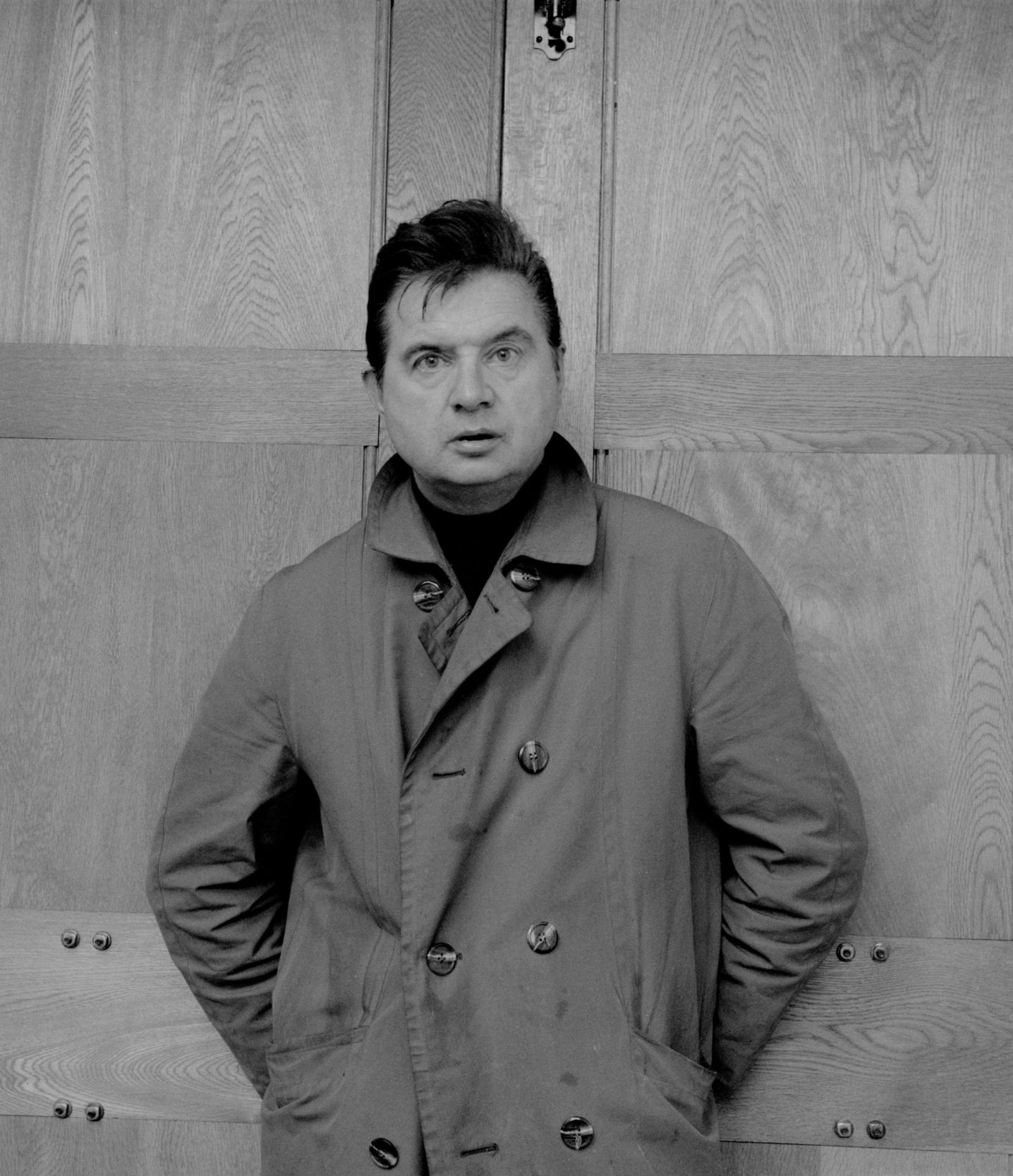
Photograph
of Francis Bacon taken by John Deakin in 1967
OPINION
FRANCIS BACON STUDIO
STAN GOGGIN | LETTERS | THE
IRISH TIMES | WEDNESDAY,
MARCH 27, 2002
Sir, — The letter of March 8th from Barbara Dawson, director of the Hugh Lane
Municipal Gallery, contained the sad news that she considers the Francis Bacon
Studio to be a permanent installation at the Municipal Gallery. I sincerely hope
not.
Installed, perhaps, in a Dublin house, owned by the Bacon family, it might serve
as some form of monument to the artist. Installed in the Municipal Gallery, it
is a monumental error.
Minimalist works, soiled beds, lists of past lovers, animal bodies in
formaldehyde and elephant dung arrangements are, at least, planned by their
originator to have some contrived effect on the beholder. The studio "happened”
through years of sheer neglect. Dublin gained a cleaner’s worst nightmare and,
in exchange, lost a small but long-admired showing of Roderic O’Connor’s work,
which — dare I suggest, from an Irish and tourist point of view — was every bit
as important as the well advertised and over-vaunted “Impressionist” exhibition
at the National Gallery.
As regards the National Gallery extension, I have read glowing “architectural”
reports. They seem to ignore the “mean streets” entrance, the labour exchange
lobby, the darkest, most characterless shop I’ve ever seen, the labyrinthine
passageways to the old gallery and the truncated and now claustrophobic old
shop.
Perhaps someone might give an opinion on whether the external stone facing is
completed! — Yours, etc.
STAN COGGIN,
Howth Road,
Clontarf,
Dublin 3.
Testy tosspot never quite doused
anger
Obituary: Graham Mason 1942-2002
Denizen of Soho, journalist
OBITUARIES |
THE DAILY TELEGRAPH |
TUESDAY, 9 APRIL, 2002
GRAHAM MASON, the journalist who has died aged 59, was in the 1980s the
drunkest man in the Coach and Horses, the pub in Soho where, in the half century
after the Second World War, a tragicomedy was played out nightly by its
regulars.
His claim to a title in bibulous
misbehaviour was staked against stiff competition from Jeffrey Bernard and a
dedicated cast of less-celebrated but formidable drinkers. Mason was a fearsome sight at his
most drunkenly irascible. Seated at the bar, his thin shanks wrapped around the
legs of a high stool, he would swivel his reptilian stare around behind him to
any unfortunate stranger attempting to be served and snap:
“Who the fuck are
you?”
Sometimes this prompted a reaction, and on one
occasion a powerful blow to the head sent Mason flying, with his stool, across
the carpet. Painfully clawing himself upright, he set the stool in its place,
reseated himself and, twisting his head round again, growled: “Don’t you ever do
that again.”
Unlike his friend Jeffrey Bernard, though,
Mason did not make himself the hero of his own tragedy. His speciality was the
extreme. In one drinking binge he went for nine days without food. At the height
of his consumption, before he was frightened by epileptic fits into cutting
back, he was managing two bottles of vodka a day. At lunchtime he would walk through
the door of the Coach and Horses still trembling with hangover, his nose and
ears blue whatever the weather. On one cold day he complained of the noise that
the snow made as it landed on his bald head.
His practice of
“boozer’s
economics” meant dressing in the shabbiest of clothes, many of them inherited
from the late husband of the woman with whom he lived. He wore a threadbare
duffle coat with broken toggles. One day it was inexplicably stolen from the pub
coat hook. Bernard took the opportunity to combine kindness with condescension
by buying a replacement of much grander design and cloth.
From the 1960s on, Mason was a
friend of many of the painters, writers, actors, layabouts, retired prostitutes,
stagehands and hopeless cases that then gave Soho its flavour. He enjoyed
talking to Francis Bacon in the Colony Room Club because Francis Bacon was
funny; and, until they finally had a row, Francis Bacon enjoyed talking to him.
In a couple of hours one evening in
February 1988 he had loud altercations with John Hurt (“You’re just a bad
actor”); with a law writer nicknamed
The Red Baron, who was later murdered (“You
know I don’t like you. Go away and leave me alone”); and with Bernard (who stood
up and shook him by the lapels). Michael Heath often featured Mason
in his comic strip The Regulars. In one episode he is shown apologising
for being so rude the night before:
“You see, I was sober.”
Amid the violence of Soho arguments he became
a friend of Elizabeth Smart, the Canadian author of By Grand Central
Station I Sat Down and Wept, a book about her lover George Barker,
the poet, who became another friend. Mason succeeded in liking Francis Bacon’s
final close friend, John Edwards, which some people did not; and the poet John
Heath-Stubbs took a shine to him.
One of his first friends in Soho was John
Deakin, the photographer, whom he defended against the charge, put about by
Daniel Farson, of being cruel to everyone. “The only man John Deakin was unkind
to was David Archer,” Mason asserted. David Archer, who ran a bookshop at a
loss, was the man Deakin lived with.
Mason felt at home in the Colony
Room Club in the years before homosexuality was decriminalised because no-one
who drank there minded one way or the other.
Mason’s own closest friendship was
with Marsh Dunbar, the widow of an admired art director at The Economist. He
lodged with her at first in a fine early 19th-century house in Canonbury Square,
Islington, where she was bringing up three sons. She had herself fallen into
Soho after the war, knowing everyone from John Minton to Lucian Freud. Though
enthusiastically heterosexual, she lived with him until her death.
In the days before licensing
liberalisation, he resorted in the afternoon when pubs were closed to drinking
clubs such as the Kismet, a damp basement with a smell that wits identified as
“failure”; it was known as
“the Iron Lung” and
“Death in the Afternoon”. Mason
admired the diminutive but firm presence behind the bar, known as
“Maltese Mary”.
But his favourite resort remained the Colony.
Graham Edward Mason was born on
July 19 1942 in Cape Town, South Africa. He had been conceived on a sand dune, and to this,
as a devotee of Laurence Sterne’s
Tristram Shandy,
he
sometimes attributed his abrasive character. He was educated at Chingola,
Northern Rhodesia (now Zambia), and then joined a local newspaper. From there,
as a bright and promising 18-year-old, he was recruited for the American news
agency UPI by its bureau chief in Salisbury, Southern Rhodesia (now Harare,
Zimbabwe).
He learnt fast as a reporter of the
civil war in Congo, finding the veterans from the Algerian war among his
colleagues both kind and helpful. He witnessed a line of prisoners executed with
pistol shots to the head and was himself injured in the thigh and chin by a
mortar shell. Among those he interviewed were Joshua Nkomo and Robert Mugabe; he
did not take to the latter.
Posted to the UPI office in London
in 1963, he set off in a Land Rover with three friends and no proper map through
Tanganyika, Kenya, Ethiopia and Sudan to Port Sudan on the Red Sea, and then on
an East German ship via Trieste to Hull.
From UPI’s London office in
Bouverie Street, Mason soon discovered Soho and, like many before him, felt he
had come home. He continued as a foreign correspondent, taking a year out in
1968 to work for 20th Century Fox on feature films, which he hated. With BBC Television news he
reported from the Northern Ireland troubles and in 1975 took another year out to
run a bar in Nicosia. It happened to coincide with civil war and he and Dunbar
were lucky to be evacuated by the RAF. From then until 1980 he worked for ITN.
One day he was found asleep under his desk, drunk. It was something of a low
point.
He was living with Marsh Dunbar in a flat
in Berwick Street, Soho. A fire there sent them, fleeing bills, to a rundown
council tower block on the Isle of Dogs. The compensation was a view of a sweep
of the Thames towards Greenwich. He worked while he still could, managing Bobby
Hunt’s photographic library.
Mason cooked Mediterranean food
well and liked classical music and fireworks. After Marsh Dunbar’s death in 2001, with
almost all his friends dead, he sat imprisoned by emphysema in his flat, with a
cylinder of oxygen by his armchair and bottles of white wine by his elbow,
looking out over the Thames, still very angry.

“Cheerio” Francis Bacon, Graham Mason’s friend and
fellow-drinker in one of their favourite watering holes.
The art of loss
Paul Bailey on a
collection of portraits of creative gay lives:
Love in a Dark Time: Gay
Lives from Wilde to Almodóvar by Colm Tóibín
Love in a Dark Time: Gay Lives
from Wilde to Almodóvar Colm Tóibín 288pp,
Picador, £16.99
PAUL BAILEY
| THE
GUARDIAN | SATURDAY,
13 APRIL, 2002
In the introduction to this
perceptive collection of essays, Colm Tóibín admits to an "abiding fascination
with sadness...and, indeed, tragedy". It should be stressed that this is a
sympathetic fascination, not a morbid or mawkish one, as his brief accounts of
the painful lives of Elizabeth Bishop and James Baldwin – two of the best pieces
here – testify.
What Tóibín admires about the
painter Francis Bacon is his life-long refusal to play the role of "tragic
queer". He is properly scathing about the three biographies that appeared, with
indecent haste, after Bacon’s death – by
Andrew Sinclair (scissors and paste), Michael Peppiatt (dull when it isn’t
prurient) and Daniel Farson (a hotchpotch of sexual tittle-tattle). "It is one
of the problems of biography that it seeks out the colourful and the dramatic at
the expense of the ordinary and true," Tóibín observes.
Bacon’s relationship
with George Dyer wasn’t all gloom and drunken doom – at
least, not in the beginning. Tóibín prefers to look at the paintings, with apt
quotations from Bacon’s conversations with David Sylvester, Michel Archimbaud
and the shrewdly observant John Russell. He reminds us how hard Bacon worked,
and that the real danger he had to cope with was that of repeating himself and
burning himself out. This is more interesting, though less amusing, than his
remark – which
was intended to be heard by the posh women seated nearby – that
he wanted to be buggered by Colonel Gadafy.
Tóibín’s other subjects are Oscar Wilde,
Roger Casement, the poets Thom Gunn and Mark Doty, and the film director Pedro
Almodóvar. This last, a reprinted article from Vanity Fair, is the one really
weak chapter in this otherwise fine and thoughtful book. One wants to know more
about this man who thrives in an atmosphere of chaos. Tóibín, for once, provides
only a sketch, instead of the customary rounded portrait.
Paul Bailey’s most recent book is Three
Queer Lives (Hamish Hamilton).
Francis Bacon and the Death of Art
BY JOAN ALTABE | FEATURE | GADFLY | MONDAY, APRIL
22, 2002
British painter Francis Bacon has been dead for ten years, and, in a way, so has
art—at least the kind that makes known the wounds we inflict on one another and
on ourselves. Now we get that other British bad boy, Damian Hirst, chopping up
animals and distilling them in formaldehyde.
Bacon painted people as though they were hit with force-ten storms and knifing
rains. Their anxiety chokes them purple. Their edges appear in fitful blurs.
Color is so loud that it comes across like hostility. Even the pigment looks
racked. You feel assaulted by an unknown dread when you see it. You try to make
sense of it. Bacon said not to try:
"Hardly anyone really feels about painting. They read things into it—even the
most intelligent people—they think they understand it, but very, very few people
are aesthetically touched by painting." Culture critic Susan Sontag said
something similar. Too many intellectualize art at the expense of sensory
experience. She called it the "erotics of art."
The "erotics of Bacon’s art" is raw flesh. Ripping past the skin, past surface
reality, he pictured that level of existence within us that has no visible
reality—the panic brought on by estrangement—not from others, necessarily, but
from ourselves. His paintings are us, inside out.
And Bacon’s point in regard to aesthetics is about the other part of us, our
outsides. Aesthetic form is our physical form—the symmetry of our limbs and face
parts, the contrast of skin to hair to teeth, which is probably why good
composition in art attracts us. We seek out what we are, what we know.
There’re plenty of our physical selves in Bacon’s work. Without it, his
expression of emotion would be just a tantrum made graphic—boneless and
featureless. Like us, Bacon’s paintings are aesthetically structured. While the
derangement he illustrates is barefaced, his configuration of colors and shapes
is a physical monument to order. Call it a mix of truth and beauty. Beyond the
psychic scars that he exposes with color and shape, beyond his urge to express a
state of mind, is the urge to sort it out and put it right. And that’s where art
comes in: crystallizing/controlling the chaos that is life.
Georges Seurat showed the same urge in his painting, La Grande Jatte. The
sublime arrangement of tiny dots, made with machinelike precision, is really
Seurat describing the joylessness of middle-class life. Empty faces and
starched, separate bodies are his icons of alienation in modern life. The dot
matrix magnifies the anonymity of that life.
Like Seurat, Bacon conveyed the modern experience of isolation. His Study
After Velasquez: Pope Innocence X is a 17th century figure passed through
the 20th century experience. As if weighed down by the pressures of orthodoxy,
the figure sits on a throne of gold, looking caged, Bacon’s vertical brushwork
approximating prison bars. Yet the architecture of the picture—the weave of his
paint swaths—comes across like a steady rain, the yellow of the throne looking
like the rays of a sun breaking through.
Bacon’s Crouched Nude shows the same architecture—the caged setting and
the look of a downpour. In much the same way, in his One of Three Studies for
a Crucifixion, the splattered blood-reds—resembling shafts of light dropped
by a morning sun—seem to paint a new day, the smooth background reds signaling
the unspoiled air.
All of which makes the crown of gloom over Bacon’s work, by contrast, appear all
the more wretched—like a bad traffic accident on a pretty day.
This is a long way from the Luis Buñuel film that is said to have influenced
him. By the incoherent, unconnected slices of life in Un Chien Andalou—such
as dead donkeys lying on two pianos—Buñuel can be said to have held more sway
over Hirst than Bacon. Consider Hirst’s mindless display of an actual pig
carcass cut length-wise, its halves suspended with one inching back and forth on
a mechanized tract so the carcass looks like it’s being constantly sliced.
However disturbing Bacon’s work is, however it pokes out our eyes with edginess,
it’s not the shock art of a Hirst and other artmakers in the ’90s who functioned
like a work party of Larry Flynts, depicting bodily functions and
sadomasochistic acts of gore. Granted, toward the end of his life, Bacon showed
a splatter of blood on the floor of an otherwise bare room in Blood on the
Floor. But by giving it a context of an empty room, Bacon heightened the
sense of lost life. He made you feel the loss.
Bacon’s shock art, then, never is the stuff of, say, that plastic facsimile of
puke that showed in the ’90s at the Whitney in New York. Or the bed frame there
covered by muslin burned through with hot irons—the burn marks standing for
answers to a sex survey: "More than once a week. Once a week. Two to three times
a month." Bacon also gave us a bed scene with his Three Studies of Figures on
Beds. But while he shows couples twisted in knots of need, burying
themselves into one another, he gave them context. Bare walls, lumpy bare
mattresses and a naked light bulb heighten the air of unleashed hunger and
abandon, which is far and away from illustrated answers to a sex survey.
Some say that shock art has a point, that it’s meant to jolt us into realizing
and solving our problems. It doesn’t say enough to do that. It just entertains
or enrages us. Bacon’s art says something. He saved his work from the merely
shocking with that mix of truth and beauty in which color reveals our nervous
system and smeary shapes record our cries.
In the autobiography Flaw in the Glass by Noble Prize winner Patrick
White, Bacon’s appreciation of beauty got a mention: "One afternoon at
Battersea, crossing the river together by a temporary footbridge while the
permanent structure was under repair, he (Bacon) became entranced by the
abstract graffiti scribbled in pencil on its timbered side. Alone, I don’t
expect I would have noticed the effortless convolutions of line he pointed out
for me to admire."
Of course, beauty without truth in art is just as empty as shock art.
Impressionism makes the point, its fleeting brushwork being about surface
things, about our eye, as if that’s all we are about: style. Bacon had us
covered. He said, "It’s really a question in my case of being able to set a trap
with which one would be able to catch the fact at its most living point.… I want
to make a thing of sense, of reality, yet unlock the vowels of feeling."
In Pope Innocent X, Bacon seems to be saying that each of us is the Pope,
staring from way inside like a scared animal looking out from a bad hiding
place. A passage in Willa Catha’s Death Comes for the Arch Bishop could
pass for a description of the painting: "His mouth was the very assertion of
uncurbed passion...the full lips thrust out and taut, like the flesh of animals
distended by fear or desire."
How important is Bacon? Think over how much art today reflects on the voltaic
and cybernetic—movies, magazines, television. And think over how shades of
meaning get lost in the electronic glare. Conditioned by this exposure, too many
artists work like photoelectric sorters, scrambling for new images as fast as
video programs roll over, 20-plexes change their lineup and newsstands restack.
Sealed off from the rich air of actual life, their images are sterile—like all
things vacuum-packed. Bacon’s pictures are a relief for mass-media-sore eyes.
What you see is not what you get. What you get is beyond seeing: a state of
mind—timeless and placeless.
Wait, there’s more: Bacon’s originality. Remember that one-of-a-kind thing that
art used to be, when artists told us how they felt about what they saw, when
Mike Bidlo wasn’t copying Picassos out of art books and Richard Pettibone wasn’t
copying Stella and Warhol and Elaine Sturtevant wasn’t copying Liechtenstein,
Oldenburg and Segal and Sherrie Levine wasn’t copying Malevich and Schiele and
Julian Schnabel wasn’t copying Rodchenko? Bacon didn’t copy anybody. He
daydreamed, he said. "Pictures drop in like slides. The way I see them is not
necessarily related to the way I paint them."
Did you get that? Bacon doesn’t even copy his daydreams. And even while Bacon
shared the need to express inwardness with 20th century’s big gun, abstract
expressionism, he never gave up on representing the seeable. Coming through in
his characteristically frenzied brushwork is everyman crazily furious.
It’s hard to think of an artist who does that now. Bacon’s 10-year absence is
enough to move one to prayer:
Hello, God? Could you send Francis Bacon back, please? It’s getting pretty bad
down here.
LEISURE/WEEKEND
DESK
Francis Bacon
Tony Shafrazi
119 Wooster Street, SoHo
Through May 18 2002
By KEN JOHNSON | ART
IN REVIEW | THE
NEW YORK TIMES | FRIDAY, APRIL
26, 2002
If you were depressed by the joyless art
of Gerhard Richter at the Museum of Modern Art, you might not think a visit with
Francis Bacon would be much help. Bacon is popularly thought of as the pontiff
of existential horror, his most famous image being of a screaming Pope Innocent
X based on a portrait by Velázquez. What Bacon produced, however, was more a
kind of black comedy; increasingly as time passed he realized it in suavely
designed, vibrantly hued, generously spacious compositions.
Far from depressing, the late paintings
in this show combine the sensuous and the visionary to exhilarating effect. All
of the large canvases from the 1980’s feature the painter’s familiar iconography
of smeary lumps of humanity – or,
in one case, a dangling, plucked chicken – in
empty rooms. They are like updates of Christian altar paintings. The largest
work, a triptych in which a vignetted male pelvis has wounded areas circled or
pointed to by a small graphic arrow, refers unmistakably to the Passion, even as
the third panel with the silhouetted head of a bull adds pagan resonance.
In anyone else’s hands such imagery
would be unbearably heavy. But Bacon managed his traumatic vision with a light,
almost Pop-style touch. He paints the space around his deftly distorted figures
with the hedonistic delight of a Color Field painter. In the triptych and two
related paintings, broad fields of scrumptious Creamsicle-orange are balanced by
windows of sweet sky blue. The ultimate effect is of a zany and voluptuous
beauty.
KEN JOHNSON
Tate takes Bacon archive at last
DALYA ALBERGE
| NEWS | THE TIMES | THURSDAY MAY 2 2002
THE Tate is
accepting a gift of a Francis Bacon archive containing more than 1,000 sketches
and annotated photographs, four years after it rejected the offer.
Barry Joule, the owner and a friend
of the artist, has struggled for years to prove the authenticity of a collection
that he says Bacon gave to him days before his death, and which, with 1,500
items, has been valued at £20 million.
The artist’s estate has declined to
authenticate the archive, threatening legal action when the Barbican Centre in
London exhibited it last year.
Ten years after Bacon’s death, Sir
Nicholas Serota, the Tate’s director, now says he will recommend to the trustees
that they acquire it. The collection includes hoarded paint-splattered
photographs, clippings, pages torn from magazines and books and scribbled
sketches. The images range from cyclists and boxers to a portrait of Mick Jagger
over which outlines of figures have been rehearsed.
Mr Joule, who was Bacon’s chauffeur
and handyman, says that one of his duties was destroying works with which Bacon
was not satisfied. He said that the artist handed him a bundle of papers to
destroy, but, realising their importance, he had instead kept them.
Bacon archive
|
Tate to acquire
Bacon collection after rejecting it |
The Times, Friday 1oth May 2002
The Tate is accepting a Francis Bacon archive of more than 1,000 sketches and
annotated photographs four years after it rejected the offer. The collection,
said to be worth £20m, is owned by Barry Joule, who was Bacon’s chauffeur and
handyman.
Joule is said to have struggled for years to prove the authenticity of a
collection he says Bacon gave to him days before his death. The artist’s estate
has declined to authenticate the archive, threatening legal action when the
Barbican Centre in London exhibited it last year.
Ten years after Bacon’s death, Sir Nicholas Serota, the Tate’s director, now
says he will recommend to the trustees they acquire it. The Times says the
collection includes hoarded paint-splattered photographs, clippings, pages torn
from magazines and books and scribbled sketches.
The images range from cyclists and boxers to a portrait of Mick Jagger over
which outlines of figures have been rehearsed. Mr Joule says one of his duties
was destroying works with which Bacon was not satisfied. He said the artist
handed him a bundle of papers to destroy but he realised their importance and
had kept them instead.
The Tate Gallery has asked us to make it clear that, whereas it is looking
forward to discussions about Barry Joule’s Bacon archive (The Times report, May
2 2002) it has not yet received, or accepted, a formal offer.
Philips de Pury & Luxembourg
Contemporary Art & 14 Duchamp Readymades
3 West
57th Street
7pm, Monday, May 13, 2002 Sale NY865

Lot 30: Study for Portrait of Henrietta Moraes by Francis Bacon, 78 by
58 inches, 1964
The announcement earlier this year by Phillips de Pury & Luxembourg that it was
canceling its spring Impressionist & Modern Art auction came as a great relief
to Sotheby’s and Christie’s but also raised serious questions about the future
of Phillips de Pury & Luxembourg. The
aggressive entry of the Phillips auction house into the big leagues of fine art
auctions under the guidance of Bernard Arnault’s LVMH conglomerate stole a lot
of business away from Sotheby’s and Christie’s, both of which were under
antitrust investigations that created serious financial problems for them and
made them appear to be quite vulnerable to new competition.
One of the auction’s highlights is Lot 30, Study for Portrait of Henrietta
Moraes, a 78-by-58-inch oil on canvas by Francis Bacon (1909-1992). A
classic and major Bacon, it was painted in 1964 and has an estimate of
$5,000,000 to $7,000,000. It sold for $6,712,500.
The catalogue notes that Bacon’s convoluted reshaping of the human body
sometimes conjures chopped-up carcasses and that in this work the woman’s body
"appears played, and the passages of gray and red pigment suggest bruises and
blood respectively." "Yet the morbid suggestion of raw, exposed flesh is
countered by an opposing sense of the sitter’s vitality. Moraes’ voluptuous
figure seems to throb and pulsate before one’s eyes, as though it were releasing
a powerful visceral energy."
THE ARTS ESSAY
‘Photographing artists is relatively easy’
With these words, Bruce Bernard modestly dismissed his portraits.
Next week, however, Tate Britain mounts a retrospective exhibition.
Christopher Hirst looks
back at his work and life
CHRISTOPHER HIRST | THE ARTS
ESSAY | THE INDEPENDENT MAGAZINE | SATURDAY MAY 18 2002
Bruce Bernard, who died aged 72 in March 2000, was probably the greatest picture
editor of the 20th century. His legendary eye was used to great effect in The
Sunday Times Magazine for most of the Seventies and in The
Independent Magazine from 1988 to 1992. In 1980, he produced Photodiscovery,
a luscious volume of largely unknown images from the first 100 years of
photography, although his best known work was the vast pictorial history,
Century, which became an unexpected bestseller in the months preceding his
death. “It’s amazing,” he told a friend, “after a lifetime with no money, I’m a
millionaire, give or take a few hundred thousand.” (In fact, this proved to be
an optimistic forecast.)
What is less well-known about Bernard is that he was a gifted photographer in
his own right. When he resigned from The Sunday Times Magazine in
1980, his colleagues and associates (Bernard was responsible for giving a first
break to a host of famous photographers) bought him a Nikon 35mm camera.
According to his close friend, the painter Virginia Verran, he “was quite humble
about his photography and didn’t want his photographer friends to feel he was
muscling in”. However, in fits and starts over the next two decades, he came to
specialise in portraits of the topmost echelon of British artists, all
photographed in their studios.
The significance of this work to Bernard is reflected in the fact that just a
week before his death from cancer, he summoned the strength to visit the studio
of the painter Frank Auerbach. Auerbach looks into the lens with utmost
compassion for his frail portraitist. Virginia Verran was present during the
session. “Bruce was extremely weak, very poorly, but took a great, life
enhancing photograph.”
Along with Auerbach, Bernard photographed Francis Bacon, Lucian Freud, Michael
Andrews and Euan Uglow. There are several reasons why the results merit an
exhibition – Photographs of Painters, opening on
Monday – at Tate Britain. For one thing, Bernard felt a profound admiration for
artists and always rated painting higher than photography. Auerbach compared
Bernard’s knowledge of art to “a familiarity that a trainer would have with
horses”. He produced several books exploring various themes in fine art and
always regretted that he had not pursued his early ambition to be a painter. For
a while he had maintained a studio, but such were Bernard's impossibly high
standards that no work ever emerged from it.
Another reason is that, as a long-term habitué of Soho, Bernard had been
acquainted with all his subjects (with the exception of Uglow) for decades. With
typically astringent precision, he recalled that a 1944 exhibition by Lucian
Freud left him “quite if not hugely impressed" and Auerbach's first one-man
show, in 1956, caused him “a few worries”.
But perhaps the most significant justification for this show is that Bernard
applied his own rigorous precepts as a picture editor to the images that emerged
from these sessions. Like the pictures he selected for magazines and books, his
photographs are unfussy, uncontrived and stress the subject, not the
photographer. According to Virginia Verran, he wanted his pictures to show what
his subjects, all of whom were friends, were really like.
The first artist he photographed was Francis Bacon, in 1984. Describing his two
sessions at Bacon's notorious midden of a studio, Bernard said: “I tried to
imagine how some of the photographers I had commissioned would have gone about
it, rather than doing things with background or props.” Bacon had been a friend
and drinking companion for years. In fact, celeb spotting visitors in Soho’s
fleshpots sometimes mistook Bernard, who had similar swept-back hair, high
forehead and circular face, for the modernist master.
Though Bacon is undemonstrative in the shots, the two sessions produced some of
the most subtly telling images of this much photographed artist. Over slender
legs and waist, still those of a young man, Bacon’s blossoming paunch is more or
less restrained by his dinky leather blouson, which only has its bottom stud
closed. Tethered by a narrow neck, the famous face balloons massively.
Impassive, perhaps a little bored, Bacon’s eyes are black pits. Standing beside
the splotches, daubs and dribbles on his studio door, he resembles a raptor,
frightening and, given the right circumstances, merciless. Even if you didn’t
know he was one of the greatest painters of the 20th century, you could guess
from these astonishing photographs that this was a strange, unnerving and
remarkable man.
It is debatable whether Bernard would have taken kindly to having praise heaped
upon his photographs. The middle brother in a trio of wordsmiths – his elder
brother is the poet Oliver Bernard, while his younger brother was the low-life
connoisseur Jeffrey Bernard – he was violently opposed to glib or effusive
opinion. Though he was a social man, small talk was not his strong suit. Unlike
most journalists, who tend to be allergic to any silences longer than two
seconds, Bernard responded to most conversational gambits with a prolonged
silence while formulating his reply.
“Empires could rise and fall while you're waiting for Bruce to reply to a
question,” an exasperated editor once told me. Ironically, this long pause for
thought often had the effect of prompting the questioner to fill the gap with
specious waffle. Sometimes Bernard would express the result of his ratiocination
with considerable venom, especially after an extended spell in the pub.
Occasionally, however, the response would be a surprised and delightful smile,
which, as Ian Jack wrote in his Independent obituary
of Bernard, “would resemble that of a very friendly moon in a children’s book”.
Bernard was characteristically modest concerning his portraits. “Photographing
artists is relatively easy,” he wrote in the Independent on Sunday in
1993. “To begin with, they often have well-lit studios – and sometimes good and
even marvellous pictures to help you along. The planes and angles of canvases on
easels and their backs (or fronts) when leant against walls come in handy, as do
pots of brushes etc.”
Though Bernard disliked photographs that aspired to the condition of art, his
tremendous 1995 photograph of Michael Andrews painting the architect Colin St
John Wilson is loaded with resonances. Aligned in the centre of the photograph
are five heads. From left to right, they are the back of the artist’s head, the
nearly completed portrait, the subject, the back of the subject’s head in a
large mirror and the artist’s face also in the mirror. The distant reflection of
Michael Andrews echoes the mirror image of the artist in Velázquez's Las
Meninas, while the golden glow of the shaded windows and the
hidden light source behind Andrews’s back prompts associations with Vermeer and
De Hooch.
Other Bernard portraits are equally evocative, even when they are free of studio
impedimenta. His slightly alarming shot of a tense-looking Lucian Freud reveals
nothing but a glimpse of a wickerwork chair and a frond of foliage. Why is it
that this image of this immensely talented artist, with an elegant silk scarf
knotted round his neck, makes me think of Hannibal Lecter? In his catalogue for
the Tate show, Paul Moorhouse suggests that the photograph conveys “a sense of
the subject's intense, visceral presence – an echo of the ‘somewhat demonic
aura’ Bernard first noticed over 50 years earlier”.
Another shot that appears at first sight to be free of artistic paraphernalia is
Bernard's portrait of Euan Uglow from early February 2000 (within weeks, both
photographer and subject would be dead). Then you notice a taut string in front
of Uglow, which might be one of the sighting lines he sometimes included in his
paintings. The artist is looking down, preoccupied by something before him. It
is, at first sight, an unremarkable photograph, but Bernard thought it had
caught something special. “We were sitting here," recalls Virginia Verran, “and
he was staring at it and said something like, ‘Really, it’s not bad. It could be
a very limited edition.’ He felt that it was a real true portrait, that it had
got there in the deepest sense.”
Faced with work of such quality, the thought inevitably occurs that it was a
shame Bernard did not get to grips with a camera earlier in life; but he would
have none of this. “He does not regret not having a camera until he was 50,"
Bernard once wrote of himself. “He only wanted to be a painter.” Virginia Verran
agrees. “I think he did things when he felt it was right. He didn’t have a
regular paid job until he was 40. It only then emerged that he had an amazing
eye and a real feeling for humanity in photographs. He wasn't just concerned
with photographs that were technically brilliant or obviously eye-catching.”
Bruce Bernard's incomparable ability to select remarkable images will also be
celebrated in a major show later this year at the Canon Photography Gallery in
the Victoria & Albert Museum. One Hundred Photographs is
a commissioned collection of 19th and 20th century images that, according to
Bernard, captures “some of the magic of the medium – its uncanny life-preserving
qualities and unique perceptions.” Like Photographs of Painters,
and like his books Photodiscovery and Century,
it promises to be an eye-opener from a man who looked harder than anyone else.
'Bruce Bernard: Photographs of Painters' is at Tate Britain, Millbank,
London SWI from 20 May until 26 August (020-7887 8000).

In the studio: Bernard’s photograph of Francis Bacon (1984)
Here’s A Francis Bacon, And Another, And Another…
BY DOROTHY HO | NEWSWIRE |
WEDNESDAY, MAY 29, 2002
There’s a famous photograph of British artist Francis Bacon in his studio,
sitting on a chair in a midst of a cluttered workspace. That image — taken by
Michael Holtz — is one of 30 images of the artist to be displayed at a special
exhibition in Arles, France.
The images of Bacon are to be exhibited with Bacon’s paintings of Vincent Van
Gogh, a series of 12 paintings he created in homage to Van Gogh. But the
black-and-white photographs of Bacon will speak as much about the artist as his
work of Van Gogh.
Before Bacon died in 1992, a host of photographers had captured him in a variety
of moods and poses. In fact, some say that Bacon referred to many of these
photographs of himself when painting his self-portraits. Peter Beard, Harry
Benson, Don McCullin, Henri Cartier-Bresson, Perry Ogden and Michel Soskine were
among the photographers whose images of Bacon alone, working in his studio, or
with friends, will be shown at the Van Gogh Foundation in Arles from July 4 to
October 6.
He climbed inside faces
Liz Jobey on the 'wizened, acned
dwarf' of 1960s Soho who documented city lives
A Maverick Eye: The Street
Photography of John Deakin by Robin Muir
208pp, Thames & Hudson, £36
LIZ JOBEY | THE GUARDIAN |
SATURDAY, JUNE 8, 2002
Nobody who has read the various
accounts of Francis Bacon’s life could have missed the figure of John Deakin,
the small, drunken photographer who made some remarkable portraits of the
painters, writers, models and friends who gathered round Bacon in Soho during
the 1950s and 1960s, notably at Muriel Belcher’s Colony Room.
In
most accounts Deakin is reviled, not for his drunkenness but for the bitchiness,
scrounging and general meanness of spirit that came with it. Bacon – who,
according to his friend and biographer Dan Farson, was fond of Deakin – called
him "a horrible little man", though he also thought his portraits "the best
since Nadar and Juliet Margaret Cameron". George Melly called him a "vicious
little drunk", Jeffrey Bernard said he was "a wizened, acned dwarf of a jockey".
But Bruce Bernard, Jeffrey’s brother, recognised Deakin as a member of
"photography’s unhappiest minority whose members, while doubting its status as
art, sometimes prove better than anyone else that there is no doubt about it".
Photography was a second best for Deakin, who had failed to find success as a
painter and only took up the camera by accident in 1939 – he
is said to have woken up in a Paris apartment after a party, found a camera
unattended, and taken it away to try it out. His working life was haphazard – he
had two brief periods under contract to Vogue, both of which ended badly,
and two small exhibitions in Soho; he produced two guidebooks, one to London,
the other to Rome. He more or less gave up photography in the last years of his
life, and had it not been for Bruce Bernard, who rescued several boxes of
photographs from under Deakin’s bed after his death in 1972, the pictures might
have gone the way of his other artworks and ended up in the gutter in Berwick
Street.
In
1984, Bernard made a selection of these photographs for an exhibition at the
Victoria & Albert Museum called The Salvage of a Photographer. The creased and
tattered prints, many of them portraits of his Soho companions, were to
establish Deakin’s posthumous reputation. In 1996, Robin Muir, who as the
picture editor at Vogue in the early 1990s had found another cache of
Deakin’s prints, contact sheets and negatives in the Condé Nast library - this
time of the artists, writers, actors and directors Deakin had photographed for
the magazine – curated
a show at the National Portrait Gallery and published a book on Deakin’s work.
This was four years after Bacon’s
death, and it included some of the 40 or so trampled and paint-spattered
photographs that had been found in Bacon’s studio. These were photographic
studies Deakin made at Bacon’s request of figures he wanted to use as references
in his paintings. They included the now well-known sessions with Lucian Freud,
Henrietta Moraes and Isabel Rawsthorne, all of whom are recognisable in Bacon’s
pictures.
As well as fuelling the debate
about just how much Bacon had relied on photographs, the distressed prints added
the glamour of found fragments to what was by now acknowledged as Deakin’s
increasingly important archive. The 1996 show concentrated on Deakin’s
portraits. The large close-ups show every pore, pockmark and hair follicle; in
most cases the eyes stare directly into the lens, and the face is often squared
off prematurely by the frame.
They have been described as "cruel"
and "brutal", but in fact seem to be more the result of Deakin’s impatience with
the kind of theatrical gestures and posturing body language that so often makes
a portrait false. But there was another group of pictures, found in an annexe
down the back stairs of the National Portrait Gallery. These were Deakin’s
street pictures, taken in London and during his many trips to Paris and Rome –
the city he loved most. It is these that Muir has concentrated on in his second
book.
The difficulty this presents is
obvious: how to produce a second book that contains enough information to
satisfy those coming to Deakin for the first time, while offering those who know
his work something new? Muir has partially solved the problem by retelling the
story of Deakin’s life in the text – and here there is, inevitably, a certain
amount of repetition – and placing the emphasis, in the choice of pictures, on
much less familiar aspects of Deakin’s work.
Of the three sections of
photographs, "London" is still largely made up of Soho portraits, though ones
taken at more of a distance: most are cropped just above the knee, or
full-figure. There is a little series of pictures of Bacon and his lover George
Dyer, posing for Deakin both singly and together, one day in Soho in the 1960s;
a strong head of the writer Elizabeth Smart; and an awkward full-length picture
of Muriel Belcher. There are also a few street scenes – signs, hoardings,
shopfronts – in the manner of Atget, which serve as a throat-clearing exercise
for what is to follow.
After London, the book really
changes pace. Paris and Rome seem to have brought out a more compassionate side
of Deakin. He is drawn to street people, to shopkeepers and market traders,
tramps and beggars, and to the cities’ ageing fabric. Before his death he had
planned a number of books: one on Paris, another on Rome, and two called "London
Walls" and "Paris Walls". And here you can see why. Walls so often provided the
canvas for some of his best photographs. Like Brassai, who had begun collecting
pictures of graffiti in the early 1930s, Deakin was fascinated by the randomness
of street art. Scribbled in chalk, the simple drawings for children’s games, the
vows of love or hate and the slogans of street philosophers have a fragile,
temporary quality that, on the uneven surface, gives them the emotional purchase
of paintings.
Deakin liked walls on which the
commerce of the city had left its mark – layers of tattered posters, or the
giant letters of advertising slogans half rubbed out by the weather. In Paris he
followed Atget’s example of going out each morning at dawn to photograph the
empty streets. In Rome he found that the public displays of religion offered
fine opportunities for pictures. He used a Rolleiflex, as Bruce Bernard pointed
out, with the same ease that other street photographers used a Leica. In his
portraits it enabled him to climb inside a face (some of his portraits are close
enough to reveal that aqueous millimetre of flesh that lines the bottom eyelid)
with what would have been intrusive intimacy if he hadn’t know his subjects so
well. In his landscapes, it gives ordinary scenes a greater formality.
Deakin said of his pictures that he
was "fatally drawn to the human race". He probably was a fatalist, but there can
be few more life-affirming photographs than the picture of a group of mothers in
Trastavere, proudly holding up their children for his inspection. In some ways
it might have served Deakin well to have one book that included all sides of his
work and all his best pictures. But that’s easy to say in retrospect. Somebody
who probably never expected to be remembered for his photographs now has a life
in two volumes.
· Liz Jobey
is a deputy editor of Granta
Handle publicity with great care
INSIDE TRACK LAW & BUSINESS
By
ROBERT HUNTER | THE
FINANCIAL TIMES | SATURDAY,
JUNE 10, 2002
"You run very well," said General Douglas Haig, the notoriously inarticulate
first world war general, when giving a speech at an army athletics day. "You run
very well indeed" – and
then, disastrously: "I hope you run as well in the face of the enemy!"
General Haig, of course, will not be the last to fall prey to the error of
thinking once and speaking twice. Much the same pitfall awaits any litigant who
has to deal with the press regarding his case.
The decision to talk to the press is an easy one. Many claimants hope that,
irrespective of their claim’s prospects of success, the adverse publicity will
bring an otherwise recalcitrant defendant to his knees. Allegations made in the
course of legal proceedings are covered by absolute legal privilege. It is
impossible to bring an action for defamation in respect of them. What is more,
without the need to call witness evidence, unless the case can be demonstrated
as hopeless a claimant will be able to keep it alive until trial. Technical
rights of action exist in relation to malicious prosecution of civil claims, but
these arise in such limited circumstances that they are rarely pursued.
In spite of these advantages, many claimants who believe their claims will
generate adverse publicity for the defendant are disappointed. In a world numbed
by successive scandals, the press and public have seen and heard it all before.
Sometimes, however, the allegations are so spectacular that publicity is
guaranteed for the lucky claimant. The recent litigation between the estate of
Francis Bacon and Marlborough Fine Art is a case in point.
The case was begun in March 2000 by Brian Clarke, executor of the estate,
against Marlborough. Press interest was high. Francis Bacon was one of the most
famous painters of modern times and Marlborough is one of the best-known art
dealers in the world. Marlborough, which had dealt with Bacon’s works for some
34 years, was alleged to be liable to his estate for a sum reported to be
between £30m and £100m. There was even the tantalising suggestion of a missing
hoard of "unaccounted for" works of art.
More sensational still were the allegations that accompanied the claim: it was
said the liability arose because Marlborough had "exploited" Bacon by abusing
his trust and paying him too little for his paintings. Subsequently, in summer
2001, a further claim was developed: that, for 34 years, Marlborough had not
bought any paintings from Bacon at all but had simply sold them on his behalf
without ever formally agreeing its fee.
Then, in November 2001, a more sinister allegation was made. Previously it had
been claimed that Bacon had trusted Marlborough and that it had taken advantage
of his trust. Now it was said he had distrusted Marlborough, as the gallery had
blackmailed Bacon to continue to trade with it. Either one or the other must be
true, the estate claimed, even if it did not know which.
The likelihood was slight that Bacon – an intelligent and sophisticated
man – could have forgotten to agree Marlborough’s remuneration over 30 years or
could have been exploited in this way. Similarly, the key witness to the
allegation of blackmail did not support it. Nor did the action reveal the
hoped-for treasure trove of unknown Bacons. However, allegations of this kind in
any claim can sometimes carry a settlement value even if they are likely
ultimately to fail. No bad press can ever be completely corrected. Public
embarrassment often outweighs the benefits of vindication at trial. What is
more, a three-month trial, even when victory is expected, involves an enormous
waste of management time. It is also expensive: in the English legal system the
loser pays most, but not all, of the victor’s costs. In large-scale litigation
of this kind, the irrecoverable portion is often considerable.
There was, in short, ample justification for a payment to the estate to get rid
of the litigation. Why then did the estate have to drop the litigation in
February, recovering nothing from Marlborough other than some correspondence
(which was of no commercial value and which Marlborough had said would be given
to the estate in September 2001)? The estate’s legal bill must have been several
million pounds.
Part of the problem may have lain in a common claimant’s error: to over-estimate
his opponent’s vulnerability to publicity. Many institutions, particularly in
the financial sector, are not as responsive to bad publicity as a claimant would
wish. It is not that they are insensitive; it is simply that vulnerability is a
luxury they can ill afford. To settle one claim to avoid bad publicity is to
encourage others to be made. Conversely, to resist the claim sends a message to
others to readjust their expectations of what publicity will achieve.
But this is likely to be only part of the answer. Another significant factor may
lie in the handling of the press. A number of statements by Prof Clarke and his
lawyers sharpened press interest on both sides of the Atlantic in the claimant’s
allegations, when it would have been possible to adopt a more equivocal and
muted stance. But it is one thing to expect a settlement from a defendant on the
basis of bad publicity that a case may generate in future; it is quite another
to present the defendant with bad publicity that the case has already generated.
A defendant who knows he can avoid bad publicity by paying money has something
to buy in a settlement negotiation. On the other hand, a defendant who has
already received bad press has nothing to gain; the claimant has made the error
of shooting the hostage before demanding the ransom.
The difficulty in the Marlborough litigation was that the publicity generated by
the claim ensured that no settlement could be made. Any payment might have been
taken as acknowledgment that the highly publicised allegations were true, unless
it was accompanied by a public retraction and apology that would have been
deeply embarrassing for the estate to give. The result was what is likely to be
seen as one of the art world’s most famous litigation disasters, with the Bacon
estate having had to consent to its claim being dismissed and pay its own costs,
while receiving nothing worthwhile in return.
As with any misfortune, there is a lesson to be learnt. It is a common tactic
for a claimant to hope that the threat of bad publicity will result in a
settlement payment but real care must be taken before allowing that publicity to
occur. It is true it will be unwelcome to the defendant – but it may also
obstruct the claimant’s own objectives. Indeed, as in the litigation started
against Marlborough, it may ultimately thwart the claimant and deprive him of
any benefit from the legal costs he has incurred. It is not for the subtlety and
sophistication of his manoeuvres that General Haig, who masterminded the
Flanders campaign in 1917, is remembered; it is for a bruising war of attrition
and a result that was almost certainly not worth the cost of achieving it.
The writer is a partner at Allen & Overy, the law firm, and was part of the team
that represented Marlborough Fine Art in the litigation to which this article
refers.
Three times a lady ... Bacon painting snapped up for €2.5m
JOHN VINCENT & GRAINNE CUNNINGHAM
| IRISH NEWS | IRISH INDEPENDENT
| SATURDAY JUNE 29 2002
A PAINTING in three parts by Francis Bacon has fetched
almost €2.5m
at Sotheby’s in London.
The 1976 work entitled “Three Studies for a Portrait”, which sold for £1.5m
sterling, portrays one of the artist’s few close women friends, Henrietta Moraes,
former wife of the renowned Indian poet Dom Moraes.
After Bacon met Moraes in Soho in the mid-Sixties, she soon became one of his
favourite subjects.
The three-piece picture, bought by a private European collector, is from a
renowned series of triptychs (a set of three paintings) begun in the late
Sixties, which boldly confronted the human subject, literally, head on.
In 2000, a series of three 1984 portraits by Bacon of one of his lovers, John
Edwards, fetched just over £3m at Christie’s in London. Edwards met Bacon in
1974 and became his companion until the artist’s
death in 1992.
Bacon was one of the most commercially successful artists of the 20th century
and earned about £14m from his paintings.
He became the world’s most expensive living artist in 1989 when his Triptych May–June,
1973 sold at
Sotheby’s
in New York for £3.53m sterling. On his death, Edwards inherited his estate
valued at £10,923,900.
After the Irish man’s death, the London studio where he worked for 30 years, was
donated to the Hugh Lane Gallery in Dublin.
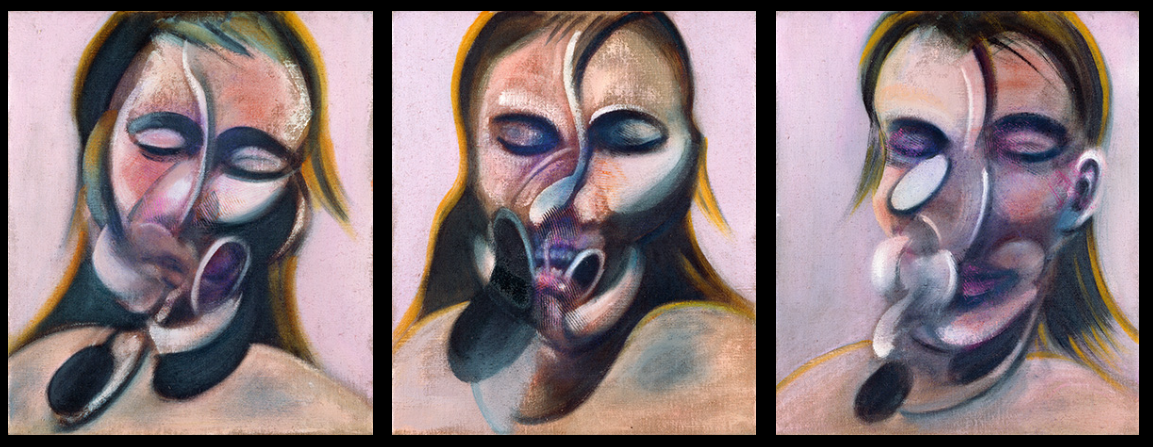
the phantom of provence
Eleven years after one of van Gogh’s most mysterious self-portraits was
destroyed in the war, David Plante writes, Francis Bacon painted a series
of homages that is now being shown in its entirety for the first time.
DAVID PLANTE |
FEATURES | VOGUE
|
JULY
2002
In 1966, when I was guest of the poet Stephen Spender at his home outside the
town of Maussane, in the South of France, Francis Bacon and his lover George
Dyer came down to join us. Stephen drove all of us about on excursions. The
autumn landscape, on which the light was magnifyingly bright, reminded me of van
Gogh’s first letter from Arles to his brother Theo in 1888 in which he noted “splendid
red stretches soil planted with vines, with a background of mountains of the
most delicate lilac.”
The four of us had very pleasant dinners in chilly restaurants where the soup
tureen steamed. Francis and George were, Stephen told me when we were alone,
getting on lovingly, not often the case. But the scene that comes most
forcefully to me from those days is this: Stephen was driving us along a country
road and was stopped by a policeman because a car up ahead had hit a small lorry
carrying pigs, and many of the animals were scattered across the narrow road,
their yellow-pink bodies and blood vivid on the gray tarmac. Francis, who was
sitting in the passenger’s seat, leaned forward, excited at the sight. As the
policeman guided Stephen among the carcasses to continue on our way, Francis,
his eyes large, stared out and even contorted his body to turn and stare after
we had passed through. I felt there was something overstated in Francis’s
excited, even transfixing, reaction to the dead pigs.
Over the next 25 years or so of our friendship, I heard Francis say, often and
adamantly, that all of humankind had no other fate but to be “dead
meat.” For
all the absoluteness with which he made such statements, he denied that his
paintings were in any way illustrations of them. He denied what many people saw
in his paintings of distorted, if not mutilated, naked bodies sprawled on bare
mattress – that they were interpretations of violence and horror. Francis was,
in his paintings, “just
trying to make images as accurately off my nervous system” as
possible. Ten years after his death, when I now think of such works as his
series of screaming popes, inspired by Velázquez’s Portrait of Pope Innocent
X, I wonder how I could ever have believed Francis when he denied how these
paintings were overstatements of violence and horror.
But then there are the paintings Bacon was inspired to do by van Gogh’s The
Painter on the Road to Tarascon (which survives only in reproduction, as it
was destroyed in Germany during World War II). The series – ten in all – is on
view this summer in a show at the Foundation Vincent van Gogh in Arles. Eight
are from 1957; another, a rather tentative first, is from 1956; and the last was
done in 1985. The first nine, unveiled in London in 1957 at the Hanover Gallery,
were received with great enthusiasm, especially for their vibrant reds, blues,
and yellows, and also because they appeared to be more accessible than the
artist’s previous work. Yet in John Russell’s in-depth study of Bacon, the art
critic writes that “in
the context of Bacon’s entire oeuvre,” he
finds the van Gogh series “perhaps
the weakest of his group paintings.” Over
the years following their appearance, Bacon according to Russell, developed “an
idiom which makes the van Gogh paintings look melodramatic and illustrative.” Yes,
there is something haunted in these paintings, for Bacon imagined himself, like
van Gogh’s original figure, to be a phantom on the road. And one could even
interpret the fifth painting in the series – of a figure tethered by his walking
stick to his shadow – as something of an illustration. But to me the van Gogh
paintings are the least melodramatic and illustrative of his work.
In a set of remarkable interviews with his friend David Sylvester, the art
critic, Francis said, “Van
Gogh I one of my great heroes because I think that he was able to be almost
literal and yet by the way he put on the paint gave you a marvelous vision of
the reality of things. I saw it very clearly when I was once in Provence ...
one saw in this absolutely barren country that by the way he put on the paint he
was able to give it such an amazing living quality.... The living quality is
what you have to get.”
I find much of what Francis said of van Gogh’s work to be true of his own,
especially of these particular paintings. As transformed as the figures in these
canvases are, for instance, they appear “almost
literal.” What
also adds to my growing appreciation of them is Bacon’s primary insistence –
like van Gogh’s – on the use of paint as the essential subject. The compellingly
applied reds and yellows and greens recall from van Gogh’s letters to Theo such
passages describing his own paintings: “The
ground is bright orange, the grass bright green, and the sky and water blue.”
After George Dyer’s death in 1971 – brought on by pills and drink, either
accidently or on purpose – Bacon painted a number of triptychs that reduced his
lover’s life to the brutal basics. George’s naked body eaten away by darkness,
George collapsed on a toilet, George vomiting into a washbasin. I once asked
Francis how he could bear such pessimism, which came from his deepest feelings
about the life and death of his lover and which had to be one with the
expression of it in the paintings. Once again, he denied that he was expressing
anything in his painting. He laughed a high-pitched, throwaway laugh and said
that as pessimistic as he was, he was an optimist for the simple fact of putting
paint on canvas. It was his way of doing this that gave all of his paintings
that “living
quality” –
but none more empathically than his haunted homage to van Gogh.

VAN GOGH’S SHADOW Study
for a Portrait of van Gogh V,
1957
Good help is very hard to find
By
NANCY BANKS-SMITH | TELEVISION | THE
GUARDIAN WEEKLY | THURSDAY
11 JULY 2002
The Strange World of Barry Who? (BBC4) was an
oddly engrossing look into the life of a hanger-on.
Barry Joule, a well-off nonentity, wheedled
his way into the lives of several celebrities – all gay – by being charming,
available and effusive.
Once you have scraped acquaintance with your first
celebrity, in his case Francis Bacon, you can catch many more if you bait your
hook with tasty bits of Bacon.
The rich and famous are particularly vulnerable when, in
an evocative phrase, they are "the phantom of someone who has been famous".
Like the dying Nureyev, whom Joule photographed in his
bath.
Vincent
Van Gogh et Francis Bacon,
frères de
sang par la peinture
En reconstituant la suite des toiles que l’artiste néerlandais inspira à Bacon,
la Fondation
Van Gogh a rendu tout son sens à cette série, bien au-delà de l’imitation et de
l’hommage.
PAR
PHILIPPE DAGEN | CULTURE | LE
MONDE | MONDAY
5 AUGUST 2002
En 1956, Francis Bacon a quarante-six ans. En dépit de cet âge, sa notoriété ne
fait que commencer à s’étendre hors de Grande-Bretagne. En 1953, pour la
première fois, il a exposé dans une galerie new-yorkaise. En 1954, il a été
présenté à la Biennale de Venise en compagnie de Ben Nicholson et de Lucian
Freud. En 1956, donc, la Hanover Gallery de Londres, alors sa galerie, lui fait
part de son désir de montrer ses tableaux récents l’année suivante. Jusqu’à ce
point du récit, témoins et historiens sont d’accord.
La suite est plus controversée, selon que l’on s’en tient à une version noble ou
triviale. La noble affirme que le peintre irlandais profita de la circonstance
pour rendre hommage à l’un de ses maîtres, Van Gogh, en choisissant l’une de ses
toiles comme thème pour une série de variations. La triviale, on l’a entendue de
la bouche de Bacon, quelques années avant sa mort, lors d’un déjeuner à Londres :
pris de court, racontait-il alors, ne sachant comment satisfaire Erica Brausen,
impétueuse directrice de la Hanover Gallery, n’ayant que fort peu d’œuvres à lui
fournir, il aurait cherché l’inspiration dans ses livres et l’aurait trouvée
dans la reproduction d’un Van Gogh détruit pendant la seconde guerre mondiale,
l’Autoportrait sur la route de Tarascon de 1888. D’après la photo, il se serait
enfin mis au travail. Tel était son récit, que confirme en partie un propos
rapporté par John Russell en 1971. Bacon lui aurait déclaré : "J’avais toujours
aimé ce tableau — celui
qui a brûlé en Allemagne pendant la guerre — et,
comme rien d’autre n’avait marché, j’ai eu l’idée de tenter quelque chose
là-dessus."
La phrase a le mérite de concilier à peu près les deux versions. Les "Van Gogh"
de Bacon seraient à la fois l’aveu d’une prédilection intime et une commande que
le peintre se serait passée à lui-même pour que l’exposition programmée se fasse
à la date prévue. Elle se fit. Elle eut, à en croire les témoins, une
inauguration assez chaotique, d’autant plus que la peinture était si fraîche que
les vêtements des visiteurs étaient menacés de finir barbouillés de vert et de
rouge.
Aujourd’hui, les couleurs sont sèches et les œuvres protégées par des vitres.
Elles appartiennent presque toutes à des musées, qui ont accepté de les prêter,
si bien que sept des huit variations exécutées par Bacon sont réunies à Arles.
Il n’en manque qu’une, propriété d’un intraitable collectionneur privé établi en
Suisse. S’y ajoutent deux Hommages à Van Gogh, l’un de 1960, l’autre de 1985, ce
dernier ayant été peint à la demande de Yolande Clergue pour l’ouverture de la
Fondation Van Gogh.
L’OCRE, LE BLEU ET LE JAUNE
Réunir ces peintures, dispersées en 1957, n’avait jamais été tenté :
l’exposition a quelque chose d’historique. On y voit comment un artiste peut se
projeter dans un autre, parce qu’il se sait absolument d’accord avec lui sur
l’essentiel : les raisons qui les ont faits peintres, malgré leurs contemporains,
malgré la plus élémentaire prudence. Van Gogh s’était représenté marchant vite,
son matériel de peintre sur le dos et à la main, coiffé d’un chapeau de paille,
sur une route, entre deux arbres, devant un champ de blé et une prairie. Ses
dominantes étaient l’ocre, le bleu et le jaune, posés en touches séparées ou
plates, tantôt à la Signac, tantôt à la Gauguin. Dans les Bacon, il y a un homme — ou
une ombre humaine —,
le chapeau de paille plat, les deux arbres et le sac à dos. Le noir, l’outremer,
le vert et le rouge sont projetés sur la toile avec des gestes brutaux, mélangés,
écrasés, flagellés.
Les formes et l’espace sont pris de contractions. Les arbres se tordent et
saignent. Les visages deviennent des grimaces de carnassiers. Le peintre allant
sur le motif devient un fantôme perdu dans un paysage de catastrophe. La leçon
est claire : tout peintre, s’il se veut à la mesure du monde, ne peut qu’être ce
fantôme qui cherche à tenir debout parmi les désastres. Sinon, il fait de la
décoration. Ce spectre s’appelle Van Gogh ou s’appelle Bacon : deux noms pour le
même destin, deux noms de "suicidés de la société". Bacon lecteur d’Artaud ?
Evidemment.
Que les variations de l’Irlandais ne ressemblent que de très loin à
l’autoportrait du Hollandais est logique : Bacon n’imite pas, il s’approprie un
autoportrait de Van Gogh pour en déduire son autoportrait à lui, légèrement
déguisé, profondément allégorique. Chaque variation a sa direction particulière :
du côté de la nuit, du délire, de l’attente, de la mélancolie ou de l’abandon.
Les gestes sont plus ou moins violents, le paysage plus ou moins bouleversé,
l’éclat solaire plus ou moins aveuglant. En raison de ces différences de
tonalité, on pourrait appeler cette série "Histoire du peintre".
Elle a sa conclusion un peu plus tard, en 1960. Sans raison apparente, Bacon
revient à Van Gogh. Il se saisit des autoportraits à l’oreille coupée. Devant un
cadre rouge, il place un Van Gogh à la tête bandée, fumant sa pipe, coiffé d’un
bonnet bleu-vert, presque un bonnet de fou. L’oreille manque, naturellement.
Mais un œil, le droit, manque aussi : l’orbite vide est tachée de rose et cernée
de blanc. Où retrouve-t-on la même mutilation ? Dans l’Autoportrait de Bacon dit
à l’œil blessé. On y retrouve aussi les chairs meurtries, le nez écrasé, la
bouche molle. Et le même œil gauche, furieux, mauvais, cruel — l’œil
du peintre toujours vivant.
Van Gogh vu par Bacon, Fondation Van Gogh, palais de Luppe, 24bis, rond-point
des Arènes, Arles. Tél. : 04-90-49-94-04. Tous les jours de 10 heures à 19
heures. Entrée : 7 €. Jusqu’au 6 octobre.
Exceptional
study of the human condition
This
account of the lives of such gay artists as Wilde and Bacon reminds us
of society’s debt to them, writes
Barry Egan
BARRY EGAN | BOOKS |
LIVING | SUNDAY
INDEPENDENT |
DUBLIN
|
SUNDAY, AUGUST 18, 2002
IN 1993 at
the Edinburgh Festival, Andrew O’Hagan, an editor at the
London Review of Books,
asked Colm Toibin to write about his homosexuality in a series of articles.
Toibin was taken aback at the thought. Maybe he shouldn’t
have been.
A few years later,
Toibin’s novel
The Story of the Night
told the absorbing tale
of a gay man, Richard Garay. It was set in Argentina during the time of the
generals. (Perhaps a young gay man growing up in 1960s rural Ireland
—
Toibin was born in 1955
in Wexford
—
saw the Catholic Church
as not unlike the oppressive South American junta?)
“My
sexuality,”
Toibin writes in the
introduction to
Love in a Dark Time,
“like
Richard’s
in that novel, was
something about which part of me remained uneasy, timid and melancholy. I told
[O’Hagan]
I couldn’t do it. I had nothing polemical and personal, or even long and
serious, to say on the subject.”
In the end, the
LRB
succeeded in getting
Toibin to write about homosexuality in general by commissioning him to review
books about or by gay writers. Between 1994 and 2000, Toibin found himself
“writing
constantly on the subject, not of the idea or the theory, of homosexuality for
the paper, but of the work and lives of homosexuals”.
As Toibin puts it
himself: “Writing these pieces helped me to come to terms with things
—
with my own interest in
secret, erotic energy (Roger Casement and Thomas Mann), my pure admiration for
figures who, unlike myself, weren’t afraid (Wilde, Bacon, Almodovar), my abiding
fascination with sadness (Elizabeth Bishop, James Baldwin) and, indeed, tragedy
(Thomas Gunn and Mark Doty).”
I love the the raw
honesty of “unlike myself”. Eight pages later, Toibin, writing about
inspirational left-wing activist and critic FO Matthiessen’s sexuality, notes
that he was not at ease (“deeply uncomfortable”) with his homosexuality and that
of others:
“Не
was not alone in that either.”
This is an emotive,
beautifully composed examination of some of the greatest figures of the 19th and
20th centuries, and the impact their sexuality, whether hidden or explicit, had
on their lives and work. What they have in common is a commitment to living and
thinking.
Love in a Dark Time
is “in the main about gay figures for whom being gay seemed to come second in
their public lives”, observes Toibin.
He writes poignantly about men as diverse as Bacon, Thomas Mann, Roger
Casement, Oscar Wilde and Pedro Almodovar. Particularly moving on Wilde, Toibin
here is a chronicler of the minutiae of Wilde’s battered soul. It is
heartbreaking stuff. He asks the one great question of Wilde: why did it take
two years of hard labour in Reading Gaol for him to realise that he should have
got rid of Lord Alfred Douglas, a man who professed to love him yet treated him
so shamefully?
Reviewing Richard Ellmann’s biography of Oscar Wilde, Toibin rebukes the
author’s view that between Wilde and lover Lord Alfred Douglas “money was the
stamp and seal of their love... since neither Wilde nor Douglas practised or
expected sexual fidelity”. Toibin writes: “That last sentence, so full of
judgement and certainty, shows us perhaps more about Ellmann than it does Wilde
or Douglas.”
James Baldwin, too, receives a dressing-down for his early novel Giovanni’s
Room, which fell into the convention that to be gay
—
or
non-heterosexual
—
was to be in some sense criminal, a miscreant, an outsider, someone in fear.
“This
fear,” Toibin insists, “belongs to us all: it is some-thing that almost every
gay person has felt at some level, at some age, in some place. The gay past is
not pure...it is duplicitous and slippery, and it requires a great deal of
sympathy and understanding.” But the future remains bright. “Soon in the Western
world, being gay will no longer involve difficulty and discrimination. In some
places, especially cities, this is the case even now, to the extent that the
phrase ‘post-gay’ is slowly becoming current.”
Toibin admires Francis Bacon’s refusal to play the role of “tragic queer”.
(Pedro Almodovar’s movies, of course, are full of characters only too keen to
play the tragic queer.) The painter wanted “to be buggered by Colonel Gadaffi”.
On Bacon’s far-from-dull life, Toibin is clear and insightful. Lambasting the
three authors who rushed to print after Bacon’s death, Andrew Sinclair, Michael
Peppiatt and Daniel Farson, Toibin notes: “It is one of the problems of
biography that it seeks out the colourful and the dramatic at the expense of the
ordinary and true.” Fair enough. But Bacon’s life was, in much the same way as
Wilde’s, great copy.
Mark Levine, writing in Men’s Journal, said recently that “Toibin
writes like a stylistic heir of Hemingway, in spare and brutally insistent
prose, and inhabits a domain of silence and inarticulate hurt with utter
conviction”. Hemingway’s dauphin or not, Toibin’s writing has sweep and flair
and wit and bite.
He
writes that other communities who have been put upon Jewish people, or Catholics
in Northern Ireland, for example
—
“have
every opportunity to work out the implications of their oppression in their
early lives. They hear the stories; they have the books around them. Gay people,
on the other hand, grow up alone; there is no history. There are no ballads
about the wrongs of the past, the martyrs are all forgotten ... “It would be
tempting to say Toibin is rising to the role of “tragic queer”.
Love in a
Dark Time doesn’t close on a clarion note. Toibin finishes the
book depressingly, contrasting Mary Kenny’s
Goodbye to Catholic
Ireland
and Eibhear Walshe’s study
Sex, Nation and
Dissent in Irish Writing.
Here we realise that Catholic Ireland has not said adieu at all, at all...
Toibin seeks to remind Catholic Ireland of the people “they have for so long
sought to exclude and marginalise”. He argues that on a scale of social distance
in Ireland, only five groups came below gay people: members of Sinn Fein;
followers of Hare Krishna; people with Aids; junkies, and the IRA.
Love in a Dark
Time
is an exceptional study of the human condition. And humanity is much in debt to
Wilde et al, whether it chooses to acknowledge the debt or not.

KEY FIGURE: Francis Bacon
Francis Bacon and the elephants
THURSTON HOPKINS | LETTERS
TO THE EDITOR | THE
TIMES LITERARY SUPPLEMENT | AUGUST
23 2002
Sir — I
can vouch for the paint still being wet when Francis Bacon’s Van Gogh pictures
went on show in the Hanover Gallery, as Michael Carlson suggests in his notice
of the exhibition of the artist’s work currently in Aries (August 16). In 1957 I
was a staff photographer on Picture Post, and, in an arrangement with the
Hanover Gallery, I was assigned to photograph some fashion models posing in
front of Bacon’s large canvases — a
somewhat bizarre departure for the magazine, but the 60s were just around the
corner.
While edging one of the pictures into a better light — the
exhibition had not yet opened to the public and paintings were resting against
the walls — I
felt my thumb skid on the brushwork running right up to the edge of the shallow
frame I quickly wiped my thumb on the nearest thing to hand: the lining of my
jacket. I was relieved to see my transgression had escaped Erica Brausen’s
notice as she chatted to one of the girls not far away. I have to say that at
the time I felt there was a certain poetic justice in my carelessness.
Some years before the Hanover show, when I was in Uganda, I photographed an
elephant standing up to its tusks in water. When this image was published in Picture
Post as part of a feature on the preservation of wildlife in Africa it
caught Bacon’s eye and served as a catalyst for a series of paintings of
elephants in long grass and water.
I understand Bacon destroyed most, if not all of them, but not before at least
one of them was photographed (and is reproduced in an early book on the
painter). Dan Farson, who also had a spell on the Picture Post staff,
told me he had seen a copy of the magazine on the floor of Bacon’s studio, open
at the spread of my pictures, paint-spattered and walked over. I remember
feeling a little irritated by this piece of information.
Now, in retrospect, I can see I was being deeply honoured.
THURSTON HOPKINS
Wilmington Cottage, Wilmington Road,
Seaford.
Francis Bacon’s paintings of Van Gogh gather in Arles
Fondation Vincent van Gogh assembles the surviving paintings in this series
By
EMMA BEATTY | THE
ART NEWSPAPER | SATURDAY,
31 AUGUST, 2002
Between 1951 and 1956 Francis Bacon created a series of paintings in homage to
Van Gogh’s “The painter on the road to Tarascon”, which was destroyed in World
War II and only survives via reproduction.
Painted in 1888, it shows Van Gogh carrying his easel and paints along a road
through bright yellow and green fields, strong sunlight casting a black shadow
of his figure. Bacon was so inspired that he walked along the road, near Arles
in the south of France, himself.
The eleven paintings that he created as a result were exhibited in 1957 at the
Hanover Gallery in London and then dispersed to private collectors and museums.
In 1985, Yollande Clergue, director of the Fondation Van Gogh in Arles, asked
Bacon to paint one more picture of Van Gogh in Arles to celebrate the opening of
the Van Gogh Foundation there in 1988.
Bacon agreed with the proviso that the finished painting should never leave
Arles; it never has, but now the other eleven paintings in the series have been
brought to Arles (until 30 September).
Despite the brilliance of colour and light in the south of France, Bacon’s
interpretations are notably darker and more despondent than Van Gogh’s: the
artist’s face has become a dark patch, the shadows more prominent. An exhibition
of photographs of Bacon accompanies the show.
‘Her
power is ageless’
DEIRDRE KELLY
meets Sophia Loren – screen
goddess, devoted
mother, tough cookie, and on top of her game as she turns 68
By
DEIRDRE KELLY | THE
GLOBE & MAIL |
MONDAY,
SEPTEMBER 16, 2002
“My
god!,” shrieks
Sophia Loren, a ringed hand flying into the air.
“You
said you’d take just one photo! You have taken now, how many?”
Her producer-husband Carlo Ponti (turning 90 in December) is said to
have amassed a fortune for the family.
He has produced most of Loren’s films during her 50-year career (he met
her when she was 15, the winner of an Italian beauty contest he was judging) and
in addition has a sizable art collection (including the biggest private
collection of Francis Bacon) worth many millions of dollars.
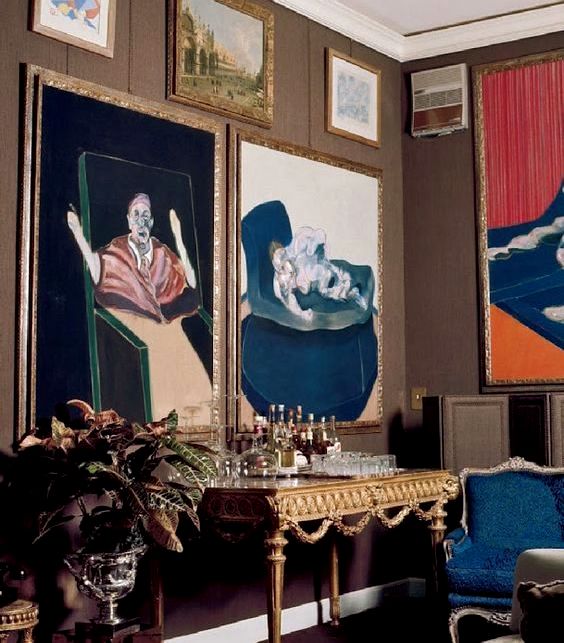
Gallery reveals Bacon findings
ARTS | ENTERTAINMENT | BBC
NEWS | MONDAY
23 SEPTEMBER 2002
Scholars have unearthed hundreds of sketches by artist Francis Bacon that have
been hidden away in his former studio for decades. The discovery of the
drawings, and some of Bacon’s paintings that were thought to have been
destroyed, has given art experts new insights into the way the artist worked.
Over 70 drawings which were found offer evidence that Bacon did make preliminary
sketches of some of his best known works, something he said he stopped doing
after 1962. Fragments of one of the paintings he destroyed – 1946’s Study
For Man With Microphones – were
also discovered. The painting vanished in 1948 and has always been thought of as
a lost artwork.
Other items thought to have given Bacon inspiration, including magazine articles
and a book from 1920 featuring photos of paranormal activity, were also
uncovered. The material was found by scholars who have been re-creating his
famously chaotic Kensington Studio at the Hugh Lane Gallery in Dublin.
The Gallery has been working on the project for two years and plans to present
its new findings on Bacon at a symposium to be held in November. “We spent two
years going through every single item,” Margarita Cappock, curator of the
Francis Bacon Studio and Archive at the Hugh Lane Gallery told BBC News Online.
“Our findings show that Bacon was a lot more deliberate in his work than he
pretended to be.” Bacon was born in Ireland to English parents but he left
Ireland when he was a teenager. He died in Spain in 1992.
For 30 years, he worked in a studio at 7 Reece Mews in South Kensington. His
studio was known for being chaotic and messy, with every inch of floor space
covered by newspapers, tins of paint and photos. Bacon himself once wrote that
his studio was the only place he could work because he was incapable of working
in places that were too tidy.
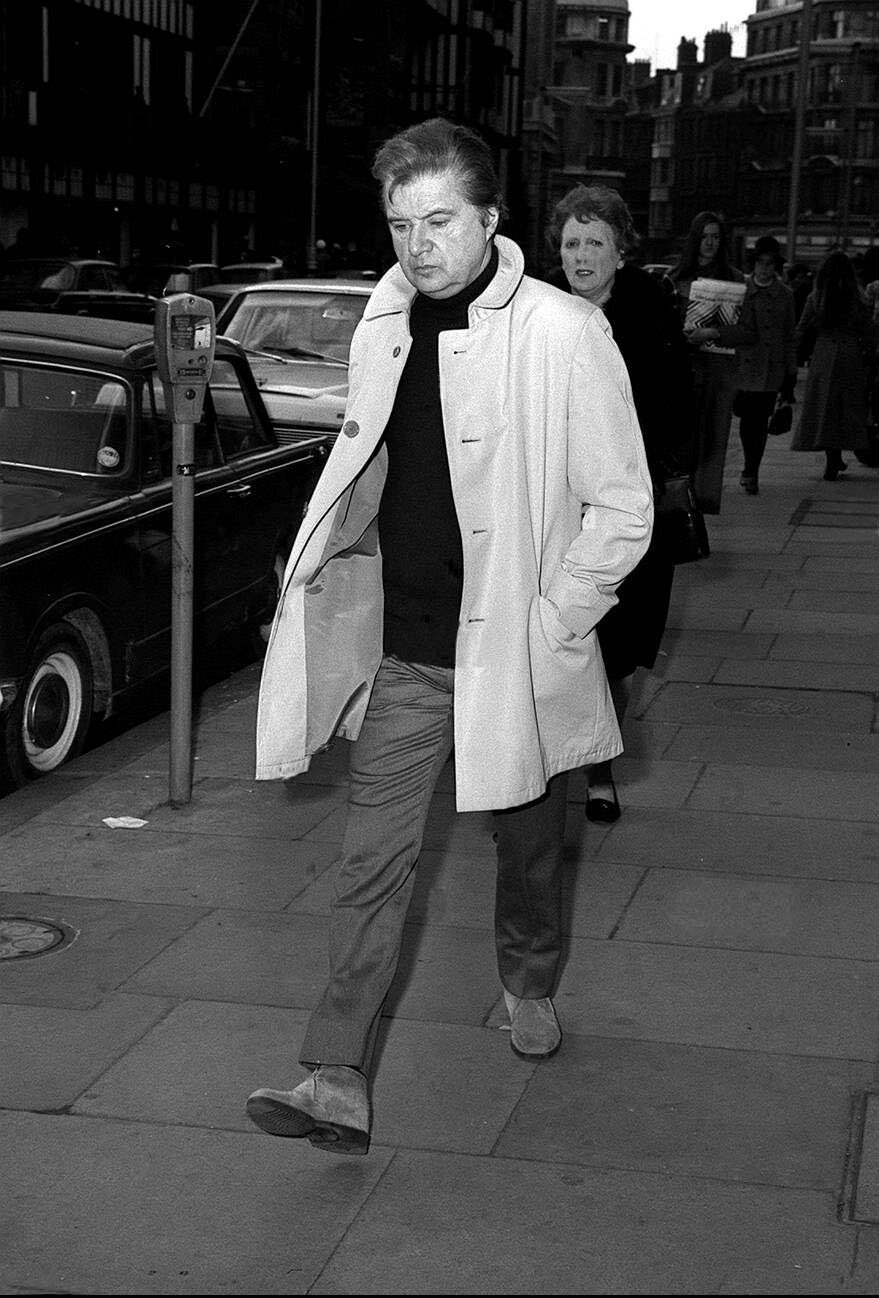
Bacon famously destroyed many of his paintings
The Reconstruction of the Francis
Bacon Studio in Dublin
DAVID J. GETSY | DOCUMENTS
22 | MONDAY
23 SEPTEMBER |
FALL 2002
Dublin has become the posthumous home of Francis Bacon. Some seventy-five years
after he left Ireland at the age of sixteen, he has been welcomed back as a
local art hero. In addition to important exhibitions and collections, the
centrepiece of Dublin’s embrace of Bacon is undoubtedly the re-creation of his
London studio. Originally located at 7 Reece Mews in South Kensington, the
studio and its contents have been moved to the Hugh Lane Gallery, one of
Ireland’s foremost museums of modern and contemporary art. Donated by John
Edwards and the Bacon Estate in 1998, the studio opened in May 2001 in a new
wing built specially to house it, as a permanent annex to the HLG, which has
undertaken the Herculean task of cataloguing and reconstructing Bacon’s famously
chaotic workplace. A team of archaeologists and art historians sifted through
the mass of material, ephemera, and rubbish contained in the studio at the time
of the artist’s death in 1992. The outcome of this "dig" is a vast, computerized
database of over seven thousand records, which viewers can peruse in an
interactive gallery. But while this painstaking effort of preservation and
reconstruction has yielded spectacular results, its underlying assumptions and
motivations appear to have gone unexamined. Within the history of modern art in
Britain and Ireland, Bacon has an iconic status analogous to Jackson Pollock’s
in the United States. Although retaining figurative representation, he
transformed it through an emphasis on the expressive gesture, and the absorption
and synthesis of a wide range of visual source material. Bacon used the piles of
photographs and newspaper clippings scattered throughout his studio as an
ever-evolving image bank. Perilously cluttered, 7 Reece Mews seemed to bear the
visual traces of his impulsive working process. (Comments by the artist, such as
"chaos for me breeds images," further support this assumption.) The small, dark
building also contained a tiny living area with the single bed where Bacon
slept.
Although collectors and museums were willing to pay extremely high prices for
his paintings, he lived and worked in these cramped quarters for over thirty
years. Throughout the literature on Bacon, photographs of the studio have
regularly been used to bracket discussions of his art. Through these photographs
and written descriptions of the space, the studio itself has become Bacon’s most
recognizable image. A popular, recently published coffee-table book by
photographer Perry Ogden, 7 Reece Mews: Francis Bacon’s Studio, provides another
example of the long-standing obsession with the studio as a spectacle distinct
from Bacon’s art. Preserved in a Plexiglas box in one room of the HLG’s new
wing, the studio is buffered by two information galleries. Viewers first
encounter a continuously running video of Melvyn Bragg’s interview with Bacon in
his studio from the South Bank Show, shot in 1985. The exit gallery
contains computer terminals giving visitors access to the database of the
studio’s contents. The gallery containing the studio itself is lined with
vitrines, display[1]ing a selection of significant objects extracted from the
artist’s workplace (most notably, Bacon’s cast of the death mask of William
Blake), as well as photographs of Bacon and his companions.
There are only three limited vantage points from which to see the interior of
Bacon’s workplace. First, a doorway opens onto the reconstructed atelier. The
spectator, however, is given only enough room to step inside the threshold, as a
Plexiglas box prevents further entry (a situation that also allows room for only
one person to view the space at a time). The two adjacent windows located on the
far end of the studio, which were kept blocked by Bacon with the back of his
canvases in progress, are opened up to provide a second site from which to peer
into the room. Perhaps the strangest treatment of the studio is the third avenue
of visual access. When not standing in the doorway or at the window, visitors to
the HLG installation are confronted mostly with blank, gray walls. In order to
add another vantage point to see inside the studio space, the far corner of one
of these solid walls has been pierced with two eyeholes. Two steel cylinders
have been attached to the holes and protrude out from the otherwise blank
exterior wall. Around twenty centimetres in length and ten in diameter each,
these protrusions contain fish-eye lenses, which allow the viewer to see parts
of the studio not visible from the door or through the windows. Bacon often used
the walls and ceilings of the studio as his palette. The lenses are focused on
sections of wall on which Bacon had tested out paints and colours, framing them
as if they were paintings in their own right. (Here, the installation builds on
an offhand comment by Bacon that these walls were his only “abstract” works.)
Whether peeking in the windows, looking through the Plexiglas-encased vestibule,
or peering through these eyeholes, the visual experience of Bacon’s studio
becomes like a solitary peepshow, a voyeuristic quest for the apprehension of
some titillating detail.
The limited and restricted vantage points guarantee that one cannot easily see
another person looking into the studio, no matter how busy the gallery is. The
installation keeps the viewer outside the studio but stages access to a
fictitious interiority. Because the studio’s main contents are tools and debris,
the viewer searches for clues and personalia in and amongst the rubbish. Reading
the headlines on discarded newspapers or looking at the photographs strewn
across the floor, spectators can easily be fooled into thinking that they are
gaining privileged access into Bacon’s private space. The initial shock of the
chaos of the studio fades, however, as one begins to recognize how its contents
have been subtly arranged. Too many of the photos and books are legible from the
doorway, forming lines of sight emanating from the main vantage point inside the
threshold. Despite its overwhelming mess and disarray, the space is a carefully
orchestrated artifice[1]one designed to convince us that we are seeing into the
inner workings of Bacon’s workplace and, by extension, his creative process.
Bacon himself never allowed others to watch him paint, but he did allow people
to visit the studio. It came to function, as in the South Bank interview, as a
means of deflecting attention rather than inviting examination. The studio was
less a window into Bacon’s private self (as the HLG installation implies) than a
shield behind which he could hide when others were present. The literal
sedimentation of images and materials was, indeed, a fundamental part of his
process, but the studio’s spectacular disarray also functioned as a form of
camouflage. Despite his undisguised homosexuality and dark subject matter, Bacon
achieved a legendary status during his lifetime and was frequently considered
one of Britain’s greatest living painters. Just as much as his powerful works,
his “mad genius” behaviour fueled these legends. Bacon hid behind the mythology
of the modern artist, and his workplace played a key role in aligning his public
persona with that stereotype. Consequently, it was perceived by many as a
transparent reflection of the inner workings of the mind that could produce such
disturbing paintings – concrete
proof of Bacon’s “disturbed” eccentricity. Stories of Bacon’s dealers wading
through the mess to find slashed canvases and recover buried paintings help to
confirm the image of Bacon as the contemporary heir to the popular myth of the
artist as mad, creative genius. Unfortunately, it is this stereotype, rather
than Bacon or his work, that the Hugh Lane Gallery ultimately capitalizes on and
enshrines.
The HLG project does little to illuminate the technical, conceptual, and visual
sophistication of Bacon’s art, nor does it critically engage with the
construction of Bacon’s artistic persona (by himself and others) through the
studio. For all the assiduous reconstruction of the space, the studio is
presented less as a workspace than as a social space. Photographs of Bacon’s
friends and companions (many taken in the studio) have been installed in the
display cases, yet there is little attempt in the installation to discuss how
Bacon actually used his studio and what it allowed him to do in painting. The
focus is largely on Bacon the individual rather than on Bacon the painter.
Fittingly, there is no art inside the studio. Unlike other reconstructions, such
as the Atelier Brancusi in Paris, the Bacon studio has had its art extracted. An
important group of over seventy drawings (Bacon repeatedly and famously denied
that he created drawings for his paintings) have been transferred to the HLG
collections. Some of the canvases, which remained incomplete upon Bacon’s death,
have been installed in a separate gallery in the studio wing, presented like
finished works. Preserved as it is in its Plexiglas shell, the Bacon studio
resembles an empty stage set, or an old-style natural history museum display. As
such, it lacks only its taxidermied. protagonist.
Undoubtedly, the cataloguing of the disparate contents of the studio and the
archaeological and photographic recording of their placement will be of use to
Bacon scholars seeking to uncover his employment of visual sources, new
techniques, and materials. This computerized visual catalogue is the real
benefit of the HLG’s efforts. It is marked, however, by the same problem as the
physical reconstruction of the studio space: the problem of attempting to freeze
one final moment in the history of an ever-changing environment. During his
life, Bacon’s studio could change dramatically and traumatically from hour to
hour. The database, much like the installation and the many photographs taken of
the studio before it was moved to Dublin from London, can only provide episodic
glimpses. Lost is the experience of the con[1]stantly shifting mass of materials
and images that made the studio so useful to Bacon. Nevertheless, the database
provides significant insight into the depth and range of sources at the studio’s
last incarnation. Beyond this valid justification for the enormous expense of
the project, the reason for preserving Bacon’s studio in a museum is singular:
to capitalize on the my[1]thology of the modern artist by providing visually
stunning but ultimately voyeuristic and somewhat exploitative entertainment. The
Hugh Lane Gallery may well have gained a successful tourist attraction, but it
has lost out on the chance to make a useful critical contribution to the
understanding of Bacon – or
of modern art.
Hundreds of ‘lost’ Bacon sketches surface in studio
Masterpieces he claimed to have ruined are found in debris, reports Dalya
Alberge
DALYA ALBERGE |
NEWS |
THE TIMES | MONDAY
SEPTEMBER 23
2002
BURIED under dust and a tangle of rotting curtains, hundreds of sketches by
Francis Bacon that have lain undiscovered for decades in his chaotic,
paint-splattered studio have been unearthed by scholars.
The discovery of the drawings and some of his paintings that lie said he had
destroyed is causing experts to rewrite their histories of the artist.
More than 200 drawings found amid piles of rubbish refute Bacon’s boast that he
never sketched some of his most celebrated creations before committing them to
canvas. Masterpieces he claimed to have ruined beyond repair by slashing them
with a knife were; found preserved among the mountain of books, papers and
photographs scattered around his studio.
Some of this treasure trove of material is published for the first time today
in The Times.
Scholars, art experts and devotees of Bacon say that it gives new insight into
his influences and techniques. The material was found accidentally by scholars
who were re-creating his Kensington studio at an art gallery in Dublin. The
studio and its contents were given to the Hugh Lane Gallery in the Irish capital
by his companion and heir, John Edwards.
He wanted it to go back to the city where Bacon was born. Faithfully reproducing
the studio just as he left it, the gallery staff had to pick through more than
7,500 items strewn over the floor.
The bohemian artist, who died a decade ago, took the art of hoarding to absurd
levels.
Nothing, it seems, was ever thrown out. There are old paint pots, broken brushes
and discarded furnishings covering every inch of the studio used by the man
considered to be the greatest British artist since Turner.
Everything — including stained carpets, filthy curtains and his artist’s debris
— was painstakingly picked up, packed, shipped across the Irish Sea, then
replaced in its exact position in a room built by the gallery at a cost of
£L6million.
As the staff reassembled the paint-splattered walls, floor, ceiling, staircase
and shelves, they picked through the thousands of items and will present their
findings at a two day public symposium in November.
The most astonishing revelation is how Bacon hid away some of the paintings he
insisted he had cut to shreds. Bacon was famous for destroying works — taking a
craft knife to even his finest pictures.
Having worked a painting to a certain level, he was driven towards destroying
it. Among more than 100 paintings in his studio, 80 had been slashed and bear
gaping holes. He said that he did not keep the sections he gouged out of the
canvas.
It had been assumed that his important 1946 painting Study for Man
with Microphones — a dark image of a crouching, monstrous figure —
had been painted over. The work disappeared without trace after 1948 and was
described as “lost” in
the 1964 definitive study of his work. It now emerges that the original 1946
painting had been kept at his studio in Reece Mews, London, where he lived and
worked from 1961 until his death in 1992. Also found there were its two cut-out
fragments.
Although the complete work has, therefore, survived, it will not be pieced
together, because that would go against Bacon’s wishes. The experts say Bacon
was usually extremely thorough in disposing of these fragments.
Margarita Cappock, curator of the Francis Bacon Studio and Archive at the
Hugh Lane Gallery, said: “This
makes the present discovery all the more remarkable.
“It is possible that he regretted slashing Study for Man with Microphones, as he
apparently did other canvases, and that he kept the fragments and the original
painting as a reminder of how the work once looked.”
One find that has particularly excited scholars is an eccentric book from 1920
with photographs of the paranormal, which Bacon appears to have copied on to his
canvases in some of his works. This, say experts, shows what a literal artist he
was. The book contains photographs of white ectoplasmic forms emerging from the
mouths of mediums and floating in the air.
The gallery’s researchers have linked several of Bacon’s paintings to
photographs in Baron von Schrenck-Notzing’s The Phenomena of Materialisation,
which documented psychic phenomena with pseudo-scientific photographic records
of physical manifestations of spirits or ectoplasms.
This book appears to have been one of Bacon’s greatest visual sources for
paintings of the late 1940s and 1950s. Not only does it bear many of his
paint-covered fingerprints, suggesting he was actually holding it while working,
but its pages include claustrophobic
images from which Bacon made startlingly similar copies.
Dr Cappock said: "The discovery should cause a stir among scholars and stimulate
a re-evaluation of how Bacon developed some of his most potent imagery.”
The 1961 head of Study for a Pope III, for example,
was based on an image supposedly documenting the materialisation of an ectoplasm
over the nose and mouth of the French President, Poincare. Bacon transforms the
figure into a Pope by placing a skull-cap on its head.
Paintings such as Study after Velazquez’s Portrait of Pope Innocent
X, 1953, appear to represent spectres.
Dr.Cappock, who lectures regularly at institutions such as the Tate, said that
the figures simultaneously materialise and dematerialise, suggesting an
apparition. “The use of large blobs of white paint in Bacon’s paintings is
frequently given a sexual significance. The Phenomena of
Materialisation suggests that these blobs had other associations
for the artist.”
From early 1962 onwards, Bacon always insisted that inspiration was spontaneous
and that he did not prepare his compositions with drawings. Although other
sketches have come to light since his death, there have been doubts about the
authenticity of some of them.
This new hoard of material proves that Bacon was drawing from the 1930s onwards.
In a 1950s drawing — on a ship’s headed notepaper, perhaps done on a visit to
South Africa — he scribbled a circular steel frame over which a man is crawling.
It has been linked to a 1965 painting. Like many of the drawings, it was found
stuffed inside a book.
Matthew Gale, a senior curator at Tate Britain, said: “Bacon was always very
reluctant to deal with sources. like many artists, he was interested in the end
result... and saw the digging around by scholars for sources as an irrelevance
It had nothing to do with the life of the work.”
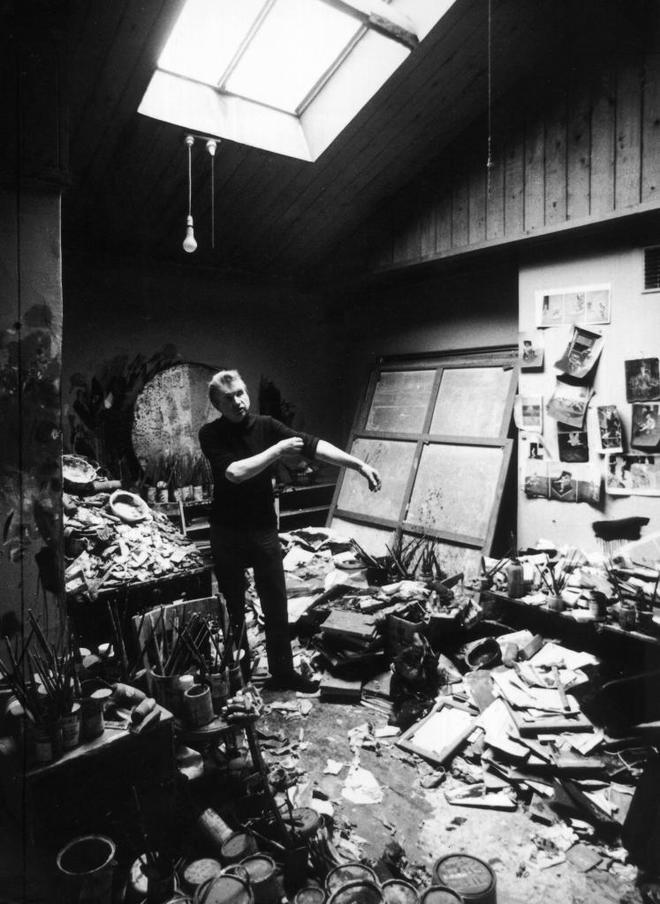
In Chaos theory: Francis Bacon in his cluttered studio.
Bring home
the Bacon!
NEWS | ANTIQUES
MAGAZINE | MONDAY
30 SEPTEMBER 2002
A Francis Bacon painting, Study for Pope II, has been
stolen from a house in Normandy, France.
The house belonged to one of the artist’s former workman, Barry Joule, who
struck up a friendship with the artist after erecting a television aerial for
him.
Joule blames a BBC documentary for alerting thieves as to the whereabouts of the
painting.
Francis Bacon Sketches Discovered
NEWS | THE
SUNDAY MIRROR | SUNDAY
5 OCTOBER 2002
HUNDREDS of
previously unknown preliminary sketches and slashed works by Ireland’s most
famous post-war artist, Francis Bacon, have been discovered by art scholars. The
finds, made at Hugh Lane Municipal Gallery, have been described as "a
spectacular insight into Bacon’s mind" by the gallery’s director, Barbara
Dawson.
The discoveries came as the artist’s chaotic Kensington bed-sit studio was
dismantled and transported from London to Dublin after being gifted to the
gallery by the artist’s heir, John Edwards. The move, which cost Û2.6 million,
began in secret more than two years ago in case the British government tried to
block it.
The studio at Reece Mews had been virtually untouched since the artist died of a
heart attack in Spain in 1992. It has since been painstakingly recreated, item
for item, at the gallery where it is now a major attraction.
The new finds were made by staff sifting through the clutter. The preliminary
drawings contradict Bacon’s assertion that he did no preparatory work for his
later paintings. Ms Dawson said: "It’s a very major find and important because
for the first time we know how Francis Bacon approached his work.
"The material that we have discovered was inspirational for his extraordinary
images, some of which are considered some of the finest paintings of the 20th
century." About 200 preliminary sketches have been found, 1,500 photographs and
100 slashed paintings.
"He may not have done conventional preliminary work but he certainly did a lot
of painstaking research, realising the concept he had in his head before he went
on to do the actual painting.
"He did a lot of preparatory work." One of the slashed paintings dates back to
1946, though Bacon didn’t move to the Mews until 1961. It is quite amazing to
think that he kept it with him all his life. We found the two pieces that were
actually slashed from the canvas. It was actually slashed many years after it
was painted."
Ms Dawson said she doubted they would attempt to restore the slashed paintings:
"I think that might go against the artist’s wishes. He had particular reasons
for slashing the canvas. Some are quite violently slashed and some just have the
faces cut out."
Bacon was born in Baggot Street in October 1909 after his father moved to
Ireland to train horses. The studio, where he created many of his most famous
works, had been offered to London’s Tate Gallery. It failed to respond, but
galleries in the US and Japan were said to be interested.
Then, when Hugh Lane was approached it gathered a specialist team to move the
studio lock, stock and barrell. First into the bed-sit was a surveyor, then
archaeologists, archivists, conservators and cataloguers. In the chaos, every
single item was numbered and tagged and its location marked with precision in
relation to everything else. Its angle in the room, its orientation and exact
position was logged.
Specialists who normally dealt with Renaissance and frescoed walls removed the
dry-lined walls of the bed-sit. They were extensively daubed with paint as Bacon
mixed his colours on them as he worked. Everything was moved, walls, floor and
ceiling.
The studio was also re-created in virtual reality on a computer. There were more
than 7,500 items in the clutter including photographs of surgery, dead people
and animals, piles of books several feet high, clothes, newspaper clippings,
letters, notebooks and a broken mirror.
The new finds will go on display for the first time at a symposium on the
artist’s work to be held on November 8 and 9.
St. Kilian’s Community School
ART TRIP
SCHOOL REPORT |
WICKLOW PEOPLE |
THURSDAY, OCTOBER 24, 2002
Last week Transition Year Art students in
St. Kilian’s visited the Municipal Art Gallery Parnell Square and the Irish
Museum of Modern Art with their teachers Ms. Gallagher and Mr. Lawless. In the
Municipal Art Gallery the students got to see the Francis Bacon Exhibition. The
studio of this amazing artist is in the art gallery plus a video of an interview
with Melvyn Bragg in which the artist talks about his work. The students found
this an invaluable insight into understanding what his work is about. The second
exhibition visited was the Louis Le Broque exhibition. Many students were
familiar with the story of Cu Cullainn and to see Le Broque’s beautiful
illustrations in tapestry rounded off the trip nicely.
Mystery man
A fashion photographer who despised gloss is the subject of a fine
retrospective
A MAVERICK EYE: JOHN DEAKIN
Dean Gallery, Edinburgh
By JOANNA PITMAN | EXHIBITIONS | THE
TIMES | TUESDAY,
NOVEMBER 5,
2002
JOHN DEAKIN was good at annoying people. Paul Scofield described him as “a
vicious little drunk of such inventive malice and implacable bitchiness that
it’s surprising that he didn’t choke on his own venom”.
As a photographer contracted to Vogue in the late 1940s and early 1950s, he was
often drunk, he made the models cry and he reduced the fashion editors to
weeping fury. The Vogue Editor, Audrey Withers, admitted that he was “incapable
of taking a good picture of a beautiful young woman,” but despite that, she gave
him a salary and gave him his head. Deakin produced a body of photographic work
which, although distinctly unglossy, had exceptional breadth, vision and
integrity.
Deakin has already been the subject of two major exhibitions — at the V & A in
1984-85 and at the National Portrait Gallery in 1996. Now he is up for his third
major retrospective in 20 years, at the Dean Gallery in Edinburgh. The show
includes many of his searing portraits, a large number of documentary images
never seen before, and a series of fragile photographs excavated from under the
floor of Francis Bacon’s studio. Bacon used these torn, paint-spattered portrait
fragments as an aide-memoire, though Deakin, who died in 1972, would not have
been the slightest bit concerned. He used to lose his own regularly, trample on
them, rip their corners in filing cabinets. He disparaged his own work and
doubted the status of photography as art; he wanted to be a painter.
So why the third show in 20 years? Robin Muir, who has written two excellent
books on Deakin and curated this show, says that Deakin’s name is only now
getting the recognition the man denied himself in life. “His portraits still
look starkly modern half a century on,” he says. “His street photographs are
haunting documents too.”
Deakin spent much of his London life among the heavy-drinking painter and
literary crowds. Many of his finest portraits were taken of Soho’s habitués
for Vogue in the early 1950s, tightly cropped and revealing every blemish. These
portraits, unlike anything commissioned by the magazine at the time, had an
almost brutally intimidating life force. They made no concessions to his
sitters’ vanities. Deakin got right under the skins of his friends Lucian Freud,
Frank Auerbach, Francis Bacon and the rest of the Soho crowd. His portrait of
Louis MacNeice is an excoriating close-up showing the poet, with his
coffee-coloured complexion and bloodshot eyes, like the old crony roused from a
heavy night. It is a face marinated in experience, deeply etched with lines of
life-long weariness.
Eduardo Paolozzi gazes out of a grainy, fleshy face in 1953, his hands as pudgy
as a toddler’s, his dark eyebrows meeting like handlebars over his dark and
fiercely thoughtful eyes. These are courageous photographs, their force a
measure of the degree to which the subject and the photographer agreed to risk
trust and acceptance of each other.
After Deakin was fired from Vogue, he gypsied his way through the capitals of
Europe, pointing his camera at shop windows, at graffiti on walls, at
cemeteries, flea markets and hidden alleyways. As Colin MacInnes wrote in The
Times: “Mr Deakin has an astonishing eye for the peculiar hidden in the
ordinary: where the casual observer sees only a shop-front or the façade of a
house, Mr Deakin sees one side of Alice’s looking-glass and the infinite
mysteries that lie behind it.”
Bacon & Caro
Will Bennett reports on
exhibitions at the Marlborough Gallery
By WILL BENNETT | CULTURE | THE
DAILY TELEGRAPH | MONDAY
11 NOVEMBER 2002
An
exhibition of works by Francis Bacon, which opened last week at the Marlborough
Gallery on West 57th Street, New York, marks the end of a turbulent chapter in
the company’s history. Marlborough represented Bacon from 1958 until after his
death 10 years ago. But in 2000, Marlborough was sued by Bacon’s estate, which
claimed that the gallery had financially exploited him.
Marlborough strongly denied the allegations and the estate eventually withdrew
the case earlier this year. However, while the dispute was in progress
Marlborough could not mount any exhibitions from its holding of works bought
from Bacon in his lifetime.
"During the lawsuit, which lasted about two and a half years, our lawyers’
advice was not to market the pictures that we owned and not to exhibit them,"
says Gilbert Lloyd, son of the gallery’s founder Frank Lloyd. Once the case was
concluded, Marlborough dipped its toes back into the water by showing a few
Bacons at the Art Basel in June, but the exhibition that opened in New York last
Monday is the first on its own premises.
Nine major works by Bacon, including three triptychs, are on show until December
7 at prices ranging from £2.2 million to £6.4 million. "The reason we chose
November in New York," says Lloyd, "was to coincide with the auctions, as most
of the art world comes to the city at that time."
Marlborough is planning to loan some Bacons to museum exhibitions and will also
hold more shows of its own.
Pauline Vogelpoel
Director of the Contemporary Art Society, she was an innovative force behind
corporate involvement in art sponsorship and collecting
BY SUE MACGREGOR |
OBITUARIES | NEWS | THE
GUARDIAN | THURSDAY
2 JANUARY,
2003
“Everything about Pauline
Vogelpoel exudes style,”
said Roy Strong in his Diaries. He admired her eye for colour and design, and
mentioned her white drawing room in her Little Boltons flat in the 1970s, with its “pretty
and unusual objects”,
many of them discovered in the Portobello Road. These
included pressed glass plates commemorating Queen Victoria’s Diamond Jubilee, a
selection of prints of the Great Exhibition and her own private collection of
British contemporary art.
Vogelpoel, who has died aged 76, was born in Lourenço Marques, the capital of
what was then the Portuguese colony of Mozam-bique. Her father, the Dutch consul
there, ran a trading and shipping business. After his early death, her French
mother moved to South Africa and settled in Cape Town. Pauline was educated at
Herschel School and graduated from Cape Town University. After this she ran a
small gallery for the South African Association of Arts and opened her own
pottery studio.
In 1950 she moved to London with, as she put it later, “two pictures, six indigo
blue dessert plates, a curious whalebone box and a trousseau of quite unsuitable
clothes”.
With her looks, charm and infectious enthusiasm for people, design and colour,
she drifted towards what was to be a long career promoting modern British art.
In 1954 she joined the Contemporary Art Society, based beneath the Tate Gallery,
as an assistant.
The CAS was founded in 1910 by Philip and Ottoline Morrell and Roger Fry in
order to exhibit the best of contemporary works, with an emphasis on British
artists. Soon museums and progressive galleries countrywide benefited from CAS
help. By 1956 Pauline was made its organising secretary, and in 1976 its
director. She transformed it from a reputable institution into a notable one,
working hard in its little basement office, inevitably accompanied by a pug dog
called Lucas.
Pauline realised that to keep the CAS’s high profile she should attract
corporate supporters and that she should organise “treats” for
them. These soon included glamorous candlelit dinners in the Duveen Gallery, and
trips abroad. The first involved chartering a plane to Amsterdam for the day,
but soon there was a visit to Washington and to New York, where the Museum of
Modern Art - where Pauline had worked briefly in the early 1950s — organised
a reception in their honour.
By the mid-1960s the treats had become trailblazing and exotic forays,
involving visits to public and private collections in China, Nepal, Russia,
Cambodia, Mexico, India, Pakistan, Afghanistan and east and west Berlin, always
accompanied by dozens of adoring members. The CAS committee during her time
included many distinguished names: John Rothenstein, Bryan Robertson, Anthony
Lousada, John Sainsbury, Marina Vaizey, Edward Lucie-Smith and Nancy Balfour.
Among Pauline’s other important ideas for the CAS was distribution exhibitions,
from which member museums could select works of art. At her first, in the late
1950s, the curator of the Batley Art Gallery, a pipe-smoking Yorkshireman,
spotted a Francis Bacon that the Tate itself did not want. “I
like that,” he
said, and he got it. In 1967 the CAS presented Henry Moore’s Knife Edge — Two
Piece to the City of Westminster. This is now outside the Houses of
Parliament and has become one of the best-known pieces of public art in London:
television camera crews have been known to use it as a handy shelf for their
equipment.
She also encouraged for the first time the necessary involvement of the
corporate sector in sponsorship and collecting: the CAS’s first corporate buying
project was for Mobil Oil, and subsequently they carried out similar work for
for the Diamond Trading Company, now better known as De Beers. The prize work in
De Beers’s early collection was Patrick Caulfield’s Engagement Ring, which she
managed to persuade out of the hands of a private buyer.
She was an immensely kind and generous host to her friends. As a teenager, newly
arrived from South Africa, I was scooped up by Pauline and invited to London
parties or weekends at her Oxfordshire cottage: her circle was wide and devoted.
Among her artist friends were Bryan Robertson (obituary, November 19 2002) of
the Whitechapel Art Gallery, and the Royal Academicians Peter Blake and Tom
Phillips.
In 1975 she married the banker David Mann. He took a job in Basle and in 1982
she left the CAS to join him. There she could continue to enjoy her other loves — listed
in Who’s Who as cooking, music, junkshops and pugs (there were to be five
Lucases) — while
keeping abreast of the contemporary art world. She and David lived in a large
apartment in a miniature baroque palace in the Altstadt area of the city, where
her talent for finding and displaying “pretty
and unusual objects” could
still flourish. And on the deep red walls were displayed Patrick Prockters, a
Lucian Freud self-portrait, Hockney etchings and a Gwen John.
When the CAS’s history was written close to its 90th birthday, Pauline’s name
was, curiously, hardly mentioned; this was no doubt deeply hurtful to her,
though she never said so in public. Much to the delight of her friends, she
continued to enjoy frequent visits to London; her undimmed charm and joie de
vivre will be intensely missed.
Pauline Vogelpoel Mann, arts administrator, born April 24 1926; died December 22
2002
Works on Paper by
Francis Bacon
in the Hugh Lane
Gallery, Dublin
BY MARGARITA
CAPPOCK |
THE
BURLINGTON MAGAZINE | VOL.
145 | NO.
1199 | FEBRUARY,
2003
Francis Bacon lived and worked at 7 Reece
Mews in South Kensington, London, from 1961 until his death in 1992. One of a
short row of converted coach houses on a quiet cobble-stoned lane. The house was
small and utilitarian in layout. The ground floor was almost entirely occupied
by a large garage where Bacon kept surplus items from the studio. An extremely
steep wooden staircase, with a rope for a handrail, led to a landing. On the
left was Bacon’s spartan bed-living room. Ahead was an eccentric
kitchen-cum-bathroom. To the right was the studio, the most important room in
the artist’s life.
Bacon said himself of his cluttered studio,
"I feel at home here in this chaos because chaos suggests images to me." Bacon
rarely painted from life and the heaps of torn photographs, fragments of
illustrations, books, catalogues, magazines and newspapers provided nearly all
of his visual sources. Some of the most significant studio items include seventy
works on paper and one hundred slashed canvases.
The vast array of artist’s materials,
household paint pots, used and unused paint tubes, paint brushes, cut-off ends
of corduroy trousers and cashmere sweaters record the diversity of Bacon’s
techniques. It is from here that Bacon’s stature grew into that of the
pre-eminent figurative painter of the late 20th century. While Bacon
occasionally looked for a new, grander place to work, he continually returned to
this awkward but familiar room.
When the Hugh Lane Gallery, Dublin,
received the donation of the entire contents of Bacon’s studio in August 1998,
the subsequent cataloguing of every single item, amounting to 7,500 entries,
proved extremely rewarding and a number of important revelations have been made
about the artist’s life, inspiration, unusual techniques and working methods.
The most important discovery was a
considerable quantity of works on paper by Bacon. These are significant for a
number of reasons, not least because Bacon persistently denied that he ever made
preliminary sketches for his paintings. This article explores the controversy
surrounding the existence of these works on paper, their relationship to Bacon’s
finished paintings and what they reveal about the artist’s thought processes and
working methods.
The notion that Bacon did not draw derives
from interviews between the artist and David Sylvester, the critic and curator
most closely associated with the artist. These interviews were broadcast on both
radio and television and, first published in book form in 1975, have been
reprinted several times with the inclusion of additional interviews. In the
first one, of October 1962, the following exchange took place:
David Sylvester: “And
you never work from sketches or drawings, you never do a rehearsal for the
picture?”
Francis Bacon: “I often
think I should, but I don’t. It’s not very helpful in my kind of painting. As
the actual texture, colour, the whole way the paint moves, are so accidental,
any sketches that I did before could only give a kind of skeleton, possibly, of
the way the thing might happen.”
This stance was maintained until
Bacon’s death in 1992 and went relatively unchallenged. However, in David
Sylvester’s “Looking Back at Francis Bacon” (2000), he referred to the artist’s
drawing as his “secret vice”.
He defended his own position by
stating: “… I, for my part, wasn’t being entirely truthful with him when in that
interview, as in others from 1962 on, I courteously refrained from mentioning a
series of small pencil sketches for paintings which I had seen in the endpapers
of his copy of a paperback edition of poems by Eliot.
However, I had been gullible enough
not to have realized that these were the tip of an iceberg. Since the artist’s
death, a considerable number of drawings, both by Bacon and attributed to him,
have surfaced. In 1996, six drawings and one over-painted item were exhibited in
the Francis Bacon retrospective at the Centre Georges Pompidou in Paris but
these were seen as being rare examples.”
Then in 1997-98, the Tate Gallery
in London acquired a number of Bacon drawings and these were exhibited there in
early 1999. The provenance of the Tate drawings, some forty works in total, is
of interest. In the 1950s, Bacon had given four of these drawings to the poet
Stephen Spender who was a close friend and had written articles on the artist.
The other drawings acquired by the Gallery were also gifts, in this instance to
Bacon’s longstanding friends Paul Danquah and Peter Pollock who had kept them
until after Bacon’s death.
Another archive of drawings and
sketches, allegedly by Bacon, surfaced in Italy. Christian
Ravarino, an Italian-American journalist, originally owned this material, but it
has now been sold and dispersed among several Italian collector. Then there is
the Joule archive, a controversial body of work consisting of sketches and
over-painted material attributed to Francis Bacon, which emerged in 1996. Barry
Joule, an amateur artist who met Bacon in 1978, claims that he was given the
material shortly before Bacon’s departure for Madrid where he died in April
1992.
Although the material was first
accepted as genuine by leading figures such as David Sylvester and David Mellor,
its authenticity has since been questioned. A selection was shown both at the
Irish Museum of Modern Art, Dublin, and the Barbican Centre, London. Further
analysis and research is warranted before the authenticity of both the Ravarino
material and the Joule archive is resolved.
Among various possible reasons why
Bacon remained secretive about his drawings, one persuasive explanation was
suggested by David Sylvester when he said that “ Early on [Bacon] decided that
he couldn’t draw, and thereafter pretended that he didn’t”. Although Bacon was
not a conventionally skilled draughtsman, drawing was often central to his
admiration for several Old Masters and contemporaries. Indeed it was an
exhibition of drawings by Picasso, seen by Bacon in Paris in 1927, that prompted
him to become an artist. He profoundly admired Michelangelo’s drawings for
“their grandeur of form and grandeur of image” and thought they were the
greatest things he ever did. Of Giacometti he went so far as to say that “he
never had any necessity to do sculpture or to paint, that he was able to do
everything in his marvellous drawings”.
Another possible explanation for
Bacon’s secrecy is that he may have believed that his own drawings, if shown,
would be viewed unfavourably in comparison with the drawings of other artists.
But most importantly, should he have admitted that he made drawings, Bacon would
have dispelled the myth that his works on canvas were entirely spontaneous.
However, on closer examination, the deliberate, studied quality of many of his
paintings belies any notion that they were made without preliminary preparation
or study.
More than seventy works on paper
were found in Bacon’s studio. Given the rich diversity of this graphic material,
several distinctions must be made between the different types of these works on
paper. The most logical subdivisions are as follows: drawings on paper;
hand-written notes by the artist; interventions that Bacon made on leaves torn
from magazines, books, catalogues and photographs.
The drawings were executed on a
variety of media including tracing paper, lined paper, chain-laid manufactured
paper and the blank end-papers of books. Some are cursory sketches executed in
either pencil or ink, including several earlier drawings.
Others are in ball-point or
felt-tip pen and there are also some sketches in oil. Most are monochromatic and
all the drawings are unsigned and undated. While there is an inherent difficulty
associated with accurately dating these works, approximate dates can be assigned
on a stylistic basis. Some bear close similarities to finished paintings,
whereas in other instances the links are less obvious. Taken together, the
material provides an excellent representation of the type of works on paper that
Bacon produced from the 1930s onwards.
These works on paper, along with
others by or attributed to the artist, indicate that Bacon’s approach to
painting was far more premeditated than he cared to admit. While they may not
compare favourably with works on paper by similarly significant artists, they
have considerable value in illuminating Bacon’s method of selecting, defining
and exploring his motifs as well as contributing to a fuller understanding of
his creative process. His interventions on existing images reveal a direct
engagement with his sources and offer intriguing insights when considered
alongside his extant or destroyed paintings. His hand-written notes, which need
further study beyond the scope of this article, provide an immediate, if
sometimes obscure, record of his thought processes.
It is perhaps ironic that the best
way to describe Bacon’s drawings is in his own words. When he said, “any
sketches that I did before could only give a kind of skeleton”, he left us with
a tellingly accurate description of his works on paper.

An insightful view into an
artist’s world
Francis Bacon Studio at Hugh
Lane Gallery, Dublin
JACKSON ELLIS |
ARTS
& CULTURE | WORLD
SOCIALIST | LONDON
| WEDNESDAY
5 FEBRUARY 2003
The almost life-long art studio and residence of Francis Bacon (1909-92) was
recently donated and transported from 7 Reece Mews, London and placed on
permanent exhibition at the Hugh Lane Gallery in Dublin, Ireland. John Edwards,
Bacon’s sole heir, made the donation; the most significant since Hugh Lane was
established in 1908. The relocation was carried out with all the care of a major
archaeological dig, with each and every item—some several thousand in
all—catalogued and exactly repositioned in the Dublin gallery.
The expense and energy required for the project created some controversy.
Relocation and reconstruction cost in the vicinity of IE£1.5 million ($US2.02
million), partly provided by the National Millennium Committee, a state-funded
body. An entrance fee of IE£6 ($US8) for over-18s also generated some debate
because public art institutions in Ireland are generally free of charge. Some
critics raised concerns about the dedication of permanent space to the studio
because the Hugh Lane Gallery is quite limited in size; others suggested that
the exhibit was not a work of art and therefore had no right to be located in
the gallery.
These objections, however, do not alter the fact that the exhibit, which has
attracted considerable interest and large crowds since opening in May 2001,
provides a rich and meaningful insight into the work and life of this
significant 20th century artist.
Despite its limited size, the Reece Mews studio was where Bacon was most at
home. He had tried working in other, more practical studios but could not warm
to them. More importantly, it constitutes the most extensive collection of
visual reference material that inspired his work.
Physical access to Bacon’s principal place of work, therefore, is extremely
helpful for anyone who wants to understand the makeup, methods and origins of
his art. Along with the studio, the exhibit contains an interview with Bacon by
Melvin Bragg, several new paintings, including his final unfinished piece, and a
lush, complex interactive multimedia presentation establishing the context of
many items in the studio.
Francis Bacon, one of five children, was born in Dublin on October 28, 1909, to
English parents, Edward Anthony Mortimer Bacon and Christine Winifred Firth.
Bacon’s parents were of wealthy, land-owning descent and remained in Ireland
until World War I, where after they moved between England and Ireland.
Bacon was born into a world undergoing tremendous upheaval. The Irish Republican
Movement was torching English-owned properties in a campaign aimed at ending
British rule, and Europe was beset with increasing tensions between Britain,
Germany and France. At the same time, science and industry were making great
advances and large numbers of working people were demanding a new political
order with real improvements in their social existence.
Bacon, who was said to have been closest to his mother, was a frail child and
frequently ill. His father, an austere, puritanical figure, regarded his son as
weak and reacted with horror against the young man’s homosexual tendencies.
(Homosexuality was illegal in Britain at this time and severely punished.)
Shortly after the 17-year-old Francis was discovered dressed in his mother’s
clothes in 1926 his father forced him out of the family home. Over the next few
years he spent time in Berlin, Paris and other European cities, a period that
defined his personal and artistic development.
The bohemian and more open post-WWI Berlin and Paris were dramatically different
to the highly repressed and conservative Irish social life with which Bacon was
familiar. His visits to these cities were defining experiences and he spent time
passionately sketching in the transvestite bars of Berlin and on busy summer
evenings in Paris’ Montparnasse district.
It was during a visit to Paris in 1927 that the 18-year-old Bacon saw Picasso’s
drawings at the Paul Rosenberg Gallery. He later explained that these works had
made a great impression. In fact, Bacon was to name Picasso as the most
significant influence on his work. Michael Peppiatt, the art critic and author
of Francis Bacon: Anatomy of an Enigma, described Picasso as a “father figure”
to Bacon.
Although not as prolific or artistically varied as Picasso, one can see the
connection between Bacon’s explorations of the figure and Picasso’s—for example,
Bacon’s attempts to represent and capture far more of a person than the mere
conventionally representable. But the similarities end there. Picasso was full
of passion and the joy of life and simply could not stop creating. A dynamic and
playful artist and person, he created in a multi-dimensional way. Bacon, by
contrast, was far more introverted in his approach and his work radiates pain,
confusion and uncertainty.
Visual inspiration
Bacon, who held his first solo exhibition in 1934, drew on many and varied
sources of inspiration. He chose not to paint from life, but rather from memory
and an eclectic collection of visual images. His portraits—even of close
friends, whom he painted frequently—were derived from photographs. The aim of
this practice, he said, was to “deform his portraits back into appearance,”
because the presence of sitters in his studio would “disturb the deformation.”
The Reece Mews studio contains all the recognisable visual influences in his
work: reproductions of Diego de Silva Velázquez’s painting of Pope Innocent X;
the screaming woman from Sergei Eisenstein’s Battleship Potemkin; and
photographs of Bacon’s lover and long-time partner George Dyer.
But working through the maze of Bacon’s studio one comes into contact with an
extraordinary range of images—virtually everything the 20th century had to
offer. There are black-and-white reproductions torn from books and medical
journals; x-rays and film stills; phonograph recordings; and images given to him
from photographer friends John Deakin and Peter Beard. Bacon was also captivated
with the carnal and the animal and the studio contains pictures of animals
screaming in aggression and pain and includes many images from the great African
plains and the predators found there. One can imagine him randomly drawing on
these pictures in times of difficulty and low motivation.
Bacon, who had many dark sides to his imagination, was obsessively focused on
the human figure and painted it in a compelling and complex style. This darkness
was indicated by his fixation with disease, particularly of the mouth and skin,
and manifest in one of his best-known works—Study after Velázquez’s Portrait
of Pope Innocent X (1953)—an unsettling picture of a screaming,
inhuman, blood-spattered pope.
One long-standing and debatable habit of Bacon’s has blocked greater access to
his artistic work. A passionate and explosive man, he would often erupt in anger
and destroy any painting that displeased him or fell short of the mark. When
asked by his friend, the writer and curator David Sylvester, about this
practice, Bacon said he “liked to find accidents in the image and would often
ruin a found image in the course of attempting to explore and develop it
further”. While Bacon ruined many pieces, particularly those from the 1930s and
early 1940s, he later regretted the destruction of some works, particularly an
important early painting, Wound for a Crucifixion.
Although Bacon spoke at length about his work, he refused to discuss its
significance or meaning. He did not adhere to any social, political or religious
belief, at least not publicly, and shunned literal readings of his work,
claiming they were unexplainable products of his sub-conscious. He once
declared: “Talking about painting is like reading a bad translation from a
foreign language. The images are there and they are the things that talk, not
anything you can say about it.”
This approach, however, suggests that art cannot be understood by examining the
social context in which it is produced. Notwithstanding this false assertion,
Bacon’s artistic vision developed in specific political conditions and on the
foundations created by the Dadaists, Surrealist movement and Sigmund Freud’s
explorations into the subconscious.
By the time Bacon had reached “artistic maturity” and created his own unique and
longstanding style in the mid- to late-1940s, he had lived through two world
wars, the Great Depression and numerous betrayals of the Soviet and
international working class by the Stalinist bureaucracy. Although it is not
clear how much Bacon understood of these events—he largely isolated himself from
other artists, both physically and ideologically—his work seems to be an
intuitive but pessimistic and acquiescent response to them, a vision of humanity
that is bleak and disturbing.
The Hugh Lane Gallery studio reconstruction certainly deepens one’s
understanding of Bacon and his work. In fact, the dark negativity in his art
seems to prefigure the present social and political climate and can serve to
remind us that the background to his harrowing images—the onset of war and
imperialist conflict—is in danger of being repeated.
ZONE VISUAL ARTS
Peter
McCarthy
THE ZONE
|
WEEKLY NEWS
|
THE COURIER | LEAMINGTON
SPA
| FRIDAY FEBRUARY 7 2003
AN
exhibition of the work of Francis Bacon has opened in Leamington at The White
Room, Regent Street, Leamington.
Co-owner of the gallery John Gilks said: “His
pieces are amazing and very powerful. Francis Bacon was certainly one of the top
ten British artists ever.”
Mr Gilks said he was proud The White Room had
secured limited edition prints, as they were very hard to come by.
The Francis Bacon exhibition is the fifth show
to be staged at The White Room. Mr Gilks said: “The first four shows have been
really successful.”
The exhibition is on until March 9 and is open
Saturdays or by appointment. Call 888086 for more information. Pictured at the
exhibition is gallery manager Jane Wildman.
Ex-Convict May Inherit £30m from Bacon’s
Heir
ARTIST’S COMPANION DIES AND FORTUNE MAY GO TO
‘PHIL
THE TILL’
By Andrew Drummond in Bangkok, and Luke Leich, Arts Reporter
ANDREW DRUMMOND &
LUKE LEITCH |
THE
EVENING STANDARD | LONDON
|
WEDNESDAY, 5 MARCH 2003
A CONVICTED criminal known as Phil the Till may inherit the multimillion-pound
fortune of artist Francis Bacon.
It follows the death in
Thailand today of John Edwards, Bacon’s
lifelong companion. Philip Mordue – known in his Thailand home as “Phil
the Till” and
among the south London crime fraternity as “Thailand
Phil” –
is speculated to be the major beneficiary of Edwards’s
will.
Edwards, 53, who died of lung cancer in a Bangkok hospital, was Bacon’s
close companion and muse, and inherited Bacon’s
u11 million fortune after the painter died aged 82 in April 1992.
Now the bulk of that legacy – worth
up to £30 million – may pass to Mordue, Edwardss close friend for nearly 30
years, Thailand sources say.
Edwards is also believed to have assigned some of his estate to help fund Dublin’s
Hugh Lane Gallery, where Bacon’s
London studio has been reconstructed.
For the last
eight years Mordue and Edwards shared a penthouse condominium near the Thai sex
resort of Pattaya. Mordue, 45, has been living off the Bacon estate along with
Edwards and is frequently seen on the Pattaya night scene. His local bar, The
Winchester, is a favourite among visiting criminals from London.
In 1997 Mordue was shot through the neck during a bar fight in Pattaya, but was released from hospital after four days.
He served time with David Courtney, a gangland friend of the Krays, in
Wandsworth jail. Edwards and Mordue knew each other for many years before they
emigrated to Thailand.
Bacon first met
Edwards, the son of an East End docker, in 1976, and for the next 16 years the
men were close. Bacon described him as his “only
true friend” – but
Edwards always maintained that they were never lovers. They met in the Colony
Room, a Soho drinking club that has always been a popular artists’ haunt.
Edwards said: “He
liked the way I didn’t
care about who he was supposed to be.”
Bacon’s
fortune has already been the subject of controversy. In 1999 the Bacon estate
brought an action against the Marlborough Gallery which had represented the
artist for most of his professional life. The case alleged that Bacon had been “wrongfully
exploited” in
his relationship with the gallery, and the estate sought a “proper
accounting of his affairs.”
Edwards said before his
death he would like to establish a charitable foundation dedicated to the
promotion and study of the artist’s
work.
Margarita Cappock of the
Francis Bacon Studio in Dublin said today that she could not comment on any
possible bequest. However, she said Edwards was a regular visitor to the studio
during his last few years.
Ex-convict in sex resort to inherit Francis Bacon’s £20m
NEWS | THE
DAILY MAIL
| THURSDAY,
MARCH 6,
2003
FRANCIS Bacon’s £20 million legacy could be inherited by a former criminal
living in a Thai sex resort, it emerged yesterday.
In a bizarre twist Philip Mordue, an East End ex-convict known as Thailand
Phil, looks likely to be the latest beneficiary of the late artist’s massive
fortune. When he died of a heart attack 11 years ago, Bacon left his entire estate to
his partner John Edwards, a publican’s son who had been his closest companion
for 20 years.
Mr Edwards was also one of the painter’s favourite models and featured in many
of his works. The 53-year-old died from lung cancer yesterday in a Bangkok
hospital amid reports he had left a significant amount of Bacon’s will to his
last partner, Mr Mordue.
The estate, worth £11 million 11 years ago, is since believed to have nearly
doubled in value. For the last ten years, Mr Edwards and Mr Mordue have lived
together in a luxury flat near the plush Royal Cliff Hotel in Pattaya, around
100 miles east of Bangkok.
Mr Mordue is a well-known ‘character’ in
Thailand and frequents Pattaya’s seedy bars and clubs. His favourite is The
Winchester — named
after the drinking establishment in the Minder TV series and a known haunt for
the London criminal fraternity.
Mr Edwards relationship with Francis Bacon began in 1976 after they met in an
East End pub. ‘He
liked the way I didn’t care about who he was supposed to be,’
Mr Edwards said later.
While the two men were confessed homosexuals, Mr Edwards said he was never the artist’s lover.
After Bacon’s death aged 82, Mr Edwards briefly moved to Florida before settling
in Thailand. He lived a quiet life, enjoying walks and fishing while his
partner preferred the night spots of Pattaya.
Margarita Cappock of the Francis Bacon studio in Dublin would not comment when
asked if a bequest might be forthcoming from Mr Edwards’s own
estate.
Mr Mordue was unavailable for comment at his home in Pattaya.
BACON’S
LOVER DIES OF CANCER
Death in
Bangkok sparks fight over artist’s
£30 million.
ANDREW DRUMMOND | THE
DAILY MIRROR
| THURSDAY,
MARCH 6,
2003
THE
gay lover of the late Irish artist Francis Bacon died yesterday in a Thai sex
resort, sparking what is expected to be a lengthy and bitter legal battle over
his pounds 30million (EUR43.5million) fortune.
John Edwards was pronounced dead at Bangkok’s Bumrumgrad Hospital in Pattaya
after a long battle with lung cancer. He was 54. Within hours of his death, experts predicted the estate, the value of which has
tripled since Bacon died in 1992, could be left to Edward’s gay Thai lover. And
it’s feared he will carve it up and invest it in Pattaya’s sex industry.
Edwards, 54, had already given his Thai boyfriend a luxury condominium, but
regulars at a bar in the resort predicted a lot of the cash might end up in
organised crime. One bar owner said: "John Edwards was a quiet, unassuming and
self-educated man.
"But you can bet your bottom dollar that some sex business is going to get a
boost from Bacon’s millions." Before his death Edwards, who Bacon met in a bar
in London’s East End, is believed to have assigned cash to assist in tributes to
the artist. One such project was the Hugh Lane Gallery in Dublin where Bacon’s
London studio, 7 Reece Mews, has been reconstructed.
Friends said he had also set up trusts for family members in Britain. When Bacon
died in 1992 he left pounds 11million in his will and Edwards was the sole
beneficiary. Sales of Bacon paintings and investments have rocketed that fortune
to more than pounds 30million.
Bacon, who never hid his homosexuality, was one of the most flamboyant figures
of his time and divided his life, as he put it, "between the gutter and Ritz".
Born in Dublin in 1909 of English parents, he was regarded by many critics as
Britain’s greatest painter. Bacon met John Edwards in the Colony Room in London
where Edwards was working as a barman.
Edwards, the son of an East End docker, said: "I was never his lover but I loved
him as the best friend a man could have. "He loved me like a son. I called him
Eggs."
Edwards led a reclusive life, spending much of his time walking and fishing. He
was diagnosed with lung cancer a year ago. Also believed to be among the
beneficiaries is Philip Mordue, known in Thailand as "Phil the Till" and among
the London criminal fraternity as "Thailand Phil".
Mordue, also 54, has been at Edwards’ side since they were teenagers. He ranks
himself as a close friend of gangland enforcer David Courtney with whom he
served time in Wands-worth Prison for burglary offences.
He also features in Courtney’s autobiography, Raving Lunacy. He will inherit the
luxury penthouse condominium which he has shared with Edwards for the past 10
years, plus an unspecified but sizeable cash settlement, according to a friend
who insisted on not being named.
A British bar owner in Pattaya said yesterday: "Using the Bacon fortune, he has
been backing bar projects in the resort for many years. "His name was frequently
mentioned in connection with a bar called Butlin’s, which had Thai girls dressed
up as redcoats and offering sex services, but it bombed."
However, one regular at Mordue’s local bar, The Winchester Club, denied Bacon
money was involved in that project. He said: "I remember when Butlin’s opened
but I know for sure the money did not come from John Edwards. "But it is true, a lot of mystery money is behind sex bars in Pattaya now. "Phil
comes here a lot but he does not talk to the press. He keeps himself to himself,
but he has been looked after in this place."
In 1997 Mordue was shot in a late night dispute outside a bar in Pattaya’s main
sex bar strip. The bullet passed through his neck and he was released four days
after surgery.
One Pattaya
resident said Mordue heightened his personal security after the attack, adding:
"He now has a Thai policeman as a chauffeur and a bodyguard."
But Mr Mordue himself was unavailable for comment yesterday.
What
now for Bacon’s inheritance?
Questions
over works after friend loses cancer fight, reports Nigel Reynolds
NIGEL REYNOLDS | THE
DAILY TELEGRAPH
| THURSDAY, 6
MARCH, 2003
John Edwards, the long-time
companion of the artist Francis Bacon and the sole heir to his tangled fortune,
died yesterday. Ownership of the dozens of paintings he inherited is now clouded
in uncertainty.
Bacon astonished the art world by
leaving his £11 million estate to Mr Edwards, the illiterate, homosexual son of
an East End docker who was 40 years his junior, when he died in 1992.
Speculation rose yesterday that Mr
Edwards, who died in Thailand after a long fight against lung cancer, aged 53,
may leave all or part of the inheritance to his boyfriend of 27 years, Philip
Mordue, another East Londoner.
Mr Edwards and Mr Mordue, 54,
nicknamed "Phil the Till" in Thailand, shared a luxury penthouse in Pattaya for
the last nine years.
Bacon, who was hailed as Britain’s
greatest painter in his lifetime, had an extraordinary friendship with Mr
Edwards. Though both were homosexual and frequented drinking clubs in Soho, Mr
Edwards in an interview with The Telegraph a year ago, insisted that they were
never lovers.
The uneducated Mr Edwards would
visit Bacon’s South Kensington mews house and studio every morning to make the
artist breakfast and sit with him almost every day while he painted. For 16
years, Mr Edwards was his closest friend and confidant and, as Bacon put it, the
only true friend he had.
The size of Bacon’s inheritance now
is unknown. Reports in Thailand yesterday suggested that it might have grown to
£30 million. But in London an acquaintance of Bacon and Mr Edwards, who asked to
remain anonymous, said he believed that it might have shrunk to very little.
Mr Edwards is thought to have
bought properties in Suffolk for his parents and other members of his family. It
is also believed that he has sold paintings through galleries in London and New
York.
"I think that Edwards spent a lot
of the money," said the art world acquaintance. "Bacon was not the sort of man
who was ever going to leave his money for artists’ almshouses. I think he would
be very tickled that much of his fortune has trickled down into the East End."
Since his death, Bacon’s works have
sold at up to £7.5 million though it is thought that the paintings bequeathed to
Mr Edwards were all late works which are less well regarded by critics. Liz Beatty, administrator of the
Francis Bacon estate, refused to comment on the death or the question of
inheritance yesterday.
A long-standing Soho friend of Mr
Edwards said of him: "He was a typical East End 'diamond geezer'. If you crossed
him he wouldn’t want to know but he was also very loyal and generous. He was
incredibly upset when Francis died, and he and Philip moved abroad then to get
away from the press."
According to reports in Thailand,
Mr Mordue was shot outside a bar on Pattaya’s main sex bar strip in 1997. The
bullet passed through his neck but he was released from hospital four days later
after surgery.
Mr Edwards inherited Bacon’s house and studio, a large sum of cash
and an unknown number –
several dozen, according to friends – of paintings. Bacon had painted Edwards
more than 30 times.
But the inheritance proved to be a
complicated web. In 1999, the estate brought a case against the Marlborough
Gallery in London which had represented Bacon for most of his working life,
alleging that the painter had been "wrongfully exploited" in his relationship
with the gallery and seeking "a proper accounting of his affairs".
The litigation was suddenly
withdrawn last year and both sides agreed to pay their own costs. Marlborough
said afterwards: "The entire case was without foundation and totally
unsustainable." Marlborough agreed to release to
the estate all the documentation that belonged to Bacon which was still in its
possession.
Mr Edwards died at the Bumrumgrad
Hospital in Bangkok. Prof Brian Clarke, the British architectural artist, a
close friend and Bacon’s executor, was with him at the time of his death. Prof Clarke said: "He showed no
self-pity and joked with friends to the last".
Mr Edwards’s body will be flown to
London for a private service. In last year’s interview with The Telegraph, Mr
Edwards said that he planned to use some of his money to set up a charity to
commemorate Bacon and to further studies. It is not known whether this happened.
He also gave Bacon’s studio to the
Hugh Lane Gallery in Dublin, where Bacon was born. The famously messy studio,
which included around 100 canvases that Bacon had cut up because he was not
satisfied with them, has been faithfully recreated in the gallery.
JOHN EDWARDS
Barman who famously upbraided Bacon in Soho and
became the painter’s confidant and, eventually, heir
THE
REGISTER |
THE
TIMES
| THURSDAY, MARCH
06, 2003
In
one of the more improbable relationships even in a life so extraordinary as that
of Francis Bacon, John Edwards became, for a period of 15 years, the painter’s
closest friend, from the mid-1970s until Bacon’s death in 1992. To the
astonishment of the wider world, though not to those who knew both men well,
Bacon left Edwards £10.9 million, the bulk of his fortune.
Both men were homosexuals, though Edwards always denied that their relationship
was a sexual one. What the glue was that cemented their friendship was, then,
more difficult to define. Edwards was an illiterate East End barman who, to the
end, defied well-meaning attempts — though not by Bacon — to get him to read and
write.
By all accounts Bacon simply liked the fact that, from the outset, Edwards
refused to put him on a pedestal, to think of him as any more than a “good
mate”, though the age difference between them was close on forty years. The
relationship began in the Colony Room, that renowned Soho club which was in
those days imperiously presided over by the redoubtable Muriel Belcher.
In the mid-1970s Edwards was working as a barman in his brother’s East End pub,
the Swan, an establishment also frequented by Belcher. On one occasion she
promised to bring her “famous painter friend” into the pub after one of his
jaunts to the Theatre Royal, Stratford East, where he liked to drink with Joan
Littlewood. Belcher asked that champagne — not the normal East End pub tipple of
the era — should be laid on. As junior doggie, John Edwards was put in charge of
getting in a special delivery of the bubbly.
Alas, the great man did not show up, and the Swan’s junior barman was not amused
at being lumbered with a cache of bottles that could not be easily unloaded on
the pub’s clientele. When he next found himself in the Colony Room where Bacon
was also drinking, Edwards marched up to the painter and without further
preamble demanded: “Why don’t you turn up when you are supposed to turn up for
this fucking champagne?”
Intrigued and enchanted by the handsome young roughneck’s approach, Bacon
immediately asked him to have lunch at Wheeler’s. Fish, however, was not to
Edward’s taste, but he settled for some caviar. To his astonishment, the next
time he called at Bacon’s studio, the painter showed him a portrait of him which
he had just completed. It was one of many studies of Edwards that Bacon was to
paint between then and his death.
John Edwards was one of six sons of an East End docker. Chronically dyslexic, he
had been incapable of benefiting from a school education. Menial employment
seemed likely to be his lot until the beginning of his relationship with Bacon
at the age of 24. Edwards knew nothing of painting or books, nor pretended to.
But it was, perhaps, precisely a lack of any pretension on that score that
endeared him to a man accustomed to being sponged off by sycophants and toadies.
Shortly after their first meeting Bacon took Edwards gambling at Charlie
Chester’s casino, and was charmed — as a man who hated filling in forms himself
— at his complete inability to fill out a membership.
Thereafter their lives followed a seldom varying routine. At around 9am, having
painted for a couple of hours, Bacon would phone Edwards and ask him to join him
for breakfast at his studio in Reece Mews, South Kensington. Edwards would then
sit while Bacon painted and talked. He had a rare ringside view of a notoriously
private artist at work. “When Francis painted there was always a drama,” he
would recall. “It always seemed to me as if he was fighting with the canvas.”
Nor was his own role always merely passive. “When Francis was unhappy with a
painting, either he or I would destroy it by slashing the canvas with a Stanley
knife from top to bottom, then side to side until it hung in shreds. Sometimes
we’d stamp all over it. The smaller pictures he’d destroy himself by cutting the
face from the stretcher. There was never any doubt about the paintings he wanted
to keep and those he wanted to destroy.”
When they went out drinking Edwards took upon himself the role of minder, making
sure the unwary didn’t “take liberties” — in time-honoured East End parlance.
Though Edwards had every respect for Bacon’s talents as a gambler, he was aware
that the great painter had a reckless ability to lose as much as he won as the
drinks went down. During the course of an increasingly bibulous evening he would
secrete dollops of cash about his patron’s person so that the painter would not
awake destitute of ready funds to continue his potations next day.
Edwards’s straightforward good nature gained him many other admirers among
Bacon’s extensive circle. Stephen Spender, for instance, was particularly fond
of him, drawing a response no more passionate than “Steve was a lovely bloke”
from the object of his affection.
Among Bacon’s numerous studies and portraits of Edwards was a study painted for
his Moscow exhibition of 1988, which featured on the cover of the catalogue. A
detail of this was chosen by the French Post Office to represent British art in
a series of stamps showing the work of contemporary European painters.
On April 29, 1992, Bacon died of a heart attack in Madrid. The painter, who had
already bought his friend and confidant a small Georgian farmhouse in Suffolk,
now made Edwards the beneficiary of a will whose net value was £10,923,900.
The estate included Bacon’s mews studio in South Kensington, but the extent of
the rest of the legacy became a matter of some dispute.
When, after five years,
Edwards realised that he had still not received a full accounting of his
inheritance, he approached the Bacon trustee Brian Clarke, who in turn
introduced Edwards to his lawyer, John Eastman — the brother of the late Linda
McCartney. An action was initiated against the Marlborough Gallery, which had
represented Bacon for most of his life. The upshot of this action, resolved in
February 2002, was that the gallery released to the estate all documents still
in its possession that belonged to Bacon or his estate, and each side agreed to
pay its own costs.
In 1998 Edwards presented the studio at 7 Reece Mews to the Hugh Lane Gallery in
Dublin, where it has been reconstructed. It is accompanied by seven thousand
items of Bacon’s, including photographs, drawings, books, artists’ materials and
studio furniture.
Edwards had, in the meantime, retired to the Florida Keys where he lived for a
year before moving on to Thailand, where he settled at a beach resort. There,
last year, his lung cancer was diagnosed, and he died in hospital in Bangkok.
In 2001 a Bacon triptych, Three Studies for a Portrait of John
Edwards, was sold for £3 million at auction at Christie’s in
London.
John Edwards, friend and confidant of Francis Bacon, was born in London in 1950.
He died of cancer in Thailand on March 5, 2003, aged 53.
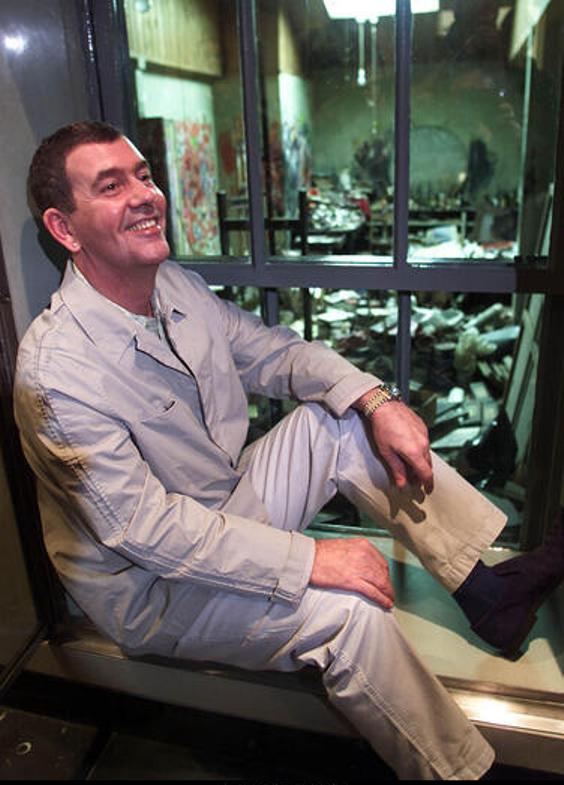
Edwards:
he helped Bacon to trash the paintings he did not like
Ex-convict gets the spoils of Bacon’s £30m legacy
The death of Francis Bacon's heir has led to claims that his estate is being
used to
prop up bars and brothels in Thailand. Ian Cobain and Dalya Alberge report
BY IAN COBAIN
& DALYA ALBERGE
| NEWS
| THE
TIMES |
THURSDAY MARCH
6 2003
IT BEGAN as the intriguing case of the painter, his lover, the former convict
and a multimillion-pound inheritance.
Last night it ended with claims that a large tranche of the estate of Francis
Bacon, one of the towering figures of 20th century art, has been invested in the
bars and brothels of one of the seediest resorts in Thailand.
When Bacon died 11 years ago, at 82, his works were fetching millions, and since
then they have changed hands for up to £5.5 million each. Every penny of Bacon’s
£11 million fortune was left to his long-term partner, John Edwards, the
dyslexic son of a London docker. By the time Mr Edwards died of cancer in a
hospital in Bangkok yesterday, aged 53, the inheritance had grown, by some
estimates, to almost £30 million.
He is understood to have left a substantial amount to the man who shared the
last ten years of his life: Philip Mordue, better known among London’s
underworld as Thailand Phil, and to his associates in that country as Phil the
Till.
The exact size of Mr Mordue’s inheritance was unclear last night, but it is
thought to include several of Bacon’s portraits of Mr Edwards.
Mr Mordue, 43, is
a well-known figure in the resort of Pattaya, a town 100 miles east of Bangkok
which is teeming with prostitutes, where the streets are lined with go-go bars,
and where the English-style pubs display signs declaring: “Lager louts welcome.”
Pattaya has long been a haven for sex tourists, but today local people complain
that it is also packed with members of the Russian mafia, the Japanese yakuza
and, most visibly, gangsters from London. After Bacon’s death, Mr Mordue and Mr
Edwards divided their time between a six-bedroom Victorian house surrounded by
several acres of Suffolk countryside, and a luxury seafront penthouse in Pattaya.
There has long been speculation among expatriates in Thailand that some of
Bacon’s millions have been invested in the Pattaya sex industry.
A British bar owner in the town said yesterday: “Phil hasn’t worked for ten
years and will not need to work again. But using the Bacon fortune he has been
backing bar projects in the resort for many years.
His name was frequently mentioned in connection with a bar called Butlins. (It)
had Thai girls dressed up as redcoats and offering sex services but it bombed.”
At Mr Mordue’s local, the Winchester, named after the bar in the television
series Minder, one regular denied that any of Bacon’s money had been invested in
Butlins. But he added: “A lot of mystery money is behind sex bars in Pattaya
now.”
Mr Mordue and Mr Edwards knew each other long before the latter met Bacon in
1976 at the Colony Room, the artist’s favourite watering hole.
Mr Edwards said in an interview last year: “I think (Bacon) felt very free with
me because I was a bit different from most people he knew. I wasn’t asking him
about his painting. He liked the way I didn’t care about who he was supposed to
be.” Neither man made any secret of his homosexuality, but Mr Edwards denied
that he was Bacon’s lover, describing their friendship as more akin to a
father-son relationship, even after they were photographed kissing in a Soho
street. Mr Edwards would stay with Bacon through the day while he painted. He
was the only person the artist ever allowed to watch him at work.
Their life together followed a set pattern each day. Even after a hard night’s
drinking, Bacon was always up by 7am to start work.
Around 9am he would telephone his companion to say that he was ready for
breakfast. As Bacon only liked egg white and Edwards preferred the yolk, Edwards
used to joke that they had the perfect relationship. His nickname for the artist
was Eggs.
He became Bacon’s favourite model, inspiring him to put brush to canvas in more
than 30 portraits. His Portrait of John Edwards (1986-87), which shows a seated
figure dressed only in a pair of white underpants, is regarded as one of the
artist’s last masterpieces.
Mr Mordue describes himself as a close friend of Dave Courtney, a
gangster-turned-author who has described in his autobiography Stop the Ride I
Want to Get Off how they first met in prison. Mr Mordue, he said, was a “real
character and proper class”. It is unclear what offence Mr Mordue had committed
to find himself in prison, however, and last night he could not be contacted to
comment on his new-found wealth.
He has kept a low profile in Pattaya since he was shot in the neck during a
dispute in the red-light district six years ago. Since emerging from hospital he
is said to have employed a Thai former policeman as a chauffeur and bodyguard.
At Mr Mordue’s farmhouse in a village near Bury St Edmunds, where his neighbours
include Terry Waite, a young man describing himself as the housekeeper said that
Mr Mordue visited little more than once a year.
Whatever the truth about what has happened to Bacon’s estate, it seems clear
that the artist himself would not have cared. He earned very little money until
he was in his fifties, and even then lived and worked in a chaotic two-room mews
house illuminated by naked light bulbs.
He once said: “I’d be quite happy going back to the income I had as a young man,
when I worked as a cook and general servant.”
IT BEGAN as the intriguing case of the painter, his lover, the former convict
and a multimillion-pound inheritance.
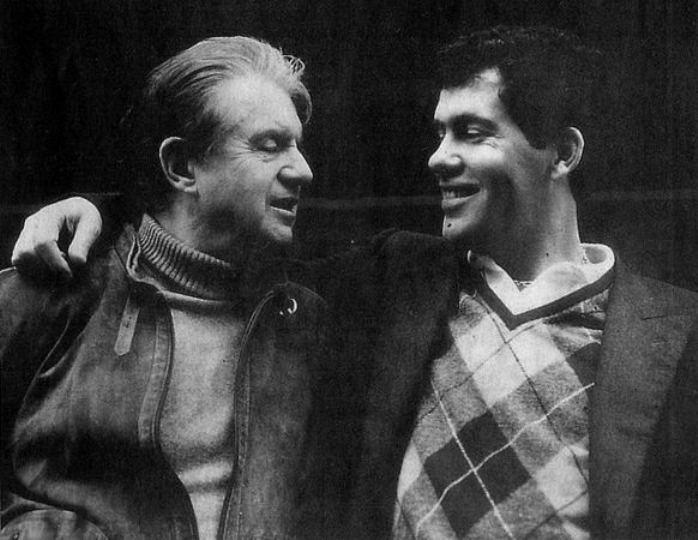
Francis Bacon with John Edwards who became his sole heir. Mr Edwards denied that
he was the painter’s lover, describing their friendship as a father-son
relationship.
Thai sex spot ‘got Bacon’s fortune’
IAN
COBAIN | WORLD
REPORT | IRISH
INDEPENDENT |
THURSDAY, 6
MARCH, 2003
THE DEATH of Francis Bacon's sole heir led to claims last night it ended with
claims that a large part of the Dublin born artist's €45m legacy has been
invested in the bars and brothels of a seedy resort in Thailand.
When Bacon died 11 years ago at 82, all of his then €15m fortune was left to his
long-term partner, John Edwards, the dyslexic son of a London docker. By the
time Mr Edwards died of cancer in a hospital in Bangkok yesterday at the age of
53, the inheritance had grown, by some estimates, to almost €45m.
He is understood to have left a substantial amount to the man who shared the
last ten years of his life — Philip Mordue, better known among London’s
underworld as Thailand Phil.
The exact size of Mr Mordue’s inheritance was unclear last night, but it is
thought to include several of Bacon’s portraits of Edwards. Mordue (43) is a
well-known figure in the resort of Pattaya, 100 miles east of Bangkok which is
teeming with prostitutes and go-go bars, and where the pubs display signs
declaring “Lager louts welcome.”
Pattaya has long been a haven for sex tourists, but today local people complain
it is also packed with members of the Russian mafia, the Japanese yakuza and
gangsters from London.
After Bacon’s death, Mordue and Edwards divided their time between a six-bedroom
Victorian house in Suffolk and a luxury seafront penthouse in Pattaya.
There has long been speculation among expatriates in Thailand that some of
Bacon’s millions have been invested in the Pattaya sex industry.
Bacon’s legacy
in doubt after heir dies
COLIN BLACKSTOCK |
UK
NEWS | THE
GUARDIAN | THURSDAY,
6 MARCH, 2003
The artist Francis Bacon’s
long-time companion and muse, John Edwards, died yesterday in Thailand, throwing
the ownership of the dozens of paintings he inherited after Bacon’s death into
uncertainty.
Mr Edwards was the sole heir to
Bacon’s tangled fortune and was left an £11m estate after the artist died in
1992. Mr Edwards, 53, died after a
long battle with lung cancer. It is thought he may have left part or all of the
inheritance to his boyfriend of 27 years, Philip Mordue, who like Mr Edwards is
from east London.
The two men have lived in a
luxury penthouse in Pattaya for the past nine years. Although the size of the
inheritance is now unknown, reports have it ranging from as much as £30m to very
little.
Mr Edwards struck up a
friendship with Bacon and would visit the artist’s South Kensington mews house
to make him breakfast every morning and sit with him while he painted. Bacon had
described Mr Edwards as the only true friend he had. Both men were gay, but Mr
Edwards said in an interview with the Daily Telegraph a year ago that
they were never lovers.
Whether much of the inheritance
remains is unclear. Mr Edwards is understood to have bought properties in
Suffolk for his parents and other family members, and he is also believed to
have sold some paintings through galleries in New York and London. An administrator of the Francis
Bacon estate refused to comment on the question of the inheritance yesterday.
Mr Edwards is understood to
have moved to Thailand with Mr Mordue after Bacon’s death to get away from the
press. Reports in Thailand said that Mr Mordue, nicknamed “Phil
the Till” in
Thailand, was shot in a bar on Pattaya’s main sex-bar strip in 1997. He was in
hospital for four days after a bullet passed through his neck.
Mr Edwards was taken to
Bumrumgrad hospital in Bangkok and was with Brian Clarke, a friend and Bacon’s
executor, when he died, according to the Daily Telegraph.
Prof Clarke, the British
architectural artist, said: “He
showed no self-pity and joked with friends to the last.” The
body will be flown to London for a private service.
Artist and muse:
Francis Bacon & John Edwards
John Edwards
Francis Bacon’s model companion, in good times and in bad
MICHAEL McNAY
| OBITUARY
|
THE GUARDIAN |
FRIDAY, MARCH 7, 2003
John Edwards, a dyslexic, illiterate East End bartender and multi-millionaire,
who has died aged 53, hit pay dirt on the day the painter Francis Bacon failed
to show up at the Swan, one of the three pubs where Edwards worked for his
brother.
Muriel Belcher, the legendary owner of the Colony club in Dean street,
Soho – known to its intimates as Muriel’s – used to descend on the Swan to meet
her friend, Joan Littlewood. One evening, Belcher told Edwards to order some
champagne for her next visit, when Bacon would be with her. But neither of them
appeared.
Champagne was not the tipple of choice for the masses in 1972, and the chances
of shifting it over the bar of the Swan were remote. So Edwards went off to the
Colony club, marched up to Bacon, and put it to him squarely that he owed him.
"Who do you think you are, mate, ordering champagne and not bothering to turn up
to drink it?" he later said he told the artist. Bacon, charmed, bought Edwards
dinner at Wheeler’s, in Old Compton Street (Edwards chose caviar), and took him
under his wing.
Edwards was 22 at the time, 41 years Bacon’s junior. When Bacon died in 1992, he
left an estate of nearly £11m to Edwards. By the time Edwards himself died – of
cancer in Bangkok – he
had, it is thought, drunk a heroic portion of his legacy, latterly in a beach
resort in Thailand, where he had washed up after a spell in the Florida Keys.
Bacon and Edwards were both homosexual, but, despite their obvious closeness,
they said that their companionship was a father and son relationship. Cynics
doubted this, but it was probably true, more or less.
Edwards was the son of a London docker – one hard case in a brood of six, who,
like their father, could look after themselves; and he took it upon himself to
look after Bacon as well. The artist’s initial attraction to the East End had
doubtless been access to rough trade – he liked his sex sadistic – but, like the
Tory MP Bob Boothby, he also enjoyed the raffishness of his social contacts
there, and, like Boothby, he counted the Kray twins, Ronnie and Reggie, among
his dodgier pals. Edwards knew nothing of art and, as Picasso had in different
circumstances, Bacon responded gratefully to this lack of pretence or
pretension.
As their relationship deepened, many of Bacon’s older friends died, and the
artist felt his own end approaching. Edwards’s company brought him solace, and
even calm, down at the Waterman’s Arms, the music-hall-cum-pub started on the
Isle of Dogs by Daniel Farson, Bacon’s boozing pal and one of his biographers;
or as he passed among the tables of Charlie Chester’s casino, neatly staking
chips next to the roulette wheels.
Bacon had, in fact, the reputation of spending more time in pubs, night clubs
and gambling dens than in his Kensington mews studio, but he was always up at
7am to paint, and the first picture he made of Edwards was done without the
barman’s participation. After that, he painted several portraits of his
companion including a famous triptych which fetched £3m – just as he did of
others, from his last model, George Dyer, to Peter Lacy, the friend of another
ill-starred relationship, and female friends like Belcher, Isabella Rawsthorne
and Henrietta Moraes.
It was all one to Edwards. He made no demands, and he and his artist friend went
together like eggs and bacon – unsurprisingly, Edwards’s nickname for Bacon was
“Eggs”. But he was always there when he was needed, usually, as it happened,
over eggs for breakfast after the first painting session in the studio.
Easy come, easy go was the watchword for Bacon as well. He had earlier bought a
plush studio near the Brompton road, in west London, but found that luxury
militated against the ability to paint there, and simply gave it away. So it was
no surprise to his friends that he should bequeath his estate to Edwards; he
would, those who knew him felt, have been smiling down from heaven on his
protégé as he watched him spend his way through the fortune.
For Edwards, it was a mixed blessing. Part of the bequest was the poky studio in
Reece mews, where Edwards had helped Bacon to destroy work that the artist
didn’t feel came up to scratch: Edwards donated the studio to the Hugh Lane
gallery in Dublin, the city of Bacon’s birth, which has reconstructed it in all
its scruffy, paint-spattered glory.
But he felt that the Marlborough Galleries, which had run Bacon’s professional
life for him, were holding out on him, and, it was later said in the high court,
would not give him an account of their dealings, or even a list of the paintings
they had taken from the easel as Bacon finished them, characteristically not
demanding a receipt. The court ordered Marlborough’s nominated Bacon executor to
stand down, and, last year, the affair was settled out of court with each side
paying its own expenses. Unverified reports have it that the remainder of
Bacon’s estate will now go to Edwards’s friend in Thailand, Philip Mordue, an
ex-convict also from the East End.
As Edwards lay dying, the friend at his bedside was the artist Brian Clarke,
another executor of the Bacon will and the man who had advised Edwards in his
suit against the Marlborough. Edwards, Clark reported, died as he had lived,
laughing and joking.
· John Edwards, barman, born 1950; died March 5 2003
Obituary: John Edwards
Docker’s son who became the
trusted friend of Francis Bacon
and inherited the artists’ £11
million estate
OBITUARIES
| THE
DAILY TELEGRAPH |
FRIDAY,
7 MARCH, 2003
John Edwards, who died on Wednesday aged 53, was Francis Bacon’s closest friend
for 18 years, and inherited the artist’s £11 million estate.
There were those who considered it a curious friendship. Although both men were
homosexuals, Edwards maintained that they were never lovers. Furthermore,
Edwards had never learned to read or write, and knew nothing of art or books.
None of this, however, appeared to matter to Bacon. "I think he felt very free
with me, because I was a bit different from most people he knew," Edwards once
said. "I wasn’t asking him about his painting or anything like that . . . I
asked him once, 'what do you see in me?' And he laughed and said, 'You’re not
boring like most people'."
John Edwards, one of the six children of an East End docker, was born in London
on September 10 1949. At the time of his first meeting with Francis Bacon, in
1974, he was working in Stratford East as a barman at The Swan, one of three
pubs run by his two older brothers. Among The Swan’s customers was Muriel
Belcher, owner of the Colony Room in Soho, and a friend of Edwards’s brother
David. She asked John Edwards to lay in some champagne as she was planning to
bring her "famous painter friend" to the East End. In the event, she and Bacon
never turned up, leaving the pub with an expensive consignment of champagne in
which their regular customers had no interest.
Some weeks later, Edwards was taken to the Colony Room, where he was introduced
to Bacon. He was soon asking the painter, "Why don’t you turn up when you are
supposed to turn up for this fucking champagne?" Bacon, enchanted, invited the
young East Ender to lunch at the fish restaurant Wheeler’s, where Edwards
ordered caviar. Two months later, when visiting the artist’s studio, Edwards was
astonished to see a portrait of himself by Bacon.
Not long after they became friends, Bacon took Edwards to Charlie Chester’s
casino, one of the artist’s favourite haunts. When Edwards was presented with a
membership form, he confessed that he could neither read nor write. He later
recalled: "Francis said, 'God, that must be marvellous', because he hated
filling in forms or anything like that." If Bacon wrote to Edwards, he would do
so using large printed characters.
The artist and his young friend became almost inseparable. At about 9am Bacon
would telephone Edwards to announce that he was ready for breakfast, and Edwards
would come to Bacon’s studio in Reece Mews, South Kensington. Bacon would
produce a fried egg, the painter eating only the white, Edwards the yolk. Then
John Edwards would sit and talk with Bacon while he painted.
Later they would often visit the Colony Room, where Edwards’s favourite tipples
were champagne and whisky, then perhaps a casino and a nightclub. Bacon would
take his friend to dine at places such as Green’s, the Connaught, or the Ritz.
Edwards was protective of his famous friend. When Bacon played roulette Edwards
would be careful to preserve some of the artist’s chips so that he would always
leave with something in his pocket. "There were always lots of people around
Francis on the cadge," he said. "But they wouldn’t do it when I was around."
Although Edwards said he never sat for Bacon, the artist produced some 30
paintings of his friend. Among them is Portrait of John Edwards, 1986-87, which
shows the subject seated cross-legged in a chair, dressed only in a pair of
white underpants.
The measure of Bacon’s trust in Edwards was demonstrated in 1988, when an
exhibition of Bacon’s work was held in Moscow. The artist did not attend, but
was represented by Edwards. The gallery-owner Roy Miles arrived at the airport
in Moscow at the same time as Edwards, and recalled: "As I struggled with my
luggage, I saw the Russian dignitaries bowing and scraping to that young man and
I was furious! And do you know, he handled it superbly." A study of Edwards
painted for this exhibition was adopted by the French to grace their five-franc
postage stamp.
When Bacon died from a heart attack in April 1992, Edwards was devastated. He
inherited Bacon’s house and studio, cash and an unknown number of paintings
worth a total of just under £11 million. By this time Edwards was living in the
Suffolk village of Hartest, in a Georgian farmhouse bought for him by Bacon. The
grounds boasted an artificial lake guarded by a stone heron; a portrait of
Edwards by Bacon covered an entire wall, from wall to ceiling.
Although he kept on the studio in London, Edwards gave its contents to the Hugh
Lane Gallery in Dublin, a gesture for which he was awarded the Lord Mayor’s
Medal by the city of Dublin.
In 1999 the Bacon estate brought a case against the Marlborough Gallery, which
had represented the artist for most of his career, alleging that Bacon had been
"wrongfully exploited", and seeking a "proper accounting" of his affairs. The
action was withdrawn in 2002, both sides paying their own costs.
After Bacon’s death, Edwards moved to the Florida Keys. In the mid-1990s he went
to Thailand, where he lived in a house on the beach.
He indulged his taste for drinking Krug champagne, and – continuing
to use the rhyming slang with which he had been brought up – referred
to a cigar as a "lah-di-dah".
John Edwards died of cancer in Thailand, where he lived with his companion,
Philip Mordue, known locally as "Phil the Till".
John Edwards, 53, Francis
Bacon Confidant
ALAN RIDING |
OBITUARIES | THE
NEW YORK TIMES
| FRIDAY,
MARCH 7, 2003
John Edwards, an illiterate former barman from the East End of London who was
the artist Francis Bacon’s closest friend in the last 16 years of his life and
the sole heir to his paintings and properties, died on Tuesday in Bangkok. He
was 53.
The cause was lung cancer, lawyers for the estate said.
Mr. Edwards, who was the model for at least 30 of Bacon’s late portraits, met
the painter in 1976 at the Colony Room, a drinking club in the Soho district of
London that had long been popular with artists. Although the men were gay, Mr.
Edwards always said that he had no sexual relationship with Bacon, who was 40
years his senior and at the time one of the most celebrated painters in Britain.
’'Francis was a real, true father to me,'' Mr. Edwards told The Daily Telegraph
of London in a rare interview a year ago. ''I was close to my own father. But
Francis gave me all the guidance I needed, and we laughed a lot. And I think he
liked me because I didn’t want anything from him.''
After Bacon’s death in April 1992 at 82, Mr. Edwards was distraught to find
himself the center of news media attention, friends said, and he moved briefly
to Florida. In 1994 he settled in the Thai resort of Pattaya with his partner,
Philip Mordue. London newspapers speculated today that Mr. Mordue, 43, was the
likely beneficiary of Mr. Edwards’s estate.
The value of the estate that Bacon left to Mr. Edwards had a net worth of nearly
$17 million. In 1999, however, the estate sued Marlborough U.K. and Marlborough
International, which had long managed Bacon’s affairs, charging that they had
''wrongfully exploited'' him. The suit was dropped early last year when both
sides agreed to pay their own costs and Marlborough released all its documents
about Bacon .
In 1998 Mr. Edwards gave the contents of Bacon’s famously disordered studio at 7
Reece Mews in South Kensington, London, to the Hugh Lane Gallery in Dublin,
where it has been reconstructed down to the tiniest detail, including remnants
of canvases that Bacon destroyed. The gift also included photographs, drawings,
books, artists’ material and furniture.
Mr. Edwards, the son of an East End longshoreman, was born in 1950 within the
sound of the bells of St. Mary le Bow Church, which made him a true Cockney. He
had dyslexia and never learned to read or write. He was working in a pub in
Wapping, a London neighborhood, when he met Bacon. The next day, Mr. Edwards
recounted, he was invited to Bacon’s studio and was surprised to discover that
the artist had already sketched his portrait.
''Terrible mess, it was,'' Mr. Edwards later said of the studio. ''I remember
the first time I saw it, I said to Francis, 'How can you work here?' But he said
it was how he liked it. He couldn’t be bothered to clear it up. All he wanted
was to have the peace and quiet to paint.''
The men soon became inseparable, with Bacon summoning Mr. Edwards to breakfast
most days and having him accompany him on his frequent nighttime drinking and
gambling binges. One of his jobs, Mr. Edwards later said, was to make sure that
Bacon did not spend all his money. But, invited to keep Bacon company while he
painted, Mr. Edwards also became a rare witness to the artist at work.
''When Francis painted, there was always a drama,'' he once recalled of the
tortured forms that Bacon produced. ''It always seemed to me as if he was
fighting with the canvas.''
On occasions, Mr. Edwards was also recruited to destroy unsatisfactory works,
sometimes by slashing them with a knife.
In his interview with The Daily Telegraph, Mr. Edwards discussed the
relationship further. ''We’d talk about everything,'' he said. ''He was a
beautiful man; you’d be hypnotized by him. He’d talk to you and you’d just want
him to talk more. Everything he talked about — his posh mates, the people he
knew in the art world — it
was all so clear.''
As for his own appeal to Bacon, he offered an explanation: ''I think he felt
very free with me because I was a bit different from most people he knew. I
wasn't asking him about his painting or anything like that. Most people around
Francis looked up to him and he didn't like that. I asked him once, 'What do you
see in me?,' and he laughed and said, 'You’re not boring like most people.' ''
Brian Clarke, a London artist and the executor of the Bacon estate who was with
Mr. Edwards when he died, told The Daily Telegraph last year that Mr. Edwards’s
attraction to Bacon was that he was always frank.
''John was the only person in London who treated Francis as an absolute equal,''
Mr. Clarke was quoted as saying. He added: ''John is a totally honest man. He
would be very rude to Francis, which was a very enjoyable thing to see because
nobody else had license to do that. He’d give it to him straight and Francis
appreciated that. Even in the Colony Room, Francis was the king of Soho. But to
John, he was just 'My Francis.' ''
Friends of Bacon
dismayed over cash
BY
DALYA ALBERGE |
ARTS
CORRESPONDENT |
THE
TIMES |
THURSDAY, MARCH
7, 2003
FRIENDS of the late artist Francis Bacon spoke yesterday of their shock
and dismay at the discovery that much of his multimillion-pound fortune
has fallen into the hands of a former convict from the East End known to
associates as Phil the Till.
They said that the master had known Philip Mordue, had little respect
for him, and would probably have wished to see his assets passed on to
charity. Bacon left an £11 million inheritance and several paintings to
his long-term companion John Edwards when he died 11 years ago, aged 82.
Mr Edwards died on Wednesday, aged 53, at a hospital in Bangkok after
spending the past ten years of his life with Mr Mordue. They had lived
in a luxury penthouse in Pattaya, one of Thailand’s seediest resorts,
and there have been claims that some of the money has been invested in
the local sex trade.
Barry Joule, Bacon’s friend for 14 years until the artist’s death in
1992, said that Bacon gave anonymously to health charities and “would
not be happy” to see his estate pass to Mr Mordue, 43. He would probably
rather have seen it go to the Royal Marsden Hospital in London, said Mr
Joule. He recalled that Bacon was treated there.
The artist’s will, he pointed out, stipulated that the estate was to go
to the Marsden — “to use in their research and care of patients and any
other charitable activities concerned with cancer” — if his heir died
within three months of his own death.
Mr Joule, whose 1982 portrait by Bacon hangs at the Centre Pompidou in
Paris, said: “I don’t think Francis had great respect for Philip.” Mr
Joule, a Canadian who lives in Britain and France, was Bacon’s neighbour
in South Kensington.
The artist, his muse
and his muse’s lover
(not to mention an £11 million legacy, a
famous lesbian
dominatrix and a mysterious shooting)
BY JONATHAN COOPER | THE
EVENING STANDARD | FRIDAY,
7 MARCH, 2003
With a suicide, some petty criminals, a brilliant artist, his homosexual
lover and a mysterious shooting, the only element missing seems to be
murder. It is the story of the legacy of Francis Bacon and it all begins
with a death.
Not the 1992 death of Bacon, the brilliant artist in question – the Soho
bohemian, irascible charmer and ill-tempered drunk, a sadomasochistic
homosexual who could move from gentleman to boor in the downing of
glass.
And not even the death of his longtime friend and sole beneficiary of
his £11 million will, John Edwards, who died of lung-cancer in a Thai
hospital this week and opened a whole new mystery into the ownership of
Bacon’s paintings and the worth of his estate.
The death that starts this whole tale is the suicide of Bacon’s lover
George Dyer, sitting on a lavatory bowl with blood coming out of his
nose and mouth, having swallowed fistfuls of sleeping pills in a Paris
hotel room in 1971.
Dyer was a small-time criminal when he met Bacon, and the artist
delighted in telling the story of their first meeting.
As he told it,
Dyer was at work, burglarising Bacon’s studio, which then was on Narrow
Street in the East End. But he hadn’t realised the artist was in
residence and asleep.
Bacon said that he woke up, saw the burglar and immediately said:
<
“
Take
all your clothes off and get into bed with me. Then you can have all you
want.”
Less imaginatively, and perhaps with a greater degree of truth, Bacon
also said they met when he was drinking in a Soho pub with the
photographer John Deakin and Dyer came over, saying:
“You
all seem to be having a good time. Can I buy you a drink?”
Either way they ended up as lovers. That was in 1964. Dyer had been in
jail, in Pentonville as well as Borstal, but Bacon was unconcerned. He
said that
“I
think in a way he was simply too nice to be a crook. Anyway he was
always being caught”.
Dyer was more complicated than just nice. He was a drifter with a speech
impediment, he was withdrawn and often sullen. Terribly unsure of
himself before he actually killed himself, he had attempted suicide at
least twice before.
He was also the subject of some of Bacon’s greatest work. Bacon could
not get enough of Dyer onto canvas. In 1968, for example, three of his
works were Portrait Of George Dyer In A Mirror, Two Studies Of George
Dyer With A Dog and Two Studies For A Portrait Of George Dyer.
Earlier works included George Dyer Crouching
and George Dyer Talking. After his death there
was the triptych In Memory Of George Dyer, and Triptych August 1972.
But the relationship between master and muse was a destructive one, as
the suicide attempts bear out. Bacon tried to physically distance
himself from his lover, buying him a cottage in Kent, but physical
distance could not destroy their symbiotic attachment.
At its worst, two years before he killed himself, Dyer had even planted
drugs in Bacon’s studio – now moved from Narrow Street to Reece Mews in
South Kensington, – and then tipped off the police, who promptly arrived
led by a female detective and a sniffer dog called Colonel.
At the subsequent trial, Bacon was found not guilty. As an asthmatic, he
said, he would have found it difficult to smoke anything, let alone
drugs, and he was forgiving of his lover.
And so he took him to Paris in October 1971 for a huge retrospective in
the Grand Palais and the most significant show in Bacon’s career as an
artist.
Returning to the Hotel des Saints-Peres that night, 24 October, the
story goes that Bacon was told of his lover’s suicide by the concierge
and showed no emotion.
“Eh
bien,”
he said.
“And
where is the body?”
James Birch is a Soho art dealer and collector whose gallery was below
the Colony Room, the drinking club on Dean Street founded by Bacon’s
friend Muriel Belcher, a lesbian dominatrix who brought together artists
and writers, prostitutes and gangsters, snakes and charmers, politicians
too, to indulge themselves in whatever their fancy fetched.
Speaking yesterday, Birch – who became friends with Bacon when he
organised the artist’s first and only show in Moscow in 1988 – said:
“When
George Dyer died, he felt so guilty about it and was guilty about it for
the rest of his life. And when he met John Edwards a few years later he
made sure the relationship wasn’t going to be anything like the same.
“Francis
would throw a lot of money at George, and George would then pretend to
be Francis Bacon or emulate him at least. He would buy drinks for
everyone, which didn’t really work if you didn’t have the kind of
panache that Francis had.
“He
treated John very differently. Francis felt John was like a surrogate
son in a way and he wanted to make sure John was secure for the rest of
his life.”
Edwards was 53 when he died in the Bumrungrad, a modern state-of-the-art
hospital in Bangkok – recognised for its quality even by American
organisations – and he was indeed secure.
He had homes in Suffolk, where he also bought properties for his
parents, and in New York. But he moved to Thailand nine years ago,
settling in Pattaya, a resort some 100 miles east of the capital, and is
said to have enjoyed an easy life, walking on the picture-postcard
beaches or fishing.
But Pattaya has another side. International gangsters, child abusers,
pornographers and prostitutes all sit side by side in the seedy go-go
bars – one is called The Dog’s Bollocks – as the police turn a blind
eye.
A few years ago 1,000 of Thailand’s finest were despatched to clean up
this "Cowboy town", as it was described, and the only result was a droll
tale about a detective who had picked up and then been robbed by a
prostitute. British gangsters treat the place like a second Costa del
Sol.
Six years ago, the police concluded that a Briton called Geoffrey
Chapman, found drowned in the sea, had committed suicide. But others
wondered how he could have when his legs were tied to his waist and then
to a rock.
That same year, an Englishman called Philip Mordue was shot in the neck
in a bar on the main sex-drag. He survived.
Mordue, from Bury St Edmunds, Suffolk, was in fact Edwards’s lover
and – despite Francis Bacon – had been for 30 years. With Edwards’s
death, the legacy of Francis Bacon will almost certainly pass on to
Mordue.
About two years after George Dyer’s death, Bacon met Edwards, who – from
the East End, with an infliction, in his case severe dyslexia, and
homosexual – was not unlike Dyer. Where he differed was his attitude to
life, positive where Dyer was negative, and helped fill the void left by
Dyer’s death. By all accounts Edwards, who was 40 years the artist’s
junior, and Bacon (Edwards nicknamed him
“Eggs”)
did not become lovers. But, on Bacon’s death in 1992, Edwards was made
the chief beneficiary of his will, some £11 million worth. And, all the
while Edwards was posing in his underpants for Bacon, his true lover was
Mordue.
In recent days Mordue has been dubbed Thailand Phil and Phil the Till,
and his name has been attached to the seamier side of town, where it is
said that he frequented both gay and girlie bars in between occasional
gigs as an amateur DJ.
But yesterday friends who know him were eager to paint a different type
of character. James Birch, for example, thinks that Edwards and Mordue
went to Thailand for tax, and not sex, reasons.
Dave Courtney, the celebrity criminal who was a friend of the Krays,
shared a cell with Mordue in Coldingly Prison near Woking in 1980.
He told the Standard: "Phil is a lovely fellow. He is not a criminal. I
know people are saying he is an ex-con but the only thing he was ever in
for was some driving offence.
“He
is very, very much into art. I’ve seen a lot of him since we were inside
together and he has obviously been cultured by John.
“He
is what you would call public school material. The reason he is called
Thailand Phil is because in my phone book ... How many Phils do I know?
About 300. I have got Fat Phil, Ginger Phil, Skinny Phil, Funny Phil and
Thailand Phil. The only criminal thing he has done I know about is I
think he was done for driving while disqualified or something like that.
“He’s
a bit of a comedian. He will get on with any circle of people you put
him in with. He’s a Champagne Charlie when need be, can rub shoulders
with the premier league naughty men when need be, and he can also be
very knowledgeable with the art world.”
Birch says: "He looks a bit like Robbie Williams and likes a laugh.”
Neither man has an explanation why someone would want to put a bullet
into someone so innocent as Mordue.
The exact inheritance coming Mordue’s way is also mysterious. When he
died, Bacon was rumoured to be worth up to £60 million. Over the years
paintings have been sold for as much as £5.5 million, there were
problems with the Inland Revenue and it wasn’t until 1999 that a costly
and long-running dispute between the estate and the Marlborough Gallery,
which had represented Bacon, was settled.
One report has suggested that Mordue had been selling Bacon’s
paintings presumably with his lover Edwards’s knowledge to invest in
Pattaya bars and clubs.
In an interview with the New York Times before his died, Bacon
spoke of death and the afterlife. He said:
“We
live, we die and that’s it, don’t you think?”
If only it were so simple.
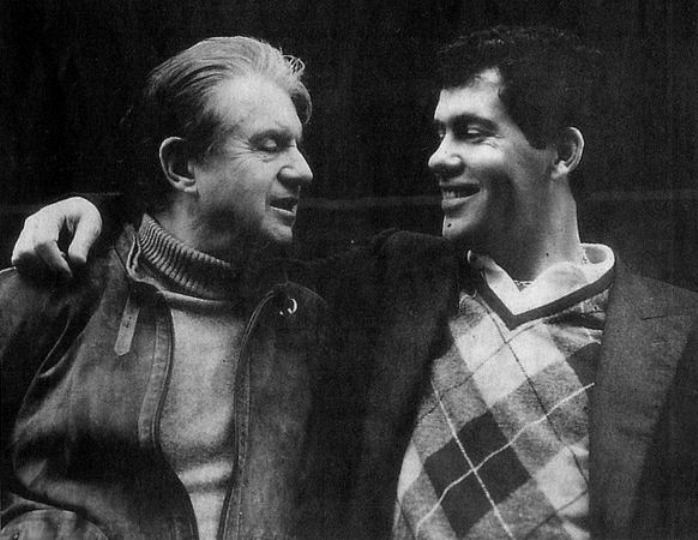
Close friends: Francis Bacon with John Edwards
FOCUS: ART. MONEY, DEATH
Bacon: A mystery in the
East
Ten years after his death, the legacy of Francis Bacon remains as
complicated as his work.
His heir died last week and no one knows what will now happen to the
estate.
By Mike
Bygrave in
London and Jan
McGirk in
Thailand investigate
MIKE BYGRAVE
| JAN MCGIRICK |
THE INDEPENDENT
ON SUNDAY | SUNDAY 9 MARCH 2003
His favourite pink champagne is still on ice at Le Café Royale in
Pattaya but John Edwards will not be going back to drink it. "Mr John"
died from lung cancer in a Bangkok hospital on Wednesday, leaving close
friends to grieve and the art world to wonder what became of the
paintings and the millions of pounds he inherited from the late and
indisputably great artist Francis Bacon.
Edwards was his companion and muse for 18 years, and the dyslexic son of
a pub owner from the East End of London acquired Bacon's taste for
bubbly. He liked his Jouet Chandon to match the pink silk shirts worn by
waiters in white hotpants at Le Café Royale, a bar on Boyz Town, the
most flamboyant nightclub strip in Thailand. But he would always chase
the champagne down with J&B whisky, said the barman there yesterday.
Edwards' body will be cremated in the next few days, then flown back to
Britain, where his relationship with Bacon has inspired gossip, intrigue
and lawsuits over the years. He is again the subject of the kind of
envious attention he fled to Thailand to avoid, after the death of
Francis Bacon in 1992. The gay-friendly resort has catered for foreign
divas and dudes ever since the Vietnam war. Edwards lived with his
friend and sometime lover Philip Mordue in an immaculate penthouse on
the 14th floor of a tower in the Royal Cliff resort, where stars and
royals take their holidays. From the wrap-around balcony you can see
expensive speedboats cut through the turquoise Gulf of Thailand and the
lights of Pattaya's gogo bars twinkle beyond Buddha Hill. There is an
old-fashioned jukebox in the sitting room, and 10 reproductions of
Bacon's paintings hang on the walls.
Edwards' personal assistant, a slender 22-year-old Thai who did not want
his name in print, has grown to admire the arresting art. "I was too
young to understand it at first," he said. "I thought it was crazy
painting. But John taught me to see that it is beautiful."
The young man, who was at his friend's deathbed on Wednesday, once
proposed opening a bar in Pattaya. Edwards would have none of it. "Mr
John said better not. Best to travel, and to take computer studies at
university. He made me promise to give up smoking too," he said. "There
was no one better. He could only whisper at the end, but he never
stopped laughing. He was young at heart."
The manager of the resort next to his home said: "Towards the end of his
illness, he knew life was short. He'd insist on going to chemotherapy by
helicopter instead of wasting two hours on the road. We have a helipad."
Drinking mates said Edwards used to chat animatedly about his friendship
with Bacon and said they were fond friends, but denied they were lovers.
"He was not a bit of rough trade, but more like a brother to the
artist," said one. "John amused him because he was never in awe of his
posh friend." Mr Mordue, on the other hand, "certainly talked rough",
and even had a scar where a bullet had whistled clean through his throat
during one pre-dawn bar crawl.
"Mordue was his personal secretary," said Ian Read, owner of a gay piano
bar which Edwards frequented three times a week. "He never had a formal
education and writing got all jumbled up for him. But he was very
smart." Friends recalled how Edwards would manage his money carefully.
He threw home-cooked dinner parties of steak and kidney pies in his
lavish flat, rather than eat out at spicy restaurants. "Once he
discovered Pattaya, this became his home," Read continued. "He came here
for the sun and the freedom."
Bacon and Edwards had been the art world's odd couple. The artist,
arguably the greatest British painter of modern times, whose screaming
popes and distorted human figures became 20th-century icons, was 40
years older; but after the two men met in 1974 at the Colony Room, the
legendary Soho drinking club which was Bacon's favourite hangout, they
became inseparable. Both Bacon and Edwards were gay but always
maintained that their relationship was platonic.
As famous for his drinking and gambling as for his disciplined working
habits, Bacon lived in Reece Mews, South Kensington, in a tiny house lit
by bare bulbs where he painted in a studio as cluttered as a municipal
rubbish dump. Every morning, he woke around 6am, worked until 9am, then
phoned Edwards who lived nearby (in a flat Bacon had bought for him)
with Philip Mordue. Edwards would come round to Reece Mews where Bacon,
who prided himself on his culinary skills, cooked them a fry-up (a
devotee of cockney rhyming slang, his nickname for Bacon was "Eggs").
Then Edwards would sit in Bacon's studio while the master painted – a
rare privilege since Bacon was notoriously secretive about his work.
During their friendship, Bacon painted Edwards 30 or more times.
The art historian and Bacon biographer Michael Peppiatt says: "John, as
he himself said, had something of a father-son relationship with Bacon,
who was capable of enormous affection and generosity. He was always
there for people he liked and John was someone he was extremely fond
of."
Gallery owner James Birch, who knew both men well, says "Bacon quite
liked the fact that John was uneducated. I think Francis got fed-up with
talking about art. And John was just a regular bloke, very chatty, easy
to get on with."
In the only interview he ever gave, Edwards himself said, "[Francis]
liked the way I didn't care who he was supposed to be."
Edwards was one of six children from an extended East End family of
dockers turned licensees and he worked behind the bar in family pubs
until he met Bacon – after which, according to James Birch, "he would
say he was Francis's photographer". The art critic Richard Cork
describes the Colony Room of the period as "a mixture of Soho bohemians,
often with these plummy public school accents, and an East End
contingent, with broken noses, looking thuggish, but quite often gay,
you know, the whole mixture which fascinated Francis." The same
peculiarly British nexus of toffs and "diamond geezers", artists,
aristocrats and gangsters, embraced the Kray twins in their day and was
dramatised in the film Performance.
The quasi-domestic idyll ended abruptly in 1992 when Bacon died of a
heart attack aged 82 on holiday in Spain. Edwards was the sole heir to
Bacon's £11.4m estate. The resulting press furore unnerved Edwards – a
friend described him opening the curtains at Reece Mews and seeing the
street full of press photographers – and he left the country in search
of a quiet life, first and briefly for Florida, then to Thailand with Mr
Mordue.
"A great artist leaves deep traces," says Michael Peppiatt. "Francis is
as much alive after his death as he was when he was here. He was a
transforming person. If you met him and spent time with him, you
couldn't help but be changed, and this effect goes on. I think that's
one of the signs of great genius, a person who actually transforms the
lives around him."
He certainly left his mark on the courts. Three years after the artist's
death, Edwards felt he had still not received a "full accounting" from
Marlborough Fine Arts, the gallery that had represented Bacon since
1958. The potential sums involved were huge. Bacon himself had little
interest in money and gave or gambled it away. He once said his life
consisted of "going from bar to bar and drinking and that kind of
thing". However, he is estimated to have earned £14m from his art in his
lifetime. In 1989, he became the world's most expensive living artist
when a triptych sold at Sotheby's New York for £3.53m, later topped by
£4.6m for a portrait of a previous lover, Greg Dyer, who committed
suicide in 1971. There is no definitive catalogue of Bacon's work and no
one knows exactly how many paintings are out there.
Confused, Edwards turned for help to another old friend, the
architectural artist Professor Brian Clarke, granting Clarke his power
of attorney. In a series of dramatic moves orchestrated by Clarke,
Bacon's work was withdrawn from Marlborough and reassigned to other
galleries. In 1998 a High Court judge dismissed the trustees of Bacon's
estate and replaced them with Clarke. There followed a full-scale
lawsuit against the Marlborough, claiming it had exercised "undue
influence" over Bacon, charged too much commission, undervalued work and
resold it for higher prices, and failed to account for 33 paintings. The
overall value of the action was estimated at £100m. Marlborough denied
all wrongdoing and promised to "vigorously contest" the suit.
Meanwhile, there was more controversy, this time over the Reece Mews
studio which John Edwards said he would leave "to the nation". Like
everything else about Bacon's legacy, the outcome was mysterious. Either
the Tate refused the gift or wasn't given enough time to consider it.
Instead, Dublin's Hugh Lane Gallery benefited, sending 14 archaeologists
and conser- vators to London to disassemble the studio and remove over
7,000 items including 2,000 pots of paint, 570 books, numerous loose
pages, 100 slashed canvases (Bacon was meticulous about destroying work
he wasn't happy with) and pairs of Marks & Spencer corduroy trousers the
artist cut up and used as painting tools. Shipped to Dublin, the studio
was reconstructed in minute detail, then put on public display.
Suddenly last year the case against Marlborough was aborted in a
so-called "drop hands settlement" with each side paying their own legal
costs. The Bacon estate announced that Edwards had just been diagnosed
with cancer, implying that was the main reason they withdrew their
action. Marlborough claimed victory, meanwhile, saying the case had been
"without foundation and totally unsustainable".
Whatever the truth – and there is a middle position suggesting that the
passage of time made gathering evidence difficult for both sides –
leading members of the London art world describe themselves as
"traumatised" by the whole experience. There are stories of subpoenas
being threatened and of lawyers arriving on people's doorsteps to search
their private archives. One potential witness, who insisted on
anonymity, said: "It will take a long time for anyone to be able to talk
perceptively about the whole thing because I don't think it's all come
out in the open yet. It's a very murky and in many ways inexplicable
business."
The person who would be best placed to explain is Professor Clarke, who
was also by Edwards' bed when he died. Clarke is variously regarded as
the powerful éminence grise or the altruistic
white knight of the Bacon story. Clarke always insisted his overriding
aim in bringing the lawsuit was not financial but to establish Bacon's
legacy for future scholars. When the suit was dropped a year ago, Clarke
said work would begin on a catalogue raisonné and setting up a John
Edwards Charitable Foundation to advance Bacon studies. As yet, there's
no public evidence either development took place, though Barbara Dawson
of the Hugh Lane Gallery says the estate has funded research deriving
from the preservation of his studio and has "always been very
professional".
Nobody knows who will inherit from Edwards, although most of those who
knew him expect it to be Mordue. Some of the Bacon legacy was spent on
turning Reece Mews into a luxury home, and some of it on the good life
in Thailand. It is thought Edwards bought property for his family in
Suffolk. Suggestions that Edwards arranged for the sale of paintings
have not been backed by firm evidence.
The story of Francis Bacon's legacy is full of contradictions and
confusions that echo his work and the reactions to it. Some critics see
the paintings as a profound commentary on mortality and the human
condition. Others dismiss them as the products of a kinky mind, obsessed
with images of death, disease and decay, of butchers' shops and 1950s
gay porn that Bacon collected. To Michael Peppiatt, Bacon was an
"enormously complex and enormously intelligent and vital man who tried
to make himself simple. He tried to bring the two extreme sides of his
personality into some kind of liveable equilibrium. He was everything
and its opposite – vital, warm and caring at times and at other times
very analytical, very cutting, very devastating. He could light up the
day and he could send it into darkness when you were with him. He could
be a tremendous force for joy or for despair."
Some of those who knew Bacon describe him as amoral, disloyal and
vicious; others say he was great company, an open-handed man who loved
to talk. "The champagne would come out almost immediately," they say.
After the death of John Edwards it must remain on ice, for the moment,
until the mystery of Francis Bacon's legacy is resolved.
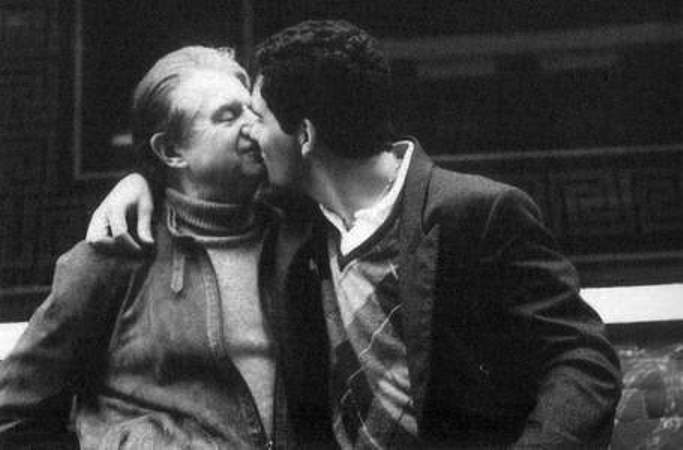
Bacon
and Edwards; despite the kiss their relationship was said to be platonic
John Edwards
He was the artist Francis Bacon’s companion, writes Dr Margarita Cappock
MARGARITA CAPPOCK
| OBITUARIES |
SUNDAY INDEPENDENT
| SUNDAY, MARCH 09, 2003
JOHN Edwards, the long-time companion of British artist Francis Bacon,
died in Thailand last week. From the East End of London, Edwards first
met Bacon in 1974 in the Colony Room, a famous Soho club. Despite an age
gap of almost 40 years, they became very close friends from then
onwards.
Their enduring relationship was essentially paternal and Edwards was the
subject of over 30 portraits by Bacon, some of which are among the most
significant works in the artist’s oeuvre. On Bacon’s death in Madrid in
April 1992, Edwards was cited as the sole heir to the artist’s estate.
Part of Edwards’s inheritance included 7 Reece Mews, in South
Kensington, the house where Bacon worked and lived from 1961 until his
death. The studio at Reece Mews was central to Bacon’s art practice and
he once said of his famously chaotic studio, “I feel at home here in
this chaos because chaos suggests images to me.”
In August 1998, John Edwards generously donated the entire contents of
the artist’s studio at 7 Reece Mews to Dublin City Gallery, the Hugh
Lane.
The studio was reconstructed at the gallery and opened to the public on
May 23, 2001. Meticulously reconstructed and containing over 7,500
fascinating items, the studio is now the definitive archive of one of
the greatest European painters of the twentieth century.
To coincide with the opening of the studio, Edwards was presented with a
Lord Mayor’s Award in recognition of his donation to the city of Dublin.
The awards ceremony took place in City Hall and Edwards was delighted to
receive such recognition in the city of Bacon’s birth. Edwards had a
great fondness for Dublin and was a frequent visitor to the city and to
Dublin City Gallery, the Hugh Lane. John Edwards died in Thailand where
he had lived for the past nine years. Aged 53, he had been suffering
from lung cancer. He bore his illness with typical fortitude and good
humour.
GOOD COMPANIONS: Edwards, right, with Bacon
How Francis
Bacon’s millions
ended up in
the hands of an ex-con
called Phil The Till
Did a trail of bitter rivalry, unrequited gay love and a lesbian
dominatrix
lead a great artist’s legacy to the seedy strip clubs of Thailand?
ALEXIS PARR |
FIONA WINGETT |
THE MAIL ON SUNDAY | SUNDAY, MARCH 9, 2003
UNDER crashing tropical thunderstorms and in temperatures of 95 degrees,
a grim-looking trio set out last week on the final leg of an
extraordinary journey which has set the art world alight.
Their trip brought to a head the bizarre story of Francis Bacon, the
greatest British artist of the 20th Century; a story of base desires, of
missing artworks and of a pound sterling30 million-fortune – set to end
up in the hands of a dubious character from the East End of London
called Phil ‘The Till’ Mordue.
It was Mordue, a blond-haired Robbie Williams lookalike, who appeared
most downcast as the trio travelled the 6,000 miles from Bangkok to
England, carrying with them the ashes of Bacon’s long-time companion,
John Edwards.
With Mordue were Edwards’s brothers, David and Lenny.
The relationship between Bacon, the irascible, volatile and flamboyant
genius, and Mordue, an ex-convict and practised charmer from a far more
prosaic background, involves a convoluted tale of rivalry, thwarted
love, infidelity and tangled homosexual relationships.
Both men were drawn into the same Soho drinking crowd by John Edwards, a
Cockney barman who left school at 14 but who became a self-made
millionaire through a string of nightclubs and pubs.
He was to become Bacon’s long-time companion and muse. For 16 years,
Edwards formed his emotional bond with Bacon – the closest the artist
ever had. But it was Mordue with whom Edwards preferred to be physically
intimate.
When Bacon died of a heart attack in 1992, he bequeathed his entire
pound sterling11 million estate to Edwards, leaving many in the elitist
art world fearing that the fortune would simply filter down into the
lower echelons of society and that his artworks would perhaps simply
disappear.
Now, following Edwards’s death from lung cancer last Wednesday at the
age of 53, the controversy has been reignited.
Already there are mutterings that Bacon disapproved of Mordue and would
be turning in his grave that his legacy – believed to have tripled in
value the last past 11 years – should be left to a man with whom he had
little more than a tenuous link.
Those who knew Mordue in Thailand say he invested some of Edwards’s
inheritance in the seedy girlie bars of the Thai beech resort of
Pattaya. The Edwards family vehemently deny this.
However, there is not doubt that Phil was well known around the bars of
Pattaya. He even had a nick-name Phil ‘The Till’ – which came about
because he always had a stash of cash on him, ready to buy rounds of
drinks.
The irony of it is that Bacon would have hated his money ending up with
Mordue – not because the artist would have harshly judged unsavoury
connections or time spent in jail (after all, the seamier side of life
had always attracted the Irish-born, uppercrust artist) – but simply
because he despised Mordue, who was a serious rival in his affection for
Edwards.
It is simply too much for the high-brow art experts to contemplate that
Bacon’s money should end up with Mordue, who didn’t have Edwards’s
streetwise business acumen.
Phil 'The Til', or Thailand Phil as he is know among his friends at
home, is said to be a man who counts gangsters as his closest friends
and whose favourite haunt in Pattaya is The Winchester Club, where naked
girls dance on the bar while sweating Westerners gaze up through their
legs.
The club is a magnet for British criminals on holiday and is the kind of
establishment where rooms are more often rented by the hour rather than
the week. The club even auctioned a Thai virgin last year – whom Mordue
won with a bid of £250.
Worse, it is said is that some of Bacon’s paintings have already been
sold to raise money to finance Mordue’s ownership of the girlie, as he
vies with the Yakuza – the Oriental Mafia – and Thai crime gangs for
supremacy in the region’s sex industry.
Barry Joule, Bacon’s friend for 14 years, said that the artist 'would
not be happy' to see his estate pas to Mordue. H said he would probably
rather have seen it left to the Royal Marsden Hospital in London, where
he was once treated.
Joule said: ‘I don’t think Francis had a great respect for Philip.’
Former gangster Dave Courtney, once a henchman for the famous Kray
twins, knew Bacon and Edwards and knows Mordue. He served time with
Mordue at Coldingley Prison near Woking, Surrey, in 1980, when Mordue
was jailed for a serious driving offense.
Courtney last saw Mordue six weeks ago when Edwards had treatment in a
£5,000-a-night at the Cromwell Hospital in West London. He said: ‘I know
Phil’s been left a lot of money and the trouble is that a lot of noses
are put out of joint because it’s said he may get £30 million.’
‘From what I can gather, the art world may feel cheated and entitled to
a bit of it and this just stinks of snobbery. I get the impression there
is a massive fight and the Establishment has its daggers out for getting
all that money. If you ask me this is just the green-eyed monster.’
The story began when Edwards was working as a bar man in a pub in
Wapping, East London. He was already close to Mordue who had previously
worked for Edwards’s brother, David.
One of the regulars at Edwards’s pub was lesbian dominatrix Muriel
Belcher, who took him to the infamous Colony Club in London’s Soho in
1976.
There, Bacon would often hold court, buying bottle after bottle of
champagne for his entourage. Edwards refused to be impressed by Bacon’s
revered status –
and
Bacon, who famously enjoyed ‘rough,
physical and untutored' types and 'enjoyed the company of crooks,
gamblers, drifters, and chancers’ –
was immediately attracted.
During the next 16 years, he became Bacon’s closest friend and
confidant. Indeed, Bacon called Edwards, who was 40 years his
junior, ‘the only true friend’ he had.
Edwards was one of seven children born to a poverty stricken East End
family, the son of a docker who became a war hero.
The family was grindingly poor and the sons slept sixe in a bed, but
they were, and still are, close, loyal and loving – another fact which
attracted Bacon, whose own childhood in Ireland had been brutal, cold
and starved of love.
Edwards was the only person Bacon ever allowed into his Reece Mews
studio in London’s South Kensington while he worked. Edwards, however,
already heavily involved in a relationship with Mordue, always claimed
they were never lovers.
When Bacon contentiously left his estate to Edwards, many in the art
world were appalled. What could an illiterate Cockney know about art and
how could he possible steer such an estate with success? In truth, he
managed to more than triple the size of the legacy. Edwards disappeared
to Florida with Mordue shortly after the inheritance came through,
before suddenly moving to Thailand about five years ago.
There, they bought a palatial penthouse at Jom Tien, set in grounds of
swaying banana trees, royal palms and exotic red hibiscus a mile from
Pattaya, known as Thailand’s seediest resort.
Here desperate Thai girls and boys ply their trade next to paedophiles
and pornographers in the dozens of bars which line the once-pristine
white beaches.
During 1999, Edwards emerged from his semi-seclusion to take on the
Marlborough Gallery, which had represented Bacon for most of his working
life.
Edwards alleged that the gallery had 'wrongfully exploited' the painter
and sought 'proper accounting' of his affairs, for an amount believed to
be £100 million.
However, the threatened action was suddenly withdrawn just over a year
ago, with both sides paying their own costs, although it was agreed to
release to Bacon’s estate all documentation still in the gallery’s
possession.
Courtney said: 'John had been ill for about five years and that was when
they decided to go and live in Thailand. He took me there twice all
expenses paid, and he often bought me and my family presents – beautiful
Thai silk shirts and clothes. Phil’s bisexual, which I know because I
saw him with a girl during an orgy in Thailand about a year ago.
‘I’m not sure if John minded, but the truth is that they were a devoted
couple and it was Phil that kept John going the last two years.’
But for all the spin that their friends try to put on their 'devoted'
relationship, both men had other sexual partners.
In fact, Edwards had been having another relationship with a 22-year-old
Thai man known as Jack, for the past six years, and Mordue had been
seeing a Thai woman for the last four. Jack is likely to be another
beneficiary from Edwards’s will.
Ian Read, owner of Le Café Royal hotel and piano bar in Pattaya which
Edwards frequented, said Edwards was so attracted to Jack that he
refused to attend a gallery showing of Francis Bacon’s work in New York
when Jack wasn’t granted a visa, and refused to attend the opening of
Bacon’s studio, which had been recreated at Dublin’s Hugh Lane Gallery,
until the Irish embassy would allow the young Thai into the country.
Jack, who was at Edwards’s bedside when he died said: 'He took good care
of me, but I also took good care of him. I dressed him, I bathed him and
I pushed his wheelchair. I was at the hospital everyday.
‘At the end he could no longer speak, but I was able to make him laugh
with my jokes. Our relationship had far more laughter than tears.’
Also at the bedside were Mordue, and the Edwards brothers, David and
Lenny.
On Friday, the three boarded a Thai Airways flight and brought John’s
ashes home to England, delivering them to his mother, 80 year-old
Beattie, who lives close to his six-bedroom white-brick farmhouse in the
quire Suffolk countryside, a world away from the noise, fumes and
steaming humidity of Pattaya.
Beattie, distraught at the early death of her son, has placed the
oriental urn, wrapped in peach-coloured Buddhist robes, on her dresser,
while she contemplates where John’s final resting place will be.
Just two weeks ago, her son had been on a spending spree in Thailand,
buying her a multi-carat, brilliant diamond necklace worth thousands of
pounds and designer goods for his brothers and sisters, all meant as
goodbye gifts.
David Edwards, a millionaire antiques dealer, explained how he and Lenny
had arrived in Thailand hours before John died on Wednesday. Although he
was a Catholic, he was cremated later that day in a simple Buddhist
ceremony in a temple at the Bumrungrad hospital in Bangkok.
David told The Mail on Sunday: 'It was a very solemn occasion; simple
and brief and the ashes were placed in an oriental urn and wrapped in a
peach coloured monk’s scarf.
‘He hadn’t converted, but he preferred the Buddhist way of dying – a
passing over – rather
than the finality of it all in the Christian religion.
He disputed allegations that his brother or Mordue had invested in sex
and sin bars in Pattaya.
He said: 'My brother was never Francis Bacon’s lover. But they were very
close friends. John went to Thailand to lead a peaceful life. The only
money he had invested there was in his home, a penthouse in the most
expensive building in the area.
‘He very rarely went out and if he did it was usually to an expensive
restaurant for a quite supper.
‘Phil liked going out a lot more than John as he’s a bit like me, a
social animal. And sometimes if they wanted to do different social
things, they would go separate ways.’
He said that it was unlikely that Mordue would inherit all of John’s
money.
‘The will has not come back yet, but I know John wished to set up a
foundation, possibly to promote up-and-coming artists. I also know John
would have made provision for all those people he loved.’
The painter, his lover, the crook and the £130m fortune
Are Francis Bacon’s millions funding Thailand’s girlie bars?
From Andrew Drummond in Bangkok
ANDREW
DRUMMOND |
SUNDAY EXPRESS REVIEW | SUNDAY, MARCH 9, 2003
HE WEARS gold chains and bracelets round his
neck and arms, and sports a diamond stud in his ear. To all appearances, he
lives life for the music, vodka, and raucous nightlife for which the Thai resort
of Pattaya, 100 miles east of Bangkok, is famous.
Life for Philip Mordue is an endless tour of
bars, and he is as well known in Boyztown, a gay area of the resort where men
go-go dance in skimpy white briefs, as in the girlie bars that abound
everywhere.
He has come a long way from the days when he
hung around London’s Piccadilly, working as a roofer in south London and
supplementing his income by robbing gas meters. But although cash buys respect
in this seedy resort where the booze is cheap, and the sex often cheaper, Philip
Mordue never really elevated himself on the social ladder until last Wednesday.
That’s when he became the recipient of – or at
least gained a substantial share in – what is now expected to be the £130million
estate of great British artist Francis Bacon.
Mordue, 54, was the companion of John Edwards,
who died last week after a long battle with lung cancer. Edwards, in turn, was
Bacon’s muse, close friend, and some say lover, for more than 15 years. The
artist left his entire fortune to him when he died in April 1992. The estate was
valued at £11million – a figure which, with the value of Bacon’s work growing
and his works changing hands for more than £7 million, plus interest on
investments, has now grown tenfold.
It may seem shocking that the fortune of one
of Britain’s most admired artists should perhaps be frittered away in the bars
of a downmarket sex resort, but Bacon was no snob. He lived a lifestyle which he
described as “from the gutters to the Ritz” – an existence to which Philip
Mordue can also lay claim. Bacon never hid his homosexuality. Edwards became his
full-time companion after the pair met at the legendary Colony Club, the Soho
bar famed in Fifties and Sixties London for the drinking sessions of its raffish
artistic patrons. Edwards was an East End barman and friends with the Colony’s
owner Muriel Belcher.
He refused to pander to Bacon’s fame and the
artist was duly taken with Edwards’s plain-speaking common sense. After meeting
in 1976, the pair spent their days together, always sharing a breakfast of eggs
– Bacon liked only the white, Edwards only the yolk, making theirs a “perfect
relationship” Edwards later said – and Bacon painted his companion some 30
times.
The artist insisted that their relationship
was not sexual. “I loved him as the best friend a man could have. He was fond of
me like a son,” he said of Edwards, who was 40 years his junior. After the artist’s death Edwards, said by
friends to be devastated, retired to the Florida Keys before moving, a year
later, to Thailand with Mordue.
But while Edwards, the chronically dyslexic
son of an East End docker, strove to improve himself studying the arts, the
latest recipient of Bacon’s fortune, Mordue, earned his living by petty theft.
He served time in Borstal with gangland
enforcer Dave Courtney – the model for the character played by Vinnie Jones in
Lock, Stock and Two Smoking Barrels – and they became good friends. When Edwards
and Mordue moved to Thailand 10 years ago, both had different plans for their
lifestyle. Mordue hit the girly go-go bars and gay bars, while Edwards studied,
took walks on the beach, went fishing and monitored investments. He took
particular interest in the Hugh Lane Gallery in Dublin where the Irish-born
Bacon’s studio at 7 Reece Mews, London had been re-constructed from contents
donated by Edwards (including dirty paintbrushes, stained carpets, curtains and
slashed canvasses) of his benefactor’s home.
BUT DESPITE their differences, Mordue and
Edwards remained inseparable. Within months, Mordue had settled into his new
home, becoming known among the London criminal fraternity with whom he kept
close links as Thailand Phil. In Thailand, meanwhile, he was known
alternatively as Phil the Till or Flambo Phil. He has been known to herald his
approach by blowing trumpets and whistles.
His favourite bar was the Winchester, run by a
man known as Big Bill and named after Arthur Daley’s local in the television
series Minder. As in the fictitious pub ‘the Old Bill’ would
not be welcome at the Winchester, two miles east of Pattaya in the small resort
of Jomtien. Dotted around the walls are pictures of the
Krays, Charlie Richardson, the Great Train Robbers and Arthur Daley (George
Cole) himself.
The amiable boss Bill – nobody uses surnames
in Pattaya – understandably doesn’t have a bad word to say about his new
multi-millionaire customer: “Phil is well liked here by everyone. “Well,” he
admits, “I’ve thrown him out a few times when he gets drunk and starts shouting,
but I always let him back later, and we all get drunk occasionally, after all.
“He is
a lovely guy. He just likes music, the lifestyle, a beer and a cigarette. He and
John were inseparable, lifelong mates. I was very sad to hear of John’s death.
John was a quiet, considerate man. He had come from nothing and educated
himself. He was very well-versed in the arts, but he taught himself.”
Mordue DJs at the Winchester on Sundays when
the girls – most of whom are pictured on the club’s website – provide shows
which would make a docker blush. In 1997, he was shot outside the Lucky Star, a
bar in Pattaya’s Walking Street, the resort’s main sex bar strip.
During a drunken brawl, a bullet pierced his
neck. Happily, little damage was done and Mordue was released from hospital four
days later, after minor surgery. Another Pattaya bar is a favourite haunt of the
new millionaire. The Dog’s Bollocks is run by Chris Hendersen, a former member
of the notorious football hooligans group the Chelsea Headhunters, and was a
hang-out for football thugs heading for Japan during last year’s World Cup.
MANY have claimed that Mordue’s interest in
Pattaya’s bars is not merely that of a loyal customer; although claims that he
has already invested some of the Bacon fortune in the resort’s many sex bars
remain unproven. A girl at the Playpen a-go-go, another favourite establishment,
has more stories to tell about Phil the Till. “Sometimes he would come in and
ring the bell and buy everyone in the bar a drink. Other times he was drunk and
would leave without paying a penny,” she said. She also made clear that while
Edwards and Mordue had undoubtedly been lovers at one stage, Mordue still
enjoyed the company of women.
“One of the girls here got pregnant and
insisted Philip was the father,” she continued. “He supported her for a couple
of months, then threw her away. We had to have a collection for her hospital
expenses when she gave birth. She took the baby home to the country and we have
not seen her since. I do not know whether Philip was the father but the girl
insisted he was.”
In fact, although Mordue has had a string of
Thai girlfriends, he has been dating a 24-year-old woman called Wanna for four
years. Yesterday he was believed to be with her in Bangkok. A friend said of his
absence: “Philip has taken John’s death very badly. He does not want to talk to
the press about anything at the moment.”
When Mordue does return home it will be to the
million-pound Beau Vista apartment which Edwards bought for himself and Mordue
after previous owner Alois Fassbind – an Austrian hotelier known as The Father –
died 10 years ago. The apartment occupies the whole penthouse
floor of Tower B at Royal Cliff Garden on a rocky outcrop providing a 360-degree
view overlooking Jomtien Beach and Pattaya Bay.
As Mordue looks down over the beaches and bars
of the Thai resorts, he will no doubt feel a very long way from his days as an
East End chancer who relied on coins stolen from gas meters to make ends meet.
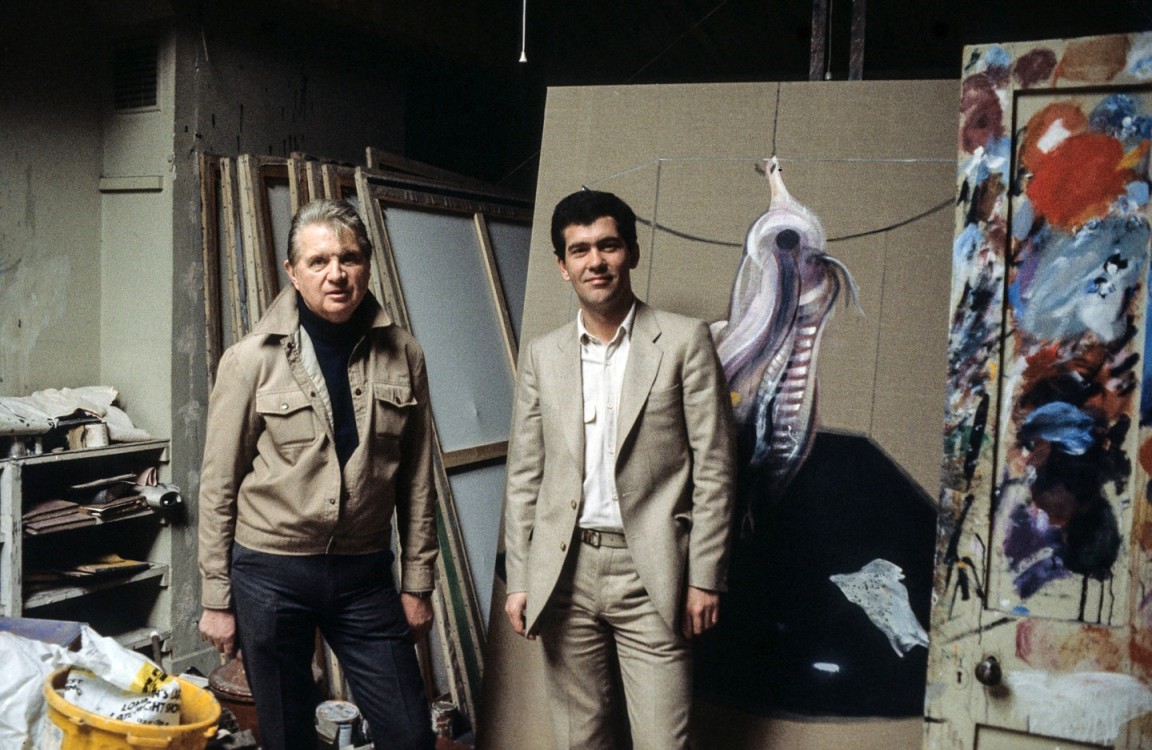
LEGACY: Artist Francis Bacon, left, with best friend and
beneficiary of his estate John Edwards
Bacon’s
Legacy
LETTERS TO THE EDITOR |
THE TIMES | WEDNESDAY, MARCH 12, 2003
From Mr David Meredith
Sir,
You report (March 6) that the death of Francis Bacon’s heir has led to claims
that his estate is being used to prop up Thai bars and brothels.
When John Edwards became the sole beneficiary of Bacon’s £11 million estate in
1992, a young artist, Simon Gale, despondently thought Edwards would be open to
“leeches, brokers, unscrupulous bankers, cowboy businessmen, and casino-minded
underwriters, spongers, charities, salesmen and his own incompetence”.
Bacon’s biographer, Daniel Farson, disagreed when he wrote: “I believe that John
will cope. He has Philip (Mordue)’s common sense to help him” (The Gilded Gutter
Life of Francis Bacon, Vintage, 2003).
With Bacon’s legacy estimated at £30 million, it would seem unclear whether
artist or biographer was right in their contrasting predictions as Philip Mordue
is left a substantial amount of money by John Edwards.
Yours faithfully,
DAVID MEREDITH,
17 South Marine Terrace,
Aberystwyth, Dyfed SY23 1JX.
March 7
Obituaries
John Edwards
Companion and heir of Francis Bacon
PHILIP HOARE | THE
INDEPENDENT |
FRIDAY 14 MARCH,
2003
John Edwards was the painter Francis Bacon’s last "protracted
love", replacing "the fading image of George Dyer" as a blurred
icon of East End authenticity in Bacon’s work. His Three
Studies for a Portrait of John Edwards, painted in 1980 and
1984, showed Edwards "with his crossed and lifted leg seated on
a stool, his dark quiff of hair, his sweeping jawline and his
heavily handsome face", said the writer Andrew Sinclair: "Yet
there was . . . a certain brooding stillness that bespoke a
touch of respect and even fear in the painter."
Edwards’s father was a London docker who lived in Cable Street.
John, one of six children, was aged 22 and working for his two
elder brothers in one of three East End pubs they owned when, in
1974, Muriel Belcher, the enchantingly foul-mouthed maîtresse of
the Colony Room, brought Bacon to the Swan. Ian Board, Belcher’s
successor, said, "John was hypnotised."
Bacon was equally impressed. Although he said, "You don’t want
an old boiler like me", he seduced John Edwards, taking him
gambling in casinos and cavorting in night-clubs. Bacon was by
then Britain’s most famous living artist, and a millionaire;
Edwards was dyslexic and illiterate but, as one friend remarked
cattily, "He learned to write his name quickly enough, as soon
as he got a chequebook." Sinclair wrote, "As with Dyer, Bacon
entered in his lengthy relationship with Edwards into the
Pinteresque world of the play The Homecoming, where a refined
menace pervades throughout."
Edwards recalled his "amazement" when he walked into Bacon’s
studio in Reece Mews and found a portrait of himself, although
he had not by then sat for the artist. The studies of Edwards
displayed a tenderness which militated against Bacon’s aesthetic
of violence and mortality. He was "depicting the man most close
to him without wavering or exaggeration," according to Sinclair.
"It was reality; it was the fact."
And it was Edwards’s sense of reality which appealed to Bacon.
"John told him exactly what he thought," recalled his brother
David. "He was always ringing John up for advice on things." As
for the Edwards family, they were pleased by the relationship.
"Mum? Delighted!" said David Edwards. The Sohoite chronicler Dan
Farson also approved: "Francis fussed over John with the beady
eye of a mother hen, allowing nothing and no one to distract";
yet, "Because he was so fond of John, he was more irritable with
other people, as if his possessiveness made him nervous."
When Bacon stayed with his cousin Pamela Firth at Cavendish Hall
in Suffolk, the extended Edwards clan came too, buying property
on the proceeds "of the sale of a Bacon painting or two".
Replacing the Anglo-Irish Ascendancy of his descent, Bacon lived
with his new "cockney family" in "a barricaded house . . .
surrounded by gates and walls and signs of 'GUARD DOGS –
WARNING'. Particularly assertive were a Rolls-Royce and Land
Rover and a Bentley with the numberplate BOY 1."
At dinner Bacon’s friends would find themselves seated next to
convicted burglars. But some appreciated Edwards’s charms.
Stephen Spender told Bacon,
I think that, if I knew him well, I would become obsessed by
him, and I can well understand loving him. Of course, it is
seriously marvellous to be untainted by what is called
education. It means he moves among real things, and not
newspaper things.
"Steve was a lovely bloke," declared Edwards.
But even for Bacon the scene became too much, and he would
escape to Europe and a new love, a Spanish banker. The influence
of the Edwards family had made him grow away from friends such
as Lucian Freud and Frank Auerbach. Farson claims Edwards tried
to reconcile Bacon and Freud in 1984, "but by then it was too
late to matter". When Bacon died in Spain on 28 April 1992,
Edwards inherited his estate, valued at £11,370,244.
On hearing of Bacon’s death, Edwards – who lived in a nearby
flat (bought by Bacon) with his own lover, an ex-convict named
Philip Mordue – removed all the valuables from his friend’s
house for safe-keeping. He said:
I am going to keep the house and studio exactly as it is. I am
going to live in it until I die and then donate it to the
nation. When I pop off, then it’s up to them what they do with
it.
In fact, he donated the studio to the Hugh Lane Gallery in
Dublin, where it was painstakingly reconstructed; and entered a
dispute with Marlborough Fine Art in London over Bacon’s
paintings.
Dan Farson criticised friends such as Bruce Bernard for not
giving Edwards credit "as model for some of Francis’s finest
paintings in this final stage – quite apart from his value as a
friend". Edwards spent his legacy on pink champagne in a Thai
resort, surrounded by Bacon reproductions that mystified the
locals. It is reported that what is left of Bacon’s estate will
go to Philip Mordue.
Philip Hoare
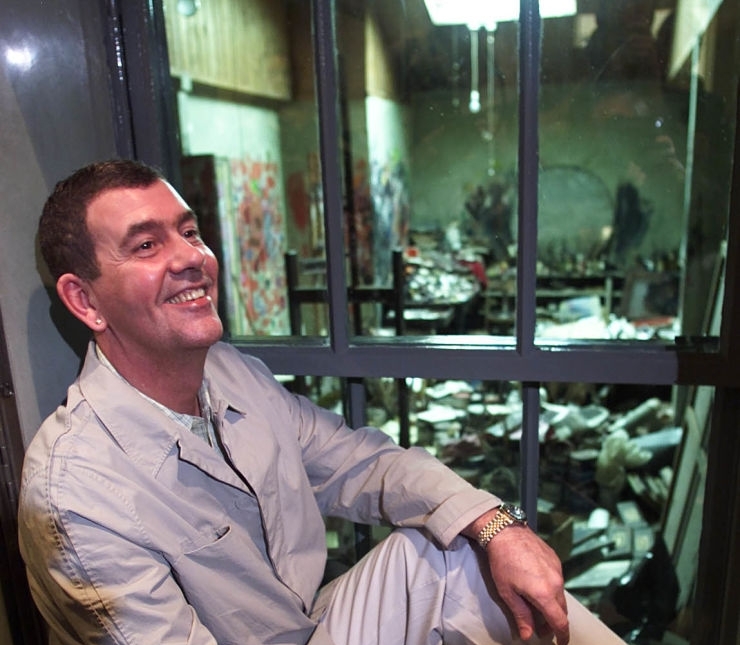
John Edwards, barman: born London 10 September 1949; died
Bangkok 5 March 2003
A messy end
ANDREW RENTON
| THE
LONDON EVENING STANDARD |
TUESDAY 18 MARCH,
2003
A colloquium of literary luminaries – the
critic Susan Sontag and poet John Ashbery among them – is
getting up an international petition to stop the heirs of Andre
Breton breaking up his £30 million legacy next month and selling
bits off to the highest bidders.
Also under threat is the estate of Francis Bacon whose heir,
John Edwards, has died, apparently leaving the art to an East
End mate, Philip Mordue, last heard of somewhere in the bars of
Thailand.
The estate that John Edwards inherited after Bacon’s death in
1992 was valued at £11 million. Today, a very small Bacon can
fetch £1 million. Over the past decade Edwards has sold off some
important works quietly through galleries and private dealers in
London and New York. No one knows how many paintings are left
but there is certainly still a sizeable collection – somewhere – and
it is too important to remain in storage. Bacon’s executors are
tight-lipped as to the location and the beneficiaries.
If the main beneficiary, as is widely supposed, is Edwards’s
long-time partner, Philip Mordue, I would advise him to flog the
lot. Forget finding a suitable public home, just get the stuff
out into the public domain where it can shine.
If museums want to bid, then bid they must, but don’t turn the
collection into a Bacon museum. Bacon himself would have been
horrified by the idea. Throughout his life he went out of his
way to subvert any kind of archival authority attached to his
work. But, in death, the controlled images of a few carefully
released paintings a year have been muddied by supplementary
material.
Bacon claimed not to make preparatory drawings, for example,
although a hundred or so miraculously appeared after he died,
and his self-criticism led him to destroy many more paintings
than he allowed out of the studio. I suspect that some of the
works were saved from the Stanley knife by a well time meaning
assistant, and that they are also circulating in the commercial
world.
Perhaps most horrifying for Bacon would have been the
transplanting of his Kensington studio to the Hugh Lane Gallery
in Dublin. A team of archaeologists spent 12 months taking the
studio apart, documenting it item by item, to rebuild it in the
museum. It has been a hugely popular attraction since opening
two years ago, with almost a third of the museum’s 100,000
annual visitors paying a premium for a gawp at the holy sanctum.
Yet it feels all wrong. To transpose the messy energy of the
studio, lock, stock and paint splatter, turns the chaos into
pastiche. I don’t care how authentic it looks, it is not the
real thing. And what do we gain from the exercise? The museum
has been using the studio as the impetus for a centre devoted to
the study of Bacon, but I learn little from the installation
itself, save that Bacon kept an untidy room. Or worse, I might
be tempted to interpret extraneous details as monumental truths
towards the understanding of the great artist.
Andy Warhol anticipated just this kind of absurdity. He kept an
archive box by his desk. Anything interesting that arrived in
the post – any
trivia of any kind, for that matter, candy-bar wrappers as well
as junk mail – ended
up in the box. When it was full it went into storage, and a
fresh box was brought out. The Warhol Museum in Pittsburgh has
been slowly annotating the contents of these boxes. They are
riveting capsules – like
the ones they used to bury on Blue Peter, only with more
glamour – but
they don’t mean much.
Hoarding is just what we do. And Warhol hoarded more than most.
The incongruous collection of cookie jars and other ephemera
that packed his New York townhouse, on the other hand, were sold
off at hugely inflated prices after his death, and presumably
grace other New York townhouses, masquerading as Warhol
"originals".
I cannot think of any museum dedicated to the work of a single
artist that has stayed fresh. The Dutch have just expanded their
Van Gogh Museum to sustain interest in the 150th anniversary
year by building a new wing and renovating the original
building, first opened in 1973. Paris has its Picasso museum, as
does Barcelona.
Both are political fabrications, each nation claiming the artist
as its own, and both are strangely lopsided affairs as a result.
What you witness in these places is the occasional masterpiece
and a great deal of material that oddly slants the history of
the artist.
Prurient curiosity makes these museums irresistible, but the
life of the artist should not be cast in stone buildings. If the
Bacon or Breton legacies are still to be meaningful, let them
find many homes. They will be enlivened by strange environments,
rather than by introspection. The legacy is not about preserving
artefacts in a still life of the moment of the artist’s death,
but should provide new perspectives for the work before rigor
mortis sets in.
Solicitors for John Edwards’ estate deny
that his lover has inherited the art
MARTIN BAILEY
| THE
ART NEWSPAPER |
MONDAY 31
MARCH 2003
The death of Francis Bacon’s companion, John Edwards, has led to
speculation about the fate of the artist’s legacy, which Mr
Edwards had inherited 11 years earlier. Mr Edwards, a former
East End barman, died in Thailand on 4 March, aged 53, after
suffering from lung cancer. He met Bacon in 1976 and soon became
his closest companion. Although both were gay, they insisted
that they were just friends. On Bacon’s death in 1992, at the
age of 82, he left his entire estate to Mr Edwards. The
following year Mr Edwards moved to Thailand, acquiring a luxury
flat in Pattaya with his close friend Philip Mordue.
In 1997 Mr Edwards, with advice from executor Professor Brian
Clarke, began investigations into alleged irregularities by
Bacon’s life-long dealer, Marlborough. It was suggested that the
loss to the estate might have been as high as £100 million. The
dispute went to court, although the two sides later agreed a
settlement in February 2002, with the Bacon estate dropping its
claim and each side paying its legal costs.
Following Mr Edwards’ death, it was speculated that his own
estate (largely comprising the estate of Bacon) would go to Mr
Mordue. He is said to have financial interests in the nightlife
of the Thai resort of Pattaya. Bacon’s estate was originally
worth £11 million, which will have certainly benefited from the
substantial rise in prices for his pictures. But on the debit
side the value of the inheritance has been reduced by Mr
Edwards’ lavish lifestyle and by the legal case against
Marlborough.
Solicitors acting for the Bacon estate told The Art Newspaper
that reports of Mr Mordue “inheriting the collection [of Bacon
works of art] are wrong.” No comment was made about other
assets, which suggests that Mr Mordue may indeed be inheriting
cash or property. The estate had earlier donated the contents of
Bacon’s chaotic South Kensington studio to the Hugh Lane Gallery
in Dublin, where it was reconstructed in 2001
The Art Newspaper has
identified a number of Bacon pictures which appear to belong to
the estate. These include: “Pope” (1950), “Study after
Velázquez” (1950), “Man at curtain” (1950-1), “Figure” (1950-1),
“Crouching nude” (1950), “Crouching nude on rail” (1952), “Two
figures in the grass” (1952), “Marching figures” (1952), “The
end of the line” (1953), “Landscape after Van Gogh” (1957),
“Reclining figure” (1960), ”Study of the human body” (1987),
“Portrait of John Edwards” (1988) and “Triptych” (1991).
Hugh Lane Gallery was last year given one painting by the
estate, Bacon’s last unfinished portrait (1992). It also has
five other works on loan from the estate: “Elongated figure
walking”, “Figure (unfinished)”, “Kneeling figure, back view”,
“Three figures (sketch)” and “Seated figure (sketch)”.
Considering that major Bacon paintings now fetch millions of
pounds, the 19 pictures we have identified from the estate must
be worth a fortune.
As we revealed last year, plans were being made to set up the
John Edwards Charitable Foundation and this was eventually
established on 29 May 2002, headed by Professor Clarke (The
Art Newspaper, No.123, March 2002, p.7). Its two aims are to
arrange exhibitions of Bacon’s work and to promote and publish
research on the artist. Among the projects under active
consideration is a catalogue raisonné of Bacon’s œuvre.
Last year, following the settlement of the legal case, the Bacon
estate received a large volume of archival material from
Marlborough. A decision has been made to donate this to the Hugh
Lane Gallery, and the papers are expected to arrive within the
next few months. The Bacon estate is developing close links with
the Hugh Lane, which now looks set to become the world centre
for Bacon studies.
JOHN EDWARDS 1950-2003
Cockney barman best friend of painter Francis Bacon
BY ALAN RIDING, PARIS
ALAN RIDING
| PARIS | THE
NEW YORK TIMES |
FRIDAY, 2
APRIL, 2003
An illiterate former barman from the East End of London who was
the artist Francis Bacon’s closest friend in the last 16 years
of his life, and the sole heir to his paintings and properties,
has died. John Edwards died last month in Bangkok.
Mr. Edwards, who was the model for at least 30 of Bacon’s late
portraits, met the painter in 1976 at the Colony Room, a
drinking club in the Soho district of London that had long been
popular with artists. Although the men were gay, Mr. Edwards
always said he had no sexual relationship with Bacon, who was 40
years his senior and at the time one of the most celebrated
painters in Britain.
After Mr. Bacon’s death in April, 1992, at 82, Mr. Edwards was
distraught to find himself the centre of media attention, fiends
said. In 1994, he settled in Pattaya, Thailand, with his
partner, Philip Mordue, whom London newspapers speculate is now
the beneficiary of an estate valued 10 years ago as worth
$25-million.
In 1998, Mr. Edwards gave the contents of Mr. Bacon’s famously
untidy London studio to a gallery in Dublin where it has been
recostructed down to the tiniest detail.
Mr. Edwards, the son of an East End longshoreman, was born in
1950 within earshot of the bells of St. Mary le Bow Church,
which made him a true Cockney. He had dyslexia, never learned to
read and was working in a pub when he met Mr. Bacon. The next
day, Mr. Edwards was invited to the studio.
“Terrible mess, it was,” Mr. Edwards later said of the studio.
“I remember the first time I saw it, I said to Francis, ‘How can
you work here?’ But he said it was how he liked it. All he
wanted was to have the peace and quiet to paint.”
The men soon became inseparable, with Mr. Bacon summoning Mr.
Edwards to breakfast most days and having him accompany him on
his frequent nighttime drinking and gambling binges. One of his
jobs, Mr. Edwards later said, was to make sure that Mr. Bacon
did not overspend. Also invited to keep Mr. Bacon company while
he painted, Mr. Edwards also became a rare witness to the artist
at work.
"When Francis painted, there was always a drama,” he once said.
“It always seemed to me as if he was fighting with the canvas.”
As for his appeal to Mr. Bacon, he explained it as a form of
liberty: “He felt very fee with me because I was a bit different
from most people he knew. I wasn’t asking him about his painting
or anything like that. Most people around Francis looked up to
him, and he didn’t like that.”
Bran Clarke, a London artist and the executor of the Bacon
estate, said Mr. Edwards was the only person who treated Francis
Bacon as an equal.
“He would be very rude to Francis, which was enjoyable to see
because nobody else had licence to do that. He’d give it to him
straight and Francis appreciated that.
“Francis was the king of Soho ... but to John, he was just ‘my
Francis.’ ” John
Edwards died of lung cancer on March 4. He was 53.
The New York Times
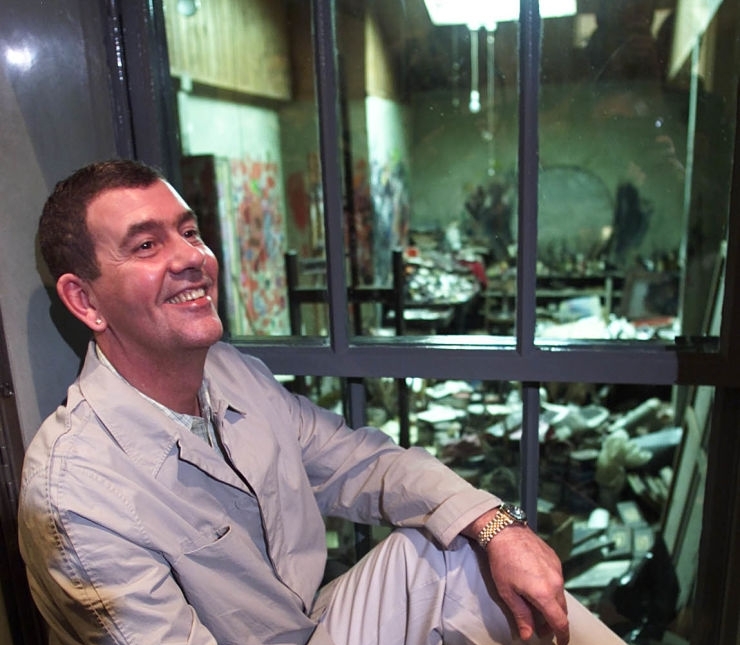
John Edwards accompanied Francis Bacon on frequent nighttime
binges.
His
role was
to ensure the artist did not spend too much.
Will Phil the Till
bring home the Bacon?
LONDON SPY |
COMMENT |
THE DAILY TELEGRAPH |
THURSDAY, APRIL
24, 2003
There is a new twist in the long-running controversy over who
will inherit Francis Bacon’s millions.
Despite speculation to the contrary, Spy learns that the great
artist’s huge estate – or at least the paintings contained in
it – will not end up in the sticky clutches of a colourful
ex-gangster known as Phil "the Till" Mordue.
Mordue, a former convict who now runs girlie bars in Thailand,
was rumoured to have come into the £30 million estate following
the death of his long-term boyfriend, John Edwards, last month.
Edwards – Bacon’s friend and muse – had been named as the sole
beneficiary following the artist’s death in 1992.
Senior figures in the art world have been worried that the
collection of the 20th century’s greatest British artist would
fall into Mordue’s hands.
However, solicitors acting for the Bacon estate are now able to
confirm that this will not happen. "Any reports of Mr Mordue
inheriting the collection (of Bacon works of art) are wrong,"
said a spokesman yesterday.
One likely outcome is that the body of art, which has rocketed
in value since Bacon’s death, will go into a trust. "The John
Edwards Charitable Foundation was founded before John died,"
comments Richard Butcher of Payne Hicks Beach, a partner
involved in the administration of the estate.
"It was designed to promote the works of Bacon, but I cannot
tell you if that is where the pictures will end up: I can make
no comment until the will becomes public knowledge.''
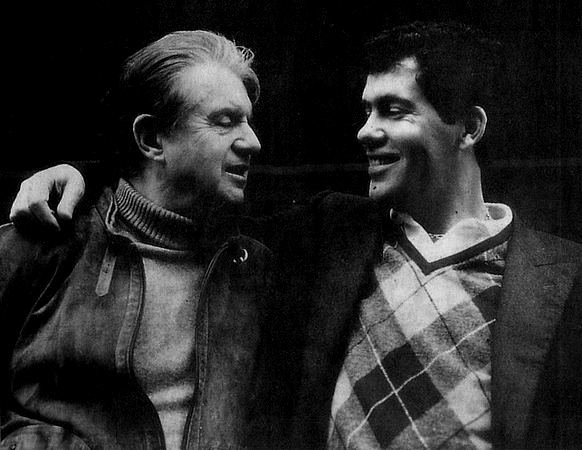
Francis
Bacon with John Edwards, his sole beneficiary
REFLECTIONS ON
THE SCREAM
FRANCIS
BACON, LESSING, AND THE AESTHETICS OF THE BEAUTIFUL AND THE
SUBLIME
RICHARD WHITE
| PHILOSOPHY
TODAY |
VOLUME 47 | ISSUE
1 |
SPRING 2003
"I’ve always hoped in a sense to be able to paint the mouth like
Monet painted the sunset."1
– Francis Bacon
Francis Bacon is held to be one of the greatest painters of the
twentieth century, and yet his paintings can hardly be
considered "beautiful" in any ordinary respect. Indeed, more
often that not viewing one of Bacon’s works evokes unease,
discomfort or even psychological pain. As Ernst van Alphen
comments: "The first time I saw a painting by Bacon, I was
literally left speechless. I was touched so profoundly because
the experience was one of total engagement, of being dragged
along by the work. I was perplexed about the level on which
these paintings touched me: I could not even formulate what the
paintings were about, still less what aspect of them hurt me so
deeply."2 We
might say that Bacon’s work is a provocation that undermines
many traditional certainties including the certainty of self and
the redemptive power of art. In this essay I shall consider the
significance of Bacon’s work for contemporary aesthetics, and in
particular the way in which it forces us to challenge
traditional notions of the beautiful and the sublime.
The public’s response to Bacon has not always been kind; and
even today, a traditionalist might argue that in abandoning
"ordinary" notions of beauty, Bacon is a typically modern artist
who has fallen away from the aesthetic achievements of the past.
In his classic work, Laocoon, first published in 1766, Gotthold
Lessing provides a reasonable basis for such a criticism.3 Lessing
is a staunch defender of the traditional aesthetics of the
beautiful and he is clearly uncomfortable with the development
of modern art, even in the middle of the eighteenth century.
Lessing argues, in particular, that a scream can never be
beautiful, and so, he believes, the great visual artist, like
the sculptor of the Laocoon, would not try to depict one. It is
interesting to reflect on this claim, especially in light of
Bacon’s own repeated attempts to paint the screaming mouth. The
conjunction of Lessing and Bacon is a provocative one and it can
tell us a lot about the fortunes of contemporary aesthetics.
After looking at Lessing’s discussion of beauty, the latter part
of this essay investigates the sublime as the second fork of
traditional aesthetics that is elaborated in the work of Kant
and Burke and then revived in Lyotard’s discussions of
postmodern art. I argue that the aesthetics of the beautiful and
the sublime has become less helpful in explaining the
functioning of the contemporary art work, and by using Bacon as
a test case, I suggest that the reduction of art to the
beautiful and the sublime should now be abandoned. Bacon himself
was quite articulate about painting and his own technique, and
his observations as well as his paintings may now inspire a
renewed philosophical enquiry into the nature of art.4
* * * * *
Gotthold Lessing’s Laocoon is one of the earliest significant
works of modern aesthetics, and as such it has helped to shape
our own thinking about the nature of art.5 Lessing’s
essay is wide-ranging and often polemical as he criticizes other
writers for idealizing the Greeks and misrepresenting their
inner nature to be one of serenity and calm. Lessing begins this
work with the famous Greek statue of Laocoon and his sons as
they are seized and crushed to death by a monstrous serpent. He
notes that in spite of the obvious physical anguish of such a
situation, Laocoon himself does not cry out. His bodily agony is
obvious in his whole posture, in the contraction of his stomach
and the tension of his muscles, but even so, "this agony ... is
yet expressed with no violence in the face and attitude" (L 1).
The classicist Winckelman had tried to explain this feature of
the statue in terms of the artist’s desire to express the moral
greatness of Laocoon and the Greeks in general that in spite of
such physical anguish his spirit is not overwhelmed and so he
remains "a great and steadfast soul." But Lessing is not
convinced. He points out that the Greek poets and dramatists
would often give a very physical expression to the sufferings of
their heroes, with Sophocles’s Philoctetes screaming, crying and
moaning throughout the third act of the play; or his dying
Hercules, "wailing, moaning, weeping and screaming" [L p.6].
According to Lessing, the specific problem of the Laocoon
actually derives from the inherent possibilities of sculpture
and the other visual arts, including painting, as opposed to
what is possible in literature. As the subtitle of his work
announces, the Laocoon is an "essay upon the limits of painting
and poetry," and Lessing puts these two arts in opposition to
each other because he wants to emphasize that the rules that
determine one do not determine the other.
The literary representation of pain and anguish can be
successful because they are mediated by language and their
effects are achieved through a description that is necessarily
dispersed through time. But in painting and sculpture there is
no mediation because everything is given all at once. Thus
screams must be reduced to sighs, not because this would somehow
betray the moral greatness of the Greeks, but because screams
would "deform the countenance to a repulsive degree" [L p.13].
Behind all of this there lies an inherent contrast between the
ancients and the moderns. Lessing’s target is Winckelmann, but
he has in common with the latter a very strong sense of the
artistic and spiritual superiority of the Greeks. "Among the
ancients," he writes, "beauty was the supreme law of the
imitative arts" [L p.11]; and so an ugly figure would not be
depicted. But in modern times, "imitations are allowed to
extend over all visible nature, of which beauty constitutes but
a small part" [L p.16]. Lessing believes that in this respect
at least we have fallen away from the ancient Greeks. He
questions the subordination of beauty to truth – "Allowing this
idea to pass unchallenged at present for whatever it is
worth..." – and he shows a basic scorn for the priorities of
contemporary artists who are more likely to show off their
artistic skills than attend to the timeless ideal of beauty.
But let us now consider the main point. Lessing argues that a
scream cannot be aesthetically rendered in a great painting or a
sculpture because, "the simple opening of the mouth, apart from
the violent and repulsive contortions it causes in the other
parts of the face, is a blot on a painting and a cavity in a
statue productive of the worst possible effect" [L p.14]. This
is quite consistent with his aesthetic ideal and it does support
a particular account of beauty as something that is ultimately
timeless and removed from all the vicissitudes of everyday
life. But it is also one of those absolute claims which almost
cries out to be falsified. In modern art, there is a cry
depicted in Poussin’s The Massacre of the Innocents that Francis
Bacon regarded as the finest ever painted. There is also, of
course, The Scream by Edvaard Munch; and at one point, Bacon
himself made it his artistic mission to paint the human scream,
although he felt that he had never been entirely successful. In
fact, Bacon’s canvasses seem to be filled with images of terror
and despair: Most famously, perhaps, the series of screaming
popes that he painted in the early 1950s, or the equally
powerful triptychs, Sweeney Agonistes (1967), the Three
Studies for a Crucifixion (1962), or the Triptych
May-June 1973, painted in memory of George Dyer.
We must now either condemn his work or else we must condemn the
traditional standard or model of beauty that Lessing describes
and which would require us to reject Bacon as an inadequate
artist. What is at stake here is the measure of beauty and the
possibility that Lessing’s account which helped to inaugurate
modern aesthetics is actually inadequate to the reality of our
experience of art.
* * * * *
ii) According to the dominant tradition of modern aesthetics,
which includes Lessing and Kant, the beautiful is that which
promotes the harmony of our faculties and the free play between
them. Along these lines, Lessing had argued that a sculpture of
Laocoon crying out could not be beautiful because it would leave
nothing to the freeplay of the imagination: "When, for
instance, Laocoon sighs, imagination can hear him cry; but if he
cry, imagination can neither mount a step higher, nor fall a
step lower, without seeing him in a more endurable, and
therefore less interesting, condition" [L p.17]. Now certainly,
Bacon’s images do not tend to promote the harmony of our
faculties, and they actually threaten the ease and the
sovereignty of the viewing subject. Hence to avoid Lessing’s
negative judgement, it now becomes tempting to explain the power
of Bacon’s paintings not in terms of the harmonious and
harmonizing power of beauty, but in terms of the sublime, in
which the individual is threatened by the power and immensity of
the cosmos but recovers herself in a movement that is ultimately
self-affirming.
In Kant and other 18th century writers, the traditional objects
of the sublime were oceans and mountains, cataracts and storms
that impress us by their sheer power or size. Kant argued that
the powers of the imagination are overwhelmed by these objects
that are so excessive they can only be experienced as a kind of
outrage upon the senses. Thus our senses cannot grasp the raging
torrent or the vast ocean that seems to threaten us and we are
left with a strong sense of our inadequacy and the limitations
of our physical nature. But in the experience of the sublime,
the individual finally reasserts herself when she recognizes
that at a deeper level she is actually superior to the workings
of physical nature: while she cannot imagine it she can at least
think the infinite as a whole, and even though she is threatened
she also realizes that something merely physical cannot destroy
her higher nature. Hence the experience of the sublime is
ultimately an affirmative experience, even though it is also
threatening. Kant’s examples of the sublime are typically drawn
from nature, but there is no good reason to limit the sublime to
the natural world, and Kant himself gives a clear illustration
of the sublime experience on entering the St Peter’s Basilica in
Rome: "For here a feeling comes home to him of the inadequacy
of his imagination for presenting the idea of a whole within
which that imagination attains its maximum, and in its futile
efforts to extend this limit, recoils upon itself, but in so
doing succumbs to an emotional delight."6
According to Edmund Burke, terror is the ruling principle of the
sublime.7
Terror is the most powerful of all the passions because it is
the response of our most basic instinct of self-preservation
when we are threatened by something that could destroy us.
There are some situations, however, in which an image or a
representation that would normally produce terror actually
produces "delight" when we realize that we are not immediately
threatened and so we can contemplate the terrible object with a
certain detachment and calm. For Burke, as for Kant, the
experience of the sublime involves a strange mixture of pleasure
and pain, or attraction and repulsion, to something that would
be directly threatening in another context. It is a paradoxical
experience, and Burke, spends a lot of time trying to explain
it.
Now in spite of the differences between Kant and Burke on the
nature of the sublime, the two accounts do share a corresponding
structure. In both writers, two moments of the sublime
experience are singled out as privileged: First, the threat of
annihilation that is posed by the ocean, mountain or image of
death, where the individual is forced to recognize her own
limitation and lack of consequence in the physical perspective
of the world. Second, the moment of recoil, or the reassertion
of the individual in which she affirms the absolute value of her
existence in spite of the "threat" that has just been posed.
* * * * *
Many of Bacon’s early paintings – the series of screaming Popes
for example, the terrifying Three Studies for a Crucifixion, or
the various "heads" enclosed within their prisonhouse frames and
apparently crying out in anguish – would seem to offer the best
possibilities of interpretation in terms of the sublime. For in
a very obvious way, these are all images of horror, and we are
definitely threatened and challenged by them. The canvas
elicits anguish. But this is also an experience that we
survive; it is not a real horror but the representation of
horror that confronts us, and so to look at one of Bacon’s
paintings may actually be an experience of the sublime and
ultimately empowering. – As an example, we might consider
Bacon’s Study after Velasquez’s Portrait of Pope Innocent X
(1953): Here, the Pope is easily recognizable by his robes of
office, purple and white, and by the ornate gold throne on which
he sits. But our eyes are drawn to his mouth, the focal point
of the painting, which seems to scream out in terror. The
burden of existing in this cramped space has become unbearable.
It seems that his whole body is disintigrating; the line of his
throne and the golden poles that support it can be made out
through his body, and the body ends abruptly beneath the knee.
His hands seem to grip the chair in desperation. Flecks of
blood appear on his white robes and his glasses are askew. The
whole scene is covered by a "curtain" of dingy grey and other
dull tones, which suggests the idea of a sideshow attraction
with the subject being put on show for our own curiosity and
amusement. The picture as a whole evokes a sense of real horror
whose ultimate referent must remain nameless, (although other
paintings of this time, such as the famous Painting 1946,
directly summon up thoughts of war, dictatorship and the
slaughter of people like cattle.)
The earliest critics of Bacon were perhaps particularly
interested in "narrative" interpretations like this last one.
This inherently disturbing and ambiguous painting seems to be
telling a story and the critics took it upon themselves to
explain what that story was. Later critics, beginning with
Deleuze, have resolutely opposed the recourse to narrative
because it short-circuits the visceral impact of the painting by
going beyond what is actually given, to an imaginary "meaning"
the painting is intended to convey. In this they are more
faithful to Bacon’s own pronouncements about his work. In an
interview with David Sylvester, for example, Bacon explains why
he tends to concentrate on a single figure in his paintings:
In the complicated stage in which painting is now, the moment
there are several figures – at any rate several figures on the
same canvas – the story begins to be elaborated. And the moment
the story is elaborated, the boredom sets in; the story talks
louder than the paint. This is because we are actually in very
primitive times once again, and we haven’t been able to cancel
out the story-telling between one image and another [IFB p.22].
According to Bacon, painting, as opposed to mere "illustration,"
involves a direct assault on the nervous system. This is
presumably what he intended to achieve in his Study
After Velasquez’s Portrait of Pope Innocent X.
But he insists, "I wanted to paint the scream more than the
horror" [IFB p.48]. In one sense, of course, the two cannot
really be separated from each other for it is presumably the
horror that produces the scream while the scream is experienced
most intensely as a scream within a horrific context.
Nevertheless, his point is well-taken: the painting exceeds
whatever narrative is used to explain it. It assaults the
nervous system and forces a response without the intermediary of
the story it is meant to convey. Finally, we can add that while
this painting as a whole depicts an image of real horror, it is
also the case, as van Alphen has pointed out, that it mirrors
the inner turmoil and discomfort that such a picture produces in
us.8
Thus the painting becomes an image of our own response to it:
it reverberates with our own anguish and despair, and in this
respect also it cannot be reduced to an ordinary narrative
theme.
Now to some degree or another, all three of these readings, the
narrative reading that tells a story, the anti-narrative reading
that focusses on figure, and the affective reading that turns
directly to the nervous system of the spectator are all valid
ways of responding to a particular painting. Perhaps some of
Bacon’s works are more helpfully addressed by one of these
approaches as opposed to another, but all three perspectives
have proved useful in getting us to see what Bacon’s paintings
are all about and now they achieve the effects that they do.
And yet none of these readings obviously involve the notion of
the sublime or the possibility of sublime effects. Certainly
the first element of the sublime is present in Bacon’s
paintings, for they are mostly presentations of images and
figures in attitudes that threaten us or cause us unease. But
it would be wrong to say that the sublime moment of recuperation
and self-affirmation is present. With the painting of the
screaming Pope, for example, there is no sense in which we stare
down the horror. The painting overwhelms the everyday subject,
but it leaves us in this fractured state. In fact, the painting
presents us with an image of our own death, but one that is not
mastered and overcome as it would be in the case of the
classical sublime. Any great painting is ultimately a
celebration of life – or as Bacon puts it, "I think art is an
obsession with life" [IFB p.63] – but within this context,
Bacon’s paintings are not ultimately reassuring about who we are
and neither do they testify to the significance of our
individual lives.
iii) The concept of the sublime has undergone several
transformations since its apparent rediscovery in the late 17th
century, and most recently, through the work of Jean-Francois
Lyotard, the sublime has been proposed as the defining
characteristic of postmodern art. As Lyotard writes in the
essay, "What is Postmodernism?", "I think in particular that it
is in the aesthetic of the sublime that modern art (including
literature) finds its impetus and the logic of the avant-gardes
its axioms."9 Within
this general context, but focussing more specifically on
postmodernism itself, he adds,
A postmodern artist or writer
is in the position of a philosopher: the text he writes, the
work he produces are not in principle governed by preestablished
rules, and they cannot be judged according to a determining
judgment, by applying familiar categories to the text or to the
work. Those rules and categories are what the work of art
itself is looking for [PC p.81].
Lyotard’s ideas are suggestive but underdetermined, although in
later essays he clarifies his reappropriation of the sublime,
suggesting, for example, that Barnett Newman’s abstract
paintings Vir Heroicus Sublimis, and sculptures, Here 1, Here 2
and Here 3, are examples of what he had in mind. Significantly,
Barnett Newman also wrote an essay titled "The Sublime is Now"
and in reflecting on the meaning of this title, and Newman’s
work in general, Lyotard develops a non-recuperable version of
the sublime – one that emphasizes the shock of contemporary art
and its disruption of all traditional categories of subjective
appropriation and control.10 Like
the traditional sublime it involves an intensification of
experience, not the feeling of pure delight as with the
beautiful, but a mixture of pleasure and pain; but while it
unsettles the subject it does not conclude with the final
reassertion of individual sovereignty and control.
Lyotard explains,
one would have to read The
Sublime is Now not as The Sublime is Now but as Now the Sublime
is Like This. Not elsewhere, not up there or over there, not
earlier or later, not once upon a time. But as here, now, it
happens that, ...and it’s this painting. Here and now there is
this painting, rather than nothing, and that’s what is
sublime. Letting-go of all grasping intelligence and of its
power, disarming it, recognizing that this occurrence of
painting was not necessary and is scarcely foreseeable...It’s
still the sublime in the sense that Burke and Kant described and
yet it isn’t their sublime any more [SAG p.199].
All of this fits quite well with some of the dominant features
of art in postmodern times – If the sublime moment of the art
work lies in its absolute character as an event, then what must
be emphasized are all the experimental possibilities of art,
performance art and video for example, the emphasis on "collage"
and mixing of different forms, materials and styles, and the art
events or "happenings" that actually seek a blurring of the
boundaries between art and life itself. As Arthur Danto has
also noted, this kind of art is inherently reflective and
theoretical; in many cases, beginning with Barnett Newman or
Andy Warhol, it is the art work itself which poses a question
about the very nature of art.11
John Russell describes Bacon’s own entree onto the
modern art scene with the paintings
We had no name for them, and no name for what we felt about
them. They were regarded as freaks, monsters irrelevant to the
concerns of the day, and the product of an imagination so
eccentric as not to count in any possible permanent way. They
were spectres at what we all hoped was going to be a feast, and
most people hoped that they would just be quietly put away.12
Likewise, Bacon often talked about the need to take risks as an
artist and to avoid problems and themes that one knows one is
capable of dealing with. And yet, it would now be very limiting
to suggest that the power of Bacon’s painting lies only or even
primarily in its shock value as an artistic event. One of the
interesting things about Bacon is that he is not an experimental
artist in the sense of someone who challenges the traditional
themes of painting, who experiments with different media and
materials, or who calls into question the boundaries between art
and life. Bacon is very much a painter in the traditional sense
and he draws on the history of painting – as in his series of
Popes based on the Velasquez original – not to challenge its
authority, to deconstruct it or go beyond it, but as a way of
paying homage to it.
Now Lyotard is certainly aware that there is a big difference
between art as Ereignis (which is the sense of art as
existential happening or as the disclosure of Being) and art as
innovation. The first serves to unsettle and confound
established modes of thinking and being while the latter is
easily circumscribed within the circuits of the dominant system
itself.13
Likewise, Lyotard is famous for his definition of postmodernism
as "incredulity towards metanarratives", and in his major
writings on postmodernism, justice and the differend, his
professed goal is the proliferation of language games and the
jubilation of being that emerges in the celebration of a
multiplicity of different perspectives. But at the same time,
in other passages he seems to recognize the existence of a
dominant system, or metanarrative, that is slowly destroying and
absorbing all that belongs to the individual life. In this
context he writes that, "The experience of the human
subject – individual and collective – and the aura that
surrounds this experience, are being dissolved into the
calculation of profitability, the satisfaction of needs,
self-affirmation through success" [SAG p.209]. In
the end, of course, the dominant system that he refers to can be
nothing other than capitalism and the goal of art becomes the
production of new forms that can’t be immediately appropriated
by the life-denying tendencies of capitalist
commodification. Hence the sublime is whatever resists
commodification. It serves to renew life and it signifies the
possibility of something which exists beyond the established
forms.
Notice, though, how this interpretation of art (and the sublime)
ties them both to a very specific agenda, and it repeats the
mistake of making art into a stand-in for religion. According
to Lyotard, the world is profane, it is ordered, controlled and
commodified by capitalism. But art is the force of disruption
that continually escapes and eludes this ordering and gives us
notice that there is something – the unpresentable – that exists
beyond all the circuits and flows of everyday life. Hence for
Lyotard the art work or the art event points us away from
everyday existence and towards a sacred alterity that remains
unappropriated (at least for the time being).
This is an interesting line, but none of this really squares
with Bacon. We certainly do need to be careful about supplying
a narrative or a story that would reduce his pictures and so
make us blind to their power. But in the portraits of the
screaming popes especially, one is given an image of something
like the death of god. There is no transcendence here, and no
way out to another order of being. This is expressed in the
totally claustrophobic feel of the painting. The pope seems to
dissolve as traditional certainties are also in the course of
disappearing, and this leads to the anguish of his scream as the
strongest expression of despair. This particular painting may
offer a more intense expression of this idea, but it expresses
the same underlying emotional quality as many if not most of
Bacon’s other works. The sublime, even in Lyotard’s
contemporary version, is ultimately reassuring insofar as it
opens up a higher or more authentic plane of being that we are
held to belong to. But nothing like this is present in Bacon’s
work which offers no reassurance – even though it must be said
that Bacon’s work is not simply nihilistic, for in focussing
intensively on the human figure, and by addressing and
uncovering the powers of darkness that threaten us, it also
seems to speak for an intensely charged life.
* * * * *
iv) This essay began with an account of Lessing’s book,
Laocoon, and his argument that a scream, in painting or
sculpture, can never be beautiful and must always spoil the work
of which it is a part. It is probably no accident that Lessing
chose the example of the scream to illustrate his more general
thesis about the nature of beauty, because the scream is the
most basic human utterance suggesting self-abandonment and the
sense of being overwhelmed by whatever threatens from outside.
The one who screams is no longer sovereign, self-contained and
independent, but given over to all of the powers of life and
death. But this is at odds with the traditional model of the
beautiful which evokes sovereignty, poise and grace; and it is
also at odds with the ideal of the composed and self-contained
subject that supports and is supported by this model of beauty.
In fact, both the beautiful and the sublime affirm the ultimate
self-mastery of the individual subject, and the scream is
significant because it shows the point at which self-mastery is
overcome. Lessing objected that this moment of loss was
irrecuperable in painting and sculpture although it might be
redeemed as one aspect of an underlying unity in the literary
work. In The Birth of Tragedy, Nietzsche described the Greek
fascination for the Dionysian horror underlying all appearances
and at the heart of life; and something like this is probably
also the source of our fascination with Bacon, insofar as his
paintings seem to offer an extremely vivid and immediate
encounter with the forces of life and death. In this respect,
though, Bacon’s work cannot be appropriated by the traditional
categories of the beautiful or the sublime since these derive
from another view of the Greeks – the one endorsed by
Lessing – which regards them as the guardians of internal and
external harmony, and of the associated values of subjectivity
and self-control.
More speculatively, then, it follows from this that Bacon and
other contemporary artists may be working with a different
conception of beauty. Not one that is otherworldly or eternal,
and hence out of play, but one that is given within time and
which must therefore involve a relationship to change and chance
and a continual proximity to death itself. John Russell
describes how Bacon was once given a book written by his friend
Michel Leiris. In this book, Leiris traced back to its origins
in Baudelaire the notion of an ideal beauty that is
quintessentially modern insofar as it refuses to fall back on
"the emptiness of a beauty that is empty and cannot be
defined." "For Baudelaire," Leiris wrote,
beauty cannot
come into being without the intervention of something accidental
(a misfortune, or the contingence of modernity) which drags the
beautiful clear from its glacial stagnation: it is at the price
of degradation that the mummified One turns into the living
Many...We can call 'beautiful' only that which suggests the
existence of an ideal order – supraterrestrial, harmonious and
logical – and yet bears within itself, like the brand of an
original sin, the drop of poison, the rogue element of
incoherence, the grain of sand that will foul up the whole
system.14
Russell tells us that Bacon immediately ringed this passage with
a thick flat nib, for what Leiris had written resonated very
deeply with his own understanding of the nature of art and its
relationship to the beautiful: Not art as serene optimism which
escapes into otherworldly forms, but art as the power of life
that affirms itself in spite of, or even through, the horror
which it discovers in this world, and which causes Bacon’s own
figures to scream out in terror. This suggests a more fractured
and poignant sense of the beautiful than the one that Lessing
had affirmed; for it is beauty which illuminates the life that
is given to us and which actively embraces contingency, chance
and suffering even up to the point of death.
Bacon’s paintings challenge the traditional concept of the
beautiful while they also avoid, and call into question, the
alternative of the sublime. They are disturbing pictures which
work by undermining the certainties of subjectivity while they
resist the possibility of sublime transcendence that would
return the subject to herself. And yet his paintings do not
suggest the triumph of "impersonal forces" or something like the
dissolution of humanity that is suggested by much of 20th
century art. In many ways Bacon was a very traditional painter
whose preferred theme was the human figure. In his work he made
it his business to express the truth about human beings. Not
just the outward truth that is given by illustration and which
photography is just as capable of recording, but the deeper
truth that he thought could only be produced by the direct
assault of paint upon the nervous system. As he comments, "This
is a very, very close and difficult thing to know why some paint
comes across directly onto the nervous system and other paint
tells you the story in a long diatribe through the brain" [IFB
p.18]. And again, "I’ve always hoped to put over things as
directly and rawly as I possibly can, and perhaps, if a thing
comes across directly, people feel that it is horrific. Because
if you say something very directly to somebody, they’re
sometimes offended, although it is a fact." [IFB p.48]. Bacon’s
great (and sometimes horrific) paintings cannot be contained by
traditional concepts of the beautiful and the sublime. But in
this respect, they can serve as a test case which now encourages
us to abandon the traditional, "subjective" aesthetics that
supports these categories as a way of maintaining the imaginary
sovereignty of self.
An artistic Brummie in Paris
Martin Gayford reviews At Work In Paris: Raymond Mason
on Art and Artists by Raymond Mason
MARTIN GAYFORD
|
BOOKS |
CULTURE | THE
TELEGRAPH |
SUNDAY 5 MAY, 2003
Raymond Mason is that unusual thing, a Parisian from Birmingham. Born in 1922,
the son of a taxi driver, he proceeded to become a sculptor. Like many other
young British artists, he crossed the Channel soon after the end of the Second
World War to see what was going on in what was then generally regarded as the
cultural capital of the world.
Unusually, though, he never returned, at least not
permanently and has now been part of the Parisian art scene for the best part of
six decades.
It has been great fun - or so one gathers from this collection of memories and
occasional pieces (it also includes a few pieces on artists of the past such as
Giotto and Hogarth). Paris may in reality have been replaced by New York as the
global art centre at about the time that Mason arrived, but it remained hugely
lively and stylish through the 1940s and 1950s
–
certainly much more so than, for example, London.
In the post-war period, there were at least two major
artists at work in Paris
–
the sculptor-painter Giacometti, and the painter Balthus
–
both of whom Mason knew and idolised. They are the subjects of the warmest and
most substantial sections of this book, though there are lively vignettes of
many others
–
Picasso, Bacon, Cartier-Bresson, Alexander Calder and Andre Malraux among them.
It is about Giacometti that Mason is most revealing. What
he reveals is that
–
contrary to his reputation as a sort of existential hermit, gloomy and tragic
–
Giacometti was a high-spirited and amusing man. True, he lived in two small,
Spartan rooms. In one of these he worked, the other contained a bed and a
telephone. Giacometti did not approve of possessions, furniture included.
But he spent a good portion of his life outside his studio, holding forth in
cafes, smoking, drinking and smiling. If, according to Mason, you can imagine an
alligator smiling, you get somewhere near the effect. He could “make you laugh,
make you cry with laughter on the cafe table”.
Balthus, on first meeting Mason, claimed to be Scottish, descended from the
family of Lord Byron (Mason himself was wearing tartan trousers, which brought
on the remark). In fact he was Polish, the son of an art critic, but liked to
play the grand seigneur. In his work Mason recognised “the second pillar, with
Giacometti, on which a new art of the figure” could be built.
Mason was seated between his two heroes one day at the
Cafe de Flore. He remarked, undiplomatically, that he felt Balthus was the
greatest living painter
–
Giacometti being the outstanding sculptor. The latter was outraged
–
“And I am what exactly? Am I not a painter, then?” Giacometti continued to
insult Mason until his wife warned that he would make himself ill.
The vanity of artists, and their rudeness to one another, produces a number of
the most memorable incidents in the book. Giacometti’s only recorded English
utterance, for example, was addressed with feeling to the American sculptor
Alexander Calder: “Go home, you big fat pig.”
Equally diverting is Francis Bacon’s off-the-cuff judgment on the work of his
friend Henry Moore, “When one thinks about it, Raymond, it’s so b-a-d. If I ever
see his King and Queen once more, I’ll throw up.” Moore himself announced one
day that “After all, I am the one who invented the hole”, a remark Mason
considers worthy of Punch.
This is not a real meal of a book, it’s more like an assembly of petits
fours or amuses-gueules. But it contains numerous diverting
anecdotes that illuminate the last great period of grand Parisian bohemia.
The
beautiful shadow
In this
exclusive extract from his new biography, Andrew Wilson describes a chance
encounter that turned Patricia Highsmith into
a stalker
–
and inspired her second novel
ANDREW WILSON
|
BIOGRAPHY | BOOKS |
THE GUARDIAN |
SATURDAY, MAY 17, 2003
Highsmith loved the paintings of Francis Bacon
and, towards the end of her life, she kept a postcard of his Study Number 6
on her desk.
“To
me Francis Bacon paints the ultimate picture of what’s
going on in the world,”
she said:
“mankind
throwing up in a toilet with his naked derrière showing.”
Her fiction, like Bacon's painting, allows us
to glimpse the dark, terrible forces that shape our lives, while at the same
time documenting the banality of evil. The mundane and the trivial are described
at the same pitch as the horrific and the sinister and it is this unsettling
juxtaposition that gives her work such power. As Terrence Rafferty,
writing in The New Yorker, said:
“Patricia
Highsmith’s
novels are peerlessly disturbing
–
not great cathartic nightmares but banal bad
dreams that keep us restless and thrashing for the rest of the night . . . Our
minds have registered everything, the ordinary and the horrible, with absolute
neutrality; we seem to have been marooned in a flat, undifferentiated territory,
like a desert
–
a place without values, without the emotional
landmarks of our fictions or our waking lives.”
Highsmith, although working within the
suspense genre, not only transcended its confines, but created a whole new form.
“Popular
fiction isn't supposed to work on us this way,”
added Rafferty.
Exclusive
Francis Bacon: I painted to be
loved
The last summing up, two months before he died, by the greatest Irish
painter of the 20th century in an
interview with the photographer,
Francis Giacobetti
FEATURES
|
THE ART NEWSPAPER
| NUMBER 137
|
JUNE 2003
Francis Bacon died in 1992.
All his life he had been fascinated by photographic images, and he himself
was photographed again and again—by Cecil Beaton, Bill Brandt, Richard
Avedon, John Deakin, to name only the most famous—so it is not surprising or
inappropriate that the last months of his life, from autumn 1991 to early
1992, were spent allowing the French photographer Francis Giacobetti, 64, to
take experimental photos of him.
Giacobetti learnt his craft as a photo reporter with Paris Match and
has become an established portrait photographer (among his sitters, the
writer Gabriel García Márquez and the Dalai Lama). The more conventional,
posed portrait of Bacon was taken just a week before he died. In the other
images, Giacobetti is playing variations on Bacon paintings, with the the
head of the pope, the carcass, the blurring; he offers a merging of his
artistic personality with that of the great painter.
In June, these photographs, as well as a number of previously unexhibited
paintings by Bacon, go on display at Marlborough, the London gallery that
represented him. Here we publish extracts of one of the last interviews
conducted with Bacon.
Francis Giacobetti:
Were you born an artist?
Francis Bacon: I don’t think people are born artists; I think it comes from
a mixture of your surroundings, the people you meet, and luck. It is not
hereditary, thank goodness. But “artist” is a big word; there are very few
painters who are real artists, but, on the other hand, there are craftsmen
working with wood or glass who are genuine artists. The creative instinct
certainly exists. That is what makes me get up every morning and forces me
to paint, otherwise I should be a tramp. Picasso discussed this very
tellingly in Clouzot’s film…
FG: Why do you paint?
For whom?
FB: I
paint for myself. I don’t know how to do anything else, anyway. Also I have
to earn my living, and occupy myself. I think that all human actions are
designed to seduce, to please. I don’t give a toss about that any more. But
maybe at the beginning, I painted to be loved…yes, that’s certainly right.
It’s so nice being loved. Now I don’t give a toss, I’m old. At the same time
it gives you such pleasure if people like what you do. Today I paint very
little, although I do paint in the morning because I’m unable to stop; or I
paint when I’m in love, perhaps, but it’s too late now, I’m too old.
These days I look like an old bird. I’m nearly 82, I’m losing my memory,
I’ve been seriously ill for two years, I have suffered from asthma attacks
since I was a child and it gets no better in old age. Asthma is a terrible
complaint; when night falls you are never sure if you will wake up the next
morning. It attacks the very foundations of life—your breathing. You always
feel as if you are in remission, always ready to die.
I should really live in the mountains, but it’s impossible to paint in the
mountains, at any rate for me. I need the city; I need to know there are
people around me strolling, arguing, fucking—living, and yet I go out very
rarely; I stay here in my cage. But I know there are people around me and
that is enough.
I often think I am very stupid, I’m often surprised by my optimism. Very
often, in fact; it’s my nature; and with a nature like this I should never
have painted. I should have been, I don’t know, a con-man, a robber or a
prostitute. But it was vanity that made me choose painting, vanity and
chance.
All artists are vain, they long to be recognised and to leave something to
posterity. They want to be loved, and at the same time they want to be free.
But nobody is free. Some artists leave remarkable things which, a 100 years
later, don’t work at all. I have left my mark; my work is hung in museums,
but maybe one day the Tate Gallery or the other museums will banish me to
the cellar…you never know. Although for me personally it is not important,
my vanity still tells me that it is. Painting gave meaning to my life which
without it it would not have had.
FG: What about the
influence of Picasso?
FB: Picasso
is the reason why I paint. He is the father figure, who gave me the wish to
paint. In 1929 I saw some completely revolutionary pieces, Le baiser and Les
baigneuses. The figures are organic. They were my inspiration in The
Crucifixion. Picasso was the first person to produce figurative paintings
which overturned the rules of appearance; he suggested appearance without
using the usual codes, without respecting the representational truth of
form, but using a breath of irrationality instead, to make representation
stronger and more direct; so that form could pass directly from the eye to
the stomach without going through the brain.
Picasso opened the door to
all these systems. I have tried to stick my foot in the door so that it does
not close. Picasso was one of that genius caste which includes Rembrandt,
Michelangelo, Van Gogh and above all Velázquez. Velázquez found the perfect
balance between the ideal illustration which he was required to produce, and
the overwhelming emotion he aroused in the spectator. He was not only the
photographer of the Spanish court, he was also the psychoanalyst of the
human soul of the Spanish court. In each of his portraits you find the life
and the death of his characters. Like a line stretching from the beginning
to the end. But it was Picasso who overturned the whole thing!
FG: What part does
photography play in your work?
FB: I
have always been very interested in photography. I have looked at far more
photographs than I have paintings. Because their reality is stronger than
reality itself. When you witness an event you are often incapable of
explaining it in detail. And also, in police enquiries, all the witnesses
have different views of the event. Whereas when you look at an image
symbolising the event, you can pause over the event as it happened and feel
it more strongly, partake of it more intensely.
Photography, for me, brings us back to the actual event more clearly, more
directly. Contemplation allows me to imagine my own truth, and the idea that
I get of this truth helps me to discover other ideas, and so on... My work
becomes a chain of ideas created by the many images that I look at and which
I have registered, often on contrasting subjects. I look for the suggestion
of one image as it relates to another.
My principal source of visual information is Muybridge, the 19th-century
photographer who photographed human and animal movement. His work is
unbelievably precise. He created a visual dictionary of movement, a living
dictionary. Everything is stated there, without talent or scenery, like an
encyclopaedia of sequences on the movement of humans and animals. Because I
work without models, it is an incredibly useful source of inspiration.
Images also help me find and realise ideas. I look at hundreds of very
different, contrasting images and I pinch details from them, rather like
people who eat from other people’s plates. When I paint, I want to paint an
image from my imagination, and this image is subsequently transformed. I
even asked a photographer friend to photograph some men wrestling, but it
did not work. People have always thought that I took my movement from
photographs, but it is completely untrue. I invent what I paint. Anyway,
often enough it is the opposite of natural movement.
FG: When you paint, what
state are you in?
FB: Before
I start painting I have a slightly ambiguous feeling: happiness is a special
excitement because unhappiness is always possible a moment later. That’s
like life: it is so precious because death is always beckoning. At that
moment I have only the vaguest notion of what I would like to do. You could
say that I have no inspiration, that I only need to paint. I am in an
excited state. I begin by applying the paint manually. In this way,
something happens or fails to happen.
The creative process is a cocktail of instinct, skill, culture and a highly
creative feverishness. It is not like a drug; it is a particular state when
everything happens very quickly, a mixture of consciousness and
unconsciousness, of fear and pleasure; it’s a little like making love, the
physical act of love. It can be as violent as fucking, like an orgasm or an
ejaculation. The result is often disappointing, but the process is highly
exciting.
FG: Your painting is
often described as violent…
FB: My
painting is not violent; it’s life that is violent. I have endured physical
violence, I have even had my teeth broken. Sexuality, human emotion,
everyday life, personal humiliation (you only have to watch
television)—violence is part of human nature. Even within the most beautiful
landscape, in the trees, under the leaves the insects are eating each other;
violence is a part of life. You are born, you fuck, you die. What could be
more violent than that? You come into this world with a shout. Fucking,
particularly between men, is a very violent act, and don’t let’s even
mention death. In between we fight to protect ourselves, to earn money; we
are humiliated daily by stupid idiots for even more stupid reasons. Amidst
it all we love or we don’t love. It’s all the same anyway; it passes the
time.
My painting is a representation of life, my own life above all, which has
been very difficult. So perhaps my painting is very violent, but this is
natural to me. I have been lucky enough to be able to live on my obsession.
This is my only success. I have no moral lesson to preach, nor any advice to
give. Nietzsche said, “Everything is so absurd that we might as well be
extraordinary”. I am content with just being ordinary.
FG: What does flesh represent to you?
FB: Flesh
and meat are life! If I paint red meat as I paint bodies it is just because
I find it very beautiful. I don’t think anyone has ever really understood
that. Ham, pigs, tongues, sides of beef seen in the butcher’s window, all
that death, I find it very beautiful. And it’s all for sale—how unbelievably
surrealistic!
I often imagine that the accident that made man into the animal he has
become also happened to other animals—lions or hyenas for example—while man
remained a primate. What would have happened? It’s bizarre, I have never
read anything about it, by Darwin or anyone else. Perhaps it’s science
fiction, but it’s very interesting. I imagine men hanging in butcher’s shops
for hyenas, who would be dressed in fur coats. The men would be hung by
their feet, or cut up for stew or kebabs. We are all meat. All the
inhabitants of this planet are made of meat. And most of them are
carnivores. And when you fuck, it’s a piece of meat penetrating another
piece of meat. There is no difference between our meat and the meat of an ox
or an elephant.
FG: The scream?
FB: We
are born with a scream; we come into life with a scream, and maybe love is a
mosquito net between the fear of living and the fear of death. That was one
of my real obsessions. The men I painted were all in extreme situations, and
the scream is a transcription of their pain.
Animals scream when they are frightened or in pain, so do children. But men
are more discreet and more inhibited. They do not cry or scream except in
situations of extreme pain. We come into the world with a scream and we
often also die with a scream. Perhaps the scream is the most direct symbol
of the human condition.
FG: And David
Sylvester, [the art critic, since deceased, who interviewed and wrote about
Bacon]?
FB: I
think David Sylvester is a very intelligent man, but I don’t think he has a
genuine feel for painting because in the book he wrote with me he mentioned
all sorts of frightful people, all these painters whom he loved and admired.
I think he has no critical sense.
FG: Is death an obsession with you?
FB: Yes,
terrible. Once when I was 15 or 16 years old I saw a dog shiting and I
realised at that moment that I was going to die. I think there is an equally
important difficulty in man’s life. The moment when you discover that youth
does not last for ever. I understood it that day. I thought about death and
since then I have thought about it every day.
Even as old as I am, it doesn’t stop me from looking at men...as if anything
might happen, as if life were about to start again; often when I go out in
the evening I flirt as if I were only 50. We ought to be able to change our
engines. This is the artist’s privilege—to be ageless. Passion keeps you
young, and passion and liberty are so seductive. When I paint I am ageless,
I just have the pleasure or the difficulty of painting
FG: How would you like
to die?
FB: Fast.
*A
longer version of this interview appears in the livre d’artiste, with
an introduction by Philippe Garner, 484 pp, 250 photographs by Francis
Giacobetti, 150 images of Bacon’s paintings, that will be published in a
limited edition of 3,000 by Turner & Turner in June 2004.
*An exhibition (11 June-5 July) of Francis Giacobetti’s photographs and
Francis Bacon paintings is at Marlborough Gallery, London. This exhibition
will go on tour.
[
DISCLAIMER:
This alleged “interview” constitutes an unverified record of the conversation;
the accuracy of these interviews is subject to dispute as they were not recorded
on tape or film.]
PANDORA
SHOLTO BYRNES
Even friends aren’t safe from the Bacon slicer
SHOLTO BYRNES
|
PANDORA |
VIEWS & REVIEWS |
THE
INDEPENDENT |
THURSDAY 12 JUNE
2003
From beyond the grave Francis Bacon has launched an astonishing attack on the
late David Sylvester, considered by many to have been Britain’s greatest
post-war critic and curator of modern art. In a hitherto unpublished interview
given to the photographer Francis Giacobetti only two months before he died, the
painter said of Sylvester:
“I
don’t think he has a genuine feeling for painting because in the book he wrote
with me he mentioned all sorts of frightful people, all these painters whom he
loved and admired. I think he has no critical sense.”
The comments in the interview, reproduced in
The Art Newspaper,
are all the more surprising given that the two were friends, and the artist was
the subject of Sylvester’s last book, Looking Back at Bacon. But it seems that
the public amity concealed Bacon’s low opinion of the critic. James Birch, a
friend of Bacon, confirms this view. “Francis thought that he had no taste,”
Birch tells me. “He often said that Sylvester had no idea about art at all.”
Francis Bacon: the last
interview
In the final months of his life, Francis Bacon was involved in the creation of
a haunting set of pictures — not as a painter but as a subject.
They were the work of the photographer Francis
Giacobetti, with whom the
artist shared some of his last thoughts on
art, sex, life and death...
CULTURE |
FEATURES |
THE
INDEPENDENT MAGAZINE |
SATURDAY JUNE 14
2003
IN AUTUMN 1991 the Corsican
photographer Francis Giacobetti began an extraordinary series of
portraits of Francis B He was introduced to Bacon, a famously
reluctant photographic subject, by the artist’s close friend,
Michael Archimbaud. The two got along famously. “Why didn’t you
introduce me before?” said Bacon. They met 11 times over the
next few months, for lunch or dinner, or for the extensive
portrait sessions which took place in suites in two London
hotels — 11 Cadogan Gardens and Browns — and a rented studio.
Bacon
seems to have warmed to Giacobetti’s fluid, low-tech approach.
“I had no lights. In the studio I found a strip of neon and I
shot a lot of portraits using just that”.
Giacobetti was inspired by Bacon’s paintings,
and many of the the portraits echo familiar motifs — meat
on a hook, a single lightbulb — and
colours from the artist’s palette. There are triptychs and diptychs, and a
fascinating sequence of Bacon painting. And while Giacobetti worked, they
talked. In the end they decided to capture their interview on video; some of
which is reproduced here.
According to Giacobetti, “Bacon enjoyed the
process very much. Usually he hated to pose. He told me, ‘I’m very shy. I hate
myself. I’m like an owl.’ And he was so sharp. I’ve photographed everyone — Picasso,
the Dalai Lama, Yehudi Menuhin, Einstein...But I never saw anyone so clever.”
The two met for the last time in early 1992.
Bacon dies that April in Madrid. It was 11 years before Giacobetti was finally
able to realise the work and produce the prints, which are currently being shown
for the first time at the Marlborough gallery in London. Time has done nothing
to dilute their impact, or the stark honesty of the artist’s words.
Francis Giacobetti: Tell
me about your childhood.
Francis Bacon: I
remember my shyness above all. I didn’t feel good about myself. People
frightened me. I felt like I wasn’t normal. The fact that I was asthmatic
prevented me from going to school. I spent all my time with family and the
priest who gave me my schooling. So I didn’t have any friends, I was very alone.
I remember crying a lot. When I think of my childhood, I see something very
heavy, very cold, like a block of ice. I think I was unhappy as a child. I only
ever had one view: that of emerging from it. Added to this was my shyness...it
was like an illness. It was unbearable. Later on, I thought that a shy old man
was ridiculous, so I tried to change. But it didn’t work.
Even though financially we didn’t really have
any problems (we had a few but not a great deal), I still have the memory of a
miserable childhood, as my parents were bourgeois. I am inclined to say that I
got the wrong family. I don’t think it suited me.
My father didn’t love me, that’s for sure. I
think he hated me. He didn’t want to spend money on me. He was always looking
for an excuse to get his servants to beat me. He was a difficult man, very
vindictive. He lost his temper with everyone, he didn’t have any friends. He
was aggressive...an old bastard. When I was about 15 years old, I got laid by
the grooms that worked for him. He was a racehorse trainer, a failed trainer.
that’s definitely the reason why I have never painted horses. I think it’s a
very beautiful animal but my childhood memories are quite negative and the horse
brings back a distant anguish. And besides, I don’t like the smell of horse
dung, but I find it sexually arousing, like urine. It’s very real, it’s very
virile. But it’s also the reminder of my father, who was an emotionally
disturbed person. he didn’t love me and I didn’t love him either. It was a very
ambiguous though, because I was sexually attracted to him. At the time, I didn’t
know how to explain my feelings. I only understood afterwards, by sleeping with
is servants.
FG: What
role did photography play in your work?
FB: I
have always been very interested in photography. I’ve looked at photos much more
than paintings. Because they are more real than reality itself. When we witness
an event, we are often unable to explain the details. In police inquiries, every
witness has a different view of the event. When you look at an image that
symbolises the event, you can browse through the snap shot of it and experience
it in a much stronger way, and embrace it with more intensity.
Photography, in my case, reflects the event in
a clearer, more direct way. Contemplation allows me to imagine my version of the
truth and the image that I have of this truth leads me to discover other ideas,
and so on... My work becomes a chain of ideas created by various images that I
look at and that I have often registered with contradictory subjects. I look
for the suggestion of an image in comparison to another.
I
enjoy looking at images since my obsession is painting in a representational
manner, so I need to see forms and representational spaces. That gives me
momentum but I don’t copy photographs apart from a few [Eadweard] Muybridge
characters that I have integrated into paintings such as L’Enfant paralytique or
Les Lutteurs. It’s like cooking. (I was once a chef in a restaurant.) You mix
the vegetables, you know the taste of each thing individually, but the blending
with the herbs and meat, the mixture of different molecules, produces another
completely different taste. Every art needs to use images, except for, I think
music.
There are reproductions of my paintings all
around my kitchen but I no longer see them. Those that are in the studio help me
to imagine details of other images. There are also heaps of illustrated books,
magazines, photos. I call it my imagination material. I need to visualise things
that lead me to other forms, that lead me to visualise forms that lead me to
other forms or subjects, details, images that influence my nervous system and
transform the basic idea. It’s the same with books or films that I see. I think
it’s often like that for artists. Picasso was a sponge, he made use of
everything. Me, I’m like an albatross: I take in thousands of images like fish,
then I spit them out on the canvas.
My principle source of visual information in
Muybridge, the photographer of the last [19th] century who photographed human
and animal movement. it’s a work of unbelievable precision. He created a visual
dictionary on movement, an animated dictionary. Everything is there, recorded,
untalented, without staging, like a sequenced encyclopaedia on the possibilities
of human and animal movement. For me, who doesn’t have any models, it’s an
unbelievable source of inspiration. The images help me just as much to find
ideas as to create them. I look at a lot of very different images, very
contradictory and I take in details a bit like those people who eat of other
people’s plates. When I paint, I have the desire to paint an image that I am
imagining, and this image transforms itself. I have also asked a photographer
friend to do men fighting but that didn’t work. People have always believed that
I painted movement directly from photos, but this is completely wrong. I invent
what I paint. Besides, it’s very often the opposite of natural movement. I have
also painted men making love according to Muybridge’s images of man fighting.
And I have used pornographic images as well. At the time, it interested me.
There weren’t porno magazines and films like there are now. But I have always
been interested in pornography. A painter is alone in front of his canvas; it’s
his imagination that creates, and sexuality needs to feed on images that you see
or invent. By imagining, you transgress all taboos, anything is possible. And
pornography helps. I have seen books of [Robert] Mapplethorpe. It’s interesting
but too graphic, too plastic. You lose the excitement that only comes from a
crude image. Beauty is the enemy of sex.
FG: Picasso
once admitted to me that nothing aroused him more than drawing female genitals.
When you paint men’s bodies, is there a physical arousal?
FB: When
I paint two men buggering, it’s not by chance, it’s because I feel some kind of
need to do it. A physical need. It’s more primitive than crucifixions. Painting
is very physical as it is, painting scenes of men in action gives me a great
pleasure. It’s one of the aspects of human behaviour that most interests me.
It’s instinct, and it’s my instinct to paint it. Men’s bodies sexually arouse me
so I paint men’s bodies very often, it makes up almost all of my work. I have
also painted women’s bodies, but I have destroyed a lot of the canvases. I’ve
kept very few of them, if any. Henrietta Moraes is perhaps the most successful,
the one that has the best market I think.
Hence I’ve also done very crude canvases, very
pornographic, but I destroyed them. I found it too easy. For a painter, moments
of sexual fantasy can lead to paintings that are often very banal, and when the
arousal fads, you realise that it hasn’t done anything. It’s like drugs. When
you are on a high, the result of your work is rarely something of quality: too
many thinks are exterior. And too many exterior things have disrupted your
nervous system, and the result is often disappointing.
FG: What
do you believe in?
FB: I
believe in being selfish. I have only myself to think of. I have hardly any
family left and very few friends that are still alive. And a painter works with
his human material, not with colours and paintbrushes. It’s his thoughts that
enter the painting. But I don’t expect any certainty in life, I don’t believe in
anything, not in God, not in morality, not in social success... I just believe
in the present moment if it has genius — in
spinning the roulette ball or in the emotions that I experience when what I
transmit on to the canvas works. I am completely amoral and atheist, and if I
hadn’t painted, I would have been a thief or a criminal. My paintings are a lot
less violent than me. Perhaps if my childhood had been happier, I would have
painted bouquets of flowers.
FG: Many
think that you stand with Picasso as the most important painter of this century.
FB: Celebrity
bullshit! We die famous instead of being the unknown soldier. And we always talk
rubbish in the small world of art. Perhaps what we have in common is the fact
that we like life above all. But Picasso invented everything. After him, we can
no longer paint without thinking of him. Fame is of no importance but it is
important because one needs to live and sell one’s paintings. And there is
always, in every one of us, the concept of being the best. Hence, it’s vanity
and also egoism, because your work is you. It’s you who sells yourself: your
talent, your instinct, your techniques. There are thousands of painters, but
very few are the chosen ones. Even if one defends oneself, one still always
wants to leave something that will enter the history of art. That is vanity, the
driving force of artists. Artists are very vain. We always think we are making
the painting that will revolutionise all painting, and that’s why we keep going.
You never retire from being vain.
FG: You
hate conventions?
FB: I
have never made concessions. Not to fashion, not to constraints, not to
anything. I’ve been lucky enough not to have to, but it’s in my character to
refuse social life, obligations, and to prefer simple people to sophisticated
people. And luck has had it that I Haven’t needed to compromise myself in any
way. Perhaps, since I haven’t been to school like other people, I have invented
my own rules which please me and which above all are more suited to me.
I also think that I have a difficult
character. I’m a pain. I say the truth even if it hurts. I have the excuse of
liking wine, and when I’m drunk, I talk a lot of nonsense; but as I have an
excuse, I make the most of it. We are all prisoners, we are all prisoners of
love, one’s family, one’s childhood, profession. Man’s universe is the opposite
of freedom, and the older we get, the more this becomes true. I am a desperate
optimist. Optimist, because I live from day to day as if I am never going to
die. Desperate because I don’t have a very high opinion of the human being and
of me in particular.
FG: What
is your vision of the world?
FB: Since
the beginning of time, we have had countless examples of human violence even in
our very civilised century. We have even created bombs capable of blowing up the
planet a thousand times over. An artist instinctively takes all this into
account. He can’t do otherwise. I am a painter of the 20th century: during my
childhood I lived through the revolutionary Irish movement, Sinn Fein, and the
wars, Hiroshima, Hitler, the death camps, and daily violence that I’ve
experienced all my life. And after all that they want me to paint bunches of
pink flowers... But that’s not my thing. The only things that interest me are
people, their folly, their ways, their anguish, this unbelievable, purely
accidental intelligence which has shattered the planet, and which maybe, one
day, will destroy it. I am not a pessimist. My temperament is strangely
optimistic. But I am lucid.
FG: Is
death an obsession?
FB: Yes,
terribly so. One day, when I was 15 or 16 years old, I saw a dog having a shit
and I realised at that moment that I was going to die. I think there is a
difficult moment in the life of a man. the moment when he discovers that youth
is not eternal. On this day I realised this. I thought about death and since
then, I think about death everyday. But that doesn’t stop me from looking at men
even of my age, as if everything is still to play for, as if life could have a
fresh start and often when I go out in the evenings, I flirt as if I was 50. You
should be able to change the motor. That is the privilege of artists, they don’t
have an age. Passion lasts and passion and freedom is seductive. When I paint, I
no longer have an age, just the pleasure or difficulty of painting.
FG: How
would you like to die?
FB: Quickly.
’Francis
Bacon by Francis Giacobetti' is at Marlborough Fine Art, 6 Albermarle Street,
London W1 (020-7629 5161), until 5 July 2003.
A signed, limited edition large-format book
containing 150 of Bacon’s paintings and 250 of Giacobetti’s photographs, edited
by Olivier Binst, will be published in 2004, priced EUR4,850.
[
DISCLAIMER:
This alleged “interview” constitutes an unverified record of the
conversation; the accuracy of these interviews is subject to
dispute as they were not recorded on tape or film.]
Figure in a Landscape
Francis
Bacon (1945)
JONATHAN JONES |
PORTRAIT
OF THE WEEK |
CULTURE
| THE
GUARDIAN | SATURDAY
JUNE 28, 2003
Artist: Francis Bacon (1909-1992)
revolutionised painting by dragging it backwards into its own visceral, bloody,
expressive history. Bacon was once an acolyte of the international style, the
smooth, stylish modernism of the interwar years. It was a style he aspired to in
his abortive career as an interior designer: the bizarre circular furniture that
props up this Figure is very like the glass and tubular steel objects the young
Bacon created.
However, Bacon’s originality was to mine the traditional in painting, to return,
in the 1940s, to the apparently bankrupt genres of the portrait, the landscape,
even the religious altarpiece. No one could accuse him of seeking comfort in the
past. What he found there was horror, and a language to speak of horror.
In Velázquez he found alienation, in Rembrandt death, in Christian iconography
sadism. The potentially kitsch qualities of representational art become, in
Bacon, tragicomic, the luxury of painting – and his painting is nothing if not
luxurious – a disillusioned debauch in a closed room. By revealing that
"traditional" art in a gilded frame could be more sick, hideous and, therefore,
contemporary than avant-garde experiment, Bacon resurrected painting, albeit as
mutant zombie.
Subject: Bacon based this painting on a photograph of his friend Eric Hall in
Hyde Park.
Distinguishing features: This painting fixes you with its hauteur. On the white
wall at Tate Modern, it is old-fashioned and archaic, a portrait on the scale
and with the grandeur of an Old Master. It has that kind of authority, and the
sense that you are looking at a sad, noble thing. It is imposing. But it is a
trick. Accepting it as real, you are pulled into its paradox: a body that is not
a body, a person who is not there. It is a gothic nightmare.
Look at the suit, that stereotyped garment designed as a uniform for civilians.
Bacon paints it with orthodox realism. It is a real suit, but its legs fade into
nothing. The jacket is a sheltering darkness, a funnel, a haunted house. Inside
is no one. The man who sits here has no heart, no eyes and no head. Someone has
sliced away almost all of him. Horribly, there is still flesh and there is still
a person, or as the surrealists would say, a personage.
The blue and purple, meaty hand protrudes from the right sleeve as if there were
a human being in this portrait. What emerges from the left sleeve is worse.
Bloody, gory and undefined, a mess of powdered colour, his left hand explodes
before our eyes into a violet cloud. We are looking at an abomination, a body
without consciousness and without structure.
This painting is what portraiture might look like after the end of humanity: the
ghost of the portrait. It is a travesty of the relationship between human beings
and nature that painting once richly explored. TS Eliot is surely a reference
point. Eliot’s wasteland, where life itself, its continuation, is
chilling – tubers from the death earth – is matched in the jagged grass and icy
blue sky of this desolate park. Bacon’s nature, while melancholy, is alive. It
is the man who doesn’t belong here.
But finally there is pity. This is a Frankensteinian thing, a wretched,
friendless nobody, someone who wears a suit but cannot fill it, not a
personality but a bit of shapeless flesh, a hollow man.
Inspirations and influences: Bizarrely, but unmistakably, Bacon’s painterly
parkland recalls the lovingly flicked foliage in which the 18th-century portrait
painter Thomas Gainsborough nestled his subjects.
Where is it? Tate Modern, London, SE1 (020-7887 8000).
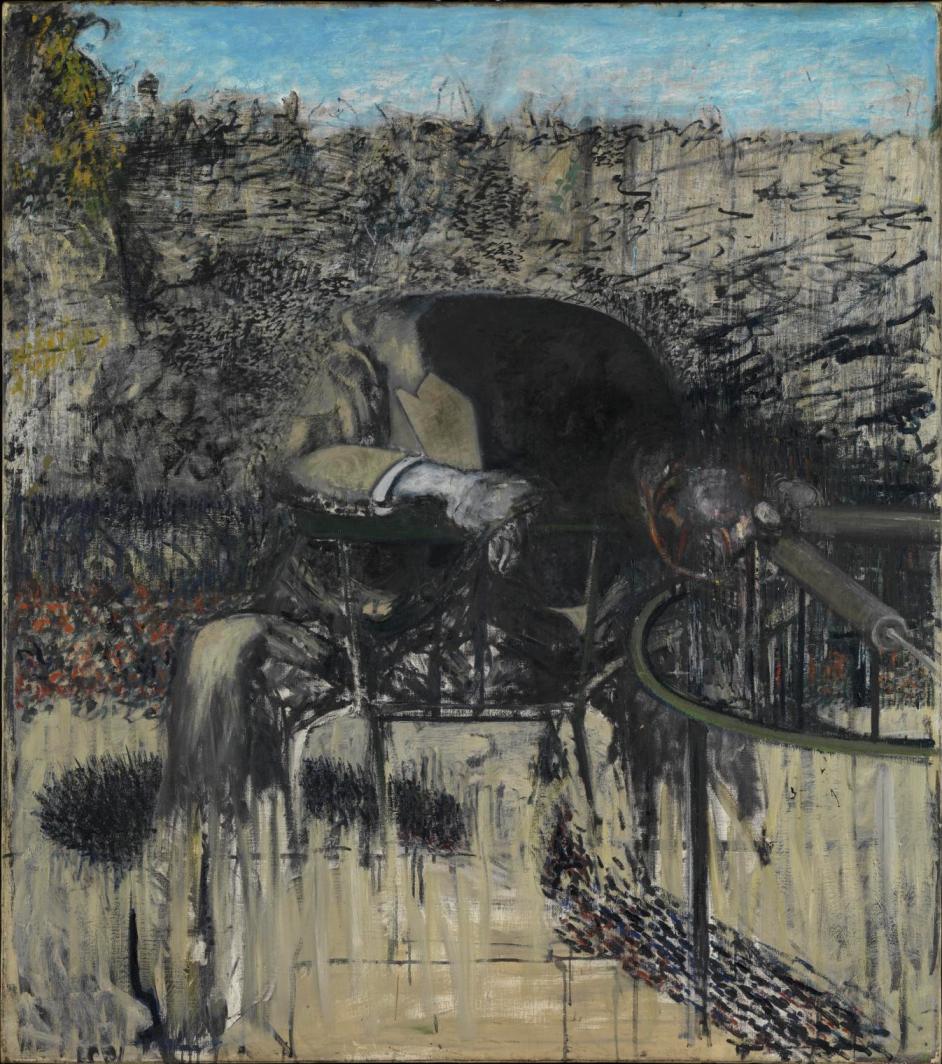
Painting with light
Apocalypse Now,
Last Tango in Paris, 1900 ...
Vittorio Storaro
reveals the inspiration behind some
of the most beautiful films ever
made
INTERVIEW BY
JONATHAN JONES
|
THE GUARDIAN
|
WEDNESDAY,
9 JULY, 2003
Vittorio Storaro, one
of the greatest cinematographers in the world, has worked with Bernardo
Bertolucci on films from The Spider’s Stratagem to The
Sheltering Sky and, in what is perhaps the high point of his career,
was responsible for the extraordinary appearance of Francis Ford
Coppola’s Apocalypse Now. The restoration of his colour
photography is the most dramatic revelation of Apocalypse Now Redux.
Currently in post-production on an Exorcist prequel, Storaro recently
published Writing With Light, in which he ranges across the history of
art and the psychology of colour in an attempt to enrich the language of
cinematography, which he feels is too often assumed to be a technical
skill rather than part of cinema’s culture.
Last Tango in Paris: Francis Bacon
I realised I was using
light in connection with the conscious side of the mise-en-scène and
dark for the unconscious. By instinct and by feeling I was drawing a
conflict between light and shadow. Bacon’s paintings gave me the
confirmation of an idea that Bertolucci and I had about the conflict
between the warm artificial light in a northern city like Paris during
wintertime and the natural winter light. We already had the idea, but
then we saw the Bacon exhibition in Paris and it confirmed it. We change
our metabolism in front of a painting or watching a film.
· Writing with Light
Volume One: The Light, by Vittorio Storaro is
published by Aperture
Permanent Waves
What’s on view at the
Modern now is significant, but could be more ... fun.
BY ANTHONY MARIANI | FORT
WORTH WEEKLY | WEDNESDAY,
13 AUGUST, 2003
Downstairs, there’s one hell of an entrance, albeit a conservative one.
To your right, Robert Motherwell’s huge, black-on-white “Stephen’s Iron
Crown” greets you – it’s a calligraphic masterstroke in an ambiguous
language. Once you step past it, you’re in front of Francis Bacon’s
"Self-Portrait.”
A tower of an artist, Bacon made a mountain of a career travelling in
darkness. “Self-Portrait” is gloomy, monotonous, and baffling. The man
he renders here in oil appears to be sitting on the edge of a couch or
bed. His face is grotesque, his soiled suit tattered.
There’s absolutely nothing remotely decorative about this strong,
haunting piece. What you’ll likely take away from “Self-Portrait” is a
fresh outlook on your own self-loathing – nobody’s as ugly as Francis
Bacon.
Selections from the Permanent Collection
Thru Aug 31 at Modern Art
Museum of Fort Worth, 3200 Darnell St, FW. 817-738-9215.
Barry why?
The Strange World Of Barry Who?
(BBC2,11.20pm)
CRITICS' CHOICE |
TELEVISION & RADIO |
THE SUNDAY TIMES | SUNDAY AUGUST 31, 2003
In an age of self-absorbed celebrities, sooner or later there had to be
a Barry Joule. A millionaire in his fifties, for many years he has made
it his business to schmooze with Rudolf Nureyev, Terence Stamp and the
1930s model Toto Kooprnan. Joule’s business, in short, was to network
with the best. By his own admission, he has met Harold Pinter, Franco
Zeffireili and Nicholas Serota. The problem is that Messrs Pinter,
Zeffireili and Serota have only a vague recollection of having met him.
All of this might seem just harmless fun, but Joule’s hankering for
fame-by-association seems to have been very nice financially: he claims
that Francis Bacon and Rudolf Nureyev left him substantial amounts of
money in their wills. The director, Margy Kinmonth, is not so convinced.
She follows Joule to find out exactly just how matey he was with his
celebrity mates.
Patrick Gilmore and Sarah Dempster
Francis Bacon, The Papal Portraits of 1953
Museum of Contemporary Art, San Diego in association with Lund
Humphries, 2002
ALEXANDER KEARNEY | REVIEWS | BOOKS | IRISH
ARTS REVIEW |
NUMBER 3 | VOLUME
20 | AUTUMN 2003
In 1953, Francis Bacon painted a sequence of eight Popes, conceived as a
series but never displayed in its entirety. Hugh M Davies, as he tells
us in the acknowledgements of The Papal Portraits of 1953,
had long dreamt of a time when these dispersed works might be brought
together. The task was one he took upon himself with determination and
skill and eventually fulfilled in a highly focused exhibition in San
Diego in 1999, where three addi tional Popes were also shown. The
present book is the belated offspring of that event and comes with a
plan and several pictures of the hang. Judging from these its staging
had something of the antiseptic chill of a mortician’s office suite, a
quality not uncongenial to the paintings themselves. At its heart was a
nine-sided chamber for Study for Portrait l-Vlll,
1953, one entrance and no exit. Davies provided an environment that
fetishised, in its own bland and impersonal way, the velvet darkness and
gilt luxury of these works. The exhibition was evidently a work of love,
albeit one coolly expressed.
The book is similarly modest in scale and polished in presentation. Its
single essay on Bacon’s Popes is brief and con fines itself to the early
1950s. Davies writes fluently and occasionally with real insight, though
on the De Moines’ Study After Velázquez’s Pope Innocent X, 1953,
analysis slips into cliché.
Elsewhere there are several statements of fact that are certainly open
to question. The author identifies 1935 as the year in which Bacon first
saw Eisenstein’s film Battleship Potemkin (1925) but, in the
absence of any critical consensus, omits to cite a reference. His
contention that the artist ‘reveled
in the fortuitous reflection of the viewer’ on
the framed glass of his paintings is under mined by Bacon himself. In an
interview with David Sylvester, he said of reflections, ‘I
don’t want them to be there; I feel that they should be put up with.’
More importantly Davies makes little attempt to situate Study for
Portrait l-Vlll, 1953 in the context of Bacon’s overall development
of the Papal theme, nor does he delve into the subject of technique,
which had reached such a fluent pitch that year.
A previously published 1973 interview with Bacon is included and, while
broad-ranging, casts little light on the Popes and why he painted them.
However there is another essay, though it goes without a title, provides
a compelling reason for buying this book. It is an essay of images woven
through two other pieces — of
the paintings framed and full-length, and of hypnotically intense
close-ups of telling passages and details. These reproductions are, by a
considerable margin, the finest available in any publication on Bacon.
Every stroke, daub, smudge and lick of paint is caught with the camera’s
relent less yet approving eye. One is lead to marvel at the economy, the
calculated bravura and evident command that Bacon had assumed over his
brush, and to wonder why, within a few years, he was to reject this
manner so completely. Perhaps he suspected that he was painting himself
into a trap, that he risked becoming a facile confectioner of Popes or a
Singer Sargent of disquiet, as his detractors were to allege. It is an
indication of his very real substance that he foresaw and resisted the
temptation, sought ways out and raised the stakes by embracing the
danger of colour instead of shunning it.
Alexander Kearney was an assistant curator and researcher on the Francis
Bacon Studio project in the Dublin City Gallery — The
Hugh Lane. He is currently a freelance writer and researcher on art and
architecture.

Francis Bacon and the
tradition of art
Kunsthistorisches Museum, Vienna
EXHIBITIONS | THE
ART NEWSPAPER |
TUESDAY 30 SEPTEMBER
2003
It has become a commonplace to describe Frank Auerbach, Lucian Freud and
Francis Bacon as the new Old Masters, but now the Kunsthistoriches
Museum has gone one step further with Bacon: it is exhibiting 50 of his
paintings alongside 40 Old Masters to demonstrate that Bacon truly is
one of them (15 October-18 January).
he brainchild of director general, Wilfried Seipel, and curated by
Barbara Steffen,who worked for many years at the Guggenheim in New York,
the exhibition hangs six of Bacon’s “screaming pope” portraits, such as
the “Study after Velázquez’s portrait of Pope Innocent X” (detail below)
next to Titian’s portraits of Cardinal Filippo Archinto and of Pope Paul
III.
Other artists on display, such as Rembrandt, Ingres, Picasso and Van
Gogh, show the extent to which Bacon absorbed their influence and that
his motifs of screams, mirrors and cages have easily traceable art
historical antecedents. Also included are various Bacons from US
collections that have rarely been seen abroad, in particular “Studies
for a Crucifixion” (1962) from the Guggenheim.
Sixty-five objects from Bacon’s reconstituted studio in the Hugh Lane
Municipal Art Gallery, Dublin, such as photographs and magazine pages
illustrating the artist’s familiarity with the Old Masters are also on
show.
Bangkok Stories: Teens,
trains and too-tight tops
BY JAN McGIRK
|
THE INDEPENDENT | WEDNESDAY,
NOVEMBER 12,
2003
There is a last wheeze of geezer chic in Jomtien Beach, an hour’s drive
south of Bangkok. A popular girly bar at the resort has been
incongruously renamed the Blind Beggar, in homage to the Whitechapel pub
once patronised by Ronnie and Reggie Kray.
According to owner Big Bill this is not just posturing. Even in the
tropics, some of the regulars who hoist pints there hanker for the East
End. The transformation has not changed the clientele: British men of a
certain age and background and Thai bar girls who while away slow
afternoons watching Man United games on the box.
Philip Mordue, who once took a bullet through his bullish neck without
any major damage, occasionally deejays at the Blind Beggar. When his
flatmate, John Edwards, died last spring in Bangkok, there was wild
speculation about the size of the fortune left to Mordue.
The money came from the painter Francis Bacon, who met Edwards, a former
gay model, in his family’s East End pub, and left him at least £11m when
he died. You can’t help thinking the artist would have relished the
detail with which his favourite London demi-monde is being recreated in
sunny Thailand.
The Most Wanted Works of
Art
By Kelly Devine Thomas,
Art News Online, November 2003
Making wishes come true doesn’t come cheap or easy.
The Modern recently sold Francis Bacon’s painting Dog (1952) in order to
acquire a triptych by the artist.
(Dog went to London dealer Gerard Faggionato for more than $8 million,
according to sources.)
Can’t take it with you
TV Review by Mary Novakovich
MARY NOVAKOVICH | TV REVIEW | THE GUARDIAN | WEDNESDAY, NOVEMBER 12, 2003
All of this nonsense prompted me to think, after Wordsworth, “Bacon! Thou
shouldst be living at this hour:/England hath need of thee: she is a fen/Of
stagnant waters.” And there, on BBC2, was the very antithesis of all trash
television culture, Francis Bacon, subject of Can’t Take It With You.
With glorious contempt for posterity, Bacon left everything to his muse and
surrogate son John Edwards, who, in his turn, left everything to his boyfriend
Phil Mordue, who is probably now living very comfortably in Thailand.
This was not the usual tale of greedy heirs sullying their benefactors’ legacy;
this was the grand gesture of a man whose last act was to throw a ruddy great
spanner in the workings of the art world. The ever-regal Brian Sewell seemed to
know more than he let on, and delivered himself in resounding, sibylline phrases
(“Francis was totally amoral”).
Edwards’s mother, Beattie, seemed to remember having a Bacon or two under the
bed; when the camera pulled back, she was living in baronial splendour, which
suggests she didn’t do too badly out of the whole business herself.
Nobody actually said this, but the hideous mess in which the Bacon estate now
stands could be regarded as an artwork in itself, smudged and dirty and
disturbing in the Master’s signature style. And, as Francis once bought me a
drink in an after-hours Soho den in the 80s, I’m thinking of filing a claim to
any spare millions that are knocking around.

Contemporary Art Strong
for a Second Night
By CAROL VOGEL | THE
NEW YORK TIMES | THURSDAY,
NOVEMBER 13, 2003

A
40ish crowd with new money made in the world financial markets and a
compulsion to spend it fueled the market for contemporary art at
Sotheby’s last night.
For these shoppers, the hot labels are Warhol and Rothko rather than
Gucci and Prada. ’’They’re jumping into the market, and they want to buy
iconic postwar works,'' said Tobias Meyer, director of contemporary art
for Sotheby’s worldwide and the evening's auctioneer.
The 90-minute sale totaled $74.5 million, after an estimate of $66.9
million to $92.6 million. Of the 68 lots, 13 failed to find buyers.
Auction records were set for seven artists.
The sale had more expensive works than Christie’s auction of postwar and
contemporary art on Tuesday night, which totaled $62 million. Taken
together, the two sales reflect a depth in the market for contemporary
art that hasn’t been seen since the Japanese were throwing money at it
in 1989. At Christie’s, the most expensive things sold, but not far
above their estimates. Sotheby’s sale was similar; when bidding passed
$3 million, it seemed, the air grew considerably thinner.
Throughout the evening Mr. Meyer briskly fielded bids from a salesroom
jammed with both regulars and newcomers, including a few star names.
Michael Ovitz, the talent agent, was sitting in the front row, and the
actor Tobey Maguire was spotted in the third row.
The
most expensive work was ''Spike’s Folly 1,'' a 1959 de Kooning. The
Abstract Expressionist pastoral landscape, being sold by the Washington
collector Mitchell P. Rales, was estimated at $10 million to $15
million. There was only one bidder: Robert Mnuchin, chairman of C&N
Arts, who often buys for Mr. Rales. He paid $11.2 million, Mr. Rales. He
paid $11.2 million, just above the low estimate of $10 million.
Another big-ticket item was Rothko’s ''No. 8 (White Stripe),'' a 1958
abstract canvas in shades of red with a white stripe in the middle.
Three bidders went for the painting, which sold to Douglas Baxter,
president of Pace Wildenstein, the Manhattan gallery, for $8.8 million,
just above the $8 million low estimate. The price was surprising, since
dealers said before the sale that the painting had been shopped around
last spring
S. I. Newhouse Jr., the publishing magnate, was selling Francis
Bacon’s Three Studies for Portrait of Lucian Freud.
The 1965 triptych was estimated at $2.5 million to $3.5 million; six
bidders leaped at the chance to take it home, and it sold to an
unidentified telephone bidder for $3.8 million ($3,816,ooo).
While the prices may not have fazed the new buyers last night, some
seasoned collectors said they were happily surprised at the week’s
results. ''It’s kids who studied art at a younger age,'' said Donald
Rubell, a Miami collector. ''They’re the ones who are supporting the
bottom part of the market.''
Up the
garden path
Harrison Birtwistle will
be 70 next year — but
has he settled down?
On the contrary, he tells
Stuart Jeffries, he is winding his way ever deeper
into a maze of myths,
shared memories and ancient legends
STUART JEFFRIES | THE
GUARDIAN | FRIDAY,
NOVEMBER 28, 2003
What is he writing? He looks bleakly through the conservatory windows
and says: "What aren’t I writing?" He has a way, this soft-pawed
composer with his beard-softened face and gentle Accrington accent, of
flintily re even contradictory roles."
How
did Theseus Game, for instance, come about? He answers with a question.
"Have you ever been to Lucca? If you go into a walled town, like Lucca,
you find what you do is retrace your steps and approach piazzas from
different angles. The nature of the place is concealed — like a ball of
string."
So does this have something to do with Theseus in the labyrinth, having
slain the Minotaur, retracing his steps with Ariadne’s thread?
Birtwistle shakes his head sadly. "It’s not about the story," he says.
"Francis Bacon talked about 'the boredom of the story' and that’s why I
use myths. They’ve been told endlessly before; you don’t have to do the
boring work of creating them." But I thought you reckoned popular
culture had messed so much with our collective psyche that we don’t know
those mythic narratives any more. "That’s a problem," he concedes.
I used to read a lot of pulp fiction, but I kept finding that they have
an idea about the subject but they don’t know how to end the story, and
that’s boring. That’s what’s brilliant about Psycho. It starts off as
what would be a pretty good pulp story even if it didn’t have the Bates
Motel. I know I don’t have the invention to write Psycho, but I do have
the talent to work through a musical idea."
So what is the musical idea in Theseus Game if it isn’t the McGuffin of
Theseus in the labyrinth?
"It’s about making a context and then breaking it. It’s how you break it
that becomes interesting." To illustrate what he means, Birtwistle shows
me an etching by Picasso called Minotauromachia. A young girl holding a
candle and a bouquet is confronted by a sexually predatory Minotaur; a
wounded female bullfighter is straddled across a snarling horse; a
bearded man, possibly Christ, climbs up a ladder on the left. The
etching sets up an incredibly dense labyrinth of symbolic associations.
Picasso has torn up all but the barest context and created something
more engaging; Birtwistle aspires to do the same.
"I deal in a lot of my pieces with what you might call a labyrinth. I’m
concerned with time which is circular. Time is not linear, though it
expresses itself in that way." That must be a problem for you since
music is traditionally seen as developing in a linear manner through
time.
BACON’S
STUDY AFTER VELASQUEZ’S
PORTRAIT
OF POPE INNOCENT X
MASTERCLASS |
VISUAL ARTS
| SUNDAY
TRIBUNE |
DUBLIN
|
SUNDAY
30 NOVEMBER, 2003
The Artist: Self-taught (Francis
Bacon 1909-92) moved, via Berlin, to London in the mid-1920s where,
after a period in interior design, he began to paint, and gradually
developed a raw, expressionist style.
His works often involve a somewhat distorted
human figure, unclear in image, set in an ill-defined space. (His entire studio
has been donated to the Hugh Lane Municipal Gallery in recent years.) Bacon once
said, “I should have been, I don’t know, a con-man, a robber or a prostitute.
But it was vanity that made me choose painting, vanity and chance.”
The Work: Instead of the steady inscrutable
gaze of the Spanish original, Bacon’s ‘Pope’ screams with powerful raw emotion.
Bacon said of these works that he “tried to paint like Velasquez, but with the
texture of a hippopotamus skin”.
In an interview in 1999, he also admitted to
having become consumed by the Velasquez work,” because I think it’s one of the
greatest portraits that has ever been made, and because I became obsessed by it.
“
I
buy book after book with this illustration in it of the
Velasquez’s ‘Pope’, because it just haunts me, and it opens up
all sorts of feelings and areas of
—
I was going to say
—
imagination, even, in me.”
Did You Know...
Bacon went through a number of stylistic
changes, the screaming popes series giving way to clearer, but in some respects
even more disturbing images.
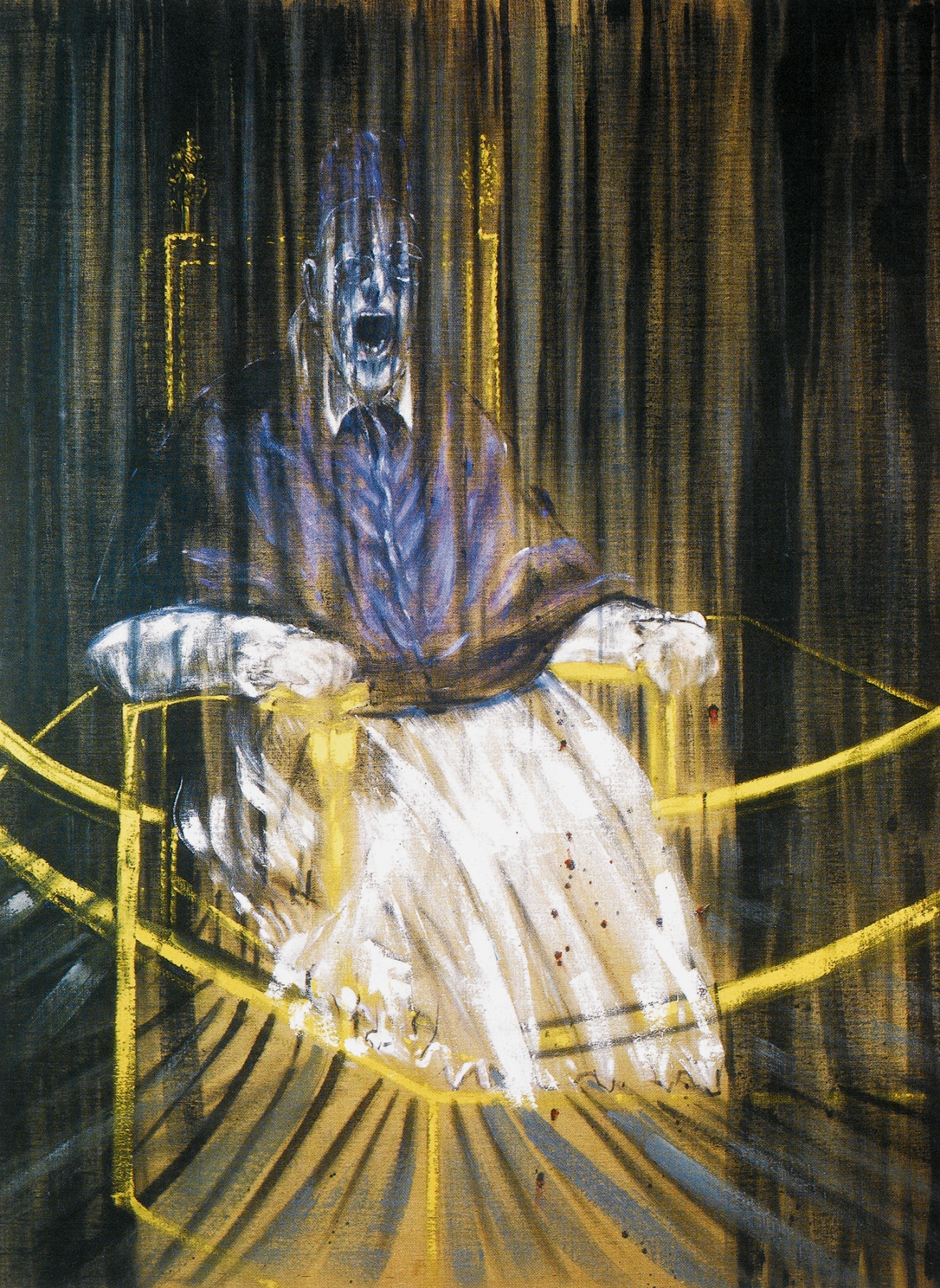
Francis Bacon Opens at IVAM Center
NEWS |
ART
DAILY
| ESTABLISHED
IN 1996 |
SUNDAY
14 DECEMBER 2003
VALENCIA, SPAIN. — The IVAM Center Julio Gonzalez presents “Francis Bacon,” on
view through March 21, 2004. The exhibition was organized by the IVAM and
curated by Michael Peppiatt. Every important exhibition of Francis Bacon’s work,
both during his life and since his death in 1992, has been a retrospective. The
great, early tributes organized by the Tate Gallery (1962), the Grand Palais
(1971-72) and the Metropolitan Museum (1975) had a distinct raison d’être
because they allowed a wide public to discover the breadth and intensity of
Bacon’s inventiveness as an image-maker. But the trend has continued unchanged
over the last quarter-century, with dozens of museums, from Tokyo and
Minneapolis to Dublin and the Hague, following in the footsteps of their
predecessors and aiming to present as complete an overview as possible of
Bacon’s work, with every theme and period represented. The result is that there
is now a well-established, not to say “official”, way of looking at what was
once the artist’s immensely disturbing, rebellious and anarchic achievement.
The aim of the present exhibition is to reverse that unquestioning
tendency and to look at Bacon anew by focusing solely on a single theme
that haunted the artist for over twenty years: the “Pope” pictures. By
bringing together the whole series of paintings and restoring them to
the context in which they were made, we hope to make more apparent the
range of ambition, risk, intuition, unconscious impulse and despair that
drove the relatively young and unknown Francis Bacon to make this
unprecedented assault on one of the great icons of Western art and
civilization.
Bacon had been haunted by the power and beauty of Velázquez’s Retrato de
Inocencio X (Portrait of Innocent X) for years before he painted Head
VI, his first recognizable version of the picture, in 1949. He
considered the Spanish master’s portrait to be one of the greatest
images in all Western art and he had, in his own words, become
“obsessed” with it. Reproductions of the famous painting, mostly in
black and white, were pinned to his studio wall or scattered in the
chaos of photographs and artist’s materials that littered the floor. At
one point, Bacon likened his fascination with this particular image to a
“crush” — the kind of semi-erotic hero-worship a young boy may develop
for an older, more important pupil at school.
This curious love affair dominated Bacon’s painting life for over twenty
years, from 1949 until the early 1970s; and it was not until 1971, when
he completed a second version of Study for Red Pope was his obsession
with Velázquez’s portrait finally worked through and abandoned. At that
point Bacon had executed a good forty paraphrases of the Spanish
masterpiece (or considerably more, if one takes into account the
numerous versions which the artist abandoned or destroyed). Why did the
“Pope” theme so captivate Bacon, causing him to make more variations on
it than any other subject in his entire career? For what reason, out of
the thousands of photographs and reproductions he kept in the chaos of
his studio, did he return time and again to this one portrait by
Velázquez? How did this constant paraphrase allow the artist to express
deep-seated conflicts and urges that could not otherwise have been
conveyed? What other sources informed this extraordinarily potent
sequence of images? And, above all, why did the militantly and
outspokenly atheistic Bacon cling so tenaciously to an image of
religious significance?
These are some of the questions we hope to be able to examine in depth
by bringing together for the first time the forty variations on the
theme of the Pope that Bacon painted between 1949 and 1971. What makes
this whole series — and the aesthetic questions it raises — so fascinating
is that it allows one to follow Bacon through a long period of almost
constant mutation. Virtually every visual source that had interested him
found its way into these ambiguous and highly suggestive images,
changing their impact in unexpected ways. Clearly, there was Velázquez’s
original model, the icon which Bacon both revered and desecrated. But
there was also the still of the screaming nurse from Eisenstein’s Bronenosets Potyomkin (El acorazado Potemkin), Muybridge’s sequential
photography and other famous pictures such as Titian’s half-veiled
Ritratto di Filippo Archinto (Portrait of Filippo Archinto). Photographs
of Eichmann on trial in his glass cage and of dictators haranguing their
audience or animals baring their teeth also played a part. These are
amongst the best-known sources. But Bacon drew on an extraordinary range
of visual, literary and other stimuli. As he once said: “Don’t forget, I
look at everything and it all gets ground up very fine.” And new sources
for his imagery have been discovered very recently in the countless
photographs and books that Bacon left strewn across his studio floor
when he died.
For Bacon, the Papal image presented almost infinite possibilities for
association and metamorphosis. His great ambition as an artist was to
create images that could spark off sequences of other, apparently
unrelated images, thus opening what he liked to call “the valves of the
imagination”. Moving from one version of the Pope to the next, Bacon
gave free rein to stray impulse, allowing “the great well of images” he
carried within him to surface into the work in hand and suggest new
forms with constantly changing implications. To study the whole sequence
of the Popes, painted while the artist was at the height of his powers,
is to go to the heart of Bacon’s extraordinary achievement.
|
|
Francis Bacon: The
Logic of Sensation
DARREN AMBROSE | REVIEW |
WARWICK JOURNAL OF PHILOSOPHY |
VOLUME 14 | WINTER 2003
This translation of Deleuze’s elegant and sustained engagement
with the specificity of painting appears some twenty years after its
initial publication in France and is the last of Deleuze’s major
philosophical works to be translated into English. When Deleuze
originally published this work in 1981 it came as a two-volume set, with
the first volume consisting of the text and the second of full-page
reproductions of the paintings by Bacon cited by Deleuze. Since his
arguments often unfold through very detailed analysis of specific
paintings by Bacon it is unfortunate that such a volume of reproductions
does not accompany this long-awaited translation. However, as Daniel
Smith indicates in his translator’s preface, reproductions of Bacon’s
work are readily available either in print or on-line, and that of
course Deleuze’s text is best read having such images on hand.
The text itself consists of seventeen ‘rubrics’, each dealing
with a more complex aspect of Bacon’s paintings that Deleuze claims
‘could serve as the theme of a particular sequence in the history of
painting.’ Thus when considered together these seventeen rubrics are
intended to function as an account of a general ‘logic of sensation’
associated with a very specific task for painting. To grasp this logic
of sensation in painting, it is necessary to inquire into the nature of
the painterly task which functions as the operative presupposition of
Deleuze’s Logic of Sensation. Deleuze’s account of this painterly
task is explicitly mediated through the specificity of Bacon’s own
response as a painter, and is articulated by Deleuze as that route in
painting that is concerned with elaborating ‘haptic space’. Haptic
space, for Deleuze, is neither a manual space opposed to a purely
optical space of vision, nor is it a purely tactile space connected to
the optical. It is rather a distinct kind of space that competes with
optical space. This route would seem to indicate that painting itself
should not be understood as the effort to merely perfect the
representation or reproduction of visible forms. Such a notion of
perfection would merely serve to impose linearity upon the historical
development of painting and restrict what painting is actually able to
achieve. Thus for Deleuze in the Logic of Sensation representational
perfection is not considered to be painting’s primary task. As
Merleau-Ponty writes in ‘Eye and Mind’:
‘The idea of a universal painting, of a totalisation of
painting, of a fully and definitively achieved painting is an idea
bereft of sense. For painters the world will always be yet to be
painted, even if it lasts millions of years...it will end without having
been conquered in painting.’1
Deleuze argues that painting is and always has been
fundamentally concerned with presenting the non-visible forces that act
behind or beneath the visible forms. Such a task has obviously become
more and more explicit for painters throughout the last century given
the equivalence established by contemporary physics between energy and
matter. The constitution of every material object is now understood as a
complex concentration of invisible forces. A phrase from the painter
Paul Klee resonates as a type of motif in Deleuze’s book – ‘not to
render the visible, but to render visible’. Thus in painting it is never
a question of reproducing or representing concrete and visible forms or
even of inventing abstract forms. For painting it is always a question
of capturing the invisible forces of the Real, or what Bacon understands
as capturing the ‘fact’. Painters must attempt to extract from these
invisible forces a ‘bloc of sensation’ by creating a construct or
assemblage in paint that serves as framework for the conveyance of the
sensation. The resulting artwork is thus a type of sensational monument
to the invisible forces of the Real. In the Logic of Sensation Deleuze
argues that a ‘community’ of artists form around a common problem,
namely how to effectively harness these invisible forces by creating a
work of sensation capable of being adequate to them. An important part
of this artistic task is this discovery of a means of conveyance capable
of sustaining the violent immediacy of the sensation rather than merely
functioning to dull it. Whilst different arts develop and evolve their
own solutions given the nature of the material they have to work with,
Deleuze considers Bacon’s painted Figures ‘to be one of the most
marvellous responses in the history of painting to the question, How can
one make invisible forces visible?’2
In developing this account of the specific painterly response in
the Logic of Sensation Deleuze often draws upon statements made
by the painter himself in conversation with the art critic David
Sylvester.3
Indeed, one of the cornerstones of Deleuze’s analysis is the claim that
we fail to listen closely enough to what painters themselves actually
say regarding both their own work and the nature of painting.
Consequently in order to construct a philosophical understanding
of Bacon’s work that is in some way isomorphic with the paintings
themselves Deleuze becomes obliged to align himself with Bacon’s
understanding of his own work and the nature of painting that he
expresses through language. This alignment becomes so close at times
that one could easily describe Deleuze’s book as a type of rigorous
philosophical supplement to Bacon’s interviews with Sylvester. Deleuze’s
own fundamental understanding of Bacon’s paintings rests upon the
contention that they succeed in acutely conveying a very particular type
of violence and that this is a violence of sensation rather than the
violence of a specific represented spectacle. This is a view extremely
close to Bacon’s own view of his paintings. Bacon’s paintings thus
attempt to convey a type of sensory violence associated with the way
colour modulation and line are utilised to capture a sensation of the
‘brutality of fact’ or what Bacon says ‘used to be called truth’. His
attempt to ‘paint the scream’ appears to Deleuze to be an exemplary case
in point. According to Bacon his aim was not to merely paint a
reproduction of the visible horrors of the world before which one
screams but rather to paint the intensive forces that might actually
produce a scream. His aim is to ‘render visible the invisible forces’
that convulse the body so as to produce an actual scream. The
reproduction of the actual violence of the horrifying spectacle must be
renounced in the effort to commune much more deeply with and produce a
work capable of rendering visible and conveying the intense sensation
associated with the violent non-spectacle of invisible forces assailing
the body.
For Deleuze Bacon elaborates a painterly Figure in such a way
that it becomes a support or framework able to convey a sustained and
precise sensation in a direct and immediate way. Without the support of
this very particular kind of painterly Figure sensation would remain
diffuse, ephemeral and vague and lack both clarity and duration. For
Deleuze the intensity and clarity of sensation is facilitated and
sustained in Bacon’s paintings more often than not through the Figure or
body: ‘Sensation is what is being painted; what is painted on the canvas
is the body, not insofar as it is represented as an object, but insofar
as it is experienced as sustaining this sensation.’4
Deleuze introduces an important concept right at the very
beginning of his analysis of Bacon’s Figure. This is what he terms
(following Lyotard’s Discours, figure5)
the figural. This concept stands in clear opposition to the
concept of representational figuration, which remain too illustratively
and narratively determinate and always function merely to relate the
image to an object it is supposedly illustrating or reproducing, or to
an event it is apparently narrating. It thus serves to subordinate the
eye to the optical code of representation and recognition with the
associated risks of losing the immediate intensity of the sensation.
Deleuze argues that the conventional optical codes of visual
representation serve to repress the anomalies of sensation that are
disturbing to the eye, i.e. the deformations and violations of ‘good
form’. By actively disrupting this ‘good form’ associated with the
optical code of representational figuration the artist is implicitly
able to shift attention onto forces that never become directly visible.
The concern for the artist becomes one of creating a space of and for the
invisible and of and for the possible. Such a visible
space must allow for the ‘visible’ realm to become traversed by
unconscious forces thereby rendering visible what Lyotard in Discours,
figure calls the figural. Lyotard argued that by disengaging
from the sovereignty of the optical field of representation and engaging
with the primordial rhythm of desire and the ‘transgressive forces of
the unconscious’ the artist is able to elaborate the figural as a type
of Dionysian ‘anti- form’ capable of visually infesting both figurative
and abstract space alike. This figural infestation, leaking into the
visible realm of the painting, is exemplified within the works of the
greatest surrealistic painters such as Ernst, Masson, Miro and Tanguy.
When Deleuze relates this concept of the figural to Bacon’s
Figure he exorcises any hint of the Freudian apparatus that Lyotard had
maintained. For Deleuze the Baconian Figure must be understood as
figuring a transgressive force within the phenomenal space of the Real
rather than a force associated with an invisible psychological realm. He
argues that Bacon’s work leads us toward what he terms a chaotic ‘body
without organs’. As Deleuze says – ‘Bacon has not ceased to paint
without organs, the intensive fact of the body. The scrubbed parts of
the canvas are, in Bacon,
parts of a neutralised organism, restored to their state of zones or
levels.’6
Deleuze suggests that there are two general routes through which
modern painting attempts to circumvent the subordination to
representational figuration (which Deleuze characterises as the fight
against cliché) – it either gravitates towards abstraction or towards
the figural. The first movement, i.e. towards abstraction,
develops in a number of different directions through different artists
and artistic movements, but is marked by two extremes for Deleuze. At
one extreme there is the evolution of a pure ‘optical’ abstraction
within art movements such as cubism, purism, orphism and de Stijl,
(which included painters such as Braque, Kandinsky and Mondrian).
Despite the fact that this type of painting rejects classical
representational figuration, Deleuze argues that it still retains
abstract visual forms that attempt to refine sensation, dematerialise it
and reduce it to a purely optical code. At the other extreme there is an
attempt at elaborating a pure manual chaos which attempts to go beyond
representational figuration by abandoning abstract form and dissolving
all form in a fluid and chaotic space of manual lines and colour
patches, splashes and blocks that outline and delimit nothing. This
route of manual chaos was pursued within the abstract expressionist
movement by painters such as Pollock and de Kooning, and is marked by
the attempt to reverse the subordination of the eye to the optical code
of representational figuration by pursuing a purely manual chaos. This
manual chaos is pursued through a line and colour which no longer
outline or delimit anything, but which spread out chaotically across the
canvas and occupy the totality of the painting.
By breaking with the optical code of representational
figuration, both of these extremes of abstraction break with the
perceived task of painting as the imposition of ‘form’ upon matter. Thus
Deleuze argues that the pure abstractionists aimed to liberate form
through radicalising optical codes, whereas the abstract expressionists
aimed to liberate matter through unleashing an unconstrained manual
chaos. What becomes clear is that both routes reconfigure the painterly
task away from the elaboration of the ‘matter-form’ relation governed by
representational codes and coordinates and toward a concentration upon
elaborating previously unexplored ‘material-force’ relations. Painters
upon either of these artistic paths thus attempt to elaborate a new
means for capturing pure intensities of force, what Paul Klee called
‘the forces of the cosmos’. However, Deleuze cites Klee’s claim that in
order to successfully produce a complex sensation, (i.e. in order to be
able not only to harness the intense forces of the cosmos but also to
render the subsequent sensation ‘visible’ in a sustainable way), the
painter must proceed with a sober and disciplined gesture that
simplifies, selects and constrains the material. Klee famously claimed
that all an artist needed to open up an event of the Real was the
simplicity of a pure and simple line, a pure inflexion unfolding in and
of itself. For Klee if one attempts to multiply this simple line and
elaborate an overly complex space traversed by a complex interplay of
multiple lines, one risks opening up the space to all events and
irruptions of the forces of the cosmos. The obvious danger here is that
one risks producing nothing but a chaotic scribble that effaces the
genuinely liberating line thereby effacing the sensation of the forces
of the Real. For Deleuze Klee’s remarks function to clarify a problem
inherent within the painterly path pursued by their abstract
expressionists through the elaboration of pure manual chaos.
Clearly Bacon chooses a different painterly path, and for
Deleuze the reason for this was precisely Bacon’s concern with avoiding
the effacement of the clarity of the sensation. Deleuze claims that in
Bacon’s paintings an entirely different logic of sensation becomes
apparent through the elaboration of a ‘haptic’ space as his response to
the imperative to render visible the invisible. Deleuze’s account of
Bacon’s response begins with the development of a philosophical
understanding of the way Bacon circumvents representational figuration.
For Deleuze Bacon is acutely aware of the way that the surface of the
canvas is inhabited by pre-existing figurative coordinates, or what
Deleuze calls ‘the figurative and probabilistic “givens”’. Bacon’s
approach to circumventing these givens involves developing an act of
painting that emerges from the making of random marks (which Deleuze
terms ‘line-traits’), acts of cleaning, sweeping, brushing or wiping
areas of the canvas in order to clear away specific zones of the canvas
(which Deleuze terms ‘colour-daubs’) and the throwing of paint at the
canvas. These random acts are clearly associated with the manual
techniques developed by the abstract expressionists but in Bacon’s hands
Deleuze argues that they become something fundamentally different – they
begin the process of delineating a ‘haptic’ space. Bacon himself
considers these manual marks merely preparatory, or merely an element of
the subsequent act of painting. As Bacon himself says – ‘Isn’t it that
one wants a thing to be as factual as possible and at the same time as
deeply suggestive or deeply unlocking of areas of sensation other than
simple illustration of the object that you set out to do? Isn’t that
what all art is about?’7
In his conversations with David Sylvester Bacon likens these
random acts to what he calls the ‘graph’ or ‘diagram’ that is a type of
‘non-illustrational form’ that works upon the level of sensation as
possibility and suggestion ‘and then slowly leaks back into the fact.’8 This
concept of the ‘diagram’ becomes the key to Deleuze’s understanding of
Bacon’s pre-figural preparation of the canvas, i.e. Bacon’s way of
circumventing the figural givens and thus his circumvention of the
visual code of representational figuration. These manual marks are
distinguished by being physical acts rather than the visual acts of
painting, and thus set out the ground in contradiction to either a
pre-planned representational figuration or the existing figural
coordinates inhabiting the canvas. Deleuze argues that one shouldn’t
underestimate the degree to which these automatic or random manual marks
ultimately threaten to engulf any subsequent act of figuration they are
supposedly preparing the way for. When the diagram engulfs the entire
canvas the painting becomes analogous to the totalised manual chaos
paintings of abstract expressionism and the clarity and duration of the
sensation is lost. Bacon is concerned to avoid such a proliferation of
the diagram and to transfigure it into a productive zone of figuration,
a zone capable of ‘breeding’ forms.
For Deleuze what is particularly significant about the painterly
diagram utilised within Bacon’s work is that it is primarily a means for
allowing the emergence of another type of space in painting – a ‘haptic’
space. ‘Haptic’ seeing designates a type of vision distinct from the
optical where the ‘sense of sight behaves just like a sense of touch’.
Deleuze suggests that through manual traits the hand assumes a type of
autonomy and independence allowing it to become guided by other forces,
and to make visible marks that no longer depend upon will or sight.
These manual marks of the diagram literally attest to an intrusion of
another type of space into the pre-given visual coordinates of
representational space. In the diagram one no longer sees anything: (it
is as if one were in a catastrophe or chaos). The painting is removed
from being governed by these optical coordinates. Bacon, however,
recognised that the diagram serves a double function in that it also
serves to mark out new ‘possibilities of fact’ and ‘possibilities of
becoming’. The chaos of the diagram does not in and of itself constitute
a ‘fact’ or ‘becoming’ In order for the diagram to be transfigured into
such a ‘fact’ or a ‘becoming’, i.e. in order to evolve into a Figure,
Bacon realised that the manual marks of the diagram have to be
reintroduced back into the visual field. The significance of this
introduction of the manual marks into the visual field is that
the visual field now ceases to be an optical space governed by
representational codes and is transfigured into what Deleuze calls
‘haptic’ space. As Deleuze writes, the diagram gives ‘the eye another
power, as well as an object that will no longer be figurative.’9 Deleuze
claims that sight discovers in itself a specific function of touch that
is uniquely its own, a function distinct from its optical function –
‘One might say that painters paint with their eyes, but only insofar as
they touch with their eyes.’10
Through Bacon the diagram functions as a violent chaos in
relation to the figurative givens but it is also handled as the germ of
a new ‘haptic’ order in painting, allowing for a new logic of sensation.
As Bacon says, it literally ‘unlocks areas of sensation’. Deleuze argues
that through Bacon we are able to come to understand how of all the arts
painting is necessarily and ‘almost hysterically’ able to integrate its
own catastrophe in a productive way. Bacon himself shows how painters
necessarily traverse the catastrophe by embracing it, struggling with it
and then transfiguring it. For Deleuze Bacon’s work represents one of
the most significant responses to the catastrophe in painting, a
response that achieves the delimitation of a new pictorial order to
come, a new type of relation between chaos and order and a new ‘haptic’
space. Deleuze posits that Bacon’s precursor in this regard was Cézanne
and he spends considerable time developing an understanding of the
precise affiliations between the two painters in their development of a
‘haptic’ space. This is an affiliation explored through a comparison
between Cézanne’s ‘logic of organised sensations’ and Bacon’s ‘logic of
sensation’. To understand the way Deleuze develops this affiliation it
is crucial to understand the role that Lawrence Gowing’s famous paper on
Cézanne, ‘The Logic of Organised Sensation’11,
plays in Deleuze’s argument. The focus of Gowing’s paper is Cézanne’s
late works that were marked by a distinct and revolutionary form of
colour modulation and the delineation of a radically new pictorial
space. Gowing writes that within these works ‘something quite
extraordinary and unparalleled happened’, and claims that ‘Cézanne was
reaching out for a kind of modernity that did not exist, and still does
not’12. Central
to Deleuze’s argument in the Logic of Sensation is that Bacon’s
paintings consummate Cézanne’s task of delineating a genuinely ‘haptic’
space.
To understand Deleuze’s claim it is necessary to grasp the way
Cézanne recognised an implicit opposition between perception and
sensation. For Cézanne perception is intrinsically bound up with optical
conventions or codes of representation, and as such it inevitably fails
as a means for conveying the immediate intensity of sensation. Deleuze
cites a text by D.H. Lawrence claiming that Cézanne’s intentions as a
painter were indeed to capture a ‘representation’ of nature and that
these intentions were accompanied by a voracious desire to render his
paintings more ‘true to life’ than conventional illustrative or
imitative painting. In the effort to pursue this truer representation of
nature it was crucial for Cézanne to discover both a way of disrupting
the sovereignty of visual perception that prevented this aim from being
achieved, and a radically new way for conveying in paint the immediate
intensity of sensation. Cézanne felt that it was necessary for the
painter to have and be able to combine both a ‘way of seeing’ (an
‘optics’) and a ‘system of thought’ (a ‘logic’). As Cézanne once wrote:
‘There are two things in the painter, the eye and the mind; each of them
should aid the other. It is necessary to work at their mutual
development, in the eye by looking at nature, in the mind by the logic
of organised sensations, which provides the means of expression.’13
Cézanne became increasingly convinced towards the end of his
life that the necessary capture of sensations of reality in painting
(the ‘making real’ or ‘making true’ of the intensity of sensation) could
only come about through an exploration and elaboration of a radically
internal ‘logic of organisation’. It seemed necessary to Cézanne that he
have the entire intensity and life of nature within himself as this
logic of sensation. His ‘extraordinary’ discovery was that this logic
was purely a matter of the organised sensations of colour, and that
through the full development of an organised schema of colour the full
intensity of sensation can be reproduced in painting. For Cézanne it is
the essence of the painter to be able to speak in colours and that those
colours have an essential fluidity, density and organisation. In the
late work of Cézanne Gowing shows how colour is no longer fixed by the
dictates of visual representation, but becomes an organised flow or
movement capable of reproducing the very rhythms and textures of life –
of sensation itself. Colour itself becomes grasped by Cézanne as the
material force of paint itself, a force capable of being adequate to the
intensity of nature. For Cézanne the task of the painter is to grasp a
certain internal ‘logic of colour’ and work with colour as ‘colouring
sensation’. He discovered for instance that when colours are placed in a
certain order against one another there is an inherent suggestion of a
fundamental change in plane. Hence, when a series of colours, (always
placed in the order of the spectrum and always placed at regular
intervals along it), are elaborated by Cézanne they intrinsically move
towards a culminating point thereby conveying a sense of the continuous
curvature of a real surface. For Gowing in Cézanne’s hands colour
modulation became developed as a means of animating representations of
life, of nature with an unparalleled intensity of sensation.
Deleuze understands Cézanne’s paintings as emerging from two
opposing moments linked to this discovery of colour modulation as a
logic of organised sensation:
‘Perhaps this modulation of colour is Cézanne’s principal
operation. By substituting...a juxtaposition of tints brought together
in the order of the spectrum, modulation will define a double movement
of expansion and contraction – an expansion in which the planes, and
especially the horizontal and the vertical planes, are connected an even
merged in depth; and at the same time, a contraction through which
everything is restored to the body, to the mass, as a function of a
point of imbalance or a fall. It is through such a system that geometry
becomes sensible. And sensations become clear and durable: one has
realised the sensation, says Cézanne.’14
Deleuze terms these two moments the diastolic and systolic rhythms
of colour and design. The diastolic moment consists of the
violent eruption of colour during which there is nothing except colours
in all their extraordinary clarity, fluidity and intensity. The systolic moment
involves the condensation of this extreme proliferation of colouring
sensation into definite forms (which Cézanne had called ‘stubborn
geometry’). For Deleuze these systolic and diastolic rhythms
of colour and form are much closer to the fundamental rhythms of
sensations of the Real than representations or imitations of reality
that are governed by the conventions of optical perception. These
rhythms delimit what Deleuze will call ‘haptic’ space. Through the use
of these fundamental rhythms Cézanne is able to infuse his late
paintings with an intensity of sensation closely associated with the
invisible forces of the cosmos, and enable him to render ‘visible the
folding force of mountains, the germinative force of a seed, the thermic
force of a landscape’15.
Thus Cézanne’s embrace of the diastolic moment of the
eruption of colouring sensation represents his handling of the powerful
diagrammatic chaosgerm in painting and the struggle that results in the
eventual imposition of a new form of stable geometry or pictorial ‘fact’
is the subsequent systolic moment. Thus Cézanne can be recognised
as revolutionising a productive utilisation of the catastrophic diagram
in painting whereby a passage from the ‘possibility of a fact’ to the
‘fact’, or a movement from the diagram to the painting becomes
actualised.
For Deleuze it is this traversal from the diagram to the
painting which places Bacon upon the same trajectory in painting as
Cézanne. Cézanne was a painter who understood that in order to render
visible the invisible forces of the cosmos one must necessarily traverse
and confine the diastolic rhythm of the diagram. It is a strategy
adopted by Bacon in his own use of the diagram – the diagram considered
as a possibility of ‘fact’ rather than the ‘fact’ itself. In following
Cézanne’s example, Bacon demonstrates an understanding that not all of
the figurative givens have to disappear, indeed figuration persists in
his work insofar as a new type of figuration is allowed to emerge from
the diagram that is capable of conveying the violence, the brutality and
the intensity of ‘fact’. Therefore Deleuze posits Bacon’s paintings as
continuing Cézanne’s ‘tempered use of the diagram’, a kind of
‘middle-way’ between the subsequent painterly extremes of pure
abstraction and abstract expressionism, between the pure restraint and
unconstraint of the diagram – and in doing do Deleuze understands Bacon
to be developing the ‘haptic’ space initiated by Cézanne.
Deleuze spends considerable time considering the specific
utilisation of the diagram in Bacon’s work in the effort to delineate
‘haptic’ space, analysing in detail Bacon’s handling of the conflicts
between chaos and order, chance and control. Deleuze argues that the
middle way between the purely optical and tactical initiated by Cézanne,
involves utilising the diagram to constitute an analogical language
in paint.
Ultimately Deleuze argues this logic of analogy finds it highest
expression in his treatment of colours. The diagram, which is the agent
of this analogical language, is itself utilised to rupture all the
figurative givens – but through this action (i.e. when it becomes
operative, functional and productive) the diagram defines the
possibility of ‘fact’ by liberating planes, bodies and colours for
modulation. Lines and colours become able to constitute the Figure or
the Fact, i.e. to produce ‘new’ resemblances inside the visual whole
where the diagram operates and is realised as a specific moment or area
of the painting.
The law of the diagram for Bacon is this: begin with a
figurative form (i.e. through the inevitable figural givens), produce
the intervention of the diagram to scramble it, and then utilise the
diagram to facilitate the emergence of a form of a completely new type,
which Deleuze terms the Figure. Bacon’s logic of sensation is thus
understood as the production of a type of resemblance through a
radically un-resembling means. Being itself a catastrophe, the diagram
must not be permitted to merely create a catastrophe. Being a zone of
scrambling, the diagram must not be permitted to scramble the painting.
The diagram must be grasped as an inherently fecund zone, with what
emerges from it coming both gradually and all at once. The process of
painting exemplified by Bacon’s route involves a continual injection of
the manual diagram into the visual whole, as a ‘slow leak’. It is as if
one were moving from the hand to what Deleuze calls the ‘haptic eye’, or
from the manual diagram to ‘haptic vision’. This passage in Bacon’s work
evokes a similar passage made in the late work of Cézanne and represents
for Deleuze a truly great moment in the art of painting. The achievement
of the ‘haptic’ represents the very pinnacle of what he understands as
Bacon’s logic of sensation. Deleuze concludes his analysis of Bacon by
citing Leiris16 on Bacon’s achievement of a haptic vision in the effort
to capture in paint the intensity of the sensation:
‘The words Leiris uses to describe Bacon – hand, touch, seizure,
capture – evoke this direct manual activity that traces the possibility
of fact: we will capture the fact, just as we will “seize hold of life”.
But the fact itself, this pictorial fact that has come from the hand, is
the formation of a third eye, a haptic eye, a haptic vision of the eye,
this new clarity. It is as if the duality of the tactile and the optical
were surpassed visually in this haptic function born of the diagram.’17
1 M.
Merleau-Ponty, ‘Eye and Mind’, translated by C. Dallery in The Primacy of
Perception (Northwestern U.P., 1964), p.189
2 G.
Deleuze, Francis Bacon: The Logic of Sensation, p. 58
3 D.
Sylvester, The Brutality of Fact: Interviews with Francis Bacon 1962-1979,
3rd edn. (London: Thames & Hudson, 1987) Deleuze cites this book so often that
it is perhaps advisable that one’s
reading of Deleuze’s text be accompanied by a copy of this text as well as by
reproductions of Bacon’s paintings.
4 G.
Deleuze, ibid., p. 35
5 J-F.
Lyotard, Discours, figure (Paris: Klincksieck, 1972) 6 Ibid., pp. 45-6
7 D.
Sylvester, ibid., p.56
8 Ibid.
9 G.
Deleuze, ibid. p. 101
10 Ibid.,
p. 155
11 L.
Gowing, ‘Cézanne: The Logic of Organised Sensations’ in Conversations with
Cézanne, ed. M.
Doran, translated by J.L. Cochran (Berkeley: University of California Press,
2001), pp. 180-212
12 Ibid.,
p. 180
13 Ibid,
p. 194
14 G.
Deleuze, ibid, pp. 118-19
15 Ibid,
P. 57
16 M.
Leiris, Francis Bacon: Full Face and in Profile, translated by J.
Weightman (New York: Rizzoli, 1983) & Francis Bacon, translated
17 G.
Deleuze, ibid, p. 161
Francis Bacon: The Logic of Sensation.
By Gilles Deleuze (London & New York: Continuum, 2003) Translated from the
French by Daniel W. Smith. 209 pp. ISBN 0-8264-6647-8
Varying the Self: Bacon’s
Versions of van Gogh
BRENDAN PRENDEVILLE | OXFORD ART JOURNAL | OXFORD UNIVERSITY PRESS | VOLUME 27
| NUMBER 1 | JANUARY 2004
Francis Bacon’s series of paintings after van Gogh’s Self-Portrait on the
road to Tarascon stands slightly apart from the rest of his work, in terms
both of technique and of subject-matter. The circumstances of production were
unusual, with Bacon painting most of the canvases (nos II to VI, Figs 1-5) in
two weeks in 1957, in haste to fill an exhibition at the Hanover Gallery; they
were exhibited before the paint had dried and two of the versions (V and VI,
Figs 4 and 5) were added in the course of the exhibition.1 The
painter himself came to regard the pictures as mostly unsuccessful, a fact that
might invite us to see them as constituting a failed and precipitate technical
experiment. General critical opinion, however, has followed Hugh Davies in
regarding these as transitional works;2 more
recently Ernst van Alphen underlined some of their more positively significant
features in the context of a broad thematic reassessment of Bacon, in which he
developed an original thesis concerning ’loss of self'.3 I
want to consider the paintings rather more on their own terms and with
relatively little reference to the totality of Bacon’s paintings, with respect
either to methods or to meaning. In so doing, I hope to look freshly at two
matters that certainly were of persistent concern to Bacon, but which the
paintings of this series bring together in a unique way: the practice of
painting and the theme of selfhood.
Painting, Experiment and the Complexity of the Self
The practice of painting could hardly fail to preoccupy any painter, but these
works centre upon painting itself in particular and distinctive ways, partly
because Bacon used them experimentally, in an attempted change of artistic
direction. It is also significant that these experiments, in which the matière of
paint becomes highly conspicuous, take as their subject the self-portrayal of
the painter on his way to work (no other Bacon paintings expressly portray
painters, not even his own self-portraits). It is a subject, then, that concerns
selfhood as much as painting – and
we could scarcely find amore emphatic, even hyperbolic cultural representation
of the self than in the figure and reputation of van Gogh.
All of this nonsense prompted me to think, after Wordsworth, “Bacon! Thou
shouldst be living at this hour:/England hath need of thee: she is a fen/Of
stagnant waters.“ And there, on BBC2, was the very antithesis of all trash
television culture, Francis Bacon, subject of Can’t
Take It With You.
In this twofold experiment with subject and technique, Bacon moved away from his
pastiche of dark-ground painting and Velazquez (although without forgetting what
had drawn him to the latter, as I will argue). In thus transforming his
practice, he came to deny himself the aid of some familiar supports: there are
one or two vestigial space-frames, but nothing else from his already established
repertory. His paintings thereby opened towards wider contemporary practice to a
degree without parallel in his work, earlier or later. A contemporary reviewer
commented on Bacon’s adoption, now, of 'the postwar paintbrush'.4 Although
there is no evidence that Bacon was responding to the work of any particular
contemporary (the paintings were compared with de Kooning’s, and de Kooning
indeed admired Bacon’s work) he was evidently engaging in broad terms with
current painterly concerns.
In singling out the least conspicuously Baconian among Bacon’s works, I hope to
avoid furthering a certain critical tendency to define Bacon as radically – almost
categorically – exceptional
painter. For van Alphen, emphatically an exceptionalist, the necessary
starting-point for any study of Bacon is the emotional effect the paintings
uniquely produce, an effect he diagnoses as being 'caused by a momentary loss of
self'. 5 Van
Alphen further asserts, adapting a well-known remark made by the painter, that
Bacon’s paintings 'hit the nervous system, not only of the viewer, but also of
Western culture and of its artistic traditions';6 he
qualifies this to mean that Bacon’s paintings 'hit the nervous system' by
simultaneously evoking and upsetting (Western) cultural expectations. He
concludes his book with the finding that there is in Bacon a strategic and
consistent 'resistance to the objectifying transformations of stereotypical
discourse' having as its affective consequence for the viewer a 're-subjectification'
of the body: 'this resistance, seen as an ongoing bodily movement, is the
self'.7 Van
Alphen supports this claim with much telling observation ad analysis, but I have
reservations. I do not object to the paradox of a selfhood which entails
self-dispossession or 'loss of self' (such a paradox is central to Paul
Ricoeur’s theory of the self, which I will touch on shortly); but I see selfhood
in less restrictive terms, as an unstable complex, open continually to
historical change, cultural variation and (self-) reformulation, rather than in
terms of an opposition between ideological superstructure and internal
resistance movement. The emotional teleology van Alphen finds in Bacon appears
to me to be the artefact of his analysis; unlike him, I am not inclined to
specify a typical affective response to Bacon’s paintings, but am more concerned
to focus on the painter’s actions. This is in order to see how, through his work
as a painter, Bacon engaged with the selfhood-complex as mediated by the wider
practice of painting.
It is apposite here to comment on one of van Alphen’s rhetorical innovations: he
ascribes 'theories' to Bacon -not to Bacon the interviewee but to the painter,
whose theories are embedded in his practice: Bacon’s art is 'a discourse . . .
[which] has propositional content'.8 This
attempt to avoid casting theory as extraneous to practice is in some respects
attractive. However, it actually amounts to attributing to Bacon a systematieity
that is in fact van Alphen’s (Bacon has schematisms of his own, but that’s a
different matter). More importantly, it overlooks the specificity of practice,
which differs from theory not only in typical content and possible scope but
also in terms of fundamental orientation, by virtue of its work in the world:
art is in principle something done, not something axiomatically stated.9 The
point has a particular bearing on the present discussion, since the painter's
action and the act of painting are very much at issue in the van Gogh series. It
is relevant to add that variation, seriality and repetition are central to
artistic practice (manifestly so with Bacon's work, including this series), but
play no such essential role in any theoretical pursuit (Jasper Johns’s famous
notebook injunction beginning, 'Take an object, do something to it, do something
else to it . . .' is at once an encapsulation of art and a model of theoretical
incoherence or inconsequence). Correspondingly, I will be concerned here with
the artist's actions, rather than with his theories, real or imputed
None of this prevents me from making relevant reference totheory, more
specifically to philosophy, in order to clarify certain concepts. In focusing on
the question of selfhood, I will make some reference to Paul Ricoeur’s Oneself
as Another, an extremely searching and inclusive recent philosophical
treatment of this theme.10 This
is not because Bacon’s work may be 'decoded' by way Ricoeur, nor on the grounds
of any special affinity between painter and philosopher (unlike Deleuze, Ricoeur
has not written on Bacon, nor indeed on any visual art), but because Ricoeur
admirably defines the traits and complexities of selfhood in a cultural
tradition that is relevant for Bacon.1' Ricoeur views selfhood not as capable of
any simple definition, but rather as a dynamic complex, cultural and historical.
Arguing against both what he calls the hyperbolic Cartesian ego, identified with
self-certain consciousness, and its opposite, the self shattered into
(linguistic) fragments, as encountered in Nietzsche and his recent French
readers, Ricoeur dwells initially on patterns of selfhood discernible in the
reflexive structures of three languages, French, English and German,12 He
finds not a uniform self but a dialectical complex, whose elements include
'identifying sameness' as well as selfhood in the sense of self-reference or
self-designation (a duality inherent in the contrast between idem and ipse,
same and self, in Latin). This is a compound selfhood in which otherness is
centrally implicated (rather than standing over against the enclosed self). The
self, by virtue of the exchanges of interlocution and the reciprocity (not
antithesis) of self and other, is transactional. Following the phenomenological
tradition, Ricoeur dwells on the 'strangeness' of being a body, an embodied
self, finding here a crucial aspect of the self’s (own) otherness: 'this body of
mine' is also a body among others; it 'adheres to the domain of things', but is
also flesh, just as each person is both agent and patient, active and passive.13
I do not own my body so much as it possesses me, it is an intimate otherness;
equally, I may apprehend the other’s body as flesh, an otherness intimated. 14
Ricoeur’s account of selfhood, which my brief remarks can not adequately
summarise, has many attractions, foremost among them the rescuing of selfhood
from the false alternatives of the enclosed ego and its dissolution. Not only is
selfhood open to negotiation, it is a negotiation. Much recent cultural theory
has been governed by an antinomial model according to which a fortress-like ego,
guarding its ’wholeness’, is mortified or undermined by an apprehension of its
opposite, a formless otherness. This model underlies those theories of 'the
gaze' which have pervaded discussion of visual art in recent times and which
have been derived, principally, from Lacan. By contrast Ricoeur, who does not
foreclose the self, marks it off from no possible extremes of enclosure or
dissolution, and so in his account selfhood, historically, may entertain and
visit all extremes. Selfhood is certainly historical, but its historicity ought
not to be reduced to what van Alphen, following a familiar pattern of thinking,
calls the 'Western conception of discrete and integral selfhood'. This is
surely nothing but a conception, and a commonplace, uncritically
reiterated in textbooks of cultural theory. Ricoeur’s approach to the issue has
the advantage of keeping in view the selfhood we live, its enactment in language
and social intercourse. 15 As
a philosopher of narrative who has written on literature rather than visual art,
he has evaded the antinomies so readily suggested by the spatial arts. In his
account the virtue of (literary) art, respecting motifs of the self, is that it
runs free of theoretical antinomies and hierarchies, and elaborates its versions
of selfhood by variation and experiment. Fiction is a 'laboratory' for selfhood
as it ramifies and changes in life and history. By drawing on Ricoeur's account
of the self in preference to the antinomial model, I hope to regain a sense of
the historicity and temporality both of these Bacon paintings and of our
encounter with them. There is a dynamics of experiment and variation in Bacon’s
work, overriding its repetitions and schematisms, its obtrusively legible
polarities. Accordingly, I propose to discuss his paintings primarily as a
practice, rather than as a 'discourse'; as something done, rather than as
something read. While Bacon’s work in general often seems dense with
signification, everything in the van Gogh paintings is redolent of action.
Chance, Action Painting, and the Figure in the Road
This is not to say that we can or should disregard the specificity of the
imagery. In his re-enactments of van Gogh, Bacon transformed the strange but
sprightly figure of the striding painter (Fig. 6) into darker and generally more
brutish entities, giving one of them (no. III, Fig. 2) a death’s head. Bacon
told John Russell that he saw the van Gogh image as 'that haunted figure on the
road . . . a phantom of the road';16 later, in conversation with Peter Beard, he
observed that 'most artists are very aware of their annihilation-it follows them
around like a shadow, and I think that’s one of the reasons most artists are so
conscious of the vulnerability and the nothingness of life, and the
vulnerability of their own life or of anybody else’s' .17 The
van Gogh image is striking for its trailing shadow, and Bacon indeed referred to
van Gogh in his subsequent remarks to Beard – though
in connection not with painting but with the wide intelligence demonstrated in
van Gogh’s letters. The identification of motifs of death was already
established as a trope of Bacon criticism by the time of the 'New Images of Man'
exhibition at MOMA in 1959, when Study no III was one of five works by the
painter selected for inclusion.18 The catalogue commentary referred to Bacon’s
preoccupation with 'the vision of death and man’s consciousness of dying' – a
bland remark that loses touch with the concreteness of the artist’s practice, in
a dismal drift to generality.19
Bacon himself was insistent that a painting’s 'meaning' could not and should not
be thus generalised. In 1953, he wrote in praise of Matthew Smith’s sustained
effort 'to make idea and technique inseparable. Painting in this sense tends
towards a complete interlocking of image and paint, so that the image is the
paint and vice versa. Here the brushstroke creates the form and does not merely
fill it in. Consequently, every movement of the brush on the canvas alters the
shape and implications of the image. That is why real painting is a mysterious
and continuous struggle with chance-mysterious because the very substance of the
paint, when used in this way, can make such a direct assault upon the nervous
system; continuous because the medium is so fluid and subtle that every change
that is made loses what is there in the hope of making a fresh gain. I think
that painting today is pure intuition and luck and taking advantage of what
happens when you splash the stuff down.'20
This eloquent passage has various points of interest, and I will return to it
later. Most immediately, its tone and content remind us of the extent to which
Bacon was a painter involved with the main currents in the art of his time – and
with 'the postwar paintbrush'. By the 1950s, he was an internationally known
artist: Alfred Barr bought Painting 1946 for MOMA in 1948, and Bacon was
included in a major survey of European art at MOMA in 1955. Two of the van Gogh
paintings were bought by an American collector. As an artist exhibiting at the
leading London avant-garde gallery, The Hanover, Bacon would have been acutely
conscious of his position; he was exhibiting internationally, his work was
admired by other Modernists (including members of the Independent Group) and he
had made a significant impact among younger British artists.21 He
had a reputation to maintain, and his comments to Russell (published in 1971)
suggest that he was aware that he needed to make a change in his work, whose
imagery and technical qualities were becoming over-familiar: 'I’d always loved
that picture [the van Gogh] and as nothing else had gone right I thought I’d try
to do something with it.'22 Russell,
in 1971, judged the paintings as among his weakest, with their 'splashy,
approximate procedure'23 (compare
Bacon’s comments on Smith, and the factor of chance – 'taking
advantage of what happens when you splash the stuff down). Yet the show had an
impact, with some reviewers welcoming the change. Lawrence Alloway found that
Bacon had 'recovered his form' after having 'stagnated in his own legend' for a
year or two.24
My aim in recounting the circumstances in which Bacon produced the paintings is
to retrieve a sense of the painter’s agency: to see him as one artist working
among others at a certain time, subject to particular pressures and constraints
but also guided by the imperatives lucidly set out in the Matthew Smith essay.
The evidence suggests that, in 1957, Bacon attempted a self consciously
gambler-like return to centre stage, as if staking everything on the propitious
figure of van Gogh after 'nothing else had gone right' and in the process
playing with chance, making a play with splashes. The gamble paid off, to the
extent that the paintings sold, with two going to the American collector Joseph
Hirshhorn, and not long afterwards Bacon signed with the Marlborough.25
Bacon’s new dealers would certainly have had an eye to his likely American
sales, and this brings us back to the question of the ’postwar paintbrush' and
its relevance to the van Gogh series. In 'New Images of Man', Study No.
III, reproduced in colour in the catalogue, could be seen alongside European
matiere painting (Appel, Dubuffet) and 'action painting' (Pollock, de Kooning).
In 1960 Michael Fried compared the van Gogh paintings with de Kooning’s work, in
terms at once critical and appreciative.26 In
1956, the young Victor Willing, an admirer of Bacon’s work, had published an
article in Encounter on the death of Jackson Pollock, writing in
manifestly Baconian terms: 'The surface of a Jackson Pollock canvas involves us
in the most raw visual sensation of applied paint that we are likely to have
experienced. The marks strike directly on the nerves . . .'27 Patrick
Heron, in his review of the 1957 Hanover Gallery show, prefaced his critique of
Bacon with remarks on 'the absolutely obvious and overt spontaneity of American
painting of the Pollock generation'. In Bacon, too, he found a spurious
spontaneity: 'today the mere speed of paint flicking has become the most
powerful criterion', and Bacon’s work had always shown this 'evident quickness'.28 However,
the van Gogh series was more distinct from Bacon’s previous work than this
suggests, in the positive attention Bacon here gave to the ground rather than to
the figure which, inversely, now appears in negative. It was this distribution
of painterly action across the surface that made the paintings superficially
comparable with de Kooning’s Woman series.
One feature, however, markedly distinguishes them not only from de Kooning but
also from Matthew Smith as described by Bacon: figure and paint do not merge, as
Michael Fried astutely pointed out.29 Rather
than arising through the overall configuring of paint like a de Kooning 'Woman',
Bacon’s figures stand out distinctly against the painted landscape. These are
indeed far more particularised images than anything in Smith or de Kooning, and
in each of the paintings Bacon make sure to include distinguishing traits: straw
hat, paintbox, walking stick and so forth. The figure refuses to merge with the
paint formation as a whole, not because Bacon fails to make images and paint
'interlock', as he claims regarding Smith, but because the figure itself has a
more self-isolating presence (or quasi-presence) than anything in Smith (or than
de Kooning's Women').
Furthermore, what is true of the figures also stands for other separable
elements of the paintings: road, trees, sky and the bands of the background
landscapes. The drawn configuration of these elements channels and demarcates
into zones the broad smearings of colour, which vary from the more impetuous
(III) to the more self-contained (V). This assembling of elements is the
constant, the rule, which organises the variations, and central to it is the
relation of interdependence between figure and road. In this respect, Patrick
Heron compared Bacon’s realisation unfavourably with that of van Gogh, whose
'genius is formal (!). He makes the edges of the road absolutely
horizontal . . . Bacon’s road edges slip awkwardly up from right to left, with
an awkward false perspective which neither defines reality nor composes, because
the result is a slipping design which will not stay still.'30 In
all of this, however – the
figure-ground relationship, the angling of the road – it
is important to see what motivates Bacon’s 'failures'. I do not mean in the
sense of imputing motives (as one might reasonably say: Bacon wanted to restore
his reputation by pastiching current painterly techniques; or, he wanted to
avoid simply restating the van Gogh composition); what I want to suggest is that
his 'failures' suggest the direction of his effort – his
way to work.
The elaborations of the figure-ground relationship, the 'slipping' and
'splashing', the varying orientation of the figure relative to the viewer, its
ambivalence between stillness and movement – all
these can admittedly be recognised as recurrent in Bacon’s later practice. What
is of present relevance, however, is that these features reflect a repertory of
painterly operations, and this series, if it indeed inaugurates a new
development in Bacon’s work, does so in ways that emphatically evoke the
painter’s physical action, in terms of a singular and appropriate motif; one
that thematically links selfhood and painting. (It is important to notice that I
am not saying that the paint is an index of Bacon’s unique temperament;
nor that the selfhood in question is discernibly his.) In altering the spatial
composition relative to the original, and setting the road in oblique
perspective, Bacon gives an emphasis of his own to the figure’s relationship to
the road: it is a 'phantom of the road', not a figure in a landscape, and is as
attached to the road as his shadow. By turning the road into perspectival depth,
Bacon gives it something of the function of his space-frames (only II has a
box-frame around the figure). Like them, it simultaneously situates the figure
for the viewer and embodies the figure’s own perspective, the latter sense
heightened here by the connotation of a journey (even if the figure is, in two
cases at least, arrested).
A lone figure travelling down a road is the epitome of the fictional narrative.
From the folk tale to the road movie, the road appears as the spine of many a
narrative in which a character sets out on a journey of fortune and hazard. The
image of the traveller is inseparable from the narration of life-stories,
particularly those concerning adventure, encounters by chance. Van Gogh’s
Tarascon painting seems to carry are collection of Gustave Courbet’s The
Meeting, 1854, in which the painter shows himself meeting his future patron
Alfred Bruyas by the side of a road, onto which he casts a distinct shadow.
Although there is no evident encounter in van Gogh’s picture, one is implied in
the turning of the painter’s head. Vincente Minnelli, working the painting into
the action of his film Lust for Life, has van Gogh (Kirk Douglas) pause
momentarily as he walks along the road to look in towards the landscape,31 thus
returning the painting’s motif to the narrative of van Gogh’s life-journey. He
also thereby avoids the cinematic anomaly of an outward gaze, meeting that of
the viewer. In contrast, the sense of a human encounter is certainly central to
Bacon’s variations on van Gogh, even if Bacon’s figures do not invariably follow
the original – in
which the gaze is turned to the viewer who, in the first instance, had been the
painter himself.
In fictional convention, the reader often 'meets' or 'finds' the hero as a
traveller isolated on the road. Stendhal famously described the novel itself as
'a mirror which travels along a high road', in a passage that is itself an aside
to the reader, as if encountered at the verge of the narrative.32 Van
Gogh’s was of course a much-narrated life-story: in addition to the volumes of
his letters – an
inadvertent autobiography – two
biographies had been published long before the time Bacon painted the Hanover
pictures (Minnelli’s biopic had come out in the previous year).33 While
Bacon’s paintings could hardly be said to present the mythic persona thus built
up since van Gogh’s death, they cannot evade it either. The long-established
account of van Gogh characterised him as solitary and dedicated, as one who
suffers and struggles, and it attributed consequent moral qualities to his work.
None of this was inappropriate: from Maier-Graefe’s biography onwards, van Gogh
offers a strong example of what Ricoeur calls the 'mandated self', the self sent
forth as if on a mission, dedicated and defined by profession. This is the
selfhood of self-designation, of the reflexive mot-même: I myself
undertake to do this, I will do it myself. (The tendency to regard the painter’s
remarkable human qualities as integral to his work was reinforced when the
painter’s work was exhibited in the aftermath of war, in 1947, in Paris and
London.) Bacon’s observations on van Gogh show that he too saw him in exemplary
terms but in these paintings, which manifestly bear on the painter’s profession,
the central figure is in most cases a sluggish, thuggish, doubtful and hesitant
presence: the characteristic Baonian anti-hero, one might say, but here
counterposed to a specific and numinous reputation. In each painting as a whole,
however, with perhaps the exception of no. V, we find precisely the handling of
paint that Bacon had mandated for himself in his Matthew Smith essay: '. . . [a]
continuous struggle with chance . . . every change that is made loses what is
there in the hope of making a fresh gain. I think that painting today is pure
intuition ad luck and taking advantage of what happens when you splash the stuff
down'. Painting, like the fictional journey, is a chapter of accidents; the
road, as Bacon enacts it in versions II and III, is a place of daring action and
chance encounter. It is not for us to read it as such, so much as to meet it, on
the terms offered in each case.
Bacon’s Variations
Fame reduces selfhood to an image, separated from what Ricoeur terms its
'anchorage' in 'events in the world', where it is a body among bodies, an
individual named among, and in relation to, others. The icon or simulacrum of
selfhood lacks all that is indispensible to actual existence, and yet it has an
appropriative power of its own. In spite of what Minnelli called his
'astonishing likeness' to the painter, Kirk Douglas, as a film star, could not
but transfigure van Gogh in his own image.34 Van
Gogh's self-portraits were themselves transfigurative, albeit in quite different
terms, and it is worth noting how completely Bacon avoided any restatement of
heir features, in his own paintings. In the Sainsbury Collection painting of
1956, which presaged, yet differs from, the 1957 series (Fig. 7), Bacon gave
relatively clear definition to van Gogh’s facel but rendered an appearance more
akin to photographic record than to the intensified face of the self-portraits.
There is something here that resembles the van Gogh glimpsed in the recollection
of a centenarian in Arles, at the end of the twentieth century: 'disagreeable,
smelling of alcohol and very ugly. The words bring us up with a shock, not so
much because they appear to contradict the hagiography but more immediately
because they summon before us a mortal van Gogh, a man who has lived in the
world with others, one having as obdurate and ordinary a corporeality as our
own.
'Obduracy' indeed describes the uneasily corporeal quality of Bacon’s van Goghs.
They are lumpen and inert, save in the only version – no.
VI – in
which Bacon chose to merge figure with landscape (Fig. 5). Here, a long
knife-stroke scrapes diagonally through the blue-black paint of the figure,
repeating the strokes that define the road down which the painter strides. This
painting, which has the steepest (and the most contradictory) perspectives,
evokes van Gogh’s own emphatic perspective constructions, particularly those of
his versions of The Sower, which evolved at about the same time.35 This
painting gets nearest to the dynamic inter-identification of character and
journey-space that is to be found in fiction. While it is only in one case that
figure and road begin to merge, Bacon interprets the two elements as a joint
entity in all the versions. In no. II, he reiterates the shape made by figure
and shadow together in the original painting, but turns the figure to the right,
towards the shadow that is continuous with it. Because the figure is in effect
itself a shadow, the thickly smeared hues of the road take on the complementary
connotation of bodiliness, flesh. Ernst van Alphen pointed out the meat-like
quality of Bacon’s road surfaces, most conspicuous inversion III; he describes
the settings as 'bodyscapes', but it is always the road alone that most
expressly refers (or belongs) to the figure .36 In
no. II, the road is a particularly complex intermixture of reds, yellow, ochre,
white and dark blue. The figure’s identification with it is emphasised by the
black triangle below and the less dark boundary at the further side. The figure
stands on this demarcated flow of bright paint, its right profile clearly
defined to mark its orientation along the direction of movement, even if it is
itself immobile, anchored by a huge misshapen limb. The 'slipping' quality
complained of by Heron confers the sense of movement: the landscape slides
obliquely past while the figure is still. There is an analogy with tracking
shots in cinema (as in Minnelli’s re-enactment), where the frame holds the
moving figure still by travelling with it, while the space traversed passes by
in a blur-and in no. II there is indeed a space-frame (like that of a
viewfinder) around the figure. In the relatively few cases in his oeuvre where
Bacon depicted horizontal movement he oriented the figure itself horizontally.
Here, where this is not the case, the road becomes the mobile element,
indissociable from the figure though distinct from it. In 1950 William Townsend
recorded a conversation between himself, Bacon and William Coldstream where
Bacon, showing samples of his collection of illustrations, described one as 'a
trap set out and a smear across it, a kind of slime, showing that a human being
had passed through'.37 Here,
the road is a smear, associated with human passage, and the figure’s action is
suggestive of sliding rather than walking.
We can find comparable characteristics in the small works on paper that have
come to light since Bacon’s death, most relevant being the series of crawling
figures adapted from Muybridge photographs.38 In
no. 1 of this group (Fig. 8) the figure moves horizontally between parallel
smeared bands that make a kind of track, retaining the sense not only of
Muybridge’s settings but also of his method, which amounted to a kind of
proto-cinematic tracking, one entailing an analytical freezing of action. Bacon
retains that sense of a figure held for vision, but his summary re-enactment has
an animating effect, substituting foran external, observed body one that the
painter activates from within. What he draws in paint is equivalent to what
psychologists term the 'body-schema', 'the spatial image which everybody has
[of] himself', in Paul Schilder’s formulation 39 – the
body as deed.
In most of the paintings after van Gogh, the figure is an inert presence braced
against the generally horizontal or sloping path of painterly action. In nos. IV
and VI (Figs 3 and 5), partial exceptions to this rule, the figure-ground
distinction is less marked, for divergent reasons: a sluggish coalescing
movement of figure and landscape in IV, a general dynamism in VI. (The redgreen
band at the bottom of VI has no legible status, but serves to compress and so
intensify the activity of the road, and to redouble – literally
underline – the
sense of energetic crosswise action.) The series as a whole gives more
pronounced expression to a contrast that was inherent in the original: the
figure in van Gogh’s painting is walking and turning to look out, and the act of
looking back, which calls for a responding attention, effectively arrests the
movement in its passage, an arrestation reinforced by the framing effect of
trees and road.
The duality of movement and arrest is central to Bacon’s variations,40 and if he
moderates the contrast in IV, he explores opposite extremes in V and VI, which
he must have worked on more or less simultaneously. In no. VI, the only
stubbornly static elements are the identifying characteristics of the figure:
straw hat, mahl stick and profiled features, all of which seem incongruously to
be carried along unimpaired in the general commotion. The figure in V (Fig. 4),
standing to look, has predominantly the passive air of standing tobe looked at,
held for vision; here, in contrast with no. VI, the halting figure also stills
the landscape. The pose resembles that of a woman in a magazine photograph Bacon
cut out and kept at some time.41 She,
similarly, stops to look back, arrested to be seen, a dark shape against a
receding country road. The figure in V is, like her, a negative presence, and
his features are formed over a dark ground, as in Bacon’s preceding practice.
Vestiges of a space-frame appear under the vertical brushstrokes of the sky.42 In
painting the sky, Bacon defined the head of the figure negatively, and left the
same dark ground colour to appear in the band at the horizon, so that the
viewer’s eye-level and the head, turned outwards, intersect. With a huge foot
planted across the verge near to the bottom of the canvas, the attenuated figure
is taller in the frame than is the case in any other version. In contrast with
the striding shadow in VI, smallest of the figures, this one is reduced to
stasis and to appearance, apparition. That which is held to be seen cannot move.
It has immobilised itself in order to attend and to be an object of attention.
It has given up its impetus in order to be seen clearly and in a
quasi-interlocutory way.
The duality of movement and arrest is central to Bacon’s variations,40 and if he
moderates the contrast in IV, he explores opposite extremes in V and VI, which
he must have worked on more or less simultaneously. In no. VI, the only
stubbornly static elements are the identifying characteristics of the figure:
straw hat, mahl stick and profiled features, all of which seem incongruously to
be carried along unimpaired in the general commotion. The figure in V (Fig. 4),
standing to look, has predominantly the passive air of standing to be looked at,
held for vision; here, in contrast with no. VI, the halting figure also stills
the landscape. The pose resembles that of a woman in a magazine photograph Bacon
cut out and kept at some time.41 She,
similarly, stops to look back, arrested to be seen, a dark shape against a
receding country road. The figure in V is, like her, a negative presence, and
his features are formed over a dark ground, as in Bacon’s preceding practice.
Vestiges of a space-frame appear under the vertical brushstrokes of the sky.42 In
painting the sky, Bacon defined the head of the figure negatively, and left the
same dark ground colour to appear in the band at the horizon, so that the
viewer’s eye-level and the head, turned outwards, intersect. With a huge foot
planted across the verge near to the bottom of the canvas, the attenuated figure
is taller in the frame than is the case in any other version. In contrast with
the striding shadow in VI, smallest of the figures, this one is reduced to
stasis and to appearance, apparition. That which is held to be seen cannot move.
It has immobilised itself in order to attend and to be an object of attention.
It has given up its impetus in order to be seen clearly and in a
quasi-interlocutory way.
Through his variations, Bacon experiments with a dialectic essential both to
selfhood and to painting in the tradition that concerned him: painting is
something done and something seen, selfhood is active and also passive. If I say
'I am my body', this entails both that I am 'in' my actions and also that I am
in a merely passive sense one (physical) body among others. In this latter
sense, I appear in common view and have identifiable traits, just as I bear a
name, but my agency as such is not visible or similarly describable. These
dimensions of my selfhood are quite inextricably bound together; the moral
paradox of their disparity and linkage is central to the tradition of realist
portraiture which fascinated Bacon. The portrait conventions that he
caricaturally reinterpreted in his pictures of the 1950s portrayed 'selves' in
the sense and in the terms defined here. Baroque realists like Velazquez
exploited the physical properties of oil paint (its smeariness, sliminess) to
afford viewers the experience of a fictional (yet corporeally immediate)
encounter with another self, an analagon, one stilled to look back in a moment
equivalent to and answering to one’s own stilled attention. It is a stillness in
which movement is latent, and the medium of oil paint simultaneously gives the
stillness, as mass, and movement, as trace.
In the van Gogh series, the presence of this tradition is less evident than in
almost all the rest of Bacon’s work, displaced by his engagement with 'action
painting'. More vertical in their proportions than van Gogh’s painting (which
Bacon knew only in reproduction) and on much bigger canvases, their figures
larger in the frame, these paintings address the viewer at bodily scale. The
rare chance of seeing a group of them together – one
that presented itself to me when four were shown at Humlebaek in 1998 43 – affords
a particularly strong apprehension of Bacon’s physical involvement in their
creation, of the improvisational urgency with which he reconfigured the pattern
of his actions in each fresh canvas. The sense indeed of being 'inside' the
painting is inherent in the way he reworks the motif, painting rapidly and with
attack around a shadowy centre.
Yet even within this radical shift in his practice, Bacon remains a realist, in
the specific terms outlined. Abstraction is never remotely a possibility: even
in his nearest approach to American painterly materialism, the paint is never
present purely as itself. The band at the bottom of version VI is the only
seeming exception, and it points to the rule that in general Bacon renders each
surface-asserting band of paint as a fictive spatial entity, as if hinged back
from the picture-plane – in
the 'slipping' perspective Heron complained of. Nonetheless, because of the
'all-over' rendering of those same bands of paint, and the frequently driven and
impetuous handling, the paintings body forth the painter’s actions in a way
unparalleled in his work as a whole. See, for example, the bottom half of III
(Fig. 2), where the pressure of Bacon’s palette knife has brought an impression
of the stretcher to the surface. To the degree that each of the figures is
realised as a 'smear', like the road surface into which its movement is
displaced, it appears as something at once enacted and imbued with action
(mostly stalled), affirming continuity between the act of painting and the
painted entity. Bacon’s broad, figure-defining wet-in-wet strokes with loaded
brush or knife in versions II and III work towards that end; yet such 'struggles
with chance' are contradicted by the pedantically exact delineation of profile
in II, and the almost derisory addition of paraphernalia in ll of the versions.
The figures are contradictory in other ways too: they are substantial, even
heavy presences (in III, sand is mixed with the dark blue in the figure) and yet
they are absences, voids in the intense chromatic landscape, and almost
featureless within their profiles. Cut out to be seen, they fail to appear.
They are the converse of Bacon’s dark-ground paintings, including his versions
of Velazquez, where impasto denoted presence to vision. If, in the van Gogh
series, Bacon’s paint is never only itself, it is sufficiently itself to produce
a disparity – quite
marked by comparison with baroque practice – between
paint and image, painterly action and painted appearance. On the other hand,
what keeps these works (like Bacon’s painting in general) within the ambit of
realism is his manifest pursuit not only of perspectivalism but of a merging of
perspectives. In a Velazquez portrait, in Stendhal’s Le rouge et le noir,
and even in the Minnelli sequence of van Gogh’s walk to Tarascon, the viewpoints
of the person portrayed and of the viewer or reader are reconciled, made
reciprocal. The camera tracks a movement as if drawn by the character it frames;
the mirror travelling along a road enables the reader to 'see' from within the
action; the painted figure looks back with a temporality that draws from or
seeks out our own – and
Bacon’s reworking of Muybridge invests a seen with a felt action. Inherent in
such a blending of perspectives44 is the condition that the figure portrayed in
its world, on its side, must appear to me as a counterpart tome in mine; it is
this two-sidedness and structural ambiguousness of realism that persistently
engages Bacon. In the van Gogh series, it appears linked to an allied two-sided
relationship: that between action and appearance. Both factors – structural
ambivalence and the dualism of action and appearance – were
already given in van Gogh’s painting, in the figure who walks and turns to look
out. By tilting the landscape while enlarging the figures within more upright
canvases, Bacon reinterprets in more dynamic terms the two dimensions or axes
already given in the van Gogh: a horizontal dimension of action and a vertical
of interlocution, appearance, identity; or, an axis of the journey intersecting
with an axis of the encounter. By addressing the viewer through emphatically
physical means and at bodily scale, Bacon’s paintings draw us into mimetic
engagement with a movement that crosses our own, as we come to the painting; as
if our action is to become the converse of the one we see, as if we were its
counter-weight, stopping when it stops. Viewing is meeting, and in the meeting
is a kind of mimicry.
Ricoeur’s complex account of selfhood might be seen as defining the self in
terms of intersecting dimensions, without any 'core' but 'anchored' in bodily
existence. It offers us a better model than many others for understanding
self-portrayal and the portrayal of other selves in the tradition its speaks
for, precisely because it posits an unstable self actualised in reciprocation. I
the reciprocity of self and same, ipse and idem, Ricoeur finds a
basis for all reciprocation. These terms define two modes of 'permanence in
time': on the one hand ipse, the personal undertaking (enacted over time) and on
the other idem, the passive bearing of traits (unchanging over time).45 The
figure in Bacon’s version II (Fig. 1 ) is oriented along its path but stilled,
and cut out in profile as if for identification. The black triangle cutting the
bottom corner both accentuates the mobility of the road-band which seems to draw
the figure onwards, and also marks it off as a kind of platform on which the
figure makes his appearance. The deep, flatly-painted black of the triangle
makes the shadowy figure and the shadow itself seem in contrast all the more
substantial. It is as if the triangle, in its deeper negativity, drew an absence
into the painting, by incorporating to it the boundary between the viewer’s
domain and that of the depicted figure. The strip of variegated red, green and
yellow at the road’s near edge would then constitute a line of intersection. I
viewing the painting, we may re-encounter experimentally the intersecting of
self and other that constitutes selfhood. We meet our double and surprise
ourselves with recognitions. There is a diversity of senses in which these
reiterative paintings have to do with doubling. The realist conventions of
spectatorship which permit viewer or reader to 'enter' the fictive space while
being situated outside it, here coexist with a quite different and contemporary
impulsion towards being 'inside the painting'. I am alluding here not only to
Jackson Pollock's famous declaration, but also to Bacon’s remarks on Matthew
Smith.46 There
is a compounding of doubleness too in Bacon’s having painted new versions of
what was on van Gogh’s part a self-portrayal in the profession of painter. This
necessarily implicates Bacon himself, with van Gogh’s figure serving as his
double. It can also be claimed that the original image itself took the form of
a doppelganger: van Gogh depicts a traveller going as if parallel to
one’s glance and returning it, a traveller that is himself. Van Gogh ’sees'
himself here not as in his other self-portraits, but more remotely, as if like a
character in fiction (it has been argued that he interpreted Provençal landscapes
and figures partly by way of contemporary novels).47 The
experience of seeing oneself from outside is constitutionally impossible in any
literal sense, and in any sense in which it does occur is necessarily uncanny,
for one cannot 'own' one’s image and appearance in the terms in which one’s self
is owned. Uncanny self-seeing is indeed a widely attested experience, epitomised
not only in accounts of doppelganger but also in psychologists' descriptions of
autoscopy.48 Catching
sight of one’s own shadow holds an intimation of this alienated vision, and van
Gogh’s conspicuous shadow in the Tarascon painting is central to Bacon’s
variations, as well as being one of his first uses of a motif that was to be of
lasting importance. However, as I have noted, he also makes the figures
themselves shadow-like in their coarse substance and in the case of version II
he gives the shadow-figure a sharp profile, a mark of identity that causes it to
become a standing silhouette. This portrayal of a self’s 'other' can become for
us another self, not through empathy (which Bacon’s paintings scarcely invite)
but by virtue of Bacon’s experimentally dissonant deployment of the dimensions
of self-experience. There is no pursuit of harmony here: it is in coming apart
that the terms of selfhood come into play.
Philosophies of embodiment, in the phenomenological tradition Ricoeur
acknowledges, imply that the experience of the double is inherent in our
constitution as bodily selves. This is the case with Husserl, whom Ricoeur
particularly draws on, and also with Merleau-Ponty, in his complex account of
the 'two-sidedness' of the body, as sensing and sensed.49 Phenomenology
has special relevance for visual art, which more expressly than the other arts
addresses us in corporeal terms. The realist, post-Renaissance positing of a
spectator before the work, even if it enforced a principle of commanding vision
(or a vision subject to authority) also brought new scope for self-reflection;
our ideas of 'self-reflexiveness' owe much to perspectivist tradition. What we
see, if we stand before a full-length portrait, is a quasi-reflection, an
imitation self. If this implies the obedient copying of a stereotype (Hamlet,
the prince, is 'the glass of fashion and the mould of form'), it also leaves
open the possibility of slippage, for the terms of selfhood may slip apart, as
the paint obtrudes, within the portrayal. The paint surface is near to hand, the
portrayed figure apparently far; yet this assigning of positions is insecure,
since the paint surface is 'outside' me in a way the figure is not. In the
Tarascon painting, van Gogh portrayed himself as an other, out in the world, but
the figure looks back as if to claim its attachment, from within the accretions
of paint – as
paint that walks. Henri Bergson, writing not long afterwards, detected a
constitutional instability in perception, by virtue of its relationship with
affection (sensation, feeling): rather than being continuous with each other – as
in previous accounts of perception – they
differed in kind, coinciding only at the surface of the body, 'the only portion
of space which is both perceived and felt'; I perceive things 'where they are,
in themselves and not in me', whereas feeling is 'in my body', a function of my
real and not my virtual actions.50 Painting
answers to this Bergsonian bi-polarism in so far as it affords us, as viewers, a
shifting of orientation whereby we find ourselves both within and outside what
we see. Bacon exploits this possibility in his van Gogh series by polarising the
affective and perceptual dimensions of his practice. In version III, for
example, the intensity of the hues around the central darkness puts the viewer
inside the painting, as does the kinaesthetic appeal of the worked paint, yet at
the same time the material surface obtrudes, there where it is; the figure,
isolated, stands there as an object (with marks of identification), yet in its
isolation it is redolent of feeling and so has immediacy as well as remoteness.
It is a sensate thing.
Bacon’s later paintings often evoke a very common corporeal experience of
dissonance, the jarring sensation of arrested motion, when the body’s weight
suddenly throws itself against a movement it had been helping to impel. He would
frequently paint figures caught in a twisting motion, with out-curving
brushstrokes suggesting the motion of flesh, thrown outward against the
restraint of hips or spine. In the van Gogh series, however, the body shapes are
among the most rigid in Bacon’s work, despite the fluid strokes that define
them, and nothing here is thrown out from the containing mass, still less
escaping entirely, like excrement or an ejaculation. They are – especially
in the cases of II and III – stalled
in the midst of, and cut out against, an activity which passes and surpasses
them, yet which nonetheless is somehow their own. They are also substantial
shadows onto which light falls, the lit bringing into play a sense of the
hidden. What does not appear within the boundary marked for appearance is,
surely, the body’s unlit mass, its inertial, mortal, intestinal substance.
Standing amid the action yet withdrawn from it, Bacon’s standing shadows
nonetheless recall a different and very familiar van Gogh figure that by
contrast emphatically does initiate an action, namely the most famous version
of The Sower, contemporary with the Tarascon picture, as I noted earlier.51 This Sower has
a dark sexuality, its phallic arm thrown out to cast the seed. There is by
comparison an infertile phallicism in the Bacon figures, although the paint
strokes flow around them as they do around the Sower. The reiterative,
ejaculative acts of painting – repeated
throws, splashes, chances 52 – are
separate from the figure 'inside' them (they thus both resemble and differ from
the famous serial action photos of Jackson Pollock, dead the year before).
In painting these figures and the flowing paint of the road, wet-in-wet, Bacon
realised anew the potential of oil paint to hold in contradictory combination
the properties of solidity and liquidity, the inertial and the mobile. The
paintings play variations on this dualism. In a different way in each version,
the figure stalled against slipping fields of colour acts as a pivot for a
reciprocal movement, like that of a tracking camera, tended to the viewer. In
versions II and III, the painter’s own passive stillness as a witness before his
work casts a shadow across his vehement agency within it. Placing an apparition
in the path of painterly action, Bacon slippingly paints the slipping place of
selfhood, in its strange otherness. Separating act from appearance, he frames,
at the crossing of perspectives, a figure whose maleness is asserted negatively,
in a venture of chance.
I wish to acknowledge a grant from the British Academy for assistance with my
travel in preparing for this article
Reclaiming the Body:
Francis Bacon’s Fugitive Bodies
and Confucian Aesthetics on Bodily Expression
EVA KIT WAH MAN |
CONTEMPORARY
AESTHETICS
|
VOLUME TWO
|
THURSDAY,
JANUARY 1, 2004
Recently there has been a cry in Western academic and artistic circles for
reclaiming the body and repositioning its locus and identity. Body theories and
body art have become topics of attention as well as subjects of philosophical
discussion. This article looks at the issue from a comparative perspective,
focusing on representative cases in Chinese and Western portrait paintings. It
first discusses Francis Bacon’s works of human bodies and identifies their
philosophical and psychological loci. It then outlines the Confucian discourses
on the body, their related metaphysical grounds, and their relations to
traditional Chinese portrait paintings. Representative Chinese portraits like
those of Ku K’ai-chih are introduced. In comparing these, the following
questions are addressed: How are body discourses related to different bodily
expressions? In what ways do the Confucian ideas on the body shed light on
recent discussions in the West on reclaiming the body? Are the problems with the
dichotomies of mind and body solved in the Confucian tradition? Can active
engagement through the process of reworking artworks create new possibilities of
bodily expression?
1. The Case of Francis Bacon: Fugitive Bodies
Whenever I look at the distorted bodies in Francis Bacon’s figure paintings, I
take a breath and try to enjoy the bodies by thinking of the comments of one of
his critics, Andrew Brighton. Brighton suggested the following questions when
looking at a Bacon painting: What ideas and values does our view of the work
oblige us to have and defend? How does it work for us now? How does it relate to
the work of others and other images? Why has it been celebrated, condemned or
ignored by critics, historians and institutions? [1] It is difficult not to
articulate these questions with various theories of the body.
1 "Exhilarated Despair," Sexuality and Violence
When Bacon attained major public recognition at the end of World War II, despair
was in fashion. Art critics and editors announced at the time that the modern
movement’s struggle happened "between men, betrayed by science, bereft of
religion, deserted by the pleasant imaginings of humanism against the blind
fate. It was closing time in the gardens of the West and an artist would be
judged only by the resonance of his solitude or the quality of his despair." [2]
Bacon’s early paintings have been seen as reflecting the war itself and in
particular the images of concentration camps that emerged as the Allies
liberated Europe in the latter part of 1944. Three Figures at the Base of a
Crucifixion was one of his works completed in 1944 before the pictures of the
camps were released. This painting was supposedly one of the resources for
Bacon’s visual articulation of a culture of pessimism, but in fact it formed the
context and not the pre-text of his rhetoric of despair. Bacon himself confirmed
in an interview that his paintings were concerned with his own kind of psyche,
which he described as "exhilarated despair."
It is natural for people to take Bacon’s personal history into account when
looking at his work. Bacon was born in Dublin in 1909 to English parents at the
time when Ireland was in the violent process of becoming a state independent
from Britain, and during his childhood his family was under threat of attack.
This experience is described as crucial to the reception of Bacon’s paintings,
linked both to his masochistic homosexuality and to the violence and pessimism
attributed to his work. The fact that in the late 1920s Bacon lived briefly in
Berlin, a city that accepted his sexuality, might well have provided him courage
in asserting his particular form of sexuality, which he made the core of his
paintings. [3] We might agree with critics that Bacon seeks to "come immediately
onto the nervous system," to "unlock the valves of feeling and therefore return
the onlooker to life more violently," and that his works are convulsive and
physiological.
1.2 Loss of Self
Bacon’s bodies also impress people as "fugitive" as well as expressing
"exhilarated despair," masochistic sexuality and violence. [4] As Ernst van
Alphen suggested, Bacon’s bodies hinder any attempt to derive from them a sense
of existence, identity, or solidity, but these are also the reasons that bodies
may well be central to an aesthetic and philosophical understanding of his
paintings. [5] Van Alphen further suggested that Bacon’s representation of the
body is partly affiliated with, and partly opposed to, current Western
philosophies. In these philosophies, the body is what others see but what the
subject does not. The subject becomes dependent on the other in a way that
ultimately makes the body the focus of a power struggle with far-reaching
ramifications.
What does this point indicate when we look at Bacon’s images? It means that we
see bodies as a series of fragments dangling on the string of the inner
sensation of self, and lacking the wholeness that the self/other relationship
would produce. Van Alphen specifically refers to this lack in Self
Portrait (1969), in which faces are fragmented in such a way that we cannot
decide whether formless elements belong to the faces of subjects or not.
Subject and non-subject thus become one flat visual field constructed on
contiguity, making it impossible to speak of a subject or self. Van Alphen said
that this is the way Bacon represents the inner experience of self, which ends
by deconstructing the idea of self according to the self/other binary.
[6] Further readings based on this assumption help engage the ambiguities and
complexities of Bacon’s bodies. For example, Bacon always avoids putting more
than one figure on the same canvas because such togetherness would suggest the
becoming of a self through the other. His work would rather fragment the subject
or close out the possibility of a unified self.
Critics have also pointed out that the lack of a visual relationship between
self and other can explain the isolation of Bacon’s subjects in terms of the
space that surrounds them. There are elements in his paintings that isolate the
subject in space: the boxes, platforms, cage structures and so on. Many critics
have seen these as means of short-circuiting the development of an action or a
relationship; e.g. Head IV (1949).[7]
How about those works of Bacon that involve desire between two parties? One
interesting interpretation of the play of desire in Bacon is that the self may
become indistinguishable from the other, and the outer body of the subject would
then disintegrate, becoming no more than an aspect of the body of the other.
In Two Figures in the Grass (1954), the two naked men meld. Their bodies are
blurred and fragmented. One critic argued that the sexual desire of the two men
may destroy the distance between them and fragment their selves. It was also
suggested that love-making was an assault on the self’s boundaries, with,
according to Bacon, sexual desire leading to loss of self and sexual relations
as essentially masochistic.[8]
In addition to the loss of self, another question that has been raised about
Bacon’s bodies is, how can the fragmented experience of self be preferable to
the experience of the self as whole? In Bacon’s paintings, there is no space in
which the body can be framed or embedded according to the conceptual categories
of the interior and the exterior. One example is Painting (1978), in which a
naked figure tries to lock (or unlock) the door with his foot. The extremely
artificial posture seems to express the danger and anxiety involved in this
simple act. It remains unclear whether the danger is caused by something inside
or outside, or by the act of drawing a line between inside and outside. Another
example, Self Portrait (1970) repeats this effect, as van Alphen clearly
described: the viewer focuses first on Bacon’s head, which seems to be a
straightforward view of the artist. When the viewer looks at the sides of the
painting, however, it becomes apparent that he or she has been looking at a
painting of a painting of Francis Bacon. Yet the lower side of the painting
appears to be a painting of Francis Bacon in front of a painting. We can see
that Bacon seems to consistently deny the possibility that subjects can be
defined by the space that surrounds them, and he provides no representation of
subjects within a meaningful world, hinting that this is paradoxically the only
way that the idea of self can be felt and kept alive, instead of being defined
by others or by the surrounding space.[9]
What kinds of Western thought or philosophies contributed to Bacon’s rebellious
body of work? We can trace the way back to the Greek binaries of mind and body,
subject and object, essence and appearance, inside and outside, and so on; and
more relatively recently to Freud and Nietzsche. Bacon loved to read – and was
strongly influenced by – Freud and Nietzsche. Freud’s essay, "The Economic
Problem of Masochism," available in English translation in 1924, sketched what
he called "moral masochism," arguing that the child translates a sense of guilt
into a wish for parental punishment, a wish expressed in fantasies of beatings
by the father and of having "a passive (feminine) sexual relation to him."
Freud’s essay is crucial in interpreting Bacon’s work. [10] Yet we need to pay
attention to the psychoanalytic conceptions of the body. Elizabeth Grosz has
said that although psychoanalysis is largely concerned with the analysis and
interpretation of psychic activities, and the psyche in Western tradition is
generally allied with the mind and opposed to the body, Freud and a number of
other psychoanalysts have devoted considerable attention to the body’s role in
psychic life.[11]
1.3 Freudian Concepts of the Mind and the Body
But Freud is not that far from Western philosophies. It is known that he
remained committed to a form of psycho-physical dualism inherited from Cartesian
philosophy, in which chemical and neurological processes are neither causes nor
effects of psychological processes but are somehow correlated with them. Freud’s
biological body is overlaid with psychic and social significance accounts; that
is, Freud talked about a socially, historically, and culturally sexed body that
displaces what was once mythically known as the natural body. Yet he also
claimed that the ego must be considered a "bodily ego," a "surface projection"
of the libidinal body.
Grosz is correct in her reading that for Freud, the ego is an internalized image
of the meaning that the body has for the subject, and also for others in the
social world and for culture as a whole. The ego is described as a shared and/or
individualized fantasy of the body’s form and modes of operation. And also,
one’s psychic life history is written on and worn by the body. Oral, anal and
phallic drives are not biologically determined stages of human development (this
would reduce the drive to a form of instinct), but are the result of processes
of libidinal intensification that correlate with the acquisition of various
meanings for various body components. Thus emerged the belief that
psychoanalytic theory has enabled feminists and other counter-hegemonic groups
reclaim the body from the realms of immanence and biology in order to see it as
a psycho-social product, open to transformations in meaning and functioning,
capable of being contested and re-signified.[12] We, as well, can understand
Bacon’s bodies from all these perspectives.
1.4 Nietzsche’s Notions and Influences
It is known that Bacon also read Nietzsche seriously. He echoed Nietzsche’s
existential argument that after the death of God man must create himself,
despite having a sense of the self and existence as being without value or
meaning. Bacon’s work demonstrates the effort in re-defining one’s self and
reclaiming one’s self from its relations with others.
It is necessary to review Nietzsche’s thoughts on the mind and the body to see
his alternative position in the recent history of Western thought and to track
his influences on Bacon’s figuration of bodies. In Thus Spoke Zarathustra,
Nietzsche destroyed the mind/body dichotomy through the notion of "self." He
said
"What the sense feels, what the spirit perceives, is never an end in itself ...
behind them lies the Self... Behind your thoughts and feelings ... stands a
mighty commander, an unknown sage – he is called Self. He lives in your body; he
is your body."[13]
The popular medical formulation of morality ..., "virtue is the health of the
soul," would-have to be changed to become useful, at least to read, "your virtue
is the health of your soul." For there is no health as such, and all attempts to
define such a thing that way have been wretched failures. Even the determination
of what is healthy for your body depends on your goal, your horizon, your
energies, your impulses, your errors and above all on the ideals and phantasms
of your soul . . . Only then would the time have come to reflect on the health
and illness of the soul, and to find the peculiar virtue of each man in the
health of his soul. In one person, of course, this health could look like its
opposite in another person. Finally, the great question would still remain
whether we can really dispense with illness – even for the sake of our
virtue – and whether our thirst for knowledge and self-knowledge in particular
does not require the sick soul as much as the healthy, and whether, in brief,
the will to health alone is not a prejudice, cowardice, and perhaps a bit of
very subtle barbarism and backwardness." [14]
We can now see Nietzsche’s phantom on Bacon’s bodies, and also the influences of
his notion of Dionysian man, as outlined in Twilight of the Idols:
"It is impossible for Dionysian man not to understand any suggestion of whatever
kind, he ignores no signal from the emotions, he possesses to the highest degree
the instinct for understanding and divining, just as he possesses the art of
communication to the highest degree. He enters into every skin, into every
emotion: he is continually transforming himself...."[15]
"... one first has to
convince the body. The strict maintenance of a significant and select demeanour,
an obligation to live only among men who do not "let themselves go," completely
suffices for becoming significant ... It is decisive for the fortune of nations
and of mankind that one should inaugurate culture in the right place – not in
the "soul" (as has been the fateful superstition of priests and quasi-priests):
the right place is the body, demeanour, diet, physiology: the rest follows."[16]
While others in the Western tradition see the subject as part of the world, and
one who needs the perspectives of others in order to feel part of the world one
inhabits, Bacon’s bodies choose instead to escape from and deform these
perspectives. [17].
In this way and in the concern of sexuality, Bacon’s artistic choice echoes the
effort of some feminist scholars. To take Judith Butler as an example, one finds
in her writings disruption of the continuity between sexed anatomy and gender
and sexuality, which privileges the sexed anatomy as the origin of a singular,
sexual identity, that is, heterosexuality. The way to disrupt it is to
demonstrate that bodies are not the prepared site or space for a pre-existing
performance, or the raw material over which the social or cultural mask is hung,
but are brought into being through the performance itself. Butler asserts that
there is no body that pre-exists discourse, and therefore, no sexuality that is
natural to bodies. [18]
Bacon’s bodies also remind us that the body is not an originating point or yet a
terminus; it is the result or an effect. Some philosophical writings now hint
that the body does have the status of a realm of underlying truth, and try to
recover it from medicine or sociology by making it vivid again. The works of
Bacon’s contemporaries (Jacques Lacan, Merleau-Ponty and others) theorize that a
body is not properly a human body, a human subject or individual, unless it has
an image of itself as a discrete entity or as a gestalt. [19] This enables the
orientation of one’s body in space and in relation to other bodies that provides
a perspective on the world and that is assumed in the constitution of the
signifying subject. [20]
Distinct from all these notions, Bacon’s bodies are reconstituted in new forms,
which is outstanding with respect to the normative bodies and its related
histories in his culture. It would be interesting to look at an alternative in
another tradition or historical discourse. Since this alternative should not be
read by way of a parallel comparison but rather related through cultural
differences to the theories of the body we have discussed, I feel comfortable in
introducing the artistic principles of Ku K’ai-chih (c.344-406), who was famous
for his portraits in traditional China.
2. The Case of Ku
K’ai-chih and Principles of Chinese Figure Painting
Ku
K’ai-chih (c.344-406) captures his portraits not merely the appearance but the
very spirit of his subject. His teachings have been followed for a long time and
have become the main school of Chinese portraiture. Here is a summary of the
features of his artistic practice:[21]
1)
The linear, articulated and calligraphic line is combined with broken interior
ink washes to produce a richly integrated texture. The brushwork is delicate
with little modulation.
2)
The main figures provide formal structure, supported by an environment that
plays on human interaction, confrontations and encounters, in the development of
which the artist effectively uses pictorial concepts of emptiness and fullness,
always suggesting a slowly unfolding activity.
3)
Most human expressions are restrained and delicate; there are few extremes of
either emotion or gesture, and the figures seem to combine humanness and a
certain ethereal quality.[22]
4) The depiction of human subjects is related to its naiveté, its air of grace,
its restraint, and its humanistic spirit.
Confucian thoughts about body and mind are reflected in Ku’s theories of
painting, stated in his own writings and records of his followers. His theories
incorporated Confucian thoughts as follows:
1)
The first principle of painting portraits is to grasp the particular spiritual
rhythm of the subject, so-called "Chin Sheung Miao Te" ( ), which has to be
attained through good imagination.
2)
The excellent manifestation of the spirit of the subject is achieved through
form. Ku emphasizes the subject’s head and face, particularly the eye or the
pupil of the subject, which he believes can speak for the subject’s soul or
spirit.
3)
He reminds people of the importance of depicting in portraits how subjects
relate to their environments. Things an artist needs to care about include the
personality of the subjects (especially historical or legendary figures), social
classes and the subject’s relation to other characters in the painting. Things
of equal importance are the reactions the subject expresses, the social
constraints or rituals that affect the subject’s bodily behaviors; the positions
or places where the subject and other characters are situated, and finally, the
related setting or environment.
4) In order to achieve the realistic effects of the above principles, Ku
suggests that artists should make the effort to observe, study, analyze and
understand. Only through one’s hard study can one grasp the essence of the
subject and related artistic transformations. Ku admits that it is easier to
paint animals than landscapes, but painting humans is the most difficult.
One should not miss the
moral implications of Ku’s theories, for his discussion of spiritual rhythm
mainly refers to the moral qualities of his subjects, and those of the artist as
well, which enable one to grasp and understand what is important. Examples: The
Fairy of the Lo River, and for details, an illustration after the time of Ku
K’ai-chih, preserves the archaic style of his time and demonstrates these
principles. In the scene a fairy bids farewell to the young scholar, who had
fallen in love with her, for his good fortune and future, and sails away in her
magic boat. The flying sleeves of the clothing and the setting of willow trees
are said to have grasped the spiritual rhythms of the characters, in praise of
love, and virtues of sacrifice.[23]
Another example is one of Ku’s very few surviving famous paintings, The
Admonitions of the Instructress to the Court Ladies, which tells Confucian
stories in praise of four groups of famous virtuous women of antiquity. This
painting shows the emperor gazing doubtfully at a concubine seated in her sofa
bed. The text accompanying the illustrations echo the woman’s saying, "If the
words that you utter are good, all men for a thousand leagues around will make
response to you. But if you depart from this principle, even your bedfellow will
distrust you." [24] The figures, the setting and the postures and spiritual
expressions of the subjects are all executed in Ku’s best effort and are
illustrated according to his suggested principles in recounting folk legend,
which is also a Confucian educational text for women. We should note that
Confucian teachings greatly influence Ku’s principles, in particular the
Confucian theories of mind and body, which should be discussed for the purposes
of this paper.
3. Confucian Theories of the Body
It is generally believed that at least three theories of the body are found in
the early Confucian school in the pre-Ching dynasty before 2 B.C. They are
Mencius’ relational theory of the body and the mind, Hsun Tzu’s social theory of
the body, and the ancient natural theory of the body. All these theories imply
the inseparable relation of body and mind. No body is without the implication of
the mind and no mind is without its embodiment. While each Confucian theory
emphasizes a certain aspect, the conclusive contemporary connotation is that the
body is a compound of one’s conscious, physical, social and cultural dimensions.
These theories are influenced by two traditions: the Confucian one of rituals – the
human body is always ritualized or socialized; and the traditional ancient
natural theory of the vital force (ch’i)
I would like to focus on Mencius’ (371-289 B.C.) ideas of the body and mind, as
his work not only discloses materials crucial to an understanding of a theory of
the body in the Confucian tradition but is itself also a representative
discourse. Some citations and readings that have significant implications for
Chinese figure painting, are offered below.
"Every human being possesses these four beginnings just as he possesses four
limbs. Anyone possessing these four and claiming that he cannot do what they
require is selling himself short. If he claims that his prince cannot do what
they require, he is selling his prince short. Since, in general, the four
beginnings exist within us, it remains only to learn how to enlarge them and
bring them to a fullness. This may be compared to the first flicker of a fire,
or the first trickle of a spring."[25]
The "Four Beginnings" ( ) are the four fundamental feelings and sentiments that
constitute forms of moral knowledge, the so-called liang-chih ( ). These are
feelings and sentiments of compassion, shame, modesty and reverence, and include
the distinction between right and wrong. These feelings and sentiments are
believed to be natural, and can be immediately accessed when a person is
situated in proper circumstances. The feelings and sentiments can produce
virtues of benevolence, righteousness, propriety, and wisdom respectively, and
the inclination to act accordingly when the moral subject interacts with others.
Mencius considered liang-chih the ontological foundation of virtues, and its
relation to the body is that it needs to be nurtured and preserved. He said,
"Do not seek in your heart
for what you do not find in your words. Do not seek in your Vitality for what
you do not find in your heart. The second of these statements I find to be all
right; the first, I disapprove. For will is commander over the Vitality, while
Vitality is what fills our persons. Will is of the highest importance; Vitality
stands second. That is why it is said, 'There is no disorder in the Vitality
where will is maintained. . . .If the will is unified, it becomes a motor for
the Vitality. If the Vitality is the unified one, it becomes motor for the
will....'"[28]
Vital force refers to bodily substance, matter and desire, and the Chinese word
is ch’i. We should point out that ch’i is different from will (the moral mind),
but both are interrelated in the sense that the moral mind should govern ch’i,
or virtue will fail, and this is a crucial point for humanity. Ch’i is different
from the "strong, moving power," which in Chinese is the hao-jan chih ch’i ( ).
In the latter, ch’i is guided by righteousness (yi) in the fullest sense and has
been compared to "flood breath." It is believed that in hao-jan chih ch’i, yi is
the ontological foundation of bodily action. Through one’s conscious effort to
act according to moral principles, yi will naturally lead to the ontological
extension of oneself and will transform the world into a universe of
significance integral to the individual self. The bodily ch’i that lacks moral
nourishment will not only easily weaken but will also subvert the moral self
when violent. Mencius again:
"... There is not an inch of his skin that he does not love, so there is not an
inch of it that he does not take care of. Its good and bad parts are derived
from no other source than the man himself. In the body there are both honored
and despised parts, big and small parts. One does not harm the big with the
small; and one does not harm the honored with the despised. The one who takes
care of the small parts first is a petty man; he who takes care of the big parts
first is big man."[27]
"By following one’s bigness one becomes a big man; by following one’s pettiness
one becomes a petty man... Since the senses of hearing and sight do not think,
they become obscured by things; they are beguiled by the contact occurring
between things. The sense of heart-and-mind, however, thinks. If there is
thinking, that sense is achieved; but without thinking it is not achieved. It is
something given to us by Sky. If it is first established in bigness, pettiness
will not be able to snatch it away. And such an individual will become simply a
big man."[28]
We note that the mind is the noblest and greatest component of the body, and it
is more than simply physical because of its moral consciousness or innate
knowledge of goodness. Smaller components are the physical ones that have basic
functions like hearing and vision. Physical needs or desires of the smaller
components have to be subordinated to the control of the "thinking
greatest-component," which constitutes the center of moral principles and will.
As we mentioned, moral knowledge and its capabilities need to be developed and
preserved in order to transform the human subject into a "great person" or sage.
According to traditional Confucian school, what a person should do – through
moral practices – in one’s personal life and in one’s social intercourse with
others, is the central and ultimate concern of human activity. This famous
saying of Mencius demonstrates the significant exercise of the mind in
dominating and repressing the smaller components of the body:
"... Therefore, when Sky
is going to confer great responsibility upon an individual, his heart-and-mind
and his determination must first be made to suffer, his sinews and bones must
know toil, the skin of his body must show the ravages of hunger, his person must
be reduced to the last extremity, all his undertakings must be upset. In this
way his heart-and-mind are touched, his nature is provided with endurance, and
aid is provided for his incapacities...."[29]
This idea of repression, practices or transformation results in an important
Confucian idea present in traditional Chinese figure painting, which believes
that one’s virtues or moral mind would finally manifest and transform one’s
appearances, "in one’s face, back and four limbs, without saying." The following
is another conclusion:
The desirable is called approved; and to contain within oneself is to inspire
confidence. When filled fully with both of these, one is called handsome. When
filled fully with them to the point of being glorious, one is called great. When
out of greatness one produces changes in the world, one is called a sage. What
remains unknown despite the fact that one is a sage is called divine...."[30]
The interpretation is that a sage or a beautiful man full of spirit in figure
painting is one who genuinely practices moral virtues, whose appearance is in
contrast to a "small man".
4.
Some Comparative Consideration
The works of Bacon and Ku belong to different cultures in different times.
Though the interpretations in this paper should not be seen as a direct
comparison, the contrast between the artistic works of these two great portrait
masters includes the following:
1) While Bacon’s subjects
are associated with "exhilarated despair," sexuality and violence that seem to
violate the moral norms of his times, Ku’s subjects celebrate Confucian virtues,
and his works are regarded as tools of moral education.
2) The theme of Bacon’s
figures is the "shattering of the subject" or the replacement of a unified self
by a fragmented self, which has been read as "loss of self" with psychoanalytic
implications. Ku’s subjects are not elusive or subconscious; rather, they assert
a moral self from the figures and through the viewers, and first of all from the
artist, himself. The contrast is also represented artistically by Bacon’s
blurred and rough brushes, and Ku’s delicate and linear style.
3) There is no visual
or reciprocal relationship among Bacon’s subjects, and he intentionally avoids
any storytelling among his subjects. The bodies of his figures always merge and
hardly differentiate from one another. Ku is famous for emphasizing the pupil of
a subject’s eye, and he believes that it manifested the rhythm of one’s spirit.
There is often mutual gazing: That between the emperor and his good lady, or the
fairy and the scholar she loves, for example, is filled with compassion and
moral expectation.
4) There is no absolute distinction between the inside and the outside in
Bacon’s space, as critics point out, nor is it defined by a surrounding space.
Ku’s space is consciously both natural and social. He grasps the exactitude of
natural environment and also takes into account the subject’s social position in
related social space.
5) Bacon’s loss of self
implies a real self behind the scene, whose subjectivity is marked by artistic
choices or forms. This self, according to Nietzsche, is a bodily self beyond the
so-called mind and spirit, which are socially and culturally constructed. Ku’s
self is basically a morally constituted being of the will, the mind and the
body: the moral will and mind cultivate the body and the body, in turn, nurtures
the will and the mind through progressive practices.
The contrasts just
discussed should be seen as sketches of the body theories we have been
discussing. So now can we say one is better than the other and conclude that the
problems of the mind and body split are resolved in the Confucian tradition? Can
we go further and ask how the recovery of the body in contemporary Western
discourse can learn from Confucian theories of the body? Can we propose that
active engagement through the process of reworking the body in art is able to
create other possible expressions of the body? Maybe only the answer to the last
question is positive, as we see from the radical attempts that Francis Bacon
made.
Confucians discuss
their theories of the body as something ontological and natural, as do some
theories in Western tradition. However, contemporary discourses stress that the
difference does not have to do with biological "facts" but with the manner in
which culture marks bodies and creates specific conditions in which they live
and recreate themselves. This marking is enabled through discourses that cannot
be deemed "outside" or apart from the various forms of power relations operating
through languages or signifying practices. As Moira Gatens has said, what is
crucial in our current context is the thorough interrogation of the means by
which bodies become invested with differences, which are then taken to be
fundamental ontological differences.[31] Judith Butler’s point is also
noteworthy, that a bodily norm is assumed, appropriated and taken on as not
undergone by a subject, but rather that the subject is formed by virtue of
having gone through a process of assumption.[32]
These sorts of contemporary rethinking call into question the model of
construction whereby the social acts on the natural and invests it with its
parameters and meanings. The reflection applies to both the Western and Eastern
discourses discussed in this paper, where the natural relinquishes itself as the
natural. As I have claimed, there is no reference to a pure body that is not at
the same time a further formation of the body, where the practice of
signification, of demarcating and delimiting are inevitable.[33]
Endnotes
[1] Andrew Brighton, Francis Bacon (London: Tate Gallery Publishing Ltd,
2001), p.8.
[2] Ibid., p.9.
[3] Ibid., p.16.
[4] Nick Millet, "The Fugitive Body: Bacon’s Fistula," in Andrew Benjamin, ed., Journal
of Philosophy and the Visual Arts: The Body (London: The Academy Group,
1993), pp.40-51.
[5] Ernst van Alphen, Francis Bacon and the Loss of Self (London:
Reaktion Books Limited, 1992), p.114.
[6] Ibid., pp.115-116.
[7] Ibid.,
pp. 117-8.
[8] Leo Bersani, "Is the Rectum a Grave?" October 43 (Winter 1987),
pp.197-223.
[9] van Alphen, p.160.
[10] Brighton, p.15.
[11] Elizabeth Grosz: "Psychoanalysis and the Body," in Janet Price & Margrit
Shildrick, eds., Feminist Theory and the Body: A Reader (Edinburgh:
Edinburgh University Press, 1999), p.267.
[12] Ibid., pp.267-270.
[13] Friedrich Wilhelm Nietzsche, Thus Spoke Zarathustra: A Book For Everyone
And No One, translated with [a new] introduction by R.J Hollingdale, (Harmondsworth:
Penguin Books, 1969), I.4, p.62.
[14] Friedrich Wilhelm Nietzsche, The Gay Science with a Prelude in Rhymes
and Appendix of Songs; translated with commentary by Walter Kaufmann (New
York: Vintage Books, 1974), 3.120, pp.176-177.
[15] Friedrich Wilhelm Nietzsche, Twilight of The Idols and The
Anti-Christ; translated with an introduction and commentary by R. J.
Hollingdale (Harmondsworth: Penguin Books, 1968), 9.10, p.73.
[16] Twilight of the Idols, 9.47, p.101.
[17] van Alphen, p.118.
[18] Barbara Brook, Feminist Perspectives on the Body (New York: Pearson
Education Limited, 1999), pp.116-117.
[19]Denise Riley: "Bodies, Identities, Feminisms," in Price & Shildrick,
pp.221-223.
[20]Moira Gatens: "Power, Bodies and Difference," p.228.
[21] Michael Sullivan, The Arts of China (Berkeley: University of
California Press, 1984) p.131
[22] "Li Kung-lin’s Use of Past Styles," in Christian R. Murck, ed., Artists and
Traditions:Uses of the Past in Chinese Culture (Princeton: Princeton University
Art Museum, 1976), pp.51-71
[23] Sullivan, pp.90-91.
[24] Sullivan, pp.91-92.
[25] The Sayings of Mencius, trans. James R. Ware, (Taipei: Confucius
Publishing Co., 1970), 2A: 6, p.52.
[26] Ibid., 2A: 2, p.42.
[27] Ibid., 6A: 14, p.188.
[28] Ibid., 6A: 15, p.190.
[29] Ibid., 6B: 15, p.210.
[30] Ibid., 7A, 7B: 25, p.234
[32] See Price & Shildrick, pp.230-231
[32] Judith Butler, "Bodies that Matter," p.235
[33] Ibid., p.238.
A Loan From Tehran
By CAROL VOGEL | THE
NEW YORK TIMES |
FRIDAY,
JANUARY 9, 2004
For the first time since arriving in Iran 36 years ago, Two Figures
Lying on a Bed With Attendants, a 1968 triptych by Francis Bacon,
is to be exhibited publicly. But not in Iran: it will be the centerpiece of a
small exhibition of Bacon’s work at Tate Britain in London in April.
Obviously it’s very exciting," said Stephen Deuchar, director of Tate Britain.
"The chance to bring a work by Bacon completely new to the British public
animates our existing collection." While the Tate has important holdings of
Bacon, it doesn’t have a 1960’s triptych, which makes the loan particularly
interesting.
"The Marlborough Gallery in New York sold the painting to the Shah of Iran the
year it was made. Since then it has mostly been in storage at the Museum of
Contemporary Art in Tehran, along with works by other masters like Picasso, de
Kooning and Warhol that have not been considered suitable for display for
political and cultural reasons.
Although so much of the collection has gone unseen, museums and collectors
worldwide have known about it and have coveted some of what it has in storage.
Last fall the museum turned down a staggering $105-million offer from an
unidentified collector for a single painting: a rare and exceptional 1950 de
Kooning drip painting from its collection.
Even though none of its holdings are for sale, the museum will readily lend
works. Three paintings — a Picasso, an Ernst and a de Kooning — just came come
off the walls of Le Scuderie Papali al Quirinale in Rome, where they were part
of a show called "Metafisica," which ended on Tuesday and centered around de
Chirico and his followers
"We are going to send the Bacon in two or three months," said Ali Reza Semiazar,
director of the museum in Iran. "They asked for it unofficially a year and a
half ago."
In exchange the British Council has organized "British Sculpture in the 20th
Century," scheduled to open next month at the Tehran museum. The show is to
include works by Henry Moore, Anthony Caro, Damien Hirst and Bill Woodrow. Tate
Britain is among the show’s lenders. Still, Mr. Semiazar stressed, the sculpture
show isn’t the reason for the loan. "The Tate Gallery has one of the best
collections of Bacon," he said.
Asked if officials at the Tate were concerned about the safety of artworks being
sent to Iran, Sir Nicholas Serota, director of all the Tate galleries, said, "As
the British Council is the cultural arm of the Foreign Office, we are happy to
be advised by them concerning security and safety issues."

Too risqué for Iran, Bacon’s
nudes
could be shown in London
By
LOUISE JURY | THE INDEPENDENT | THURSDAY 8 JANUARY,
2004
With its startling central nudes, a Francis Bacon triptych bought by the last
Shah of Iran and displayed in his wife’s dazzling museum of modern art was never
going to amuse the country’s hard-line ayatollahs.
So when the fundamentalists seized power in the 1979 revolution, the work, Two
figures lying on a bed with attendants, was one of dozens seized and sent to
storage. It has languished unseen for nearly a quarter of a century since, a
victim of the sensitivities surrounding depictions of flesh, which are still
regarded as indecent by today’s conservatives.
But now negotiations are under way for the work, painted in 1968, to be lent to
Tate Britain for display in the UK for the first time. It would form the
centrepiece of a small Bacon exhibition for six months from this summer.
With Bacon triptychs now commanding as much as £6m, the show would give British
art-lovers a chance to see a valuable work most will never even have heard of.
But if the loan application to Iran’s Ministry of Culture succeeds, it would
also be the next step in a gradual but intriguing cultural détente between
Britain and a country many would regard as hostile.
Just as the American hospital erected in Bam in the wake of its catastrophic
earthquake suggested hopes of a thaw in the enmity between those two countries,
the potential loan of the Bacon is part of a developing relationship between
Iran and the UK.
In 2001, the Barbican led the way with a season of Iranian film and an
exhibition of art including works lent by the Tehran museum which it had never
dared display. Last year, as part of a British Council initiative, Dundee
Repertory became the first British theatre company to perform in Iran since
Derek Jacobi starred in Hamlet in 1977.
Next month the British Council will open an exhibition of British sculpture at
the Tehran Museum of Contemporary Art, founded by the late Shah’s wife. And next
year the British Museum hopes to stage the first major UK show of treasures from
ancient Persia, including some of the greatest relics in Iran.
Relations can still be tricky. The Dundee actors found their performance
thoroughly vetted by both the hard-liners and the liberals, with strict
restrictions on men and women touching. The sculpture exhibition was originally
due to take place last year but fell foul of political sensitivities when
Argentina lodged extradition proceedings against a former Iranian ambassador in
Britain accused of terrorism.
But Stephen Deuchar, the director of Tate Britain who visited Tehran last month
for talks, said it was clear the political climate was "conducive" to greater
contact. The groundwork for the current discussions was laid two years ago when
Dr Deuchar visited the modern art museum while on a family holiday and was made
warmly welcome by its director, Dr Sami Azar.
"They have got a core collection of Western art which includes some important
British work — Henry Moore, Ben Nicholson and two Bacons," Dr Deuchar said. "[Dr
Azar] kindly showed me this Bacon in the store and I thought it would be rather
great to see it in this country in the context of some other Bacons. I hadn’t
even seen this one reproduced before.
"It hasn’t been exhibited in this country and I don’t believe it was exhibited
in America apart from when it was in the Marlborough Gallery [in New York] for
sale." It was in "very good condition", he added.
The work was sold shortly after it was painted in 1968 and is understood to have
been in Iran by the early 1970s. Tony Shafrazi, a well-known New York art
dealer, was buying works for the Shah at that time and is likely to be asked for
details of how it came into the Shah’s collection and the Tehran Museum of
Contemporary Art.
The museum was founded with money from the country’s immense oil revenues by
Farah Pahlavi, the widow of Mohammad Reza Pahlavi, the last Shah of Iran.
Housing Iranian art alongside works by Picasso, Monet, Dali and Warhol, it
opened in 1977 with great fanfare and a guest list including Henry Kissinger and
Nelson Rockefeller.
But when the royal family was deposed, the collection was seized and the more
controversial works were consigned to a vault, known since then as "The
Treasure". However, some relaxation of attitudes is emerging. An exhibition of
Impressionist paintings at the museum three years ago included a Renoir
previously regarded as too risqué for public viewing.
Can’t Take It With You
Melvyn Bragg: You ask the questions
NEWS | PEOPLE | THE INDEPENDENT | THURSDAY 15 JANUARY 2004
The writer and broadcaster Melvyn Bragg was born in 1939 in Cumbria, where his
parents ran a pub. After reading Modern History at Oxford he joined the BBC as a
trainee, and wrote his first novel, For Want of a Nail, four years later. He has
written some 20 other books — the
past three of which are loosely based on his early life. In 1978, he started
ITV's flagship arts programme, The South Bank Show. In 1998, Bragg was made a
Labour peer. He is married with three children and divides his time between
London and Cumbria.
Which South Bank Show interview do you consider the most revealing?
Charlotte Smith, Peterborough
Francis
Bacon. I’d known him for over 20 years and when he eventually agreed to do the
interview, he was prepared to give everything. Both of us got what can only be
described as rather drunk, and he revealed himself in a way that was wonderful.
I, emphatically, don’t mean that he revealed his homosexual life — which was
totally beside the point and taken for granted — but rather that he revealed
himself as an “optimist about nothing”, as he put it. He was a nihilist who
despised almost every work of art in the world and who had a totally unyielding
tunnel-vision about his painting.
How useful is alcohol as an aid to the interviewer?
Jemima Green, Manchester
Very useful in the case of Francis Bacon, but basically I’m an alcohol-free
interviewer. You need all your wits about you.
Tate Goes after the Bacon
BY JOE LA PLACA |
NEWS | ARTNET | MONDAY,
JANUARY 19, 2004
Iran’s
hard line Ayatollahs were not amused when they came across a Francis Bacon
triptych bought by Farah Pahlavi, the widow of the last Shah of Iran. Two
Figures Lying on a Bed with Attendants, its central panel featuring two
spooning male nudes, was one of dozens seized and banished to storage when the
fundamentalists came to power after the 1979 revolution. Bacon’s masterpiece
languished for nearly a quarter of a century, a victim of the sensitivity of
depicting the flesh. Even today, it’s still regarded indecent by Iran’s
conservatives.
But negotiations are now underway for the painting to be lent to the Tate
Britain. With Bacon triptychs now commanding as much as £6,000,000 on the
market, the painting would form the centerpiece of a small exhibition planed for
this spring.
The current discussions began two years ago. Stephen Deuchar, the director of
Tate Britain, was on holiday in Tehran. He visited the Tehran Museum of
Contemporary Art and was made warmly welcome by its director, Ali Reza Semiazar.
He showed Deuchar a Bacon in storage. "I thought it would be rather great to see
it in Britain - in the context of other Bacons," said Deuchar. "I hadn’t seen
this one reproduced before. It hasn’t been exhibited in this country." The work
was sold to Iran by Marlborough Gallery in New York shortly after it was made in
1968.
The Tehran contemporary museum was founded by the last Shah’s widow, Farah
Pahlavi, in 1977, and became a big player on the contemporary art market, thanks
to Iran’s immense oil revenues. The museum houses Iranian art alongside works by
Picasso, Monet, Dalí and Warhol. The collection includes important British work — works
by Henry Moore, Ben Nicholson, and two Bacons.
And Iran isn’t completely uninterested in art from the West. In return for the
loan of the Bacon, the British Council is sending the Tehran museum a show
titled "British Sculpture in the 20th Century," which opens there in February.
JOE LA PLACA is Artnet’s representative in London.
Tate brings home a £20m Bacon collection
Art lovers will be the main benefactors of a donation that ends a 12-year legal
dispute,
Dalya Alberge reports
BY DALYA ALBERGE |
NEWS | THE TIMES | MONDAY JANUARY 19 2004
|
A FRIEND of Francis
Bacon has given the Tate Gallery more than 1,200 sketches by the
Irish-born 20th-century master.
Estimated to be worth
£20 million, it is one of the most generous donations in the Tate’s
107-year history.
Barry Joule, 49, a
Canadian who became Bacon’s chauffeur, handyman and friend for 14 years
after he had repaired the artist’s television aerial, told The
Times yesterday that this was his way of giving something
back to London, his home since 1978. The two men lived next door to one
another in South Kensington.
Seeing the sketches
piled up in boxes at the Tate yesterday, Mr Joule said: “It’s painful to
part with, in a way. But I love London. It’s been good to me. Francis
was a London painter, not an Irish painter, and he liked coming to the
Tate.”
The collection offers a
unique insight into a self-taught painter who captured the pain of human
existence. It includes paint-splattered photographs and sketch-covered
clippings from magazines, and the images range from oil studies for
known compositions to the briefest of rehearsed outlines for figures.
Bacon repeatedly worked over photographs to capture an action or
movement, or the expression on a face — “things that caught his eye”, Mr
Joule said.
The pieces offer
crucial evidence of how Bacon drew and prepared his compositions,
despite his repeated insistence that he never did so. Most of the
sketches have never been seen publicly before. Mr Joule, who is now
writing a book about life with the artist, has kept them in a bank vault
since Bacon’s death in 1992.
The Tate’s acceptance
of his gift marks the end of a bitter 12-year legal battle with Bacon’s
estate. Until now, the estate had repeatedly refused to authenticate the
works, let alone accept Mr Joule’s ownership of the collection. “At one
point they said I’d stolen it,” he said yesterday.
The estate also
prevented the Barbican Centre in London from showing reproductions of
Bacon’s paintings in 2001, disputing Mr Joule’s ownership.
Days before he died,
Bacon handed the works to Mr Joule with the words: “You know what to do
with them.”
One of Mr Joule’s
duties had been to destroy works with which Bacon was not satisfied,
slashing a picture to shreds with a Stanley knife and burning it. The
artist could not simply throw them away because members of the public
used to search through his dustbins for valuable “souvenirs”.
|
Tate acquires contents of a
legendary atelier
MAEV KENNEDY |
NEWS | THE GUARDIAN | TUESDAY JANUARY 20 2004
The Tate announced yesterday it had acquired what looks less like a
national treasure than the sweepings of a studio floor — which is exactly what
it is, but from the studio floor of a genius.
The 1,200 items were once part of the legendary chaos of Francis Bacon’s
studio at Reece Mews in south Kensington, where the artist was known to work
knee-deep in a litter of scraps of paper, paint rags, old envelopes and
newspaper clippings.
The Tate said the acquisition was "the generous gift of Barry Joule, a
friend of the artist", neatly sidestepping a decade of controversy. The Francis
Bacon estate stressed yesterday that the Tate’s acceptance of the archive did
not constitute an authentication, and said much work remained to be done on the
contents.
It will take experts years to work through the hoard to see exactly what
they have been given by Mr Joule, the artist’s friend, chauffeur and handyman.
Art world legend insists that when Bacon died in 1992 the Tate was offered the
studio by his heir and last companion, John Edwards, who died in Thailand last
year.
The gallery is said to have rejected the offer and the room, with every
scrap of paper and cigarette stub forensically recorded, went to the Hugh Lane
Gallery in Dublin, where it is a popular exhibit. The history of the material
donated to the Tate is as eccentric as the artist.
Mr Joule, a Canadian living in London, met Bacon in 1978 when he saw a
head sticking out of an upstairs window of the neighbouring house. It turned out
to be the artist, worrying his television aerial had blown off in a storm. Mr
Joule offered to replace it, and the men became friends.
He says Bacon asked him to take away sackloads of rubbish from his
studio before he died. The circumstances of the removal have been disputed ever
since. The donation to the Tate ends bitter controversy over the archive.
Some of the scraps of paper are drawn over, many with images
recognisable from Bacon’s work. One sheet is a map showing the shortest route
between Reece Mews and the Colony Club, Bacon’s favourite drinking place in
Soho.There have two very successful exhibitions of part of the Joule archive:
one in 2001 at the Barbican Gallery in London and the other in Dublin.
Mr Joule, who has homes in England and France, has kept some items, but
has promised to bequeath them to the Tate.
Deleuze’s Bacon
TOM BALDWIN |
RADICAL PHILOSOPHY | NUMBER 123 | JANUARY/FEBRUARY 2004
Francis Baconʼs
public career as a painter began in the 1940s and was more or less established
by the 1950s. But it received its first guiding impulse from a convulsion in the
British art establishment of the late 1930s. This convulsion was provoked by the
increasing prominence of a cosmopolitanized, professionalized abstract
art – the relatively powerful instrument of an emerging class, a new cultural
bourgeoisie. The prospect that a professionalized abstract art would take
hold in Britain was threatening to an older class of literati and dilettanti for
whom art was a ʻcivilizingʼ rather
than a ʻprofessionalʼ tendency.
It had become apparent that the rising cultural bourgeoisie perceived modernist
abstract art as autonomous, driven by the dialectic of its own technicality. The
technicality of its action enabled it to assume a practical (and a moral)
legitimacy which devalued the authority of the older civilizing class.
Cosmopolitan modernism accounted for its practice in terms of coherent ideology.
To its opponents, the increasingly specialized vocabularies that accompanied it
seemed menacing and aggressive.
In the 1930s the lead in the reactionary fight against this professionalism was
taken by Kenneth Clark. A ʻhumanisticʼ vocabulary
of aesthetic grandeur was developed and refined, and recalcitrant abstract
artists were effectively marginalized. By the end of World War II, British art
had been re-established as a civilizing discourse, predicated on the interesting
eccentricities of individuals, that remained in thrall to a patronage of
gentlemanly amateurs. Civilization was assisted by many ʻpersonalitiesʼ,
artists and literati. Some of these were to be the art arbiters of the future:
the wartime personnel of the Council for the Encouragement of Music and the Arts
grew up into the Arts Council; some of the loftier minds became voices on the
BBC, and so on. In Britain at least art would be, one way or another, in the
grand manner. Henry Moore became the great British sculptor and Graham
Sutherland the great British painter. The canonical discourse of the
authentically human opposed, and seemed to defeat, the outlandish vocabularies
used by the foreign-seeming intellectuals of international abstract art. While
surrealism recognizable as such was rejected for its unsightly political
ramifications, in so far as its mannerisms were adaptable they were domesticated
as picturesque detail. Acceptable deformations entailed the reinvocation of a
form of romanticism: depoliticized, de-psychologized, British, and all right.
Though some early work of Baconʼs
was shown alongside the surrealists in London in the 1930s, he emerged in the
1940s as a rather shady figure at the edge of a bohemian circle consisting of
Sutherland, Minton, Craxton, Melville, Vaughan, Lucien Freud and others. One of
the perceived tendencies of professionalized modernism was pedagogic. It seemed
that its ideological and technical metiers could be taught. By contrast,
resistance to socialization or to the distribution of power through teaching was
a marked aspect of the bohemian authenticism of the 1940s and 1950s. Tradesmenʼs
sons and daughters, unless suitably marked and transfigured by an appropriate
authenticity, must not be allowed to pollute the rare mountain air. Such
sentiments are significant among the enabling ideological conditions of Baconʼs
eminence.
Picasso seemed to bestride both modernist professionalism and British
figuration. Some – Minton, Sutherland, Craxton – identified the source and clung
on. Bacon ʻacknowledgesʼ the
influence of Picassoʼs
techniques. But of course. What else, who else? Decoding, we might say that
Bacon, like the others, borrowed and adapted and diluted the formalistic and
expressionist threads of Picasso into an occasionally seamy, but essentially
genteel figuration. This figuration, which shunned or sought seriously to
restrict the ʻnarrativeʼ,
compromised the painterly. But abstract art compromised or seemed to compromise
a variety of ideological canons. It was therefore to be represented as trivial,
empty, as incapable of bearing the weight of a necessary aestheticism. A middle,
one might say quietly, British category emerged as a consequence: the
figural. Historicistically tractable and located, vaguely continuous and
discursively passive; neither one thing nor the other; neither ʻillustrativeʼ,
nor ʻnarrativeʼ,
nor ʻabstractʼ.
Bacon as authentic is the prisoner of a trope, a comical spectacle. In the hands
of an authentic the fractious materiality of modern art is a picturesque shadow.
The disciplines imposed by vertiginous materials, the blindness of the ironies
which, contra Barthes, do not merely constitute a superiority of one voice over
another, are denied in the culture of anecdote and nostalgic order.
11
The foregoing is a kind of recollection of an article on Bacon that we wrote for
the journal Artscribe almost twenty years ago.1 Its
final thought was that it is more constructive and emancipating to make fun of
Bacon than to engage in the genre of serious criticism. Gilles Deleuzeʼs Francis
Bacon: The Logic of Sensation* belongs
unquestionably to the genre of serious criticism. We might ask if it counts
significantly against our recollection. We ask this in changed – or at least
aggravated – circumstances: the hegemonic triumph of global capital has had
artistic consequences. It has put a management in charge of production, and in
doing so has bloated the power of the institution and robbed art of its internal
complexity. If the power of the institution is to be resisted, it may be
necessary to restore the internal complexity of the artwork. Painting may supply
some clues to how this is to be accomplished.
While we argue that Baconʼs
early eminence was due to a reactionary tendency in British art, he has
re-emerged more recently in an abundance of critical writing and other cultural ʻstudiesʼ addressed
to the
body.
Baconʼs ʻscenes
of love, vomiting and excretionʼ (16),
his zones of indiscernibility between man and animal, are celebrated as abjection,
and abjection goes to the transgressive. Deleuze himself doesnʼt
explicitly mention the transgressive. His book will lend support to the
tendency, however. ʻAbjection
becomes splendor, the horror of life becomes a very pure and very intense lifeʼ (52).
This is right out of the old bohemianʼs
charter. It is perhaps disconcerting to see a theme set running in the
civilizing world of Sir Kenneth Clark being taken up for radical honour by Julia
Kristeva.
Deleuze argues that ʻBaconʼs
is a closed and artificial worldʼ (43).
But we can also read today that ʻinterest
in the bodyʼs
apertures depends on the preoccupation with social exits and entrancesʼ.
Kristeva has argued via Bataille for the power of abjection, on the grounds that
it ʻdisturbs
identity, system, order; that it does not respect bodies, positions, rulesʼ.2
The modernist art project may well have to face up to the charge that it issued
from an over-intellectualized delibidinized laboratory. But it does not follow
from this that the hopelessly attention-seeking transgressions of processed
art-world abjection have any chance of disturbing, let alone overthrowing,
globalized power. Neither the anus nor the mouth nor any of the other holes –
including the one you might vomit down – are ipso facto transgressive.
They fit well enough into those cultural templates that were first formed in the
context of ʻcivilizationʼ.
111
Deleuze is not naive in his readings of such basics as pictorial space and
depth, figure–ground relations, and so on. He has a grip on the unavailability
to twentieth-century painting of ʻsimple
figurationʼ,
and on some of the reasons for that. He says, ʻPainting
has to extract the Figure from the figurativeʼ (8).
(The logic of this necessity becomes somewhat tortured in places, as when, ʻthe
body [in Baconʼs
painting] … exerts an effort upon itself in order to become a Figureʼ (15).)
Later, ʻthe
Figure is opposed to figuration…ʼ Even
if ʻsomething
is nonetheless figured (for instance a screaming Pope)ʼ,
there is a ʻsecondary
figuration [which] depends on the neutralization of all primary figurationʼ (37).
We might ask what this neutralization is like. Presumably it doesnʼt
mean that one no longer sees the screaming Pope. Rather one experiences the
Pope as a Figure rather than recognizing it as a represented body. A lot is made
to hinge on this distinction. Supposedly, ʻBacon
has always tried to eliminate the “sensational”, that is, the primary figuration
of that which provokes a violent sensationʼ (38).
As a disclaimer on Baconʼs
part, that has always seemed a bit disingenuous. As Deleuze represents him,
Bacon is interested in violence not as narrative or even as a subject of
representation, but as ʻitself
a Figureʼ (39).
But this doesnʼt
quite do away with the question of what it is that forms the set of the
figurative themes of Baconʼs
pictures.
Deleuze has an evasive but possibly interesting preoccupation with ʻthe
factʼ (3).
This appears to be a kind of unarticulated requirement of realism. He gives an
odd account of religious figuration (9–10). On the one hand it appears that, if ʻwith
God, everything is permittedʼ,
then there can be no realism in religious art. On the other, he seems to be
saying that it is by religious art that ʻFigures
[are] freed from all figurationʼ,
thus offering modern art a precedent – besides recourse to abstraction – for
liberation from the invasion of the photographic. (He returns in his seventh
chapter to the matter of figurative representation versus abstraction.) Itʼs
not quite clear what is and what is not a fact, or the fact. Thereʼs
a suspicion of circularity: that a fact may simply be what gets onto the surface
of a Bacon painting.
Deleuzeʼs
invocations of horror and violence (e.g. of the act of painting), and of all the
stuff about meat and animals, is by now little more than conventional ʻG2ʼ culture-speak. ʻThe
common fact (again) of man and animalʼ (21)
is not a very profound fact. Meat is another ʻfactʼ (23).
As with much of the stuff about how figures in Baconʼs
paintings relate to their enclosing contours and armatures, the frisson comes
largely from a kind of forgetting that whatʼs
being talked about is actually not ʻfactʼ,
but a series of pictures. Nevertheless, ʻBacon
harbours within himself all the violence of Ireland, and the violence of Nazism,
the violence of war. He passes through the horror of the crucifixions … or the
head of meat, or the bloody suitcaseʼ (38).
What is this but the stipulation of authenticity?
Deleuze has a thoroughly Greenbergian distaste for narrative and for the kinds
of rhetorical devices that tend to go with it. But itʼs
not quite clear how this fits with his apt perception that a typical Bacon
painting is ʻcomposed
like a circus ringʼ (1)
– that is, presumably, is in certain respects deeply theatrical and cornily
spectacular. Nor is it clear that the account he gives (in Chapter 2) of Baconʼs
development of a ʻdifferent
relation to figuration or illustration than the painting of the past hasʼ would
not apply equally well or better to more or less any mid- to
late-twentieth-century painter worth bothering with.
Deleuze is constantly finding animation in Baconʼs
work. This is not quite the kind of animation by means of which a static painted
image is normally thought to acquire psychological vividness – usually through
some sense of interaction with (or even alienation from) an imagined spectator.
It is animation as in Tom and Jerry or Who Framed Roger Rabbit? We have
bodies flattening themselves into mirrors, or flowing in and out of holes – in
doors or sinks or hypodermic syringes, or even in the body itself (ʻBaconʼs
scream is the operation through which the entire body escapes through the mouthʼ (16,
and again on 28).) Late-late surrealism meets Tex Avery, in the logical world of
the Notes on the Large Glass. And the spectator gets left behind – or is
somehow conceived of as part of the ʻinternalʼ world
of the picture. (ʻBacon
needs the function of an attendant,
which is not a spectator but part of the Figureʼ (13).)
Central to Deleuzeʼs
argument is a strange and antique kind of antithesis between the Figure and ʻabstract
formʼ that
connects to the earlier discussion of flesh and bones in Baconʼs
painting. To be concerned with the wild movement of the body as against the
sterilizing environment of abstract modernity is a hopelessly adolescent
dualism. Deleuze acknowledges this but still seems a bit unsure about it. He
describes Bacon as ʻrefusing
the double way of figurative painting and abstract paintingʼ.
Deleuze may use the term ʻfigureʼ in
ways that are almost Greenbergian, but sometimes things get more ambiguous. Just
when you think heʼs
proposing either abstract art (ʻpure
formʼ,
whatever that is) and the figure as ways out of anecdote, illustration and
narrative painting, he announces that the name of the figure is ʻsensationʼ.
This is the neurosis and psycho(pathology) that forms a self-affirming
stereotype of the creative individual.
We identify the body on the canvas not because we know it to be a representation
of that object, but by virtue of its sustaining this sensation.
Deleuze equates Cézanneʼs
admonition to himself to ʻpaint
the sensationʼ with
Baconʼs
to ʻrecord
the factʼ (35).
He goes on to talk about a ʻdifference
of level, a plurality of constituting domainsʼ in
the sensation, and also about its ʻmaterial
synthetic unityʼ –
which is not made
up by ʻthe
represented objectʼ (37).
Itʼs
not immediately clear what this means. The issue is an important one for Deleuzeʼs text,
however, since it bears on the question of how and why Baconʼs
work may be said both to be complex in oneʼs
experience of it – to operate at different ʻlevelsʼ –
and to offer something like compositional unity.
Deleuze does address the question of ʻwhat
are these levels, and what makes up their sensing or sensed unityʼ (37).
He rejects two possible candidates for unifying agent. The first is the
represented object. This is not to be confused with the Figure, which is the
authentic source of the sensation. The second candidate is the painter himself,
whose potential ambivalence of feeling might be thought to have generated some
ambiguity or complexity in representation of the body that is its object. This
is ruled out by Deleuze on the grounds that ʻthere
are no feelings in Bacon: there are nothing but affects; that is, “sensations”
and “instincts” according to the formula of naturalismʼ (39).
In other words, you canʼt
trace any complexity of sensation back into the psychology of the author; you
must account for it in terms of the conventional language of pictorial
representation. This is all very well and nicely Greenbergian (or it would be if
Deleuze didnʼt
go on to talk about the appropriate sensation being the one ʻthat
fills the flesh at a particular moment of its descentʼ (40)),
but we do have to remember that itʼs
Francis Bacon weʼre
talking about and not, say, Matisse.
Deleuze finally gets round to his own preferred explanation for the complexity
of sensation he finds in Baconʼs
work. It comes over as a bit limp. His answer is that the figures are actually
in motion, or in spasm, as a consequence of ʻthe
action of invisible forces on the bodyʼ (41).
He writes later that ʻthe
force of bodies in Baconʼ is ʻto
put time inside the Figureʼ (48).
This explanation seems to require a descent from figure to body in order to
justify a ʻlevel
of sensationʼ that
was previously seen as dependent on the extraction of ʻthe
Figure from the figurativeʼ.
Weʼre
back with narrative. As if in recognition of the inadequacy of this hypothesis,
Deleuze offers another, which is perhaps less limp than desperate:
synaesthesia. ʻThe
levels of sensation would really be domains of sensation that refer to the
different sense organs … independently of the represented object they have in
common … each time meat is represented, we touch it, smell it, eat it, weigh itʼ (42).
Traversing these different domains, and serving to unify them, is the power of
rhythm: ʻThis
rhythm runs through a painting just as it runs through a piece of music.ʼ It
looks almost as though weʼre
back with significant form, with the decorative, and with their various
correlates. No great harm in that, perhaps. But if this was really the
destination you had in mind, would you choose Bacon as your vehicle? As Deleuze
goes on, however, it becomes clear that his apparent formalism is of a more
exotic cast than Bellʼs
or Greenbergʼs. ʻThis
ground, this rhythmic unity of the senses, can be discovered only by going
beyond the organism … the lived body is still a paltry thing in comparison with
a more profound and almost unlivable Power [Puissance]ʼ (44).
You might think that whatʼs
being invoked here is a kind of transcendence, at the level of the Seriously
Aesthetic. On the contrary, however, what Deleuze has in mind is Artaudʼs ʻbody
without organsʼ (44)
– or without determinate organs at least. This is an imagined circumstance in
which ʻevery
sensation implies a difference of level (of order, of domain)ʼ,
and in which a hypothetical ʻcomplete
seriesʼ includes
all possible permutations of temporary and transitory organs: ʻWhat
is a mouth at one level becomes an anus at another levelʼ,
and so forth (48). ʻThis
complete series constitutes the hysterical reality of the body.ʼ It
transpires that the cartoon-like body escaping from itself through its own mouth
(or through any of its other orifices) is a kind of Ur-hysteric.
IV
Deleuze himself poses the question that naturally arises. ʻWhat
kind of hysteria are we speaking of here? Is it the hysteria of Bacon himself,
or of the painting itself, or of painting in general?ʼ (It
seems a long time ago since we posed the question, ʻWho
dares to appoint himself artʼs
psychoanalyst?ʼ Will
a schizo-analyst do any better?) Deleuze posits a ʻspecial
relationʼ between
painting and hysteria, on the grounds that painting ʻdirectly
attempts to release the presences beneath representation, beyond representationʼ (51–2).
Painting gives us lines and colours freed from the requirements of ʻorganic
representationʼ;
in turn, in the presence of painting, the body without determinate organs is
made all eyes.
ʻThe
body without organsʼ has
come in for a certain amount of conceptual abuse. In spite of its name, this
body isnʼt
exactly organless. While the ʻorganismʼ ʻis
defined by determinate organsʼ,
the body without organs ʻis
[thus] defined by an indeterminate organʼ.
It is finally defined ʻby
the temporary
and provisional presence of
determinate organsʼ (48).
This is a bit messy: does a constantly shifting set of deteerminate organs
constitute an indeterminate organ?
It is at this point that Deleuze returns to the two alternative routes open to
painting as he conceives it: to ʻconserve
the figurative coordinates of organic representationʼ,
or else to turn toward ʻabstract
formʼ and
invent ʻa
properly pictorial cerebralityʼ (53).
But each of these now appears as a means of avoiding the ʻfundamental
hysteriaʼ which
Deleuze has come to identify not simply with Bacon but with the ʻclinical
essenceʼ of
art – possibly of each art. Thus, just as painting makes us all eyes, so music
makes us all ears, and so on. It is at this point that Proust finally makes his
explicit appearance, quoted on the notion of a kind of ʻbodily
combatʼ in
music, ʻin
which there subsists not one scrap of inert matter refractory to the mindʼ.
Deleuze quotes Bacon saying that the smile he painted on a 1955 Pope came from
a ʻmodelʼ ʻwho
was very neurotic and almost hystericalʼ (51).
Around this obiter
dictum he
constructs a representation of Baconʼs
paintings as ʻhystericizedʼ. ʻWith
painting, hysteria becomes artʼ (52). ʻHysteriaʼ threads
through the text and makes its presence(!) felt, not only where it appears
explicitly or in connection with ʻrelationsʼ such
as ʻbodies
without organsʼ, ʻscream
breathsʼ, ʻdisordered
convulsionsʼ, ʻsex
organs sprouting anywhere, rectums [that] open, defecate and closeʼ.
Presence, presence … this is the first word that comes to mind in front of one
of Baconʼs
paintings. Could this presence be hysterical? The hysteric is at the same time
someone who imposes his or her presence but also someone for whom things and
beings are present, too present, and who attributes to everything and
communicates to every being this excessive presence. There is therefore little
difference between the hysteric, the ʻhystericizedʼ and
the ʻhystericizorʼ.
(50)
Itʼs
not too much to say that at times Deleuze writes as if possessed by
Baconʼs
paintings. Freud acknowledged that his psychoanalytical description of hysteria
was but a kind of semantic revision of the demonological one. Neurosis and
hypochondria become modern versions of the medieval theories of possession.
Deleuze, it seems, has decided to go the whole hog and write himself as the
demonʼs
habitation, and in doing so to demonstrate the point. There is something demonic
and vexing about the figures that Deleuze, as it were, ʻfiguresʼ by ʻhysteriaʼ.
As we wrote many years ago, however:
it is difficult to distinguish between ʻgenuineʼ hysteria
and malingering.… Between ʻhysteriaʼ, ʻimpersonation
of hysteriaʼ, ʻexplicitʼ or ʻinexplicitʼ malingering
there lies a vexed hiatus of differentiation and undecidability.3
To work with these vexatious representations is a complex but perhaps not
entirely pointless endeavour. But Deleuzeʼs
world is as tightly closed as the world that he sees Bacon as depicting. Is he
talking about hysteria, or is he hysterical – the victim of hysteria? There are
no rational distances, no historical circumstances, around and in between things
in this world of violence, demonology, dirty washbasins, dog-spirits,
bat-spirits and howling meat. You want to interrupt, but the breath doesnʼt
come.
V
Deleuze refers to Proust directly on nine occasions. The most striking reference
occurs on page 67. Itʼs
striking because, in spite of what John Russell has to say about Proust and
involuntary memory, Deleuze states that ʻProustʼs
world seems to have little in common with Baconʼs.ʼ ʻOne
still has the impressionʼ,
however, ʻthat
Russell is correct.ʼ Deleuze
is discussing what he refers to as ʻcoupled
figuresʼ,
which, apparently, ʻBacon
never stopped paintingʼ.
He writes that there is ʻone
Figure common to two bodies, or one “fact” common to two Figuresʼ,
more or less recapitulating what Proust has to say about the workings of la
mémoire involontaire. In a blatant paraphrase of Proust, Deleuze writes that
It [involuntary memory] coupled together two sensations that existed at
different levels of the body, and that seized each other like two wrestlers, the
present sensation and the past sensation, in order to make something appear that
was irreducible to either of them, irreducible to the past as well as the
present: this Figure. (67)
Proust writes, in Time Regained: ʻAlways,
in resurrections of this sort, the distant location engendered around the common
sensation would be meshed for a moment, like a wrestler, with the actual
location.ʼ4
So itʼs
clear on Deleuzeʼs
own analysis that the worlds of Bacon and Proust have something in common – a ʻcouplingʼ of
two things (bodies or sensations) engenders the production of a ʻFigureʼ (Proust
might have called it an ʻessenceʼ, ʻa
bit of time in the pure stateʼ5).
Is that where the affinity ends? Regarding Baconʼs
triptychs, Deleuze observes: ʻThe
previous solution of coupling is of no use here, for the Figures are and remain
separated in the triptychʼ (69).
In other words, since the ʻFiguresʼ in
the triptychs ʻmust
remain separated and do not resonateʼ itʼs
difficult to see how they can have a ʻcommon
factʼ.
A Proust-style ʻcouplingʼ will
not work. Perhaps this is why Deleuze says that Baconʼs
and Proustʼs
worlds donʼt
have much in common. But if this is right, then he has ignored what he himself
says about Proustʼs
work in his own Proust
and Signs.
Baconʼs ʻFiguresʼ are,
like monads, radically separate. They are, however, brought together on or
across the same surface – they are ʻFigures
which are [nonetheless] united in the paintingʼ (70).
They ʻremain
separated, but they are no longer isolated; and the frame or borders of a
painting no longer refer to the limitative unity of each, but to the
distributive unity of the threeʼ (85).
There is a ʻunion
that separatesʼ which
is constituted by ʻan
immense space–timeʼ (84,
85). There are a number of distinct similarities between this analysis and that
of the structure of Proustʼs
novel in Proust
and Signs.
Deleuze suggests that it is mistaken to observe ʻthe
laws of continuity and unityʼ in
Proustʼs
work.6 Proustʼs
image of ʻvases
closʼ occurs
in Time
Regained:
The gesture, the simplest action remains enclosed as if within a thousand sealed
vessels each one of which would be filled with things of a completely different
colour, odour and temperature; quite apart from the fact that these vessels,
arranged across the full length of our years, during which we have never ceased
to change, even if only our thoughts or our dreams, are placed at quite
different heights and give us the sensation of extraordinarily varied
atmospheres.7
In Deleuzeʼs
analysis, these suspended vessels are not simply the containers of essences
hanging at different levels in time. Each of the narratorʼs
love affairs, for example, is merely part of ʻan
infinity of successive lovesʼ –
one of an apparently infinite number of fragments or ʻclosed
partsʼ.8
As the narrator suggests, the sheer multitude of fragments may serve to give a
false ʻimpression
of continuityʼ,
an ʻillusion
of unityʼ.
So far, this would seem to be the kind of illusion that Georges Poulet, for
example, entertains. Deleuze, however, rejects the idea that there is a ʻdirect
means of communicationʼ between
the fragments of Proustʼs
world. Instead, there is a system of ʻtransversalsʼ,
which enable us to jump from one fragment or multiple to the next ʻwithout
ever reducing the multiple to the Oneʼ.
The important point is that these fragments are both (simultaneously) ʻseparateʼ and ʻunitedʼ.
They donʼt
whisper in each otherʼs
ears. They shout across large valleys. Proustʼs
closed parts cannot be ʻreduced
to the Oneʼ,
and Baconʼs
paintings donʼt ʻtell
a storyʼ (69).
What is the transversal of Baconʼs ʻFiguresʼ?
Deleuze suggests that the uniting–separating force is ʻlightʼ, ʻan
immense space–time [that] unites all things, but
only by introducing between them the distances of a Sahara, the centuries of an
aeonʼ (85).
So we might argue that time or ʻspace–timeʼ is
the transversal of Baconʼs ʻFiguresʼ.
While Deleuzeʼs
argument concerning Baconʼs
triptychs is reminiscent of what he says about Proustʼs
novel, it also resembles what Poulet observes in Proustian
Space.
Like Deleuzeʼs,
Pouletʼs
analysis hints at a monadic conception of the work. But, for Poulet (unlike
Deleuze), as radically fragmented as Proustʼs
work might be, these fragments are connected in so far as they are juxtaposed
not only within the perceptive field of an individual consciousness but also
across or along the same aesthetic surface or ʻspaceʼ – ʻon
the same mapʼ.9 The
monadic fragments suggest a differentiated system, but the aesthetic surface
implies that this is only a limited form of textual discontinuity. Indeed, it
suggests a surface that does not work by gaps – a system that is replete.
Deleuze rejects anyrelatively direct or continuous (undifferentiated) connection
between the monadically separate parts: we can skim between the different
regions, but we cannot bring them together to form a continuous, analogical
system. The fragments are ʻconnectedʼ in
an indirect (i.e. ʻtransversalʼ manner),
but there are gaps (empty spaces) between them. They are remote islands, but
they are not, it would seem, united across the surface of a single map. Pouletʼs
Proust is mixed up with Deleuzeʼs
own Proust to make Bacon.
So even – or perhaps especially – when Deleuze insists on the lack of affinity
between Bacon and Proust, we can hear echoes, if not of Proust himself, then of
Deleuze on Proust (or of Poulet on Proust). Deleuze says that to ʻrender
time sensible in itself is a task common to the painter, the musician, and
sometimes the writerʼ (64).
Itʼs
difficult not to view this writer as Proust, or, moreover, as Deleuzeʼs
Proust. In creating a temporary and provisional presence, Bacon has, according
to Deleuze, ʻpainted
timeʼ (ʻthere
is a great force of time in Bacon, time itself is being paintedʼ (48)).
The body without organs is Baconʼs
device for inserting ʻtime
into the paintingʼ (48).
In Proust and Signs, Deleuze argues that the narratorʼs ʻapprenticeshipʼ,
during which he must learn to translate signs in order to access ʻtruthʼ,
moves through different levels of signs – ʻworldly
signsʼ, ʻsensuous
signsʼ,
the ʻsigns
of loveʼ,
the ʻsigns
of Artʼ.
The subject learns to decipher them, and to discover different kinds of
temporality that are associated with them.
So works of art give us ʻa
bit of time in the pure stateʼ.
It should be noted that Proust first uses this phrase in Time
Regained in
relation to an experience of involuntary memory (a ʻsensuous
signʼ)
rather than in relation to a ʻsign
of Artʼ.
For Deleuze, however, ʻsensuous
signsʼ are
inferior to the ʻsigns
of Artʼ.
This is because while theyʼre
signs of essences – of an original, absolute Time – the other signs ʻrefer
to or are associated with material thingsʼ.11 In
Deleuzeʼs
analysis, the experience of the madeleine, for example, is secondary. This is
because the madeleineʼs
taste is still ʻmaterially
connected to the essence it containsʼ –
the narratorʼs
childhood home in Combray.12 The ʻsign
of Artʼ is
made of a spiritual matter ʻso
ductile and kneadedʼ that
it refracts the ʻpure
light of essenceʼ.13 The
two most obvious examples of such precious and privileged ʻsigns
of Artʼ in
Proustʼs
work are, as Patrick Ffrench notes, the ʻlittle
patch of yellow wallʼ in
Vermeerʼs View
of Delft and
the ʻlittle
phraseʼ in
Vinteuilʼs
sonata.14
The point is that an encounter with both the ʻsigns
of Artʼ and
some ʻsensuous
signsʼ (those
associated with involuntary memory) allows us to experience an ʻessenceʼ or ʻTimeʼ which
is ʻreal
without being actual, ideal without being abstractʼ.15 In
the case of involuntary memory, weʼre
not dealing with the remembering of a moment that is past but was once present,
but with the ʻvery
being of the past in itselfʼ –
what Bergson called the virtual (in Proustʼs
words: ʻsomething
which, common both to the past and the present, is much more essential than
either of themʼ16).
Similarly, the ʻsigns
of Artʼ bring
together both past and present, the virtual and the actual, in a ʻsmall
internal circuitʼ.17 The
important difference between these things is that the ʻsigns
of Artʼ express ʻTimeʼ (ʻrender
time sensible in itselfʼ)
in a far more direct manner. Thereʼs
no need for memory or for the contingent materiality of a sensation in order for
that expression to be realized. In a sense, ʻabstract
formʼ and
the ʻFigureʼ are
the new terms in the Bacon book for ʻinvoluntary
memoryʼ and
the ʻsigns
of Artʼ in Proust
and Signs.
The former (abstract form) is described, possibly for comic effect but
certainly with comic effect, as ʻaddressed
to the headʼ and ʻacts
through the intermediary of the brain, which is closer to the boneʼ (34),
whereas the Figure is ʻthe
sensible form related to a sensation which acts immediately upon the
nervous system, which is of the fleshʼ (34,
our stress).
Having asserted that Bacon and Proust have little in common, Deleuze goes on (in
the next paragraph) to talk about Proust and involuntary memory. That Proust =
involuntary memory is revealing. His argument may be that thereʼs
little affiliation between the two since Bacon deals in the ʻsigns
of Artʼ and
Proust with ʻsensuous
signsʼ (involuntary
memory). But this is at least disingenuous: Baconʼs ʻFiguresʼ operate
exactly like Proustʼs ʻsigns
of Artʼ.
Deleuzeʼs
text engulfs Baconʼs ʻclosed
and artificial worldʼ in
another that is without material and political contingency, this notwithstanding
his chapter ʻEvery
Painter Recapitulates the History of Painting in His or Her Own Wayʼ.
Here is Bacon in a purified, one might say sanctified, world – a fictional world
in whose mimetic space Deleuze performs his ekphrasis. A world, in short, a bit
like Proustʼs.
In this case, the semi-abstract synthesis is one that has only limited
vulnerability to ʻnaturalisticʼ criticism,
but it is similarly restricted in its power to defend itself against criticism
that answers to the contingent mess outside.
It turns out that the virtual world that Deleuze creates is deaf to the laughter
that we recommended as the best medicine for Bacon. But a voice located
somewhere in the contingent mess of the practical, the political and the
dialectically technical – a voice off – continues to interrupt.
VI
Bacon used certain theatrical devices to hold his isolated figures on his
modernistic coloured grounds: the outline of a box in perspective, what Deleuze
calls ʻparallelipeds
of glass or iceʼ,
railings around areas, oval or round shapes, armatures and pedestals. Deleuze
does admit that these devices are ʻrather
rudimentaryʼ –
as they are. Bacon is not, like Cézanne, attempting the dogged pursuit of a
unifying pictorial system. Instead, he is desperately looking for something to
get him out of one the pitfalls of semi-abstract painting. Figures with paint
all over their faces and bodies fall out of their flat modernist backgrounds and
have to be stuck back on somehow. You need devices. Baconʼs
parallelipeds create a geometry that prevents the figures from seeming to fall
out of the shallow modernist pictorial space onto the floor. The devices are tricksy.
Shallow pictorial spaces are common enough in portraits and in pictures of few
or single figures both ʻpre-
and post-cubismʼ –
and not only ʻpost-cubismʼ as
Deleuze suggests. Baconʼs ʻspaceʼ is
perhaps not so much that of the circus ring as of the chapel, the small theatre
or the Punch and Judy show. In this world there are plenty of curtains,
confessionals, altar rails and other quasi-liturgical (theatrical) decorations.
By popular convention, the air may be heavy with incense and with dodgy
sexuality. This is a world that was looked into by Rimbaud, Verlaine, Proust,
Gide and the surrealists (in their literature more effectively than their art).
By the time Baconʼs
career got going it was a source of the atmospherics of easy art.
According to Deleuze, painting ʻhas
two possible ways of escaping the figurative: toward pure form, through
abstraction, or toward the purely figural, through extraction and isolation … to
break with representation, to disrupt narration, to escape illustration [is to]
isolate the figureʼ (3).
To liberate the figure from the figurative is to isolate it against the ground.
Now, Deleuze may be talking of bodies as figures or he may be talking more of
figure–ground relationships. For the hysteric or the malingerer itʼs
frequently hard to say which is which. But remember, in the curatorfixated world
of art and art writing barely a moment has gone by without someone coming up
with ʻthe
bodyʼ or
with ʻnew
gentlenessʼ –
or something – as a solution to, or a salve for, the insecurities and scandals
of abstraction.
Deleuze sees the paralleliped theatre as somehow essential to Baconʼs ʻlogicʼ.
The voice off says that this is how Bacon gets to have puppets that he can adorn
as he pleases with artistically conventional artifices of expressivity,
emotional gravitas, and so on. The puppets that are created by the
Punch-and-Judy show décor-cum-space are merely the hooks from which Baconʼs
style-shopping, his self-regarding anxiety in the face of the modern(ist), are
hung. This is a theatre in which well-established artistic conventions can be
mistaken for critical or violent or otherwise urgent and significant insertions
of the figural. This is not what they really are. They are usually borrowed
artistic swatches, patches of artifice that anticipate readymade responses. The
little theatre enables the figure to stay in place the easy way. We might say
that it is clearly an artifice that is not impinged upon by reality. Bacon sees
no need, or canʼt
be bothered, to find a surprising angle or bit of the world – a table or a
window or whatever à la Manet, Degas or Bonnard – but he makes a few
smears, a few decorative gestures, and redeems them with the small conventions
of ʻperspectiveʼ to
produce theatre and to allude to a grander and more auratic Weltanschauung of
religious art (the Renaissance, curtained rooms, confessionals, ecclesiastical
power, and so on). This is in fact the Weltanschauung – or rather the
panoply – of the conjurer/illusionist. It is kitsch.
VII
In a descriptive passage in ʻA
Note on Colorʼ,
Deleuze points out that the three fundamental elements of Baconʼs
painting are ʻarmature
or structure, the figure and the contourʼ (144).
These are lines that bind colour. So far we are hearing a description of almost any figurative
painting. Deleuze then goes on to describe several paintings by Bacon (146–7).
His argument seems to be little more than that colour has certain effects –
pushing and pulling, flowing and so forth; that coloured pictures can sometimes
be flattened by their chromatic effects, and that flat-ish colour is, well, the
background somehow – or, rather, that it does not form the figure. In Bacon this
is true. It is his broken tones that recall the modelling of a conservative
figuration.
The chapter goes on in more or less formalistic vein. And then we return to the
idea that the figures are trapped or confined in a quasi-decorative theatre, and
that this decorative-cum-atmospheric (theatrical) scheme has a certain logic or
autonomy. In its decorative autonomy, it invokes questions of taste. This is
dealt with as follows: ʻEven
the most hideous of rugs ceases to be hideous when one comprehends it figurallyʼ (153).
That is, even what might be – we might imagine to be – an ugly rug depicted is
not ugly in its depicted form, so long as it has a significant (formal?) role
(figural role?) in the painting. This is surely no more than obvious and
simultaneously dubious. It does not follow from our guess that there is a real
rug that is in fact hideous and that serves as the prototype of the painted rug
that is in fact hideous, that a rug-like patch of paint that may itself be
hideous will not be hideous in the painting as a whole. How would such a
thing be hideous? Or does he mean that ʻmentionedʼ bad
taste can be converted into something transcendent by a pictorial use? Itʼs
all (again) both obvious and simultaneously dubious. This is a dinner-table
topic, familiar not only at the high table, but also in the sub-Platonic
chitchat of petty-bourgeois taste.
VIII
For example, a mouth: it will be elongated, stretched from one side of the head
to the other. For example, the head: part of it will be cleared away with a
brush, broom, sponge or rag. This is what Bacon calls a ʻgraphʼ or
a diagram. It is as if a Sahara, a zone of the Sahara, were suddenly inserted
into the head. (100)
ʻThe
diagramʼ is
a strange term of Baconʼs
artspeak shorthand. It is cooked to death by Deleuze. It is what is somehow a ʻgivenʼ – ʻwhatʼs
in your headʼ.
Who ever painted (figuratively) nothing much? Bacon perhaps. Or is Deleuze
saying nothing much – the art-school obvious about what it is like to do a
certain kind of ʻabstractʼ-ish
painting? You donʼt
think of it and then do it. You chuck paint, rub and dab. Clear things out of
the way, distort and change. The diagram is ʻthus
the operative set of asignifying and non-representative lines and zonesʼ.
This is simply false. They may be a set of marks that arenʼt
what Bacon finally ʻfindsʼ figurally,
but thereʼs
no reason to say that they are asignifying unless what Bacon finally makes is
all they ever could be. In fact they ʻreferʼ intentionally
or not to many other bits of art. Artʼs
like that – unless itʼs
not and art has no art connections. But Deleuze doesnʼt
live in that postmodern world of art without history, as he repeatedly makes
clear.
ʻThe
paintbrush and the easel can express a general subordination of the handʼ (154).
The hand presumably subordinated to the eye. The easel painting is worked at and
looked at under certain conditions that are associated with the exercise of a
certain control. But easels, and so on, do not make that inevitable. ʻEasel
paintingʼ became
a term for a certain sort of European art of a particular scale and
pictoriality. (There is in Bacon a distinct vestige of that easel-painting
tradition, notwithstanding his rather superficial borrowings of ʻattendantsʼ from
the cupboard of American abstract art.) ʻ[B]ut
no painter has ever been satisfied with the paintbrushʼ (154).
How does Deleuze know? Is the technical necessity to use a palette knife
something to do with dissatisfaction with
the paintbrush? Deleuze goes on to say that the ʻvalues
of the handʼ come
in the form of the digital, the tactile, the manual proper and a stage on the
journey to the Proustian-cum tachiste haptic.
Yet to chuck paint without looking at the canvas, for example, does not make the
optical come to bits, even if the viewer is well aware of the ʻfactʼ.
One has used a system to produce an optical or visually recoverable
effect. But how can the insubordination of the hand (e.g. as a consequence of
poor hand–eye coordination or of avant-garde gesturalism), which presumably
results in unintentional marks, dismantle the optical except in making a
rather flaccid and Maurice Denis-ish point to the effect that painters usually
do their work by hand. (Where do paintings by mouth fit it?) How does this
render the painting, as it were, ʻpurelyʼ manual?
When Bacon sketches and arts about, is that what he is (was) doing? Messing up,
smearing, and so on, are all recognized techniques. When Fantin Latour scrapes
the painted shadows and flower stems in order to have the little smears,
smoothings and darkenings ʻreconstructʼ a
glass vase and its contents, he is, no doubt, engaged in a relaxed
insubordination of the hand. It seems that Deleuze has constructed some rather
precious categories, smelling strongly of rue de Seine epochalism, to try to
account for the varieties of homeless representation that occur in Baconʼs
work. We introduced Fantin-Latour perhaps unwisely. His is not homeless
represention, and thereʼs
plenty of his work in Paris. Deleuzeʼs
hermetic discourse invokes the pompous spectacle of post-World War II French
abstraction as presided over by Michauxʼs
mescalin drawings and Mathieuʼs
aviator outfits.
Bacon saw the possibilities in the semi-abstract. Well, shouldnʼt
we all? Except that this is the abstract that didnʼt
worry the upper classes. Deleuzeʼs
analysis is quite sophisticated, but really itʼs
a fancy way of saying that Bacon thought that abstraction was sort of unamenable
to the grand ʻhumanʼ manner.
Both Bacon and Deleuze prefer Michaux to Pollock. In this Bacon didnʼt
understand, and neither does Deleuze, that the dialectical technicality of
non-French abstract painting confronts and rejects the grand manner. Bacon
nevertheless mined it promiscuously for decorative effects.
To those who attended art school in the early 1960s, there is an eerie ring to
Deleuzeʼs
insistence on Baconʼs
diagram as the key to understanding the artist technically. In those days the
straight conservatives, the real conservatives, dwelt stolidly in the nineteenth
century or put their faith in dot-and-carry. As authenticity developed a sort of
pedagogy, youngish or trendy-ish ʻteachersʼ emerged
whose missionin-smug-self-importance was founded on humiliation: torture the
life model and ʻjolt
the students out of their complacencyʼ. ʻMake
a markʼ, ʻmake
another markʼ (ʻsmudge
it, smear itʼ,
etc.). What does it do to what you (can) see? We were mere inches from ʻsignificant
formʼ but
this was significant form with psychological extras. The life class was beset by
such crap. Students were often confused by the smeary semi-abstract biomorphic
figural results. It is possible that Deleuze has brought this shifty
conservativism to its theoretical – we had better say literary –
apotheosis.
Itʼs
not that Deleuze is always wrong about painting, rather that he trusts
the interpretations that he, qua philosopher, makes of the arch and self-serving
artspeak of his subject and of those in his milieu. One tries to unpack, or
rather to puncture the vessel – to recover something practical rather than
aesthetic, artistic and embedded. One longs for a sceptical voice, a lowering of
the tone. Having set the scene theoretically – or in general – Deleuze sort of
gets to Bacon and a certain clarity. Bacon paints a figure or a figurative form
more or less conventionally. What is called the ʻlaw
of the diagramʼ ʻintervenes
and scrambles itʼ.
It might be more natural to say that Bacon messes the figure up in an artistic sort
of way, with smears and patches that come manually. What can we make of
this emphasis on the manual or the diagram? One paints a figure and smears it.
In what sense is this smearing and decorating insubordinate to the eye? Itʼs
the eye that says thatʼs
enough, thatʼs
good, and so on. In Bacon, this was a self-replicating style, a theatre of
borrowed decorative abstraction – or rather abstraction trivialized so as to
adhere semi-abstractly to the figure.
These possibilities of the figural seen in paint are usually far from surprising
(which may not matter), but they are also not simply found in
insubordinate patches and traits. They are frequently repeated Baconish things,
moments of pointless knowingness. And Bacon is not so much worthy of prolonged
analysis of his painting habits as trapped in the biomorphic conventions of late
and politically unmotivated surrealism, decorated from time to time with a few
updatings from recent abstract painting.
Deleuze quotes the song ʻCrosseyed
and Painlessʼ from
the Talking Heads album Remain
in Light. ʻIʼm
changing my shape, I feel like an accidentʼ (158).
Do Baconʼs
effects look accidental? The painter paints, and various figures – or rather
pictorial possibilities – are suggested as he proceeds. How come the accidents
so consistently produce such arch theatre, such clever little crowd-pleasers?
Deleuze has Bacon thinking of a formula – a trait (brush)stroke formula or
colour patch formula – ʻcapable
of expressing the diagramʼ.
Heʼs
attributing the wrong question to Bacon. He had a
formula that ensured that he did paintings that do the job that Bacons always
did.
IX
Chapter 17, ʻThe
Eye and the Handʼ,
is an attempt to map further the exchanges and tensions between the manual and
the visual into Baconʼs
work. We first have to accept that there is something in Deleuzeʼs
purified tachisme. One
can think of the literal facts about painting in at least two ways: line and
colour or brushstroke (or just stroke) and colour patch. Deleuze obliquely
acknowledges that a line is, of course, a stroke, but we might want to emphasize
the action of the artist in calling it a stroke. So far, so good. Second,
Deleuze argues that paintings can, as it were, show ʻactionʼ that
somehow overwhelms or makes what the artist did more
important than what the artist sees (or we see). (Soulages, Mathieu?) The haptic
relation of hand and eye is one where the eye touches or seems to touch what it
sees. Is the haptic relation indeed exemplified in a convexity of objects: the
reaching out to the eye of the surfaces of things à la Proust? None of this is
clear.
The best we can do to interpret Deleuze constructively is suggest that eye and
hand make no distinction between themselves. As art approaches a modern
condition of hapticity, the supposed ʻviolenceʼ of
(some) painting, for example, would allow for no considered ruling by either
organ in the act of painting. But how fruitful is this? It seems to have far
more to do with the hopeless and unwittingly funny performance values (dramas)
of Mathieu and Michaux and even Soulages, who produced academic, abstract art
(academic because figural and gestural and scared of wallpaper), than it does
with the wider field of abstract painting. Pollockʼs
works came ʻout
ofʼ a
sort of action, but what they speak of are questions that painting had to
answer. They are good, when they are good, because it matters that we are
intrigued as to how they are made, but our grasp of them does not replay a film
in which Pollock pirouettes. They tell us that materiality, or literalness, and
pictoriality – as meaning or content, including human content – are connected
and disconnected in ways that continue to puzzle us. What doesnʼt
worry us is that there is imposture in Pollock. (As Greenberg said, ʻPollock
was full of shit just like everyone else.ʼ The
safety of the academically-figural-plus-mess-asprovocation has long been
abandoned.)
Insisting on the glories of the semi-abstract (the Bacon model range), Deleuze
notes approvingly that the ʻdiagramʼ,
the chapter of smudges, smears and accidents, pictures or pictorial fragments
suggested by the hand (the paint, etc.), does not cover the whole painting – or,
as he puts it, ʻit
must remain localized in space and time, it must not cover the entire paintingʼ.
If it did not remain localized, the results would be ʻsloppyʼ.
Well, it wouldnʼt
be a Bacon-ish thing – a theatrical figure or a nameless something on ashallow
stage. In short, it wouldnʼt
be the conservative exercise that Baconʼs
painting is. One is struck, over and over again, by the banal conventionality
not only of the stuff under analysis, but also of the analysis itself, however
apparently sophisticated. We might say that Deleuze gives it away on the last
page. Itʼs
Michelangelo who ʻinspiresʼ Bacon
to put bodies in relation with forces. The pictorial fact in its pure state,
distortion for all kinds of emotional effect, the autonomy of the artwork, and
so on, were all born in mannerism. Of course. What Deleuze cannot account for,
or at least doesnʼt
enlighten us about, is the fact that the legacy of mannerism has gone through
many transformations, redescriptions and reinventions. Bacon merely invokes
Michelangelo (or, guess who: Velázquez, Van Gogh) by producing figures that, to
the susceptible, look like figures by Michelangelo or hitch a ride on paintings
by Velázquez. (It has to be said that he treated Van Gogh better.)
Deleuzeʼs
way with the ʻdiagramʼ has
many features that literalize a virtual – that is, fictional – situation in
Proustʼs Sodome
et Gomorrhe.
The Guermantesʼ fountain
starts as a literal fountain, becomes a sign of art (a Hubert Robert picture of
a fountain) that breaks up into jagged Cubistic pieces, only to return to its
literal (fictional) form as a thing that wets a snobby onlooker.18 Deleuzeʼs
book is about Bacon, but Proustʼs
text is folded in its pages. Its author, the apostle of the rhizomous many, is
thus perhaps revealed as an apostle of the ʻessentialʼ and ʻthe
pureʼ.
X
Elegantly argued and ʻauthoritativeʼ as
Deleuzeʼs
thesis may be, in so far as it touches on Bacon it is an apology for a
particular form of what used to be called semi-abstract art. It can be
acknowledged that the neither-one-thing-nor-the-other has long been close to our
intellectual and cultural tastes and interests. The semi-abstract often has an
instructive abjection as art – a diagrammatic power to reveal the contradictions
and difficulties entailed by any art whose project is somehow to be anchored in
realism. But Bacon is different. While his brand of semi-abstract art frequently
depicts a sort of journalistic abjection, it is far from retiring or modest in
its reflections. Indeed, it is an art that has or rather takes the best of
everything it can in a project of artistic conservatism and self-regarding
pessimism. Baconʼs
people and sorts of bodies are made modern and expressive, or rather
expressionist, by the paint on their faces or their arses. Perhaps it is this
kind of semi-abstract ʻhystericalʼ hiatus
in Baconʼs
paintings that enables Deleuzeʼs
overripe figuring. It is possible that the Baconian catalogue of violence (the
diagram) plus geometry, of the theatrical device masquerading as riveting
pictoriality, of paintings unresolved and of the unresolved, of
incompetence, of convulsions of the soul that must never be re-described as
convulsions of the diaphragm, of neither one thing nor the other, is what gives
Deleuze room to write. Ad Reinhardt said ʻSemiabstract
is halfwitted, so to speakʼ.
We know that artistic disasters are often more fruitful than seamless artistic
successes. Viewed from outside the Deleuzean vessel, it may be that Baconʼs œuvre is
a repetitive cycle of exemplary fuck-ups. Such things are good to write about
for intellectuals who donʼt
quite know how painting is painted and who care neither for the imposture nor
for the difficulty involved.
For Deleuze, the paint itself swells and reaches out to meet our haptically
sensate eye – reconstructs the figure as fact. Thatʼs
a way to see it, so long as you donʼt
see the actor or the dummy underneath. If that was all there was – a description
of and an epochal imperative to the effect that a real Francis Bacon has made
the really telling synthesis – then we might dismiss it as culturally
conservative and trivial, taking a grim satisfaction in the thought that Deleuze
– postmodernismʼs
new Walter Benjamin – is in fact no more and no less than a commanding
traditionalist in the finest French cultural mode.
On the inside, however, there is nothing that is ordinary and robust, or
everyday and discursive. Deleuzeʼs ʻthird
wayʼ has
authenticated the continuity and unity of the eternal verities in a tradition
that grows through Bergson and Proust to the officialdom of surrealism and its
postwar enfants terribles. But this is Deleuze, after all. It will
therefore be misunderstood by some and put to use as the theoretical background
and Zeitgeist guarantee for a culture of callow spectacles – for dead
meat in clinical containers, for the sterilization of blood and pain, for the
downright silly made cheaply grand. For those who can put it to use, it will be ʻaboutʼ capitalism
and desire. For those who canʼt,
it will lend dignity to the genre of nasty journalistic hyperbole that, in
breaking Victorian taboos, simply exploits them.
Notes
1. Artscribe 53, July–August 1985, pp. 15–20.
2. Both quotations from Warwick Anderson, ʻExcremental
Colonialism: Public Health and the Poetics of Pollutionʼ, Critical
Inquiry, vol. 21, no. 3, Spring 1995.
3. Art & Language, ʻLetter
to a Canadian Curatorʼ, Art–Language vol.
5, no. 1, October 1982, reprinted in C. Harrison and P. Wood, eds, Art in
Theory 1900–2000, Oxford, Blackwell, 2003, pp. 1040–41.
4. Marcel Proust, À la recherche du temps perdu, édition publiée sous la
direction de Jean-Yves Tadié, 4 vols, Bibliothèque de la Pléiade, Gallimard,
Paris, 1987–89, vol. 4, p. 453. All subsequent references are to this edition.
Unless otherwise indicated, all translations are ours.
5. Ibid., p. 451.
6. Gilles Deleuze, Proust et les signes, Quadrige/PUF, Paris, 1964, p.
149. Translated into English by Richard Howard as Proust and Signs,
Continuum, London and New York, 2000. All subsequent references are to the
French text.
7. Proust, À la recherche, vol. 4, pp. 448–9
8. Ibid., p. 152.
9. Georges Poulet, LʼEspace
proustien,
Gallimard, Paris, 1963, p. 50.
10. See Deleuze, Proust et les signes, p. 34.
11. Patrick Ffrench, ʻ“Time
in the Pure State”: Deleuze, Proust and the Image of Timeʼ,
in Carolyn Bailey Gill ed., Time
and the Image,
Manchester University Press, Manchester, 2000, p. 162.
12. Ibid.
13. Deleuze, cited by Ffrench in ibid. (See Deleuze, Proust et les signes,
p. 60.)
14. See ibid., p. 162.
15. Proust, À la recherche, vol. 4, p. 451.
16. Ibid., p. 450.
17. Ffrench, ʻ“Time
in the Pure State”ʼ,
p. 165.
18. See Proust, À la recherche, vol. 3, p. 56.
* Gilles
Deleuze, Francis Bacon: The Logic of Sensation, trans. Daniel W. Smith,
Continuum Press, London and New York, 2003. 240 pp., £16.99 hb. 0 82646647 8.
Page references appear parenthetically in the text.
OBITUARIES
FRANCES
PARTRIDGE
Member of the
Bloomsbury set who proved later in life with
her Diaries that
she was not the least talented of them
OBITUARIES | THE REGISTER | THE TIMES | SATURDAY FEBRUARY 7 2004
Frances Partridge was the survivor of that small arid loosely defined group of
people — who never saw themselves as an entity of any real sort — named after a
London square. She will be remembered for as long as people continue to be
fascinated by Bloomsbury, since she knew all the key figures so well and played
such a crucial role in the various and central crises in the life of one of
them, Lytton Strachey.
But her real achievement was more substantial and more personal. Although she
began her writing life in 1927, it was not until she was 78 that she published
anything under her own name, when she showed, as her friends had always known,
that she was by no means the least gifted of them. Her biography of Julia
Strachey and her two volumes of autobiography all won high praise, but it is
likely that her Diaries will constitute her lasting
memorial.
She was born on the Ides of March 1900, so her age marched with her century.
William and Eleanor Marshall had already had five children and Frances was the
last. Her childhood, if comfortable in middle-class fashion, was rich in more
important ways. From her father she learnt to admire reason; from her mother, an
interest in music; from both she acquired a love of reading. To these was joined
an intense feeling for nature, gained particularly from holidays in the Lake
District.
In 1915 she went to Bedales. “Artiness
and discomfort” was
how she described it; she might have added dancing, friendship and talk — “endless
talk”.
For the first, Frances had considerable talent and, as with her activities all
her life, abundant energy; for the other two she developed what amounted to
passions. An atheist from the age of 12, she now became an equally convinced
pacifist. This, considering the time, was remarkable evidence of maturity and
independence.
Photographs of her at Cambridge, where she went after Bedales, show a slim,
attractive figure in whose bright black eyes and sensitive mobile features
humour, mischief and intelligence are set off by a certain reflective detachment
At Newnham, she read English for two years, and was much influenced by LA.
Richards. She then switched to moral sciences (philosophy, psychology and
logic), completing a two-year course in one. Friends made for life there
included Sebastian Sprott, George Rylands and,Frank Ramsey, Wittgensteins
brilliant colleague: There was more glorious talk, and there were admirers.
But it was in London that the horizon expanded. Frances first worked for
Professor Cyril Burt, inventing and carrying out tests on Lyons waitresses to
discover why they broke so much china. Then in 1922 David Garnett and Francis
Birrell opened a bookshop in Taviton Street Here the Woolfs and Bells, Stracheys
and MacCarthys, Duncan Grant, E.M. Forster, Roger Fry and many others bought
their books.
Partridge had met some of them before (Julia Strachey had been her best friend
since the age of 9), and now she felt she had found a group where her passion
for friendship and talk was reciprocated. She went to their weekend parties, to
concerts and exhibitions; she danced and talked and fell lightly in love. She
also met the traveller for the Hogarth Press, Ralph Partridge.
By 1925, after a relentless but irresistible siege, she was in love, not lightly
at all, and living with him. She had entered a period the events of which now
seem, so often have they been described, as much a part of literature as of
life. It is enough to say that the complex manoeuvres involved would often not
have been possible but for Frances's generosity, good sense and tact; and Ralph,
strong as he was, could scarcely have endured the last terrible months of Lytton
Strachey's death and Carrington's suicide.
For the next 30 years, from their wedding in 1932, the marriage was
extraordinarily close. Ralph, very good-looking, was highly intelligent and
loyal, but not always easy. He had a formidable presence and loved arguing.
Frances was his equal in debate, and never lost her head; and she could soothe
him. More important
were their intense interest in people and their highly developed senses of
humour (Frances had a particularly delightful bubbling laugh ). They talked
about everything together, and for the last 28 years were never apart for more
than a day. Few marriages can have been so enjoyable, not just for the lucky
(and skilful) couple, but for their friends.
The scene of this enjoyment was often Ham Spray, a fine mid-19th-century
farmhouse near Hungerford, set sufficiently far from the Downs to give a feeling
of expanse. The week was for work: all her life Frances was miserable unless
engaged on some solid task. After the bookshop, she joined her husband in
editing The Greville Memoirs. This, inaccurately
attributed to Strachey, was a mammoth scholarly task, and her work for it has
not been sufficiently acknowledged. Every character mentioned had to be
identified. It took nine years (until 1937) and the index alone was a volume of
300 double-column pages.
Weekends were a different matter. There were four large and delicious meals a
day (tea was nothing less than a meal). Guests were left to themselves in the
mornings, but throughout there would
be regular, analytical and humorous dissection of friends and their doings,
which gave the feeling that Ham Spray was a civilised haven from the
difficulties of life.
On summer afternoons there was naked bathing in the minute pool, badminton and
walking on the Downs; in winter there were fires, books and the Sunday papers.
For newcomers, it could be challenging. Frances was a rationalist; she was also
affected by her emotions to a greater extent perhaps, than she was aware. And
she and Ralph had perfected the Bloomsbury art of conversational questioning.
With visits to London, to friends, and frequent trips abroad (especially Spain),
this way of life was to continue until 1960.
In 1942 Frances Partridge (an expert botanist) and the artist Richard Chopping
were commissioned by Allen Lane to produce a 22-volume British Flora. Suddenly,
in 1949, he cancelled it They were compensated, but it was seven years' hard
work wasted.
In the 1950s her husband's health began to deteriorate, and in 1960 he died of a
heart attack. Two and a half years later, their only son, Burgo, also died of a
heart attack. These were shattering blows for a woman in her sixties. She
suffered, but she did not shatter, and perhaps the most exceptional part was
just beginning.
She sold Ham Spray and moved to West Halkin Street in London. She translated
some ten books, mostly from Spanish, and she played violin in an orchestra into
her mid-eighties. And between 1978 and 1994, relying to a considerable extent on
the journal she had kept intermittently since 1927, she wrote two
autobiographical volumes, A Pacifist's War and Memories,
and Julia — all of which are vivid, beautifully
written and alive with humour and acute observation. She then edited five
volumes of her Diaries.
The full journal, however, much of which is still unpublished, is still more
extraordinary. It is populated by a large cast of remarkable people over more
than 60 years. Many were exceptional talkers, and, delighting in their talk,
Frances preserved it in Boswellian detail. The sharpness of comment that made
her conversation so stimulating has to some extent been excised from her
published works, but the uriexpurgated journals are likely to prove her greatest
achievement. As she grew older, that asperity increased a little. Honours came
Fellow of the Royal Society of Literature, followed by her appointment as CBE
and an honorary DLitt at London University in 2000.
Always frugal, she grew more so, and she would arrive to stay for a week with a
case little larger than a handbag. Though always independent she grew more and
more herself, and her energy seemed to increase. She went abroad five or six
times a year. She reviewed books, and endlessly entertained — or tolerated —
biographers and students of Bloomsbury. Careering about in her Mini — which she
finally abandoned only in her 89th year —she gave talks at literary societies,
Bedales and Charleston, attended concerts, and attended no less to her friends.
In Memories she asked why friendship was so little
honoured in literature. “It
fertilises the soil of one's life,” the
book ends, “sends
up fresh shoots, encourages cross-pollination and the creation of new species.
Here and now I declare my infinite gratitude to my friends.” It
was a gratitude fully returned.
Frances Partridge, CBE, writer, was born on March 15,1900 . She died on February
5,2004, aged 103.
Obituaries
Frances Partridge
Last survivor of the Bloomsbury set who embraced
bohemianism and later published her reminiscences
OBITUARIES | THE DAILY TELEGRAPH | SATURDAY FEBRUARY 7 2004
FRANCES PARTRIDGE, who died on Thursday aged 103, was the last survivor of the
Bloomsbury set; it was an unlooked-for status, and one she partly transcended in
the last years of her long life with the publication of volumes of diaries that
related her post-Bloomsbury existence and secured her a secondary reputation as
a writer blessed with style and an unflinching gaze.
As a child she encountered the Stracheys, the Pearsall Smiths and the Stephens,
and by her mid-twenties she was on friendly and even intimate terms with the
great names of Charleston and Gordon Square. Under their influence, she retained
to the end of her life a Bloomsbury cast of mind, the ingredients of which
included Leftish politics, pacifism, intellectual curiosity, contempt for what
she saw as the self-deceiving consolations of religion, and a delight in
friendship with people of all ages.
Her diaries and memoirs provide a vivid, engaging and often touching account of
a way of life that now seems Impossibly remote. It combined high-minded ideas
with adequate private means, elegant places in which to live, foreign travel and
long summer days spent on the lawn reading, chatting or playing games with
congenial and sometimes dashing fellow-members of the English intelligentsia.
This idyllic way of life was interrupted in the early 1960s by the death of her
husband, and then of her only child. The stark closing words of Everything to
Lose (1986), the second volume: of her dairies are: “Now I am absolutely
alone and for ever.”
But she went on to make a new life for herself in London: in her nineties she
remained as alert as ever, writing reviews for the Spectator, driving her
ancient Mini, lending a hand to an interminable procession of Bloomsbury
biographers, attending publishers’ parties and pouring drinks for the steady
stream of visitors to her flat near Belgrave Square.
This apartment was itself a pleasing relic of Bloomsbury, with its dusty pink
walls, a bedroom cupboard that once belonged to Lytton Strachey, paintings by
old friends such as Dora Carrington, Henry Lamb and Vanessa Bell, and a mosaic
cat in the fireplace, the work of Boris Anrep.
She was born Frances Catherine Marshall at Bedford Square, Bloomsbury, on March
15 1900, the youngest of six exceptionally good-looking children. Her father,
who was in his fifties when she was born, was an architect and sportsman who
reached the final of the first Wimbledon tournament. Her mother, a keen
suffragist who took Frances to her first march at the age of six, was the
daughter of an impecunious Irish clergyman.
The family spent the week at Bedford Square and the weekends at Hindhead, though
after her father’s retirement to 1908 they moved fulltime to the country. From
an early age young Frances was exposed to the company of radical thinkers and
literary men.
As a child she was introduced to Henry James, “a bulky-looking figure looking
much like a butler”. Through her school-friend Julia Strachey — whose life she
later wrote she met Desmond MacCarthy and his family, and the critic Roger Fry,
who explained “in his beautiful deep voice why it was wicked to like peacock
blue”.
Hindhead itself was a nest of advanced thinkers. After a conversation at the age
of 11 with Adrian Stephen, the brother of Virginia Woolf and Vanessa Bell, “God
finally dropped out of my universe”.
In 1915 Frances Marshall was sent Bedales, where — after some initial
trepidation — she came to enjoy regime of bathing naked and of dormitories in
which the windows were left open in all weathers, so that snow swirled about
their pillows and the wooden-slatted beds.
She then, in 1918, went up to Newnham College, Cambridge. An excellent dancer,
she partnered Lord Louis Mountbatten at the Varsity Dance and made friends with
George “Dadie” Rylands, Patrick Blackett and Lionel Penrose. She began by
reading English, but switched to Moral Sciences to her last year.
On coming down, she was offered job as an industrial psychologist by Cyril Burt,
who was eager to find out why the waitresses in Lyons Comer Houses smashed as
much crockery as they did.
Frances Marshall escaped instead to the bookshop near the British Museum run by
Francis Birrell and her sister’s husband, Bunny Garnett. They gave her a job, at
£3 a week, and she remained there for the next three years. Through the bookshop
she got to know the denizens of Bloomsbury, and was invited to spend weekends at
Charleston, the home of Vanessa Bell, and Tidmarsh, that of Lytton Strachey.
Among the new friends she made was the barrel-chested Ralph Partridge, then a
traveller for the Woolfs’ Hogarth Press. He had won two Military Crosses and the
Croix de Guerre in the First World War, and had then gone up to Christ Church,
Oxford, where he distinguished himself as an oarsman.
He was now living in a more than usually complicated menage à trois with
Lytton Strachey and the painter Dora Carrington. Carrington was besotted by
Strachey, who was homosexual; Strachey was in love with the distinctly
heterosexual Partridge; while Partridge himself had recently married Carrington.
Two weeks later she had muddied matters further by falling in love with
Partridge’s former comrade-in-arms, Gerald Brenan.
In 1924 Strachey and Partridge jointly bought Ham Spray in the Wiltshire Downs,
and set up house there with Carrington. But their domestic harmony was
threatened when Partridge proceeded to fall in love with Frances Marshall.
This was not unreasonable, since she was, and remained, an exceptionally
attractive woman, with a neat figure, clear features, a bright smile and even
brighter brown eyes. The following year she and Partridge travelled to Spain
together; on their return, Frances Marshall was interviewed at the Oriented Club
by Strachey, who was not only worried about losing Ralph Partridge, but also
about the effect that the end of the happy triangle would have on Carrington.
A modus vivendi was soon arrived at. Ralph and Frances moved into 41
Gordon Square, the intellectual heart of Bloomsbury (James and Alix Strachey
lived on the top floor, and Lytton rented the ground floor); weekends were spent
at Ham Spray.
This bohemianism never concerned her: in old age she declared, “Social
conventions have always seemed to me a means of avoiding thinking out one’s own
values and clinging blindly to the security of being like other people — a
process that starts among the snake-belts of prep schools and ends in Jennifer’s
Diary.”
In 1928 Partridge began work on editing the first complete version of the
memoirs of Charles Greville, the early 19th-century political and social
diarist. It was a job which, according to Frances Marshall, occupied “all
Ralph’s working hours, and most of mine” for the next nine years until the
memoirs were published, in eight volumes, in 1938. Although always extremely
loyal to (and defensive of) her husband, with whom she was very much in love,
even Frances Partridge had to admit that, in terms of a career, Ralph otherwise
failed to achieve much beyond a course in bookbinding, occasioned reviews for
the New Statesman and — towards the end of his life — a history of
Broadmoor Prison.
In 1932 Lytton Strachey died of cancer, and two months later an inconsolable
Carrington shot herself. In the aftermath of these melancholy events, Ralph and
Frances were married in 1933 and moved into Ham Spray with their son Burgo, who
had been born in 1925.
A Regency house of the kind that might have housed one of Jane Austen’s
heroines, Heim Spray became the centre of their lives, with occasional forays to
London to attend a meeting of the Memoir Club or to see their wide emd varied
circle of friends.
Among these were members of Old Bloomsbury such as E M Forster and Duncan Grant;
the artists Henry Lamb and William Coldstream; the writers V S Pritchett and
David Cedi; aesthetes such as Eddie Sackville-West emd Eddie Gathome-Hardy; and
younger friends, for example Patrick Leigh Fermor, Xan Fielding, Robert Kee and
Simon Raven.
During the Second World War, both Peirtridges were conscientious objectors,
which made them temporarily unpopular with some of their friends. Frances’s
wartime diaries formed the basis of the first of her own books, A Pacifist’s
War (1978). In the post-weir years she undertook several translations of
French and Spanish literature, but it was only 15 years after the deaths of her
husband in 1960 and of Burgo three years later (aged just 28) that she began to
produce her autobiographical volumes.
Her writing was luminously clear and honest, amused and amusing, delighting in
the achievements and misfortunes of her clever and entertaining friends.
Among the best of her books was her portrait of her increasingly imbalanced
childhood friend, Julia (1983), and the two central volumes of her
journals, Everything to Lose (1986) and Friends in Focus (1987).
Despite her great age, until only two years ago Frances Partridge continued to
negotiate the stairs at her first floor flat in Belgravia. She refused to allow
anyone in to look after her between teatime and the cocktail hour, the period
during which she entertained her friends. She particularly prized friendship.
“If I learnt anything from Bloomsbury,” she said in 1998, “it was the importance
of deep and lasting friendship. I’ve always been fortunate to have good and true
friends. It’s the one thing that has made life worth living.”
OBITUARIES
Frances Partridge
Centenarian survivor of the Bloomsbury Group
OBITUARIES | THE INDEPENDENT
| SATURDAY 7 FEBRUARY 2004
SAVE FOR Angelica Garnett, Frances Partridge was the last direct link with
Bloomsbury, and her death, at the great age of 103, closes a chapter in English
literary life. Her friendships with Virginia Woolf and Lytton Strachey alone, so
vividly chronicled, would have assured her own immortality. But born and brought
up in the heart of Bloomsbury itself, in Bedford Square, she became allied by
marriage or friendship to just about everyone of significance in the literary
and artistic worlds of the Twenties and Thirties.
For 30 years Frances Partridge lived in Lytton Strachey’s former home, Ham Spray
House. Married to Dora Carrington’s former husband, Ralph Partridge, she was
related by marriage to David Garnett and knew intimately Virginia Woolf’s sister
Vanessa Bell, Clive Bell and Duncan Grant, whose granddaughter Henrietta Garnett
married her son, Burgo.
Born Frances Marshall in 1900, the youngest of a family of six reared to regard
Charles Darwin as God and atheism as perfectly normal, she was educated at
Bedales and at Newnham College, Cambridge, where initially she read English,
switching to Moral Sciences, a tripos consisting of Philosophy, Psychology,
Ethics and Logic. She was drawn to what was then the novel idea of a career in
applied psychology, but unable to find serious paid employment for which she was
qualified she applied for a job, at £3 a week, in the bookshop in Taviton Street
run by David Garnett and Francis Birrell.
Thus it was only a matter of time before she met Virginia and Leonard Woolf,
Maynard Keynes, Desmond and Molly MacCarthy, Lord David Cecil, Saxon
Sydney-Turner — all
those who already had the entree to Lytton Strachey’s rented house at Tidmarsh
and to Charleston in Sussex, the informally run farmhouse inhabited on a most
unorthodox basis by Clive and Vanessa Bell and Vanessa Bell’s bisexual lover
Duncan Grant, for many years the unacknowledged father of Angelica Garnett.
It was not long before Frances Marshall found herself entangled in another
extraordinary menage à trois, at Tidmarsh, where Lytton Strachey was in
love with the literary journalist Ralph Partridge, Partridge with the painter
Dora Carrington, and Carrington, most improbably of all, with the quite
obviously homosexual Strachey. Ralph and Carrington got married; then Ralph and
Frances fell in love.
The appalling drama that enabled Ralph and Frances eventually to marry was
played out at Ham Spray, in Wiltshire, the house to which Ralph Partridge and
Lytton Strachey had moved anoint owners. Carrington had remained devoted to
Strachey, and when, in 1932, he died from cancer she became determined to commit
suicide, only succeeding after a hideously bungled attempt to shoot herself.
Already an experienced translator — she
spoke fluent French, Italian and Spanish — Frances
Partridge with her husband edited The Greville Memoirs (1938). In 1981
she published, in Memories, an account of her life up to the agg.of 33.
She had many years earlier formed the habit of keeping a journal, and in 1978
she published her first volume of diaries, A Pacifist’s War. Everything
to Lose appeared six years later, ending on a heartrending note with the
death, in 1960, of her husband.
A third volume of diaries, appropriately enough entitled Hanging On, and
covering the years 1960-63, came out in 1990. It more or less explained how she
managed to cope with her bereavement, and she spoke adamantly to friends of her
decision not to publish another volume, for it would have meant beginning almost
straightaway again with a second devastating blow, the sudden death in 1963 from
a heart attack of her 28-year-old son Burgo.
In 1958 Burgo wrote a rather slapdash, but commercially successful book called A
History of Orgies, clearly the work of a young man in a hurry, and Frances
was not entirely approving. Burgo’s wife, Henrietta Garnett, was truly a child
of Bloomsbury. Her father, David Garnett, had enjoyed a youthful affair with her
grandfather, Duncan Grant, whose illegitimate daughter by Vanessa Bell,
Angelica, had married Garnett after the death of his first wife, Ray Marshall,
the sister of Frances.
When Burgo dropped dead while making a telephone call to the journalist Peter
Jenkins, Henrietta was just 19 and the mother of a two-month-old baby. She
begged Frances not to publish anything about his death, a request she honoured
in spirit, for when in 1993 she decided to go into print once more, with a
volume of diaries called Other People, covering the years 1963-66, she
omitted the details of Burgo’s death and concentrated, perhaps too much so, on
her own second bereavement and how she tried to come to terms with it.
Compared to the earlier diaries, Other People was in parts a sad stodge,
too full of personal grief, too anxious continually to protest the author’s lack
of belief in God. In neither this volume, nor the three that followed, Good
Company in 1994 (1967-70), Life Regained in 1998 (1970-72) and Ups
and Downs in 2001 (1972-75), was she well served by her editors; the books
are full of references to people hard to identify and of far less interest than
the people she had written about in earlier years.
But by 2001 Frances Partridge was herself over 100, beginning to lose her sight,
if none of her interest in the quirks of human nature. In her own life she had
always remained faithful to the virtues she most admired in Bloomsbury, honesty
and integrity. Her generosity towards other writers became legendary; she was
always ready to share with them her phenomenal memory, even allowing them on
occasion to delve into her unpublished diaries. No one left her flat in West
Halkin Street without feeling better for the visit.
Not that Partridge was always at home. Many of her diary entries record visits
overseas, and she thought no year had been properly fulfilled without at least
three trips abroad. Travel, like books and music (she played the violin in
string quartets, and regarded a visit to the opera as a treat), was a passion. “The
attraction of travel is so obvious,” she
once observed, “I
can only think those people who don’t travel are windy, they’re afraid of the
unknown. Travel is about the excitement of strangeness.”
Her other cherished occupation was keeping friendships in good repair. Ralph
Partridge had been the corner-stone of her life, and it is obvious from her
diaries that she thought other people had not regarded him highly. For clever
and amusing women she always had a warm spot. She wrote a biography of her
closest friend Julia Strachey (Julia, 1983), and she was particularly
fond of Lady Anne Hill, the wife of the bookseller Heywood Hill, and Lytton
Strachey’s sister-in-law the psychoanalyst Alix Strachey. Many of her male
companions were homosexuals, and her frequent visits to stay at Long Crichel,
the male literary salon owned by Edward Sackville-West, Desmond Shawe-Taylor,
Raymond Mortimer and her London neighbour the painter Eardley Knollys, produced
some of her most enlightening pen-portraits.
It was typical of someone so devoted to intellectual ideas and stimulating
conversation that Frances Partridge resolutely refused to own a television set,
so that friends with whom she stayed in the country at the weekends had to
provide a resume of soap-opera plots, which she would then attempt to follow on
the screen in open-eyed amazement, like a child at her first pantomime.
She was greatly loved and admired by a wide circle of friends, some of whom in
late life may have been mildly surprised by her astringent comments on them in
her books. Constantly available on the telephone, she would restore her own
spirits with a stiff whisky at six o’clock and then, in old age, what she would
look forward to most was a quiet evening with an old friend; or better still,
for she was reviewing for The Spectator into her late nineties, on her
own with a good book.
Michael De-la-Noy
Frances Partridge kept fascinating photograph albums, writes James Fergusson.
There’s a photograph in Friends in Focus, her selection from them
published in 1987, of her and her husband Ralph lying side by side with their
books outside a house in Suffolk “Ralph
and I had always liked reading different books in close proximity, reads the
caption. Frances looks cool and rather serene, head resting on a graceful hand,
Ralph big-eyed and suspicious, as though interrupted at a crucial point in his
chapter.
Frances said to the end of her life, 43 years after Ralph’s death, that she
didn’t get less lonely being without him. This was to others’ profit. Her gift
for companionability was applied freely to her enormous acquaintance, young,
old, Bloomsbury and other. She had an impressive zest for parties, even when she
was 100 and her sight was going, and her wobbliness demanded the use of a
wheelchair The slight of that fiercely unsentimental, anti-class centenarian
being propelled round the Queen’s Buckingham Palace reception in 2001 for the “British
Book Worid” was
somehow reassuring and ennobling.
She tended to be described as the “last
survivor of the Bloomsbury Group”,
though she was never strictly of the group nor even, at least until the death of
her old friend George (“Dadie”)
Rylands in 1999, the last of that interesting generation. Her great age made her
an object of physical fascination — an
alert but ravaged face on her modest frame — and
her memories bestowed on her the status of an historical guru. Friends in
Focus snap-shots T.S. Eliot smoking cigarettes with Ottoline Morrell, Aldous
Huxley dancing with Mark Gertler, Raymond Mortimer posing as St Sebastian,
Virginia Woolf monumental like a statue, Lytton Strachey in bed. It also shows
photographs of her as an improbably old-fashioned undergraduate at Newnham and a
delicious naked bather on a Wiltshire riverbank. She was not only a loyal Independent reader,
from the time the newspaper was first published in her 87th year (she was a
devotee of its crossword), but also an occasional, if reluctant, Independent writer,
contributing obituaries of such old friends as Noel Carrington, the enterprising
inventor of Puffin Picture Books, and brother of her husband’s first wife, the
painter Dora Carrington.
When Christopher Hampton’s film Carrington came out in 1995, the Barbican Art
Gallery in London put on a show of Carrington’s work, the first since Noel
Carrington’s exhibition at Christ Church Picture Gallery, Oxford, in 1978.
Frances Partridge had expressed herself unmoved by the fuss over the film (in
which she was played Isy Alex Kingston), complaining more of Michael Holroyd’s
biography of Lytton Strachey on which it was based But even she, present of
course at the opening party for the exhibition, where Emma Thompson (who played
Carrington) was being filmed for television cavorting in front of Carrington’s
pictures, seemed a bit shaken by the blurring of the lines of fact, as she saw
it, and natty dramatisation. (What on earth did she make of Nicole Kidman’s
playing Virginia Woolf in The Hours?)
In 2000, the year she saw in her century, she was finally honoured by her
country, as CBE, and invested by London University as an honorary DLit. In 2002,
at the age of 102, and five years older than the Queen Mother when she had the
same operation (indeed, a year older than the Queen Mother at death), she was
given a new hip.
Her death in the month before her 104th birthday will have the same effect in a
certain circle as that of the widow of the late monarch. For Frances Partridge
had become a sort of commoner’s Queen Mother, emblematic and much loved, for her
eloquent survival, her studious lack of vanity, her stubborn cheerfulness in the
face of astonishing old age. She represented many of the Bloomsbury virtues — high-mindedness,
clear thinking, directness even to asperity, wide-ranging inquisitiveness,
particular loyalty to friends — while
also enjoying the pastimes of the Victorian age into which, just, she was born.
(In Who’s Who she listed her recreations as music, reading and botany.)
Her London fiat was Bloomsbury in Belgravia — simple,
unpretentious, with many books and a few beautiful things: Stracheyana,
paintings by Carrington, an Anrep mosaic.
There, even bedridden at the end, she still entertained a stream of visitors,
and accepted with delight meals delivered to her door by her neighbour Anton
Mosimann.
Frances Catherine Marshall, writer and translator: born London 15 March
1900; FRSL 1982; CBE 2000; married 1933 Ralph Partridge (died 1960; one son
deceased); died London 5 February 2004.
MichadDe-la-Noy died 2 August 2002
OBITUARIES
Frances Partridge
MICHAEL HOLROYD | OBITUARIES | THE
INDEPENDENT | TUESDAY 10 FEBRUARY 2004
YOUR OBITUARY of Frances Partridge [by James Fergusson, 7 February] claims that
she “expressed
herself unmoved by the fuss over the [Christopher Hampton] film ... complaining
more of Michael Holroyd's biography of Lytton Strachey on which it was based”.
The opposite is true, writes Michael Holroyd.
As her diaries show, Frances was ever the champion of my biography and reviewed
it generously in The Spectator. But she felt anxious
over the book’s dramatisation, fighting off Ken Russell’s proposal to film it,
disliking Peter Luke’s play Bloomsbury and only at the
end accepting Christopher Hampton’s Carrington, in
which she thought Jonathan Pryce gave an excellent performance as Strachey.
Frances Partridge, Diarist and Last Survivor
of Bloomsbury Group, Dies at 103
DOUGLAS MARTIN | OBITUARIES | THE NEW YORK TIMES | SUNDAY FEBRUARY
15 2004
V
Frances Partridge, the last of the spectacularly talented and irreverent group
of British writers and artists who coalesced as the Bloomsbury group in the
years before World War I, died in London on Feb. 5. She was 103.
Ms. Partridge's death was announced by her literary agency, Rogers, Coleridge &
White Ltd., which said she died in her apartment. She was surrounded there by
remnants of the Bloomsbury group's heyday, including their books, one of them
the letters of her friend Virginia Woolf, and their art, including the painter
Dora Carrington's famous portrait of Lytton Strachey.
She was one of the last firsthand chroniclers of Bloomsbury, publishing two
volumes of autobiography and six volumes of her diaries, beginning when she was
78. The books captivated a public increasingly fascinated by the socialist,
pacifist and intellectually superior — not to mention sexually adventurous —
bohemians of Bloomsbury, a leafy central London neighborhood.
Her story seemed as much literature as life, even as it was lived. When Ralph
Partridge and Frances Marshall fell in love in 1923, Ralph was married to Dora
Carrington, who was in love with Strachey, an eminent biographer and critic. But
Strachey was in love with Ralph, who, Frances wrote, was ''hopelessly
heterosexual'' and could not reciprocate. All, of course, lived in the same
house.
Such was life among the Bloomsbury group, whose members also included John
Maynard Keynes, E. M. Forster and Roger Fry, the art historian who coined the
term Post-Impressionism. The group was not a school, as is commonly understood
in artistic circles, but a remarkably talented collection of intellectuals who
liked to eat good French food and converse, among other activities.
Ms. Partridge was actually on the fringes of the group, somewhat distantly
connected by marriage to Duncan Grant, the Post-Impressionist painter and
designer, as well as by her husband's first marriage, to Carrington. Another
link was Julia Strachey, Lytton Strachey's niece and Ms. Partridge's oldest
friend.
Ms. Partridge survived another old friend, the Shakespearean scholar George
Rylands, who died in 1999, making her the last person who experienced the
Bloomsbury phenomenon close up as an adult. (Angelica Garnett, the daughter of
Duncan Grant and Vanessa Bell, Virginia Woolf's sister, published a
well-reviewed book about her Bloomsbury childhood, ''Deceived by Kindness,'' in
1985.)
Ms. Partridge staked her claim to Bloomsbury history by writing it down. She
suggested she survived to be ''some kind of archive.''
She brought life to her account, writing of Keynes's wife, the Russian ballerina
Lydia Lopokova, as ''a delightful little person,'' and likening Forster's laugh
to a sneeze. She told how Fry explained ''in his beautiful deep voice why it was
wicked to like peacock blue.'' Virginia Woolf, she said, had ''irresistible
cracked charm.''
Frances Catherine Marshall was born in London on March 15, 1900, and was brought
up on Bedford Square, in the heart of Bloomsbury. Her father was William Cecil
Marshall, an architect, the runner-up in the first Wimbledon final in 1877 and a
friend of Darwin. Her mother, the former Margaret Anna Lloyd, was a suffragist
who took the 6-year-old Frances to a protest. Henry James, a family chum,
cuddled her as a baby.
An atheist by 12, Ms. Partridge attended Bedales, a progressive school where
naked swimming was allowed, except off the high dive, ''since it was 12 feet
high and its occupant was visible for miles,'' she wrote.
Ms. Partridge attended Cambridge, where she went ''dancing mad'' and studied
English for two years, then switched to courses she hoped would lead to a job in
applied psychology. They did: she researched why waitresses drop china.
She soon took a job in a bookstore frequented by Bloomsbury figures. Among them
was her future husband, Reginald Sherring Partridge, known as Ralph. A World War
I hero and former Oxford rower, he was an employee of Hogarth Press, owned by
Leonard and Virginia Woolf.
Frances and Ralph married in 1933, a year after Strachey died. His death had led
Carrington to commit suicide. The couple were awakened by their gardener with
the news, an oft-noted detail.
''I would have thought people would find it rather dull, but they still seem
fascinated,'' Ms. Partridge said in 1994, speaking of the events surrounding the
ménage. ''I supposed because Carrington died for love.''
Together, the Partridges spent nine years editing the eight volumes of Charles
C. F. Greville's memoirs, which recorded three British monarchs' reigns. In the
years after the war, Ms. Partridge became known as a translator of French and
Spanish books.
She was devastated by the deaths of her husband, in 1960, and of their son,
Burgo, named for a Trollope character, three years later. She wrote of ''the
black velvet oblivion I dream about.''
In 1978, at 78, she published ''A Pacifist's War,'' a memoir of the World War II
years, following it three years later with ''Love in Bloomsbury: Memories,''
which led Anatole Broyard, writing in The New York Times, to conclude that the
denizens of Bloomsbury may have been ''too charming for their own good.'
The books kept coming, just as her violin performances (she was an accomplished
musician) continued well into her 90's. Craig Brown, a British critic who
reviewed her fifth and penultimate volume of daily journals, ''Diaries:
1939-1972'' (2001), thought that the story went on a bit.
''There are an awful lot of days when nothing of general interest really
happens: someone we have never heard of drops by for lunch (full menu included)
with a second person we have never heard of, and they all gossip vaguely about
what a third person we never heard of thinks of a fourth person we never heard
of,'' he wrote.
In 2001 another critic, Adam Nicolson, provided something of an explanation,
writing that Ms. Partridge, who in her later years was sometimes compared to the
Queen Mother as an English institution, lived ''her life in complete
sentences.''
She is survived by her granddaughter, Sophie, and two great-granddaughters.

The charm of the alien
Bill Brandt always thought of his nudes as his most important work. But, Paul
Delany argues,
he has a particular place among great British photographers for bringing
anoutsider’s eye to
his adopted country and capturing a strangeness that has come to seem familiar
and true.
PAUL DELANY | PHOTOGRAPHY | CULTURE
| THE
GUARDIAN | SATURDAY 21 FEBRUARY 2004
Bill Brandt came to London for good at the beginning of April 1934. He wanted to
be English, and really belong to the fairy-tale island. This meant inventing a
new identity for himself, as he turned 30, but also inventing an England that
would satisfy his childhood fantasies.
He rented a small flat at 43 Belsize Avenue, while his wife Eva was nearby at 24
Lyndhurst Road. Belsize Park was becoming the favoured destination for Austrian
Jews and other refugees from Nazism, but this exiles’ London was only part of
English life for Brandt; his English uncles Augustus and Henry took Bill under
their wing. They had large houses in South Kensington, and neighbouring country
estates: Uncle Augustus at Castle Hill, Bletchingley, and Henry at Capenor,
Nutley.
To their uncles, Brandt and Eva must have seemed a rackety young couple. They
were married, at least, but not living together, and they were without visible
means of support. On the other hand, they knew exactly how to behave in society,
and Eva was both elegant and vaguely aristocratic
They were accepted as part of the family and, what is more surprising, allowed
to photograph freely within their uncles’ households. Brandt did not set up a
studio like the one he had left behind in Vienna. For the rest of his career,
his photography would be done in the streets of London, the English countryside
and the houses to which he had access. All he needed was a makeshift darkroom at
his flat, where he did almost all his developing and printing.
Once in England, more free from commercial restrictions, Brandt was drawn to
subjects who were given dignity by their place in the world, rather than by
individual force of character. He took portraits regularly for the next 40
years. Part of the reason for doing them was economic, but Brandt would accept
commissions only to take people who were in some way creative: writers,
musicians, painters, actors and film directors.
The series of poets for Lilliput reveals a characteristic Brandtian quality of
remoteness in his sitters. They seem to be surrounded by a glass bell,
impervious to any gaze from outside. His portraits of continental artists,
effective as they may be as likenesses, lack the cumulative effect of the parade
of English culture-heroes who passed before his lens. These appear as members of
a distinct national family, yet each also set apart in lonely self-containment.
Cyril Connolly described Brandt’s portrait of Francis Bacon as “a
symbol of the despair of his generation”.
It is certainly a quintessential Brandt portrait, with Bacon’s haunted look
matched by what he does not see behind him: the ominous trees on the skyline,
the path in an impossible perspective, the leaning lamp-post seemingly
transported from a German expressionist film. Does it matter that Bacon himself
hated the picture?
John Berger has argued that Brandt’s portraits of artists and writers “romanticise
all the sitters in the name of art, establishing the superiority of the private
reality”.
They also might be criticised for their unrelieved melodrama. Many use low-angle
shots in the Citizen Kane style, turning their subjects into looming, ominous
figures. Yet for Brandt’s artists, writers or actors, solemn expressions are not
just a cliché: repeatedly, he captures the depressive element in them, showing
the despair that always stalks the perfectionist.
For Brandt, the 1960s did not come as any kind of personal liberation; rather,
they marked the collapse of the project he had worked on since he had come to
England 30 years before. The publication of Shadow Of Light in
1966, a selection of his best pictures in all genres, set the seal on his
reputation as the dean of English photographers - an artist rather than a
reporter in the view of Cyril Connolly, who wrote the book’s introduction.
But 1966 was also the year of Antonioni’s Blow-Up, a
tribute to the new photographic scene of “swinging
London”.
Brandt was in partial eclipse from the late 1960s until his death, taking mostly
portraits and excluded from the fashionable photojournalism of the Sunday
supplements.
He was an unusual émigré in that he was free from the traditional afflictions of
nostalgia and loss of roots. For him, there was no feeling of self-division. He
never returned to Germany after 1933, and refused to speak his native language.
He brought his neurosis with him to England in 1934 and it continued to possess
him, in spite of his physical removal from the place that had spawned it.
Some things can be preserved by being taken out of their time altogether, such
as Brandt’s landscapes and formal nudes. But for most of his pictures, the time
of their taking is of the essence; and they can deliver that time to us today.
Brandt’s pictures of the 1930s arose from his special perspective: London as
seen from Paris and Vienna. But as time did its sifting, they became everybody’s
1930s. Over and over again, the history of art shows how the extraordinary
vision of a culture ends up being the typical one.
This is an edited extract from Paul Delany’s book Bill Brandt: A Biography,
to be published next month by Jonathan Cape at £35. Bill Brandt: A Centenary
Retrospective will be at the V&A from March 24 - July 25.
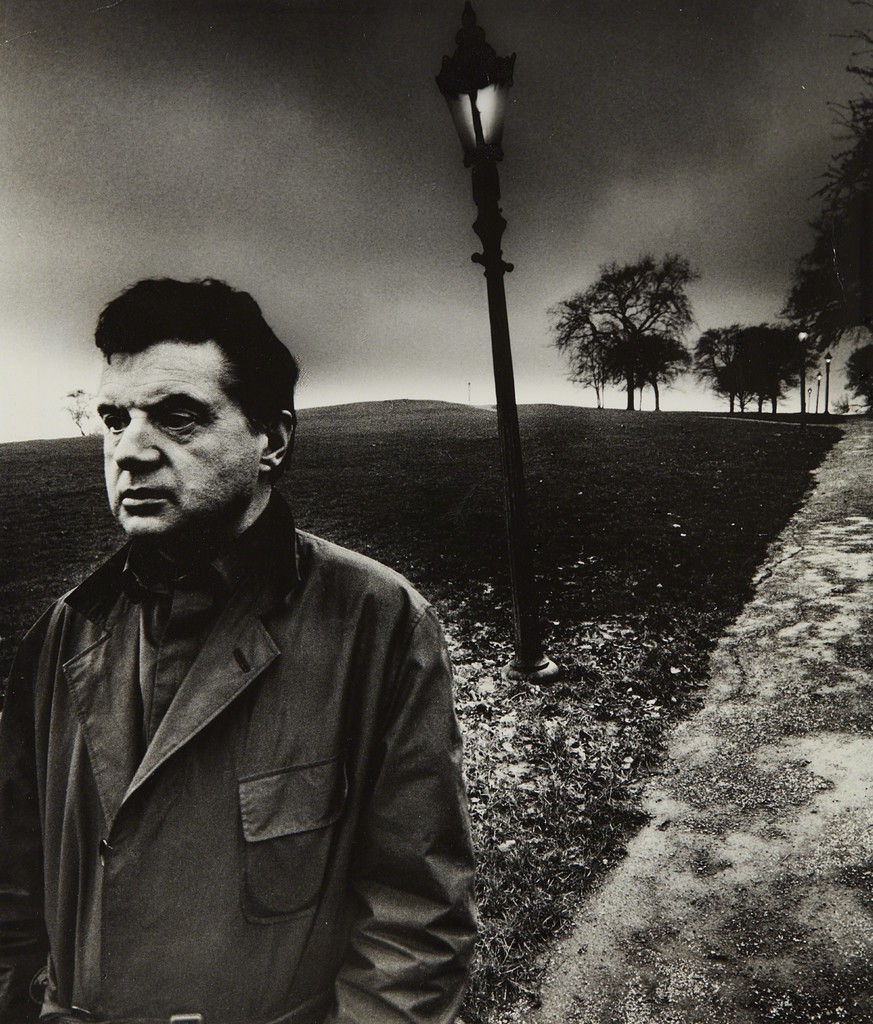
Francis Bacon, Primrose Hill, 1963 by Bill Brandt
Francis Bacon Show Focuses On Painter’s Inspiration
AP
| LEISURE | TIMES—UNION
| WARSAW, INDIANA | THURSDAY, FEBRUARY 26, 2004
BASEL. Switzerland (AP) — Archaeologists had to retrieve the more than 7.000
objects cluttering the late artist’s London studio.
They collected countless brushes. empty tubes, rags and tin cans encrusted with
paint. They also picked up many crumpled and torn pages of magazines and books.
And they cataloged close to 1.500 photos, often in poor condition.
Chaos seems an under-statement in describing the place where Francis Bacon lived
and worked for his last three decades until his death in 1992 at the age of 82.
But the studio, since reconstructed to its original, messy state at The Hugh
Lane gallery in his native Dublin. was a treasure trove for art historians
seeking a deeper insight into the enigmatic painter’s disturbing and distorted
imagery.
Showcases with some 65 newspaper clippings. photos. book leafs and other samples
from this “studio material” are for the first time part of a unique exhibition
on the artist. Titled “Francis Bacon and the Tradition of Art.” it focuses on
his main sources of inspiration by confronting some 40 of his paintings with an
equal number by old masters and other artists. They are on loan from museums and
private collectors in the United States and Europe. The show runs through June
20.
For Barbara Steffen, curator of the show at the Beyeler Foundation museum in
suburban Riehen, the studio material presents the missing link between the “the
sublime horror of Bacon’s own imagery and the often complex. ambiguous beauty of
the artists he accepted as his idols.”
Among the paintings, special prominence is given to Bacon’s interpretations of
an austere 17th-century portrait of Pope Innocent X by Diego Velazquez, which
fascinated him for many years Some of Bacon’s images, which are up to 78 inches
high, suggest the papal throne supposedly a symbol of power, holds an anguished,
isolated figure.
They include versions of his screaming pope shown together with the still of a
terrified victim taken from film director Sergey Eisenstein’s “Battleship
Potemkin.” the 1925 silent film about the Russian revolution. Confronting them
are sketches of a weeping woman by Picasso The close-up still, his source for
the pope’s stunned features, was found in Bacon’s studio as were numerous color
and black-and-white reproductions of the Velazquez original. which he never saw.
Also on view are other examples of how Bacon merged several sources from his
studio collection in his paintings. sometimes with absurd results. In two
versions for a “Study for Bullfight.” shown along with Goyaesque prints on the
same theme. Bacon has introduced a section of a Nazi party rally, presumably
inspired by a newspaper photo.
The arena doubles as a place for mass rallies where violence on a broader scale
can be fomented. comments Margarita Cappock. co-author of the 400-page
exhibition catalog. Bacon became interested in bullfights during visits to Spain
and southern France. Cappork notes he once told an interviewer that
“bullfighting is like boxing a marvelous aperitif to sex.”
Bacon was a flamboyant gay whose lurid sex life began long before 1967 when
homo-sexuality ceased to be a criminal offense in Britain. In 1953. a painting
suggestively showing two men on a bed caused a scandal when it was exhibited at
London’s Hanover Gallery. The painting was based on photographs of wrestlers by
Eadweard Muybridge. the 19th-century American pioneer of photographic art.
Bacon kept several copies of Muybridge’s book on “The Human Figure in Motion” in
his studio. Several leaves from the book allow visitors to see how Bacon used
them in depicting overtly homosexual themes through most of his artistic career.
A
deeply shocking Bacon triptych displayed on view at the Beyeler Foundation muse
um recounts the 1971 suicide of George Dyer, an almost illiterate one-time petty
thief and Bacon’s lover for eight years, who became addicted to drugs and
drinking. On the eve of a large Bacon retrospective in Paris Grand Palais, Dyer
was found dead on the toilet in a Paris hotel where they had shared a room.
Bacon almost never painted from life. Even portraits of his closest friends were
based on photos he had ordered for the purpose: sometimes they were based on
pictures of other people. He repeatedly said he felt inhibited by the presence
of models and that he needed a distance from what he was painting. His many
self-portraits, shown with some of the Rembrandts he admired, also were done
from photos, including some taken in automatic photo booths.
No palette was found in his studio. Walls, doors and abandoned canvases served
Bacon as substitutes. Sometimes, he left brushes aside and used his hand or rags
to apply the paint.
Bacon died of a heart attack on April 28, 1992, during a visit to Madrid. Long
before his death, he had amassed a fortune but never changed his lifestyle,
continuing to live in his tiny apartment and studio above a garage in
Kensington. His sole heir was his last lover. John Edwards, who died of lung
cancer last year at age 53. He once said in an interview that despite his
seeming flamboyance, Bacon was actually “a lonely and shy man.”
Three years before Bacon's death. the disturbing Dyer sui-cide triptych was sold
at a New York auction for $6.27 million. believed to be an all-time record for a
Bacon work. And there still seems to be a good market for his papal portraits,
although he did more than 45 of them in a span of 20 years. One, dated 1963,
fetched $5.43 million at a recent London sale.
Digging for sources of inspiration
Exhibit shines light on painter Francis Bacon
CNN | FRIDAY, FEBRUARY 27, 2004
BASEL, Switzerland (AP) — Archaeologists
had to retrieve the more than 7,000 objects cluttering the late artist’s London
studio. They collected countless brushes, empty tubes, rags and tin cans
encrusted with paint. They also picked up many crumpled and torn pages of
magazines and books. And they catalogued close to 1,500 photos, often in poor
condition.
Chaos seems an understatement in describing the place where Francis Bacon lived
and worked for his last three decades until his death in 1992 at the age of 82.
But the studio, since reconstructed to its original, messy state at The Hugh
Lane gallery in his native Dublin, was a treasure trove for art historians
seeking a deeper insight into the enigmatic painter’s disturbing and distorted
imagery.
Showcases with some 65 newspaper clippings, photos, book leafs and other samples
from this "studio material" are for the first time part of a unique exhibition
on the artist. Titled "Francis Bacon and the Tradition of Art," it focuses on
his main sources of inspiration by confronting some 40 of his paintings with an
equal number by old masters and other artists. They are on loan from museums and
private collectors in the United States and Europe. The show runs through June
20.
For Barbara Steffen, curator of the show at the Beyeler Foundation museum in
suburban Riehen, Switzerland, the studio material presents the missing link
between the "the sublime horror of Bacon’s own imagery and the often complex,
ambiguous beauty of the artists he accepted as his idols."
Among the paintings, special prominence is given to Bacon’s interpretations of
an austere 17th-century portrait of Pope Innocent X by Diego Velazquez, which
fascinated him for many years. Some of Bacon’s images, which are up to 78 inches
high, suggest the papal throne, supposedly a symbol of power, holding an
anguished, isolated figure.
They include versions of his "screaming pope" shown together with the still of a
terrified victim taken from film director Sergey Eisenstein’s "Battleship
Potemkin," the 1925 silent film about the Russian revolution. Confronting them
are sketches of a weeping woman by Picasso. The close-up still, his source for
the pope’s stunned features, was found in Bacon’s studio as were numerous colour
and black-and-white reproductions of the Velazquez original, which he never saw.
Distance from subjects
Also on view are other examples of how Bacon merged several sources from his
studio collection in his paintings, sometimes with absurd results. In two
versions for "Study for Bullfight," shown along with Goyaesque prints on the
same theme, Bacon has introduced a section of a Nazi party rally, presumably
inspired by a newspaper photo.
"The arena doubles as a place for mass rallies where violence on a broader scale
can be fomented," comments Margarita Cappock, co-author of the 400-page
exhibition catalogue.
Bacon became interested in bullfights during visits to Spain and southern
France. Cappock notes he once told an interviewer that "bullfighting is like
boxing — a marvelous aperitif to sex."
Bacon was a flamboyant gay whose lurid sex life began long before 1967 when
homosexuality ceased to be a criminal offense in Britain. In 1953, a painting
suggestively showing two men on a bed caused a scandal when it was exhibited at
London’s Hanover Gallery. The painting was based on photographs of wrestlers by
Eadweard Muybridge, the 19th-century American pioneer of photographic art.
Bacon kept several copies of Muybridge’s book "The Human Figure in Motion" in
his studio. Several leaves from the book allow visitors to see how Bacon used
them in depicting overtly homosexual themes through most of his artistic career
A deeply shocking Bacon triptych displayed at the Beyeler Foundation museum
recounts the 1971 suicide of George Dyer, an almost illiterate one-time petty
thief and Bacon’s lover for eight years, who became addicted to drugs and
drinking. On the eve of a large Bacon retrospective in Paris’ Grand Palais, Dyer
was found dead on the toilet in a Paris hotel where they had shared a room.
Bacon almost never painted from life. Even portraits of his closest friends were
based on photos he had ordered for the purpose; sometimes they were based on
pictures of other people. He repeatedly said he felt inhibited by the presence
of models and that he needed a distance from what he was painting. His many
self-portraits, shown with some of the Rembrandts he admired, also were done
from photos, including some taken in automatic photo booths.
No palette was found in his studio. Walls, doors and abandoned canvases served
Bacon as substitutes. Sometimes, he left brushes aside and used his hand or rags
to apply the paint.
Bacon died of a heart attack on April 28, 1992, during a visit to Madrid. Long
before his death, he had amassed a fortune but never changed his lifestyle,
continuing to live in his tiny apartment and studio above a garage in
Kensington. His sole heir was his last lover, John Edwards, who died of lung
cancer last year at age 53. He once said in an interview that despite his
seeming flamboyance, Bacon was actually "a lonely and shy man."
Three years before Bacon’s death, the disturbing Dyer suicide triptych was sold
at a New York auction for $6.27 million, believed to be an all-time record for a
Bacon work. And there still seems to be a good market for his papal portraits
although he did more than 45 of them in a span of 20 years. One, dated 1963,
fetched $5.43 million at a recent London sale.
“
FRANCIS BACON
AND THE TRADITION OF ART”
KUNTSHISTORISCHES MUSEUM, VIENNA
BRIGITTE HUCK | ART
FORUM | VOLUME
42, NUMBER 7 | MARCH
2004
Francis Bacon, the crown jewel of British painting, lived through most of the
twentieth century, from 1909 to 1991, earning in a good fifty years of activity
a reputation as an existentialist on account of his often horrifying diagnoses
of reality. Though the artist feared his work would one day end up in storage,
it recently appeared in the hallowed halls of the Kunsthistorisches Museum in
Vienna. One might think this pairing rather surprising for this superrefined
museal shrine, where artworks tend to carry an expiration date of around 1800.
But with the privatization of the formerly state-run Austrian national museum,
the wealthy guardians of its imperial collections now find themselves in a
position to outshine poor relations such as the Museum Moderner Kunst.
Inspired by Bacon’s obsessions with various old masters, Francis Bacon and the Tradition of Art,
curated by Barbara Steifen, fitted in startlingly well with the canonized
collection of the KHM, into which the artist was nearly seamlessly integrated.
The exhibition began with a measured introduction of his howling popes, most
notably his Study after Velazquez’s Portrait of Pope Innocent X, 1953. In
conversations with art critic David Sylvester that are reprinted in part in the
exhibition catalogue, Bacon said of Pope Innocent X, "I think it is one of the
greatest portraits that have ever been made, and I became obsessed by it. I buy
book after book with this illustration in it of the Velazquez Pope, because it
haunts me." It was, indeed, the reproduction rather than the original that
haunted Bacon and sufficed as a trigger for his countless adaptations of this
theme. In the spirit of aura, however, the exhibition made every effort to
present originals, particularly the specialties of the house. Regarding
international loans, though, it had to endure some painful rejections: The
Velazquez remained in Rome’s Galleria Doria Pamphilij and was substituted with a
copy from the Accademia di Belle Arti di Carrara, Bergamo.
Organized according to motif (cage, veil, howl, mirror, shadow) was a series of
comparative pairs exhibiting literal analogies: Titian’s Portrait of Cardinal
Filippo Archinto, ca. 1551-62., for example, which shows the bearded prince
of the church behind a curtain, is reminiscent of the "veils and striations," as
one catalogue essay puts it, that run vertically through Bacon’s paintings.
Bacon’s appropriations avant la lettre were the main theme of the show.
His productive possession of old (from Rembrandt to Ingres), more recent (van
Gogh to Degas), and nearly contemporary masters such as Picasso and Chaim
Soutine allows the viewer to discover correspondences and departures and the
development of motifs-in short, to get wise to the celebrated painter. The idea
was to move around iconographie units, to build typological chains, to analyze
isolated pictorial components, but rarely to explain the artwork on the basis of
its historical, social, or psychological connections. (This approach has been
happily undertaken by generations of art-history students who have completed the
workshop "Based on the Original" at the Kunsthistorisches Museum.)
In
this vein, feedback from Ingres’s Oedipus and the Sphinx of 1826 emerged
from Bacon’s painting of the same name; a self-portrait by Rembrandt was greeted
by a portrait from Bacon; the body studies based on Michelangelo, Gericault, and
Cezanne were displayed; and Bacon’s homages to a destroyed painting by van
Gogh, The Painter on the Road to Tarascon, 1888, were trotted out.
Screams by Munch, Picasso, and Eisenstein (the famous scene on the Odessa steps
from Battleship Potemkin ran as a continuous video loop in the
exhibition) can be traced to Bacon without a problem. Analogies were made
between Bacon’s metamorphoses of human body parts and the Surrealism of Picasso
and Bunuel; family resemblances were seen in Maerten van Cleves’s The Slaughtered Ox,
1566, and Soutine’s Carcass of Beef, 192.5. all of this certainly goes to
illustrate the pictorial tradition evoked in the exhibition’s title. On the
other hand, anyone seeking the wide world of the soul, the interpersonal drama
of sex and death rather than the function of shadows, will be more interested
in Triptych May-June 1973, in which Bacon deals with the
suicide of his lover George Dyer.
The most intriguing part of the exhibition was to be found not in the works hung
on the velvet-draped walls of the museum but rather in those items that once lay
in piles on the floor of Bacon’s London studio. After his death, the
accumulation of 7,500 pieces of refuse and working materials was pored through
and reconstructed by archaeologists(l) when Bacon’s executor donated the
contents of the studio to Dublin City Gallery The Hugh Lane. A selection here of
those drawings, photographs, books, illustrations, scrap papers, catalogues, and
magazines gave "traditional painting" a run for its money. Sometimes painted,
folded, or pinned up, the contents of the "archive" document Bacon’s artistic
practice. After all, he never based his works on the originals, only
reproductions. he never wanted to see that certain Velazquez, for photography
was his witness; long live the artwork in the age of its mechanical
reproduction. Here is where Bacon’s dead flesh lives, in the tattered newspaper
clippings of the Kennedy assassination; medical texts showing horrid, peeledaway
skin; the occult photographs of the Baron von Schrenck-Notzing; the motion
studies of Eadweard Muybridge; film stills; and family snapshots: an
encyclopaedia for a man obsessed with images, fragments of a passion. Andy
Warhol threw his things into "Time Capsules," boxes he taped up and put in
storage. Bacon tossed his into the great "box" of his studio without any
intention of memorializing it. With his feet he trod upon the very precondition
of his works’ existence. "The work of art," says Gilles Deleuze in Francis Bacon:
The Logic of Sensation (1981), "is a block of sensations." Nowhere were
these more compressed than in the chaos of Bacon’s studio.
Brigitte Huck is a Vienna-based critic
Joule jibes
ALEXANDER RUSSELL | LETTERS | ART REVIEW | MARCH 2004
I was astonished that the Tate Gallery has acquired the Barry Joule Archive of
alleged Francis Bacon sketches and doodlings donated by Barry Joule.
Even an O-Level art student could tell that these are very bad fakes: everything
in Joule’s Archive is over scratched and scribbled as well as being too naive
for Bacon’s sophistication — for even Bacon’s
own sketches had a suave line.
Even if Mr Joule acquired some of the photos from Bacon’s Reece Mews studio, the
mannered markings are certainly not from the hand of Bacon.
I suggest Joule acquired some photographs and reproductions from the studio and
that they were subsequently doctored.
The Francis Bacon Estate was correct and insightful in not authenticating this
rubbish, which is only fit to be put out with the garbage.
ALEXANDER RUSSELL
School
of Francis Bacon,
London
WC1
Francis Bacon famously worked amid chaos.
From the knee-deep detritus of his studio, photographed with archaeological
keenness by celebrated witnesses, came a earth. Modernist interiors,
revelatory of Bacon’s early employ as decorator, cast in the utopic range of the
Nabis palette: lavenders, pinks, oranges, fieldt
of flesh. For within these seductive enclosures, often delineated by some
architectural prop – a wall, door or vestige of furniture such as table or even
presence struggles with its own battered anatomy.
A man, sometimes a dog, more
pathetically a paralytic child or mere body part – and obsessively, through a
certain period, the iconic semblance of a Cardinal or Pope.
It
may be hard to
reconcile,
regarding the artist’s working environment and the spartan world Bacon cast upon
preferably large canvases, such discrepancy of painterly vision. But then, any
glance at the protagonists – variously disfigured, dismembered, eviscerated, or
silently screaming – affords such a glossary of private torment, that it becomes
evident such figures are borne of somewhere chaos reigns.
The paradoxical specter of Bacon’s
oeuvre – the beauty of the composition versus the hideous suffering depicted –
challenged both the public and critics well into the artist’s career. But as the
power of art to shock has been mediated by a world exponentially more shocking,
an acceptance has come of Bacon’s aesthetic prophecy of what is now everywhere
around us. And people close to the artist – reportedly a difficult man embattled
by asthma, alcoholism and issues of identity – have led the way in our
appreciation. Among them is Michael Peppiatt, a British critic and collector
whose 30 year friendship with Bacon yielded a major biography, scores of
articles and, most recently, the curating of the exhibit ‘The Sacred and the
Profane’ at IVAM, the Institute of Modern Art in Valencia, Spain.
The original premise of the show, and
its raison d'être for inaugurating in Spain, was to present Bacon’s Pope series
in its entirety: over 40 paintings inspired by Diego Velazquez’ 1640 Portrait of
Pope Innocent X painted between 1949 and 1971 to understand, if not fully why,
to what extent Bacon was consumed by this single and slightly sinister image.
Image of another time, another country, even a culture defined by everything
Bacon denied, namely meaning and religiosity and hierarchy before an uncertain
God. Moreover, Bacon may never have seen the actual painting, but worked off
reproductions papered across his studio.
Doubtless
for practical reasons, the show’s focus shifted to a wider but no less relevant
theme of “The Sacred and the Profane.” Relevant because this premise highlights
a duality that applies to everything Bacon accomplished, from the matter of his
daily existence – maintaining a high-wire lifestyle alongside a disciplined work
ethic – to the disturbing dichotomy in his oeuvre, where horror occupies a
handsome setting. And indeed, as Peppiat notes in his catalogue essay, alongside
depictions of often sacred subject matter, Bacon celebrated the most profane
acts of man.
Anchoring
the exhibit is the 1640 portrait of Pope Innocent X, courtesy of the National
Gallery in Washington, and attributed to Velazquez’ circle. Its subject casts a
wary eye without, and serves as a template for Bacon’s interpretations – nine
gathered altogether on the papal theme. Here is a Pope cloaked in white, (Study
for a Pope III, 1961), with a red mantle and profile almost animal-like in its
deformity. As if the man inside the symbol of the man has usurped the physical
features. Here is another Pope, visibly aggressive, with mouth wide and teeth
bared in some perversion of papal dignity (Pope II, 1951.) It is as if the
subject expresses, albeit silently, a mime of outrage surely unavailable to the
public figure. This conflating of private and public self touches some essence
of Bacon’s call: to express the violent stuff within man, no matter his station.
Such
directive could explain the show’s three
versions of Bacon’s Crucifixions, including the perennially powerful Fragment of
a Crucifixion (1950) where the scaffold of a white cross is riven, not unlike a
piece of wood beset by termites, by imaginary fragments of the artist’s making:
nebulous naked bodies, a gaping mouth, pale blood. The imagery easily shocks,
for all its cryptic sketchiness: viewers at the IVAM opening were said to avoid
it.
Beyond these plays on ‘sacred’ subject,
Peppiatt’s exhibit, drawn from major international collections, surveys the more
generically transgressive emblems of Bacon’s oeuvre: a solitary dog caught in
some inexpressible anguish (Study of a Dog, 1952), with a man’s face
surreptitiously emerging from the wolf’s, and a naked man on all fours, not
un-dog like, bent down in the spiky grass (Man Kneeling in Grass, 1952). Both
offer, along with the surreal Man with Dog (1953) casting two bodies
indecipherable in a lunar blue, a vivid portrait of ‘the beast within.’ Even, or
especially when portraying himself, Bacon was not exempt from some
representational torment. The serenely seated figure in Study for a
Self-Portrait (1963) has the visage of a monster. It thus shows a kinship with
other models in Bacon’s gallery of portraits, including George Dyer, Henrietta
Moras or Isabel Rawsthorne, each more gruesome than the next.
Bacon
favored triptychs, perhaps for their magisterial quality. Within the three
consecutive panels the artist could compose a narrative, while calling on the
viewer’s imagination to complete it. The final gallery, with several such
triptychs, almost feels like a sacred place, or its opposite, some form of hell,
so potent are the disturbing images. These include Triptych inspired by the
Orestia of Aeshylus (1981), one of several homages to Antiquity. Hung on the
central wall, but perceived from the entry like a beacon, with its riveting
colors, is one Triptych (1987.) It shows a leg injury, not unlike the sort
matadors suffer, when they are gored by a bull. A bull’s horned head depicted in
the third panel corroborates such simple theory. And the blood orange
background, composed with an animal-hide gray, is every bullring in Spain
suffused with an evening sun.
There may be no better place to address
such a theme than Spain, which is also one of the deeply religious western
countries, where citizens seek a balance between inculcated sacred ideals and
ever-present evidence of a wayward world. And of all the Spanish cities, with
perhaps the exception of Seville, the most appropriate may be Valencia, where
day-long church services are held honouring the various saints. Among the most
popular is the Virgin of the Desparados, surely the saint to whom Bacon’s
subjects would pray, if they had the means. The artist died in 1992 in Madrid,
having sojourned for some time in a country where his life and art came
fragilely together.
n,
any glance
at the protagonists
– variously disfigured, dismembered, eviscerated, or silently screaming –
affords such a glossary of
private torment, that it becomes evident such figures are
borne of somewhere chaos reigns
Bacon
reigns in Spain
Francis Bacon: The Sacred and the Profane
Institute of Modern Art
Valencia, Spain ****
SUE HUBBARD | VISUAL ARTS | REVIEWS | THE INDEPENDENT | FRIDAY 5 MARCH
2004
Madrid has the Prado, Bilbao the Guggenheim, Barcelona the Picasso Museum but
Valencia, as Spain’s third city, is less likely to be on the art lover’s map. In
fact, the Institut Valencia d’Art Modern — opened in 1989 and built by the
architects Emilio Gimenez and Carlos Salvadores — is an elegant modern geometric
building that houses the most comprehensive collection of the Spanish sculptor
Julio Gonzalez, the work of the Valencian artist Igancio Pinazo and a
significant collection of contemporary art. And it also puts on exhibitions by
artists of international reputation.
Francis Bacon is one such and is an inspired choice to show in Spain. All the
previous major shows of Bacon’s works have been retrospectives; the Tate Gallery
in 1962, the Grand Palais in 1971-72 and the Metropolitan Museum in 1975. But
Bacon is one of the great existential painters of the 20th century — his are the
big themes of life and death, love and art, meaning and existence — and this
exhibition, The Sacred and, The Profane, reflects his essentially nihilistic yet
humanistic view of the world through the mirror of his religious-tinted
paintings. Bacon never visited Velazquez’s portrait of Pope Innocent X, yet
continually bought copies of it. He was, he said, “afraid to see the reality of
Velazquez after I’d been manipulating it so atrociously.”
Eight of Bacon’s Popes are on show in the first gallery here, gathered from as
far a field as Canada, Britain and Australia, hanging alongside the Velazquez,
shut in their glass boxes screaming their silent screams like Eisenstein’s Nanny
in Battleship Potemkin. Both photography and film were potent influences
on, Bacon. But photography had covered so much. For a painting to be worth its
salts the image, he said, had to be “twisted” if it was “to make a renewed
assault on the nervous system”. Bacon wanted to recreate certain kinds of
experience, to reveal their poignancy and their intensity. For him “abstract art
is free fancy about nothing. Nothing comes from nothing”. Man is haunted by the
mystery of his existence and, therefore, obsessed with remaking and recording
his own image as a way of unlocking perception about the human condition.
Seeing Bacon in Spain one realises what a very un-English painter he really is.
Though he has long been associated with the London School, he was born in Dublin
of English parents. His unconventional upbringing in rural Ireland, which ended
when his authoritarian father threw him out of the house on discovering his
son’s predilection for his mother’s underwear, and his passionate homosexuality
connect him back to the raw sensibility of, Greek tragedy rather than to the
mannered, drab post-war world of London that he inhabited as a young man. His
strong, bold colours seem to grow straight out of the Spanish tradition and it
is not difficult to see his repeated paintings of the Pope — the father — as
psychoanalytic workings through of his relationship with his own dominant
paterfamilias.
But it is man’s vulnerability that Bacon illustrates with such perception in his
paintings of his lover, George Dyer, or Paralytic Child Walking on all Fours
(from Muybridge), 1961, and Man Kneeling in Grass, 1952, where a
naked figure snuffles on all fours, perhaps urinating or throwing up in the
grass like a wild beast. Here Bacon reveals the very pity and terror both at the
heart of Christianity and of human existence.
The exhibition concludes with a triptych from 1987 — that religious form found
above the altar of so many a Spanish church. The two left-hand paintings are of
legs against an orange background. Legs on, what looks like a mortician’s table,
legs covered with band aids and dripping blood from stigmata-like wounds. In the
right hand painting is the head of a bull; we are invited to think of the bulls
of Mycenae, the bull as carcass, as meat and as Christ-like victim. Seeing this
great English painter in a Spanish context is to revitalise him, for it connects
him back not, only to Velazquez and Catholic art, to the ancient rituals of bull
fighting and the myths and tragedies Greece, but also to the existentialist
questions embedded deep within the mysteries and paradoxes of faith.
SUE HUBBARD
Institut Valencia D’Art Modern, Guillem de Castro 118, 46003, Valencia, Spain,
to 21 March

Francis Bacon’s Study
for a Pope III (1961),
one of the paintings inspired by
Velazquez’s portrait of Pope Innocent X
Francis Bacon’s Sacred And Profane In Paris
ART DAILY | REVIEWS | EXHIBITIONS | THURSDAY APRIL 8 2004
PARIS. — Fondation Dina Vierny — Musée Maillol began yesterday the exhibition
“The Sacred and the Profane” featuring the oeuvre of painter Francis Bacon. The
exhibition including 42 paintings that shed new light on his profoundly
disturbing masterpieces will end on June 30, 2004.
Francis Bacon was, to an extreme, living proof of William Butler Yeats’ saying
that: “No
mind can create until it is divided in two”.
In his life as well as in his art, he was able to maintain a precarious yet
lasting balance between totally conflicting points of view. This ambivalence,
which appears clearly in his works, reaches extraordinary proportions in his
interpretation of Christian symbols.
Bringing together 37 paintings and 5 triptyches provenating from museums and
private collections, a certain number of which have rarely been exhibited, this
show serves as an inventory of the Sacred and Profane within Francis Bacon’s
art. Crucifixions, popes or irreverent images of couples entwined on the grass,
isolated men screaming in cages and women nailed to their bed by a syringe in a
lather of paint. Bacon inverts all traditional concepts of the Sacred and the
Profane, replacing them with his own ,both unsettling and unpredictable visions.
A crucifixion may appear in the guise a cut of meat or a threatening animal,
whereas the lustful embrace of two bodies assumes all the tender suffering of a
Pieta.
This show addresses some of the underlying enigmas which the intensely
disturbing iconography of this great English painter embodies. It is remarkable
that someone as fiercely atheist as he was relentlessly kept on painting, in an
obsessive manner, the motif of the Crucifixion or variations on a specific
theme. A case in point is the portrait of the pope Innocent X by Velasquez, of
which there are at least forty-five variations. At the same time, his uncanny
powers of transformation enabled him to lend an almost mythic dimension to the
most commonplace everyday scenes: a man alone in a room becomes a kind of
crucifixion of modern life.
The event is being curated by Michael Peppiatt.
Nikos
Stangos
Art-history editor at Penguin and
Thames & Hudson
ANDREW BROWN
| OBITUARIES
| THE
INDEPENDENT | FRIDAY,
23 APRIL, 2004
NIKOS STANGOS was one of the most influential figures in British art publishing.
For more than 30 years, as commissioning editor and director of Thames & Hudson
and, earlier, as editor at Penguin Books, he was responsible for some of the
most important art books of the late 20th century. As a result, in his modest
way, he helped shape the discipline of art history in Britain and the United
States.
With his warmth, humour, intellect and forthright opinions, he earned not only
the respect of all who worked with him, but also many enduring friendships on
both sides of the Atlantic.
Born in Athens in November 1936, Nicolas Stangos was descended from both the
Byzantine and the classical Greek worlds. His mother came from an old
Constantinopolitan family, while his father was a member of an old Greek family
that had settled in Sosopol in Bulgaria, the ancient Greek city of Apollonia on
the Black Sea. His parents were forced to move to Athens in the early 1920s when
hundreds of thousands of Greeks were expelled from Bulgaria and Turkey. Once
there, his father established himself as a successful architect.
When German forces occupied Greece in the Second World War, two German pilots
were billeted in Stangos’s family house. Among his earliest memories was the
sight ofthe two officers, who were anti-Nazi, listening with his parents to the
BBC World News on a radio that was strictly forbidden but which the officers
secretly allowed. Before they were both killed in action, they would often take
the young boy up in their planes for rides.
Stangos’s father died of an infection that reached his heart the day the Germans
left Athens in October 1944. At the age of eight, Stangos became a boarder at
the city’s American College, a neoclassical building that had been designed by
his father. He was at the school for eight years, during which time he developed
his vision of poetry and politics.
In his teens, he became a member ofthe banned Communist Party, mimeographing
propaganda which he then threw from the balconies of cinemas, courting arrest
for his subversive activities. He soon left the Party, however, when his poetry,
submitted at cell meetings, was criticised harshly as being too formalistic.
Despite this experience, for the rest of his life he would be a fervent believer
in the socialist duties of the state.
In 1956, Stangos left Greece to continue his undergraduate studies in the United
States, first at the Denison University in Ohio and then Wesleyan University in
Connecticut, before going on to Harvard University to study philosophy. After
Harvard, he returned to Greece to fulfil his military duty, before working
briefly for Constantinos Doxiadis, the internationally renowned and innovative
town planner. In 1965, he came to London, having been offered a position in the
press office of the Greek embassy.
Through his friendship with the poet Nanos Valoritis, who himself had lived in
London and had made connections with British poets, Stangos met Stephen Spender,
who would be his introduction to the cultural world of 1960s London. He and
Spender collaborated with David Hockney on an illustrated collection of
translated poems by the Greek poet Constantine Cavafy (Fourteen Poems),
published in 1967 by Editions Alecto. At this time, he met, through a mutual
friend, the writer David Plante, and they became lifelong partners.
In 1967, with the military takeover of Greece by rightwing colonels, Stangos
left the embassy, joined demonstrations, against the dictators, and was granted
permanent residence in the United Kingdom. It was at this time that he began his
search for a job in publishing, which had always been his ambition. He was
advised by Charles Monteith of Faber & Faber to start by working in a bookshop.
It did not occur to him, being as confident as he was, that it would be held
against him that he was not British, that his first language was Greek, and that
he had no experience in publishing, except for his involvement in Athens as an
editor, with Valoritis, of a literary magazine called Pali.
At a drinks party, however, he was told by an editor at Penguin Books that there
was a position going for an editor of poetry, art and architecture, theatre and
cinema, and philosophy. He was interviewed by Allen Lane, Penguin’s founder, and
was taken on.
It was the start of an extraordinary career in publishing. As editor of the
Penguin Modern Poets series, he was the first to publish in England the American
poets John Ashbery Kenneth Koch, Kenward Elmslie and James Schuyler; and as
co-editor, with Al Alvarez, of Penguin Modern European Poets, he brought the
work of the poets Marina Tsvetaeva, Fernando Pessoa and Yannis Ritsos (the
latter translated by Stangos himself) to the attention of English readers for
the first time.
He also published the writings of diverse poets such as Spender, Alvarez, Adrian
Stokes and Charles Bukowski. At Penguin, he also began to work with leading
writers on art. With John Fleming and Hugh Honour as outside advisers, he was
responsible for the company’s “Style and Civilization” series, which included
Honour’s JVeoclassicism (1968), Linda Nochlin’s Realism (1971) and
Steven Runciman’s Byzantine Style and Civilization (1975).
On the death of Allen Lane in 1970, Stangos saw that, after its acquisition by
Pearson, Penguin Books was likely to change its character. So in 1974, he moved
to Thames & Hudson, whose position as an independent publishing house, and its
in-built respect for individualism, originality and high quality matched his own
views of what his authors should expect from their publisher. With the support
of the then chairman Eva Neurath and the present publisher Thomas Neurath,
Stangos became a director of the company, and, as well as taking responsibility
for the entire art-history list, assumed the editorship of the company’s
flagship “World of Art” series, which he held until his retirement in May 2003.
At Thames & Hudson, he continued to work with leading artists and art
historians, many of whom became lifelong friends. He was responsible for
important books on David Hockney, Francis Bacon, Lucian Freud, Frank Auerbach,
Howard Hodgkin and R.B. Kitaj, among many others, and commissioned writers and
scholars including David Sylvester, Francis Haskell, John Golding, Robert
Rosenblum, Richard Wollheim and John Rewald. Aware of emerging trends in art
history, he also worked with younger academics and curators, among them TJ.
Clark, Rosalind Krauss, John Gage, Benjamin Buchloh, Yve-Alain Bois, Griselda
Pollock, Tamar Garb and John Elderfield.
A number of books under his stewardship won the Mitchell Prize, one of the
highest honours in art history, including Claude Monet: the colour of time
(1992) by Virginia Spate, Colour and Culture (1993) by John Gage and
John Golding’s Paths to the Absolute (2000). He was as passionate about
the very latest in art as he was about art of the past, and he commissioned some
of the groundbreaking books on new media, installation, performance and video
art.
To a young editor like myself, anxious to make a good impression, Stangos was
both a colossus and an inspiration. A natural mentor and father-figure, he took
me under his wing, always offering encouragement, advice, guidance and, above
all, friendship. It was clear, however, that he was beginning to plan for his
retirement. He started to introduce me to others as his “son”, an honour I did
not deserve but which I happily accepted, and he prepared me for the realities
of publishing.
The acknowledgments that appear in the publications he commissioned and edited
show the high esteem in which others held him, too, both as an editor and a
person. He was generous and selfless to a fault, rarely taking the credit he
deserved but preferring instead to remain anonymous behind the scenes. In later
life, he was a trustee of the Elephant Trust, a charitable organisation
established to help fund artistic projects and young artists. Privately he also
supported the activities of a number of galleries, museums and artists.
All the while, his interest in literature remained vital to him. For Alan Ross,
he guest-edited three Greek issues of the London Magazine, and he
continued to write poetry both in English and Greek, publishing in Athens two
collections of poems. On his death, he was working on a long poem, to be called
“What is Truth?”
Andrew Brown
It’s hard to remember life before, or life without, Nikos Stangos, writes Robert
Rosenblum. I met him first in the 1960s when he was an editor at Penguin Books,
launching a new paperback series on contemporary artists. He found a perfect
match for me, Frank Stella, and that was the beginning of the many author-editor
dialogues we had for the remainder of the century.
But, in Nikos’s case, publishing houses quickly became domestic spaces; and
soon, there was little difference between the Nikos I knew at Penguin Books and
then at Thames & Hudson (where, like him, I became an honorary member of the
Neurath family), and the Nikos I knew at Montagu Square, where, with David
Plante, I enjoyed, year after year, the pleasures of gossip, food, and wit that
for me recalled the legendary salons of the early century, whether in Bloomsbury
or Gertrude Stein’s Paris.
There was always a “Who’s Who” of the art and literary world coming in and out
of their top floor flat — Stephen Spender, David Hockney, John Golding, Linda
Nochlin, David Sylvester. Being up there was like being on Olympus. But it was
also like being in the most measured, unpretentiously elegant of households,
with David and Nikos quietly keeping even the most raucous company under
control.
Nikos’s reach was transatlantic too, and we would eagerly await his and David’s
visits to New York, where we would try to match their hospitality and guest
lists. For us, as for the Neuraths, Nikos soon became a family member.
Reasserting his national origins, he always smiled over our children’s names,
Sophie and Theo, referring to them as "the Greeks". It was easy to think of him
as "Uncle Nikos". He was the kind of person you would as easily invite for
dinner with relations as with an elite group plucked from the New York art
scene.
Nikos Stangos presided over his own domestic world with such grace and charm
that it was often a surprise to learn that, outside these confines, he had lived
so many different, seemingly contrary, lives. If it was hard to remember, from
the material comforts of his home, that, as a graduate student at Harvard, he
had passionately embraced the abstractions of philosophy, it was even harder to
realise that, as a privileged youth in Athens, he had endangered his life by
becoming an active Communist. But this was also the Nikos who was so in love
with his two Wagnerian cats, Siegfried and Sieglinde, that he would hesitate to
travel.
Nicolas Stangos, editor, publisher and poet: born Athens 21 November 1936;
commissioning editor, Penguin Books 1967-74; commissioning editor, Thames &
Hudson 19742003, director 1981-2003; died London 16 April 2004.
NIKOS
STANGOS
Cosmopolitan editor for Penguin and Thames & Hudson
who
regarded
all good art as ‘modern’ whatever its period
OBITUARIES |
THE REGISTER |
THE OBSERVER | SATURDAY APRIL 24 2004
A poet in his own right, Nikos Stangos became one of the most creative and
respected literary editors of his generation. As poetry editor for Penguin, he
helped to make the British reputations of John Ashbery, Kenward Elmslie and
Charles Bukowski, as well as introducing the public to European writers such as
Fernando Pessoa and Yannis Ritsos. As a director of Thames & Hudson, he saw
through the press a large number of important works on modern art, including
books on Francis Bacon, Lucian Freud, Howard Hodgkin, Frank Auerbach and R.B.
Kitaj.
Stangos's father came from an established Greek family in Sosopol, Bulgaria.
After Bulgaria's military victories over the Turks during the Balkan Wars,
other, more complicated, ethnic rivalries and expulsions ensued and the Stangos
family moved to Athens, where Nikos (Nicolas) was born in 1936. His mother was
from a distinguished family long settled in Constantinople.
He was brought up to be independent and self-sufficient. On one occasion his
father rowed him out to sea and threw him into the water — and, thus, under
supervision, Nikos learnt to swim. From his mother, he inherited his extreme
fastidiousness. He was obsessive about the cleanliness of his personal
surroundings and was always immaculately groomed. He tended to dress casually,
even at important gatherings, but his striking Graeco-Byzantine good looks and
his natural sense of style invariably singled him out as the most elegant man
present.
His father died young, just as the German occupation of Athens ended, and, at
the age of 8, Stangos was sent as a boarder to the American College at Athens, a
Neo-Classical building designed by his father, who had studied architecture at
the Massachusetts Institute of Technology. He had a talent for making friends
that would last all his life, and he was happy there. Reminiscing about his
early childhood, he recalled that, when two German officers were billeted on the
family, they too had become his friends. The Germans were anti-Nazi and,
together with the family, would listen clandestinely to the BBC World Service.
The officers would take Nikos for joyrides in their aircraft.
.. By his early teens Stangos was immersing himself in poetry and beginning to
write his own. He also became a member of the Communist Party, which at the time
was forbidden. His poetry, read at cell meetings, was criticised for being too
formalist; he soon left the party, although to the end of his life he remained
staunchly a figure of the far Left.
But what he sought from poetry throughout his life was formal invention, not
simply for its own sake, but at the service of delving into new ways of
perceiving reality and conveying depth of feeling. His own poetry has about it a
lyric plangency, as if he was trying to recapture scenes, states of mind,
relationships, all glimpsed but never fully seized. He always saw himself as a
refugee, at times even from himself.
Following his father's example, he left Greece in 1956 to continue his
undergraduate studies in America, ending up eventually at Harvard as a
philosophy postgraduate. He was forced, however, to return to Greece to face his
military service. Subsequently, he worked for Doxiatis, a renowned and
revolutionary town planner. In 1965 he came to London, where he had been offered
a position in the office of the Press Attache at the Greek Embassy.
After the takeover in Greece by the colonels and the ensuing dictatorship,
Stangos felt that his position was untenable and he resigned. He was now granted
permanent residence in the UK and London became his home away from home. His
English was impeccable, but he always spoke it with a pleasant Greek intonation.
While in Greece, he had been given the names of English poets by Nonos Valoritis,
who had himself lived in London. Through Stephen Spender, whom he met at the
time, he found himself at the centre of the London cultural scene of the
Sixties. Soon afterwards he and Spender would collaborate on a collection of
translations of Cavafy's poetry, illustrated most famously and beautifully by
David Hockney who, like Spender, remained a lifelong friend.
By then Stangos had found his true vocation in publishing. At a drinks party he
had been told by an editor at Penguin Books that there was an editor's position
on offer in poetry, art and architecture, theatre and cinema, and philosophy.
Stangos was interviewed by the legendary and by then aged Allen Lane, the
founder of Penguin, and immediately taken on. As poetry editor, he introduced
the British public to American poets such as John Ashbery (whose work was an
enduring passion for Stangos), Kenneth Koch and Kenward Elmslie. He also helped
bring greater recognition to such locai poets as Spender, Al Alvarez, Charles
Bukowski and Adrian Stokes, whose poetry was then virtually un-,known. As house
editor, he worked with Alvarez on the Modern European Poets series. In Alvarez's
own words: "His taste was faultless and he had a wonderful ear for how a poem
should sound". Among the poets featured in the series were Marina Tsvetayeva,
Fernando Pessoa and Yannis Ritsos, the last of whom Stangos translated himself.
On the visual front, one of his first editorial achievements was Concepts of
Modern Art (1974), a compilation of essays by various experts in the field which
was to become a prescribed text at many schools and universities. With John
Fleming and Hugh Honour as outside editors, Stangos worked on the outstanding
and original Art in Context series, in which individual works of art were
evaluated by distinguished scholars.
With his high intelligence and keen intuition, Stangos realised that after the
death of Allen Lane the unique position in publishing held by Penguin Books
would change, and that its high standards and independence of stance would be
threatened. He recognised that Thames & Hudson, one of the few publishing houses
still in family hands and with standards he respected, could be a viable option
for him. He joined the firm in 1974 and soon gained the respect and affection of
Eva Neurath, then the head of the firm, and subsequently that of Thomas Neurath,
who succeeded her. He became an integral part of the establishment and was made
a director. It was a harmonious and productive arrangement, and he remained with
the firm until his retirement last year. Inevitably, because of the bias of
Thames & Hudson, he concentrated mainly on the visual side of things. This was
no hardship for him, as he had always been passionately interested in painting
and sculpture.
He had no problems in accommodating what were now increasingly varying
approaches to art history as a discipline: he respected the more traditional,
formal approach as exemplified, for example, by John Golding, but he also
published the first two books by T. J. Clark which made the author famous and
which ushered in what became known as "the new art history". At the time of his
retirement, he was still working hard on a volume of 20th-century art being
written by a trio of American scholars: Rosalind Krauss, Yves-Alain Bois and
Benjamin Buchloh. Stangos enjoyed keeping up with things and was an assiduous
visitor to exhibitions of current art. He produced books on Francis Bacon — one
of Bacon's foremost spokesmen, David Sylvester, was a friend — and Lawrence
Gowing's fine assessment of Lucian Freud (he particularly liked books on artists
by other artists). In addition, he published monographs on David Hockney, Frank
Auerbach and Howard Hodgkin. Many of the books were commissioned by him and
several of his authors were awarded the coveted Mitchell Prize for significant
new works on the history of art. Towards all his authors he showed a fierce
loyalty.
Yet his interest in literature remained as strong as ever. For Alan Ross,
he,guest-edited three Greek issues of the London Magazine, and he continued,
quietly, to write his own poetry in both English and Greek, publishing in Athens
two collections of verse. At the time of his death he was at work on a long poem
— in Greek, but which in English translation would have been entitled What is
Truth? While he was still working from within the Greek Embassy, Stangos met
David Plante, a young, then expatriate, American author who would later be
recognised as a significant novelist. Theirs was to be a near-perfect
partnership. They shared a common love of literature and of words in their every
nuance; of music and of painting and sculpture of all periods. (Stangos referred
to all art that he loved as "modern", whatever its period). His relationship
with Plante survived to the end. The two men spent a month every summer at their
island retreat on Paros and many Easter breaks at Planted rooftop flat in Lucca.
When they entertained in their Central London flat, men and women intellectuals,
writers and artists of all persuasions mingled happily. The conversation was
scintillating, but there was also much mirth and a feeling of enveloping warmth.
In accordance with Stangos's last wishes, he was buried in Greek, soil. Plante
survives him.
Nikos (Nicolas) Stangos, poet and editor, was born on November 21, 1936. He died
of cancer on April 16, 2004, aged 67.

Stangos was blessed with striking Graeco-Byzantine good looks, a natural sense
of style and a lifelong talent for making friends friends
Francis Bacon
Vienna and Basel
BY SARAH WHITFIELD | EXHIBITION REVIEWS | THE BURLINGTON MAGAZINE | NO. 1214 |
VOL. 146 | MAY 2004
‘TO BE A PAINTER NOW’, Francis Bacon told David Sylvester, ‘I think that you
have to know, even if only in a rudimentary way, the history of art from
pre-historic times right up to today.’ ‘You see’, he continued, ‘I have looked
at everything in art.’ How he looked and what he paid attention to are the
subjects of Francis Bacon and the Tradition of Art, at the Fondation
Beyeler, Basel (to 20th June), an exhibition that came out of an idea put
forward by Wilfried Seipel, the Generaldirektor of the Kunsthistorisches Museum
in Vienna, where the exhibition was first shown. Seipel had long wanted to see a
Bacon exhibition in Austria and on that score his idea has paid off handsomely,
the Kunsthistorisches Muse um proving a highly effective lure for major Bacon
loans.
Bacon’s art lends itself to being examined in the context of tradition because
it feeds on the past in a way that is unusually free of inhibition. His response
to the past was rapacious but it was also relaxed and open, in contrast to his
response to the art of his own time, which was noticeably ungenerous (except to
Picasso) and at times even bitchy. (Damien Hirst was another exception and
Bacon’s admiration has been returned in Hirst’s recent work, The pursuit of
oblivion, currently on show at Tate Britain.) Bacon’s response is relaxed
because, insofar as one can judge these things, it is free of jealousy or
rivalry, unlike Picasso, whose assaults on the art of the past suggest a killer
instinct at work. Bacon had no formal training as a painter, a fact he never
regarded as anything other than a blessing since it left him unencumbered by
rules that were of no use to him. It was this freedom that allowed him to meet
tradition on his own terms.
The exhibition is divided into sections which work thematically as well as
chronologically, progressing from the early series of popes to the late figure
paintings of the 1980s. One cannot help thinking what Bacon would have made of
some of the themes into which his art has been rather brutally
straitjacketed. ‘Veils and Striations as Motifs of Isolation’, ‘The
Round’, ‘Portraiture after Representation’, ‘The Motif of Meat and
Flesh’, ‘Mirrors and Reflections’, ‘The Motif of the Crucifixion in Triptych
Format’, and so on. There are sixteen sections, each elaborated upon in a
catalogue text,1 several
of which are illuminating, others models of irrelevance.
One of the most visually compelling set of comparisons comes near the beginning
where Bacon’s Study from the human body (Fig.78) is hung next to a Degas
pastel, the Breakfast after the bath (Fig. 79), demonstrating how Bacon
commandeered Degas’s technique of drawing lines of colour through the body to
create a visual ‘shuttering’ suggestive of movement and of light flickering over
naked skin. Bacon also used this device to suggest the passage of fluids through
the body, which, as he once pointed out, ‘is in a sense a filter, apart from its
other attributes’. Nearby are examples of printed material cut out and saved by
the artist showing an advertisement for Silk Cut cigarettes and the back view of
the film screen made of overlapping vertical strips used for the projection of
Cinerama. The furling of the purple silk curtain in the former and the slatted
construction of the latter both provide other forms of ‘shuttering’ that caught
Bacon’s attention. This striking mixture of visual stimuli (thanks to the recent
discoveries unearthed from the artist’s studio) makes the point that Bacon’s
experiments with technique come out of a magnificent jumble of art and
photography.2 Other
moments of precise and concentrated comparison punctuate the exhibition, but
there is also a certain amount of straw clutching that confuses the curatorial
message. For instance, there is not much to be gained (beyond the pleasure
afforded by the works themselves) of showing a series of papal portraits
attributed to the studios of Sebastiano del Piombo, Titian or Velazquez as
though Bacon’s popes are a part of that tradition. His famous obsession with
Velazquez’s portrait of Innocent X (Fig. 80) is a subject of far greater
interest and complexity, as Norman Bryson demonstrates in his masterly catalogue
essay. Nor is there much point in showing portraits by Bacon alongside
Velazquez’s court portraits of Felipe Prosper and the Infanta Margarita,
reproductions of which were found in Bacon’s studio. For Barbara Steffen to say
in her catalogue essay that ‘this is not so much of an indication of any direct
influence of Velazquez on Bacon as it is a reflection of the fact that the
portraits of both artists communicate a world of feelings’ leads us nowhere. As
it happens, the two reproductions, nicely grubby and dog-eared with handling,
are displayed nearby and they tell us all we need to know. Nor is it
particularly helpful to compare the spatial structure of Rogjer van der
Weyden’s Crucifixion in Vienna to Bacon’s triptychs, for no better
reason, it would seem, than the Crucifixion, like the two Velazquez
portraits, is conveniently located in the Kunsthistorisches Museum.
Bacon liked art that was ‘deeply ordered’ and painting that was ‘highly
disciplined’ (perhaps because of his own lack of formal training) and he wanted
his own art to have the same qualities. When he talked to Sylvester about the
subject of the crucifixion he remarked, ‘the central position of Christ is
raised into a very pronounced and isolated position, which gives it, from the
formal point of view, greater possibilities than having all the different
figures placed on the same level’. It is immediately obvious how he put this
archetypal device of isolation and centrality to good use. Many of his
compositions can be seen as variations on the crucifixion, with the cross laid
flat on the ground. Single figures are raised off the floor by beds and
platforms placed centre stage, their bodies usually prone and in a state of
extremity. In a few cases they are nailed down with modern instruments of pain
such as a hypodermic syringe. Bacon’s famous description of Cimabue’s Christ in
the Crucifixion from S. Croce as ‘a worm crawling down the cross’ finds
many parallels in his own work. This was a painting he knew at first hand, and
looking at Lying figure (Fig.8i), for instance, or the left-hand figure
in the 1971 triptych In memory of George Dyer, the image of the crawling
worm immediately comes to mind. The worm, with its all too human pinkness, is
also an image of painful vulnerability. The flesh tones of Bacon’s nudes in a
work such as Three studies of figures on beds of 1972, cover a range of
worm-like colours, from a pale opalescent cream to a pulsating rich red-brown,
leaving the skin as frighteningly exposed as that of a worm when it emerges from
the earth (Bacon’s tenderness towards the human body often goes un noticed).
Cimabue’s Crucifixion rates only a passing mention in the catalogue, its
to Bacon importance strangely ignored.
The triptych was another strategic device Bacon used, ordering through
separation, thereby ensuring that a series of images would not lapse into
narrative, but operate as flashbacks, erupting into the mind in random
sequences. And then there are the frames, offering gilded protection to the
pictures in a way that distances them from the viewer and makes them look at
home among the old masters.
And they do look at home. In 1985, when Bacon was invited to select works from
the collection of the National Gallery, London, for the exhibition The
Artist’s Eye, he refused to allow his paintings to be hung in the same room.
As he explained to Sylvester (whom Bacon asked to intervene on his behalf with
the director, Michael Levey) he did not believe his work ‘to be worthy of such a
context’. He meant what he said. Bacon had impeccable, even old-fashioned
manners and one can well imagine that he would have considered it presumptuous
and intrusive to hang his own paintings in the same space as Rembrandt or Van
Gogh. That discretion seems unwarranted. The grand manner of Bacon’s art, not
least in its presentation, has a confidence, a swagger even, that survives the
onus put on it by this exhibition. If his varied strategies of ordering fail to
conceal some weaknesses, such as a reluctance to deal with more than one figure
at a time, or the often clumsy solutions to the problem of relating the figure
to the ground, or the relentless centrality of the compositions, these are
outweighed by the scale of his ambition, by his fearless inventiveness and by
his single-minded conviction that ‘the greatest art always returns us to the
vulnerability of the human situation’.
No mention is made of the one tradition that Bacon dismissed out of hand,
abstraction (although, as others have noted, his disapproval did not prevent him
from incorporating passages that look suspiciously Newman-like). How interesting
then to be able to wander out of the Bacon exhibition at the Fondation Beyeler
straight into the splendid ‘Centennial Celebration’ of Mark Rothko in the same
museum where a wall label reminds us of a text the American painter wrote in
1957: ‘I’m not interested in relationships of color or form or anything else.
I’m interested only in expressing human emotions — tragedy, ecstasy, doom, and
so on.’ Bacon would have had none of it. He regarded abstract art as ‘an
entirely aesthetic thing’, an art that remained ‘at one level’, ‘a fashion’. And
then, with a flash of the flick-knife, he delivers the coup de grâce,
giving us a sudden insight into exactly what it was he looked for in painting.
People, he said, liked abstraction in art, ‘because you can’t be cruel in
abstraction’.
1 Catalogue: Francis
Bacon and the Tradition of Art. Edited by Wilfried Seipel, Barbara Steffen
and Christoph Vitali. Essays by Barbara Steffen, Norman Bryson, Ernst van
Alphen, Olivier Berggruen, Margarita Cappock and Michael Peppiatt. 371 pp. incl.
416 col. pis. + 40 b. & w. ills. (Skira, Milan, 2004), 38. ISBN 3-85497-721-2.
2 For
further discussion of the Cinerama motif, see M. Cappock: ‘Works on paper by
Francis Bacon in the Hugh Lane Gallery, Dublin’, the Burlington magazine 145
(2003), pp.73-81, esp. pp.8o-8i and fig.20.
Art Isn’t Easy: 7 Reece
Mews
About an Artist’s Search for Painter Francis Bacon,
Plays NYC May 20-June 5
BY
KENNETH JONES | NEWS | PLAYBILL | THURSDAY, MAY 20, 2004
7 Reece Mews, David Brendan Hopes’ play about a young artist’s interest in
painter Francis Bacon, makes its New York City debut May 20 at the Westbeth Arts
Center in Greenwich Village.
The performance space is inside the courtyard at 155 Bank Street between
Washington and West Streets, across from the Bank Street Theatre.
Jamie McGonnigal directs the new Off-Off-Broadway work, about "Mark, a young
American artist who goes to Dublin to be near painter Francis Bacon, the man he
has taken as his master and teacher. Bacon, being dead, could only communicate
through his jumbled possessions, and perhaps through John, a mysterious man who
may or may not have been Bacon’s last lover. The play is about the mystery and
the unfairness of art, which may be taken as a prime type of the mystery and
unfairness — and yet the extreme beauty — of life."
Some call Irishman Francis Bacon as "the finest painter of the second half of
the 20th century, certainly the best on Britain," according to production notes.
"He painted most of his productive life at 7 Reece Mews in London, in a room of
almost incredible disarray, which, nevertheless, may have possessed a mystical
order which was preserved intact when the studio was moved bodily to the Hugh
Lane Gallery in Dublin, as a gift from John Edwards, Bacon’s last and luckiest
life partner."
The play features Tate Ellington as Mark, Paul Finbow as John, Amanda Jones as
Nora and Mick Bleyer as Naill.
Playwright Hopes is professor of literature and language at the University of
North Carolina at Asheville, founder and editor of Urthona Press, founder and
director of the Black Swan Theater Company. He is the author of the Juniper
Prize and Saxifrage Prize-winning book, "The Glacier’s Daughters," and of "Blood
Rose" (Urthona Press, 1997), the Pulitzer-and-National-Book Award-nominated "A
Childhood in the Milky Way" (Akron University Press), and "A Sense of the
Morning" (Milkweed Editions, 1999). His new book of nature writing, "Bird Songs
of the Mesozoic," is due from Milkweed in 2005. His works have appeared in
periodicals such as The New Yorker, Audubon, Christopher Street and The Sun.
Director McGonnigal has been represented in New York City most notably for
directing and producing the New York City premiere of Stephen Schwartz’s
Children of Eden, which benefited The York Theatre Company and The National AIDS
Fund. He also directed productions of The Ritz (Lincoln Center’s Clark Studio),
Love! Valour! Compassion! (to benefit for the Twin Towers Fund). Other recent
credits include Miracle on 47th Street at The King Kong Room, a benefit for
God’s Love We Deliver (director/producer), Embrace!, a concert benefiting The
Matthew Shepard Foundation (director/producer), Snoopy! The Musical in concert
with Tony Award winner Sutton Foster and more.
The producer, Monday Morning Productions, is a production company in its third
year. Other theatre productions have included A Month of Sundays by Jason Cicci
at Theatre Row Theatre, and him & her and Closet Chronicles (starring Marilyn
Sokol) at Ground Floor Theatre.
Performances of 7 Reece Mews play Thursdays Sundays May 20-June 5. On
Thursdays, Fridays and Saturdays doors open at 7 PM for a pre-show wine
reception, with performances at 8 PM. On Sundays, May 23 and 30, the wine
reception begins at 6:30 with performances at 7 PM.
Tickets are $20 for performances and refreshments. Tickets can be purchased
through Smarttix at (212) 868 4444.
Nikos Stangos
Publisher
ANDREW
BROWN
| OBITUARIES | BOOKSELLER | FRIDAY, 21 MAY, 2004
Nikos
Stangos, former commissioning editor and director of Thames & Hudson, has died
at the age of 67.
Born in Athens in 1936, Nikos moved to London in 1965 and
began his publishing career two years later at Penguin, where he
was editor for poetry, art and architecture, theatre and cinema,
and philosophy.
As editor of Penguin Modern Poets and Penguin Modern European
Poets, he was the first to publish in England poets such as John
Ashbery, Kenneth Koch, Kenward Elmslie, James Schuyler, Fernando
Pessoa and Yannis Ritsos, translating Ritsos’ work himself.
Along with Hugh Honour and John Fleming, he developed Penguin’s
Style and Civilization series.
But it was at Thames & Hudson, which he joined in 1974, that
Nikos earned a reputation as one of the most important and
best-loved figures in British art publishing. As editor of the
company’s art history list, including its flagship World of Art
series, he was responsible for some of the most original and
groundbreaking art books of the late 20th century.
He worked with some of the leading artists of the day,
producing important books on David Hockney, Francis Bacon,
Lucian Freud, Frank Auerbach, Howard Hodgkin and RB Kitaj among
many others, and commissioning eminent writers and scholars such
as David Sylvester, John Golding, Robert Rosenblum, Richard
Wollheim and John Rewald.
A number of books under his stewardship won the prestigious
Mitchell Prize for Art History, including Claude Monet: The
Colour of Time by Virginia Spate (1993), Colour and Culture by
John Gage (1994) and John Golding’s Paths to the Absolute
(2002). In 1981, his contribution to the house was recog-nised
when the then chairman Eva Neurath and present publisher Thomas
Neurath made him a director, a position he held until his
retirement in May 2003.
Throughout his life Nikos maintained his passion for
literature. He was the guest editor on three Greek issues of the
London Magazine, and published his own poetry in both English
and Greek. At the time of his death he was working on a long
poem, to be called “What is Truth?”.
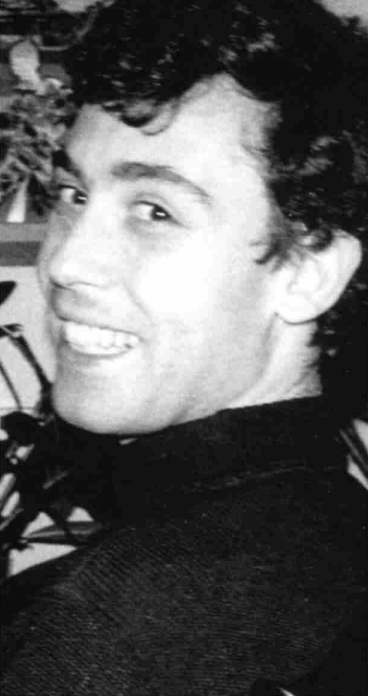
£9.5m required to save the ‘lost’ Bacon
BY DALYA ALBERGE | ARTS CORRESPONDENT | THE
TIMES | FRIDAY, 28 MAY, 2004
BRITAIN has three months to raise £9.5 million and prevent the export of a
“lost” masterpiece by Francis Bacon, considered to be the greatest British
painter since Turner.
Estelle Morris, the Arts Minister, yesterday placed a temporary stop on the
owner’s attempt to send to America an important painting that was rediscovered
after the artist’s death in 1992.
Bacon went to his grave bitterly regretting his decision to ask a colleague to
get rid of Study after Velasquez more than half a century ago. He never knew
that his instructions had been ignored.
Painted in 1950, Study after Velasquez is from his seminal “Pope” series of more
than 45 paintings, reflecting an obsession with Velasquez’s Portrait of Pope
Innocent X. The 1650 Spanish masterpiece inspired Bacon’s own intense
exploration of the human condition.
Bacon had the painting withdrawn from exhibition at the Hanover Gallery in 1950
and again from the Festival of Britain exhibition in 1951. He sent it to his art
materials supplier with instructions that it be removed from its stretcher.
Later, assuming that the painting had been destroyed, Bacon often expressed
regret at its fate.
Government tries to bar export of Bacon painting
BY
NIGEL REYNOLDS | ARTS CORRESPONDENT | THE
DAILY TELEGRAPH | FRIDAY, 28 MAY, 2004
THE Government stepped in yesterday to try to prevent an important long-lost
painting by Francis Bacon, thought to have been destroyed years ago, from being
sold to America for almost £10 million.
The picture, Study After Velasquez, was rediscovered
after Bacon died in 1992, though its current ownership is unknown.
Bacon, Britain’s foremost post-war artist, left a tangled web on his death with
some of his works owned by his gallery and others left to his homosexual
long-term companion, John Edwards.
Estelle Morris, the minister for the arts, yesterday called the painting, one of
45 in Bacon’s Screaming Pope series “a stunning
rediscovered masterpiece”.
She issued a temporary export bar giving public collections in Britain six
months to keep the 1950 painting in this country by matching the £9-5 million
private sale price to America. The artist’s Screaming Pope
series was inspired by his fascination with Velasquez’s
Portrait of Pope Innocent X and the insight it showed into the
human condition.
This painting shows a snarling Pope, snared inside a curtain of rods, apparently
screaming into oblivion. Bacon agreed to show the work first at the Hanover
Gallery in London in 1950 and then at the Festival of Britain in 1951, but on
both occasions he mysteriously withdrew it.
He eventually sent the piece to his art materials supplier with instructions for
it to be removed from its stretcher but later, thinking it had been destroyed,
he expressed deep regret at its loss.
The Department for Culture, Media and Sport was unable to shed any light on when
and where it was rediscovered, who the seller is or the American buyer’s
identity. Edwards died from lung cancer last year in Thailand.
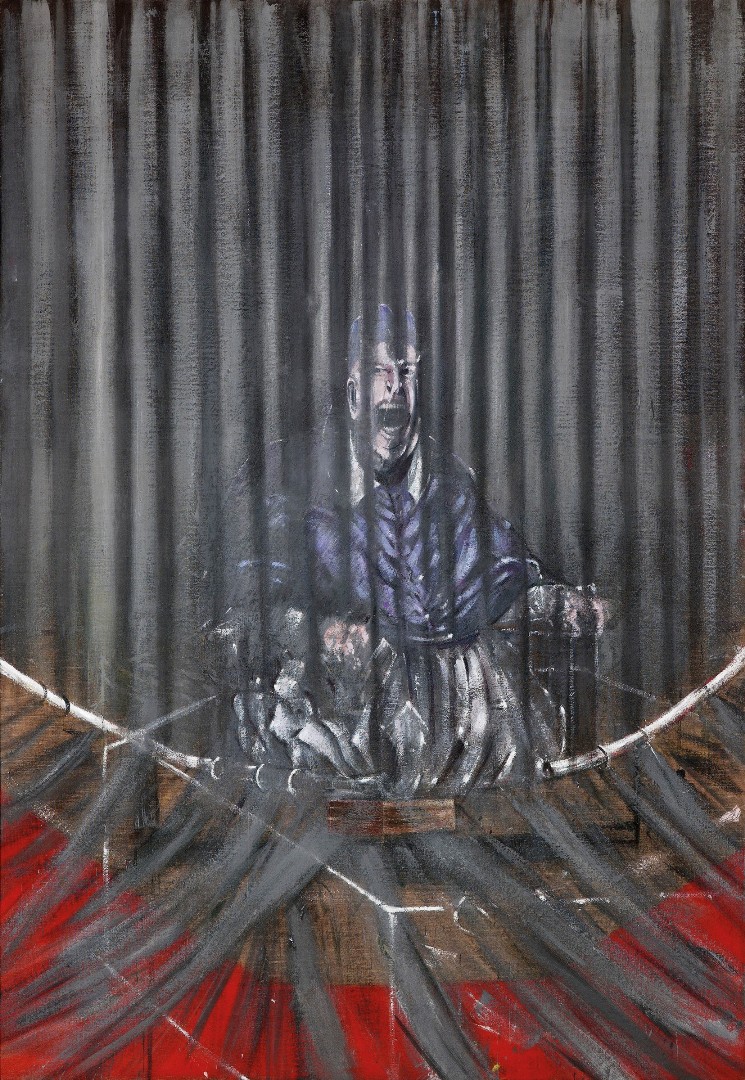
The long-lost ‘Study After Velasquez’ was rediscovered after Francis
Bacon died in 1992
Bacon’s rare
portraits of a female lover go to auction
BY JOHN
EZARD | ARTS CORRESPONDENT
| THE
GUARDIAN | TUESDAY JUNE 8, 2004
Paintings by Francis Bacon of one of his two known female lovers were forecast
yesterday to fetch £1.5m to £2m at auction in London this month.
They are of the
friend about whom the famously homosexual painter bragged to the magazine Paris
Match: "You know, I also made love to Isabel Rawsthorne, a very beautiful woman
who was Derain’s model and George Bataille’s girlfriend."
Isabel
Rawsthorne was one of the strikingly independent, good-looking people of her
time, with a warm and distinguished face. Yet her fate — as
model and mistress to several great 20th-century artists — was
to be shown in strange ways by her lovers and admirers.
Picasso gave her
wild hair and a vertical mouth. The sculptor Alberto Giacometti based some of
his stick people on her. And Bacon’s canvases, titled Three Studies
of Isabel Rawsthorne, make her look lion-faced, with a nose and
cheeks which appear to have had skin flayed from them.
Raised in east
London and herself a painter, Rawsthorne was one of Bacon’s closest friends and
more frequent models in the Soho milieu they moved in, centred round the Colony
club. In his book about the artist, Michael Peppiatt says Bacon respected and to
some extent looked up to her.
She had the
"surprised expression of someone who has just heard a marvellous joke and wishes
to share it", according to the journalist Daniel Farson, another club regular.
When she met
Bacon in the early 1960s, Rawsthorne was 48 and most of her artists were behind
her. By the age of 22 she had had a child by the sculptor Jacob Epstein. Living
with the painter André Derain in Paris introduced her to Giacometti, who drank
at the same brasserie as Picasso.
"Picasso used to
sit at the table opposite and one day, after staring at me particularly hard, he
jumped up and said to Alberto: 'Now I know how to do it,'" she told Farson. "He
dashed back to his studio to paint my portrait — with
little red eyes, wild hair and a vertical mouth — one
of five he painted from memory."
She married the
composer Constant Lambert and, after his death, the conductor and composer Alan
Rawsthorne. She died in 1992.
Bacon’s only
other known excursion into heterosexuality came while he was a young man,
according to Peppiatt.
This was with a
prostitute who, Bacon said, ate chips while he attempted intercourse.
Bringing Home the Bacon
Major Work Returns from Exile in Iran
BY
LUKE LEITCH | SHOWBIZ | LONDON
EVENING STANDARD | THURSDAY 17 JUNE 2004
A long-lost “major” work
by Francis Bacon has returned to London after an extraordinary 30 years spent
hidden in Iran.
The triptych, entitled Two Figures Lying On A Bed With Attendants, has
never been seen publicly in London before today, when it is unveiled at Tate
Britain.
The last time it was shown anywhere was at an exhibition in Dusseldorf in 1972.
The Bacon, which would fetch over [pounds sterling]5 million at auction, was
painted in 1968. Its central panel shows two men. naked on a bed, while the side
panels show two lone figures.
It was sold in 1975, via a French art dealer to an Iranian art foundation funded
by oil revenues and controlled by Farah Pahlavi, the widow of the last Shah of
Iran. It was given to the collection of the Tehran Museum of Contemporary Art,
although given its slightly risqué nature it is thought that it was never
exhibited.
In 1979, when the fundamentalist ayatollahs violently ousted the Shah, the
painting — along
with works by Henry Moore, Renoir, Picasso, Warhol, Dali and Picasso — was
seized and placed in storage.
Its return is thanks to Tate Britain director Dr Stephen Deuchar, who paid a
speculative visit to his Iranian counterpart, Dr Sami Azar, during a family
holiday three years ago.
Dr Deuchar told the Standard: “I
did know that they had a collection of American and European art, and I knew
they had another work by Bacon which I had seen reproduced. But I was only dimly
aware of this triptych. It was amazing to see this piece that had evidently been
in storage for 30 years.”
The Bacon, said Dr Deuchar, “was
considered one of his most important works of the late 1960s. And it seems to
us, as we introduce it to the Tate, to be a very powerful work indeed.”
The painting is not back for good. The Tehran Museum of Contemporary Art has
loaned the work in what could prove the start of a fruitful friendship.
Relations between Britain and Iran have warmed considerably, and attitudes to
works of art previously thought too risqué to show have shifted.
The Bacon will be part of a new Tate Britain display opening to the public on
Saturday.
Bacon triptych emerges from Tehran storeroom
CHARLOTTE
HIGGINS | ARTS CORRESPONDENT |
UK NEWS | THE
GUARDIAN | FRIDAY, JUNE 18, 2004
A major triptych by Francis Bacon is about to see the light after languishing
for more than 30 years in the store of the Tehran Museum of Contemporary Art.
Two Figures Lying on a Bed With Attendants (1968) was bought, having been shown
in Europe in 1972, by the wife of the last shah of Iran. It became part of the
collection of the Tehran museum, but it is thought to have been on display there
only once in 30 years.
Then, in 2001, Tate Britain’s director, Stephen Deuchar, holidayed in Iran. He
stopped off at the Tehran museum, asked to meet the director, Ali Reza Sami Azar,
and was shown the gallery’s reserve collection.
“Even under the fluorescent lighting of the store we could see it was a strong
work,” Dr Deuchar said yesterday. “An idea of exchanging works emerged — we
recently lent them a Bill Woodrow sculpture for a British Council exhibition in
the Tehran museum.”
The triptych is on loan to Tate Britain for six months, where it forms the
centrepiece of a new Bacon room.
The work did not remain in store merely because of its overtly sexual content,
though that may have been a factor. “Dr Sami Azar did acknowledge the need for
caution over one or two female nudes in the collection,” Dr Deuchar said, "but
he would say that it was as difficult finding a proper context for the Bacon’s
display — the revolution brought to an end collecting of contemporary art.”
The work is one of a number of vast triptychs that Bacon produced. The left and
right panels mirror each other, with a seated figure nude on the left and
clothed on the right. It is possible that this represents George Dyer, Bacon’s
lover who died alone of drink and drugs on their hotel lavatory in Paris in
1971.
The central panel shows two male figures, with simian facial features, in bed.
The bed is identifiably that which Bacon used in Morocco and on which he
received many beatings by lovers.


Bacon
triptych saved from ayatollahs
Lost masterpiece surfaces in
Teheran vault, writes Nigel
Reynolds
BY
NIGEL REYNOLDS | NEWS |
THE DAILY TELEGRAPH | FRIDAY, JUNE 18, 2004
FEW paintings have a history quite like it.
Tate Britain put on show yesterday a virtually unknown homo-erotic triptych
painted by the late Francis Bacon in 1968. Improbably, the piece is owned by the
Iranian state and, for obvious reasons, it has never been displayed.
Experts in the West had lost track of the work, titled Two Figures Lying on a
Bed with Attendants, and regarded it as a lost masterpiece. It is thought that
it would fetch at least £5 million on the open market.
For 30 years, the risque triptych was squirrelled away in the vaults of
Teheran’s Museum of Contemporary Art, out of sight and out of mind, made safe
from the disapproving eyes of the regime of Ayatollah Khomeni.
Stephen Deuchar, the director of Tate Britain, stumbled on it on a family
holiday to Iran in 2001.
Making a courtesy call on Dr Sami Azar, the director of the Teheran museum, he
was led to the storerooms and the treasure was unwrapped before him.
Dr Deuchar said yesterday: “I didn’t even know of its existence. I was
astonished to see it and was exhilarated by its quality.
“Quite rapidly, I decided that I might broach the idea of it coming on loan to
Tate Britain.
“I don’t think that it is surprising that it hasn’t been seen in Teheran but in
the context of Bacon’s work as a whole it’s not remarkable for its
homo-eroticism so much as its quality.”
Bacon, a Soho high-lifer and promiscuous homosexual, was probably not, it is
safe to assume, one of the favourite Western artists of Iran’s Islamic
revolution.
Two Figures Lying on a Bed with Attendants was, in fact, bought for the country
in 1975 in the dying days of the Peacock Throne, by the ruling Pahlavi
dynasty, whose pro-Western policies — and
rigorous secret services — fanned
the revolution in 1979.
Through a foundation that she controlled, Farah Pahlavi, the widow of the last
Shah of Iran, quietly built up a small but significant collection of Western art
for the museum. When the Shah was deposed, works by Henry Moore, Renoir,
Picasso, Warhol and Dali joined the Bacon in the museum’s strongrooms.
Two Figures Lying on a Bed with Attendants was last
seen in Europe in 1972 at an exhibition in Dusseldorf.
,catalogue for a big Bacon retrospective at the Tate a decade ago, its
whereabouts were listed as unknown.
It is on loan to this country for six months, joining nearly a dozen other
pictures by the artist owned by Tate Britain.
Dr Azar, who must still walk a tightrope as reformers and traditionalists
struggle for ascendancy in Iran, finally planned to show it in Teheran on its
return, Dr Deuchar said yesterday.

‘Two Figures Lying on a Bed with Attendants’ by Francis Bacon on display at Tate
Britain yesterday.
It was taken to Iran by the widow of the
last Shah before the Iranian revolution
Christie’s Sells $25.7 Million of
Artworks by Bacon, Kapoor
Bloomberg, 24th/25th June 2004
June 25 (Bloomberg) – Christie’s
International sold 90 percent of its offered works by artists such as Francis
Bacon and Mark Rothko, taking in £14.1 million ($25.7 million) and breaking
records for Anish Kapoor, Emilio Vedova and Eduardo Chillida at a London auction
of contemporary art last night.
The top-priced lot was Bacon’s
'Three Studies of Isabel Rawsthorne,' a 1966 triptych portrait valued as high as
£2 million that brought 2.4 million pounds after adding Christie’s commission.
The auction competed with the England-Portugal Euro 2004 soccer game and people
started leaking out of London-based Christie’s King Street rooms halfway through
the event.
Sotheby’s Sells
Auerbach, Rego Works for $26 Million
June 24 (Bloomberg) – Sotheby’s
Holdings Inc. sold Frank Auerbach’s 1983 portrait, 'Head of J.Y.M. II,' for
£352,800, including the auctioneer’s commission, nearly four times its estimated
value at a London auction of contemporary art last night.
Bacon’s 1973 'Study for
Self-Portrait,' valued at as much as £800,000, was bid up last night to 1.6
million pounds.
All the
world desires a Brit
COLIN GLEADELL |
CONTEMPORARY
|
ART SALES
|
THE DAILY TELEGRAPH |
MONDAY, JUNE 28, 2004
British artists with worldwide appeal were among the stars of the select evening
sales of contemporary art at Sotheby’s and Christie’s last week when more than
£28 million changed hands — more than ever before in London.
But it wasn’t the radical, conceptual art of the YBAs that dominated. For its
sale on Wednesday, Sotheby’s had assembled a strong group of figurative
paintings by the post-war “School of London” artists — Frank Auerbach, Francis
Bacon, Lucian Freud and Leon Kossoff — and the results showed how global their
market has become. As auctioneer Tobias Meyer said:
“There needed to be a big jump for British art — and it happened tonight.”
The most spectacular results were for Bacon and Auerbach. A small self-portrait,
just over 12in square, made the highest price to date for a Bacon painting of
that size, selling to private dealer Ivor Braka for £1.6 million — twice the
estimate. The self-portrait last sold in 1991 for £363,000.
Braka also tried to buy an exceptional painting by Frank Auerbach, but without
success. Auerbach’s market has revived recently after more than a decade in
which his solid, painterly values have appeared out of fashion. Yet not even
Sotheby’s was prepared for the interest shown in Head of J.Y.M.11
(1984-5), a painting that the artist considered one of his best.
Until Wednesday, no portrait by Auerbach had made more than £170,000 at auction.
But for this one, estimated at £60,000 to £80,000,11 telephone bidders from as
far as Asia and America lined up against the British art trade, driving the
price to £352,500 — paid by a European collector.
This apparent swing to conservatism, reinforced when a painting by figurative
artist Paul Rego sold for a record £117,000, did not, however, entirely eclipse
the younger British artists favoured by Charles Saatchi and past Turner Prize
selection committees. The contemporary market is too broad a church for that. A
wooden box with an appliqued mattress by Tracey Emin called My
Coffin doubled its estimate to sell to a European collector for
£84,000. A huge photocopy collage of pin-up girls from a tabloid newspaper by
Sarah Lucas, which Saatchi had sold for £14,500 five years ago, now sold for
£72,000 to a British collector. And a sewn and painted canvas of a house by
Michael Raedecker, which would have cost around £6,000 when made in 1998, sold
to Los Angeles dealer Anthony Meier for £66,000.
Undoubtedly, the sales were helped by the number of overseas collectors who had
come to London from,Art Basel, the major Swiss art fair, which closed on Monday.
One of them, US collector Adam Lindemann, took the top lot of Sotheby’s sale, a
huge painting of a devilish mask by the short-lived graffiti artist Jean-Michel
Basquiat, for £2.5 million. Another beat off South American collector Jose
Mugrabi to capture a dark but luminous watercolour by Mark Rothko for a
double-estimate £924,000 at Christie’s.
Here, British art gained further kudos when a triptych of small portraits by
Francis Bacon of his friend Isabel Rawsthorne made the top price of the night,
selling to the New York gallery Acquavella for £2*4 million. The price was the
highest yet for a Bacon painting of this size and format. And, grabbing the
auction limelight for the first time, a sensuous trompe l'oeil
alabaster sculpture, just 3ft high, by Anish Kapoor, tripled his
previous auction record to sell to a European collector for £229,000.
British art was only part of the story. A set of 10 Brillo boxes by Andy Warhol
set a sculpture record for the artist, selling to Anthony d’Offay for £475,000,
and paintings by the hottest young European artists, Luc Tuymans, Daniel Richter
and Marlene Dumas, all attracted vigorous competition.
But what really struck home was how well both salerooms had measured the market.
By careful selection and the matching of supply to demand, only nine of the 92
lots offered were unsold. As long as that balance remains constant, the
contemporary art market will continue to flourish.
Francis Bacon:
The Sacred and The Profane
Fondation Dina Vierny-Musée
Maillol, 61, rue de Grenelle – 75007, Paris (AR)
ALEX RUSSELL | ART REVIEW |
SEEN AND HEARD | JULY 2004
In the catalogue, exhibition curator and Francis Bacon biographer, Michael
Peppiatt, states: “This exhibition sets out to explore the varieties of the
sacred and the profane in Bacon’s art. It focuses on some of the enigmas that
persist at the heart of his profoundly searching and subversive imagery…An
exhibition of this kind will not necessarily take us to the mysterious core of
Bacon’s paintings – they are infinitely elusive and, like the sphinx that became
one of Bacon’s emblems, they raise questions to which we have at best a
faltering reply. But the exhibition will bring us face to face with unexpected
and discomfiting reflections.”
The title of this exhibition of 41 of Bacon’s paintings — ‘The Sacred and The
Profane’ — became lost once one was immediately confronted by the brutality of
paint, for the paint speaks louder than any narrative thread. It is seeing – I
would say – sensationing — Bacon’s paintings ‘in the flesh’, in the paint, that
negates the kind of ‘story-telling’ that Bacon himself so despised. Curiously,
the paintings that did not work anymore were the famous images of paranoid Popes
which seemed over time to have taken on a mixture of nostalgic naivety and
melodramatic campness. This amateurish naivety can be seen in Study for
Portrait (Pope) 1957 where Bacon’s handling of the raised arms is clumsy and
crude.
In the catalogue the reproduction of Pope II, 1951 is richer and darker
and oddly more powerful than the original which appeared muddy and sloppy;
indeed, the reproductions in the catalogue tended to be darker than the
paintings themselves and also to homogenise the textures of the paint. For
instance, in the flesh, Fragment of a Crucifixion, 1950, has a
nerve-wracking quality, with what seem to be white puffs of wool on the back of
the headless beast which hangs over the top of the cross. These furry textures
with grainy paint are what bring Bacon’s images to life and no reproduction can
ever faithfully capture the violent graininess of the paint. This is evident in Reclining
Figure III, 1959 where the flesh-paint takes on sinuous swirls of rainbow
hues with Bacon’s brush making musical imprints in the figure’s muscular
rhythmic vitality.
By far the finest painting on display was Man in Blue V, 1954 where the
head seems to smoulder between being and non-being, with the fragile face being
woven together by thin slivers of white silvery paint leaking into darkness. The
right eye is painted without being painted-in, evoked without being filled in;
it is an eye without being a literal eye. Being made out of arbitrary,
non-rational marks, this is anti-illustrational painting at its most poignant
and powerful.
This is also sensationed in Study for a Self Portrait, 1963 where again
the arbitrary paint smudges fuse facial features through non-illustrational
marks. It was indeed between 1954 and 1963 that Bacon was at his inventive
painterly best. In stark contrast, by far the worst was Self Portrait,
1978 where Bacon looks like a bloated botox baby; the older he became the
younger he made himself look, like a parody in reverse of the Picture of
Dorian Gray – and here the image is inanely illustrational, the paint smooth
and etiolated — as was also the case in Triptych, 1983 — directly
opposite — with its dead orange ground and flat figures: here was a bored Bacon
as a ghost of his former self.
Three Studies for a Portrait of George Dyer,
1963 is hardly ever reproduced yet it is one of Bacon’s finest studies of his
tragic loser lover. With its curls and flourishes it is strikingly baroque while
having the spiritual aura and mystical mood of Jawlensky’s Meditations.
I have seen Paralytic Child on All Fours (after Muybridge) 1961 only in
reproduction and never realised what a sensitive and refined image it is in
reality. The reptilian half-moon face has a Vermeeresque luminous serenity; the
body’s gestures are balletic; here Bacon brings out the animal in man with a
suave graceful elegance.
A similar reptilian alien creature is sprawled out in Reclining Figure in a
Mirror, 1971 which seems caught in a state of shape-shifting between animal
and human. Both these animalesque images dispel the myth that Bacon’s figures
are distorted. Indeed, the images at this exhibition all displayed a tranquil
radiance devoid of the usual clichés associated with the Bacon canon: ‘horror’
and ‘pain’ were absent. Shown on the lower ground floor was a 1964 TV
documentary with Bacon speaking fluent French in the only interview I’ve ever
seen conducted in movement: a euphoric Bacon twirls around with camera crew and
interviewer and hangers-on trying to keep up with him. Edgar Varese’s Integrales was
an apt sound track to go with Bacon’s primitive-modernism.
Michael Peppiatt has curated a beautifully balanced show; every image seemed to
be at the right place at the right time and all images were bathed in perfect
light. Bacon would have been delighted by such a finely pitched exhibition.
Originally scheduled to close on June 30th it has been extended to August
15th due to popular demand.
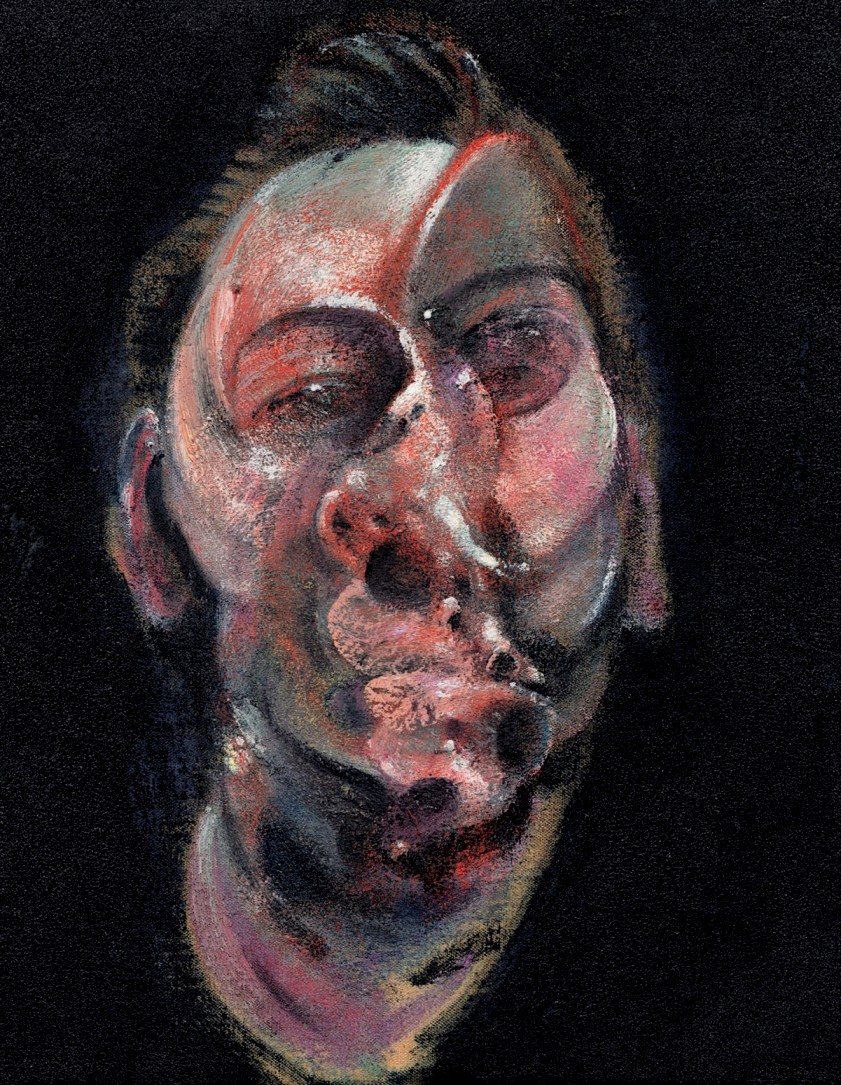
Portrait of George Dyer 1963 is hardly ever reproduced yet it is one of Bacon’s
finest studies
Rich pickings
Friend who inherited Bacon’s £11m fortune went
on 11-year spending spree
SAM JONES | THE GUARDIAN |
TUESDAY, AUGUST 31, 2004
Despite a reputation for being difficult, Francis Bacon did — in death at
least — live up to his celebrated toast of "Champagne for my real friends, real
pain for my sham friends".
So it’s hard to know what the artist would have made of the behaviour of John
Edwards, the man to whom he left his £11m fortune when he died in 1992.
It appears that Edwards, a former cockney barman once described by Bacon as his
"only true friend", spent most of his inheritance before he died last year —
mostly on homes in Suffolk for his family.
Records show that Edwards, who died of lung cancer in a Bangkok hospital, left
an estate with a gross value of £3,125,704. After liabilities, that figure comes
down to £786,702.
Although Edwards was Bacon’s closest friend for 16 years, the art world raised
its collective eyebrow when the artist bequeathed his entire estate — including
his shabby studio in South Kensington and several of his paintings — to a man
summed up by his friends as "a typical East End diamond geezer".
Their suspicions may have been confirmed when rumours circulated that he had
sold some of Bacon’s paintings in London and New York. However, the art he
inherited was mainly made up of late Bacon works which were less well regarded
by critics.
There is also speculation that his legacy, which could have risen to £30m by the
time he died, may have been left to Philip Mordue, his boyfriend of 27 years.
He and Mordue — a fellow east Londoner nicknamed Phil the Till — lived together
in a luxury penthouse in Pattaya, Thailand, for the last nine years of Edwards’
life.
His will stated that the bulk of his estate should be left in trust, with his
trustees having the power to distribute it to any charity or individual.
But Edwards also specified that £50,000 should be spent on a funeral party for
his family and friends at the exclusive Harrington Club in London.
And, in a final flourish worthy of his old friend, he decreed that Krug
champagne should be served to those gathered.
Boyfriend of
artist Bacon frittered away £10m
By DAVID
SAPSTED | NEWS | THE
DAILY TELEGRAPH | TUESDAY, AUGUST 31, 2004
MOST of the £11 million fortune left by Francis Bacon, one of the 20th century’s
most acclaimed artists, was squandered by his male companion in little more than
a decade.
Bacon died of a heart attack in 1992 at the age of 82 and, in a shock to the art
world, left his entire estate to John Edwards, the uneducated son of a London
docker, who was half the artist’s age.
Mr Edwards died of cancer in Thailand last year and there was speculation that
the Bacon fortune had grown to £30 million, But details of the will show that Mr
Edwards, a former barman, spent most of the money on high living and on gifts
for friends and relatives, leaving him with a net estate worth less than
£800,000.
Mir Edwards, 53, was Bacon’s companion for 16 years and featured in 30 of MS
paintings. Although both were homosexual, Mr Edwards denied in an interview with
The Daily Telegraph a year before his death that they
had been lovers.
After Bacon’s death, he moved first to the Florida Keys before spending the last
nine years of his life living with Philip Mordue, his boyfriend of 27 years and
a fellow Cockney nicknamed “Phil the Till”, in a penthouse apartment in the
seaside town of Pattaya south of the Thai capital, Bangkok.
There were reports at the time of Mr Edwards’s death in March last year that he
had made Mr Mordue the main beneficiary in his will.
But probate records show that the estate — worth £3,125,704 gross but reduced to
£786,702 after liabilities — was left mainly to the John Edwards Charitable
Foundation, a trust set up by Mr Edwards a year before his death to promote
Bacon’s work. Mr Edwards also stipulated that £50,000 was to be spent on a party
for his family and friends at the Harrington Club in Kensington, west London.
The principal drink was to be Krug champagne.
After inheriting the Bacon estate, Mr Edwards is believed to have bought
properties for his parents and other members of his family in Suffolk. He is
also believed to have sold some of the paintings left to him by Bacon, primarily
later works which were less well regarded by critics, through galleries in
London and New York.
The will stated that Mr Edwards wanted his ashes scattered at a farm near Bury
St Edmunds, Suffolk, which he bought after Bacon’s death. His bequests included
Bacon’s 1962 Sketch for Seated Figure, which he left
to Tony Shafrazi, the owner of a New York art gallery, John Eastman, Mr
Edwards’s lawyer and the brother of the late Linda McCartney, was left a silver
plate and certificate presented to Mr Edwards by the lord mayor of Dublin in
2001 after he presented Bacon’s studio to the city.
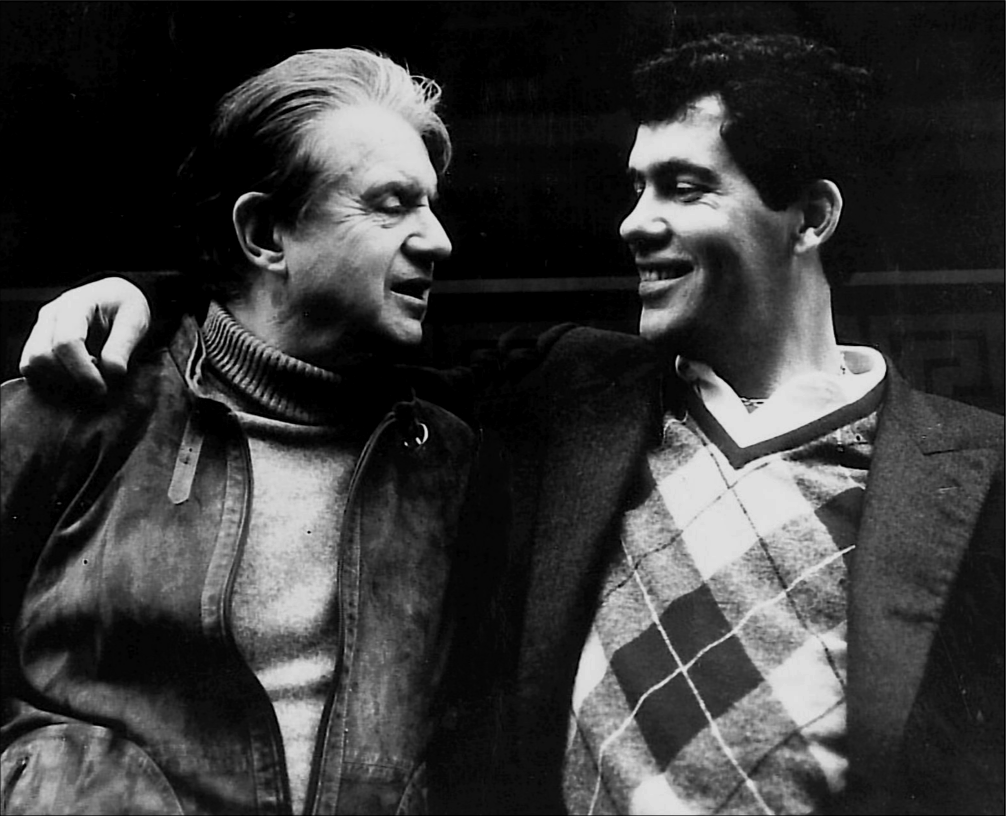
Bacon with his boyfriend Edwards, who spent nearly all of the artist’s £11
million will on high living buying gifts for friends.
Bacon left his best friend an £11m fortune.
So where has it all gone?
By CHARLES
ARTHUR | THE INDEPENDENT | TUESDAY, 31 AUGUST, 2004
Even for an
arts world where the unusual is quotidian, the decision by the painter Francis
Bacon was remarkable. After his death in 1992 at the age of 82, his will left
most of his £11m fortune to a former Cockney barman and gay model, John Edwards,
then aged just 41.
Bacon called
Edwards his “only true friend”; but some in the business wondered how good a
friend Mr Edwards would be to the artist’s works.
But the story
has acquired a remarkable twist — with the revelation that Mr Edwards, who
died in a Bangkok hospital in March 2003 of lung cancer, left an estate with a
gross value of £3.12m; after liabilities, it is worth just £786,702.
Now the
question everyone is asking is: where did the rest go? As the price of works by
dead artists only ever rises, Bacon’s estate should have been worth between £30m
to £50m. Yet the will suggests it has been dissipated.
Early
suggestions are that Mr Edwards spent the money on properties in Suffolk for his
parents and other family members. A year before his death, he also set up the
John Edwards Charitable Foundation, intended to promote Bacon’s work. He willed
the bulk of his estate to trustees who could distribute it to “any charity or
individual”.
But there are
some indications he may have given away many of the paintings that made up the
collection before his death, perhaps to avoid death duties. Mr Edwards’s mother,
Beattie, has a triptych by Bacon, valued at about £3m, hanging on the wall of
her Hackney home. David Edwards, his brother, said in July: “The fact is John
has been very, very generous to all of his family and all those he loved.”
Many
speculated that John Edwards’s estate, with the cash and paintings he had been
bequeathed, would go to his long-time boyfriend Philip Mordue, a fellow East
Ender. But the paucity of the estate suggests he sold off or gave away many of
the paintings, and used the proceeds to fund a lavish Bangkok lifestyle.
But some of
the cash remains for going out in style. He willed £50,000 should be spent on a
funeral party for his family and friends at the exclusive Harrington Club in
Chelsea, London. For Mr Edwards, such a send-off will be a fitting end to a life
which began anonymously but soon encompassed worldwide fame through his contact
with Bacon.
The painter’s
reputation continues to grow after his death, with his paintings selling for
millions. In January, the Tate gallery announced it had been given 1,200 items
that were no more or less than the sweepings from his studio floor.
Yet art world
rumour says that after Bacon’s death the Tate turned down Mr Edwards’s offer to
donate it the studio itself. Thus it is now on show — painstakingly recreated —
in Dublin at the Hugh Lane Gallery.
Mr Edwards,
the dyslexic son of an East End docker, used to visit Bacon’s south Kensington
mews house — which also housed his ramshackle studio — every morning. He was the
only person ever allowed into Bacon’s studio while he worked, and was Bacon’s
confidant and muse. Mr Edwards featured in 30 of Bacon’s paintings and was his
closest companion for 18 years. Yet although both men were gay, Mr Edwards
always denied they were lovers.
After Bacon’s
death, Mr Edwards moved to Thailand with his boyfriend Philip Mordue (nicknamed
Phil the Till), ostensibly to escape the attentions of the press. But there may
have been other pressures: Mr Mordue, now 54, was reportedly shot in a bar in
Pattaya in 1997, and spent four days in hospital from a bullet wound in the
neck.
Friends
described Edwards as “a typical East End diamond geezer”.
How barman
spent Bacon’s £10m booty
By MICHAEL
HORSNEL | THE TIMES | TUESDAY, AUGUST 31, 2004
THE Cockney barman who inherited Francis Bacon’s £10.9 million fortune in 1992
was down to his last £800,000 when he died last year, it was disclosed
yesterday. John Edwards, 53, drank a large portion of the legacy and gave much
of it away to friends and relatives before his death from lung cancer in
Thailand.
The art world was mortified when Bacon bequeathed his entire estate of artworks
to the man who, though 41 years his junior, he described as his “only true
friend”. But the painter, one of the towering figures of 20th-century art, liked
the fact that, from the outset of their 16-year friendship, Edwards refused to
put him on a pedestal or to think of him as any more than a “good mate”.
Although both were homosexual, Mr Edwards, the son of an East End docker,
insisted that he and Bacon, who died from a heart attack aged 82, were never
lovers. The uneducated, dyslexic Mr Edwards would visit Bacon’s South Kensington
mews house every morning to make the artist breakfast and sit with him while he
painted.
Probate records reveal that Mr Edwards left a gross estate of £3,125,704,
reduced after liabilities to a net figure of £786,702. It is believed that he
had earlier bought properties in Suffolk for his parents and other family
members. It is also thought that he sold some of Bacon’s paintings through
galleries in London and New York.
Mr Edwards, who featured in 30 of the paintings, set up the John Edwards
Charitable Foundation a year before his death to promote Bacon’s work. His will
stated that the bulk of his estate should be left in trust — his trustees having
the power to distribute it to any charity or individual.
Mr Edwards’s lawyer John Eastman, the brother of the late Linda McCartney, was
left a silver plate and framed certificate given to Edwards by the Lord Mayor of
Dublin in 2001 after he presented Bacon’s studio to the city. Bacon’s messy
studio in South Kensington, which included around a hundred canvases that he had
cut up because he was not satisfied with them, has been faithfully recreated at
a gallery in the Irish capital, the artist’s home city.
But, true to form, Mr Edwards also stated that he wanted £50,000 spent on a
party at the Harrington Club in London, for his family and friends to celebrate
his life. He ordered that Krug champagne should be served.
In his will he also stated that he wanted his ashes scattered at Dales Farm in
Hartest, near Bury St Edmunds, Suffolk, which he bought after Bacon’s death. Mr
Edwards initially moved to the Florida Keys, but spent the last nine years of
his life in a luxury penthouse in the sex resort of Pattaya, Thailand.
He lived with his boyfriend Philip Mordue — a fellow East Londoner nicknamed
“Phil the Till” — who survived a bullet through the neck on Pattaya’s sex-bar
strip in 1997.
Mr Edwards said in an interview in 2002: “I think (Bacon) felt very free with me
because I was a bit different from most people he knew. I wasn’t asking him
about his painting. He liked the way I didn’t care about who he was supposed to
be.”
After Mr Edwards’s death there were claims that the money Bacon had left him was
used to prop up bars and brothels in Thailand — thus helping to explain the
plummeting value of his inheritance despite the burgeoning value of the
painter’s work.
My brother didn’t squander £11m fortune
By
PATRICK LOWMAN | EAST
ANGLIAN DAILY TIMES | FRIDAY,
SEPTEMBER 3, 2004
A BUSINESSMAN has defended the reputation of his brother after he was accused of
squandering a celebrated artist’s multi-million-pound fortune. John Edwards has
been accused of frittering away an £11m legacy left to him by his long-time
companion, the artist Francis Bacon, on a Champagne lifestyle.
Bacon shocked the art world on his deathbed when he left his entire fortune to
John Edwards — the illiterate son of a London docker. He was Bacon’s favourite
model, appearing in 30 of his paintings, including Three studies For A
Portrait of John Edwards that sold for more than £3m in 2001.
John Edwards died last year at the age of 53, but his reputation is still dogged
with national newspapers claiming he engineered his friendship with the artist
and used the bond purely for financial gain. Recent probate revelations, which
showed John Edwards’ estate was worth just over £3m, reduced to less than £1m
after tax and debts, have added fuel to the fire.
Now his younger brother David, an antiques dealer from Long Melford, has decided
to speak out in defence of his sibling. He insisted the pair had a true
friendship, adding his brother had cared deeply for Bacon and looked after him
during his life, ensuring no-one was able to take advantage of the artist’s
generosity.
“My brother never used Francis for personal gain, they were the greatest of
friends. Francis didn’t suffer fools lightly, but my brother was a great judge
of character and he made sure nobody took advantage of what he had,” said David
Edwards. “They were never lovers, just the closest of friends. Francis had
hundreds of lovers, but he never left them anything, that tells its own story.”
David Edwards also refuted suggestions his family’s substantial financial
successes had been funded by Bacon’s “missing millions”. He said: “John did look
after his family, but our family has not been successful off the back of
Francis’ fortune, we all made money independently.
“A lot has been said about John and our family in the newspapers, but that
doesn’t bother us. “People have often assumed John was stupid because he wasn’t
formally educated, but anyone who knew him knows the truth and that is all he
cared about.”
John Edwards, who owned homes in Long Melford and Hartest, near Sudbury, has
been accused of squandering Bacon’s £11m fortune in less then a decade. But his
brother, who is a multi-millionaire in his own right, insisted the money had
been well invested and claimed £50m would be a closer estimate of his sibling’s
wealth.
“You have to remember he was already a multi-millionaire when he inherited the
£11m. Then later more of Francis’s paintings were uncovered, which John also
owned and received royalties for. His fortune was in excess of £50m,” said David
Edwards.
“What people do not realise is that my brother knew he was going to die for 18
months. Like any true businessman he planned what he was going to do with his
money long before he died and disposed of most of it before his death.
“He was a very shrewd and clever man and I can assure you he never squandered
any of Francis’ money, in fact he used it very wisely. “John was a
multi-millionaire in his own right through his property dealing before Francis
died. John didn’t need to use Francis for any reason, he knew lots of talented
and famous people and they all loved him dearly.”
He added: “John was a fantastic and clever businessman. He may not have been
able to read or write, but he could certainly add up. “John didn’t squander any
of the money. We as a family know exactly what has happened to all the money,
but John’s wish was that everything was kept confidential and we will not breach
his trust and neither will anybody else.
“He also put a huge amount of money into setting up the John Edwards Charitable
Trust, which promotes the work of Francis Bacon and supports up and coming
artists.”
Since his death much of Bacon’s work has remained unaccounted for, but David
Edwards said his family knew the whereabouts of many of the paintings. “It is
fair to say some of Francis’ work is still in the family hands, but I will not
say more than that,” he added.
National newspapers have also suggested that John Edwards’ partner for more that
20 years, Phil Mordue, had inherited the Bacon fortune. The pair had a
homosexual relationship and had homes in Hartest, Long Melford, New York, London
and Florida. They were together at their penthouse department in Thailand when
John Edwards died of cancer.
David Edwards said Mr Mordue had received some of the estate, but stressed money
had also been shared between other friends, family members and charitable
causes. “My brother was an extremely generous person who looked after those he
loved. He loved Philip dearly and he has been looked after, and so he should
be,” he added.
John Edwards was one of six children born to his East End parents. The family
was initially involved in the pub trade and property dealing in London and all
the children have become financially successful. David Edwards moved to Suffolk
several years ago and is a successful business property owner and antique
dealer, owning antique shops in Long Melford and Cavendish.
Bacon’s fortune ‘was
not wasted’
A
CORRESPONDENT | THE TIMES |
SATURDAY, SEPTEMBER 04, 2004
THE companion of Francis Bacon, accused of squandering the artist’s £11 million
legacy, had disposed of his fortune carefully, knowing he was dying, his brother
said yesterday.
John Edwards, to whom Bacon left his entire estate, had ensured that no one took
advantage of the artist’s generosity, David Edwards, an antiques dealer from
Long Melford, Suffolk, said.
John Edwards, the illiterate son of an East End docker, appeared in 30 of
Bacon’s paintings. He died last year, aged 53. Recent probate showed that Mr
Edwards’s estate was worth less than £1 million after tax and debts.
David Edwards claimed that £50 million would be a closer estimate of his
brother’s wealth. “He was already a multimillionaire when he inherited the £11
million. My brother knew he was going to die for 18 months. Like any businessman
he planned what he was going to do with his money. He also set up the John
Edwards Charitable Trust, which promotes the work of Bacon and supports up and
coming artists.”
Much of Bacon’s work has remained unaccounted for, but David Edwards said his
family knew the whereabouts of many of the paintings.
The
lover who blew Bacon’s millions
Francis Bacon left his barman boyfriend £11m: last week there was almost nothing
left.
Andrew Sinclair,
who knew them both, on a spectacular spending spree
ANDREW SINCLAIR
|
NEWS REVIEW | THE
SUNDAY TIMES |
SUNDAY, SEPTEMBER 5,
2004
Francis Bacon was the most famous British painter of his age. His horrific
pictures changed the face of art and sold for millions of pounds. But one day in
1988, instead of going to Moscow for a show of his paintings he joined me at the
Groucho club in London’s Soho.
Four hours and four bottles of champagne later, I was legless. His last words to
me were: “Andrew, unless I leave to see a lawyer, £3m will go to my sister in
South Africa. Have you got a bad cause?” “What about yourself, Francis?” I said.
He laughed and left. He was looking, at about 80 years old, like a pantomime
Prince Charming, jaunty in high boots, teeth washed in Persil and short slick
hair rubbed down with brown boot polish.
I do not know if he got to his lawyer that day. But eventually he did — and left
his entire £11m fortune to his final lover, a docker’s son named John Edwards,
when he died in 1992.
Edwards died last year and last week his will was published. In 12 years he had
managed to squander virtually the whole of his famous friend’s wealth. After tax
and other deductions, Edwards’s estate was worth just £786,702.
He was Francis’s last great love. Not least due to their age difference — Bacon
was nearly 40 years older than Edwards — the painter and his companion have been
described as the art world’s odd couple. Publicly they denied being lovers —
homosexuals in that era often did — but I have no doubt they were. What is
indisputable is that the two were together for the last 15 years of the
painter’s life, and Edwards featured in 30 of Bacon’s works.
They met in the mid-1980s [sic]. Edwards, a dark and handsome East Ender
with a square jaw and a brooding presence, was working in a pub when Francis
first saw him. Living in the seedy area of Cable Street with his five brothers,
Edwards wanted to get away from the East End — and the patronage of his new
friend was just the ticket.
Bacon set up the Edwards family in the antiques business, bought houses for them
and enabled them to enjoy lives that bore no resemblance to their former
existence.
Francis and Edwards would meet after breakfast at Bacon’s jammed and cluttered
studio at Reece Mews in South Kensington. The artist would often paint Edwards,
but his lover recalled that he always made painting into a drama, “as if he was
fighting with the canvas”. When Francis slashed up his pictures with a Stanley
knife, sometimes John saved the bits and pieces. But he was a minder in real
life, not just in art.
The painter needed protection from the swarms of raffish young men around him,
looking for a free lunch and more. All rich gays need a warning system in Soho
and elsewhere. Bacon realised this. It was for this reason he left his cash and
the contents of his studio to Edwards.
So where did the money go? After Bacon’s death, Edwards lived on the Florida
Keys and later Thailand.
A sizable portion of the Bacon estate was lost in an extremely foolish legal
battle with Marlborough Fine Arts, the gallery, headed by the Duke of Beaufort,
through which Bacon had sold his works. A £100m lawsuit claimed the Marlborough
had exercised “undue influence” over Bacon, charged too much commission and
failed to account for 33 paintings. The gallery rightly denied any wrongdoing —
indeed I was lined up as an expert witness in its support.
Then, suddenly, Edwards dropped the case after years of legal wrangling, leaving
him lumbered with a bill that ran into millions.The Bacon money also went to
finance Edwards’s life in Thailand with his lover, Philip Mordue — better known
in the London underworld as Thailand Phil or Phil the Till — where it was
invested in bars and brothels in the über-seedy resort of Pattaya. Does it
matter that the money was frittered away? Such things did not matter to Francis
Bacon, who never cared about money or whether he was poor or rich
The Marlborough Gallery used to give him £10,000 every Monday in a roll of £50
notes. Some of these he used to pay for our champagne at the Groucho club.
Otherwise he would gamble what he still had at the weekend, playing roulette at
the Soho casino of Charlie Chester. The rest he gave to his companions.
Francis moved the Edwards brothers to the Suffolk village of Long Melford.
Pamela Firth Matthews, his first cousin, lived there at Cavendish Hall and was
the lady of the manor. Long ago at a local dance, the young Francis had shocked
everybody by dressing in women’s clothes as a 1920s flapper and declaring his
preferences.
Francis bought a gamekeeper’s cottage and then the headmaster’s house at the
rear of the village school. The aged Edwards parents would end up living there
in green retirement far from Wapping. Later, a pub was bought and two large
houses.
Fortunes and the fortunate climb the ladder of success, as Mae West said, wrong
by wrong. The Edwards family became the largest landowners in the village and
were richer than the Firths. With the help of Bacon, whose family had come from
the Protestant ascendancy in Ireland, the cockney lads would do better than
landed aristocrats from Kildare. This was pure Bacon. His disasters and his
pleasures lay in trying to bring opposites together.
In the words of Caroline Blackwood, once married to Bacon’s friend, the painter
Lucian Freud: “Francis had an anarchic fearlessness which was unique. I can
think of no one else who would have dared to boo a member of the royal family in
a private house.”
That was the late Princess Margaret, who had made the mistake of trying to sing
in front of him.
He never booed John Edwards in the 15 years they were together. Edwards, like
nobody else, always treated him like a good mate from the pub.
Andrew Sinclair has written a biography of Francis Bacon. His recent book is An
Anatomy of Terror (Pan-Macmillan)

Bacon and his chosen heir: the artist bought houses foe Edwards’s family
In the
Butcher’s Shop
Peter de Bolla
Francis Bacon: Logique de la sensation by Gilles
Deleuze
PETER DE BOLLA |
LONDON REVIEW OF BOOKS |
VOL. 26 NO. 18 |
23 SEPTEMBER 2004
In the technical literature on aesthetics a distinction is often made between
the empirical inquiry into beauty (what it is, which objects have it and so
forth), and the investigation of sensory cognition. The former became subsumed
in the 18th century into the theory of taste and has ever since been in the
ascendant, while the latter (what Alexander Baumgarten called ‘the science of
aesthetics’) has suffered mixed fortunes. While taste has provided the focus for
most theoretical speculation on aesthetics, sensory cognition has either been
diverted into some of the weaker efforts of psychology, or been ignored
altogether. However, this truth about the philosophical project of aesthetics
denies another truth, one certainly known to many practising artists, which
arises on account of our being sensate beings: that sensation itself has a
cognitive component.
Beauty, of course, is found in many things, and our early experiences of its
forms and pleasures are unlikely to have been prompted by artworks unless we
were surrounded by them in early childhood. My own memories of intense sensation
– the painful experience of touching very cold things, say, for me indelibly
associated with plunging my hands into buckets of lamb’s liver in my father’s
butcher’s shop – are deeply grounded in the local environment of my early years.
How could it be otherwise? I cannot recall the first time I designated something
beautiful, but I can still recover early childhood senses of taste and smell and
their associated pleasure. It might be said that the traces of those sensate
pleasures have become part of my ‘hard wiring’. What fascinates me now is what
might be known to me, what might appear to me as knowledge or knowing, by dint
of sensing the world.
The
recent translation of Gilles Deleuze’s Francis Bacon: Logique de la
sensation ought to revivify debates about aesthetics, but it’s likely to
meet with the same response from English speakers as previous translations of
Deleuze’s extraordinary oeuvre: bewilderment. This response would certainly have
surprised Deleuze’s friend Michel Foucault, who wrote in 1970: ‘Perhaps one day,
this century will be known as Deleuzian.’ Of all the thinkers who emerged in
postwar France and are now loosely – and unhelpfully – coralled into the
collective named, variously, structuralism, post-structuralism or (stranger yet)
‘French Theory’, Deleuze is the least well known or understood in the
English-speaking world. It is easy to ” see why this might be so, at least
superficially. Although to some eyes his career and interests might appear to
have been traditionally philosophical – he published books on Hume, Spinoza,
Kant, Leibniz and Nietzsche, and essays on Plato and Heidegger, among others –
this impression rapidly fades once one begins to read some of the other books he
wrote. The two best known of these, co-written with Felix Guattari, Anti-Oedipus and A
Thousand Plateaus, are not easy to categorise: they range from
psychoanalysis and the culture of therapy to linguistics and the concept of
‘territory’, touching on all manner of themes, writers and texts along the way.
Deleuze also wrote on film (including a magnificent essay on Beckett’s Film, as
well as a two-volume work on cinema), on literature (Lewis Carroll, Zola, Scott
Fitzgerald, Artaud, Proust, Melville, Whitman, Kafka, Beckett and T.E. Lawrence,
among others), and on painting (including an essay on the French artist Gérard
Fromanger which likens painting to cookery). He wrote in the preface to Différence
et répétition in 1969 that ‘the time is approaching when it will hardly be
possible to write a philosophy book in the way people have for so long written
them.’
In another book he co-authored with Guattari, entitled What Is Philosophy?,
philosophy is defined as the ‘discipline that involves creating concepts’.
Deleuze never stopped inventing concepts that, in Foucault’s words, were
intended to make ‘new thought . . . possible’. And this, paradoxically, may also
be why he is so little studied or so infrequently involved as a participant in
the parliament of ‘theory’. He was too inventive, too various. Far from making
new thought possible, it sometimes feels as if Deleuze’s almost manic creation
of concepts prevents us from thinking.
Francis Bacon can,
at least, be categorised: it is an essay in aesthetics in Baumgarten’s sense of
the word, in that it asks us to inquire what might be known to us in and through
sensation. In order to get at this difficult question, Deleuze sets about
creating concepts that help me, at least, to see or experience Bacon’s art in
new ways.
The book begins with the notion of the ‘Figure’, as Deleuze points to a
recurring structure in Bacon’s painting: the positioning of a human form in some
kind of pictorial surrounding, usually consisting of very large expanses of
unvaried colour, sometimes two or three contrasting colours, into which a
geometric form – a bed, table, chair, roughly sketched cube – is dropped, and
within or over which the human form appears. But as Deleuze also points out,
this ‘Figure’ had been invented by Bacon in order to ‘avoid the figurative, illustrative and narrative character
the Figure would necessarily have if it were not isolated’. There is, in other
words, an opposition of the ‘figural’ to the ‘figurative’ in Bacon’s art.
By beginning in this way, Deleuze would seem to be following Bacon’s lead: many
of the paintings have titles such as Study of a Figure in a Landscape (1952)
or Two Figures in the Grass (1954). And the evidence of our eyes
corroborates this: who hasn’t been caught by the visceral impact of many of
Bacon’s paintings, which, at least on first inspection, seem to depict a
high-toned affective encounter with . . . what? Surely not others or, indeed,
the Other, since many are of single figures, and not of the world: the
surroundings in which they appear are often flat, underpopulated and empty of
matter. In fact, what seems to generate these visceral feelings is the pictorial
space in which the figures appear. Deleuze calls this the ‘round area’.
It’s clear that Deleuze doesn’t mean to use his concept of the Figure as a way
of identifying or analysing anything that might be understood to have been
depicted. His ‘Figure’ is a way of coming at abstraction, or at least at
non-figuration; what he wants to do with it is to think ‘sensation’ differently.
Sensation ‘has no faces at all’, and as a spectator, he writes, ‘I experience
the sensation only by entering the painting, by reaching the unity of the
sensing and the sensed.’ Once again, Deleuze is following Bacon, who himself
spoke of ‘orders of sensation’ or ‘areas of sensation’ in his paintings.
In the context of Deleuze’s writing as a whole, the focus on sensation can be
understood in relation to the ‘transcendental empiricism’ he claimed to be
seeking. The Western philosophical doctrine of empiricism is, according to
Deleuze, based on a metaphysical belief that all empirical activity is grounded
in life or experience. He wanted to cut that ground away and let observations,
contemplations and so forth stand alone, without a base in the human. There
would be ‘sensation’, then, but without the agent we commonly assume to ‘have’
the sensation. This would be a sensation cut loose from the senses, free from a
body or machine equipped with the mechanism of sense. Following this line of
speculation, Deleuze saw himself as proposing an ‘inhuman’ philosophy.
Both ‘sensation’ and the ‘Figure’ have wider resonances in Deleuze’s work, and
in the history of Western philosophy. But it is the similarity of the concept
‘art’ with that of ‘sensation’ which helps build the bridge to Bacon’s images.
As Deleuze and Guattari claim in What Is Philosophy?, ‘all painting . . .
is sensation, nothing but sensation,’ and this prompts them to remark a similar
interest in sensation in painters as diverse as Pissarro, Monet, Klee and
Cézanne. At its largest remove, the concept of sensation informs all art: ‘The
work of art is a being of sensation and nothing else: it exists in itself.’ As
for the ‘Figure’, that plays a role, for example, in Deleuze’s reading of
Spinoza, where the status of geometry poses problems for Deleuze in his attempt
to find a contrast in Spinoza between the ‘abstract’ and the ‘fictitious’. The
Figure clearly belongs to the order of abstraction, to ‘beings of reason’, yet
‘geometric notions’ are ‘fictions capable of conjuring away the abstract’. But
in Francis Bacon it is clearly intended specifically to inform Bacon’s
painting.
In equivocating between philosophy and art, the concept of the Figure would seem
to bear out what Deleuze and Guattari say about the intervention of abstraction
in the visual arts. While noting of both abstract and conceptual art that they
might simply be ‘two recent examples to bring art and philosophy together’, the
difference between them remains absolute. As the authors insist, neither
abstract nor conceptual art ‘substitutes the concept for the sensation’. The
‘logic of sensation’ is peculiar to art; it is one of the ways in which art
makes its difference from philosophy felt. The philosopher sets out to create or
invent concepts; the painter aims to ‘paint the sensation’, in Cézanne’s words,
or – in Bacon’s – to ‘record the fact’. This doesn’t mean that there can be no
philosophical interest in painting. Far from it: since art’s logic of sensation
is an example of transcendental empiricism, it enables me to distance myself
from my own senses or my sensation of sensing the world, thereby forcing me to
invent a different way of conceiving of myself as the subject in and of
experience. The concept of the Figure gives me pause to consider the ways in
which I am both implicated and at the same time excluded from my own experience,
here in the quiddities of my body and, curiously, simultaneously removed from
the place or site of experience.
If Deleuze’s book is on the work of Francis Bacon it is certainly not so in the
same way that, say, David Sylvester’s Looking Back at Francis Bacon is.
Yet it does contain moments of looking that prompt me to see Bacon’s art in new
ways. I was most struck by the fourth chapter, entitled ‘Body, Meat and Spirit,
Becoming-Animal’, where Deleuze writes: ‘The painter is certainly a butcher, but
he goes to the butcher’s shop as if it were a church, with the meat as the
crucified victim . . . Bacon is a religious painter only in butchers’ shops.’ I
was brought up short by this unusual statement, itself prompted by Bacon’s own
bizarre and disturbing revelation in an interview with Sylvester: ‘I’ve always
been very moved by pictures about slaughterhouses and meat, and to me they
belong very much to the whole thing of the Crucifixion . . . Of course, we are
meat, we are potential carcasses. If I go into a butcher shop I always think
it’s surprising that I wasn’t there instead of the animal.’
In this light, Bacon’s human forms appear as misshapen lumps of protein. They
very rarely have the beauty of, say, a hindquarter of beef, and are presented as
if the eye might engorge itself on their juicy musculature; as if the work of
seeing his pictures necessarily involves the butchery of these forms. For some
viewers butchery may be too hard to look at, but for me it has both a telos and
a quiet, elegant logic of its own.
Now that I see Bacon’s art this way, certain features of his paintings take on
rather different values. The flatness of the picture plane, for example, which
Deleuze thinks has the function of giving the Figure life by positioning it in
pictorial space (most commonly through the use of overt geometries), now looks
to me like the butcher’s slab, the sloping piece of marble on which pristine
cuts of meat were traditionally presented. Deleuze notes that both the Figure
and these large fields of colour, what he terms aplats, are grasped ‘haptically’,
as if the eye touches the forms. Here, for me, the sensation of looking is
certainly akin to touching, but I feel not only the surface – flatness – but
also temperature (the cold of the slab), moisture (the wetness of the meat as it
expels water) and solidity (the hard surface of the slab, the malleability or
plasticity of the meat). And since all these sensations are, for me, intimately
connected to memories of associated sensations, I cannot remove the sense of
smell I get while looking at Bacon’s art.
Not all raw meat smells the same – beef has a slightly acidic aroma which is
enhanced as the meat ages, lamb smells slightly rancid even when very fresh. And
now I think I can see how Bacon’s paintings also smell of different things. The Three
Studies for Figures at the Base of a Crucifixion painted in 1944 and
currently hanging in Tate Britain smells citrusy to me, as if its taste in the
mouth would be tangy, slightly sour with an underlying sweetness. I can’t smell
the Study after Velázquez’s Portrait of Pope Innocent X of 1953 as
anything but acrid or taste it as anything but sharp and bitter. Perhaps this is
on account of a deeply rooted mimetic affect – seeing the disposition of the
mouth I immediately translate this into a bodily response to both taste and
smell.
The final pages of Deleuze’s book strike me as even more disturbing than Bacon’s
making an altar of the butcher’s slab. Michelangelo is claimed as Bacon’s
precursor by the drawing of a visual analogy between Bacon’s bacon, as it were,
and Michelangelo’s muscle: ‘A piece of meat, a large back of a man: it is
Michelangelo who inspires this in Bacon . . . It was with Michelangelo, with Mannerism,
that the Figure or the pictorial fact was born in its pure state, and which
would no longer need any other justification than "an acrid and strident
polychromy, striated with flashes, like a metal plate".’ Deleuze is quoting
Michel Leiris, whose nose it is that sends me back to the entire history of
Western painting in order to sense it anew. I’m left wondering if we are yet
ready for Deleuze or, indeed, for Bacon, the butcher of the eye.

TATE
Britain
Saturday
2nd October 2004
14.00–17.00
Reconsidering Francis Bacon
Led by Ben Jones
Francis Bacon occupies a central position in the history of
modern art. He reinvigorated figurative art and his celebrated Triptychs,
of single figures in action, are both visually powerful and
psychologically disturbing. They frequently deal with the horror
of the human condition in the mid and late twentieth century — as
the critic David Sylvester has said, ‘not at the literal level
of observation, but by imaginatively crystallizing the conflicts
into mythical figures.’
The
highlight of Tate Britain’s new Francis Bacon display is the
triptych of 1968, on loan from the Museum of Contemporary Art in
Tehran, and never before shown in the UK. This study day uses
slide lectures and gallery discussion to review the principal
themes and continuing influence of Bacon’s work in the context
of this painting.
Tate Britain Studio 1
£15 (£10 concessions), booking
required
Price includes refreshments |
Francis Bacon: The Logic of Sensation
Reviewed by Eugene Thacker, School of Literature, Communication, and Culture,
Georgia Institute of Technology, Atlanta, GA, U.SA.
EUGENE THACKER | REVIEWS | LEONARDO | VOLUME 37 | NUMBER 5 | OCTOBER
4, 2004
Often, a philosopher’s body of work can become tied down to a set of shorthand
references. Plato’s cave, Descartes’s cogito, Kant’s sublime, Hegel’s dialectic
and so on. Familiarity asks for clarity, and clarity delivers what in some cases
is a philosophical sound-bite. Arguably, this sort of shorthand has been
happening to more modern philosophers such as Gilles Deleuze. For many,
Deleuze’s name has been tied to a set of concepts that emerged out of A
Thousand Plateaus (co-authored with Félix Guattari): the rhizome,
deterritorialization, multiplicity, the body without organs and a host of other
concepts.
With this in mind, it is a welcome event to see many of Deleuze’s neglected
other writings being translated for the first time. Deleuze’s work on the
painter Francis Bacon is one such book. First published in 1981, Francis
Bacon: The Logic of Sensation is a book that marks a move towards
the later Deleuze, in which the philosopher explored aesthetics and culture in a
more focused vein. Deleuze’s cinema books have had a decisive impact on film
studies, and his writings on literature and music promise to do the same for
their respective areas. Deleuze’s book on Bacon—like the cinema books—is as much
a book of philosophy as it is a book on painting. Those familiar with Deleuze’s
work will encounter familiar concepts—the diagram, faciality, difference and
repetition, and haptic space.
However, these and other concepts are placed
within the affective space, or the
“logic
of sensation” of
Bacon’s paintings. Likewise, those familiar with Bacon’s twisted, distorted,
mangled faces and figures will find here a complementary conceptual voice in
Deleuze. Deleuze’s book is not art criticism, nor does it ever claim to be. He
works as a philosopher, but one who always begins from Bacon’s paintings, and
his concepts emerge from the paintings—not as interpretations, but as a kind of
resonance between “concept” and “affect.”
The book is divided into 17 chapters, and the Minnesota edition includes an
excellent introduction by Daniel Smith (also the translator), as well as an
afterward by Tom Conley. In each chapter of the book, Deleuze begins from a
particular aspect of Bacon’s paintings: arena and ring, body and figure,
athleticism, the triptych, the face and the head, and the tactile and haptic
qualities of paint itself. In each chapter one finds Deleuze developing new
concepts and new ways of thinking about aesthetics, ways that are never far from
thinking about the body, or violence, or politics. Deleuze not only meditates on
Bacon’s paintings, but also draws upon art history. His concepts emerge from a
strange sort of immersed stoicism in his consideration of the affective capacity
of Bacon’s paintings (and hence the subtitle, “The Logic of Sensation”).
Take, for instance, the chapter on “Body, Meat, and Spirit,” a
chapter that highlights some of the best aspects of both Bacon’s painting and
Deleuze’s thought. As Deleuze notes, meat is both horrific in its implications
and yet beautiful in its raw materiality: “Meat is not dead flesh—It manifests
such convulsive pain and vulnerability, but also such delightful invention,
color, and acrobatics” (p.
21). Deleuze effectively rethinks Cartesianism through the “athleticism” of
meat; meat,” for
Deleuze, is a concept that describes a zone of indiscernibility between flesh
and bone. Speaking of Bacon’s 1975 Three Figures and a Portrait,
he notes that “[m]eat is the state of the body in which flesh and bone confront
each other locally rather than being composed structurally” (p.
20-21). In this way, “the bones are like a trapeze apparatus (the carcass) upon
which the flesh is the acrobat” (p.
21).
For Deleuze, the real tension is not between body and mind (or even body
and soul), but rather between flesh and bone. “Meat” is
the name for that tension. “Meat
is the common zone of man and the beast, their zone of indiscernibility” (p.
21). Chapters such as this one evoke the affective role of "meat” in
contemporary art. For instance, one thinks of Diane Gromala’s piece Meat-Book,
in which a time-based (that is, decaying) slab of meat is embedded with
proximity sensors in silicone, causing the meat to react and quiver as the
viewer approaches. m
Deleuze’s study is fascinating. whether not you are a fan of Francis Bacon’s
painting. The book is really about sensation itself, or rather, a notion of
sensation that is not a kind of procedural, Kantian container sensation. For
Deleuze, sensation is always a verb, not a noun, and this book is an attempt to
make this movement and logic of sensation apparent but not necessarily visible.
Sheehy
sees off Sydney Festival
by
Raymond Gill, The Age, Australia, November 4, 2004
Sydney Festival director Brett Sheehy launched his fourth and final festival
program yesterday before he moves on to direct the 2006 Adelaide Festival.
And true
to form, it’s another festival perfectly pitched for a Sydney summer, with a
broad sweep of crowd-pleasing high and popular arts featuring well known
artists.
Playwright of the moment Stephen Sewell turns his attention to artist Francis
Bacon in his new work Three Furies — Scenes
From the Life of Francis Bacon. Billed as "a play with songs", it stars
Simon Burke as Bacon, is directed by Jim Sharman and features songs and music by
Basil Hogios.

.png)
MoMA
reborn—back to front
Expanded
$858 million new building complex unveiled
BY MARK
IRVING | THE ART NEWSPAPER | WEDNESDAY 17 NOVEMBER 2004
On 20 November, the largest, grandest and richest modern art museum in the world
reopens after a two and half year closure to allow for an $858m architectural
expansion. The project to reshape the Museum of Modern Art (MoMA), located
between 54th and 53rd Streets in midtown Manhattan, is huge. At the hands of
Japanese architect Yoshio Taniguchi, it has become twice its former size.
The official line is that after the war New York took over from Paris as the
centre of contemporary art, but since then suzerainty has shifted between
America and Europe, with new centres also opening up in the Far East and Latin
America. It is now the type of contemporary art, not where it is being made,
that determines critical and commercial success. In this regard, Britain has
recently proved to be an important hub. MoMA’s latest acquisition of Francis
Bacon’s Triptych (1991), for example, “allows us to look at figure painting in
the 1980s in a very different way”, says Mr Lowry.
The party’s over
Dr Thomas
Stuttaford
Advice on
treating hangovers
HEALTH FEATURES | THE
TIMES | MONDAY,
DECEMBER 13, 2004
THE face of Soho has
changed. The paint and ink-stained doyens of yesteryear have slipped away. Their
alcohol-fuelled chatter that once resounded in pubs is now only a memory that
occasionally disturbs the muted conversation of the elderly survivors of a
passing generation.
The ghosts of Augustus John,
Francis Bacon, Henrietta Moraes, Elizabeth Smart, Dylan Thomas and Daniel Farson
would all be able to surprise the hordes of young people who now throng Soho
with accounts of life as it was. Media chatter still rings around the bar of the
Toucan pub, or the Coach and Horses (famous for Norman, its landlord, and as the
second home of Jeffrey Bernard and Private Eye).
The creativity displayed by the
generation that frequented Soho was bought at a cost of heavy drinking. Not all
pay the supreme sacrifice like Dylan Thomas, who died young. However, even for
those who are more circumspect about drinking, or who are better endowed with
the enzymes that metabolise alcohol, there is still the likelihood of a punitive
hangover. Many who have had a hard night in Soho are later disturbed by pillow
spin, and a sickening feeling each time they need to crawl out of bed and
navigate their way to the bathroom.
Some may even remember Francis
Bacon’s words: “I have never found any panacea for a hangover. I don’t think one
exists apart from suicide.”
Only advancing age, with its
concomitant progressively shrinking brain, finally removes the peril of a
splitting headache after a night’s heavy drinking.
Compared with the headache of a
hangover, the other adverse affects of alcohol, such as an upset
gastrointestinal system, nausea, sweating and confused thinking, are as nothing.
Even if Bacon is correct in suggesting there is no one panacea for a hangover,
there are many ways in which one can be prevented or relieved.
How drunk someone becomes depends
entirely on how much alcohol they have imbibed, their sex, their genetic
make-up, their size, and how experienced their liver is in dealing with it. It
is a myth that mixing drinks makes people more drunk: it merely gives them a
worse hangover. Practice at the bar may not make perfect but it can increase the
amount drunk without untoward effects by as much as a third. The body’s enzymes
which metabolise alcohol can dispose of a unit much more quickly if the drinker
is an established one whose liver is not yet beginning to fail. Women metabolise
alcohol more slowly and less efficiently than men, so they get drunk faster and
sober up more slowly — and may well have a worse hangover. Thin, muscular people
can take it better than short, fat, couch potatoes.
The hangover, as
opposed to drunkenness, is also dependant on the type of drink consumed. As a
rough guide, the darker the drink the greater the hangover. Eating a proper meal
— cashew nuts don’t count — while drinking not only reduces the hangover but
also boosts the medicinal qualities of alcohol when taken in moderation.
For a century or two those
who wined, dined or merely drank in the clubland district of St James, London,
have had a refuge that they can attend the following morning: the
long-established chemists D. R. Harris and Co of St James Street have been
dispensing their pick-me-up made from a secret recipe of tincture of gentian and
cardamom, clove oil and a little bit of camphor, diluted and served in a special
glass. It clears the head and settles the stomach. Few people believe that a
little alcohol the following morning can help, but as iniquitous as the habit
may be, it can do so.
The scientific approach to
a hangover is to study the effects of the alcohol and counteract each one.
Alcohol dehydrates so that every part of the body is shrunken other than the
brain, and needs refreshing. The brain swells because of the damage, usually
only temporary, that has been done to the nerve cells by the alcohol. Old people
don’t develop headaches because their age-shrunken brain has room to swell
within the rigid skull without becoming crushed and painful.
Alcohol causes a great
tide of insulin to flow out from the pancreas. As a result the blood sugar level
is lowered, hypoglycaemia sets in and the drunken person becomes hot, sweaty and
shaky, and the mind turns over rather more slowly than usual. Just as
dehydration should be treated with a high water intake before and after
drinking, so should the hypoglycaemia be treated by asking the hungover person
to eat a diet with as much protein and carbohydrate — a classic fry-up will help
those with a strong stomach — as they can without being sick.
Finally, alcohol also irritates the gastrointestinal system. Alka-Seltzer,
Rennie, or any other popular remedies ease the inflammation and Alka-Seltzer has
the advantage of helping the headaches, too. For the headache alone, there are
the analgesics, preferably paracetamol — no one wants to make the inflamed gut
bleed with too much aspirin.
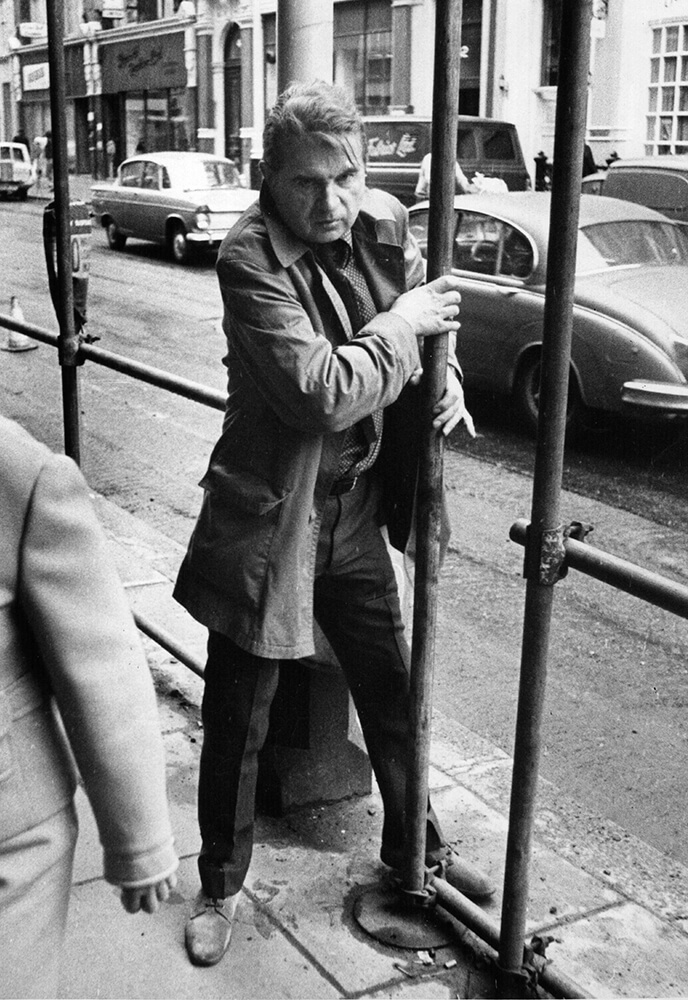
Francis Bacon drunk in Soho
A tale of sound and furies
Arts Performance, Sydney Star
Observer, Issue 747, 12 January 2005
The gayest event of the Sydney Festival, a sensual and hallucinogenic
exploration of the life of painter Francis Bacon, can be seen in previews from
this week.
The versatile Simon Burke plays the tortured gay artist, who on the eve of a
major Paris exhibition is faced with the suicide of his muse and lover George
Dyer.
Three Furies: Scenes From The Life Of Francis Bacon features strong
language and nudity, is directed by Jim Sharman and co-stars Socratis Otto as
The Model and siren Paula Arundell as Tisiphone.
Take the trip at the Sydney Opera House, Playhouse from 15 to 29 January. Phone
9250 7777 for bookings.
Confessions of an amoralist
SEBASTIAN SMEE | THE AUSTRALIAN | FRIDAY, JANUARY 14,
2005
LOOSENING their tongues is not always easy, but artists are generally much more
interesting on the subject of art than critics. No surprise there.
The 19th century produced a bonanza of artists’ writings about art, and books
such as Delacroix’s journals and the letters of both Cezanne and Van Gogh have
long been recognised as literary masterpieces.
They contain more than their matchless insights into the business of making art;
their ostensible frames of reference tend to dissolve as you read, so that you
find yourself reading not about art but about life itself.
In the 20th century, there were few records of an artist’s thinking more
influential than Francis Bacon’s interviews with the critic David Sylvester.
First published in 1975, the book which collected and reprinted these interviews
is now in its fifth edition, and has had a huge influence not only on artists,
but on novelists, playwrights, poets, musicians and film-makers across the
world.
It has also done wonders for Bacon’s posthumous reputation, leaving scholars and
curators with an almost endless source of ideas. Just last year, a huge
exhibition called Francis Bacon and the Tradition of Art was organised by the
Beyeler Foundation in Switzerland; the pairing of Bacon paintings with works by
Titian, Velazquez, Rembrandt, Goya, Van Gogh and Picasso were almost all
inspired by what Bacon said about those artists in the interviews.
Bacon the man is the subject of one of the Sydney Festival’s main
attractions — Stephen Sewell’s Three Furies: Scenes From the Life of
Francis Bacon, a play with songs.
Two films about Bacon are also being screened on Sunday as part of the
festival’s film program. One of them is the recording of an encounter between
Bacon and the poet William Burroughs in Bacon’s London studio in 1982. The other
is an interview with Bacon conducted by Melvyn Bragg for The South Bank Show in
1985.
It has to be said that by 1985 (he died in 1992) Bacon was almost interviewed
out. The Sylvester interviews in the book are published in nine parts. They were
taped conversations conducted privately or in studios for radio and television.
The last ones, conducted in the mid-’80s, are full of tiresome repetitions,
mannered formulations and barely veiled self-regard — a lot like Bacon’s late
paintings.
But the earlier interviews, like Bacon’s best work, are quite unforgettable.
They reflect on his own life ("I live in, you may say, a gilded squalor"); his
upbringing in Ireland; his love of gambling; his homosexuality (in one
extraordinary dialogue he discusses being sexually attracted to his father); his
fascination with photography and film; his distaste for abstract art; the
success and failure of his own work (he dismisses outright some of his most
famous paintings, including those of the human scream and the series after
Velazquez’s Pope Innocent X: "they’re very silly"); and the unique condition of
art today.
"You see, all art has now become completely a game by which man distracts
himself ... I think that is the way things have changed, and what is fascinating
now is that it’s going to become much more difficult for the artist, because he
must really deepen the game to be any good at all."
Bacon is especially good on other artists. His comments on Degas’s pastels and
on Velazquez’s sophisticated recording of the Spanish court ("You feel the
shadow of life passing all the time") have stayed with me ever since I first
read them as a teenager.
Bacon was adamantly amoral, and along with this came a contempt for all forms of
artificial security, including government welfare: "I think that being nursed
from the cradle to the grave would bring such a boredom to life ... But people
seem to expect that and think it is their right. I think that, if people have
that attitude to life, it curtails the creative instinct."
Although he was irreligious, one of Bacon’s prevailing obsessions was the art
historical theme of the Crucifixion. He famously likened the figure of Christ in
Cimabue’s 13th-century Crucifixion to "a worm crawling down the cross".
After a while you begin to suspect that a lot of what Bacon says is calculated
to shock. When he says: "You know in my case, all painting is accident. So I
foresee it in my mind and yet I hardly ever carry it out as I foresee it. It
transforms itself by the actual paint" — it sounds a brilliant and explosive
thing to say.
But examined more closely, it begins to feel jerry-built. To the extent that it
is true, isn’t it more or less true for all successful forms of creativity? And
then, to the extent that it is false, it is self-evidently so: a good painting,
as Bacon himself knew, is hard work, and it usually involves making thousands of
decisions, both conscious and instinctive.
Look at Bacon’s own work and one sees instantly that the best of it is highly
calculated and beautifully finished. Chance plays a crucial role. But he
exaggerates this role for rhetorical purposes.
No matter. As he said: "As existence in a way is so banal, you may as well try
and make a kind of grandeur of it rather than be nursed to oblivion."
David Sylvester’s Interviews with Francis Bacon is published by Thames & Hudson
Bacon Meets Burroughs and Portrait of an Artist: Francis Bacon screen at the
Dendy Cinema, Opera Quays, Sydney on Sunday.
Three Furies: Scenes from the Life of Francis Bacon is at the Sydney Opera
House, January 15-29.
Lifting
the veil on Bacon’s
dark world
Jim Sharman is driven by the power to transform, writes Angela Bennie.
ANGELA BENNIE | SYDNEY MORNING HERALD | FRIDAY,
JANUARY 14, 2005
Take the facts of the matter: it is the eve of the huge 1971 Paris retrospective
exhibition of the artist Francis Bacon’s work, the big splash that would have
him declared the greatest figurative artist of the 20th century. The French
president Georges Pompidou himself is to open it. Bacon’s muse and lover, George
Dyer, alone in their hotel room, dies in his own vomit and excrement sitting on
the toilet bowl in his underpants, apparently from an overdose of drugs and
feelings of rejection and abandonment.
Bacon goes on to paint a triptych depicting his lover in various stages of his
lonely death throes; and the Triptych of May-June 1973 comes to be regarded as
one of Bacon’s greatest works.
Tragedy? Soap opera? Pathos? Bathos?
Now take up a scalpel knife. No palette knife will do here. Scrape away these
facts from the surface of the matter and smear them instead across a word
canvas. Let them flow like runnels of paint across the canvas in contrapuntal or
syncopated rhythms of vivid feeling and sloughs of contorted flesh. Sideways
with the knife push them hard into the prose of ordinary, everyday speech, or
let them burst into verse patterns like those in Eliot’s The Waste Land or
Sweeney Agonistes’s lurid descriptions of "Birth, and copulation, and death.
That’s all the facts when you come to brass tacks".
Now mix in the wrath of the Greek Furies and the raw pain of Bacon’s grief — and
you might be close to the performing text of Stephen Sewell’s new play, which
opens on Wednesday night at the Opera House, as part of the Sydney Festival.
The work, Three Furies: Scenes from the Life of Francis Bacon, is described as a
play with songs, but this is too coy. Its music scheme is operatic and yet
vaudevillian; its drama stretches from Euripides to Joe Orton, and across all
boundaries into the howling soul of a Francis Bacon painting. It is definitive
Sewell, working in top gear.
"I believe he has created a new form," says Jim Sharman, who is directing the
new work. From someone who has experimented with just about every form the
theatre can offer — and has mastered all of them — this could not be hyperbole.
This is a fact, as far as Sharman is concerned. It is clear he is very excited.
Perhaps Sharman’s positive response is coloured by his own great interest in
Bacon’s work.
"Like others of my generation, I was greatly influenced by him," he admits. "He
showed me another way of looking at the world and of seeing the world. Though I
don’t necessarily share his point of view, he gave me a certain insight into the
way things were behind appearance. You draw back the curtain, as he did, and the
truth is there. Dark it might have been, but true it was."
This vision was generational, Sharman says. Bacon comes out of a postwar period
where half of Europe had been destroyed, the atom bomb dropped, the facts of the
Holocaust revealed.
"This is a time that produced such artists as Bacon and Beckett, Giacometti, and
Patrick White is in there, too," says Sharman. "Bacon describes himself as an
optimist about nothing. I sympathise with this. Behind the veil lies the truth,
the real. This is what he was after in his painting, the brutality of the fact."
Sharman first encountered Sewell’s work on Bacon when it was sent to him in very
early draft form, almost embryonic. Even then, he says, he recognised something
about it that made him sit up and take notice.
"I engaged with it straight away," Sharman says. "Apart from the fact that it
was about Bacon, it was the quality of the writing that impressed me. It was its
musicality. I recognised that this was Stephen aiming at something very
ambitious. I responded to that."
Sharman has always responded to the ambitious, you might say, especially to that
strain of it in himself. But perhaps he would not call it this. "I am not
frightened of the imaginative, no," he says instead, with some irony.
"So we began collaborating together on it, Stephen writing, me in the background
helping with the structuring, because some of it was very difficult, finding
ways to take the work where he wanted to take it.
"In the early stages of the collaboration, at first we approached each other
with mutual caution. But when he realised that I, too, wanted to row the boat
out, not bring it back to shore, be safe, that I wanted him to take it into
uncharted waters, that the whole collaborative thing took off. I would say,
’Let’s go, let’s go, let’s go out there!" And he would respond with this
wonderful writing, this remarkable shifting he is doing between great tragedy
and comic vaudeville playing at one and the same time."
Theatre, for both these artists, has never been small happenings in little
rooms. It is a great force for change and revelation; and both artists have
built careers on finding ways of harnessing that force to push the boundaries as
far out from the shore as they dared to go.
"The theatre of the Greeks and the Elizabethans, that is the kind of theatre I
like," says Sharman. "And Stephen has written a modern version of an Elizabethan
play; it has something of its vitality in its form. The notion that theatre has
the power to really transform, through laughter, tears, song, dance, whatever,
is at the heart of what I’ve ever done in the theatre.
"I have felt a sense of wrapping up lately. But this is the first thing for a
long time where I have felt this feeling of something happening that is
completely new.
"I find I rely very much more on instinct now, than thinking things out, as I
have in the past.
"Bacon, too, worked very much on the theory of chance, or what he called ordered
chaos."
Between them, Sewell and Sharman have delved deep in the realm of ordered chaos,
and found a way to lift the veil once more from our eyes, so that we may see a
truth, whether the brutality of fact, or its beauty, in the life of Francis
Bacon.
"Between life and death," Bacon once said, "it’s always been the same thing. It
is what it is. It is the violence of life."
There lies the fact of the matter.
Three Furies: Scenes from the Life of Francis Bacon,
a play with songs by Stephen Sewell, is at the Sydney Opera House Playhouse,
January 19-29.
Three Furies, The Playhouse
By Stephen Sewell
The Playhouse, Opera
House
January 19
Until January 29
Reviewed by Bryce Hallett,
Sydney Morning Herald, 21st
January, 2005
Stephen Sewell’s intoxicating cabaret of the great and difficult artist Francis
Bacon is exciting, absorbing and brilliantly performed.
At 90 minutes or so the biographical dissection fuses stark, ancient
storytelling forms with the conventions of domestic drama and the biting flavour
and force of German cabaret. It is audacious, angry, desperate, brutal, loving
and mad — a tragicomedy embracing the spirit by which Picasso and Bacon sought
to overturn the rules of appearance to fathom hard truths.
"We are born with a scream; we come into life with a scream, and maybe love is a
mosquito net between the fear of living and the fear of death," said Bacon. It
is this shimmering "scream" that Sewell and director Jim Sharman give potent
theatrical representation to as they probe the artist’s cravings, extremities,
verbal lacerations and his explosive relationship with his model, "muse" and
lover, George Dyer.
Three Furies unleashes the demons as though Bacon’s own rough, expressive,
butchered, distorted figures and forms have sprung on to the stage, not in any
literal sense, but in the repellent force and beauty of the language, and the
beat, growl and ironic tenderness of Basil Hogios’s compositions.
"The men I painted were all in extreme situations, and the scream is a
transcription of their pain," explained Bacon. No truer words were uttered given
the rage that spews forth from Simon Burke in his outstanding turn as the
brutally objective painter, drinker and gambler. It is one of Burke’s most
shining performances to date as he sinks deep into the demanding role by keeping
a cool head, projecting the essential vanity and communicating an abiding sense
of the detached, intense, lonely core where art is made.
Socratis Otto is excellent as the model — easy on the eye, witless, affectionate
and no match for his virtuosic creator. Dyer succumbs to excess and rejection,
and pathetically rails against being reduced to a carcass on his vivisector’s
table. Sewell masterfully tempers sheer nastiness and terror with an underlying
sweetness and recognition of human difficulties and flaws. With echoes of
Christopher Isherwood’s writings of Berlin and wartime bohemia as well as
reminders of Joe Orton and his destructive relationship with his lover Kenneth
Halliwell, Three Furies is wildly illuminating, dark and unsentimental. It is,
however, strangely moving in places, especially when Dyer, broken and abandoned,
commits suicide on the eve of Bacon’s 1971 Paris retrospective. He is found dead
on the lavatory of their hotel room while the "ageless" Anglo-Irish artist is
anointed the greatest figurative painter of the 20th century.
The paradoxes of mortality and fame, the sexual ambiguities, the tortures, the
yearning for liberation and love colour the world of Three Furies — a tale
amplified by the commentator/chanteuse, the fury Tisiphone, played with raunchy
vigour by Paula Arundell. Her singing and passion add wonders to the show,
although some of Hogios’s musical reprises are overdone and strain for effect. I
could have done without the "hoity-toity artist" refrain but it’s an effective
score on the whole and the lyrics are deft, biting and suggestive.
Three Furies has many of the showman Sharman’s hallmarks for vivid,
transformative theatre. Together with designers Brian Thomson (set), Alice Lau
(costumes) and Damien Cooper (lighting) he has produced a startlingly inventive,
austere vaudeville and drama. Like the best theatre it’s not the least bit dull
and persuades the audience to make discoveries of its own. It’s one of the
brightest and boldest bio-plays I’ve seen and ultimately a metaphor of life in
all its traumatic, monstrous, unknowable glory.
Sydney Festival:
Bringing down the house
|
|
|
THE
SYDNEY FESTIVAL WRAPS UP THIS WEEK, WITH TWO AUSTRALIAN
PRODUCTIONS
OFFERING BLEAK BUT BEAUTIFUL SPECTACLES.
TIM BENZIE REVIEWS.
TIM BENZIE |
SYDNEY STAR
OBSERVER
| THURSDAY 27 JANUARY 2005
A
tortured older gay artist, a cranky, pretty muse and a truly ugly
break-up.
It’s a familiar tale to those steeped in gay theatre, film and even
literature, and it took shape again this week with mixed results in Three
Furies: Scenes From The Life Of Francis Bacon by Stephen Sewell.
Sewell’s concerns are not homosexual but aesthetic, and Three Furies takes
the form of a Bacon painting: there are three doors forming a
“triptych”; a cow’s carcass forms an occasional backdrop and his lover’s
suicide visually echoes Bacon’s memento mori of the event, Triptych (May-June
1973).
Yet the work is painfully reminiscent of other excursions into
dysfunctionalia such as Prick Up Your Ears. Director Jim Sharman
too often steers the play towards dated, nasty hysterics. It’s difficult
– they were surely an ugly couple – yet dramatically there is little on
which to hang our empathy.
|
See it for the
acting. Simon Burke (The Painter) gives a dazzling, tightrope
performance, balancing amoral camp apathy with genuine horror,
and Socratis Otto (The Model) and Paula Arundell (Tisiphone) are
perfect satellites to his black sun.
Three Furies plays at the Sydney Opera House Playhouse
until Saturday 29 January. Phone 9266 4890 for bookings. |
|
The Playhouse, Sydney Opera House;
392 Seats; A$51 ($39) Top
BY MICHAELA BOLAND | VARIETY
| FRIDAY 28 JANUARY 2005
Only a few years ago, scribe Stephen Sewell couldn’t get a theatre gig in
Australia. The mainstage companies were not taking his calls, he’d outgrown the
fringe scene and his next step wasn’t immediately apparent. He dabbled in
screenwriting, most notably with The Boys, and dreamed up the idea of exploring
the lives of painters onstage.
So followed The Secret Death of Salvador Dali, produced most recently by Griffin
Theatre Company in 2004, and now, Three Furies, Scenes From the Life of Francis
Bacon a much bigger production backed by three leading Oz arts festivals and
harnessing the talents of The Rocky Horror Picture Show helmer Jim Sharman.
Compared with the super-conservative plays finding favour on Australia’s
mainstages this year, Three Furies occupies another realm, intentionally so. It
is a festival piece – bold,
explicit and challenging – and
as such should enjoy a fruitful life.
It is a terrifically textured work. Sharman visually references Bacon’s
paintings, with the three-doored set conjuring any number of his triptychs. The
drama centres on Bacon and his lover and model from 1964-71, the handsome,
uneducated petty criminal George Dyer, the inspiration for much of the painter’s
work during that period.
Simon Burke and Socratis Otto work well opposite each other.
Burke is the
short-tempered artist forced to repeatedly quash the whining demands of Otto’s
rough, dim-witted model, whose ambitions have grown to dwarf his talent.
Dyer begins to become annoyed that Bacon doesn’t include him in all aspects of
his life, such as inviting him to the glamorous opening nights of his
exhibitions. He also comes to believe Bacon’s painting of him are him; the
artist is forced to argue, in ever plainer terms, that it is his genius on the
canvas and Dyer should remember he is but a piece of meat, albeit a pretty one.
Sewell constructs a wonderfully complex Bacon, a man predisposed to haughtiness
and exasperated coolness, but not cruel. He is the product of an unstable
childhood shuttling between Ireland and England, with a disciplinarian father
inclined to horse-whip his offspring. That discipline finds its way into a
predilection for sadomasochism in later life.
A chanteuse as Greek chorus, Tisiphone (Paula Arundell) completes the trinity,
many of her lines sung in a raspy, Marianne Faithfull-with-less-range style.
The decision to forgo an intermission was wise. The spell of Three Furies, once
cast, would suffer from being broken.
Sets, Brian Thompson; costumes, Alice Lau; lighting, Damien Cooper; music, Basil
Hogios; production stage manager; Tanya Leach. Opened, reviewed Jan. 19, 2005.
Running time: 1 HOUR, 40 MIN.
FALSE FRIENDS
For Francis Bacon the camera
wasn’t a threat to painterly creation
but the perfect means to an end. A fascinating new book reveals
how the artist used the ‘significant falsehood’ of photography to
expose
brutally even those he loved most.
BY JOHN BANVILLE | THE
SUNDAY TELEGRAPH | SUNDAY 27 FEBRUARY 2005
All art is touched with the prophetic, and none
more darkly so than the art of Francis Bacon. There are two particularly uncanny
instances of Bacon’s involuntary ability to foretell the future in his
paintings. In Lying
Figure with Hypodermic Syringe (1963),
a study based on a series of photographs of Bacon’s friend Henrietta Moraes, the
syringe was added only because, the artist said, he wanted the effect of a
nailing of the flesh onto the bed’. Years later, however, Moraes, on her own
admission, did become addicted to drugs.
A more startling, and for Bacon surely a more
harrowing, case of artistic divination occurs in the triptych Three Figures in a
room, the left-hand panel of which depicts a broad backed naked man, seen from
behind, sitting on a lavatory. The painting was done in 1964, the year that
Bacon began an affair with George Dyer, an East Ender who moved on the fringes
of the criminal underworld. Dyer, a handsome, stocky, silkily brutal looking man
with an exciting edge of danger to him, became a rich source of images for Bacon
images which are among the most powerful in the Bacon oeuvre.
The figure in the triptych is most likely Dyer, for
it bears a strong resemblance to the subjects of other paintings of male nudes
in which Dyer is the named sitter. In October 1971, seven years after Three
Figures and barely 36 hours 1971 before one of the high points of Bacon’s
career, the opening in Paris of a huge retrospective at the Grand Palais, Dyer
committed suicide in the room he and Bacon were sharing at a hotel on the rue
des Saints Pères. The dead man was discovered slumped on the lavatory, a scene
hauntingly commemorated in the stark but beautiful Triptych
May June, 1973.
In the early 1930s, at the very start of Bacon’s
career as an artist, there was another, subtler presagement when the collector
Sir Michael Sadler, having purchased, by telegram, Bacon’s early Crucifixion (1933)
after seeing a photograph of it in an art magazine, went on to commission a
portrait from the young artist. He sent an X ray of his own skull as the model.
The result was another crucifixion scene, incorporating a representation of the
transparent skull; it was an apt image for a depiction of the agony on Golgotha
the place of the skull’ a subject to which Bacon returned often in the early
years of his career, and traces of which persist throughout his work.
This was the first occasion on which Bacon
transferred an image straight from the camera on to the canvas; it was not to be
the last. Indeed, from the early 1960s onwards he would paint portraits only
from photographs taken by specially commissioned professionals, especially the
Vogue photographer John Deakin, whose portrait studies Bacon considered ‘the
best since Nadar and Julia Margaret Cameron’. Bacon adopted this method at least
partly out of regard for his sitters, whose features he would distort to the
point of turning them into grotesques. ‘If I like them,’ he said, ‘I don’t want
to practise the injury that I do them in my work before them. I would rather
practise the injury in private…’
Bacon’s use of photography, either as a stimulus
for inspiration or as a source of subject matter, was not as extensive as that
of, for instance, Picasso, among whose effects after his death were discovered
several thousand photographs, many taken by the artist himself. But Bacon did
leave many photographs strewn about his studio in Reece Mews, Kensington, the
contents of which were donated to the city of Dublin by Bacon’s heir, John
Edwards; the studio, lovingly recreated in Dublin’s Hugh Lane Gallery, is a
Baconian room within a room, a kind of camera lucida that is viewed from the
back through spy holes fitted with lenses.
Amid the dense clutter of painting materials in the
studio bristling pots of brushes recall the patch of thorns into which the
agonised figure in the right side panel of the 1944 Three
Studies for Figures at the Base of a Crucifixion is
thrusting its hand there are countless smudged and scribbled on photographs,
including studies of Bacon himself by John Deakin, Peter Beard, Henri
Cartier-Bresson and others. Bacon drew on photographs literally, in many cases
as a means of capturing the world and people at moments of physical contingency
and stress. He frequently incorporated photographic images directly into his
paintings, most famously stills of the nurse’s face in the Odessa Steps sequence
from Eisenstein’s film Battleship
Potemkin, and colour reproductions of Velázquez’s portrait of Pope Innocent
X.
The Velázquez picture was one to which Bacon
returned repeatedly, and which he made the basis of what are perhaps his most
famous works, the ‘Screaming Popes’ series done at various stages from the 1950s
through to the early 1970s. He said of Pope Innocent X, ‘I became obsessed by
this painting and I bought photograph after photograph of it. I think really
that was my first subject.’
In light of this, it is an indication of his
preference for reproductions over originals that during a three month visit to
Rome in 1954, after parting from his lover Peter Lacy and when he had time on
his hands, he did not bother to go to see the Velazquez portrait, which he could
easily have done, since it is housed in the Palazzo Doria Pamphilj. This
omission was not unusual; there are many accounts of Bacon on his travels being
urged by the curators of this or that great gallery to come and view their
treasures always in vain. (It is surely not incidental to his preference for
reproductions over originals that Bacon’s own pictures, even the biggest and
most complex of them, retain a remarkable vividness and clarity of composition
even when reproduced in quite small photographs, as can clearly be seen in a new
study of his work, In
Camera, Francis Bacon: Photography, Film and the Practice of Painting, by
Martin Harrison.)
A central source of images for Bacon in his early
years as a painter was the weekly illustrated news magazine Picture Post. There
are some telling working documents in the Bacon archives showing images clipped
from Picture Post, notably, for instance, two shots of Goering and Goebbels,
both of them haranguing their supporters with mouth agape and an arm uplifted, a
pose which is endemic in Bacon’s work.
Bacon also kept by him throughout his working life
a small number of key books with photographic illustrations. One was a volume on
diseases of the mouth, with hand tinted plates, bought from a Paris bookstall in
the 1930s. Another was Positioning in Radiography by KC Clark, published in
1939, showing the correct ways in which to situate patients undergoing X ray
investigation. The artist plundered both these books for working material. A
further important source of images was the splendidly named Baron Albert von
Schrenck Notzing’s Phenomena of Materialisation, published in English in 1920.
It is a photograph from this last, of the medium Eva Carrière apparently
producing from her head an ectoplasmic image of a woman’s face, which is a
direct model for the figure in the left-hand panel of Three
Studies for Figures at the Base of a Crucifixion (1944),
the breakthrough work for Bacon and the one he considered his first real
painting.
Bacon was nonetheless indifferent to photography as
an art form and does not seem to have had any great interest in taking pictures
himself, although Triptych
March 1974 is directly modelled
on a Polaroid self portrait shot in a mirror. The few of his own photographs
that survive are surprisingly conventional; the portrait of his cousin Diana
Watson taken in the late 1930s, for example, and the pictures of his sister
lanthe Knott that he took in the 1960s. Yet in the triptychStudies
from the Human Body (1970) the
camera itself makes an appearance, a wonderfully bug eyed, minatory monster that
is a sort of parody of the human head.
It is Bacon’s revolutionary treatment of the head
that is his greatest overall achievement. No one, not even Picasso, had dared to
twist and mould the skull and the face as Bacon does, smearing them, scooping
great hollows out of them, turning them inside out, and yet always retaining a
likeness which, as in the case especially of George Dyer and Henrietta Moraes,
becomes more compelling and unmistakable the more violent the distortion. He
took his inspiration in this area from a wide variety of sources the scream of
the mother in Poussin’s Massacre of the Innocents he described as the greatest
human cry in art’ and even from antiquity. Consider, for instance, the striking
echoes of another of Bacon’s working documents, a photograph of an early
Egyptian bust of Pthames, in the Sketch
for Portrait of Lisa (1955).
Bacon’s picture, bathed in an uncharacteristic stillness, is a profound,
post-Freudian study which yet retains the classical poise of the ancient head or
at least the reproduction of that ancient head that was in part its inspiration.
Before 1962 Bacon used only trouvailles, the bits
and scraps chanced upon in illustrated books, or clipped from magazines, or in
the action studies of Eadweard Muybridge, or found in film stills. After 1962 he
began to commission photographs of models ‘to conform,’ according to Martin
Harrison, ‘with preconceived ideas for a painting.’ Important instances of such
commissioning are John Deakin’s pictures of Henrietta Moraes, Muriel Belcher and
George Dyer Deakin’s photograph of Dyer with his head turned violently to the
left, as if flinching from a blow or from the sight of something terrible,
recurs throughout the series of memorial pictures Bacon painted of his dead
lover in the 1970s, pictures which are perhaps the pinnacle of Bacon’s art.
Bacon always deplored the interpretation of his pictures as testaments of
philosophical angst, despite the extremities into which he forces his human
subjects. What he was after was the actual, and his people, no matter how
physically deformed they may be in his representation of them, are real human
beings.
Bacon may be considered to have set out
specifically to answer the confrontational question which many painters in the
19th century thought photography to pose: what is the best means of representing
quotidian reality? The advent of photography led some artists to despair. The
painter Paul Delaroche declared, as early as 1839, From today painting is dead.’
Even an eminence as lofty as Turner observed mournfully: ‘This is the end of
Art. lam glad I have had my day.’ They were wrong, of course, as Bacon among
others was to prove. True, painting lost to the camera something of its pre
eminence, particularly in documentary terms, and it was that something that
Bacon was determined to recoup. In that endeavour he utilised the photograph
itself, but only, in the critic John Russell’s fine phrase, as a ‘significant
falsehood’.
Bacon himself expressed his position with his usual
candour and eloquence: ‘I think of myself as a kind of pulverising machine into
which everything I look at and feel is fed. I believe that I am different from
the mixed media jackdaws who use photographs etc more or less literally or cut
them up and rearrange them. The literalness of photographs so used even if they
are only fragments will prevent the emergence of real images, because the
literalness of the appearance has not been sufficiently digested and
transformed. In my case the photographs become a sort of compost out of which
images emerge from time to time. Those images may be partly conditioned by the
mood of the material which has gone into the pulveriser.’
It was the real that Bacon was after, and he
concentrated his quest in a lifelong interrogation of the human form. What is
remarkable in Bacon’s work is not the deformities he inflicts upon his subjects
or the sense of desperation and violence they express, but the extraordinary
sense of human presence that he achieves. These people, twisted, as it might
seem, almost out of recognition, are fleshy, palpable not nude but stark naked
and graspable in the extreme painterly quality of their appearance. ‘Bacon’s
version of realism,’ Harrison writes, ‘depended on live, full pigment. He did
not paint simulacra of photographs, but he appropriated their transformative
charge to disrupt European cultural traditions, to dissolve past into present.’
That dissolution is a large part of Bacon’s greatness, the alchemical process
which makes him one of the quintessential artists of our desolated and blood
boltered time.


In
Camera, Francis Bacon: Photography, Film and the Practice of Painting (Thames
& Hudson, £35)
by Martin Harrison, published on 7 March.
An ’Arena’ programme on Francis Bacon will be broadcast on 19 March at 9pm on
BBC 2
FRANCIS BACON: LOST AND FOUND
Martin Harrison analyses the information that has recently come to light
about paintings that Bacon destroyed, mutilated or radically altered.
What do such incidents reveal about Bacon’s attitude to his art?
MARTIN HARRISON | APOLLO | ISSUE 517
|
VOLUME 161 | MARCH 2005
When Francis Bacon died, in 1992, the floor of his studio in Reece Mews, South
Kensington, was left in the state that had already become sedimented in the
Bacon mythology, strewn with tattered magazines and books, and creased, torn and
paint-spattered photographs (Fig. 1). Painstakingly excavated and transferred in
its entirety in 1998 to the Hugh Lane Gallery in the city of Bacon’s birth,
Dublin, the studio is now preserved for study, and the cataloguing of its
contents is enabling some of the obfuscation surrounding the relationship
between Bacon’s source material and his painting procedures to be penetrated.
Elsewhere, further previously unidentified artefacts continue to emerge. Among
these documents is a handful of photographs that recorded, sometimes
incidentally, paintings that Bacon subsequently either altered or destroyed:
these, too, are proving to be invaluable in illuminating certain unresearched
aspects of Bacon’s practice.
Six months after Bacon’s death, his paintings were hung together with
Picasso’s Crucifixion (1930), and some of the Crucifixion drawings Picasso made
in Boisgeloup in 1932, in the exhibition ‘The Body on the Cross’ at the Muse
Picasso, Paris. Intrigued and delighted at the prospect of sharing a space with
the artist who, more than sixty years earlier, had inspired him to take up
painting, Bacon agreed to be interviewed by Jean Clair for the catalogue of the
exhibition. He told Clair of the profound impression made on him in 1971 when
Valerie Eliot published her late husband’s The Waste Land alongside the
extensive corrections and deletions made by Ezra Pound to the original text.
Although Bacon remained staunchly independent of any established literary or
artistic circles, next to Picasso the poetry of Aeschylus and of T.S. Eliot
inspired more of his paintings than the work of any artist. ‘Pound made it ten
times better’, (1) commented Bacon on the excisions and alterations to Eliot’s
poem; he frequently reiterated his regret at not having a comparable guru figure
to tell him what to discard, although he admitted that: ‘Of course, it’s true
there are a very, very few people who could help me by their criticism’.(2)
It is hard to imagine Bacon being even remotely receptive to such trenchant
advice, however distinguished its author. On the other hand, he was a ruthless
self-editor, at least as hard on his own efforts as on those of his
contemporaries. He was as scathing in condemnation of his widely-admired
‘Popes’, for example, as he was about the paintings of Jackson Pollock (‘that
dribbling of paint all over the canvas just looked like old lace’) or Mark
Rothko (‘rather dismal variations on colour’); (3) even when praising the
masters he most admired – Velazquez,
Rembrandt, Seurat – he
seldom omitted to qualify his approbation.
Dissatisfaction with his own paintings usually resulted in their destruction.
Indeed, he was so ruthless that from the first fifteen years of his career,
between 1929 and 1944, only fourteen paintings and drawings survive.
Subsequently, as Bacon came under increased pressure from his dealers to fulfil
scheduled exhibition dates, it is probable that he jettisoned proportionately
less of his work, but even towards the end of his life either he, or more
usually a friend, maintained the ritual slashing with a knife-blade of rejected
canvases.
Today, notwithstanding these depredations, Bacon’s oeuvre comprises nearly six
hundred paintings – sufficient,
it might be thought, to represent a great artist. How, then, could the urge be
justified to resurrect works that Bacon presumably wished to remain buried?
Firstly, Bacon, unlike most artists, did not make preliminary drawings,
although, consistent with the stimulation he found in literature, he frequently
compiled hand-written lists of ideas for paintings. Apart from his mass-media
source imagery and a handful of vigorous but fairly schematic compositional
sketches dating from around 1960, (4) there is scant surviving material that
might elucidate the evolution of his paintings. Secondly, even Bacon himself
regretted having destroyed certain paintings, in particular one of his earliest
‘Popes’, Study after Velazquez (1950). He had intended to send the painting to
the Festival of Britain exhibition ‘60 Paintings for 51’, but withdrew it and – or
so he misremembered later – destroyed
it. Included in John Rothenstein and Ronald Alley’s 1964 catalogue raisonne of
Bacon as a ‘destroyed picture’, it was in fact removed from its stretcher and
stored away at the Chelsea artists’ suppliers Bacon used. It was not until 1996
that it was rediscovered.
David Sylvester both confirmed the genuineness of Bacon’s expressions of regret
at losing the painting, and gave his own opinion that it was the ‘finest “Pope”
ever’, (5) Bacon’s dealers, Hanover Gallery and Marlborough Fine Art, arranged
as a matter of course for his completed paintings to be photographed, but those
he abandoned were, understandably, seldom recorded. Study after Velazquez was an
exception, no doubt reflecting Bacon’s ambivalence about the painting. But
fortunately, a few of the definitely lost works were captured, partly
fortuitously, by the camera, and in somewhat different circumstances.
In 1962, the first of two Tate retrospectives held in Bacon’s lifetime
substantially raised his public profile. Gregarious as a mainly nocturnal
drinker and gambler, by day he was reclusive and solitary as a painter. There
was an increasing demand for him to be photographed and filmed in his studio,
but he always took the precaution of turning the painted side of his canvases
away from the lens. Among his circle of friends, however, were several
accomplished photographers, notably his fellow Soho-ites Dan Farson and John
Deakin. After 1962 Bacon rarely painted from life. Instead he commissioned John
Deakin to document the friends who became the models for many of his portraits
during the next two decades – Lucian
Freud, George Dyer, Henrietta Moraes and Isabel Rawsthorne. Probably operating
under Bacon’s direction, Deakin used a Rolleiflex rollfilm camera attached to a
tripod. Other photographers had evolved a modus operandi with hand-held 35mm
cameras that was more rapid, informal and relatively non-intrusive: having been
photographed by the doyen of this technique, Henri Cartier-Bresson, and
photojournalists such as Larry Burrows, Bacon was accustomed to the quick fire
of the miniature format camera shutter. The wildlife photographer Peter Beard,
whom Bacon met in 1966, became a close friend and the subject of more than
twenty of Bacon’s paintings between 1975 and 1980. He provided most of the
self-portrait photographs of his head from which Bacon painted his portraits,
and he in turn photographed Bacon constantly.
On his frequent visits to London, Beard’s diaristic camera became a natural
accompaniment to their socialising, and evidently Bacon was relaxed enough to
allow Beard to continue photographing while his paintings remained visible. At
least two of the paintings that can be observed in the backgrounds of Beard’s
photographs were, it transpired, eventually destroyed by Bacon. Beard’s black
and white images are, therefore, the sole visual evidence of two compelling, but
in several respects atypical, paintings.
The first of these paintings, George Dyer with camera, is visible in Figure 5.
Painted c. 1969, it depicts Dyer, Bacon’s lover and muse, apparently
metamorphosing into an organic version of a bulky, primitive, large-format
bellows camera which is supported by a rather perfunctory tripod. This early
example of Bacon’s referencing of photographic equipment was an overt indication
that photography was, by this time, established at the core of his practice; in
the right-hand panel of the triptych Studies from the human body (1970), Bacon
depicted himself as the voyeuristic operator of elaborate photographic
paraphernalia. The attitude of the squatting figure in George Dyer with camera
was almost certainly developed from the conflation of two (or more) of John
Deakin’s photographs of George Dyer: a profile head-shot taken in Soho (Fig. 3)
and a seated, cross-legged semi-nude done in the Reece Mews studio (Fig. 4). A
striking variant of this pose can be seen in the left-hand panel of Two figures
lying on a bed with attendants (1968), the painting recently acquired by Tate
Britain on extended loan from Tehran Museum of Contemporary Art. Bacon continued
to explore this configuration until at least 1988, latterly transposing John
Edwards’s head for Dyer’s, with Edwards’s portrait identified as the nominal
subject. In most of the paintings in which Dyer’s identity is reliably
established he is represented as naked, child-like and vulnerable; yet despite
him wearing a collar and tie in George Dyer with camera (a typically Baconic
‘reversal’ tactic) the treatment was, on this occasion, among the most visceral
and animalistic of the series based on this pose, and the paint is applied with
a bravura violence and spontaneity in slashing, sweeping brushstrokes.
Since Bacon is unlikely to have been dissatisfied with the dynamic painting of
the figure in George Dyer with camera, it could, therefore, be conjectured that
there was a formal aspect of the painting that, in his judgment, had failed to
coalesce. Given that the painting appears to have been conceived in his standard
78 x 58 inches (198.1 x 142.3 cm) format, and considering the shape and position
of the arcing ‘board’ device on which the figure was supported, it is likely to
have been intended as the left-hand panel of a planned triptych; it is
comparable with the two outer wings of Triptych in memory of George Dyer (1971),
which develops similar imagery and may represent the further development of a
related composition, or alternatively Bacon’s resolution of the original idea of
1969.
By comparison, The last man on earth (c. 1974), a painting recorded in several
of Peter Beard’s photographs of Bacon moving around the studio (Fig. 6), appears
to have been both formally and conceptually completely resolved. The lone figure
is loosely based on Eadweard Muybridge’s serial photographs of a man throwing a
discus, although Bacon’s quoting of pictorial sources was seldom straightforward
and he may also have had in mind a classical discobolus (he would have known the
copies in the British Museum and the Terme Museum, Rome) and Rodin’s bronze La
grande ombre. Since the man’s pose resembles that of the figure in the centre
panel of Triptych March 1974, the painting may be another instance of a panel
that was ultimately rejected from a triptych.
Another factor in Bacon’s rejection of The last man on earth may have been that
he considered the depiction of existential isolation, of Nietzschean solipsism,
too literal in its poignancy. Apparently the painting (was this also an instance
of the older pictorial sources having been conflated with a modern image of a
cricketer about to field the ball?) evoked for observers either the Apollo space
mission’s moon landing, or a scene from Stanley Kubrick’s film 2001: A Space
Odyssey, in which case it would have approached dangerously closely to what
Bacon professed was his greatest aversion, to illustration. He often demeaned
paintings that illustrated a passage from a literary text, citing, for example,
Fuseli’s scenes from Shakespeare’s plays. Bacon strove to avoid the kind of
excessive pictorial data that threatened to impose a linear narrative on his
paintings, although the extent to which he achieved the elimination of
narrativity has recently become a matter of debate among art historians. (6)
Nevertheless, his optical blurring, his strategies of spatial and temporal
disjunction, tended to represent an action that was out of time, that had no
before and no after.
The painting now known as Portrait of a dwarf (1975, private collection,
Australia) is, uniquely, in a narrow upright format, the result of Bacon having
eliminated two-thirds of the original canvas (Figs. 7 and 8). Formerly, the
dwarf occupied the role of what Bacon called an ‘attendant’; these attendants
were either voyeuristic, or paradoxically disengaged, witnesses of a horrifying
spectacle, or of sexual intercourse. In Portrait of a dwarf, the homunculus
stares back implacably at the viewer, returning our gaze while apparently
indifferent to the upturned, writhing nude male in a glass cage to his left.
It is interesting to speculate on Bacon’s motives for excising the caged figure.
He could have envisaged the achondroplastic man as representing Pygmalion and
the convulsive figure as (an albeit distinctively Baconic) Galatea: if so, again
he possibly considered the allusion to the Greek myth as too specific, too
illustrational. He had notoriously inverted Cimabue’s Crucifixion, and may have
been performing a similar rotation in a regendering of the figure of Galatea in
Jean-Leon Gerome’s Pygmalion and Galatea (Metropolitan Museum of Art, New York,
c. 1890). The dwarf’s seated, cross-legged pose recalls both Velazquez’s A dwarf
sitting on the floor (c. 1645, Prado Museum, Madrid) (Fig. 9) and the ancient
Egyptian statue of Seneb, the chief of the palace dwarves, in the National
Museum, Cairo; Bacon, who considered Egyptian art to have been mankind’s highest
cultural achievement, had visited Cairo in 1951 and is likely to have seen the
figure.
Bacon’s cavalier cropping of canvases is evidence of his uninhibited attitude
towards the picture field, another aspect of his technique that is paralleled in
photography, in the facile enframings associated with the camera and with the
darkroom. When questioned about his ubiquitous ‘cages’, the internal frameworks
he placed around many of his figures, Bacon liked to pass them off simply as
devices for seeing ‘the image’ more clearly. Critics have essayed more profound
interpretations, but they bear a close resemblance to the Chinagraph markings
that photographers employ on their contact prints to indicate the precise area
of the negative that requires enlargement. On a visit to Bacon’s studio in 1955,
his patrons Robert and Lisa Sainsbury found him about to destroy a ‘Pope’
painting with which he was dissatisfied: when they remonstrated he produced a
razor blade, cut out the central portion of the canvas (evidently he thought the
head not unsuccessful), and presented it to them; as Study (Imaginary portrait
of Pope Pius XII), 1955, it is now in the Sainsbury Centre for Visual Arts.
A necessarily approximate demarcation can be imposed in Bacon’s oeuvre around
1968, after which date he sought to pare down his paintings, rationalising their
spatial organisation and working with a more concise vocabulary of forms. It is
probably not coincidental that this transition occurred at a time when
Minimalism occupied a central position in art practice and critical theory; the
acceptance at face value of Bacon’s protestations of cultural isolation has
belatedly come under question, and rightly so, since at no time were his
paintings created in an ahistorical vacuum. The broadly applied and thickly
impasted paint of his ‘Van Gogh’ homages in the 1950s invite comparison with the
bold painterliness of his friend Karel Appel (and another contemporary, Asger
Jorn) as much as that of Chaim Soutine, whose techniques Bacon is known to have
revered. Similarly, in the 1970s, the densely absorbent black grounds he adopted
for his posthumous tributes to George Dyer may well have been indebted to the
looming negative swathes of paint in Robert Motherwell’s Spanish elegies.
When Bacon embarked on a new painting, he generally had a rough idea of its
overall structure in mind: his method was to paint the ‘image’ first — that
is, the human form(s) — and
the ground afterwards. While the success of the ‘image’ depended, for him,
primarily on chance elements related to the application of paint, the flat
backgrounds, ostensibly at least, presented less of a challenge. Bacon’s
deprecation of abstract art lends support to this, yet there is abundant
evidence that he regarded the symbiosis of image and ground as important, and
devoted considerable attention to the problem: he needed his ‘chaos’ to be
‘deeply ordered’. Among the ceaseless modifying and perfecting of these
‘abstract’ backgrounds, a typical example is the small triptych Three studies of
George Dyer (1969, private collection), the grounds of which were yellow in
their first state but were altered soon after to dark blue, before Bacon finally
rendered them in their present mauve-pink.
Bacon’s elimination of superfluous pictorial elements can be observed in the
history of a triptych he painted in 1974, its panoramic sweep and high horizon
line inspired by Degas’s Beach scene (?c. 1876, National Gallery, London). In
the first version of the centre panel of the triptych, Bacon incorporated an
unsettling, confrontational figure that peered back imperiously at the viewer
through schematic binoculars. This image again reversed the role of his
attendants or witnesses; each of the three panels represents a back view of the
naked George Dyer, Bacon’s then recently deceased lover, and the viewer’s gaze
was implicated in the act of voyeurism. Whether Bacon regarded the figure with
binoculars as triggering an unwanted narrative, or as formally extraneous, after
pondering the question for three years he recalled the central panel to his
studio and painted out the figure, leaving uninterrupted the ‘abstract’
foreground across all three panels. Completed as Triptych 1974-77, the painting
has remained in this simplified form (Figs. 10 and 11).
The figure eventually painted out from Triptych 1974-77 was probably based on
Eadweard Muybridge’s photographs Man falling prone and aiming rifle; considering
Bacon’s interest in avifauna, especially birds of prey, an image of a stalking
birdwatcher may also have been in play. Manifestly, Bacon’s intervention into
the Degas painting transcends its sources, but typically, besides the borrowing
from Degas, the triptych also referenced images he had kept in his archive – possibly
since the 1930s – from
Amedee Ozenfant’s Foundations of Modern Art and Baron von Schrenck Notzings’s
Phenomena of Materialization. In Schrenck Notzing’s book, the spectral images of
seances that fascinated him are comparable with the vaporous effects present in
many of Bacon’s paintings, and of the traces of figures in movement through
space and time. In the photographic darkroom, one can imagine he was intrigued
(he would have been familiar with this process, if not at first hand then from
its popular appropriation in movies) by the gradual revelation of the latent
image in the developing tray. In a sense, he brought about a reversal of this
process when he trapped the likeness of a ’sitter’, only to deface it by
smearing off the paint he had applied. Appearances are established then denied:
Bacon the atheist was not about to offer either hope or closure.
One way in which Bacon demonstrated his receptiveness to the operation of chance
was by his alertness to the way photographs would emerge from the chaotic piles
of studio detritus, like organisms with an independent existence. An habitual
gambler, no doubt he appreciated the way in which these suggestively accreted
documents would reappear, transformed and reordered like a shuffled pack of
playing-cards. In the background of the left-hand panel of Three
portraits: Posthumous portrait of George Dyer; Self-portrait; Portrait of Lucian
Freud (1973) he painted, as though it were pinned to the wall, a tightly cropped
black and white photograph of his own head. The source photograph he used (Fig.
12) was only rediscovered recently, complete with pinholes and random flecks of
paint, in colours corresponding exactly to the palette of the 1973 triptych.
Fifteen years later, in Study from the human body and portrait (1988) (Fig. 13),
Bacon reused this photo-portrait of himself, and on this occasion embraced the
accidental marks that he had made on the original source photograph. Thus the
studio floor is revealed as his personal genizah, an archive of talismanic
images that on the one hand he allowed (or encouraged) to become worn and
distressed, while on the other he preserved as bearers of the marks of time.
Bacon’s synthesising of ‘lens-based’ imagery has been public knowledge for more
than fifty years. It is important to recognise, however, that throughout the
first half of his career (that is, until 1962) the images that suggested ideas
for paintings were seldom ‘original’ photographic prints but almost invariably
mechanical reproductions he encountered in books or magazines. Long before
photography’s acceptance as an art form, and its penetration of Britain’s
museums and art galleries, Bacon acknowledged that photographs (including
photographic reproductions of works of art) had informed some of his decisive
paintings. He came to regret this openness, however, believing it had caused his
aims to be misapprehended. His cautiousness was not without justification: only
six years ago, when the Barbican Arts Centre staged ‘Picasso and Photography’,
the survey was greeted by sensational headlines such as ‘Picasso Exposed’, (7)
as though a fraud had been uncovered.
Like Picasso, Bacon sought neither photorealism nor photographic verisimilitude,
nor were his paintings merely the sum of their sources. Latterly, therefore, he
ensured that a much tighter control was kept over the identity of the stimuli he
was prepared to divulge. Since he also disliked appending fanciful titles to his
paintings, most were kept deliberately vague and non-specific; a rare exception
was Triptych inspired by T.S. Eliot’s poem ‘Sweeney Agonistes’ (1967, Hirshorn
Museum and Sculpture Garden, Smithsonian Institution, Washington DC), but
despite the fact that the scenes in the outer panels clearly refer to the poem,
Bacon insisted that the title was imposed by the Marlborough Gallery and
pretended there was no connection with Eliot’s text. He effectively censured,
too, the iconological study of his paintings, initially by denying their
iconographies. Most critics acquiesced in this denial of content, and those who
transgressed risked his non-cooperation regarding reproduction rights; their
enforced collaboration in this information clamp-down helped to ensure that
Bacon’s paintings, and his procedures, were investigated and understood largely
on the terms he dictated, or of which he approved.
Bacon described his paintings of the human body as a balance of order and chaos,
of preconception and chance. Yet his unique path through figuration in the
twentieth century failed to resonate with the guru of American Abstract
Expressionism, Clement Greenberg, who perceived it as embodying ‘an affliction
of the English ... the Grand Manner’. (8) Greenberg appears to have wilfully
misread the interventions onto works by Michelangelo, Caravaggio or Ingres, as
though Bacon had slavishly emulated these masters. On the contrary, Bacon’s view
of the hopelessness of the human condition precluded the aspiration to anything
as uncomplicatedly elevated or ennobling as grandeur. He aimed to subvert as
much as to celebrate art-historical traditions, and sought to redefine issues of
representation of the human form. Although the specifics of his image sources
are ultimately secondary to the syntheses Bacon performed on them, and should
not be over-stressed, the essential modernity and rich complexity of his
figurative idiom depended to a considerable extent on its mutable dialogue with
photography’s engagement with transience, mortality and memory.
(1) Jean Clair, 'Pathos and
Death', in G.Regnier et al. (ed.), The Body on the Cross, exh. cat.,
Musee Picasso, Paris, 1992, p. 136.
(2) David Sylvester, Interviews
with Francis Bacon, London, 1997, p. 20.
(3) David Sylvester, Looking
Back at Francis Bacon, London, 2000, p. 246.
(4) Most of the surviving
sketches are in Tate; see: Matthew Gale, Francis Bacon: Working on Paper,
London, 1999.
(5) Sylvester, op. cit. in note
3 above, p. 44.
(6) See especially Ernst van
Alphen, Francis Bacon and the Loss of Self, London, 1998.
(7) The Sunday Times:
Culture, 7 February 1999 (front cover).
(8) Clement Greenberg, 'Autonomies
of Art', in The Edmonton Contemporary Artists Society Newsletter,
vol. III, issue 2, 1996.
Martin Harrison is the
author of In Camera: Francis Bacon, Photography, Film and the Practice of
Painting, published by Thames and Hudson this month.
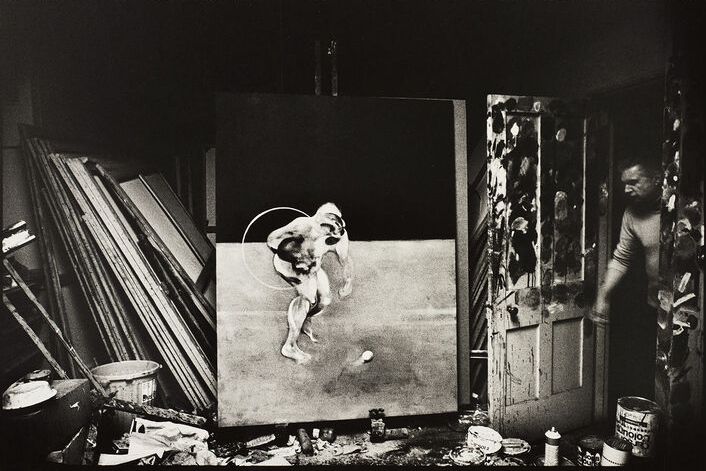
Francis Bacon
entering his studio
by Peter Beard (b. 1938), c. 1974.
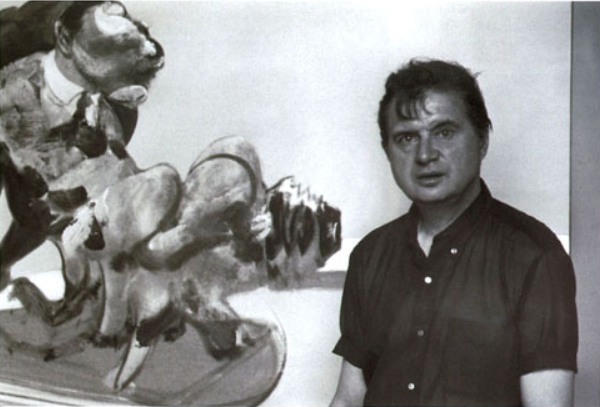
Bacon standing by
‘George Dyer with
Camera’,
1969, by Peter Beard
The tail wags the gods
Two shows about Bacon and Picasso have opened simultaneously
in different parts of the same Paris museum. Why?
BY MICHAEL GLOVER |
EXHIBITIONS |
THE TIMES |
WEDNESDAY, MARCH 02, 2005
NEVER mind The Da Vinci Code, the shenanigans behind the scenes of a new
exhibition which makes connections between the work of Francis Bacon and Pablo
Picasso make Dan Brown’s thriller look as intricate as Enid Blyton.
The Bacon/Picasso show, which opened today at the Picasso Museum in Paris, is
radically different from the one which it had planned — because of a dark,
unexpected intervention by the Francis Bacon estate in London.
It is not the first time the estate has indulged in fisticuffs with the art
world. In 2002 a long-running and acrimonious dispute between the estate and
Marlborough Fine Art, Bacon’s dealer for 34 years, was brought to an abrupt end,
with Marlborough claiming victory.
This time the dispute is over authenticity of material, and the extent to which
any museum has a right to be in charge of the staging and promotion of its own
exhibition — if that exhibition happens to include works by Francis Bacon, at
any rate.
The saga began last October, when the Picasso Museum was given a suitcase full
of miscellaneous images and books from Bacon’s studio at Reece Mews in South
Kensington. This was material from the Barry Joule archive, the greater part of
which had been donated to the Tate Gallery and the Hugh Lane Gallery in Dublin.
An examination of these documents by experts at the Paris museum demonstrated
once again how obsessed Bacon had been by the person and the work of Picasso.
Here were images of Picasso and his works, many torn out of magazines, on which
Bacon had drawn, painted and scribbled. The gift also included books owned by
him, such as a hardback edition of Brassaï’s Picasso and Company, published by
Thames and Hudson. The book is full of Bacon’s feverish tamperings — he cut out
and superimposed one image upon another; he modified photographs; he annotated.
The museum’s intention was to embed some of these Picasso-related objects into
the show, and to publish a catalogue which would knit together its exhibition of
original works by Bacon and Picasso with its own research into the material from
the studio.
Then, according to a Picasso Museum spokesman, who asked to remain anonymous,
“about two months ago” the Francis Bacon estate forbade them to do so. The Joule
material could not be shown alongside Bacon’s paintings because, argued the
estate, it had not been properly authenticated by experts from the Tate Gallery
in London. Until that happened, it should not be shown at all. Other works by
Bacon in the show come from a variety of sources: the Tate, the Pompidou Centre,
Marlborough International Fine Art and various private collections. The fact
that they were owned by these institutions meant that the estate had no power to
prevent their being loaned out to other museums.
The ruling meant that the catalogue could no longer be published in the form
that the museum had planned, because it now had to exclude all the research into
its own archival material. But after The Times contacted the Bacon estate it
relented on two important issues; first it scrapped its insistence that the
museum must publish the catalogue only in French — now English is also deemed
acceptable — and then it revoked a decision to ban the publication of all Bacon
images from the show alongside reviews.
Nonetheless, in what could be a financially damaging move, the museum is
forbidden to sell its catalogue anywhere other than in its own bookshop.
Although the estate, for which the sole executor is Professor Brian Clarke,
cannot prevent a museum such as the Tate lending its works to another museum, it
can intervene when visual representations of those same works is involved, such
as in the production of a catalogue.
So the Picasso Museum fought a rearguard action. It went ahead with the official
catalogue of the exhibition, but it also produced a second catalogue about its
own Barry Joule archive. Instead of abandoning all plans to display the Barry
Joule material, it decided to devote a room to it in the basement, a long way
from the temporary exhibition devoted to Bacon and Picasso. So two shows about
Bacon and Picasso have opened simultaneously in the same museum.
And why has the estate behaved in this way? A spokesman close to the Picasso
Museum alleges that it is all, ultimately, down to power and money. If the
estate flexes its muscles in this way, lenders will ultimately be intimidated
into feeling that all Bacon-related transactions will need to go through the
estate in order to obtain some kind of official approval.
Olivier Lorquin, director of the Musée Maillol in Paris, which last year staged
an exhibition of Bacon’s works called The Sacred and the Profane, has had
similar problems with the estate recently. “The estate made life very difficult
for me,” he says. “They refused to let me do a co-edition of the catalogue. They
wanted me to print only 2,000 copies — I eventually was able to do 6,000 — and
at first they would let me sell it only in my own museum bookshop. They also
have the right to dictate in what language the catalogue appears. All this is
quite contrary to the wishes of Bacon himself, in my opinion. I had to go to
London and be very diplomatic. I guess I was lucky too. It was très
douloureux. I do think that it is a question of power and greed ...”
The Bacon estate was first approached for an explanation of its alleged
behaviour. Why was there no Barry Joule material in the show at the Picasso
Museum? The public had been led to believe — see this month’s Art Newspaper, for
example — that it would be a part of the show. An estate spokeswoman had no
comment. And why was the catalogue available in French only? Again, no comment.
What else could be at issue here? Close scrutiny of the show, painting by
painting, print by print, reveals to what an extraordinary extent Bacon was
influenced by Picasso — at times you are more than tempted to describe the work
as derivative. Could this be an unspoken reason for all this unwelcome
intervention? Would Bacon himself be less bankable if it became more commonly
known that he owed quite so much to a greater master than himself?
Artist’s ‘lie’ over meeting gay lover
ANTHONY BARNES
|
NEWS
|
THE INDEPENDENT
ON SUNDAY
|
SUNDAY 13 MARCH 2005
It is one of the most
celebrated meetings in 20th-century art. But new testimony casts doubt on
the mythical first encounter between Francis Bacon and his young lover
George Dyer, who was the subject of dozens of his works of art.
Bacon himself claimed he
caught Dyer burgling his apartment in the early 1960s, a version of events
related in the Bacon biopic Love is the Devil starring Derek Jacobi
and Daniel Craig. Not so, says Dyer’s brother Lee, who broke his silence in
an interview for a major examination of Bacon’s life to be screened on BBC2
on Saturday. They were more likely to have met in a gay club, but the
burglar story was concocted to protect Dyer’s mother from the truth.
Lee Dyer said: "I think
personally he may have made that story up because he didn’t want to say to
my mother how he’dmet him. I was told a little while ago that he met him in
a club.
COVER STORY
Demon lover
Screaming popes,
tormented faces – there’s a lot of unexplained anguish in Francis Bacon’s
paintings, says
Philip Hoare.
Can new revelations
about his torturous relationships shed any light on the subject?
PHILIP HOARE
|
ARTS BOOKS CULTURE
|
THE INDEPENDENT ON
SUNDAY
|
SUNDAY 13 MARCH 2005
Can new revelations about his torturous relationships shed any light on the
subject? Sometime in the mid-1980s in South Kensington, I saw Francis Bacon
hopping on the back of a bus. I stared in recognition, nonplussed at the
apparition, in the flesh, of Britain’s most famous living artist, riding on
public transport. I suppose I must have gazed too long, for his eyes stared
back, out of a high-coloured, slapped cherub’s face. Was he angry? Or was it a
come-on? I’m still not quite sure. But in retrospect, that brief encounter seems
symbolic of Bacon’s life: so public a figure, so private a person; as
paradoxical as his art.
Francis Bacon was as recognisable as his paintings. His petulant yet impassive
features, his aristocratic rough-trade dress sense and youthful figure were
memorably described in Cecil Beaton’s 1960 diary as
“incredibly
lithe for a person of his age and occupation, muscular and solid. I was
impressed with his
‘principal
boy’
legs, tightly encased in black jeans, with high boots. Not a pound of extra
flesh anywhere”.
As the art critic Martin Harrison observes, Bacon was part Edwardian aristocrat,
part teddy boy:
“Even
in his 80s it was difficult to predict whether he would attend a function
wearing a leather coat or a hand-tailored Savile Row suit.”
And Michael Wishart, the artist, marvelled at Bacon’s adept adaptability when it
came to make-up:
“He
applied the basic foundation with lightning dexterity born of long practice. He
was more careful, even sparing, with the rouge. For his hair he had a selection
of Kiwi boot polishes in various browns. He blended them on the back of his
hand, selecting a tone appropriate for the particular evening, and brushed them
into his abundant hair with a shoe brush. He polished his teeth with Vim.”
It was as if the artist were making up to enter his own drama.
Bacon’s appearance was a counterpoint to the controlled violence of his works;
where his paintings reflect an apocalyptic century, his painted face seemed to
give much less away. Only now, 13 years after his death in a Madrid hospital, is
the private life of the artist becoming public as two new studies finally bring
us face to face with the real Francis Bacon. The first of these, a new book
called Francis Bacon in Camera by Martin Harrison,
focuses on the source material that inspired the painter’s work
–
from the 19th-century photographs of Eadweard Muybridge to Sergei Eisenstein’s
film Battleship Potemkin
–
and illustrates how his use of such material was startlingly modern. What also
comes as a revelation is the proof of how much Bacon drew on the popular culture
of his time.
But the second study, a new BBC film called Francis Bacon’s Arena
made by the Bafta-award-winning team of Adam Low and film editor Sean Mackenzie,
goes even further in its biographical reach. What the film uncovers is
remarkable new evidence about the degree to which Bacon’s series of tempestuous
relationships from the 1930s to the 1980s steered his art.
Famously, Bacon rejected interpretation of his work.
“I
am a direct and simple painter,”
we see him tell the camera, as though confiding in the viewer, over the rim of
an ever-present glass of wine. But this was a deceptive statement, and it hides
the truth about his complex emotional life. And yet, for all the high-octane
manner in which Bacon lived, his bohemian addictions and sometimes dangerous
loves, he survived most of the 20th century surprisingly intact, albeit a little
beaten. In one telling moment in the Arena film,
Bacon’s surviving sister Ianthe protests that, contrary to the impression his
lifestyle might give, her brother was actually a
“very,
very collected" man. But this raises more questions than it answers. Did Bacon
use as much as he was used?
Bacon was born in Dublin in 1909 to Anglo-,Irish Protestant gentry. His father
was a soldier and race-horse owner, an Edwardian who had almost as little time
for his offspring as his wife, a more modern figure in her cloche hats, but who
equally ignored her son’s early artistic efforts. Matters were made more
difficult by the fact that the young boy suffered from a severe, lifelong and
disabling asthmatic allergy to dogs and horses. Given the hunting and shooting
lifestyle of his parents, it was a disability which proved disastrous for family
relationships; it would also eventually kill him.
Bacon’s family background
–
moving between England and Ireland in his childhood, receiving little formal
education
–
was a stultifying one. It was also overshadowed by sectarian violence, in the
early years of the Irish Troubles.
“I
was made aware of danger at a very young age,”
Bacon would say. It was a world from which Francis Bacon had to escape, in order
to invent Francis Bacon. Perhaps apocryphally, the moment came when his father
discovered his teenage son trying on his mother’s underwear, and as a result,
expelled him from the family home. In fact, as the Arena film reveals, Bacon was
sent, with a stipend of £3 a week, to live with a family in Chantilly, a small
town outside Paris. Here the mother of the family introduced Bacon to the
wonders of modern art. He was enraptured by the work of the cubists, and, above
all, Picasso. Soon he had begun to paint in a cubist style. But he was also
gripped by the surrealists, and especially the films of Luis Bunuel;
Un Chien Andalou and L’Age d’Or,
with their scenes of sliced pig’s eyes, or a beautiful, androgynous woman poking
a severed hand on the street with a stick. Bacon was fascinated by their
“remarkable
precision of imagery”;
he saw in it an augury of what he would attempt in his own art,
“...the
acuteness of the visual image that you’ve got to make”.
Bacon’s year in Paris still remains clouded in mystery, but as he later
announced to a French interviewer, he saw it as an exile predicated on his
sexual otherness.
“My
father and mother were disgusted with me,”
he says, laughingly, exulting in the fact, "because I was a pederast!" He proved
the point by being
“picked
up”
by a lover and taken to Berlin, the very nexus of inter-war decadence.
“After
Berlin I was completely corrupted," he declared. He stayed at the Hotel Adlon,
overlooking the Brandenburg Gate on Unter den Linden, from where he explored the
city’s less respectable venues.
In one remarkable photograph taken at the time (and reproduced in Harrison’s new
book), he resembles a kind of teenage movie star, looking a little like Richard
Attenborough, circa Brighton Rock. In its stylised,
Weimar image, it reveals Bacon’s boyish good looks
–
he was ever the Peter Pan of bohemia. Back in London, the city which he would
thereafter call home (albeit in the most peripatetic manner), he set up a studio
in Queensberry Mews
–
not, initially, as a painter, but as a designer of Bauhaus-influenced furniture
and rugs.
Surviving photographs of this interior show a clean-lined modernist space, far
from the littered anarchy we associate with Bacon’s working environment.
Fascinatingly, the Arena film has located the few
remaining examples of Bacon’s surprising foray into design, including an
Omega-like painted screen, and carpets woven to Bacon’s designs by the Royal
Wilton carpet factory. It is odd to think of Bacon as a designer to Thirties
versions of Sloane Rangers, and it is part of his career which the mythomaniacal
artist later sought to suppress, just as he suppressed or destroyed his early
paintings as if to make his later, post-war emergence as a painter of the
apocalypse that much more extraordinary.
For Bacon, there was an emotional anchor to that period, in the shape of the
artist Roy de Maistre. Since coming to England from his native Australia, de
Maistre had also been influenced by the modern French painters - although, in
his increasing attraction to the Catholic church, he would later abandon himself
entirely to sacred depictions in his art; his Stations of the Cross still
decorate the walls of Westminster Cathedral. But his early portrait of Francis
Bacon, his young lover, betrays a more decadent side. Bacon is depicted as a fey
habitué of some Berlin cabaret, complete with cherry-red lipstick. It remains a
stunning image, more 21st century than 1930s; it could almost be a contemporary,
faux-naif painting of a member of Franz Ferdinand.
Under de Maistre’s guidance, Bacon began to develop as a painter. But as
political events in the Thirties took a more serious turn, a sense of darkness
began to pervade his work. In a crucifixion scene
–
evidently influenced by de Maistre’s Catholicism, and tellingly reproduced next
to a Picasso in a 1933 edition of Herbert Read’s influential magazine
Art Now
–
Bacon displays the nascent style which would become his signature: blurred,
vaguely cubist figures enacting a religious martyrdom
–
but one shaded in ambivalence.
As Bacon and de Maistre grew apart, the young painter fell into petty thievery
and prostitution. He was working in a gentlemen’s establishment known as The
Bath Club, when he found a new father-figure. Eric Hall was a director of Peter
Jones’s department store, a Tory councillor, and a married man with two
children. Yet, as the Arena film reveals, their relationship would last until
the late 1950s, for much of which time he installed Bacon in a series of studios
and even a country cottage, The Lodge, near Petersfield in Hampshire.
Here, during the Second World War (Bacon was exempt from military service on
account of his severe asthma), he spent his time painting. Virtually none of the
work made by Bacon during this period survives, but with Hall’s patronage, he
launched his career as a painter, exhibiting in the prestigious London gallery,
Agnew’s. In 1941, Bacon and Hall moved into 7 Cromwell Place, formerly the
studio of the PreRaphaelite John Everett Millais. It was in this cavernous
Victorian space that the most vital work of mid-20th-century British painting
–
Bacon’s Three Studies for Figures at the Base of a Crucifixion
–
was created. And as Martin Harrison points out, for the atheistic Bacon
–
who was nonetheless obsessed by religious imagery
–
the use of the indefinite article
“a”
in the title of the painting reveals its subversive intent.
The painting was exhibited in April 1945, just one month before the end of the
war in Europe. It was a breathtaking moment for British art, as recent history
and Bacon’s personal vision melded in a manner which even now seems astonishing.
As a Spanish gallery guide in the Arena film reveals to the camera, those three
disembodied, viscerally terrifying figures with,their demonic mouths and phallic
necks represent an utter lack of security; a disjointed horror which looked
forward, with utter pessimism, to a future tainted by the mushroom cloud, and
back to an immediate past perverted by the Holocaust.
And, as Harrison shows, although the traces of this style had long been
gestating in Bacon’s work, this triptych broke new ground. Equally, it heralded
another change in Bacon’s life. His relationship with Hall ended, apparently
unhappily; Bacon declined to speak about his former lover, and the only memorial
to him was his 1945 canvas Figure in a Landscape, in
which Hall is a headless figure, identifiable only by his business suit.
Bacon moved in with two bohemian friends, Paul Danquah and Peter Pollock, who
were living in a mansion flat overlooking Battersea Park. It was supposed to be
a temporary arrangement, but the painter ended up living there for eight years.
Danquah, an actor now living in Tangiers, is interviewed in the new film. A
wonderfully dissolute looking character, he describes the utter mayhem which
existed in the studio Bacon created in the flat, bringing home an array of
partners
–
“boyfriends
who were bad news”.
Poignantly, Danquah also produces a tattered letter from Bacon, written around
the time he knew him, in which the painter describes sailing to visit his mother
–
then living in Rhodesia
–
and how, en route, he seduced an apparently straight man:
“He
says he hates poofs
–
I don’t know what he thinks I am.”
Bacon, with his faintly slurry, boho-aristo tones, was famous for his dry wit
and devastating one-liners. Much later in life, when he was a lauded and
internationally celebrated artist, and a guest at a stuffy party, he was
introduced to a cabinet minister.
“And
what do you do?”
asked the sadly ignorant politician. Bacon replied,
“I’m
an old poof.”
By the 1950s Bacon was living the London life for which he became notorious.
Rising at 6am, he would paint till lunchtime
–
his hangover gave him
“a
sort of freedom”,
he claimed - then worked his way through the bars of Soho, with Muriel Belcher’s
infamous Colony Rooms as his home from home. His intoxicating clarion call would
become famous:
“Champagne
for my real friends, real pain for my sham friends.”
But life still had much pain in store for him. Bacon’s relationship with the
dashingly handsome, former fighter pilot Peter Lacy was the most destructive
ofhis life. Initially, things went well. They sojourned in Tangiers
–
“a
safe naughty haven”,
as Paul Danquah describes it, and home to the likes of Paul and Jane Bowles, and
later William Burroughs and Joe Orton. But soon Lacey revealed
his sadistic side. Danquah alludes to Bacon’s love of
“the
excitement of extremes - both the punished and punisher", yet, as both Low’s
film and Harrison’s book reveal, it was Lacy’s extreme behaviour that would
overwhelm them both.
It
was as if the violence enacted in Bacon’s art was being replicated in his
personal life. Or was it the other way around? Bacon’s paintings recorded this
selfdestruction in overtly sadistic images, yet disguised their models to all
but the cognoscenti, with titles like Study for a Portrait of PL No.2.
He and Lacy lived together in a Berkshire village, drinking all day in the pub
next door
–
the prosaically named The Jolly Farmer
–
then fighting through the night. Bacon was "physically obsessed" with Lacy; but
it was Lacy’s delight to debase his lover, at one point inviting Bacon to give
up painting and live
“in
a corner of my cottage on straw. You could eat and shit there".
In
an attempt to escape this terrifying scenario, Bacon would retreat to the
Imperial Hotel at nearby Henley-on-Thames. Here he struck up other fleeting,
anonymous relationships
–
commemorated by paintings such as the Man in Blue series (1953-4). Such
inconstancy melded with the gypsy-like nature of his life to shape Bacon’s
pessimism:
“We’re
born and we die and in between we give this purposeless existence meaning by our
drives.”
"I have a feeling of mortality all the time,”
he also said.
“Because,
if life excites you, its opposite, like a shadow, death, must excite you...
You’re aware of it like the turn of a coin between life and death... I’m always
surprised when I wake up in the morning.”
What
he could not control in his dramatic private life he tried to capture within the
confines of his canvases.
In
1961, at the age of 52, Bacon escaped back to London and a first-floor flat over
a stables at 7 Reece Mews, South Kensington. Here he would live for the next 30
years. Low’s film takes us through the geography of this now iconic space,
showing Bacon making tea for his guests in a tiny kitchen piled with unwashed
china
–
an
echo of Quentin Crisp’s celebrated slumming. For all his private reticence,
Bacon was one of the most filmed artists ofhis age, and Low has gathered
fascinating interviews between the painter and fellow Soho drinker Dan Farson,
who later claimed that Bacon had been so drunk leaving the Colony Room one
afternoon that he tripped and fell "and hit the right side of his eye and put it
half out. He just pushed it back in again”.
It
was at this time that Bacon, now at the height of his fame and power, began his
relationship with George Dyer. Dyer’s arrival in Bacon’s life in 1963 was
memorably rendered in John Maybury’s biopic of the artist, Love Is the Devil,
in which Dyer, played by Daniel Craig, falls through the Reece Mews skylight and
on to Bacon’s bed (the painter being played by Derek Jacobi). It is another
apocryphal scene
–
more like an angel falling in a dark canvas by Caravaggio
–
and, indeed, Bacon’s love for Dyer would result in its own mythic images: at
least 40 portraits which seared themselves on the aesthetic consciousness of a
generation.
Living and travelling together through the 1960s, Dyer and Bacon seemed to merge
into each other. Dyer’s features are reconfigured in Bacon’s anonymous
representations of existential horror and there is a sense of foreboding in the
paintings which ended in actual tragedy. In 1971, Bacon was awarded the
accolade, given only to one other living artist
–
his revered hero Picasso
–
of an exhibition at the Grand Palais in Paris. The night before the opening,
Bacon and Dyer argued over a boy Dyer had brought back to their hotel room.
Bacon protested that the boy’s feet smelled so bad that he had to stay in
another suite which had been taken by his friend, Terry Danziger Miles, of the
Marlborough Gallery. Danziger Miles, speaking for the first time about the
affair in the Arena film, describes how, the next morning, Bacon sent him to see
if the coast was clear. On entering the suite, Danziger Miles found Dyer on the
toilet, dead. He had overdosed on the Tuinol barbiturates which Bacon took as a
sedative.
Astonishingly, Bacon still attended his opening-night party. Watching the
footage of the event in Low’s film is almost as grim as the scenes of
bullfighting with which it is intercut. Bacon, made up as ever, wears another
mask to cover his grief. As Bacon’s sister Ianthe reminds us, on the night of
his first retrospective (at the Tate in 1962), he had received a telegram
telling him Peter Lacy had died suddenly in Tangiers. Now, at what should have
been one of the greatest moments of his life, Bacon had to smile at strangers
knowing his lover had killed himself.
Bacon’s relationships had come full circle. In 1974, he met John Edwards, to
whom he became a father figure. The pair were introduced by Muriel Belcher, the
enchantingly foul-mouthed maîtresse
of the Colony Room. Although he said
“You
don’t want an old boiler like me”,
Bacon seduced Edwards, taking him gambling in casinos and cavorting in
nightclubs. Edwards was dyslexic and illiterate
–
but as one friend remarked cattily,
“He
learnt to write his name quickly enough, as soon as he got a chequebook.”
In
his biography of the painter, Andrew Sinclair writes that their relationship
echoed
“the
Pinteresque world of the play The Homecoming, where a refined menace
pervades throughout”.
In the film, Edwards appears as an affable East-Ender, seen sitting on the arm
of Bacon’s sofa and looking a little like a Cockney John Travolta. Bacon steered
and directed his protégé, forbidding him from wearing gold jewellery because it
made him look cheap. He also moved in with Edwards’ family, in a barricaded
Suffolk house with signs declaring
“GUARD
DOGS
–
WARNING”,
while at dinner his friends found themselves seated next to convicted burglars.
Edwards would duly inherit Bacon’s £11,370,244 estate and later donated the
Reece Mews studio to the Hugh Lane Gallery in Dublin, where its chaotic interior
was painstakingly reconstructed. But by the time the painter met a handsome
Spanish banker in the late 1980s, Edwards and Bacon had long been living
separate sexual lives. Bacon pursued his new affair with characteristic passion,
painting portraits of himself and Jose. It was fitting that this final love
should take Bacon to Madrid, home of Velasquez, whom he venerated. And here he
died, having suffered a respiratory crisis, a result of his lifelong asthma, on
28 April 1992. He was nursed on his death bed by a white-clad nun, an earthly
representative of the religious certainties which he had raged against in life.
And even at that unquiet end in a foreign land, I like to imagine that Francis
Bacon still wrestled with dreams of his dark angels.
‘Arena
–
Francis Bacon’s Arena’: BBC 2, Saturday, 9pm.
‘Francis
Bacon in Camera: Photography, Film and the Practice of Painting’, by Martin
Harrison, is published by Thames & Hudson, £32.
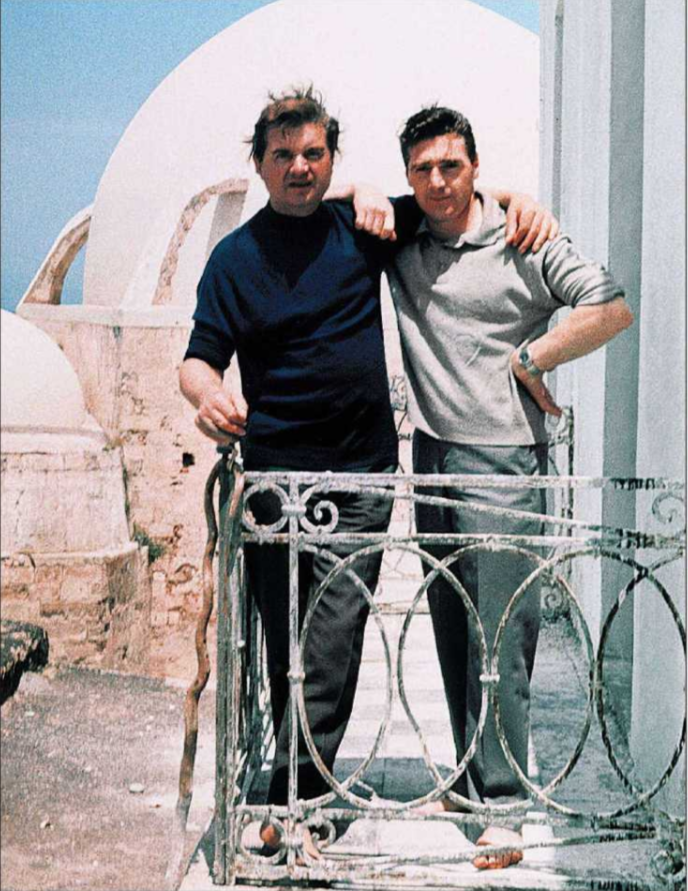
Rogue’s gallery: a previously unpublished photo of Bacon and Dyer in Greece
Thanks Pablo, that’ll do nicely
Bacon Picasso
Musée
National Picasso
Paris
CHARLES DARWENT
|
VISUAL ART
|
THE INDEPENDENT ON
SUNDAY
|
13 MARCH 2005
There are moments in a gallery-goer’s life when the urge to cheer is
overwhelming. One of them comes as you pass between two rooms in Bacon Picasso:
The Life of Images.
In the first of these is an early painting by Francis Bacon: a messy thing, done
in 1935 and called Interior of a Room. Eight years earlier, Bacon had had an
epiphany via the works at the start of this show, A Hundred Drawings by Picasso
exhibited at the Paul Rosenberg gallery in 1927. The 18-year-old Bacon, then an
interior designer, saw these on a visit to Paris and was converted. Henceforth,
he would be a painter.
Interior of a Room is one of the tyro artist’s earliest surviving works. You
look at it and at the picture next to it — Picasso’s 1929 La demoiselle (Tete) —
and you humph. Picasso’s Demoiselle is an elegant working-through of all kinds
of things: planar cubist figures, surrealist nightmare objects, Matissean wall
patterns. Bacon’s picture too is synthetic, although what it is synthesising is
Picasso. There are the too-slavish wallpaper, the stylised branches, oneric
feel, the softened angles. If the aim of this show is to demonstrate Bacon’s
debt to Picasso, then the point is made.
What happens next, though, is in its way as epiphanic as Bacon’s visit to the
Rosenberg show. Moving to the next room, you pass a wall text: the description
by Bacon of a work by Picasso, probably seen in Cahier’s d’Art. “There was a
marvellous figure which opened a sort of door on a beach,” Bacon wrote. “For me,
this was among Picasso’s most exciting works ... more humane, closer to the
heart of things.” And here, through the door, is the picture he was talking
about: Baigneuse ouvrant une cabine, one of Picasso’s 1928 studies of
bathers.
For us, a for Bacon, it’s a revelation. It’s easy to find Picasso in Bacon’s
work. There are enough literal borrowings to make the Irishman’s debt to the
Spaniard clear. Bacon’s Triptych — In Memory of George Dyer contains several of
these liftings. The shadow portrait in the triptych’s central panel is a direct
quotation from Picasso’s self-portrait in L’ Atelier of 1929, Bacon here not
just borrowing from Picasso but borrowing Picasso. The key and half-open door in
the same panel are from the Baigneuses à la cabine of the same year. But you
suddenly see, as you turn from Picasso’s apparently light-hearted beach scene to
Bacon’s doomed canvas, that these indicators of borrowing aren’t the whole
story, or even the main part of it.
What the Baigneuses series and the Dyer triptych actually have in common is
something else entirely: the humanity that Bacon was talking about in the
neighbouring wall-text, a shared sense of isolation in the midst of life. The
keys and shadow-portraits aren’t imitative of Picasso but signs of an engagement
with him. Although Bacon’s triptych is infinitely more accomplished than his
Interior of a Room, it is painted in the same voice. The purple curtains, the
contorted animal forms, the scratchy brushwork of the 1971 work are already
established by 1935. Picasso isn’t integrated into this recipe: he’s kept
separate from it, put in evident quotation marks. What’s going on in the Dyer
triptych isn’t a monologue but a dialogue, and to find out what it’s about you
have to go down to the Picasso Museum’s basement.
Bacon’s estate has been racked by controversy since his death in 1992. Among its
more sulphurous aspects has been the so-called Barry Joule Archive: a collection
of incunabula — scraps of paper torn from magazines, allegedly by Bacon himself
— removed from the artist’s London studio under disputed circumstances. A large
proportion of these scraps have to do with Picasso. There are reproductions of
his paintings, photographs of Picasso with his wives and children, all of them
added to or effaced.
Thanks to pressure from Bacon legatees, the Picasso Museum was prevented from
showing these scraps alongside the artist’s paintings. Until now, debate about
them has centred on whether their additions and effacements were actually by
Bacon. (It seems to me they clearly are.) The real question — and one addressed
brilliantly here — is what the bits of paper mean.
The catalogue to this exhibition ends with the suggestion that Bacon viewed
Picasso with the same ambiguous eye as Oedipus saw Laius; that his love for
Picasso was tinged with something like hate. And here you see what the ambiguity
meant: a creative fury in which Picasso was robbed and adored by his son in art.
It’s a complete revelation about Bacon, and oddly revealing about Picasso, too.
This is an excellent and important show, well worth a trip.
Musée National Picasso, Paris 3 (00 331 4271 25 21), to 30 May
Artistic brilliance as sharp as a bull’s horn or a thorn in the foot
BY
RACHEL CAMPBELL-JOHNSTON
|
ARTS
NOTEBOOK
| THE
TIMES
|
THURSDAY, MARCH 17, 2005
THE PAINTER Francis Bacon had faith. But it was a faith in futility. “We are
born and we die, that’s how it is.”
His philosophy was blunt. “But in between,” he declared, “we give this
purposeless existence a meaning by our drives.” And these drives — these
passions, lusts and compulsions — are laid bare as much in his life as his work.
He poured his talents into both. Even as he struggled to capture “the vitality
of accident” on canvas, even as he sought to evoke the “brutality of fact”, he
also worked on his character to make it as vivid, as unnatural, as contradictory
as he could.
His biography illuminates his painting. This week I watched a preview tape of a
BBC Two documentary, Arena: Francis Bacon, which will be broadcast on
Saturday. It is the first time since Bacon’s death in 1992 that a broadcaster
has obtained unrestricted access to his work and to previously unshown archive
footage. Adam Low, the director, has interviewed the artist’s sister as well as
friends and acquaintances who, often for the first time, are prepared to speak.
The resulting programme is riveting. The world that Bacon created was as
complex, flamboyant and cruel as a bullfight, as the shocking opening sequences
of a matador’s death suggest.
But what lingered in my mind was an interview with the brother of George Dyer,
the East End cat burgler, who (or so legend had it — and life and legend were
soon one where Bacon was concerned) became the artist’s lover after breaking
into his flat. Bacon described him as the most beautiful man he had ever met and
made him the subject of more than 40 paintings. But “all men kill the thing they
love”. It is Bacon himself who quotes Oscar Wilde. Dyer, increasingly out of his
depth, eventually committed suicide on the evening of Bacon’s triumphant Paris
retrospective.
“It was a waste of a life,” his brother says sadly. But then the camera pans
across the magnificent triptych that captures this act of futility.
But was it a waste of a death? The implicit question disturbs the spectator. But
the Marlene Dietrich song that Bacon used to play in his studio suddenly takes
on a haunting, a taunting resonance:
Men flock around me
Like moths around a flame
And if their wings burn
I know I’m not to blame
BLOODY SLICE OF BACON
Rachel
Campbell-Johnston
gets a taste of raw
artistry
OPINION TELEVISION | THE EYE | THE TIMES | SATURDAY, MARCH 19, 2005
“We
are born and we die, that’s how It is.”
Francis Bacon’s philosophy of life was blunt.
“But
in between,”
he declared,
“we
give this purposeless existence a meaning by our drives.”
These are the drives — the passions, lusts and obsessions — that Bacon lays bare
in his life and his work. He poured his talent into both. And that is why
Bacon’s painting, more than that of any other artist of his generation, can be
illuminated by biography.
Tonight (Saturday), Arena leads the viewer into the
middle of Bacon’s life — BBC Two is the only broadcaster since Bacon’s death in
1992 to have been granted unlimited access to his work and to previously unseen
archive footage, as well as interviews with family and friends.
His life can be a bloodthirsty place, as the opening footage makes plain. A big
black Spanish bull knocks a matador to the sand and gores him, as the programme
cuts to footage of Bacon standing, contemplatively, in his studio, the smoke of
a cigarette curling around him, the disturbed roar of the crowd still
reverberating in his head.
As he attacked and brutalised the human appearance, mashing and twisting it into
bruised hues, Bacon I fought to escape illustrational aspects of the image and
evoke instead
“the
brutality of fact”.
This is the raw truth that this programme constantly seeks, I switching again
and again from scenes of butchery and bullfighting to a pot of lusciously
stirred blood-red paint.
It follows the trajectory of Bacon’s life from his childhood in Ireland, the son
of a racehorse trainer who kicked him out of the house at 16, disgusted that his
son should like wearing women’s knickers, through a decadent year as a young man
in Berlin and on to; London, where he embarked on a career as a furniture
designer before he I began to paint.
His artistic career is mapped through his succession of lovers, from Roy de
Maistre, who encouraged his talents, through a respectable Tory alderman, a
sexually sadistic former fighter pilot, a neurotic East End bruiser and John
Edwards, his sole heir, who gets very good press.
The spectator sees the chaos of the studio. We see Bacon’s sources of
inspiration and snippets from interviews with David Sylvester, the typescripts
of which surely count among the greatest art documents o the postwar era.
But a more intimate picture is to be found in the details: his sister Ianthe
talking about his formative life; the brother of Dyer, the lover who committed
suicide; the words of the Marlene Dietrich song that the painter used to play
repeatedly —
“Men
flock around me/ Like moths around flame/ And if their wings burn/I know I’m not
to blame.”
This documentary captures Bacon in most moods: taunting, teasing, brilliantly
ebullient, drunk. But we never see him painting. Painting seems to have bee an
act far more intimate, more secret than sex. And in the end it’s through the
paintings that this documentary speaks. As the lens wanders across them to the
haunting accompaniment of music commissioned from Brian Eno, we see deep into
those masterpieces that were made to
“un
lock the valves of feeling”
and return the onlooker even more violently to life — not just to Bacon’s life,
but to the viewer’s own.
Arena:
Francis Bacon’s Arena, Saturday BBC Two. 9.10pm

Francis
Bacon lived life in shades every bit as a lurid as his paintings,
as
this Arena proves
Arena
Tonight, BBC2, 9.10pm
Highlight of the week
PAUL WHITINGTON | SEVEN DAYS | IRISH INDEPENDENT | SATURDAY, 19 MARCH,
2005
Prior to his death at (given his lifestyle) the surprisingly
ripe old age of 83, Francis Bacon remarked that “sometimes, when
I think about it, I’d prefer everything about my life to blow up
after I die and disappear”. It was certainly a remarkable life,
involving sex, suicide, and the seedy criminal demi-mode to
which the painter was inextricably attracted. With his work now
seeming more relevant than ever, this documentary uses archive
footage and testimonies from those who knew him to compile a
portrait of this mysterious and often contradictory man.
Born in Dublin, he spent the first 14 years of his life in Kildare, where his
father was a race horse trainer in the British army. He disliked his dad, whom
he described as “highly strung, intolerant, dictatorial and censorious,” and
left home in 1925 following a serious of rows, mainly to do with Bacon’s
blossoming homosexuality. He rarely returned to Ireland, but friends said he
identified strongly with the fun-loving, hard-drinking but melancholic side of
the Irish character, and he was to posthumously bequeathed his studio to the
Hugh Lane Gallery.
He wandered Europe through the late 1920s, and after seeing a Picasso exhibition
in Paris, decided he wanted to become a painter. He settled in Soho, London and
though self-taught, was quickly spotted as an artist of talent. His real
breakthrough came in 1944-5, when he painted his remarkable triptych, Three
Studies for Figures at the Base of a Crucifixion, which he later admitted was a
result of “a bad mood of drinking”.*
The grisly, charnel house quality of his work was attacked by London critics,
but it seemed to fit the concentration camp mood of the postwar period, and he
soon became famous. His personal life was predictable only in his chaoticness,
but he had tremendous physical energy, and no matter how drunk, or tired, was
always able to paint. And he could never understand why people thought his
paintings horrible. “There is this great beauty,” he said, “in the colour of
meat.”
* [Three Studies for a Crucifixion, 1962]
Gods and Monsters
BY ANN MORRISON |
PARIS |
TIME |
SUNDAY, MARCH
20, 2005
Take the paintings of one popular artist (preferably, but not necessarily, Pablo
Picasso). Juxtapose them with the works of another genius. Compare, contrast and
voilà: You have a blockbuster exhibition guaranteed to bring in the crowds. The
phenomenal success of the three-city “Matisse Picasso” show in 2002-03 helped
inspire the thoughtful “Picasso Ingres” exhibit in Paris last year. Now there’s
the traveling “Turner, Whistler, Monet” exhibit currently at London’s Tate
Britain. This is the golden age of spot-the-influence shows. Some museumgoers
see them as a two- or three-for-one bonus, others as a force-fed art history
lecture. But there’s no denying that when such exhibitions work, they can have
an unmatched power. One of the best yet is “Bacon Picasso: A Life of Images” at
Paris’ Musée Picasso until May 30.
There is a single, irrefutable reason the pairing works: Francis Bacon spent his
entire career aspiring to Picassohood. In fact, Bacon maintained that his first
encounter with the Spaniard’s work, the 1927 show “A Hundred Drawings by
Picasso” at the Paul Rosenberg Gallery in Paris, made him want to be an
artist. “Why don’t I try it?” the Ireland-born, England-raised drifter asked
himself; within months, he did.
In the first-ever systematic analysis of Picasso’s influence on Bacon, the show
gathers some 100 works of the two 20th century legends. The Musée Picasso even
attempts to re-create the show at the Paul Rosenberg Gallery, with plates of 40
of the drawings Bacon said “shocked” him into his career. Given that both
artists specialized in distorted images, anthropomorphic monsters and screaming
faces, the Rosenberg drawings are surprisingly mild. In fact, they are lyrical
studies for Picasso’s neoclassical works that were criticized at the time as a
betrayal of the revolutionary spirit behind his Cubist masterpiece Les
Demoiselles d’Avignon 20 years before.
Perhaps Bacon, who never met his idol, was drawn to images that seemed tolerant
of homosexuality, like the near-naked androgynous youths (one playing the flute,
the other transported by the music) in the sketches for Picasso’s monumental Pipes
of Pan. When Bacon arrived in Paris at age 18 — after his father caught him
in his mother’s underwear and threw him out — he was certain of his
homosexuality, but less certain of his artistic talent. He flirted with interior
design when he returned to London in 1929 and, once he started painting,
destroyed most of his early efforts. One work that survives is a 1933 Crucifixion,
which was reproduced that same year in Art Now, a book on contemporary art; on
the facing page, tellingly, is a similar work by Picasso, a small-headed Bather (1929)
with raised arms.
Indeed, crucifixions are one of the major themes of the show, even though
neither Picasso nor Bacon was at all religious. In a 1992 interview, Bacon
called Picasso’s crucifixion scenes “still my favourite of his works.” Picasso’s
oil-on-wood Crucifixion (1930) is a vibrant, surreal retelling of the
Calvary story, with cross, nails, lance, weeping women and garments being
divided by dice-throwers. Bacon’s interpretation, Second Version of Triptych
1944: Three Studies for Figures at the Base of a Crucifixion, ignores all
this action — even the cross — and concentrates instead on three anguished
black-and-white figures on an orange-red background.
Picasso and Bacon used practically identical language to describe their work on
crucifixion paintings: Picasso said he had started to draw an interpretation of
a macabre early 16th century altarpiece when it became “entirely
something else”; Bacon claimed he had the
idea of first putting figures around the base of the cross, but then “something
happened” and he “just
tried to make something else.” Bacon also
applied his Picasso obsession to his Triptych in Memory of George Dyer (1971),
a tribute to his model and lover. You’ll
see visual echoes of Dyer’s shadowy
profile in Picasso’s nearby The Studio (1928-9).
The Picasso pictures in the show date mainly from the late ’20s
and early ’30s, when the painter was
flirting with Surrealism. Bathers with contorted necks, lovers with daggerlike
teeth, minotaurs with ravaged victims — all find some allusion in Bacon’s
works. “I think of myself as a maker of
images,” Bacon once said, that produce an
impact “immediately on the nervous
system.” Picasso gave him the artistic
vocabulary to do that. Bacon claimed it was this “brutality
of fact” that linked their work. But
Bacon clearly wins in the cruelty stakes, especially in his nudes. His Lying
Figure (1969) is an upside-down mound of desiccating flesh with a needle in
its arm. On the facing wall, Picasso’s Large Nude in a Red Armchair (1929),
with head back and legs daintily crossed, looks benignly bourgeois by
comparison.
Picasso and Bacon took different paths toward portraiture, too. While Picasso
used live models, Bacon depended on photographs. Not that he painted from
photos; he merely used them, as well as just about everything else in his
cluttered studio, from newspaper clippings to garbage-can lids, as starting
points for his creative energies. Still, the results can be startlingly similar,
as you can see in the entire room of heads painted by both artists. Bacon’s
1971 Selfportrait shares some Cubist influences with Picasso’s
1909 Head of a Man. But in almost every case Bacon’s portraits reflect
more motion, energy and distortion — and deliver a fiercer punch to the nervous
system.
Bacon was entirely self-taught, and Picasso was hardly his only influence. Bacon’s
debt to Rembrandt’s 1655 Carcass of Beef,
for example, is obvious in his own renderings of raw meat. But when Bacon died
in 1992, he left behind a London studio dominated by the reproductions, press
clippings, published anecdotes and other worked-over memorabilia of one painter:
Pablo Picasso. Such single-mindedness makes for a great two-person show.
JANE
RYE
MAGNIFICENT MULCH
In Camera: Francis Bacon –
Photography, Film
and
The Practice of Painting
*
By Martin Harrison
(Thames & Hudson 256pp £35)
JANE RYE |
GENERAL |
LITERARY REVIEW |
APRIL 2005
The sensational squalor of Francis Bacon’s studio seems to have almost as great
a hold on the public imagination as his paintings themselves: it’s the 10
Rillington Place of the art world, or the satisfactory outward sign of inward
angst, perhaps – it’s how we rather feel our artists ought to live. Thames &
Hudson have published a whole book on 7 Reece Mews, South Kensington (such a
respectable, fuddy-duddy neighbourhood, too), the much-photographed studio where
Bacon lived and worked from 1961 until his death in 1992. ‘I like to live among
the memories and the damage.’ The deep-litter of artistic detritus that covered
its floor and walls has been solemnly inspected and catalogued and finally
reconstituted, down to the last scrap of trampled newsprint, in Dublin (the
artist’s birthplace), in a primitive, shamanistic attempt to preserve something
of Bacon’s magic.
It is this midden or mulch of tattered and paint-stained snapshots, newspaper
cuttings and mass-produced reproductions of one sort or another that Martin
Harrison picks over, like a kind of art-historical rag-and-bone man, looking
for, and sometimes finding, items that have been passed over or undervalued or
have only recently come to light.
In Camera
doesn’t alter the basic picture: Bacon’s use of photographic material torn from
magazines and medical text books, for instance, ‘as I would use a dictionary in
a foreign language’ has been public knowledge for fifty years. The still of the
nurse from the Odessa Steps sequence of
Battleship Potemkin;
the collection of postcards and reproductions of Velázquez’s
Pope Innocent X;
the book about the diseases of the mouth with its hand-tinted illustrations that
he picked up in Paris as a young man. Eadweard Muybridge’s sequential photos of
humans and animals in motion — these are perhaps the most famous. But since
Bacon’s death a mass of new working documents, as they are called here, has come
to light with the sifting of items left in the studio and with the appearance of
a collection of works on paper given by the artist to Stephen Spender, and the
Barry Joule archive of over 1000 items — mostly worked-over magazine and book
pages, together with an album of oil sketches which caused a lot of agitation
when it surfaced five years ago as the contents appeared to contradict Bacon’s
well-known claim that he never made preparatory drawings and in fact could not
draw. This was stuff put out by Bacon to be destroyed in one of his periodic
clear-outs. It was regarded with suspicion at the time (though it is now in the
Tate’s archives) but the cursory oil sketches and alterations scrawled over
photographs do not seriously affect the fact that Bacon liked to work directly
onto canvas so that spontaneity was preserved and vitality not vitiated by
preliminary workings-out. He allowed accidental paint effects to dictate the
progress of pictures, and accidental juxtapositions of images among the heaps of
paper around him were perhaps similarly suggestive.
As well as tracking down the origins of the reproductions Bacon employed,
Harrison meticulously analyses the different ways in which he used his
‘image-bank’ — sometimes quite directly as a library of postures or for
‘accurate descriptions of foreshortened perspectives’, and sometimes more
obliquely. As well as the status of photography vis-à-vis art, Harrison discuses
the rise of photojournalism in the Thirties and the effects of its
instantaneity, blurring of images and documenting of violence, for instance, on
Bacon’s art, and likewise his assimilation of ‘German New Vision photo-literacy’
in such matters as the ‘radical cropping’ and ‘framing and re-framing of
events’. There was a new departure after 1962 when John Deakin was commissioned
to photograph models such as Henrietta Moraes in specific poses, though ‘the
disparities between the photographs and the paintings complicate (or do they
complicate?) the analysis of Bacon’s sources’.
Bacon saw painting as a ‘mediumistic activity’, describing himself as less a
painter than ‘a medium for accident and chance’ (which he recognised as ‘an
external supernatural force’) and an important new source of his imagery has
come to light in a book called
Phenomena Materialisation
(1920), whose curiously unpleasant photographs purport to document spiritualists
séances — and origin, perhaps, of the ectoplasmic seepings from Bacon’s figures.
Bacon himself, according to Harrison, was indifferent to the documentation of
his visual sources and indeed actively resisted their identification as he
resisted interpretation of his paintings and (despite his remarkable willingness
to talk about his work) constantly repelled attempts to pin down their meanings.
He was as happy to throw them away in sackfuls as to give them away to friends,
but these battered fragments have acquired a value in their own right. He
sometimes mounted them on card or old book covers, secured with paper-clips,
Sellotape or even safety pins, and was fascinated, he said, by ‘the texture, the
scratches and stains’ of old photographs. Reproduced here, these working
documents have, as they had for Bacon, a haunting quality. Torn and half
obliterated (one wonders whether he deliberately ‘distressed’ them) they became
poignant relics with an element of violence. For anyone brought up to ‘treat
books with respect’ the ripping-out of pages is still faintly shocking.
This is a scrupulous and well-balanced account of Bacon’s working methods and
development, warning that ‘the claims now being made for photography’s
centrality to twentieth-century art practice carry the risk, in Bacon’s case, of
over-determining the relationship between his paintings and their sources’. It
is crammed with information and illuminating (and always acknowledged)
speculation, although in the interests of continuity and and coherence it would
have been a good idea to leave some of it out (‘Henley was, moreover, a
terminus, at the end of the Twyford line’ is going a bit far). It means that you
often can’t see the wood for the trees. And Harrison has an unfortunate weakness
for making verbs out of nouns, as in ‘the obsessive privileging of teeth in
Picasso’s work from 1929’. However, for anyone interested in Francis Bacon or
how artists work, this is essential reading.
Literary Review Bookshop price £31, call 0870 429 6608.
Bacon Estate forces Musée Picasso to
banish Joule material to basement
The drawings will also be in their own catalogue,
separate to the rest of the exhibition
BY MARTIN BAILEY |
FRANCIS
BACON ESTATE |
THE
ART NEWSPAPER | FRIDAY
1
APRIL 2005
The latest row in the Bacon world has erupted in Paris, where the Musée Picasso
was last month forced to banish archival material donated by Barry Joule to a
separate display in the basement, rather than show it in the main exhibition.
“Bacon Picasso: the life of images” (until 30 May) is the main show, with 120
works by the two artists, demonstrating Picasso’s influence on the British
painter.
The Francis Bacon Estate, which wields great power since its permission is
necessary to reproduce the artist’s work, insisted that the Joule material
should not be integrated with the paintings, on the grounds that its
authenticity has not yet been established. It would have been impossible for the
Musée Picasso to have produced an illustrated catalogue for “The life of images”
without this clearance—and hence the museum’s reluctant decision to move the
Joule donation to another gallery.
The original notice of the exhibition, issued earlier this year, recorded that
the subtitle of the main show would be “The brutality of fact”, and it clearly
noted that it would include the Joule material, which was described as
“important”. It also announced that the exhibition catalogue would be 350 pages,
but the final publication was 240 pages and a separate catalogue on the Joule
donation is due out shortly.
Barry Joule, a long-time friend of Bacon, was given over a thousand papers just
a few days before the artist’s death in 1992. Many of these are illustrations
from magazines or books, some with Bacon’s sketched additions or marks. Although
the authenticity of the material has been questioned, last year the Tate Archive
accepted the donation of the bulk of the collection. A relatively small number
of items related to Picasso were kept back and donated by Mr Joule to the Paris
museum last October. The Joule donation currently on show at the Musée Picasso
comprises 38 illustrations and five books.
Francis Bacon:
Studying form
FAGGIONATO FINE ARTS
February
9 - April 15, 2005
Catalogue to be published
Faggionato Fine
Arts, 49 Albemarle Street, London W1S 3JR
Opening Hours:
Monday - Friday 10.00 am - 6.00 pm Saturday 12-4pm
Tel + 44 20 74 09 79 79 Nearest Tube: Green Park Buses: 9 14 19 22 38
Faggionato Fine Arts is pleased to announce their forthcoming exhibition Francis
Bacon Studying Form. The exhibition focuses on Bacon’s core
concern in art – the representation of the human body. Six works, ranging in
date from 1959 to 1988, demonstrate his radical and varied approach to the
subject.
The exhibition includes three works belonging to a series of paintings and
sketches of lying and reclining figures that Bacon completed between 1959 and
1961. Lying
Figure 1959
and two works on paper from the Tate collection (Reclining Figure
No.1 and Reclining Figure No.2, c.1961) are shown as representative of a period
when Bacon undertook a fundamental reassessment of ways of staging the figure in
space. These are cited as illustrating a pivotal moment in Bacon’s art in which
he investigates new pictorial formats and paint handling techniques. Here for
the first time he experiments with articulated limb positions, sexually
ambiguous figures, thinned pigments and fluid brushstrokes.
The three remaining works stand as further examples of Bacon’s varied response
to painting the human body. Kneeling Figure (c.1982) draws on a theme Bacon
investigated between 1979 and 1984: Oedipus and The Sphinx. In these fragmented
torsos, painted with a complex blurring of gender distinctions, Bacon
incorporated some of his most powerful representations of shifting sexual
orientation. In Study for a Portrait of John Edwards (1988) we have a
monumental, deceptively simple, yet subtly compelling late work, which
demonstrates his ongoing exploration of portraiture. Finally the iconography
of Triptych 1987 reveals Bacon’s continuing preoccupation with themes of
violence and injury which had been an obsession throughout his career.
The catalogue, published by Faggionato Fine Arts and The Estate of Francis
Bacon, will include David Sylvester’s final contribution to Bacon studies
Francis Bacon and The Nude, written shortly before his death and delivered at
the Dublin Symposium in 2001. These proved to be his last words on an artist who
had been his close friend for more than forty years. Mr Sylvester was too unwell
to deliver the lecture in person, but both the transcript and the illustrations
are printed here for the first time in full.
The catalogue also includes an essay by Martin Harrison whose book In Camera
– Francis Bacon: Photography, Film and the Practise of Painting will be
published on 7 March 2005.
Published by Faggionato Fine Art and the Estate of Francis Bacon on the occasion
of the exhibition Francis Bacon: Studying Form. Essays by David Sylvester and
Martin Harrison. £20+p&p
Private view
After Picasso, Francis Bacon is the second most important painter of the 20th
century.
Why? His work inspired Gilles Deleuze to an entire philosophy of art
BY BEN LEWIS |
ARTS & BOOKS |
PROSPECT MAGAZINE |
SUNDAY, APRIL 17, 2005
One of the more curious synchronicities of recent art history is that Francis
Bacon’s paintings often look like pieces of bacon. That may sound like a silly
joke, but a similar thought underpins the aesthetics of the French philosopher
Gilles Deleuze (1925-95). In Francis Bacon: The logic of sensation (1981)
Deleuze described a theory of art based on the body, flesh and hysteria. Bacon
is the only painter who has ever ended up in the title of a key philosophical
text, and whose work has then formed the point of departure for a new philosophy
of art. (The fact that Bacon was English and the philosopher French only adds to
the achievement.) It is this—and not the huge leaps in prices paid for his
paintings in recent years—which qualifies him as contender for the title “second
most important painter of the 20th century” (after Picasso).
For decades the contenders for second place seemed to be Jackson Pollock or
Barnett Newman, Gerhard Richter or Willem de Kooning—painters who fitted into
the grand narratives of modernist art history. These were artists who slotted
into the right “isms” and the big trends towards ever more abstract and “pure”
painting, towards the idea of painting as a symbolic activity in itself. This is
the Picasso-Pollock schism: Picasso painted things; Pollock’s action of painting
was itself symbolic of the myth of “artist-creator.” But in recent years this
simple logic of art historical development has begun to look a little hasty.
Where could painting go after the late 1960s, when Ad Reinhardt painted only
black canvases and Robert Ryman painted only white ones? Gerhard Richter and Luc
Tuymans came up with one solution: paint photography. Is that a significant
development?
The problem is that we need some kind of theoretical legitimation for new art
which has a sense of logical progress. Otherwise there would be no history in
art history, and people could still paint like Giotto. This is where Deleuze
brings home the Bacon. He came up with a sophisticated legitimation of
old-fashioned figuration in painting.
Bacon didn’t belong to an “ism.” His early work, like Pollock’s, betrays such a
debt to surrealism and Picasso that it was difficult not to see him as a mere
follower. While Pollock abandoned figuration, Bacon continued to pursue it.
In Deleuze’s broad-brush art history, figurative painting came under attack in
the last century from photography and a critique of painting’s spiritual
aspirations. Somehow painting had to get away from depicting stories and
symbols. For Deleuze, “the extraordinary work of abstract painting was necessary
to tear modern art away from figuration.” But the philosopher asks, “Is there
not another path more direct and sensible?” Bacon’s paintings constitute, for
him, this path—they are figurative without being representational.
Deleuze’s point is that at the very moment when the art world was declaring that
figuration was over, the greatest figurative painter of the age was hard at
work. Deleuze saw in Bacon a notion of “pure figure.” Bacon’s compositions
usually set his figures, or bodies, inside a circle or oval contour, a kind of
stage, separating the body from anything around it. There is no narrative or
scene involved. In the background are fields of colour indicating shallow
non-specific space. Bacon painted heads, not faces, once again drawing our
attention to the body. The body is depicted in spasm and scream. It is under its
own involuntary guidance in contorted images of horror and pain. This is the
body without the face and brain. It is also the body without the skeleton—
Bacon’s bodies, as Deleuze observed, are flesh continually moving off from the
structure of the bones, into new shapes. Like bacon, it seems.
This all adds up to an aesthetic of sensation. Bacon painted the figure as it
senses things, out of the realm of intellectual control or analytical
reflection. He does not paint movement, he paints the sensation of movement.
Deleuze says we are sensing the painting with our bodies, not our minds: “The
entire series of spasms in Bacon is of this type: scenes of love, of vomiting
and excreting in which the body attempts to escape from itself through one of
its organs in order to rejoin the field or material structure”—by which Deleuze
means the surface of the painting.
Bacon can be seen as the apogee of the oldest western art tradition: the
depiction of the human form. But Bacon’s figures are not graceful like the
Greeks, or strong like Michelangelo’s, or sensuous like Rodin’s—they are
stripped and tortured, and, as such, an image appropriate to his times. They
emerged in an age ashamed by the values of civilisation. Thus, on the basis of
his philosophical and historical timeliness, the runner-up prize for
20th-century painting should be awarded to Francis Bacon.
Deleuze sent Bacon his book. Bacon was flattered by the attention and agreed to
meet up. They spent an evening together after the book was published, but
apparently didn’t bond. Deleuze remembered the encounter: “After he is seated
for an hour or so, he contorts himself in every direction, as if he were himself
a Bacon painting.”
“Francis Bacon’s Arena” will be shown on BBC2 on 19th March
Francis Bacon’s passion for
the camera
This is the first
study of the painter’s use of photograph
BY RICHARD CALVOCORESSI | BOOKS | THE
ART NEWSPAPER | NUMBER
158 | 30
APRIL 2005
We probably know more now about Francis Bacon (1909¬92) than almost any other
20th century artist. This is ironic, given how carefully Bacon controlled and
edited his part, but the painstaking reconstruction of his studio at the Hugh
Lane Gallery in Dublin and the meticulous cataloguing of its contents (some
7,500 items) have given us an insight into his subject matter, source material
and techniques that he would never have dreamed possible or, perhaps, desirable.
In his lifetime Bacon was notorious for suppressing books and catalogues about
his work that he did not like. Quite what he would have made of Martin
Harrison’s richly illustrated study of his pictorial sources, much of it based
on material in the Hugh Lane archive, we will never know. Dr Hanison (quoting
Dennis Parr) tells the tantalising story of Bacon’s reaction to a request from
“an archive” (presumably the Tate) to bequeath it his working documents: “he
swept up ‘all the photographs and press cuttings that littered the studio floor,
bundled them into two plastic sacks, and made a bonfire of them”. Nevertheless,
countless photographic images seem to have survived this cull, and in his
analysis of their relationship to Bacon’s paintings, Dr Harrison has enhanced
our understanding of Bacon’s deeply ambiguous iconography.
Bacon’s use of photographs and film stills was first noticed in the early 1950s,
not long after their imprint began to appear in his work. In his conversations
with David Sylvester from the 1960s onwards, Bacon readily acknowledged the
influence of a small number of crucial sources: Muybridge’s photographs of
humans and animals in motion, stills from Eisenstein’s Battleship Poteinkin,
and reproductions of Velázquez’s portrait of Pope Innocent X, a picture he
claimed never to have seen in the original. Bacon’s appropriation of the
photograph was, in fact, far more indiscriminate and voracious than this
respectable shortlist suggests. Dr Harrison uncovers a whole layer of “low art”
material which interested Bacon and which his friend, the painter and
photographer Peter Rose Pulham, described as “bad press photographs reproduced
through a coarse screen on bad paper”.
What particularly intrigued Bacon about the news photograph, apart from its real
life subject matter, was its instantaneous and accidental characters qualities
he tried to achieve in his own painting. From the 1960s, as his output of
portraits increased, he used specially commissioned portrait photographs by John
Deakin as a substitute for the actual presence of his subjects invariably lovers
and close friends in the studio. In their sharpness and detail, however,
Deakin’s photographs are a far cry from the blurred and smudged press images
that Bacon liked to tear out of newspapers and magazines. Dr Harrison points out
that Bacon only partly relied on Deakin’s photographs. His portraits, and
especially the series of slightly under life size heads that Bacon began
paintings in 1962 (on canvases 14 × 12 inches, not 24 × 20 as Dr Harrison
states) introduce a note of dissolution and flux that is absent from Deakin’s
more factual records.
Any assessment of Bacon’s use of photography must take into account the extent
to which he assimilated and transformed his sources. One of the most esoteric of
these was a publication on spiritualism, Phenomena of materialisation (1920) by
a certain Baron von Schrenck Notzing. Bacon never mentioned this book, although
a well thumbed and paint spattered copy was found in the studio after his death.
Dr Harrison shows first how the head of the biomorphic figure in the left hand
panel of Bacon’s seminal Three studies for figures at the base of a
Crucifixion (1944) is an almost literal transcription of a close up detail
from one of Schrenck Noming’s faked photographs of a séance. He then relates
Bacon’s interest in psychic phenomena to a wider “predilection for photographs
that penetrated the skin”, such as X rays and pathological or scientific
photographs of raw flesh. (Bacon owned a copy of K.C. Clark’s extensively
illustrated Positioning in radiography, as well as a book on diseases of
the mouth.) Dr Harrison further speculated that, for Bacon, “Manifestations of
ectoplasm were probably.. consonant with the chronophotographs of Etienne Jules
Marey”, given Bacon’s fascination with the effects of light on exposed
photographs. Since Bacon once described himself as “a medium for accident and
chance” and talked about the difficulty of conveying his subject’s “emanation”
when painting a portrait, I find it perfectly conceivable that he should have
been interested in the irrational.
Dr Harrison’s title, In camera, is, in fact, a wordplay that not only
alludes to Bacon’s secretiveness, but also allows him to discuss the
photographic influences on Bacon, and also the representation of space in his
paintings. Dr Harrison argues that Bacon was profoundly affected by the
anonymous rooms he occupied and that these are often reflected in the bleak
interiors which his figures inhabit. In camera presumably refers also to
the English translation of Sartre’s play Huis clos, in which three people
are forever trapped in a room, a “hell” of their own making. Other comparatively
neglected themes touched on by Dr Harrison include the impact on Bacon’s
painting of his little known stay at St Ives in 1959, and the example of Rodin’s
bronze sculptures in encouraging him to achieve greater volume and plasticity in
his treatment of the human form.
Such reflections, however illuminating, might seem irrelevant to an analysis of
Bacon’s debt to photography, and it is true that they give the book a rather
amorphous feel. Nevertheless, In camera is an indispensable work of reference
for anyone wishing to follow the protracted dialogue that Bacon conducted with
photography and through photography with the art of the past, his own work, and
real life.

Bacon/Picasso
Paris
BY MICHAEL PEPPIATT
|
EXHIBITION REVIEWS
|
THE
BURLINGTON MAGAZINE
|
MAY, 2005
IN LATE 1992, the Musée Picasso on Paris touched on the way Picasso had
influenced Francis Bacon by showing Picasso’s Crucifixion
of 1930 with Bacon’s Three studies for figures at the base of a
Crucifixion (1944) in Corps crucifiés, an exhibition to which Bacon
gave his support but did not live to see. The current exhibition,
Bacon—Picasso:
La vie des images, at the same museum (to 30th May), returns to
the theme to explore in depth Picasso’s initial impact on Bacon and the
reverberations it had on the English painter’s subsequent development.
1
Bacon made no secret of the fact that he idolised Picasso. It was after seeing a
show of Picasso’s drawings at the Galerie Paul Rosenberg in Paris in 1927 that,
as Bacon repeatedly said, he decided to try to become an artist. He described the event
as a revelation, as if, coming as an ill—tutored youth from the wilds of
Ireland, he had never seen any art before.
Given the resourcefulness that he showed throughout his career, it is more
likely that Bacon had in fact been avidly scanning all kinds of images for some
time and that, although only 17 years old, he had already begun to identify what
interested him most not only in the Paris art world but also in London and
Berlin. Nevertheless, as a convenient shorthand, Bacon repeatedly dated his
interest in painting from this vital encounter with Picasso
—
just as he arbitrarily declared his own first work to be Three
studies for figures at the base of a Crucifixion, even though he
had already been painting on and off for some fifteen years.
It was the work that Picasso began shortly after the Rosenberg show —
notably the
Bathers painted during the summers of 1928 and 1929 in Dinard (Fig.45)
—
that Bacon came to admire above all. These beach scenes, with their haunting
erotic undertones, entranced the young artist, who felt that the biomorphic
figures, disporting themselves or opening a bathing-cabin with a key, suggested
endless possibilities for distorting and reinventing the human body. As Bacon
himself openly admitted, Picasso’s
‘organic
forms’ helped him find his way as a painter and deeply influenced all his early
work. The point was implicitly reiterated by Herbert Read when he reproduced
Bacon’s Crucifixion (1933) opposite a Bather by
Picasso in his book Art Now (although of course Bacon
had been equally influenced by Picasso’s stark
‘bone’
drawings of 1932 on the Crucifixion theme).
Picasso still clearly dominated Bacon’s imagination when he painted the
Three studies for figures at the base of a Crucifixion, his first
masterpiece and also his most complete homage to the Spanish master. Thereafter,
however, Bacon rapidly absorbed his obsession with Picasso’s astonishing
manipulation of form and allowed it to commingle with the huge variety of other
influences, from Aeschylus to X-rays, Muybridge to Michelangelo, which went into
what he called, sardonically enough, his
‘grinding
machine’. Once ground up, the various strands grew increasingly difficult to
identify; and it was surely this extraordinary capacity for absorbing and
transforming that made Bacon into the great artificer that he became. But even
when he had become independent of any direct influence of Picasso, Bacon (who
vehemently disliked and dismissed the Spaniard’s late work) remained convinced
that no other artist in the twentieth century had come as close as Picasso to
conveying the
‘core of what feeling is about’. This belief remained with Bacon
like a guiding light, since it precisely summed up his ambition for his own
painting.
In the first section of Bacon-Picasso (once you have found it in the Museum’s
maze of parallel rooms devoted to Picasso alone), Picasso’s formative influence
on the much younger artist is made abundantly clear. A number of rarely seen,
early Bacons have been brought together here: Composition (Figure)
(cat. no.115; Fig.46) and one of his two Crucifixions
of 1933 (no.151) as well as Studio interior (no.116)
and Interior of a room (no.108) of 1934 and 1935
respectively. It is fascinating to see just how completely in thrall to the
master the beginner was. This was Bacon’s apprenticeship, and his first
compositions look all the weaker and more derivative when confronted by
Picasso’s fluency. But even here, in these pallid adaptations, Bacon shows signs
of his brilliance: not in his skill at aping Picasso, but in the flair and
determination with which he had bypassed all formal art education to study
directly and on his own terms with the greatest artist of his time.
Beyond this opening section, Bacon—Picasso grows increasingly diffuse (as well
as increasingly confusing, since the way round the exhibition is hard to
follow). What transpires, as one might have expected, is that the more Bacon
forged his own style, the less apparent any earlier ‘borrowings’ became. It is
true that certain motifs occasionally surface that can be traced back to
Picasso, as when the shadowy figure in the central panel of Bacon’s
Triptych
—
In memory of George Dyer (1971; no.120) inserts a key into a door.
But the implication have so changed that to suggest any continuing comparison
with the Bather opening a beach cabin misses the point: Bacon has by now totally
assimilated the motif and incorporated it into his own highly charged, personal
vocabulary. Similarly it seems far-fetched to look for parallels between
Bacon’s Lying figure (no.176; Fig.47) and Picasso’s
Large nude in red armchair
(np.174; Fig.48). The overall composition, the approach to the body and the
treatment of flesh could hardly be more different; one might as well persist in
finding Joycean echoes in late Beckett. Too many transformations have taken
place, and by this time Bacon has created a pictorial world of his own, a
full-blooded, painterly language that might be seen to challenge Picasso’s in
terms of its evocative powers. Thus, while it is visually arresting to see a
handful of Bacons in rooms full of Picassos, it does not seem to deepen our
understanding of either artist.
What Bacon—Picasso
illustrates most pertinently, perhaps, are the pitfalls of setting one pictorial
genius against another. Rather than reveal hidden aspects of each painter, such
double-bills often have all the subtlety of a prize fight, with the pressure
being on for one or the other to emerge victorious. The implication throughout
this exhibition is that, having been so deeply influenced by Picasso at the
outset of his career, Bacon remained in debt to, and thus fundamentally less
original than, Picasso: a notion given added weight by the overwhelming number
of Picassos and the few Bacons in the show on Picasso’s home ground. Yet when
Bacon was shown in the most august company of all
—
when four of his
‘Popes’ faced
the great Velázquez Portrait of Pope Innocent X at the
National Gallery in London in 1996
—
the revelation was not how much greater an
artist Velázquez was, but how dramatically the conception of a human being had
changed in the three hundred years that separated one penetrating artistic
vision from another. A definitive Bacon—Picasso
exhibition might be conceivable along the same lines: an encounter where the trajectories of an early and a late
twentieth-century giant are shown in equal measure, beyond
‘borrowings’
and at a parallel pitch that would do justice to both artists’ achievements.
Arts on television: Bacon and Hirst as the bad boys of British art
Damien Hirst has carried on Francis Bacon’s violent legacy of “guts, blood and
spunk”
,
but denies any direct inspiration
BY JUDITH BUMPUS
|
MEDIA & BROADCAST
|
THE
ART NEWSPAPER
|
SUNDAY, 1 MAY, 2005
How much notice should we take of audience figures? A seminar run by Channel 4
concluded that the arts on tv were still in the “doldrums”. Kevin Lygo, Channel
4’s Director of Television, said that “the lowest-ratings programme of any on
Channel 4 was the Turner prize 2004”. Its audience was 400,000. “What we are
giving the viewers is not pressing their buttons at the moment,” he said. The
figure compares favourably, in fact, with the daily attendance of 1,160 at the
Turner Prize exhibition itself, hardly a sign of diminishing public interest in
new art.
At the same Channel 4 seminar, film director Penny Woolcock complained that the
presenters of BBC 2’s Culture show “know just about as much as I do, a
middle-class, educated person. I find it rather boring... I want to be told by
someone who really knows”. With art historian and critic Andrew Graham-Dixon
fronting the show and conducting a 10-minute interview with Damien Hirst, you
know you are in good hands. More of that interview later.
Another solution avoids the pundit, and the business of training him or her to
perform to camera.
Private life of a masterpiece, the series “that reveals the
stories behind famous artworks”, sprinkles bite-size glosses from critics and
specialist art historians into a strong, exploratory narrative. Its script
consultant is Russell T. Davies, who is better known for his television dramas,
such as “Queer as Folk” and “Casanova”. Now in its fourth series, this popular
take on art history is evidently pressing the right buttons. Its opening
programme on Delacroix’s “Liberty leading the people” attracted 1.2 million, its
exploration of Vermeer’s “The art of painting”, 1.6 million.
The format for Francis Bacon’s Arena, a montage of
voices and images with spare linking script, is one of the most difficult to
pull off successfully, but the programme managed it remarkably well. It might
have tempted an even larger audience than 700,000 had it, too, been called “The
private life of...”. Although Bacon’s story is well known, this nicely titled
film from BBC 2’s “Arena” is the first since his death to fill it out in Bacon’s
own words, and to structure it round the men in his life—Roy de Maistre, Peter
Lacy, George Dyer, Eric Hall, John Edwards, Brian Clarke, and his last lover,
José, an upper-class Madrilenian 49 years younger than Bacon, who declined to
appear.
The bulk of the film comprised archival interviews with Bacon, including
unfamiliar Swiss, French and German footage, and with the essential David
Sylvester, whose perceptions are always worth re-hearing. “Arena” did well to
find unaired interviews with John Edwards, filmed a year before he died, and
with Dan Farson. Many new recordings included Bacon’s sister, Ianthe Knott;
critic John Russell on Bacon the “big, lusty fellow” and “randy, old dog” who
“liked youngish men, who were bright, lively, accessible, and slightly outside
the law”; Lee Dyer, who read a touching letter from his brother to Bacon;
Bacon’s doctor, Dr Paul Brass. They added, if not substantial new evidence,
vivid touches to this well-assembled portrait of an artist, whose nature, life,
art and death were extreme.
The inevitability, even the necessity, of violence stamped the film’s theme in
its opening shots of a bullfight and Bacon’s famous statement: ‘Painting has now
become, or all art has become completely a game, by which man distracts himself.
What is fascinating actually is that it’s going to become much more difficult
for the artist, because he must really deepen the game to be any good at all,
and return the onlooker to life more violently.’
Two telling comments came from the photographer Peter Beard, and from Brian
Clarke, inheritor of the Bacon Estate. For Beard, Bacon was “like an animal in a
cage...trying to get to the reality of his isolation and savagery...He knew what
he was doing was in a pretty important direction, and he was tough,
self-contained. A huge world, self-originated.”
Like Beard, Mr Clarke met Bacon in the 1970s, the era of punk rock. “It was a
generation saying, we’re fed up with commercial, median crap. We want something
real again. Give us the guts. Give us the blood. Give us the spunk...And to my
great shock and surprise...this old guy was the most violent, full-on punk that
I knew and that was thrilling.”
Watching this film confirms how much Damien Hirst owes to Bacon. In the
conversation he had with Andrew Graham-Dixon for BBC 2’s “Culture show”, he
denied any direct influence on his painting, insisting that in his exhibition of
photo-realist pictures, “The elusive truth”, at Gagosian Gallery, New York
(extended until 14 May), the image was what mattered. He tries “to avoid any
sort of expression” by employing a team of deadpan copyists to reproduce
newspaper photos. ‘Repaint it. There’s too much expression in there,’ he orders.
Realist painting is a novel departure for Hirst, and Mr Graham-Dixon fears that,
in seeking to re-invent himself, Hirst might lose his way. Hirst is “the richest
living artist in recorded history”, his shark sold recently to Manhattan hedge
fund trader Steve Cohen, reportedly for $12 million. He’s made it. “I can do
anything now,” Hirst says. “What I can do can be crap now until I die. There’s
no need for me to do a show like this... So I’m personally quite pleased that
I’ve done it.”
His aims, he says, are different to those of newspapers. “I’m trying to find
images that are timeless, which are about the everyday...They’re both to do with
the truth, and none of us are getting anywhere near it...The whole idea of truth
is illusive. I’m looking round at what’s going on in the world today, thinking
what’s going to be very significant 20 years from now.’ He identifies one
painting as his favourite, “Suicide bomber (aftermath)”, dominated by a white
car bonnet, splashed with blood painted by himself. “Do you see the cigar on the
bonnet? I like the marks on it. The marks are really loose when you get close.”
So he is not unmoved, after all, by the quality of paint.
Arena: Francis Bacon’s Arena, BBC 2,, 19 March. Director
Adam Low. The Culture Show, BBC Scotland for BBC 2, 17 March. Executive producer
George Entwistle
In the Flesh
The room at Tate Britain that
stopped the film-maker in his tracks
Artist and film-maker Mike Figgis finds that a visit
to Tate Britain is "like walking through
a collective unconscious that gives a sense of
intimacy that is unique".
Then he discovers "incredible beauty" in the work of
Francis Bacon. . .
BY MIKE FIGGIS |
TATE ETC | ISSUE
4 | SUMMER |
SUNDAY 1
MAY 2005
I like galleries. I’ve spent much of my life on the road and have always
regarded them as places where I can slow down and think and be quietly inspired.
I’ve never really minded if the art was considered good or bad. In fact, some of
my favourite galleries have been quite provincial with provincial art on
display – landscapes and portraits from the third division of the art world. I
move freely in these spaces, observing the people observing the art. I love this
relationship between the art objects and the people watching them. I marvel at
how well behaved and reverential the people are. How quietly everyone speaks and
how slowly they move, everything having a dream-like quality. Everyone walking
through a collective unconscious that gives a sense of intimacy that is unique,
different from being in a theatre or a cinema because one can still be an
individual in motion, not a collective. I look at the art as well as the people,
but for the most part I don’t get so involved. The frames and the formality of
it all create a distance that is useful for my own thought patterns.
Tate Britain in January was cool and neutral. But in some of the rooms I was
aware of a contradiction in temperature. Warm air was gushing out of floor
vents, while cooler air was being dispensed from portable machines in the same
space. It reminded me of those department stores where you have to pass through
very hot air to get in or out and I always take a deep breath. I mention this
because the temperature of a gallery is a key factor – it has to be cool.
I enter Tate Britain with a brief: I’m looking for a single work that can
inspire me to write an article for this magazine, so for once I am trying to
focus not on the people, but on the objects. It’s difficult. I become fascinated
by one of the security guards; by the angle of his body and the way he is
sitting and the fact that his shoes are very large. I do a quick sketch of him
and then realise that he knows I’m sketching him, so I pretend to be sketching a
painting
And then I enter the Francis Bacon room and everything changes. I stay in the
room for a while. In fact, I have no desire to leave at all, but I decide to go
somewhere else so I can come back again. I want to see what effect there will be
entering a second time. I visit the Turners, but become impatient and begin
walking faster. I get to the Bacon room and wait for a moment before going in.
It is good to be back with them. I feel a connection that for me is unique. It
is impossible to keep the images at a safe distance. I also feel very happy
looking at them. There is much talk of the violence in Bacon’s work, but for
myself I see incredible beauty and a unique understanding of movement. They seem
so modern; so much so that it is hard to imagine what could be more modern than
Francis Bacon. What could be more modern than Beethoven’s late quartets, or Eric
Dolphy’s 1964 album Out to Lunch? I particularly like Study of a Dog (1952)
and I return several times to this. I am reminded of a film I saw as a teenager,
Herostratus, by Don Levy. As far as I can find out Levy was an Australian who
died some years ago and made two films. In Herostratus, as I recall, there are
some Bacon-inspired images, some distortions of faces. I resolve to track down
the film and check this out. Maybe Tate should screen it (maybe it already did).
Finally, I leave the room and go directly to the book-store to buy some
“research material”. I spend £200 on Bacon books and exit the gallery.
A display of Francis Bacon, Lucian Freud and Reg Butler is at Tate Britain and
is part of BP British Art Displays
Mike Figgis is an artist and film-maker based in London.
Sami Azar has been reinstated as director of the Museum
of
Contemporary Art following protests by artists
”This
is the only time in Iran that a cultural
manager has been supported by artists like this”
MARK
IRVING |
IRAN | THE
ART NEWSPAPER
|
SUNDAY
8 MAY 2005
LONDON. Dr
Ali Reza Sami Azar, who resigned from his post as director of the Museum of
Contemporary Art in Tehran in March as reported in this newspaper last month,
has been re-instated in his post. In an exclusive interview with this paper, he
talked about the circumstances behind this dramatic sequence of events.
With the recent swing in Iran’s political climate towards the conservatives who
have, according to Dr Azar, “a restrictive attitude to art and culture”, he
found himself under pressure from officials in the Ministry of Culture who
“wanted to please the conservatives and were afraid of being sacked”. Exhibiting
the work of Western artists and working with artists who do not follow a
revolutionary or religious line is now regarded with disfavour, he says.
Organising exhibitions with foreign institutions or doing shows with artists
living abroad is, he says, becoming “impossible”. “We are in a conservative
situation. We became conservatives by default”.
This plays havoc with the museum’s exhibition planning. “The problem is that
with most of our projects we have to work a long time in advance. But now no one
is prepared to support us looking ahead”. Dr Azar has had to cancel a planned
Rebecca Horn show coming from Germany and is not able to make any commitments to
other foreign shows. But he says his museum’s loan of a Francis Bacon painting
to Edinburgh’s Museum of Modern Art later this year “will still happen”.
Cinema, music and theatre are, he says, “in even more jeopardy because of the
red lines being drawn. I’ve worked for this community for six years or more and
we’ve come a long way since I first started, when galleries had to get
permission to do a show. They did not have experience of showing works abroad,
there was no exchange of art and ideas with other countries and Iran was working
in isolation. Now because people want to hold on to their jobs they’re more
prepared to compromise. But I wasn’t prepared to do so, so I resigned”.
His resignation was accepted by the Ministry of Culture, where some officials
were sympathetic to his position. “But then artists heard about it, and the next
day they wrote letters of protest and demanded that the minister and deputy
minister not accept my resignation. I want to say how much I appreciate the
support of these artists, who come from all sides of the community. It was the
way they united for the first time that persuaded me to take the job back. This
is the only time in Iran that a cultural manager has been supported by artists
like this”.
“Sami Azar’s international reputation rests not so much on what he’s achieved
in terms of collaborations abroad, but on his remarkable track record in making
exhibitions and encouraging artists in Iran in ways that the international
community had assumed were impossible”, says Stephen Deuchar, director of Tate
Britain. “I think his success lies in his willingness to encourage international
interest in the Tehran Museum’s collection. He quickly responded positively to
my suggestion of lending Tate the Bacon triptych, despite the risk of
controversy”. Asked whether other loans between the Tate and Tehran are being
discussed, Deuchar says: “we’d like to pursue education-driven initiatives in a
small number of Middle East.
Bacon show is summer sizzler
GARETH
EDWARDS | NEWS
| THE
SCOTSMAN
| TUESDAY,
14 MAY, 2005
THE first major
Scottish exhibition exploring the work of Francis Bacon is coming to
Edinburgh.
The work by Bacon, considered one of
the greatest artists of the latter half of the 20th century, will form the
major summer show at the Scottish National Gallery of Modern Art.
The exhibition features a series
of portraits of the painter’s friends and lovers, and is expected to attract
more than 30,000 visitors. It will feature more than 50
works by the artist, including self-portraits and portraits of Bacon’s
best-known sitters. The paintings are on loan from
public and private collections throughout the world.
One of the most startling
features of the exhibition will be the five portraits of Bacon’s lover Peter
Lacy. For a period in the late-50s,
Bacon’s output of portraits was dominated by the image of Lacy, whom he
described as the one great love of his life.
Francis Bacon: Portraits and
Heads features paintings on
loan from the Museum of Modern Art and the Metropolitan Museum of Art in New
York, the Centre Pompidou in Paris, the Nationalgalerie in Berlin, London’s
Tate Gallery and the Thyssen Collection in Madrid.
As well as those, there will be
rarely seen loans from private individuals on display. Bacon, pictured below, was born
in Dublin in 1909, and spent most of his life in London.
Creating portraits that reflected
the intensity of his personal relationships was one of Bacon’s biggest
artistic preoccupations. The exhibition features small
single heads from the late 1940s, which echo the imagery of Three
Studies for Figures at the Base of a Crucifixion – the
painting which effectively launched Bacon’s career in 1945.
The core of the exhibition is a
series of small heads of friends from the artistic and social milieu of
London’s Soho – Lucian
Freud, Henrietta Moraes, Isabel Rawsthorne, and Bacon’s lovers Peter Lacy
and George Dyer.
The show also contains a number
of full-length portraits from the 1960s, their subjects standing or
reclining. Richard Calvocoressi, director of
the Scottish National Gallery of Modern Art, said: "Francis Bacon was one of
the greatest painters of the 20th century. This exhibition of over 50 of his
unforgettable portraits is the first major Bacon show in Scotland.
"Museums from all over the world – London,
New York, Chicago, Paris, Madrid, Berlin, Stockholm – have
lent important pictures."
The exhibition
follows the huge success of the recent Andy Warhol show, and it is also one
of the Icons of the 20th-Century series, sponsored by Lloyds TSB Scotland.
Susan Rice, chief executive of
Lloyds TSB Scotland, said: "After the huge success of the Andy Warhol:
Self-Portraits exhibition, we’re delighted to continue our sponsorship of
the Icons of the 20th-Century series with Francis Bacon: Portraits and
Heads."
The exhibition will run from June
4 until September 4.
THE FACTS
AN English painter of Irish
birth, Francis Bacon was born in Dublin in 1909. He came to London in 1925
and began working as a painter in the 1930s. From then to his death in 1992,
the human figure remained the dominant subject of his art. Although he received no formal
art training, he created a sensation in 1945 when he exhibited his Three
Studies for Figures at the Base of a Crucifixion, currently on show at
the Tate Gallery in London.
Expressionist in style, his work,
and in particular his distorted human forms, were unsettling. He developed
his personal style during the 1950s, when he achieved an international
reputation.
Bacon was also
known for his paintings of popes, which were adapted from a portrait of Pope
Innocent X by Diego Velázquez.
Love for sale
Many portraits by Francis Bacon (left) were heartfelt records of his personal
relationships.
Now, one of the most celebrated examples could fetch £3.5m at auction.
By
Sue Hubbard
SUE HUBBARD
| ARTS |
LIFE & CULTURE | THE
INDEPENDENT |
TUESDAY 17
MAY 2005
Francis Bacon is arguably the greatest visual exponent of existentialism. He
sought to capture, on canvas, the violence, the energy, the futility and the
alienation at the heart of human existence. Though he shared something of
Nietzsche’s “strong pessimism”, he qualified it by saying, “You can be
optimistic and totally without hope. One’s basic nature is totally without hope,
and yet one’s nervous system is made out of optimistic stuff.”
Bacon always insisted that all he wanted to do was make images, that people
could read into them whatever they chose. “We live, we die, and that is all.”
But in his paintings the body became conflated with images of both the
Crucifixion and the abattoir. His source material ran from Greek myth to
Rembrandt’s celebrated painting of The Slaughtered Ox, from the screaming
nanny in the Russian film-maker Sergei Eisenstein’s Battleship Potemkin,
to Velasquez’s popes and Eadweard Muybridge’s photographs from the 1880s of the
human figure in motion. And, of course, he painted his lovers: next month,
Christie’s is auctioning Francis Bacon’s Portrait of George Dyer
Staring into a Mirror (1967). It is estimated that it will fetch between
£2.5m and £3.5m.
Bacon never made any secret of his homosexuality. He preferred to refer to
himself as “queer” rather than “gay”. A young man from a privileged Anglo-Irish
background, he ran away from home after his brutal father discovered his
overdeveloped interest in his mother’s clothes and the stable grooms. He was
always attracted to “rough trade”, to what was butch and masculine.
The meeting between him and George Dyer has become the stuff of art-world
legend. Bacon relished telling how they met when Dyer was robbing his flat —
though it is much more likely that they actually met in a bar in Soho. Dyer was
to become one of Bacon’s most important muses. The large portraits done in the
1960s and 1970s are some of Bacon’s greatest and most visceral works.
Portrait of George Dyer Starring into a Mirror, in which he wears a suit in
the style favoured by the Krays, shows his unmistakable features reflected from
two angles. He sits on a sort of swivel desk-chair, and his disembodied face is
split into two halves. One is splashed with semen-like white paint, while the
mirroring device serves to heighten a sense of alienation and emphasises the
essential loneliness at the heart of all human relationships.
Bacon saw his own life as having been punctuated by violence, whether it was
childhood whippings, Republican attacks in Ireland, the Second World War, or his
own sado-masochistic sexual predilections. He distorted his images, smearing and
battering his figures into submission, as if violence and virility might mirror
their opposites — the poignancy and pity of what it means to be alive. Dyer was
to commit suicide the night before the opening of Bacon’s major 1971 Paris
retrospective at the Grand Palais. He had been unhappy for years, feeling both a
failure as a thief and uncomfortable among Bacon’s glittery, witty friends.
Ten years earlier, another lover, Peter Lacy, had died during the opening of
Bacon’s Tate retrospective. Bacon had met Lacy, a handsome test-pilot who had
flown combat missions during the Battle of Britain, in Tangier in 1952, where
Lacy played piano in Dean’s Bar. Their obsessive relationship was a disaster
from the start, fuelled by drink, cruelty and infidelity. Bacon’s Three
Studies of the Human Head (1953) depict Lacy as a suited figure, his face
distorted by anger and pain, and with a wailing open mouth.
The Three Studies for a Portrait of John Edwards (1984) show the man who
was to become Bacon’s companion until the painter’s death in 1992. Bacon first
met the barman John Edwards in 1974. Although, like Dyer, Edwards came from the
East End, this was to be a very different relationship from the earlier, doomed,
romance. Although much younger than Bacon, Edwards stood up to him with
directness and honesty.
The triptych shows Edwards seated on a stool, in an empty studio, against a
grey-blue ground, and captures something of his straightforward character. There
is a lack of the violent distortion that characterises Bacon’s other, more
angst-ridden portraits. The triptych borrows something from the language of
film-making, with a static subject frozen into a cinematic sequence.
Throughout the 1960s and 1970s, Bacon painted his close friend Isabel Rawthorne,
who was also part of Bacon’s “gilded gutter life” of Soho Bohemianism. He once
boasted in Paris Match that, “You know I also made love to Isabel
Rawsthorne, a very beautiful woman who was Derain’s model and Georges Bataille’s
girlfriend.” Given Bacon’s lifelong penchant for men, that seems rather
unlikely. But, as she had been the lover of many famous artists, as well as a
friend of Epstein, Giacometti and Picasso, he perhaps liked to dramatise their
association.
The fact that he obviously knew her very well undoubtedly allowed
him to express her raw, powerful individuality in the Three Studies of Isabel
Rawsthorne, painted in 1966.
Picasso once said: “My work is like a diary. To understand it, you have to see
how it mirrors my life.” The same might be said of Bacon. For him, being “queer”
was the essence of who he was. His twisted, tortured bodies speak of both
physical and emotional turmoil, of brutal and deep, visceral emotions. But they
also reveal, as in the raw cruelty of Greek drama, something profound about what
it means to be a living, breathing, sentient human being.
Gallery ‘approved’
for Bacon
JAMES BYRNE | INDEPENDENT
IRELAND | FRIDAY,
20 MAY, 2005
DUBLIN’S Hugh Lane Gallery of Modern Art will be able to receive three
unfinished paintings by Francis Bacon after it was granted “approved body”
status yesterday.
Arts Minister John O’Donoghue conferred the status on the Parnell Square gallery
in order to facilitate the donation of Bacon’s uncompleted works to it.
By means of the new status, individuals may claim tax relief when donating
art-work which is regarded as exceptional to a public collection.
Gallery director Barbara Dawson said she was “very pleased” to accept the
paintings and described the donation as “significant for us and significant for
Dublin”.
The Hugh Lane gallery already houses the transposed London studio in which Bacon
painted most of his famous works.

THE
INSIDER
BY MELANIE FINN | THE
INSIDER | THE
DIARY | EVENING
HERALD | FRIDAY
20 MAY 2005
A PORTRAIT by Francis Bacon of his partner
George Dyer, is set to fetch up to €5m at Christie
’in
London next month.
The meeting between the Dublin-born artist and
Dyer has become the stuff of art legend, with Bacon liking to claim they met
when he rumbled Dyer robbing his London flat.
The large-scale portraits that Bacon painted
of Dyer in the 1960s and early 70s rank among his greatest works.
The oil on canvas has been afforded an
estimate of €3.6m-€5.1m at Christie
’s
Post-War and Contemporary Art sale on June 23. In 2000, a series of three 1984
portraits by Bacon fetched over €4m.
A
portrait of obsession
CLARE
HARRIS | THE
SCOTSMAN | SATURDAY
28 MAY, 2005
"Of course, it was a
most total disaster from the start," said Francis Bacon. "Being in love in
that extreme way — being
totally obsessed by someone — is
like having some dreadful disease. I wouldn’t wish it on my worst enemy."
Bacon, once dubbed the last
great British painter, was known for his candour — as
much as for the strange, distorted, often painful creatures that people his
canvases. But in a new exhibition at the Scottish National Gallery of Modern
Art, Portraits and Heads, a more
tender side of the painter can be seen. The side that, as he says, was
vulnerably, hopelessly in love.
Five of the rarely
seen works on show are of Peter Lacy, a former RAF test pilot who had flown
combat missions in the Battle of Britain and was "really tough, tougher than
me". After meeting in 1952 in Soho’s Colony Rooms, one of the artist’s
favourite bars, Bacon and Lacy would go on to have a stormy and passionate
relationship which lasted until 1962 when, as Bacon was about to open a
major retrospective of his work at the Tate, he received a telegram saying
that Lacy was dead. Later in his career, almost the same thing would happen
when another major love, George Dyer, would be found dead in their hotel
toilet the morning of a major opening in Paris. Love, for Bacon, appeared to
be a hazardous emotion.
But when Bacon
painted Lacy for the first time, all that was still to come. What sets these
portraits apart from much of his work is their remarkable tranquillity. It
had been the first time in the painter’s career that he had begun to paint,
repeatedly, portraits of someone close to him — before
then, says co-curator Philip Long of the National Gallery, his work had been
of unknown figures, and of violence. He’d come to fame less than five years
earlier with the agonising, screaming figures in Three
Studies for Figures at the Base of a Crucifixion, created in
1944.
"Until the Lacy paintings, the
reception to his work had been strongly opinionated," says Long. "It had
seemed pretty brutal and horrendous, associated with that nihilistic view of
what people had been proved capable of in the war. These works revealed a
more sensitive side."
With cool colours - in contrast
to the bright palette he’d begun with in the late 1940s, and which he would
adopt in the 1960s - he painted works such as Lying
Figure, 1958, and Sleeping
Figure, 1959, showing Lacy at rest, in some of the most naturalistic
poses Bacon would ever employ.
"It’s very much a painting of a
human relation," says Long. "Bacon often painted figures lying on beds, but
most of the time they were a lot more graphic, and in some ways rather
horrifying in terms of distortion."
In one famous painting Bacon went
as far to pin his figure down to the bed with a hypodermic syringe; there is
no such manipulation in these contemplative images of Lacy. In Lying
Figure, Lacy is clothed, his only vulnerability in the relaxed
muscles of his sleeping face. And while in Sleeping
Figure Lacy is
naked, he’s curled up, retaining his modesty — you
can imagine the welcome coolness of the grey-walled room, the dark couch, in
the searing heat of a day in Tangiers, where Lacy lived.
"These paintings are more about
the mental relationship between the two men," says Long. "They’re not
physical, or visceral, as many of his other paintings are. It comes back to
the thing that Bacon is often described as: someone with a lust for life — in
the way he painted his figures, in his sexual tastes — that
would steer people away from the idea that there’s a possibility of
sensitivity and even shyness. But it does seem to be the case that he was
the kind of person who was vulnerable."
The Lacy paintings also came at a
time when Bacon was setting precedents for much of his work to come. The
format of 1961’s Head III was
influenced by tight cropping used in photography, emphasising the
sensitivity, the clarity and directness in Lacy’s gaze. "The dimensions of
this picture became an absolute standard for portraits throughout his
career," says Long, "and that must be because it worked. It gave a very
immediate view of the subject looking out at the painter."
It’s well known that Bacon rarely
worked from life, relying instead on photographs and memory. The
photographer John Deakin had taken many shots of Lacy, which Bacon may have
used for Head III, 1961.
This meant that Bacon could paint portraits of people even after their
death — which
he did, with Lacy, in the 1962 triptych Study
for Three Heads. Later, in the 1970s, he would paint a whole series of
ambitious works of George Dyer after his death, but here the sentiment is
already plain to see. Still cool, calm and collected, two versions of Lacy
look in on the central panel which shows Bacon, in turmoil.
"Bacon had his first major
retrospective just 17 years after his career was launched, and that at a
time when galleries were still getting to grips with the work of living
artists. It was a major event. The fact that Lacy’s death came at the same
time must have been an extremely emotional moment for him," says Long.
"In the triptych, Lacy’s
portraits seem to be as reposed as ever, but the one of Bacon is clearly
not. His relationship with Lacy was a tormented one, lived out often from a
remote distance, and I think it’s quite easy to see that, by placing himself
alongside Lacy, it’s to do with coming to terms."
Lacy’s control
over Bacon diminished as he bowed more and more to the ravages of
alcoholism. Now that both he and Bacon are gone, we are left with a series
of paintings – until
now for the most part hidden away in private collections — that
are testament to a painter who loved and lost, and wasn’t afraid to show
that love on canvas.
• Francis
Bacon: Portraits and Heads is
at the Scottish National Gallery for Modern Art, Edinburgh from 4 June until
4 September.
Culture: A face-off with paint
An exhibition of Francis Bacon’s portraits reveals the artist
in a fresh and
more complex light, writes Paul Bailey
The artist famous for his
screaming popes and crucified muscle men reveals
another side in an exhibition
that arrives in Edinburgh this week.
Meet Francis Bacon in the
unlikely guise of scrupulous portraitist.
PAUL BAILEY | SUNDAY
TIMES SCOTLAND
| SUNDAY
29 MAY 2005
It is a mesmerising show. One or two of the portraits are like superior mug
shots, of the kind one would expect to encounter in a rogues’ gallery, the
evidence of chicanery or dubiety all too plainly revealed. But all of these
works invite Bacon’s admirers and detractors to reassess him, to consider his
art as a complex whole. Looking at these heads — even the head of William Blake
— one can begin to understand that he wasn’t just a manic obsessive as he is
often depicted. Bacon at his greatest is appreciative of the strangeness of
being human, of the individual trapped in his or her own skin.
In this show, which features about 50 portraits of friends from the artistic
milieu of London’s Soho, visitors can cast aside for a while the tormented
images on which Bacon’s reputation rests, and get to know him in a comparatively
quiet mood, looking keenly at a face for what it can tell him.
These studies afford the spectator a certain speculative pleasure that only the
finest photographers — Cartier-Bresson, Lee Miller, Bill Brandt — can equal.
They reflect the intensity of the artist’s personal relationships and his
preoccupation with them.
Bacon’s portraits were painted from a combination of photographs and memory and
are striking in their immediacy, making the viewer feel as though the sitter is
in the room with them. The “x-ray eyes” noticed by Michael Wishart, the painter
and memoirist, have been put to persuasive use.
Bacon’s appetite for human folly, like his thirst for champagne, never
diminished. He could almost be accused of orchestrating it at times. I picture
him in that dismal hell-hole of an afternoon drinking club, the Colony Room in
London’s Soho, his day’s work in the studio done, catching the drunken drift of
the Colony’s regulars and waiting for an argument to start or a drunken brawl to
take place.
For four decades the Colony Room was his principal place of entertainment. The
quality of that entertainment was dependent on the cast, of whom photographer
John Deakin was one of the stars. He was the official court jester, tolerated by
the owner Muriel Belcher, because of Bacon’s fondness for him.
Bacon was admiring of Deakin’s photographs, in which “every blemish and pore” of
the human face are “exposed mercilessly”. He once commissioned Deakin to
photograph Henrietta Moraes, the self-destructive beauty nicknamed the “Lady
Brett of Soho”, whose portrait features in the Edinburgh exhibition.
Bacon had a camp voice, dyed his hair with Kiwi shoe polish, and was a
completely passive homosexual, yet he despised obvious queens. His lovers may
fall into two categories — those with brains and those without. George Dyer fell
in to the latter category. Peter Lacy, a Battle of Britain pilot who owned a
house in Barbados, was of the first kind. A “born expatriate”, he was
permanently suntanned and of a gentle demeanour.
The exhibition features five portraits of Lacy, with whom Bacon enjoyed a tense
and often violent relationship. Two of the most poignant pieces in the
exhibition show the subject sleeping.
In his 1962 work, Study for Three Heads, Bacon’s head is flanked by images of
Lacy, who had recently died. These small canvases, which were often grouped in
threes, allowed Bacon to explore different aspects of the same personality or to
contrast images of two or more people. They are surprisingly intimate when
compared to the artist’s much more famous large-scale triptychs.
Of all Bacon’s lovers, Dyer, a petty crook from London’s east end who lived in
fear of the Kray twins, for whom he had worked on occasions, was arguably the
most vulnerable. Dyer, on the surface, seemed the ideal rough trade of Bacon’s
imagination, but in reality he was weak and he became an embarrassment to the
artist who is said to have tried to pay him off with £20,000.
The portraits of Dyer, who died from an overdose of barbiturates in 1972 on the
night of one of Bacon’s most formidable triumphs, the opening of a major
exhibition in Paris, invest him with a certain aloof grandeur that few, other
than Bacon, would have discerned.
Bacon maintained serious relationships — with Lucian Freud, Michael Andrews,
Michael Wishart and David Sylvester — but it is clear that he needed respites
from seriousness. He took a cruel delight in watching people make fools of
themselves. As they tottered and swayed across the floor of the Colony Room, his
belief in the essential absurdity and futility of existence was fortified.
It is possible to see even his grandest work as a grim joke. These men are
screaming to get out of the rooms in which they are caged and trapped, but
escape is out of the question. Bacon always insisted that his paintings should
not be interpreted as if they are telling a story, yet it is difficult to resist
doing so. He has been compared to Samuel Beckett, Albert Camus and the Jean-Paul
Sartre of Huis Clos (No
Exit).
Despite his bleak artistic preoccupations, it should not be forgotten that Bacon
lived on into his eighties, still enjoying food, drink and sex
Bacon’s best work has the spontaneity of improvisation, of a chance suddenly
seized and explored. It becomes increasingly important now, a decade after his
death, to examine his paintings individually, to look at each one with a fresh
eye for its flaws and virtues. That’s what I realised when I first saw his small
portraits.
They are not on the grand scale. But they give the measure of the man and the
artist. The obviously dramatic has been eschewed and only the face, with all
that it has to convey of character, remains. And when he distorts the features,
he is doing something that Rembrandt did three centuries before him — blurring
the subject’s features to convey, as the camera cannot, the confusions beneath
the skin. Portrait painting has to be a dialogue between artist and sitter, and
the dialogue sustained in these portraits and heads shows Bacon at his most
keenly perceptive.
“We hate poetry that has a palpable design on us,” wrote John Keats in a letter
to his friend John Hamilton Reynolds. I think some of Bacon’s paintings have
palpable designs on the spectator — they are calculated to shock and disturb.
But not in these portraits, which do not challenge the viewer to be repelled.
They might even be deemed celebrations of individuality.
Francis Bacon: Portraits and Heads,
Scottish National Gallery of Modern Art, June 4 to Sept 4
Bacon’s studies in friendship
CHARLOTTE CRIPPS | VISUAL ARTS
| ARTS
PREVIEWS |
THE
INDEPENDENT |
31
MAY 2005
Many works here are small portraits and heads of Bacon’s friends from his
artistic and social circles
—
Lucian Freud, Henrietta Moraes, Isabel Rawsthorne, and Bacon’s lovers Peter Lacy
and George Dyer.
Philip Long, the gallery’s senior curator, says:
“The
first work we unpacked is an important triptych showing Bacon’s friend Lucian
Freud, which has come from Taiwan. His job, as one of the curators for the first
Bacon exhibition to be held in Scotland, has been difficult.
“Bacon’s
work is in museums and private collections all over the world and it is always
in great demand.”
“His
work is often thought of as being rather violent in its imagery. We want to
highlight a different side; the paintings that show how important his close
friends were in the making of his art,”
Long says.
Bacon’s lover Lacy is the subject of five portraits here, including two showing
him asleep (one clothes, one naked). For a period in the late Fifties, Bacon’s
portraits were dominated by the image of Lacy. In Study for Three Heads
(1962), a triptych, Bacon’s own head is flanked by images of Lacy, who had
recently died.
Bacon painted his portraits from photographs and memory. He said:
“I
don’t want to practice before [my subjects] the injury that I do them in my
work. I would rather practice the injury in private, by which I think I can
record the fact more clearly.”
Long says:
“
When
Lucian Freud went for a sitting, he found that his portrait had nearly been
completed. Each time he went back to sit, the painting moved away from from
Freud’s own features to a photograph of Kafka that Bacon admired.”
The 54-work exhibition includes
Head Six,
(1949), the first in the Screaming Pope series. After Edinburgh, the show
travels to the Hamburg Kunsthalle in the autumn.
Charlotte Cripps
Francis Bacon: Portraits and Heads, Scottish National Gallery of Modern Art,
Belford Road, Edinburgh (10131-624 6200), 4 June to 4 September
Iran loaning Bacon painting for UK
exhibition
Payvand’s Iran News
IRNA, London, Thursday, June 2,
2005
Tehran Museum of Contemporary Art is loaning a painting by Irish artist Francis
Bacon to go on display as part of the first exhibition of the painter’s
portraits at the Scottish National Gallery of Modern Art in Edinburgh.
"I am delighted that the Iranian authorities have agreed to lend to Britain this
rarely seen early painting by Bacon," said Andrea Rose, director of visual arts
at the British Council.
Rose spotted the painting in 2003 when she was in Tehran, when Iran agreed to
lend a Bacon triptych work for a British sculpture exhibition at the Tate
Britain Gallery in London last year.
The painting, 'Reclining Man with Sculpture', forms the centerpiece of the
exhibition of 'Bacon’s Portraits and Heads' at the Edinburgh gallery, which
opens on Saturday and runs until September 4.
It was reported to have been stored in the vaults of Tehran Museum of
Contemporary Art for nearly 30 years and will be the first time it will be seen
in the West since the victory of the 1979 Islamic Revolution.
The painting, which depicts a man lying on a sofa with a sculpted head sitting
on a coffee table in front, dates back to 1961 and was sold to the wife of the
deposed shah of Iran in the 1970s.
Born in Dublin in 1909, Bacon spent most of his life in London until his death
in 1998. Further exhibitions of his work are expected to be held in 2009 to mark
the centenary of his birth.

Reclining Man with Sculpture,
1960-61 Francis Bacon
Painting unearthed in Tehran
vault
GERARD SEENAN | UK
NEWS | THE
GUARDIAN | THURSDAY
2 JUNE 2005
A rarely seen painting by Francis Bacon is to go on display in an Edinburgh
exhibition after nearly 30 years in storage in an Iranian museum vault.
Forming the centrepiece of Francis Bacon: Portraits and Heads, the first
exhibition devoted to the painter’s portraits, Reclining Man with Sculpture,
will go on display at the Scottish National Gallery of Modern Art on Saturday.
The painting was bought by the last Shah of Iran in the mid 70s.
He had intended for it to be displayed in the Tehran Museum of Contemporary Art,
which he commissioned in 1977, but following his downfall in the Iranian Islamic
revolution it was stored in a vault in the museum.
This is the first time it will have been seen in the west since the fall of the
shah.
Andrea Rose, director of visual arts at the British Council, spotted the
painting in 2003 when she was in Tehran negotiating a British sculpture
exhibition.
The Tehran museum’s director, Ali Reza Sami Azar, helped persuade the Iranian
authorities to allow the painting to be brought to Britain.
Ms Rose said: “I am
delighted that the Iranian authorities have agreed to lend to Britain this
rarely seen early painting by Bacon, having agreed last year to lend a Bacon
triptych to Tate Britain, brought out by the British Council.”
Most of Bacon’s portraits were close-up studies of his lovers, friends and
fellow artists.
But Reclining Man with Sculpture is unusual and depicts a man
lying on a sofa with a sculpted head sitting on a coffee table in front.
The man has some resemblance to Peter Lacy, Bacon’s lover when he painted the
picture in 1960-61, but the figure is thought to be a composite of many people
whom the artist knew, including himself.
Born in Dublin in 1909, Bacon started painting in 1930 and from then until his
death in 1992 portrayed the human form in a distinctive, often disturbing style.
As well as the newly rediscovered piece, the exhibition will be focused around a
series of small portraits of Bacon’s friends, acquaintances and lovers – Lucian
Freud, Henrietta Moraes, Isabel Rawsthorne, George Dyer and Lacy.
An eccentric character who disdained and even destroyed much of his work
throughout his life, Bacon once commented: “I have left my mark; my work is hung
in museums, but maybe one day the Tate Gallery or the other museums will banish
me to the cellar ... you never know.”
Exhibition
brings home unseen Bacon portrait
BY LOUISE JURY | ARTS CORRESPONDENT | THE
INDEPENDENT | THURSDAY, 2 JUNE, 2005
After languishing for 25 years in
the vaults of the Museum of Contemporary Art in Tehran, a striking portrait
by Francis Bacon, thought never to have gone on public display, is being
rushed to Britain for a new exhibition of the artist’s works.
The deal
with Iran was clinched after months of negotiations — although there is
still a question mark over whether the work will arrive in time for this
weekend’s opening of Francis
Bacon: Portraits and Heads at
the Scottish National Gallery of Modern Art in Edinburgh.
The show is the last scheduled to
take place for four years after the Bacon estate decided on a moratorium on
loans pending the centenary of the artist’s birth in 2009.
Reclining
Man with Sculpture,
1960-1961 was owned by a British collector, the Marquess of Dufferin and
Ava, but was sold to the wife ofthe late Shah of Iran in the 1970s, who
founded her own gallery.
Many of her
Western paintings ended up in storage when the fundamentalists seized power
in 1979.
Andrea Rose, director of visual
arts at the British Council, spotted this portrait in the museum’s vaults
when visiting Iran two years ago.
Dr Ali Reza Sami Azar, the
museum’s director, backed the British Council's request to the Iranian
government for the loan. He has built strong relationships with Western
galleries in recent years and helped arrange the loan of a Bacon triptych to
Tate Britain last year.
Ms Rose said yesterday: “It’s been
incredibly difficult to get it out but they have said yes. Goodness knows
whether we’ll get it for the opening.” The portrait is thought to be of
Peter Lacy, a former RAF pilot who was Bacon's lover. It was spotted in the
museum’s vaults by Andrea Rose, director of visual arts at the British
Council.
Francis Bacon: Portraits and
Heads
opens at
the Scottish National Gallery of Modern Art in Edinburgh on Saturday and
runs until 30 September. It will be subsequently shown by the British
Council at the Hamburg Kunsthalle in Germany.
Bacon portrait finally to emerge
after 30 years in Iran basement
BY JACK MALVERN | ARTS
REPORTER | THE
TIMES | THURSDAY
JUNE 2 2005
A MULTIMILLION-POUND portrait by Francis
Bacon that has lain unseen in a basement in Iran for more than 30 years will
return to Britain for the first time this week for an exhibition in
Edinburgh.
Reclining Man with Sculpture (1960-1961)
was hidden from public view after it was bought by the Shah of Iran in the
1970s and then seized by revolutionaries fighting for the Islamic Republic
in 1978.
It was forgotten by western art collectors
until it was rediscovered by Andrea Rose, director of visual art at the
British Council, who was shown it after a breakthrough in cultural relations
last year.
It is part of a collection of significant
western works at the Tehran Museum of Contemporary Art, which was
commissioned by the Shah in 1977, a year before the revolution began. The
museum holds a Jackson Pollock and a collection of 19th-century French
Impressionist paintings.
“They
do have some extraordinary things in store,” Ms Rose said. “I think that
Iran is now open to lending its pictures to the west but it is very
difficult, in practical terms, to get the pictures out. The exhibition opens
on Saturday and it is still touch and go that it’s going to make it.”
The painting, which shows a man resembling
Bacon’s lover, Peter Lacy, was first owned by Sheridan
Hamilton-Temple-Blackwood, the fifth Marquess of Dufferin and Ava, who held
it in his private collection in Scotland.
It is the first time the painting has
returned to Britain since the marquess sold the painting to the Shah.
It will go on
display as part of Francis Bacon: Portraits and Heads, at the Scottish
National Gallery of Modern Art, on Saturday.
Bacon is given a grilling
MOIRA JEFFREY
| NEWS
| THE
HERALD
|
FRIDAY,
JUNE 3, 2005
IN
1998, the late Francis Bacon’s beneficiary, John Edwards, donated the entire
contents of the artist’s studio to the Hugh Lane Gallery in Dublin. Every
item was catalogued and recorded and then transferred to the city for
reconstruction. As Bacon’s life has become more public, the examination of
his love affairs, his drinking and his messy Soho existence have somehow
overtaken his work.
The reconstruction of his
studio seems the absolute nadir of this process. It is a depressing, airless
place, as though the myth of the artist, the famous debris and detritus that
surrounded him while painting, is far more important than the art itself.
Even the very dust from his original room was bagged up, labelled "Bacon
dust" and sent off.
What the real magic dust, as a
new exhibition – Francis Bacon, Portraits and Heads
— at the Scottish
National Gallery of Modern Art, brilliantly demonstrates is something that
is much harder to grasp. Bacon himself called it a number of things:
ectoplasm, emanation, an aura. He was referring to the kind of formless
something that he believed his sitters gave off and which he tried to
capture in their portraits.
Bacon’s portrait, or self-portrait, is not so much a likeness as a kind of
vivid seizing of human essence: the human head stripped to the skull beneath
the skin or contorted and disfigured into irrationality. The violence of his
imagery is only matched by the tenderness of his paint. Between the two
extremes, Bacon sought to set the nerves jangling.
Portraits and Heads is an important exhibition of paintings gathered
together in a remarkably short timescale from private collections and public
institutions from New York to Tehran. It presents a different Bacon from the
bravura violence of the popes and crucifixions that made him one of the most
highly regarded painters of the twentieth century. This is Bacon as
psychologically acute, intimate and, at times, loving. Yet, overall, there
remains a persuasive atmosphere of melancholy and loss.
The
show is sympathetically hung on walls of palest brown sand and mushroom that
reflect the areas of rough, exposed brown canvas that feature in many of his
works, as well as a kind of metaphorical brownness; the post-war dreariness
of London in the forties and fifties. Alongside larger set pieces such as
his vast portraits of the artists Lucian Freud and Frank Auerbach, are small
domestic paintings of friends and lovers, studies and sketches. They reveal
his weaknesses: haste or repetition, and a high drama that can become
irritating camp, but they also remind you of his astonishing strength. Few
twentieth-century painters were able to, or perhaps cared to, rival the old
masters. But the untrained Bacon produced even small paintings of such
command and authority that they still take the breath away.
Many
of the early works in this exhibition fall into that category. Head VI, from
1949, is the first Bacon painting based on Velasquez’s portrait of Pope
Innocent X. It is an image of a gaping mouth grafted on to the body, a
figure that is screaming in agony or perhaps sexual release. It was a motif
he would repeat again and again. Bacon told the art critic David Sylvester
in one of their famous interviews that he liked "the glitter and glamour
that comes from the mouth and I’ve always hoped, in a sense, to be able to
paint the mouth the way that Monet painted a sunset".
Among the most moving images
are the Men In Blue: anonymous besuited men in dark, closed-down spaces. The
paintings may be of Bacon’s lover, Peter Lacy, a former Battle of Britain
pilot, or an unnamed man he met in a hotel in Henley. The men are trapped in
the dark, leaning over what might be a bar. You can almost taste flat beer
and smell stale smoke. The men drift in and out of focus, their identities
briefly coalescing and then seeming to dissolve in extraordinary brush
strokes. They capture something important about both conformity and
individuality.
Bacon, you sense, painted
portraits to remember and to forget. That is never more clearly demonstrated
than in the triptych he painted on learning of Lacy’s death. Bacon painted
his own portrait, flanked by Lacy, in a mesmerising attempt to conjure up
and then exorcise the dead. The movement of the paint and the subjugation of
his distress into something that would last beyond the lives of both men
tells you more than any pile of papers or bag of carefully labelled dust can
reveal.
Francis Bacon,
Portraits and Heads, is at the Scottish National Gallery of Modern Art,
Edinburgh, from tomorrow until September 4.
The linesman
He could draw better than Francis Bacon, so why was Graham
Sutherland so
quickly forgotten?
It’s time he returned to the pantheon, says William Boyd
BY WILLIAM BOYD | ART | THE
GUARDIAN | SATURDAY,
4 JUNE, 2005
Around 50 years ago, the most famous living English painter was Graham
Sutherland. Not only was he held in high critical esteem, appearing in major
international collections, but the market also rated him highly. If you
wanted your portrait painted by Graham it would cost you £20,000 — multiply
by 10, approximately, to get a sense of today’s values. And now? He is one
of the great 20th-century British painters: the beginning of a line of
figurative artists that goes on to Bacon, Freud, Auerbach, Andrews and
Hockney. There is nothing faddy or avant garde about Sutherland, yet rarely
has a deserved and hard-won reputation declined so quickly. Each new
Sutherland exhibition hints at a possibility of re-evaluation and
reassessment; perhaps the latest, at the Dulwich Picture Gallery this month,
will speed his long overdue return to the pantheon.
Sutherland was born in Streatham in 1903; his family and upbringing were
redoubtably bourgeois. He was a day boy at Epsom College, which he left
early — not deemed intelligent enough to continue education — and was
directed towards that dependable middle-class career, engineering. But,
though there was no precocious talent on offer, or bohemian role model that
made him hanker for life as an artist, he chucked in his apprenticeship to
go to art school. He was handsome and polite, with a diffident charm, and he
married his first girlfriend, Kathleen, a sustaining and important union
that was to last until his death. In superficial terms, there was nothing
extraordinary about Sutherland except his vocation.
The life and the work can be seen as a series of unfoldings, of revelations:
the apprentice engineer discovers he can draw; the art student masters the
technicalities of print-making with great virtuosity; he responds to the
vision of Samuel Palmer; this leads him to landscape, where his unique
interpretation of the natural world takes over and a new style and new way
of seeing is created. Sutherland clearly responded to nature instinctively,
as the faintly coy and cosy pastoral of his early etchings demonstrates, but
the strong passion behind the Pembrokeshire gouaches and oils he completed
in the mid-1930s testify to a deeper liberation. The focus of Sutherland’s
landscapes in the 1930s is precise: the entrance to a lane, the stark
contortions of a blasted tree, the prickly grip of gorse on a sea wall. This
is not a Turneresque visitation of the egotistical sublime, it is an
altogether more cautious survey of new possibilities: new geometries, new
worlds.
The artistic process reflects this exactly. First comes the raw exposure to
the subject matter: in the countryside the roving eye waits to alight on
something, anything, that holds it - stone, rock, fissure, fall of water,
bole of tree — and the sketch is made on the spot. A series of further
sketches may be drawn from different angles. A colour wash is added. Then,
back in the studio, a selection is made and squared up for copying and
placing in the frame of the finished canvas. There is something dogged about
the way the initial serendipitous coup d’oeil is worked up and worked on
until it’s considered a suitable subject for a painting. Patience,
thoroughness, precision — these are the virtues of the etcher’s craft, and
Sutherland transported them to his painting. Keith Vaughan testified to the
example Sutherland presented to a younger painter: the sheer number of hours
he spent at work, its relentless daily routine. For those artists who rely
on a facile or natural talent, or happy accident, a painter such as
Sutherland can seem dauntingly intense and an almost shaming rebuke.
Everyone else begins to look lazy or amateurish.
Even with portrait painting this process repeats itself. An excellent rather
than a naturally brilliant draftsman, Sutherland was reluctant to attempt a
likeness, yet after relenting to pressure, he undertook a commission to
paint Somerset Maugham in 1949, and produced one of the great portraits of
the 20th century. He continued to do so in subsequent commissions — he is
one of the great postwar portraitists. In Sutherland’s case, there is no
artistic braggadocio, no easy profligacy in the Picasso manner, no
bludgeoning personality, saturnine or sensational — simply the work itself,
a half century of extraordinary effort.
And at the root of his work is that evocative Sutherland line:
idiosyncratic, unflowing, full of pauses and changes of angle, supplemented
by little dashes, dots, squiggles, overlays and hatchings. Who can tell what
it is about an artist’s style that engages? With Sutherland I would say it
is this contrast of fiddly penmanship — of the black, the ink or the paint -
with the smoother mass of the colour field. The worrying, jaggy, suggestive
line sits against empty calmer surfaces of colour, the tension of the one
counterposed by the translucency or the opacity of the other. This trope is
there in the 1930s landscapes, in the thorn trees and thorn heads half a
decade later, in the Standing Forms of the 1950s and the insects and corn
cobs of the 1960s and 1970s. Any sketch, any gouache reveals that this
tension, this contrast, is what his eye and his imagination respond to.
The power of Sutherland’s work to move, disturb or enchant is a tribute to
his particular talent and occasional genius. As with any artist’s work, it
fluctuates: there are great pictures and interesting ones, some enduringly
powerful and some tired and slipshod (the Standing Form obsession of the
1950s and 1960s). But, surveying the past decades of British painting, two
figures, I believe, will emerge as dominant influences, major artists whose
work gives modern British art its true weight and significance in the
international arena. One is Francis Bacon; the other should be Graham
Sutherland.
In many respects the two men were complete opposites, not only in terms of
their personality but also in many aspects of their art. They represent twin
poles of artistic endeavour, twin touchstones of taste and evaluation. They
seem to have met in the mid-1930s. Sutherland’s star was in the ascendant,
but he admired Bacon’s talent and did a great deal to advance his career
during the war. By the mid-1940s they were seeing a lot of each other
socially. In 1946 Bacon based himself in Monte Carlo and suggested that
Sutherland (and his wife) join him there. This was Sutherland’s introduction
to the Mediterranean littoral and to pleasures of the roulette table, both
of which were to be lasting obsessions.
During the next few years the two men were at their closest, and it was
inevitable that a certain amount of cross-fertilisation would emerge. On the
vexed question of who influenced whom, Bacon is commonly granted the upper
hand: however, while Baconian elements appear in some of Sutherland’s works,
there are elements of Sutherland in some of Bacon’s canvasses, too. Indeed,
one could argue that major Sutherland paintings, such as Gorse on Sea Wall
(1939) or Green Tree Form (1940), prefigure the classic Baconian
composition: a twisted, tortured, organic shape set more-or-less centrally
against bold opaque panels of colour.
But more revealing than the similarities between the two artists is the list
of oppositions: Sutherland charming and well mannered, Bacon the extrovert
roué; Sutherland the devoted husband, Bacon the promiscuous homosexual. The
paramount place of line in Sutherland’s work; with Bacon the plasticity of
the painted surface. Sutherland making study after study, laboriously
squaring up and striving for perfection; Bacon relying on the adventitious
moment, destroying everything that hadn’t worked. Sutherland working
face-to-face with nature; Bacon confined to interiors. Sutherland the master
etcher, the portrait painter, technically accomplished; Bacon claiming: "I
know nothing about technique." And so on.
One is reminded here of Archilochus’s ancient and somewhat baffling adage:
"The fox knows many things — the hedgehog knows one big thing." If Bacon is
the hedgehog of 20th-century British painting — and any survey of his oeuvre
will illustrate the "one big thing" he knew, the one furrow he ploughed
almost without deviation from the 1944 Figures at the Base of a Crucifixion
— then Graham Sutherland is the fox. For those who judge that all great
painting springs from a mastery of line, then Sutherland, the "Fox", will
claim their adherence. For those who prefer their emotions raw and
unadulterated then the "Hedgehog" Bacon wins the day.
Bacon liked to sneer at Picasso and Matisse — the great modern masters of
the line — and their talent for "decoration" as he put it. So, too, did he
dismiss Sutherland as their friendship cooled in the 1950s and the 1960s and
as Bacon’s stature grew. He likened Sutherland’s great portraits to "Time
magazine covers", a mean-spirited slur, but one that might have had more
weight if there were any evidence that Bacon could come close to
Sutherland’s ability to draw. Bacon’s steady denigration of those artists
who possessed this immense graphic gift is revealing. Sutherland, who was
blessed in this way, was more generous-spirited towards his former friend
and kept his own counsel. But then foxes can always afford to be kind to
hedgehogs.
Graham Sutherland is at the Dulwich Picture Gallery, London SE21, from June
15 until September 25. Details: 020-8693 5254.
Raw power of small faces
Francis
Bacon, portraits and heads
Scottish National Gallery of Modern Art, Edinburgh
IAIN GALE | ART |
SCOTLAND ON SUNDAY |
5 JUNE, 2005
EVERYONE has an opinion about Francis Bacon. On his death in 1992 he was
hailed by the chattering classes as 'probably the greatest British
painter since Turner'.
Yet for others, Bacon’s art was, and is, anathema — a
terrifying excursion to a ghastly dystopia devoid of salvation,
inhabited by obscene monsters with slavering mouths and blinded eyes,
where paint drips in runnels and death stalks, unforgiving.
He’s also one of the most easily visualised of all painters. That
screaming Pope; those crucifixions; all those slightly sexy,
suspiciously repugnant lumps of fleshy humanity, writhing on the floor.
Yes, everyone knows Bacon. Or do we? A new exhibition in Edinburgh
suggests there is a quite different side to his art.
Generally, with Bacon, we think of scale. The wee man was a big artist,
producing some huge works including a triptych around two metres high.
Most now grace the world’s great museums. But as with everything about
Bacon, they’re not the whole story. Think smaller. Much smaller.
This is the first show in a museum context to bring together a
significant number of the artist’s paintings of heads and portraits.
They are, for the most part, disarmingly tiny, and seen here together in
this unmissable show, they offer the best chance you will probably ever
have to really understand Francis Bacon.
The first thing that hits you is the power of the paint. It oozes from
the walls, straight from the tube, and flows across the rough canvas.
Bacon has a natural facility with paint, it’s intuitive. He knows just
when to make that definitive spurt of colour and when to stop.
Like the old masters — Titian
and Tintoretto — Bacon
would often smear on the paint with his fingers, or for that matter
anything else that came to hand in his messy studio — a
piece of cardboard or a scrap of corduroy. Occasionally he would
incorporate into the mixture handfuls of dust from his floor — left
uncleaned for this reason.
Bacon put himself into many of these works. His love affair with paint
lies in its ability to transform. His faces and portraits are images of
change.
Finding his inspiration in such diverse sources as a book on diseases of
the face, movie stills and trick photography of psychic phenomena, Bacon
uses paint as an agent of metamorphosis. The effect is perhaps most
memorably encapsulated in After the life mask of William Blake: a life
perpetuated, yet at the same time implicitly denied, which also embodies
another common characteristic of Bacon’s heads. They are imprisoned.
In the early works, most famously his Head VI of 1949, they seem
to sit behind a glass box. Later, as in the Blake, they are held captive
by space alone. The mature head studies, in extreme close-up — ostensibly
by being based on close-cropped photographs — seem
similarly stifled. One explanation advanced for this sense of
claustrophobia is that Bacon was asthmatic. That is certainly true, but
what really matters is the effect on the viewer.
While they exist within a structure, or at least behind a veil, Bacon’s
heads communicate through raw emotion. He does not dress them up with
narrative; there is no story, just a jangle of exposed nerve endings.
Their violent, tortured imagery is not intended to terrify us, nor
excite our pity.
Rather, they are meant, perhaps, to give us back a sense of human
dignity. Bacon’s style matured in the early 1950s at a time when, for a
post-war generation so scarred by atrocity, portraiture — the
celebration of the individual — no
longer seemed valid.
One of Bacon’s most obvious achievements was to remake the idea of
figurative painting as a true self-image of a human race acutely
conscious of its own flaws. Often his portraits do not mimic the
physical contours of the sitter’s face. But they are, nevertheless,
intrinsically recognisable.
Compare them to original photographs, also on show here, on loan from
Bacon’s recreated studio at the Hugh Lane Gallery in Dublin, and it soon
becomes clear that, in the subtlest of ways, these are portraits of
individuals. It is possible in Bacon for such tenderness to exist
alongside violence and brutalism.
His intention, he stated, was to capture what he termed the sitter’s
'emanation'. Ultimately with Bacon, in the most sympathetic of ways, the
face becomes the mirror of the soul.
In what feels like a big show — and
one which certainly rewards time spent in it — some
50 works are hung with sufficient space to allow each its individual
voice.
The show spans Bacon’s entire career, from the early 1930s to his death,
and contains some real treasures. It is a particular coup for the
curators to have been able to hang together three paintings of heads
from Bacon’s first London exhibition of 1949.
These are followed by a similar reunion for four canvases from the eerie
1954 series of Men in Blue, whose apparently anonymous 'sitters' are in
fact composite portraits of memories of Bacon’s ex-lover and a man met
by chance in a Berkshire hotel.
Here, in this slightly sordid juxtaposition, lies the key to a show
whose heart is a series of portraits of Bacon’s lovers. These are
strange, compelling images, made with an obsessiveness still evident in
their every stroke. It is almost as if, by perpetuating their essence on
canvas, Bacon believes he can imbue them with the same sense of
immortality which governed what his friend, the late Dan Farson,
memorably christened his own "gilded, gutter life".
This applies as equally to his estrangement from Peter Lacy in the 1950s
as to George Dyer’s 1962 suicide. Whether through death, infidelity or
mere ennui, Bacon refuses to be robbed of his lovers. By capturing them
on canvas he forever locates them, with covetous jealousy, within his
private, contained artistic universe. Yet at the same time, these
portraits are testaments of real love.
THIS DICHOTOMY mirrors Bacon’s own consistently contradictory character.
He was a supreme control freak. His executors might have concluded that,
hopelessly naive, he had for years been manipulated by his dealers. But
as far as Bacon was concerned it was he who was the arch manipulator; he
who so carefully controlled his output and his image; he who decided
just how much he would give away about his art.
But while, in one respect, he might have enjoyed — or
believed that he enjoyed — complete
control, in another Bacon was utterly powerless. He was intoxicated by
the idea of chance. An addict, enslaved as much to gambling as he was to
the heady dangers of casual sex, excessive drink and drugs; anything
that kept him on the edge, in a heightened state of emotion.
But the most dangerous buzz of all was that which he got from love. Was
it surprising that he died of a heart attack? The real revelation of
these pictures is Bacon’s extreme vulnerability.
Perhaps his own sense of this constant peril explains the cloistered
environment he built for himself, and his ultimately hermetic existence
in London’s Soho and South Kensington.
Counterbalancing the intensity of his images of Lacy and Dyer, the show
exudes a real whiff of the Colony Room and Kettners, with Bacon’s
portraits of his friend Lucian Freud and such low-life anti-heroes as
Isabel Rawsthorne and Henrietta Moraes. But the unmissable central
figure remains Bacon himself.
It is significant that on hearing of the death of Lacy, Bacon should
have painted a triptych portrait of the dead man from memory.
More significant still, though, is that he chose to place his own head
in the centre. Moreover, while Lacy’s face, perversely, seems vibrant
and alive, Bacon’s appears to be vanishing into the background — diminished
by the memory of his lover.
Clearly, this is not a memorial to Lacy but a comment on the effect of
his passing on Bacon. He, not Lacy, is the subject. Thinking on this it
becomes clear that whoever Bacon paints, his art is ultimately about no
one but himself.
The real irony of Bacon lies in the fact that such an essentially
selfish art as his is able to speak to us so powerfully in the language
of the universal. And that simple ability is, surely, what makes any
artist truly great.
Until September 4
Francis
Bacon: Portraits and Heads
Until September 4;
Scottish National Gallery of Modern Art, Edinburgh
CATRIONA BLACK |
SUNDAY HERALD |
SUNDAY, 5 JUNE, 2005
The paint is streaked and scumbled,
spattered and splashed, gritty and gashed. Whole swathes of canvas are
exposed like raw wounds. Colours writhe in whispered cacophonies, inside
rippling, sinewy curves, and escaping them. Faces scream, dissolve and
implode. They squirm like maggot-eaten corpses and twist like stolen
sideways glances. Their eye sockets, dead and empty, offer no window on
the soul, and their tautened throats are exits for screams that can’t
get out.
For Francis Bacon, everyone was meat on a slab. We are all fleshy dramas
in constant flux, our blood and muscle and slime holding us together
while that inexplicable thing – our consciousness, or soul – battles to
survive. Amongst the chaos of carnal life, Bacon finds beauty, and it is
horror’s twin.
Dublin-born and London-based, Bacon’s life spanned most of the 20th
century. Forging a path quite different from his contemporaries, Bacon
took the baton directly from Velazquez, Rembrandt and Picasso, carving
monumental figures, almost living, breathing, spitting and cursing, out
of oil paint.
Bacon is best known for his large-scale triptychs of human suffering,
often relating to the crucifixion. Half-human, half-carcass figures
wrestle with each other, and while the specifics of their anatomies and
their actions are unclear, the general air of violence is unmistakeable.
Perhaps more horrifying, however, is the large proportion of Bacon’s
work which emphasizes the isolation of the human being.
This exhibition, concentrating for the first time entirely on Bacon’s
portraits and heads, is full of such isolation. In not one of the 54
paintings does any figure interact with any other. People’s own
reflections look away from them. Every figure is absolutely, and
irrevocably, alone.
The first room is a perfect example. It has five heads, four of them
screaming. Alongside the crucifixion triptychs, Bacon is famous for his
screaming popes, and his first ever is included here, along with two
companion pieces shown in the artist’s first solo show, 56 years ago.
Based on Velazquez’s portrait of Pope Innocent X, Bacon’s pope loses the
domineering glare of the Spanish original, and is reduced to the state
of vulnerable animal: screaming, trapped and disintegrating. Here, in a
series of dry, rasping brush strokes, the pope is screaming himself out
of existence. Or perhaps he is gasping for air – Bacon suffered badly
from asthma.
The pope is trapped inside a box, typical of Bacon’s environments. A few
thin lines suggest architectural space and the rest is left to the
imagination. Here, the transparent box might be glass, a suggestion
which is reinforced by the gallery’s decision to hang the glazed picture
opposite a bright window. The light reflects on the actual glass,
isolating the trapped figure even more in his own silent agony.
Although obsessed with Velazquez’s painting, Bacon took great care never
to visit the original, perhaps fearing that it wouldn’t live up to his
expectations. This is a hard fact to grasp, when standing among Bacon’s
own work, because reproductions are nothing compared with the real
thing.
When Warhol’s self-portraits were
hanging on these same walls a month ago, they revelled in their own
flatness. Mass-reproduction was the point for Warhol, who wanted to
spread his images as widely and as mechanically as possible. Not so for
Bacon, whose images exude a physical presence which can’t be translated
onto the printed page.
The paint does something different on every canvas. Here, it’s a chalky
patchwork of tones; there, it’s an intense, tarry snarl. And it really
does seem to be an active player, not just a passive medium. The streaky
paint snakes into one nostril and out of another. It loops into an eye
socket and out, performing so many pirouettes that finally its gloopy
trail has caressed the surface of a whole remembered head.
The paint is not the whole subject in the same way as it would have been
for Jackson Pollock. Here, the paint is glorious indeed, but it engages
with a long figurative tradition. At the same time it is so much more
than an illustration of a person’s outer appearance. Bacon’s work walks
that tightrope, tread by centuries of old masters, between inner and
outer realities.
“I’m always hoping to deform people into appearance”, Bacon once said.
“I can’t paint them literally.” So when the Tate’s portrait of his
artist friend, Isabel Rawsthorne, has a splurge of white paint thrusting
out from her jaw, it’s not spit or sweat or an unfortunate beard.
Intuition tells us that it implies a certain stubborn determination,
dynamic and sure. And while Rawsthorne’s right eye is intact, her left
eyeball is blank, suggesting deep inward thought.
That’s not to say that one eye open, other eye shut always means the
same thing in some handy pocket Bacon lexicon. The artist wasn’t aiming
to appeal to the intellect, and he didn’t paint from it either. While
operating somewhere below the level of the conscious, he wasn’t
indulging in Surrealist symbolism. His aim was to fire straight for the
central nervous system “so that form could pass directly from the eye to
the stomach without going through the brain.”
Having said that, after pouring for years over the contents of Bacon’s
studio, academics know much more about the well-thumbed sources which
recur obliquely in his work. One image in particular seems to run
through every head the artist ever painted, and that is the face of the
screaming nanny in Eisenstein’s Soviet film classic, The Battleship
Potemkin. Her mouth is stretched open like the screaming popes’, and
with one eye bleeding, her spectacles tilt, half-shattered, from her
nose.
So the arc of shattered glasses looms large in Bacon’s portraiture.
Sometimes it’s apparent only in the enlarged arches streaking through a
forehead, sometimes it’s hidden in the black void of a cheek. Sometimes,
as in this 1966 portrait of Isabel Rawsthorne, it creeps in through the
blankness of an eye. As a single forceful image it is deeply embedded in
Bacon’s vision of the world, investing every face with a vestige of
numbing shock. In that sense, at least, we are not alone. In that sense,
every figure in this exhibition has been subject to attack.
Another of Bacon’s favourite sources was the collection of sequential
photographs taken by 19th century photographer Eadweard Muybridge.
Before the invention of film, Muybridge devised a way of photographing
motion in tiny increments, and simultaneously from different angles. He
applied these techniques to naked figures and animals, building up a
library of movement which is still used by many today.
The scientific phenomenon called persistence of vision means that if we
watch Muybridge’s photos in sequence, our mind fills in the gaps and
sees, for example, a galloping horse. The Futurists and the Cubists soon
picked up on this new technology, layering all the angles, and all the
moves, on top of each other to create a single image. These concerns are
echoed in Bacon’s work, for instance in the impressively claustrophobic
series of Men In Blue.
The men, looming out of their static linear surroundings, look
double-exposed in places. An ear shifts back while the eye slips down,
and a ghost of a mouth sits behind the original. While the collar and
tie – those anchors of male, western civilisation – are immaculately
presented, the face seems to have the jitters, unable to play dead.
As Bacon’s painting developed, he left the layered images behind and
instead explored the gaps between them. His later portraits don’t
suggest multiple exposures, but the blurred memory in between. He could
only paint people he knew well – friends and lovers, mostly – and he
preferred to do it in their absence so he could work freely from his
memory of the person’s “emanation”.
These heads, small and intensely focussed, look bruised and battered,
maimed and swollen – “as though they had endured some terminal
rearrangement by massage”, as Robert Hughes once said. But according to
all who knew the subjects, they were wonderfully representative of the
characters. For Bacon they were a synthesis not only of the different
angles and movements of a person, but of their actions, and of his
memories and experiences of them.
Think of someone close to you; it’s not exactly their complete physical
form that you are picturing, is it? It’s a fluid image, some features
looming large while others skulk in the background, the body imbued with
attributes which are more about personality than physical fact. It’s
that elusive vision which Bacon tried to nail on canvas, a project which
places him firmly in the pantheon of great historical portrait painters.
And it is an old master show. That might seem odd, for the Scottish
National Gallery of Modern Art. But the walls are various shades of
dirty buff, the frames are big and gold, the pictures are behind glass,
and there is a thick air of reverence. It is wholly deserved. Each one
of Bacon’s canvasses demands attention, and resists explanation. They
are interesting in print, but compelling in the flesh. And flesh is in
plentiful supply.
Power of humanity
abides in Bacon’s portraits
FRANCIS BACON:
PORTRAITS AND HEADS
*****
SCOTTISH NATIONAL GALLERY OF MODERN ART, EDINBURGH
DUNCAN MACMILLAN ON VISUAL ART |
THE SCOTSMAN | TUESDAY 7 JUNE 2005
"MOST fortunately it happens that,
since reason is incapable of dispelling these clouds, nature herself
suffices to that purpose, and cures me of this philosophical melancholy
and delirium... I dine, I converse, and am merry with my friends and
when after three or four hours amusement, I would return to these
speculations, they appear so cold and strained and ridiculous that I
cannot find in my heart to enter into them any further."
David Hume
looks into the abyss of loneliness and uncertainty that his sceptical
philosophy had opened up — for
us as much as it had for him — but
turns away to find comfort and security in the society of his friends.
The abyss did not close, however. It was there to stay. Its presence is
familiar in art as romantic angst, but the safety net of sociability was
in place for a long time.
In the 20th
century that all changed. The horrors of the First World War had not
faded when Europe was plunged into the Second World War. Its horrors
were less immediate, but that was deceptive. They had a slow fuse and
finally exploded in the unspeakable revelations of Auschwitz and the
cataclysms of Dresden, Hiroshima and Nagasaki. Faced with that record,
how could one put faith in humanity ever again? How could the Humanism
of the Enlightenment that Hume personified possibly survive the witness
of such things? And throughout those post-war decades, the world also
lived in constant expectation of imminent nuclear holocaust.
It is hardly
surprising that in art the human image became problematic. Oscar
Kokoshcka summed it up at the time: "There will be no portrait of modern
man because he is turning back towards the jungle."
If an artist
did tackle the human image, the result was tortured and alienated. Of
all such images, those painted by Francis Bacon in the late 1940s and
early 50s are the most memorable. His screaming popes and tortured
figures — mouths
agape in agony, terrified and unforgiven — surely
cry to us from the abyss from which Hume had turned with such relief two
centuries before.
That quote
from Kokoshcka is in an essay by Richard Calvocoressi in the catalogue
of the new exhibition of Bacon’s work at the Scottish National Gallery
of Modern Art. Reflecting Kokoschka’s pessimistic vision, there is a
group of Bacon’s familiar, fearsome images on show. Head
I,
painted in 1948, is monstrous and eyeless, just a twisted mouth with
vampire teeth. By taking it further and focusing closely on Bacon’s
treatment of the human head from that time forward — on
the portrait, in fact — the
exhibition also reveals that Bacon’s art was not shaped by the acute,
existential angst of the mid-20th century alone. These are often tragic
images, certainly, and they speak of the inescapable suffering of the
human existence, too, but Bacon also goes far further in dialogue with
Hume than you might expect.
These are
not simply expressionist pictures, shouts of anguish that push at the
boundaries of coherence. If the reassurance Hume found in the fact of
common humanity was no longer available, the questions he asked had not
gone away. However distorted Bacon’s images sometimes seem, they are
still trying to deal with just those questions, trying to make sense of
the world.
In spite of
everything, they are affirming — in
these pictures the reassuring human presence is elusive, perhaps, and
difficult to grasp, suffering certainly, but there nevertheless.
There are
some 50 works in the show. Some are large paintings. Particularly
telling among these is a group of four 6ft canvasses from the series Man
in Blue. Painted in 1954, these are classic studies of alienation. An
anonymous man, barely defined in a gloomy bar or hotel lobby, is framed
in each of them by the rudimentary perspective construction that Bacon
used so often, one that we read as a cage — indeed
in these pictures it even seems to be fitted with bars — though
Bacon himself saw its function as simply pictorial.
Many of the
pictures are small however, just 14 inches by 12, a standard size that
Bacon adopted in the late 1950s. Frequently, to extraordinary effect,
these small portraits are grouped into triptychs, either three studies
of the same head, or, as in the first of the series, Study
for Three Heads,
1962, they are composite. This is a double portrait of Peter Lacy with
Bacon himself between. The whole composition, one full face and two
three-quarter views, left and right, is in the manner of Van Dyck’s
triple portrait of Charles I. On other occasions, three individuals are
brought together like saints in an altarpiece, as in Three
Studies for Portraits: Isabel Rawsthorne, Lucian Freud and JH,
1966.
In all these
small heads, because you can see them close up, you can appreciate how
exquisitely — and
fastidiously — Bacon
painted. The colour is often intense, though scarcely naturalistic.
Flesh tints predominate perhaps, but are often shot through with blue or
green, and occasionally spattered with spots of vivid red. As Bacon
always painted on the unprimed back of the canvas, the paint also seems
strangely dry. Its natural liquidity is arrested. A sweeping brush
stroke becomes a gesture that has been freeze-dried, barely complete.
The effect seems somehow at once extemporised and deliberate. The
surface is an extraordinary and complex pattern of interlocking curves,
but is always coherent. The marks are about movement, transience, the
impermanence of any image against time’s flux, yet the paintings also
have a finished quality and a powerful physical presence. Stand back,
even 20 yards, and they still make sense. You feel hand and eye reaching
out, determined to find order in the world even though nothing in it
will ever stand still.
A key work
in all this, it seems to me, is Head
III,
painted in 1949. It is an early work (Bacon had been painting for nearly
20 years by then, but did not find his way until the 1940s) and is
recognisably a portrait of a man in spectacles. His features are
distinctly drawn, but the background consists of long strokes of light
and dark grey dragged over unprimed canvas and against this, in impasted
white paint, they seem to have solidified only momentarily — like
the face of the Cheshire cat, they will imminently dissolve once more.
Indeed, most of the man’s head has already dissolved. We only see the
salient part of his face.
Everything
is transitory, yet we can still feel permanence. It is not a matter of
seeing and knowing (the conventional summary of cognition) but of
feeling and half-knowing. "Neither arrest nor movement. And do not call
it fixity, where past and future are gathered," wrote TS Eliot, and he
might have been writing about Bacon, about what we see in a picture such
as this: how time can stand still for us, yet somehow we also feel how
it remains inescapably dynamic.
Rembrandt
had already explored such things and his inspiration is present in the
impasto in that latter picture; Cézanne painted these things too. This
is the company in which Bacon saw himself, and perhaps that was not just
deluded self-importance. His technique is impeccable; he meant his
paintings to survive; he framed them with great care, too. They really
can hang alongside the old masters and that is not just because of the
frames, it is because there is a real common purpose.
Take the
last self-portrait here, painted in 1987. Though it is a recognisable
likeness it is sad, shadowy and grey. Even as it drifts on the edge of
dissolution, it is made tangibly present to us by a scattering of vivid
red paint. Such a picture really could hold its own in dialogue with
Hume or with Rembrandt.
•
Portraits and Heads runs until 4
September.
‘I
like the cheap and nasty’
When David Sylvester and his friend Francis Bacon took Cecily Brown to
exhibitions as a girl,
she had no idea the art critic was actually her father. Now one of the
most collectable painters
in the world, she is quick to acknowledge the influence of both
GABY WOOD | ART |
CULTURE | THE OBSERVER | SUNDAY 12 JUNE 2005
When Cecily Brown opens the
door to her huge, skylit studio in the meatpacking district of
Manhattan, I think I won’t
know where to stand or look. The floor is covered in a peculiar blend of
detritus: discarded wads of paint-stained paper towels, a Balenciaga
shopping bag, a yoga mat, cigarette butts, a stray Helmut Lang sandal.
In the middle of the room, there is an enormous work table on wheels,
crammed with paints. Long sable brushes are kept in coffee cans.
Gargantuan paintings lean on easels and on every stretch of wall.
Cecily Brown has been in this space
for five years, half the time she has been in New York. Since she
arrived here from London, the area has changed so much that her windows
now look out on to new Stella McCartney and Alexander McQueen boutiques.
Something not dissimilar has happened to her career. “When I moved to
New York,” she says, “I was waiting tables, painting in the daytime and
working at night, and I felt it was possible to find a balance and just
about get by. I was 25 at the time. I thought, ‘Well, you just do it
however you can.’ I had no clue that it would go as well as it has.”
Now she is represented by the
Gagosian, the most prestigious private gallery in the world. She has
works in Tate Modern and the Guggenheim, is collected by Charles
Saatchi, Elton John and Michael Ovitz. Each painting sells for around
£70,000 and there is always a waiting list. Later this month, her first
major retrospective will open at Modern Art Oxford.
Ever since her show here last
January, though, she says she has been stuck. She has been painting
every day, but it feels like it’s all ‘carpentry’ and very little magic.
“I never get suicidal about it, but I get very low,” she tells me.
“After each show, I think, ‘That was the last decent painting I’ll
make’, ‘It’s all over’ and ‘Think of all those people who do their best
work in their thirties!’ I try and remind myself that it will pass and
that I’m a drama queen.”
She doesn’t seem much like one
today. Brown is small, purposeful and not the least bit fragile, though
her features are almost doll-like. Nothing about her seems to try too
hard. She introduces each of her paintings without formality, as if it
were a living companion, leaning against its upper edges or stroking a
particular section with an anatomist’s finesse.
Brown became famous for restoring a
certain sensuality to painting. Her early works, such as those in ‘The
Skin Game’, her first show at the Gagosian, were erotic, both in that
they depicted sexual acts and in the way the consistency of the paint
evoked such human textures.
“I
think when I was doing a lot of sexual paintings,” she remembers, “what
I wanted
—
in a way that I think now is too
literal
—
was for the paint to embody the same
sensations that bodies would. Oil paint very easily suggests bodily
fluids and flesh.”
But her images were too broken down
to be pornographic. Her more recent Black Paintings, for example,
clearly contain a naked figure, but they are more like hallucinations
than depictions. “I’ve been trying to get away from always having
couples and sex,” she says. Ideally, she would like to produce an oeuvre
that is not too coherent; though she thinks every painter has a mark
that is instinctive, “like the sound of your voice”, she tries to push
herself so that no one can say she paints a certain way.
To this end, Brown works on
up to 20 paintings at once. When I visit the studio, two ‘big messy
things’, as she calls her abstract paintings, are facing each other. On
another wall, there are works in progress she refers to as ‘office
paintings’ —
red interiors, like furious Vuillards, that wrong-foot you as you look.
By the door is an almost-monochrome oil based on a Victorian picture
puzzle — little girls whose forms
make up a skull — which is smeared
and scrambled until it is unrecognisable except as a gut-felt memento
mori.
All of Brown’s paintings are
unresolvable puzzles of some kind. Her marks can be gnarled and vicious,
ghostly or gloomy, or they can be elegiac, arrestingly sweet, precise.
“I’ve always wanted to have a lot of different ways of saying something,
maybe sometimes to the detriment of the paintings,” Brown says, “so that
you might have a veil of paint that suggests some very delicate skin,
but then I’ll want something very meaty and clogged next to it.' When
painter John Currin called Brown’s paintings ‘promiscuous’, he didn’t
just mean they were about sex; he meant they could exist in all these
worlds, flitting between possibilities.
We decide to have lunch at a
trendy diner around the corner which is the local haunt of Spike Lee,
among others. It has been a busy few weeks
— Damien Hirst’s new show opened at the
Gagosian; Gary Hume had an opening, as did Richard Prince, and ‘the
whole world’ was here for auction week. Brown says she has been to so
many dinners that she is ‘all talked out’.
When she came here, the only people
she knew were the other waitresses in the bar she worked in. She had
left England partly because the art world was so dominated by the
installations and spectacles of the YBAs. She thought she would stand a
better chance in New York, and she was right. “In a way, it was nice to
stand alone as a painter,” Brown tells me. “Now there’s so much bloody
painting around, I feel I’m fashionable by default.
Not long
after she arrived, the SoHo art tsar Jeffrey Deitch saw her work and
made her the first painter he had ever shown. Two years after that, she
was picked up by Larry Gagosian, and became a new kind of rock’n‘roll
darling, complete with profiles in
Vogue
and
Vanity Fair.
There was even a Warholesque drama. During a party at her apartment five
years ago, Brown’s then-boyfriend, Russell Haswell, tried to slit his
throat and then jumped out of the window. (The suicide attempt was
unsuccessful; Haswell is still working as an artist; Brown is currently
single, contrary to recent reports.)
Although in London she
thought she had nothing in common with her contemporaries, she now
thinks they share a certain sensibility. She and Sarah Lucas, she says,
are both interested in “abject
ideas about the body, the cheap and nasty”,
even if the approach is completely different.
“Sarah,
Damien, the Chapmans
—
I was always
very fascinated by their subjects
—
you know,
basic sex and death type things, a certain violence, the violence of
everyday life. My theory is that most of them come from a kind of
marriage of Francis
Bacon and
Gilbert and George. And even going further back, to Hogarth, a sort of
satire.”
One of the things that is
striking both about Brown’s
work and the way she talks about it is that she seems surprisingly free
of the anxiety of influence. This is all the more remarkable for the
fact that she is the daughter of Shena Mackay, the Booker-shortlisted
novelist, and the late David Sylvester, one of Britain’s
leading art critics, who is sometimes referred to as Bacon’s
Boswell.
“It
sounds disingenuous,”
Brown explains,
“but
I don’t
really think of the art of the past as distant. If you go into a museum,
it’s
there today. One of the things I love is the freedom of having all these
artists in your head side by side; you might find yourself thinking of
Jeff Koons one minute and Giotto the next.”
Many artists
won’t allow their work to be mentioned in the same breath as anyone else’s,
but Brown routinely confesses to
‘stealing’
from Goya or
Velázquez.
“I
think the desire to be new is just as bad as the desire to be
fashionable,”
she says.
“It’s
a losing game.”
She first
saw Francis Bacon’s paintings in the flesh in 1985, when David Sylvester
took her to see them at the Tate. She had seen his work in print; her
mother, who also knew Bacon, had edited a book of interviews with him
that Sylvester had conducted. In among all the fiction and poetry in the
house, there were these books Brown remembers thinking were
‘for
grown-ups only’.
Bacon became her favourite artist.
Three years later, she met
him in person. Sylvester was taking Bacon to see a show of 20th-century
Italian art at the Royal Academy after hours (he always engineered this
special privilege) and suggested Brown come with them. It was the day
she heard she had got into the Slade School of Art, and she was
“so starstruck I could
barely open my mouth”. “Every
time we’d cross paths in the gallery,
Bacon would look at something and say, ‘Doesn’t
really work, does it?’ He didn’t
think anything worked.”
On neither
of these occasions did Brown know that Sylvester was her father. She had
grown up thinking that her mother’s husband, Robin Brown, was her father
and that Sylvester was a family friend. But Mackay and Sylvester had
rekindled an old affair, the product of which was Cecily.
She is close to her family, but
once she knew she wanted to be a painter, she and Sylvester started
going to more exhibitions together and she began to refer to him as her
best friend. This made him uncomfortable, so he and Mackay went to see
an analyst for advice and told Cecily the truth when she was 21.
Sylvester, who died four years ago, once said in an interview: “I do
most things wrong in my life but with regard to the timing of telling
Cecily I think I did quite well.”
If they were close before, what
difference did knowing he was her father actually make? “Well,” says
Brown, “we got much closer. He always joked, ‘You were much nicer to me
before you knew I was your father!’ ”
Brown was brought up in a
literary family and she credits her mother with inspiring her early on
to plug away at a career that might not necessarily earn her a living.
All through her daughter’s childhood, Shena Mackay took other jobs so
she could write. But when Brown found out she was related to Sylvester:
“It made so much sense that I just thought, ‘Oh, that’s where it comes
from.’ The family liked art, but not to the degree that I did, and he
loved art more than anything else.” She suspects there is something to
genetics, though if she had been brought up with a background in art,
she would have fought against it. “I think I really might have tried to
do something else if I’d known. But by the time David told me, I was at
the Slade — it
was too late.”
As we talk, there is the
crashing, creaking sound of trucks on cobblestones, delivering carcasses
to the warehouse. A faint breeze prevents Brown from lighting a
cigarette. She casually pulls open the neck of her T-shirt and lights it
close to her chest. She thinks she will stay in New York for good, she
says. She gets ‘very
stressed’ about leaving the city even
for a few days, and finds the grid of Manhattan ‘so
reassuring’.
She hates to leave the studio. At
the moment, she shares a floor with fellow artist Sean Landers, and they
think they might join forces with John Currin and look for somewhere
else; she would like to live and work in the same space. Even though her
friends tell her she works too hard, she misses getting up and drawing
in her pyjamas, and she never feels she is doing enough.
That’s not to say Brown is
immune to a good time. “You
know, I like partying and I drink quite a lot. It’s
quite dangerous, the myth of the artist, because it’s
almost expected sometimes that you’re
going to be a drunk and live hard, but when you do... the thing I always
remembered about Bacon was that he’d say in interviews,‘However
drunk I was the night before, I’m still in my studio working by nine in
the morning.’ ”
The only
other career she might consider, she says jokingly, is as a singer in a
rock’n‘roll
band.
“Im
a real exhibitionist,”
she smiles.
“I
did karaoke for my birthday the other night and I thought it was the
best thing to do on my birthday because I’d
be able to hog the mike! Obviously, I had to let a few other people have
a go, but I was on it for about three or four hours.”
She thinks
about it and bursts out laughing.
“I
did think at moments the other night,
‘God,
have I missed my calling?’
”
Cecily
Brown: Painting is at Modern Art Oxford
28 June-28
August. Admission is free. For details, phone 01865 722733.
Past master or just past it?
Francis Bacon’s posthumous reputation outstrips that of
Graham Sutherland, writes
Tom Lubbock.
No wonder, on the evidence of two major new shows
TOM LUBBOCK
| CULTURE | THE
INDEPENDENT | MONDAY,
20 JUNE, 2005
What is the point of posterity? Why do we set such store by the
judgement of time, by things lasting? Why do we appeal and defer
to the views of our great-grandchildren? They will be a pretty weird lot
anyway, with assumptions and priorities very distant from our own. If
they happen to agree with us about some bit of art, or it they don’t,
who cares?
But it doesn’t feel quite like that. We’re conscious of posterity
working in ourselves. Just by sticking around, we see the shine of
novelty rubbing away from things, and revealing either something more
interesting or nothing much at all. And we think we have learned
something. (It takes a stern relativist to insist that there is no
learning, merely changing times and changing minds.) Posterity is a
long-term, collective version of this learning process.
Take Graham Sutherland, for example. He was born in 1903 and died in
1980, and for almost half of that span he was a top British
painter — just as Henry Moore, his very close contemporary, was top
British sculptor. In fact, Moore and Sutherland traded on much of the
same artistic premises: deep nature, English romanticism meets European
modernism, Second World War, humanity, universal symbol. Sutherland’s
work was more anguished and menacing.
Since his death, Moore has managed to stay in the general consciousness,
largely because all those awful blobs have stayed where they were put in
such profusion, in our public parks and plazas. Sutherland has not.
There are his quasi-Christian altarpieces in the bombed and rebuilt
Coventry Cathedral, which was an important emblem of national recovery
for a while. There was his portrait of Winston Churchill, which
Churchill’s wife turned out to have destroyed, and the news caused a
stir. But it’s fair to say that almost nobody thinks about Sutherland’s
work now.
Graham Sutherland: Landscapes, War Scenes, Portraits 1925 — 1950, at the
Dulwich Picture Gallery, is trying to do something about that, putting
what it sees as the best case for the artist, his work from the 1930s
and 40s. The landscapes are the most distinctive things.
They are not really landscapes. A typical image has a central figure or
motif, a tight and strenuous knot of natural energy. Green Tree Form,
Association of Oaks, Hollow Tree Trunk, Green Lane, Horned Forms:
these pictures present a cast of half-abstract shape-critters, derived
from roots and rocks and branches and thorns and hollows. The forms are
hunched, coiled, twisted, spiky, and they play a kind of peek-a-boo with
three-dimensionality. There are points where you think you can grasp a
weird but solid object, and then it eludes you, and goes flat or fades
away or blends into itself or retreats suddenly into darkness. There is
a good deal of green and yellow
These veggie-critters have a feeling of growth, but it is always an
ingrowing, not a blooming. Their energies are defensive, introverted,
tormented, self-thwarting. The show quotes Dylan Thomas — “The force
that through the green fuse drives the flower ” — and you can see why.
But it’s not quite right, because there is no outward drive or flowering
in these images. Nor is it a cosy, self-infolding cuddle of natural
forms, such as you get in Samuel Palmer (though Sutherland is obviously
thinking about Palmer0. If you want an electrical metaphor, it is nature
as short-circuit.
OK, I’m trying to empathise. I’m too young to remember what it was like
to be excited by Sutherland. I’m too young to have once admired and then
gone off him. Sutherland’s work seems to have died before I saw any of
it. So I’m trying to imagine what the hit might have been. It’s a
slightly pointless exercise, simply because I wasn’t there at the
relevant moment. We can never really know what an art was like first
time, when it seemed strange and original. So all I’m really saying is
that the pictures have something going for them. You can imagine
pictures with the same kind of ideas that were good. But still, in fact
Sutherland’s pictures are no good at all.
He has no nerve. Hwe bottles out into fudge and fidget. He takes on the
game of strong and characterful shape-making, and flunks it. His
inspirations are William Blake and Picasso, two masters of this art, but
if you hold their work in mind while looking at Sutherland, you can see
how his shapes always fail to clinch an identity. Their lines and edges
never make a definite statement. They are scared of any particular
emphasis. They are tricked out with all sorts of fussy details, which
aren’t one thing or another. Even their elusiveness is evasive.
The show helpfully includes a painting by Paul Nash, Landscape with
Megaliths. He was another influence, and doing a similar kind of
thing, but the difference is too clear. Nash can make his non-specific
shapes very confidently How tough even those little background
tree-clumps are. Then you turn to Sutherland’s Brimham Rock, next
to it, and the forms are all weakness and indecision. There are other
contemporaries, not included, he could also be compared with, tellingly
and always to his disadvantages— Wyndham
Lewis in his Creation Myth pictures, for example, or, of course,
Francis Bacon.
Bacon knew Sutherland in the 1940s, and Sutherland had some input to his
work. It seems an odd connection: Sutherland, sober and rural; Bacon,
wild and metropolitan. But it’s there. Bacon’s carnal catastrophes
clearly descend from the spiky, half-blurred organic entities in a
picture such as Horned Forms. Influence is nothing, though;
performance is all. And if you want to check out how Bacon (1909-92) is
doing posterity-wise, you can do that too. Francis Bacon; Portraits and
Heads is at the Scottish National Gallery of Modern Art in Edinburgh.
He’s coming along quite nicely, I think. The overt shock and horror of
these images, the blood-and-guts deformity that was so much part of
their initial impact, seems to be falling away. I can remember this. I
can remember this time. I can remember hardly being able to look, and
then the eye crept back, fascinated. But now the old talk about a vision
of violence and despair feels off the point. What comes through is the
marvellous virtuosity of his facial variations, the way the image brinks
between resolving and dissolving, and the forms slice apart and flow
together and take off in all directions, the superb shape-making.
I always like these small close-up head images best. Even in the big
pictures, the face is the central, holding feature. Here it’s the whole
picture, and gets into very dynamic relationships with its framing, and
with one another (they’re often presented in threesomes). But more than
that, these pictures are portraits. That is now perfectly visible. What
Bacon always claimed to be doing, making a likeness in as vivid a way as
possible, turns out, oddly enough, to be true.
Admittedly, it makes the work seem slightly more straight than it did.
You look at, say, Three Studies of Isabel Rawsthorne (1966), and
they are basically character studies, a head in three postures, three
expressions. You can’t quite say what these expressions are, but you
nearly can. You get a feeling of “wondering and troubled” from the left
one, and grounded and possibly contented from the right one; the
middle — a wilder guess — could
be sympathetically sad. But at any rate, you have a sense of being in a
known genre. You can half-imagine the pictures “un-Baconed”, turned back
into more conventional portraits.
And I agree that it would be an unfortunate thing if you could imagine
it too easily. It would make all the extreme variations into just an
added liveliness and vagueness, a souping-up of this familiar artistic
treat. Perhaps our perception pf Bacon’s art will move even farther in
that direction as time passes. Perhaps the pictures will turn back into
the kind of “illustration” that Bacon always declared he wanted at all
costs to avoid. But for the time being, the sheer zest of its surface
activity saves it. There is a real swing and dance and flourish to it.
Strange to say, about these archetypes of ghastliness, they’re really
jolly.
Graham Sutherland: Landscapes, War Scenes, Portraits 1925 —
1950, Dulwich Picture Gallery, London, SW21 To 25 September.
Francis Bacon: Portraits and Heads, Scottish National Gallery of Modern
Art, Edinburgh to 4 September

War artists
Bacon and Sutherland
Martin Hammer Yale University Press
BY
RICHARD CORK | CULTURE | THE
NEW STATESMAN
|
MONDAY,
20 JUNE, 2005
During the Second World War, Graham Sutherland became a widely acclaimed artist,
supported by Kenneth Clark and sought after by collectors. Francis Bacon, by
contrast, was still unknown outside his immediate circle and restlessly
destroyed most of the pictures he produced. But the great merit of Martin
Hammer’s fascinating book lies in the author’s ability to make us understand why
these two men managed, at least for a while, to forge a close friendship.
Hammer’s book displays much evidence of wide reading and hard looking. All the
letters written by Bacon to Sutherland are reproduced in an appendix, and they
show just how dissatisfied the artist felt about his early work. “I am sick to
death of everything I’ve ever done in the past,” he wrote to Sutherland from a
Monte Carlo hotel in 1946, “but continue to think like a child or a fool that
I’m on the edge of doing a good painting.”
These men were brought together by the struggle against Hitler’s abomi-nations.
Bacon wrote his earliest extant letter to Sutherland in 1943, telling him “how
much I like some of your paintings in the National Gallery”. The show in
question concentrated on recent work by the official war artists. Until this
point, Sutherland’s success as a landscape painter had far outshone Bacon’s
painfully protracted struggle to define his ambitions as a figure painter.
That Bacon exhibited nothing between 1937 and spring 1945, when his first
nightmarish triptych was displayed at the Lefevre Gallery, must have made
Hammer’s task extremely difficult. Yet the author succeeds in establishing links
between the two artists, both on a technical level and in terms of their mutual
search for “a metamorphic art encapsulating the pathos of wartime life”.
He points to their shared fascination with Marius Maxwell’s photographs of
animals in equatorial Africa, and suggests that the new boldness of colour in
Sutherland’s 1944 work might have been given impetus by Bacon. He, in turn, was
helped by Sutherland to reacquire his sense of artistic identity. Hammer is
especially searching in his discussion of Sutherland’s Crucifixion altarpiece,
and how it may have been affected by Bacon’s great 1946 painting of a crucified
meat carcass slung behind a man grinning under an umbrella. He also shows how
Sutherland introduced Bacon to influential collectors, and how the two artists
developed an obsession with gambling in Riviera casinos.
Only in the 1950s did their relation- ship become unbalanced, by which point
Bacon was pursuing a powerfully single-minded course, while Sutherland was
becoming increasingly erratic. By the mid-1960s they had stopped seeing each
other altogether. Yet Hammer, who has also curated the new exhibition of
Sutherland’s art at the Dulwich Picture Gallery in London, is right to claim
that they played a shaping part in the development of each other’s work during
the war, and that this was instrumental in the making of both Bacon and
Sutherland as artists.
Four paperbacks of Richard Cork’s writings on modern artists, including Bacon,
are published by Yale
A fresh side of Bacon
A new exhibition of
portraits fascinatingly reveals Francis Bacon’s technique
as well as the
affection and hatred he felt for his sitters, while a small show
of work
by Graham Sutherland celebrates his passion for landscape.
By Richard Dorment
RICHARD DORMENT | ARTS | THE
DAILY TELEGRAPH | WEDNESDAY, JUNE
22, 2005
A
corking show of Francis Bacon’s portraits and heads at the Scottish National
Gallery of Modern Art, organised in association with the British Council,
reveals a side of Bacon’s work we’ve never seen before.
Instead of the histrionics of the large triptychs and the screaming popes, it
focuses on Bacon’s most intimate work — his
studies of his lovers Peter Lacy and George Dyer, of friends Muriel Belcher and
Isabel Rawsthorne, and of fellow painters Frank Auerbach and Lucian Freud.
This is Bacon the private and complex man, capable of surprising tenderness and
affection as well as of cruelty and spiked wit. Above all, the narrow focus of
the exhibition allows us to concentrate on the way Bacon actually lays paint on
the canvas, and not, as is so often the case when looking at his work, on the
existential subject matter.
Whether or not he painted directly from the model, Bacon normally based his
portraits on photographs. In display cases placed along the corridor linking the
galleries, photos of his sitters reveal that no matter how he distorts a face,
Bacon was usually able to capture a remarkable likeness.
But, instead of covering his faces with an epidermis of flesh, he excavates
parts of them, using concave sweeps of brilliant colour to define the planes of
cheekbones and forehead, while filling in other parts with a single stroke of
the brush for a nose or a chin. In some of the heads, his technique is almost
like that of a cubist, in others he reminded me of a sculptor working soft clay
with his thumbs.
And what a range of emotion Bacon can achieve within a limited format! When he
paints George Dyer, the face comes out bruised and swollen, like a prizefighter
after a match, as though, for Bacon, the act of painting were a substitute for
what he would otherwise do with his fists.
But in a portrait of Peter Lacy sleeping there is a sweetness and protectiveness
that you don’t find elsewhere in Bacon’s work. In general, the more handsome the
man, the more viciously Bacon treats him. In a double portrait of Lucian Freud
and Frank Auerbach, the poor artists come out looking like the masked women in
the Demoiselles d’Avignon.
What is Bacon doing in these portraits? One answer is that he is searching for
the essence of the person, that elusive and constantly changing element that is
an individual’s identity. But it is more complicated than that. The way paint is
dragged in striations across the faces in certain portraits could also be a way
of suggesting physical movement, or it might evoke the idea of a doubly-exposed
photograph.
And for every brushstroke that builds up form, another seems to shatter it, as
though the portrait were the arena in which Bacon can work out his conflicting
feelings of affection and hatred for the person he is painting.
These heads are painted directly on the canvas without preliminary drawing, so
that the image and the technique are inseparable. In Bacon’s own words, "the
brushstroke creates the form and does not merely fill it in".
In his portrait Miss Muriel Belcher he applies paint with a loaded brush to
create a surface as richly impastoed as in a Rubens sketch, dipping his brush in
more than one colour, then dragging it in short, striated strokes of green mixed
with pink. He then stains the background with two tones of thinned green paint
to suggest the space in which Belcher exists.
In these small-scale works, Bacon had no difficulty sustaining the interest of
the painted surface from edge to edge as I feel is often the case in the
large-scale subject pictures. This show reveals a Bacon that I, for one, didn’t
know at all. See it if you possibly can.
The Bacon show coincides with a small exhibition of the work of his friend
Graham Sutherland at the Dulwich Picture Gallery.
After his death in 1980, the reputation of a man once considered one of this
country’s pre-eminent painters sank like a stone. There were two reasons for
this, and both were unfair: we tended to judge him by his later work, and also
to compare him with contemporaries who worked in the international modernist
style — with
Bacon, of course, but also with Picasso and Giacometti.
I, too, sneered at Sutherland until I saw an exhibition at the Barbican in 1987
that placed him in another context — that
of Neo-Romanticism in Britain. Suddenly, he came into his own. Once you stop to
look at his work from the viewpoint of Paris or New York, you see that it
belongs in a uniquely British tradition of painting characterised by a visionary
love of the English landscape and a profound symbolist orientation.
Born in 1903, Sutherland started as a printmaker and designer. His etched
landscapes from the 1920s sought to recover the subjective vision of Blake and
Samuel Palmer. It wasn’t the motif the artist painted that was important but his
feelings in front of it.
In the pre-war Pembrokeshire Landscape he looks down at the countryside
from a great height, but also seems to paint its geology, the strata of rock
beneath the crust. In Red Tree the fallen trunk looks like the bleached
bones of some prehistoric animal. As the world moved towards world war,
Sutherland painted the English landscape with a gathering intensity fuelled by
the threat of invasion. Black-and-white works such as Landscape with Rocks
(Wolfs Castle) have the darkening menace you see in the works of John Piper at
this period.
And when war came, it strengthened Sutherland’s English identity. As a war
artist, he recorded the destruction wrought by German bombs. In Devastation
1941: East End, Wrecked public House, it is as though the shattered planes of
Picasso’s cubism had become real
—
a fragmented still life that the artist needed only to describe, not to invent.
Not until after the war did Sutherland and other Neo-Romantics realise the scale
of suffering at Belsen or read about the destruction of Hiroshima. In his dark
green thorn pictures Sutherland’s theme is not so much renewal as endurance:
beauty is never simple or straightforward but always tempered with an awareness
of pain and suffering. Ironically, as soon as the war was over and he was free
to travel, Sutherland exchanged the dark and cold of Britain for the warmth and
light of the South of France.
Though the last pictures in the show are filled with colour, the artist could
not shake off the legacy of the war, returning continually to images of thorns,
tears, and blood. The exhibition ends in 1950, sparing us the later religious
paintings and portraits.
For me, Sutherland is at his best working on a small scale, and on paper. He
never really transcended his origins as a graphic artist, nor was he a natural
or beautiful painter in the way that Bacon is. He invariably drew from nature,
then squared his drawings or watercolours for transfer to canvas. But he had
difficulty retaining the intensity and excitement he could achieve on a small
scale in the larger oil paintings.
The show is well chosen and well displayed, although the inclusion of paintings
by Paul Nash and Andre Masson was a mistake. Such didactic comparisons belong in
the excellent catalogue by Martin Hammer, not on the gallery walls.
Still, this is a fine exhibition. Sutherland’s star will rise, and this is the
first step in our re-discovery of his work.
Francis Bacon: Portraits and Heads' is at the Scottish National Gallery of
Modern Art (0131 624 6200) until Sept 4.
‘Graham Sutherland’ is at Dulwich Picture Gallery (020 8693 5254) until Sept 25.
FRANCIS BACON AT THE SCOTTISH NATIONAL GALLERY OF MODERN ART
BY ISLA
LEAVER-YEP | EXHIBITIONS | 24
HOUR MUSEUM | CULTURE
24 | WEDNESDAY
22 JUNE 2005
Isla Leaver-Yap took
in Francis Bacon: Portraits and Heads at the Scottish
National Gallery of Modern Art, on show until September 4 2005.
“I’m always hoping to
deform people into appearance; I can’t paint them literally,”
Francis Bacon once said. And, over two decades on from his death,
the artist has achieved his wish in this latest exhibition.
This show is the
first to focus exclusively on a series of portraits, produced by
Bacon from the 1940s right up until his death in 1992, of his
closest lovers and friends.
Including triptychs,
full-length portraits, photographs recovered from his studio and
scrapbooks, the images retain their fresh menace and the unsurpassed
skill of an artist who, in hindsight, is emerging as one of the most
important in living memory.
|
But this is not merely
a retrospective. The gallery enthusiastically frames Bacon as an
artist who is impressive not merely because of his technical skill
or his ability to create images that impinge upon our sense of
understandable, safe art. Here, he is shown as a pioneer who both
annihilated and rebuilt the vocabulary of what constitutes a modern
portrait.
His works, when put alongside the photographs, do not
resemble his sitters in any conventional sense – they refuse to
simply convey likeness. Instead, Bacon lays on his paint thick and
muddy, orchestrating a sense of the character of each of his
subjects, a kind of ‘essence’.
|
Bacon often worked from
found photos or specially commissioned portraits by his friend and
photographer John Deakin. Some of Deakin’s photographs on display at
the exhibition document and pin down their subjects as if the images
were a guarantor of their existence in a specific place or context:
Henrietta Moraes was standing on a street corner in Soho, Lucian
Freud did visit Bacon’s studio.
But the Bacon paintings
that quite deliberately lift from Deakin’s images work against these
very certainties; his re-representations mercilessly tear his
figures away from the safety of their surroundings.
He isolates his
friends’ features against oppressive block colours of vibrant red or
pink or else he lets them melt away into deep blues and hollow
blacks.
|
At their best, it is
possible to see a kind of finesse and sophistication maturing in his
work – the articulation of paint becomes finer and more deliberate
as you progress chronologically from room to room.
|
While at its most
disturbing, this sophistication articulates fantastical and
frightening figures that rise up from the canvas like Frankenstein’s
monstrous creations. Each exquisite corpse is imbued with a presence
that threatens to emerge twitching from the caked, dry paint.
|
The exhibition labels
talk of ‘tenderness’ in a few of Bacon’s images. Yet this is hard to
fathom. Perhaps some seem less violent or disturbing than others,
but this is the tenderness of an artist who manipulates paint, who
stretches and mutilates the canvas – someone who has excelled in
dealing with distortion.
However, the later
portraits have a luminous beauty that seems new to Bacon’s work.
Gone are the blown-off faces, the post-apocalyptic cynicism, the
hybrid humans. He replaces them instead with traces of absence –
ghosts of younger lives juxtaposed with his own self-portraits.
|
This departure brings a
sense of finish to each work. But this, however daring, was to be
something short-lived at the end of Bacon’s long alcohol addiction.
|
Bacon’s astute
understanding of the human form is unrivalled, even in retrospect
and, as he spoke of painting: “It lives on its own… so that the
artist may be able to unlock the values of feeling and therefore
return the onlooker to life more violently.”
Certainly, violence may
be one of the most menacing themes in his work, but it is his
ability to ‘unlock’ that is something both inspiring and entirely
unique.
|
Scottish National Gallery of Modern Art
, Belford Road, Edinburgh, EH4 3DR, Lothian, Scotland


Study for Portrait 1969 Francis Bacon
Self-Portrait 1969 Francis Bacon
Francis Bacon: Portraits and Heads
Scottish National Gallery of Modern Art, Edinburgh
4 June-4 September 2005
Hamburger Kunsthalle, Hamburg
14 October 2005-15 January 2006
DR JANET McKENZIE | EXHIBITION REVIEW |
STUDIO INTERNATIONAL | JUNE
22, 2005
The loss of faith in humanity in the late 1940s was such that the human image in
art became increasingly difficult to portray. The existential despair expressed
by Jean-Paul Sartre in Nausea (1938),1 found
a visual counterpart in the images of despair and alienation of Francis Bacon,
the expressionism of Oskar Kokoschka and the apocalyptic visions of Arthur Boyd.
For the most part, abstraction in the visual arts dominated because, after the
horrors of Auschwitz, Hiroshima and Nagasaki, artists found images of humanity
impossible to create.
Francis Bacon: Portraits and Heads,
in Edinburgh during summer 2005 to coincide with the Edinburgh International
Festival, leaves one in no doubt as to the importance of the potent nihilism of
one of Britain's most important artists. John Berger, formerly a harsh critic of
Bacon, recently described him as the 'prophet of a pitiless world':
He repeatedly painted the human body, or parts of the body, in discomfort or
agony or want. Sometimes the pain involved looks as if it has been inflicted;
more often it seems to originate from within, from the guts of the body itself,
from the misfortune of being physical.2
Images of the abyss, of loneliness and the inescapable suffering of human
existence dominate the exhibition, and yet, the 50 paintings at the Scottish
National Gallery of Modern Art stress the dialogue that existed between Bacon
and his subjects, and the wider world. In establishing the dialogue, it is
possible to experience these images beyond the hideous, expressionistic despair.
This is partly because, since the artist died in 1992, sufficient time has
passed to make a revision of the significance of his work. In spite of the
bewilderment that most of Bacon's portraits express, there is an unexpected
affirmation in the choice of formal language and the precision and care applied
to the act of painting: the placement of each head, each brush stroke, every
subtle hue, the manner in which the figure inhabits the space, the form within
the picture plane. There is a common purpose for human existence established in
the tradition of portraiture, the primal act of painting that links him in
formal terms to the Old Masters, and to the history of art itself. A quiet
authority is established by the artist amid the shrieking pain; the curators
have echoed this in the elegant hanging of the works and the subtle
interconnection of the works within the whole exhibition.
The critic, John Russell, described 'Bacon's Heads' from an existential
standpoint as 'a knowing inversion' of what we usually understand by
portraiture:
Looking at them, we realise that although European painting includes a great
many portraits of individuals in rooms, they are never about what it feels like
to be alone in a room: the painter always makes two ... The garbage of the
psyche has been put out at the back door; all buttons are done up ... What
painting had never shown before is the disintegration of the social being, which
takes place when one is alone in a room which has no looking glass. We may feel
at such times that the accepted hierarchy of our features is collapsing, and
that we are by turns all teeth, all ear, all nose.3
Francis Bacon was born in Dublin, in 1909. He spent most of his life in London,
working as a painter from the 1930s. The human figure was central to his work
throughout a long and productive career. He died in 1992. No other painter
delivered as potent a message of nihilistic despair as Francis Bacon in Britain
in the 1940s and 1950s. Viewing Bacon was a mandatory but oppressive experience.
His work was truly shocking:
Bacon was a very overt atheist. Maybe this seems irrelevant, but you only have
to visit an Old Master painting collection – such as the Doria Pamphilj palace,
in Rome, where the Velázquez portrait of Pope Innocent X that obsessed Bacon can
be found – to see that oil painting and religion are intimates. All the
Madonnas, all those popes. Bacon took the spiritual heart of high culture and
stuck a knife right through it.4
The Vatican never openly condemned Nazism. Yet, to place the Pope in a glass
booth with a howling face and the top of his head missing was more than just a
departure from tradition – it was a Judgement Day with a personal vendetta.
Hieronymus Bosch made apocalyptic images where humanity en masse was condemned,
but Bacon takes the traditionally edifying form of portraiture and slashes it.
His disturbing image is like the burning of a very lifelike effigy, leaving one
feeling physical revulsion.
The Edinburgh exhibition (it will travel to the Hamburger Kunsthalle this
autumn) begins with small single heads from the late 1940s. In these works, the
act of painting is immediately felt: the beautifully balanced shapes, the
simultaneously interlocking and falling away of forms. The movement and the
silence evoked so allude to individual character and to ephemeral emotional
states as to be disconcerting. In the small heads, the apparent despair gives
way to intimacy and even trust. These are moments caught by impeccable painterly
techniques. A likeness to the sitter or individual (for they were often based on
photographs, not sittings) is captured in spite of the obvious distortion of
features. Bacon exposed the fragility of the individual (especially his friends
and lovers), transient moments, and the weakness of flesh. He exposed mortality
itself.
There follows a group of large single portraits; some are full length. The core
of the exhibition comprises small heads of friends from the artistic and social
milieu of London’s Soho – Lucian Freud, Henrietta Moraes, Isabel Rawsthorne, and
Bacon’s lovers Peter Lacy and George Dyer. From 1961-62 the portraits are often
in triptych format, which enabled Bacon to reveal three aspects of the one
individual. 'Bacon compared his small triptychs to 'police records' in which the
suspect is photographed in three contrasting positions – right profile,
full-face and three-quarter view (left side)'.5 Peter Lacy, with whom Bacon had
an often dramatic relationship, dominated the portraits of the late 1950s. Five
portraits of Lacy are included in this exhibition. Self-Portraits, which date
from the 1950s, reveal a range of images of self. In 1975, Bacon told David
Sylvester, 'I loathe my own face, but I go on painting it because I haven’t got
any other people to do'.6
The Edinburgh exhibition includes important loans from many public and private
collections. It was selected by Andrea Rose, Director of Visual Arts at the
British Council; Richard Calvocoressi, Director of the Scottish National Gallery
of Modern Art; and Christoph Heinrich, Chief Curator of Contemporary Art at the
Hamburger Kunsthalle. Richard Calvocoressi’s searching essay, Bacon: Public and
Private, examines recent scholarship since Bacon’s death in 1992. It has
revealed the sources of his imagery and examined his work in the context of
'European high culture'. Calvocoressi lists Michelangelo, Velázquez, Rembrandt,
Ingres, Degas, Van Gogh and Picasso as the artists Bacon appropriated and
assimilated. 'The motifs and subjects that obsessed him were: papal imagery;
curtains and veils; the open mouth; the cage; circular forms, spaces and
structures; the male human body; portraiture; mirrors and reflections; the
shadow; the Crucifixion; meat and flesh'.7 Bacon also used 'low art' sources:
photographs, magazine cuttings, newspapers. He used the sequential photographs
of Eadweard Muybridge, The
Human Figure in Motion (1887).8 The moment, the chance pose or
fluid movement interested Bacon and led him to develop portraits of a fleeting
glance or nuance of expression.
David Sylvester, who championed Bacon’s work and carried out a series of
revealing interviews with the artist, argued that he often chose to work from
photographs rather than life because, 'It is easier to make a flat image ...
based on the observation of an existing flat image than it is to make a flat
image based on the observation of something in the round'.
'In other words', Calvocoressi observes, 'Bacon, who lacked the traditional
art-school training of painting or drawing from a living model, found that
photographs had already done some of the work of translating three-dimensional
form into two-dimensional form for him'.9 Commissioned photographs of friends
became aides-memoires. He felt less inhibited when he wanted to distort their
faces when they were not present. Sylvester’s highly esteemed Interviews with
Francis Bacon (1975) became a key source to understanding the complex artist.
Sylvester more recently revealed that contrary to the impression given by the
artist himself, Bacon did, in fact, do preliminary studies. In one of the later
interviews Bacon revealed his aims in painting:
The living quality is what you have to get. In painting a portrait, the problem
is to find a technique by which you can give over all the pulsations of a person
... Most people go to the most academic painters when they want to have their
portraits made because for some reason they prefer a kind of coloured photograph
of themselves instead of having themselves really trapped and caught. The sitter
is someone of flesh and blood and what has to be caught is their emanation.10
The theatrical nature of Bacon’s work is accentuated by formal devices such as
his use of the triptych and linear transparent enclosures around figures. 'These
paintings are the equivalent in visual art of Bacon’s great post-war drama
contemporaries – he is the Beckett, Ionesco or Pinter of art'.11 The spotlight
in Portrait
of George Dyer in a Mirror (1968), places him firmly on a stage,
a theatre of the absurd. The mirror resembles a painting or even a television
screen – art as performance, communication in various forms. Bacon considered
that those who found his portraits shocking or offensive, were themselves,
cocooned in fantasy, in a world unable to confront uncomfortable truths. He
expanded this point:
When I look at you across the table, I don’t see you but I see a whole
emanation, which has to do with personality and everything else. And to put that
over in a painting, as I would like to be able to in a portrait, means that it
would appear violent in paint. We nearly always live through screens – a
screened existence. And I sometimes think, when people say my work looks
violent, that perhaps I have from time to time been able to clear away one or
two of the veils or screens.12
Time
has played a part in the recognition of Bacon’s complex work, as extended by
recent world events, where the confrontation of terrorism has questioned of our
faith in humanity anew. Francis
Bacon: Portraits and Heads is a major exhibition and with the
excellent catalogue, succeeds in establishing a heightened awareness into the
work of a true prophet.
Dr Janet McKenzie
References
1. Sartre JP. La Nausée. Paris, 1938. See Martin Hammer’s discussion in Clearing
Away the Screens. In: Hammer M, Bailey P. Francis Bacon: Portraits and Heads.
Edinburgh: National Galleries of Scotland, in association with the British
Council, 2005: 18.
2. Berger J. Prophet in a pitiless world. The Guardian, 29 May 2004. Quoted
ibid: 15.
3. Russell J. Francis Bacon (World of Art). London: Thames and Hudson, 1979: 38.
Quoted ibid: 17.
4. Jones J. The beast within. The Guardian, 9 August 2005: 13.
5. 'Self-Portraits'. Op. cit: 65.
6. Ibid: 65.
7. Calvocoressi R. Bacon: Public and Private. Ibid: 9.
8. Muybridge E. The Human Figure in Motion (1887). London and New York: Dover
Publications, 1955.
9. Calvocoressi R. Op. cit: 10.
10. Bacon to Sylvester, quoted by Hammer, ibid, p.24.
11. Jones. Op. cit: 13. 12. Bacon to Sylvester.
PAINTING
FRANCIS BACON — PORTRAITS AND HEADS
Scottish
National Gallery of Modern Art, Edinburgh, until Sun 4 Sep
RUTH HEDGES
|
REVIEWS
|
VISUAL ART
|
THE LIST |
ISSUE 524
|
THURSDAY
23 JUNE—7
JULY, 2005
Screams, scowls, stares and the occasional smile are spread across the walls of
the Gallery of Modern Art in powerful grimace. Francis Bacon renders images of
himself, friends and lovers with unremitting power and commitment to the self.
While Warhol, whose stylised self image, hung here in varying cuts of fragile
vanity a few months ago, Bacon flatters no-one, especially not himself. Within
the distorting smears of paint which push features into visceral mess, there is
an honesty that connects all and disarms.
‘Head Vl’, inspired by Velazquez’ ‘Pope Innocent X’, 1650, launches the show.
The screaming face disappears above teeth baring horror and the cage that frames
the figure could beach amber or electrical chair—whatever the form, the legacy
of war is not far from the 1949 painting’s subject.
Moving into the505, a collection of studies for portraits/figures continues the
use of strong downward streaks. Dark colours-blues, greys, greens—pull over the
men in suits.
Outer order and control in the lines of a jacket, shirt and tie are
poignantly and disturbingly usurped by a sense of inner chaos. The series of
‘Man in Blue’ from 1954 show a serious looking man leaning on a dark bar, while
the faint outlines of a frame hover some where over and behind him. He struggles
with notions of oppression and enclosure in works from this period.
In the latter half of the 50s, Bacon had a turbulent relationship with
a man called Peter Lacy, but the paintings from this time are the only ones to
show any sense of peace. A naked figure lies on a big, blue, extended lazy-boy
on a background of white in ‘Sleeping Figure’, 1959. His features and body are
rounded and the hues are of pink sand soft blues with the odd line of yellow.
Some how there is something child-like and animal-like in the painting—and while
the pink flesh looks raw and exposed, it is treated with tenderness.
Bacon‘s later portraits from the 60s become increasingly abstract, though there
are always signifiers in the shape of an eye or edge of a nose that root the
image in a likeness. Cubist tricks of showing multiple perspectives and building
sculptural facets are increasingly employed and Bacon explores the religious
form of the triptych. Divided selves face each other in confrontation and
challenge. Lucian Freud, Frank Auerbach, Isabel Rawthorne and Bacon’s other
significant love, George Dyer, are all painted and painted and painted with
sweeps, strokes and smears of the brush. Raw and violent, there is some of the
most gentle, subtle painting ou will ever see here. That his talent for putting
oil on canvas was essential and immense is pleasure enough to behold. Its
tenacity and dedication to expressing the complexities o the subject it
describes are inspiring and emboldening.
World record for Bacon painting
NEWS
UK | THE
TIMES | FRIDAY,
JUNE 24, 2005
A portrait by Francis Bacon of his lover George Dyer fetched £4.9 million ($8.9
million) at Christie’s in London last night — a world record auction price for a
work by the artist.
The price eclipses the previous record of $6.7 million, achieved in New York in
2002 for his portrait of Henrietta Moraes.
The 198cm (78in) by 147cm (58in) 1967 Portrait of George Dyer Staring into a
Mirror displays a suited Dyer shown from two angles, reflected in a mirror.
Bacon portrait of lover
fetches record £4.9m
BY
HARVEY McGAVIN
|
NEWS
UK
| THE
INDEPENDENT |
FRIDAY
24 JUNE, 2005
A
portrait by Francis Bacon of his one-time lover has been sold for £4.9m at
auction, a record price for a painting by the artist.
Bacon’s 1967 work, Portrait of George Dyer Staring Into A Mirror, fetched
£500,000 more than the previous most expensive Bacon – a portrait of Henrietta
Moraes sold in New York three years ago.
It also fetched considerably more than its advance estimate of £2.5m-£3.5m.
The successful, unnamed bidder on Lot 24 in the Post War and Contemporary Art
Sale at Christie’s in London, has bought what many critics believe to be among
Bacon’s best works, and which documents of one of his most tempestuous
relationships.
The meeting between Bacon and Dyer in 1964 has passed into art folklore. The
Dublin-born artist liked to say he first encountered the small-time criminal as
he caught him red-handed in the act of burgling his studio. Bacon reputedly said
"Take all your clothes off and get into bed with me. Then you can have all you
want." Another, more prosaic, version has it that Dyer approached Bacon and his
friends during a night of drunken revelry in Soho.
Their meeting marked the beginning of an intense friendship, during which Dyer
became Bacon’s lover and muse through much of the 1960s.
Portrait of George Dyer Staring Into Mirror shows him sitting cross-legged,
dressed in a boxy suit of the kind favoured by the Krays, glancing sidelong into
a mirror. Like many of Bacon’s portraits – especially those of his lovers – the
sitter’s features are distorted and smeared. It was one of many paintings Bacon
made of Dyer during the late 1960s.
Dyer, a drifter with a speech impediment who had spent time in prison before he
met Bacon, was unhappy for much of their time together and felt inadequate among
Bacon’s erudite social circle, committed suicide in 1971. After his death Bacon
painted two triptychs in his memory.
"His stealing at least gave him a raison d’être, even though he wasn’t very
successful at it and was always in and out of prison" Bacon once said. "It gave
him something to think about ... I thought I was helping him when I took him out
of that life. I knew the next time he was caught he’d get a heavy sentence.
"And I thought, well, life’s too short to spend half of it in prison. But I was
wrong, of course. He’d have been in and out of prison, but at least he’d have
been alive."
BACON
HOME
BACON
NEWS 1909-1976 BACON
NEWS 1976-1993 BACON
NEWS 1993-2000 BACON
NEWS 2000-2005 BACON
NEWS 2005-2008
BACON
NEWS 2008-2012 BACON
NEWS 2012-2016 BACON
NEWS 2016-2023 BACON
NEWS 2024-2026
THE
SCHOOL OF BACON BEING
& ALIEN