2024-2026
Buggers
phenomenal flesh and blood portrait of
Francis Bacon and George Dyer
The painter and his lover are played with real intensity by Alistair Hall and Peter Clements,
in a visceral psychodrama of contained violence and sadness
ARIFA AKBAR | REVIEWS | CULTURE | THE GUARDIAN | WEDNESDAY, 12 AUGUST 7, 2026
The famously fraught relationship between the artist Francis Bacon and his lover-muse, George Dyer, has been much documented. So it is remarkable that this play by Alistair Hall makes the story so utterly fresh and arresting. Hall has drawn on documents and letters from the Francis Bacon estate, but if Buggers is anchored in research, it leads with physicality, charged with eroticism and contained violence.
Hall plays Bacon, and Peter Clements portrays Dyer, with absolute conviction. Clements’ performance as an initially swaggering man, who Bacon airily describes as his “delicious piece of rough trade” and who over the years succumbs to alcoholism, is especially astute and vulnerable.
The play begins in 1963 with a wordless sequence that shows their first night together, drawn somewhere between a wrestling match and an act of passion. The choreography retains its visceral threat throughout (great work by movement director Ken Nakajima). They could be Pinter’s men as they circle one another barefoot on Rosie Elnile’s set, which is somewhere between a Bohemian apartment and a wet-room, complete with toilet and tub.
Beautifully directed by Alice Wordsworth, the two-hander proceeds to capture the full span of their intense, complicated love – a melange of eroticism, sadomasochistic power-play and cruelty – from this first charged night to Dyer’s death in a Paris hotel room in 1971.
The relationship is initially filled with testy chemistry – and testosterone – but becomes darker. “I’m so bored,” says Bacon to Dyer. “I feel lonely when I’m with you,” Dyer responds. Scenes switch time frames and the play seems to lose its conventional shape, descending into fragments that capture emotional tumult and grief. At points it becomes a little opaque, veering into hallucination or memory, with flashes of light and shadow-play conveying mood over anything more concrete.
But the piece hypnotises even in its more abstract moments. Bacon painted Dyer numerous times over his lifetime, the titles and dates of which works are read out at the end, bringing an almost suffocating sense of sadness: for all Bacon’s cruel words, his canvases spoke his love. Wonderful writing, phenomenal performances. A small but perfect festival gem.
At Pleasance Courtyard, Edinburgh, until 30 August
Review: Buggers, Fringe 2026
BY BRONWEN WINTER PHOENIX | FESTIVAL REVIEWS | EDINBURG REVIEWS | AUGUST 7, 2026
Set in 1963, Buggers by Alistair Hall is based on the real-life story of artist Francis Bacon and the one man he spent most of his time painting; petty criminal George Dyer. As a current art student who knew only the surface level of Bacon and Dyer’s relationship (barely), I was not prepared for how much this show would break me.
Vibe
There’s a slightly steamy, almost smoky, pub kind of vibe as we, the audience, enter the room, and take our seats. It’s an odd looking setup, as we see two men drinking in suits, their feet bare on a sort of soft play type material floor. That, combined with the bathtub, the toilet and the glass shower cabinet-esque partitions at the two front corners of the stage, certainly piques curiosity as we begin to wonder just what we’re in for.
What happens next
Then the show begins, and we’re treated to an introductory, almost dance-like, sequence of the two men meeting; flirting turns to a sexually charged lust to the point of near aggression – but without overt lewdness, the acting so smoothly and superbly handled that it’s really quite captivating to see.
The morning after their initial encounter, it turns into really quite a sweet ice breaker moment between the two men, where eggs are discussed and we learn Francis remembers George’s (who he describes as ‘rough trade’) name – and George remembers Francis’s. George later admits he always knew who Francis was (the successful, Guggenheim-famous artist). We learn Francis was drawn to George just because he seemed ‘different’.
George stays for some eggs, and then he finds himself staying for so much more than just eggs. In fact, he becomes Francis’s muse, and his life turns into something much bigger and different than he was prepared for. It becomes “too much”. It becomes a passionate, hedonistic and sadomasochistic relationship, ultimately leading to tragedy. The show itself is both sexually charged and violent, but also tender, poignant, and more than a little heartbreaking.
I was blown away by the strong acting between Hall as Bacon, and Peter Clements as Dyer. Some of the most standout moments of the show are when the glass partitions are used, firstly with Francis painting George and violently throwing water against the glass. Later, George paints Francis (“quite beautiful”, says Francis), making him pose against the other glass corner. There’s also the sensory overload of burning toast smell at one point.
The moment in the bathtub with ‘Frog’ and ‘Toad’ reminiscing (I think they were also reading a Frog and Toad book by Arnold Lobel – which, incidentally, got thrown across the room and landed at my feet at one point) felt very sentimental. There’s also the dramatic turn of events when George is sitting on the toilet, clearly dying from an overdose, as harsh flashing lights flood the room to signify the danger – I found this part very hard to watch.
As an art student, I knew the portraits that Francis was painting, and the exact ones George says he’s starting to look like in real life. I know them because they’re printed out and stuck in my sketchbook, as references images where I had no clue about the turmoil – and tragic backstory – behind them. I didn’t know about the suicide, the Paris hotel room Bacon would visit for years afterwards. Ouch.
Overall
I found Buggers to be an intense, poignant, powerful and unexpectedly (unless you know the story) heartbreaking watch, and for that reason, it’s getting my first five-star rating of Fringe 2026. For such a small, intimate show, the acting is impeccable and a real standout of the Fringe for me. It also caught me completely off-guard, and I’m not afraid to say I cried on the bus home. I can’t recommend this show enough, and I’ll be interested to see what Hall does next.
Summary
It may on the surface be the story of Francis Bacon and his muse George Dyer, but Buggers is also an intense, sexually charged, powerful, poignant and heartbreaking watch, with themes of violence, drug abuse and suicide. It’s also unmissable. Ow, my heart.
‘Yes, it was awful, but there was also so much love’
Francis Bacon and George Dyer at the Edinburgh Fringe
A new play looks at the vibrant, chaotic and passionate relationship between two lovers.
Carla Passino talks to its creator Alistair Hall.
BY CARLA PASSINO | ART & EXHIBITIONS | CULTURE | COUNTRY LIFE | FRIDAY, AUGUST 07, 2026
When Francis Bacon’s grand retrospective opened at the Grand Palais, in Paris, France, on October 26, 1971, his lover George Dyer had been dead two days, lost to a lethal cocktail of drinks and pills. The artist attended the inauguration anyway, a decision that many viewed as callous and which cemented his reputation, at least among Dyer’s friends, as the blackguard in the couple’s tempestuous relationship.
‘I don’t believe he was a villain,’ counters Alistair Hall, who has written a play on Bacon and Dyer. Buggers will portray the troubled artist on stage when it premieres at the Edinburgh Festival Fringe this month. ‘I think he made some bad choices. George was also very temperamental and violent. You know, he is often painted as the victim, which he was in many ways, but George was also a perpetrator a lot of the time... I would never say that either of them was a villain.’
Noting that the artist looked awful in the footage from the Grand Palais opening — ‘his lip is cut; he looks like he had been crying’ — Alistair can’t quite fathom why Bacon decided to attend, but then Buggers isn’t a play that passes judgement: ‘I wanted to present these men and their very essence.’
The project is grounded in his long-standing passion for the artist’s work — ‘I feel seen by it, and I see something in it’ — but the final push came from seeing ‘Francis Bacon: Human Presence’ at the National Portrait Gallery: ‘I was so struck by the melancholy and the beautiful way in which that exhibition was curated and the power of his portraits [that] I thought, “I really need to make something about Dyer and Bacon.” They were together for almost a decade, so, yes, it was awful, but there was also so much love and I felt like I wanted to get into the nuance of all of that.’
Writing about Bacon, let alone playing him on stage, is a tall order: ‘He’s a real contradiction of a man. I mean, we all are, as human beings — we say one thing, we mean another; we feel one thing the next minute, and we feel something else the next day — but Bacon, I feel like he’s that, amplified.’
In a brave, inspired move, Alistair — who jokes that the artist, were he alive today, would find him ‘unbearable’ because he leads a quiet, wholesome life — decided to get in touch with the artist’s estate. ‘I thought I’d be in and out within 20 minutes and they’d laugh at me.’ Instead, they opened the archive to him, so he could research all the material from the Dyer years. ‘I had my last visit there two weeks ago. They’ve been incredible and I’m so so grateful. They’ve never asked to see the scripts. They’ve never tried to approve anything and they’ve been really supportive.’ Yet, the play, he is keen to add, is as much about Dyer as it is about Bacon: ‘One thing that was so important to me was to really give George a voice and some authorship of his life.’
‘In the beginning, we explore the electricity and the excitement. I imagine their first morning together after the night they met. Then, we are transported to years later, when things aren’t working. We all know what that feels like to fall in love, to think that this is it, to think that you found everything…To know that it starts as that, then it becomes something very toxic and very violent and very unpredictable, and then it becomes this tragedy — yes, it’s been really hard [to write] and weirdly, it’s taken me back to some emotional parts. I’ve been thinking about when I was a teenager and I’d just moved to London, and I had all these hopes and dreams, and I got waylaid with addiction, and I had all this deep sense of belonging all the time for someone to rescue me.’
He believes that something similar contributed to the implosion of the couple. ‘With Bacon and Dyer, there’s so much longing in that relationship, they both expect something from each other, but the other person cannot give it and they are muddled up in addiction. Both men are alcoholics; they really enable each other, and both are screaming at each other for help or for something else. But neither is listening.’
Although legend has it that the two men met when Dyer broke into the artist’s apartment, they had, far more mundanely, chanced upon each other at a pub in Soho in 1963. Art historian Michael Peppiatt reports the artist’s recollection of that first encounter in Francis Bacon: Anatomy of an Enigma: ‘George was down the far end of the bar and he came over and said “You all seem to be having a good time, can I buy you a drink?”’
They could hardly have come from more different worlds. ‘Bacon, when they met, had just had the Tate retrospective. He had paintings on display in New York, his profile was growing and growing,’ explains Alistair. He had also come from an affluent, prominent family in the first place. ‘He left home very young, he knew trouble, but he had safety in a way that George [didn’t]. George was from a working-class background. He was in and out of prison. He struggled with his identity, so privilege separates these two.’
Yet, they fell for each other and were much in love, at least initially, with Dyer becoming a muse to Bacon, as much as a lover — the first portraits of him date from very early in their relationship. Alistair was especially moved by their photos together: ‘Pictures of them on the Orient Express; pictures of them on holiday. That’s when you think, “they were happy at times”... You really see domestic moments between these men and what I couldn’t get my head round is the relaxation in each other, which is easy to forget when you know what's coming, when you know the ending.’
Rather than chronicling the unravelling of their lives, however, he imagines three moments at the outset, halfway and end of their relationship, a tripartition recalling Bacon’s triptychs (the title of the play — Buggers — is also a nod to the artist’s work: it’s the nickname by which one of his paintings, the 1953 Two Figures, became known).
Yet, Buggers is not — or not only — a play about the artist and his lover (Alistair says you don’t need to be familiar with Bacon and his work to enjoy it). He, director Alice Wordsworth and Peter Clements, who plays George, worked to strip Bacon and Dyer of their art-historical significance and present them instead as a ‘very human’ couple: ‘They could be my mum, they could be my brother, because the themes are the same in this relationship. It’s the human condition of belonging, feeling misunderstood, identity, class, sexuality, desire — it’s things that aren’t just exclusive to Bacon and Dyer.’
A story he shares from the earliest days of the play drives his point home: ‘Something that really struck me before I started writing [is that] I went to visit Dyer’s grave. It was in the same cemetery where a dear friend of mine died by suicide 10 years ago and I thought, “These are two men, decades apart, but the struggles are the same.” The struggles are the same and I think that was my impetus.’
‘Buggers’ is at Pleasance’s Upstairs at Pleasance Courtyard, in Edinburgh, from August 5–30 (except 17 and 24)

The truth behind Francis Bacon’ ‘toxic’ love affair
A new play delves into the untold story behind the artist’s relationship with his tragic muse
BY SHAUN CURRAN | ARTS | CULTURE | THE ‘I’ PAPER | WEDNESDAY, AUGUST 05, 2026
Is there more nuance to Francis Bacon’s relationship with his lover and muse George Dyer than history suggests? The much-mythologised eight-year romance ended tragically in 1971. Dyer was found dead at the age of 36 in the couple’s Paris hotel room from an overdose. It was the night before a career retrospective of Bacon’s art at the Grand Palais.
Most famously depicted in the 1998 film Love is the Devil starring Derek Jacobi and Daniel Craig, the pair’s relationship has since been characterised as deeply troubled. We hear of violence, control, addiction, Bacon’s penchant for sadomasochism and a toxic codependency.
With his new play Buggers, opening at the Edinburgh Fringe this week, Alistair Hall suggests there were happier moments too. Hall, a Rada graduate whose queer coming-of-age monologue Declan was a Fringe hit in 2023, stars as Bacon alongside actor Peter Clements as Dyer.
It gives an updated perspective. Hall has been granted rare access by the Francis Bacon estate to unseen archive material pertaining to the pair’s relationship – photographs, correspondence, diaries – that offer a gentler, more intimate interpretation.
“All the toxicity is in the play, and we know that it ends tragically, so we can’t sugarcoat that,” Hall says. “But I’ve seen the nice moments. I’ve seen so many photos of this couple together on holiday, gardening. I’ve read letters from George to Bacon. There was a lot of tenderness. They really, really loved each other. I was interested in dismantling this couple from art history and making something more raw and real. We are playing the essence of these men, not caricatures.”
Hall is speaking from rehearsals in Hackney, east London, early one morning just two weeks before opening night. He has been a longtime fan of Bacon’s art, renowned for its viscerally distorted, raw and macabre take on the human form. “When I look at his work, time stands still,” Hall says. “What he puts on canvas just evokes big, big feelings for me. If you’ve ever felt misunderstood, you can see that in Bacon’s work.”
Hall initially conceived a one man show about Bacon, but was inspired by a visit to the National Portrait Gallery’s 2024 Bacon show Human Presence. It featured Bacon’s many paintings of Dyer, from 1963’s Three Studies for Portrait of George Dyer to The Black Triptychs (1972-74), Bacon’s powerful outpouring of grief in the wake of Dyer’s death. “I was like, I’ve got to write about [Bacon] and it had to be [about] George,” he says. “Those paintings to me are so potent.”
Born in 1909 in Dublin to a wealthy Anglo-Irish family, Bacon survived a traumatic childhood, with alleged beatings by the family servants and his own strict father, who kicked him out aged 16 after he caught Bacon dressed in his mother’s clothes.
Inspired by Picasso and rejecting the abstract expressionism of the era, Bacon had become a world-renowned painter and vivacious, eccentric, caustically witty Soho socialite by the time he met Dyer in 1963 in a Soho pub. (Not, as legend has it, when Dyer fell through the roof of Bacon’s flat during a burglary.)
But Dyer was indeed a small-time criminal and semi-associate of the Krays, uneducated and from the East End working class – albeit handsome and impeccably dressed. “The class divide was huge,” Hall says. It didn’t help the volatility of the relationship, itself a victim of the era’s prevailing homophobia. Bacon, a complex and troubled man, enjoyed and took advantage of the power dynamic, says Hall. Dyer, meanwhile, was out of his depth in Bacon’s rarefied, arty social circle – and this deepened his struggles with depression and addiction. “I don’t know how he would be expected to keep up.”
Dyer wasn’t even keen on Bacon’s portraits. “He’d say, ‘You paint me really horrible,’” Hall says. “He never liked them.” The spiral of toxicity, spurred on by drink and pills, always seemed destined for a tragic conclusion, echoing Bacon’s previous relationship with Peter Lacy. His courtship with the former pilot was equally destructive and sexually violent and, with jarring symmetry, also ended with Lacey’s death from alcoholism the day before a Bacon retrospective. (This time at the Tate, in 1962.)
Hall attempted several times to contact Bacon’s estate, who are famously guarded about the artist’s private affairs and selective regarding how his work is repurposed. They eventually replied and invited him to a meeting to pitch Buggers. “I thought they would shoot me down,” Hall says. But they were instead receptive to the idea. “I think they recognised that I felt a big connection to the story and wanted to tell it in a new way. They were very generous. And immediately, I began to see Bacon as a human being.”
The estate is housed in Bacon’s old home studio in South Kensington, where he lived for over 30 years – a place that felt alive with history, says Hall. “When you’re there, you’re in the place where he lived and painted, the place he painted George, where they have had sex, had rows, all of it. There are paintings there that haven’t been seen. I felt like I’d been allowed into this world, and I feel very grateful for that.”
Across three afternoon visits, Hall talked about the artist with head of the estate Sophie Pretorius (“she knows everything about Bacon”) and was shown photographs unseen by the wider public.
“There were photos of them in more relaxed domestic moments, which were a huge gateway for me. Because they look calm and they look happy.” There were letters, too. “They’re less letters and they’re more notes. There’s a note from George to Bacon just saying that I just popped out, gone to see a movie. And it’s just such a casual, loving note. And to know that they used the word love was really important.”
Hall also had access to Bacon’s private diaries. “He rarely wrote in his diaries, but when he did, and it was about George, it packed quite a punch,” he says. He also discovered that Dyer struggled to read, as well as more mundane but nonetheless telling details about Bacon. “I didn’t know that Bacon was a huge Edith Piaf fan. He loved Maria Callas. To know what music he listened to, how he wrote, what he ate for breakfast, is really helpful.”
Nonetheless, he had to make up some things himself. “I just had to give myself artistic permission because I knew I was imagining moments,” Hall says. “I wanted to imagine the morning after their first night together, for example. So I had to just really let myself do it and see them both as humans. Especially Bacon. I couldn’t write about him as this iconic painter.”
Of course, the couple’s dark side couldn’t be ignored. “Both men were alcoholics. It’s not necessarily a play about addiction, but I wanted to look at how a couple are when they enable each other.” And then there is Bacon’s controlling behaviour – and his cruelty. He famously didn’t cancel the Grand Palais retrospective the day after Dyer died, which, depending on your viewpoint, is either an act of stoicism – they had actually been estranged for months before it – or one final display of uncaring indifference.
“I struggle with that side of Bacon,” Hall says. “But there’s footage of him at the opening, and he looks absolutely devastated. I’ve heard some more sympathetic views, that Bacon maybe felt he had to carry on because Dyer’s behaviour in that hotel for the days leading up to it had been so outrageous and volatile. But then an anonymous person I interviewed said that Bacon knew full well, and to him it was a great story, it gave him this tragic narrative to paint.”
Ultimately, Hall views Buggers as an abstract kitchen sink drama. “I want the audience to be a fly on the wall for George and Francis in a domestic setting. I like to put private behaviour on stage, the behaviour we reserve for when that front door is closed. I really wanted to do that with Bacon and Dyer to show how they really are.”
‘Buggers’ runs at the Edinburgh Fringe Upstairs at Pleasance Courtyard from 5 to 30 August
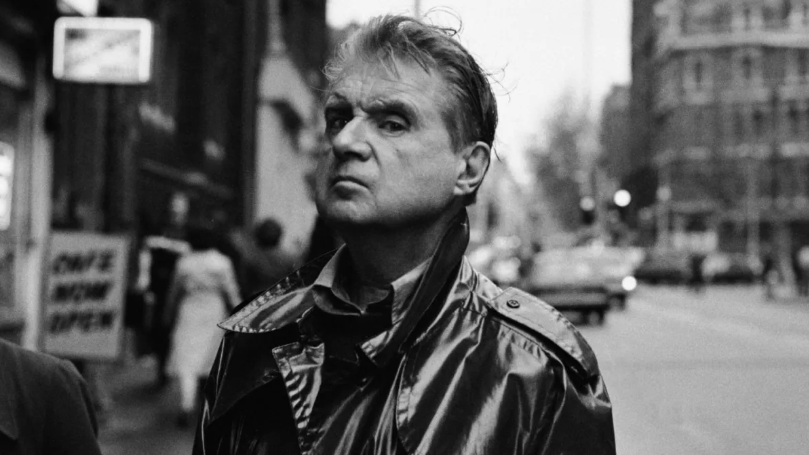
Francis Bacon in Charing Cross, London in the 1980s.
The new play ‘Buggers’ examines his relationship with George Dyer
BUGGERS to Make World Premiere
at Edinburgh Fringe
Alistair Hall stars as Francis Bacon in the psychodrama,
backed by the Estate of Francis Bacon.
BY STEPHI WILD | LATEST NEWS | BROADWAY WORLD | SCOTLAND | TUESDAY, JUNE 23, 2026
Buggers, a haunting new psychodrama exploring the turbulent relationship between artist Francis Bacon and his lover and muse George Dyer, will come to the Edinburgh Fringe this August. Written by and starring Alistair Hall as Francis Bacon, the production has received rare research support from the Estate of Francis Bacon.
Inspired by the volatile and often sadomasochistic relationship between the two men, Buggers imagines a triptych of moments between the doomed couple, charting their relationship from lustful beginnings to a devastating conclusion. Set against the contrast between Bacon’s extraordinary public success and the turmoil of his private life, the play examines a relationship shaped by passion, addiction, power and dependency, while interrogating the emotional cost of artistic ambition and the damage left in its wake.
Beginning in Soho in 1963, the play traces how Bacon, already a painter in the heady midst of international fame, became obsessed with George Dyer — a charismatic working-class East Ender with a criminal past. As Bacon paints Dyer more than any other subject, Dyer in turn becomes intoxicated by the whirlwind world Bacon offers him: booze-soaked nights, celebrity excess and artistic glamour. But as the relationship deepens, Dyer begins to lose his sense of self, increasingly forced into performances of masculinity and aggression that sit uneasily against his own nature.
As cracks in Dyer’s mental health begin to emerge and Bacon’s ego becomes increasingly impossible to bear, love and desire curdle into violence, resentment and emotional dependency. What begins as obsession spirals into a destructive cycle neither man can escape, leading inexorably towards Dyer’s death from an overdose of barbiturates and alcohol in a Paris hotel room in 1971, just days before Bacon attended the opening of his landmark Grand Palais retrospective. Publicly, Bacon appeared unmoved by the tragedy whilst privately, he was devastated.
Structured as a triptych, echoing Bacon’s own artistic form, the play unfolds across three fractured periods, moving between intimacy and rupture. Through this lens, Buggers explores how queer relationships in 60s/70s Britain were shaped by secrecy, shame and power imbalances.
The production offers a rare and deeply researched insight into one of the most mythologised relationships in modern art history. The Estate of Francis Bacon, historically known for closely guarding Bacon’s archive, granted Hall access to personal documents, letters and artefacts. This material has informed not only the writing but the performances of Alistair Hall and Peter Clements, who play Bacon and Dyer respectively, giving the play striking authenticity and psychological detail.
Haunting, psychosexual and emotionally raw, Buggers examines the fragile line between artistic genius and personal destruction, asking what is sacrificed in the pursuit of greatness and who is left to bear the consequences. Buggers performs 5th to 30th August (not 17th and 24th) at Pleasance Courtyard Upstairs at 13:20 (60 mins).
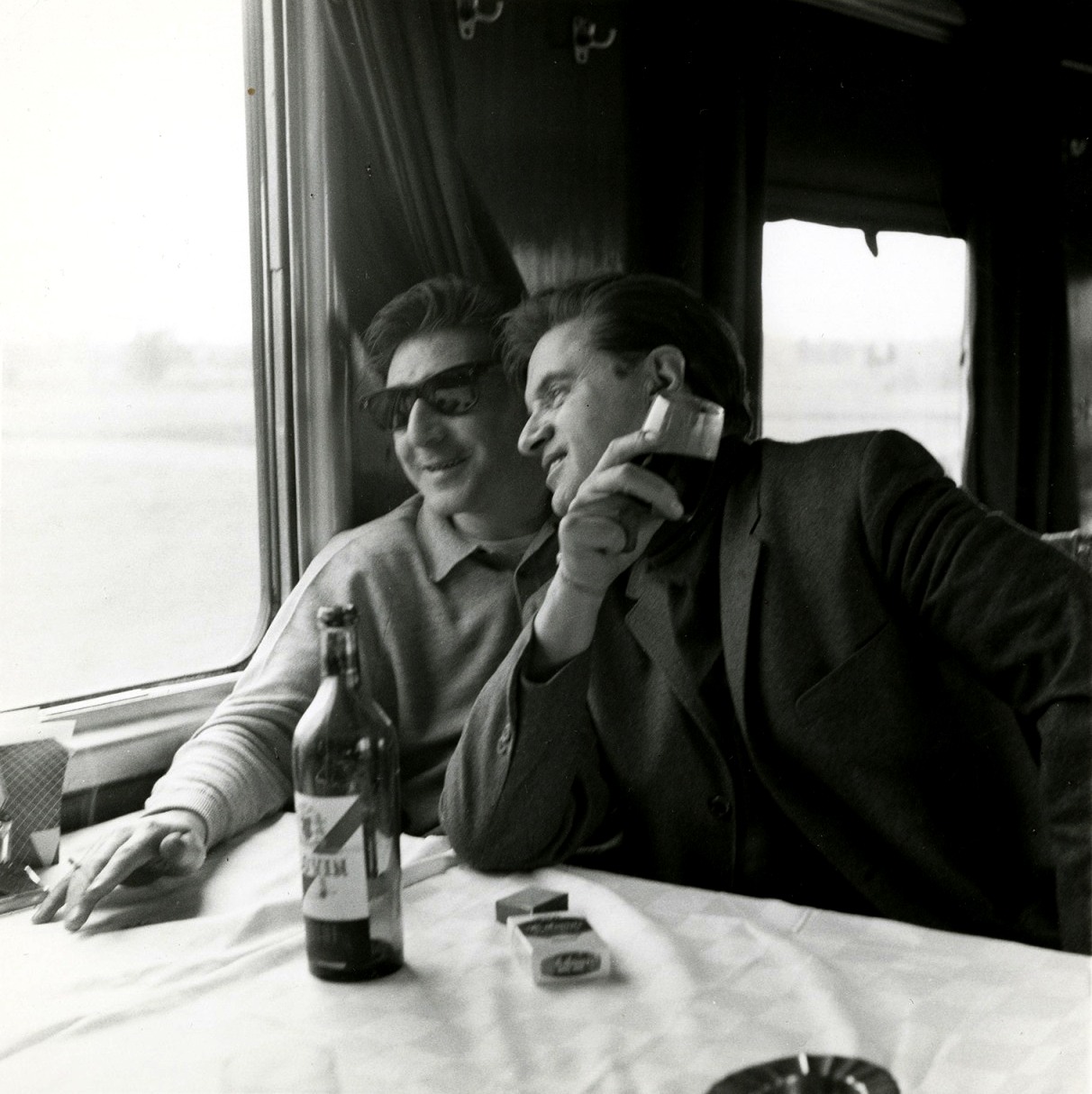
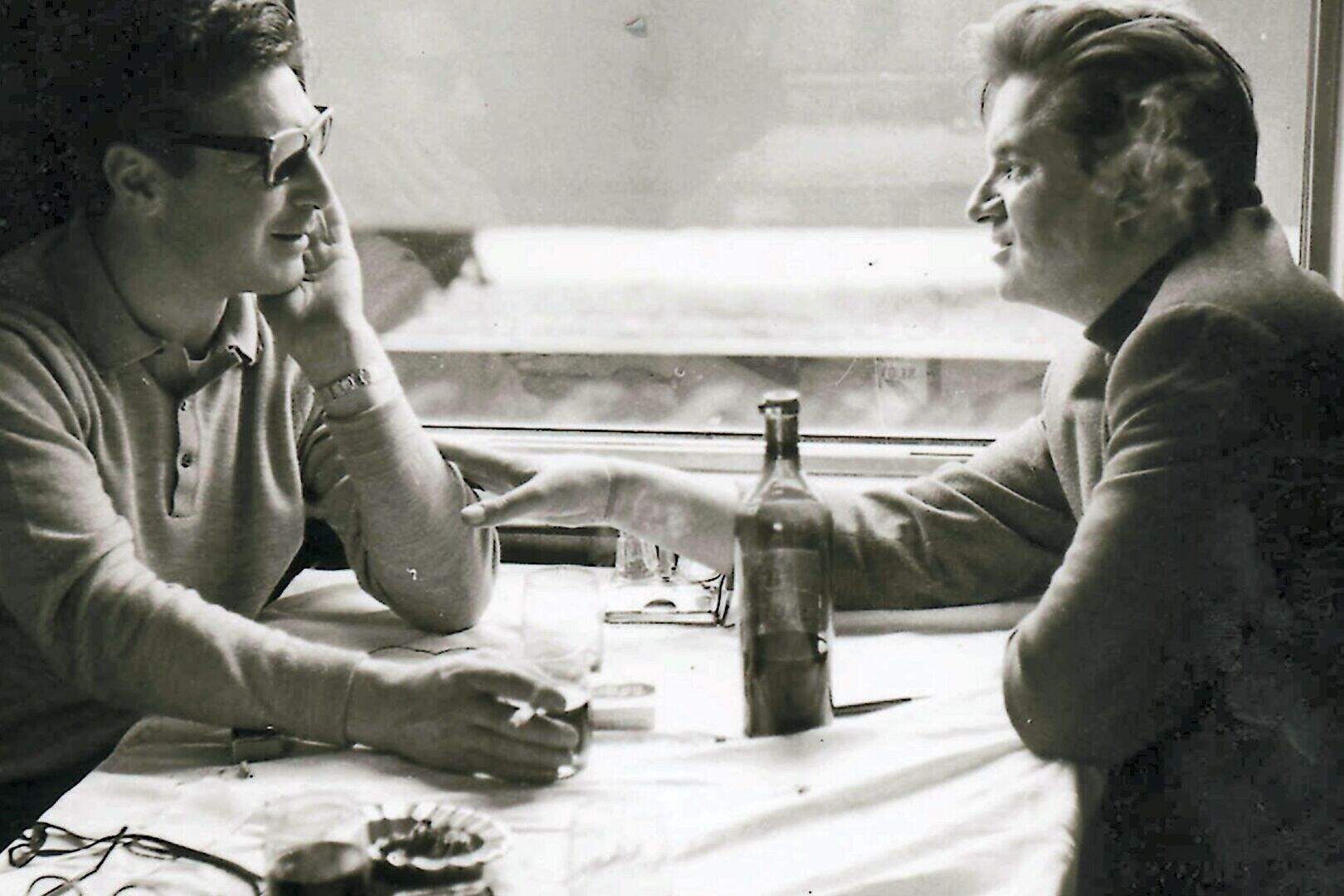
Francis Bacon and George Dyer on the Orient Express to Athens, 1965, photographed by John Deakin
Norman Balon was much more
than ‘London’s rudest landlord’
CHRISTOPHER HOWSE | OBITUARIES | NEWS | THE SPECTATOR | SUNDAY, JUNE 14, 2026
Norman Balon, who has died at the age of 99, missed the point when he defined himself as ‘London’s rudest landlord’.
There, I think, he mingled self-publicity and self-defence. People didn’t go to the Coach and Horses, Soho, to be shouted at by him; they shouted at each other quite enough. Really he was the actor-manager of a twice-daily claustrophobic, drunken extemporisation in his pub which embodied bohemianism and self-destruction in the last two decades of the 20th century.
Remember that 40 years ago the Coach was thick with cigarette smoke, that many customers were drunk daily, at lunchtime, and that no one was fearful of what they said. Things were not then as they are now.
The Spectator contributed a lot to Norman’s decades of celebrity. Through the thousand Low Life columns that Jeffrey Bernard wrote, starting in 1975, he had some claim to inventing Norman. For his part, Norman believed he had made Jeffrey famous by giving him a stage, which came literally true when Peter O’Toole starred in the West End play Jeffrey Bernard Is Unwell, from 1989.
Richard Ingrams, as editor of Private Eye, was guilty of bringing together Norman and Jeffrey. The Private Eye staff had lunch daily at the Coach, at the table near the gas fire and the lavatories. This was a lower-key affair than the fortnightly lunches at which the famous were tempted to sing for their steak and chips. Those were upstairs in the pub, in the Balon family’s former dining room, which felt like an abandoned house in a war zone.
Norman had been at the pub for 40 years when Low Life collided with something in the air in the 1980s to make the Coach, night after night, as crowded as an Underground train. He had left technical college aged 16 on 3 February 1943, when his father signed a tenancy agreement on the pub. A detail I can never forget from Norman’s memories of their first night was their finding 22 mice in the beer slop bucket. There was also the little trouble of wartime bombing.
Michael Heath based his cartoon strip in Private Eye, The Regulars, on the monstrous populace of the Coach, who played out a tragicomic soap-opera there. It was comic most days, and always ended in tragedy, divorce, sickness, poverty and death.
But had it not been for writers like Jeffrey Bernard or Daniel Farson (Soho in the Fifties, 1987), Norman’s little Soho world would have passed away unseen by any but its participants – the usual suspects, Elizabeth Smart, John Heath-Stubbs, John Hurt, Francis Bacon, Diana Lambert, Frank Auerbach, Bruce Bernard, Mick Tobin, Sandy Fawkes, Rupert Shrive, Stephen Fothergill, Bookshop Billy, Brian the Burglar and the uncredited throng of students from St Martin’s School of Art.
Norman’s volatile but forgiving nature came out after the police swooped on Jeffrey Bernard one lunchtime in 1986 for making an illegal book on the races shown on television. Outside Vine Street police station, where they had taken Jeffrey, I found Norman fearing he’d lose his licence. He said: ‘Jeff Bernard’s a cunt; he’s stitched me up for life.’ But by 6.30 p.m., when we were all back in the Coach, Norman bought Jeffrey a drink.
They remained friends to the end, Norman concealing his own emotions by regular references to Jeffrey as a ‘bastard’. He took lobster salads to him at his flat off Berwick Street; he prowled hospital wards, loudly commenting on Jeffrey’s fellow patients. He declared that some other Soho character would replace Jeffrey in his pub after his death in 1997, but he knew in his heart that the supply was running low.
When I went to talk to Norman in 2019, 13 years after his retirement, he told me something serious: ‘You might not believe it. I don’t know and don’t care. But I tried to stop people drinking too much. I had a very big income from the pub, so it didn’t cost me anything to try to look after people.’
Norman bought half a house in Golders Green. He went to theatrical first nights, had his suits tailor-made and his shirts initialled N.B. on the breast. He had retained his hair (cut once a week) and was tall, but he was stooped and did not wear his expensive clothes to advantage.
Norman’s prosperity went with an appetite for the makeshift and awkward. This was seen in the ritual of emptying the cigarette machine on the wall near the lavatories. Once it was unlocked, he pulled off the whole front section between outstretched arms, lugging its weight to a nearby table to rest it on the black Formica surface.
Inside, the machine was almost entirely of wood. No electricity featured. Columns of cigarettes towered above drawers released by coins in the slot. Strings and pulleys wove up and down.
There was a lot to go wrong. Norman would empty the coin drawer on to the table and sit down to count money into little plastic bags for the bank. Sometimes the phone rang or the barman announced that a barrel in the cellar needed changing, and he would lose count.
The machine was more trouble than it was worth, but Norman assumed that, because success was difficult, difficult things should be embraced at all costs. Anyway, his strange career at the Coach would never have flowered but for his failure in 1961 with Balon’s Grill, a swanky restaurant in Baker Street.
Bits of crockery and cutlery from the venture turned up in the Coach decades later, among them the forks regularly secreted by Norman’s forgetful aged mother in her.
Written by Christopher Howse
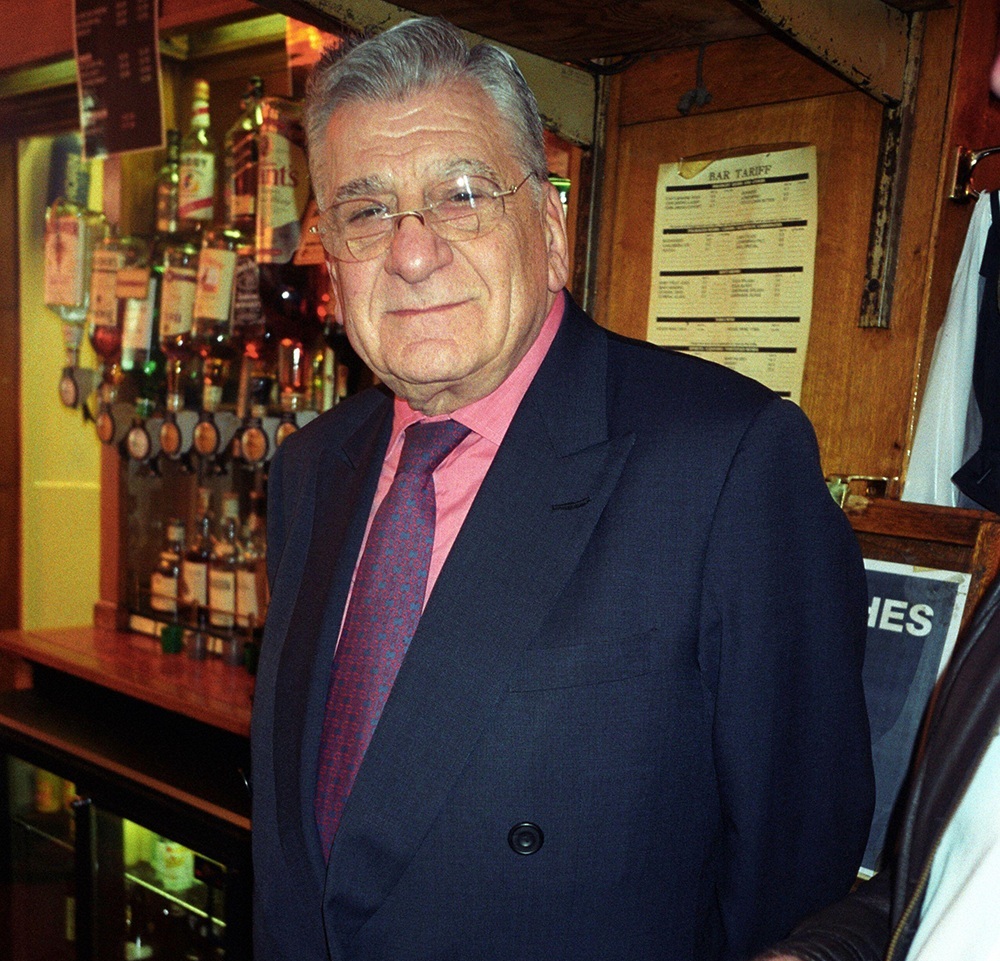
Norman Balon behind the bar at the Coach and Horses © Jack Ludlam
Obituary: Norman Balon
BY LISA BARD & NATASHA BREINDEL | OBITUARIES | NEWS | THE JEWISH CHRONICLE | FRIDAY, JUNE 12, 2026
The renowned publican Norman Balon, who rejoiced in being known as “London’s Rudest Landlord” has died at the age of 99. For over 60 years, Norman was a fixture behind the bar in the Coach and Horses in Greek Street where his clientele ranged from prostitutes and shop lifters, to actors and artists, lawyers and policemen.
He was made famous by the cartoon series The Regulars published in Private Eye, Jeffrey Bernard’s Low Life column in The Spectator and then Keith Waterhouse’s acclaimed play Jeffrey Bernard is Unwell in which the writer gets locked in the pub overnight. Norman was even the subject of a play Norman Balon – It’s All True by his successor as pub landlord, Alistair Choat, which played for one night only in January 2023 to a packed house at the Shaftesbury Theatre.
Norman was born in Ilford in 1927, the second of Anne’s four children, the eldest of three with Jack. In 1927 the family moved to Bournemouth where his parents ran two kosher hotels. Due to the war the family moved back to London and settled coincidentally in Temple Fortune where Norman spent the last 40 years of his life. Norman attended Hendon Technical College, but when just after his 16th birthday he got a call from his parents that they had bought The Coach & Horses pub in Soho and he must come to work there straight away. That was a relief for Norman as, although fantastic at mental arithmetic he did not enjoy school and played the class clown, so much so that he was taken to a psychologist to check that there was nothing wrong with him.
The pub opened up a whole new world for Norman. He was exposed to Soho and cultivated an eclectic set of customers who included artists Lucian Freud and Francis Bacon, actors Peter O’Toole, Tom Baker and John Hurt, entertainer Danny La Rue and of course Private Eye and the writer Jeffrey Bernard. The pub was Norman’s new playground where he could talk to whoever he wanted and tell anyone that he found boring to piss off. He revelled in being known as “London’s Rudest Landlord”. The first time his step-daughter visited the pub, he wanted to show her an original Regulars cartoon hanging high on the wall. He just climbed on the table where some customers were sitting, almost sending drinks flying. One customer was angry and almost got uppity but the other just said “That’s Norman for you.”
But Norman’s bark was worse than his bite and underneath his gruff manner there was a man with a big soft kind heart. If a regular was sick he would visit them in hospital, or support them through hard times like divorce. Norman was great at giving advice, but it would be delivered in one short statement, more like a directive than a therapy session. Norman enjoyed good food and in 1959 he opened Balon’s Grill and Buffet restaurant in Baker Street, serving French food. He served the type of gastronomic food he loved to eat, however after three years of losing money he closed it.
Whilst young, free and single, he took holidays in the South of France, eating in a different restaurant each night with his Jewish best friends. One night he lost £300 in a casino and called his father to bail him out. His father did, and after that bought him a painting entitled A Beggar of Valencia which Norman kept in his living room for the rest of his life. It appears on the wall behind him in a portrait that was painted of him in later years. Norman loved going to the theatre and was a fixture at first nights. He was famed for offering around his box of Fortnum and Mason peppermint creams and would revel in being asked to predict whether a show would be a hit or a flop.
In 1962, Norman married his first wife Suzanne and had two daughters, Lisa and Natasha. Suzanne worked in the pub as a cook until a proper chef was hired and once a year both daughters would help behind the bar. Norman’s first marriage ended in 1982. Three years later, when playing cards at the Acol Bridge Club, he was partnered with a young Italian woman Grazia Meggiolaro, who, disgusted by his tactics, threw her cards at him and said she never wanted to partner him again. A week later, he heard her saying she enjoyed theatre, invited her to a first night and they remained together for the rest of his life, marrying in 2007. He called her “the Italian Virago”.
Norman was known as a gentleman, not only for the way in which he treated people but also for his sense of style. He was renowned for monogrammed Jermyn St made-to-measure shirts, which he wore with a suit and Hermes ties. In the late Eighties, following the success of Jeffrey Bernard is Unwell which fittingly opened starring Peter O’Toole, a publisher asked Norman to write his autobiography You’re Barred, You Bastards! which was written with the help of Spencer Bright. Norman regularly said he had never read the book. Norman was invited onto the nightly Wogan show and to a debate against the “polite society” by one of Esther Rantzen’s programmes.
Norman sold the pub in 2006 at the age of 79 and retired saying he would be in his box soon. He surprised everyone by living another 20 years, during which time he learnt to use a laptop given to him as a retirement gift by his friends at Private Eye. Norman would use this on a daily basis to check his bank balance and delighted in telling his family that he had worked out how long he could afford to live. He continued to take the tube into Soho into his late nineties to visit his old stomping ground, getting cake from Maison Bertaux and catching up with his friends and playing cards in The Coach. When the journey became too much, he instead wandered up and down the streets of Temple Fortune, asking local shopkeepers how their business was doing or debating religion with members of the Orthodox Jewish community who were his neighbours.
Norman was not a religious man. He was an atheist but very much a secular Jew. As his eldest granddaughter became more religious, he would love arguing with her until he could no longer win the debate. Sometimes at dinner parties, fellow Jewish guests would say they would pop into the pub in future. Norman would tell them not to bother as Jews did not make great customers as they did not drink enough.
Norman is survived by his wife Grazia, his daughters Lisa and Natasha, his sister Doreen, his step-daughter Julia and four grandchildren, Jake, Isabel, Carl and Millie.
Lisa Bard and Natasha Breindel
Norman Balon: born January 13, 1927. Died: June 4, 2026
Bacon next, as wallets open for famous doors
DAVID SANDERSON | ARTS CORRESPONDENT | HOME NEWS | THE TIMES | TUESDAY 09 JUNE 2026
Opportunity knocks for art lovers after the door behind which some of the most expensive paintings of the 20th century were created has been put up for sale.
The door to Francis Bacon’s studio in a London mews has emerged after being kept by the artist’s neighbour for over two decades. The panelled wood, grey painted door for 7 Reece Mews, which led up a steep flight of stairs to Bacon cramped bedsit/studio, is the sole remnant of the artist’s studio still in his adopted city of London.
After the Dublin-born painter’s death in 1992, all the interns in his studio including many architectural fittings were taken to Ireland’s Hugh Lane Gallery where it was recreated. The slim door, however, was gifted to John hn Spero, Bacon's neighbour in the South Kensington mews, by the artist's sole heir and executor of his estate, John Edwards.
It is now being offered for of the Master sale as part of Painters and Pioneers sale which is being staged at Gallery 8 in London by Winsor Birch fine art house. Its pending sale follows a ries of door auctions in recent years which included Freddie Mercury's green garden one, several from New York’s Chelsea Hotel, and the floating one that featured in the film Titanic and kept Rose, played by Kate Winslet, alive but was apparently not quite large enough to accommodate lack, played by her co-star Leonardo DiCaprio.
Mercury’s door, which was emblazoned with graffiti at Mercury’s Garden Lodge in London, sold for $412,0000 three years ago despite being given a pre sale estimate of between £15,000 and £25,000. Bacon’s door has been given an estimate of between £40,000 and $60,000. Doors have unexpectedly entered the art world mainstream in recent years.
The door in Titanic was part of the frame above the first class lounge it was created for the film from a piece of debris salvaged from the 1912 sinking and it sold for £570,000 two years ago A former tenant of New York’s Chelsea Hotel salvaged several of its doors after a change of ownership.
Bob Dylan’s one subsequently sold for £70,000. While the one through which Janis Joplin and Leonard Cohen trooped for their affair brought in £63,000 at an auction in 2018.
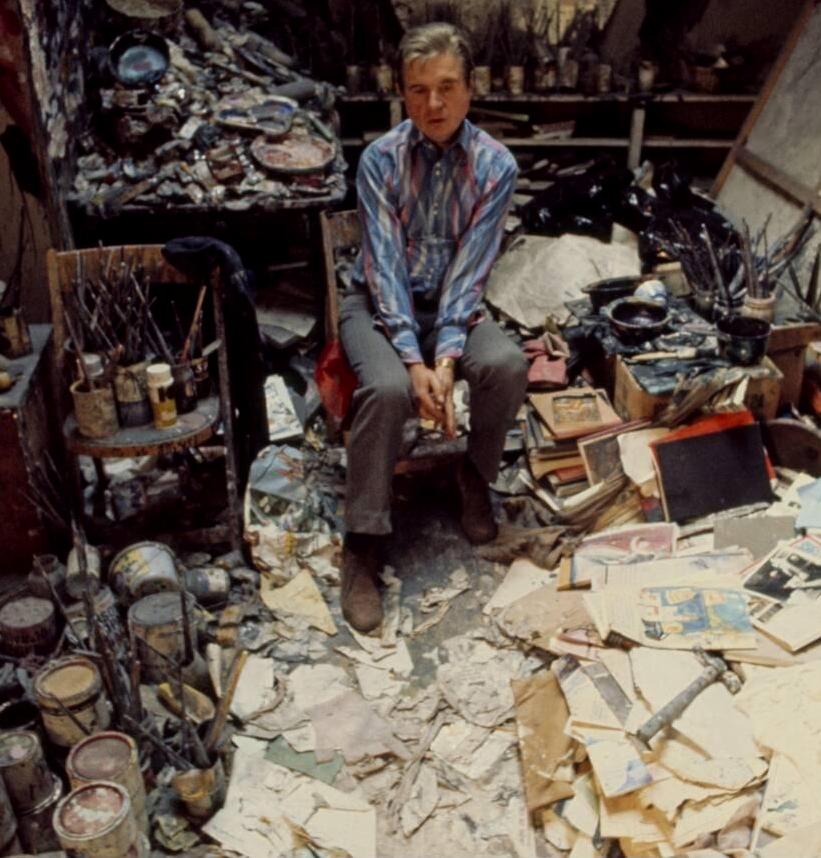
Francis Bacon in his studio in 1974
Norman Balon obituary: rude landlord
of the Coach and Horses
Irascible publican of over 60 years who was enshrined in Jeffrey Bernard is
Unwell as well as the Private Eye cartoon The Regulars dies aged 99
TIMES OBITUARIES | THE TIMES | LONDON | FRIDAY 05 JUNE 2026
Norman Balon rejoiced in the title “the Rudest Landlord in London”. Tall, solidly built and with permanently Brylcreemed hair, he was partly his own self-conscious creation and partly an embroidery on observations provided by Jeffrey Bernard in his Low Life column in The Spectator and by Keith Waterhouse in his play Jeffrey Bernard is Unwell.
As landlord of the Coach & Horses in Greek Street, Soho, he strutted his stage, boasting of the quality of his indifferent food, ignoring the interminable time it took for customers to get a drink, relishing his catchphrase, “You’re barred, you bastards”, and applying the sentence triumphantly to bores, offensive drunks, troublemakers and prostitutes. Usually the periods of exclusion were short, though in some cases the victims, unaware that Balon’s displeasure had faded, stayed away for two decades or more. He would not tolerate a jukebox and was known to give clueless tourists, especially those wearing shorts, a hard time. He was, in short, a curmudgeon.
Media attention focused on the Coach & Horses when Private Eye magazine began to use it as a rendezvous, especially for their fortnightly luncheons. The artist Michael Heath created a strip cartoon called The Regulars, which featured many of the set and another catchphrase, “Jeff b’in in?” (referring to Bernard, who habitually occupied a stool at one end of the bar). The irascible landlord was periodically referred to in Private Eye as “Monty Balon, the genial meinhost”. Close to the stage door of the Palace Theatre, the Coach became a favourite snug for many of the stars, dancers and orchestra members who played there.
As a consequence, others were drawn to the pub by its celebrity journalists, advertising executives and other ne’er-do-wells, their braying at each other across its narrow confines becoming ever more shrill as the evening progressed and inhibitions were abandoned. No doubt Balon was on occasion justified in his cantankerous reaction to Soho’s cadgers, chancers, yahoos and whooping hoorays who swept, sauntered and stumbled into his bar. According to the journalist Christopher Howse, Italians and shoplifters drank at the Greek Street or “shallow end” of the pub and serious drinkers and talkers at the Romilly Street or “deep end”.
At Private Eye lunches, Balon invariably served melon, steak and chips and schoolboy stodge puddings, making exceptions for favourites such as Clive Jenkins, for whom he substituted a large gin and tonic in place of acid wine, and Tom Driberg, who was allowed his steak underdone with soggy cabbage on the side. Balon liked to kowtow to industrialists (Lord Weinstock) and impressive politicians (Margaret Thatcher, Jo Grimond). But the rest — Neil Kinnock, Kenneth Baker, Tom Stoppard, John Junor, Joan Littlewood, David Steel, John Biffen, Richard Crossman, Lord Shawcross et al — were treated without ceremony, and there were famous flare-ups with Willie Hamilton, the anti-royalist MP, the journalist Peter Jenkins and Lady Antonia Fraser.
Balon’s father had been a loss adjuster and private speculator who lost money in the stock market crash at the end of the 1920s. His mother, who haunted the Coach into her nineties, claimed a family background in “the umbrella business in Gower Street”. Bruised by the crash, the family moved to Bournemouth in the 1930s, where they ran two private hotels.
Norman Balon was born in 1927 and educated in Bournemouth and, when they returned to London in the 1940s, at Hendon Technical College. He had some experience in pubs owned by various uncles and aunts. His father took the licence of the Coach and Horses on February 3, 1943, and his son left technical college that day, aged 16. There had been an inn on the site from the early years of the 18th century. The present building dates from 1847 and became known as The Iron Lung because of the iron support pillars which surround it. Balon took it over from his parents and actively pursued the development of his forthright personality.
Those who were unfazed by his bellicose nature — indeed, tended to rejoice in it — included the Private Eye stalwarts Richard Ingrams, Peter Cook and William Rushton, who would come in daily. Less frequently, the painters Lucian Freud, Francis Bacon, Frank Auerbach and the art writer Bruce Bernard, brother of Jeffrey, would put in an appearance; the Soho chronicler Daniel Farson too, not to mention the actors Peter O’Toole and John Hurt. And it was a meeting place for generations of students from St Martin’s School of Art.
To Jeffrey Bernard — who for a time wrote a horse-racing column for Private Eye under the pseudonym Colonel Mad and who subsisted on a punishing regime of vodka and Senior Service cigarettes kept specially for him in a cupboard — the Coach was his second home.
Once, in desperation at the heaving throng, he was said to have borrowed a mobile phone to ring the bar staff only feet away and bellow, “Any chance of getting a fucking drink?” His antics and dyspeptic nature were captured for all time by the journalist and author Keith Waterhouse, himself no slouch in the drinking stakes, in Jeffrey Bernard is Unwell, which, appropriately, starred Peter O’Tool.
The play, in which Bernard finds himself locked in the pub overnight, its interior recreated on stage, was a great success, and Balon would refer to it with pride as “my play”. Eventually, Bernard was obliged to have a leg amputated as the cigarettes took their toll on his circulation, and he was no longer able to visit the pub.
In 1991, Balon published his autobiography, You’re Barred, You Bastards! (The Memoirs of a Soho Publican). His co-author was Spencer Bright, and Balon proudly boasted that he had not read the whole book, let alone written it. He was a devoted first-nighter, proudly categorising himself as “the Angel of Doom” for his pessimistic judgments, but always brandishing a box of chocolate peppermint creams which he bought at Floris until he quarrelled with Madame Floris’s heir. He switched his patronage to Fortnum & Mason, until they stopped him hand-dipping; thereafter, he tracked down a private source.
His autobiography revealed a more sympathetic side of his character. He had been an uncertain youth, compensating for his lack of formal education by spending flashily. He was distraught when, in 1981, his wife of nearly 20 years asked for a divorce, and he eventually rationalised his grief in frequent moans about the iniquity of the alimony laws.
He had an encyclopaedic knowledge of the characters and gossip of Soho, and more often than most people imagined, he extended a generous and sympathetic hand to those of his regulars who were down on their luck. He was particularly concerned for Bernard, whom he visited in hospital, shopped for and generally kept going. A heavy drinker in his youth, he eventually became teetotal and successfully sued a journalist who described him as “crapulous”, the professional wordsmith not realising how damaging that description was for a tenant publican.
Like so many pub landlords, Balon considered himself “a bit of a character”. He wrote (or dictated) in his autobiography: “Managers today don’t have the personalities that tenant publicans had years ago. My successor couldn’t be another me … I would like, when I die, for the coffin to be pushed on the bar and everybody to have a drink on it.”
After the first night of Jeffrey Bernard is Unwell, in which Balon was an off-stage presence, he punched the foetid air of his saloon bar, shouting, “I’m immortal! I’m immortal!” He is survived by his long-time companion, Grazia Weiner, from Venice, whom he nicknamed “the Italian Virago”, and his two daughters by his former wife, Suzanne.
He retired, at 79, in May 2006 to a standing ovation and a rousing chorus of For He’s a Jolly Good Fellow after 63 years behind the bar. There were no drinks on the house, and all three beers on tap were off.
Norman Balon, pub landlord, was born on January 13, 1927. He died on June 4 2026, aged 99

Balon propping up the bar in familiar fashion
Norman Balon, notoriously rude landlord
of the Coach and Horses in Soho
Balon was immortalised in Michael Heath’s Private Eye cartoon, The Regulars, and
by Jeffrey Bernard in his Low Life column in The Spectator
TELEGRAPH OBITUARIES | THE DAILY TELEGRAPH | LONDON | FRIDAY 5 JUNE 2026
Norman Balon, the former landlord of the Coach and Horses in Greek Street, Soho, who has died aged 99, described himself in his autobiography You’re Barred, You Bastards (1991) as “London’s rudest landlord”; few patrons, regular or otherwise, would have disagreed with him.
The title of the book did not do full justice to Balon’s unique approach to customer relations, for his usual mode of address to those he took against was very much more robust: “Fuck off, you cunt!” Those destined to experience his abrasive approach included Northerners (“they will insist on finishing their drinks”); “vile young people drinking out of bottles”; foreign tourists “with their fucking two glasses of lemonade and three straws” and brewery executives: “One came in once and started putting up shelf strips. I slung him out by his collar and the seat of his pants.”
No one was entirely immune from Balon’s spleen. When Neil Kinnock turned up one day, Balon told him: “I don’t talk to has-beens.”
“Are you being served?” he asked a female customer. “I’d like a pint of bitter and a gin and tonic,” came the reply. “I didn’t fucking ask you what you wanted. I asked you if you were being served.” One journalist reported that he had in his notebook a Balon sentence consisting of nine words of which only the first three — “You are a…” — were quotable. “I just can’t be bothered with bores,” Balon confessed. “If I say to you ‘Shut up’ and you don’t, then I sling you out.”
Around 80 per cent of Balon’s customers were said to be regulars — quite an achievement in the shifting sands of Theatreland. Given the quality of the food and service on offer, it is probable that the reason that the pub began to be crowded was the proximity of the Coach and Horses to the offices of the satirical magazine Private Eye.
The pub was frequented by the magazine’s staff from the early 1970s, and scribes and celebrities were invited to dish the dirt on their friends at fortnightly lunches held in the upstairs room, formerly his family dining room, with terrible wallpaper.
As a family home it was an odd, rambling, echoing, dark building, with its steeply turning stairs, windowless passages, random cubby-holes, bare floorboards and an upper floor that was eventually abandoned to mice and the occasional pigeon that somehow got in under the eaves. Later, Balon allowed the painter Rupert Shrive to use a third-floor room as a studio.
Even after the family moved out of the pub, Norman’s mother would sit in the morning near the gas fire near the lavatory folding napkins, polishing cutlery and making remarks like: ‘It’s terribly cold, isn’t it?’ As the years went on she developed a habit of secreting forks in her handbag and Norman would instigate a search of the bag and the pockets of her fur coat before she went home.
Tall and stoop-shouldered, with a menacing grin and brilliantined hair (“like Walter Matthau’s younger brother”), Balon was immortalised in the Eye’s pages in Michael Heath’s cartoon, “The Regulars”, and by Jeffrey Bernard in his Low Life columns in The Spectator (“His egomania and what passes for his wit has all but emptied the pub,” complained Bernard in one column).
By the mid-1980s he would cry, ‘I’m famous! I’m famous!’ with innocent pride as he came into the pub waving a copy of the Standard diary column with his name in. Eventually he even painted a corner of wall outside, above the advertisement for ‘Fine ales and wines’ with the word ‘NORMAN’S’ in large capitals. No one ever called it that. It was always the Coach.
Keith Waterhouse’s play Jeffrey Bernard is Unwell (1989), starring Peter O’Toole, featured Bernard locked in the pub overnight, awaiting Balon’s rescue.
Balon and Jeffrey Bernard probably loved each other, if Bernard ever loved anyone. They certainly had rows – “You’re barred, and don’t come back” – but he did.
Bernard, it seems, was one who brought out his nicer side. “When he died, I said he was the nicest shit in the world, but he was still a shit,” Balon recalled. “ I remember him passing out in here about 15 years ago. I said, ‘You’ll never get another drink in here,’ and then I thought about it and realised that it was better that he got drunk in here rather than somewhere people didn’t care about him.”
Another favourite was the campaigning journalist Paul Foot (“a lovely man”), although Balon recalled in Foot’s disfavour that when Private Eye was nearly bankrupt due to libel costs and asked for cheaper lunches, “He was the only one who wanted to keep smoked salmon on the menu.”
Balon was a bad loser at chess, at which Conan Nicholas (the man who invented cat-racing) was often eager to issue a challenge, since he was the stronger player. But even as a chess-player, even if he swept the pieces off the board when he lost, Balon was not utterly despicable.
Nor did he like good manners in others. When the actor Tom Baker was overheard apologising after treading on someone’s foot, Balon barked ‘Oi, stop being so bloody polite!’ He never minded his customers being abusive: “Call me what you like – as long as you spend money.”
Norman Balon was born in Ilford on January 13 1927 into an atheist Jewish family and brought up in Bournemouth, where his family owned two hotels.
After one of the two hotels was bombed, the family moved to London and Norman’s father acquired the tenancy of The Coach and Horses on February 3 1943. Norman, aged 16, left school that day and started working behind the bar. He soon became a hardened drinker, putting away a bottle of Scotch a night.
Once he overdid things at a charity ball at Grosvenor House and had to be smuggled out through the kitchens in a trunk. A short stint running a high-class restaurant was a failure and he soon returned to the seedy familiarity of the family pub. Later, when his father became a fire inspector, he took over as landlord. He also became teetotal.
During the war the pub’s clientele mainly consisted of British-born Italians, American servicemen and Maltese gangsters who ran the Soho sex trade. Balon recalled flying bombs blowing in the pub’s windows, and an occasion in 1945 when a black American GI came in with a white woman, and all the other American soldiers drew guns.
After the war, the pub became a haunt of a shifting crowd of poets, painters, prostitutes, bohemians and crooks – “Dylan Thomas, Brendan Behan, Francis Bacon,” Balon reminisced. They rubbed shoulders with low-life characters such as French Vera, No-Knickers Joyce, Sid the Swimmer and Iron-Foot Jack.
But when London began to “swing” in the 1960s, Soho was invaded by a melange of new wave actors, directors, composers and pop stars, many with provincial accents. Balon never really accustomed himself to the change. When a road manager brought The Beatles in he refused to take their cheque because he did not recognise them.
Nor did Balon approve of attempts to “clean up” the area: “Soho in the old days was a bank manager’s day out, a place where people came for a touch of naughtiness,” he recalled. “Soho should exist on prostitutes, artists, homosexuals and lesbians, but Westminster Council has sanitised the area, which has caused huge damage… Also I quite firmly believe that when the one-way system was introduced it sounded the death knell of Soho as I knew it.”
The Blair government’s controversial new Licensing Act was the last straw, and in 2005, after 62 years’ splenetic service behind the bar, Balon announced his intention to sell up and retire.
With regard to affairs of the heart, Balon’s credo was that love is a very overrated emotion, but he never quite managed to live up to his own principles. A well dressed 6ft 4in, and the beneficiary of a weekly haircut, he was never happier than when escorting a lady to a first night. He prided himself on being a world expert on mint chocolates.
He married Suzanne in 1962; they had two daughters. One day, regulars came into the pub and found Norman sitting at the table near the lavatory with a heap of matchboxes, scratching away at the labels. He had had them printed with his name and that of his wife Suzanne. Now that they had parted he was scraping her name off each one.
From 1985 he lived with Grazia Weiner, an Italian translator. They eventually married.
Norman Balon, born January 13 1927, died June 4 2026
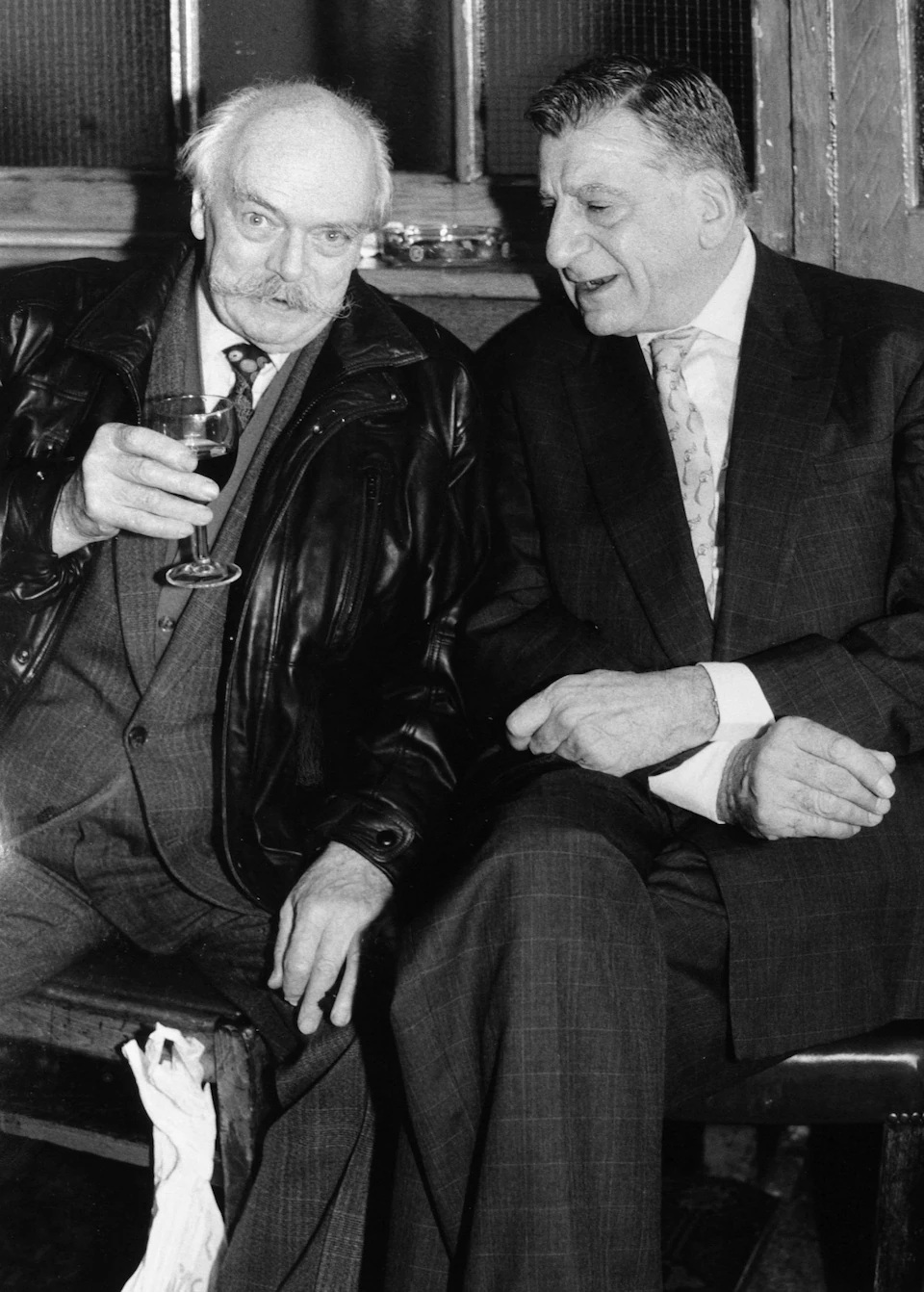
Balon with Gaston Berlemont, landlord of the French pub in Dean Street, in 1992. Credit: John Taylor
A door that may hold many memories –
the door to Francis Bacon’s studio to be
exhibited and auctioned
BY NEIL GOODWIN | NEWS | MARLBOROUGH NEWS | WILTSHIRE | WEDNESDAY 3 JUNE 2026
Does a door keep ‘a memory’ of those who have opened it or passed through? Of course not, a door is an inanimate object – or so we believe.
But if the door that is currently in the possession of Grant Ford’s Winsor Birch fine art house and residing here in his Marlborough office could talk it would relate tales of the characters who helped influence the course of history of British art over the past century, as probably many of our greatest and most notable artists will have grabbed the door knob and pushed – or pulled – or even just posted something through the letter flap. The memories belong to the people who passed through it, but the door carries the marks of their passage.
What is this door? It is – or was – the door to the studio of one of this country’s greatest painters of recent years, Francis Bacon. It was the entry point to Bacon’s studio in Reece Mews, London, guarding that threshold from 1961 until the artist’s death in 1992 when it passed, with the rest of the studio to Bacon’s sole heir, John Edwards. Six or so years later it was given to the next door neighbour John Spero whilst the rest of the studio was lifted intact and rebuilt at the Hugh Lane Gallery in Dublin. But at present the door is leaning against a wall in Marlborough. But not for much longer.
Next week it travels from Marlborough up to London where it will be exhibited in Winsor Birch’s ‘Master Painters & Pioneers of the 19-20th Century’ at Gallery 8 in Duke St, and then to be offered for sale in a timed auction, supported by a handwritten letter of provenance from Bacon’s lover, John Edwards.
How much? Pre-sale estimate for this tall, narrow, grey unrestored plank of wood that carries the patina of memories is between £40-60,000. Realistic? Who knows, only when the auctioneer’s gavel hits the block will we find out but it’s worth noting that three years ago Freddie Mercury’s garden door sold for £412,750 against an estimate of £15-25,000. If Bacon’s door gets anywhere near that price then this length of grey timber alone will be worth more than the rest of the many houses for which it could be the threshold back here in Marlborough.
Three of those who certainly crossed that threshold were the subjects of the three most expensive Bacon paintings ever sold at auction – Lucian Freud, George Dyer and John Edwards – the subjects of great Black Triptychs. One, Three Studies of Lucian Freud (1969) sold at Christie’s New York in November 2013 for $142.4 million, briefly the most expensive work of art ever sold at auction.
They were but three of many. Across the threshold guarded by this door in those thirty or so years ventured many of the great characters of British art and media, including David Sylvester, Lucian Freud, Frank Auerbach, the dealers from Marlborough Fine Art, the photographers John Deakin, Bill Brandt and Henri Cartier-Bresson, Melvyn Bragg with the South Bank Show film crew in 1985.
The eventual new owner will acquire not a piece of architectural salvage but a relic in the proper sense: an object made significant by sustained physical contact with one of the most important painters of the twentieth-century, every working day, for thirty-one years.
As Grant Ford tells, “In an era increasingly preoccupied with the material traces of artistic lives, the door survives not simply as architectural salvage but as an object of unusual psychological and cultural proximity to Bacon’s working world.”
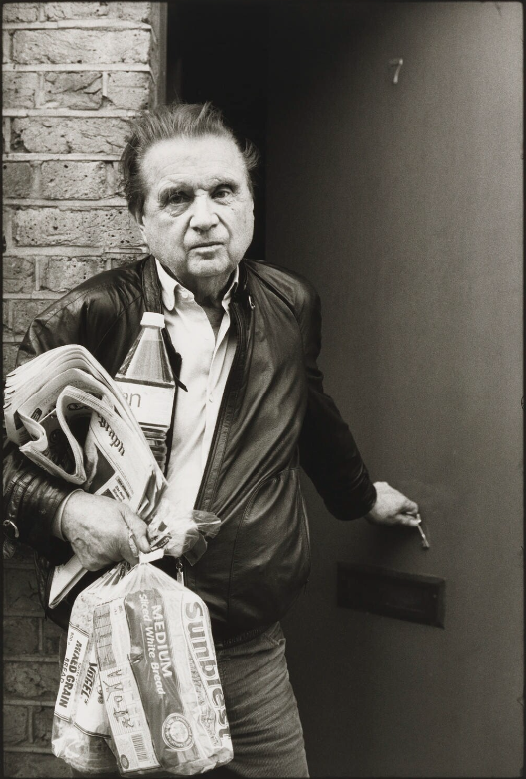
Francis Bacon, 7 Reece Mews, October 1989. Neil Libbert
BY STEPHEN SMITH | ART | CULTURE | THE OBSERVER | MONDAY 27 APRIL 2026
In John le Carré’s 1963 thriller The Spy Who Came in from the Cold, secret agent Alec Leamas, on his way to a stage-managed defection to East Germany, is led through the “interminable corridors” of Tempelhof airport. The terminal is mothballed now, but its old buildings, which were designed by Hitler’s architects, have been commandeered by Berlin’s police force.
These days, the interminable corridors are finished in eau de nil and milky blue. The potted plants look cared for and sunlight penetrates the grimy windows, but the visitor doesn’t forget that those who work here are in the business of finding out other people’s secrets. Three men go by in jeans and hoodies. “The watchers,” smiles my host, detective René Allonge – a surveillance team.
Allonge shows me into Room 4212. The walls are lined with paintings: a Chagall, Romantic landscapes. They were once offered at saleroom prices before Allonge and his team exposed them as fakes and put the vendors before the courts. This is Allonge’s interview room and the canvases are his “icebreakers”, he says. Allonge is 52 and softly spoken, with grey hair and stubble.
As the head of the Berlin police art crimes unit, he has a reputation for tenacity – a doggedness in getting his man. We are here, however, to talk about a case he describes as the strangest of his career: one of the most notorious and baffling art crimes of the 20th century. It concerns a painting by one of Britain’s greatest postwar artists and featuring another: Portrait of Francis Bacon, by Bacon’s old friend Lucian Freud. It’s worth £20m, perhaps more. It disappeared from the walls of a Berlin gallery almost 40 years ago and has not been seen since.
Now, though, Allonge is opening up about a breakthrough in the case. He and his team have identified a prime suspect. The suspect is a man who came to Berlin from the old East Germany many years ago. He considers himself an artist in his own right, says Allonge. The detective tells me: “We believe it’s more likely that this man is the thief than not. Over all these years, there’s never, ever been any other suspect – the focus is on him.”
But because of a quirk of German law, it’s very unlikely that this man – or indeed anyone else – will ever face justice for taking the Freud painting. And although Allonge believes his man knows what happened to it, he’s refused to reveal its whereabouts – so far. He is like a ghost; that rare figure in 2026: someone with no trace on the internet.
The suspect, who is in his 70s, has never been charged over the Portrait of Francis Bacon, and The Observer cannot identify him for legal reasons. Allonge has visited the suspect at his home, the pair of them making small talk, but always circling back to the missing artwork. They make an odd couple, but so did Freud and Bacon. As much as anything, this is a story of two precarious, obsessive relationships.
On a bright spring afternoon, the glazed pavilion of the Neue Nationalgalerie in Berlin’s museum quarter sends back dazzling reflections of sunlight. Designed by Ludwig Mies van der Rohe, it opened in 1968 at the height of the cold war. Today, a crocodile of schoolchildren files through an exhibition called Extreme Tension. It features a large canvas in the unmistakable hand of Bacon: Portrait of Isabel Rawsthorne Standing in a Street in Soho. In 1988, a year before the Berlin Wall came down, the work displayed here included the study of Bacon by Freud. The picture, oil on copper, was made in 1952. Freud told the art historian Martin Gayford. “I always take a long time but I don’t remember the picture of Francis taking all that long. He complained a lot about sitting – which he always did about anything – but not to me at all. I heard from people in the pub.” The work was modestly sized: almost 18cm by 13cm (7in by 5in) – about as big as a hardback book.
Three weeks into the exhibition, on the morning of Friday 27 May 1988, seven of the security guards at the Neue Nationalgalerie called in sick; a further nine were on holiday. There was only one member of staff, who normally worked in the cloakroom, on duty in the room where the Freud was on view. Not only would the work fit comfortably into a pocket, but the screws securing it to the wall wouldn’t detain a thief for long. During the afternoon, the cloakroom janitor spotted that the wall was bare. Dieter Honisch, director of the gallery at the time, ordered the main doors closed and called the police.
Allonge sympathises with the officers who were assigned to the case in the 1980s. He tells me: “The old investigators hadn’t any chance. There was no CCTV in the gallery. No one saw the criminal. They checked the visitors and took their names. But they had hardly noticed the painting in the first place.”
The disappearance of the Bacon portrait caused consternation in the then West Germany as well as in London. The Tate, which owned the work and had loaned it for the exhibition, had set indemnity (the risk covered by the UK Treasury) at £75,000. After the theft, a more realistic estimate of its value was £1.4m: it could now be worth 14 times that. The British Council, acting for Freud and the two chief lenders, put pressure on Honisch to close the exhibition early.
Rumours soon circulated about the possible culprits. Perhaps the most outlandish explanation was that Bacon himself had put someone up to it. He and Freud, once firm friends, had long since fallen out. No one’s entirely clear why, though an aggravating factor was that Freud owned a painting of Bacon’s, Two Figures, which he bought for £100, and refused Bacon’s request to lend it back to him for an exhibition. The conspiracy theory goes that Bacon got his own back by arranging for Freud’s portrait of him to be snatched and so sabotage his Berlin show. I heard this from a figure with impeccable art world credentials, who told it to me straight-faced, though they admitted it was highly dubious. Bacon died in 1992, four years after the theft, and left no indication that he’d had anything to do with it.
Several museum guards taking sick leave on the same morning was a red flag. Some suspected that the Stasi, the East German secret police, were involved. It had been linked to the disappearance of art treasures, to be sold on the black market for hard western currency. But the police were confident that the Freud wouldn’t be taken out of the country. For one thing, the copperplate would trigger checkpoint scanners. Wolfgang Fischer, a leading figure in the London art world in that period, went to see Honisch the weekend after the robbery. He pointed out that Freud’s work was then not well known in Germany and urged him and others to consider a possible psychological motive for the theft: prophetic remarks, given the way the investigation has unfolded.
Detectives became interested in someone who had arrived in Berlin from East Germany in 1987, a year before the crime. The man, who was deported from the German Democratic Republic (GDR), settled in Berlin and considered himself an artist. He came to the attention of the police when an informant claimed that he had seen Freud’s painting in the man’s home the day after it went missing. But, under German law, this eyewitness account was insufficient grounds for a magistrate to issue a search warrant for the suspect’s flat.
The suspect was also known to George Girardet, a former diplomat of the old West Germany – another figure who is like a character from a le Carré novel. Girardet, 83, used to operate out of the shadows on the eastern side of the wall, with a brief to foster cultural relationships with the GDR. He smuggled art across the border in both directions, in an effort to develop ties through culture. There’s no suggestion that this was for his personal gain. He was a familiar presence at the Invalidenstrasse crossing, where guards on both sides of the city were content to wave him through because of his ID card and the diplomatic plates on his Volvo estate.
Girardet tells me about his dramatic experience of running art over the border on behalf of the man police have linked to the missing Freud painting. “I only met him once and can hardly remember him. He had been living in the east as a freelance artist. That was allowed, if you were a member of the Verband bildender Künstler der DDR [Association of Visual Artists of the GDR]. But he was not a member of the verband. That was the reason they deported him.”
Girardet agreed to move a shipment of art for him to West Berlin. To make the pickup, he drove into a backyard in Prenzlauer Berg, a bohemian quarter behind the wall. He says: “It was raining and gloomy – almost spooky. Two figures broke free from the darkness of an entrance, and I was shocked to see that they were carrying a box like a child’s coffin to my car.” Girardet wondered how he could smuggle this ominous-looking consignment across the border. Fortunately, it was so wet that night that the car windows fogged up as soon as he turned on the heating, and he drove west untroubled in the special diplomatic lane.
For Freud, the exhibition in Germany had marked a homecoming: he had spent his early years in Berlin before fleeing the Nazis for Britain while still a child. According to his biographer William Feaver, the Neue Nationalgalerie had gone up on a patch of bomb-damaged Berlin where Freud once played as a boy.
His feelings about his home city were complex. He thought “the theft was the culminating slight on him in what had once been his very own part of Berlin”, wrote Feaver. Andrea Rose, who was director of visual arts at the British Council when the painting disappeared, had to break the news to Freud. She says: “He was so nice. But he said: ‘You know the Germans have always had it in for the Freuds.’”
The art historian Robert Hughes had described the lost artwork, with “that smooth pallid pear of a face like a hand grenade on the point of detonation” as “one of the key images of modernity”. Hughes offered Freud the cold consolation that at least there was someone so fanatical about his work that they would steal it. “Oh, do you think so?” Freud replied. “Not a bit of it. He must have been crazy about Francis. That would have justified the risk.”
This was a shrewd insight on Freud’s part. Allonge says that the man who is suspected of the robbery was indeed intensely interested in the artist depicted in the painting and made many artworks of his own after Bacon.
In London, Freud tried to resign himself to the loss, opening a bottle of champagne with friends. He recited a monologue performed by Stanley Holloway for them about the parents of a child who is eaten by a lion and a magistrate who tries to cheer them up by suggesting they could always have further sons.
“At that Mother got proper blazing, / And ‘Thank you, sir, kindly,’ said she. / ‘What waste all our lives raising children / To feed ruddy lions? Not me!’”
Freud said he felt the same way as “Mother”. Feaver wrote: “Recriminations were futile and he was pretty certain that the picture would be returned.” Besides, Freud wasn’t just drowning his sorrows: he was celebrating after he’d been approached by the keeper of the queen’s pictures to paint a portrait of Elizabeth II.
The incoming director of the Tate at the time was Nicholas Serota. He says: “Freud made a very small number of portraits to begin with, and this is one of the key paintings of the early part of his career.” Serota, who is now chair of Arts Council England, decided that the Tate would hold back from claiming for the painting from the state indemnity fund. He recalls: “We were waiting to see what happened. The matter was in the hands of the German police.”
Freud’s vexation over the missing work never quite left him. He insisted that, whenever a photograph of it was reproduced, it must be in black and white. “Partly because there was no decent colour reproduction, partly as a kind of mourning,” he explained. “The painting is quite near monochrome, so it comes out quite well, and I thought it was a rather jokey equivalent to a black armband.”
One night, while he was having dinner at Moro, a smart restaurant in London’s Exmouth Market, he drew the portrait again from memory, “the face more injured than the original and – since the disappearance of the original – more morose”, according to Feaver, who was sitting next to him.
Freud’s dinner companions suggested it should be made into a “wanted” poster. With the help of the British Council, the poster duly went up on the streets of Berlin in 2001. A reward of 300,000 German marks, the equivalent of about £100,000, was offered by an anonymous donor, payable on recovery of the picture. It was hoped that it could be found in time for a Freud exhibition to be held at the Tate in London the following year. The posters failed to have the desired effect; ironically, they were spirited away by art lovers and trophy hunters.
The Observer has learned of a secret operation involving British diplomats and art world figures to mount one last attempt to recover the missing portrait in 2017 – six years after Freud’s death in 2011 – because 12 months later, 30 years would have elapsed since the original theft, meaning it would no longer be possible to bring a civil case because of Germany’s statute of limitations.
Graham Holliday, who was then part of the legal team at the British embassy in Berlin, says: “The thinking at the time was that, if we were going to prosecute anyone, we had to do it quickly. Or else the person might come out of the shadows with the painting and we wouldn’t be able to touch them.”
The case was investigated by experts, including Jurek Rokoszynski, known as “Rocky”, a former detective sergeant in the Metropolitan police specialising in art cases, who was now working freelance. Rocky had been born in a displaced persons camp in Paris at the end of the war, and his successes included tracking down a brace of stolen Turner paintings after they were removed from a gallery in Frankfurt in 1994 and returning them to a grateful Tate.
Holliday says the trail, once again, led back to the original suspect and to the eyewitness who told police about seeing the painting in his flat. There were claims that the eyewitness was one of three men who had attacked the suspect, tying him up and beating him, in the hope that he would reveal the whereabouts of the painting so that they could claim the reward. But the police couldn’t make a solid case against their man. “There was no compelling evidence – but so much circumstantial evidence,” is how Holliday recalls the investigation.
Like his suspect, Allonge grew up in the former East Germany. In his first job, he went to sea as a trawlerman in the state fishing fleet. After the GDR collapsed, he became a detective in 1997, and has served in the art crime unit since 2009. In 2010, his team foiled the sale of a fake Fernand Léger painting that was about to change hands for $5.8m, and put the criminals in jail. In 2015, Allonge smashed a ring of ageing Nazi sympathisers who had hidden monumental statues commissioned by Hitler and were selling them on the black market.
In Room 4212 of the police offices at Templehof airport, Allonge keeps a copy of Freud’s “wanted poster” of Bacon on the wall behind his desk. He first heard about the stolen Freud from an older colleague in 2012 and decided to reopen the case. He went to meet the prime suspect. “I have been in touch with this man and spent a lot of time talking to him. We talk for hours on the phone. He thinks I’m his friend; he trusts me.”
What evidence do you have that he is the culprit?
“He has told us that he visited the Freud exhibition. His friends have said that he was obsessed with Francis Bacon. We have a witness, an artists’ model, who told us that the suspect drew his hands and then made paintings of the hands in the style of Bacon. “Friends of his have told us that, when he visited them, things would go missing, and when they challenged him about it, he would return the missing items, which indicates that he has some disturbed relationship to property.
“But the best evidence in this case was the word of the eyewitness, who told us: ‘I saw the stolen painting on the day after the theft in the flat of the suspect.’ The witness later assaulted him to try to get him to hand it over for the reward. He wouldn’t have done that unless he thought the suspect had the painting, because he was putting himself at high risk of imprisonment for that attack.”
Has Allonge asked him outright if he stole the painting? “Yes, of course. We can talk about everything else, but when I ask him for the painting, he becomes crazy. He says. ‘No, no, no, I haven’t done it!’ He’s a good actor.”
He adds: “In the history of art theft here, including the most well-known works, there are only two cases when the paintings haven’t been found. One is the Freud. And we think there’s a connection to the other case.”
That concerned a number of paintings, including The Poor Poet by German artist Carl Spitzweg, which was taken as part of a haul from another Berlin gallery a year after the Freud went missing.
The police theory goes like this: their main suspect was also linked to the Spitzweg haul. His friend – the witness mentioned above – took some of these artworks with him to Turkey. Allonge says: “We know this because Rocky was able to buy back some of these stolen pieces from a lawyer who was acting for the man in Turkey.”
The lawyer claimed that he was also in a position to return the missing Freud painting. When he was challenged to provide proof of this, he offered a photograph of the painting that the art crime unit exposed as simply a copy of an image in a catalogue. The lawyer was charged with attempting to extort money from the Tate and was ordered to pay a fine.
Allonge acknowledges that Portrait of Francis Bacon may be irrecoverable. “It could be that the suspect has had it destroyed. He may even have incorporated it into his own artworks.”
For all his candour, Allonge will not tell me the whereabouts of the suspect. He points out: “This is an ongoing police investigation.”
So why was he willing to talk to me about it? “It’s a British painting and I see it as my duty to return it to Britain, and talking to a British journalist is part of that process.”
I did some detective work of my own. The man whom Allonge suspects of involvement in the case is now living in the north of Germany, not far from the Baltic coast. He grew up there, in the days when it was part of the old GDR. The place he lives in was the playground of the Nazis and their wives, and later a resort for senior officials in the old communist GDR. Out of season, it’s a beautiful but lonely riviera, where ice settles over the sea.
This area was the birthplace of Caspar David Friedrich, who created Wanderer Above the Sea of Fog, Germany’s most celebrated painting. Although the suspect fancies himself an artist too, none of the local art dealers I spoke to claimed to know him. Journalists working for a local public radio station encountered him a few years ago.
He told them: “If you want to help the Tate gallery, as I do, you’re in the wrong place. I could just as easily say you did it. You can call the police right now and search my place.” The man complained that he had suffered “stigmatisation and slander”.
Great artists live twice. First, in the here and now; later as famous ghosts, while their reputations wax and wane. However, posterity can also play tricks, and that’s what’s happened to Freud and Bacon. They would perhaps be amused. A painting that was once a testament of their closeness has been lost, perhaps for good. The Portrait of Francis Bacon has become like a painting in a ghost story.
I ask Allonge if there was any point in continuing to talk to his suspect.
He says: “The reason why I’m in contact with him is because, otherwise, nobody will be able to find the Freud painting when he dies. I can’t tell 100% if it’s still in one piece but I have to hope that the painting is somewhere – that it exists.” But isn’t it possible that the man is simply stringing him along?
Allonge smiles. “It could be, but I have a lot of time to play. I only want to find the painting and bring it back to London. If I had lost hope, I wouldn’t still be talking to him.”
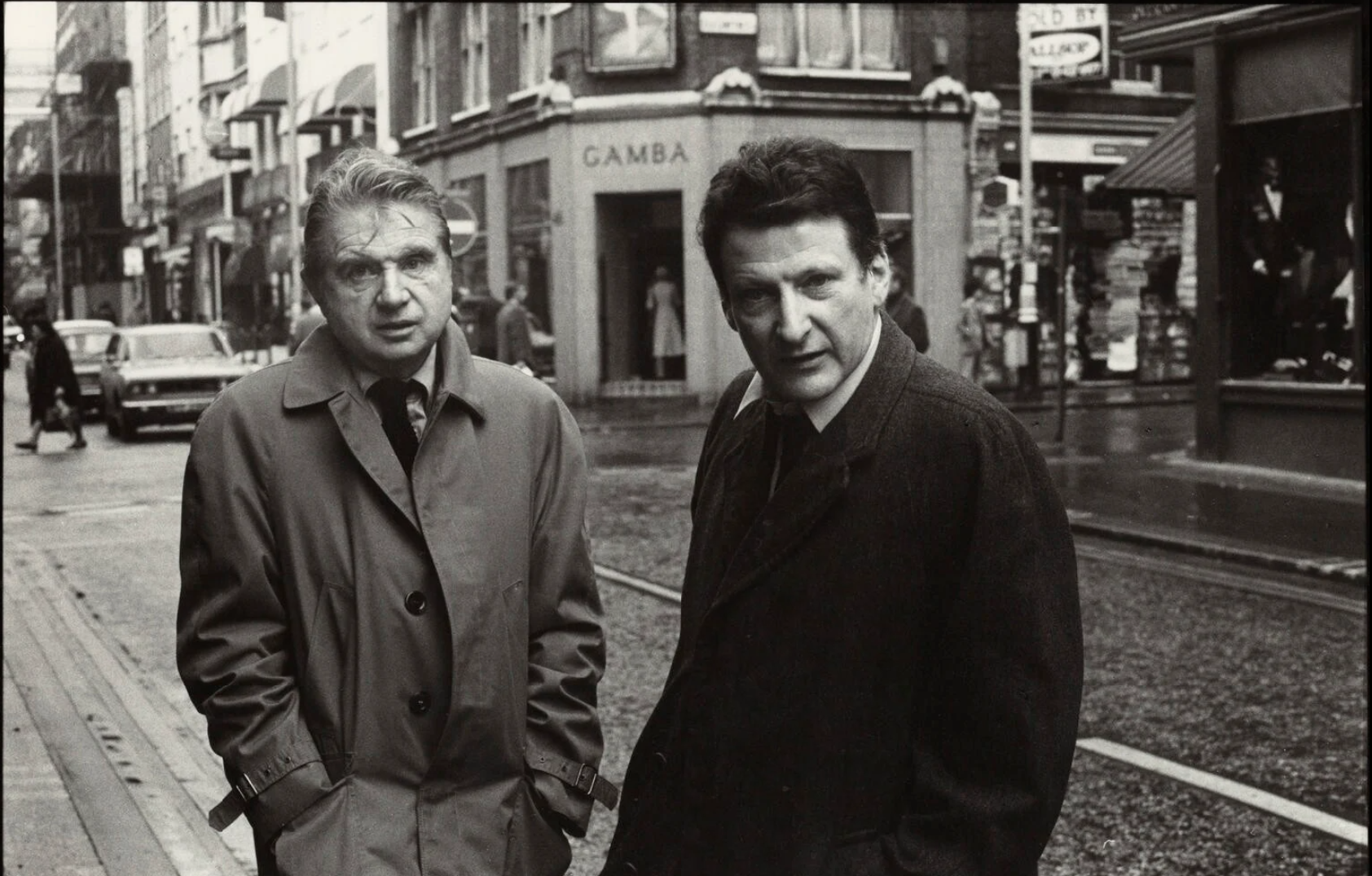
Francis Bacon’s Large-Scale, Fleshy Forms
Unite for the First Time in Paris
The three works go on display at Gagosian from tomorrow, marking the anniversary
of the artist’s 1996 retrospective at the Pompidou Centre.
BY LYDIA ELIZA FRAIL | PARIS GALLERIES | NEWS | OCULA MAGAZINE | THURSDAY 9 APRIL 2026
Three large-scale Francis Bacon works will go on show together for the first time at Gagosian’s Paris space from tomorrow. The works, all from the latter part of Bacon’s career, will be displayed to mark the 30th anniversary of the artist’s major 1996 retrospective at the Pompidou Centre.
On view until 30 May, the canvases—Study from the Human Body–Figure in Movement (1982), Study from the Human Body (1986), and Man at a Washbasin (1989–90)—will form a trilogy indicative of Bacon’s creative spurt later in his career.
As art historian and Gagosian curator Richard Calvocoressi observed, this period was marked by re-invention, “as if the artist’s imagination, far from drying up, had been stimulated to create new and ever more intense combinations of colour, structure and form”.
Bacon had a long, if tortured, relationship with Paris. In 1971, two nights before the opening of his landmark retrospective at the Grand Palais, his partner, George Dyer, was found dead in a hotel room in the French capital. Man at a Washbasin (1989–90), which imbues a subject first explored by the artist in 1954 with a darker tone, is perhaps an example of Bacon’s treatment of this most personal matter.
Despite its association with the death of Dyer, Bacon went on to maintain a studio in Paris from 1975–1987.
The earlier works on display at Gagosian are notable for the artist’s use of colour. Study from the Human Body–Figure in Movement (1982) uses Cadmium orange paint, a hue indicative of his practice during the early 1980s. Meanwhile, Study from the Human Body (1986) was painted concurrently with the latter stages of the post-structuralist movement.
As post-structuralist thinker Gilles Deleuze observed, Bacon’s painting “does not represent violence, it makes visible the violence of the forces exerted on the body”. All three works depict the human figure with Bacon’s characteristically abstract, yet disturbing, fleshy forms.
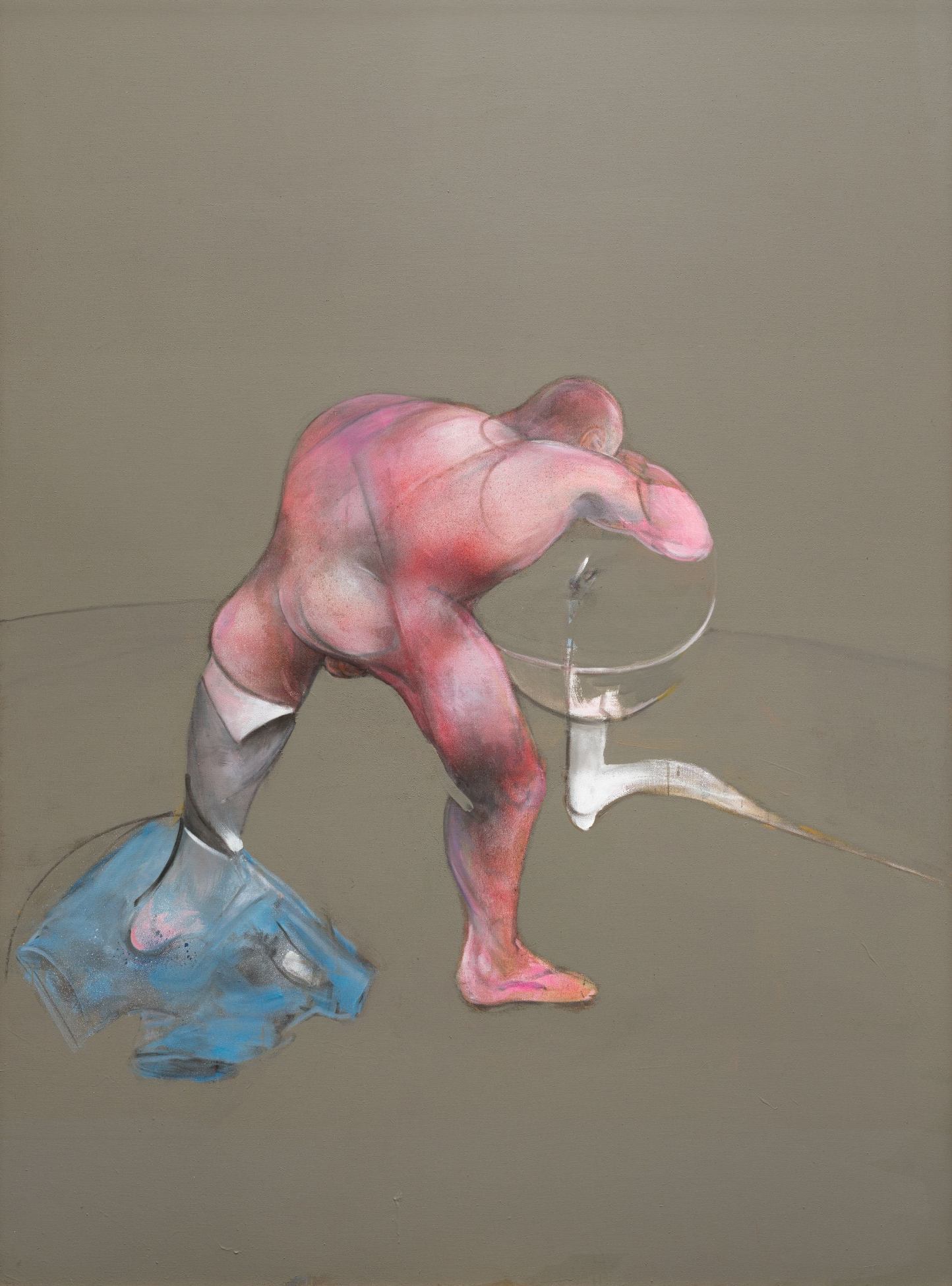
Man at a Washbasin, 1989–90. © The Estate of Francis Bacon. All rights reserved./DACS, London/ARS, NY 2026. Photo: Annik Wetter. Courtesy Gagosian.
Gagosian chooses Paris location to present three
important late paintings by Francis Bacon
The artist had a deep relationship with the French capital
PHILIPPE REGNIER | COMMERCIAL GALLERIES | NEWS | THE ART NEWSPAPER | THURSDAY 2 APRIL 2026
Three late paintings by Francis Bacon—Study from the Human Body — Figure in Movement (1982), Study from the Human Body (1986) and Man at a Washbasin (1989-1990) — are due to go on show at Gagosian in Paris next month, highlighting the artist's deep relationship with the French capital.
In 1971, Bacon was the subject of a landmark retrospective at the Grand Palais, which was tragically overshadowed by the death of his partner, George Dyer, on the eve of its opening. Bacon continued to frequently visit Paris between 1974 and 1987, notably staying at the legendary Hôtel La Louisiane in Saint-Germain-des-Prés. During this period, he also kept a studio in the city, at 14 Rue de Birague in the Marais, just off Place des Vosges.
Larry Gagosian tells The Art Newspaper: “I have had a number of important Francis Bacon exhibitions in New York and London over the past 20 years, and Paris feels like the perfect place to bring these late paintings together for the first time. It's a city that had a profound effect on the artist and his work. Our gallery off Place Vendôme is also an ideal venue—each of the three canvases will be framed by the historic street arcade and visible for all of Paris to see and enjoy.”
Study from the Human Body — Figure in Movement (1982), with its characteristic cadmium-orange background, reflects the painter’s fascination with cricket. The truncated, nude body appears on a pedestal, near a mirror. The painting was included in Bacon’s now-legendary exhibition at Galerie Maeght-Lelong in Paris in 1984, which drew such crowds that the police were forced to close the street, as Sebastian Smee recalls in his catalogue essay for the show. The work was last shown in Francis Bacon: Unsichtbare Räume at the Staatsgalerie in Stuttgart in 2016-17.
Study from the Human Body (1986) builds upon a closely related composition, with a mirror opening out to the right of a distorted figure seen in three-quarter view. Here, a vivid yellow background infuses the painting with sunlight. Rarely exhibited, the work featured in Bacon en toutes lettres at the Musée national d’Art moderne–Centre Pompidou in Paris in 2019–20.
Man at a Washbasin (1989–1990) was also included in that exhibition, as well as in Documenta IX in Kassel in 1992, which opened just weeks after the artist’s death in Madrid on 28 April of the same year. In this painting, Bacon returns to a motif first explored in 1954. Whereas in the earlier, darker work the figure leans forward to the left over the washbasin, here it has moved to the opposite side. The figure is also more colourful, with a pair of blue shorts still caught around the left foot. The work “derives from a photograph in Muybridge’s sequence of a man boxing—he’d used it several times before. The man’s position over the washbasin suggests he might be vomiting—an extreme, involuntary action, both physical and psychological, which inevitably recalls the death of George Dyer”, Smee writes.
“It is the privilege of the artist and
the writer to give form to
characters that are fully alive, fully real, whatever may separate them from
everyday truth—because the artist’s role lies precisely in bringing something of
themselves to the work, and in recreating the subject according to their own
vision of reality,” Francis Bacon is quoted as saying in the book Francis
Bacon, le réel mis à nu, by Majid Boustany and Eddy Batache (published by
the Francis Bacon MB Art Foundation in March 2026). The three paintings on view
at Gagosian on Rue de Castiglione eloquently bear this out.
• Francis Bacon, 11 April–30 May 2026,
Gagosian, 9 Rue de Castiglione, 75001 Paris

Francis Bacon in his studio on rue de Birague, Paris, 1979
Elaine Wynn’s $142-million Francis Bacon triptych
is installed in LACMA’s new David Geffen Galleries
JESSICA GELT | ENTERTAINMENT & ARTS | LOS ANGELES TIMES | TUESDAY 17 MARCH 2026
“She’s supposed to be here instead of the paintings,” said Los Angeles County Museum of Art Director and Chief Executive Michael Govan of the late LACMA trustee and philanthropist Elaine Wynn, while watching the installation of a $142.4 million triptych by Francis Bacon. Wynn gifted the 1969 paintings to the museum upon her death.
When Wynn acquired Bacon’s “Three Studies of Lucian Freud” in 2013, it broke the record for the most expensive artwork to ever sell at auction. It’s also among the most valuable works in LACMA’s collection, alongside other iconic paintings, including Vincent van Gogh’s 1888 “Tarascon Stagecoach,” which was donated to the museum as part of the Pearlman Collection.
Wynn became LACMA’s board co-chair in 2015, and the following year pledged $50 million toward the museum’s new Peter Zumthor-designed David Geffen Galleries. The north wing where the Bacon triptych has been installed is named after her. It wasn’t public knowledge at the time, Govan said, but part of Wynn’s interest in supporting LACMA was to find a home for the Bacon paintings, which she had pledged to donate to the public.
“So really, the story of this building and her gift, part of the energy for it was, where do you leave these legacies?” said Govan, looking at the paintings on the mottled gray concrete walls. The golden compositions are housed in bright gold frames, and the glass that shields them reflects the world beyond. Both the frames and the glass were specified by the artist, Govan said. The triptych is along the wall in a main thoroughfare of the museum facing the floor-to-ceiling windows that form part of the building’s bridge over Wilshire Boulevard.
Visitors will be able to turn their heads from the Bacon paintings to see traffic rushing beneath the building and Chris Burden’s iconic “Urban Light” installation in the distance. Passengers in vehicles below may be able to catch a glimpse of the golden treasures above, which was always part of the plan for the museum’s design, Govan said.
“I am sitting here somewhat sad,” Govan said. “Museum directors are never sad to see a masterpiece on the wall for the opening of their brand new museum. However, it was a life interest gift. At the end of her time she would make this gift, and she told me that. And so I was assuming we would just have a cocktail party at her home after the opening of the building. ... I never imagined [the paintings] would be here, because, of course, I thought Elaine would be here.”
Museums are not just civic spaces meant for public gatherings, concerts and conviviality, Govan said, they are “vessels to hold people’s legacies, hopes and dreams. Almost everything in our museum belonged to somebody, and it was a gift or somebody acquired it for us.”
He hopes that feeling of generosity and public commitment resonates with museumgoers as they explore the new galleries this spring. Govan also says he thinks visitors will appreciate another significant aspect of the triptych: It puts an artist’s portrait of another artist at the heart of the museum. The psychological energy of two artists in dialogue is meaningful to Govan, a self-described “artist person.”
“Three Studies of Lucian Freud” finds Bacon portraying his fellow artist in a way that has a frenetic film strip quality — he observes Freud from three different angles. Freud is depicted on a chair and enclosed with an abstract black-lined box that could be interpreted as a mental cage of sorts. “It’s very powerful,” Govan says, nodding his head in appreciation.
With the Bacon triptych up, the new David Geffen Galleries continue the countdown to their grand public opening on May 4Until then, drills buzz into concrete, construction lifts beep loudly, workers iron curtains and more art comes out of storage waiting for a moment in the sun.
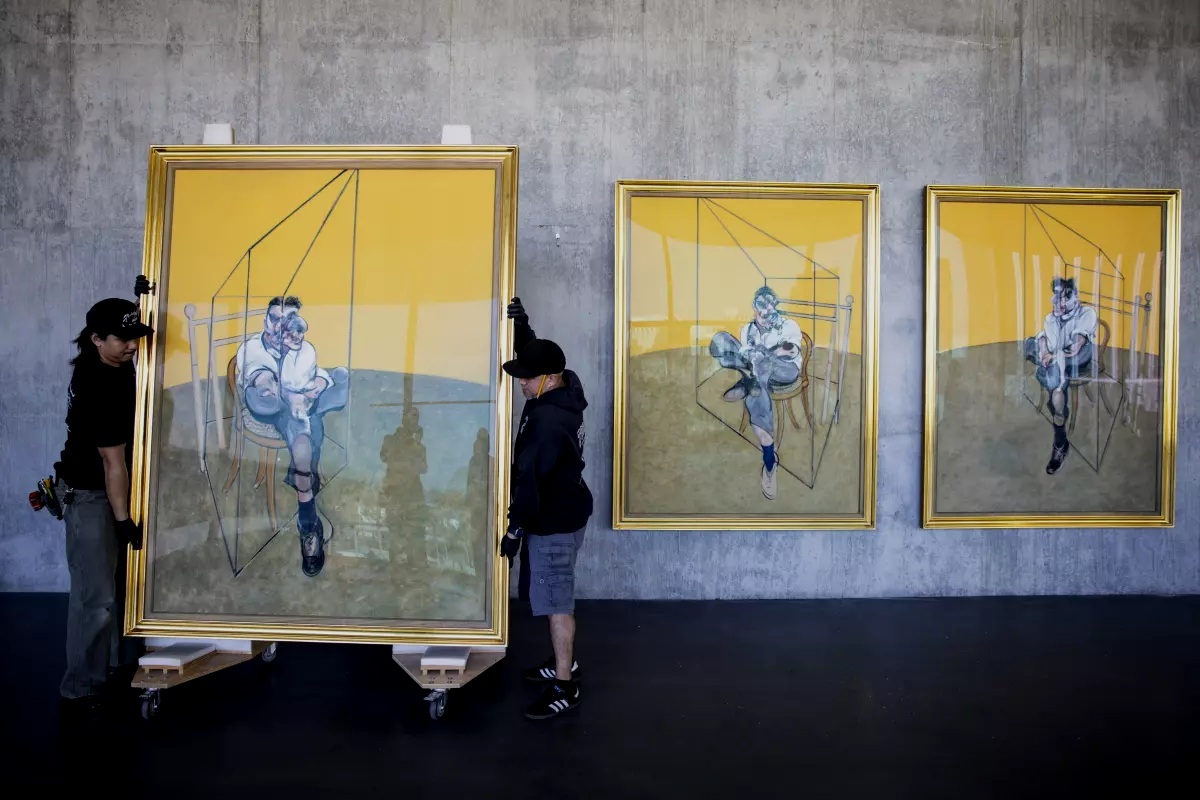
Workers install Francis Bacon’s 1969 triptych Three Studies of Lucian Freud inside Los Angeles County Museum of Art’s David Geffen Galleries.
Condition Report: Massimiliano Gioni,
The New Museum
On the eve of the downtown museum’s long-awaited rebirth, its artistic
director explains the value and opportunity in its physical expansion and
renewed mission to address the urgent questions of today.
MARION MANEKER | INNER CIRCLE EXCLUSIVE | PUCK NEWS | WEDNESDAY 18 MARCH 2026
Big change has come to the New Museum, the groundbreaking non-collecting downtown museum founded by Marcia Tucker in 1977 as a home for new art and new ideas. Earlier this year, the institution announced that long-serving director Lisa Phillips would step down after 27 years. Among her many initiatives, Phillips built the museum’s architecturally significant first building on the Bowery. She also led the fundraising and construction of its expansion, designed by Shohei Shigematsu of OMA, which opens this weekend.
To get a better sense of how the new building fits into the future of the New Museum, I spoke to Massimiliano Gioni, the museum’s Edlis Neeson artistic director, who has been with the institution for 20 years (and curated the 55th Venice Biennale in 2013). We discussed what he plans to do with double the exhibition and gallery space, why the new building is less “introverted” than the old one, and the New Museum’s determination not to be about “art for art’s sake.” As usual, this conversation has been lightly edited and condensed for clarity.
One Plus One
Marion Maneker: I’d love for you to start by explaining the scope of the expanded New Museum—the size of the new building, the problems it solves, etcetera.
Massimiliano Gioni: The new building doubles our footprint, with about 60,000 additional square feet of exhibition space. It also doubles our footprint in galleries, with an additional 12,000 square feet. Then there’s the additional space for our education initiative and for NEW INC [what the museum calls a “cultural incubator”].
From an architectural point of view, a big emphasis was put on improving the vertical circulation across the two buildings. From the outside, it appears to be two separate buildings, and they certainly are, but on the inside, they’re seamlessly integrated in the sense that the floors align and the ceilings are in the same materials. That allows us the freedom to close or open galleries across the two floors, which gives us maximum flexibility. As you progress to the top, you find more space for what we call the discursive platforms of the museum—things that are less exhibition-oriented. It’s very modern, very forward-looking. But it also has a great relationship to the original.
The verticality was both the strength and weakness of the original building.
Depending on the exhibition, each floor can be fully or partially connected, or disconnected altogether. The new atrium stairs become the main axis to move vertically and provide a more dramatic navigational tool throughout the building. From an engineering point of view, it gives you views that are quite engaging on downtown, SoHo, and the Bowery. That’s something that OMA emphasized early on. They thought the original building was somewhat introverted—this one has a dialogue with the outside.
Marion Maneker: I’d love for you to start by explaining the scope of the expanded New Museum—the size of the new building, the problems it solves, etcetera. Does the new building’s flexibility change your approach to the programming?
It’s obviously a quantitative change, because we are doubling the galleries. We will continue to do what we do: Because we’re a non-collecting institution, we are a museum that focuses on the production of new works. We have built a network of international partners with whom we are producing works. In this inaugural round of exhibits, we have 24 new productions, some of them quite ambitious. All of them are co-produced with partners. And what makes it special is that when we produce works, we don’t acquire them, so they remain with the artists. So we’ll continue to do that, and now have the scale to do it at a more significant level.
Another specialty of ours is, we often give both local and international artists their first American show, and certainly their first New York show. And because we have a wider variety of spaces, we can do that for emerging artists and also established artists, who, for all the wrong reasons, are maybe not well-known yet in New York City.
The third house specialty is thematic shows, particularly ones that address urgent questions of today. Historically, the New Museum is where we look to art as a tool to understand the world outside the museum walls. Of course, we definitely love art, but it’s never been an “art for art’s sake” type of space. It’s a place where, through art, we look at politics, changes in society, and so on. So the semantic group shows have remained, and will continue, at a much larger scale, to be central to what we do.
Can you talk about the opening exhibition?
It’s called New Humans. In a nutshell: It’s a show that looks at the shifting definition of the human under the pressure of new technologies. It’s very much an exhibition about the kind of technological upheaval that we are going through. One of the premises of the show is to identify a kind of symmetry between the 1920s and today—a symmetry based on the fact that there was also an explosion of new media at the beginning of the 20th century. The underlying assumption is that by looking at a similar phenomenon that occurs throughout history, we can be reassured that we’ve been there before and have survived—sometimes at a terrible cost—even the most technological transformations. It’s very brainy and very complex, but it’s also quite immediate.
In this first show, we decided to combine historical and contemporary works in a way that I hope will be exciting for young artists. As we have an inflation of exhibition spaces, it happens less and less that a young artist can be exhibited next to Francis Bacon or Giacometti. There is an intergenerational and international dialogue that I think defines the exhibitions we make.
I assume the continuing shows will sort of follow the same path you described of introducing new artists to America. So, essentially, the new building doesn’t change the fundamental view you have as a museum curator?
No, no, no. I think it will be a strong change—a change that is quantitative, but to such a scale that it becomes qualitative, too. It doesn’t change our ethos. It doesn’t change our approach to art. It doesn’t change the notion that art is embedded in social life. The museum is less a place of contemplation, and more a place of interrogation and questioning and participation in the urgent questions of today.
Your long-serving director is taking a well-deserved bow out after opening the museum. Do you have any thoughts on the future of the museum, whoever’s the director?
I cannot and will not comment. But there’s a search happening, and it’s for the board to decide.
London Lives!
The city’s central role in the art market has been diminished in recent
years, but the success of London’s recent sales suggests that the buyers
are finally coming back—even if the timing seems surprising.
MARION MANEKER | WALL POWER | ART | PUCK NEWS | SUNDAY 8 MARCH 2026
I recently spoke to an art dealer who was unable to get out of New York before the snowstorm two weeks ago, and decided to get on the next plane to London as soon as JFK was open again. If he was going to miss out on a few days of sun and action in Los Angeles, where the art world had flocked for Frieze, he figured he might as well get a head start on the London auctions.
He found a surprising number of American and European dealers already there, along with several important art advisors. They were eager to talk about what was on offer—and, if they didn’t get what they were looking for in the auctions, they were keen to talk about what they could source for clients from the private side. This dealer cautioned that the private market for historical artworks from desirable names has not been as suppressed as the weak auction numbers over the last few years might’ve suggested, but he was mainly impressed at the sea change in the mood in London. He summed it up for me when he said, “It felt alive!”
London’s central role in the market has been diminished in recent years for a welter of reasons too complex to tease out here. But a truly healthy art market needs to be diversified and distributed, and the success of these sales—totals were up more than 50 percent at Sotheby’s, and more than double at Christie’s, which holds only two sales cycles a year in London compared to Sotheby’s three—suggests that the buyers are finally coming back. The art market may be once again exerting some centrifugal force, even if the timing seems surprising.
It’s a London Thing
The big question is whether it was the property offered, or a change in market mood, that loosened so many purse strings. I’m told the room was packed with some 400 people for the evening sale, a big crowd for a relatively small space that has been pretty sparse in recent years. For their part, Sotheby’s Tom Eddison and Ottilie Windsor told me the success was the result of several factors: the art, a successful traveling exhibition, more Americans in town, new clients bidding (and winning!) works, and a great deal more bidding in the room. “We felt such positivity this week,” Windsor told me.
Did they all come for the small but extremely valuable group of works from the collection of Joe Lewis? These included two paintings by Lucien Freud, a selfie by Francis Bacon, and a very important painting by Leon Kossoff. The Freuds were a mixed bag, but still sold reasonably well. The Bacon doubled the estimate, but sold for a price in line with these small self-portraits, some of which have achieved prices 50 percent higher than the still-solid $21.6 million paid last week. But the Kossoff really electrified the room: 10 bidders pushed it to $7 million, or four times the previous high auction price for the artist.
The collection overall brought in $48 million. There was also a benefit sale for the Royal Academy, with two lots in the evening sale and nine in the day sale, which were donated by artists to support the institution. The sale brought in $2.6 million, with works by Sean Scully and El Anatsui that each made around $1 million. Batia Ofer, the chair of the Royal Academy Trust, was also in the room bidding on other works. Sotheby’s also held a sale of David Hockney iPad drawings, which are editioned works but still quite valuable. All 16 sold, for a total of $6.1 million—double the aggregate estimate for the sale.
At Christie’s, the sales were also anchored by a prominent collection, this one from Roger and Josette Vanthournout, which totaled $65 million. The top lots in that sale were a 1939 Pablo Picasso that had six phone bidders and sold for nearly twice the £3 million estimate, a Henry Moore sculpture, a Jean Dubuffet that exceeded the estimate range, and two paintings that sold solidly within the estimates by René Magritte and Lucio Fontana. The various-owners evening sale saw the last remaining cast of Henry Moore’s King and Queen sell for $35 million and set a new record for the artist.
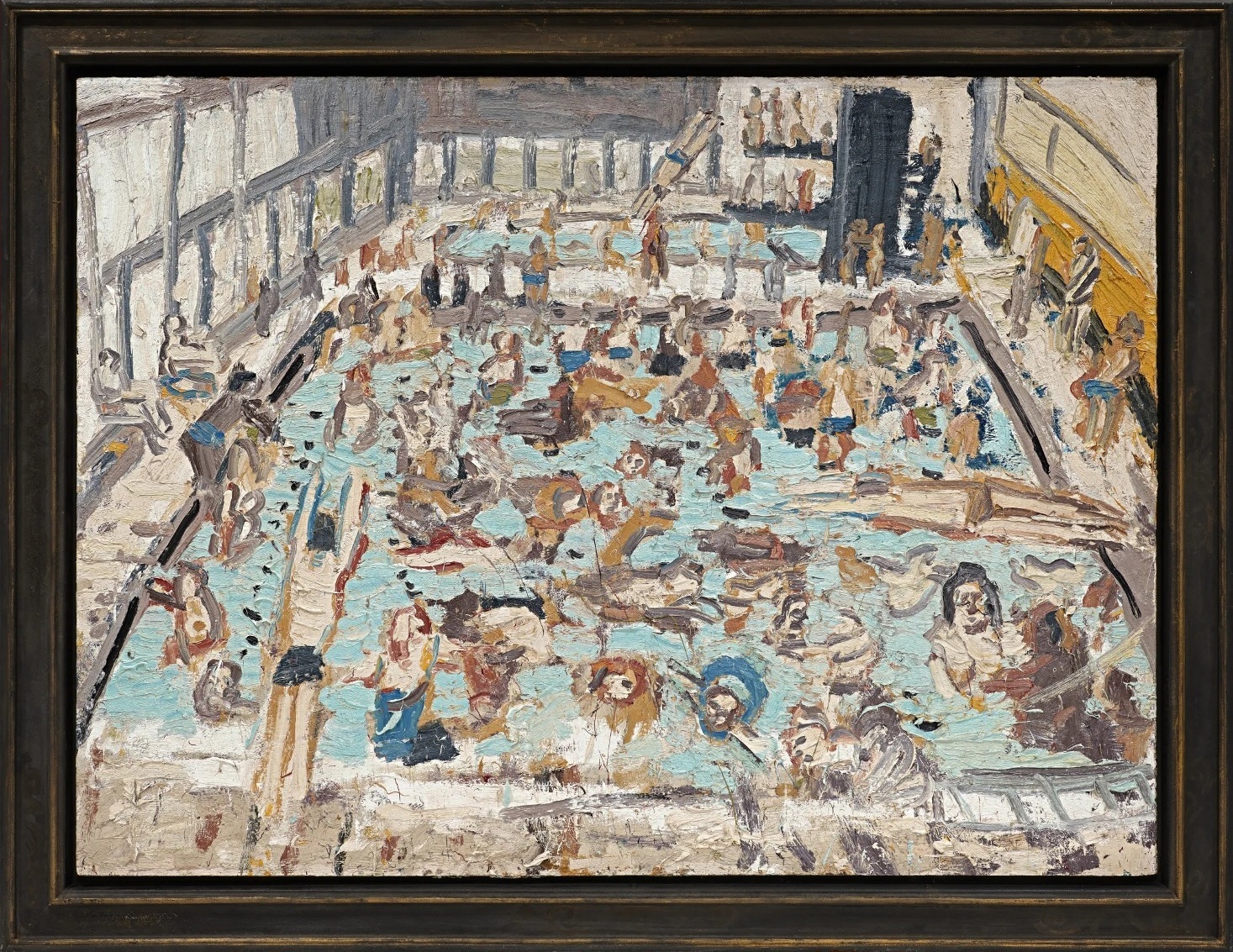
The Leon Kossoff really electrified the room: 10 bidders pushed it to $7 million, or four times the previous high auction price for the artist.
London art market springs back to life in Sotheby’s
Modern and contemporary evening sale
The packed auction totalled £131m and made a record for Leon Kossoff
KABIR JHALA | ART MARKET | ANALYSIS | THE ART NEWSPAPER | THURSDAY 5 MARCH 2026
The latest outbreak of war in the Middle East has done little to deter wealthy art buyers in London, judging by the packed crowd at Sotheby’s Modern and Contemporary Evening Sale last night (4 March). “I can’t recall the last time I saw a London auction so full,” said the advisor Pauline Haon upon exiting the New Bond Street salesroom. “The art market can exist in a bubble. But two years on, I think people are more used to insecurity.”
Kicking off the 2026 auction year, the sale not only signalled stability amid geopolitical tremors but also a renewed vitality for the London trade, which is still suffering a prolonged bout of the post-Brexit blues. The evening’s 54 lots totalled £106.4m (£131m with fees), falling comfortably within the pre-sale estimate of £96.1m to £136.4m (all estimates are calculated without fees). This is more than double the £63m (with fees) it made from last year’s equivalent sale and just shy of the £136m (with fees) made in 2023.
Its sell-through rate was a near-perfect 98% by lot, with just one work, a 2004 Robert Ryman white painting (est £500,000-£700,000), withdrawn prior to the sale.
The crowds had gathered, in part, for a small trove of School of London paintings from the collection of the billionaire currency trader Joe Lewis, whose family trust owns Tottenham Hotspur football club. The four works—all unguaranteed — included the evening’s top lot, Francis Bacon’s 1972 self-portrait, which the artist had once gifted to his doctor as a thank you for stitching up his face after a drunken brawl. The painting made £13.5m (£16m with fees) against an £8m to £12m estimate, going to a phone bidder via specialist Lucius Elliot.
However, it was another Mod Brit darling, Leon Kossoff, who emerged as the night’s star. The late artist’s lively, impastoed Children's Swimming Pool, Autumn Afternoon (1971) (est £600,000-£800,000), is one of five depicting the Willesden Green swimming pool near Kossoff’s home in north London, with other works from the series held in the collections of Tate, the Birmingham Museum and Art Gallery, and Arts Council England.
Compared to some of his heavyweight peers (such as Freud and Bacon, as well as Frank Auerbach), Kossoff's market is underdeveloped—until yesterday his record stood at £1.4m. Last night served as a course correction, with the painting chased by around ten bidders, including three in the room, before hammering at £4.5m (£5.2m with fees) to a phone bidder via Alex Branczik.
“Exceptional works command exceptional prices,” says the London dealer Offer Waterman. “Completely fresh to the market and belonging to one of the most celebrated and pivotal series in Kossoff’s oeuvre, its superb provenance—formerly in the Saatchi Collection and more recently part of the collection of Joe Lewis—made the opportunity to acquire it even more compelling.”
At the last minute, Sotheby’s, evidently sensing this demand, swapped the order of the evening’s lots to place the Kossoff at the start of the Lewis collection, hoping to inject some energy into the proceedings. Nonetheless, the fervour failed to hold for a disquieting nude by Freud, which hammered around its £6m low estimate.
.jpg)
Oliver Barker selling Francis Bacon’s 1972 Self Portrait at Sotheby’s Modern and contemporary evening sale on 4 March in London
A Francis Bacon self-portrait and a Surrealist avian
painting: our pick of the March auctions
Our pick of the highlights from the March auctions
CARLIE PORTERFIELD | OBJECT LESSONS | THE ART NEWSPAPER | TUESDAY 3 MARCH 2026
Following the sudden death of his longtime partner and muse George Dyer in 1971, Francis Bacon painted his own image over and over, introspective in his grief. This particular self-portrait was given by Bacon in a brown paper bag to his doctor Paul Brass as a gift to thank him.
In early 1972 Brass made a house call to Bacon’s studio in order to stitch up a facial injury sustained during a fight with a lover. Brass later recalled: “I said, ‘You’re going to have to see a plastic surgeon.’ He said, ‘Absolutely not—you can stitch me up now.’ So we lay him on the table in his studio. I offered him a local anaesthetic but he refused. He was so drunk I don’t think he felt anything.” Self-Portrait comes to auction from the collection of the billionaire Joe Lewis, whose family trust is the majority owner of Tottenham Hotspur.

Francis Bacon, Self-Portrait (1972) Modern & Contemporary Evening Sale, Sotheby’s, 4 March. Estimate: £8m to £12m
Tip of de Gunzburg
MARION MANEKER | WALL POWER | PUCK NEWS | TUESDAY 24 FEBRUARY 2026
Jean and Terry de Gunzburg are not your average Baby Boomers unloading their accumulated stuff. In fact, the offerings in their upcoming design sale—polar bear furniture by Jean Royère, cabinets by Alexandre Noll, and a complete set of Lalanne mirrors made for Yves Saint Laurent—were enough to make Sotheby’s rewrite their calendar.
Sotheby’s mustered all of its promotional power in announcing the April design sale of the collection of Jean and Terry de Gunzburg, with a splashy set of social media assets and a weekend feature in the Financial Times. (Nicely done, Jac.) The sale is the culmination of a number of different art market trends: Prominent Boomer collectors are divesting themselves of art and design holdings to avoid burdening their heirs; auction houses are using the name recognition and social cachet of prominent collectors to schedule off-season sales, relieving the gridlock of New York’s congested auction calendar; and design sales are beginning to reach the kinds of values that attract the attention and cashflow once reserved for fine art.
So far, Terry de Gunzburg has taken the lead on publicizing the 123-item, $30 million sale, drawn mostly from the contents of the couple’s New York apartment. Read the stories and you’ll learn about her beauty company, By Terry, or her time working with Yves Saint Laurent as creative director of his beauty operation. You don’t hear quite as much about Jean, the descendant of two very different but still quite important families. His mother, Aileen Bronfman de Gunzburg, was the eldest child of Samuel Bronfman, who built Seagrams into a distilling empire. Aileen married Alain de Gunzburg, a descendant of Jewish bankers who arrived in Paris in the middle of the 19th century, were ennobled by a German grand duke, and then returned to Russia, where Tsar Alexander II made the title hereditary.
Perhaps Sotheby’s dropped the de Gunzburgs’ baron and baroness titles to make the couple seem more relatable. In fact, their collection, in both design and art, is less like the name-checked assemblages we see from so many collectors and more an expression of a sustained engagement. That disposition allows them to give pride of place to less well-known artists like Beauford Delaney and Serge Poliakoff among paintings by Agnes Martin and Picasso. The sale does not include the most prominent artwork espied in decades’ worth of magazine features on the de Gunzburgs’ Upper East Side apartment.
You won’t, for example, be able to bid on the massive Francis Bacon triptych, Studies of the Human Body, from 1979, that dominates their dining room. The couple bought the work from Stanley Seeger when the famous collector sold a large portion of his art holdings in 2001, setting a then-record price for a Bacon at $8.6 million—which would be eclipsed 13 years later when a piece by the artist sold for more than 16 times that amount, or $142 million. In any case, a sampling of the couple’s other paintings will be included in an additional consignment in a May sale.
The art that will be sold in May includes works by Alexander Calder, Mark Rothko, Robert Ryman, Agnes Martin, Paul Klee, and Picasso. Altogether, that sale is expected to bring in at least $37 million—starting with $10 million for Rothko’s untitled 1969 work on paper laid down on canvas, of deep blacks on a purple background. Then comes the white Calder mobile estimated at $5 million; Martin’s Untitled #6, from 1977, estimated at $3 million; Picasso’s Buste de femme, from 1955, estimated at $3 million; Ryman’s Version III, from 1992, estimated at $2.5 million; and Klee’s Gartenfigur, from 1932, estimated at $2 million.

Francis Bacon, Studies of the Human Body (1979), from the dining room of Jean and Terry de Gunzburg. Photo: Annie Schlechter.
A pocket guide to the most important works on sale next month in
London, where major auctions by Christie’s and Sotheby’s could
signal whether the market is truly on the road to recovery.
MARION MANEKER | ART AUCTIONS | PUCK NEWS | FRIDAY 13 FEBRUARY 2026
Last November, the auction world let out a sigh of relief after the strong sales in New York. And while the intervening months have been fairly tumultuous politically, an optimistic vibe remains. The recent American art and Old Master sales in the city were also solid, and validated the idea that collectors have turned toward historical art in a meaningful way. But the market won’t feel like it truly has momentum until the central categories—modern and postwar art—put up numbers that confirm a depth of demand.
Nevertheless, we don’t have to wait until the all-important May sales in New York to determine where things stand. From March 4 to 6, London will host a series of sales that emphasize historical artworks, which will give us another sign post on the road to a hoped-for art market recovery.
There, Christie’s will feature important works by Gerhard Richter, Paul Delvaux, Henry Moore, Wassily Kandinsky, John Singer Sargent, and Claude Monet—some of which were on view this week in New York for prospective buyers. Sotheby’s had works on view by Andy Warhol, Edvard Munch, Monet, Edgar Degas, Paul Signac, and David Hockney ahead of their appearance in London. The house will also be selling four works owned by the noted collector Joseph Lewis—two by Lucian Freud, one by Francis Bacon, and an important Leon Kossoff work. Phillips will have two Vilhelm Hammershøi paintings from the collection of Ambassador John L. Loeb Jr. on offer.
London School Artists
Sotheby’s will be displaying the works from Joseph Lewis’s collection in New York starting on February 17, ahead of the London sales. Lewis’s family owns the Tottenham Hotspurs, and he was Christie’s largest shareholder before selling his stake to François Pinault in 1998. He rarely acknowledges his ownership of works when they are sold, and he was somewhat notorious for keeping his favorite artworks on his beloved yacht, where he spent much of his time. (When in New York on business, he was known to take meetings on his boat while moored in the Hudson river.) But in this case, he’s supporting his cherished School of London with the sale of four paintings by three prominent School of London artists.
The Francis Bacon work is a self-portrait painted in 1972, when the artist painted a dozen small self-portraits after the success of his retrospective at the Grand Palais in Paris and the suicide of his partner, George Dyer. This selfie was a gift to Dr. Paul Brass, who treated Bacon after a fight left the artist with a significant facial wound. It was most recently shown at the National Portrait Gallery in 2024, and is estimated at £8 million.
Lucian Freud’s Blond Girl on a Bed, from 1987, is estimated at £6 million. This is one of Freud’s “naked paintings,” a contorted nude of 19-year-old Sophie de Stempel, an art student he met in a pub. An earlier portrait of a young painter, from 1957-58, depicts Ken Brazier close up with an impastoed surface. It’s estimated at £4 million. Finally, by adding Leon Kossoff’s Children’s Swimming Pool, 11 O’Clock Saturday Morning, August, Lewis is trying to raise the profile of other School of London artists who have not achieved the same degree of international fame as Freud and Bacon. Kossoff’s pool scene, estimated at £600,000, is one of the artist’s five major works depicting this particular public pool; three of the other works are in institutional collections.
The sales also include Hockney’s English Garden, from 1965, estimated at £2.5 million, which is the first of the artist’s fully realized landscape paintings. Hockney would go on to paint huge landscapes of California and his native Yorkshire that would become some of his most valued works. This painting is from the beginning of that arc. Meanwhile, another Monet, Maison de jardinier, from 1884, is on offer with a £6.5 million estimate. A large Andy Warhol painting from 1976, Hammer and Sickle, is estimated at £3 million. An Edvard Munch landscape from 1912 is estimated at £1.5 million. A small Alberto Giacometti bronze, Femme Debout, cast in 1964, is estimated at £2.5 million. And Vilhelm Hammershøi’s The Balcony, Spurveskjul, from 1911, is estimated at £1.5 million.
Finally, Phillips’ two Hammershøi on offer in London are Interior of Woman Placing Branches in Vase on Table, from 1900, which carries a £1.5 million estimate; and The Church of St. Peter, Copenhagen, painted in 1906, estimated at £600,000. The bulk of Ambassador Loeb’s collection of 150 works of Danish art, which includes these two works, will be sold in New York this May.
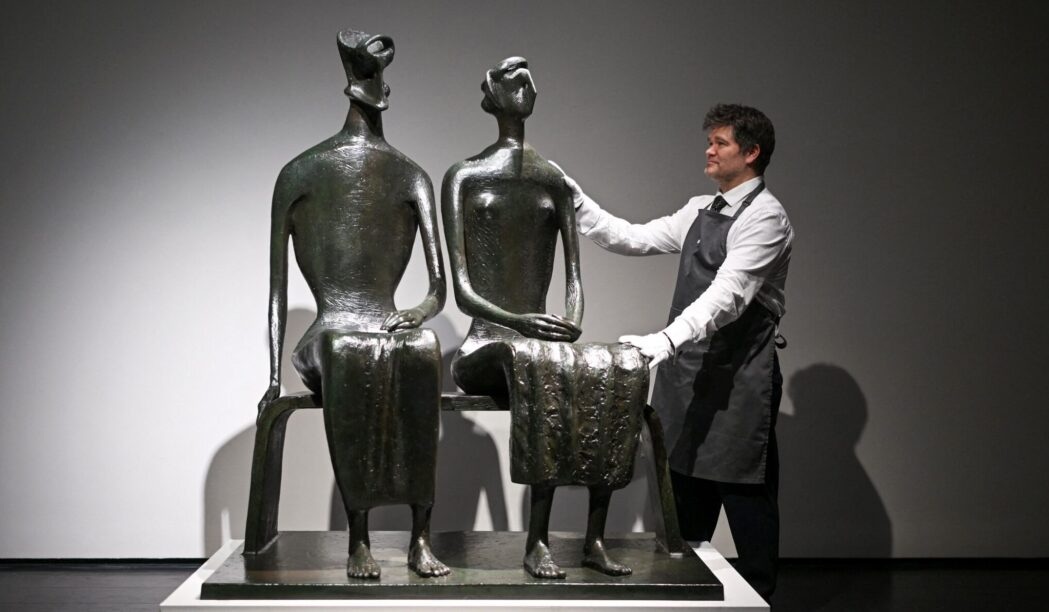
Among the top lots at Christie’s is a bronze sculpture by Henry Moore, King and
Queen, from 1952-53, estimated at £10 million.
London School Icons from the Lewis Collection
Will Headline Sotheby’s March Sales
Museum-grade works by Francis Bacon, Lucian Freud and Leon Kossoff are debuting
in New York before heading to the block.
ELISA CAROLLO | AUCTIONS | ARTS | OBSERVER | FRIDAY 13 FEBRUARY 2026
As the London auctions approach in March, we are beginning to learn more about the major consignments the top houses have secured for this sales cycle—an auction round that will once again test the market, which entered 2026 with renewed hope following the positive close of 2025. Sotheby’s announced today a major consignment of “London School” paintings, featuring museum-grade works by Francis Bacon, Lucian Freud and Leon Kossoff. Behind this valuable trove is Joe Lewis, whose family owns Tottenham Hotspur Football Club. Lewis himself has been a longtime champion of the movement, who has often placed prime works from his collection with institutions around the world, but has never before publicly attached his name to any sale.
Leading this exceptional quartet is Francis Bacon’s 1972 self-portrait, painted in the shadow of devastating personal loss following the death of his lover George Dyer. That year was also one of Bacon’s most prolific, as the strongest creative urgency often emerges as a reaction to tragedy. The painting carries an exceptional emotional and psychological charge: Bacon depicts himself as utterly transformed by grief and sorrow, the scream becoming the entirety of the human figure. It reflects one of the darkest moments of his life, as his masochism and self-destructive behaviour spiraled further out of control.
Coming to auction with an estimate of £8-12 million, the painting was first shown at the Metropolitan Museum of Art in 1975 and was most recently included in the widely praised major survey at the National Portrait Gallery in 2024, where it has since hung alongside the museum’s permanent displays. The only 1972 self-portrait by Bacon ever to come to auction, the work was previously hammered for £330,000 at Sotheby’s in 1994 by Paul Brass, the doctor to whom Bacon had gifted it after Brass assisted him through some of his most desperate nights. Notably, the painting arrives at auction on the heels of the success of Portrait of a Dwarf (1975), which sold at Sotheby’s London for £13.11 million (around $17.6 million), exceeding its high estimate.
At its core, this is precisely what defined the artists of the London School: a form of figuration under pressure, distorted by psychological and inner forces, confronting the body as something fragile, temporal and charged both emotionally and subconsciously. Two of the remaining works are by the other central figure of the group, Lucian Freud, the grandson of Sigmund Freud, whose reflections on the disruptive forces of the subconscious appear to find full manifestation in the paintings of the movement—despite Lucian Freud’s consistent resistance to any direct psychoanalytic reading of his work.
Hitting the rostrum is one of Freud’s most commercially and critically prized subjects: the nude. Blond Girl on a Bed (1987) carries an estimate of £6-8 million and portrays Sophie de Stempel, one of Freud’s favored models, precisely because she was, in his words, “a very bad model,” awkward in the way of a young student. Drawing on the venerable tradition of the reclining nude—mirroring masters he deeply admired such as Titian, Velázquez, Manet, Ingres and Rodin—Freud defies here any move toward harmony or idealization. The result is what he described as a “naked painting,” one in which the viewer feels the model’s awkwardness and the full weight of physical, time-bound, flesh-limited existence. This is expressed through Freud’s signature thick brushwork and his forensic attention to the body’s gravity and mass. Underscoring its importance within his oeuvre, the canvas has been widely exhibited at major institutions worldwide, including the Centre Pompidou, the Metropolitan Museum of Art and the Reina Sofía. Other depictions of de Stempel reside in permanent museum collections, including Tate. Lewis acquired the painting from the Saatchi Collection in 1997.
The other Freud tableau offered in the sale is an earlier work, A Young Painter (1957-58), portraying the artist Ken Brazier. The painting marks a crucial turning point in Freud’s practice: here he begins to abandon a more linear, academic approach in favor of a looser, more tactile handling of paint, intensifying the psychological presence of the sitter. Freud developed this expressive shift under the influence of Bacon and the bohemian energy of Soho, at roughly the same moment he was distancing himself from a more conventional bourgeois life as his marriage to Caroline Blackwood was disintegrating.
Born in Berlin to a wealthy, liberal, non-observant Jewish family, Freud moved to the U.K. in 1933 with his parents to escape the Nazis. He met Bacon in the mid-1940s through a mutual friend, the artist Graham Sutherland. From then on, they were extremely close for nearly a decade, meeting regularly in studios and Soho restaurants and bars, until the mid-1950s, when their relationship collapsed. Bacon was theatrical, extroverted and self-destructive, thriving in Soho’s nightlife; Freud grew increasingly private, disciplined and devoted to work.
In this sense, Brazier embodied the artistic milieu Freud wanted to immerse himself in at that stage of his life. As Freud later said, “He was desperate but he was interesting,” existing outside the bounds of British bourgeois respectability. With an estimate of £4-6 million, the painting boasts an extensive exhibition history, having been shown at the National Portrait Gallery, the Centre Pompidou, the Neue Nationalgalerie and the Hirshhorn Museum. Formerly part of the Saatchi Collection, from which Lewis acquired it, the work has remained publicly visible since 2012.
These two prime Freud works arrive at a moment when his market is robust and resilient—particularly for nudes and psychologically charged portraits—even as paintings of this caliber appear only rarely at auction. A possible comparable for the second painting could be Self-portrait Fragment (c. 1956), which sold at Christie’s London last October for £7,600,000 (this estimate appears in line with it, actually). This result followed the £11,810,000 Ria, Naked Portrait (2006-07), also sold at Christie’s the year before—a far more elaborate nude figure that could be used as a comparable for Lewis’s Blond Girl on a Bed (1987), despite the latter being much more historical. However, most recently in New York, Christie’s sold a similar-sized Naked Portrait in a Red Chair (1998-1999) for just its low estimate of $3,500,000, while The Painter Surprised by a Naked Admirer (2004-2005) fetched $14,435,000.
Last in the group, but no less significant, is Leon Kossoff’s Children’s Swimming Pool, 11 O’Clock Saturday Morning, August (1969), described as one of the finest works from a series of five major paintings executed between 1969 and 1972 depicting the Willesden public swimming pool. The painting was last seen publicly in 1996-1997 and belongs to a small, highly significant group of five swimming pool paintings, three of which are held in museum collections, including the Arts Council and Tate. The appearance of this work on the market offers collectors a rare opportunity to acquire a painting of clear museum caliber, belonging to a tightly held, institutionally validated body of work.
While Freud’s relationship with Bacon ultimately collapsed, his bond with Kossoff remained far more tightly knit. The two shared a deep commitment to drawing from life, to endurance-based working methods and to repeated sittings, regarding painting as a rigorous, forensic observation of flesh-bound existence and as a process accumulated over time. This painting, however, also reveals Kossoff’s distinctive ability to elevate the everyday into the realm of epic modern painting. Estimated at £600,000-£800,000, it aligns with recent market results.
The London School in the U.S.
Notably, this tightly curated group of “London School” works from Joe Lewis’s collection will debut at the Breuer in New York before appearing in the Modern & Contemporary Evening Sale in London on March 4—a trajectory that symbolically mirrors the historical reception of these artists.
“These are four masterpiece-quality works by their respective artists—truly museum-quality paintings,” Tom Eddison, Sotheby’s co-head of contemporary art in London, told Observer. “Presenting them in New York, at the Breuer, which itself is a former museum building, felt like an extraordinary opportunity to introduce these pictures and these artists ahead of their auction in London.”
As he explained, there is a long-standing and deeply engaged American audience for these artists, with a rich lineage of exhibitions and acquisitions by major museums across the U.S. “In their own time, these artists were resolutely figurative and forged their own paths, distinct from broader movements like Abstract Expressionism, Pop, or Minimalism. Yet they achieved remarkable international appeal very early on,” Eddison noted.
The London School was taken seriously in the U.S. before it was fully embraced in Britain, as American institutions and patrons proved more receptive than the British establishment, which remained cautious—and at times dismissive—of figurative painting during the height of modernism. The first acquisition of Francis Bacon’s work in America was a 1946 painting, which MoMA acquired in 1948. What’s particularly striking is that this happened before MoMA had acquired works by Pollock or Rothko. Bacon’s early representation at the Hanover Gallery in London, supported by Arthur Jeffress, who had strong American ties, helped foster transatlantic connections that were instrumental in building his reputation. Following the MoMA acquisition, throughout the 1950s and 1960s, his work was widely exhibited and collected in the U.S., including major presentations in Chicago and a landmark retrospective at the Guggenheim in 1963. As a result, Bacon’s presence in American collections and institutions has been firmly established.
Lucian Freud followed a similar trajectory, beginning with early exhibitions at Hanover Gallery and later Marlborough Gallery, which maintained a strong New York presence. Although Freud’s family background initially drew public attention, his artistic achievements quickly established him as a major figure in his own right. MoMA acquired his work in the 1950s, and American collectors engaged with his practice well before his first major U.S. museum exhibition at the Hirshhorn Museum in 1987. Still, a pivotal turning point came through his relationship with New York dealer William Acquavella, whom Freud himself credited with transforming the trajectory of his career. “Their agreement was made on a handshake—no paperwork—just trust,” Eddison said. “It became an extraordinary partnership, and Acquavella played a pivotal role in elevating Freud’s stature in America, introducing his work to a new level of institutional and collector recognition.”
Kossoff also developed significant institutional and gallery support in the U.S., despite his major American exhibitions emerging later than those of Bacon or Freud. By the 1980s, he was represented by L.A. Louver Gallery, and his work entered prominent museum collections in both California and New York, reinforcing his strong transatlantic presence. This institutional backing helped establish Kossoff as a major figure among American collectors and curators, even though his market visibility has remained comparatively limited, particularly at auction, where it is rare to see a painting of this quality come up.
At the same time, even as Bacon and Freud have been appearing more regularly at auction, works of this caliber remain exceptionally rare. “What we’re really excited about is the quality and freshness of these works. They have been exhibited in many of the most important exhibitions dedicated to these artists, not least over the past five years,” Eddison pointed out.
The sale also comes at a strategic moment following a series of recent high-caliber exhibitions of work by the artists: a major Lucian Freud show just opened at London’s National Portrait Gallery, where it is on view until May 4. This follows another extensive exhibition of Freud work at the National Gallery in D.C. in 2022, which later traveled to Museo Nacional Thyssen-Bornemisza in Madrid. Francis Bacon also had a major show at the London National Portrait Gallery in 2024, while a major comparative exhibition examining Bacon’s dialogue with Picasso and the human figure is set to open in September 2026 at the Albertina Museum in Vienna. Meanwhile, Kossoff had a recent show at Pallant House Gallery.
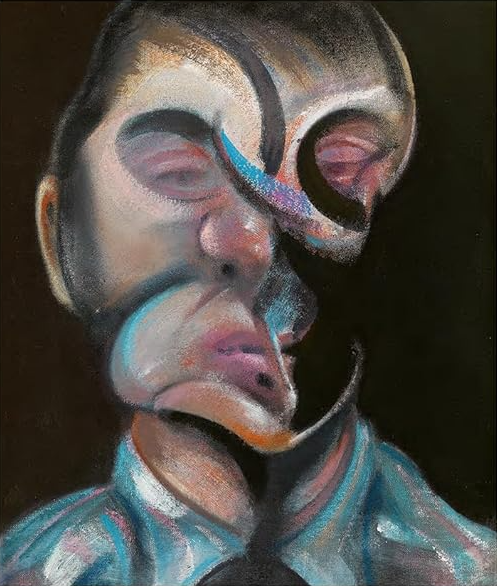
Francis
Bacon, Self-Portrait, 1972.
Estimate: £8-12 million.
Mayfair art dealer named in hunt
for ‘lost’ $100m collection
George de Bartha features in court documents after 91 pieces — including
paintings by Bacon, Picasso and Warhol — allegedly go missing
DAVID BROWN | CHIEF NEWS CORRESPONDENT | THE TIMES | TUESDAY DECEMBER 23 2025
.jpg)

Who among us hasn’t had a bit of fun at the expense of abstract art from time to time?
WILL HOWARD | ART | DANGEROUS MINDS | TUESDAY, 16 DECEMBER, 2025
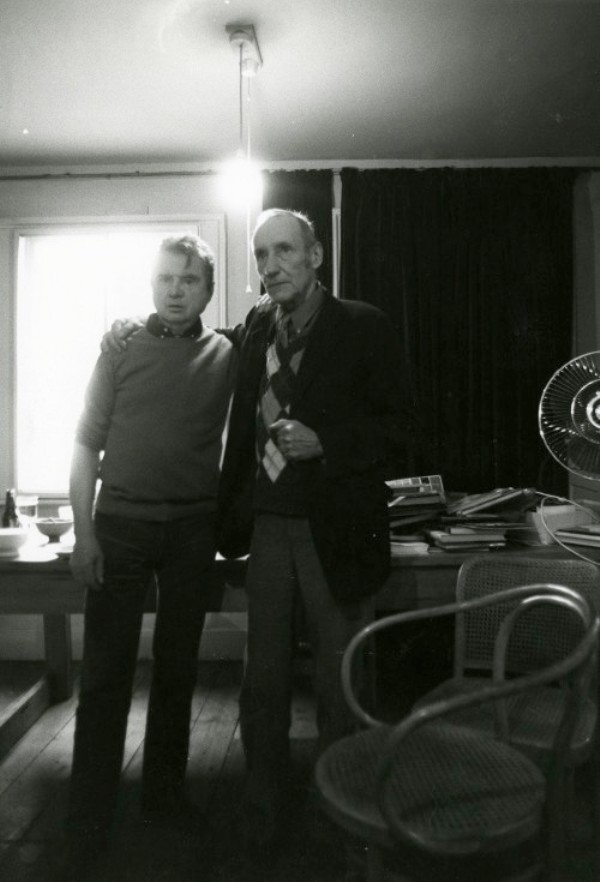
While Francis Bacon and Sean Scully are to the
fore abroad but the Irish art market must evolve
‘Painings by Irish turn-of-the-20th-century and later artists are in short supply. The best
are in public and private collections from which they emerge only rarely’
DES O’SULLIVAN | HOME AND GARDENS | IRISH EXAMINER | SATURDAY, 13 DECEMBER, 2025
The innate conservatism of the Irish art market was apparent at the big winter sales in Dublin, where the dominant artists were the bankable Roderic O’Conor and Paul Henry.
Yes, the market is developing and making room for modern, postmodern and contemporary Irish artists. Yet while Francis Bacon and Sean Scully will cut it abroad, it is the old reliables like Yeats, Orpen, Lavery and Osborne who dominate at home. Who will bring home the Bacon?
Paintings by Irish turn-of-the-20th-century and later artists are in short supply. The best are in public and private collections from which they emerge only rarely.
The home market must evolve. At times like this, it sometimes seems as if it is being dragged kicking and screaming towards essential evolution. The greatest Irish artists of the last hundred years are still mostly overlooked at the highest levels of the auction market on the home front.
A landscape by Roderic O’Conor topped the bill at the big winter auctions of Irish art in Dublin. His work Paysage aux Arbres or Landscape with Trees, 1890, made a hammer price of €340,000 at deVeres. Paul Henry’s The Great Sugar Loaf (1929-30) was the top lot at Whyte’s, making €235,000 at hammer.
Another work by Henry, A Coastal Landscape with Galway Hookers, from the 1930s, was the most expensive artwork at James Adam, making a hammer price of €170,000.
In October, Francis Bacon’s Portrait of a Dwarf made £13.1 million (€14.88 million) at Sotheby’s in London.
Phillips Modern and Contemporary Sale Nets $67.3 M.,
Led by $16 M. Francis Bacon Diptych
BY GEORGE NELSON | MARKET | ART NEWS | EST. 1902 | WEDNESDAY, NOVEMBER 19, 2025
Before Phillips kicked off its own modern and contemporary evening sale on Wednesday in New York, almost $1.4 billion of modern and contemporary art had already found buyers this week at its much larger competitors, Christie’s and Sotherby’s. That’s a tough act to follow, especially given that not even 24 hours prior Sotheby’s sold a Gustav Klimt portrait for $236.4 million, the highest price for any work of modern art sold at auction and the second-highest price ever paid for an artwork at auction. Sotheby’s then banked some $160 million more for two of the Austrian’s landscapes.
Phillips, for its part, was hoping to get a slice of the pie with a concise 33-lot sale featuring an untitled Joan Mitchell painting (high estimate: $15 million), a Francis Bacon diptych (high estimate: $18 million), and a juvenile triceratops skeleton (high estimate: $3.5 million).
The sale netted a total of $67.3 million (all prices listed are inclusive of fees unless otherwise noted); only two lots failed to find buyers, achieving a sell-through rate of 94 percent by lot. In its post-sale release, Phillips noted that this year’s sale was a 24 percent increase from the equivalent sale last year, which brought in $54.1 million. It’s worth pointing out that last November’s auction was itself a 23 percent decrease from the 2023 auction, as ARTnews previously reported.
That trio of headlining lots, however, failed to incite the same nitro-fueled bidding that saw Monday and Tuesday nights’ totals swell to eye-watering levels. Only the dinosaur—preserved for 66 million years and described by auctioneer Henry Highley, Phillips head of private sale, as “a rare glimpse into deep time”—passed its high estimate, selling for $5.3 million. The Mitchell, painted in 1957–58, came close, going for $14.3 million, while Bacon’s Study for Head of Isabel Rawsthorne and George Dyer (1967) took in $16 million.
From his rostrum, Highley announced to a busy room that no lots had been withdrawn and then got the bidding going on the evening’s first lot, a Ruth Asawa hanging wire sculpture, which sold for $1 million against a high estimate of $600,000—a seemingly auspicious start. Lot 3, Firelei Báez’s Daughter of Revolutions (2014), achieved $645,000, at the time breaking her record of $567,000. (Báez’s record would be broken later that night, at Christie’s, where a 2021 painting sold for $1.1 million.)
The momentum kept going when “Cera,” the triceratops skeleton, sold on the phone. Right after came an untitled Jean-Michel Basquiat work on paper, which was bought for $1.25 million, a shade over its $1.2 million high estimate. Two lots later was another Basquiat, Exercise (1984), which sold for $3.85 million, followed by the $16 million Bacon, the evening’s priciest lot. Max Ernst’s Dans les rues d’Athènes (1960) bronze was one of the night’s 11 lots to break the seven-figure mark, selling for $1.5 million after a 10-minute bidding battle, more than doubling its high estimate.
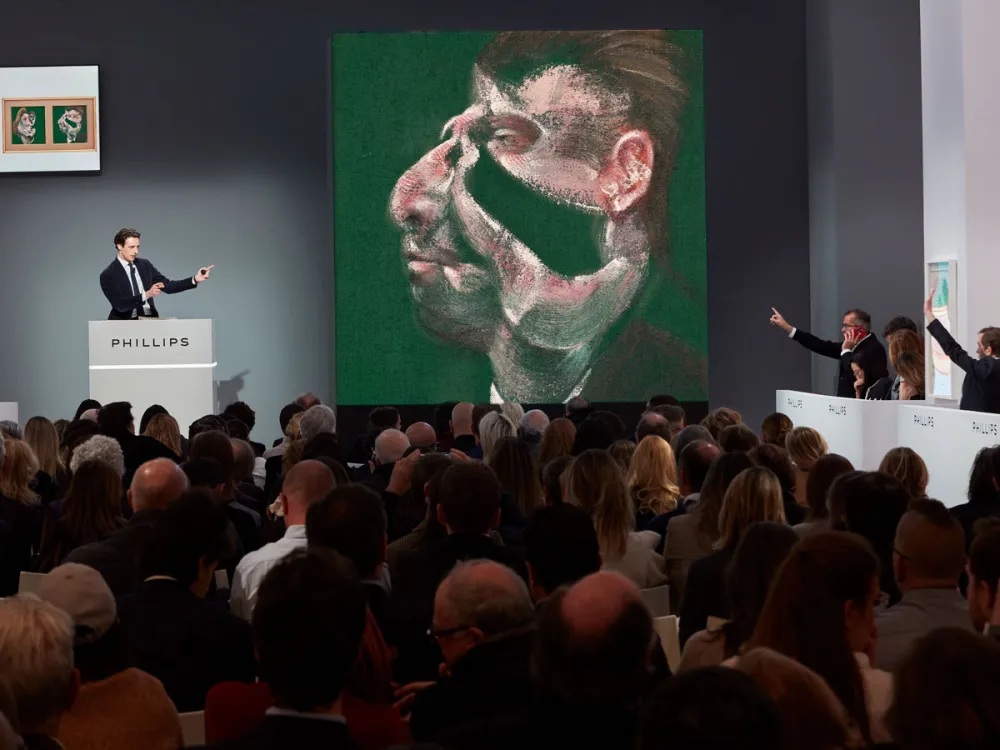
Auctioneer Henry Highley during the sale of Francis Bacon's Study for Head of Isabel Rawsthorne and George Dyer (1967).
Francis Bacon’s shambolic Kensington studio, piled high with photos, paint and champagne crates, provides
a revealing insight into the artist’s creative methods. Stephen Patience sifts through the debris of 30 years.
BY STEPHEN PATIENCE | INTERIORS | THE WORLD OF INTERIORS | TUESDAY, 28 OCTOBER, 2025
When bungling cat-burglar George Dyer broke into Francis Bacon’s South Kensington studio in 1963, he would have been forgiven for thinking that another petty criminal had beaten him to it. 7 Reece Mews looked as if it had been ransacked: crumpled photographs, rags, expensive art monographs and empty crates of Krug were strewn over every available surface; slashed canvases were propped against the paint-smeared walls. Over the next few years, Dyer would often pose in that same room, wearing his saggy Y-fronts, modelling for various photos which ultimately joined the paint-spattered morass on the floor.
‘There [is] no need to do any housework…’ droned Quentin Crisp in The Naked Civil Servant. ‘After the first four years the dirt doesn’t get any worse. Bacon’s studio was proof of Crisp’s theory; he worked there for the last 30 years of his life, and the detritus never significantly changed. According to his biographer Michael Peppiatt, the closest the artist came to ‘tidying up’ was to shovel some of the debris into a bin bag, which he would promptly tip all over another part of the room.
Francis Bacon claimed that he worked best when he was knee-deep in piles of dog-cared visual material, because it suggested images to him. Standing among these fragments he had shored against his ruins, the painter acquired an Eliotic quality: a man picking through the rubble of the culture in search of inspiration. He preferred to work from photographs rather than life models, and rated reproductions of artworks more highly, as source material, than seeing the painting itself. Alongside the stickleback bean-cans of coagulated paintbrushes and the pigment-smeared towels, the room was littered with images which had a strong resonance for Bacon: books on Munch, Rodin and Velázquez (whose 1650 Portrait of Pope Innocent X famously inspired the ‘screaming popes’ of the Fifties); Eadweard Muybridge’s 19th-century photographs of wrestlers; studies of unsightly skin infections; and, more bizarrely, a biography of David Gower (a number of mutated nudes painted during the Eighties can be seen to sport the England batsman’s cricket pads).
7 Reece Mews, as accommodation, was penurious. The floorboards and lightbulbs were bare, and the walls whitewashed – at least until they became smeared with an Impressionist poppy-field of pigments. The bombsite studio was only large enough for Bacon to execute one painting at a time, and was dominated by a huge circular mirror, speckled black with age, which dated from his time as a Modernist interior designer. Bright Young Things who were wondering about ‘The 1930 Look in British Decoration’ could have seen it alongside his steel-tube furniture in a feature in The Studio magazine of the same year. There were only two other rooms in the place: a poky living room/bedsit affair, and a rather unsavoury room which combined the functions of bathroom and kitchen, in which the moon-faced painter could do the washing-up while gazing at faded reproductions of his triptychs.
That an artist at the peak of his fame, capable of selling paintings for six-figure sums, should continue to live in rented squalor for three decades seems incongruous. Bacon was far from tight-fisted – he led an extravagantly bon vivant life in the boozers and restaurants of Soho, running up thousand-pound weekly bills on champagne alone – so this was not the reason for his humble surroundings. He tried to move out on a number of occasions, but always found the South Ken pad to be the most conducive to creativity. Bacon was an admirer of Giacometti’s notoriously run-down studio in the Rue Hippolyte-Maindron in Paris, and clearly considered that his own shambolic studio lent him a similarly bohemian mystique. The pair had become friendly when the creator of bronze twig-men visited London in 1965; a photo of Giacometti lies among the many hundreds in the studio. When Francis Bacon died, in 1992, the dust of raw pigment that had played havoc with his asthma was allowed to settle.
It soon became apparent to the artist’s estate that the Augean studio was something of a self-mythologising work of art in itself. The accumulation of 30 years of brushes, corduroy trousers and, most importantly, reams of creased inspirational material were a carefully considered extension of the artist’s romantic self-image, and could make a significant contribution to the advancement of learning about Francis Bacon’s work. Despite discussions, the studio was not sold to the Tate – it might have made an intriguing counterpoint to Tomoko Takahashi’s artfully arranged piles of rubbish in last year’s Turner Prize show. Instead, the Hugh Lane Gallery in Dublin snapped it up.
Before
the entire contents – and, indeed, the walls – of 7 Reece Mews were shipped
across the Irish Sea, Perry Ogden went into the studio and meticulously recorded
every paint-flecked inch of the property in an evocative series of photographs,
which have been collected in a new book. The pictures have a forensic quality:
the rooms of the cramped Kensington mews house were shot from every possible
angle; the piles of litter were then documented in numerous close-ups. Even the
bookshelves were assiduously chronicled, revealing the erudition of Bacon’s
reading – Joyce, Aeschylus, Nietzsche, Greek Made Easy and Viz.
Just
as in the aftermath of a plane crash the smallest fragment of debris is numbered
and catalogued, so every one of the 7,000-plus objects scattered across the
floor was itemised and compiled on a database. With the assistance of this,
Ogden’s photographs and archaeologists plans, the entirety of the studio room
(and the rickety wooden staircase leading to it) has now been re-created as a
permanent art installation in Dublin, for the public to visit. The artist was
born in Ireland (albeit to British parents), so moving his studio to the Hugh
Lane Gallery, in a sense, brings home the Bacon.

Above the sink, in the top right-hand corner, a diptych of deformed nudes wearing David Gower’s cricket pads
Francis Bacon’s Paris pad honoured with plaque
The artist had “a very full existence” in the French capital during the 1970s
DIARY | THE ART NEWSPAPER | MONDAY, OCTOBER 27, 2025
Artist Francis Bacon is known for his hell-raising antics in London, but the Dublin-born painter also had a soft spot for Paris. Following his hit exhibition at the Grand Palais in 1971 he took a a small studio apartment in the French capital. During this time Michael Peppiatt, the UK art historian who wrote Francis Bacon in Your Blood (2015), was his guide to the French capital, helping him navigate the City of Lights.
Peppiatt and Guillaume Cerutti, the president of the Pinault collection, were recently in attendance at the official unveiling of a plaque honouring Bacon, installed by the City of Paris. The sign can be found in courtyard of the studio-cum-apartment near the Place des Vosges where Bacon lived and worked for 13 years from 1974.
“Bacon frequently came to Paris for two to three weeks at a time. He liked the lifestyle, working in the morning, then going round all the best restaurants and clubs afterwards. It was a very full existence,” Peppiatt tells The Art Newspaper.
So how did Bacon find his Parisian property? “He was in my little flat in the Marais in the early 1970s which he liked. He came round one evening and asked if I could find a place for him,” Peppiatt continues. “He wanted a flat like mine and we found the studio near the Place des Vosges where he lived and painted in the same room.”
The author goes on to reflect on how Bacon impacted him personally. “For good or for ill he had a deep effect on my development as a person. My vision of the world opened up, he was almost fatherly towards me,” he explains. “He was very generous and very quick to help the people he liked. I admire him and his work as much as ever but more objectively now.”
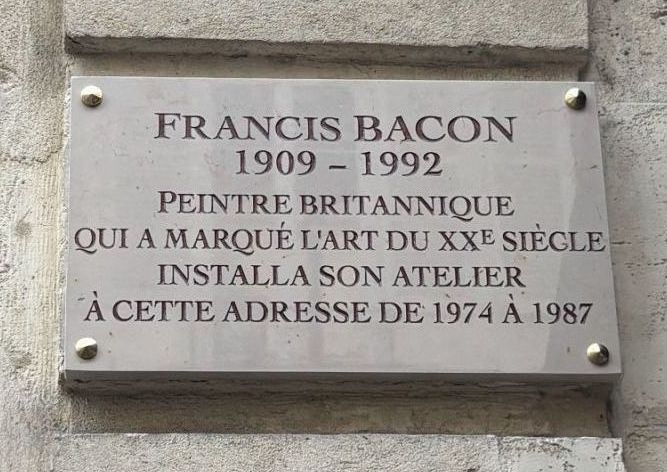
Francis Bacon Painting Sells for $17.6 M at Sotheby’s
London, Leading $63.3 M. Sale
BY HARRISON JACOBS & DANIEL CASSADY | MARKET | ART NEWS | THURSDAY, OCTOBER 16, 2025
It took nearly 20 minutes and more than 20 bids between several specialists on the phone and a bidder in the room, but Sotheby’s came away with at least one major win at Thursday’s contemporary art evening sale. That victory lot was Francis Bacon’s Portrait of a Dwarf (1975), which hammered above its £6 million to £9 million estimate, landing at £13.1 million with fees, or approximately $17.6 million.
While that’s nowhere near Bacon’s auction record of $142.4 million, set at Christie’s New York in 2013, the result—and the sale of another Bacon, the lot right before it, at just above the low estimate—stood as a positive outcome in a market that has yet to break out of its funk.
Prior to Thursday’s sale, Alex Branczik, Sotheby’s chairman and head of modern art, positioned the evening auction as a “tight, high-quality offering” centered on a small private family collection that included the two Bacon works and two Rodin bronzes.
“It’s unusual for us to have modern works in this season,” Branczik said, “but the Rodins come from the same collection as the Bacons. It was very much part of the strategy to present a dialogue between the two artists.”
Indeed, it was a brisk affair, clocking in at just over an hour for 27 lots.
Overall, the sale netted £47.6 million ($63.3 million), with three lots going unsold and an 88.9 percent sell-through rate by lot. That marked a 26.5 percent increase over last year’s equivalent sale, which brought in £37.6 million on 22 lots. The total was almost exactly in line with the October 2023 evening sale result of £45.7 million, though that auction featured 42 lots. (All prices include buyer’s premium unless otherwise noted.)
The Bacons performed well enough. The Rodins less so, with the works selling for £889,000 and £762,000, both on £600,000–£900,000 estimates. There were few fireworks before Portrait of a Dwarf hit the block at Lot 11, with auctioneer Tom Eddison, senior vice president of contemporary art in London, trying—and mostly failing—to coax more than a few bids out of each lot.
Artist Gabriel Murray on the infamous Colony Room Club:
‘Iwas a bit of a lounge room lizard then – and I always loved a party’
Murray’s portrait show centres on the characters at London’s notorious drinking den.
He talks about meeting Francis Bacon there and the club’s mix of art, intellect and thuggery
EMILY HOURICAN | THEATRE & ARTS | ENTERTAINMENT | IRISH INDEPENDENT | SUNDAY, 5 OCTOBER, 2025
“I studied fine art at the National College of Art and I was very fascinated by Francis Bacon when I was in college. Not just his art; I’m always fascinated by how people start off in life. I read that he was getting 10 quid a week from Muriel Belcher to bring people to the newly opened Colony Room Club and, by the end, his last paintings sold for $140m.”
Kilkenny-born Gabriel Murray – artist, author, filmmaker – is telling me the origins of his interest in Bacon, who forms a central part of Murray’s new exhibition.
“In the 1980s I moved to London. I was a figurative painter and in Ireland it was very anti-figurative at the time, all very abstract and performance-art driven. In fact, I got very disillusioned with the art world. I was also very into literature and film and interested in Peter Blake – who did the cover for The Beatles’s Sgt Pepper’s Lonely Hearts Club Band – and Derek Jarman. They were all members of the Colony Room Club so when I emigrated from here, I thought, ‘I must look up the Colony Room Club’.
“I wandered in one day and met a guy called Michael Wojas [bartender Wojas became owner of the club when bequeathed it by Ian Board, who took over from the founder Belcher] and I joined the club. They must have liked the look of me, and they gave me membership.”
Liking the look of him was key, because simply wanting to join and being willing to pay to do so wasn’t enough. So what does Murray think it was that got him through the door?
“I was a bit of a lounge room lizard then,” he says with a laugh. “And I always loved a party.”
Murray was a member of the Kilkenny Arts Group as a very young man, where he was taught by Susan (Guthrie) Butler, and helped create the Kilkenny Art Gallery Society and Kilkenny Arts Week. He first exhibited at St Kieran’s annual Kilkenny Arts Week show with Brian Bourke, Tony O’Malley, and Colm O’Cochlain.
In the years since he has diversified, working in film – he tells me he has just been awarded funding for a documentary on WB Yeats, to start shooting next year – and publishing several books, but painting has always run alongside his other interests.
“I gave up painting at various times,” he says. “It was easier for me to write a film script or a book – I can sit in a cafe, do it anywhere, I don’t need a studio. But I always came back to it.”
Now, he has put together a show of portraits based around his time at the Colony Room Club, the people he met and observed, themed around the club’s connection with Anglo-Ireland. The Colony Room Club, on Dean Street in Soho, began in 1948, and ended its first incarnation with the death of its founder, Muriel Belcher, in 1979, although it survived until 2007. Within the first 31 years of its span, it became a byword for a particular type of debauchery that mixed art, intellect and thuggery.
The members included Bacon, who Belcher called ‘Daughter’, and in whose image much of the club identity seemed created – as well as a superbly talented artist he was a heavy drinker and, for a time, a petty thief.
Lucian Freud and Jeffrey Bernard were also members, as were a number of criminals and mobsters. Visitors to the tiny first-floor room, up a set of squalid stairs flanked by dustbins, included Princess Margaret, David Bowie, William Burroughs and Edna O’Brien.
One visitor was Guinness heir Garech de Brún (son of Oonagh), and indeed Guinness heiress Caroline Blackwood (daughter of Maureen). Caroline married Lucian Freud in 1953 (and divorced him in 1958) and one story has their first meeting at the club (although another says it was Anne Fleming, wife of James Bond creator Ian, who introduced them).
Certainly some of the money that kept the club ecosystem going was Guinness money. In 1969, De Brún bought Bacon’s portrait of Henrietta Moraes just after it was completed. For years it hung in the drawing room at Luggala, and was the only Bacon painting in the country.
Moraes – who was born Audrey Wendy Abbott – was both the guiding spirit and the living embodiment of Soho in the 1950s and 1960s. She was described in her obituary as: “Foul-mouthed, amoral, a thief, a violent drunkard and a drug addict. Yet she was witty, wonderfully warm and lovable.”
Bacon painted her more than 18 times, and Freud at least three. Bacon’s system was complicated – he painted from photos of Moraes taken by John Deakin, but he needed her naked presence in his studio to actually do the work. She, apparently, was perfectly happy to oblige, as long as the drink kept coming.
Along with his wife, Lady Margaret Joan Lascelles and their two daughters Joan and Sybil, they tried to save the estate, but the advance of the nationalist cause and the burning down of the house made that impossible and in 1922 they moved to Italy.
“The estate struggled on and the house was rebuilt, but was finally demolished in 1958 and the land carved up by the Land Commission, into parcels of 50 to 100 acres. My father Henry grew up on the estate and was an assistant to my grandfather. My father was granted some of this land along with a great uncle when the estate collapsed.
“Ass a child, I would often hear my father and mother talk about Lady Desart as a great benefactor and kind woman, who helped the poor, the sick and the dying in Kilkenny. She was a kind of Joan of Arc figure in my house.
“I thought it was a local story but I learnt later when I researched the book on her [published in 2022], that she was also involved in rescuing over two million Russian and Ukrainian Jews. As a result, in the first government of Ireland she became a senator in Seanad Éireann.”
Bacon, of course, had his own Anglo-Irish background. He was born on Baggot Street and brought up variously in Kildare, London, Laois and back to Kildare. His father was a former British Army officer and a horse trainer. He was also strict, angry, and staunchly traditional. A son who was asthmatic and allergic to horses was clearly a disappointment to him, even before Bacon’s cross-dressing and sexuality emerged.
He threw Bacon out when he was 16 after he found him dressing up in his mother’s clothes and thereafter Bacon made his own way by the means he found necessary – gradually (and then rapidly) moving from a life of petty crime and personal squalor to outstanding artistic success within his lifetime.
But back to the Colony Club.
“I specifically went there to meet Bacon because I was fascinated by him,” Murray says.
What did they talk about?
“One story I recall, Bacon spoke of his grandfather Kerry Supple. He was an inspector with the Royal Irish Constabulary and Bacon recalled an incident when his grandfather was in a car crossing the Bog of Allen.
“The IRA had dug a pit in the road to ambush automobiles. The inspector leapt out of the car and ran off across the fields in the darkness, while being shot at by the IRA and surrounded by cries and flashing lights. At the nearest house [where they called for help], they were questioned at gunpoint before being allowed inside.
“As a result of this IRA attack, a police guard was deployed to protect the inspector’s house at night. The IRA were aware of this and on August 21, 1920, they attacked a police patrol, which was headed to the house. The ambush took place at Greenhills, Kill, on the main Dublin to Naas road and two policemen were killed.”
Bacon’s grandfather, he said, had shown him the file with the photos of the dead bodies and their wounds. Bacon said the impact of the photographed wounds had fascinated him.
“When he was working in the civil defence, assisting at bomb sites during the London Blitz in World War II, the injuries he encountered were a range of wounds and traumas from explosions, such as blast injuries, burns from fires, shrapnel wounds, crush injuries from collapsed structures, head injuries and shock or trauma from the intense and dangerous situation. This fascination with violent images later filtered their way into many of his paintings.”
He may have joined the Colony Room Club specifically to meet Bacon, “but I discovered that the whole club was full of people like that,” Murray says. “I used to meet Peter O’Toole there, Damien Hirst, Isabella Blow, all sorts of eccentrics and professional alcoholics.”
He was, however, largely immune to the occupational hazards, for many, of club membership.
“I’m a non-drinker,” he says. “I like to survive my life rather than be a victim of it. A lot of the artists I’ve known over the years were very decadent, and now are dead. I’ve never had that decadent streak.”
An exhibition of portraits of members of the Colony Room Club by Gabriel Murray is showing at Gallery X until October 25.

ACQUISITIONS OF THE MONTH: SEPTEMBER 2025
This month’s highlights include a Francis Bacon triptych that was once the most expensive
artwork ever sold and a trove of Dada and Surrealist works
ACQUISITIONS OF THE MONTH | FEATURES | APOLLO MAGAZINE | FRIDAY, 3 OCTOBER, 2025
When the businesswoman Elaine Wynn bought Francis Bacon’s Three Studies of Lucian Freud at Christie’s New York in 2013 for $142.4m, it became the most expensive artwork ever sold at auction. That record stood for only a year and a half, when it was broken by Picasso’s Women of Algiers (Version ‘O’) (1955), but the painting – a rare chance to see these two titans of 20th-century British art brought together in one artwork – remains the most valuable work by a British or Irish artist ever sold.
Wynn died in April this year and the crowning glory of her collection has now been bequeathed to the Los Angeles County Museum of Art – a museum with which she had close ties, co-chairing its board and donating $50m towards its expansion in 2016. The monumental triptych is one of the artist’s most recognisable works and shows Freud sitting in three different poses, his face contorted in a characteristically Bacon-esque manner against a vivid yellow background. It will go on show in LACMA’s new David Geffen Galleries, which are slated to open in April next year; the northern part of the building will be named the Elaine Wynn Wing.
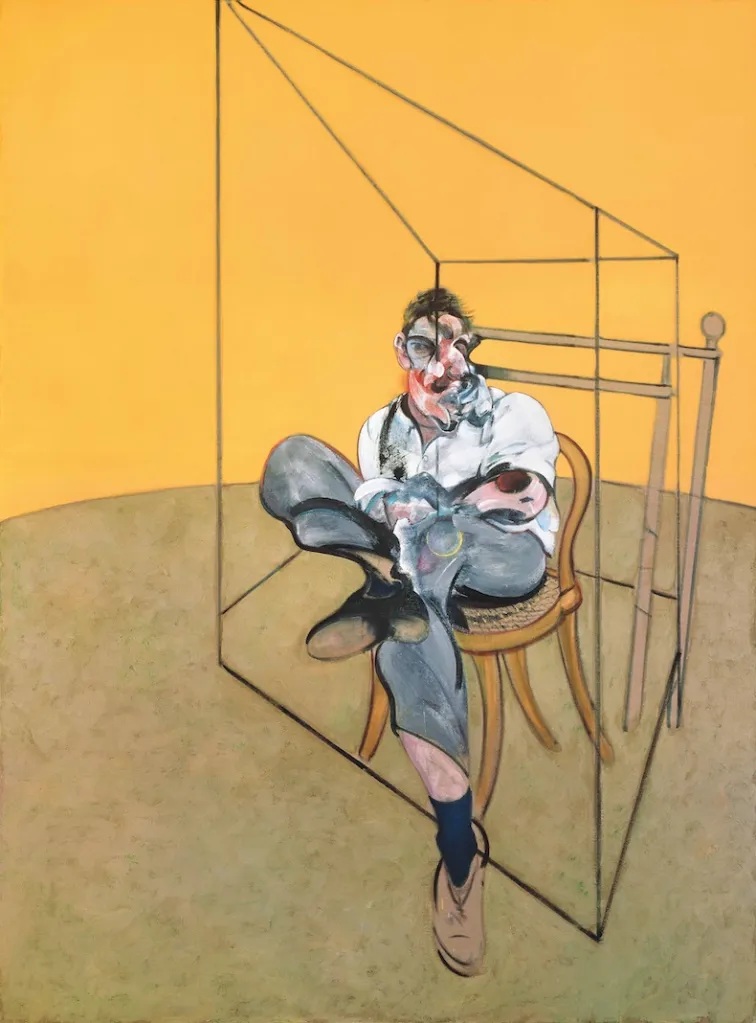
Central panel of Three Studies of Lucian Freud (1969), Francis Bacon.
Los Angeles County Museum of Art. © Estate of Francis Bacon
Four Works by Bacon and Rodin to Headline
Sotheby’s Frieze Week Sale
BY GEORGE NELSON | NEWS | ART NEWS | ESTABLISHED 1902 | TUESDAY, SEPTEMBER 30, 2025
Four works by Francis Bacon and August Rodin will headline Sotheby’s Frieze Week contemporary evening auction in London on October 16.
Those works are Bacon’s paintings Portrait of a Dwarf and Study for Self-Portrait (estimated to bring up to £9 million and £6 million, respectively), and Rodin’s final bronze iterations of Pierre de Wissant and Jean de Fiennes (each estimated at £600,000–£900,000). The house said in a statement that the works are from an “important private collection.”
“Though they worked in different media and were separated by nearly a century, Rodin and Bacon share an unexpected yet powerful connection,” Alex Branczik, Sotheby’s chairman and head of modern art, said in a statement. “United by an extraordinary appreciation of the human form and an unparalleled ability to see and depict it as no other artist had before, Bacon and Rodin forged paths which changed the course of Western art and continue to influence artists today.”
The Bacon works were originally acquired directly from the artist and kept in the same collection for more than 40 years. Rodin’s bronzes were purchased from the Musée Rodin around the same time.
Sotheby’s sent ARTnews some previously unpublished material on Bacon’s two works: audio of Eddy Batche, an art historian and one of Bacon’s closest friends while the artist was living in Paris.
“That Bacon prized Portrait of a Dwarf so highly and kept it as his own property is totally unique and not something we can say for other Bacons that have come on the market … or at least there’s no evidence of that,” Batche said. “The Study for Self-Portrait is also pretty knockout, as you could say it’s a romantic image—Bacon is being much kinder to himself with this work, which feels quite different to other self-portraits.”
Branczik agreed that the portrayal of the dwarf is a special work. “It is one of the most arresting works of Francis Bacon’s career—the only painting he ever kept for himself, an extraordinary gesture from an artist who otherwise let his works go,” he told ARTnews. “Its searing immediacy stops us in our tracks, while the figure’s head, held at eye level, confronts us with unflinching directness. It was created during a period of introspection—following his lover George Dyer’s death—that produced his most profound and powerful works, which encapsulate the full force of Bacon at his height.”
Francis Bacon: Chopped Down Portrait
Of A Dwarf Heads to Sotheby’s
ART MARKET NEWS | ART | ARTLYST | MONDAY, 15 SEPTEMBER, 2025
Francis Bacon’s 1975 canvas Portrait of a Dwarf will lead Sotheby’s London evening sale on 16 October, carrying an estimate of £9m. The painting, which has not appeared on the market for four decades, is one half of a divided composition that once included Two Figures—a raw and intimate portrayal of Bacon and his lover George Dyer.
The two works began life as a single large-scale canvas, with Bacon setting two male figures within the cage-like space that defined many of his most emotionally charged paintings. The third presence on the original canvas, the dwarf onlooker, shifted the dynamic into narrative territory. For Bacon, this proved problematic. According to Michael Peppiatt, the artist’s biographer and close friend, Bacon cut the canvas in two, leaving behind two self-contained works.
Peppiatt, recalling the moment in the catalogue for Christie’s 2016 sale of Two Figures, described how Bacon first offered him the whole composition: “It was this huge canvas with two figures and a dwarf onlooker which I was very pleased with. Then Francis came round to my little flat one evening for drinks, and he took that back too. He felt there was too strong a narrative element in it, and he decided the best way to remove that was to cut the image into two self-sufficient, beautifully painted halves.”
The Two Figures section, acquired directly from Bacon, remained with Peppiatt until its sale at Christie’s in London in 2016, where it fetched £5.5m against an estimate of £5m–£7m. By contrast, Bacon retained Portrait of a Dwarf for himself, exhibiting it as “property of the artist” in several shows, most notably at the Galerie Claude Bernard in Paris in 1977.
The decision to keep the dwarf half suggests that Bacon saw in it something closer to the essence of his practice. Alex Branczik, Sotheby’s European chairman of modern and contemporary art, points to Bacon’s “profound connection” with Diego Velázquez, whose portraits of dwarves at the court of Philip IV of Spain—most famously Sebastián de Morra (c.1644) in the Prado, Madrid—offered an unflinching look at figures marginalised and objectified within royal culture. Bacon’s engagement with Velázquez reached its most famous expression in the Pope paintings, but the dialogue clearly extended further. In Portrait of a Dwarf, the subject is caught in Bacon’s merciless lens: isolated, intense, and disturbingly present.
The work now surfaces from a private collection where it has been held for 40 years. Its appearance comes at a moment when the market for Bacon remains robust, even as wider auction results show signs of recalibration. During the same sale, Sotheby’s will also offer Study for Self-Portrait (1980), estimated at £6m, alongside two bronze figures by Auguste Rodin—Jean de Fiennes, vêtu, Grand Modèle and Pierre de Wiessant, vêtu, Grand Modèle (conceived 1885–86, cast 1984), each guided at £600,000–£900,000.
The pairing of Bacon with Rodin underlines Sotheby’s intent to position the October sale, timed to coincide with Frieze Week, as a meeting ground of modernist intensity and contemporary resonance. Yet it is Portrait of a Dwarf that is expected to draw the most scrutiny, both for its provenance and for the unusual circumstances of its creation.
Bacon’s decision to slice through the canvas speaks to his restless process. He was known to destroy, abandon, or reconfigure paintings when they threatened to edge towards narrative or sentimentality. By halving the original work, he distilled two separate statements: one an expression of erotic intimacy, the other a chilling reflection of otherness.
Nearly 50 years later, the pieces stand as components of a lost whole, each carrying its own weight in Bacon’s oeuvre. With Two Figures already securely placed in the market, Portrait of a Dwarf emerges as both counterpart and counterpoint—an image that lays bare the brutal clarity of Bacon’s vision. Whether it reaches its £9m target will depend not just on market appetite, but on how far collectors are willing to follow Bacon into the most uncompromising reaches of his art.

Francis Bacon,Two Figures with Portrait of a Dwarf, 1975
Francis Bacon painting, one half of a canvas divided
by the artist, expected to sell for £9m at Sotheby’s
The now separate paintings, ‘Portrait of a Dwarf’ and ‘Two Figures’,
were once part of the same work
GARETH HARRIS | ART MARKET | NEWS | THE ART NEWSPAPER | MONDAY 15 SEPTEMBER 2025
Francis Bacon’s famous 1975 work, Portrait of a Dwarf, goes under the hammer at Sotheby’s London next month (16 October) with an estimate of £9m.
The work was initially part of a bigger piece featuring two figures intertwined and fused together, representing Bacon and his lover George Dyer, who died by suicide in 1971. Bacon later decided to divide the canvas, giving the painting of the two caged lovers to the art historian Michael Peppiatt.
This work, known as Two Figures, was sold at Christie’s London in February 2016 for £5.5m (with fees); the work had an estimate of £5m to £7m. Referring to Peppiatt, the catalogue entry says that the painting was “acquired directly from the artist by the present owner in 1975.”
Peppiatt, who wrote a biography of Bacon in 2015, wrote in the accompanying catalogue essay: “I’d had a marvellous head of the writer Michel Leiris which Francis took back to work on—it’s now in the Centre Pompidou—and to replace it I was offered this huge canvas with two figures and a dwarf onlooker which I was very pleased with.
“Then Francis came round to my little flat one evening for drinks and he took that back too. He felt there was too strong a narrative element in it, and he decided the best way to remove that was simply to cut the image into two self-sufficient, beautifully painted halves. I was very proud to be entrusted with the Two Figures section because it records such an intense, intimate moment in his life so memorably.”
A Sotheby’s statement says that Bacon retained Portrait of a Dwarf as his own and took the extraordinary step of exhibiting it as “property of the artist” in a series of exhibitions, notably in a renowned show at the Galerie Claude Bernard gallery in Paris in 1977.
Portrait of a Dwarf calls to mind Bacon’s “profound connection” with Velázquez, as seen in his Pope series, says Alex Branczik, Sotheby’s European chairman of modern and contemporary art, in a statement. Velázquez depicted court dwarfs—people of short stature who were owned and traded across royal courts to provide service or entertainment—such as Sebastián de Morra, a jester at the court of Philip IV of Spain. The Spanish painter’s portrait of Morra, made around 1644, is housed at the Prado in Madrid.
The Bacon painting comes from a private collector who purchased it 40 years ago, according to The Times. The same collection has also consigned Bacon’s Study for Self-Portrait (1980; estimate £6m) to the October Frieze week sale, along with two bronze pieces by Auguste Rodin (Jean de Fiennes, vêtu, Grand Modèle and Pierre de Wiessant, vêtu, Grand Modèle, conceived 1885-86, cast 1984; estimate £600,000-£900,000 each).
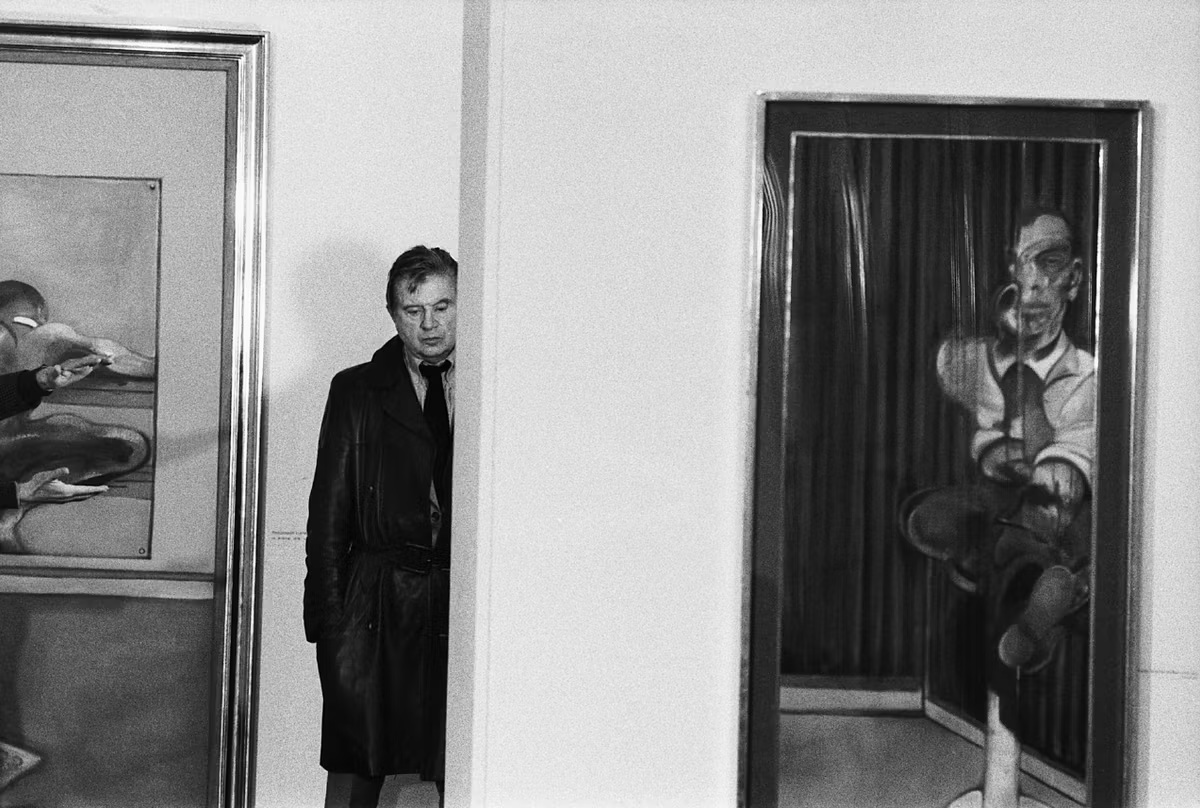
The work goes under the Hammer in London on 16 October. Francis Bacon, Galerie Claude Bernard, Paris, 1977. Photograph: Michel Soskine
Francis Bacon’s favourite painting
goes on sale after 40 years
Portrait of a Dwarf, thought to be the sole work kept by the artist and in private hands
for decades, will be auctioned at Sotheby’s with an estimate of £9m
DAVID SANDERSON | ARTS CORRESPONDENT | CULTURE | THE TIMES | FRIDAY, SEPTEMBER 12, 2025
The portrait of a dwarf that Francis Bacon cherished perhaps more than any other has finally appeared for public sale 50 years after the artist first created the “voyeuristic” figure and then separated it from the lovers in the rest of the composition.
Bacon’s 1975 painting of the seated dwarf is thought to be the sole work the artist kept for his own collection with agreement for a private sale only made years after its creation. The canvas has become one of the most discussed in the artist’s catalogue, and the central figure hints at the influence on Bacon of Diego Velázquez, who frequently depicted court dwarfs.
It is also notable in the surviving Bacon canon for having originally been part of a larger canvas the artist is reported to have shown to the art historian Michael Peppiatt in the 1970s depicting two entwined figures — the artist and his late lover, George Dyer — being watched by a “dwarf-like voyeur”.
However, Bacon later divided the canvas into two separate paintings: Two Figures, depicting the two caged lovers, and the slightly smaller Portrait of a Dwarf, which measures 159cm by 58cm. Two Figures was sold by Peppiatt for £5.5 million in 2016.
Sotheby’s, which is selling the signed Portrait of a Dwarf in London in its October Frieze week sale with an estimate of £9 million, said Bacon had “uniquely retained” this work as his own. It said his subsequent display of it at exhibitions as “his own property” was a “rare exception and testament to the painting’s personal significance for him”
Alex Branczik, Sotheby’s European chairman of modern and contemporary art, said he thought Bacon had been intending to destroy the half of the canvas with the two figures and wanted to “preserve the section with the dwarf seated because he felt it was the tour de force of the painting”.
Branczik said: “He was very attached to it; he exhibited it. The format is unique at this point in his career and the figure trapped within the confines of the narrow frame is part of what gives it its intensity.
“Bacon was pretty brutal with his own oeuvre and destroyed many of his paintings but he felt the quality of the dwarf in this composition was so great that he wanted to preserve it.” It is being sold by the family who purchased it 40 years ago along with Bacon’s Study for Self-Portrait, 1980, which has been given a £6 million estimate, and two of their Auguste Rodin bronzes.
The most expensive Bacon painting sold publicly remains the £89 million paid for Three Studies of Lucian Freud, 1969, in 2013. Another of his large-format works, Triptych Inspired by the Oresteia of Aeschylus, 1981, was sold for nearly £70 million in 2020. Branczik said Bacon, who died in 1992 aged 82, remained “one of the most popular and sought-after artists of the 20th century”, adding that unlike with prolific peers such as Picasso, there were not that many artworks around.
“His oeuvre is small for a major artist of his standing. Unlike many artists where you will find works on paper, studies or smaller paintings, everything Bacon released from his studio was a fully worked, fully conceived painting. He destroyed everything else.”
Branczik said the central dwarf figure showed Bacon’s “profound connection with Velázquez”, to whom he also paid homage in his series of studies of the 17th-century Spanish artist’s Portrait of Innocent X. He said Bacon had also been influenced by a sculpture of Seneb, chief of the dwarfs in Ancient Egypt, which he had seen while in Cairo in the early 1950s.

Francis Bacon created the artwork, right, in 1975 and only agreed to a private sale years later
Christie’s expects Elaine Wynn’s collection to bring $75m,
while her record-breaking Bacon triptych goes to Lacma
Wynn, who died in April, owned trophy works by Lucian Freud, Richard Diebenkorn,
Joan Mitchell and others
BENJAMIN SUTTON | NEWS | ART MARKET | THE ART NEWSPAPER | TUESDAY, 9 SEPTEMBER, 2025
More than a dozen jewels from the collection of the late billionaire and philanthropist Elaine Wynn will come to auction at Christie’s in New York this autumn, though its crown jewel—Francis Bacon’s 1969 triptych Three Studies of Lucian Freud, which she bought for a then-world record $142.4m at Christie’s in 2013—has been bequeathed to the Los Angeles County Museum of Art (Lacma). Christie’s expects the works from Wynn’s collection headed to the auction block to collectively bring more than $75m.
“My mother celebrated every piece that she collected,” Elaine’s daughter Gillian Wynn said in a statement. “She felt privileged to live with each and every one, but always understood that she was merely a temporary custodian. Good art moves and provokes us and then must live on to do the same for others.”
Christie’s will get to move several trophy works during its 20th-century evening sale, 21st-century evening sale and post-war and contemporary day sale in New York in November. Two works consigned from Wynn’s estate have estimates of $15m to $25m: the playful late Lucian Freud studio scene The Painter Surprised by a Naked Admirer (2005) and the bright Richard Diebenkorn abstraction Ocean Park #40 (1971). The trove also includes two works with estimates of $12m to $18m: a Joan Mitchell painting that is more than two metres tall, Sunflower V (1969), and a J.M.W. Turner landscape painting—Ehrenbreitstein, or The Bright Stone of Honour and the Tomb of Marceau, from Byron’s Childe Harold (1835)—which is the earliest work from Wynn’s estate. In addition, the group includes a Wayne Thiebaud landscape painting, River Stretch (2000), which could bring between $3m and $5m, plus works by Olga de Amaral, Georges Seurat, Fernand Léger and others.
“We are humbled to steward this inimitable collection at Christie’s,” the auction house’s deputy chair for the West Coast, Sonya Roth, said in a statement. “Elaine Wynn’s tireless support for art institutions and educational organisations across the United States has had a deep and meaningful impact on countless lives.”
For Wynn—who grew up between New York and Miami Beach, and died in April at age 82—philanthropy included her sustained efforts to create an art museum in her adoptive hometown of Las Vegas. Plans for such an institution have been set in motion in part thanks to a partnership with Lacma, where she served as co-chair of the board. A year ago, through a partnership between Lacma and Wynn, the Las Vegas Museum of Art was given a plot of land in downtown Las Vegas for a ground-up museum project estimated to cost $150m.
“Elaine was among the most generous and supportive leaders in Lacma’s entire history,” Michael Govan, Lacma’s director and chief executive, said in a statement. “She was our biggest champion, and was as passionate about accessibility to art as she was about works of art. Thanks to Elaine’s incredible generosity, Bacon’s masterpiece will belong to Lacma and the public.”
Bacon’s Three Studies of Lucian Freud, one of two triptychs he painted of his fellow artist, has not been publicly displayed since Wynn bought it at Christie’s in 2013 for what, at the time, was the largest sum ever paid for a piece of art at auction. It will go on view next April, when Lacma inaugurates its new $720m David Geffen Galleries building.
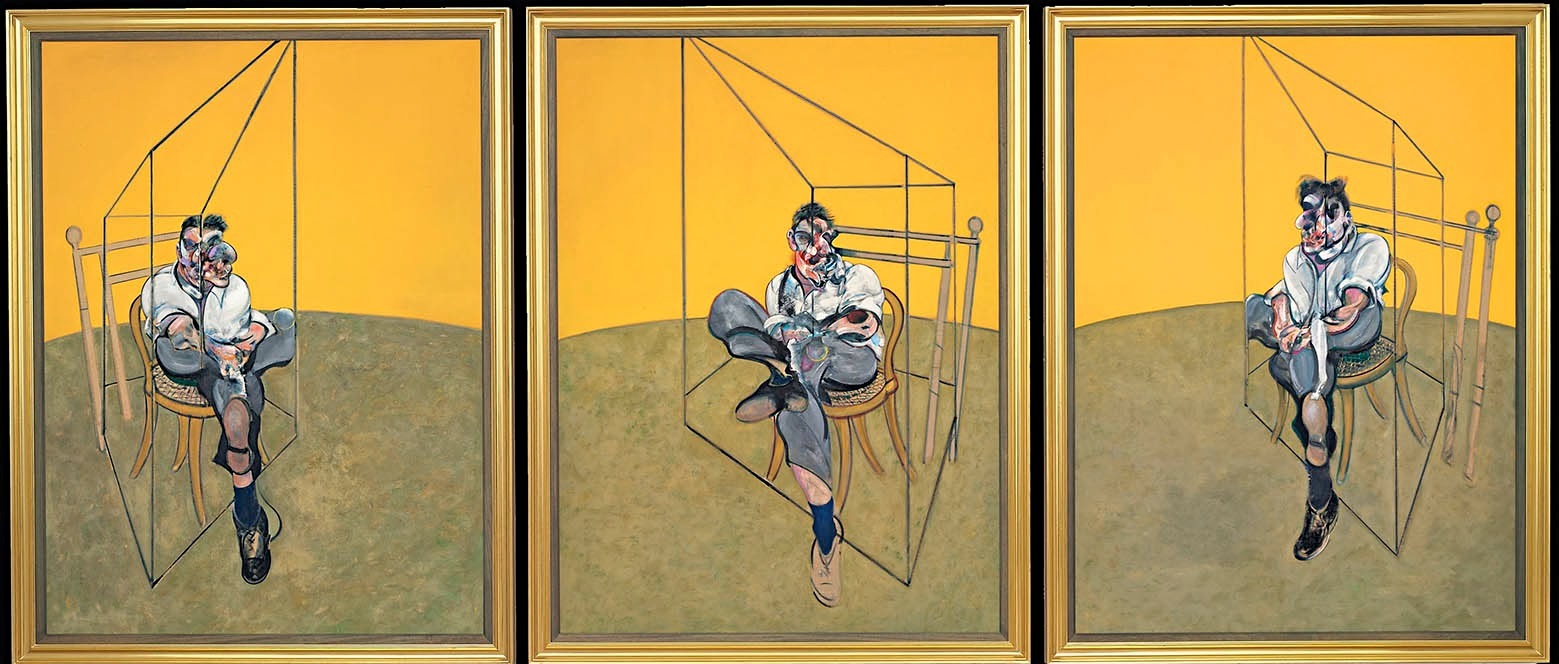
Francis Bacon, Three Studies of Lucian Freud, 1969, Los Angeles County Museum of Art, gift of Elaine P. Wynn © The Estate of Francis Bacon
Elaine Wynn’s Estate Donated $142 Million
Francis Bacon Painting to L.A. Museum
BY KELLY CROW | FINE ART | ARTS & CULTURE | THE WALL STREET JOURNAL | TUESDAY, SEPTEMBER 9, 2025
When casino billionaire Elaine Wynn died in April, the art market was aflutter over what would become of the 82-year-old’s storied collection, particularly her record-setting $142.4 million Francis Bacon triptych, “Three Studies of Lucian Freud.” It was the most expensive artwork ever sold at auction when she won it a dozen years ago, and it still ranks as Bacon’s priciest piece.
Now, her estate has donated the 1969 work, a trio of honey-color portraits of Bacon’s painter pal Freud, to the Los Angeles County Museum of Art. Much of the rest of her collection—at least $75 million worth of art—will offer a fresh test of the struggling art market when they head to Christie’s in New York in November. At least a few pieces arrive steeply discounted.
Wynn is best known for working alongside her ex-husband, Steve Wynn, to transform the Las Vegas Strip into a string of luxury hotels over the years that included the Mirage, the Bellagio and the Wynn. She also had a home in Beverly Hills, Calif., and she had worked in recent years to fund an expansion of the museum better known as Lacma. In 2016, she pledged $50 million toward plans for a new building designed by Peter Zumthor, set to open next spring, and served as the museum’s co-chair from 2015 until her death.
Michael Govan, museum director and chief executive, said he relished Wynn’s support but realized a few years into her tenure that the collector had her own, unspoken goal: to make sure her Bacon, when given to the public, would be displayed in a world-class setting.
“It’s a love story,” Govan said of Wynn and her Bacon. “She did this crazy beautiful thing for herself, in buying the Bacon, because she was planning all along to give it a good home.”
Lacma is now the only museum on the West Coast to claim a major Bacon triptych in its permanent collection, a significant bragging right. “It’s a singular work,” Govan said.
Its inclusion will allow the museum to teach visitors about both Bacon, a Dublin-born painter who lived from 1909 to 1992 and was famed for his psychologically charged portraits, as well as his close friend, the British painter Freud. “We have plenty of portraits of kings and popes, but this is an artist painting another artist,” he said.
Wynn’s daughters, Kevyn and Gillian Wynn, hope the bequest—and the upcoming auction—will swivel an overdue spotlight on their mother’s collecting journey. Although their father, Steve Wynn, is well known in art circles for his blue-chip collection of artists such as Pablo Picasso, both daughters said that it was their mother who first started paying attention to fine art.
Born in New York City and raised mostly in Miami Beach, Elaine didn’t go to museums with her parents, her daughters said, but by the 1980s, she had started actively collecting, with an eye for a broad array of art. She was an early supporter of Colombian textile artist Olga de Amaral before she was globally admired. She pored over art magazines and shared what she was learning with her family.
“Art was Mom’s thing first,” Kevyn said, “but eventually, everything she said finally hit home with Dad.” Steve Wynn declined to comment.
In 1996, the then-couple paid Sotheby’s $2.9 million for Edouard Manet’s 1880 “Portrait of Mademoiselle Suzette Lemaire,” according to Gillian, who said she had cheered from within the auction house’s private skybox after her parents won the work. When their parents divorced in 2010, Kevyn asked them to earmark it for her. They did.
Gillian, who went on to study art history at Yale, said she took her mother to exhibits of her own favorite artists including Mary Weatherford, Wifredo Lam and J.M.W. Turner, and her family often wound up buying works by those artists afterward. That’s how Elaine came to own Turner’s 1835 “Ehrenbreitstein, or The Bright Stone of Honour and the Tomb of Marceau, from Byron’s Childe Harold’s Pilgrimage,” paying $23.9 million for the smoothly atmospheric work in 2017. Her mother hung it in her dining room. Also in the room: Freud’s thickly painted self-portrait from 2004-2005, “The Painter Surprised by a Naked Admirer.”
Both the Turner and the Freud are among the 20 works from Wynn’s collection headed to Christie’s this fall. Gillian said she and her sister decided to keep a few, including the Manet, but sell the rest. “We don’t live fancy lives, and we can go see Turners at a museum,” Gillian said. “This art is historic, and it just feels right to let it go.”
The downturn in the global art market means several of the works, including the Freud, will be priced for far less than what Elaine paid for them, but Christie’s specialist Max Carter said their quality should help the pieces perform well. Eleven of the works will be offered in Christie’s evening sales in November, led by the Freud, which carries a $15 million low estimate. The Turner is estimated to sell for at least $12 million—nearly half what Elaine originally paid.
Richard Diebenkorn’s 1971 “Ocean Park #40,” which she won for $27.3 million from the Anne Marion estate sale at Sotheby’s in 2021, will be offered for at least $15 million. Adrian Ghenie’s 2010 “Boogeyman,” which she won at auction for around $6.3 million in 2018, will be offered for at least $2.5 million. Some of Elaine’s earlier buys appear to have held up better in value: Joan Mitchell’s 1969 “Sunflower V,” which Elaine won for $1.5 million in 2005, is estimated to resell for at least $12 million.
Other pieces in the upcoming sales include examples by Fernand Léger, Georges Seurat, El Anatsui, Lauren Halsey, Jenny Holzer, Jim Hodges, James Rosenquist, Manolo Valdés and Ross Bleckner.
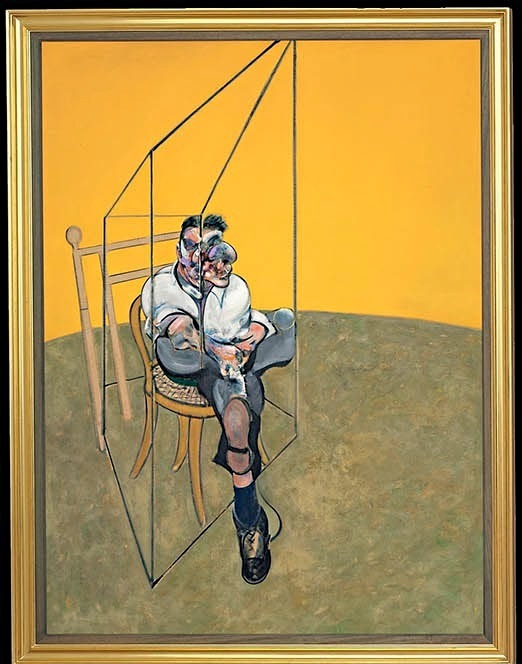
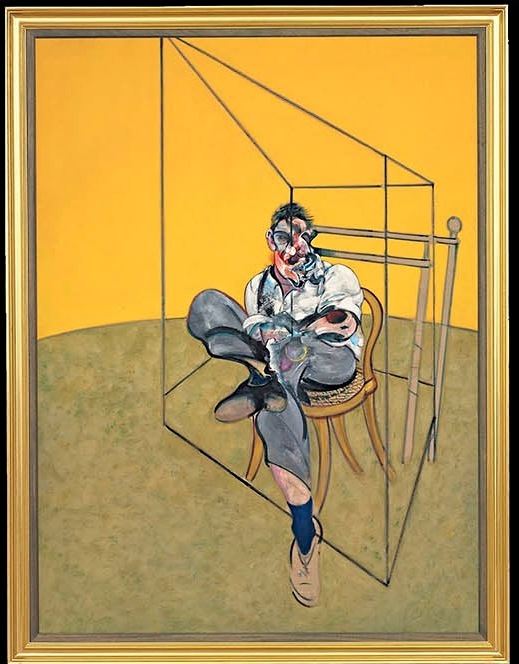

Francis Bacon’s triptych ‘Three Studies of Lucian Freud’ was the most expensive artwork ever sold at auction when Elaine Wynn won it a dozen years ago, and it still ranks as Bacon’s priciest piece.
‘They had everything, then nothing’:
the prodigies the art world forgot
Robert Colquhoun and Bobby MacBryde were once the golden
boys of London’s art scene – photographed in Vogue, filmed by
Ken Russell and lauded by Francis Bacon.
So why did they vanish into obscurity?
DAMIAN BARR | BOOKS | ART & DESIGN | THE GUARDIAN | SUNDAY, 31 AUGUST, 2025
The world is burning. Fascism is rising. Countries are falling. And we’re on the brink of incredible technological change, which will either be the end of everything or a new beginning. So, who needs artists?
An August night in 1944. Robert Colquhoun’s hand shakes as he lights a candle in the blacked-out Notting Hill studio shared with his lover, fellow artist, Robert “Bobby” MacBryde. They are known – from Soho alleys to Bond Street galleries – as the Two Roberts: inseparable, incandescent, often in trouble. Where is Bobby tonight? The Colony Room Club, probably. Safe, Robert hopes. Though never from himself. Bombers prowl the skies above. Who will survive the night? “Fuck it,” Robert mutters, fag dancing on his lip. And he picks up his brush.
The Two Roberts were real, though in my new novel I’ve reimagined them as literary characters – putting flesh on biographical bones. Two young Scotsmen on the make, with boot-black hair, talent matched only by ambition, generosity surpassed only by thirst. Robert Colquhoun and Bobby MacBryde were born in Ayrshire just before the first world war, meeting at Glasgow School of art (GSA) in 1933 then becoming stars as the bombs fell. They were the original “Golden Boys of Bond Street”: nicknamed MacBraque and McPicasso, which they pretended not to love. Photographed in Vogue and filmed by Ken Russell, they were twin suns. Everybody else was in their orbit, if they were lucky.
At one of their weekend-long studio parties at 77 Bedford Gardens you could share a whisky with Elizabeth Smart, birl with boys from the Royal Ballet or strain to hear Dylan Thomas over the music. Somehow, despite rationing, there was always plenty to eat and drink and smoke. Bobby could feed the five thousand with one fish. Robert was a beguilingly brooding host. You could feast on the gossip for weeks. Smart would later employ them at Tilty Mill in Essex as live-in nannies for her four children with George Barker, the poet she fictionalised in By Grand Central Station I Sat Down and Wept. They knew everybody and had everything then suddenly they had nothing and almost nobody and then they were gone. Robert dead at 47. Bobby, never far behind, at 52.
Who were they? How did they blaze such a trail? And why are they now barely remembered?
Growing up in Maybole, South Ayrshire, Bobby worked in a boot factory to save for tuition, convinced he’d get into the big art school in nearby-but-faraway Glasgow. In Kilmarnock, Robert was taken out of school by his father then returned on a scholarship by a minister who saw potential in the meticulous drawings his father envied. They were first in their families to get to university. In my novel I have them meet on their first day – each seeing something secret in the other.
At the GSA they won every prize, the greatest being each other. Knowing the prodigy pair would only split any money, the GSA awarded them a joint travelling scholarship, sending them around Europe just a step ahead of Hitler. They survived street encounters with Blackshirts, sketched Michelangelos in Rome, got a taste for wine and had their eyes opened by Picasso’s Guernica in Paris. Their travel diaries, held in the GSA archives, smoulder with drawings of hot young priests.
I fell in love with Bobby and Robert during lockdown. I saw a tweet of a painting of Two Women Sewing and the blue of the cloth stopped me – who made this? Bobby. Next I found Robert’s Grieving Women. These were great artists, great Scots, why were they not up there with Charles Rennie Mackintosh, the Glasgow Boys and that minister ice-skating on a million shortbread tins?
Bobby becomes famous for his not-very-still still lifes – apples and pears dancing out their bowl, fish flapping on a plate. He offers the viewer a glimpse of rationed deliciousness and a secret taste of what he’s cooking for his man. Robert becomes famous for his mysterious and often tragic portraits – mask-like faces contorted in the mystery of mourning, often a pair of figures holding each other: one with his long face and the other Bobby’s low brow. They are pioneering a radical queer domesticity.
I stumbled across them as footnotes in the biographies of people who used to want to be them. Soho survivors claim Francis Bacon is supposed to have said “Everything I learned about drawing, I learned from Robert Colquhoun.” Endless enraging articles describe them as “friends” or “roommates”: polite closeting elisions, more final than any coffin. When Bobby was 27 he wrote to Robert: “We must be certain to create our legends before we die.” By the time I discovered them they were almost forgotten. Could fictionalising them bring them back?
Obsessing, I found them in an issue of the Picture Post from 1949 with Prunella Clough, Keith Vaughan, Patrick Heron and John Minton (Minty). Rich Minty was in love with Robert and would eventually move into their studio, making a couple a throuple – that’s a fun chapter. The Roberts’ interview is titled The Artists Who Live, Travel, Work and Exhibit Together. The photo, by Felix Man, shows them at their easels in matching shirts and ties. Robert is in a fisherman’s jumper probably knitted by Bobby who made most of their clothes, ironing Robert’s shirts with a spoon heated on their single gas ring. On the easels are Bobby’s Woman in a Red Hat and Robert’s Two Scotswomen – both bought by Alfred Barr, the first director of the Museum of Metropolitan Art and sadly no relation. On a mission to acquire the best young British artists, Barr’s other purchases were Bacon, Edward Burra and Lucian Freud.
Looking at Man’s photo I found myself imagining the rest of their studio-high windows capturing pale north light and looking over to the glossy magnolia tree still growing in the garden opposite. Savouring the smell of pencil shavings and linseed oil. Wondering at the audacity of two young men building an illegal and illicit life in this one room. Finally standing outside their studio felt like completing a pilgrimage to fallen gods.
Bobby and Robert were pioneers who spoke to me like prophets. Handsome, talented and foolhardy. Each believing in the other and making the other love more and paint better. Until they didn’t. Until drink and debt and the ceaseless memory of the horrors of war and the undeclared war on people like them – people like me – became too much.
Like them, I arrived in London knowing almost nobody and wanting to be somebody – to become a writer. Just before the millennium, I discovered the three parallel streets in Soho: Greek, Frith and Dean. A world of pleasures and stories for a young man who’d grown up in a former pit village near a dying steel town where you could get a train to Glasgow and find the one gay club, if you knew where to look. I found freedom on the streets Bobby and Robert had danced down before my parents were born. Hardly any of their haunts remain but get drunk enough in Soho and you’ll see ghosts. I imagined them eyeing me up across a smoky bar.
Every second person in wartime Soho was from somewhere else. So Bobby and Robert are lumped together by their new English friends – and subsequently by art historians – as “working class”. But Robert’s mother was a housewife and Bobby’s sold rags. The Colquhoun’s council flat still stands, Bobby’s childhood street was demolished. Robert’s lot were Protestant, Bobby’s Catholic. These differences mattered, forming fault lines that flourished in their work but fractured their relationship.
Art was their life but also their work and they had the temerity to need paying, unlike their mostly monied pals. The Roberts spent faster than they earned – hosting parties, helping friends and having fun. They came from nothing. They didn’t know how to be rich. When art tastes changed they couldn’t afford time to experiment. The Roberts really did not get on with “the Bloomsberries”. In Frances Spalding’s book Duncan Grant she describes them as “abrasive young Scots” claiming their “begging letters arrived regularly”. Were they abrasive or just direct in the Glasgow style? Begging or just asking for what they were owed?
They were fiercely loyal. When Bobby met Barker, who was leading Elizabeth Smart a merry dance, he is alleged to have ground the base of a broken whisky glass into the palm of his hand while purring “Pleased to meet ye”. Their Notting Hill neighbour Wyndham Lewis knew this, writing in an Observer review: “Robert Colquhoun is generally recognised as one of the best – perhaps the best – of the young artists. Perhaps I should have said Colquhoun and MacBryde for they work together, their work is almost identical, and they can be regarded almost as one organism.”
One organism. Two Roberts.
But how did they get to London and break into the art world? In my novel I conjure a cruising encounter in a blacked-out Waverley Station: Bobby picking up John Tonge, art critic for Horizon magazine, then showing him some etchings after. Why not? Sex and art are happy bedfellows. We don’t know this happened. We don’t know it didn’t. We do know Tonge introduced Bobby to Cyril Connolly, editor of Horizon, and Peter Watson, millionaire backer of the magazine, over a lunch of partridge at Edinburgh’s Café Royal. Bobby, ever hungry, thought they were very small chickens. This life-changing lunch opened a new chapter in art history.
When lives are not valued or actively devalued – as the lives of Bobby and Robert and everybody like them were and often still are – they are not fully known. They can’t be. That doesn’t mean they weren’t fully lived. Writing to your same-sex lover in the 1930s was drafting your own arrest warrant. Or suicide note. You wrote in code, you burned letters, you memorised names and addresses. Or you were caught. Bobby and Robert knew many people who were imprisoned, or worse. Their close friend Denis Wirth-Miller was arrested for “gross indecency” on his way to a party at their studio and jailed for nine weeks – a remarkably light sentence. They collected him from the gates of Wormwood Scrubs. The prosecution in 1954 of Lord Montagu of Beaulieu, Peter Wildeblood and Michael Pitt-Rivers, was a national festival of bigotry.
The laws the Two Roberts defied would not be lifted in their too-short lifetimes, and remained in Scotland until 1984. By then I had already been kissed by another boy. When the facts of our lives can never be fully known there isn’t just room for fiction, there is a moral imperative for it. To write it. To paint it – to light a candle in the dark then pick up your pen or brush. Even, and especially, when the world is ending.
The Two Roberts is published by Canongate on 4 September.
Damian Barr is curating an exhibition, Robert Colquhoun and Robert MacBryde: Artists, Lovers, Outsiders, at the Charleston in Lewes gallery, from 15 October to 12 April
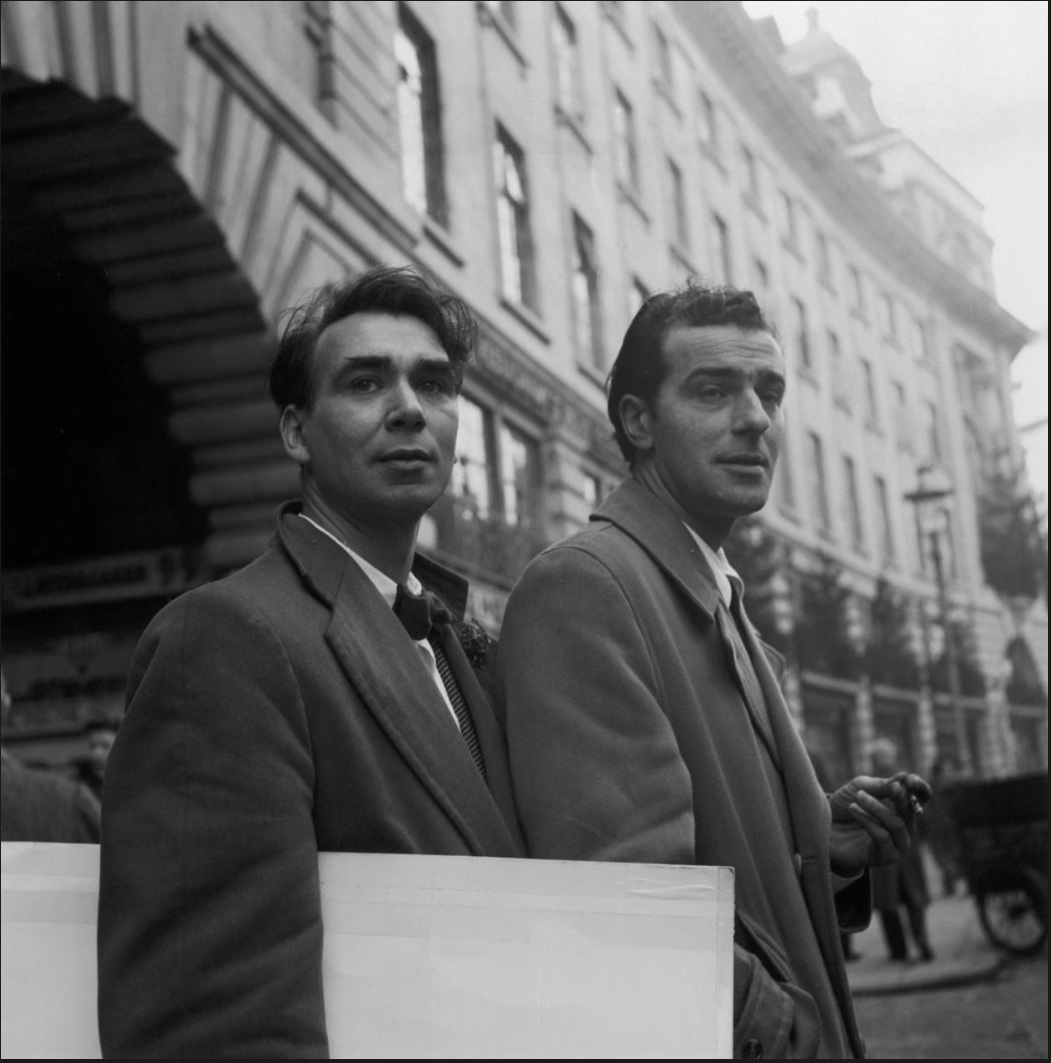
Robert Colquhoun and Robert MacBryde in Regent Street, London W1, 1951.
Francis Bacon’s studio to be ‘fully protected’
while Hugh Lane Gallery closes
BY FIONA AUDLEY | NEWS | THE IRISH POST | ESTABLISHED 1970 | THURSDAY, JULY 31, 2025
THE Hugh Lane Gallery in Dublin is set to close for up to three years while it undergoes an extensive refurbishment.
An installation within it, which features the entire relocated London studio of the artist Francis Bacon, will remain on site throughout the works, it has been confirmed. “Francis Bacon’s Studio will be fully protected throughout the temporary closure period and will remain on site,” Dublin City Council said in a statement this week.
Born Dublin in 1909, Bacon moved to London at the age of 16. In 1961 he moved to 7 Reece Mews, where he lived and worked until his death in 1992. Following his death Hugh Lane Gallery director Barbara Dawson secured the donation of studio at the property from the artist’s heir John Edwards and the executor of Bacon’s estate, Brian Clarke.
She then assembled a team to relocate the studio in its entirety – including the architectural features and even the dust – to the Hugh Lane Gallery. It was meticulously recreated at the Dublin site, and has been open to the public there since 2001.
From September 28 the gallery in Parnell Square will be closed to the public to allow for its original 1930s wing to be upgraded. This work will take place alongside the construction of a new city library for Dublin.
While Bacon’s studio will remain on site, the rest of the gallery’s art collection will be removed and put into storage for the duration of the works.
“The refurbishment is part of a major investment in Parnell Square North which will reshape the square into a significant cultural quarter and enrich the experience of Dublin's citizens and visitors to the city,” a Dublin City Council spokesperson said.
“The refurbishment will upgrade the original 1930s wing to 21st century museum standards of security and environmental controls,” they add. “It will ensure the preservation of the collection for future generations and will enhance our ability to secure significant international loans for major temporary exhibitions.
“The refurbishment will also include a direct link between the gallery and the new Dublin City library, creating a unique cultural experience across art and literature,” they explained. The gallery’s conservation team is now “working hard to safely pack and transport the gallery’s renowned collection to museum standard storage facilities”, Dublin City Council confirmed this week.
“This ensures the public’s collection is being cared for to the highest standards and will be ready for display when the gallery reopens,” they add.
BY MELISSA BAKSH | EXHIBITION REVIEWS | FRIEZE MAGAZINE | MONDAY, JULY 28, 2025
What does it mean to truly be ‘wanted’? For some, the word may conjure notions of carnal lust; for others, bittersweet romantic love. For artist Yan Pei-Ming, however, the dynamics of desire can also centre around friendship – and, in the case of his current exhibition at Massimo de Carlo, London, a notorious one at that: the tumultuous friendship between Lucian Freud and Francis Bacon.
Yan Pei-Ming’s ‘Wanted’ is inspired by one of the art world’s great unsolved mysteries: the theft of Freud’s 1952 portrait of Bacon, stolen from Berlin’s Neue Nationalgalerie in 1988. At just 13 centimetres wide, the pocket-sized copper painting has been celebrated by critics as one of Freud’s finest early works. Whilst researching in Tate’s archives, Yan Pei-Ming was struck by a Wild West-style ‘wanted’ poster, offering a 300,000 Deutschmark reward for the stolen painting’s recovery, which Freud plastered around Berlin in 2001. Despite Freud’s best efforts, the painting was never returned. Yan Pei-Ming has now used that image as the starting point for a series of monochrome paintings of Bacon, drawn from archival photographs, which are inflected by the complex friendship and rivalry between two of the 20th century’s most celebrated artists.
Yan Pei-Ming is well known for his large-scale portraits of people of power: emperors, popes and world leaders. ‘Wanted’, however, begins with a reproduction of Freud’s lost painting of Bacon, which Yan Pei-Ming has honoured by keeping its original, miniature size (all works WANTED FRANCIS BACON, 2025). This was a challenge for the artist; the gallery tells me that he had to buy smaller paintbrushes especially for the endeavour. Here, Bacon’s melancholic eyes are cast downwards to reveal puffy eyelids. His cheeks appear swollen, and one impasto strand of hair is emblazed across his forehead.
The rest of the exhibition is populated by portraits of Bacon painted from photographs that the artist sourced from the National Portrait Gallery’s archive. These are assembled not in thematic or chronological order but instead in a spatial sequence: after the original-scale reproduction of the stolen painting, the subsequent works are hung from smallest to largest. This eccentric installation means that we encounter images of Bacon at unordered stages of his life, as sporadic and unpredictable as memory itself: one minute we see a severe, older man, the next a dough-faced, middle-aged artist.
As we journey through the space, we come eye to eye with Bacon. Yan Pei-Ming’s frequently large scale, alongside his limited palette, allows him to emphasize subtle details of the original photographs: the sharp crease of an eyebrow, the pursing of parted lips poised for a rebuke. But it’s Bacon’s penetrating eyes that hold the most power, confronting our gaze as we stand before him. In the gallery, there is no hiding. I feel as if his eyes, which captured so much violence in his own life, are somehow seeing my shadow – the lurking, unconscious parts that we all have, but would rather deny.
Although the smaller works mark an intriguing shift in Yan Pei-Ming’s practice, it is the larger portraits that feel the most alive. They writhe with intensity and turmoil; paint drips and bleeds across the canvas, embodying the messiness of what it is to have loved and lost. But Bacon’s paintings are surely expressions of the artist’s own emotional landscape as much as representations of his subjects. Despite each of Yan Pei-Ming’s portraits carrying a distinct, near-forensic examination of Bacon the man, I was left wanting a little more: more of Yan Pei-Ming, and the passion behind his fascination with Bacon. Perhaps even more shadow, cast out and brought to the surface – the darkness within, denied and unwanted.
Yan Pei-Ming’s ‘Wanted’ is on view at Massino de Carlo, London, until 8 August
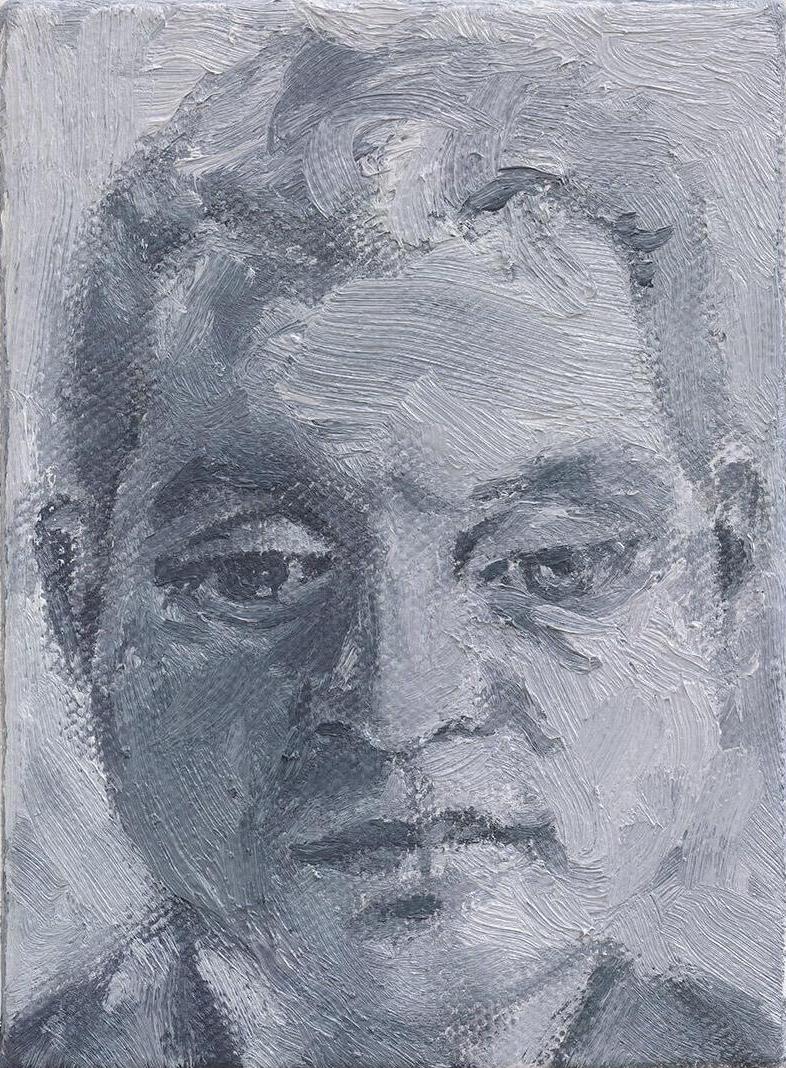
Yan Pei-Ming, WANTED FRANCIS BACON, 2025
Private auctions on the rise as wealthy
art collectors shun publicity
Invitation-only format gains popularity as public sales attract fewer bidders
JOSH SPERO | THE ART MARKET | FINANCIAL TIMES | SATURDAY 12 JULY 2025
Invitation-only private auctions, where select groups of billionaires are approached to bid for high-priced works, are becoming an attractive format for collectors who want to avoid the spotlight while disposing of artworks.
Private auctions have been an innovation of the past five years, say industry figures, as the public auction market has become a less profitable forum with a reduced pool of bidders, especially from Asia, for top works. Last month, a bust by Alberto Giacometti estimated to be valued at more than $70mn failed to sell at Sotheby’s.
The rise of the private auction was also driven by collectors’ post-Covid unwillingness to travel the world for public sales. One collector said: “Something happened with Covid — auctions never came back properly — [Previously] everyone wanted to see who was in the room.” When artist and restaurateur Michael Chow wanted to sell Francis Bacon’s “Portrait of George Dyer Talking” (1966), he asked commercial gallery Lévy Gorvy Dayan to hold an invitation-only private auction.
The sale last August, which took place in a specially mocked-up sale room in the gallery’s New York space, started at $50mn and the six telephone bidders included Israeli shipping magnate Eyal Ofer, according to people familiar with the sale. Chow declined to comment. The identity of the seller and the name of the painting have not been previously reported. The painting last sold for £42.2mn (then $70.3mn) at Christie’s in 2014.
Auction sales fell 20 per cent to $23.4bn in 2024, the lowest level since 2020, according to the Art Basel/UBS Art Market Report 2025, “with double-digit declines in the value and volume of sales in the $10mn-plus segment”. Private sales processes played on the psychology of collectors who desired exclusivity, said Brett Gorvy of Lévy Gorvy Dayan.
“Public auctions are a democratic process — if you can afford to buy you’ll be in the room — but in [the Bacon sale], you had to be invited to participate.” Collectors had to sign non-disclosure agreements. Gorvy said the gallery had chosen a summer sale because “frankly it was when [the bidders] were on holiday on their boats, so there’s no other distraction than this major object”.
Last year, Russian billionaire Dmitry Rybolovlev sold Mark Rothko’s “No 6 (Violet, Green and Red)” to Ken Griffin of hedge fund Citadel for about $195mn in a private auction through Christie’s. The painting had been one work involved in Rybolovlev’s long-running legal dispute with his former art adviser Yves Bouvier over allegations of overcharging (which Bouvier denied).
Jeremy Hodkin, who first reported the Rothko sale in his Canvas art-market newsletter, said private auctions were a tactic only for the few: “This type of format isn’t for selling a $10mn Warhol, it’s for selling a $100mn Warhol.” The desire for privacy can be motivated by the embarrassment of financial need, wanting to be rid of a contested work or simply discretion. Auction houses and galleries have long offered private sales, but the competitive auction element is new.
As the attraction of private auctions has increased, organisers have explored different ways of holding them. In some instances, bidders are invited to see the work of art, typically in a warehouse or art-storage facility, and are then given a window in which to bid, according to a wealth manager who has collector clients.
Loïc Gouzer, who founded Fair Warning, an auction app for approved bidders, said private auctions offered “confidentiality combined with competitive bidding”. He said Fair Warning was developing technology so it could hold what he called “dark auctions” for invited bidders only.
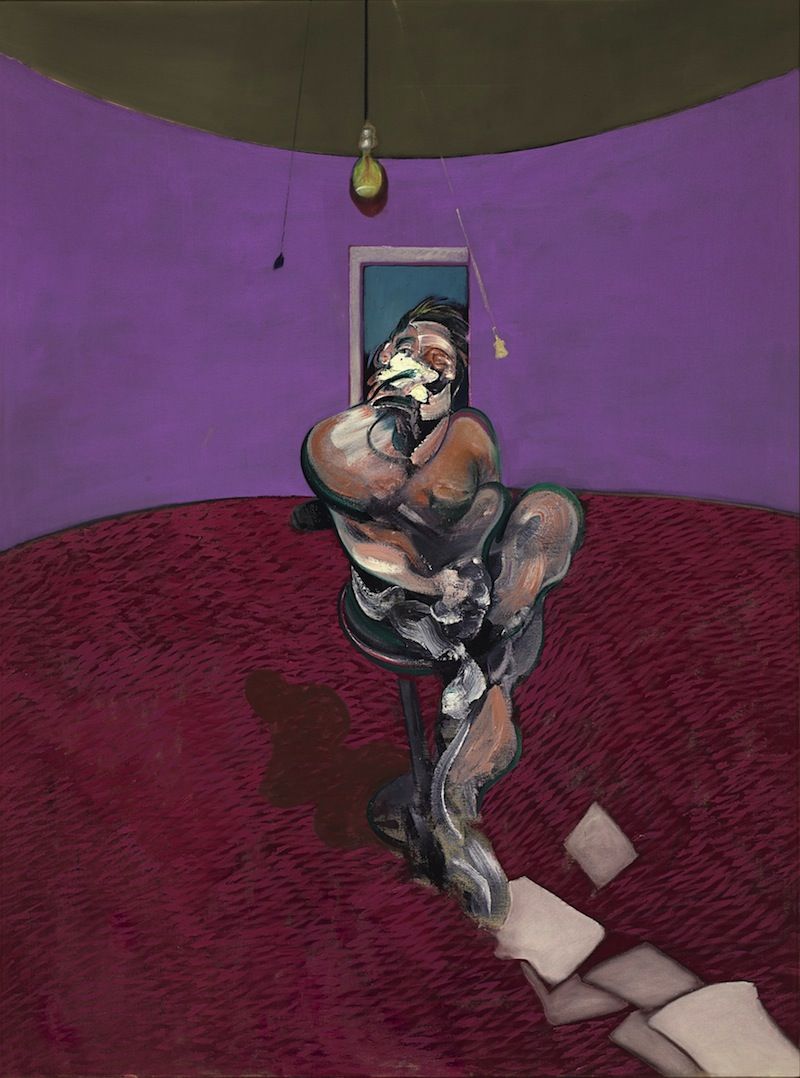
Francis Bacon’s ‘Portrait of George Dyer Talking’
Sir Brian Clarke: Leading stained-glass artist
Creative who reinvented the art form in the age of punk, dies aged 71
SIR BRIAN CLARKE | OBITUARIES | UNITED KINGDOM | THE TIMES | FRIDAY 10 JULY 2025
Brian Clarke’s reverence for stained-glass windows ran so deep he dreamt of them. “It’s always on my mind,” he said, his soft Lancashire accent dripping with childlike adoration. “I love it so much I want to eat it.”
The culinary metaphor was apt for Clarke saw the craft of splintering light through coloured glass into celestial pools as a sensual, almost epicurean delight. “The idea of bringing that kind of liquid, fluid, transparent colour into our daily experience,” he said, “once you’ve tasted it, you really want another lick at that lolly.”
Once described as the “rock star of stained glass”, Clarke’s described his mission as resurrecting the ancient art form and making it relevant to contemporary architecture. He created some of the most radical windows of the past 30 years including the Pyramid of Peace and Reconciliation in Kazakhstan, The Lake Sagami building in Japan, The Victoria Quarter in Leeds, the Pfizer building in New York and the Holocaust memorial in Darmstadt, Germany. His design of the royal mosque at King Khalid International airport in Riyadh was 34m wide, 17m high and incorporated 360 windows.
“Originally,” he said, “the church was where stained glass was born and nourished, and to have it have another life, you had to drag it kicking and screaming out of an ecclesiastical environment and into an urban, secular life.” Often working in collaboration with renowned architects such as Zaha Hadid and Norman Foster, Clarke’s majestic works graced malls, airports, mosques, synagogues and churches including the medieval Linköping Cathedral in Sweden, which had never before had stained glass in it, and a Cistercian convent in Switzerland.
In 2010 the Pope blessed a stained-glass window he had created for the papal nunciature in Wimbledon, replete with transparent ultramarines and rich ruby reds and featuring three candles with texts from Thomas More, John Fisher and John Henry Newman. “I’d said it wasn’t really my bag,” he recalled. “I’m definitely not holy. But the papal nuncio is a genuinely cool guy, he really is; he’s everything you want in an archbishop.”
Some were luscious, bright and joyful — his Seville series featured sun-drenched oranges against a deep blue background — while others were darker, more political. Wall Street was based on stock market lists that flickered as if on screens, Manhattan featured atomic bomb clouds and Grief a series of screaming, Munchian figures.
Skulls were a lifelong preoccupation. Don’t Forget the Lamb, a tribute to his ailing mother, featured skeletons and a note from his mother (“don’t forget the lamb”) and was made mostly of lead: one of the ways Clarke revolutionised the craft was to incorporate the leading, which traditionally frames the glass, into the piece itself.
That mortality was a constant theme was perhaps unsurprising for Clarke saw stained glass as a means through which to express the human condition, on a par with painting, poetry or music (he was forever defending it as high art and he hated people calling him either a designer or an architect). “If you can harness the liquid nature of the material,” he said, “you see the kind of elements that form the world: the fire, the air, the bubbles, the fury of creation. When you look through a stained-glass window you have not only a physical window, but also you have a metaphorical one on to the world.”
His own moment of revelation had come on a visit to York Minster and the 15th-century Great East Window. He was a working-class lad from Lancashire at the time. As the light streamed in through the glass and the voices of the choir filled the air he felt connected to something “much bigger than himself” and he claimed to have fainted in the church. “It felt to me like I’d touched on something potentially revealing to me, of who I was,” he said. “I thought I must have a calling to be a priest, to be a monk — and later on, I just found out it was art.”
Brian Clarke was born in 1953 in Oldham, Lancashire. His mother Lilian (née Whitehead) worked at the local cotton mill and his father Edward was a miner who made marquetry panels of English country scenes and cakes that his son helped decorate. His live-in maternal grandmother made a living as a medium. “We had to get used to her chatting away to spirits,” he recalled, “and passing messages on to the neighbours.”
After his moment of connection in York, Clarke won a scholarship to study at the Oldham School of Arts and Crafts aged 12, one of the last intakes of a Ruskinian push to nurture talent in northern art schools. He attended Burnley School of Art and North Devon College of Art and Design, briefly worked in a second-hand shop in Preston on graduating and received his first stained-glass commission for a residential home aged 17. By the age of 23 he was the subject of a BBC arts documentary and living in an old vicarage in Derbyshire with his wife, Liz Finch, an artist whom he had met as a teenager at art school. Her father was the local vicar.
In 1974 Clarke travelled across Europe as part of the Churchill Memorial Trust Fellowship, meeting other craftspeople and studying the windows of cathedrals and churches, but he soon realised that to bring the archaic medium into public consciousness he had to shake off its ecclesiastical connotations. “When I started working in stained glass, it was a dying art,” he said in 2010. “I knew from a very early age that the future of the medium would only be assured if it had an application in public buildings and was not limited to ecclesiastical architecture. I looked for opportunities in all kinds of public buildings and declined opportunities in the church. I fought for that and continue to fight for that. It’s a lifelong pilgrimage.”
In 1978 — a year before he published his first book, Architectural Stained Glass — he moved to the capital and became “the most Sixties character to have emerged in the London art scene since the Sixties”, according to John McEwen in The Spectator. He joined a punk band, the Uncommitted, which never played a note but advertised for gigs, and his studio in Finsbury Square became a hive of creativity; David Bailey was a friend — “I learnt a lot about light from Bailey” — as were Francis Bacon, Vivienne Westwood, Mick Jagger and Linda and Paul McCartney, for whom he designed the sets for two world tours.
“I was the kid, I was the young one,” recalled Clarke, who had black corkscrew curls and wore braces and an array of punk T-shirts. “And if I’d thought about it long enough, I couldn’t possibly have dealt with Francis, for example, because I would have been in awe. But I wasn’t, because I thought I was as good as he was: I was full of the arrogance of inexperience.” His friends bought paintings from him and commissioned stained-glass projects, though it wasn’t always a two-way street; when Clarke asked Bacon if he would be interested in doing some stained glass the reply was: “No, dear — and I’ve not done any macramé either.”
He had travelled far from his Oldham roots. When Clarke brought his mother up to London for a party, she saw a familiar face and asked to be introduced. He took her across the room — “Excuse me, Andy, excuse me, Mick, I’ve got to introduce my mum to someone” — and when they reached McCartney, and Clarke began his introductions, she retorted: “Oh Brian, Derek Nimmo needs no introduction.’”
Clarke was a man of his time and there was something inescapably punkish about his attitude to his art, which dealt with contrariness as well as the euphoria of colour and form. “You can’t afford to compromise,” he said at the time. “If you’re making a statement, artistically, then when you are making that statement, it’s an absolute. Any variation, or dilution, or subtraction from an absolute, makes it less than absolute and therefore makes it untrue.” Art, he believed, had a greater function to fulfil than “decoration of bourgeois drawing rooms”. His belief in the spiritual power of stained glass had an Elysian, almost socialist aspect to it.
Affable, erudite and warm, with a broad face, large ears and bald head, Clarke was loveable and perennially positive — he rarely gossiped or complained — but he was also a man of contradictions. “He is articulate, extrovert and often very provocative,” said the documentary film-maker Mark Kidel, who made the 2011 film Colouring Light: Brian Clarke — An Artist Apart. “His rather un-English arrogance can offend but he may act this way to hide the fact that he has remained the shy and basically introverted person.”
He listed his recreations as reading and hoarding; his knowledge of architecture was deep, and he was a classical music connoisseur, but he was also a disciple of punk rock. He divorced Liz, raised the child she had with another man, Daniel, then remarried her in 2013 and invited his own boyfriend Jordan to the wedding. Jordan, his wife Liz and her son survive him.
Clarke’s latter years were somewhat pained when he was made sole executor of Bacon’s estate. It had been bequeathed to Bacon’s companion, the illiterate bartender John Edwards, who asked for Clarke’s help. What he inherited was a lengthy legal battle with Bacon’s gallery, Marlborough, which was accused of cheating him of millions of pounds. Clarke had been in a productive phase of his career and at the height of the case he had 20 lawyers working for him.
“It was horrible. It nearly killed me. If I could rewind the clock, that would be something I would definitely not want to be involved with.” The one reward, he said, was being so intimate with Bacon’s masterpieces for so long. It was settled in 2002.
When Clarke was awarded a knighthood last year he became the first stained-glass artist to be honoured for an archaic medium that he helped bring, “kicking and screaming”, into the light.
Sir Brian Clarke, stained-glass window artist, was born on July 2, 1953. He died of complications due to cancer on July 1, 2025, aged 71

Clarke enjoyed rock-star status in the Eighties. Photograph: David Bailey 1981
Sir Brian Clarke obituary
Pop-influenced artist whose stained-glass creations adorned churches,
mosques, airports and offices around the world
CHARLES DARWENT | OBITUARY | ARI | CULTURE | THE GUARDIAN | WEDNESDAY 9 JULY 2025
In later life, the artist Brian Clarke, who has died aged 71 of cancer, liked to recall an epiphany. As a child, on a school trip from his native Oldham to York Minster, and being shown its Great East Window, he had, he said, “ceased to be aware of his friends, even of location, because something beyond location had replaced it”. He passed out cold.
This experience, which he described on the online arts platform Heni in 2023, attached him to what he called the “unbroken line to a glorious, complex and majestic past” represented by stained glass. When the Minster’s east window had been finished in the first decade of the 15th century, most of the people who saw it would have been peasants living in poverty. Clarke’s awe was their awe. The son of Edward, a coalminer, and Lilian (nee Whitehead), a cotton spinner at a local mill, Clarke had had a financially hard childhood. “I am working class by birth and by inclination,” he would later say. “My art is for the working class.”
It was also largely made in stained glass. His family having an interest in spiritualism, Clarke was sent to a spiritualist school before, at 13, winning a scholarship to Oldham School of Art and moving on to the Burnley College of Art two years later. At 17, he enrolled in the architectural stained glass course at North Devon College of Art and Design, graduating, in 1970, with a diploma in desig
At the Devon art school he had met a fellow student, Liz Finch, whom he married in 1972. Finch’s father, a clergyman, encouraged his new son-in-law to make a career in ecclesiastical glass. Like many art students of his day, however, Clarke had been won over by the snappy imagery of Pop artists such as Peter Blake. When he sent off his portfolio to traditional ecclesiastical glass makers, it was returned with horror.
It was only in 1975 that he found a patron willing to commission him. The resulting window, at All Saints Church in Habergham Eaves, Lancashire, retold the creation story in blocks of saturated colour. This was later described by one art historian as “the great dissonant masterpiece of English ecclesiastical stained glass of the 20th century”.
Even so, its maker’s life was hardly one of Anglican decorum. A 1983 photograph of Clarke by John Swannell in the National Portrait Gallery shows a faintly Bowie-esque artist apparently mid-crucifixion. By now, he had been the subject of an hour-long BBC Omnibus programme called Brian Clarke: The Story So Far (1978-79). This, and a Vogue Homme cover shot by Robert Mapplethorpe, propelled him into the London limelight. He was taken up by the gallerist Robert Fraser, known as Groovy Bob, who introduced him to the capital’s creative beau monde: Paul and Linda McCartney, Vivienne Westwood, Malcolm McLaren and, fatefully, Francis Bacon.
Bacon’s response to the question put to him by Clarke at their first meeting hinted at a problem in the younger artist’s future career. When Clarke asked Bacon whether he had ever made work in stained glass, the painter sneered, “No, and I’ve never done any macrame either, dear.” Although Clarke also made paintings and works on paper, his fame, then as now, rested on his work as a maker of stained glass; and stained glass making was a craft, not an art. This stigma would continue to haunt him. Nevertheless, developing a technique by which he could work directly on float glass – “You couldn’t do a leaded window on a skyscraper,” Clarke reasonably remarked – he became internationally successful, particularly in architectural glass.
In 1980, he was commissioned to design a decorative programme for the mosque at King Khalid airport at Riyadh, Saudi Arabia, studying the aniconic traditions of Islamic art at Qur’an school in Fez for the purpose. This was followed by other high-profile commissions, notably for the New York headquarters of the drug giant Pfizer (1995), and the architect Will Alsop’s Hôtel du Département des Bouches du Rhône (1994), known locally as Le Grand Bleu for Clarke’s wrap-around blue glass skin.
He added backlit panels and pillars to Norman Foster’s design for Stansted Airport (1991), and worked with Zaha Hadid on an unrealised housing project in Austria. (Clarke dubbed the material he had made for this Zaha-Glass.) He turned Queen Victoria Street in Leeds into an arcade by covering it over with a glazed roof (1990). His non-architectural glass works were shown in the bluest of blue-chip commercial venues, including the Gagosian and Pace galleries in London, and, most recently, at Damien Hirst’s Newport Street gallery, in an exhibition held to mark the artist’s 70th birthday.
And yet the art establishment largely looked away. Although the Tate owns a suite of Clarke’s works on paper, it has none of them on glass. No major public gallery has ever given him a show; he was never made a Royal Academician. In part, this was because of a lingering snobbery about what was seen as craft, although there was also a sense that the mass appeal of Clarke’s work made it just too easy to be serious. “People haven’t always liked my art,” he said in an interview at the time of his 2023 show. “People have been downright fucking rude about it, in fact. But it’s all I’ve ever done.”
His habit of falling out with museum directors did not help. “I used to say it doesn’t matter because they’ll retire or die, then there’ll be a new generation of them,” Clarke said. “But now I’ve had rows with all the new ones too. British museums have made a point of ignoring me my entire career.”
His capacity for belligerence was not confined to his own work. On Bacon’s death in 1992, his companion, John Edwards, made Clarke an executor of the artist’s estate. In 1998, he became its sole executor, launching a lawsuit against Bacon’s former gallery, the Marlborough, for breach of duty over the painter, which was eventually dismissed and a settlement reached out of court, on terms that remain unknown. History repeated itself when Clarke became chairman of the Zaha Hadid Foundation following the architect’s untimely death in 2016. A series of disputes between the foundation and Hadid’s architectural firm followed, described in the press as toxic. Clarke was knighted in 2024. He and Liz were divorced in 1996, before remarrying in 2013. She and their son, Dan, survive him.
Brian Clarke, artist, born 2 July 1953; died 1 July 2025
Brian Clarke with Paul McCartney in 1983 at the reopening of the Robert Fraser Gallery: ‘Brian Clarke: Paintings’
He helped revive the dying art of stained glass: ‘What could be more
modern than a medium that has a celluloid quality, a cinematic drama?
SIR BRIAN CLARKE | TELEGRAPH OBITUARIES | THE DAILY TELEGRAPH | TUESDAY 08 JULY 2025
Sir Brian Clarke, who has died the day before his 72nd birthday, was once described in The Daily Telegraph as the “rock star of stained glass”, a tribute to his role as a leading light of the modern reinvention of the centuries-old art as well as a reference to what he called his “crazy days” of the late 1970s, when he was ubiquitous on the London party scene and a darling of the gossips.
At that time he was a member of the Uncommitted, a “punk” band which advertised gigs but never actually played a note of music, although, according to Clarke’s website, they “did discuss the possibility from time to time in 1977”. And just as he could never be described as a musician, Clarke, who was also active in painting, sculpture, mosaics, tapestry and even stage design (he did the sets for Sir Paul McCartney on two world tours), resisted being pigeon-holed as a stained-glass artist.
Yet by pushing the boundaries of the medium, both in terms of technology and its artistic potential, and collaborating with prominent architects on hundreds of projects around the world, he became a global star.
Clarke’s shimmering windows, featuring figurative and abstract designs – or combinations of both – can be found in churches across Europe. But he was determined to go beyond the traditional. “When I started working in stained glass, it was a dying art,” he told The Independent in 2010. “I knew from a very early age that the future of the medium would only be assured if it had an application in public buildings and was not limited to ecclesiastical architecture.”
Clarke became famous for spectacular projects, including the Pyramid of Peace in Kazakhstan, the Pfizer building in New York, the Holocaust Memorial Synagogue in Darmstadt (unveiled on the 50th anniversary of Kristallnacht in 1988), the royal mosque at King Khaled International Airport in Riyadh, incorporating 360 windows, and Concordia, a colossal work 34 metres wide and 17 metres high, that was unveiled at Bahrain International Airport by Prince Salman bin Hamad Al Khalifa in April this year.
Clarke was always on the hunt for new ways to develop his medium. For the Pfizer building he pioneered a way to reproduce watercolour designs depicting medical and scientific imagery in molten glass. And he developed a technique involving the bonding of glazed colours to architectural “float glass”, often in multiple layers, to allow colour to be applied to large areas of glass without the traditional dividing lead-work.
Wherever he worked, Clarke was sensitive to site and historical context. When working on the refurbished Queen Victoria Street Arcade in Leeds he nodded to local traditions in tiling and glass. For the cladding of the Hotel du département des Bouches-du-Rhône in Marseille, he selected deep Mediterranean ultramarine tones. At the 13th-century Linköping Cathedral in Sweden he incorporated photographs reinterpreting Christian iconography, but adapted them to fit the cathedral’s diamond-patterned 1850s windows.
“What could be more modern than a medium that has a celluloid quality,’’ Clarke asked, “a cinematic drama that changes constantly?”
Brian Clarke was born on July 2 1953 in Oldham, Lancashire, to Edward Clarke, a miner, and Lilian, née Whitehead, a cotton-mill worker. His maternal grandmother, who lived with the family, made a living as a medium, helping local people communicate with the dead. “We had to get used to her chatting away to spirits and passing messages on to the neighbours,” Clarke recalled. As a child Brian himself was reportedly considered a “sensitive”.
But he felt a very different calling when, aged 12, he was taken on a school trip to York Minster: “I remember seeing not the glass itself, but the illuminated pool of colour on that remarkable warm stone so characteristic of northern Gothic architecture. And that, combined with the music of a rehearsing choir, had such a powerful impact on me that I thought it was kind of a vocation. I thought I must have a calling to be a priest, to be a monk – and later on, I just found out it was art.”
The same year he won a scholarship to Oldham School of Arts and Crafts, from which he moved to Burnley School of Art and North Devon College of Art and Design. A Churchill Memorial Trust Fellowship in 1974 allowed him to visit important stained-glass sites in France, Germany and Italy.
Clarke made his first stained glass, a heraldic eagle design, at 16, and won his first commission aged 17 for stained glass windows in a Grade II-listed property. Before long he found himself in demand for church work, in which he was influenced by the artist John Piper and inspired by his wife Liz’s father, a Lancashire vicar. This was his real beginning: he recalled transporting the glass for one church on his bike.
By his early 20s he had been the subject of a BBC arts documentary, was living in an old vicarage in Derbyshire and had developed a reputation as both a painter and stained-glass designer – though he preferred the term artist as “I’m interested in rendering the commonplace sublime.” In the late 1970s he moved to London, feeling that he could never fully realise his ambitions for stained glass in the provinces.
On his arrival he threw himself into the punk movement, becoming friends with Vivienne Westwood and Malcolm McLaren and producing a series of slashed punk paintings called Dangerous Visions (1977), fixed with large safety pins. John McEwen, writing in The Spectator, described Clarke as “‘the most Sixties character to have emerged in the London art scene since the Sixties”.
David Bailey became a friend, as did Mick Jagger, Andy Warhol and the McCartneys, Paul and Linda. Clarke became a familiar figure at Langan’s and in loucher establishments in Soho, his drinking companions including Francis Bacon, Bacon’s companion John Edwards, and Robert Fraser, the Old Etonian aesthete and gallerist known to his friends as “Groovy Bob”, to whom Clarke was introduced by McLaren. “Everywhere I went it was ‘pop’, I’m in the gossip columns again,” he recalled.
His friendship with Bacon survived an occasion when Clarke asked the artist whether he had ever thought of doing something in stained glass, to which Bacon replied, ‘No, dear. And I’ve never thought of doing something in macramé either.” Clarke agreed to be an executor of Bacon’s estate (he later became sole executor acting on behalf of John Edwards), a role which meant that “a lot of people in the art world are very, very keen to be my friend,” but also embroiled him, after Bacon’s death, in a long and bruising legal battle with Bacon’s old gallery, the Marlborough, which was only settled in 2002.
Meanwhile, Fraser became Clarke’s art dealer and in 1983, when Fraser opened a new gallery in Cork Street, Clarke was the first artist he showed. According to a 1988 report in The Times, in the early 1980s, in an effort to get Clarke to concentrate on his work, Fraser had dispatched him to Rome, then New York, though his efforts as a reformer were half-hearted at best.
Clarke, who eventually went teetotal though he continued to enjoy the occasional spliff, recalled that the first time he attended Alcoholics Anonymous, Fraser “was waiting outside in a taxi to meet me – with a bottle of wine and plastic cups”.
Yet throughout his “crazy years” Clarke retained an earnest commitment to his art. In 1978, with John Piper and Marc Chagall, he co-curated Glass/Light, a seminal exhibition exploring the history and possibilities of stained glass. The following year he published Architectural Stained Glass, a polemic which called for the integration of art and architecture.
He also established a close friendship with the architect Norman Foster, with whom he would work extensively in later years. “There is a thousand-year precedent for what I do,’’ he told The New York Times in 1990. “What’s new is that I’ve nailed my colours to the post by working openly in an architectural context.”
Clarke collaborated with Linda McCartney on her stained-glass photography projects, and after her death he created The Glass Wall, a mammoth eight-panel work dedicated to her memory. His set design for Paul McCartney’s 1992 world tour, Let It Be, consisted of a projected collage of historical stained-glass pictures, including Matisse’s windows from St Paul de Vence. He also designed the stained-glass stage sets for The Ruins of Time, a ballet by Wayne Eagling in tribute to Rudolf Nureyev.
British projects included a stained-glass window for the papal chapel at the Apostolic Nunciature in Wimbledon, which was blessed by Pope Benedict XVI on his state visit to the UK in 2010, and a series of large-scale stained-glass windows for the Brian Clarke Church of England Academy, a co-educational secondary school in Oldham which is named after him.
Much of Clarke’s glass was made in a studio in Wiesbaden, West Germany, and it was there in the mid-1980s that a delegation from Darmstadt came to ask him to do the stained glass for the city’s new Holocaust Memorial Synagogue, designed by Alfred Jacoby. They wanted a non-Jewish non-German to interpret both the past and the future, and after considering about a dozen artists, had lighted on Clarke.
At first he demurred, but as he recalled, “When they explained to me what it meant to them, and that this was a symbol for Jewry the world over, paid for by Germans, built on the site of Gestapo headquarters and opening on the 50th anniversary of Kristallnacht, I was so moved… that when they left I wanted that commission at any price.”
He regarded his Darmstadt windows, with a red-themed side symbolising destruction, and opposite a blue-themed side signalling hope, as the most important commission of his career.
Clarke, a Fellow of the Royal Society of Arts, was knighted in 2024. In 1972 he married Liz Finch, with whom he had a son. The marriage was dissolved in 1996 but they remarried in 2013.
Sir Brian Clarke, born July 2 1953, died July 1 2025

Brian Clarke in 1985: ‘I’m interested in rendering the commonplace sublime.’
Tributes to renowned Oldham artist Sir Brian Clarke
Tributes have been made to renowned Oldham artist Sir Brian Clarke,
who died on July 1, aged 71
BY SOFIA FEDECZKO | PEOPLE | THE OLDHAM TIMES | MONDAY 7 JULY 2025
He was one of the world’s best stained glass artists and his work is featured on buildings all over the globe – including Spindles shopping centre, where he made three stained glass roof lights that are among the largest in Europe. He was awarded a knighthood for his services to art in 2023.
Paying tribute to the artist, council leader Arooj Shah said: “Without question, Sir Brian Clarke was one of Oldham’s most remarkable and inspirational figures. His art lit up the world, and yet he remained grounded in the town where his journey began.His work will stand as a lasting legacy of beauty, imagination and pride in place. He will be deeply missed by all who were touched by his genius and our heartfelt condolences go out to Sir Brian’s family, friends, and all who admired and were inspired by his extraordinary life and work.”
Sir Clarke had also designed stained glass windows for his namesake school, Brian Clarke Church of England Academy. A statement from the school described Sir Clarke as a “kind, generous soul who never forgot his Oldham roots” and someone who “believed in young people, in creativity, and in the power of education to change lives.”
It continues: “One of the most beautiful gifts he left us is the stunning stained glass window that now stands proudly in our school. Just this week, it formed the backdrop to our science celebration event with another proud Oldhamer, Professor Brian Cox — a moment that brought together science, art, and inspiration. Sir Brian was given an honourable mention during the event, and it felt right. His presence was felt in the light, the colour, and the spirit of the day.
“As we head into our fourth year of students, we know how lucky we are to be part of something so special. Our school is thriving — full of energy, ambition, and hope — and Sir Brian’s legacy is woven into everything we do. We’ll miss his warmth, his wisdom, and his unwavering belief in what young people can achieve. But we’ll carry his light forward, every day. Thank you, Sir Brian. You’ll always be part of our story.”
Sir Clarke was born to a working-class family in 1953. His father Edward was a miner and mother, Lillian, was a cotton mill worker. According to the biography on his website, Sir Clarke was first enchanted by the art of stained glass during a visit to York Minster on a school trip.
He went on to study at Oldham School of Arts and Crafts in 1965 and then Burnley School of Art, where his family had moved to. His career was filled with high-profile commissions, including Stansted Airport, the Pfizer medical headquarters in New York, the Royal Mosque at the King Khalid International Airport in Riyadh and the Queen Victoria Street Arcade in Leeds.
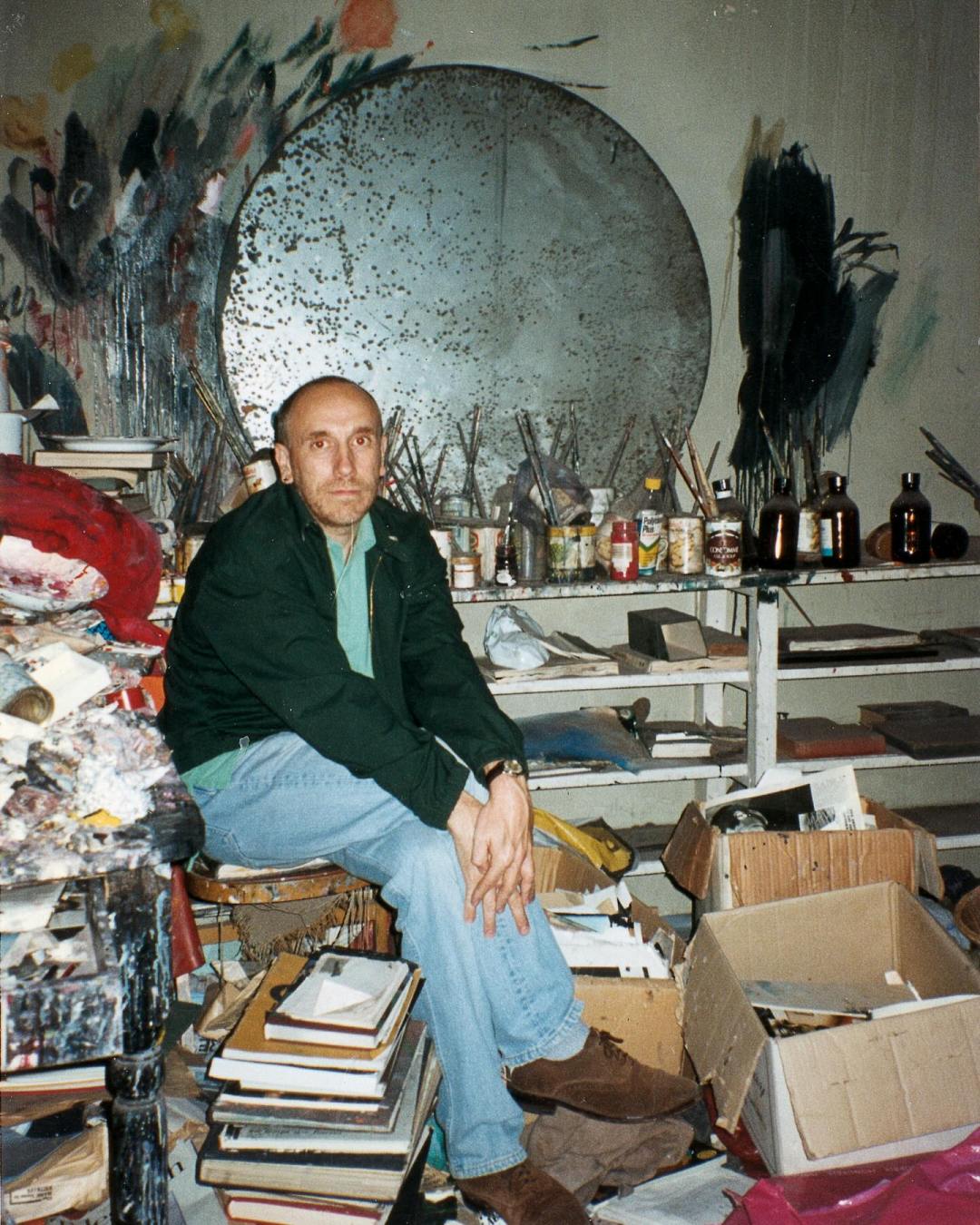
Sir Brian Clarke in the 7 Reece Mews studio of Francis Bacon
If a work of art could leave its museum for a day, where would it go?
KATE WOLSTENHOLME | ART TALKS BACK | EASTERN DAILY PRESS | FRIDAY 4 JULY 2025
Creating art is one of the most emotionally raw and personal things to do – your inner thoughts and feelings going into a work. The creator leaves a part of their soul on the canvas, in the clay, or in the frozen image, as they bring to life a story or a being into the world.
Many artists never show and share certain works for this very reason, not ready or prepared for the most private feelings to become public. If you listen and invest in this thought, then it becomes obvious that art must be a living entity, harbouring the stories and love of both its maker and its adorers. This aura then becomes present when the work is hung in a museum for all to see. It is the same way we fall in love, make friendships, and create bonds.
Why did you notice that person at that party, who is now your partner? Why did you sit next to that person in college who is now your best friend? A feeling, an urge, a power unseen. So why did you gravitate to that piece of work in that gallery? Why did you feel a resonance with it that you can’t explain?
It is the same reason. So now imagine that you are the art. Picture this: your soul has been trapped in a museum for generations, and then you get the chance to leave the walls of the gallery for a day. Where would you choose to go? If an artwork could choose to go anywhere for the day, where would they go? The Sainsbury Centre’s new films see well-known masterpieces of historic and modern art leave the confines of the museum and go out into the world.
Day Release, a series of dramatic, short, scripted films explore themes of identity and belonging, social inequality and opportunity, and asks how the power of an artwork can influence the way people understand the world around us and the impact of time passing since an artwork’s creation.
Episode one features Francis Bacon’s painting, Study for Portrait of P.L., no. 2 (1957), a portrait of his lover, Peter Lacy. The painting revisits Bacon’s old haunt, the Colony Room Club in London’s Soho, where the pair first met and where the painting meets a young man struggling to be openly affectionate with his boyfriend in public. The film explores how society has changed for the LGBTQ+ community since the painting was created in the 1950s.
The Sainsbury Centre’s Living Art programme invites visitors to meet art held in the museum’s collections in new and more emotional ways. To move beyond traditional ways of looking at art, to experiment with finding new ways to connect with and experience artworks in order to bring the power of that relationship to life. In Day Release, the artwork forms the third character in the interactions which play out on screen, sparking conversations and demonstrating the power of art to change lives.
The painting now rests back in the Sainsbury Centre Living Area following this experience – an experience which has reminded them of memories gone by and happy times, as they now sit interacting with those who visit. As we look forward to celebrating Norwich Pride in July, perhaps this painting has more than a visual language to share.
The Day Release project highlights how the stories and wisdom conveyed in artworks can provide solace, representation and a catalyst for conversations and change.

On set of Day Release. Featuring: Francis Bacon, Study for Portrait of P.L., no. 2, 1957, oil on canvas. © The Estate of Francis Bacon
Daniel Lelong (1933–2025)
DANIEL LELONG | OBITUARY | NEWS DESK | ART FORUM | WEDNESDAY JUNE 11 2025
Renowned French gallerist Daniel Lelong, who forged lasting relationships with twentieth-century art world giants such as Francis Bacon, Alexander Calder, and Joan Miró, died in hospital on June 4 following an illness. He was ninety-two. His death was announced by Galerie Lelong & Co., which he cofounded.
Lelong was working as a lawyer and a civil servant at the Conseil d’État in Paris when French art dealer Aimé Maeght asked him to help with the legal formation of the Marguerite and Aimé Maeght Foundation, France’s inaugural contemporary art foundation and museum. Following its establishment, he left his job and joined Galerie Maeght. “[Aimé] needed someone to handle his private administration, to arrange the transportation of works, the insurance costs, etc.
To take care of financial matters, really, which nobody was properly doing,” Lelong told Flash Art’s Donatien Grau in 2014. “And during that time when I was working full-time with him, he proposed that I started collaborating with artists. Then, he first introduced me to Calder, and told him: ‘This is Daniel Lelong, I trust him fully.’ And Calder, with his unmistakable accent, replied: ‘The more you trust him, the less I trust him.’ That’s how it all started.”
Daniel Lelong, French gallerist, 1933–2025
DANIEL LELONG | OBITUARY | NEWS | ART REVIEW | MONDAY 09 JUNE 2025
French gallerist Daniel Lelong has died at the age of ninety-two. A lawyer by training, Lelong first became involved in the artworld after being invited by French art dealer Aimé Maeght to assist with the legal formation of France’s first contemporary art foundation and museum, which opened in 1964.
He left his career at the Conseil d’Etat in Paris to join Galerie Maeght in 1961, working on exhibitions with artists including Alexander Calder, Marc Chagall, Joan Miró, Eduardo Chillida, Antoni Tàpies and Francis Bacon.
After Maeght’s death in 1981, Lelong cofounded Galerie Maeght-Lelong in Paris with Jacques Dupin and Jean Frémon. Renamed Galerie Lelong & Co in 1987, the gallery also oversaw additional branches in New York and Zurich. The gallery’s exhibitions included artists such as Louise Bourgeois (who staged her first exhibition in Europe at the gallery in 1985), Jannis Kounellis, Pierre Alechinsky, Gunther Förg and Kiki Smith.
Lelong later served on the board of the Calder Foundation and sold multiple works by Calder to collectors including Joseph H. Hirshhorn, many of which are on display at the Hirshhorn Museum and Sculpture Garden in Washington, D.C.
Lelong was also responsible for initiating a partnership between the French Tennis Federation and Galerie Lelong, for which a contemporary artist is chosen each year to design the official poster for the French Open tournament, leading to artists including Miró and Tàpies taking on the task.
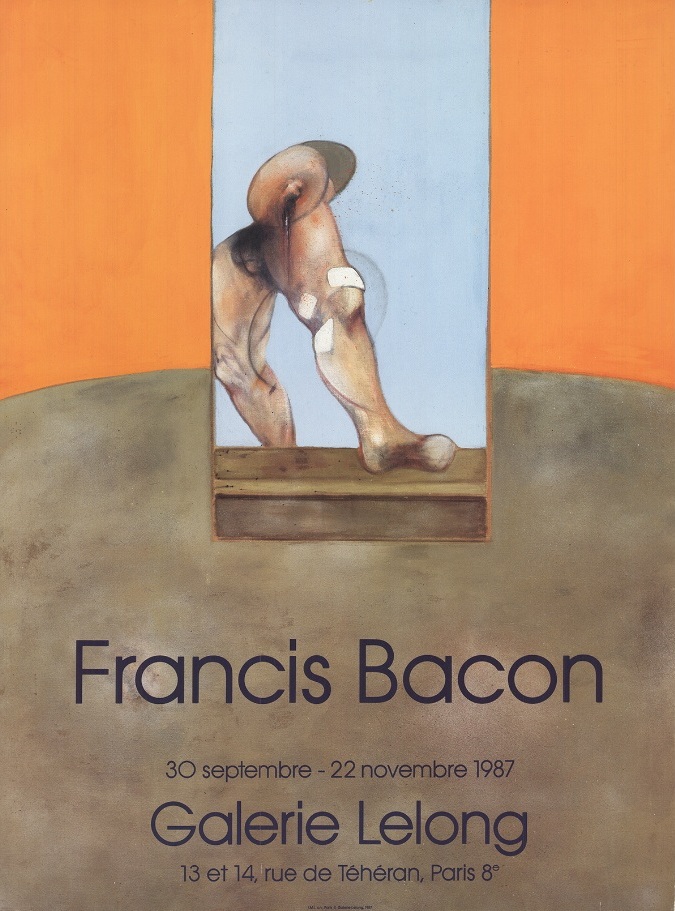
‘Isn’t that you, Ted?’
Stephen Smith meets the man in the painting and helps to
solve a 50-year art world detective story
STEPHEN SMITH | ART | THE NEW REVIEW | THE OBSERVER | SUNDAY 1 JUNE 2025
One day last autumn, Nicky Onsloe was driving through Trafalgar Square in central London when the exhibition Francis Bacon: Human Presence at the National Portrait Gallery caught his eye. He’d heard stories about Bacon from his father, Ted, who used to own a gambling club in Soho in the 1960s. He phoned his dad. “Wasn’t that the bloke you used to know?” he asked him. His call set in motion a chain of events that solved a mystery that had defeated art historians for half a century. Whatever happened to Ted Westfallen?
A bouncer and former meat market porter from the East End of London, Westfallen was the model for a painting, Study for Portrait, by Francis Bacon more than 50 years ago. Westfallen had rescued the artist from a beating on the doorstep of his club in Soho and the two became unlikely friends. Bacon’s portrait of Westfallen, made in 1969, is in a private collection today, but if it ever came to market it would undoubtedly fetch tens of millions of pounds.
The artist died in 1992 and only half a dozen of the people who he painted are still alive today, Mick Jagger among them. But the soaring interest in Bacon and his work following his death failed to throw up any clues about the whereabouts or fate of Westfallen, who was also known as Ginger Ted and Red Ted on account of his hair colour. Art historians impatient to fill in the blanks about the painter searched for him in vain. There were no leads; perhaps he was dead. But now an implausible turn of events worthy of Bacon’s own often rackety life has resolved this perplexing art-world conundrum mystery.
Westfallen had kept letters and photographs from his years with Bacon. His son put them together and showed them to the National Portrait Gallery. But the gallery encouraged him to take them to the Bacon estate instead. The memorabilia was immediately recognised as a bonanza by Martin Harrison, a tireless art-world gumshoe who has spent years on Bacon’s trail. Harrison told his colleagues at the estate: “Hold on guys! I’m on this one!’” He had for spent years trawling the dives of old Soho and interviewed its surviving denizens in the hope of finding a trace of the lost sitter, but came up empty-handed. Harrison said: “Ted got out of the game. He went straight. I assumed he’d died.”
But Ted Westfallen is very much alive, living near Thurrock in Essex, and remembers his time with Bacon clearly. “Francis always knew exactly what he was doing,” he told me last week. “I saw him once in Muriel’s, the Colony Room, with a whisky. I was keeping my eye on him, and I saw him throw the scotch on the floor – the glass came up empty. The idea was – I’m sure of it, I could read him like a book – that he liked to see people pissed. He wanted to see you through his eyes, see how you were, but if he was drunk, he couldn’t register it. He would go in a pub and sit and look at whoever it was just to see the characters of people.”
Almost single-handedly, Bacon saved figurative painting from the chokehold of abstract art in the 20th century. But the painter was as well known for his riotous and ramshackle lifestyle as for his work. One of the celebrated characters of postwar Soho, he mixed with aristocrats and gangsters, dividing his time between intense bouts of work at his paint-splattered studio and the casinos of the West End
Bacon’s posthumous prices have astonished the art market. Three Studies of Lucian Freud, Bacon’s triptych of his one-time friend and fellow painter, fetched £90m when it was sold in 2013, a record for an artwork. But the artist was impatient with canvases that displeased him, often taking a blunt instrument to them. Others he simply forgot about. The deep-pocketed Estate of Francis Bacon has, since his death, embarked on a worldwide trawl for undiscovered stories about the artist. Fittingly, it was a stroke of luck no more than the flick of a playing card from the former gambling dens of Soho that led to Bacon’s long-lost sitter.
Ted Westfallen is 82. No longer ginger, he’s white-haired and bespectacled, but still a well-set man. He lives an hour’s drive from his old manor. When we speak, he is wearing an old-school football shirt in the colours of West Ham United. He now goes by the name of Onsloe – one of the reasons that he eluded Harrison’s sleuthing for so long was that he changed his name by deed poll. After his years with Bacon, he went into business with his brother Ronnie, selling cars in Essex. “Ronnie changed his name to Onsloe, with an ‘e’,” he says. “He saw it written down somewhere and liked it. And he said to me: ‘You should change your name too, Ted. The Old Bill out here knows you as Ted Westfallen.’” Westfallen says he spent time in the “boob”, or prison, for GBH and affray.
He recounted his first meeting with Bacon. Like so many other important episodes in the artist’s life, it happened in Soho, which wasn’t the proudly rainbow-emblazoned quarter of bubble tea houses and editing studios that it is today. It was a rookery of strip clubs, clip joints and shady spielers, or out-of-hours drinking dens. Westfallen was 25, and not long out of Wormwood Scrubs. His uncle, who he describes as “a villain in the West End”, got him a job on the door of a gambling club that was on the wilder shores of respectability. Westfallen could size up guests through a peephole before deciding whether to admit them or not. This spyhole had a role in a game of cat and mouse played by the police and the doormen, he says. “When the Bill used to come and raid us, they put their hands over the hole so we couldn’t see who it was, so I used to light a cigarette and burn their hands. I’d go: ‘Sorry officer, obviously I didn’t know it was you!’ And they said: ‘You bastard! We’ll have you!’”
Bacon, who was in his late fifties, gambled at the club one evening with his friend, the painter Denis Wirth Miller. Westfallen said: “After they left, I went out to see everything was kosher, and I saw Francis and Denis with three geezers in their twenties. One of them had his elbow up at Francis. I thought, ‘Oh they’re mugging him,’ so I shot back to my cubbyhole, I took out my little truncheon, I ran down the stairs and I went ‘pop!’ – caught one of them on the back – and ‘bang!’ – another one – and they ran away crying.“About an hour later the buzzer went and there was Francis on his own. I said: ‘Do you want to gamble?’ He said he’d like a coffee, so I got him one. Out of the corner of my eye, I could see he was looking at me all the time. I thought to myself, that’s a bit strange. Another gambler said to me: ‘Ted, you know who that is, don’t you?’ I said: ‘No.’ He said: ‘It’s Francis Bacon, the painter.’ I thought he meant painter and decorator.”
Bacon wanted to repay Westfallen for seeing off his attackers and offered to treat him to a fish lunch. “I thought he meant rock or eel,” says Westfallen. In fact, the pair tied on a bib at Wheeler’s, the noted fish restaurant, before Bacon introduced Westfallen to the bohemian drinking club of the Colony Room.
The pair became the odd couple of Soho, a relationship that anticipated Minder, the popular TV comedy of a decade or so later, with Bacon, a one-time shoplifter, cast in the role of the chancer Arthur Daley, and Westfallen as Terry McCann, his gruff but kindly protector. Westfallen looked out for the older man, warning him off the moody boozers where he liked to sit for hours over a drink watching the regulars. “I used to say to him: ‘Mile End at night isn’t the same as Knightsbridge, Francis.’” In return, Bacon made sure that Westfallen always had a few quid. One of the quirks of the inveterate gamblers Bacon and Freud was that they preferred to lose whenever possible, a spur to get back to work in order to sell paintings and make good their losses. Westfallen remembers Bacon ignoring his advice to avoid one of the less transparent games of chance offered at his club, only for the artist to shock the house by winning £3,000 – a huge sum in the 1960s. “They gave Francis his winnings but he said: ‘No, leave it for the boys.’”
Bacon took younger men as lovers. One of them was George Dyer, a petty criminal. They met when Dyer broke into Bacon’s studio in Reese Reece Mews, South Kensington, while the artist happened to be there. Westfallen was Bacon’s type, but he insists they never had a sexual relationship. “He tried it on once or twice. One night, he’d had a drink and he said to me: ‘Ted, if you come and live with me I’ll give you all my works.’ I said: ‘Francis, you know I’m not like that.’ And he looked at the floor and went: ‘I know’. I could have been a millionaire!”
Westfallen had no idea that Bacon was painting him. The artist liked to work from photographs. The younger man had given him pictures of himself taken in a photo booth. “Personally, I thought that compared to the other stuff he’d done, the one of me wasn’t a bad picture. Francis told me that when they invented photography, paintings went out the window. He said: ‘I can only paint people I know. And when I paint you, I paint the inside of you.’ I think my picture’s in the south of France somewhere now.”
Westfallen accompanied Bacon to Paris, where he was planning an exhibition. They met Georges Pompidou, the president of France. “We were all having a toast. It came to my turn and I couldn’t speak French so I just said: ‘Cheerio!’ Pompidou couldn’t stop laughing and his shoulders were going. When we left, Francis said to me: ‘You made a big impression on him.’ I said: ‘I was copying you, Francis. That’s what you say all the time when you’re pissed: you go, Cheerio!’ He said: ‘I don’t, do I?’”
The two attended a party at a townhouse in Chelsea belonging to the Duke of Devonshire. “There was an old boy coming up the stairs on two walking sticks. It was Harold Macmillan. Francis said: ‘Mooch around, Ted, you might find it interesting.’ I went into a room full of pictures. A little tubby fellow was there. He said: ‘Excuse me, are you a painter?’ I said: ‘No, mate. I’ve got a gambling club in Soho, a nice little gambling spieler.” He went: “Oh Soho, how exciting!’
“Francis told me: ‘He’s Sir John Betjeman, the poet laureate.’ I said: ‘Cor, I thought I recognised his boat!’ Lovely man he was, and all.”
Westfallen said he’d had enough of the party. “Francis said: ‘The Krays would give anything to be where you are. They’ve been trying to get in with this crowd for years and I’m giving it to you!’ I said: ‘I’m not the Krays. I’m a working man! You’re talking about villains there – nah, that’s not me.’”
But Westfallen was familiar with criminals and their world. One day a letter arrived for Bacon and Westfallen recognised it immediately as “a nick letter”: sent from Parkhurst prison. “It was from Ronnie Kray. He said: ‘Dear Francis, I hope you don’t mind, I’ve got a writer doing a biography of me and Reggie and when I told him I knew you, he said he would love to meet you. Is it possible to make a meet? I hope everything’s OK, Francis. God bless, lots of love, Ron.’ I thought, he’s like a little boy and the writing was terrible. He couldn’t spell, but that was Ronnie Kray.”
“Francis said: ‘What do you think of that?” I said: ‘I’ll put it in me pocket.’ A few days later Francis said: ‘Have you still got it?’
“I said: ‘Yeah, what’s up?’ He said: ‘Oh give it back to me please. I’ve got to get rid of it.’ I said: ‘What’s the matter?’ He said: ‘Well I don’t want it to fall in the wrong hands.’ Because the Krays were all over the papers at the time.”
Westfallen came to blows with Dyer after the latter interrupted a meal he was having with Bacon in Wheeler’s. “He wanted some money. Francis said: ‘But I gave you three grand two weeks ago! Have you spent it all, then?’
“I said to Dyer: ‘Look mate, we’re eating dinner, do us a favour and go away.’ And he come right up to me and he said: ‘You must be flavour of the month!’ He said: ‘Outside!’
“So we went outside and as he’s come out the door, there was a metal cage over an extractor fan, he grabbed it to swing at me but it wouldn’t come off. So I gave him a slap: ‘Crack!’ He went down like a sack of shit. I said: ‘Go and piss off, mate, we’ve all had enough of you.”
On the eve of a major exhibition of Bacon’s work in Paris in 1971, Dyer was found dead on the toilet in the artist’s hotel suite. According to Westfallen, Bacon believed it was an act of spite to overshadow his success. “He said: ‘That bastard, he done it on purpose.” I said: ‘Nah.’ But he went: ‘I’m telling you, he done that on purpose. He waited till the show and then he committed suicide.’”
Westfallen looks back fondly on his days with Bacon. “It was marvellous, the best time of my life. I was eating the best food in the world. Francis taught me how to eat, he taught me about wine. A friend of mine said to me: ‘He’s immortalised you, Ted.’ And I said: ‘Yes, course he has.’”
Francis Bacon Retrieved: Lost Words/New Writing edited by Martin Harrison is published by the Estate of Francis Bacon Estate and Thames & Hudson (£28)
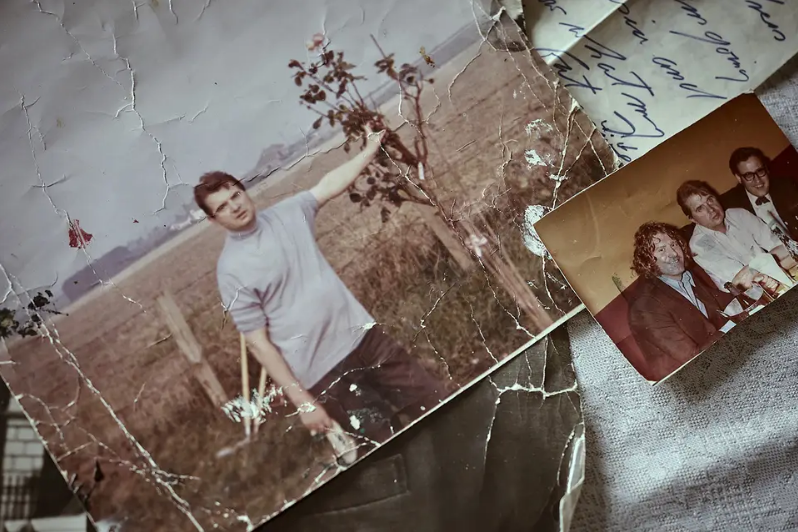
Pictures from Ted’s archive, including him and Bacon at a Soho nightclub along with its owner
The Holmes-loving historian on bringing home the Bacons
On the artist’s trail …
TIM ADAMS | ART | THE NEW REVIEW | THE OBSERVER | SUNDAY 1 JUNE 2025
The art historian Martin Harrison first started working with the estate of Francis Bacon for his 2006 book In Camera, which traced, in forensic detail, the many photographic and ephemeral influences on the painter’s work, from murder scene snapshots and war reports to Silk Cut adverts – the things that Bacon would hoard and surround himself with in his Kensington studio. Harrison was invited after that to create a definitive catalogue raisonné of the artist’s often chaotic output. That process took 10 years. It has been followed by a fascinating series of books, edited by Harrison, which have created the field of “Bacon studies”.
Speaking to me last week, about the Ted Onsloe discovery, Harrison suggested that the work has been all-consuming. It has also satisfied a curiosity that began for him in art college. “I remember the first Bacon I saw, Landscape near Malabata, very clearly. And I remember thinking: What the hell is this? I was 16 or 17. I knew it was the work of a genius, but in my stupid little teenage head, I couldn’t begin to understand it – but I wanted to try.”
Over six decades, Harrison hasn’t lost that curiosity. “It always starts and ends with a painting,” he says. “But also when I was a kid I used to love Sherlock Holmes and I wanted to be a detective, so I am as much that as anything else. There are 584 extant Bacon paintings. I always said to find the first 500 was not so difficult, but the other 84 – that’s the challenge. We were right on deadline for the catalogue when I located the last one.”
Harrison was not helped in that quest by the fact that Bacon had no interest in any kind of record keeping. All that was done for him by the legendary Valerie Beston – “Valerie at the gallery” as Bacon called her – who worked for his dealer Marlborough Fine Art and who for 40 years heroically tried to impose some order on his ramshackle life. By the time Harrison became involved, Miss Beston, as she liked to be known, was infirm with Alzheimer’s, but he was allowed access to the archive of receipts and hotel bills and her meticulous record-keeping.
In among these documents, Harrison had come across some correspondence she’d had with Ted Westfallen, a known friend to Bacon. “Miss Beston had been in touch with Ted about this particular painting [Study for Portrait, 1969] in 1971 at the time of the Grand Palais show of Bacon’s work in Paris. The painting had been part of that show, but Ted didn’t go, so she had sent him a catalogue.” When Harrison documented that portrait of Westfallen with the newspaper, he did as much as he could to track down what had happened to Ted, searching for the Westfallen name in phone books and census records, but couldn’t find anything. The last he had heard from many of his Bacon contacts was that Ted had “gone straight and become a cab driver”, (which was one job for a while) so he put that in his note to the painting.
When Ted’s family got in touch with the Bacon estate before Christmas, Harrison couldn’t have been more excited. “It was Nicky Onsloe’s girlfriend, Jenny, who sent us an email,” he says. “I was straight back to them.” He could hardly believe the news. “There are only five other living sitters for Bacon paintings and here was another – from 1969! – and with a story to tell.”
Harrison and his wife visited Ted Onsloe at his house near Thurrock – “very industrial Essex” – just before Christmas. “He’s in his eighties now, but you still wouldn’t mess with him,” Harrison says. “He’s a charming bloke. I joked with him: ‘Ted, I can call you a dozy fucker now and you won’t hit me’; he said: ‘You wouldn’t have said that 30 years ago.’
“He obviously was close to Bacon – and they lived the high life. When we were driving there, I thought, crikey, we ought to take a bottle. We stopped at a Co-op and bought the most expensive red wine they had – £40 or something. When I gave it to Ted he took a look at it that said: ‘Why have you brought this shit?’ He learned about wine from Bacon. We have done a little film with Ted for the estate and naturally he asked for seafood, champagne; we sent him a fabulous limo to collect him. Midnight blue with red leather seats. It was what Francis would have done.”
Harrison’s latest volume of Bacon studies, Francis Bacon Retrieved: Lost Words/New Writing, is published by the Estate of Francis Bacon Publishing and Thames & Hudson

Ted and Bacon in Paris, where they shared a toast with Georges Pompidou, the French president


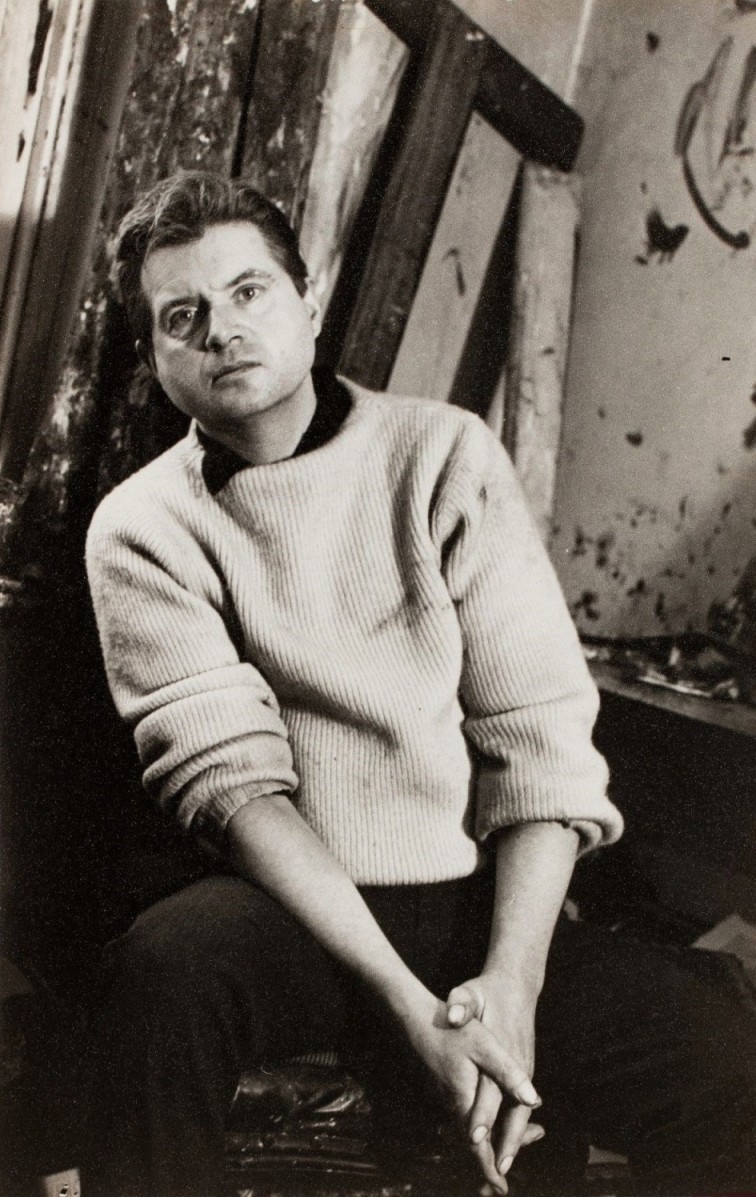
Francis Bacon: The artist’s childhood home on Baggot Street in Dublin is up for sale
Painting trauma: Francis Bacon’s suicide paintings
CECILIA BLOTTO | ART | FEATURES | FAR OUT MAGAZINE | WEDNESDAY, 26 MARCH, 2025
Irish artist Francis Bacon had always been intrigued by the male body. Whether it be his ex-boyfriends or his estranged father, painting the male figure was a predominant preoccupation and the primary subject of his works. This fascination, beyond curiosity, was a dark sexual obsession, evident in the way he painted the men in a grotesquely warped and mangled fashion.
This style never stopped, not even with the death of his long-time lover, George Dyer. The pair had a turbulent, violent, and outright toxic relationship, punctured by constant pushes and pulls. Dyer was a chronically depressed alcoholic, and Bacon wasn’t too dissimilar. It was his time in his art studio that was his only saving grace.
The story of how the two met is just as precarious as their relationship. Dyer, a thief in his pastime, attempted to burgle Bacon’s luxury flat, and shockingly, this awkward encounter at Bacon’s smashed window quickly turned into their intense love affair. But, as Bacon grew famous, Dyer disappeared into the wings of his life. Feeling excluded and suffering from his partner’s notoriety, Dyer found any possible way to turn the spotlight towards him. Multiple times, Bacon claimed that Dyer threatened to kill himself when Bacon tried to call it quits.
Spiralling into a never-ending doom of alcoholism and amphetamine abuse, Dyer eventually took his own life two nights before the opening of Bacon’s career-making retrospective show at the Grand Palais in Paris. Although the exhibition mostly featured paintings of Dyer, he hadn’t been invited, and Bacon was informed of his lover’s death just a few hours before the show started. Traumatised and shaken by the news, Bacon chose to attend anyway.
From that moment on, painting became even more of a therapeutic act for Bacon. In Isabelle Wallace’s essay ‘Trauma as Representation’, she asserts that trauma can only be “accessed in retrospect” because the traumatic moment is focused on the trauma response. Bacon finds his retrospective access through the repetitive nature of painting the same subject, Dyer, to process his suicide.
The most famous example of this style of painting can be seen in his series of triptychs in memory of Dyer. However, these don’t commemorate nor glorify Dyer like the paintings made when he was alive, which celebrated his virility. These are graphic, jarring postmortem snapshots taken right after his suicide.
Take a look at The Black Triptychs of 1973, for example. These three paintings show the moment before, during and after Dyer’s suicide and his transition from subject to object. In Triptych, May–June 1973, we are confronted with a harrowing scene: a slumped lump of flesh, without a head, bent over a lone toilet bowl in a black room. Dyer’s body is so compact, his face tucked between his legs, denoting his agony in his final moments. The dense black of the room he’s in illustrates exactly how he was feeling—lost and alone in the dark. We, as the viewers, are the only eyewitnesses and participants as he takes his last breaths.
In the second, his face is revealed, bloodied and pallid. A black shadow cast over Dyer, looking scarily similar to a winged beast, perhaps the angel of death, about to swallow him up. His death is marked by a singular dark lightbulb. Finally, Dyer, hunched over the toilet bowl, eyes shut in an almost peaceful way, seems to be vomiting blood, indicated by the red flecks of paint, the only colours in this monochromatic last canvas.
These paintings are riddled with pathos, through which Bacon’s remorse is felt. The choice of the triptych, a go-to for Bacon, is a religious style of painting composition rooted in Christian art. Triptychs would principally be used to show Christ’s death or ascension, so the choice to use this style likens Dyer to a holy figure for Bacon. The paintings are made on large canvases of 78 x 58 inches that make Dyer almost life-size, adding to the realism of the scene.
Bacon doesn’t sugar-coat anything in this triptych. Dyer’s death was just as volatile and brutal as his relationship with Bacon and his personal life. He once said, “I think that life is violent, and most people turn away from that side of it in an attempt to live a life that is screened. But I think they are merely fooling themselves. I mean, the act of birth is a violent thing, and the act of death is a violent thing. And, as you surely have observed, the very act of living is violent.”
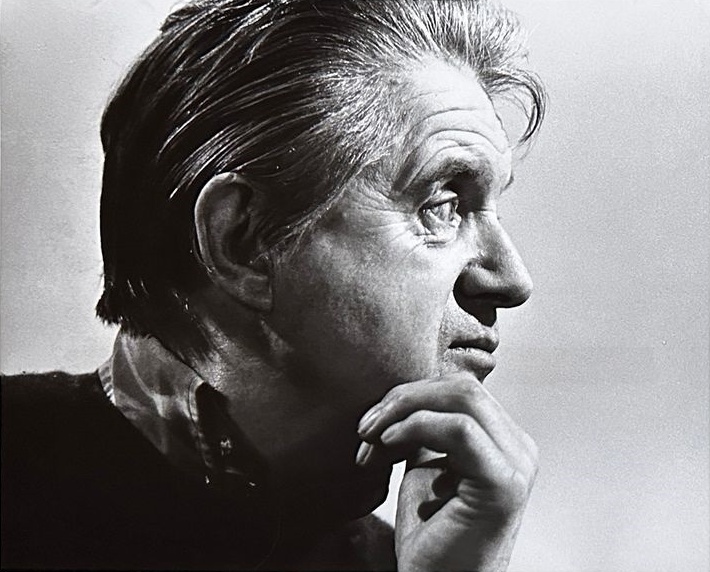
JUSTINE SEBBAG | ART AND ARCHITECTURE | FEATURES | MASTERMIND MAGAZINE | PARIS | SPRING AND SUMMER 2025
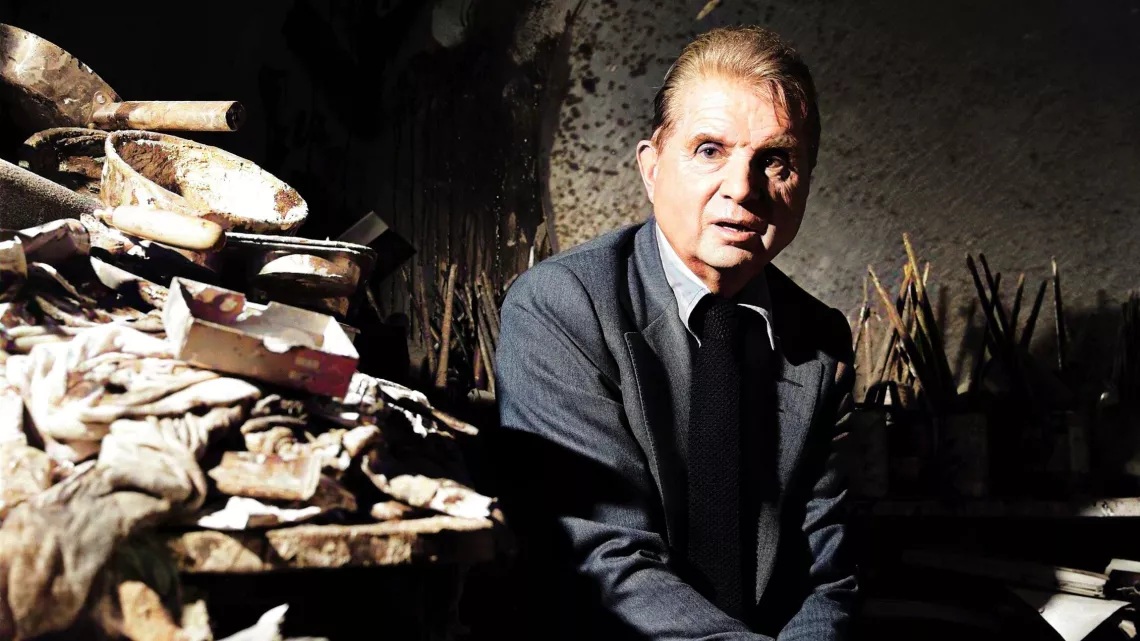
Keeper of a Painter’s Secrets?
Or a Fantasist and a Trickster?
BY ALEX MARSHALL | DESIGN | ARTS | THE NEW YORK TIMES | MONDAY, MARCH 3, 2025
The last time Barry Joule saw his friend Francis Bacon, it was 10 days before the celebrated painter’s death.
No one in the art world disputes that.
For over a decade before that spring day in 1992, Joule, a Canadian handyman with a rock-star mane, had been one of Bacon’s helpers, doing odd jobs around the artist’s London home and driving him to exhibitions. In Joule’s telling, the two became friends, and even went on the occasional “drunken bender” together.
No one disputes that, either.
What some do contest — fiercely — is a trove of papers and artworks that Joule says the artist gave him at that final meeting.
According to Joule, Bacon, then 82, handed over some bundles that included hundreds of newspaper and magazine cuttings, some of them with added brush strokes and paint splotches. Joule says Bacon also gave him an album of sketches, with drawings that look like the artist’s famous “screaming pope” paintings, and some canvases in the style of artists like Picasso or Dalí.
All those works, Joule insisted in hours of interviews, were by Bacon’s hand and are important historical documents. “It’s my rock-solid belief,” he said.
Some in the art world appear to agree with Joule, like staff from the Tate museum group in London who accepted his donation of the trove in 2004 and then, almost two decades later, quietly gave everything back. Now, the Pompidou Center in Paris is considering taking them — though Bacon’s own estate has urged it not to.
Is Joule a keeper of Bacon’s secrets? Or is he, at best, misguided — or, at worst, a fantasist and a trickster?
The art world can’t seem to decide.
Unlikely Friends
Art historians have long viewed Bacon, who was born in Dublin in 1909, as one of the 20th century’s great artists. With a louche private life that also made him a tabloid celebrity, Bacon first came to prominence in the late 1940s, when his bleak and anguished paintings captured Europe’s postwar mood.
By the 1960s, curators so revered Bacon that the Tate Gallery granted him a rare midcareer retrospective. The Times of London called that show “the most stunning exhibition by a living British painter there has been since the war.”
The French were also in awe. In 1977, over 8,000 people flocked to the opening of show in Paris, and the police had to close the street.
Since his death, Bacon’s paintings have become among the most expensive ever auctioned. In 2013, a Bacon triptych sold at Christie’s for $142.4 million dollars — a record for an artwork at the time.
When an artist reaches those heights, people often come forth claiming they have a lost masterpiece that they want to sell. Those cases normally end once experts weigh in. But Joule said he had never tried to sell anything from the archive, which the Times of London said was once valued at 20 million pounds. His quest to have the works recognized wasn’t a cash grab, he said. It was about honoring his friend.
I first met Joule in one of the more expensive restaurants — his choice — in Marseille, France, where he has a home. (The New York Times was paying.) Stories tumbled out of him, not just about Bacon, but also about other stars he had known, like Rudolf Nureyev, the ballet dancer, and Freddie Mercury, of Queen.
He recalled, in great detail, his efforts to get Bacon to paint Mick Jagger of the Rolling Stones, and his unsuccessful attempts to then get the singer — whom Joule characterized as “penny-pinching” — to buy the triptych that Bacon finally produced in 1982.
Joule was fun — who wouldn’t enjoy a dinner filled with gossipy anecdotes about the great cultural figures of the 20th century? But he also seemed worried about his image, and annoyed by the detractors who say the sketches and paintings in his hoard aren’t real.
After the meal, he outlined how the rest of our time together would pan out. The next morning, he would arrive at my hotel for breakfast. Then, he’d head off to a bank vault — alone — to pick up highlights from his archive. I would have an hour to look at them at his apartment, and then he wanted me to meet his neighbor. The last part wasn’t for the article, he said: He had told her a reporter from The Times was coming. Clearly, he wanted to show me off.
Throughout his life, Bacon gravitated toward eccentrics and people on society’s margins. He hung out with the Kray brothers, the famous cockney gangsters. The love of his life was Peter Lacy, a former air force pilot who used to beat up the artist for both men’s sexual pleasure. He also had relationships with George Dyer, a petty thief, and John Edwards, a barman who went on to inherit Bacon’s multimillion-dollar fortune.
When Joule met Bacon, he was in many ways an outsider himself. Joule, who said he is a descendant of James Prescott Joule, the physicist who gave his name to the unit of energy, was born in Montreal, but the date is unclear. As a condition of the interviews, he refused to answer questions about two topics: his age and his hair.
He received a Bachelor of Science degree at McGill University in Montreal in 1966, then left for London four years later, lured by the music of the Rolling Stones and other hip bands. There, he worked odd jobs for six-month stretches, traveling in between to Vietnam, Mexico and North Africa.
Joule would likely never have gotten interested in Bacon if the artist hadn’t stuck his head out of a window one morning in 1978 and shouted “Oy!” at Joule, whose apartment was at the back of Bacon’s studio. The night before, a storm had blown through London, Joule recalled, and Bacon asked if Joule could see any damage to his roof.
Joule said he climbed a ladder, sweating and wearing a pair of shorts, and reattached a television aerial that had been blown over. Then, as a thank you, Joule said, Bacon invited him into his studio to drink champagne
What he saw there didn’t match up with his idea of an artist’s atelier, Joule said, which he had expected to be filled with pictures of “roses and sunsets.” When he saw Bacon’s tormented, half-finished works — “men looking aggressive, twisted faces, all that stuff” — it felt weird and dangerous. It was like being “punched in the solar plexus,” he said.
“I was like a virgin with a headache,” Joule said. “I made an excuse and just shot out of there. What the hell was that?”
A few weeks later, Joule was in a bookstore when he saw Bacon’s face glaring out from a book cover. At that moment, Joule recalled, he grasped that Bacon was no ordinary painter. When he saw the artist grocery shopping soon after, Joule reintroduced himself, and the pair went to Joule’s apartment and chatted about art while drinking whiskey.
Soon, Joule said, Bacon started telephoning him for help with odd jobs and repairs. Over the next 14 years, a friendship bloomed.
‘My Moment of Glory’
On April 18, 1992, Joule arrived at Bacon’s studio to give the artist a ride to the airport. But before leaving, Joule said, Bacon handed over the bundles of paper and the canvases and told Joule to put them into his car. “You know what to do with them,” Joule recalled Bacon saying. (One of Bacon’s former neighbors said in an interview that she saw the handover.)
Marvin Gasoi, a friend of Joule’s at the time, said that two months later, he visited Joule in his London home, where he saw several trash bags filled with newspaper cuttings covered in paint.
The cuttings, he said, looked like things he had seen in photos of Bacon’s messy studio, piled up on chairs or littering the floor. “I didn’t think anything of it,” Gasoi recalled. “There wasn’t like a spectacular lost image.”
William A. Ewing, a photography curator who has known Joule since childhood, said he also saw some of what Joule had in the 1990s. He said that some of the pieces — including an altered photograph of a cyclist in motion — had felt instinctively like Bacon’s work and reminded him of specific paintings.
Critics expressed different views, however, when Joule started showing items to curators, some of whom displayed them at the Barbican Gallery in London and at the Irish Museum of Modern Art in Dublin.
Richard Dorment, reviewing the Barbican show for The Daily Telegraph, said that it was “clear” that Bacon’s witty, inventive markings were present on some of the altered newsprint, though he didn’t believe Bacon had made the preparatory sketches. “My impression is that they were created by someone who already knew the famous painted images, but who didn’t understand the anatomical or spatial complexities of the originals,” he wrote.
Joule dismissed that theory in interviews, including during one at his apartment overlooking Marseille’s waterfront. Bacon “didn’t keep other artists’s work,” Joule said. “So why would he have kept these?”
The walls of Joule’s home were covered from floor to ceiling with paintings — including several depicting Bacon — and the surfaces were cluttered with souvenirs from Joule’s travels, including African statues and Indian rugs. Dotted around were Bacon exhibition catalogs, a Bacon biography, and several photos of Joule smiling beside Bacon.
Joule had laid out paintings from the archive that he insisted Bacon painted while learning his craft as a young artist. They didn’t look anything like Bacon’s acclaimed work. To me, they looked more like thrift-store cubism.
Joule appeared downtrodden to hear that. “I’m not saying they’re any good,” he said. “I don’t think they’re very good, OK?” he added. “I’m just saying they’re Francis Bacons.”
Even with questions over its artistic quality, Joule said Bacon’s estate had tried to obtain the archive in 1998; Edwards, the artist’s heir and former lover, asked him to “become part of the Bacon family” by handing over the works. Edwards died in 2003, but a letter from the estate’s lawyers shows that a few months after that meeting, Edwards demanded that Joule hand over anything by Bacon in his possession “within 48 hours” or face legal action.
Joule said he knocked away the estate’s demand. He gave a few items from the archive to museums in France and Canada, and achieved something of a coup in 2004, when Tate accepted the majority of the items as a major donation. “That was my moment of glory,” he said, adding that he began imagining the works on display in an exhibition, with a glittering opening party and his name in the catalog.
Those never came, and though the works were listed in the museum’s database, Tate only displayed a few items from the trove, including a receipt from a lavish meal that Joule and Bacon once shared: snails, scallops, three bottles of wine. The meal, costing 801.84 British pounds (roughly $2,500 today, adjusted for inflation), was an insight into Bacon’s generosity — and his gluttony. It didn’t say anything about his art.
Two years after that small 2019 display, the Bacon estate published a collection of essays, including one that claimed Joule’s entire trove was a fraud. In it, Sophie Pretorius, the estate’s archivist, wrote that Bacon’s work was “not easy to mimic,” but that “the author of the items in the Barry Joule Archive made a stab at it.”
Many things didn’t add up, Pretorius said. Items in the archive feature markings in watercolor or gouache, but there were none of these materials in Bacon’s studio when he died, she said. And it features several images of large penises, whereas Bacon only “painted small penises with visible pubic hair.” A small newspaper clipping in the archive even dated from three years after Bacon’s death, according to Pretorius.
“The strongest counter argument” to Joule’s claim that the works are by Bacon, Pretorius said, is that Bacon’s friend Peter Beard once told her that he saw Joule painting images in a book that looked a lot like the sketch album in the archive. (Beard died in 2020, but his widow Nejma Beard said that during the couple’s stay at Joule’s home she never saw him painting.)
In 2022, Tate took the rare decision to remove the items Joule had donated from its collection, a process known in the museum world as “deacessioning.” In an emailed statement, a Tate spokesman said that Pretorius’s research had “raised credible doubts about the nature and quality” of Joule’s archive.
Joule said the idea he created any of the items himself was “bollocks” and that the estate was out to get him because he refused to hand over the archive.
The Bacon estate declined to make Pretorius, who did not speak to Joule before writing her essay, available for an interview. Several other Bacon experts declined to comment on the trove’s authenticity. Annalyn Swan, who with Mark Stevens wrote a recent biography of the artist, said only that she had seen some of the so-called early paintings, which had left her “puzzled” because they didn’t fit with Bacon’s other work from the 1930s.
One curator who once collaborated with Joule on a show agreed to speak to The Times, but only on condition of anonymity, so their name “wouldn’t be dragged into this,” they said.
The works and documents in the archive were “a mess,” the curator wrote in an email, “with perhaps a mix of ‘genuine’ material from the Francis Bacon studio and other stuff by people around Bacon, perhaps including Barry himself.”
“I’d love to know what Tate curators actually concluded about it,” the curator said, “but I suspect the fact it’s such a mess — with a messy donor attached — must have ultimately put them off.”
Missing the Point
There are other curators, however, who remain curious about Joule’s cache. Since fall 2023, the Pompidou Center — one of France’s most prestigious art museums — has been examining the material. Via WhatsApp, Joule showed me photos of Pompidou curators examining the sketches, and one of him dining with Laurent Le Bon, the Pompidou’s president. “We drank too much vino,” Joule wrote.
A Pompidou spokeswoman said that “a team from the museum has viewed the archive, but it’s too early to express an opinion.”
The Bacon estate has already intervened to try and shape the Pompidou’s view. Martin Harrison, the estate’s publishing director and the editor of the official catalog of Bacon’s works, said in a terse email refusing an interview request that he’d had a video call with the Pompidou “in which I stressed I would be appalled if they extended the life of this nonsense.”
Given that the estate is the ultimate arbiter of Bacon’s work, it may put the Pompidou off an acquisition — and Joule said, repeatedly, that this was his fear.
But the longer I researched this story, the more I came to feel that, by focusing on the archive, everyone involved in this dispute, including Joule himself, was missing out on the great story here: a movie-ready tale of how a chance encounter led to a 14-year-long relationship between a handyman and one of the 20th century’s great painters.
And I also realized that those sketches and old paintings might not even be the most interesting Bacon ephemera that Joule owns. He also has tapes.
Joule said that he had sometimes recorded his conversations with the artist, with Bacon’s consent. The discussions usually started with art, he said, but as the pair drank glass after glass of wine, the topics would drift.
Joule said he had recordings in which Bacon discusses his fractious relationship with the painter Lucian Freud, and another in which the artist says he wants to be considered a surrealist. In a more lewd moment that he recorded, Joule said, Bacon expressed his sexual attraction to the boxer Mike Tyson.
On my last day in Marseille, Joule called in at my hotel for a farewell chat and placed an old-fashioned portable tape player on a table in a lobby. Out of its small speaker sprang Bacon’s fragile voice, pontificating about Charles de Gaulle, the French military leader in World War II. “He did a lot of things for France, of course he did,” Bacon said, “but for some reason, he and Churchill got on very, very badly.”
Joule would only let me hear that bizarre snippet, but he insisted that he had hours more. If so, it seemed like great material for a radio documentary or a podcast. But Joule said he wasn’t interested in anything like that. Instead, he said, he planned to drip feed excerpts to friendly reporters for the rest of his life.
“There’s nothing else interesting to me, really,” Joule said, “except for the Bacon connection.”
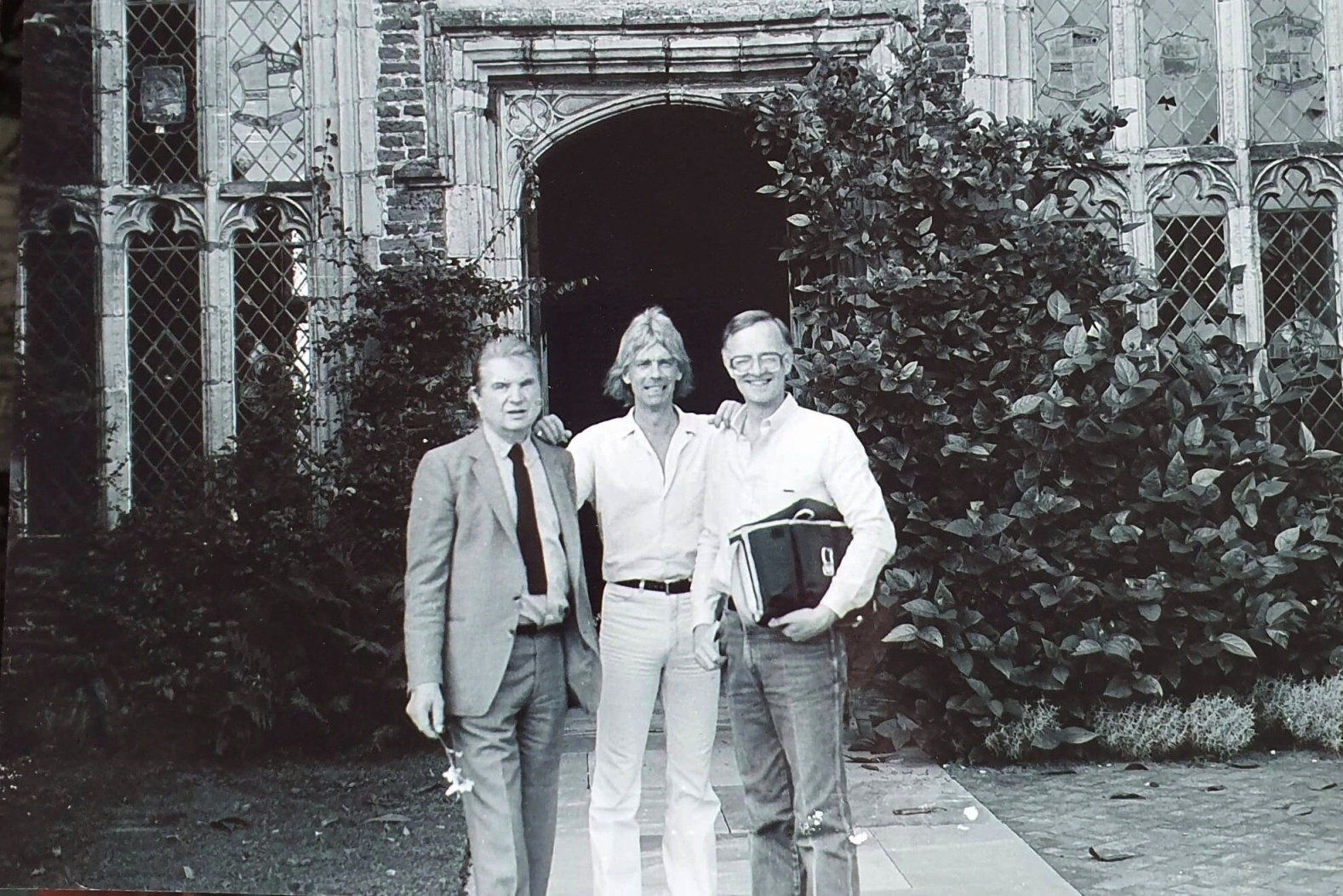
Francis Bacon, Barry Joule and Roger Chubb at Sutton Place in Guilford, England in 1981
BY WIRGINIA TWARÓG | WORKS OF ART | BREAKING NEWS | BARNEBYS MAGAZINE | 27 FEBRUARY 2025
A rumour has emerged that a masterpiece by Francis Bacon—Three Studies of Lucian Freud, which was sold for a record-breaking $142.4 million—has been lost in the devastating fires that recently tore through Los Angeles. In its February issue, Il Giornale dell'Arte confirmed a longstanding rumour in the art world regarding the devastating Los Angeles fires of January 2025.
The report suggests that Francis Bacon’s iconic 1969 triptych, Three Studies of Lucian Freud, was lost in the flames that consumed the home of actor Anthony Hopkins. While Hopkins has not confirmed this information, the possibility that one of the most expensive and significant contemporary artworks has been destroyed has caused concern within the art community.

‘Champagne for my real friends!’ Francis Bacon
masterpiece escapes to the artist’s old drinking den
Seeing Bacon’s stunning depiction of his lover Peter Lacy hanging in a reincarnation of the watering hole
where his skeletal friends would drink, stagger and cackle was a fleeting yet unforgettable experience
BY JONATHAN JONES | CULTURE | ART & DESIGN | THE GUARDIAN | WEDNESDAY, FEBRUARY 26, 2025
When a work of art fails to excite, interest or move me, the word that comes to mind is “dead”. Bad art is lifeless, good art is alive and great art is supervital. And it’s a supervital masterpiece I am looking at right now. Face as sharply hewn as a Congolese mask, with a flesh-coloured pullover melting into the shadows of his loins, Peter Lacy dominates the room, captured in a gold-framed portrait by his lover Francis Bacon.
That room is the Colony Room Green in London, not the original Colony Room but a bar nearby that lovingly recreates, with the precision of an art installation or stage set, the bohemian drinking den run by Muriel Belcher where Bacon would order drinks all round with his famous toast: “Champagne for my real friends and real pain for my sham friends!” Its green walls are covered with art and memorabilia, including a wanted poster made by artist Lucian Freud to recover his own lost portrait of Bacon.
So how has Peter Lacy, who seems an immense, baroque phenomenon propped up in the middle of these cosy confines, made his way home ? He is on “day release”, explains Jago Cooper, director of the Sainsbury Centre for Visual Arts at the University of East Anglia – as in a day out from prison. The Sainsbury Centre has declared that all the artworks it owns are alive: “Art is alive and animate, waiting to be communicated with by anyone with a soul.” So, Cooper wondered, where would a living work of art want to go if it had a brief escape from the jail of the museum?
It’s a pretty good guess that a Bacon painting would choose to return to its creator’s old haunt, or at least this replica. The burningly intense painting holds court at the centre of the room. You half-expect it to start dropping acid one-liners to the cackling delight of drunken ghosts – all the Soho monsters and reprobates hovering in the afternoon shadows, drinks in their skeletal hands. It’s a lovely bar, but if you do visit the new Colony Room, you won’t, sadly, find Bacon’s painting. This really is just a day release, although it is all being recorded for a film to be shown from April at the Sainsbury Centre, with actors playing gay men from Bacon’s generation and from today, comparing experiences
So what is this about? A lightning visit by a masterpiece to a drinking den where the public can’t see it except on film? Let’s not use the dread words “publicity stunt”. Instead, let’s wonder whether it really is meaningful to claim that a work of art is a living thing, with a mind of its own and opinions about where it would like to go.
Anyone who has ever loved a work of art knows this to be true. It is fundamental to art’s power and magic. The Bacon in the bar is electrifying proof. Every smoky brushstroke, every matted smear of black or pink, simmers with life. Lacy is a sentient being, and behind him, you feel the vital presence of the artist himself, the warm blood coursing through his painting hand.
Five centuries ago, the Renaissance writer Giorgio Vasari praised the Mona Lisa thus: “In the pit of the throat, if one gazed upon it intently, could be seen the beating of the pulse.” In fact, art has been experienced by most people in the majority of places throughout human history as animate: that is, as sacred objects in which a divine or magical force is infused. In southern Italy, you can still see statues weep, come to life, process at festivals. In this pleasantly claustrophobic little bar, I am getting that same uncanny feeling about Peter Lacy. Is he about to reach out of the painting and hit me, as he was wont to hit Bacon?
It’s a reverence that was replaced in most parts of Europe by the 18th century with a more secular, rational spirit of aesthetic admiration. Works of art – or objects designated as such – were torn from religious or ritual settings and placed in museums. Or imprisoned, to continue the “day release” image. There we sometimes struggle to feel their magic power, their life.
The Sainsbury Centre is trying to reclaim that intoxicating belief in art, not just through its day-release programme but in its displays, which urge you to encounter artworks as living beings, from carved masks of the Pacific Northwest to Picasso drawings. Its app tells you not the “history” of an artwork, but its “life story”; not when it was made, but when it was “born”.
Gimmicky? Not to me. Either you believe art is alive, or it means nothing to you. Do yourself a favour. Believe.
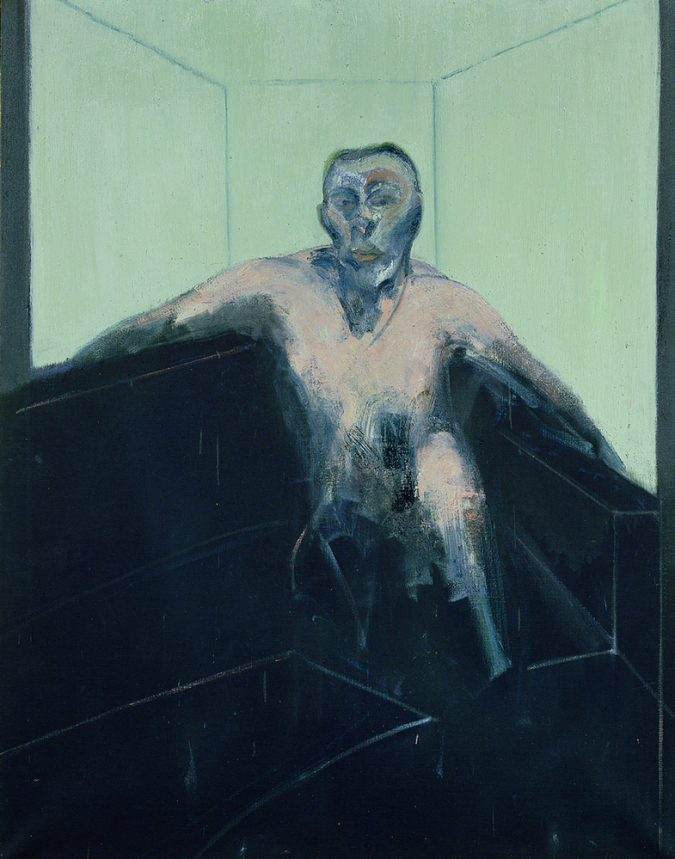
‘Every smoky brushstroke, every matted smear of black or pink, simmers with life’
… Francis Bacon’s Study for Portrait of PL, No 2, 1957.
From Francis Bacon to David Hockney an array of European artists
dominate Christie’s London 20th/21st century evening sale
BY: YUE TING KONG | AUCTION NEWS | ARTICLES | THE VALUE | WEDNESDAY, FEBRUARY 26, 2025
The 20th and 21st centuries produced an array of artistic movements from heart artists worldwide. Names such as Francis Bacon, David Hockney, and Jean-Michel Basquiat are commonly heard names when referring to this period and the art that dominated it. Works that come from these artists tend to be seen as the top lots in any auction; however, Christie’s London has assembled an evening sale that brings the work of all these prestigious artists together.
Happening on 5 March, Christie’s 20th/21st Century: London Evening Sale brings together paintings produced by artists across Europe who have left their mark and contributed to their various styles and movements when they were active.
Headlining the sale is a painting by British artist Francis Bacon named Portrait of Man with Glasses III, estimated between £6-9 million (around US$7.5-11.3 million). It is followed by an Art Deco painting by Polish artist Tamara de Lempicka titled Portrait du Docteur Boucard, estimated between £5-8 million (around US$6.3-10.1 million), an extremely rare painting of a male portrait done by a female artist, something not common at the time.
Also worth noting is the fact that out of the 51 total lots, 10 are guaranteed by third parties, and another two are guaranteed by Christie’s. This is down over half the third-party guaranteed lots from the same sale last year.
Francis Bacon’s artwork is known for his haunting portraits of people that contain various themes and an almost geometric quality to them. This was especially the case during the mid-1960s when his portraits of friends became the central focus of his work, with all of them being 14 x 12 inches, including this lot.
What this painting, amongst Bacon’s large body of portrait work, does is exhibit his skill at using space, color, and texture to create this ambitious and strange portrait of the human visage. Perhaps most interesting within this painting is the figure’s mouth, which is twisted in a way that it is agape in some parts but also bears its teeth in others. This was Bacon’s main goal with this work and similar ones, as he once stated he wanted “to paint the mouth like Monet painted a sunset.”
The artist’s usage of energetic brushstrokes results in the human form that we witness; however, these are contrasted by the dark space of the background and the eyes of the figure in the portrait. This negative space isn’t just used as the border to define the positive space but instead to form an interplay with the positive space on parts of the painting, helping them stand out or clashing for the attention of the audience, as seen with the dark glasses.
The void behind the painting is then sparkled with silver sand, giving a void-like texture, which the almost liquid-like human form seemingly melts into. The “liquid” nature of the painting manifests in this idea that unlike other abstract paintings of humans done by artists such as Picasso, the figures in Bacon’s work refuse to be defined or “pinned down,” instead feeling floaty and immaterial.

Lot 10 | Francis Bacon (1909-1992) | Portrait of Man with Glasses III, Oil and sand on canvas | Painted in 1963 36 x 30.7 cm | Estimate: £6,000,000-9,000,000
Francis Bacon’s seminal Sixties work could sell for £9 million
Auctioneers hope that the sale of Man with Glasses III, made in in 1963, will herald
a better year for art sales after a disappointing 2024
DAVID SANDERSON, ARTS CORRESPONDENT | ARTS | UK NEWS | THE TIMES | MONDAY, FEBRUARY 17, 2025
A seminal work by Francis Bacon that has been the darling of exhibition curators for decades is finally emerging for sale after being hoarded by private collectors. Bacon’s Man with Glasses III, from 1963, is to appear at auction for the first time having been given an upper estimate of £9 million, raising hopes that it will herald a better year for the art market.
The painting, one of a series of four created in the same year, has appeared in 17 exhibitions around the world including the National Portrait Gallery’s Francis Bacon: Human Presence, which opened in October and closed last month. Katharine Arnold, a vice-president at Christie’s auction house, said it was the most accomplished work of the four, adding that it captured Bacon “stepping into a different mood, away from the darkness of the 1950s into a different vibe”.
The work was created at a pivotal moment in Bacon’s life, coming months after the death of his long-term partner Peter Lacy — which had been on the eve of a landmark Tate retrospective — and three months before he met arguably his greatest lover and muse, George Dyer.
“There was a degree of catharsis at the beginning of the year,” Arnold said, adding that she thought Bacon, who died in 1992, had been looking across the Atlantic to the work of Andy Warhol and other pioneering pop artists. Unlike others in the series, Man with Glasses III has never been sold publicly before. It has been in private collections in the United States, South Africa and — since 1990 — in Britain.
The painting has been given an estimate of between £6 million and £9 million and is due to be the highlight of Christie’s 20th/21st Century London sale on March 5.The painting has been given an estimate of between £6 million and £9 million and is due to be the highlight of Christie’s 20th/21st Century London sale on March 5. The most expensive Bacon work to sell at auction so far was his 1969 work Three Studies of Lucian Freud, which sold for nearly £90 million in 2013.
Auction houses are hoping the spring sales will kickstart their year after a disappointing 2024, when the main sellers reported large falls in their earnings. Arnold said collectors were looking for the “best in class”.
“They want a freshness to market and are looking for things that have been lived with and loved by collectors,” she said. Arnold said that this painting was the one of the four in the Glasses series that “really focuses on the mouth”.
“Bacon had said in 1962 that his ambition was to paint the mouth like Monet painted a sunset,” Arnold said. “You have this beautiful white impasto that makes up the teeth.” She said his Landscape near Malabata, Tangier — which sold for nearly £20 million last year – had been painted at the start of 1963 as “probably his tribute and parting salvo to Peter Lacy”.
The artist had then moved on, Arnold said, and stepped away from the “existentialism of the 1950s”.
“You see Bacon stepping into a different mood and becoming more ambitious in the use of colour,” she said. “Every portrait has a little bit of him in it and I can’t help but think that in 1963, Andy Warhol did these extraordinary self-portraits of himself with these glasses and his head at different angles.
“I can’t help but think he was looking across the Atlantic. He was always an astute observer and would not have been immune to the influence. There was a new spirit in his painting.”
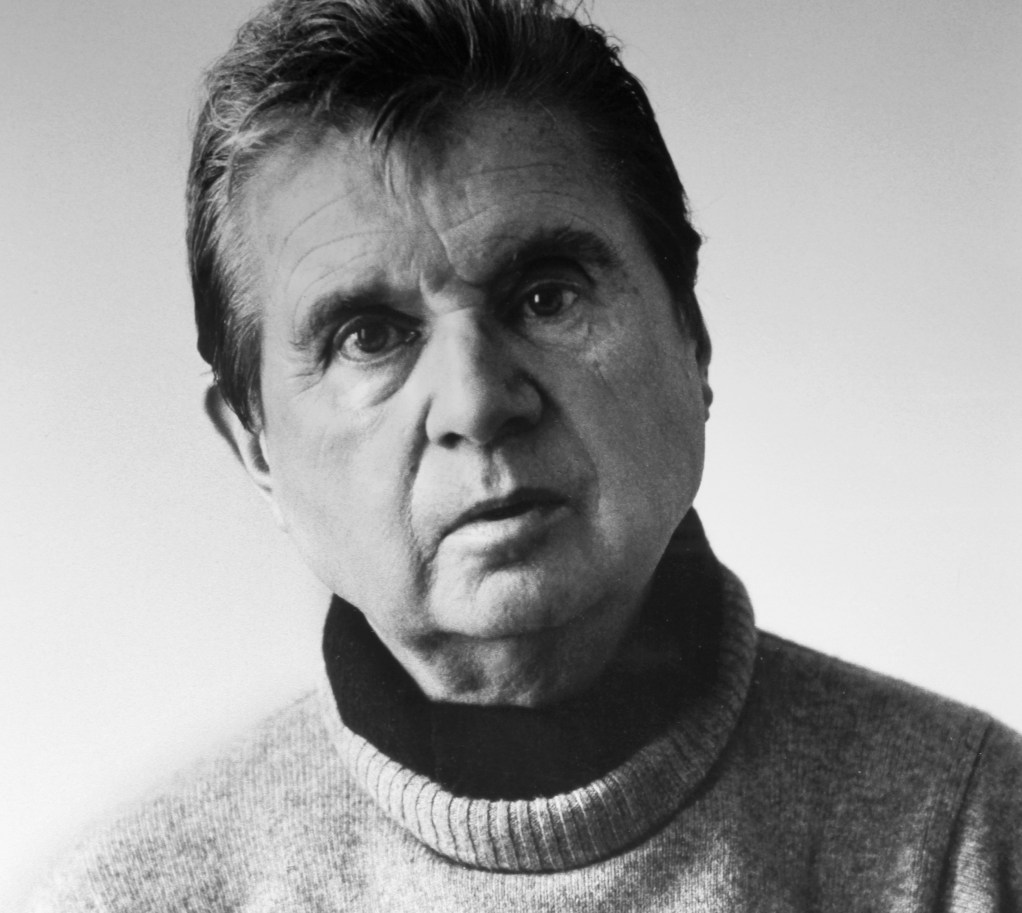
Bacon was becoming more influenced by Andy Warhol in the early Sixties
Francis Bacon and the Physics of Life
MELANIE DESLIENS FLINT | ARTICLES | WHITEHOT MAGAZINE | FEBRUARY 12, 2025
So much has been written about the painter Francis Bacon that exploring his work can sometimes feel daunting amid the many fantasies the artist has inspired in the public's imagination. Bacon’s existence in the new media era—giving numerous press and television interviews—is both a gift and a curse. While those interviews provide valuable insights into the artist’s technique and interpretation of his work, they also extensively delve into his personal life, leading to analyses that the artist fervently resisted.
Indeed, while many journalists and art critics consistently used Bacon’s eccentric lifestyle to analyze and infer dramatic or even violent attributes in his work; the painter himself claimed to simply depict life in an almost surgical or scientific manner, rejecting narrative. To understand this, an intriguing approach may be to explore the concept that Bacon referred to as the “nervous system.” This concept was central to his work, allowing him to create life in the most realistic way.
To grasp Bacon’s approach to painting, a closer look at the piece Triptych August 1972 currently exposed at the British Tate Museum, might facilitate one’s immersion into his work. The art piece is monumental, each of the three panels measures 1,981 × 1,473 mm (6.5 x 4.9 feet). Both right and left panels show an isolated nude seated male figure wearing only white underwear, each with a leg crossed over the other. These two lifesize figures could be of Bacon's former lover George Dyer, who died tragically in Paris in 1971 and was one of Bacon’s muses. A picture of Dyer by British photographer John Deakin (1912-1972) was found in Bacon’s studio after his death and seems to be the inspiration for the triptych. The black and white photograph shows Dyer in the exact same seated position (wearing same white underwear) with the same tumefied face (such as a boxer’s), sitting on a chair in the middle of Bacon's messy studio[1].
On Triptych August 1972 middle panel, a new strange figure appears and seems to be inspired by the famous 1887 black and white photograph Two Men Wrestling by British photographer Eadweard Muybridge's; a subject that Bacon had already explored in prior paintings where two bodies merge into one in a fight or an intercourse. These photographs-sources were essential to what Bacon called the “nervous system”. Bacon fed his creativity with images as documents, without distinction or value judgement. The photographs he selected as inspiration had in common that “one can feel the shadow of life passing through.”[2]
The painting’s composition set the stage, it is balanced with very defined geometric graphics of flat application of paint, black rectangles, and black triangles that mirror each other, not unlike classical “repoussoirs”. Dyer's crossed leg creates a type of wing on each side of the composition that helps keep the viewer’s eye in. The large black solid rectangular doors on all panels create a rhythm on the overall composition. They also create deep voids that completely consume part of Dyer's middle body on the left panel. From Deakin’s photograph, one can see that Bacon used the original natural shadows and stretched them to envelop Dyer’s middle torso.
As the viewer’s eye rests on the figures in Triptych August 1972, a strong sense of vertigo emerges. Dyer’s figures could be reminiscent of Ragdoll Physics, a type of animation used in video games and animated films. In the late 90s, video games began to introduce classical mechanics and inverse kinematics (calculations of poses and rotations of a figure), making body movements look more realistic and human-like when a character dies. It showed how a body falls and reacts to its immediate environment when it loses life.
Dyer’s figures on both left and right panels do exactly that. While they are fixed figures, our human brain anticipates how gravity will lead the body into its fall. For example, the left figure sits on what seems to be an unstable chair (one of the chair legs is too short and dissolving onto the canvas). Dyer’s body is tilted to the right, and his body mass will naturally make him fall to the right end of the panel. The oblique lines and tilted floor contribute to the falling sensations and movements. The oblique brushstrokes on Dyer’s face create a wind effect, brushing his face and chest forward and wrapping around his shoulders like apparent wind (versus true wind). As Dyer seems to fall, his hair flies backward on his head and face. The ragdoll physics effect also comes into play when what appears to be a random oblique (barely visible) white line creates a counterforce and pushes the body back into place. Indeed, Dyer’s figure responds to its environment, as the invisible forces first pull him into a fall and then violently push him right back to his chair.
There is also a dichotomy between life and death, both unfolding at the same time in Dyer’s body. On the one hand, Dyer’s face is peaceful with closed, tumefied eyes, and his weak mouth is slightly open on the left panel, reminiscent of an old person struggling to breathe on their deathbed. As an asthmatic, Bacon can easily convey the horrifying sensation of an obstructed, difficult breath. The dark void has even consumed his lungs away and part of his throat. During an asthma attack, the body tends to go into panic mode, but here, the lack of air contrasts sharply with the relaxed and serene pose of the body. Additionally, the peaceful expression on Dyer’s face conflicts with Dyer’s strong, muscular, and upright body posture on the chair, which is full of life and dignity. His head is poised gracefully, his face is angular and graphical like a Picasso. The light glistens on top of the strong, aquiline nose and forehead, between his thick eyebrows. Dyer’s body is young and athletic, suggesting that he died young, in the prime of his life.
Similarly, opposing forces are displayed on the right panel, where Dyer appears to be sleeping peacefully with his head tilted, seated on his chair with closed eyes. However, his mouth is violently distorted by forces seemingly inspired by 1950s videos of high-speed close-ups of a man’s distorted face in a G-force experiment in a wind tunnel[3]. Still shots from these films were also used by artist Eduardo Paolozzi to create a collage titled Windtunnel Test, Bacon might have had a copy of the piece in his studio[4]. French philosopher Gilles Deleuze compares these opposing forces in the body to hysterical “sleeps” and “awakenings” and qualifies Triptych August 1972 as Bacon’s most deeply musical paintings.[5]
Life is apparent through the paint itself. The three figures are highly detailed with many colors and light variations. There is a 3D effect on the warm pink skin, in sharp contrast with the flat black background, which brings Dyer’s figures closer to the viewer. The skin’s texture shows painterly brushstrokes and thick white impasto in places for light effects or a bone coming through the skin. There are red applications of paint on Dyer’s thigh, where the muscle is strong and deep, and the blood seems to flow vividly, with darker pink and purple where the shadows appear. The skin feels warm and lively, turning orange in some places, even peach in the pool of skin, with lilac and greys for shadows.
The same color variations are visible on the center panel, where two bodies are melting onto each other. Some parts of their nudity can still be identified, like the buttocks and lower legs, possibly inspired by Femme Couchée by Picasso, 1932 [6]. They become one, and the image is highly sexualized, with forces and movements once again animating the figure. Bacon even added a white turning arrow on the calf muscle and a thick impasto turning brush stroke at the figure’s head, which could be a snake or a penis. One can also recognize the lover’s brown hair at the bottom left of the figure. This central figure appears to morph into a pink-and-grey creature, teetering dangerously on the edge of the black void behind it. Only part of the leg and the head are still in the viewer’s space. The pool of skin from which the figure emerges is flat this time, with brown contours. There is gravity force and strength coming from the lover on top of the one laying under, but the movement implies that their positions might change places, creating a sublime experience where boundaries between realities becomes porous.
There is a strong push and pull feel in Bacon’ paintings, just like the figures, the viewer is being sucked in by invisible forces into the painting by the black void of the doors; drawn by the mesmerizing warmth of the skin on the figures, only to be rejected by the silhouette’s isolation, the geometric triangles, and tilted solid floor pushing us back to our viewer’s condition. The sudden distance is intensified by the presence of glasses covering each panel.
Observing a Bacon painting is not unlike having a sublime experience (in a Burkean sense). The paint seems organic, the figures so alive, not unlike a human heart. And what is a heart if not the organ of life? Bacon captures life and renders it to its fullest, materializing on the canvas invisible forces. Nestled at a safe distance in our chest (invisible to us), a heart beats, pumps, expands, contracts, deforms under intense pressure. Blood flows through it like an endless vibration; the heart is strong while so fragile at the same time. Few could witness an open-heart surgery; it would seem horrifying yet fascinating at the same time. Bacon's figures are just as sublime and vibrant, full of life's pulsations and movements, but also on the verge of death.
All these opposite effects, dynamics, rhythms, intensities, patterns lead the viewer to lose sense of the kind of reality they are confronted with, losing their bearings. One moment, the viewer is confronted with the beauty and strength of life, and at another moment, with death and the annihilation of oneself. The viewer watches and experiences the sublime from a safe distance and can find pleasure and enjoyment in doing so.
One may compare what Bacon, and the Abstract Expressionists experienced after the Atomic Bomb to the shock implied by the evolution of artificial intelligence today. It feels like our society can very much relate to Schefer’s comment on the accelerated movie of the figure, “The figure is regularly caught up in a process of transformation. It is a moment in the accelerated film of mutations of the specie.”[7]
The Atomic-era painters were entering a new world that required them to think differently and rely on new tools. Similarly, the disruption AI causes today will again force artists to question our understanding of humanity and our place within the world in an even more accelerated way. Bacon was already confronting a new system of consumption, media, and technology that overloaded society with products, plastic, and information. This created a renewed sense of the sublime, evoking both great enjoyment and horror. Likewise, AI promises wonder for our society but also carries the potential for destruction and human annihilation.
Looking at a Bacon’s painting with its ragdoll-like effects and immersive (sometimes violent) experience, one might wonder which reality they are living in. Today, the veracity of images is called into question, with “fake news” presenting a true danger to democracy. Through intense phones and social media use, addicted users flicker through images, becoming numb and assimilated by their screens, unable to react. There is an intense pleasure in watching screens and, simultaneously, a profound sense of horror. Mass media creates a kind of collective anesthesia that could mirror the experience of a Bacon painting, with saturation of movements, textures, colors, and light effects. Looking back at Bacon’s entire body of work, one cannot help but appreciate its relevance to the world we live in today and the pressing issues facing humanity.
WM

Close up of Dyer’s face Triptych August 1972 left panel
Iconic: Portraiture from Francis Bacon to Andy Warhol
There are no buts! This small exhibition at the Holburne Museum in Bath has considered every angle
and every detail and the result truly is a bijou gem
BY ANNA MCNAY | EXHIBITIONS | STUDIO INTERNATIONAL | TUESDAY, 11 FEBRUARY, 2025
An exhibition on portraiture at the Holburne Museum, renowned for its 18th-century collection? Hmm, so what’s new? Showcasing paintings for which photographs provided the source material? OK, that sounds rather different – 1822 at the earliest – and surely it must include something by Francis Bacon? Indeed, yes: the subtitle proposes the timeframe from Bacon to Andy Warhol. Aha, sounds interesting, but … Well, all I can say is that there are no buts! This small, one-room exhibition at the Holburne Museum in Bath has considered every angle and every detail and the result truly is a bijou gem.
In a sense, the exhibition begins on the landing, as the visitor steps out of the lift into a space with brick-red walls that make you feel absorbed into a safe and warm womb. And this colour goes with you into and around the exhibition. Although the walls within are a pale, bloodless grey, either end of the temporary wall in the centre is painted with the brick red, so that it holds you safe, like a pulsating umbilical cord.
The first work you see on entering the gallery at an initial glance looks like a Mark Rothko, radiating its broad and saturated colour fields, but no, it is Frank Bowling’s Dan with Map (1967). It continues the brick-red colour, with a surface like the lining of a womb or a sheet of glorious rust. And, as with either of those analogies, there are images underneath, hidden beneath layers of time and place. The work is layered with caustic-looking paint on top of a screen-printed photograph of the artist’s young son, Dan, and an (as yet) unidentified, stencilled map. Bowling, who was born in British Guiana (now Guyana), is reflecting on the notion of identity within the African diaspora. It seems to be a raw, exposing and painful occupation, peeling away the layers, eliciting tears as with an onion (the outer skin of which would, as a side note, also be a shade of this tawny painting as well). Close up, there is what looks like a giant thumbprint – presumably captured during the printing – adding yet one more layer of complex biographical DNA.
Next to this unconventional “portrait”, we encounter the other tone-setting work: one of Bacon’s popes. This is not a screaming pope (based on the portrait by Diego Velásquez of Pope Innocent X, c1650), but rather an “imaginary portrait” (Bacon’s term not mine, since – certainly by his standards – this appears rather life-like and recognisable) of Pope Pius XII (from 1956), a pope who was criticised for his silence during the second world war and the Holocaust. He sits facing forward, obscured eyes staring in their self-contained void, his hands raised, possibly protectively, possibly preparing for prayer, or possibly a little Lady Macbeth-like. It is well known that Bacon worked only from photographs, since he claimed he needed that level of distance to be able to carry out his painterly violence towards his sitters. His screaming popes conflated Velásquez’s painting with a still of the famous nanny scene from the film Battleship Potemkin. Yet this work shows none of that. Could it be that the violence is hidden behind a veil, as it was with the pope himself, hiding behind the protective veil of Catholicism? Either way, Bacon is a significant bookend to this exhibition, which was conceived with the intent to focus on pop-art portraiture, since, at the end of 1962, in a history of the movement published in the Listener magazine, the critic Lawrence Alloway claimed – unconventionally – that pop art began “in London about 1949 with work by Francis Bacon”.1
Opposite, there is another Bacon – Study of a Nude (1952) – taken from one of his favourite sources, images from which were found littering his studio floor: Eadweard Muybridge’s time-lapse photographs of the human body in motion. The figure, seen from behind, reaches up, as if about to dive into a deep, blue pool below – all, of course, contained within one of the artist’s geometric and constricting “glass” boxes. Alongside, is Larry Rivers’ portrait of David Sylvester (Mr Art) (1962), which is fitting, since Sylvester was the most prominent art critic to champion Bacon’s work, becoming a valued friend of the artist – so much so that he was the original subject for what became the first painting in the “popes” series. Rivers depicts him fully frontal, manspreading so that a triangular slice of the seat of his chair is visible – is this a comment on his critical tone? It could be said that this is one of the more traditional portraiture poses included in the exhibition, with other works focusing more on the relationship between photography and celebrity.
A small black-and-white self-portrait of Walter Sickert, maintaining the pathos and poignancy of the monochrome of early photographs, isolating and freezing the figure, caught in a moment in time, has somehow snuck in, despite its early date of 1935. It fits the concept of celebrity, however, since it shows the artist in a dark alleyway, linking to the conspiracy theory that Sickert, who was openly fascinated by the popular press and sensational stories including those about Jack the Ripper and the Whitechapel murders, was, in fact, one and the same serial killer.
Rounding the corner, we encounter Pauline Boty’s With Love to Jean-Paul-Belmondo (1962), depicting, in black and white, the female alternative to Marilyn Monroe or Bridget Bardot (who feature in several of the works to come, including screen prints by Gerald Laing and Richard Hamilton). As is typical for the artist, she places her portrait against a brightly coloured abstract design, which, you have guessed it, here happens to be an amalgam of burning oranges and reds. The theme of cinema carries on in Colin Self’s works, which include Fallout Shelter Series (Ursula Andress) (1965), showing the moment from Dr No, when the actor emerges from the sea in a white bikini. Cinema Series (Batman) (1965) depicts what it says on the tin, while Cinema No 14 (1965) is from a series of drawings of the interior of Self’s local cinema in Muswell Hill, north London.
Although David Hockney has no work in the show – the desired piece was apparently too large to get up the stairs – he appears in a painting by Peter Blake (David Hockney in a Hollywood Spanish Interior, 1965), in which he is easily recognisable by his metonymic and iconic (in the truest sense of the word) glasses. The composition comprises two main sources: a portrait photo of Hockney and a shot of a young man in tight shorts, selected by Hockney. The phallic balloons and the sprinkling confetti bring Hockney’s then-still-illegal sexuality bravely to the fore.
Again, sexuality is underlined by the target mark around Bardot’s face in Laing’s print (here I’m still thinking about sprinkling – or shooting, as the case may be) and the proliferation of Marilyns in Hamilton’s print, made from 11 stencils. Like a contact sheet, it showcases the actor’s well-known attempts to control her promoted image by scrawling over photos of herself that she did not like. This work, synchronous with Warhol’s multiplied Marilyns, was made using a set of photographs that Hamilton saw in a magazine a few months after Monroe’s death. Everything about it screams similarities with contemporary social media and the growing list of influencers who have killed themselves. The chosen Warhol, surprisingly, is not one of his Marilyns, but rather a self-portrait from 1967, printed in a bright blue and … yes, a brick red.
Next up, Jann Haworth’s rather amazing works – Mae West Dressing Table (1965) and Mae West, Shirley Temple and WC Fields (1967) – certainly grab attention with their dressing room lights, shiny fabrics and exploration of materials and mediums. They raise the question of what is more real: does something three-dimensional exceed the reality of a two-dimensional representation? Can photography also provide inspiration for sculptural works? Two pieces by Joe Tilson present “icons” of a different ilk, drawn from news images so widely broadcast as to have been burned on to people’s retinas: the Soviet cosmonaut Yuri Gagarin and the Cuban revolutionary Che Guevara. The composition of the latter mimics a 35mm slide, with Tilson’s name, and “Made in England”, proudly on the frame.
Arguably the best-known “celebrity” painting (also involving an underlayer of screen printing) is Hamilton’s Swingeing London 67 (f) (1968-69), one of a series made using a newspaper photograph of the art dealer Robert Fraser and the music star Mick Jagger, hiding their faces in the back of a police van, arriving at court to be tried for – and convicted of, although only Fraser was sent to jail – possessing drugs. The question is raised as to whether someone can be so iconic that they can almost get away with murder (bringing us back round to Sickert). This painting is certainly burned on to my retina, exemplifying the possibility for secondary images to become as impactful as their primary sources.
The exhibition concludes in style with Gerhard Richter’s portrait of Gilbert and George (from 1975), a pair of artists who describe themselves as “a living portrait”, making themselves into a work of art. On the accompanying text panel, Richter is quoted as saying that he “needed the greater objectivity of the photograph in order to correct [his] own way of seeing”. We thus appear to have come full circle from Bacon, who, as has been noted, required photographs to inflict his own violent view.
The exhibition presents a concise remit and, in just 22 works, more than does it justice. It is coupled with an equally small exhibition of works by the contemporary British-Ghanaian artist Joshua Donkor (b1997, Bath, UK),2 showing in the gallery next door and comprising painted family portraits, with prints and photographs embedded (much like the Bowling in method, if 180 degrees different in manner). Between the two, the Holburne Museum more than deserves a visit this spring.
References
1. “Pop Art” since 1949 by Lawrence Alloway in the Listener, 27 December 1962.
2. Joshua
Donkor: I Have More Souls Than One is at the Holburne Museum, Bath, until 5 May
2025.

Francis Bacon, Study (Imaginary Portrait of Pope Pius XII), 1955. © The Estate of Francis Bacon.
Before David Lynch, there was Francis Bacon
The painter, like the filmmaker, created images that resonated with a specifically modern sense of horror.
BY SEBASTIAN SMEE | GREAT WORKS, IN FOCUS | THE WASHINGTON POST | THURSDAY, FEBRUARY 6, 2025
Some images recur. They’re spectral. They come out of the darkness — out of somewhere far away and half-forgotten — and there they are. Again and again.
Since David Lynch’s death, everyone has been telling nice stories about the legendary filmmaker: His old-fashioned good humor, his belief in Transcendental Meditation, his kindness to his favorite actors. Okay. But let’s not kid ourselves. Lynch was dark. What he was mostly concerned with was how images can haunt us.
In this he was a lot like the painter Francis Bacon, who died in 1992, the year that Lynch’s “Twin Peaks: Fire Walk With Me” was released.
In my experience, people who like Lynch’s films also love Bacon’s paintings. It would be too simple — too antiseptic — to say that both artists exposed the dark underbelly of society or reveled in the unconscious. Lynch wasn’t interested in giving us generic spooky images. He cultivated very exact nightmare visions. Think, for instance, of the encounter he contrived in 2001’s “Mulholland Drive” — the one that took place in a parking lot at the back of Winkie’s diner (“This Winkie’s”). The actual figure of horror was almost absurd: a person with matted hair and a filthy face. But the context was perfectly calibrated. Lynch wanted it to be terrifying to this very particular, almost intolerable degree.
1953 was the year Joseph Stalin died and Queen Elizabeth II was coronated. It was also the year that Bacon, at a time when homosexual acts were still outlawed in Britain, painted two men having sex. He based his blurry, spectral composition, the forms dissolving with uncanny precision, on a sequence of photographs of men wrestling by Eadweard Muybridge, whose stop-motion photographs led into cinema
Bacon liked both photographs and movies. He thought hard about them, both as an art form and as propaganda. He had lived through World War II and was keen to grapple with what the critic David Sylvester called “a mythology of terror.”
He presented his horrifying phantasms (screaming popes, hanging carcasses, deformed faces and bodies) in the same disquieting, matter-of-fact way that a camera might show a “film star getting into her aeroplane” or a “goalkeeper failing to make a save,” wrote Sylvester.
Two years after “Study of a Dog,” the artist Max Clarac-Sérou said that Bacon’s work reminded him of a famous engraving by Albrecht Dürer showing “a horseman … unaware of the presence of Death, following, step by step, behind him.” Bacon’s merit, Clarac-Sérou said, was that he had put himself in the place of the horseman and dared to turn around.
Unlike Dürer, a virtuosic master of proliferating detail, Bacon used very pared-down means to convey his very modern sense of horror. You can walk past his paintings and feel unmoved. Or you can turn around. If you do, they may provoke an almost physical nausea — a feeling that may go away but might yet always be there waiting for you, emerging from darkness, or from behind the wall in the parking lot at the back of the diner.
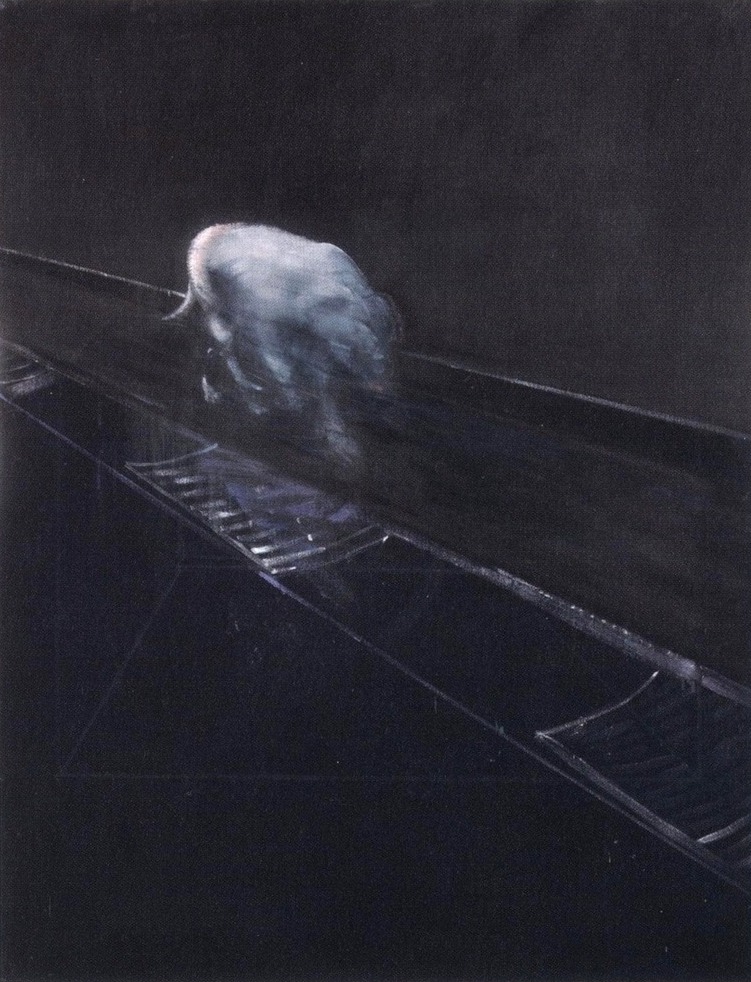
Study of a Dog (1953) Francis Bacon (b. 1909). At the National Gallery of Art.
ADRIAN CLARK | BOOK REVIEWS | BRITISH AND IRISH ART | WEDNESDAY, JANUARY 29, 2025
This beautiful book has been bound in the same way, with the same page format, as the Francis Bacon Catalogue Raisonné, published by the Estate in five volumes in 2016 (see our review). It on occasion serves to update the earlier publication, reflecting the new material which always haunts the compilers of catalogues raisoneés which can never be as definitive as they would like to be. The picture called “The Wrestlers after Muybridge”, of 1980 (number 80/07 from the catalogue) is an example of a work which can now be described more accurately.
The book is based on photographs taken by Bacon’s gallery, the Marlborough Gallery, of pictures which came to them for sale from the artist before being withdrawn at his request for some sort of reworking. Before this happened, some of the pictures had already been exhibited or used for marketing material. If the artist released the reworked pictures back to the gallery for them finally to sell, the gallery photographed them again. The book charts the differences revealed by the sequence of photographs, with a view to furthering knowledge of Bacon’s methods as a painter.
It is highly unusual for those wishing to interpret an artist’s work to have the luxury of photographs of it in its final stages of development; the nearest one might get to this is the habit of many artists to prepare preliminary drawings or sketches of their work. The comparison of drawings to the finished painting may demonstrate the trajectory of the artist’s thinking about his or her subject.
Photography is by definition only relevant to relatively modern works of art. There are photographs of particularly important pictures, such as Picasso’s Guernica, as it was being created, but that’s an exception.
A number of important pictures, often Old Masters, have now been analysed using various mechanical techniques in order to show earlier versions of the image left behind after overpainting. This has helped art historians to trace the ways in which the artist wished his or her image to evolve. But I would guess that not many images exist of apparently finished pictures being reworked right at the end of their lives in the studio.
The question of when a work of art is regarded by the artist as being finished has some history. Many modern artists from Bacon’s milieu have been notorious for reworking their pictures before allowing them to leave the studio. The most obvious example is Frank Auerbach, whose painting method involved constant scraping and repainting over sometimes many months before his eye decided that the picture could be released. Whether such artists are ever really convinced that their works could not be improved with more time and consideration is a vexed question. Bacon’s working practices demonstrate the conundrum to perfection. As this book says, “ All Bacon’s paintings appear to have existed for him on a continuum of incompleteness ” (p. 29).
One thing which came as a surprise to me was the fact that it would appear that the artist sometimes changed a picture because of comments made by the gallery’s Valerie Beston when the pictures first arrived from the artist’s studio. An example of this is “Triptych Inspired by the Oresteia of Aeschylus”, of 1981 (number 81-03). Here the author records a number of comments by Ms Beston and a number of what seem to be responsive amendments made by Bacon as a result. As the author cautiously says “Perhaps Miss Beston exerted more influence over Bacon’s paintings than has been previously been assumed”. One can see the PhD thesis resulting from that comment.
It is notoriously difficult for commentators to be persuasive in attempting to analyse why artists painted their subjects as they did. To be credible, the exercise requires from the commentator an unusual mixture of experience, insight, caution, prudence and modesty. What makes a form of image better than another form? What does “better” mean in this context? There is the possibility of applying a technical test in certain circumstances: an artist seeking to portray the branch of a tree in a lifelike fashion, its proportions mimicking nature, may achieve a more accurate depiction in such a way that an observer, starting with the artist, might conclude that one version was indeed “ better” than another. But such technical tests hardly apply to the work of Bacon.
Here the author, faced with the choice of trying to divine what was “better” about repainted passages, wisely chooses to express either the lightest of opinions or to eschew opinions altogether. Suggestions are sometimes made about changes made perhaps in order to address formal aspects of image creation. Was the artist seeking to improve the balance of the image by inserting a colour reflecting a colour used elsewhere? Does the added (or subtracted) passage improve the emphasis of whatever the artist was trying to convey? These are deep and dangerous waters; the artist himself may not have known exactly why he felt a change to be necessary. Although he must surely have regarded his changes as “improvements ”, if asked to explain in what way they were improvements he may have fallen back on the concept of instinct. Instead, best to let the viewer, presented with the photographic evidence, try their own hand at working out why the artist repainted something and whether, in so doing, he made it “better”.
The heart of the book touches upon the challenge lying within all great art. What can the viewer understand about what the artist was trying to achieve? One can learn a great deal about the work and the life of an artist such as Bacon. He has been extremely well served by the efforts of the Estate, publishing and encouraging careful and thoughtful analyses of the pictures, their origins, influences, composition and so on. As a result, we know more about Francis Bacon’s art than we do about that of many other artists. And yet, what do we know at the end of the day? What was he trying to achieve? Did he achieve what he wanted to? How do we judge one picture against another? Is the artist always best placed to judge completeness or success?
As Bacon began each new work, his head full of images from his sources, his knowledge of art history, his own prior body of work; his mood shifting between the normal poles of human experience; the day bright and promising or dark and unsettling; what was he doing as his hand reached for the brush and the brush started to address the (unprimed) canvas? I think even he found it hard to answer questions of this type: he did what he did was perhaps his way of responding. This book equips us a little more to stand alongside him as he worked towards whatever he happened to regard as an acceptable conclusion; it cannot go further than that and answer the question for us.
Martin Harrison and increasingly Sophie Pretorius are two of the most significant Bacon scholars working today. When they commit their thoughts to print, the Bacon community does well to read very carefully. Nothing is written without assiduous preparation and thought. This book matches their other work. They are in that comparatively rare category of authors writing about the art world whose work compels respect. I am already looking forward to whatever aspect of Bacon scholarship they turn their attention to next.
Revisions: Francis Bacon in the act of painting Martin Harrison and Sophie Pretorius, the Estate of Francis Bacon Publishing, supported by Francis Bacon MB Art Foundation Monaco, in association with Thames & Hudson, London, 2024. ISBN: 978-0-500-96628-0. 167 pages, profusely illustrated. Hardback. £50.
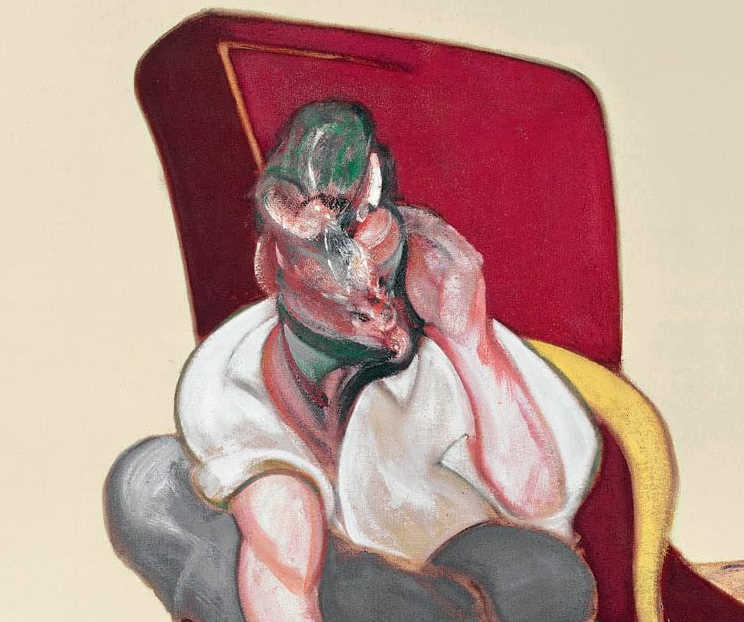
Three Studies for Portrait of Lucian Freud. Detail of first version photographed April 1966
Art as a reckoning: how Rembrandt and Bacon
illuminate the human spirit through portraiture
BY AVALON ASHLEY BELLOS | ARTS | ENTERTAINMENT | THE VILLAGER | THURSDAY, JANUARY 23, 2025
In times of upheaval, when the world seems to teeter on the edge of reason, art emerges as both a salve and a mirror. It is through the artist’s brush, chisel, or pen that humanity finds its conscience, its courage, and its clarity. Far from being an escape, art becomes a reckoning—a way to face the darkest shadows of our collective existence and pull from them a glimmer of truth.
The artist, in their solitary labor, is a chronicler of the human spirit, casting light into the abyss and calling forth stories that must be told. To juxtapose the works of Rembrandt van Rijn and Francis Bacon is to examine the evolution of portraiture as a vessel for storytelling and truth, a dialogue between two artists separated by centuries yet united in their pursuit of the human essence.
Rembrandt van Rijn (1606–1669), a titan of the Dutch Golden Age, wielded his mastery of realism like a beacon in an era of profound transformation. The 17th century was a time of burgeoning trade, religious schisms, and scientific awakening. Amidst this, Rembrandt captured the soul of his subjects with an unparalleled intimacy. Works such as The Night Watch (1642) and The Anatomy Lesson of Dr. Nicolaes Tulp (1632) reveal not only technical brilliance but an emotional depth that speaks to the universality of human experience. His self-portraits, painted over decades, chart not just the passage of time but the evolution of a man grappling with success, loss, and mortality.
In Rembrandt’s chiaroscuro, light and shadow dance as metaphors for the eternal interplay of hope and despair. His portraits do not merely depict; they embody. Each stroke of his brush seems to pierce through the veneer of flesh, reaching into the inner workings of his subjects’ souls.
Francis Bacon (1909–1992), stepping into the aftermath of two world wars, transformed existential anguish into visceral artistry. The mid-20th century was an age of shattered certainties, as humanity reckoned with the Holocaust, nuclear threats, and the alienation of modernity. Bacon’s Three Studies for Figures at the Base of a Crucifixion (1944) is a haunting invocation of torment, its distorted figures writhing in a liminal space between agony and defiance.
Where Rembrandt’s works seek to humanize and dignify, Bacon’s portraits dismantle and reconfigure, laying bare the fragility of the human condition. His canvases, smeared with flesh tones and streaks of crimson, transform faces into landscapes of suffering, each one a grotesque symphony of emotion. The raw immediacy of Bacon’s work forces the viewer to confront the grotesque beauty of vulnerability, a truth as unvarnished as it is profound.
These two masters, though divided by time and style, share a commitment to unearthing the essence of humanity through portraiture. Rembrandt’s realism invites us to see ourselves in his subjects, to recognize our shared joys and sorrows, while Bacon’s visceral distortions demand that we grapple with the darker, often unspoken corners of our psyche. Together, they illuminate the duality of art as both a comfort and a challenge, a testament to its enduring power to reflect and reshape our understanding of the human story.
The lineage of unflinching truth-telling finds its heirs in the contemporary artists who carry the torch forward. Kara Walker’s silhouetted narratives dissect the enduring scars of slavery and systemic oppression, merging the historical with the deeply personal. Jenny Saville’s monumental depictions of flesh challenge societal norms, inviting us to confront the physicality and vulnerability of being human. These modern visionaries echo the legacies of Rembrandt and Bacon, proving that art’s role as a harbinger of truth and a catalyst for change endures.
Art is not merely a reflection; it is a confrontation. Through the works of these great artists, past and present, we are reminded that humanity’s darkest hours often give rise to its most luminous creations. In their courage to depict what others dare not, they offer us the tools to understand, endure, and ultimately transcend.
It is this fearless pursuit of truth that ensures art remains a lifeline, guiding us through the chaos toward something greater.
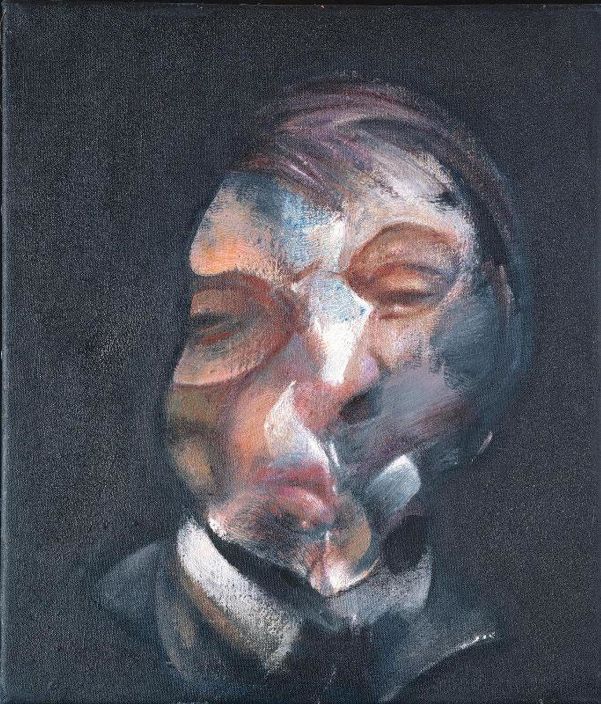
Francis Bacon, Self-Portrait, 1971
Iconic: Portraiture from Francis Bacon to
Andy Warhol — art, image and celebrity
Popes, politicians and pop stars mingle in this lively
and thoughtful exhibition at the Holburne in Bath
NANCY DURRANT | FIRST NIGHT REVIEW | ART | CULTURE | THE TIMES | THURSDAY JANUARY 23 2025
The early 20th century saw a fundamental shift in perception — we could now travel faster than a horse; Joseph Thomson had discovered the electron. The world was no longer quite as we knew it, and part of that came from the miracle of photography.
For artists, purveyors of image, the medium’s proliferation proved fascinating. For those gathered in this exhibition at the Holburne Museum in Bath, the portrait, in particular, is the focus — how media images and entertainment, rapidly multiplying and increasingly influential as the century wore on, told stories, supported propaganda and created a sort of celebrity 2.0.
Though it claims to start with Bacon, the earliest work in the show is by Walter Sickert — a 1935 self-portrait, based on a news snapshot of the (by then) famous artist. Reproducing the monochrome of the original, it gives the impression that the 75-year-old is already toying with the idea of himself as a personage of the past.
Bacon, of course, worked almost exclusively from photography, partly because, he said of his sitters, he didn’t “want to practise before them the injury that I do to them in my work. I would rather practise the injury in private.”
His Study (Imaginary Portrait of Pope Pius XII), 1955, is based on Velázquez’s portrait of Innocent X, which he never saw in person, and photographs of the contemporary Pope, who may have interested the rather morbid artist due to the controversy over his silence over the Nazis.
The show’s premise is hardly new. Some of the artists here, such as Larry Rivers’s painting of the art critic David Sylvester, work from photographs but don’t appear to consider it as anything more than a convenience (it’s still a great portrait). But there’s a good range of work and some generous loans here — even if it does feel a little like a showreel for a bigger production — and many engage thoughtfully and thoroughly with the shot image.
Joe Tilson’s Transparency: Che Guevara D, 1968, for example, examines the intersection of celebrity culture and the politics of his time by reappropriating iconic photographs of political figures. In his intricate, exquisitely executed drawings, Colin Self tackles the tropes and seemingly trivial iconography of cinema, drawing attention to its darkness as a reflection of contemporary culture in the atomic age.
Incidentally, Self’s draughtsmanship is astonishing, so that’s a bit of a treat. It’s great too to see Richard Hamilton’s Swingeing London 67, 1968-9, taken from a newspaper photograph of Mick Jagger and the art dealer Robert Fraser arriving at court to be tried on drug charges, a comment on the establishment backlash against this new generation of high-profile upstarts (although evidently the establishment had an inkling of the power of celebrity — both were convicted, but only Fraser was jailed).
There’s also a magnificent Warhol — the granddaddy of all this, who slightly ruined it for everyone else by doing it so concisely. The exhibition has one of his massive self-portraits, which is easier to see through a phone screen than standing in front of it, because it’s so huge. Which feels appropriate. I wonder what he or Hamilton would have made of the Kardashians.
From January 24 to May 5, Holburne Museum, Bath
Study (Imaginary Portrait of Pope Pius XII), 1955, by Francis Bacon © The Estate of Francis Bacon
Avant-Garde Filmmaker David Lynch
Leaves Behind a Dual Legacy
Before venturing into filmmaking, Lynch trained as a painter,
a passion he maintained throughout his life.
BY CHRISTA TERRY | PAINTING | ARTS | OBSERVER | FRIDAY, JANUARY 17, 2025
With the news of David Lynch’s passing at age 78 come the inevitable—and well-deserved—tributes. The Atlantic called him America’s Cinematic Poet. The New York Times quickly put together a search-optimized list of where to stream “David Lynch Movies and TV Shows.” Hollywood mourned freeheartedly, with everyone from Ben Stiller and Adam Scott to Steven Spielberg and Nicolas Cage sharing their thoughts, tributes and remembrances that reference sometimes surreal and enigmatic works like Eraserhead (1977), The Elephant Man (1980), Blue Velvet (1986), Lost Highway (1997) and Inland Empire (2006). If you’re unfamiliar with those titles but of a certain age, Lynch’s death likely brought to mind Twin Peaks, which, as Observer’s Laura Babiak rightly points out, ushered in a new kind of television that paved the way for shows like Lost and Mr. Robot.
Less well known to many is the fact that David Lynch was a painter and sometimes sculptor represented, beginning in 2022, by Pace. Like many other Hollywood notables, he was an artist first, having studied painting at the Boston Museum School and the Pennsylvania Academy of Fine Arts in the 1960s. It was during this period that he made his first short film, Six Men Getting Sick (Six Times)—an early sign that his instincts were never confined to a single medium. A devoted admirer of Francis Bacon, Lynch continued making art throughout his career, exhibiting paintings, sculpture, prints and mixed-media works informed by Surrealism and Art Brut around the world. His usually unsettling paintings, in particular, are often thick with raw textures, distorted figures and a sometimes queasy, distinctly Lynchian blend of the grotesque and the mundane.
Helen Holmes, covering a solo exhibition at New York City’s Sperone Westwater for Observer in 2019, wrote that David Lynch’s paintings “point towards some of the themes that have made his movies such enduring classics. Vague dissociation, carnage and the creep of filth are all present in works like Billy Sings the Tune for the Death Row Shuffle and Billy (And His Friends) Did Find Sally in the Tree.”
Though his work was exhibited extensively—at the Fondation Cartier in Paris, the Bonnefantenmuseum in Maastricht, Queensland Art Gallery in Australia, Garage Center for Contemporary Culture in Moscow, and at Castelli, Jack Tilton Gallery and Pace—and can be found in the collections of MoMA, LACMA and Fondation Louis Vuitton, it was nothing if not polarizing, reliably provoking strong opinions. He had a knack for pulling viewers into a world where dreams, reality and imagination tangled together, warping perception and sparking introspection, though the work itself was never particularly polished.
Ken Johnson, writing for The New York Times in 2024, questioned the impact of Lynch’s visual art compared to his films, asking, “Is Mr. Lynch as compelling a fine artist as he has been a filmmaker?” and answering, “The short answer is no.” In contrast, David Pagel offered a more nuanced view in The Los Angeles Times four years later, stating that Lynch’s paintings “reveal insecurities of adolescence and maligned misfits,” suggesting a depth and complexity that mirrored themes explored in his films.
I found one especially to-the-point review by a fan on an old Twin Peaks message board: “I can tell you digital copies you can see on the Internet don’t do them justice. You have to be there, in front of them, to really appreciate how outright disturbing they are.”
Of course, there are the inevitable claims that the attention his artwork received was just crossover credit—an obligatory nod to celebrity rather than a genuine assessment of talent. But considering his obsessive dedication to making the interior exterior—by all accounts, he was a deeply thoughtful and compulsively prolific filmmaker, painter, actor, and musician—it’s hard to argue that adulation was his endgame when he picked up a brush. Love his paintings, hate his paintings or feel nothing at all about them; provocation wasn’t the point. He had ideas, and he did what artists do: he put them into the world.
In one interview for Purple Magazine, the artist Alex Israel asked Lynch if the figures in his paintings “that have very long arms also express longing, striving, and reaching?” Lynch replied: “Yeah. It’s nice that you say that. There’s a watercolor called Man Reaching, and some lithographs, Reaching out for Nothing, Reaching Out and Reaching. I don’t really think about things so precisely, but ideas come. Ideas are interesting to think about in terms of what makes them come along, and, in my case, in terms of what makes me fall in love with certain ideas and not others…”
As part of a remembrance distributed by Pace, CEO Marc Glimcher wrote that Lynch “turned insanity into philosophy.” But to me, insanity doesn’t feel like the right word. Instead, let me point you back to Holmes, who wrote, “His painted ‘dreams’ aren’t escapist but rather deeply visceral, just like the confusing times we live in.” As within, so without—for those brave enough, like Lynch, to plumb the depths.
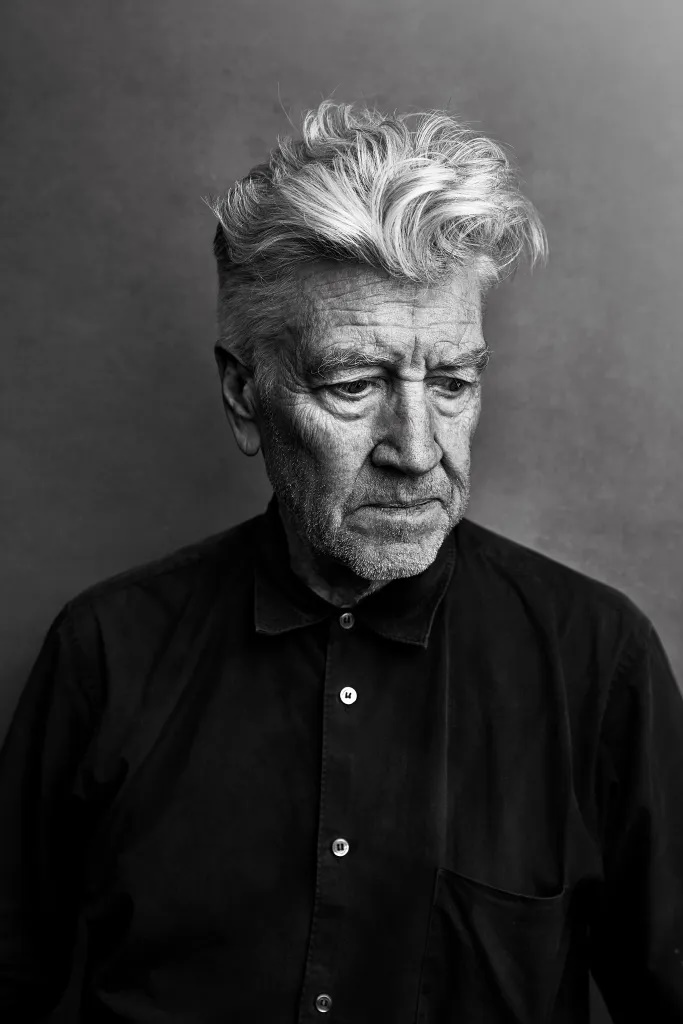
David Lynch, Maker of Florid and Unnerving Films, Dies at 78
A visionary, his films included “Eraserhead,” “Blue Velvet” and “Mulholland Drive.”
He also brought his skewed view to the small screen with “Twin Peaks.”
J. HOBERMAN | OBITUARIES | MOVIES | ARTS | THE NEW YORK TIMES | THURSDAY, JANUARY 16, 2025
David Lynch, a painter turned avant-garde filmmaker whose fame, influence and distinctively skewed worldview extended far beyond the movie screen to encompass television, records, books, nightclubs, a line of organic coffee and his Foundation for Consciousness-Based Education and World Peace, has died. He was 78.
His family announced the death on social media on Thursday, but provided no details. In 2024, Mr. Lynch announced that he had developed emphysema after years of smoking, and that as a result any subsequent films would have to be directed remotely.
Mr. Lynch was a visionary. His florid style and unnerving perspective emerged full-blown in his first feature, the cult film “Eraserhead,” released at midnight in 1977. His approach remained consistent through the failed blockbuster “Dune” (1984); his small-town erotic thriller “Blue Velvet” (1986) and its spiritual spinoff, the network TV series “Twin Peaks,” broadcast by ABC in 1990 and 1991; his widely acknowledged masterpiece “Mulholland Drive” (2001), a poisonous valentine to Hollywood; and his enigmatic last feature, “Inland Empire” (2006), which he shot himself on video.
Like Frank Capra and Franz Kafka, two widely disparate 20th-century artists whose work Mr. Lynch much admired and might be said to have synthesized, his name became an adjective.
The Lynchian “is at once easy to recognize and hard to define,” Dennis Lim wrote in his monograph “David Lynch: The Man From Another Place.” Made by a man with a longtime devotion to the technique of transcendental meditation, Mr. Lynch’s films were characterized by their dreamlike imagery and punctilious sound design, as well as by Manichaean narratives that pit an exaggerated, even saccharine innocence against depraved evil.
Mr. Lynch’s style has often been termed surreal, and indeed, with his troubling juxtapositions, outlandish non sequiturs and eroticized derangement of the commonplace, the Lynchian has evident affinities to classic surrealism. Mr. Lynch’s surrealism, however, was more intuitive than programmatic. If classic surrealists celebrated irrationality and sought to liberate the fantastic in the everyday, Mr. Lynch employed the ordinary as a shield to ward off the irrational.
Performative normality was evident in Mr. Lynch’s personal presentation. His trademark sartorial style was a dress shirt worn without a tie and buttoned at the top. For years, he regularly dined at and effusively praised the Los Angeles fast-food restaurant Bob’s Big Boy. Distrustful of language, viewing it as a limitation or even a hindrance to his art, he often spoke in platitudes. Like those of Andy Warhol, Mr. Lynch’s interviews, at once laconic and gee-whiz, were blandly withholding.
This baffling affect led Mel Brooks or his associate, Stuart Cornfeld, both of whom facilitated Mr. Lynch’s first Hollywood feature, “The Elephant Man” (1981), to label him “Jimmy Stewart from Mars.” Perhaps in response, Mr. Lynch chose to identify himself as “Eagle Scout, Missoula, Montana.”
Defining His Style
The first child of Donald Lynch, a research scientist for the U.S. Department of Agriculture’s Forest Service, and Edwina (Sundholm) Lynch, David Keith Lynch was born on Jan. 20, 1946, in Missoula but lived there for only a short time. The family soon moved to Boise, Idaho, and then to Spokane, Wash.
The deep timberlands of the Northwest left a profound impression on Mr. Lynch, providing the settings for “Blue Velvet,” “Twin Peaks” and its 1992 movie prequel, “Twin Peaks: Fire Walk With Me.”
Donald Lynch was transferred east; his family relocated first to Durham, N.C., and then Alexandria, Va., where David attended high school and became interested in painting. After graduation, he attended the Corcoran School of Art in Washington and the School of the Museum of Fine Arts in Boston before entering the Pennsylvania Academy of Fine Arts in 1966.
Philadelphia, then in a state of urban decay, was a revelation. The city had “a great mood — factories, smoke, railroads, diners, the strangest characters and the darkest night,” Mr. Lynch said in a 1997 interview. “I saw vivid images — plastic curtains held together with Band-Aids, rags stuffed in broken windows.”
Mr. Lynch, whose morbid, faux-childlike canvases were made under the spell of Francis Bacon, began incorporating film loops in his paintings. Although he dropped out of art school in 1967, he remained in Philadelphia for another three years, painting and making short films.
In 1970, he received an American Film Institute fellowship and relocated to work on the feature project that would eventually become “Eraserhead.” An unclassifiable movie that Mr. Lynch would always associate with Philadelphia, “Eraserhead” concerned a depressed young woman and a bewildered young man with a freakish coiffure cohabiting a hellish industrial urban nowhere, their conjugal life rendered unbearable by the mewling of their hideous mutant offspring (which resembled, but was never identified as, an animated skinned rabbit).
Remarkably crafted, “Eraserhead” was four years in production and required another three to consolidate an audience. Ben Barenholtz, the exhibitor and distributor who pioneered the midnight movie a half-dozen years earlier with Alejandro Jodorowsky’s “El Topo,” opened “Eraserhead” at the zero hour at Cinema Village in New York in late 1977.
Voluptuously drab, hallucinatory yet visceral, the movie was confounding. Despite its nauseating special effects, “Eraserhead” seemed too arty for the grindhouses of 42nd Street.
Supported by a word-of-mouth audience, “Eraserhead” played the Cinema Village through the summer of 1978, then opened again at midnight a few blocks away and a year later at the Waverly (the venue that incubated the “Rocky Horror Picture Show” cult) where, adopted by a downtown audience, it played for two years.
By then, Mr. Lynch had been discovered by Hollywood. Mel Brooks engaged him to direct “The Elephant Man,” a movie based on the life of Joseph Merrick, a severely deformed man who became a celebrity in late 19th-century London, for his company Brooksfilms. Although staid when compared with “Eraserhead,” the film contained several passages — notably the waltz of terror when Merrick is trapped and unmasked in a railway station urinal — that gave Mr. Lynch free rein to display his gifts.
A commercial as well as a critical success, garnering eight Oscar nominations, “The Elephant Man” resulted in a more elaborate commission. Mr. Lynch was hired by the producer Dino De Laurentiis to adapt Frank Herbert’s cult science fiction novel “Dune” after several earlier attempts fell through.
“Dune” was an influence on George Lucas’s “Star Wars,” but if Mr. De Laurentiis expected another “Star Wars,” he was disappointed. With its primordial, impressively nasty special effects, “Dune” (1984) was not a Saturday afternoon kiddie show. Neither was it an art film.
“There are no traces of Mr. Lynch’s ‘Elephant Man,’” Janet Maslin wrote in her New York Times review, “But the ghoulishness of his ‘Eraserhead’ shows up in the ooze and gore distinguishing many of the story’s heavies.”
Although “Dune” was a commercial failure, Mr. De Laurentiis bankrolled Mr. Lynch’s next film, “Blue Velvet.” Appearing midway through President Ronald Reagan’s second term, “Blue Velvet” turned Reagan’s “Morning in America” campaign inside out. A spellbinding blend of raw pathology and Kabuki sweetness, the film, Mr. Lynch’s first personal project since “Eraserhead,” ruthlessly exposed the depravity behind a picture-postcard facade of malt shoppes, football fields and rec-room basements.
The heart of the film, which starred Isabella Rossellini, Dennis Hopper, Laura Dern and Mr. Lynch’s sometime alter ego Kyle MacLachlan, is a 20-minute sex scene replete with voyeurism, rape, sadomasochism, implied castration, all manner of verbal and physical abuse, elaborate fetishism, and a ritualized kinkiness for which there is no name.
Both hailed and reviled, “Blue Velvet” was rejected by the Venice Film Festival. Mr. Lynch’s scarcely less controversial follow-up, “Wild at Heart,” starring Ms. Dern and Nicolas Cage as a young couple on the run in the American Southwest, won the Palme d’Or at the 1990 Cannes Film Festival.
That same year, Mr. Lynch scored an even greater triumph when he conquered network TV with “Twin Peaks,” a haunting, often bewildering inquiry into the death of a high school homecoming queen. Even more than “Blue Velvet,” “Twin Peaks” (made in collaboration with Mark Frost) seethed with bizarre and, as in any Lynch film, bizarrely ordinary characters, including a straight-arrow investigating F.B.I. agent (Mr. MacLachlan).
A near-instant sensation, “Twin Peaks” earned five Emmy Award nominations for its first season. Its mystery was dispelled when the killer’s identity was revealed a third of the way into the second season. Nevertheless, the show staggered on, hemorrhaging viewers over its next 13 episodes.
Mr. Lynch provided a “Twin Peaks” prequel in “Fire Walk With Me” (1992). Inverting the premise of the series, the film placed the murdered girl at center stage in a self-referential drama of teenage wantonness replete with rape, incest and voodoo. “It’s not the worst movie ever made; it just seems to be,” Vincent Canby wrote in The New York Times. (Mr. Lynch had better luck when he and Mr. Frost revived “Twin Peaks” in 2017, picking up on the cliffhanger that ended the original iteration a quarter-century before, albeit withholding Mr. MacLachlan’s stellar F.B.I. agent until the final episode.)
After “Fire Walk With Me,” Mr. Lynch came perilously close to self-parody with “Lost Highway” (1997), an earnestly trippy, tenderly adolescent, strenuously sinister evocation of rockabilly badness written with Barry Gifford, a film noir aficionado whose novel formed the basis for “Wild at Heart.” Mr. Lynch then reversed course with a premise so shamelessly feel-good it might have even embarrassed Steven Spielberg. “The Straight Story” (1999) dramatized the true story of Alvin Straight (played by Richard Farnsworth), a 73-year-old Wisconsin man who piloted a John Deere lawn mower 240 miles (at five miles per hour) to visit an estranged brother.
Crafting a Masterpiece
Two years later, Mr. Lynch returned to form with the erotic thriller “Mulholland Drive.” Named the best film of 2001 by the New York Film Critics Circle, “Mulholland Drive” was even praised by Lynch’s longtime critical detractor, Roger Ebert. Widely regarded as Mr. Lynch’s masterpiece, it finished eighth on the 2022 Sight and Sound poll of the greatest films of all time.
“Mulholland Drive” unfolds in a Los Angeles at once seductive and malign. Fashioned from the ruins of a rejected television pilot, the movie concerns the misadventures of two would-be movie stars, one dark and mysterious (Laura Elena Harring), the other blond and perky (Naomi Watts). The mood is ultra Lynchian. An ominous rumbling underscores the sinister delirium, as the movie careens from one violent non sequitur to another, taking literally the notion of Hollywood as a dream factory.
The idea of the movie industry as an occult conspiracy is even more apparent in “Inland Empire” (2006), a movie that Manohla Dargis, reviewing it for The New York Times, characterized as the earlier film’s “evil twin.”
Indeed, willfully abstruse, “Inland Empire” all but refuses to be a movie. Having compared the film medium to “a dinosaur in a tar pit,” Mr. Lynch shot “Inland Empire” piecemeal on an amateur grade DV camcorder, incorporated material from a web sitcom featuring rabbit puppets and a 70-minute interview with his star, Ms. Dern. Mr. Lynch’s most experimental film since “Eraserhead,” “Inland Empire” meditated on the power of recording. A blandly inscrutable movie as well as a homage to Ms. Dern, who is onscreen throughout, “Inland Empire” has no logic apart from its movie-ness.
The film, which Mr. Lynch released himself, would be his last feature. In 2011, he created a private member’s club in Paris that he named Silencio, for the eerily empty movie house in “Mulholland Drive” in which Rebekah Del Rio sings, a cappella, her Spanish version of the Roy Orbison song “Crying.” The club is located on Rue Montmartre in a subbasement where Émile Zola supposedly wrote “J’accuse.” Additional branches opened in Ibiza, Spain; at Art Basel in Miami; and, in 2024, in New York City.
In 2014, Mr. Lynch’s alma mater, the Pennsylvania Academy of Fine Arts, presented a full retrospective of his paintings, drawings, prints and assemblages called “The Unified Field.” While allowing that Mr. Lynch’s films were more realized than his graphic art, the critic Ken Josephson wrote in The Times that “Lynch completists” would find the exhibition “a fascinating, must-see show” noteworthy for revealing the influence of Francis Bacon.
Mr. Lynch was married four times, to Peggy (Lentz) Reavy, Mary Fisk, Mary Sweeney and Emily Stofle, and had a child with each. In between his marriages to Ms. Fisk and Ms. Sweeney, he had a lengthy relationship with Ms. Rossellini. His daughter Jennifer Lynch is also a filmmaker.
A generational colleague of the so-called movie brats — George Lucas, Martin Scorsese, Steven Spielberg — Mr. Lynch belonged to no counterculture save his own. Hardly an ex-hippie, he was twice a guest at the Reagan White House, although there is no evidence that the president, who famously kept up with current Hollywood movies, screened “Blue Velvet” at Camp David.
Even more than Mr. Lucas, whose first hit was “American Graffiti,” Mr. Lynch had an abiding interest in the youth culture of his adolescence, repeatedly playing on the gender stereotypes and using popular music of the early 1960s. Rather than nostalgic, however, his approach was radically defamiliarizing.
Mr. Lynch had his own sense of Hollywood. Where Mr. Lucas remembered his first movie as the animated Disney feature “Cinderella” and Mr. Spielberg declared that his was Cecil B. DeMille’s circus spectacular, “The Greatest Show on Earth,” Mr. Lynch’s seminal movie was “Wait ’Til the Sun Shines, Nellie,” a turgid 1952 melodrama described in The New York Times as “a mawkishly sentimental tribute to the old-fashioned barbershop and to the dubious felicities of living in an American small town.” The Big City was cast as a fount of sin.
As Mr. Lynch never truly embraced Hollywood, so Hollywood never truly embraced him. His films were regularly celebrated by critics’ groups and lionized in France, where, 11 years after his Palme d’Or for “Wild at Heart,” he was named best director for “Mulholland Drive.” But although he was nominated several times for an Oscar, he never received one.
After “The Elephant Man,” Mr. Lynch was asked by Mr. Lucas to direct “Return of the Jedi.” Had he accepted the invitation, the “Star Wars” saga might have ended there and then in a miasma of weirdness.
Mr. Lynch never made a conventional, crowd-pleasing Hollywood movie. But in 2022, he agreed to a cameo in one: Mr. Spielberg’s autobiographical feature “The Fabelmans,” where the enigmatic if not eldritch Mr. Lynch was cast as John Ford, the maker of westerns and the grand old curmudgeon of American cinema. It was a sentimental gesture that one can only call Lynchian.

The avant-garde filmmaker David Lynch in 2014.
Bringing home the Bacon
RINA ARYA confronts the brutal operation of Francis Bacon’s approach to portraiture
RINA ARYA | EXHIBITION REVIEW | CULTURE | MORNING STAR | THURSDAY, JANUARY 16, 2025
In our age of digitally retouched selfies, Francis Bacon’s portraits come as a monumental shock. The faces in his paintings, which dissolve at every turn, are chilling – as a major show at the National Portrait Gallery demonstrates.
Visitors to Francis Bacon: Human Presence are greeted by his studies of papal figures and men in suits. In these works, Bacon encased his figures in the suggestions of boxes, which are known as “space-frames”. He also deployed a painting technique known as “shuttering” in which he added a series of vertical lines to the portrait.
These works set the tone for the show and reinforce one of Bacon’s key ideas – that paintings cannot preserve life. “We [humans] are meat,” he once said, “we are potential carcasses”.
Bacon’s portraits do not fix identity, but expose the workings of death. This is personified in the disintegrating faces of his portraits, which are only oriented by the presence of an ear or mouth. Come too close and everything dissolves into a powdery splat.
Bacon’s is an art of intimacy, predominantly depicting people that were dear to him – his friends and lovers. But his painting was also an act of violence. We see the actions of brutality in the whips of paint that deform his sitters’ appearances and the residue of thick white gobbets.
Bacon was clear about his intentions – he wanted to get to the essence of a person, to look behind their appearance. To do so he distorted their mere likeness until he reached something more substantial. Metaphorically, this was a lesson in discarding pleasantries and identifying triggers until you get to the wounds beneath.
Realising the challenges involved in conducting such a brutal operation in front of his subjects, from the end of the 1950s Bacon preferred to work from photos because it enabled him to enact the violence with a degree of separation.
Bacon redefined portraiture. As the art critic and journalist John Russell said, he shows what it’s like to be in a room with no looking-glass and to be completely alone. The result is the collapse of features. Gone are the traditional comforts of portraiture, the backdrop to the person. Here are vestiges of a room, of the most banal elements – a single light bulb, an ash tray.
My own interpretation of Bacon’s work recasts him as the painter of postmortems. An artist who witnessed the freneticism before death, where life is at its most vital, and the vulnerability of the human at its most raw. This is easier to process in the context of anonymous papal figures or businessmen, but becomes far less palatable in the presence of people known to Bacon – his friends and lovers.
The moral perturbation of seeing the anguish of the flesh as it dissolves in Bacon’s paintings is heightened by the presence of the photographs that he worked from, many of which were taken by John Deakin. The juxtaposition of the painted portraits with the photographs of the sitters is one of the most powerful features of the show.
With his violent swipes of paint and the pressure of rags pressed onto painted faces, Bacon makes his presence felt throughout the exhibition. He makes himself known in other ways, too, like his superimposed presence onto the figure of his lover, former fighter pilot Peter Lacy in Study of Figure in a Landscape (1952).
Then there is the array of self portraits that he worked on in the 1970s, which give quiet contemplation to his existential angst. His deformed heads lie in stark contrast to the photographic prints of the younger, almost serene looking Bacon taken by Irving Penn, Cecil Beaton, Helmar Lerski and Francis Julian Gutmann.
Quite unlike his general disdain for narrative, this triptych conveys his sorrow at the loss of Dyer, who died from a drink and drugs overdose shortly before the opening of Bacon’s retrospective at the Grand Palais in 1971. Portrait of a Man Walking Down Steps (1972) is a further tribute to Dyer.
This exhibit of more than 50 works showcases Bacon’s redefinition of portraiture as a study of the human condition of death, with no hiding place. Several highlights stand out. There’s the inclusion of Self-Portrait with Beret by Rembrandt (1659), for example, which showcases the non-representational brush marks that inspired Bacon’s technique. There’s the life cast of William Blake by James S. Deville, which has a gravitas that reinforces the ravaged faces that surround us from all sides. And then there are the teeth bared at us from Bacon’s portraits themselves.
I walked away from the show with the afterimage of the white teeth in Study of the Human Head (1953) lingering – a reminder that when the flesh falls away, bones are all we’re left with.
Francis Bacon: Human Presence is showing at the National Portrait Gallery until January 19 2025
Rina Arya is professor of critical and cultural theory and head of the School of the Arts at the University of Hull.
Francis Bacon: Human Presence – a compelling
look at how the artist redefined portraiture
RINA ARYA | AUTHOR | REVIEW | ART & CULTURE | THE CONVERSATION | THURSDAY, JANUARY 9, 2025
In our age of digitally retouched selfies, Francis Bacon’s portraits come as a monumental shock. The faces in his paintings, which dissolve at every turn, are chilling – as a major show at the National Portrait Gallery demonstrates.
Visitors to Francis Bacon: Human Presence are greeted by his studies of papal figures and men in suits. In these works, Bacon encased his figures in the suggestions of boxes, which are known as “space-frames”. He also deployed a painting technique known as “shuttering” in which he added a series of vertical lines to the portrait.
These works set the tone for the show and reinforce one of Bacon’s key ideas – that paintings cannot preserve life. “We [humans] are meat,” he once said, “we are potential carcasses”.
Bacon’s portraits do not fix identity, but expose the workings of death. This is personified in the disintegrating faces of his portraits, which are only oriented by the presence of an ear or mouth. Come too close and everything dissolves into a powdery splat.
Bacon’s is an art of intimacy, predominantly depicting people that were dear to him – his friends and lovers. But his painting was also an act of violence. We see the actions of brutality in the whips of paint that deform his sitters’ appearances and the residue of thick white gobbets.
Bacon was clear about his intentions – he wanted to get to the essence of a person, to look behind their appearance. To do so he distorted their mere likeness until he reached something more substantial. Metaphorically, this was a lesson in discarding pleasantries and identifying triggers until you get to the wounds beneath.
Realising the challenges involved in conducting such a brutal operation in front of his subjects, from the end of the 1950s Bacon preferred to work from photos because it enabled him to enact the violence with a degree of separation.
A painter of post-mortems
Bacon redefined portraiture. As the art critic and journalist John Russell said, he shows what it’s like to be in a room with no looking-glass and to be completely alone. The result is the collapse of features. Gone are the traditional comforts of portraiture, the backdrop to the person. Here are vestiges of a room, of the most banal elements – a single light bulb, an ash tray.
My own interpretation of Bacon’s work recasts him as the painter of postmortems. An artist who witnessed the freneticism before death, where life is at its most vital, and the vulnerability of the human at its most raw. This is easier to process in the context of anonymous papal figures or businessmen, but becomes far less palatable in the presence of people known to Bacon – his friends and lovers.
The moral perturbation of seeing the anguish of the flesh as it dissolves in Bacon’s paintings is heightened by the presence of the photographs that he worked from, many of which were taken by John Deakin. The juxtaposition of the painted portraits with the photographs of the sitters is one of the most powerful features of the show.
Bacon’s presence
With his violent swipes of paint and the pressure of rags pressed onto painted faces, Bacon makes his presence felt throughout the exhibition. He makes himself known in other ways, too, like his superimposed presence onto the figure of his lover, former fighter pilot Peter Lacy in Study of Figure in a Landscape (1952).
Then there is the array of self portraits that he worked on in the 1970s, which give quiet contemplation to his existential angst. His deformed heads lie in stark contrast to the photographic prints of the younger, almost serene looking Bacon taken by Irving Penn, Cecil Beaton, Helmar Lerski and Francis Julian Gutmann.
Quite unlike his general disdain for narrative, this triptych conveys his sorrow at the loss of Dyer, who died from a drink and drugs overdose shortly before the opening of Bacon’s retrospective at the Grand Palais in 1971. Portrait of a Man Walking Down Steps (1972) is a further tribute to Dyer.
This exhibit of more than 50 works showcases Bacon’s redefinition of portraiture as a study of the human condition of death, with no hiding place. Several highlights stand out. There’s the inclusion of Self-Portrait with Beret by Rembrandt (1659), for example, which showcases the non-representational brush marks that inspired Bacon’s technique. There’s the life cast of William Blake by James S. Deville, which has a gravitas that reinforces the ravaged faces that surround us from all sides. And then there are the teeth bared at us from Bacon’s portraits themselves.
I walked away from the show with the afterimage of the white teeth in Study of the Human Head (1953) lingering – a reminder that when the flesh falls away, bones are all we’re left with.
Francis Bacon: Human Presence is showing at the National Portrait Gallery until January 19 2025
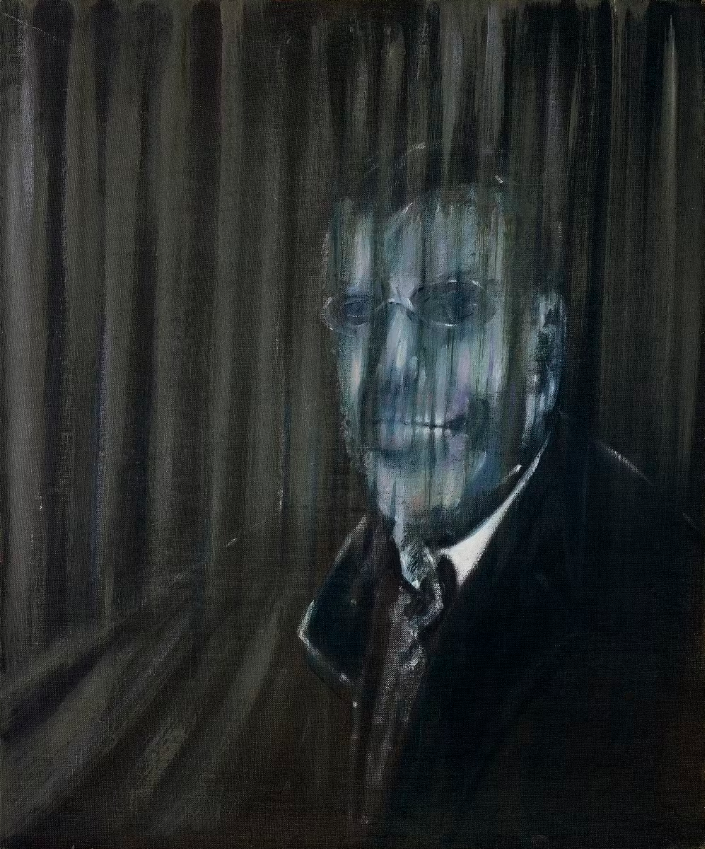
Study of the Human Head by Francis Bacon (1953). The Estate of Francis Bacon
Francis Bacon Becomes the Muse of the 21st Century
BY KIM SEUL-KI | WISE ART TRIP | CULTURE | MAEIL BUSINESS NEWSPAPER | 1 JANUARY, 2025
Before the end of the exhibition, which has been held since the fall in London, I will introduce it quickly. It’s a story of a painter who paints terrifying pictures that don’t fit into Christmas. I also wanted to deal with some of the exhibitions in October’s Frieze Week slowly. In fact, I prefer to see exhibitions in a time of leisure when diligent fans have somewhat escaped, rather than in a busy opening week.
The National Portrait Gallery’s Francis Bacon: Human Presence (until Jan. 19, 2025) which was one of Frieze Week’s signature exhibitions, is now three weeks away from closing. There were many Londoners in the museum with serious expressions that anyone could tell they were not tourists. It seems to be cruising in popularity.
There are times when I think Francis Bacon (1909-1992), the author who has the greatest influence on writers in the 21st century, seems to be the author. Many young writers of all nationalities are exploring the human body. Unlike pre-modern portraits, the pure human body itself. The originator of all these writers is Francis Bacon.
The violent description of Francis Bacon’s painting gives the shock of being punched. He was outspoken in his depiction of a body that had been dismantled like a piece of meat. I think it’s because our 21st century is an era of worship of the human body that makes his work more highly regarded and influential over time.
This exhibition explores human existence like a motif. Through the dark, dreary faces. About 50 paintings from the 1940s and beyond testifies to how revolutionary Francis Bacon challenged the genre of portrait. In addition to self-portraits, he was able to meet Lucian Freud, Isabel Rawsthorne, lovers Peter Lacy and George Dyer, and John Edwards.
The portraits of departed lovers, friends, seemed to tell the story of his life above all else. There are many artists who are famous for their self-portraits. It reminds me of the Renaissance master Raphael, Albrecht Dürer, Rembrandt and Vincent van Gogh, and David Hockney. There is no better creator than Francis Bacon's reputation as a self-portrait artist representing the 20th century.
Bacon grew up in Ireland of a wealthy English family under the persecution of his father, who cursed his homosexuality and even whipped his son. As soon as he became an adult, he went to Berlin and London one after another to find freedom and love.
Working as an interior designer in London, he decided to become an artist from the early 1930s. But in his early works, he only receives terribly bad criticism. Critics didn’t hesitate to say, “It’s nothing but an excreta.” Thanks to this, most of the early paintings were destroyed, so there are not many paintings left before 1944. He is recognized as an artist by painting Three Studies for Figures at the Base of a Crucifixion (1944). It is later regarded as a masterpiece depicting a human being screaming in pain, incorporating both Greek mythology and biblical symbols.
In the first room of the exhibition, you'll see two masters who had a great influence on Bacon. His fascination with the genre of portrait was his encounter with Diego Velazquez’s Portrait of Innocent X. In a 1948 biography of Velázquez by Elizabeth du Gué, he painted this image over and over again over the decades after accidentally encountering it.
Bacon’s early works feature characters who scream or are in pain. The conclusion he came to as he explored how to describe humans after World War II. Even the powerful pope can’t hide his uneasy inner self, and he is described as being held in bars as if he were imprisoned. This characteristic is repeated in his portrait. Bacon said that even when he went to Rome, he didn’t bother to look at this painting at the Palazzo Doria Pamphilli Museum. He painted the Homage for Van Gogh in 1960.
With his interest in Van Gogh, Bacon chose to move away from the dark monochromatic image and introduce colour. Van Gogh’s desire to “change and reinvent reality” through his work resonated with Bacon's ambition to express “a deeper sense of reality” as an image.
A self-portrait painted in 1987 marks the beginning of this exhibition. It’s a very gentle painting compared to the 1949 self-portrait depicted with a torn face. The subject of Bacon's lifelong quest was himself. Even after passing through before and after the war when the model was not available, he chooses not to use the model.
He started distancing himself from his subjects in the studio, and instead he chose how to draw from pictures and memories. Through this approach, Bacon enjoyed the freedom to ‘distort’ a painting, and protected the subject from the ‘hurt’ it could inflict. Rembrandt’s Self-Portrait in a Beret is also on display. Bacon studied Rembrandt’s brushstrokes deeply. He, like Rembrandt, enjoyed painting self-portraits all his life and left more than 50 self-portraits.
The highlight of this exhibition is the portraits of friends and lovers. By the mid-1950s, Bacon decides to get the subject matter of painting for the first time in the lives of others, away from painting the screaming figure and himself. He painted portraits of sponsors Robert and Lisa Sainsbury’s, and fellow painter Lucian Freud.
The 1969 three-sided painting Three Studies of Lucian Freud was sold for $142.4 million at Christie’s Auction in New York on November 12, 2013, the highest price ever for an art auction at the time. It was an event that made Bacon’s reputation known to the world.
His portraits of his closest friends, including his lovers Peter Lacy, George Dyer, John Edwards, friend Henrietta Moraes, founder of the Colony Club Muriel Belcher, and friend and fellow artists Lucian Freud and Isabel Rawsthorne, are his most intimate and intimate paintings. It was Isabel who drew 19 portraits of Bacon, who rarely painted a woman.
About two years after Peter Lacy’s death, Bacon meets George Dyer, a petty thief from a London slum. On the first day they met, Dyer gifted Bacon a stolen gold Rolex watch. It was a relationship that was in conflict with physical violence, but Bacon painted the most portraits of him. Dyer eventually killed himself sitting on the toilet in a Paris hotel in despair that Bacon doesn’t love him.
Bacon paints a three-sided picture of the death of Dyer, who dominated his thoughts a year later in 1973. Dyer's harrowing figure reveals his sadness and guilt intact. It is significant that the exhibition ends with a dark and sad three-sided painting drawn in grief after losing a lover.
If not for this exhibition, there was a work that would be difficult to meet. This is a posthumous work of his life, located at the end of the line of exhibition. This work remained unfinished in his studio easel after death.
Bacon was struggling with large canvases even in his 80s when he was battling a respiratory condition. It is not known who the painting, named Self-Portrait, actually painted. There’s an analysis that the figure alone looks as much like some of the men that Bacon painted as Bacon. Like many of his other paintings, maybe an image of his male models mixed together.
Bacon was successful, but he was always lonely. All the lovers died, and the relationship with old friends grew distant. He also tried to reconcile with his long-lost lover, but his last attempt always failed. Fragile after undergoing kidney removal surgery, he died while painting until his death. Who was it that his hand wanted to paint at the end of his life? It's probably a question that no one knows the answer to.
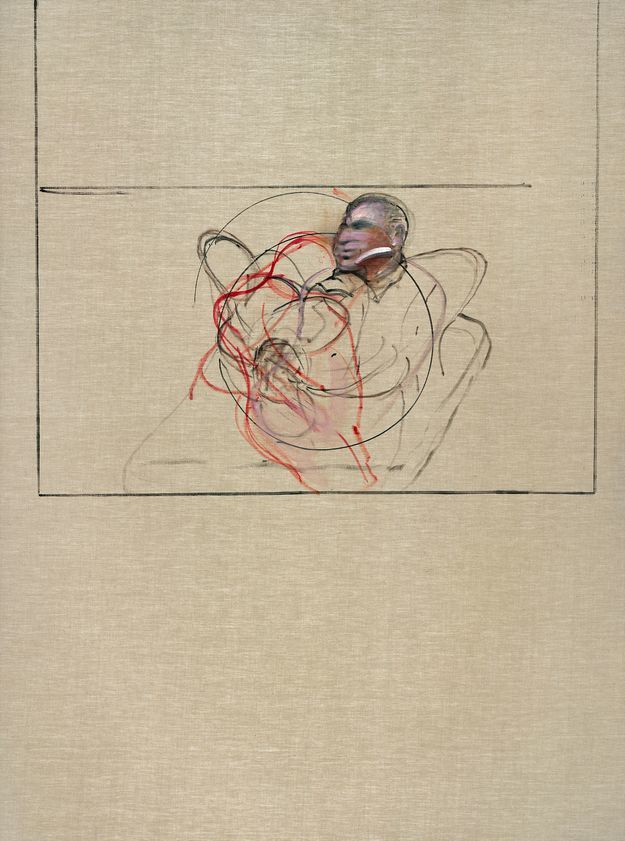
Francis Bacon, Self-Portrait, 1991–1992
The Haunting Francis Bacon Work That
Inspired Heath Ledger’s Joker
The artist is a firm favourite of director Christopher Nolan.
RICHARD WHIDDINGTON | ART HISTORY | ART WORLD | ARTNET NEWS | DECEMBER 28, 2024
In 1985, a 15-year-old Christopher Nolan was on a school trip to London’s Tate Britain when a poster caught his eye. It’s easy to see why. A streaked, shifting face hangs in darkness, its expression at once serene and tortured. The poster was for an upcoming retrospective on Francis Bacon and isolated the left-hand panel of the painter’s Triptych (1972).
As an aspiring filmmaker, Nolan took the poster with him, pinning it to the walls of his London apartments until it was, in his words, “a tattered mess.” To Nolan, art is a means of expressing that which cannot be captured by dialogue and narration. Bacon is his favorite artist. This makes sense. Bacon, after all, is a painter known for his moody atmospherics and distortions of time and space.
Triptych was a fitting, if brutal, early spark. Part of Bacon’s “Black Triptychs” series, it follows the death of Bacon’s model and lover George Dyer, whom the London-based artist painted obsessively. Bacon appears on the right-hand panel and Dyer on the left. In both posture and affect, they echo one another, each one’s lifeblood oozing out onto the pale floor. Behind them, the void awaits. In the central panel, the two bodies morph together in embrace, an image Bacon drew from Eadweard Muybridge’s photographs of wrestlers. They are alone, together, and entirely not themselves.
Nolan showed the image to Heath Ledger as the actor was preparing to play the Joker in The Dark Knight (2008), which pitted Batman against the enduringly wily, chaotic antagonist. Ledger understood the image, its violence, the way its subjects were both victims and victimizers, tortured and torturing. It too provided a spark. Together with the film’s makeup artist, John Caglione Jr., Ledger delved into a book of Bacon’s paintings as they sought to a create new Joker, one who was more threatening, visceral, and real world than previous iterations.
“We looked at a lot of different distortions in the Bacon paintings,” Nolan said in a discussion of the painter and the Joker character with Tate. “We thought about how the paint would run together and mix to give it a worn through and sweaty quality.” The result, Nolan said, was that Ledger was able to use his face as a canvas to display himself as a menace.
Beyond Triptych’s warped faces, another aspects Nolan admires is its blank spaces. It reminds the director of the limitations of building a cinematic universe. “You never have the resources to create everything in a film, [the key] is to use those gaps intelligently rather let the audience feel the limitations.” In Bacon’s work, the blank spaces turn the focus back to the viewer who is forced to contemplate its emptiness.
“It might be emotionally uncomfortable,” Nolan said, “but the bleakness makes you think about the limitations of the human experience.”

Francis Bacon: Human Presence at the National Portrait Gallery
WRITTEN BY LIV GOODBODY | LATEST ARTICLES | EDITION MAGAZINE | MY ART BROKER | TUESDAY 20 DECEMBER 2024
The Francis Bacon: Human Presence exhibition at the National Portrait Gallery is a striking immersion into the oeuvre of an artist who pursued beauty through a lens of anguish. Enticing, provocative, and emotionally visceral, it presents Bacon’s work with a clarity and intensity that solidifies his place as one of the most audacious artists of the 20th century. Having only previously encountered Bacon’s work through digital or printed reproductions, witnessing Bacon’s art in person was breathtaking. The tactile portraits emerge as almost corporeal entities, dragging you into Bacon’s darkly intoxicating world.
A Tactile Encounter with Grief and Beauty
Walking through the Human Presence exhibition, the impact of Bacon’s paintings is immediate. The early rooms confront viewers with skeletal figures and haunting faces, locked within shadowy voids or compressed into claustrophobic frames. These works, particularly Study For A Portrait (1952) and Portrait of R. J. Sainsbury (1955), set the tone for the exhibition’s unflinching engagement with mortality and the fragile impermanence of existence. The figures seem to simultaneously emerge from and dissolve into their shadows, their screaming mouths, hollow eyes, and disintegrating forms evoking a haunting reminder of human vulnerability.
A startling motif in these early works is the prominence of teeth as symbols of decay and permanence. Teeth, the only part of our bodies that endures after death, encapsulate Bacon’s preoccupation with the paradox of existence; the persistence of the physical against the inevitability of its frailty. These are not merely portraits; they are profound meditations on the grotesque beauty and fragility of life. Encountering these works in person reveals dimensions that photographs simply cannot capture. The textures of Bacon’s paint — the brutal smears and carnal quality of his brushstrokes — add a tactile immediacy that heightens their emotional resonance. Up close, the canvases invite an intimate confrontation with themes of turmoil, identity, and the inexorable passage of time.
Intimacy and Alienation
The focus of the exhibition is Bacon’s fascination with the human form — not merely as a subject of beauty but as a vessel for pain, passion, and decay. This duality is epitomised in works like Head (Man In Blue) (1961) and Sketch for a Portrait of Lisa (1955), where figures seem to oscillate between defiance and dissolution. The large-scale portraits, such as Study for Self-Portrait (1963), exacerbate their impact, their imposing size amplifying their theatricality and existential gravitas.
The loose thematic arc of the exhibition crescendos in the final rooms, which focus on Bacon’s most intimate relationships. His paintings often depict his closest companions — lovers, friends, and fellow artists — not through the lens of comfort or flattery, but with unvarnished honesty. The section devoted to Henrietta Moraes is particularly striking — Bacon’s Three Studies for a Portrait of Henrietta Moraes captures her sensuality and vitality through swirling reds and fleshy tones, yet there is an undeniable vulnerability in her depiction. The exaggerated forms and chaotic brushstrokes articulate both the ecstasy and anguish of existence, underscoring Bacon’s ability to find unfiltered humanity in his subjects.
Equally affecting are the depictions of George Dyer, Bacon’s lover, whose presence — although muted in this exhibition — takes focus in the final room of the exhibition. From the sensual intensity of Three Studies for a Portrait of George Dyer (1964) to the harrowing eulogy of Triptych May-June 1973 (1973), which confronts the tragedy of Dyer’s overdose, these works delve into the brutal complexities of grief. Bacon’s art does not offer a sanitised portrayal of mourning; instead, it immerses viewers in its unrelenting presence, compelling them to confront the intricate interplay of love, loss, and despair.
What elevates this exhibition further is its nuanced contextualisation of Bacon’s life and relationships. Although Dyer’s presence feels notably absent for the majority of the works displayed, and his impact on Bacon’s art is somewhat downplayed in relation to the emphasis on Peter Lacy, the exhibition still offers a thoughtful rumination on the key players in Bacon’s life. While the inclusion of archival materials and photographic portraits enriches the viewer’s understanding of his world, it never reduces the works to mere extensions of biography. Instead, this thoughtful curation enhances the intimacy of the paintings, allowing Bacon’s vision to resonate with unmitigated force.
A Theatre of Dark Inspiration
The large-scale portraits in Francis Bacon: Human Presence exert a commanding physical and emotional gravity, demanding both attention and introspection. Works such as Seated Figure (1961) and Portrait of George Dyer in a Mirror (1968) dominate the space, their monumental scale amplifying the emotional and existential weight they carry. These paintings are not just representations but performances, theatrical spaces where the drama of the human condition plays out.
Bacon’s deliberate use of frames and cage-like structures within his compositions intensifies this sense of theatricality. Figures often appear confined, suspended in existential limbo, their isolation underscoring the tension between presence and absence. This is also striking in Bacon’s smaller head triptychs, where fragmented renderings of the same subject suggest shifting identities and inner turmoil. These works capture the multiplicity of the human experience, reflecting Bacon’s belief that we are all works in progress, constantly negotiating the tensions between our best and worst selves. Through these visual devices, Bacon reflects his belief that although identity is not static, we often become trapped by our inner conflicts.
Can Francis Bacon really be considered an Irish artist?
Analysis: There may be no obvious traces of Ireland or Irishness in Bacon’s
work, yet his studio now resides in the heart of Dublin
BY BARRY HOULIHAN | RTÉ BRAINSTORM | CULTURE | RTÉ NEWS | TUESDAY, 17 DECEMBER, 2024
The artist Francis Bacon is one of the most recognised names in contemporary art and modern culture, whose paintings command record-setting prices and exhibitions of work in major galleries around the globe. Born at 63 Lower Baggot Street in Dublin in 1909 to English parents, the location of Bacon's early life in Dublin would come to be seen in later years as its cultural heartland, earning the moniker of ‘Baggatonia’, with its plethora of musicians, pubs, theatres, and artists.
But Bacon is not so readily recounted in that Baggatonia history, or within the common cultural discourse of ‘modern Irish artists’. He moved from country of his birth when he was 16 years old, so how is Bacon remembered today in Ireland and, indeed, is he, or can he be, considered an Irish artist?
He has been referred to and listed as a British artist for the majority of his life and career and revered as an icon of 20th century British culture. Yet aside from his works which populate the walls of major galleries and are prized by wealthy collectors, Bacon’s greatest legacy is his artist's studio which now resides lock, stock, and paintbrush in the Hugh Lane gallery in the heart of Dublin city.
Leaving the hustle and bustle of O’Connell Street and Parnell Square, visitors to the gallery will find artworks by modern and contemporary Irish and European artists, from Claude Monet to Sarah Purser to Sean Scully. All of this builds on Lane's original vision and bequest for a Dublin municipal gallery to house a range of modern art for the city of Dublin.
Beyond the main galleries, a long corridor leads you to a wall with a window and curious tubes with wide-angle lenses, like a camera’s viewfinder. This transports the viewer from Dublin directly into Bacon’s London studio of the 1960s and after, and into the world and imagination in which he painted.
The studio was donated in 1998 to the Hugh Lane Gallery by John Edwards, Bacon's sole heir and longtime companion. Curiously, and perhaps in an act to ‘claim’ Bacon as Irish and recognise his Irishness, a plaque was unveiled in 1999 on the wall of 63 Lower Baggot Street by then Lord Mayor of Dublin, Mary Freehill. The executor of the Bacon Estate, Brian Clarke, declared at an event after the plaque unveiling that “all Francis’ working life had its genesis here in Dublin”.
The work to move and reconstruct the studio in Dublin involved the painstaking process of cataloguing every single item (over 7,000 items which today comprise the Francis Bacon Archive at the Hugh Lane) within the space, including its structural features. That task alone revealed the discovery of over 100 sketches, 1,500 photographs and 200 manipulated images, all laying within the maelstrom of Bacon’s frenetic and chaotic studio space, as well as over 100 slashed canvasses. The slashed and cut canvases were not a surprise to find as Bacon once said “I usually like a canvas when I finish it, but the more I look at it the more dissatisfied I become. If someone doesn’t take it away from me within a few days, I will probably destroy it”.
Items within the studio revealed how Bacon used every facet of it as an all-encompassing palette, figuratively, in the detritus of pages, sketches and cuttings that littered the space, but also literally as the wooden door of the studio was covered in paint samples. A Japanese gallery offered £2 million for the door of the studio alone. Those items alone were deemed to be such value and insight into Bacon’s process they represented an archive of form and work in development.
Birth alone can be less useful when looking to assess someone’s identity and cultural outlook. The artist, Jack B. Yeats, for instance, was born in London in 1871, but is rarely, if ever, described as anything other than an Irish artist. His works are highly acclaimed while depicting an ethereal, often dream like vision of Irish landscapes and wandering figures, from Dublin beaches to the Sligo coastline, as well as more raucous scenes from of horse races, boxing matches, circus, as well as Dublin streetscapes, including of course his Olympic medal winning painting, Liffey Swim (1923).
There are no such obvious traces of Ireland or Irishness in Bacon’s work. Having left Ireland as a young teenager for London, Bacon later travelled to Berlin, Paris and regularly to Morocco. In 1961, he established a base in a Kensington mews in London, where he would live and work primarily until his death in Spain in 1992.
Bacon’s life in Ireland ran in tandem with much of the violence and political and social upheaval of the Revolutionary period in the early 20th century. While born in Dublin city, Bacon’s childhood was spent largely in comfortable 'Big House’ existence in Co. Kildare. It was a period when Ireland was finding its own identity after rebellion, a war of independence against British colonialism, a civil war and the emergence of a new Free State firmly guided by the authority of the Catholic Church.
In Revelations, their biography of Bacon, Mark Stevens and Annalyn Swan indicate that these years of violence and trauma contributed to Bacon’s own dislocation from the country in later years. They also led Bacon to recognise himself as an outsider — a young homosexual man and son of a British army father with who he had an often difficult relationship.
Works like Bacon’s breakthrough Study after Velazquez’s Portrait of Pope Innocent X (1953), depicting a screaming seated pope, takes an image of religious and turns it into a disruptive force of energy being unleashed. It also unsettles the Catholic iconography of the Ireland of his birth, where images such as the Sacred Heart found its place in many Irish Catholic nationalist households. It also brings to mind images of death and sacrifice of a nationalist and mythological form, as in the statue of CúChulainn depicted wounded and dying by artist Oliver Shepherd, which still stands in the GPO in Dublin today as an image representative of the blood sacrifice of 1916.
Bacon’s screaming pope and the imagery of the mouth (which he said fascinated him ever since he read a book about diseases of the mouth) is reminiscent of the disembodied mouth of an unseen narrator in Samuel Beckett's Not I (1972). Bacon spent much less time in Ireland compared to some other Irish cultural figures that in their lifetime were also often more associated with Great Britain or Europe, such as Beckett, George Bernard Shaw or Elizabeth Bowen. In life and legacy, Bacon has not had the hyphenated ‘Irish-’ attached to him in any great measure. His own antipathy towards the country of his birth also contributes to this continued sense of ‘outsider’ in his home city.
Ireland also has no blemish-free record of protecting its artistic and cultural heritage. The lack of intervention by the State to secure for Ireland the entire Yeats Family collection, auctioned by Sotheby’s in 2015 and which was split between Irish and international collections and venues around the world, is one damning example.
Yet the preservation of Bacon’s London studio in the late 1990s and its relocation to Dublin and the Hugh Lane Gallery was a cultural coup that any major gallery (or city) would be jealous of. Whatever the Irish credentials or perception of Irishness of its protagonist, the Bacon studio is a remarkable legacy for one of the world’s most influential artists, who was born in heart of Dublin’s Baggatonia.
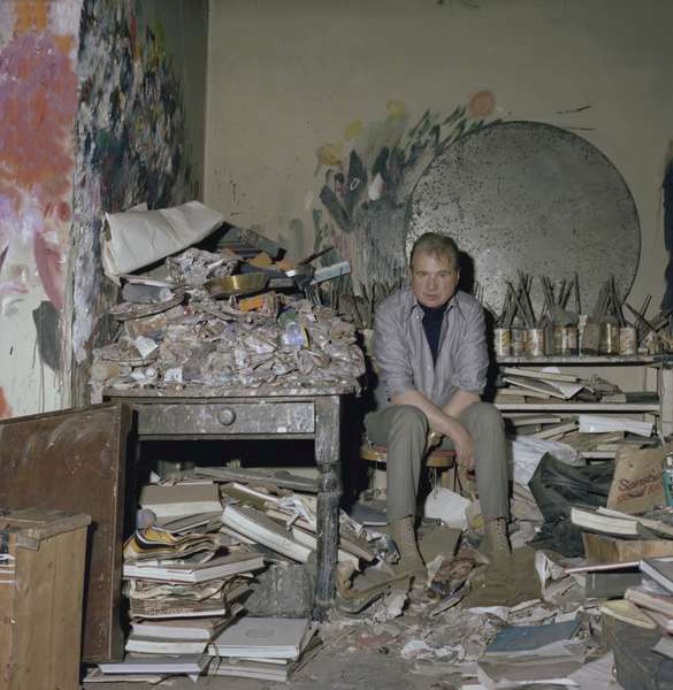
Francis Bacon in his studio which was donated to the Hugh Lane gallery in Dublin
Is a painting ever finished?
Some artists consider their works unfinished (only abandoned), to be taken up again later.
Some reserve the right to destroy it.
BY ALEXANDER ADAMS | DISCUSSIONS | LATEST | ALEXANDER ADAMS ART | TUESDAY, DECEMBER 3, 2024
The answer to the question “When is a painting finished?” is fairly plain: when it leaves the artist’s studio. Once a picture has been handed over to a gallery, agent or collector, it is in the protection of another party, even though it may continue to be (temporarily) property of the artist. At that point it is out of the artist’s oversight and no longer in proximity of materials used to make changes. Paintings consigned on sale-or-return terms are generally returned to the artist after exhibition. Paintings left with artists over a long period are sometimes subject to revision, occasionally due to dissatisfaction or better ideas. Formal portraits have been altered because the sitter has aged or the clothes have become outdated. Velázquez’s earliest royal portraits are lost under later repainting, which changed poses and made clothing more fashionable. Some artists have had difficulty leaving paintings alone. Both Monet and Degas were notorious for returning to revise or completely rework pictures – much to the dismay of owners.
In printmaking there is often a first state of marked plate or stone, which is a preliminary test. In those cases it is usually understood that this is trial, with areas left blank or only outlined. This is an interim stage rather than a finished picture being reworked. The nature of oil painting is that the first stage is left under the later ones and remains inaccessible except through x-ray or spectrographic analysis which is incomplete and inaccurate to the actual appearance of that stage. What if we could see the original paintings before they had been changed and therefore be able to gauge the extent and relative success of the changes in comparison?
We have long had photographs of unfinished paintings. Since the invention of photography we have had records of paintings in progress. There are sequential images of art by many artists, including Matisse, most notably La Grande Nue – Pink Nude (1925). Clouzot’s film The Mystery of Picasso (1956) showed Picasso at work on various drawings and paintings; we saw them develop, but in all sequences the art was never finished until the final state. The paintings in a new book Francis Bacon: Revisions (Martin Harrison, The Estate of Francis Bacon Publishing, 2024) are ones that Bacon considered complete and had consigned to his dealer before changing his mind and recalling them. As these paintings were photographed when they first arrived and in their revised last state, we can view what Bacon considered definitive only see him change his mind and make alterations, revealing precisely what dissatisfied him about an image he had considered good enough to enter the public arena. To those of us who have followed Bacon’s (relatively limited and thoroughly published) oeuvre, this is fascinating insight. I cannot think of a comparative case. It is rare to see an artist’s work through his own eyes.
That Bacon’s revisions are recorded is due to two causes. The first was practical and the second was tactical. From 1961 until his death, Bacon inhabited a small mews house in Kensington. The limited space meant that Bacon could not store many canvases (finished, unfinished or blank), so finished paintings were (even while wet) given directly to his dealer Marlborough Gallery. Art was photographed when it arrived at Marlborough’s London depot, hence there are high-quality contemporaneous colour images of the paintings. (Compliments must be paid to the technicians who adjusted gravely faded colour photographs and managed to make them match the true colours, based on new highly accurate digital photographs of the paintings today.) Bacon could have hired a storage company to keep paintings independently but for whatever reason he chose not to.
Marlborough knew that it was to their advantage to keep the canvases out of Bacon’s studio, as he had a tendency (alarming to any dealer) to work a painting until it was spoiled and subsequently destroy it. When Bacon joined Marlborough Gallery (in 1958) he was sending pieces to the gallery, probably in to reduce his destruction rate. In an interview he admitted his weakness. “I sometimes let paintings out too soon because I find that if they are in the studio I go on fiddling with them.” [Quoted page 32] Considering how the paintings in their initial state were both acceptable, creditable and valuable, Bacon’s determination to get a picture right is a worthy and costly position for him to have taken. One can imagine his dealer’s exasperation at the painter’s fidelity to his standards.
Revisions is effectively a whole unseen body of work by one the last century’s most important painters. Of the 584 surviving paintings, almost 100 are known to have been revised, through painting or cutting down or were moved into or out of a triptych or diptych. Sometimes panels were completely replaced. Due to the artist’s preference to work on raw linen, after about 1950 he never reused an abandoned canvas in totality. That is, although he might radically alter it, he would never put a wholly fresh composition over an old painting. Revisions contains a few paintings that were reworked then later destroyed.
That Bacon changed his mind so often – and exactly how often – is interesting. Bacon always presented himself as unmoved by criticism. This was part of a show of being detached from the art world, movements and the desire to court approval (even that of the elite with educated refined sensibilities) but it was clearly not the whole picture. If one goes to his interviews, we find him speaking admiringly of the transcript of the edited drafts of T.S. Eliot’s The Waste Land (1922). Bacon declared that he wished that he had a partnership where a fellow artist could critique his work in progress so that he might gain from another’s perspective, as Eliot had with Ezra Pound. It is on record that he did take notice of comments by artists Frank Auerbach and Lucian Freud, critic David Sylvester and gallery manager Valerie Beston.
Beston’s work diary contains useful data about when paintings by Bacon were collected, returned, adjusted and destroyed. The pair discussed the pictures as they were finished and Bacon would sometimes voice doubts regarding pictures. Beston’s responses did influence his thinking, although their opinions differed. She was dismayed when handsome pictures were altered or destroyed. The diaries are quoted liberally and the dates form the basis for the deductions in Revisions.
The fact that revision was possible is also relevant. The general perception was that Bacon’s technique was irreversible, but there were times when Bacon could make changes as delicately as a conservator expunging a distracting flaw. In a 1969 portrait the artist removed a cigarette in the subject’s mouth. In another portrait he removed a circular blot, having adjudged it unnecessary. Elsewhere, Bacon carefully blended colours so that he could remove other elements, such as shadows. In two male nudes of 1988-9, Bacon simplified the backgrounds and removed room armatures. Bacon clearly wanted to reduce distractions and par things back to an elegantly crisp concision.
A 1959 painting was rescued by being almost totally repainted. A rather crude profile figure was turned into a man-woman combined double figure and given a startling mouth akin to a De Kooning Woman. Study from the Human Body (Man Turning on Light) (1973) was made more complex by the addition of a green rhomboid carpet/staircase, which opened new spatial implications. Others featured a change of colour, most often of the background but sometimes of the figures. There are sections on instances of new separate versions of paintings and single canvases being expanded into triptychs. In one case, a late triptych was split up only to be reunited.
Commercial imperatives affected the fate of pictures. Even in the later 1960s, when Bacon was established as a commercially viable artist, his large triptychs were difficult to place due to their size and price. More than once triptychs were reduced to diptychs or split into single paintings by the gallery, with Bacon’s approval, in order to sell them. Some of the paintings had public lives before the artist changed his mind. Triptych, May-June 1974 had a recumbent figure in the foreground of the centre panel. The set was exhibited three times and published before Bacon overpainted this presence in 1977.
The fact that this painting had been exhibited and published did not restrain Bacon from altering it, in much the same was Monet, Degas and Renoir saw no ethical or legal boundary as an impediment to making corrections. The difference was that Bacon (or his gallery) still owned the painting in question, whereas owners of Degas’s paintings were hesitant about allowing him access to his pictures for fear of an appearance altering revision. However, Bacon felt a similar power. When Bacon suggested that he repaint parts of his Painting (1946) in order to make it more stable, MoMA (the owner) politely declined this offer. When some collectors came to get paintings from his studio, they arrived only for Bacon to regretfully show them the tattered remnants. He had destroyed the canvas and would return the payment. Less provocatively (but more spectacularly), he would buy paintings by him that he considered failures and stamp them to wreckage on the street outside the dealer’s.
Clearly, Bacon considered his paintings – many titled “Study for” – existed within a continuum of the provisionally finished. He considered it within his moral rights to destroy a picture, no matter how much of a public life it had already lived. That he had such an imperious attitude (quite correctly) is expected and heartening. Art made by a creator with such sureness of ability allied to seriousness of purpose is a rarity. Whether one likes Bacon’s art is irrelevant. One can be appalled by his art and also find it truthful and compelling. Bacon was gambling for high stakes and so he could not afford for second-rate efforts to escape his knife, hence the ruthlessness of his decisions regarding revisions and destruction. Consequently, there are very few absolute duds in Bacon’s oeuvre.
Despite the appearance of impetuosity (in the figure) and also fixedness (in the setting) in Bacon’s mature canvases, his paintings were neither impetuous nor fixed. That we believed these illusions is due to both our impression of the style and the critical narrative established by the artist’s public statements. That Bacon fostered this situation – and also corrected it occasionally in interviews – is instructive. He knew that the magical spell of art that seemed unpremeditated but somehow inevitable is a powerful attribute that we assign to only the highest order of culture, especially relating to visual fine art. That this was achieved through canny balance should be no surprise to any close observers. The means by which he did so is documented in these photographs that capture his critical intelligence at work. This publication gives us a chance to see a great artist at work in a way that is unique.
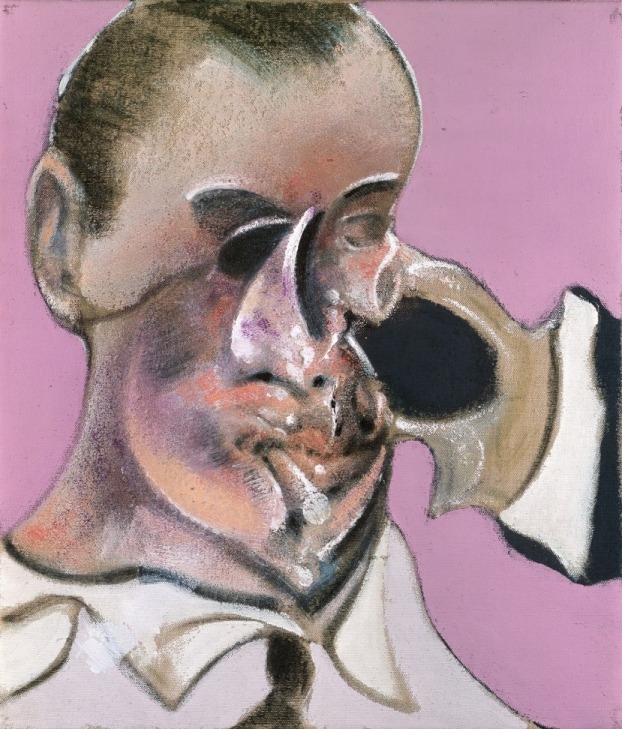
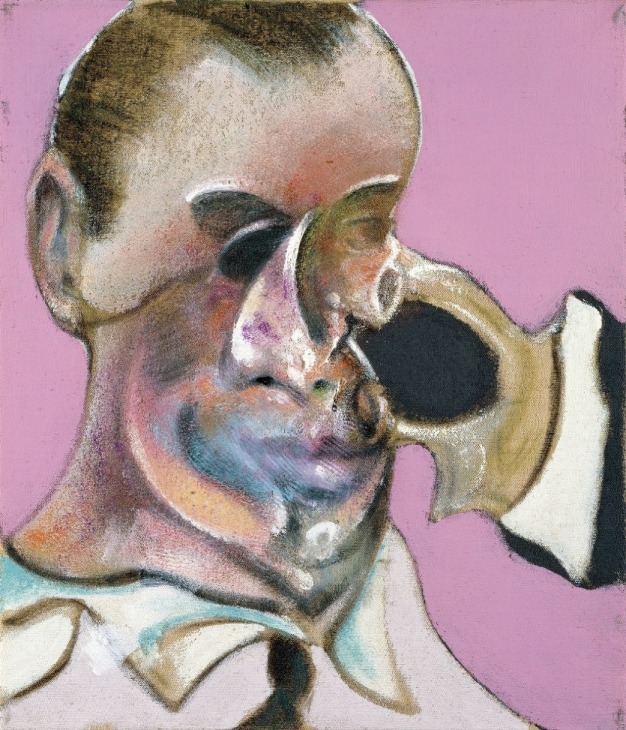
Francis Bacon, Study for a Portrait of a Man (1969), oil on canvas, diptych, left: first state; right: final state. (c) The Estate of Francis Bacon
Changing Bodies: Francis Bacon’s ‘Human Presence’ at
National Portrait Gallery
BY JASPER SPIRES | LONDON EXHIBITIONS | REVIEWS | FAD MAGAZINE | MONDAY, 2 DECEMBER, 2024
The paintings of Francis Bacon have never failed to provoke a sense of unease. Exhibited currently in the National Portrait Gallery at a stunning scale, a wide collection of Bacon’s portraiture is being displayed in his posthumous show ‘Human Presence’, gathering over fifty of his works that memorialise and pay tribute to his closest friends, lovers, and his shifting relationship to his own body. His characteristic cultivation of the uncanny endures through the works on display, magnified by the density of his art on the gallery floor, and creates a palpably tense atmosphere in both a rare and richly affecting experience.
Despite the prolific number of figures adorning the gallery’s walls, the first thing visitors will notice is the lack of human faces amongst them. Exploring a work of Bacon’s, tracing the contours of the bodies depicted, from the gritty paints blended with sand to the bold swipes of colour that both form and distort their images, what stares back is usually closer to the face of a monster than a person. There are discernible features, lips, eyes, hairlines, but in every instance the face itself has been obscured, destroyed, and blurred as if caught in motion. There’s an inherent drama to the obfuscation at work, each smear of paint threatening to collapse the illusion of verisimilitude yet at once constituting the very forms that make up human faces, and this tension lends the paintings their power to captivate and disturb.
The violence of Bacon’s personal life is deeply interwoven into his mythology as an artist. Drawing on his tumultuous relationships, his work has been extensively covered for its obsessive motifs that take a shared orbit around the body being wrought out of shape. The subject of a force that has invaded the canvas, smearing these images of Bacon’s closest compatriots, at times nearly destroying them, his painting has been likened to both an act of violence and a showing of terrible vulnerability of behalf of the artist. To concede a sense of wholeness, of stability and recognisable identities, takes a tremendous act of courage, one that is seated in an ability, and a willingness, to allow oneself to be shaped by something outside of their control, and Bacon embodies this motion wholeheartedly.
In this respect, it’s hard to imagine Bacon as the orchestrator of his own work; it more closely resembles a kind of channelling. Though static, his paintings capture a sense of movement, a transformation, from one shape to another. Moreover, as they document Bacon’s own movements before the canvas, they delineate a history of translation, from the artist’s own perception to his embodiment of what he experiences. What emerges is the sense that he isn’t directly controlling the work, but speaking through it, marshalling its pigments and textures, allowing what he has felt to flow through the act of painting and simultaneously sharing this process with his audience.
Above all, Bacon’s portraits speak to the idea that he isn’t entirely in control, not of his subjects, not of their force, not even of himself. Swept up in a tide, a thick and viscous wash of emotion, this is undoubtably the source of the show’s uneasy atmosphere. The aura contained by the paintings, that seeps out of them, is accessed by a shared sense of permeability, both in the artist and his audience. Just as force enters Bacon, his paintings enter those who view them. A quality unique to his portraiture, it informs us of our own vulnerability, how easily we can be shaped, and how we share ourselves involuntarily with our surroundings, whether we want to or not.
.Francis Bacon: Human Presence – 19th January 2025 National Portrait Gallery
Study for a portrait of Francis Bacon
by Matthew Rhys Bessant
An Interview with Michael Peppiatt – the artist’s biographer, curator, and friend
MATTHEW RHYS BESSANT | EDITORIALS | COLLECTOR CONTENT | ART TACTIC | 29 NOVEMBER 2024
Michael Peppiatt began his career in 1964 while still a student at Trinity Hall, Cambridge: on the advice of a friend, he journeyed to London’s Soho – once a haven for daring creatives – to seek out interviewees for the magazine Cambridge Opinion. It was here that he first met Francis Bacon, and a friendship was struck that saw Michael become the artist’s confidante and commentator for nearly thirty years. Ironically, my introduction to Michael was on very similar terms; while a student myself at Trinity Hall, I interviewed him at the helm of a literary society he had once himself presided over. Given our mutual interest in modernism, I have since enjoyed many tantalising conversations with Michael about the great artists of the twentieth century, one of which I record here to coincide with the National Portrait Gallery’s exhibition Francis Bacon: Human Presence.
MRB: Having been a close acquaintance of Francis Bacon for several decades, what of his personality do you see in his paintings?
MP: There’s something quite touchingly factual about his portraits, particularly his late self-portraits. They show him in desert boots, and that’s what he wore at a certain point; or cashmere polo neck sweaters, when he wasn’t using them to press paint to get a certain ribbed quality on the canvas. So they’re a sort of factual diary, in a way, and if you know what was going on at the time, with the big events in his life, and the tragic events in his life, like the death of his boyfriend George Dyer, there’s a whole series where you see him really coming to terms with the suicide, and with the guilt that was intensified in him. They’re like a diary.
MRB: So, was he being true to himself in his art?
MP: The art always came first. There wasn’t much that was intermediary between him, and his art. Bacon was not self-advertising or self-fashioning; his art is very much a struggle with paint, a struggle with himself, and a struggle with life. He might have fashioned his own image in his general way of life and in his interviews, but I think through his art he was leaving a trace of himself as he was. I think Bacon was quite clever at self-promotion, but when he was painting, he was in front of a mirror.
MRB: Breaking the auction record at the time, Bacon’s Three Studies of Lucian Freud sold at Christie’s New York in 2013 for a staggering $142.4 million – do you think Bacon ever foresaw the value his works would accrue?
MP: He liked having money to splash around. He always asked for healthy sale prices for his works when he had a gallery show. He never, as it were, sold himself cheap. I think he was conscious of what his works were making on the market. His dealers tended to give him as little as possible. He knew that a canonisation of the art market was a very, very good thing to have. He talked, even then, about these incredible prices. He probably would have said, ‘yes, but Jackson Pollock made X’, or ‘Andy Warhol sold a painting for Y’, always looking at what the competition was doing.
MRB: In your most recent book, Francis Bacon: A Self-Portrait in Words, you recall that Bacon once divulged his hope that ‘one day [he’d] knock [himself] backward with the impact of what [he’d] done’ – was this hope ever realised?
MP: I think no. He was always talking about the one image, as he put it, that would cancel all the others, because it would be more powerful and more complete than anything else he’d done. He was hoping he would eventually do an image that was so strong that it would surpass everything he’d done previously. And I suppose you could say at times he did. His work is uneven like that. There are stronger and weaker Bacons, and there are better and worse periods. So, I think it was his way of keeping going. He always wanted to go further and do something more mesmerising than he’d ever done before.
MRB: You’ve curated several landmark Bacon retrospectives, notably at the Musée Maillol in 2004, and the Royal Academy in 2021 – how do you believe public opinion of his work to have changed since his passing?
MP: Well, he’s become a lot more famous. I met him in ‘63 when he had a burgeoning kind of fame, but nothing like the kind of stature he has gained in the sixty years since. I met him the year after his first Tate retrospective, and of course that put him on the map, but there were still people, as there are today, who absolutely loathed his art. I remember being at the Pompidou together, and it happened there was a fairly recent picture of his being shown of a stumpy figure with prominent genitals; while I was waiting for him, I saw a woman looking at the picture who literally put her hands over her eyes, and when I relayed this to Bacon he said, ‘oh good’!
There were a lot of those quite amusing rejoinders – once I cheekily reminded him that he was being called the greatest living painter, to which he replied, ‘well, there’s not much competition’.
Michael Peppiatt is an art historian, curator, and author. Across an international career spent in London, Paris, and New York, Peppiatt has written regularly for Le Monde, The New York Times, The Financial Times, Art News, and Art International Magazine, which he re-launched as its new publisher and editor from Paris in 1985. He is the author of over twenty books including the definitive Bacon biography, Francis Bacon: Anatomy of an Enigma (revised edition 2008). Peppiatt has curated numerous exhibitions worldwide and is a member of both the Society of Authors and the Royal Society of Literature.
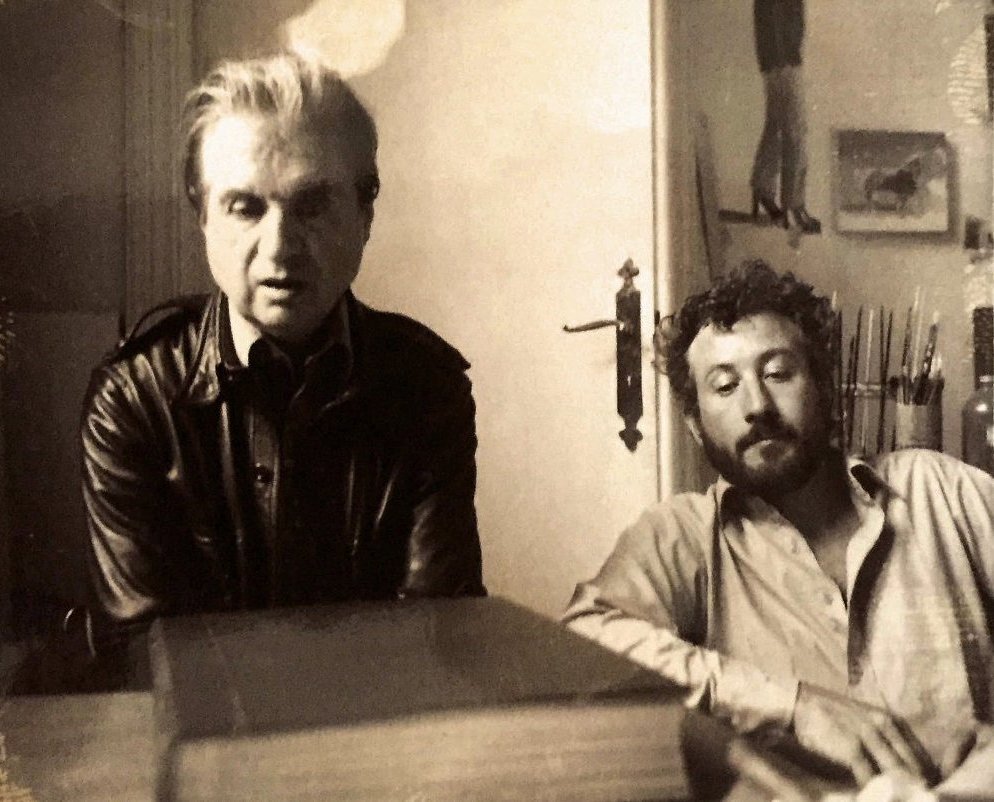
A London Exhibition Delves Deeper into
Francis Bacon’s ‘Human Presence’
Ephemera and other materials in the National Portrait Gallery show — letters, filmed
interviews, the Rembrandt, photos and ripped pages from books from Bacon’s studio
— offer fresh insight into the interior life of the wildly talented painter.
BY SIMON COATES | ART REVIEWS | ARTS | OBSERVER MEDIA | MONDAY 25 NOVEMBER 2024
Plenty has been written about how Francis Bacon’s real-life preoccupations bled into his work. The beatings at the hand of his disciplinarian, horse trainer father. The inveterate gambling. Being loudly, proudly gay at a time when it was illegal to be so. The violent lovers. The sadomasochist who wore ladies’ lingerie. It’s no great surprise that director Christopher Nolan showed Heath Ledger a Bacon portrait to help Ledger inhabit his role as the Joker for The Dark Knight. But a Bacon artwork is so much more than a deep dive into the artist’s psychotic soup.
“Francis Bacon: Human Presence” at London’s National Portrait Gallery is the institution’s first exhibition of the artist’s portraits. Featuring more than fifty key paintings from across his career, the project offers a fresh chance to try and decipher the inner workings of one of history’s greatest mark-makers—a process that’s bugged minds since Bacon’s first paintings were unveiled in the late 1940s.
But “Human Presence” is about more than what made Bacon tick; the exhibition also functions as an appreciation of his stylistic touchpoints and innate understanding of how to make a painting work. Rather than having sitters in his studio, Bacon preferred to paint from photos—those of artists’ model, writer and fellow carouser Henrietta Moraes (commissioned for a 1966 portrait in the exhibition) are erotic and seductive. Yet Bacon’s painting from the images renders her as a writhing, porcine collection of creases and lumps. In the BBC documentary from the same year, Francis Bacon: Fragments of a Portrait (also being screened here), the painter said he worried his subjects might hate the way the paintings made them look. Being worrisome didn’t stop him, though. In 1967’s Three Studies of Isabel Rawsthorne, Bacon depicts Rawsthorne (another member of his social circle) flinging herself around in a delirium of lost control. The anonymous sitter for 1960’s Head of Boy simmers with all the pent-up violence of a hatless prototype for Alex in Kubrick’s A Clockwork Orange, the black square behind his head pushing the subject to the front of the work.
These portraits are of human beings as seen through Bacon’s inner prism of swirling perception—faces shown after the rose has bloomed and died. Gin blossomed noses, informed by Bacon’s fascination with medical deformities. Eyes and mouths macerated, smacked and tenderized like sides of meat. Ungenerous, unflattering images of faces smooshed as if against panes of glass. In his 1981 book, Francis Bacon: Logique de la sensation, French philosopher Gilles Deleuze attempted to get under Bacon’s skin, writing that the artist “…pursues a very peculiar project as a portrait painter: to dismantle the face, to rediscover the head or make it emerge from beneath the face.” Given Bacon’s respect for Picasso’s Cubist portraits, Deleuze’s theory has legs. Here is a painter depicting a head’s facets and planes seen from different sides, for sure, but Bacon also never shied away from what lies beneath: the glistening tubes, veins and sticky viscera. His 1973 self-portrait resembles a human heart sliced in half and superimposed on vague ideas of collapsing facial features.
It wouldn’t be a Francis Bacon exhibition without a clutch of his papal paintings, of course, and the inclusion of Head VI (from 1949),1961’s Study for a Pope I (painted especially for Bacon’s 1962 career retrospective at Tate) and other studies acknowledge his obsession with Velázquez’s Portrait of Pope Innocent X. The gallery also pulls off the coup of bringing over another painting that shaped Bacon’s style. Seldom seen outside its gallery home in Aix-en-Provence and somewhat tucked away here next to one of Bacon’s studies of William Blake’s life mask (and the mask itself) is Rembrandt’s Self-Portrait with Beret, painted around 1659. Rembrandt’s face is coaxed from broad, brown and black brushstrokes, and Bacon often referred to the work as a painting totem. Elsewhere, there are nods to Bacon’s interest in Van Gogh’s technique, from his 1960 Homage to Van Gogh portrait to larger paintings splattered with tracts from Van Gogh’s color palette as Bacon strafed corn yellows and neon blues across canvases.
Most of Bacon’s self-portraits in the show are rendered as head-only close-ups. However, by far the most moving is an unfinished self-portrait begun in 1991. It’s a large canvas with a few sweeps of what look like pencil lines, the black outline of a box and the beginnings of a side view of Bacon’s head near the middle. Bacon threw out or painted over works in progress he didn’t like, so this is the only existing unfinished Bacon artwork. It’s unfinished because Bacon died from a heart attack midway through its completion at age 82.
London has more than its fair share of Francis Bacon exhibitions. It’s just two years on from The Royal Academy of Art’s “Francis Bacon: Man and Beast” blockbuster show. There were at least four exhibitions in the city last year featuring Bacon paintings and there will doubtless be more to come. The National Portrait Gallery’s “Human Presence” is a reminder of why Bacon’s surveys rack up with such regularity. Naturally, the exhibition focuses on the artist’s portraiture, and the paintings on show succeed in their continued mission to unsettle and alarm. But the inclusion of source material documents—letters, filmed interviews, the Rembrandt, photos and ripped pages from books from Bacon’s studio—shown alongside the breathtaking artworks offer a chance to look beyond the story of the artist as an enigmatic, troubled soul and admire the technique and deft skills of a wildly gifted painter. “Francis Bacon: Human Presence” is on view at the National Portrait Gallery in London through January 19, 2025. Prior booking is advised.
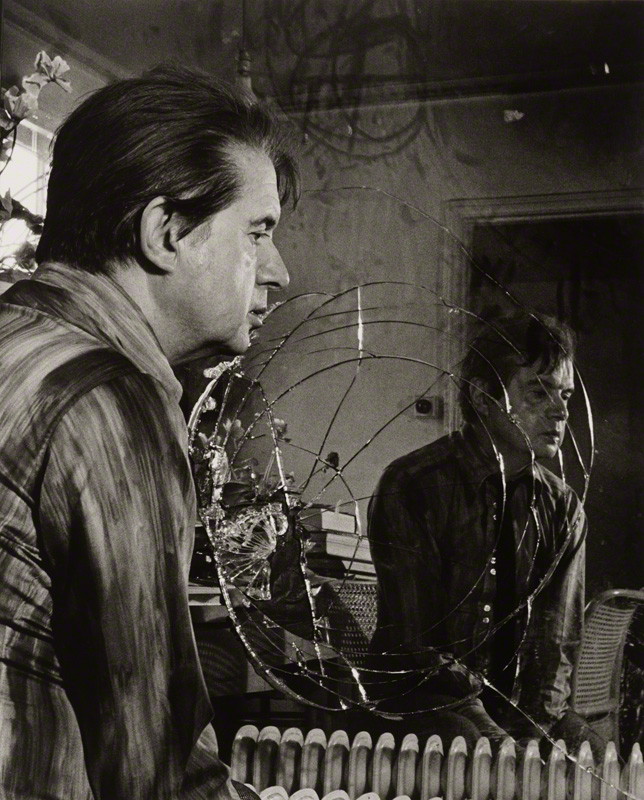
Francis Bacon in 1972 as photographed by Mayotte Magnus.
Beyond Realism
Review: Francis Bacon. Human Presence
ARJ ROBE | EXHIBITION | ART | MEDIUM | SATURDAY 23 NOVEMBER 2024
In the write-up accompanying Three Studies for a Self Portrait, Francis Bacon explains that his frequent subjects, friends and lovers, had by-now passed away. The artist’s connection to his subjects is apparent within the triptych in front of me. They become present while remaining a figment of Bacon’s sober expressions against the black backgrounds. Behind me in the final room, Bacon’s subjects linger on in the flesh.
The National Portrait Gallery has curated over 50 pieces dating back to the 1940s to commemorate Bacon’s penetrating brand of portraiture. At the entryway bag-check, the security succumbs helplessly to a spilling school trip cohort. Fogged glasses, rosy cheeks and long winter coats weave through the bronze heads in the foyer and join the current leading to the cloakroom. I am reminded of the show’s title, Human Presence, and take a rare moment to be present amidst the bustle.
A self-taught artist, Bacon sought to capture a person’s essence through his portraiture rather than just an imprint. The beginning of the exhibition is flanked by portrayals of seated judges and businessmen, violently contorted into malevolence. Their other-worldly stature disfigured by injuries we can only imagine and their faces leering, laughing or screaming. The framing of each figure in a transparent box is a theme which runs through these early works completed in the late 1940–50s, beautiful marks which act to ground the imposing specimens they contain and add to the depth Bacon was trying to reach.
By stripping away the flesh to the bone, twisting each feature or omitting it completely, there is a spectral continuity from each piece to the next. A residue of each subject, each person, clings to the viewer after moving on. Flesh blending into background. There, and then inevitably not there. Bacon’s treatment of flesh and its fragility starkly mirrors the time these portraits were painted; a time of unmarked graves. The portraits are constructed from the imagined enduring elements, white teeth behind a smile, a cheekbone, half a blown-apart head. They are executed with the same scathe and sombre reality which characterised the immediate aftermath of the Second World War in Britain.
An adjacent room is brilliantly dedicated to Bacon’s references which stemmed from obsessions with Velazquez’s Innocent X and Van Gogh’s The Painter on the Road to Tarascon, pieces that Bacon admired and reimagined, creating his own versions and narratives of their subjects. An original Rembrandt self-portrait is framed alongside a snapshot of Bacon’s studio containing photos of Joseph Goebbels and the aftermath of a car accident, among other such harrowing and visceral images; juxtaposed beauty and atrocity that would have surrounded Bacon while he worked.
Bacon’s love of painting shines brightest in the final room, a maze containing his favourite subjects. Peter Lacy, an RAF pilot and Bacon’s masochistic lover, morbidly occupies a sofa in a portrait completed after his death. Henrietta Moraes lays in the nude embodying a type of beauty that is felt rather than seen. Fellow artists Lucian Freud and Frank Auerbach are painted in matching outfits against the same backdrop, their faces perfectly distinguished. The show-stopper, Triptych, May-June 1973, of Bacon’s partner George Dyer, a thief, casts a great shadow at the back of the room. The middle piece depicts a demonic shape emerging from a bathroom, with each side showing Dyer huddled on the toilet and vomiting in the sink respectively. George Dyer had committed suicide in 1971, two days before Bacon held an exhibition in Paris, after their relationship had deteriorated.
The format of triptych, used by Bacon so prominently, breathes so much life into his subjects. Bacon is able to create stories, moments, changes of expression and movements which capture their essence. You feel as though you have shared a glance or walked past one another, the exact layout of their faces forgotten, but their essences so very there.
Exiting the room, I again pass the later self-portraits of Bacon, his expressions now illustrative following hard losses through his life. The puffy eyes and the skin appearing stretched over the cold, white bone beneath are reminiscent of his work immediately after the Second World War, in which the miscellany of flesh feels so fragile. Decaying so quickly and completely. I feel an urge to have known the artist, to have been one of his subjects and to have seen in myself the things he would have seen.
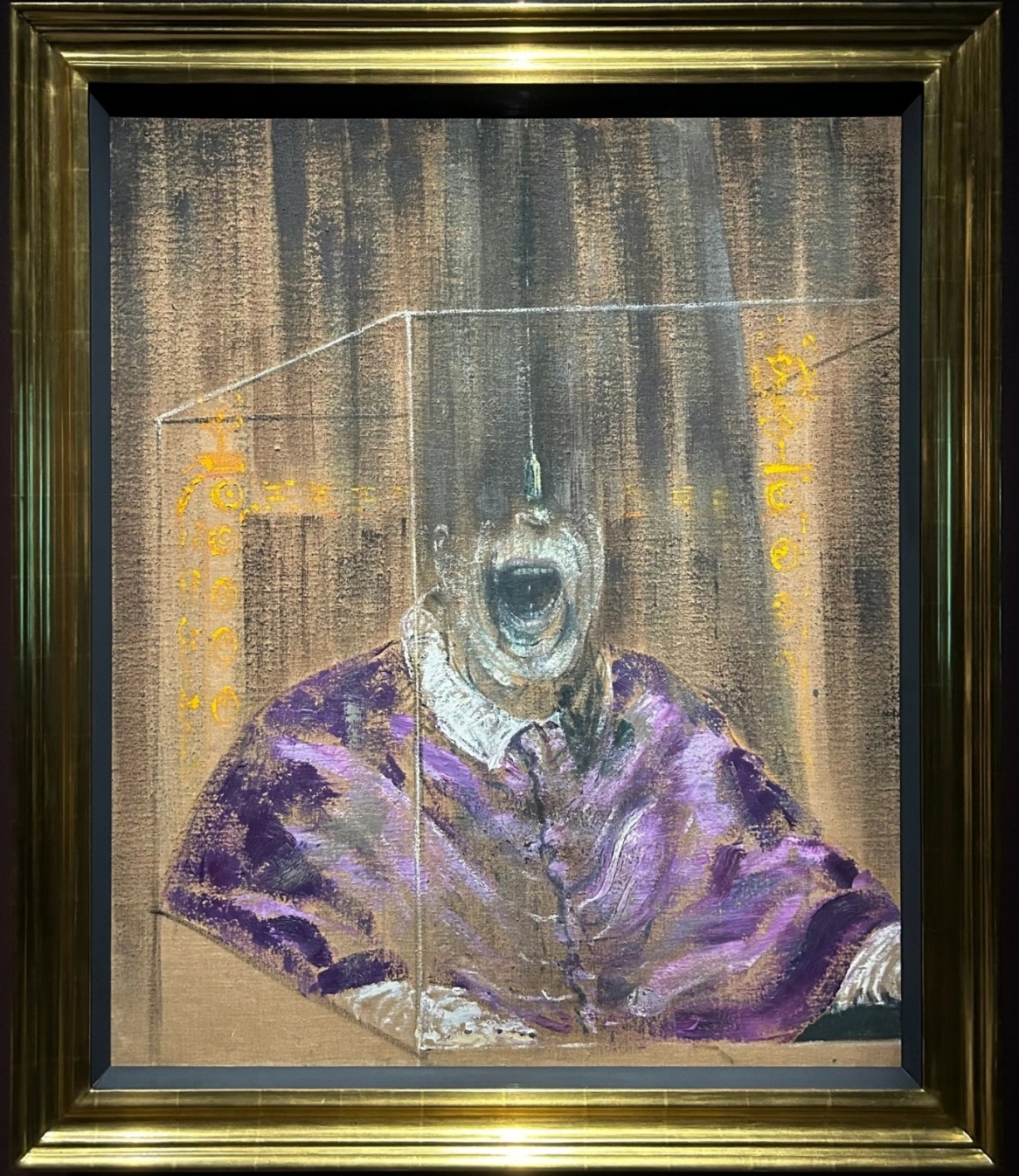
We’ve got Francis Bacon all wrong
The National Portrait Gallery’s excellent new show dispels the hackneyed
vision of Bacon-as-apocalyptic-magus
DIGBY WARDE-ALDAM | EXHIBITIONS | ARTS | THE SPECTATOR MAGAZINE | SATURDAY 16 NOVEMBER 2024
You have to hand it to the curators of this excellent survey of Francis Bacon’s portraits. Not only have they alighted at an obvious but under-explored vantage point from which to reconsider this most mythologised of postwar painters, securing some serious loans to make their point, they have also dared to open their show with what might be the single worst picture it contains. ‘Self Portrait’ (1987) speaks of everything that Bacon got wrong in his final decades: it’s recognisably the 78-year-old artist, dressing up as a younger version of himself. His lips are pursed, his face pockmarked with a spray of tiny red dots, his pate capped with a page-boy fringe, features delivered in the borderline cartoonish idiom he seemed to lean on whenever a picture demanded something faithful to life.
The artist’s powers were on the wane and he knew it. Self-parodic though the picture might be, it still carries the weight of pathos. Some years before, he had complained about being forced towards self-portraiture because his friends were ‘dropping like flies’. ‘I’ve nobody else left to paint but myself,’ he told David Sylvester. ‘I loathe my own face but I go on painting it only because I haven’t got any other people to do.’ He was exaggerating, but not by much. Of the recurring models pictured here, many were no longer: Muriel Belcher, the founder of the Colony Room, died in 1979; his abusive boyfriend Peter Lacy, captured here as some kind of demented jungle beast, in 1962; another lover, George Dyer – a Kray twins associate – the subject of this show’s big, climactic moment, ‘Triptych May-June 1973’, in 1971.
The work is Bacon’s delayed response to Dyer’s suicide in a Paris hotel room, when the pair were in France for the opening of the artist’s retrospective at the Grand Palais. ‘Trust George to fuck it up!’ Bacon had yelled on receiving the news – but the painting is as bleak as any in the canon. Across its three panels, Dyer is variously glimpsed shitting himself dry, vomiting blood and staring into we-know-not-what. Any veneer of civilisation has been stripped away from this wretched figure, recognisable as human from his distinctive aquiline profile alone.
Dyer’s silhouette haunts proceedings. We variously see him in half-melted outline riding a bike; moulded to a mangled, clownish version of himself, gazing into a rectangular mirror; and as an ageing mod in three-buttoned jacket, his legs spilling out onto a flight of stairs in 1972’s ‘Portrait of Man Walking Down Steps’.
We tend not to think of Bacon as a portraitist. His exercises in the genre are understood as extensions of his alarming wider aesthetic. He certainly wasn’t a traditional portraitist. He never painted to order, only once accepting a commission: the result, a 1955 portrait of his patron Robert Sainsbury, is a borderline risible attempt to force a convincing likeness on to the artist’s favoured style of the time when he had taken to painting anonymous businessmen emerging from spectral darkness.
He obviously liked the supermarket magnate, and the fondness didn’t make for a harmonious composition. With his sheepish expression, Sainsbury has the air of a beloved elder statesman rumbled after accidentally walking into a brothel. Rather better is Bacon’s portrayal of Lisa Sainsbury, her features imprisoned behind shuttered, vertical brushstrokes that lend the image a weirdly votive quality.
Bacon never went in for Warhol-style celebrity portraiture. Instead he favoured returning to a tight circle of friends. From the 1960s, however, he did base these portraits – like Warhol – almost exclusively on photographs. The regulars are all present, at times giving the show the feel of a Thursday night on Dean Street. Lucian Freud appears from various angles in a spooky 1964 triptych (a format Bacon likened to police ID shots), and in a thrilling double portrait with Frank Auerbach, the two painters lounging on comfy chairs in white T-shirts and jeans. Henrietta Moraes is here, too, her profile distinct despite being mangled across another triptych. And there’s Isabel Rawsthorne, distorted to the point at which she begins to resemble a fur-clad toad. The elements don’t entirely come together in many, if not most of these paintings: flourishes aspiring to drama frequently fall far short of the desired effect, sometimes almost risibly so. Yet such weaknesses only serve to throw the passages of originality and bravado into focus. Bacon may never have made a genuinely faultless portrait, but his flaws are instructive.
If this exhibition really gets something right, it is in refuting the hackneyed vision of Bacon-as-apocalyptic-magus. Captions are clear, informative and unsensational, leading you to conclude that everything we hear about him as the great painter of the post-Holocaust era was in fact a misreading of the artist’s theatricality and intense scrutiny of Christian imagery. There’s darkness in his work, to be sure – one self-portrait derives from images of mutilated bomb victims – but it’s always offset by a healthy appreciation of the absurd and a touching dose of sadness. For all his talk of man-as-meat, Bacon was a deeply humanistic painter.
WRITTEN BY Digby Warde-Aldam
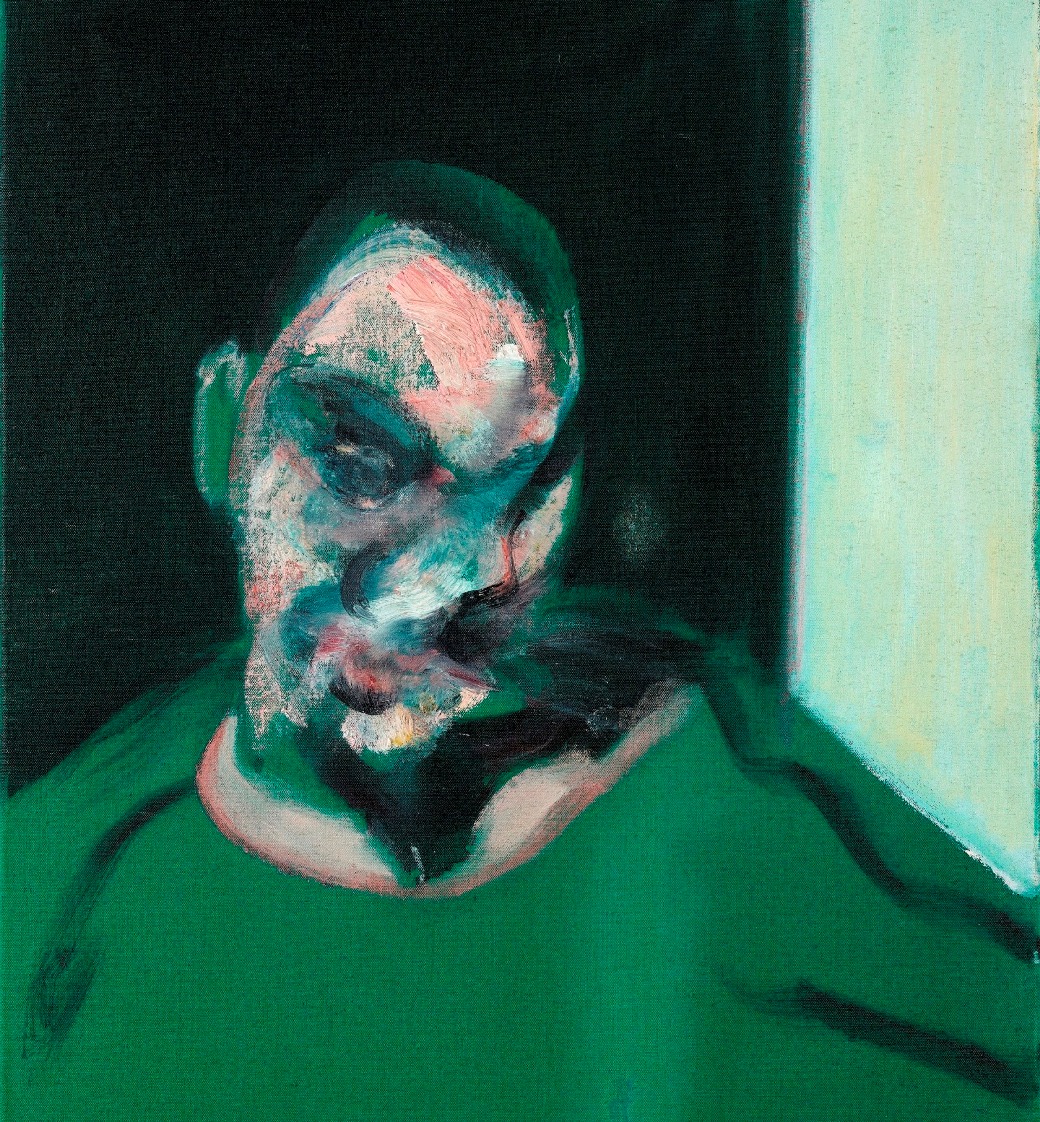
‘Head of Boy’, 1960, by Francis Bacon. © The Estate of Francis Bacon.
The Influence of Francis Bacon on David Lynch’s Filmmaking
WRITTEN BY LIV GOODBODY | ARTICLES | MY ART BROKER MAGAZINE | THURSDAY, 14 NOVEMBER, 2024
In the feverish visions of Francis Bacon and David Lynch, reality splinters, exposing a world where beauty and horror collide in grotesque harmony. Lynch’s universe borrows from Bacon’s twisted depictions of flesh and fractured psyches, distilling his paintings’ existential despair into unsettling cinematic form. Characters in Lynch’s work drift through spaces that echo Bacon’s claustrophobic voids, embodying a sense of dread that feels both surreal and hauntingly familiar. The threads binding these two visionaries, from Lynch’s distorted, dreamlike bodies and Bacon’s unsettling spatial geometry, probe the darker recesses of the human soul with unflinching curiosity.
The Shared Aesthetic Between Francis Bacon and David Lynch
Bacon and Lynch are two artists from distinct mediums, yet their shared exploration of human vulnerability, psychological horror, and bodily distortion binds their work with a unique, visceral aesthetic. Bacon’s paintings are studies in unease, his canvases dominated by twisted, fleshy figures, often set against claustrophobic backdrops that intensify a sense of confinement and anguish. Lynch’s cinematic landscapes echo this oppressive atmosphere, where characters and environments blur into one another, creating worlds that reflect inner turmoil and existential dread. Both artists confront the viewer with a world that feels as menacing as it is mesmerising, where the lines between the familiar and the horrific dissolve.
Bacon and Lynch possess a shared ability to turn beauty into terror, drawing us into a surreal realm that probes the fragility of human existence. Rather than merely mimicking Bacon’s aesthetic, Lynch translates Bacon’s principles — tension, isolation, and the unspoken disturbances of the subconscious — into the language of cinema, creating his own visual dialect that is both an homage to Bacon and a distinct exploration of darkness in its own right. Together, they shape a narrative where human existence is as fragile as it is defiant.
The Influence of Bacon’s Distorted Figures on Lynch’s Cinematic Characters
The Vulnerable Human Body
Philosopher Gilles Deleuze explores Bacon’s work in Francis Bacon: The Logic of Sensation, arguing the human form becomes a battleground of agony and disarray, a raw spectacle of existential suffering. In paintings like Study for a Portrait and Three Studies for Figures at the Base of a Crucifixion, Bacon’s figures are twisted and compressed, their bodies contorted beyond anatomical limits as if to visually capture the depths of human despair and vulnerability. These distorted figures embody an unfiltered torrent of pain, becoming visceral symbols of the inexpressible torment within. Bacon’s choice to exaggerate and distort the body so brutally invites viewers into an unflinching contemplation of human fragility and a sense of anguish that defies containment. Here, the flesh itself becomes a vessel for the inner turbulence of the soul, where suffering is unflinchingly externalised.
Echoes of Bacon’s Figures in Lynch’s Film Characters
Lynch draws deeply from this disturbing visual lexicon, crafting characters that evoke Bacon’s tortured bodies, embedding them with a haunting sense of deformity and psychological imprisonment. In Eraserhead (1977) and The Elephant Man (1980), Lynch’s protagonists embody an almost Baconian sense of the grotesque and the vulnerable. Henry, the protagonist of Eraserhead, becomes an emblem of existential dread, his haunted, silent suffering reminiscent of Bacon’s spectral figures, while John Merrick in The Elephant Man reveals the despair of a body and soul outcast by society. These characters bear Lynch’s cinematic reinterpretation of Bacon’s distorted forms, each figure portraying an agony that is both visible and psychological, often hovering between reality and nightmare.
Lynch does more than pay homage; he channels Bacon’s strategy of using the body as a site of trauma and isolation, giving his characters an embodied torment that pulses on screen. Through Lynch’s lens, physical deformity merges with emotional alienation, and his characters become canvases onto which their inner struggles are projected, much like Bacon’s fractured bodies. In their work, the line between the body and mind is blurred, exposing a psychological realism that confronts the depths of despair, resilience, and the terrifying beauty of our own fragility.
The Use of Space and Atmosphere: Creating Unsettling Environments
Bacon’s Claustrophobic Spaces
Bacon’s paintings confront viewers with spaces that feel less like rooms and more like psychological cages, environments so oppressive they seem to swallow his figures whole. Figures are often placed inside geometric cages or against backdrops that merge into indeterminate spaces, evoking a visceral feeling of existential dread. Bacon’s use of enclosing structures serve as psychological projections, inviting viewers to confront isolation and agony through the unforgiving confines of the subject's settings.
Lynch’s Cinematic Worlds and the Influence of Bacon’s Spaces
Much like Bacon’s unsettling enclosures, Lynch’s spaces are not merely settings; they are states of mind, constructed to reveal the fears and secrets of his characters. Lynch channels the disturbing, claustrophobic energy of Bacon’s worlds into his own surreal, cinematic landscapes. Films like Blue Velvet (1986) and the eerie world of Twin Peaks create their own spatial prisons — rooms, towns, and empty spaces — that isolate characters as effectively as Bacon’s canvases. Lynch’s sparse, hyper-controlled environments, from the cold industrial backdrops in Eraserhead to the shadow-filled rooms of Mulholland Drive (2001), are laden with a sense of mystery and menace. His characters often inhabit liminal spaces that echo Bacon’s oppressive frames, amplifying the feeling of psychological entrapment. These settings evoke unease and disorientation, stripping away any illusion of comfort or escape.
Themes of Horror and the Grotesque: From Canvas to Cinema
Bacon understood horror as something deeply embedded in the psyche, using grotesque exaggeration to shatter the veneer of civility, exposing what lies beneath. His art is a confrontation with horror at its most unfiltered, plunging into the visceral and grotesque to strip the human condition to its core. His paintings do not merely depict horror; they embody it, presenting distorted bodies and agonised expressions that seem to scream out from the depths. In works like Study after Velázquez’s Portrait of Pope Innocent X, Bacon captures the terror not only of physical pain but of psychological disintegration, as flesh appears to melt, twist, or cage itself in an unending cycle of torment. He invites viewers to witness the grotesque in a way that goes beyond revulsion, drawing us into an aesthetic of horror that is both captivating and profoundly unsettling.
Where Bacon’s canvases present static moments of horror, Lynch’s films take this horror and animate it, extending it into the flow of time and sound, where it becomes a continuous, inescapable experience. Lynch’s portrayal of horror doesn’t aim for gore, but instead for a surreal, dreamlike intensity that makes fear almost beautiful, plunging audiences into what feels like a dark, twisted meditation on the human psyche. Through this transformation, Lynch echoes Bacon’s ability to make horror both haunting and irresistible, inviting viewers not to run from fear, but to become intimate with it. By drawing viewers into worlds where the grotesque is both familiar and alien, Lynch expands Bacon’s aesthetic into an immersive experience, where horror becomes a language of its own. In doing so, Lynch doesn’t just inherit Bacon’s horror; he makes it his own, turning the surrealist grotesque into a medium of cinematic poetry.
Surrealism and Psychological Depth: A Shared Language of Expression
Bacon’s unsettling visual language has left a lasting imprint on the worlds of surrealism, horror, and psychological cinema. Filmmakers, including Christopher Nolan and Ridley Scott, have drawn upon his vision to explore psychological depths and surreal landscapes. Nolan revealed that Heath Ledger’s iconic portrayal of the Joker in The Dark Knight (2008) was partly inspired by a triptych by Bacon, with the Joker’s makeup design being based on the “blurred sort of distortions” of Bacon’s painted faces. Scott’s Alien (1979) also took inspiration from Bacon; the creature bursting from a crewmember’s chest being modelled on the monstrous figures from Bacon’s 1944 triptych Three Studies for Figures at the Base of a Crucifixion
The Lasting Influence of Bacon on Lynch’s Legacy
Lynch openly credits Bacon as a formative influence, recognising Bacon’s exploration of the human emotion as a defining touchstone for his own work. In an interview with Cahiers du Cinéma, Lynch expressed admiration for the intensity with which Bacon captures the essence of psychological torment and physical vulnerability, an intensity Lynch sought to evoke in his own films. For Lynch, Bacon’s legacy is not only an artistic inheritance, but a continual point of inspiration, one that fuels his exploration of surrealism and existential angst on screen.

Francis Bacon, Lying figure, 1969
Frank Auerbach, last of the ‘London School’ of figurative
painters, known for his encrusted canvases
A Holocaust orphan, he lived a monkish, solitary life: ‘I’m far more likely to be
lonely in the company of people who haven’t understood’
CULTURE OBITUARIES | TELEGRAPH OBITUARIES | DAILY TELEGRAPH | TUESDAY 12 NOVEMBER 2024
Frank Auerbach, who has died aged 93, was an artist of remarkable intensity whose use of thick paint gave his work the quality of sculpture.
Auerbach was seen by critics as one of the so-called “London School” of artists, a group said to include Lucian Freud, Francis Bacon, Michael Andrews and Leon Kossoff. True, some of the artists liked the same Soho drinking dens, but they had little else in common other than their devotion to figurative work.
Though he enjoyed a drink in his early days, Auerbach was not a habitual denizen of the Colony Room Club. Jewish by birth, and orphaned by the Holocaust, he evolved into an obsessive and remote figure; this bothered him not at all. Art was everything to him, “not a craft, but a philosophical inquiry”.
Auerbach’s subjects were north London streets and buildings, and the human form. All his work was abstracted reality, with the energy of the artist written across the surface in broad, thick swathes of paint, often applied straight from the tubes. His colours were dramatic and the works were often displayed in glass cases, heightening the impression that they were sculpture.
One had the desire to touch a painting by Auerbach, as much as look at it. Sometimes the effect was counter-productive; it might seem that he had a fetish about his materials and could think of little else. Certainly he fought with paint, like Jacob and the angel.
Perhaps his most successful works were portraits, executed with the model sitting, staring straight ahead at the artist. The model he most favoured was Estella (Stella) Olive West; her initials, EOW, appeared on numerous portraits over the 25 years that she was his model. West found the first sittings hard, she recalled. Feeling that she was “nothing, nothing” she let her mind wander back to her unhappy childhood.
“Suddenly Frank said ‘Stop thinking that! Stop bloody thinking that!’,” she said. “And I realised that some telepathy existed between us.” Though she was 15 years older than Auerbach, they became lovers; “I wasn’t aware of her being an older woman,” Auerbach said. “I went through life in a kind of dream.”
He might take several years over a portrait, applying different layers of paint, sometimes scraping the canvas back to a meaningless blur, as he went through a painful process of rebirth. After much intense discomfort, frustration and eventual despair, he would at last erupt into violent anger. Flinging the paint about with re-discovered courage, he would “finish” the painting.
Such techniques created the most dreadful mess. “I don’t mean to make a mess,” he reflected ruefully. “But, given the way I do work, I just seem to make the most tremendous mess when I forget myself towards the end of paintings.” Looking at the finished results, which often resembled a packet of melted Liquorice Allsorts, made the self-conviction of the man all the more remarkable.
As a teenager he had studied acting and he was fascinated by the controlled intensity of certain kinds of performers, particularly comedians. In the years after the Second World War he visited the dying variety theatres and later knew chunks of the routines employed by Tommy Cooper, Ken Dodd and Morecambe and Wise. That it took months of preparation and hours of rehearsal to produce one good comic moment reassured him. He thought of himself as a kind of comedian.
He was among the most solitary of artists. “I’ve certainly never been lonely by myself,” he said. “I’m far more likely to be lonely in the company of people who haven’t understood.”
For 70 years Auerbach worked – and often slept – in a tiny studio in Camden that the critic Robert Hughes evoked as a dark lair of “peeling surfaces, blistered paint, spalling plaster, mounds and craters of paint, piles of newspapers and books crammed into rickety shelves, a mirror so frosted with dust that movements inside it are barely perceptible”.
Each day, shortly after sunrise, he would go out and make sketches of the deserted streets around Camden and Mornington Crescent, an area that resolutely retains a crowded, seedy melancholy, a dark, middle-European shadow that has attracted other exiles.
He would then work in his studio until early afternoon. After a little shopping he would paint throughout the evening, doing studies of one of the small band of loyal models who sat for him, day in, day out, for years.
Despite the intensely personal conflict evident in his work, he was not an “expressionist” artist. Rather, his work was a continual struggle to mediate reality. He said he had no choice in his career. “If I hadn’t become a painter I would die.”
The only child of a patent lawyer, Frank Helmuth Auerbach was born in Berlin on April 29 1931. When the Germans began killing Jews, his parents arranged for him to be sent to England in 1939, one of six children sponsored by the writer Iris Origo. He was brought up at Bunce Court, a Jewish-Quaker school in Kent. His parents were sent to a death camp. For a while he continued to receive notes. Then these stopped.
Auerbach had a happy time at Bunce Court, which looked after many other orphans. He recalled that there was “no oppressive presence of noxious grown-ups”. During the war the school was evacuated to Shropshire, where boys spent their days playing long games of Monopoly or staging battles between Greeks and Trojans with dustbin lids and sticks. He said he soon forgot about his parents.
In 1947 he moved to London, where he studied acting and art. His life changed when he met David Bomberg at Borough Polytechnic.
Bomberg, then considered an eccentric failure, impressed upon Auerbach the seriousness of the artist’s vocation, a necessary respect for tradition and an obligation to be true to the world as he saw it. It was a fine, tormenting balance, between the past, the self and the world, that was to inform all of Auerbach’s work.
“Paintings come out of painting,” observed Auerbach. “But it doesn’t turn into painting until the person who does it has had an experience of their lives.”
Auerbach went on to St Martin’s and the Royal College of Art, and in 1955 left and moved into his Camden studio, which was given him by his friend, Leon Kossoff. Twenty years passed; Auerbach had regular exhibitions, first at the Beaux Arts in the 1960s, then at Marlborough Fine Art, run by two other survivors of the Holocaust, Frank Lloyd and Harry Fischer.
He did not care for the fashions of his profession, having learnt from Bomberg that fashion counted for nothing in the long run. When Abstract Expressionism and Pop were at their height he was already ensconced in the secure dark of Camden.
It was not until the 1970s that the British public became exhausted with American imports and American-influences and rediscovered Auerbach’s generation. After his retrospective at the Hayward in 1978 his position was assured. His prices rose 10-fold and by the 1980s an Auerbach went for £200,000.
In 1995 he had the rare distinction of a solo exhibition at the National Gallery, “Working After The Masters”, for which he recreated some of the masterpieces of Rubens and Titian, with mixed success.
In latter years, he began to play variations with his technique of accretion, trying attrition instead, applying paint fluidly, then scraping it off to achieve his effects. His critics said his later work lacked the earnest awkwardness of his canvases of the 1960s, but it was to be expected that the piety with he approached painting would be attacked when he was a success.
Auerbach’s work was bought by most major galleries in Britain, America and Australia including the Tate, the National Gallery, the British Museum, the Metropolitan Museum and Museum of Modern Art in New York and the National Galleries of Australia, Western Australia and New South Wales. He had a major retrospective at Tate Britain in 2015.
Money made no difference to him and he did not move from Camden. “If I moved I’d simply lose a lot of work, and life is very short and I’m extremely slow. I haven’t the time to move.”
For a long time he had no telephone, and visitors were by appointment only. He never took holidays, citing the National Gallery as the only place worth visiting. Hollow-cheeked and sad-eyed, Auerbach belied his anguished appearance, being a fluent, self-deprecating talker who could quote reams of Eliot and Yeats.
Still painting every day at the age of 93, he was critical of the lack of classical schooling among art students, not because he thought that this made them bad draughtsmen – “a painting with a perfect linear perspective is a dead object” – but because he believed that originality sprang from rebellion. An artist was not an artist unless he did battle with tradition.
“I’m terribly lucky,” he said, reflecting on his late fame. “One doesn’t notice poverty when one is young and I’m glad that it came early rather than at this stage. Being an unrecognised painter at 65 must be the most heartbreaking thing.”
Auerbach married, in 1958, Julia Wolstenhome; they had a son. The couple drifted apart, but were reconciled in 1976. Thereafter, they lived partially separate lives, he in his Camden studio, she in Finsbury Park.
Frank Auerbach, born April 29 1931, died November 11 2024

Frank Auerbach in his studio in Camden, London, 1962. Photo: The Daily Express.
Frank Auerbach, One of Britain’s Most
Celebrated Artists, Dies at 93
Known for his unyielding seven-day-a-week work schedule, he returned
again and again to the same models and London street scenes.
BY WILLIAM GRIMES | ARTS | NEWS | THE NEW YORK TIMES | TUESDAY 12 NOVEMBER 2024
Frank Auerbach, one of Britain’s pre-eminent postwar painters, who for more than 60 years single-mindedly painted a small circle of intimates and the streets and parks near his London studio, died on Monday at his home in London. He was 93. His death was announced by his gallery, Frankie Rossi Art Projects, in a news release.
Mr. Auerbach, who was mentioned in the same breath with his near-contemporaries Francis Bacon and Lucian Freud, pursued his artistic agenda with a doggedness that made him a byword for artistic dedication. He painted seven days and five evenings a week in a studio in Camden Town, in north London, that he had taken over from his friend and fellow artist Leon Kossoff in 1954. He rested one day each year, taking the train to Brighton on England’s southern coast to catch a whiff of sea air, then returning to London to resume his painting schedule.
From the opening of his first show, in 1956, to his death, Mr. Auerbach never wavered in his preoccupations. Working with subjects who sat for him for decades, he turned out thickly painted portraits — usually heads and reclining figures — whose outlines struggled to emerge from dense, knotted swaths of impasto that could look like primordial ooze animated by lightning strokes of pigment.
At the same time, working from drawings made during walks around his neighborhood — Mornington Crescent and Primrose Hill provided his favorite themes — he turned out feverish, intensely observed streetscapes and park scenes, dark and muted in the early years, brilliantly colored and brushy after the late 1960s.
His working methods were nearly fanatic, a slow building of surface on surface until, in the early paintings, the canvas resembled a bas-relief and required several galley assistants to hang them on the wall. His “Head of E.O.W.,” one of many portraits of his longtime lover, Estella Olive West, completed in 1955, required 300 sittings over two years.
If the elements did not coalesce to his satisfaction, he often finished the day by wiping the paint off his canvas, erasing 10 or more hours of work. “I don’t think that one produces a great picture unless one destroys a good one in the process,” he told the critic William Feaver for the 2009 monograph “Frank Auerbach.”
His tortoiselike ways and adamantine sense of purpose prompted the critic Stuart Morgan to call him “the ultimate pigheaded Englishman” in 1986, the year Mr. Auerbach was chosen to represent Britain at the Venice Biennale, where he shared the top painting prize with the German artist Sigmar Polke.
Four years later, the critic Robert Hughes called Mr. Auerbach “one of the most admired artists working in England today.” With the death of Mr. Bacon in 1992 and Mr. Freud in 2011, he became a leading contender for the unofficial title “greatest living British artist.” (Mr. Bacon and Mr. Freud were also born elsewhere but classified as British artists.) Prizes and acclaim left him indifferent. Press attention annoyed him, as did any interruption of his studio time.
“My only ambition is to make one memorable image,” he told The Guardian in 2001, when the Royal Academy of Art presented a retrospective of his work. “And then from there I hope to make another memorable image. And pray to God to make another. That’s all. Nothing else.”
Frank Helmut Auerbach was born on April 29, 1931, in Berlin, to Jewish parents. His father, Max, was a successful patent lawyer. His mother, Charlotte (Borchardt) Auerbach, had been an art student before her marriage. The family’s comfortable circumstances became precarious after Hitler’s rise to power, and Frank was sent to England in 1939. Letters from his parents stopped in 1942. He later learned that they had perished at Auschwitz.
He attended the progressive Bunce Court School in Otterden, Kent, where his main interests were art and drama. After graduating in 1947, he took classes at the Hampstead Garden Suburb Institute. A teacher recommended him to St. Martin’s School of Art in London, which accepted him for the 1948 fall term.
To fill in the gap, Mr. Auerbach took courses at Borough Polytechnic Institute (now London South Bank University), where he studied with the Vorticist painter David Bomberg and met Mr. Kossoff, a soul mate with whom he made drawing expeditions to the National Gallery for decades.
Under the name Frank Ashley, Mr. Auerbach appeared in walk-on parts with small theater companies, portraying a Russian general’s aide in a production of Peter Ustinov’s play “House of Regrets.” Ms. West was a fellow cast member. He continued to study twice a week with Mr. Bomberg while attending St. Martin’s and the Royal College of Art, from which he graduated in 1955.
In 1958, he married Julia Wolstenholme, whom he met when both were art students at the Royal College of Art. They separated soon after the birth of their son, Jake, as Mr. Auerbach returned to Ms. West, though he reunited with his wife two decades later. Ms. Wolstenholme died this year. Mr. Auerbach is survived by his son, a filmmaker.
Mr. Auerbach’s obsessions revealed themselves early. The bombed-out landscape of London after the war enthralled him, and building sites all over town inspired some of his early paintings, notably “Summer Building Site” (1952) and “Shell Building Site” (1959). “It was sexy in a way, this semi-destroyed London,” he told the journal Apollo in 2009. “There was a scavenging feeling of living in a ruined town.”
His thickly applied paint and muted palette lent a spectral majesty to these scenes, poised midway between destruction and rebirth. “Building Site, Earl’s Court Road, Winter” (1953), a return to the same construction project depicted in “Summer Building Site,” bordered on satanic.
“Almost completely black, smeared with clods of dark oil paint that look as if they’ve been scraped off the soles of a builder’s boots, it’s a slab of pessimism so unlit and heavy that you have to take its maker’s word for what it depicts,” the critic Waldemar Januszczak wrote on his blog in 2015. “You can’t actually see the building site. You can only feel it.”
At the same time, Mr. Auerbach executed “E.O.W. Nude” (1952), his first portrait of Ms. West. Like his first building site paintings, it arose from a sense of crisis as he tried to find his footing as an artist, and resolved itself only when he abandoned caution. The combination of endless revision, painterly scrupulousness and the mad dash for glory characterized his painting from that point forward.
“What I wanted to do was record the life that seemed to me to be passionate and exciting and that was disappearing all the time,” he told Mr. Feaver, the critic, describing his early work. “It’s the same thing that makes other people invent stories for themselves and adhere to religions. I just couldn’t bear the idea that all this was finite. So I would try to pin down the people I was involved with because those were my most intense experiences.”
Mr. Auerbach’s first solo show, at the Beaux Arts Gallery in London, in 1956 attracted notice, not all of it favorable. The thickly painted surfaces repelled some critics. “The technique is so fantastically obtrusive that it is some time before one penetrates to the intentions that should justify this grotesque method,” The Manchester Guardian wrote.
But the critic David Sylvester, best known as a champion of Mr. Bacon, called the event “the most exciting and impressive first one-man show by an English painter since Francis Bacon in 1949.”
He added, “These paintings reveal the qualities that make for greatness in a painter — fearlessness; a profound originality; a total absorption in what obsesses him; and, above all, a certain authority and gravity in his forms and colors.”
Mr. Auerbach, decade after decade, continued to work his main themes, returning to the same sitters again and again, adding one or two as the years went by, and rendering, again and again, the same streets and trees of Primrose Hill, adding brilliant colors as his income grew. To the blacks and browns and gray-greens — Rembrandt and Hals colors, as he described them — he added the flashing reds, burning reds and intense blues that made his later Primrose Hill paintings visually ravishing.
Unable to earn a living solely through his paintings until the late 1960s, he taught, worked at a frame maker, took a job at the Kossoff family bakery in East London and at one point sold ice cream on Wimbledon Common.
He began showing at Marlborough Fine Art in London in 1965 and steadily built a European reputation, ratified by important shows: a retrospective at the Hayward Gallery in London in 1978 and a traveling retrospective organized by the Kunstverein in Hamburg in 1986. After the 2001 retrospective at the Royal Academy came a grand career survey, in 2015, that originated at the Kunstmuseum in Bonn and traveled to Tate Britain.
In the United States, his work remained unfashionable. The Times critic Hilton Kramer, reviewing Mr. Auerbach’s first New York show in 1969, dismissed him as provincial and called the work “heavy suet pudding.”
Resistance abated somewhat over time. With Mr. Freud, Mr. Bacon, Mr. Kossoff and others, he was included in “Eight Figurative Painters” at the Yale Center for British Art in New Haven in 1981. In 2020, the Luhring Augustine gallery in Manhattan presented an ambitious survey of his work from the late 1970s onward.
He was the subject of a 2001 documentary directed by his son, “Frank Auerbach: To the Studio,” a visual record of one of the most restless, relentless, obsessive figures in modern art.
“I sometimes think of doing other things, but actually it’s much more interesting to paint,” Mr. Auerbach told The Guardian in 2015. “It is just a marvelous activity that humans have invented and now, as I get older and can’t work the hours I did when I was younger, I do sometimes think about the aged Clemenceau passing a beautiful woman in the street in Paris and saying to his companion, ‘I wish I was 70 again.’”

F
Frank Auerbach, Self Portrait, 2024, graphite on paper, 78 × 57 cm. Frankie Rossi Art Projects London
Frank Auerbach death: Famed painter
who fled from Nazis dies aged 93
‘A true giant is gone, but his remarkable legacy will continue to inspire and endure’
BY MARIA BUTT | ART | CULTURE | NEWS | THE INDEPENDENT | TUESDAY 12 NOVEMBER 2024
Frank Auerbach, the renowned figurative painter who fled Nazi Germany as a child, has died aged 93.
Having escaped to Britain via the Kindertransport scheme, Auerbach enjoyed a highly acclaimed career spanning seven decades, with his works displayed at every major national gallery around the world.
Known for his portraiture, as well as for his street scenes of Camden in north London, where he kept a studio for 50 years, Auerbach rubbed shoulders with the likes of Lucian Freud and Francis Bacon in Soho during the 1970s.
“Frank Auerbach, one of the greatest painters of our age, died peacefully in the early hours of Monday 11 November at his home in London,” said Geoffrey Parton, director of Auerbach’s gallery, Frankie Rossi Art Projects.
“We have lost a dear friend and remarkable artist but take comfort knowing his voice will resonate for generations to come.” In his final exhibition, held last year in London’s Mayfair, Auerbach reflected: “When one is young, one is excited by drama and when one’s old, truth is exciting.”
One of the most celebrated painters in Britain, Auerbach narrowly escaped being killed during the Holocaust. If he had not been evacuated, aged seven, on a small boat from Germany to England in 1939, he would probably have died in a concentration camp. That was the fate that befell his parents, who stayed behind. Aged 10, Auerbach found out that his parents had been killed when their letters stopped arriving.
“I can’t even remember someone saying ‘Your parents are no longer alive.’ It was just gradually leaked to me,” the reclusive painter told The Independent‘s editor-in-chief Geordie Greig in an interview with the Evening Standard in 2009.
“There’s just never been a point in my life where I felt ‘I wish I had parents,’” he said, referring to the psychological tension that commonly exists between an artist and their parental figures. “I am aware of a sort of conflict and trouble that I’ve been spared.”
Although few photographs of his parents remained, he was not sentimental about his belongings, saying: “I don’t keep anything. It may be due to my background. I absolutely believe that you keep forging on, forwards, and that if you look back you turn into a pillar of salt.”
Auerbach was considered a significant member of Britain’s vibrant post-war artistic scene; his contemporaries included Francis Bacon, Henry Moore and Lucian Freud, whose creative originality made the UK a major focus of the art world. Part of the bohemian crowd, Freud and Auerbach shared a deep friendship that spanned more than 50 years, with Freud owning one of the greatest private Auerbach collections.
Auerbach kept a small circle of associates, and rarely painted anyone aside from his close relatives and friends. Three of his most preferred subjects included professional model Julia Yardley Mills (referred to as JYM), whom he met in 1957; his wife, Julia; and his close friend Estella (Stella) West, who is referred to as EOW in his works.
His unique method of painting included an elaborate and painstaking process of creation and destruction. Each day, he would scrape off all the paint from his work the day before to start from scratch, a process he would repeat until completion. His portraits followed a similarly thorough style, with some taking years to complete.
“To paint the same head over and over leads to unfamiliarity,” he said. “Eventually you get near the raw truth about it, just as people only blurt out the raw truth in the middle of a family quarrel. I try to paint things with which I have a great familiarity, partly because they mean more to me than anybody else.”
Although his works have fetched as much as £1.9m over the years, Auerbach was often penniless in his early career, spending almost all of his money on paint with barely enough left for food. He barely left his studio, and rarely travelled outside London.
“Until I was 50, I never had a bank account, always lived from hand to mouth,” he said. “I used to lie awake at night wondering if I’d be able to go on with my paintings or whether the paint would run out.” But despite living a hermit-like existence, Auerbach was able to live out his dream. He once said: “There is nothing else that I want to do but to paint every day.”
Mark Hudson, The Independent’s chief art critic, said: “Auerbach’s early portraits of his lover, referred to as EOW, which get so much thick paint on the canvas it looks like it will never dry, are some of the genuinely great British figurative paintings of the 20th century.
“His equally thickly encrusted views of post-war building sites take us to the bombed-out London of the 1950s, and its tentative renewal, more powerfully than any other works of art.
“While some might argue that he didn’t significantly move on from these seminal works – that one Auerbach painting looks much like another, up and down the decades – as a model of hard work and absolute dedication to his art, Auerbach was an example and an inspiration to subsequent British artists, young and old.”
Hannah Rothschild, former chair of the National Gallery, who made a documentary on Auerbach, said: “It is deeply sad that Frank Auerbach, one of the most influential British artists of the post-war era, has died.
“His unique style and relentless pursuit of the human condition were both devastating and captivating, reshaping the language of art. A true giant is gone, but his remarkable legacy will continue to inspire and endure.”

Artist Frank Auerbach in his studio in Camden, London, in 1962
What Makes Francis Bacon’s Art so Haunting?
‘Francis Bacon: Human Presence’ at the National Portrait Gallery
REBECCA MARKS | EXHIBITION | ART & VISUAL CULTURE | THE CULTURE DUMP | TUESDAY 12 NOVEMBER 2024
The Dublin-born artist Francis Bacon (1909–1992) casts a complex and challenging shadow.
‘Shadow’ is an apt term here, as his portraits aren’t clear forms at all. Instead, they offer moving, bubbling, sometimes bleeding spectres of the sitters. A friend recently told me he once left a Bacon exhibition feeling nauseated.
‘I would like my pictures to look as if a human had passed between them,’ reads the quotation emblazoned on the opening wall of the National Portrait Gallery’s current retrospective, ‘like a snail, leaving a trail of human presence, a memory trace of past events, as the snail leaves its slime.’ Opposite this, the Gallery has placed one of Bacon’s later self-portraits: a small, ghostly half-face dissolving into a black background. Bacon was 78 when he painted it.
My exposure to Francis Bacon has been limited. Working as a History of Art tutor, I taught a few brief lessons on Bacon as part of a high-school module on artists and identity. We skimmed the surface of his paintings, amassing that the tormented shapes were probably metaphors for love, loss, sexual desire, and oppression. Together, my student and I learned that Bacon’s figures represented both people in his life (such as his lover, George Dyer) and universal archetypes of suffering. The crucial historical context for her exam was this: Bacon was a gay man living in England, where homosexuality remained illegal until 1967, and that this (almost) lifelong persecution underlies all of his works.
While Bacon’s sexual identity is key to his legacy, this current exhibition reveals that his work extends far beyond the romantic relationships to which syllabi often confine him. Rosie Broadley, the NPG’s curator of twentieth-century art, here reframes Bacon as a revolutionary force in portraiture, situating his works not just in biographical context but also within a broader European intellectual culture. She shows Bacon’s deep engagement with the Old Masters, literature, and diverse artistic movements from the nineteenth and early twentieth centuries.
The show opens in literal darkness, as the walls are painted black, echoing the blank voids that dominate the backgrounds of many of Bacon’s portraits. Subtle lighting adds to the appropriately heavy atmosphere. Here we see his ‘screaming’ studies, Bacon’s paintings from the late 1940s. In this period, he had shifted from experimenting with religious iconography to exploring pure portraiture.
Bacon sought to strip portraiture of the propriety and status that traditionally obscured its sitters. ‘I sometimes think,’ he writes, ‘when people say my work looks violent, that perhaps I have from time to time been able to clear away one or two of the veils or screens.’ He intentionally avoided ‘homely’ settings in his portraits, isolating the figures on plain, dark canvases or imprisoning them within simple, cubic framing devices. In the opening room, with Bacon’s figures beset by the black gallery walls, we are beckoned – perhaps as Bacon intended – to focus solely on the pale faces which jump out at us.
The screaming study of Velázquez’s Pope Innocent X (widely considered to be Bacon’s most frightening painting) links beautifully to a series of works in the next room: ‘Painting from the Masters’. Interestingly, Bacon never saw Velázquez’s portrait in person, instead studying it only through reproductions. This pattern of photographic mediation is reflected in Bacon’s later practice. From about 1959, he chooses to paint entirely from photos rather than from real-life sitters.
It was news to me that Bacon was steeped in art-historical sources. He was impacted not only by Pablo Picasso, whose The Three Dancers (1925) inspired Bacon’s first well-known painting, Crucifixion (1933), but also by Rembrandt, Degas, and Van Gogh. In fact, Bacon mines these artists for visual quotations, returning to their compositions and themes on multiple occasions. Two examples in this exhibition are Velázquez’s Innocent X, which Bacon desecrates, and Van Gogh’s The Painter on the Road, with which Bacon self-identifies.
Another way that Bacon paid homage to artists before him was in his attentiveness to the format of the self-portrait. Bacon apparently saw Rembrandt’s Self-Portrait with Beret (on display here) while visiting France. In his some fifty self-portraits, Bacon uses his face for shifting purposes: sometimes as a complex metaphor for the ego, the body, the artist, and so on; sometimes, more practically, as a subject with which to experiment with new mediums and materials.
This leads us to the final and largest room of the exhibit: ‘Friends and Lovers’. This section is populated by Bacon’s most famous works. They are large-scale, sometimes in twos or threes, and very intimate. Painted largely in the 1960s, they mostly depict Bacon’s circle – a mix of women and men, friends and lovers. All were painted from photographs. All are confronting, personal, and internal (sometimes revealing the organs inside the person) and fleshy. They are, in Bacon’s words, an effort to convey ‘all the pulsations of a person’.
But they are not all portraits of friends. In later life, Bacon used his own face as a signifier for all the friends he had lost, writing, ‘I’ve done a lot of self-portraits, really because people have been dying around me like flies and I’ve had nobody else to paint but myself’. Sometimes he morphs his own face with that of his contemporaries, like Lucian Freud and George Dyer.
At the end of the exhibition, I found myself asking: what sets Bacon’s portraits apart? How are they revolutionary? The answer lies in one of the many quotations across the walls. It reads:
I find it less inhibiting to work from them through memory and their photographs than actually having them seated there before me.
The presence (memory, shadow, imprint – whatever) and not the body: that is Bacon’s true subject. It is an extra layer which brings him closer to the time-honoured greats.
The exhibition lasts until 19 January 2025.
Fin
Francis Bacon’s visceral language
Pain and pleasure are never far away in these portraits
BY ELLA NIXON | ARTILLERY ROW | THE CRITIC MAGAZINE | 9 NOVEMBER 2024
Extremes structured the daily life of Francis Bacon. Hedonistic evenings in Soho passed quicker than champagne dances across the tongue, and discipline compelled him back to the canvas early each morning. His self-portrait of 1987 begins the exhibition — a spectral face splattered with crimson paint, eyes looking downwards in deathly acceptance. Ghostly memories of drunken gambling, feasting, and violent passion. Painful intensity is laid to rest.
Francis Bacon: Human Presence (10 October 2024 – 19 January 2025) at the National Portrait Gallery is a tantalising overview of Bacon’s career through portraiture. Whereas the Royal Academy exhibition of 2022 focused on his fascination with animals, this one familiarises us with his crafting of a visual language to capture the space between human presence and memory. Its chronological structure presents how his portraiture emerged from the 1940s, to be subsequently shaped by the bohemian lives of his sitters.
Bacon greedily immersed himself in the Old Masters. From Velázquez, emerald greens, fleshy pinks, and glowing whites, stultified with black. From van Gogh, lonely shadow figures wade through viscous ember. From Rembrandt, paint so thick that it becomes “anti-illustrational” — as seen in the original Self-Portrait with Beret (1659) displayed nearby. Bacon’s irreverent infatuation with this work is evidenced in a photographic portrait by Irving Penn (1962). Confessional, he gazes upwards, hand to his chest, whilst a reproduction of the Rembrandt overlooks from his studio wall behind.
Old Master imagery provided the foundational means to subvert conventional portraiture by developing a visceral language that could “give over all the pulsations of a person”. In a portrait of 1955, the smartly dressed businessman Robert Sainsbury sits in a deep pool of blackness, his face glowing gas-light blue. Alight, he appears as a punch in the canvas, framed by white lines. These cage-like structures subvert the traditional portrait format, apparent in his 1949 reworking of Pope Innocent X (c.1650) by Velázquez. Clerical robes indicate status, but his cool authority is pulverised by a primal scream, all the while encased in a white cage that resembles an electric chair.
Bacon was clearly fascinated by social performance. Photographic portraits of himself taken by others hang playfully in a line, nearby a documentary interview (1963) with the art critic and champion of his work, David Sylvester, and an ambitious self-portrait (1991-2), found unfinished on his easel after his death. Together they suggest his felt futility to satisfactorily capture a person through a single perspective.
Portraits of his closest friends — fellow artists, muses, and male lovers — are the final focus of the exhibition. Many of these gathered in the Colony Room, a private members club in Soho home to key figures of the post-war British art scene. The resultant portraits were so raw and introspective that Bacon seldom painted his subjects from life after 1959, preferring to work from photographs, such as those by John Deakin. Crumpled centres, curled edges, and splattered faces, these source images evidence how tightly Bacon held his sitters. Human presence was manipulated and possessed.
Photographs are curated with the corresponding portraits, providing key insight into the artistic leaps made by Bacon. The striking Henrietta Moraes — Queen of Soho and muse to other artists, including Maggi Hambling — is captured by Deakin in the late 1950s, and displayed close to a triptych from 1963. Scarlet, ruby, and wine, spilt across yellow-and-green tinged bone, born from the original black-and-white photograph.
The early 1960s is presented as a turning point for Bacon following the death of the “love of his life”, Peter Lacy (1916-62), a destructive relationship marked by complications, infidelities, and violence. Two portraits of Lacy flank a central self-portrait in the triptych (1962), evidencing the guilt-ridden grief suffered by Bacon for his lover’s alcohol-induced death. Triptychs, with forms morphing across panels, became an important means of depicting his closest friends at this time.
Although committed to figuration, Bacon’s portraits are certainly not illustrative. Portraits of Lucian Freud resemble the sitter’s face, but the body is Bacon’s own. Conflated identities evidence Oscar Wilde’s assertion that “every portrait that is painted with feeling is a portrait of the artist, not of the sitter”. Expression is pushed so that mouths bleed into noses and eyes droop away from the canvas, whilst scraped pigments and void-like patches demarcate the mimetic limits.
Multiple voices are collated for this exhibition. Quotes by Bacon are weaved throughout, despite their sometimes-clunky indigestibility. The Bloomberg Connects audio guide provides useful insights into his work from archivists, artists, curators, and sitters. One of them reflects on his relationships with Peter Lacy and John Edwards at a time when homosexuality was illegal. Surprisingly, his sadomasochistic love life is little mentioned, which is perhaps the exhibition’s freshest perspective for interpreting his work. Instead, emotive portraits honour post-war debauchery. It was at the Colony Room that Bacon would make his favourite toast: “Champagne for my real friends, real pain for my sham friends”. Pain is the opposite of pleasure for Bacon in this quote, but his portraits bring them dangerously close together.
Francis Bacon: Human Presence is at the National Portrait Gallery from 10 October 2024 – 19 January 202
Francis Bacon: Human Presence at the
National Portrait Gallery, London
Nicholas Cranfield sees the new exhibition of Francis Bacon portraits
NICHOLAS CRANFIELD | ART REVIEW | BOOKS & ARTS | CHURCH TIMES | O8 NOVEMBER 2024
FROM the 13th century onwards, artists in the Western Christian tradition moved away from repeating the established image-making of the Byzantine icon towards an increased sense of realism. Later, this came to embrace an understanding of perspective, an interest in landscape, and a recovery of the knowledge of classical art (particularly the representation of the human body).
Two quite different theological understandings of the event at Calvary informed how the dying Christ is represented on the cross. On the one hand, the agonised, scarred man of sorrows is a dejected, abandoned figure, horrid in aspect. Others underscored divine beauty, and, in the 15th and 16th centuries, Christ appears with the athletic body of an Adonis, his torso slicked with baby oil and wearing an impossibly white loincloth, as if advertising Calvin Klein.
I was repeatedly reminded of the argument over how to represent Christ triumphant, ever reigning, and the dying God man wracked with pain as I spent an hour and a half in this stunning exhibition of the portraits of Francis Bacon, many from private collections.
In our post-Freudian age, it is all too easy to understand Bacon’s oral compulsion to makes sense of his adolescent adventures at Dean Close School and his indulgence of petty thieves, lowlifes, and younger men for his own “Forsterism”.
But the portraits themselves are in no recognisable way homoerotic and include both men and women friends, such as Isabel Rawsthorne and Henrietta Moraes as well as his successive lovers, Peter Lacy, George Dyer, and John Edwards who became the artist’s sole heir.
As he explained candidly in an interview with David Sylvester (1966), he painted from photographs of his sitters to protect them: “If I like them, I don’t want to practise before them the injury that I do to them in my work.” Tellingly he concluded, “I would rather practise the injury in private.” He could distort a photograph in a way that he would not have bludgeoned his sitter in front of him.
The casual seeming brutality of this approach means that we come to understand more profoundly than with other portrait-painters, who are paid to flatter their subjects, the very nature of what it means to be human, to be enfleshed, and to be vulnerable.
Each stage of this exhibition is arranged around one sitter, so that the invitation is not just to see how Bacon’s art developed across the course of years from the 1940s until his death in 1982, but to understand his engagement with others. Bacon was very keen that his paintings be glassed in: he intended the reflection of the viewer to become part of the observation of the canvas. While this is sometimes more successful than at others, it does add a dimension to our knowing complicity with the artist.
Bacon is not an artist for the squeamish: he brings us closer to Matthias Grünewald and the Isenheim altarpiece than to Perugino or Raffaello. Portrait after portrait recalls Psalm 51 and the Lamentations of Jeremiah. A staggering achievement.
“Francis Bacon: Human Presence” is at the National Portrait Gallery, St Martin’s Place, London WC2, until 19 January 2025.
Encounters With Friendship, Death And Memory:
‘Francis Bacon: Human Presence’
At The National Portrait Gallery
ELLIE DEMPSTER | EXHIBITIONS | ART | STRAND MAGAZINE | MONDAY, OCTOBER 28, 2024
In his final interview, Francis Bacon reflected on the ‘violence’ in his artistic corpus and insisted that life itself was violent, not so much his paintings. “Violence is a part of human nature” he asserted, and “even within the most beautiful landscape, in trees, under the leaves, the insects are eating each other”. It comes as no surprise then, that the portraits of life and death which Bacon created were riddled with this dichotomy – this quarrel between the beautiful and the violent. The National Portrait Gallery’s new exhibition, ‘Francis Bacon: Human Presence’, curated by Rosie Broadley, skilfully guides us through this dialectic in Bacon’s work, and manages to fashion a chronotope of the artist’s encounters with friendship, love, grief, and ultimately – death.
Bacon’s Orwellian stare is projected upon the first entrance of the exhibition, and the milieu of his portraiture is instantly crafted; we feel passive, subjected, and observed. Once we meet Bacon’s eye, we become a sitter – and there is something lovely about this sense of connection; a detail which amplifies the intimacy of the experience. From this point onwards, the connection between artist and viewer is established, and the journey through Bacon’s life resonates on a personal note.
At the heart of the exhibition are zoomorphic and spectral portraits of Bacon’s friends and lovers that offer intimate moments of nakedness and vulnerability. The ephemeral qualities of Bacon’s Triptychs in particular shone, perfectly demonstrating the artist's ability to capture the fleeting dynamics of human expression, those which sometimes go unnoticed by the naked eye. Broadley, the lead curator, describes Bacon’s reckonings with memory not just as recollections, but as ‘pulsations [and] emanations’. Memory is unstable, and often unreliable, an inescapable reality that bleeds into the works, which communicate a likeness rather than a replica. Imagining Bacon’s relationship with experience and memory is poignant, as the artist's complex portraits of his companions instead become complex memories of companionship. This collides wonderfully with the exhibition itself as we become digested in the artist’s wild spectrum of emotion, and for me personally, it took time to untangle myself from the journey I felt I embarked on viewing this exhibition.
Both Bacon’s arresting works and Broadley’s intentional curation make the exhibition deserving of an extended viewing. Only then we are granted with an understanding of Bacon’s selfhood and in turn an insight into his inspiration, where we are reminded of the artistic genealogy which precedes him. Allusions to Rembrandt, Blake, and Velazquez punctuate Bacon’s work, and the exhibition does not shy away from tracing this history. Rembrandt’s Self Portrait with Beret makes an appearance, as does the life mask of William Blake, next to Bacon’s study of the latter poet. The homage to Bacon’s artistic influences resonates as a mode of recognition, a way of allowing Bacon a place in the historical canon.
The exhibition really leans into emotives, whether it's the aforementioned allocation of artistic status, or the personal archival letters and photos of Bacon — it is hard to not feel moved, if not teary at the panoramic view of a man’s personal and creative life. Broadley reminds us of the constant ‘threat of arrest’ plaguing the artist due to his homosexuality, which reinstates us within the tension of the mid Twentieth Century, particularly the restraint of self expression. Viewing the exhibition through this lens of self-denial is confronting; the restraint of queer love reveals itself upon the canvases, and the paintings are transformed once again into portraits of loss, as well as love. This brings us to the final work in the exhibition, it is impossible to review Bacon: Human Presence, without reflecting on The Black Triptych, 1973. These harrowing paintings account the moments before, during and after George Dyer’s suicide — his former lover and principal model. It is a gut wrenching culmination of the journey we as viewers experience, but a localising one nonetheless. If there’s a point of true connection and understanding with Bacon during this exhibition, it is at this moment we fully comprehend it. Mortality stares back at you from this Triptych and Bacon’s loss of his love grasps you. However, you also come face to face with the loss of Bacon himself, coming to terms with the finality of his artistic catalogue. It is a tragic but spectacular finale to the exhibition.
Ultimately, it would feel unnatural to allot Bacon: Human Presence anything less than five stars. It is a dynamic and immersive experience, one that locates you as Bacon’s subject, and somewhat, his friend. The gravity of personal loss is emboldened — but friendship, love and artistic passion negate this. We as viewers are reminded that work as influential and robust as Bacon’s, would not exist without difficult and harrowing experiences; whether that be operating under the surveillance of homophobic infrastructures, or losing those that are closest to you. For that experience — we are left only being able to thank Bacon for his work, and to commend the curatorial team for allowing us this voyage through his life. “By imagining, you transgress all taboos, anything is possible” Bacon said, and you leave this exhibition understanding this sentiment; for the artist, creation was escape; wild imagination allowed him a freedom which the dystopia of the Twentieth Century had the potential to inhibit. His absence in our world does not go unnoticed, but the liberation his work represents continues to inspire generations of artists, allowing them a framework of unrestrained expression in art.
See the exhibition at the National Portrait Gallery, London until 19th January 2025.
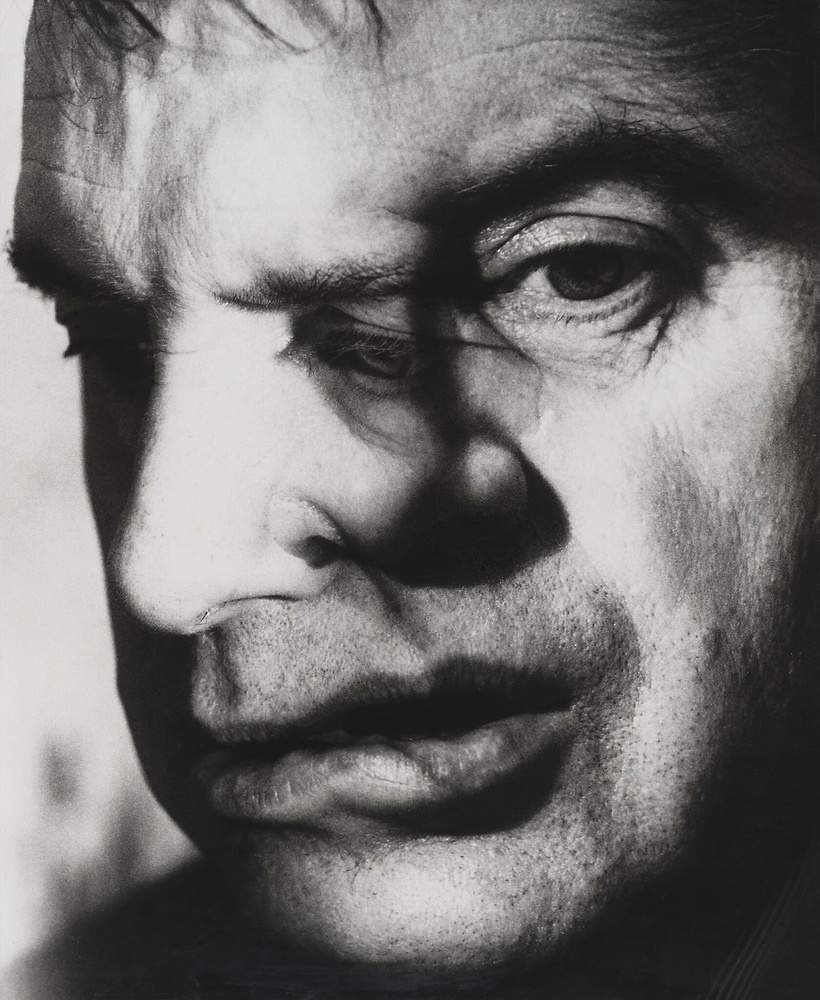
Francis Bacon, 1967 by J.S. Lewinski © The Lewinski Archive at Chatsworth
Francis Bacon: Human Presence
– a ‘stirring, splendid’ exhibition
‘Riveting’ show at the National Portrait Gallery
explores the artist’s ‘wild’ portraits
THE WEEK RECOMMENDS | ART | CULTURE & LIFE | THE WEEK | 25 OCTOBER 2024
Francis Bacon (1909-1992) is generally remembered as “an artist who captured the darkness of his times in his work”, said Waldemar Januszczak in The Sunday Times. When we think of him, we tend to imagine “a painter expressing global angst” – about the “toxic” mid-20th century, Hitler, the Holocaust, and the nuclear arms race. He has not, though, generally been seen as a portrait artist.
The National Portrait Gallery’s new exhibition sets the record straight, giving us a painter who created a variety of portraits that belong to the people depicted, “not the world around them”. Bringing together more than 50 works painted between the 1940s and the artist’s death, including many of his most emblematic, the show argues that Bacon was, in essence, “always a portraitist of sorts”, a painter of the human figure, who frequently based his depictions on real people. It shows him not so much expressing “the screams of his times” as recording “a variety of highly personal moods and meanings in himself and his friends”. It is “a riveting journey”.
In some ways, it seems “an odd exercise” to point to these paintings as portraits, said Laura Cumming in The Observer. Although many of his subjects are named, barely any are identifiable in these canvases: their faces are “squashed, contorted, twisted, swerving”. A depiction of the woman dubbed the “queen of Soho”, Henrietta Moraes, for instance, sees her lying nude on a mattress, her body “corkscrewed”, “features scrambled to oblivion”; a likeness of Lucian Freud turns out to have been based on a portrait of Franz Kafka. Indeed, the only recognisable face here is the artist’s own, represented here in a number of eerie self-portraits. One “strange and captivating” example, painted in 1987, sees the 78-year-old painter style himself as a younger man with a “boyish fringe” capping the “distinctive moon shape” of his face. In general, these pictures are “images of life forces so zestful, original and wild they hold their own outside the old conventions of portraiture”.
The show can seem unrelentingly dark, said Jackie Wullschläger in The Financial Times. A portrait of his doomed lover, George Dyer (who killed himself in a hotel room aged 37) sees his face “brutally sliced in half”; a panel from a triptych of 1973 self-portraits has Bacon base his likeness on a photo of a First World War bomb victim. Yet Bacon was radical in striving to uncover man’s base animal nature through portraiture. Two likenesses of another lover, the sadistic Peter Lacy, variously see him “crouching – about to pounce – in long grass like a fierce beast” and “eviscerated, his internal organs bursting through his skin”. Both works still “disrupt expectations” of what a portrait can be. In Bacon – “Britain’s greatest postwar painter” – the NPG has found a “perfect subject”. And this is a “stirring, splendid” exhibition.
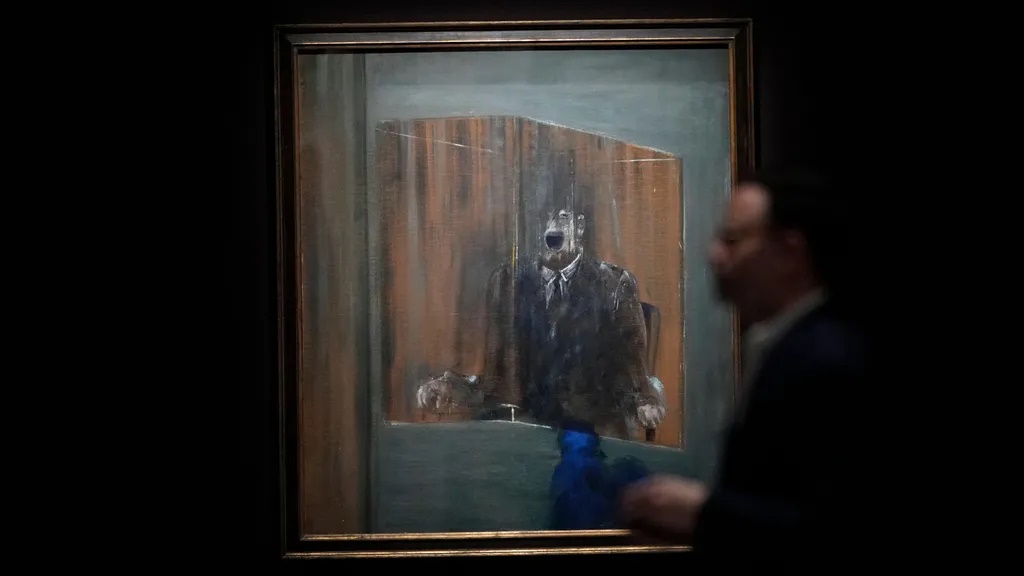
More than 50 pictures, painted between the 1940s and the artist's death in 1992, are on display
Francis Bacon – Human Presence
“It is all so meaningless we might as well be extraordinary”
Friedrich Nietzsche, as frequently quoted by Francis Bacon
BY SUE HUBBARD | REVIEWS | ARTLYST | WEDNESDAY, 16 OCTOBER, 2024
Francis Bacon is something of a Marmite painter. There are those who love him – his searing honesty and the existential search to extract the essence of a subject – and those who dislike the violence, the distortions and the unconventional swirling brush marks, who prefer the greater restraint of his contemporary and friend, Lucian Freud. I am in the first camp and consider him one of the foremost painters of the 20th century, up there in the pantheon – with his intense gaze and visual experimentation – with Picasso. For Bacon, the mystery of painting was how appearance could be rendered. Of course, it could be illustrated to achieve a technical likeness or caught in a photograph, but what mattered to him was catching something essential.
What Sigmund Freud called the Id. In this, he can be compared with both Frank Auerbach and Alberto Giacometti, for whom the goal was not to create a recognisable likeness but to achieve an essence through a series of painterly marks. Bacon’s portraits – as befits the preoccupations of those postwar years when the philosopher Theodor Adorno doubted that any form of art could be made after the death camps – are exercises in capturing fleeting moments of meaning in a world where meaning was in short supply. Titled Human Presence, the exhibition at the National Portrait Gallery shares these attempts to catch the elusive aura of an individual through the fusion of paint to communicate ‘directly with the nervous system’. In his self-portraits painted later in life, Bacon’s face seems to emerge from the darkness in a tangled knot of flesh, conveying his awareness of our fragile existence. He was, he said, ‘always surprised when I wake up in the morning’.
Portraiture had, traditionally, been a question of flattering paintings of the great and the good: aristocrats, generals, Lady this and Lord that. Bacon’s portraits, on the other hand, are mostly of friends and lovers – those who lived rackety, bohemian lives on the margins of polite society, surviving on their wit and sexual charms in the drinking dens of Soho. The self-portraits of his pimento-shaped face he loathed were, he told the critic David Sylvester, a last resort as ‘ people have been dying around me like flies, and I’ve nobody else left to paint but myself’. This, perhaps, was a little disingenuous. Rather, they seem like archaeological excavations into his own psyche (a description, I suspect, he would hate). His 1963 Study for Self-Portrait was based on the body of his friend Lucien Freud, taken from a photo by John Deakin. Sitting on a blue sofa, his feet on the table in front of him, an ashtray full of cigarette butts in the foreground, his face has dissolved into a contorted, twisted pulp, perhaps an illustration of his anguish at the recent death of the debonair RAF officer Peter Lacy in Tangiers, with whom he had a deeply sadomasochistic relationship but whom, nevertheless, he described as the ‘love of his life’.
Bacon emerged as a significant artist in 1946 and became occupied with portraiture soon after. Born into a wealthy Anglo-Irish family, he received little schooling and no conventional art training. As a young boy, he was beaten by his bullying father’s stable grooms, developing a sexual attraction to his own father, who more or less disinherited him when he found him dressing up in his mother’s clothes. London became his home. The village of Soho, in particular, provided him with a cast of sitters – Lacy, Lucien Freud, Muriel Belcher, Henrietta Moraes, Isabel Rawsthorne, George Dyer and later John Edwards – drinkers and deviants, artists, writers, and minor aristocrats who were slumming it in the demi-monde of sooty post-war London. Largely self-taught, Bacon’s influences ranged from Rembrandt to Velasquez and Sergei Eisenstein’s film Battleship Potemkin. The latter provided him with two of his abiding images: lone men – based on Velasquez’s 1650 painting of Pope Innocent X – and the screaming mouth of the nanny on the Odessa Steps with her blood-soaked face and broken glasses, revealing its rows of animalist teeth.
Bacon was fascinated by cruelty. This found early expression in his Three Studies at the Base of the Crucifixion. The Furies from Aeschylus’s Oresteia are depicted as part man, part beast, all tortured expressions, contorted necks and snarling open mouths. In this exhibition, the mostly male bodies – except Henrietta Moraes, whom he painted as The Rokeby Venus plus hypodermic syringe, and Isabel Rawsthorne – are shown in contorted states of anxiety. The Sleeping Figure of his sometime lover, the alcoholic Peter Lacy, depicts a huddled nude in the flayed flesh tones of Titian’s Flayed Marsyas, his elongated face seemly transmogrifying into a snout. In Study of a Figure in a Landscape, Bacon used a black and white holiday snap of him, taken in the Mediterranean, transposing the crouching figure into the grasslands of South Africa to create something threatening and feral.
The last wall, the undoubted climax of the show, has been dedicated to the triptych – surely it’s not coincidental that the triptych is a religious form – to his lover, the petty thief, George Dyer who committed suicide on 24th October 1971, two days, before Bacon’s groundbreaking retrospective at the Grand Palais in Paris. On the left, we see him crouched in a toilet. In the middle, he appears under a naked light bulb within a dark doorway, his black shadow spilling onto the ground around him like the silhouette of a bat. In the third, he is leaning over a bathroom sink, again viewed through a dark doorway, puking. In both the left and right paintings, ambiguous white arrows are painted on the floor. These are hard to interpret. Maybe, like the arrows in a theatre auditorium, they suggest a possible exit. In this case, suicide. The paintings are bleak and searingly honest, conjuring T.S. Elliot’s famous lines that life amounts to little more than ‘birth, copulation and death’. Bacon implies that there is nothing spiritual waiting in the wings. All that matters is this body, our fleshy desires, this here and now. The horror and terror is that it is all so fragile and alarmingly brief.
The Unsettling Presence of Francis Bacon
A packed survey at the National Portrait Gallery in London reveals
an artist who was the architect of his own myth
BY SEAN BURNS | EXHIBITION REVIEWS | FRIEZE MAGAZINE | TUESDAY 15 OCTOBER 2024
Francis Bacon’s beady eyes – the first thing visitors encounter in this comprehensive survey of the artist’s portraiture at London’s National Portrait Gallery (NPG) – exert an influence that permeates the entire exhibition. The painter, then aged 59, stares out like an inquisitive bird in a clip from Peter Gidal’s black and white film Heads (1969).
Here is an artist seemingly aware of his self-image and myth, sitting for an intimate filmic portrait so close-cropped you can’t see his ears. ‘Human Presence’ is the title of this show, yet it is undoubtedly Bacon’s presence that is felt most intently throughout the two burgundy corridors and several adjoining galleries that contain more than 55 works.
The ambitious scope of the exhibition feels too great for the confines of the space, which is how I also felt about the artist’s survey at Tate Britain in 2008. Two masterpieces bookend the show: the first is Head VI (1949), his early atomic depiction of an isolated, distraught Pope, which over the years you may have seen reduced to prints on tea towels and mugs; the second is Triptych, May–June 1973 (1973), a trio of canvases portraying the final moments of Bacon’s most storied lover, George Dyer, a small-time gangster who died from an overdose in a Paris hotel room in 1971.
Not all of Bacon’s paintings were as profoundly stirring and synthesized as these two monolithic works, but those that are contain some of the 20th century’s most majestic passages of paint. The exhibition’s thesis focuses on how Bacon’s attention to his subjects developed over time and revolutionized his approach. It traces his journey from early renderings from life to reworkings of the historical masters he so admired (Vincent van Gogh, Diego Velázquez et al.) to paintings from photographs of his muses, often friends and lovers, those flawed and maverick individuals of The Colony Room Club and Wheeler’s Oyster Bar.
I often see contemporary queer painters portray their community as if in a chic, A24 film of their life. Bacon didn’t; in Henrietta Moraes (1966), the titular artist and muse is a totemic swirl of emotions, hemmed in by a green outline that subtly alters in tone as it trains the figure’s fixed circumference. Reclining on the beige, striped daybed, she paradoxically towers before us, an animalistic vision with an almost-obliterated face. Moraes was his most emphatic subject.
An interpretation panel near the beginning of the show will have you believe that Bacon’s interior fixtures are often ‘incongruous’ to his figures, which are the central focus. I disagree: the door handles, soft furnishings and porcelain toilet basins are essential in engendering the overall unease of a composition. The suggestion being that, while the home purports to be comforting, for some it contains insidious disquiet.
A detailed queer reading of Bacon’s work is often lacking in institutional exhibition panels, particularly concerning normative structures, such as the conventional home, alternative formulations of friendship and fringe sexual practices. What happens when, through historicization, a character whom society might consider unsavoury must become universal? But there’s plenty here that is universal: the relatable horrors and responsibilities of being inside a body.
Take a moment to consider the meeting of colours in the garments of Bacon’s Homage to Van Gogh (1960), a re-working of the Dutch artist’s Self-Portrait with Bandaged Ear (1889) – familiar blood-red rubs against two shades of emerald in a stunning example of his masterful palette. Nearby, he takes on Van Gogh’s The Painter on the Road to Tarascon (1888), a lost work in which the figure of an artist jauntily sets out with an easel and canvas to paint en plein air. In Bacon’s version, the shadow that stretches beside the feet of Van Gogh’s painter has swallowed him whole.
In an adjoining room, a wall of photographic portraits tracks his personal evolution from a cherub-like boy (Francis Gutmann’s Francis Bacon, 1933) to a pensive artist (Sam Hunter’s Francis Bacon at Cromwell Place, 1950). He loved the camera, and it loved him. Turn 180 degrees, and an unexpected face will greet you: Rembrandt van Rijn’s quizzical Self-Portrait with Beret (1659). It’s a delightful curatorial touch in an unassuming place that ratifies the lineage within which Bacon was operating.
Bacon’s portraits from life, such as Study for a Portrait of Lisa (1959), are his most lifeless; he specialized in once-removed depictions gleaned from an encyclopaedia of so-called working documents, some of which appear here in the form of paint-splattered clippings. There are also some lesser-known gems, which set this show apart from those I’ve seen before, including Three Studies of Isabel Rawsthorne (1967), in which separate portraits of Rawsthorne disconcertingly scatter across a domestic scene. When Bacon trains the brush on himself, the results are intentionally bashful, as in Study for Self-Portrait (1963), in which his awkward limbs disappear into his lap like it’s a plughole.
Before I entered the exhibition, the ‘presence’ of its title struck me as a curious rubric for Bacon, particularly since many of his earlier figures appear deliberately locked away from us in their own personal chambers. I more vividly associate this notion of connectivity with his contemporaries, such as Alberto Giacometti, whose spindly bronze men bound into our world. However, there is something enduringly present in Bacon’s sensibility, which invites us to confront our most carnal desires and fears.
Bacon’s lore is strong, and I leave this fascinating show reflecting on how much of it he cultivated himself during his lifetime. His style undoubtedly softened with age. Eighteen years after Gidal’s penetrating film, Bacon, aged 78, painted Self-Portrait (1987), in which his eyelids seem heavy. At first, it felt like a strange curatorial choice to situate this small canvas so close to the entrance of an almost-chronological show. But, by the end, it made total sense. The artist had come full circle: from screaming into the unyielding abyss to a more serene, haunting presence.
Sean Burns is an artist, writer and associate editor of frieze based in London, UK. His book Death (2023) is out now from Tate Publishing.
‘Human Presence’, a survey of Francis Bacon’s portraits, is at the National Portrait Gallery, London, until 19 January
This is Francis Bacon’s surprising other side
Human Presence at the National Portrait Gallery shows the artist wasn’t just
obsessed with blackened human history — look at his moving portraits
WALDEMAR JANUSZCZAK | REVIEW | ART | CULTURE | THE SUNDAY TIMES | SUNDAY 13 OCTOBER 2024
I went into the Francis Bacon show at the National Portrait Gallery with a noisy doubt wedged in my mind: Bacon was not a portraitist, so what is he doing here? I came out after an hour and a half of being slapped around by exciting paintwork with a new dollop of respect for the NPG and a changed understanding of Bacon.
He feels different because we usually see him as an artist who captured the darkness of his times in his work. Born in Dublin in 1909, he lived through two world wars and was deep into adulthood when Hitler and Auschwitz blackened human history. He was in his prime in the 1950s, that especially dank decade, and was there to witness every milestone of the journey towards nuclear destruction. The toxic blood of the 20th century seemed to course through his veins, prompting a habitual view of him as a painter expressing global angst.
I presume the NPG did not set out to challenge this understanding — it is not generally an institution with revisionist ambitions — but by focusing on Bacon’s portraiture the gallery has succeeded in doing exactly that. Rather than an artist who captured the screams of his times, what we get here is a painter who recorded a variety of highly personal moods and meanings in himself and his friends. Yes, there is sadness and angst — plenty of both — but they belong to the people, not the world around them.
The show is loosely chronological but begins anachronistically — and cleverly — with a late self-portrait from the 1980s in which Bacon looks close to tears. The famous distortions with which he “injured” the faces of his sitters have calmed down into a set of physiognomic clichés. The head feels intact. The downcast eyes avoid our gaze. He is lonely. Troubled. Plaintive. And we are set immediately on the path of personal sadness.
It is an effective piece of priming and prompts us to see all the work ahead in a new light. Even his signature image of a screaming pope, which comes next, “borrowed” and adapted from Velázquez’s celebrated portrait of Innocent X, feels different in this context. The screaming popes are always seen as dark embodiments of tragic times. In another show, that reading might have persisted. Here, we are forced to view them differently.
Around his repurposed pope, Bacon has painted a white square in which the bellowing pontiff is fully enclosed, like a man in a glass box. The box imprisons his noise. Instead of seeping out into the wider world, and infecting it, the box contains it and keeps the terror personal. Bacon is making us notice not the universal despair of Velázquez’s pope but the human anxiety locked up in him. The screaming pope is a public figure returned to privacy, not a private figure enlarged to public symbolism.
And it isn’t just Velázquez who is being saluted in this unsettling masterwork from 1949. So, surely, is Edvard Munch, who is rarely mentioned in Bacon literature but whose emblematic The Scream was an obvious trigger for the papal yelling. A section dealing with Bacon and the masters, old and new, reveals a debt to his predecessors that is often under-emphasised.
Picasso in his cubist portraits was a clear pioneer when it came to breaking down the human head into interlocking constituent parts. Rembrandt, represented by his Self-portrait with Beret, taught Bacon how to paint the “presence” of a sitter, rather than their looks. Van Gogh, whose work inspired new brightnesses in Bacon’s paintwork, introduced him as well to the power of the shadow.
And although Van Dyck is not mentioned here, allow me to add my ten pence worth to Bacon scholarship by pointing out that his Charles I in Three Positions — made as a preparation for a Bernini bust — must have been an influence on the triple portraits that begin pouring out of Bacon from the 1960s onwards. A profile, a central view, an opposite profile became his favourite small format.
Having proved that Bacon was always a portraitist of sorts, the show goes from the general to the particular and begins looking at the specific friends and lovers he painted and repainted: Peter Lacy, the love of Bacon’s life, who died of alcoholism in Tangier; George Dyer, the petty criminal from Kray circles, who gave him a stolen Rolex as a hello present; John Edwards, the last lover, to whom Bacon left his estate when he died.
All of them are returned to with obsessive regularity by a painter who becomes tangibly afraid of leaving his comfort zone. Instead of expressing universal anger, what we are really getting here is private admissions of isolation, loneliness, fear.
While the small portraits do away with the need for invention — put the head in the centre and that’s it — the larger compositions feature a complex struggle. To pick out the central figure, and especially their heads, Bacon invents all sorts of framing devices — cages, stages, spotlights, shutters — that can appear more sinister than they are. Friends and lovers look to have been turned into specimens in a bell jar. The true subject here remains people and their emotions. Everything else — the backgrounds, the rooms, the walls — is pictorial padding.
The show has a brilliant finale, a painted shrine to Dyer, who took his own life in Paris on the eve of Bacon’s retrospective at the Grand Palais. The paintings Bacon made remembering this horrible event are some of his most poignant, notably a huge triptych featuring three interwoven scenes of Dyer hunched over a toilet, overdosing. Has true romance ever been memorialised as unromantically as this?
It is a tearful culmination to a riveting journey that gets unusually close to Bacon and burrows under all his defences.
Francis Bacon: Human Presence is at the National Portrait Gallery, London WC2, to January 19
Francis Bacon: Human Presence

LAURA CUMMING | REVIEW | ART & DESIGN | CULTURE | THE OBSERVER | SUNDAY 13 OCTOBER 2024
Amist of fine dots spreads across the pale face, with its distinctive moon shape. Scimitar eyebrows rise above a lowered gaze. The half-open mouth is kissably soft, and the hair still lies in a boyish fringe. Francis Bacon is 78 years old, but has made himself 25 once more. You would recognise him any time, anywhere.
This strange and captivating self-portrait hangs at the entrance to Francis Bacon: Human Presence at the National Portrait Gallery – a peculiarly misleading start to the “first exhibition in nearly 20 years to focus on his portraits”. What else did Bacon paint but human animals, more or less? It seems an odd exercise to single out these 55 paintings as portraits, not least because the one recognisable face is Bacon’s own.
It is true that some titles half-promise a portrait – Study for a Pope, Seated Woman, Study for a Portrait. It is also true that others name a lover – the former pilot Peter Lacy, who whipped and beat Bacon; the former boxer George Dyer, who killed himself in their hotel room, aged 37; the bartender John Edwards, who died of cancer at 53. Still others depict female friends: artist Isabel Rawsthorne, writer Henrietta Moraes and Muriel Belcher, proprietor of the Colony Room Club. But how useful is the word depiction?
If it weren’t for the fabulous period photographs threaded through this show, could you really tell Rawsthorne from Belcher, say, or Frank Auerbach from Lucian Freud? Faces materialise out of darkness, or deeply stained colour: squashed, contorted, twisted, swerving, totally plastic and amorphous, yet so suavely defined that you wonder how on earth Bacon does it. Look closely into each picture, and you can see how he works the paint into blurs and fades, swipes and evaporations, scumbled lines, energetic swipes, pristine discs and hyphens, but not how these transitions occur. He remains the most mysterious of conjurors.
The show starts with men in black, sometimes screaming, occasionally caged, always solo. A mouth opens in a yowl, the top of the head missing in the seething nightclub blackness; a drinker in a sharp suit leans on a contour line suggesting a bar. I don’t know who they are, and I doubt the curators do either. They could be Peter Lacy or Ronnie Kray, or even Kenneth Williams; Bacon can veer quite dramatically from agony to Carry On comedy, especially when the teeth inside the howling mouth are pearly white and tiny.
And the effort to find lesser-known Bacons sometimes produces outright farce at the NPG. A very cheery pope in orange, pink and green burbles across the gallery from Bacon’s ludicrous reprise of Van Gogh’s Self-Portrait With Bandaged Ear; as if Vincent hadn’t suffered enough.
But soon we are in Bacon’s own familiar world: those flat backdrops of glowing darkness and architectural sketch lines that hint at nameless bedrooms, cells or bars; those faces that look as if they have been squashed sideways with the violent flat of a hand; one good eye, the other blotted out behind shattered Battleship Potemkin glasses.
Muriel Belcher appears three times in a sequence, turning like a gyre, with her pencilled eyebrows, high forehead and thinning hair. John Edwards sits in his underpants in a chair, casting a pink shadow shaped like one of Lynn Chadwick’s flightless bronze birds. Henrietta Moraes lies on a ticking mattress in the nude, body corkscrewed, black circles on knees and buttocks, features scrambled to oblivion. The image is based on a photograph Bacon commissioned from John Deakin, who sold copies of it to sailors in Soho for 10 shillings a time.
The film-maker John Maybury, in his catalogue essay, has a riveting phrase for the gay community at Belcher’s club when homosexuality was still illegal: “The fearlessness of emboldened alcoholics allowed to shout into the void in a small, nicotine-stained green room.” That gets to the force of Bacon’s art; perhaps even to the composition and colour. The viridian green of the Colony Room seeps, particularly, into images of Peter Lacy, described as the love of Bacon’s life. Not that you have any true sense of that relationship from the small range of closeup heads presented here.
Uneasy, harrowing, claustrophobic: that’s what people say about his art. And at one point Bacon himself is quoted as wondering whether Lacy’s neurosis has somehow crept into the pictures. But how can anyone really tell, when he is as compacted and distorted as everyone else? And what about the ebullience, energy and overwhelming beauty of Bacon’s art?
One revelation of this show may be the significance of colour. Bacon was a sensationally gifted colourist: a sumptuous cobalt blue pours from the bottom of one painting; mauve, gold and papal purple glow from another; scarlet and orange burn so hot they light up the mood as well as the gallery. And Bacon seems to use different palettes for his lovers. He so admired George Dyer’s profile that he made a template to reuse; you see it against midnight blackness, but also against an alizarin crimson that seeps like spilt blood into the canvas, especially in the final triptych of Dyer’s suicide.
The curators seem to want us to discover biography, incident and narrative in these paintings; but such interpretations feel like overlay. If Bacon can base his image of Lucian Freud on a photograph of Franz Kafka, something more (or less) than a portrait is being made. And if one of his own self-portraits incorporates Freud’s body then literal appearance is not at stake. The relationship of these paintings to likeness lies, instead, in their radical similarity to each other at their best – images of life forces so zestful, original and wild they hold their own outside the old conventions of portraiture.

Head of Boy, 1960 by Francis Bacon
Francis Bacon: Human Presence at the National Portrait Gallery
— a brilliant transgressive party
A stirring show of savage, visceral portraits confirms the artist as Britain’s greatest postwar painter.
JACKIE WULLSCHLÄGER | REVIEW | VISUAL ARTS | LIFE & ARTS | THE FINANCIAL TIMES | SUNDAY 13 OCTOBER 2024
Britain’s greatest postwar painter, Soho’s legendary boozer and gossip: the National Portrait Gallery has the perfect subject in its stirring, splendid new show Francis Bacon: Human Presence.
In vital, varied ways, Bacon’s paintings mostly depict the human figure. The NPG opens with a wistful “Self-Portrait” splattered with red aerosol spray paint to create a distancing effect, and concludes with grand baroque dramas in shrill colours: “Portrait of a Man Walking Down Steps”, dripping blood, life draining away; the revolving blue stage of “Portrait of George Dyer in a Mirror”, the subject’s face brutally sliced in half. So twisted are these representations (the figures recognisable though damaged and wounded by the artist’s painterly violence) that no exhibition until now has considered Bacon primarily as a portraitist.
It’s a rewarding, fresh approach, intimately chronicling the lives of the artist and his close friends and sitters, historically setting his innovations against centuries of tradition in the NPG’s collection. The context illuminates how unprecedented Bacon’s insistence on making “the animal thing come through the human” was. Scenes of his sadistic lover Peter Lacy crouching — about to pounce — in long grass like a fierce beast in “Study of Figure in a Landscape”, or Lacy eviscerated, his internal organs bursting through his skin, in the savage nude “Portrait”, still disrupt expectations of the genre.
Loans are generous, including monumental, eccentric pictures absent from Tate’s 2008 centennial retrospective. Stockholm’s flat pop art “Double Portrait of Lucian Freud and Frank Auerbach”, both subjects reclining in a bright orange chaise longue, was based on photographs in Paris Match of French soldiers relaxing in Algiers. In San Francisco’s “Study for Portrait (with Two Owls)” a voluptuous, menacing pope on a red throne has for companions a pair of demonic birds, and a third bird shape scrambling his opulent robe — the shadow of death.
Bacon made his name with howling deformations of Velázquez’s “Portrait of Pope Innocent X”; the silken screaming purple and gold “Head VI” held in a thinly sketched cage, often called a “space frame”, is the show’s earliest work (1949). A first portrait commission followed: Robert Sainsbury in a sober suit fused into a black ground. His face, shirt and tie are spotlit, emerging from darkness; like the popes, the businessman looks vulnerable in his space-frame trap.
Robert sat for Bacon in his lunch hour, bringing a sandwich to the studio, but already with his next subject, Lisa Sainsbury, Bacon was uneasy painting from life. “Sketch for a Portrait of Lisa” is derived from hieratic images of Queen Nefertiti, and pictorial artifice deepened by a “shuttering” curtain of cords, achieved by pressing fabric into wet paint, so, Bacon explained, “the sensation doesn’t come straight right out at you; it slides slowly and gently through the gaps”.
From then on, depicting his Soho circle, Bacon worked only from photographs, preferably clear neutral ones taken by his friend John Deakin; he said his subjects’ presence in the studio intimidated him from “injuring” them on canvas. He tore or crumpled Deakin’s shots to inspire his own fragments and dislocations.
Nothing exposes the extreme violence and imaginative intensity of Bacon’s distortions as frankly as these photographs exhibited alongside the paintings in each section devoted to his main sitters. Together, the displays unfold across the largest gallery like a brilliant transgressive party with ever wilder guests arriving.
Henrietta Moraes, in Deakin’s photograph a beautiful, free-spirited brunette, acquires in Bacon’s 1966 nude depiction a face like a chimpanzee’s and bruised, blotchy skin. “Three Studies for a Portrait of Henrietta Moraes” by contrast captures her as in a glimpse across a room: oval head, high cheekbones, wide eyes. Thick crimson borders around the body mimic a halo, or aura — evoking Moraes’s charisma. Yet smears of wet pigment blur and dissolve the image. Everything is transient in this small animated triptych, changing canvas to canvas as in a strip cartoon.
From a Soho street snapshot, you similarly recognise the quizzical semi-profile of the model for “Three Studies of Isabel Rawsthorne”, but not the fury and despair Bacon accords her. This is a triptych condensed into a single picture: Rawsthorne simultaneously a leaping contorted figure turning a key in the lock, a shadow behind the door, and a mask-face nailed to the wall. The cropped pink table and ashtray come from another louche Bohemia, Otto Dix’s “Portrait of the Journalist Sylvia Harden”; the pink echoes Rawsthorne’s flesh tones, unifying the composition.
Lucian Freud first arrived to sit for his portrait in 1951 and found it already finished, based on a photograph of Kafka, a sinister shadow added. This depiction compares here with “Study for Portrait of Lucian Freud” (1964) where his sly predatory features, slathered in white impasto, become really malevolent. Bacon mocks his rival with a light cord trailing over his head, rendering him pathetic, but the soles of his shoes stare defiantly at the viewer.
Bacon acknowledged that every painting was in a sense a self-portrait, “concerned with my kind of psyche...my exhilarated despair”. In a key depiction of his dead lover “Portrait of George Dyer Riding a Bicycle”, a metaphor for Bacon’s sense of life’s futility and circularity, his own profile peers from Dyer’s head.
He especially deformed his own likeness. He appropriated the right, collapsed head in “Three Studies for a Self-Portrait” from a photograph of a first world war bomb victim; in the central panel the face with blank eye socket subsides into a vortex of gestural brushstrokes, yet remains bizarrely legible. A black whiplash erases the left eye in “Self-portrait” (1973); the right eye meets us with a piercing discomforting gaze. Friends remembered that was just how he scrutinised them.
Bacon’s model, borrowed from Musée Granet for this show, was “the great Rembrandt self-portrait in Aix-en-Provence...there are hardly any sockets to the eyes . . . it is almost completely anti-illustrational. I think that the mystery of fact is conveyed by an image being made out of non-rational marks.”
Bacon holds his own here with Rembrandt, with Velázquez’s flickering fluid brushwork in three “Popes”, and with Van Gogh’s loaded lava-red colour and palette-knifed expressiveness in two versions of “Study for Portrait of Van Gogh”, paraphrasing the lost “Painter on the Road to Tarascon”.
Turn left on leaving the NPG and you are in Bacon’s Soho; turn right and you are at the National Gallery where Van Gogh currently reigns. Seeking to depict contemporary experience in the grand painterly manner, Bacon brought those two worlds together. Throughout this show he achieves his aim of making “a direct assault on the nervous system” to fix in paint “all the pulsations of a person”. Transforming portraiture’s appearance, methods, effects, he retained for modern art its ancient power and conviction.
National Portrait Gallery to January 19; Fondation Pierre Gianadda, Martigny, February 14-June 8
Francis Bacon at the National Portrait
Gallery is an emotional tour de force
‘Francis Bacon: Human Presence’ at the National Portrait Gallery in London
puts the spotlight on Bacon’s portraiture
BY HANNAH SILVER | EXHIBITIONS & SHOWS | ART | FEATURES | WALLPAPER | FRIDAY 11 OCTOBER 2024
Francis Bacon’s distorted forms, caught in hellish moments, are etched into the brain of those with only a passing interest in the art canon, an eerie familiarity that still doesn’t prepare you for the sheer emotionality of his major retrospective at the National Portrait Gallery.
Taking you from Bacon’s early portraits in the 1940s, through self-portraits and portraits of friends in the 1950s, to the personal relationships that defined his work in the 1960s, the exhibition documents Bacon’s relationship with representation in his dismantling of both traditional power structures and tortured memorialisations of departed lovers.
Arranged chronically and thematically, the exhibition begins by paying particular care to the provenance of early work. In these screaming, anonymous men, Bacon was reinterpretating classical portraiture in a changed, post-war world. Greatly inspired by Velázquez’s Pope Innocent X (1649−50), Rembrandt’s Self-Portrait with Beret (1659) and Van Gogh’s The Painter on the Road to Tarascon (1888), Bacon began to incorporate colour after his fascination with the last saw a move away from monochrome and into a bruised prism of hues, from rich plums to sickly greens and deep pinks.
Most striking, though, is the depiction of Bacon’s personal relationships, cataclysms which triggered an embrace of new styles and forms. His capturing of his tumultuous long-term relationship with former fighter pilot Peter Lacy is edged with an unsettling tenderness throughout, his naked form a vulnerable foil to the viscerality of the details. Upon his death, Bacon created a triptych of portraits, a format he often returned to when marking friendships or fraught endings. In real time, we watch the relationship disintegrate, the faces becoming more sunken, the image more monstrous, a scream of pain made tangible. When his lover, George Dyer, took his life a decade later, two days before Bacon opened a major Paris exhibition, we see his grief turn inwards. In a 1973 self-portrait, Bacon’s features are lost in a disorientating loop transformed by grief and solitude.
Alongside Bacon, the artist, here is Bacon, the man. He was fascinated by photographs of himself, and we are treated to portraits of him by friends including Cecil Beaton, Bill Brandt and Arnold Newman. In an interview, playing on a loop, he muses on his friends’ negative reaction to their depictions, something he attempted to avoid later in his career by refusing to paint from life, choosing only to paint from photographs or memories of the friends and lovers he knew well. It was no escape, though, from the emotion, despair and sensitivity that continued to mark his work, here traced throughout in heartbreaking, raw detail.
‘Francis Bacon: Human Presence’ is at the National Portrait Gallery, London, until 19 January 2025
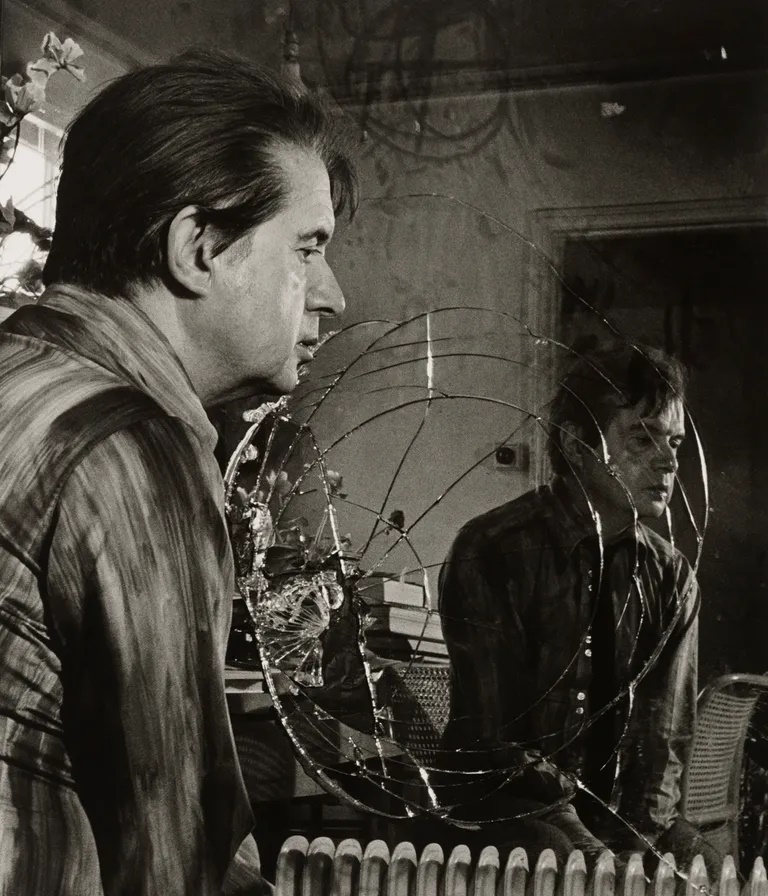
Francis Bacon, 1972, by Mayotte Magnus
How Francis Bacon painted the way
for cinematic body horror
A new exhibition of the painter’s work underlines its similarity
with films like The Substance
BY JOSIAH GOGARTY | FILM | CULTURE | GQ MAGAZINE | FRIDAY 11 OCTOBER 2024
In The Substance, Coralie Fargeat’s new body horror film, Demi Moore stars as an aging celebrity who takes a strange drug to generate a younger version of herself. It doesn’t end well. Near the end of the film, a monstrous creature is spawned via Moore’s improper use of the substance – Monstro Elisasue, it’s called, with teeth coming out of its chest, a face bulging out of its bum, and all manner of other icky, scrambled body parts. In front of a stunned crowd, it explodes, spraying gore everywhere. But speaking to GQ, The Substance’s prosthetics designer Pierre-Olivier Persin said that Fargeat wanted this creature to be more than just a “rubber monster” – it needed a “tragic quality”.
In a somewhat spooky coincidence, a new Francis Bacon exhibition, Human Presence, opened yesterday at the National Portrait gallery. It includes 55 portraits, inspired by friends, lovers and (in a recurring riff on a Diego Velázquez painting) Pope Innocent X. His work is filled with visual horror – bodies that collapse in on themselves; screaming popes; hanging animal carcasses – but, as with Monstro Elisasue, there’s always just enough humanity left for us to grasp on to.
Bacon’s work has always had a close relationship to cinema. He never liked painting from models; instead, he scavenged ideas from photographs and film stills. A nurse screaming on the Odessa steps in Sergei Eisenstein’s Battleship Potemkin was reproduced in many of his paintings. In an interview with the art critic David Sylvester, he called film a “marvellous medium” and mused that he might have become a filmmaker if he was younger.
The influence goes both ways. Directors looking to create a particularly visceral kind of horror have long looked to Bacon’s paintings. The infant creature that emerges from the chest of a crewmember in Ridley Scott’s 1979 Alien was modelled on a strange beast in Bacon’s Three Studies for Figures at the Base of a Crucifixion, a famous 1944 triptych. In the 1988 horror film Hellraiser II, the transformation of one character into a Cenobite monster was inspired by Figure with Meat, a 1954 Bacon painting in which a screaming figure sits between two hanging halves of a cow carcass.
Christopher Nolan is another devotee. He recently told The Guardian that he showed Heath Ledger an image of a face from a Bacon triptych to guide his portrayal of the Joker in The Dark Knight. In an interview with the Tate in 2013, he said that the “worn-through, sweaty” quality of the Joker’s makeup came from Bacon’s style of handling paint.
Bacon’s figures wouldn’t be nearly as powerful without the stuff that surrounds them on the canvases. Weird, colourful rooms with geometry that doesn’t seem of this earth. Pitch-black doorways. Figures enclosed in boxes drawn with faded white lines. The deeply uncanny backgrounds Bacon creates for his paintings are an essential part of his genius.
For Nolan, these backgrounds chimed with his cinematic sensibility. You have to leave “a lot of voids” in films, he said, because “you never have the resources to fully create the world you’re creating”. Strange, liminal spaces are a very Bacon-esque hallmark in David Lynch’s work – the Red Room from Twin Peaks was directly inspired by the painter. And Bacon’s combination of visceral flesh with cold, sterile surroundings is echoed in countless horror films. Think how many on-screen monsters are birthed in bright white laboratories. Or how in The Substance, the site of Moore’s injections and transformations is a white-tiled bathroom.
Horror, particularly body horror, picks at things like mortality and sexuality that are far from our rational, intellectual side. It relies on film’s visual rather than verbal element, so it’s unsurprising that visual artists like Bacon have emerged as recurring influences. For Nolan, Bacon made him “think about limitations of human understanding of our own place in things”. That sense of the unconscious and the unsayable, which a good director can conjure in film, guided Bacon’s own approach too. “Some paint comes across directly onto the nervous system,” he told Sylvester, “and other paint tells you a story in a long diatribe through the brain.” His paint, needless to say, was the first kind.
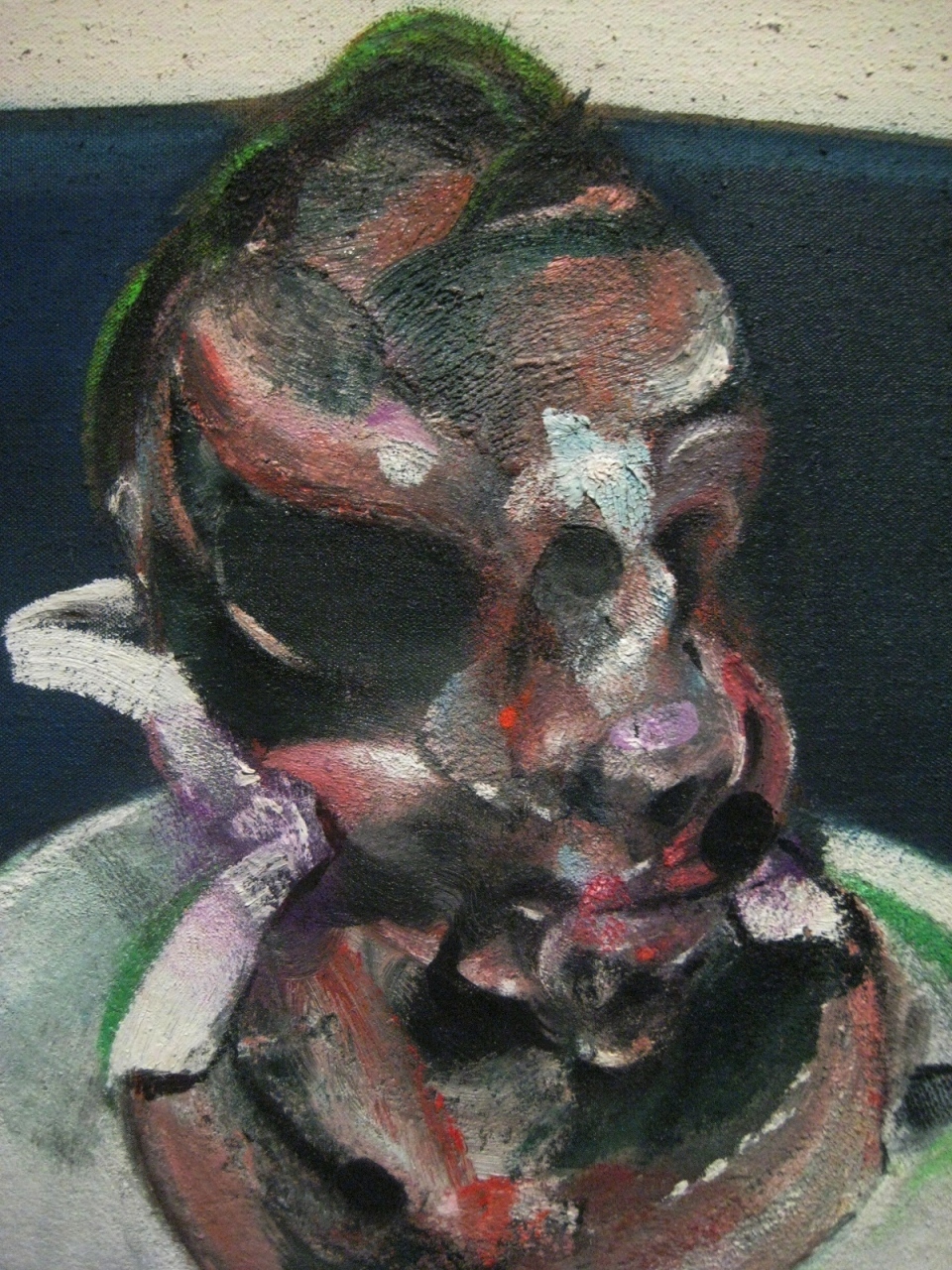
Study for a Self-Portrait, Francis Bacon, 1963
Francis Bacon by Francis Giacobetti
FRANCIS GIACOBETTI | INDEX | ART | COSMOPOLIS | THURSDAY 10 OCTOBER 10 2024
Born in Marseille in 1939, Francis Giacobetti is a French photographer and filmmaker (e.g. Emmanuelle l’antivierge, 1975). He rose to prominence notably thanks to fashion photographs for Elsa Schiaparelli, Pierre Balmain, Madame Grès and other fashion houses as well as for his work for glossy magazines such as Marie Claire, Paris Match and Playboy.
Thanks to the help of the editor Michel Archimbaud, from late 1991 to early 1992, just months before he passed away, the sulfurous Irish-British painter Francis Bacon (1909-1992) granted Francis Giacobetti a series of interviews and sittings. The French photographer portrayed the artist and his surroundings and created a series of some 200 original images inspired by Francis Bacon’s unsettling works (check some of the photos below). Presenting these never-before-published photographs, this volume relates an unprecedented and unflinching portrait of this important but disconcerting artist.
Already in 1994, the Marlborough Gallery London showed the exhibition Francis Bacon by Francis Giacobetti and, in 2005, the British auction house Christie’s even issued a catalogue called Francis Bacon by Francis Giacobetti, but the project was cancelled because of protest by Francis Bacon’s right holders.
In the 2024 Francis Bacon by Francis Giacobetti book, a relevant article by Jean Michel Roques for Vanity Fair from November 2014 is republished. It states that, when Francis Bacon died, one John Edwards, a completely illiterate former bar manager found himself the painter’s only heir.
Francis Bacon’s estate was valued at £11 million. The art world suspected foul play. There were suspicions about the Marlborough Gallery, which had sold the majority of Bacon’s canvases at a very low price. Already in 1975, the same gallery had been accused of embezzling the works of Marc Rothko and was ordered to return 658 works to the American painter’s heirs and pay $9.2 million in damages.
In 1999, John Edwards sued the Marlborough Gallery before a British court. As Francis Bacon’s heir, he requested that all of the artist’s paintings be returned to him, along with $10 million in damages. To defend himself, Gilbert Lloyd, the son of the gallery’s founder, in a panic, asked Francis Giacobetti to testify on his behalf, saying, “Our commissions were high, but Bacon was paid in advance and in cash.”
Francis Giacobetti sent a video to the judges, which he had made on the day of his meeting with Francis Bacon who said: “I know that the price of my work is manipulated by sellers, but I don’t paint for money. They think it’s me who profits, but that’s not true, it’s the gallery. They buy my paintings for a price that has nothing to do with what they say in the papers. They’ve bought my paintings, so they are free to raise the prices as they see fit.” In a conversation between Michel Archimbaud and Francis Bacon, the Irish-British artist declares, with his usual sense of provocation: “I get along very well with the gallery’s owners, the Lloyds, as well as one can with German jews…”
In the judge’s opinion, Francis Bacon had acted knowingly and had not been cheated. The furious John Edward had to withdraw his complaint. Subsequently, Gilbert Lloyd called Francis Giacobetti from New York to tell him: “Francis, you saved the Marlborough. I’m hopping on a plane and tonight we’ll dine at L’Ami Louis.”
In his 2014 Vanity Fair article, Jean Michel Roques writes that, in November 2005, came a dramatic turn of events. The attorneys for Philippe Mordue, the former partner and heir of Edwards, who had died of AIDS two years earlier, as well as members of a trust that managed Francis Bacon’s rights and estate, challenged Francis Giacobetti before a London court. As revenge, they intended to forbid him from reproducing any of the painter’s paintings in his book, even though, as Francis Giacobetti noted, “I had an authorization that had been signed by Bacon himself”.
The authorization stated: “I, the undersigned, Francis Bacon, assign to Francis Giacobetti the right to reproduce any amount of my paintings for his book, with no payment of fees or copyrights, without territorial or temporal limitation.”
Nevertheless, the publication of the photographs was forbidden. Therefore, the 2024 Francis Bacon by Francis Giacobetti, published by Assouline, 264 pages with 200 illustrations, 38 x 33 x 8 cm, is the first time the 1991/1992 photographs by the French photographer are published.
In a conversation published in the 2024 book Francis Bacon by Francis Giacobetti, the French photographer says: “Francis, Sir John Rothenstein, of the Tate Gallery, said this about your painting: “There is a way to look at a Bacon painting, to see it as a mirror reflecting our own suffering, our fear of solitude, of failure, of humiliation, of growing old and of the innumerable catastrophes that threaten us.” I think he came very close to your truth.” Francis Bacon responded: “Yes, no argument there, John has always understood many things, he is very intelligent.”
Later in the interview, Francis Giacobetti says: “When I listen to you speak, I feel that you are incapable of making concessions. Not to fashion or people or constraints.”
Francis Bacon answered: “But that’s the privilege of being an artist who sells his paintings for a lot of money. We are free to sleep late in the morning, to refuse to wash or paint. I have never made any concessions. Not to fashion, not to constraints, not to anything. I was fortunate not to have to, because it’s in my nature to avoid social situations and obligations, to prefer simple folks over the more refined ones. I was lucky to never have to compromise myself in one way or another. Maybe because I didn’t attend school like everyone else, I made my own rules, rules that pleased me and, more importantly, were better adapted to my personality. I think I have a difficult personality, I’m not easy. I tell the truth even if it hurts. My excuse is that I love wine, and when I’m drunk I say a lot of foolish things. And since I do have excuses, I make the most of them. I never censor myself.”
In October 1962, after a decade of painting in temporary spaces, Francis Bacon moved into 7 Reece Mews in South Kensington, London. It remained his atelier until his death in April 1992. Hugh Lane Gallery Director Barbara Dawson secured the donation of Francis Bacon’s studio from the artist’s heir John Edwards and Brian Clarke executor of the Estate of Francis Bacon. In 1998, the entire content of Francis Bacon’s atelier was moved to Dublin where it is permanently on display in the Hugh Lane Gallery, where I could admire it some 20 years ago.
A few more quotes from the painter Francis Bacon united in book Francis Bacon by Francis Giacobetti
Francis Bacon: “Any artist worthy of the title spends his whole life dreaming of making the ultimate painting, the one that will forever define the discipline. For us, vanity never wanes.”
Francis Bacon: “Great art doesn’t require any explanation, because we experience it as a shock. It hits our nervous system directly, without any need for culture or intelligence. Explanations have no place in my conception of painting. In other words, if you can say it, why bother painting it?”
Francis Bacon: “To be completely truthful, what I love the most in the world is not the actual paintings themselves, but the act of painting. I have been lucky enough to make a living from my obsession. It’s the only success I can claim. I have no advice to give, nothing to preach.”
Francis Bacon: “Only painting matters. At that moment, I have no age, the only thing that remains is the desire brought on by the technical challenges. I am hypnotized by every painting I work on and can only separate myself from it when I’ve finished. Then I ask the gallery to take it away as quickly as possible.”
Francis Bacon: “I paint for myself, only for myself. I never imagined that I could make a living from my paintings. At the beginning, I was very surprised that people were willing to pay for them. And some people even think that the more expensive they are, the better. I find that very masochistic.”
It is interesting to read the term “masochistic” coming from Francis Bacon, who himself was a masochist who loved being beaten up. Incidentally, in 1886, the term sadomasochism was coined in Lviv, today Ukraine, back then called Lemberg as part of the Austro-Hungarian Empire. The Austrian psychiatrist Richard Freiherr von Krafft-Ebing named sadomasochism after Leopold von Sacher-Masoch (1836-1895), a professor, writer and, and this during Sacher-Masoch’s lifetime! The author of the novella Venus in Furs (Venus im Pelz) not only wrote about sexual fantasies and fetishes, he lived them in real life, for instance making himself by contract the slave of his mistress Baroness Fanny Pistor for the period of six months.
Incidentally, in 1993, I had to chance to visit the first Francis Bacon retrospective after the artist’s death. In Lugano (Switzerland), the show left a lasting impression on me. I am not just talking about the brutal, raw depictions of the human condition depicted by the gay, masochistic painter. What impressed me even more was the contrast between the brutal subject of his works and the aesthetic, colourful backgrounds of his canvases. He was a great colourist. Not many people seem to have noticed.
In 2018, Fondation Beyeler in Switzerland rightly paired two of the most important 20th century artists: Francis Bacon and Alberto Giacometti. Read my German article about the Beyeler exhibition.
Francis Bacon by Francis Giacobetti, Aoussline, 2024, 264 pages with 200 illustrations, 38 x 33 x 8 cm.
[ DISCLAIMER: This alleged “interview” constitutes an unverified record of the conversation; the accuracy of these interviews is subject to dispute as they were not recorded on tape or film.]
Francis Bacon: Human Presence at the National Portrait Gallery
CHRISTINA YANG | REVIEW | EXHIBITION | ART | CULTURE | THE UPCOMING | THURSDAY, 10 OCTOBER, 2024
“People believe – simple people at least – that the distortions are an injury to them,” remarks Francis Bacon in Fragments of a Portrait, his 1975 television interview with his friend and art critic David Sylvester. The grainy black-and-white clip plays down the main hall of the National Portrait Gallery, which houses Francis Bacon: Human Presence, the latest exhibition on the artist and a celebration of his radical challenge to ideas surrounding, not only portraiture, but also the human condition in the 20th century.
Whether it is a lover, friend, stranger at a bar, an amalgamation of all three, or himself – Bacon’s subjects fall equitably to his brutal treatment of the human form. Every figure in the 55 portraits displayed is twisted, blurred, and eroding into abstraction – without any hint of favouritism or flattery. One of the 11 nude portraits of his companion painted between 1963 and 1969, Henrietta Moraes (1966) distorts not just the model’s face but her reclining figure with splats of black and sickly yellow. And in Study of George Dyer (1970), his lover’s strong and distinctive profile that Bacon admired is highlighted at the expense of erasing his features for a spectral effect void of any romance.
For the figurative painter, distortion was a way of peeling back the veneer of appearances to look at what’s underneath. His paintings are far from portraits in the traditional sense – the subjects are barely human and are better characterised as manifestations of the human experience. His abstraction brings tension between the mind and body creating an undercurrent of unease that pulses in the exhibition’s rooms. The bodies resist the space they occupy, trapped in the claustrophobic confines of the canvas. They are brutally blurred with violent smears of paint and writhing against invisible forces.
Francis Bacon: Human Presence offers a compelling exploration of the artist’s enduring obsession with the interplay between mind and body. Through a selection of his works, paired with representations of the artist in photography to video, the show recasts Bacon’s journey with a pointed emphasis on his relentless focus on flesh as a site of the soul’s suffering. His centrality in the discourse of modern art means that many of the paintings comprising the exhibition have been continually revisited; yet, there remains an inexhaustible depth to them that invites fresh interpretations. As October advances, with twilight deepening and the air turning cold, the haunting resonance between Bacon’s ghostly, humanoid forms and the wilting world outside becomes profoundly palpable.
Christina Yang
Francis Bacon: Human Presence is at the National Portrait Gallery from 10th October 2024 until 19th January 2025.
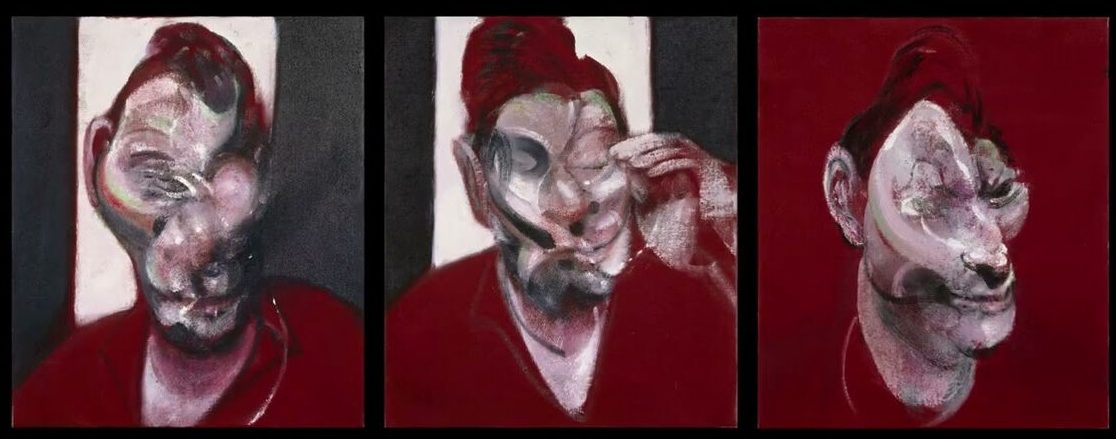
Francis Bacon, National Portrait Gallery:
the modern master at his most raw and revealing
This exhibition of the gloom-merchant’s unconventional
portraits is as powerful and perverse as the man himself
ALASTAIR SOOKE | REVIEWS | ART | THE DAILY TELEGRAPH | WEDNESDAY 9 OCTOBER 2024
There’s a teensy issue with this exhibition of Francis Bacon’s portraits. The 20th-century British artist didn’t really paint portraits. At least, not in any conventional sense.
Sure, he depicted people, and, sometimes, they were recognisable. Mostly, though, Bacon made them resemble murder victims, or cartoon characters squished by a 10-ton anvil. Faces, in his pictures, are mangled and smeary, like bowls of trifle or banana smash. He didn’t go in for flattery.
No doubt, this inveterate gloom-merchant – who preferred to work from memory and photographs, not life – was expressing post-war angst. He wanted, he said, to convey an individual’s “pulsations”. But, unlike historical portraitists, he had no interest in replicating appearance, or attempting to capture his subjects’ souls.
So, a show of Bacon’s portraits is, in a sense, perverse – which is plain from the off in Francis Bacon: Human Presence. Study for a Portrait (1949) isn’t a study for a portrait at all, but a nightmarish vision of an indistinct screaming man. (Is he being zapped by an electric chair?) Nearby, another howling fellow, this time bespectacled and possibly seated in a café, appears to be exploding. In Study of the Human Head (1953), a third wraithlike chap is X-rayed before our eyes: apart from a magenta smudge, like the ghost of some post-smooch lipstick, Bacon reveals the skull beneath his skin.
Confusingly, the artist often conflated sitters in his paintings: Portrait of Lucian Freud (1951) was based on a reproduction of an old photograph of the Czech writer Franz Kafka, which may explain its drabness. And, although Portrait of RJ Sainsbury (1955) is unambiguously a portrait, it turns Bacon’s patron, the businessman and collector Robert Sainsbury, into a sort of ashen-faced zombie. As likenesses go, it’s brutal: like a boxer after a fight, Sainsbury seems unable to open his swollen right eye.
The show’s final room, “Friends and Lovers”, is devoted to some of his nearest and dearest, whom he painted repeatedly. They include several men with whom Bacon had significant relationships: Peter Lacy, the love of his life, who appears, in one scary picture, like a maleficent gorilla; George Dyer, who died by suicide on the eve of Bacon’s ’71 Parisian retrospective; and John “Eggs” Edwards, a bartender to whom the artist bequeathed his estate.
Does it matter that, even here, there’s minimal differentiation? Don’t be silly. Bacon’s art was universal, not specific; the NPG doesn’t pretend otherwise, and that’s fine. And, although this exhibition, like many Bacon shows, is occasionally guilty of excessive reverence, it freshens up an overfamiliar story by including various gossipy titbits, as well as portraits of the artist himself. A black-and-white photograph by Neil Libbert documents the artist on his 80th birthday. Standing in his studio’s doorway, he clutches a couple of loaves of bread, and a copy of The Daily Telegraph.
More importantly, there are several barnstorming pictures that haven’t been exhibited to death – unlike, say, the Arts Council’s Head VI (1949), in which a hanging tassel torments the ticklish nose of a screaming figure inspired by Diego Velazquez’s Pope Innocent X (1649-50).
Strangely, given that Bacon “loathed” his own face (which could, after all, appear as hefty as a watermelon), his self-portraits, scattered throughout, are the most customarily revealing and powerful things on display. In them, the artist reconfigures himself as a puffy pink phantasm, glowing in the night. As courageous, confessional records of vulnerability, they take some beating.
Francis Bacon at the NPG: a gut punch of a show
that’s oddly uplifting despite all the darkness
Each canvas is full of feeling, soaked in volatile emotion
NANCY DURRANT | EXHIBITIONS | CULTURE | LONDON EVENING STANDARD | WEDNESDAY, 9 OCTOBER, 2024
It’s the pity of it that hits you. The very last work in the National Portrait Gallery’s new exhibition of Francis Bacon’s portraits is like a gut punch.
Triptych May-June 1973 is atypical of the artist’s work in that it clearly represents a real event, but then, not even Bacon’s imagination could compete with the horrible, prolonged death from an overdose of his lover George Dyer, in the bathroom of a Paris hotel in 1971.
The triptych, which depicts Dyer variously as he was found, slumped on the toilet; vomiting into a sink; and heaving with misery, almost engulfed by the inky darkness of his depression, is one of the saddest, angriest things I’ve seen – an anguished but controlled expression of the furious complexity of grief.
Bacon considered portraiture the greatest genre of painting, for its ability to express what it means to be human. And like many artists, he was in his enthusiastic, not always constructive embrace of the good and bad of life, a sort of human 2.0.
The NPG show is the first major exhibition to focus on his portraits in nearly two decades. I was slightly dreading all those screaming heads and contorted bodies in one place – there are more than 50 works on display – but somehow, despite its darker moments, it is oddly uplifting.
It is organised by theme and, broadly, chronology, so it’s possible to see his painterly development from the screaming, boxed-in popes of the late Forties, and his decade-long flirtation with painting from life, abandoned at the end of the Fifties because, as he said, if he liked his sitters, he didn’t “want to practise before them the injury that I do to them in my work. I would rather practise the injury in private.”
We see him responding directly to particular works by artists he admires – Rembrandt, Velazquez, Van Gogh – and, as he embeds himself into the tawdry, shimmering life of Soho in the Sixties and beyond, obsessively portraying those closest to him, from lovers such as Peter Lacy and Dyer to dear friends like Muriel Belcher, Lucian Freud, Henrietta Moraes and Isabel Rawsthorne.
And, like Rembrandt, there’s a continuous thread of searching self-portraits, despite his dislike of his own face (a generous inclusion of photographic portraits of him by other artists reveals Bacon actually to be rather handsome, especially before tenacious hard living took an inevitable toll).
There is, of course, in the distortion of his faces and bodies, a chronic vulnerability, an uncertainty, a disconcerting feeling of shifting ground. But with this, and with his frequent habit of transposing his own face onto those of his sitters, in my view like few others Bacon also captured the status of humanity as a work in progress - the multitudes that we all contain; the endless internal battle for supremacy between our best, worst and everything in between. His small head triptychs in particular capture this – I love the trio of Rawsthorne, flame-haired and full of intelligent life.
Actually, I loved all of it. Every portrait is imbued not just with the sitter’s presence but with Bacon’s own, like a novelist who ruthlessly mines his own life for material. Each canvas is full of feeling, soaked in volatile emotion. What could be more human than that?
National Portrait Gallery, October 10 to January 19
Francis Bacon, Human Presence: Explicit and exhilarating
In this arresting new exhibition at the National Portrait Gallery, the artist’s ability to capture
the essence of those he knew is on full display
CLAUDIA PRITCHARD | EXHIBITION | ARTS REVIEWS | CULTURE | i NEWS | WEDNESDAY OCTOBER 9 2024
He disliked his own appearance, but Francis Bacon painted self-portraits throughout his long life, a practice he shared with Van Gogh and Rembrandt, both of whom he admired. Smudged and smeary, some of his 50 or more such works join portraits that are not so much of friends as based on the look of friends, in an exhilarating new exhibition at the National Portrait Gallery, Francis Bacon: Human Presence. The title echoes a phrase used by another artist Bacon respected, Alberto Giacometti, whose search for “presence” in portraiture mattered more than mere likeness.
Here are the colourful and unconventional characters who thrived on the margins of London’s polite society from the post-war easing of lifestyle in the 50s. Some were lovers, some good conversationalists, some fellow creatives: he lunched and dined with fellow artist Lucian Freud almost daily for years, until the two drifted apart. Freud complained that Bacon “always gave me his legs when he painted me”. Certainly torso and lower limbs seem unrelated on a reclining Freud in 1964.
A crowd-pulling attraction at the raffish Colony Room club in Soho, founded by Muriel Belcher, whom he found beautiful and painted repeatedly, Bacon had a reputation for louche living. But his unhappy upbringing was in a straight-laced and horsey upper middle-class home in Ireland. In 1926, after the 16-year-old Francis was found trying on his mother’s underwear, his father sent him packing, also providing an unsuitable chaperone. His mother gave the young exile a generous allowance of £3 a week.
First stop was Berlin, where the teenager, already aware of his own homosexuality, discovered a liberal view of gay sex, which would remain outlawed in Britain for another 40 years, and which he would go on to celebrate in sometimes explicit works.
Next stop was Paris, where he first saw the work of Picasso, whose influence on his art is most evident in the rearranged and at times sculptural facial features of Bacon’s subjects. At only 20 and with no formal training, he set up a London studio, designing furniture and carpets. He destroyed virtually all his early art, so that he appears to emerge with his distinctive style fully formed, from the 50s onwards.
Perhaps it was his first creativity in objects of interior design that made him reluctant to work in a two-dimensional way, and he eschewed drawing in favour of using paint itself to create outline. Indeed, he told the pop art pioneer Richard Hamilton that he could not draw. But he was known to lie cheerfully about his life or working practices, out of mischief or for effect.
He had no time for society portraitists such as Sir Joshua Reynolds or Sir Thomas Lawrence. But he revered the more muscular and less flattering Spanish master Velázquez, whose portrait of Pope Innocent X resonates throughout his work, and, in Britain, Graham Sutherland, his contemporary. Sutherland’s portrait of Winston Churchill was reviled by its dissatisfied sitter as “a broken, sagging, pitiful creature”. Bacon himself destroyed his portrait of society photographer and designer Cecil Beaton, who was horrified by the final picture.
Bacon was an eclectic collector of books and cuttings, which underpin his work and echo through this exhibition. Among volumes he acquired were textbooks on oral diseases and skin complaints, and a manual of positions for radiography patients. He also pinned up clippings from newspapers and magazines of figures including a shouting Goebbels, a still from the massacre in Battleship Potemkin and a range of close-ups from early British films. His methods were unconventional, favouring the tufted reverse of a canvas and eschewing non-reflective glass. At times the paint is applied so thinly, we see through his subjects, and yet they also achieve a monumental solidity, sometimes veiled behind rain-like stripes he called “shuttering”.
Bacon turned his back on interior design: his subjects float inside voids, cages and booths. He would only paint people he knew well, and would not contemplate making the portraits of strangers. “It wouldn’t interest me to try to … unless I had seen a lot of them, watched their contours, watched the way they behaved,” he told art critic David Sylvester. A fascinating extract from a television interview with Sylvester punctuates the exhibition. Bacon preferred to paint from photographs, finding burdensome the effort of keeping his models diverted over many hours and sheepish about the “injury” they might endure in his interpretation of their look.
The practice backfired for the highly attractive Henrietta Moraes, a Soho habituée. Bacon persuaded her to let his photographer friend, John Deakin, capture some nude poses of her. While Bacon set about his portraits, Deakin was discovered selling copies of the photos to sailors for 10 shillings. Bacon painted Moraes around 20 times, enjoying the sculptural nature of her dark bobbed hair, which may appear in the visceral crimson that bleeds through many pictures.
Unusually, he painted his lover George Dyer from life. Their relationship, affectionate but also tempestuous, was based on difference. Dyer was a petty criminal, born in south London. He met Bacon in a gay bar in 1963 and became his devoted companion, travelling widely with him until his death in a Paris hotel, caused by an excess of alcohol and sleeping pills, on 24 October 1971 – the day of a private view of an important Bacon retrospective at the Grand Palais. The incident inspires the final work in the exhibition, a large-scale triptych which harrowingly re-enacts Dyer’s hideous death.
It was not the first time that a relationship had ended like this. The extremes of his violent affair with the comfortably off Peter Lacy, a pilot turned jazz pianist, are reflected in portraits that are by turns formal, with a suited and booted Lacy posed conventionally in a plain interior, intimate, and insightful. After Lacy’s death from alcoholism in May 1962, on the eve of Bacon’s breakthrough Tate retrospective, Bacon painted the first of the small triptychs that were to become a feature of his later work. He outlived his lover by 30 years, dying in Madrid in 1992.
In Study for Three Heads (1962), Bacon’s grieving self-portrait appears between the right and left profiles of Lacy. The artist would go on to paint around 40 small triptychs, the format allowing him to present different aspects, both physical and psychological.
In sharp contrast to the volatile passions for other homosexual men, Bacon’s relationship with the art collectors Lisa and Robert Sainsbury was steady and productive. Early patrons, they bought 13 works, and his 1955 full-length of Robert was his first commissioned portrait. The supermarket heir wears a big coat against the cold of Bacon’s studio and floats in a sea of black. In a portrait of Lisa, the almond eyes, high cheekbones and full mouth of Nefertiti push through.
The life stories are dramatic and the work arresting, but what to make of these twisted depictions of often damaged people we barely recognise? Bacon reanimates their ghosts until there is something positively swashbuckling about the swirling, oozing, devil-may-care characters. It is as if he takes all the pulp and churn of human organs and slaps them on the outside, displaying the essence – the presence – of a being. His portraits, like our internal workings, are terribly vulnerable, but disarmingly complex.
Francis Bacon: Natural Presence, National Portrait Gallery, London, opens on Thursday and runs until 19 January
Francis Bacon: Human Presence —
a magnificent but horrifying show
The National Portrait Gallery’s survey gives us 55 gripping portraits —
though it sometimes feels more like a chamber of horrors than an exhibition
LAURA FREEMAN | FIRST NIGHT REVIEW | ART | THE TIMES | WEDNESDAY OCTOBER 09 2024
Trick or treat? We’re weeks away from Halloween, but the ghouls are out at the National Portrait Gallery. I cannot honestly say you will enjoy Francis Bacon: Human Presence at the National Portrait Gallery. Bacon is strong meat at the best of times.
No one who saw Francis Bacon: Man and Beast at the Royal Academy in 2022 would have thought it a nice show. Human Presence is harder still to stomach. Perhaps it’s the constricting central corridor, the walls the colour of a particularly livid bruise or the cramped side galleries, but this felt more like a chamber of horrors than an exhibition.
On the opening wall is a quote from the artist: “I would like my pictures to look as if a human passed between them, like a snail, leaving a trail of human presence and memory trace of past events as the snail leaves its slime.”
Anyone who has spent the past damp summer picking snails off basil will be all too familiar with the slime left behind. Bacon’s paintings have this effect. His mashed faces, his maws and claws and bleeding shadows aren’t easily shrugged off. Several times I caught myself touching my face or having to unclench my jaw. The paintings work on you in such intense, unpleasant ways they get into your very teeth and skull.
The theme is portraits and self-portraits, some taken from life, some borrowed from art history. There’s nothing here that could be described as a straight or flattering likeness. Cecil Beaton, Mr Silk Purse himself, was so appalled when he saw Bacon’s sow’s ear of a portrait, that Bacon, seeing his reaction, destroyed it.
He puts his sitters through the mincer, beats them black and blue, and grinds their bones to make his bread. The poses are twisted, the legs so foreshortened as to be practically amputations. The sitters who subjected themselves to Bacon’s cleaving brush were brave. Hats off to Robert and Lisa Sainsbury who could have afforded fawning portraits and chose the brimstone and bitumen of Bacon.
The brushwork is astonishing. He goes at it like Sweeney Todd, hacking, slashing, smearing, stabbing, stitching the surface of the canvas to leave it uneven and gangrenous or rising in scabby welts. Get in close to his Head VI, a howling homage to Diego Velázquez’s Pope Innocent X, and marvel at the rack-of-lamb brushstrokes on the collar and the glistening streaks of white paint against raw canvas.
There are 55 portraits here and, for my money, it’s too many. By the end I felt almost desensitised to distortion. Another molten mutilation, another lover stretched on the rack. It’s a magnificent and gripping exhibition, but I couldn’t get out of there fast enough.
October 10 to January 19, 2025
Francis Bacon: ‘Human Presence’
Anguished, tormented portrait by the guy who basically
invented anguished torment
EDDY FRANKEL | REVIEW | ART | TIME OUT | WEDNESDAY 9 OCTOBER 2024
There’s a limit to how much you can say about Francis Bacon; to how many times you can talk about viscerality, the anguish of existence, the torment of love, etc etc etc, over and over. But we’ve apparently not reached that limit yet, because the National Portrait Gallery’s put on a big show of Frankie’s portraiture, and someone’s got to tell you if it’s worth 23 quid.
Francis Bacon (1909-1992) was a giant of modern art, maybe the twentieth century’s greatest painter. He’s been analysed and over-analysed for decades. It makes you walk into this exhibition (coming only two years after the Royal Academy’s Bacon show) and think ‘oh god, more Bacon? I’m already full, my cholesterol is going through the roof!’ Little bacon joke for you there.
But then you see the paintings – the writhing bodies, the contorted grimaces, the screaming faces – and damn it, call your cardiologist, you’re ready for another helping.
The show isn’t particularly well-organised, but it doesn’t matter. It starts with a pope and ends with a violent triptych of his lover George Dyer, and in between it journeys from friends to romantic partners to fellow artists and visions of himself. And the majority of it is stunning.
The opening corridors are filled with skeletal, corpse-like figures, shrouded in black and grey, locked in the cages he framed so many of his sitters in. Some are screaming into the void, others hang awkwardly in the darkness.
There are some rare, strange Bacons here. There’s a twisted multicoloured head in sunglasses that’s as psychedelic as it is morbid, a weird, sickly green homage to Van Gogh that looks like a terminally ill Christmas elf, an early Pope who looks like Speedy Gonzales in a fez, and two riffs on Van Gogh’s The Painter on the Road to Tarascon that reduce the main figure to an angry mess of shadows. Neither of those last two works is that great.
The last bit of the show focuses on those closest to him. His friend Henrietta Moraes is all sensual red swirls, fellow artist Lucian Freud is brutish and ape-like, the artist Isabel Rawsthorn is clear, confident, well-defined in a world of otherwise messy, complex, hazy painting.
But it’s the portraits of his lovers that hold the most tension and power. Peter Lacy is a large, imposing but fractured presence, while his last partner John Edwards is all smooth, young and pink. And then there’s George Dyer, the gangster boyfriend with whom he had a famously violent relationship. Dyer melts into a puddle of blood on a staircase, he wobbles dangerously on a barely balanced bike, and in the final triptych (depicting his final moments after overdosing in a hotel bathroom in Paris) he curls sickeningly around a toilet, nude and broken and sickly. It’s brutal, painful, too bare, too full of pain.
The self-portraits are maybe the least successful things here, other than that Van Gogh painting. They seem gentler, less incisive, weaker than his portrayals of others. Only the middle portrait in the study for three heads triptych (flanked by broken images of his recently deceased lover Peter Lacy) shows any bruising, angry insight, Bacon’s face bloodied and swollen.
Do we need another show of this major artist’s work? Absolutely not. Could you argue that almost all of Bacon’s work is portraiture, making this show a little pointless? Totally.
But it’s Francis Bacon; you know the deal. It’s full of viscerality, the anguish of existence, the torment of love, etc etc etc, over and over. It’s great.
Francis Bacon: Human Presence –
‘This whirligig of horrors is the best
Bacon show I’ve ever seen’
The hard-living artist’s distorted figures – deformed to reveal mortality,
sex and death – often left their subjects feeling injured.
But this biting show should leave crowds astonished
JONATHAN JONES | REVIEW | ART & DESIGN | THE GUARDIAN | WEDNESDAY 9 OCTOBER 2024
Teeth. We all have them, or start out with them. We’re supposed to take care of them, so we can flash a smile. But for Francis Bacon, they are a glimpse of death in a living human face, a white hardness that will persist when all our soft matter is gone. In Study of the Human Head, a man in a dark jacket smiles out with perfect teeth. Then you realise Bacon has superimposed an x-ray image of the human head on to this living man. It is the grin of a skull.
The National Portrait Gallery has assembled a truly biting show of Bacon’s portraits and meditations on portraiture. Not only is it the best Bacon show I have ever seen, it also answers all questions about his greatness. Was he a genius or a showman, a seer or sensationalist? Critics started arguing from the moment, in the 1940s, when he burst out of nowhere to shock a wartime London you’d have thought unshockable. The critic John Berger accused him of “horror with connivance”. Fans of fellow artist Lucian Freud still sniff that his friend Bacon was a slapdash, melodramatic artist. And they’d be right – but only if the definition of a great portrait was a recognisable depiction.
This exhibition is a whirligig of horrors without a shred of connivance. It exposes, like a body dissected on a table, both the monstrous modernity and the timeless humanity of Bacon. It begins, after an almost gentle encounter with a late self-portrait, with the disfigured, hollowed, claustrophobic portrayals of seated men completed in the late 1940s and 50s.
The poor soul in Study for a Portrait has the top half of his head missing as he opens a scream-hole in his face. Worse, his features are crushed into new, baboonish ones by the black matter above, so he seems to be evolving backwards. What perverse mind produced such violence? Bacon, on screen later in the show, confesses people tend to feel “injured” when he paints them. That’s an understatement. The man in Seated Figure sits neatly in an armchair but his face is a pummelled, minced mask of meat. It’s Bacon’s lover Peter Lacy.
The cruelty, you realise, is not Bacon’s. When this British-Irish artist, who was born in 1909, painted his hollow men screaming in transparent boxes after the second world war, there were so many new dead in the world that millions went graveless. The reason trainload after trainload of Jews could be taken to Auschwitz, as the historian Timothy Snyder shows in his book Bloodlands, was that the pace of human destruction in the death factory was unimaginable.
Bacon was the only artist who could fully face up to the reality of his time because he had no beliefs, religious or political. The show is subtitled Human Presence, but Bacon is not even sure we can call ourselves “human”. Portrait of a Man With Glasses III looks like it could be James Joyce, except the black glasses stop any light getting in or out, and his collapsed face appears to be eating itself. A matted patch on his forehead looks like exposed brain.
Bacon blows his own head off in front of you in his 1964 Study for Self-Portrait. He sits in jeans and shirt on his bed while his face explodes in fragments of black paint, spattering the air, leaving a grisly mess of bone and blood. Yet he counterpoints modern horror with a grand, heroic sense of the human condition he gets from baroque art. This expresses itself in his big, generous canvases, framed in gold, that situate the vulnerable figure in theatrical, ceremonial space. This exhibition deals brilliantly with his feel for the history of painting. There’s not only the illustration of Innocent X by Velàzquez that inspired his Popes but an original Rembrandt self-portrait he loved.
Bacon also learned from the Old Masters that if you really want to see a person, paint them naked. His 1959 Sleeping Figure stops you with its tenderness. We see Lacy snoozing naked on a sofabed. Bacon creamily recreates his contented face, nuzzled arms and fleshy thighs. But his relationship with the former RAF officer was anything but gentle: it was a sadistic love game with Bacon submitting. Once Lacy threw him out of an upstairs window. In a portrait painted after his death, Lacy lies with his feet towards you, glaring from a Mr Hyde head while you survey his naked form. I mistook the brown tube on his tummy for exposed viscera. But no. It’s a gigantic phallus invoking Lacy’s erotic, demonic presence from beyond the grave.
Wanting to paint a female nude, to take on Titian directly, Bacon turned to his friend Henrietta Moraes. In one of his great paintings of her, she is naked on her bed, body vertical on the canvas, raising over her apish head an arm that is marked with stitch scars or needle marks. Her opulent grey and pink rotundities and brown stains on mighty buttocks – Moraes described her physique as “herculean” – take you to the joy that Bacon finds in his work.
It’s the joy of paint. Right through the show, free splashes fly across perspective scenes. You are made aware, not of the picture, but the painter. When he fell in love with petty thief George Dyer, whose portraits are the show’s climax, he found his favourite model. But the shadow didn’t go away. It grew, assuming the shape of an evil bat in the show’s final masterpiece, Triptych May-June, 1973.
As their relationship decayed, Dyer killed himself two days before a Bacon retrospective was due to open in Paris. In the triptych, he’s seen three times through a hotel bathroom door in blackness, between Rothko-red walls, like a figure in a Greek tragedy or a looped film. He slumps on the toilet, pukes in the sink. Bacon has to watch this moment forever, because he wasn’t there when it happened.
But the real terror is that some time, in the next frame or the next, Dyer won’t be there: his flesh, already spectral over his bones, won’t even be a clear memory. The big expanses of sombre colour in this triptych plainly echo abstract expressionism, but Bacon despised abstraction. Without the man, he says, these colours would mean nothing. That lump of human flesh is the only thing worth caring about.
Francis Bacon: Human Presence is at the National Portrait Gallery, London, from 10 October until 19 January

Nothing to smile about … Study of the Human Head, 1953.
Francis Bacon – Human Presence: the outrage king
of British art at his terrifying best, and worst
Blockbuster show at the National Portrait Gallery overcomes Bacon’s late career
lows to prove that his brutally frank portraiture can still take the breath away
MARK HUDSON | REVIEWS | ART | CULTURE | THE INDEPENDENT | WEDNESDAY 9 OCTOBER 2024
Has the Francis Bacon cult peaked? For most of the second half of the 20th century, the Irish-born painter’s unstinting bleakness, ravaged flesh and sado-masochistic homoeroticism made him the outrage king of British art. Think Damien Hirst to the power of 10. The very mention of Bacon’s name induced a shiver up the spine, among fans as much as detractors. If the 21st century brought Bacon retrospective acclaim as the greatest British artist of his time, it also gave him perhaps too much acceptance and familiarity. Thirty-two years on from Bacon’s death, this major exhibition featuring 58 paintings is an opportunity to assess if the artist described by Margaret Thatcher as “the man who does those dreadful pictures” is still a unique figure, who hits us on levels other artists don’t reach.
Bacon on the face of it is a no-brainer for the National Portrait Gallery. Just about everything he did was to some extent a portrait. Yet besides the symbolic depictions that made him famous – the notorious screaming popes and sinister images of anonymous, besuited men – there are many portraits of actual people. The news that the NPG’s show groups its exhibits around particular individuals who sat regularly for Bacon and with whom he remained preoccupied for decades – including Lucian Freud, Soho’s Colony Room proprietor Muriel Belcher, and his petty criminal lover George Dyer – suggests we could be in for a rather gossipy, lightweight show. Such an exhibition would almost inevitably focus on the latter stages of Bacon’s career, when his signature “tortured” style had become a shade mannered and repetitive.
Certainly, the opening painting, the small Self-Portrait from 1987, shows Bacon at his absolute worst. With his melancholy, introspective expression rendered in muted pinks and fuzzy contours, it looks like a prettified pastiche of Bacon rather than the real thing. Thankfully though, the show doesn’t take the notion of portraiture too literally and makes space for some cracking early “studies for portraits” in which anonymous male figures merge with some of the second-hand images that obsessed Bacon for decades.
In Study for a Portrait (1952), the gaping mouth and shattered glasses of a woman shot in the eye in Eisenstein’s silent film classic Battleship Potemkin (1925) are transposed onto the features of a smartly dressed male. He could equally represent a conventionalised power figure, such as a politician, and the kind of nameless businessman Bacon encountered in amorous trysts whose joyless, alienated quality was all part of their appeal for him.
In Head VI (1949), this screaming face is grafted onto an ecclesiastical figure inspired by Velasquez’s magisterial portrait of Pope Innocent X, of which Bacon made 50 interpretations over two decades; paintings regarded by many as his greatest works. Two more examples, both lesser known, are included here. The frankly bizarre Study for Portrait (with Two Owls) (1963) in which the birds perch on a transparent box, while the pontiff’s face is broken into a mass of black calligraphic marks definitely gave me that quintessential Bacon spinal tingle.
When Bacon gets to portraits of actual people there are few concessions to likeness, let alone flattery. In Portrait of RJ Sainsbury (1955), Robert Sainsbury of the grocery dynasty, sits in the dead centre of a large black ground, deathly pale in black tie, looking like some punch-drunk undertaker.
Even more powerful is the large Man in Blue I (1954), in which the besuited subject leans on a bar in a cavernous, deserted space, his pale features looking as though they’ve been gouged out with the hard end of Bacon’s paintbrush. According to the text panels, it may show Peter Lacy, a troubled, directionless character whom Bacon considered the love of his life, and with whom he had a tempestuous, often violent relationship. It may also allude to the travelling salesmen Bacon observed at a hotel near Lacy’s home at Henley-on-Thames. For Bacon, the “traveller”, always on the move between bleak hotels, represented both the alienation of modern man and the possibility of erotic encounters on the road.
Bacon exhibitions routinely astound in the first half and disappoint in the second. Francis Bacon: Human Presence contains enough variety of works in its climactic sections to account for the stronger and weaker aspects of the later Bacon, while veering thankfully towards the former.
Three Studies for a Self-Portrait (1980) inspired by “the way in which paint and subject coalesced”, as the wall texts have it, in Rembrandt’s self-portraits doesn’t come near Bacon’s own best work, never mind Rembrandt’s. Indeed, the careful, even tight-arsed handling of the circular forms protruding from the artist’s face contradicts everything we understand about the “wildness” of Francis Bacon.
The final space, devoted to images of George Dyer, an East End burglar with whom Bacon had a troubled, often violent relationship (well, there’s a surprise), sums up the pros and cons of Bacon’s art. Everything falls at a glance into the limited emotional range we’ve come to expect from him. Yet there’s something to startle and surprise even the seasoned Bacon viewer in every painting. In Portrait of George Dyer Riding a Bicycle (1966), Dyer with his distinctive hawk-like profile – with which Bacon was obsessed – appears to cycle across a tightrope, parts of the bike rendered in massively thick smears of white paint. It’s an Abstract Expressionist touch that doesn’t fit with most people’s ideas of Bacon.
In Study for Three Heads, painted 18 years earlier in exactly the same format – shortly after he learned of Lacy’s alcohol-induced death – the features have exactly the kind of bludgeoned, raw-meat quality we expect from Bacon. Yet even here the handling of the paint is, on close inspection, quite meticulous. I suspect that Bacon’s painting was never as wild and let-it-all-hang-out as we like to imagine.
Study for Self-Portrait (1964), which grafts Bacon’s squidgily rendered head onto his close friend Lucien Freud’s body, is a reminder of how hit-and-miss Bacon’s technique could be even in his heyday. Freud’s arms are rendered in generalised looping forms reminiscent of a Popeye cartoon. If that work is a resounding miss, Portrait of Isabel Rawsthorne (1966) is a genuinely great modern painting, the features captured in a mass of curving shapes that convey a sense of fractured movement in space, while feeling somehow timelessly elegant.
In Portrait of George Dyer in a Mirror (1968) the subject appears sliced in half and cursorily reassembled, with his missing face dismembered, but all too clearly visible in the adjacent mirror. In the monumental triptych filling the show’s final wall, entitled Triptych May-June 1973 (1973), Bacon who, we are told, “disliked narrative reading of his painting”, paints his lover’s imagined last moments during his suicide by overdose in a Paris hotel room. We see Dyer slumped on a toilet in the left-hand canvas, vomiting blood on the right, and staring into space at the centre, a black shape that might be construed as representing his imminent death splurged across the floor in front. Bacon created this startlingly frank work very soon after the event, and while portraying an intimate in such brutal terms might be seen by some as callous – to put it mildly – I don’t doubt that Bacon saw it as an act of love. The aim of his art was, he said, to “return the onlooker to life and more violently”. After all the supposed outrage we’ve seen in art over the past 20 years, there are plenty of works in this essential exhibition that fulfil Bacon’s ambition even now.
Francis Bacon – Human Presence runs from 10 October until 19 January 2025
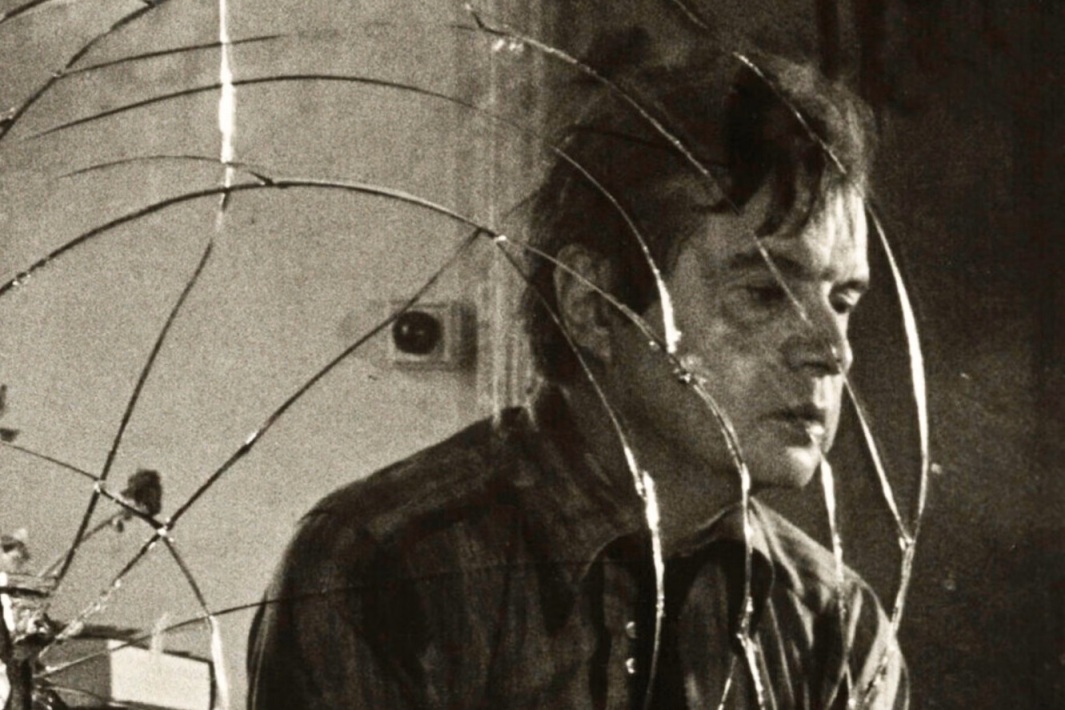
Francis Bacon photographed by Mayotte Magnus in 1972
Heath Ledger’s Joker was based on a Francis Bacon
painting, says Christopher Nolan
Exclusive: Hollywood director is one of several leading creatives to speak of
Bacon’s influence ahead of an exhibition at the National Portrait Gallery
NADIA KHOMAMI | CULTURE | ART & DESIGN | THE GUARDIAN | TUESDAY 8 OCTOBER 2024
Heath Ledger’s portrayal of the Joker was based on one of Francis Bacon’s triptychs, the Oscar-winning director Christopher Nolan has revealed ahead of a new exhibition of Bacon’s work. Nolan is one of several leading creative figures who have spoken of Bacon’s influence on their life and practice to mark the opening on Thursday of the National Portrait Gallery exhibition, Francis Bacon: Human Presence.
“Sometime in my teens, on a field trip to Tate Britain, I spotted a poster for a Bacon retrospective, which featured a face from one of his triptychs,” the director said.
“The pale, streaked features grabbed me and never let go, gracing various walls in different flats until it was a tattered mess. Years later I showed the image to Heath Ledger while he was preparing to play the Joker in the Dark Knight, and he instantly sparked to its tortured and torturing humanity. It informed the makeup for the character in the most tactile of ways.”
Nolan, known for his Hollywood blockbusters with complex storylines, such as Memento, Interstellar, Tenet and the Dark Knight trilogy, said that to see a Bacon “in the flesh” was to understand how medium informs the message.
“Perhaps that’s why I see Bacon as cinematic – distortions of matter and time evolve from the oil and canvas themselves,” he said. “Famously averse to both sketches and illustration, it’s as if Bacon wanted the painting itself to have the productive vagueness of a sketch, to bypass the literal and connect us with the emotional possibilities embedded in the paint.
“His work inspires me in many ways, not least as a reminder that to merely illustrate a narrative is to miss the power that unconscious gestures and intuitive image-making can achieve.”
The exhibition charts Bacon’s career across more than 50 years, exploring the artist’s engagement with portraiture from the late 1940s. Alongside Bacon’s self portraits, it includes portraits of sitters including Lucian Freud, Isabel Rawsthorne, and his lovers Peter Lacy and George Dyer.
The portraits will be displayed alongside rarely seen photographs and portraits of Bacon from the NPG’s collection, captured by photographers including Cecil Beaton, Arnold Newman and Bill Brandt. Other figures who have paid tribute to Bacon and his work are the designer Bella Freud, painter Nathaniel Mary Quinn, and John Maybury, who directed the Bacon biopic Love is the Devil.
Freud, the daughter of painter Lucian – who was one of Bacon’s closest friends – recalled first seeing Bacon’s work at the age of 11 during a visit to the Tate with her stepfather. “He suddenly clapped his hand over my eyes and said: ‘You mustn’t see this, it’s immoral’. We were standing in front of the triptych of Three Studies for Figures at the Base of a Crucifixion … I have loved his work ever since.”
Freud said she met Bacon a few times with her father and remembered “his brilliantly irreverent conversation, shockingly, wonderfully funny. “I was too shy as a 14-year-old to utter a word and silently drank in everything. I have always looked at his work to get a feeling of excitement. I used to take one of his catalogues down to my local paint shop to get them to mix good oranges and violets when I was looking for colours for interior design projects.”
Quinn, known for his collage-style composite portraits that feature disfigured faces, said when he saw an exhibition of Bacon’s paintings in 2022 he was brought to tears. He added: “Riddles plaguing my studio practice suddenly succumbed to solutions with remarkable clarity. Ever since, the permanence of that transcendent experience remains, as though Francis Bacon and I somehow related.”
And John Maybury recalled being an art student “living in a squat” in South Kensington in the late 1970s and seeing Bacon “scuttling along, or coming out of Dino’s diner”.
“He was part of my ‘How to be a poof pantheon’, along with Andy Warhol and William Burroughs. There were so few role models,” Maybury said.
“Bacon was living the life – bold as brass, pan stick and shoe dye drag. For me it was a fact that he expressed the full lexicon of outcast queer power in paint … without knowing it, he was an amazing teacher whose impact still resonates to this day.”
BACON NEWS 1909-1977 BACON NEWS 1977-1993 BACON NEWS 1993-2000 BACON NEWS 2000-2005 BACON NEWS 2005-2008
BACON
NEWS 2008-2011 BACON
NEWS 2011-2016 BACON
NEWS 2016-2024 THE
SCHOOL OF BACON BEING
& ALIEN